A great sign appeared in heaven: a woman clothed with the sun, with the moon under her feet and a crown of twelve stars on her head. She was pregnant and cried out in pain as she was about to give birth. Its tail swept a third of the stars out of the sky and flung them to the earth. The dragon stood in front of the woman who was about to give birth, so that it might devour her child the moment he was born. She gave birth to a son, a male child, who “will rule all the nations with an iron scepter. (Revelation 12:1-2, 4-5a NIV)
Mary is described in splendid terms in the account above. She is wearing a crown with twelve stars symbolizing the tribes of Israel, clothed with divinity and standing above creation. As she gives birth the dragon stands ready to “devour her child the moment he was born,” an allusion to Herod who ordered male children to be killed after Jesus was born to prevent a potential challenge to his throne, yet she prevails. It takes a queen to give birth to a king and Mary is described in precisely those terms.
Growing up in a Protestant fundamentalist church the role of Mary was almost always dismissed or downplayed. While nobody in these churches would argue against the significance of Abraham, Elijah, King David, John the Baptist or the Apostle Paul, many do brush off the significance of Mary in the Biblical narrative and, despite claiming that Jesus is their king, would scoff at the idea that Mary should be regarded as Queen Mother. In this view, Mary is basically interchangeable with any other woman and nobody special or worthy of the veneration given to faithful men.
The disregard for the example of womanhood that Mary embodies is not without consequence. In fact, it is a disrespect that I would argue leads to male abuses, abuses that lead to female reactions and greater dysfunction. In other words, feminism is a response to traditional female roles being dismissed and downplayed in the same way that Mary’s role is disregarded. Many women feel that the only way they can be recognized is by thriving in what has historically been a male domain and it is no wonder that they do. Why pursue womanhood when only male roles are worth celebrating?
Mary, the answer to Eve…
One Biblical character Protestant fundamentalists have no problem talking about is Eve. They have no problem talking about how Eve was the one first deceived or quoting verses about male authority over women. I know many men who spend an awful lot of time discussing bad female characters, like Jezebel, or any woman who would dare challenge their authority, and continually attempting to blame women for their own failures.
For example, I recall a morbidly obese man who faulted his wife’s cooking for his condition and I know many more men who try to use female immodesty as a means to offload responsibility for their own lusts and abuses. And so it goes. These men are imposters rather than Christian leaders. They want to claim authority for themselves and yet, at every turn, blame women for their failures. They resemble Adam who blamed Eve more than Jesus who took up the cross despite being blameless.
To solve this age-old problem we should go back to the beginning and right after the fall of mankind:
I will put enmity between you and the woman, and between your offspring and hers; he will crush your head, and you will strike his heel. (Genesis 3:15 NIV)
This was what God told the serpent who deceived Eve. It is a prophecy about “the woman” and also specifically a woman. This woman would produce a child that would crush the head of this serpent and this is exactly what we read happened in the book of Revelation:
The great dragon was hurled down—that ancient serpent called the devil, or Satan, who leads the whole world astray. He was hurled to the earth, and his angels with him. (Revelation 12: 9 NIV)
The woman with “enmity” towards the serpent triumphed over the dragon through her offspring and that woman is the answer to those still deceived and stuck with Eve. The parallels between Eve and Mary, the antidote, are too great to ignore and were well-understood by the faithful in the early church:
As Eve was seduced by the word of an angel and so fled from God after disobeying his word, Mary in her turn was given the good news by the word of an angel, and bore God in obedience to his word. As Eve was seduced into disobedience to God, so Mary was persuaded into obedience to God; thus the Virgin Mary became the advocate of the virgin Eve. (St Irenaeus of Lyons, “Against Heresies” [A.D. 175-185])
This is the logical extension of what St Paul’s exposition in his letter to the Galatians about slavery under the law and freedom in the Spirit:
His son by the slave woman was born according to the flesh, but his son by the free woman was born as the result of a divine promise. (Galatians 4:23 NIV)
The comparison above is between Abraham’s two sons, one born by human effort to the slave woman and another by divine origin to his wife Sarah, but the greater context Paul speaks of is of our own divine sonship and salvation. The sons of Eve lives in bondage, they are subject to the law and perpetually trying to escape the condemnation of the law through their own efforts. But he writes of another son “born of a woman” who provides an opportunity for us to be an heir of God and a son of the free woman.
Jesus is understood to be the new Adam. Or the Adam who brought the “life-giving spirit” rather than death like his predecessor (1 Corinthians 5:45) and salvation from sin. And, his mother, in the same way, is understood to be the woman whose obedience overcame the curse of Eve’s disobedience and undoes the curse upon women. It is through the man Jesus, born of a woman, Mary, that we are saved. But it was not any woman, it was not a woman under the bondage of sin—it was a free woman.
“Behold your mother!”
There are those who use references to brothers and sisters of Jesus as proof that Mary, after giving birth to Jesus, conceived to Joseph and didn’t remain a virgin. This is another subtle way to belittle her and the significance of her role in the story of our salvation. It is also something routinely used by men to undermine the authority of the church. The perpetual virginity of Mary, for that reason, is important as a theological point and a misunderstanding of Scripture that is easily cleared up.
First of all, because it was not uncommon for older men to marry younger women in Biblical times, Ruth and Boaz for example, and it is widely accepted that there was an age differential between Mary and Joseph. It is quite possible, even probable, that Joseph was an older widower and had other children to another woman. So, in other words, the references to the “brothers” and “sisters” of Jesus could be step-brothers and step-sisters rather than other sons and daughters of Mary his mother.
Second, it is possible that we are misunderstanding the words used. Indeed, the same words translated as “brothers” and “sisters” could denote a close relative as Aramaic, the language being spoken, didn’t distinguish between brother or sister and a cousin. It seems similar to how Filipinos use the word “Tito” (literally uncle) and “Tita” (literally aunt) to also refer to a cousin or respected elder. So we may be dealing with a language translation issue.
Whatever the case, it is definitely not advisable to take our cues from those who were in doubt of Jesus, who identified him as “the carpenter’s son” and didn’t accept him as God’s son:
Isn’t this the carpenter’s son? Isn’t his mother’s name Mary, and aren’t his brothers James, Joseph, Simon and Judas? Aren’t all his sisters with us? Where then did this man get all these things?” And they took offense at him. (Matthew 13:55-57 NIV)
Note, the passage does not say that Mary is the mother of the other “brothers” and “sisters” mentioned.
If we should not be offended when Jesus claims to be God’s son rather than that of Joseph, then we should not be apt to resist the idea that his brothers and sisters could be from another woman and the real possibility Mary remained a virgin. This is the view of early church writers:
The Book [the Protoevangelium] of James [records] that the brethren of Jesus were sons of Joseph by a former wife, whom he married before Mary. Now those who say so wish to preserve the honor of Mary in virginity to the end, so that body of hers which was appointed to minister to the Word […] might not know intercourse with a man after the Holy Spirit came into her and the power from on high overshadowed her. And I think it in harmony with reason that Jesus was the firstfruit among men of the purity which consists in [perpetual] chastity, and Mary was among women. For it were not pious to ascribe to any other than to her the firstfruit of virginity. (Origen, “Commentary on Matthew 2:17” [A.D. 248]).
And the doubt of this answered emphatically by St Jerome:
[Helvidius] produces Tertullian as a witness [to his view] and quotes Victorinus, bishop of Petavium. Of Tertullian, I say no more than that he did not belong to the Church. But as regards Victorinus, I assert what has already been proven from the gospel—that he [Victorinus] spoke of the brethren of the Lord not as being sons of Mary but brethren in the sense I have explained, that is to say, brethren in point of kinship, not by nature. [By discussing such things we] are […] following the tiny streams of opinion. Might I not array against you the whole series of ancient writers? Ignatius, Polycarp, Irenaeus, Justin Martyr, and many other apostolic and eloquent men, who against [the heretics] Ebion, Theodotus of Byzantium, and Valentinus, held these same views and wrote volumes replete with wisdom. If you had ever read what they wrote, you would be a wiser man. (Jerome, Against Helvidius: The Perpetual Virginity of Mary 19 [A.D. 383]).
We believe that God was born of a virgin, because we read it. We do not believe that Mary was married after she brought forth her Son, because we do not read it. […] You [Helvidius] say that Mary did not remain a virgin. As for myself, I claim that Joseph himself was a virgin, through Mary, so that a virgin Son might be born of a virginal wedlock. (ibid., 21).
If that isn’t enough to clear up the issue, the emphasis that even Joseph became purified through Mary’s virginity (similar to what Paul says about believing spouse “sanctifying” their unbelieving partner and children in 1 Corinthians 7:14), then we should consider again what Jesus did on the cross:
Now there stood by the cross of Jesus His mother, and His mother’s sister, Mary the wife of Clopas, and Mary Magdalene. When Jesus therefore saw His mother, and the disciple whom He loved standing by, He said to His mother, “Woman, behold your son!” Then He said to the disciple, “Behold your mother!” And from that hour that disciple took her to his own home. (John 19:25-29 NIV)
Jesus, in agony on the cross, soon to say “it is finished” and give up his spirit, and his concern is who would care for his mother. Not only does this highlight how important Mary is to Jesus, but it would also be completely unnecessary for Jesus to assign someone to care for his mother if she had other sons and daughters. What we do know is that Jesus had to assign someone to care for his mother, to a disciple, and that would be odd if she actually had many children.
But there’s a twist…
Mary, in the same way, we have become sons of Abraham through faith (Galatians 3:29) and similar to how Jesus became a son of Joseph through adoption, has also become our mother. If we are coheirs of Christ, sharing in his divinity through our adoption, then we are, likewise, are sons and daughters of Mary his mother. So, rejoice, our inheritance through Eve (sin and death) has been overcome through the Blessed Virgin and by her Son!
“From now on all generations will call me blessed…”
And Mary said: “My soul glorifies the Lord and my spirit rejoices in God my Savior, for he has been mindful of the humble state of his servant. From now on all generations will call me blessed, for the Mighty One has done great things for me—holy is his name. His mercy extends to those who fear him, from generation to generation. He has performed mighty deeds with his arm; he has scattered those who are proud in their inmost thoughts. He has brought down rulers from their thrones but has lifted up the humble. He has filled the hungry with good things but has sent the rich away empty. He has helped his servant Israel, remembering to be merciful to Abraham and his descendants forever, just as he promised our ancestors.” (Luke 1:46-55 NIV)
It is sad that those words above do not carry much weight in some quarters who claim a ‘literal’ understanding of Scripture. I suppose they may think that Mary, a young woman, should not be taken seriously and her words are merely the product of unchecked female exuberance?
In that case, these doubters should look at a declaration made by Elizabeth, full of the Spirit, in the verses right before Mary’s exclamation:
When Elizabeth heard Mary’s greeting, the baby leaped in her womb, and Elizabeth was filled with the Holy Spirit. In a loud voice she exclaimed: “Blessed are you among women, and blessed is the child you will bear! But why am I so favored, that the mother of my Lord should come to me? (Luke 1:41-43 NIV)
If the witness of two women and the Spirit isn’t enough, what will be?
Mary is most certainly blessed among women. If we should believe anything else said in Luke, then we must accept this is the reality, that it is something spoken through Elizabeth by the Spirit, and should join the generations of the faithful who call Mary blessed.
Mary is the Ark of the New Covenant!
Mary is blessed because she, set apart by her parents, allowed herself to be a vessel. Mary is referred to as the “Ark of the New Covenant” and that is because of the direct parallels in Scripture made between her and the holiest of vessels in Israel…
Mary is overshadowed and filled:
The angel answered, “The Holy Spirit will come on you, and the power of the Most High will overshadow you. So the holy one to be born will be called b the Son of God. (Luke 1:35)
As the ark of the Lord (in the tabernacle) was overshadowed and filled:
Then the cloud covered the tent of meeting, and the glory of the Lord filled the tabernacle. Moses could not enter the tent of meeting because the cloud had settled on it, and the glory of the Lord filled the tabernacle. (Exodus 40:34,35 NIV)
***
David, a man after God’s own heart, revered the ark:
David was afraid of the Lord that day and said, “How can the ark of the Lord ever come to me?” (2 Samuel 6:9)
Likewise, righteous Elizabeth says the same thing about Mary:
But why am I so favored, that the mother of my Lord should come to me? (Luke 1:43)
***
David, to the scorn of his wife, celebrated the ark of the Lord:
Wearing a linen ephod, David was dancing before the Lord with all his might, while he and all Israel were bringing up the ark of the Lord with shouts and the sound of trumpets. (2 Samuel 6:14,15)
Likewise, unborn John the Baptist, in defiance of those who do not honor the mother of our Lord, also leaped at the sound of Mary’s voice:
As soon as the sound of your greeting reached my ears, the baby in my womb leaped for joy. (Luke 1:44)
***
Finally, the ark of the Lord took a detour:
He was not willing to take the ark of the Lord to be with him in the City of David. Instead, he took it to the house of Obed-Edom the Gittite. The ark of the Lord remained in the house of Obed-Edom the Gittite for three months, and the Lord blessed him and his entire household. (2 Samuel 6:10,11 NIV)
And that parallels this:
At that time Mary got ready and hurried to a town in the hill country of Judea, […] Mary stayed with Elizabeth for about three months and then returned home. (Luke 1:39,56 NIV)
So, given these clear parallels, it is only right Mary is called the “Ark of the New Covenant” and Theotokis (“Bearer of God”) and to say otherwise is to be ignorant of Scripture.
And, yes, all those filled with the Spirit do, in a way, parallel Mary in this regard. Christians are told, by St Paul, that they are the “temple of the Holy Spirit” and to “glorify God in your body” by remaining free of sexual immorality (1 Corinthians 19:18-20) and this is following the example of Mary in being a vessel. However, Mary literally carried our Lord and Savior in her womb, we are told she is blessed among women and for that she is worthy of our honor and veneration—in the same way as the Ark of the Covenant.
Mary, like that Ark, is also set apart as holy and not to be touched.
“Do whatever he tells you.”
Mary was also an example of motherhood. She did not keep her son for herself by refusing to let him go or holding him back and enabled him to fulfill his purpose instead.
I’ve never thought much about this before listening to Dr. Jordan Peterson a few months ago and the contrast he makes between Mary and the devouring (or Oedipal) mother or mother who over-protects her child, attempts to keep them for herself and is a hindrance rather than a help to healthy development.
Peterson says Mary is the archetype of a good mother for offering her son to the service of God and as a sacrifice to the world. That is what good mothers do, rather than hoard (or, heaven forbid, destroy) the blessings of their womanhood, they give their children for sake of the world.
Anyhow, let’s take a look at the events leading up to the first miracle attributed to Jesus in Scripture:
On the third day a wedding took place at Cana in Galilee. Jesus’ mother was there, and Jesus and his disciples had also been invited to the wedding. When the wine was gone, Jesus’ mother said to him, “They have no more wine.” “Woman, why do you involve me?” Jesus replied. “My hour has not yet come.” His mother said to the servants, “Do whatever he tells you.” (John 2:1-5 NIV)
Some Protestant commentators take the inflection of the English translation (when Jesus says “woman, why do you involve me?” in response to Mary) as evidence that Jesus didn’t have any special regard for his mother. This is to suggest that Jesus would blatantly disregard the commandment to “honor your father and mother” (Exodus 20:1–21, Deuteronomy 5:1–23) and go against his own words rebuking those who defied God’s command (Matthew 15:3-9) and basically make him a hypocrite.
This word “woman,” according to what I’ve read, is more to the effect of “madam” than the English translation suggests and is also the same word used to denote a man’s wife elsewhere in Scripture. There is no reason to suspect that Jesus would be disrespectful of his mother and those who suggest that this is the case should probably consider the actions that accompanied his words.
We know what Jesus did immediately thereafter. He, like a good son, does and honors his mother by doing what she requests of him. Mary, for her part, does what a good mother does, she prompts her son to action and encourages others to give her son the respect he is due. We should not forget that Mary, in the same way as God the Father (yet as a human mother), also willingly gave her only son.
More on sons and their mothers…
Mary, mother of the King?
When Bathsheba went to King Solomon to speak to him for Adonijah, the king stood up to meet her, bowed down to her and sat down on his throne. He had a throne brought for the king’s mother, and she sat down at his right hand. “I have one small request to make of you,” she said. “Do not refuse me.” The king replied, “Make it, my mother; I will not refuse you.” (1 Kings 2:19-20 NIV)
It is interesting how good mothers intercede and especially on behalf of their sons. We see how Bathsheba (treated with reverence by Solomon) brought a petition to him and his response. There are also many stories of faithful mothers who prayed, with tears, every day for their wayward sons and I do believe that God hears their prayers. We also see this in the story of a mother who made a request to Jesus on behalf of her sons:
Then the mother of Zebedee’s sons came to Jesus with her sons and, kneeling down, asked a favor of him. “What is it you want?” he asked. She said, “Grant that one of these two sons of mine may sit at your right and the other at your left in your kingdom.” (Matthew 20:20-21 NIV)
This account is told differently in Mark 10, where the sons of Zebedee, James, and John, to the indignation of the other disciples, make this request themselves rather than through their mother. I’m not sure how to reconcile the two accounts, but I do see the role of mothers as significant. Let’s not forget that it was Bathsheba who prompted King David to name her son, Solomon, as his successor:
Then Nathan asked Bathsheba, Solomon’s mother, “Have you not heard that Adonijah, the son of Haggith, has become king, and our Lord David knows nothing about it? Now then, let me advise you how you can save your own life and the life of your son Solomon. Go in to King David and say to him, ‘My Lord the king, did you not swear to me your servant: “Surely Solomon your son shall be king after me, and he will sit on my throne”? Why then has Adonijah become king?’ (1 Kings 1:11-13 NIV)
Now, clearly the prophet Nathan could’ve gone directly to the king himself and made this request on behalf of Solomon. But it seems Nathan, as a man of God, knew a little about the persuasive power that a woman has over a man and therefore makes his request to Bathsheba instead. Good men, like good Kings who listen to their Queen Mother, listen to women, especially their wives and even more especially their own mothers.
Honor goes to the humble…
Going back to the question of who sits at the right and left hand of Jesus. We read the answer Jesus gave:
“You don’t know what you are asking,” Jesus said to them. “Can you drink the cup I am going to drink?” “We can,” they answered. Jesus said to them, “You will indeed drink from my cup, but to sit at my right or left is not for me to grant. These places belong to those for whom they have been prepared by my Father.” (Matthew 20:22-23 NIV)
Unlike worldly leaders who privilege themselves, in God’s kingdom “the last will be first, and the first will be last” (Matthew 20:16) or, in other words, those who have suffered most in this life will hold the highest places of honor in the kingdom.
My own thought is that there is one person who fits this description of suffering more than any other and that being the mother forced to watch her precious child, literally the perfect son, be falsely accused, brutally tortured, viciously ridiculed, and murdered in the most horrible method.
Can you imagine how Mary, a mother, would’ve felt as Jesus hung there dying?
I’ve heard that women, due to their giving birth, have a higher threshold for physical pain than men. Since pain is subjective, I’m not sure if that is true. But I do know, from personal experience, the sound of a mother’s wail upon the loss of her only and most beloved child. It was something that cut me to my soul.
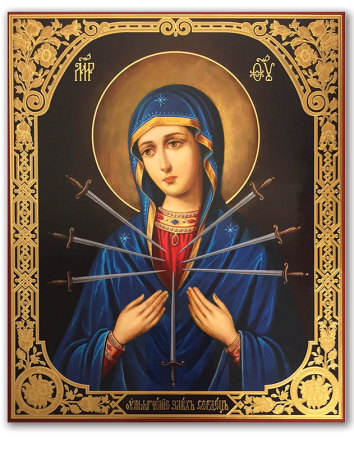
It would be quite ironic, given that men argued for the honor to bestowed upon them, if the humble mother of our Lord and Savior was given that seat of honor beside her son. We can recall Peter boldly saying to Jesus, “Even if I have to die with you, I will never disown you,” (Mark 14:31) and how the other disciples quickly agreed. But this male bravado quickly faded away as Jesus was taken away to be killed. It was Mary, not Peter, who remained beside Jesus until the end.
Can you think of anyone more worthy of sitting at the right hand of Jesus than his mother?
Anyhow, regardless of where Mary sits in the minds of some, she is the Queen Mother and worthy of our honor or Jesus is not King. Because if we deny this we are basically joining those who used “king of the Jews” as a mocking description. But, if Jesus is Lord, and the lineage to David coming through his mother, then we ought to show due respect to the queenship of his mother. And, given that Jesus listens to his mother and since we already do ask others to pray for is all the time, it doesn’t like a bad thing to follow the lead of Nathan.
Mary, the prayerful mother…
Had anyone a few years ago asked me about the importance of Mary I would’ve probably said she was a good woman and shrugged. I would not have understood why Orthodox Christians venerate her (with all the saints) and would say that all we need is Jesus.
However, I was ignorant. Of course, Jesus is the center of our faith, he is our Lord and Savior, we worship only the Father, Son, and Holy Spirit. But that doesn’t mean the other examples in Scripture (and in the history of the church) are worth nothing for us. No, their unique stories of faith are there for our benefit, to encourage us, and as examples that we can emulate.
Mary stands out as one of these faithful examples. Her contemplation, how she “treasured” things and “pondered them in her heart” (Luke 2:19,2:51), and her strength in remaining with her son, her willing response to the angel (“I am the Lord’s servant” Luke 1:38), the proper honor she is given by the faithful, provides a restored vision for womanhood.
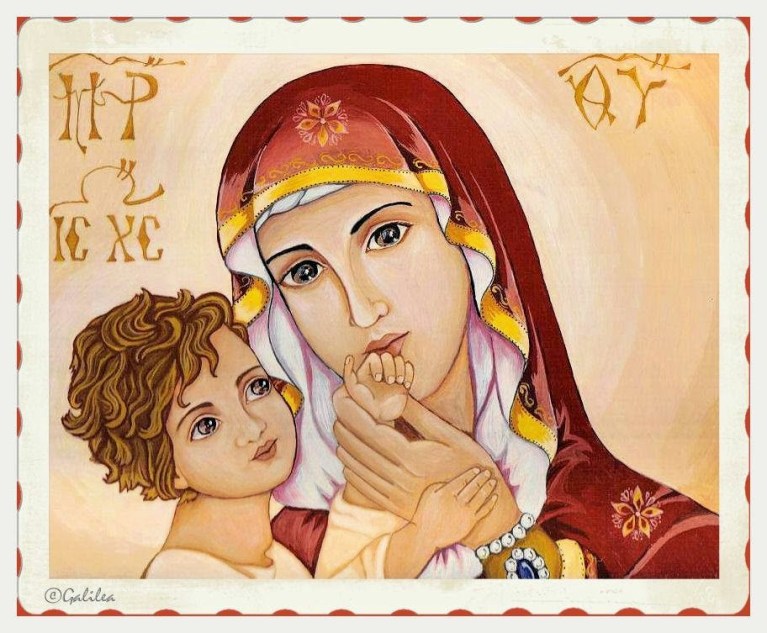
Certainly, there are many good women. Many have even seen their children martyred for the sake of the Gospel. But Mary was the mother of our Lord and Savior, the vessel God chose for his son, and (like Eve) not just any woman. She should be honored, her true feminine strength should be praised, and it is through her womb that salvation came to the world.









 Irregular Ideation