Amish Lies: I read it on the internet…, part 2

Standard

I was not planning to do a blog about immunization and autism.  However, an article posted by a social media friend, along with comments from US Senator Rand Paul made recently, prompted my response.  The article makes two claims about Amish, immunization and autism (presented in questions) in the title; and both claims turn out to be false. 

Claim: Amish Do Not Vaccinate

It seemed plausible at first brush, especially given that this small Christian sect mandates an austere lifestyle and rejects many modern conveniences, that they would also not vaccinate.  However, I have an advantage in that I know some Amish people.  But, more significantly, I have a sister (Dr. Olivia K. Wenger, MD) who led a study on Amish and their attitudes towards vaccinations. 

The research of Dr. Wenger and her colleagues, although addressing primarily the opinions of Amish parents about vaccinations and not vaccination rates, is sufficient to disprove the idea that Amish do not vaccinate.  This is some of what they found:

“Among 359 respondents, most (68%) stated that all of their children had received at least one vaccine, and 14% of those surveyed said their children had received no vaccines.”

Amish, in fact most who responded in the study cited above, do vaccinate.  So the idea that Amish do not vaccinate is a myth and lie.  That false claim alone is enough reason to dismiss any other claim found in the article, but in case you are unconvinced, I will address the other claim in the title as well.

Claim: Amish Do Not ‘Get’ Autism

The anti-vaccination article claims there are only three known cases of autism amongst Amish people.  Again, I could’ve accepted this as valid, but mostly because there’s a strong possibility of autism being undiagnosed in this community that is as insular and closed as the Amish community.

However, this too was easily refutable despite no studies directly addressing the topic.  I found research, by Dr. D. Holmes Morton, MD and others, that triples the number of cases of Amish children with autism symptoms:

“In March 2006, Drs. Kevin
Strauss, Holmes Morton and others documented 9 autistic Amish children, which could raise the autism rate of Lancaster Amish community Olmstead supposedly investigated to almost 1/5,000 all by themselves.”

So, both claims are untrue based in readily available evidence.  Unfortunately stories like this are posted as true over and over again by those who are anti-vaccination or sympathetic.  It is soaked up as proof of a link between autism and vaccines, yet it is demonstrably false information.

If your primary cause is truth, then carefully vet your sources!

As a believer in individual freedom, religious liberty and one who is respectful of conscience, I am doubly offended by articles like this.  Quite frankly I am embarrassed to see these types of spurious claims circulated by those associated with my political leanings and religious faith.

Yes, opposition to vaccinations crosses political and religious lines, but is often a topic of conversation amongst my Libertarian and Christian peers.  That some of them regularly repeat this sort of thing as legitimate or present it without question is a source of serious frustration for me.  It does a disservice to even good questions about vaccinations.

Nothing is gained by linking falsehoods to what is true.  If anything, people who are not ignorant of science will ‘throw the baby out with the bathwater’ and reject all that is associated with the falsehood.  In a world awash with information, why should they waste time on a source that lied to them once and/or doesn’t carefully vet their sources?

“Do not spread false reports.”  (Exodus 23:1a)

I realize not everyone is a scientific or critical thinker.  I myself struggle with the discipline required for serious research and that is part of the reason I would not make a career of it.  That said, we do need to take responsibility for the information we disseminate online and owe others our due diligence verifying claims with reliable sources before repeating it.

Sadly, anonymous articles with sensational headlines garner more attention than these unsung heroes who are actively creating solutions for sick Amish children.  There are sources far more reliable than an article that does not even include the name of the author.  Professionals like Dr. Morton and Dr. Wenger have dedicated their careers to studying Amish genetics and medical disorders. 

Footnote: I cite secondary sources for the research of Dr. Wenger and Dr Morton, but if you want to read the original studies, the links are below:

Underimmunization in Ohio’s Amish: Parental Fears Are a Greater Obstacle Than Access to Care

Recessive symptomatic focal epilepsy and mutant contactin-associated protein-like 2.

The Dilemma of a Colorful Thinker

Standard

I write this post with trepidation. I have been accused before of being too open with my thoughts by some. But I have been told by others that I am very guarded about my personal life and have been urged to express more of that. The truth is that my sharing is often intentionally not vulnerable. Talk may be cheap, but sharing my innermost feelings always comes with an emotional price tag and the risk feels too great. I can discuss abstract ideas for hours without wearying, but when I lay my deeper feelings out it leaves me exhausted, often also feeling degraded and disappointed.

I believe all people desire affirmation or acceptance. We also want to maintain our own separate identity, to be different from others and still be accepted. I had that conflict growing up as a religious minority. I wanted to be identified with my unique heritage. However, I also wanted to be treated as a unique individual and resisted being cornered with the many stereotypes of classmates. Questions, frequently asked without ill-intent, would often be framed as statements categorizing me, “you are X therefore you do Y and Z…”

Uniquely Mennonite; also a Unique Mennonite

I was born into a Mennonite home. Mennonites are a small Christian sect, a product of the Anabaptist movement that swept through Europe in the 1500’s and are known today for their traditional way of life and non-violent stance. Mennonite is both a religious denomination in that ‘members’ conform to certain established standards and, because historically many members come from within existing Mennonite families, it can also classify as a distinct ethnic group.

Most Mennonite children attend private schools and some, more frequently over the past couple decades, are home schooled. However, my parents chose differently, my siblings and I all attended the local public school. It was a consequential decision and a source of some inner turmoil for me as well. I am a proud alumnus of Lewisburg Area High School, yet there was a time where I begged my mom to home school me and throughout my schooling I always identified more strongly with my Mennonite sub-culture.

At school I conscientiously did not join my classmates in various activities. I would stand respectfully and silent during the reciting of the pledge of allegiance. As a devout Christian, I believed my allegiance was owed to something greater than country and I felt I could not pledge to anything besides God. I was separated in other ways as well. I did not grow up with a television at home, so I was out of the loop as far as popular culture and could not identify with much of the chatter about this or that celebrity. I didn’t wear shorts in the summer. I was odd.

But, in church, I did not always identify well with my Mennonite peers either, they had their own school experience and cliques. Prayers by church leaders would give specific mention of the students and staff of the Maranatha Christian School, but would leave out those few of us who attended elsewhere and I noticed it. The neglect of mention was completely unintentional, but it did contribute to a feeling of not mattering, that feeling was a source of insecurity then and lingers in my mind today. I never felt I fit into my school or church culture.

I savored my independent mindedness. I could feel privileged over both my public school and Mennonite peers at times. I had a spot amongst the misfits in both categories too. But, my finding a place among the misfits was to still feel excluded from the mainstream of both settings and was to be a double misfit. It was exclusivity with some exclusion or at least I felt excluded. I had one foot in with mainstream American thinking, with another in a culture that celebrates a persecuted past, and with that a mixed identity all my own.

My Place Amongst the Persecuted

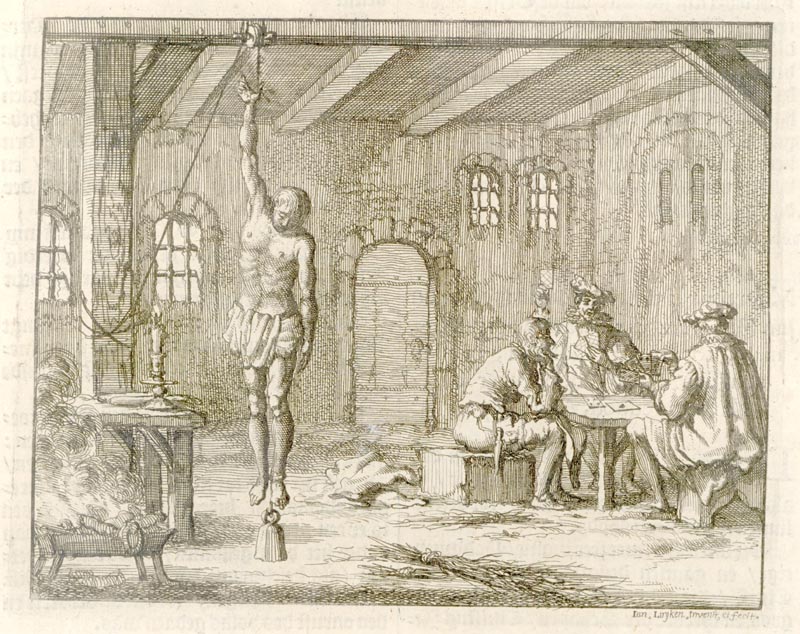
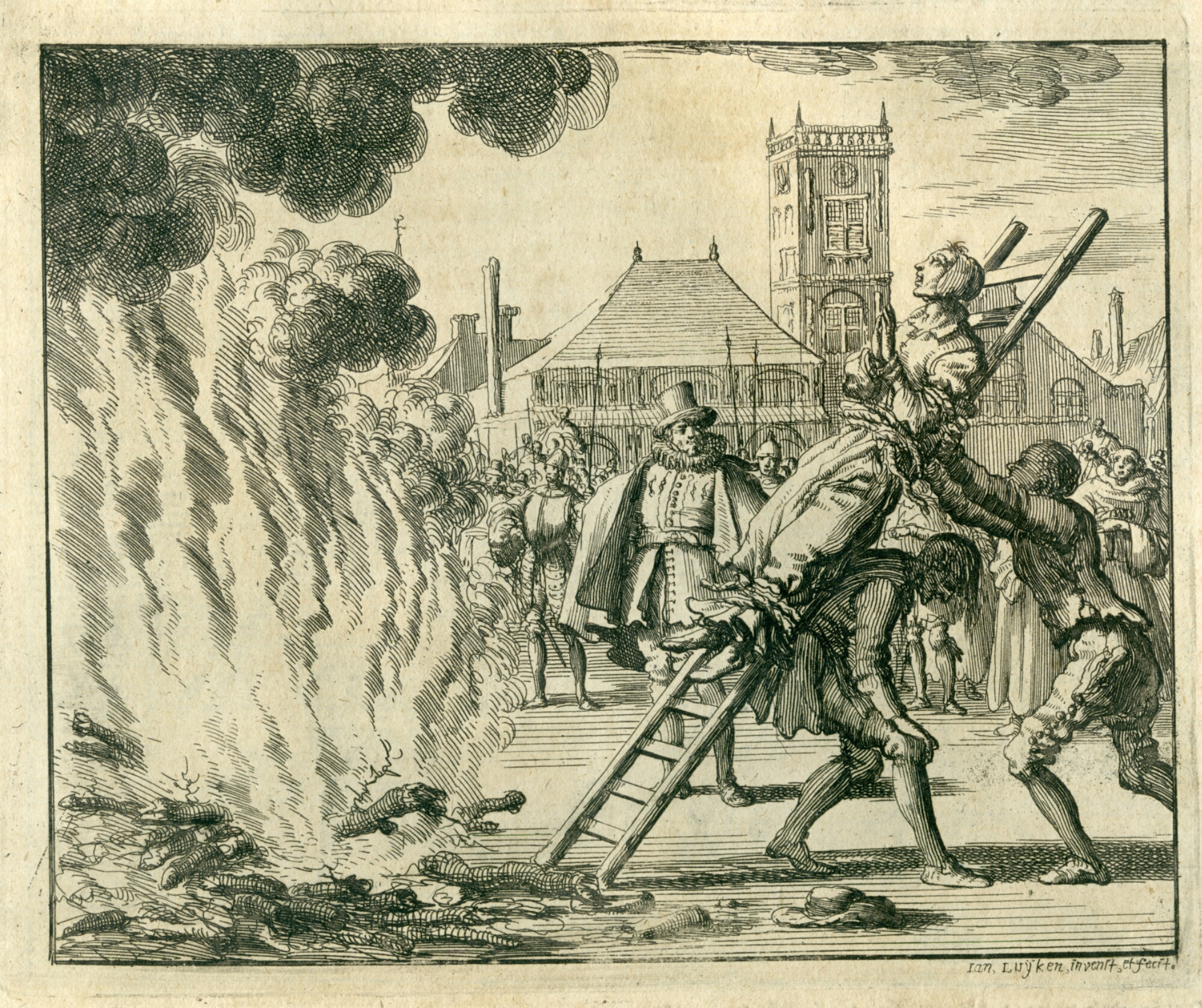
Mennonites have a long memory. We are dutifully reminded of acts of gruesome torture committed against our people from hundreds of years ago. There’s a book, Martyr’s Mirror, nearly as sacred as the Bible in many Mennonite (and Amish) homes, which is basically a chronicle of the violence done to Christian believers. The book includes haunting etchings of the terrifying ends of some who would not recant their faith under trial and these stories help shape Mennonite identity as a persecuted minority.
image

Torture of Geleijn Cornelus, Breda, 1572

Mennonites have a mistrust of mainstream society. Part of it is in a product of a religious emphasis to intentionally maintain a ‘non-conformed’ outward appearance and lifestyle. But the other big part is a real fear that persecution is just around the corner and that we could all soon suffer the same fate as our spiritual/ethnic fathers. Mennonites (and Amish) have been so insular and so separated from mainstream society that they actually have their own unique genetic disorders. Many still maintain their own German dialect, commonly referred to as “Pennsylvania Dutch” or “PA Dutch” for short, and church outsiders are referred to as “English” by Amish people.

The irony of it all is that Mennonites are more frequently adored than they are despised. Our biggest critics tend to be those who are disgruntled ex-members or those who had a bad experience in one church and judge all Mennonites based in it. We are treated both with respect and also patronizingly at times. My sister, a medical doctor, was once asked by a non-Mennonite if she would be interested in cleaning houses or babysitting, which could be taken as an insult to a person who was qualified for much more. Many have assumed my ignorance as well and apparently because of my rural and religious upbringing.

People do judge by outward appearances. People do make prejudiced assumptions based on ethnic heritage or religious connection and I have experienced this first hand. I believe that is likely why I have instinctively classified myself with the victims of prejudice rather than with the perpetrators. My unique upbringing may have been the reason why I was fascinated with history of racism in America. I read books; some of them required reading, but many others by curiosity and choice. The titles escape me, but I remember experiencing the civil rights era from the perspective of a woman in the NAACP, then living life as a young woman in Japanese internment camps and later spending time with a fictional lawyer named Atticus Finch.

My Struggle to Find Acceptance

I also have another identity and that one created in my slow development that earned me nicknames which included “micro” in them. I was short and small for my age. I was a late-bloomer beyond even my then diminutive size. I was older in my class, a polite and respectful student, I would often find more in common with adult teachers than my age-group peers, I had keen interest in history, was knowledgeable, but was also very innocent. I had little more than platonic interest in girls until my late school years and had mostly kept a safe distance from them. I did not seem to draw a whole lot of female attention either. I was an introvert in a crowd and shy around women.

With my struggle with stature, with a lack of strong social skills, athletic abilities, or other especially developed talents (besides being a non-stop daydreamer with some artistic gifts) and having not received an abundance of popular attention, I developed a bit of an inferiority complex. It only intensified as I became interested in dating and noticed many girls were more interested in a muscular, square shouldered or smooth talking male figures and I realized that just wasn’t me. I was this sensitive bundle of analytical thoughts without an adequate ability to express them. It was also furthered by the fact that I felt I was a misfit. I was way too religious for the more secular public school girls, but I was way too nuanced and philosophical for the cut-and-dried products of my own conservative religious culture.

For whatever reason, fate or fortune, I struck out with the first Mennonite girl I asked and that experience was where my confidence really began to wane. I had a an acute awareness of nuance differences of how people treat each other and knew too well how girls treated the ‘cool’ guys compared to those less popular. I was not disliked or mistreated. But I was also not that quintessential Mennonite guy either. It seemed the average Mennonite girl wanted this simple, macho, disinterested, reserved fellow and I did not fit that conventional mold. I was complicated; I alternately talked too much while not saying enough of the ‘right’ things, was fully Mennonite in some ways and not enough in others. I also lucked out with a church full of first cousins.

I was a deep-thinker, a conscientious person, fiercely loyal, told multiple times (by marriageable women) that I would make a wonderful husband, earnestly faithful, protective and gentle. I wanted to be the hero of the woman I admired, unfortunately I always seemed to play the cards of the villain or that’s how it felt my sincere efforts were received. It is against my nature (or maybe my Mennonite training) to harbor ill-will towards anyone. But feelings of rejection (both real and perceived) are as a poison to the soul. I have had my flashes of misogyny or jealousy, with those feelings immediately followed by longer moments of self-loathing and contempt for everything I was or was not. I was a victim of bad-timing, I was disadvantaged by my genetics, I was unfairly categorized and felt it all to be an injustice.

image

Drowning of Mattheus Mair, Wier, 1592

It may be irony, but it was black women who later affirmed my strengths and restored some of my confidence lost along the way. Like in the books I read, where I could identify with the female minority lead character, I felt minority women could somehow understand me and with them is where I felt most accepted. I was treated like I mattered. It did not hurt that some were educated beyond my Mennonite peers and could appreciate discussions of philosophy, psychology, sociology, identity and race.  Not wanting to produce a stereotype about Mennonites, but I would probably be more popular with my ethnic kinfolk if I would shoot more deer, get a big diesel truck, be an outstanding volleyball player and learn to love card games.

The Schizophrenic Demands of Insecure People

We live in a culture that both tells us to “be you” and yet also encourages conformity of thought or action and shames divergent thinking. We live in a society that preaches against stereotypes, that celebrates individuality and yet continually it categorizes people by race, religion or gender. I am simultaneously castigated as the perpetrator of racism and sexism, as a white male, but then instructed not to build identity around race or to make any judgments about sexuality. It is a feeling of being whipsawed, assailed for doing something that I have not done by those who are doing exactly what they say I shouldn’t do and that I didn’t do.

That is the dilemma of a colorful thinker: Do I go with those who say I should be identified with the perpetrators of historical violence? Or should I go with my instincts, my experience as a minority, and make my identity with the victims?

For me the choice is clear: I am neither victim nor villain. I have felt a victim of circumstance in the past. I have been treated unfairly, excluded unjustly, felt like a perpetual underdog. I have been condescended to and even discriminated against based in my race or religion. I have withstood bullies who picked on me because of my differences (my genetics did not lend to physical intimidation) and I have endured educated elitists who hurled insults, alleged my ignorance for challenging their perspectives and then would burned their straw-man effigies of me with an unwarranted glee. But I refuse to make my identity center on my claim to victimhood.
image

Burning of Anneken Hendriks, Amsterdam, 1571

I will not be like the bitter white co-worker who blamed his lack of success in college on not having the special privilege of affirmative action and would spout one racist opinion after another. I rebuked him without hesitation. I share no identity with his racism and hatred. I will likewise not patronize, show favoritism or cater to others simply on the basis of skin color and historical injustices. We all have challenges to overcome in life and it is easy to assume that our own are bigger or more real than someone else’s. I am not going to coddle and perpetuate the insecurities of any person, white, black or otherwise. I do not believe we help people overcome by treating people as helpless and hapless victims.

In discussions over race, with constructions like ‘white privilege’ and such, I have more frequently been lumped in with the perpetrators of racism rather than treated as a unique individual. It is frustrating, because Mennonites were some of the first to protest slavery and that is the identity that is more real to me than my skin color. Amish and Mennonites were even singled out in America for their ethnicity and conscience, some locked in prison during the First World War because they refused to fight. I feel, at times, that I have more in common with a persecuted minority than with anyone else. Yet, because I am a white male, some assume I could not possibly understand them and seemingly dismiss my perceptive without ever hearing it.

image

Burning of David and Levina, Ghent, 1554

I may not understand exactly what it feels like to be black in America. But I do know how it feels to be treated as inferior and less of a man on the basis of superficial things. I know too well what it is like to be categorized and stereotyped. I understand the conflict of one who loves their own heritage, has a defensive urge against those who attack their ethnic community and yet is still aware of the problems of their own people. I have a love-hate relationship with my own Mennonite religious/ethic heritage. I was taught to be afraid, not just of the police, but of mainstream society in general and some of my religious peers think they are persecuted because of perceived slights.

I have felt insulted and belittled at times. The slights were real and sometimes intentional too, but not always. I have found my reactions are a product of personal insecurities and sometimes little more than that. People all have their sources of insecurity. Conservatives fear a tyrannical government will soon take away their rights, thus fearfully stockpile guns and ammunition. Liberals think that the economic system is stacked against them and want government to impose on their neighbors allegedly as an act of justice. We can build identities around these insecurities. We may find people who share our fears and can look for evidence to ‘prove’ our own disadvantaged status or victim role. Unfortunately, while we do this, while we are demanding respect of our own person or people like us, we are also often leaving a wake of destruction behind us.

Insecure people produce more problems for themselves and others. We all know them, that super-sensitive person who is so insecure that they see an insult in even the most innocent requests or gestures. Take, for instance, a guy who told a story (apparently thinking his audience would be sympathetic) of a time he was driving down the road and a woman driving in the opposite direction scratched her nose as they passed. He knew an insult when he saw one. So he spun his vehicle around, aggressively pursued the offending party and gave a lecture on her disrespectful behavior. Of course, who knows why she touched her nose at that moment. Much more disturbing is a man who assumes an insult or injustice at every turn—and does not see his own offending belligerence.

Seeing Beyond Divisions of Black and White

I am a person with multiple identities and with none in particular. I am not alone either, I believe many Americans have many different identities and do not fit neatly into statistical categories. That said, Americans do also have bigger common identities of race or gender and these identities can sometimes be used to divide us. Our differences can be a cause for celebration, but they are also the basis of falsely dichotomous ‘us’ versus ‘them’ narratives and are used feed existing insecurities. But, treating every person like a unique person to be individually loved as a unique person, rather than in category of victim or villains, would solve a multitude of problems.

Pigeonholing, finger-pointing, scapegoating or shaming those who have offended me probably will not solve my own insecurities and I’m doubtful this type of action would ever create desirable results those whom I deem as guilty. Demonization usually only creates another class of victim. When we treat people like problems rather than people, when we throw them into categories of perpetrator on the basis of their appearance or history, then we have become contributors to the disease of prejudice rather than healers and helpers. If we want more heroic people in the world, then we must treat more people like heroes and as we wish to be treated. If we want dignity and respect for ourselves, then we need to stay committed to treating others with dignity and respect.

Healing of existing wounds will not come from two sides beating each other with superior arguments or competitive claims to offense. Tensions certainly will not be solved by making any person feel inferior or labeled as a villain. The urge to point out statistics about black men in response to those who cite statistics about police will not bring us closer to peace. The truth is if there is to be healing it will come from us learning to identify with all men, and not with only those who look like us or share our own opinions.

We need to recognize even our own intuitions, even those that are informed with history or statistical evidence, might be skewed, prejudicial and wrong. What we perceive to be true is not always whole or complete truth. We need to be more introspective, practice more constructive self-criticism, and address our own faults squarely. The assumptions we make about ourselves and about other people can hurt our chances for success. Yes, I could build a pretty solid rationalization to defend my own insecurities, but it would get me nowhere towards overcoming the obstacles to my success and, if reinforced long enough, could become a reason to not try at all.

Creating Shared Identities

It is impossible to say categorically that every white man has it better or every black woman has it worse and it is foolishness to assume it. A single black mother probably has more in common with a single white mother than she does with a black woman who is happily married. Then again, a black woman, who endures assumptions about her appearance, might actually be able to identify with a young Mennonite woman who dresses differently because of her own religious/ethnic heritage.

image

Dirk Willems rescuing his pursuer, Asperen, 1569

We need to endeavor to create shared identities bigger than race or gender or religion or even economic status and rid ourselves of crippling victim identities entirely. There are more of us misfits than there are those of us defined by statistics or stereotypes. We all have unique advantages or disadvantages and also our own special challenges to face. So, rather than dwell on ourselves only, or focus solely our own specific problems, we could realize struggle in various forms is common to all people and part of our shared humanity. I have my own struggles, you have your struggles and in sharing our burdens together we become brothers and sisters in the same fight rather than rivals or enemies.

I am not saying we should lose our unique identity either. What I am saying is that categories of white and black, privileged or persecuted, hero and villain are too small. We are colored, but not in black and white or shades of gray, we are truly many shades of many colors and uniquely our own person. We have many shared identities that could bridge our gaps and create common understanding, but to find them we need not to be bound to our past or prejudices.

My advice: Build an identity with those who overcome with love and despite the odds against them. Tune out those who only feed insecurity and fear.

(Click here for more Martyr’s Mirror images)

The problem of knowing…

Standard

Knowledge is power or that is what I am told.  But how does our knowing make us more capable and is that capability to know always from our own betterment?

The answer is, no, not always, and our knowledge could very well be less for our own betterment than we know.  The same knowledge of the human body used by a doctor to save life can also by others to take it.  Knowledge of how to start a fire gives one the ability to cook and create glass or steel, and yet it is also a tool of an arsonist.  If knowledge is power it can be a destructive power.  Knowledge can be power to do evil.

Increased knowledge does not equate to moral progress…

“Of all the problems which will have to be faced in the future, in my opinion, the most difficult will be those concerning the treatment of inferior races of mankind” (Leonard Darwin)

Knowledge can also be deceiving and dangerous when it is incomplete, over-interpreted or not properly contextualized.  Eugenicists, like Darwin in the quote above, claimed confidently that their knowledge of science gave them the ability to decide what races of men and women should be allowed to reproduce.  People too easily use knowledge that validates their own presuppositions to overreach and sometimes with deadly consequences.

The confident and exuberant knowledge based claims of one generation become the warnings to the next.  Things argued as logical, reasonable, fact based and morally responsible by one generation will sometimes be regarded as the atrocities of the next.  Eugenics in America has become a prime example.  Very intelligent and knowledgeable men (like Nikola Tesla) argued for sterilization of races they deemed inferior.  But, the results of these brilliant forward thinking men of yesteryear, we now as a society pay a price for today.

“Pride goes before destruction, a haughty spirit before a fall.”  (Proverbs 16:18)

One would think our knowledge of historical blunders would act to restrain our enthusiasm for allowing our knowledge today to delude us.  But increased knowledge does not equate to increased wisdom or humility.  Knowledge we possess can be a source of dangerous pride.  Pride that can blind us to the limits of our own knowledge and ability to reason correctly from the knowledge we possess.  Knowing what we do not know, being humble with what we think we know and listening to those who know differently from us can save us from our limited knowledge being our own destruction.

Known knowns, known unknowns and unknown unknowns…

“There are known knowns. These are things we know that we know. There are known unknowns. That is to say, there are things that we know we don’t know. But there are also unknown unknowns. There are things we don’t know we don’t know.” (Donald Rumsfeld)

Every fool in history was a likely victim of their own knowledge.  History is replete with examples of well-intended and intelligent men who misjudged on the basis of the knowledge they had.  I do not take Neville Chamberlain for an idiot because of his infamous “peace for our time” utterance after his meeting with Hitler gave hope of avoiding war.  In retrospect, with the knowledge available even then, one could have concluded very differently than Chamberlain and Hitler’s rise may have been thwarted saving countless lives.

Many terrible mistakes might have been avoided if people would have arrived at different conclusions using the greater available evidence or even the same knowledge they had making a bad judgment. Confidence in our ability to discern from our knowledge is good.  However, if our confidence is an insulation to keep us from hearing contrary opinions, if it is used to demean those who disagree and their perspectives, we are on a very dangerous road.  It is with more knowledge we can realize the conclusions we reached based in prior knowledge were overconfident, arrogant and wrong.

“Plans fail for lack of counsel, but with many advisers they succeed.”  (Proverbs 15:22)

More knowledge is not a savior of humanity.  Educated and knowledgeable people are some of the most dangerous people if they are unrestrained by moral conscience or humility.  There is a story of a new king (1 Kings 12) who decided to disregard the council of older advisors, choose to follow the advice of more agreeable peers and sowed the seeds of his own destruction.  We too risk the same when we seek the council of those who confirm our own biases and disregard the perspectives of those outside our own peer group or culture.

“…knowledge puffs up while love builds up. Those who think they know something do not yet know as they ought to know.” (1 Corinthians 8:1b-2)

Based in their knowledge people too often pick advisors who are no different from them.  It is a form of self-love.  From young people who turn to age-group peers, to fundamentalists (religious, scientific or otherwise) who vehemently defend their own various established dogmas and quickly dismiss any interpretation counter to their own, we need to be wary of our own potential knowledgeable ignorance.  Having an abundance of fact, logic and reason does not equate to having good discernment.  Knowing you could be wrong and not know what you believe you know could save you (or those you influence) plenty of sorrow and regret.

The advantage of not knowing and loving freely…

I believe we are often geared too much towards our own knowledge and not enough towards love and humility.  If we were more mindful of the limits to our own knowledge or more aware of the lessons of history (and able to apply them to ourselves) we would probably not be as quick to trust our own discernment.  Knowledge can lead to arrogance, but the right kind of knowledge can lead to our being humbled and able to submit to the way of love that defies common understanding.

“For I resolved to know nothing while I was with you except Jesus Christ and him crucified.”  (1 Corinthians 2:2)

Unpackaged: Knowing only Jesus Christ is to know only the Spirit of God and power of love, and to know only that could do more good for the world than a supercomputer of facts.  Love has more power than the combined intelligence of those who unlocked the secrets of the atom and the awe-ful results of their knowledge.

The world would be better with more who had the faith (and courage) of a young woman, Maryann Kauffman, who lost her husband to a senseless act of violence and choose knowing only Jesus or forgiveness rather than bitterness.  I can know without knowing that her pain is as real as anyone else’s, but evidently her love is bigger.

May we resolve to know goodness more completely and I know we will be better for it. There is no loss in willing self-sacrificial love…

Well, predictably it has happened, two Brooklyn police officers are dead…

Standard

What happened today in Brooklyn, with two NYPD officers gunned down simply for their existing, is a predictable result. It is the very thing I was trying to prevent from happening by challenging simplistic and presumptive narratives.

In the wake of tragedies in Ferguson and later in Staten Island, events widely (and quite recklessly) framed in terms of race, I have tried to make the point (in multiple blog posts) that all forms of prejudice can have tragic consequences.  I wrote to urge people not to judge by mere appearances (blue, black or white) and to consider each individual case separately.

Unfortunately that effort to add perspective to a complex issue did not stop today’s events.  Calling for reason seems to make little progress against the reactionaries with rationales that eventually turn whole categories of people into privileged objects of contempt to be removed.

It seems everybody already knows that it is the other guy’s tribe that is at fault. They know that their own tribe always plays the part of the innocent victim and thus always has no responsibility for their own part.  It is this kind of mentality that justifies gunning down random people from the ‘other side’ in retaliation.  A continuing cycle of increasingly senseless violence is the predictable result.

This sadly could be easily solvable if we would change the vengeful tribe versus tribe thinking that presumes guilt, innocence or privilege on the basis of skin color and only remembers the sins of others:

“The victims of a conflict are assiduous historians and cultivators of memory. The perpetrators are pragmatists, firmly planted in the present. Ordinarily we tend to think of historical memory as a good thing, but when the events being remembered are lingering wounds that call for redress, it can be a call to violence.” (Steven Pinker, “Better Angels of Our Nature,” page 493)

Holding onto the past, making assumptions based in historical grievances, and treating individuals as a part of a group to be judged wholesale is the actual problem. 

Prejudice is the problem and we are all responsible in part.  Recognizing the folly of judging individuals based on the uniform they wear or the color of their skin, taking each case on the individual merits, that is a start to healing old divides.

But, who’s listening anymore, we all know everything we need to know about the ‘other’ side, right?

Will anyone see past their own prejudices and demands for blood from the ‘other’ side long enough to see a better way?

Jesus gave the better way…

“You have heard that it was said, ‘Love your neighbor and hate your enemy.’  But I tell you, love your enemies and pray for those who persecute you, that you may be children of your Father in heaven. He causes his sun to rise on the evil and the good, and sends rain on the righteous and the unrighteous.  If you love those who love you, what reward will you get? Are not even the tax collectors doing that?  And if you greet only your own people, what are you doing more than others? Do not even pagans do that?  Be perfect, therefore, as your heavenly Father is perfect.”  (Matthew 5:43-48)

Hopefully those employed by the NYPD officers are quicker at forgetting their own presumptions based in appearances. Hopefully they transcend the man who shot two of their colleagues in cold blood and who apparently could only see in terms of tribe and history.  There is hope when we stop seeing people in terms of color groups and see each as an individual worthy of being judged by their own behavior and not as categories based in appearance or profession.

We need to listen to Jesus and end the cycle of violence in our own response to events like this and others.  We need to be better at empathizing across tribal lines and less mindful of the perceived injustices against our own.  We need to become a people more concerned with higher ideals and less with our own superficial features.  Start now, start in yourself in your own heart first and the world can change.

A Solution to Love Inequality

Standard

It is one of those paradoxical things of human nature that praise and adoration is heaped (and often seems to be wasted) on those who need it the least and withheld from those who may benefit the most.  The age of celebrity only tilts this distribution of attention further in the direction of absurdity.

There are many reasons why people garner more attention than most others.  People become famous by being born in the right family (Prince Harry), by marriage to somebody famous (Kim Kardashian), by having the right idea at the right time (Mark Zuckerberg), having unusual physical ability (Usian Bolt), saying the right things (President Obama) and whether the prestige is earned or not probably depends on who you speak to.

Whatever the case there are many who have worked hard, are talented, are beautiful, have great ideas, and will never achieve the cultural importance of a celebrity.  The higher reaches of success are not just a product of effort, but also a combination of a range of factors from natural ability and opportune timing.  Before the age of mass media our attention would undoubtedly be reoriented to local talents.

The irony is that those at the top aren’t always the best.  A world class sprinter has probably earned his or her title, but other reasons for fame are much more subjective and probably as much a matter of marketing or sponsorship over raw talent.  Usually a majority of the country (alternating halves) wonder how any politician was elected.  A well-known singer may sell more albums because of their name recognition over their actual artistry.

A more stark illustration is the best selling writer who tried to publish under a pseudonym.  The results of the experiment were an interesting study in human behavior and bias.  She was rejected by her own publisher, the reason being that the book wasn’t “commercially viable” and that may actually have been the case without her name attached to it.  All that going to show that top tier success is not only a matter of hard work or talents.

None of that I say is intended to discourage trying.  What I am encouraging is giving less known names a chance and not getting caught up the ‘big’ names who have all the attention they will ever need.  Too often we lay our efforts down at the feet of those who already have more than they know what to do with.  We give celebrity and corporation their power with our patronage. There could be much more satisfaction finding the hidden talent.

I am betting the lessor known and appreciated would value your contribution to them more than those who get an overabundance of attention.  Anyhow, I’m not telling you to comment on this blog or to like it, but if you do comment and like it would probably mean more to me than it would for that blogger with hundreds of likes, just saying…

What Came First the Description Or the Reality?

Standard

I’ve had a friend recently characterize some people as “needy” or “clingy” and I had to wonder if those terms are used more often as a justification than as a fair description.

My question is the classic chicken-or-egg-came-first causality dilemma expressed in our socialization.  Individuals create societies, but societies most definitely influence individuals and splitting up responsibility is not as easy as simply picking one or the other.

Causality: Words versus reality?

Descriptions do matter.  Describing adjectives are subjective points of view rather than concrete realities and yet themselves do help to form reality.  Two people evaluating the same behavior can come to vastly different conclusions.  An alleged flirt could be described as friendly, being aggressive may be assertive, opinionated could be engaging, arrogant could be confident, pushy might be sincere and the list goes on.

Descriptions reflect our prejudices.  A negative description influences how others may interpret a person’s behavior and could harm them.  What we see as bad in another person’s behavior may actually say more about our own personality and weaknesses than theirs.  We could very well be blinded by our own perceptions of reality and be blinding others with our less than flattering words.

Good judgment requires good context.  If I were to say a person is “desperate for attention” there is a sort of pejorative sense assumed.  But, if that phrase was used in the context of serious physical injury with a need for immediate professional medical help, does that change the inflection?  For me, it changes my interpretation of the ‘desperate’ person’s character.

Humans have many needs, all are things necessary for a healthy life or perspective of reality, and some needs are more immediate or pressing than others.  There’s a way the most reasonable or composed person can be made to become like a wild animal in less than a minute and all it takes is to cut off their air supply.  A person chocking a chicken bone or drowning is likely desperate, they are definitely needy and they might even get a bit clingy too.

Giving a cold shoulder to a starving soul…

Picture another scenario, picture a banquet hall, many at the table enjoying the abundance, some proclaiming loudly how blessed and full they are.  But, on all sides around those partaking are many others who are shut off from the food and drink.  Those at the table chatter and smile oblivious to those behind them.  Those outside are fully aware, they patiently wait their turn as the pangs of thirst and hunger build.

Finally, after this goes on for days, and those at the table take no notice, one of the outsiders taps one of the friendlier in appearance feasters on the shoulder asking just for a slice of bread and sip of water.  Unfortunately, the person at the table, fat from gorging themselves, look back, they see the peaked looking figures behind them, they assume these outsiders must be sick with a deadly disease and, instead of offering sustenance, they are horrified.

What happens when a person has no access to food or drink?  They starve, they thirst and, if it continues long enough, even the most confident person will become increasingly desperate in their search for answers and they eventually fall into doubt or fear.  They will no longer enjoy the shouts of satisfaction of others and especially that of those who refuse to offer rescue, relief or help.  It is understandable if they got a bit pushy and increasingly desperate, right?

It is our job as people of faith to turn those who are outsiders into insiders:

“Be wise in the way you act toward outsiders; make the most of every opportunity. Let your conversation be always full of grace, seasoned with salt, so that you may know how to answer everyone.”  (Colossians 4:5-6)

So, what should we do to be more loving?

Going back to needy or clingy, used as an assessment of human behavior, let me apply the feast scenario above to human need of companionship.  Like all people need air to breath and water to drink and food to eat, most people require a balanced diet of social interaction or inclusion to be happy and healthy.  A person shut off from necessary social sustenance will likely become increasingly desirous of affection or affirmation and with that their behavior may shift towards more assertiveness.

What could be hidden in our characterization of a person as being needy or desperate is a justification to mistreat them.  And, at very least, it is not helpful to tell a chocking person that “hey, you look desperate and needy.”  Without help offered, commentary on the obvious could sound more like a taunt than a useful observation.  At worse, it is stuffing a pejorative down their throat, giving them yet another reason to feel unvalued and isolated.

The needy and clingy characterization of someone is probably used unfairly in many cases and may be used as a cover for our own wrongful attitudes.  If their appreciation of our companionship and if their affection towards us were valued, we would call them “appreciative and affectionate” instead.  But, the reason we call them clingy or needy is that we (or those we are defending) are at some level wanting to excuse ourselves from responsibility for their human needs.

Needy and clingy are a negative spin on appreciative or affectionate. They could be used as a pejorative to describe a person who we don’t value and also are damaging words if used to help shape the opinions of others.  Our insensitive use of language can have consequences.  Labels affect how we see ourselves and also how we see others.  If we were to tell someone who made mistakes they are “stupid” or “idiotic” we may actually impact their confidence negatively to the degree they respect or others respect our opinion.

Wisely using words that build rather than harm…

People need affirming words to make them grow more than they need their behavior characterized negatively.  Even bad experiences can be redeemed if reframed as an opportunity to learn or grow. Likewise, a positive description can also be used to shape a person positively.  It is likely far more beneficial for a person already down on themselves to hear their hopes or desires given legitimacy and respect instead of derision.

“Do not let any unwholesome talk come out of your mouths, but only what is helpful for building others up according to their needs, that it may benefit those who listen. […] Be kind and compassionate to one another, forgiving each other, just as in Christ God forgave you.” (Ephesians 4:29, 32)

Describing a person negatively to others is rarely helpful.  To speak disparagingly about a person without giving them a chance to defend from the accusation is basically to murder their character.

However, when times demand we must be critical and there are ways to offer criticism that help and other ways that hurt.  The first I recommend, rather than discuss them with other friends, is to go directly to them treating them as a friend.  This is the idea Jesus taught for addressing ‘sin’ against us (Matthew 18:15) and provides a chance for the offending party to explain themselves.  That is the way of love.

There are many wounded, broken and hurting people in the world who are well aware of their own need.  These are people who need not be reminded again of their own deficiencies.  We do not know what they have had to overcome.  It is not our job to determine what another person does or does not deserve.  True love is not the only kind or accepting of those most like us, but is self-sacrificial and gracious to the undeserving.  That is the way of Jesus.

Do your words feed and nourish a better reality?

Transcending cliché and seeking truth continually…

Standard

“If religion were true, its followers would not try to bludgeon their young into an artificial conformity; but would merely insist on their unbending quest for truth, irrespective of artificial backgrounds or practical consequences.”  (H.P. Lovecraft)

If there is a biggest pet peeve of mine it is cliché spoken or otherwise lived out.  Cliché is “a phrase or opinion that is overused and betrays a lack of original thought.”  Or, restated in my own words, cliché is popular expression within a group assumed true and done thoughtlessly.

While I am likely guilty of over-thinking and suffer the downsides of that, many others seem to fall on the other side of not thinking enough which can be likewise perilous.  There is a grain of truth to many cliché phrases and the cliché ‘ignorance is bliss’ might apply as a reason most people avoid real critical thinking.

But it is not simply that some are too stupid to think independently, cliché living can be thought out and deliberate ignorance.  Parroting what your peers or cultural setting already believe (or ‘going with the flow’) comes with many perks.  Perks like group acceptance, not being thought of as weird, burned at the stake, persecuted, etc.

People do not like being wrong and people especially do not like being exposed as being wrong.  It is far easier to ‘kill the messenger’ than it is to humble ourselves to accept our own reasoning and logic could be flawed, incomplete or otherwise be made better.  Questions can make us uncomfortable, doubt is definitely uncomfortable and confidence (even misplaced confidence) is more emotionally pleasant.

Cliché, in some cases, can be overconfidence in what we know or what we think we know is best.  Confidence is good, but overconfidence can be deadly ignorance and is probably how George Anderson Custer became dead and remembered as a cliché.  What worked last time (or the last hundred times before) may not apply to the next time and thus we should always be open to further thought.

Framing reality in either/or ‘black and white’ terms provides a comforting simplicity of thought, but it can also be false dichotomy in an often multi-color, dynamic, both/and, evolving or complex reality.  For example, foreign cars may have had an edge in reliability over domestics, but that does not mean all foreign cars are more reliable nor that domestics still lag behind today.

Cliché thinking and acting can be a way to preserve our comfort zone.  Taking on popular prejudice, confirmation bias, false dichotomy, cultural psychosis, groupthink, and especially our own presumptions, requires extra effort.  Moving beyond the trite or simplistic perspective might require self-sacrifice, standing alone and being unpopular with your cultural peers.

But, most of all, avoiding cliché requires humility and an ability to identify our own blind spots.  If we have already concluded we are the smartest, we know best and others cannot do better, then we squander our potential to grow in our vision or understanding.  We need to look outside of ourselves (individually or collectively) for whole truth.

“Pride goes before destruction, a haughty spirit before a fall.  Better to be lowly in spirit along with the oppressed than to share plunder with the proud.”  (Proverbs 16:18-19)

Do not be content with proud tradition or religious dogma, but actively seek the ‘mind of God’ that transcends culture and cliché.  Faith is not passed on like a family heirloom, it is taken up as a cross of humility, it identifies lovingly with ‘the other side’ and is the will to take a path less traveled.

Thinking that will change our reality…

Standard

“We don’t see things as they are, we see them as we are.” (Anaïs Nin)

What we expect shapes our outcomes.  What we expect shapes our outcomes because it changes how we react and respond to people and can tilt our interactions in a positive or negative direction.

What we think about ourselves shapes our outcomes.  What we think about ourselves influences how we act in a particular circumstance and how we act influences what others think about us.  We can build feedback loops both positive or negative depending on the presumptions we bring along with us.

If I think of someone as being an angel I will treat them like an angel.  If I think of myself as an angel I may act like an angel and if I act like an angel people may eventually treat me like one.  However, if I see someone as a threat, and if I treat them as I perceive them to be, they may become hostile towards me.

There is some truth to the idea of self-fulfilling prophecy.  We do to an extent become what we expect to be and push others towards outcomes that reinforce our presumptions and prejudices about them.  Be careful not to stack the deck against a person, put them in a corner or pigeonhole them and instead hold off before judging them as long as can be done safely.

If we expect black men to be thugs.  If we put special emphasis on violence and negative statistics related to black men, it could prejudice us towards the many black men who are guilty of nothing.  But worse than that is to defend black men who do engage in thuggish behavior, which does not serve justice one iota and actually reinforces the stereotype.  Instead, if we expect black men to be role models, then we should emphasize those who are role models and not excuse those who have already excused themselves from living responsible lives.

If we think of police officers as thugs.  If we put special emphasis on anecdotes that fit a particular angle and judge individual situations by history rather than actual evidence, we are no longer on the side of objectivity or actual justice.  Certainly police should be held accountable. Police do make mistakes and there are enough cases of authorities engaging in thuggish behavior to make a case for oversight.  But it is not helpful to dwell on only the negative examples, each situation should be judged on its own merits alone and we should avoid getting caught up in the frenzy of those who have presumed to know without actually knowing.

I am not a police officer nor am I a black male.  But I am fully human, I have been in positions of authority and also in circumstances where my differences were used as a basis to judge me.  So I have some capacity for understanding both even though I could never fully understand the pressures either of them face.  We all have times where we need to interpret without fully knowing what we are up against.  How we interpret another person might say as much about us as it does them.  We need to be introspective over judgmental.

The killing of Michael Brown by officer Darren Wilson in Ferguson was tragic.  But it is made even more tragic if we use one decision made in haste as an excuse for more deliberate and less rational behavior.  Rioting and senseless destruction is awful, yet what is more awful is that it reinforces the same negative impression that it supposedly is protesting.  Images of black men acting violently, extrajudicial death threats and other irrationality only hurt the cause of justice.

Truly, if we want change we must first start with changing ourselves.  The presumptions we bring in to our evaluation of a circumstance influence how we respond to the circumstances we encounter and could dramatically shape our outcomes.  I have had many interactions where I choose to believe the better of the other person and was eventually rewarded.  First impression goes a long way.  If I am respectful to a person who was seemingly rude or unfair towards me, that generally works better for creating desirable outcomes than my getting confrontational or making accusations.

“Do not be overcome by evil, but overcome evil with good.”  (Romans 12:21)

We must put responsibility on ourselves for our own attitudes and actions first.  Jesus taught to to take care of our own flawed vision before attempting to fix others.  Jesus said to treat others as we wish to be treated rather than demand an eye for an eye and to endure persecution.  He taught to honor and respect authorities that fell well outside of our own standards.  That is my goal.  My goal is to be more like Jesus and transcend cycles of violence rather than participate in them.

I expect to find goodness by being good.  I want to think well of myself and well of others rather than build on the negatives.  I wish to be full of wisdom, free with my love and slow to judge.  I believe the world is a better place when I cease with my own excuses and be the better man.

That’s my perspective…

Our power to influence reality…

Standard

My life would be incomplete without the influence of my brothers.  I was in conversation with my brother Kyle about the book I am working on, about life and faith. That dialogue eventually resulted in the thought that sparked this post.  Much of what we discussed seemed blog-worthy, but one particular thought came that I knew I would need to expand on and that is the idea of our influence.

We influence reality even if we squander the opportunity to exercise that ability in an intentional and directional way.  No matter if you have resigned yourself to ‘it is what it is’ fatalism, or if you live deliberately to change the world, you will have an influence in creating reality and not just reality for yourself either.  We are creating reality for ourselves, but we are also creating reality for those whom we come in physical contact with and possibly even in realms beyond that.

I believe it is easy to understand that if a person shoves another person physically they have altered something about the other person’s physical outcomes.  No, that action will not determine if the person has a good day or bad day, but you might change the way their day plays out if you push them hard enough that they fall and break their arm.  Again, they could be happily in the emergency room despite the pain, but you still have shaped some part of how their day progresses even if it did not break their spirit by your influence.

Good parents attempt to influence the decisions of their children.  I believe it is safe to presume that most parents do not want their children to become violent criminals and would attempt to in some way prevent that outcome.  Parents do have some influence over the direction of their children, perhaps mostly by genetics and not by things taught or at least that is where Steve Pinker suggests the evidence points.  However, parents do have an influence and that true whether or not they have given up on trying or if they stay entirely engaged.

The epidemic of fatherless homes bears out the reality of parental influence.  I would make the argument myself, but fortunately, another blogger has done the numbers for me and you can click that link if you need convincing.  The absence of a father correlates with many things we would consider bad and therefore the opposite is also true.  Statistics cannot tell us the whole story, but there is definitely some sort of connection and I am guessing the type of interaction also would have a part in the outcomes of children.

The influence of our physical proximity to other people is likely not something that is too much dispute.  Our intentional attempts to influence outcomes are a sign also of our belief in an ability to influence others.  But what if that is just the tip of the iceberg?  Could our very thoughts influence the outcomes for our neighbors beyond even our outward actions? Is our influence deeper than the surface level influence of our own physical reality?

Speaking of the ‘tip of the iceberg’ idiom, one could visualize the Titanic streaming the frigid Atlantic ocean and consider the implications of the block of ice it encountered.  The iceberg was visible on the surface and yet the destructive mass of the iceberg was actually below the surface.  The Titanic avoided a direct collision with the above water portion, but it was the underwater or invisible influence of the iceberg that ripped open the hull and actually doomed the ship.

Our influence likewise could be more than our spoken words or even our visible actions.  I speak now of the realm of our attitudes, spirituality, and faith.  We know if we push someone it could shape the outcome of their day, but what if we think well or ill of a person?  Do our very thoughts change reality for ourselves, but not only for ourselves and also for others as well?  I say, if we are more than just physical beings, if we do also dwell in an extra-dimensional spiritual reality, then we certainly do and should exercise that influence with responsibility as well.

My evidence, if you are Christian and accept the Bible is true, is that the ability of Jesus to heal was blunted where he was not believed (Mark 6:1-5 and Matthew 13:53-58) and the implications of this are huge.  If even Jesus, with a more complete faith, was hindered by the faithlessness of others, then how much more will we who struggle with faith be hindered and prevented by those in our midst who do not have faith in our abilities or God’s?  I believe we need to be aware of the influence we wield below the surface of physical reality, take ownership of it and use it for the glory of God.

What does it practically mean?  I believe it means we extend our love for others to our very thoughts about them.  I believe it means we recognize that we might be hindering other people by our very attitudes towards them, severely unfairly limiting the potential they have because of our negativity and perhaps creating them in the image that we have decided for them.  This is serious stuff if we consider the implications.  The words of Jesus equating hate to murder could be more literal than we realize.

At very least, we do have an influence over what other people think of another person.  Things like poisoning the well do actually to some degree shape the opinions of others and could do literal harm to a person by damaging their reputation.  We wouldn’t have laws against slander and libel if our words could not be literally destructive of something of value.  A person’s reputation is a priceless commodity.  Our reputation is what allows us to obtain a job, what another person says about us could be the difference between getting a chance or not.

Do you take seriously how you wield your influence both above and below the water line?  Perhaps you do not attempt openly to shape the opinions of others, but do you realize the potential influence of your non-verbal communication and thoughts about the other person?  Our influence is not only what we do for a person, but our influence is also what we deliberately choose not to do for a person and our very thoughts could be the spiritual power we withhold from them.

Belief is a powerful influence on reality.  Belief is a powerful influence over other people.  If we do not have faith in another person we may be effectively killing their ability to use their spiritual gifts effectively even if we do not realize it.  Belief also seems to hold some influence over God’s will.  The Bible is full of promises for those who have faith, but also gives many examples of where faithlessness influenced outcomes in a negative way and thus we who are spiritual should be aware.  Our doubt may cause harm to others.

We need to think of ourselves less as individuals and more as part of an interconnected whole.  Certainly, I am a big believer in our individual responsibility.  However, I do not see it as an either/or that we are either individual or we are not individual.  I believe reality is often better explained as a both/and, which means we are both individual and also a part of the collective whole.  We should not tend to one extreme or the other in this regard, we need to embrace both and take 100% responsibility for both.

We are, in fact, our brother’s keeper and he is our keeper as well.  In this regard, I am truly blessed to have brothers who care, share and pray for me.  I speak first of my thankfulness for biological brothers who are of shared faith and a similar mind, but also of my spiritual brothers as well.  I am glad for those who understand their influence over my outcomes and exercise their influence deliberately on my behalf knowing they could be the difference between my success or failure, these are the brothers who I seek.

But, lest this blog post be incomplete, the influence of sisters is as great or greater.  In my own religious setting this is an influence downplayed and gender separation outside of marriage encouraged, but to do that is to forget that the best example of love for Jesus was probably the pouring of expensive perfume on his feet by a woman (other than his wife) that drew the ire of his male disciples.  I for certain do not underestimate the influence of women.  My mother is probably the most influential person in my life and I believe the opinions of women go further with me than those of my male counterparts.

So, in conclusion, one should acknowledge their own full range of influence beyond just what they openly say or intentionally do.  One should perceive the potentiality that what is visible on the surface is not the beginning nor the ending of their influence and maybe the smaller part of their influence.  We need to take responsibility for how our influence shapes others for better or worse and exercise that influence in a positive way.  We should never limit the power of good by our faithlessness in our own influence and shown towards others.

If your influence of word, action or hidden attitude can harm or help other people, what has your influence been? Do you love others with more than just your words, but also with the influence of your thoughts (prayers) and actions?  Is your influence positive, do you build the good of others and your own character, or dwell on the negative and destruction?