Built for Scarcity: Why I Won’t Give My Son Everything He Wants

Standard

I’ve tried to give my son everything he needs to succeed. But that doesn’t mean I will give him everything he wants. There’s a reality in any pursuit: to be excellent, you’ll need to put in the work or delay gratification to reach your full potential. If a parent gives a child everything they want, there’s no incentive for them to learn and improve.

To a child, everything provided for them is a given, and every task required is an injustice. Why should they have to wash the dishes? The grumbling or attempts to negotiate last longer than the time it would take to finish the chore. And, honestly, the easy route is just to do it ourselves. But that deprives a child of the opportunity to learn all those transferable life skills—at the very least, to get a little practice being helpful rather than entitled.

In the West we already have abundance and the result is atrophied muscles and dull minds.

If we shower children with abundance, they will never appreciate what is given nor ever be satisfied. It seems that no matter what we have, we always want more. If given the moon, we’ll want the other planets and the stars as well—and then we still won’t be happy with that. The greatest satisfaction comes through work and accomplishment. Playing video games all day or scrolling social-media feeds may trip reward centers, but it amounts to empty calories and can’t replace substance.

I’ve watched spontaneous interviews with very wealthy men, and nearly every one of them says that their abundance did not bring happiness. At least one admitted he was suicidal despite millions in assets. Our peak enjoyment in life comes when we invest time, effort, and resources and eventually reap the fruit of our labor. Sure, going to the gym may be difficult, but the endorphins are addicting and the muscles are a reward.

Built for Scarcity—Not Utopia

I watched a video about the problems with utopia, and the framing of capitalism as a system built for scarcity was correct. We would need a radically different way of ordering ourselves if the things we wanted just grew on trees. If you could have whatever you wanted without effort, why would you pay for anything or even care who owns it? My property rights only matter because it costs something to acquire or replace the things I own. If everything we wanted was free and completely abundant, we wouldn’t need to value it at all.

The presenter, who seemed intelligent enough, made a critical flaw while talking about providers of generative AI. He claimed that those charging for the service were creating artificial scarcity “because the code is open-source or whatever.” But this totally ignores the immense computing power that’s required—the powerful microchips, massive amounts of energy, and the staff needed to keep it all running. So no, that isn’t an example of abundance.

I’m used to naïve takes coming from the religious side, but it’s fascinating to see secular thinkers stumble over the very same things. Yet it touches directly on the human condition. We are not wired for abundance. Ultimately, even if we could reduce human labor to zero, our brains were created for scarcity, and when faced with unnatural abundance we don’t actually do very well.

Wall-E is probably the best depiction of a world of abundance that goes well.  It could go in many directions, unhealthy ease the better of the many scenarios.

Material wealth, to start with, is never a cure for boredom or lust. If anything, those who have all their physical needs met are often left with a void of purpose. Their abundance never creates fulfillment or a reason to be in the world. And some appetites are basically insatiable: a man can have all the sex he wants and still desire the one he cannot have. It is often the ultra-wealthy—those who have everything we imagine would make us happy—who are also the most perverse and dissatisfied.

It reminds me how young-earth creationist (YEC) types often portray entropy as purely negative when it is as necessary for life as order. Fertile soil, for example, contains organic compounds that come from dead plants and animals. This is part of a cycle—neither good nor bad—like the weather. The same forces that bring a spring shower can also leave behind a swath of destruction. Creativity itself often lives at the edge of order and disorder. You may not enjoy a messy room that needs cleaning, but without it your life would probably feel pointless.

Furthermore, social hierarchy would be the only game left if we completely removed the need for productivity and occupation. If AI replaced all jobs, the result might be material abundance, but not utopia. As the saying goes, “Idle hands are the devil’s workshop,” and some people with nothing to do will create drama. Boredom is good when it provokes us to create something new, but bad when the “new thing” is us causing trouble for others for lack of something else to do. It is better when we need to do something productive to survive, because we’re primed for it.

Consider how an overly sterile environment can trigger autoimmune disorders; similar problems would arise in a world where struggle was fully removed. It wouldn’t solve our environmental or energy problems—there would still have to be limits and rationing to keep from stripping the planet bare. Some people will never be content with the base level of property and possessions. There will still be scarcity even if human labor is no longer a cost. Advantages will still exist. At that point a new hierarchy will form—perhaps one based solely on beauty or charisma—where many have no path to “level up.”

In capitalism, while there’s an advantage to those who go first, there are multiple paths to success. Sure, there is cost-cutting at the expense of quality (see the Campbell’s Soup controversy), but there is also genuine efficiency and a system where nothing need go to waste. Bad actors create opportunities for others. If Enzo Ferrari hadn’t been a pompous jerk, we wouldn’t have Ford’s GT40 legacy or Lamborghini. Ferrari’s rude remarks were the provocation that pushed others to build cars capable of beating his. In a free market there is a profit motive to share rather than hoard. In a post-labor AI world where elites no longer need human workers or customers, would they have any incentive to distribute limited resources?

Abundance, Unearned, Robs Good Character

The video is correct that abundance won’t lead to utopia—yet it misses the deeper reason why. It isn’t just that we’d get bored or turn to status games (true as that is). The real problem is that abundance without cost quietly deletes the only proven mechanism we have for turning a human being into a person worth becoming. 

When everything is given for free, nothing is cherished.  When nothing is earned, nobody is grateful.  When no one is grateful, no one is generous.  When no one is generous, society stops being a community and it becomes a zoo with really nice cages: no material need unmet, the trough always full, and yet we are no different from a lion removed from its natural habitat.

That’s why I won’t hand my son the life he thinks he wants. I’ll give him everything he truly needs: enough security to take risks, enough scarcity to make victories sweet, enough resistance to grow muscle around his soul. I’ll let him wash the dishes, wait for the game he saved up to buy, lose the race he didn’t train hard enough for, feel the sting of “not yet” and the glory of “I finally did it”.

That feeling of a hard fought win cannot be artificially produced.  In a world where AI leads the way can there be human thriving?

Because the cruelest thing a parent can do isn’t to let a child struggle.  The cruelest thing is to raise him in a world so padded, so instantly gratifying, so artificially abundant that he never discovers the one truth every happy adult eventually learns: The joy was never in finally getting the thing.  The joy was in finally becoming the kind of person who could get it—and still know it wasn’t the point.

Scarcity isn’t the enemy of human flourishing.  It’s the narrow gate we have to squeeze through to find out who we actually are.  And I want my son on the other side of that gate—tired, scarred, proud, alive, and deeply, durably grateful—not because he was given the universe, but because he earned his small, yet irreplaceable and fully human corner of it.

Cultural Erasure in the Age of Corporatism: Preserving Local Identity and Sovereignty

Standard

Cultural erasure is often discussed in the context of dramatic examples. Communist efforts to eradicate religious practice or the forced assimilation of Native Americans are two clear instances. Another is the British schoolgirl punished for wearing a Union Jack on a day meant to celebrate cultural diversity. Yet, a more insidious form of cultural erasure is sweeping through the United States, infiltrating every small town under the guise of free markets and capitalism.

What I’m referring to is corporatism, partnered with consumerism. This country was once defined by businesses owned by average people—those “mom and pop” shops. That is no longer the case. Capital and control are increasingly concentrated in the hands of a few (see this video on BlackRock), and choice is largely an illusion in this age of mega-corporations. We have become a nation of employees. Yes, small businesses and boutiques still exist, but they are the exception. Our regulatory regime favors economies of scale, benefiting established players who can absorb compliance costs.

Illusion of choice

On the road—hauling commodities—this economic transformation is alarming to anyone who cares to notice. Local mills and grain elevators have been bought up or are in the process of being acquired by major players. Businesses where locals once knew the owner have been transferred, one after another, to corporate boards far removed from the operations.This trend spans every industry. Thriving downtowns and corner stores have been replaced by Walmarts. Ironically, when communities regain a “local” option, it’s often a Dollar General. The impact extends beyond retail. Doctors can no longer afford to practice independently, and hospitals are absorbed by larger systems to manage ballooning compliance costs. Local communities have lost true choice as corporate brands dominate.

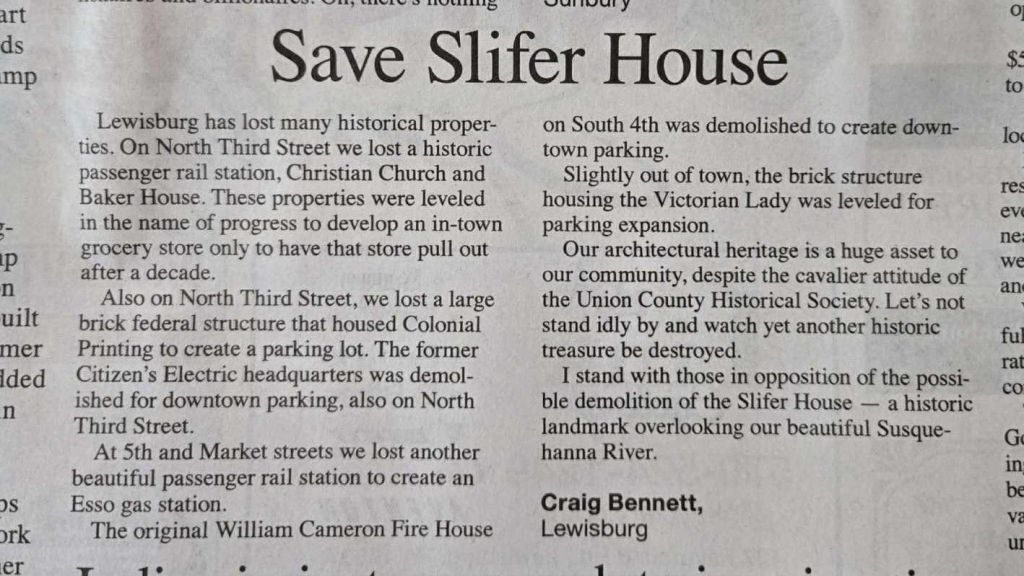
Even decisions within our towns are outsourced. Consider the plan to bulldoze Slifer House, a local landmark designed by a notable architect, listed on the National Register of Historic Places, and honoring a man who played a significant role in the town’s history. This building, originally a private residence, later an orphanage, and then a hospital, faces demolition. The board deciding its fate is disconnected from the community, concerned only with maximizing revenue at the expense of our shared heritage.

https://www.change.org/p/save-the-historic-slifer-house-from-demolition

I spoke with a township supervisor, a relative, and received the typical canned response about property rights. But this boilerplate conservatism fails in an era where BlackRock owns vast swaths of the economy, and we all now owe our souls to the company store. It’s not a free market when Larry Fink can mandate DEI policies across every place we shop or work.  Consumer choice doesn’t exist when all options on the shelf (see this video on BlackRock) are owned by the same entities.  Property rights may have built the middle-class, but appeals to them cannot address this systemic erosion of agency and destruction of ownership society by the current corporatism.

A town known for its Victorian charm and yet can’t protect this heritage from corporate interests.

This corporatist-consumerist machine erodes local identity and sovereignty by homogenizing communities. Regional dialects, traditions, and histories are drowned out by standardized corporate aesthetics and practices. The local diner with its quirky charm is replaced by a chain restaurant with identical menus and decor nationwide. The family-owned hardware store, where the owner knew your name, gives way to a big-box retailer staffed by transient workers. These shifts strip away the unique character of our towns, leaving behind this sanitized, generic, board approved and predictable landscape that could be anywhere—or nowhere.

Retaining local identity and sovereignty requires deliberate resistance to this tide. Communities must protect what matters to them, prioritize policies that support small businesses, such as giving tax incentives for independent retailers (rather than Jeff Bezos) or simply streamlined regulations that don’t disproportionately burden the little guy. Local governments should not side with entities outside of town, but rather should empower residents of the community to have a say in decisions affecting historic landmarks like Slifer House, ensuring that distant corporate interests don’t override community values. Grassroots movements can foster local pride by celebrating regional festivals, preserving historic sites, and promoting artisans who embody the town’s heritage.

Better options closer to home?

Sovereignty also means reclaiming economic agency. Communities could explore cooperative business models, where locals collectively own and operate enterprises, keeping profits and decision-making power in the hands of residents. Supporting farmers’ markets, local craftspeople, and regional supply chains can reduce dependence on corporate giants. Education plays a role too—teaching younger generations the value of their town’s history and traditions fosters a sense of ownership that no corporate boardroom can replicate.

Ultimately, the fight against cultural erasure through corporatism and consumerism is a fight for self-determination. It’s about choosing to preserve what makes our communities distinct, even when the deck is stacked in favor of scale and sucking out profits. By valuing local identity over corporate convenience, we can reclaim the soul of our towns and ensure they remain places worth calling home. Property rights were meant to protect local control—not to consolidate then outsource all decisions to out-of-towners.

What Is the True Cost of EV?

Standard

The battery electric vehicle (EV) versus the internal combustion engine (ICE) powered debate is one of the most irrational of our time. On both sides of the discussion, you have those frothing-at-the-mouth types who attack the moment you disagree. And this is exactly the response that I got after I had casually mentioned that ICE is 1/3 the cost under a click-bait post…

Model Y starts at $43,990 FYI.

One just called me ignorant, but others tried to make an argument, including this response:

I’m trying to figure out what car cost 1/3 of the price of a Tesla🤔🤔? The long range Model 3 (the one you want for a roadtrip) is $42,500 – $7500 tax credit is $35,000. This is not factoring in gas savings. Please tell me what new car is availability for under $12,000 (that’s the 1/3 cost of a Tesla you mentioned)?

Fair enough question.

Note, I never said new, but assuming that I did…

Believe it or not, and even in this inflationary age, there are still reliable sedans that come in under $20,000. Starting with a Mitsubishi Mirage G4 ($18,500), the Kia Rio ($17,875), and the Nissan Versa ($17,075), the lowest-priced option is half of even the subsidized price of the Tesla base model.

But you can’t exclude the subsidy from the cost of the EV, the government doesn’t have a magic wand to create value and we all end up paying for their expenditures in our taxes or by inflation due to money printing. And it only begins with that “tax credit” (so-called) given directly to privileged people who can afford a new luxury car.

What is the true cost of subsidies?

According to a study by the Texas Public Policy Foundation, the cost to us is nearly $50,000 for every EV produced:

Federal and state subsidies and regulatory credits for EVs totaled nearly $22 billion in 2021, or nearly $50,000 per EV, socializing the true cost of these vehicles to taxpayers, utility ratepayers, and owners of gasoline vehicles

Tens of billions of dollars have been spent trying to make EVs viable, and yet still the average cost of these vehicles is $65,000, compared to $48,000 for ICE. Why haven’t these subsidies leveled the playing field? It is simply the fact that batteries require tons of extra material and a much more complex process to produce.

So we can at least double that visible “tax credit” subsidy and already the true cost of an EV is close to three times a comparable ICE sedan.

We could stop there—the 1/3 number reached—but let’s continue…

What is the true cost of production?

The cost of a vehicle isn’t just the window sticker price or the money that it takes to manufacture. The bigger question—given the reason many say we should switch to EVs is about emissions—is what the increased environmental impact is of producing the batteries that go into these cars. Is this a trade-off we are willing to make?

Lithium batteries are costly, they require an enormous amount of water and also leave a toxic legacy that will grow exponentially as EV is adopted. Is it worth this cost to only marginally reduce carbon emissions?  That is to say, around 17-30% less emissions according to European Energy Agency? 

Sure, it could get better with a heavy investment in electrical generation and transmission—yet that is another huge cost financially and environmentally…

What is the cost of infrastructure demand?

This is where the conversation is the most interesting. We have the refining capacity and distribution network already built for ICE vehicles. Gasoline and diesel fuel have the advantage of being energy-dense and can be moved around using the existing highways. But what about EVs?

There is an illusion that comes with plugging something in. The load we put on the system is invisible. But there is no magic to it. Electricity is something that must be produced somewhere and then transmitted to the charging stations. If everyone adopted EV technology the grid would collapse.

We’re currently nowhere even near what it would take in capacity to convert everyone to EV. The easiest route to more electrical generation is to go anuclear. So how many new nuclear power plants would it take? Well, if we use miles driven and the number of cars on the road today, then we would need to build 250 additional nuclear power plants as big as the largest plant in the US, and the supporting infrastructure to keep up with this demand.

So are you willing to have a Palo Verde in your own backyard?

It cost 5.9 billion dollars to build one in 1988 (the equivalent of 13.9 billion in 2023) and we needed to start building 250 of them yesterday.  The solar and wind equivalent would be even more costly to build and maintain.

The costs would be astronomical and that’s just considering only passenger vehicles. Switching Class 8 trucks would take even more of these massive power plants and spending—the cost of switching would be insane.  Not to mention you would need more trucks to do the same work as you did with diesel.  And remember, every dime that we spend on this mass EV conversion could go to health care or education instead.

Can you now see how extremely costly EVs will become as they are adopted?

But it does not end there…

Why is the cost of wear items greater?

Batteries are heavy and weight is the enemy of “wear items” like brakes or tires—which is not to mention the additional damage to the highway infrastructure.

EV tires wear 20% faster than comparable ICE vehicles.  That is a cost out of your own pocket and also a concern for the environment. And do not forget, to be safe you’ll need those heavy-duty EV-specific tires. Sure, maybe this is not a very big problem for those who can already afford the premium cost of a new EV?  However, for that waitress struggling to make ends meet she will have to make the choice between safety and home utilities.

Next up is excess road wear.  Big trucks are obviously the leading cause of damage to roads. However, EV proliferation will start to cause problems for existing infrastructure:

A 6,000-pound vehicle causes more than five times as much road damage as a 4,000-pound sedan. A GMC Hummer EV, which weighs 9,063 pounds, will cause 116 times as much road damage as a Honda Civic, weighing 2,762 pounds.

The article cited above isn’t about EVs yet does apply given it is about the vehicle weight. Even the Model 3 is a whopping 3,862 to 4,054 lbs. Sure, one vehicle is not going to do a whole lot by itself, but the volume over time will significantly impact bridges and parking garages that were designed for lighter ICE vehicles. This EV vehicle weight bloat caused by batteries will require very costly upgrades to prevent catastrophic failures—like the Ann Street Building Collapse:

Speaking of disasters. With EV there is potential for a thermal runaway or reaction that can’t be stopped—like an ICE fire—by simply denying the source of oxygen. This hazard will result in more damage to road surfaces, more time spent in traffic jams after incidents, and additional toxic emissions. This is a cost to be seriously considered with all of the others.

Cost of time, capability, and resale value…

Many of the costs and drawbacks of EVs are hidden under a pile of subsidies or are moved upstream like the emissions—out of sight out of mind.

But what cannot be ignored is performance in terms of range. Time is by far our most valuable resource and nobody wants to spend hours in a place they don’t want to be because their vehicle battery is drained.

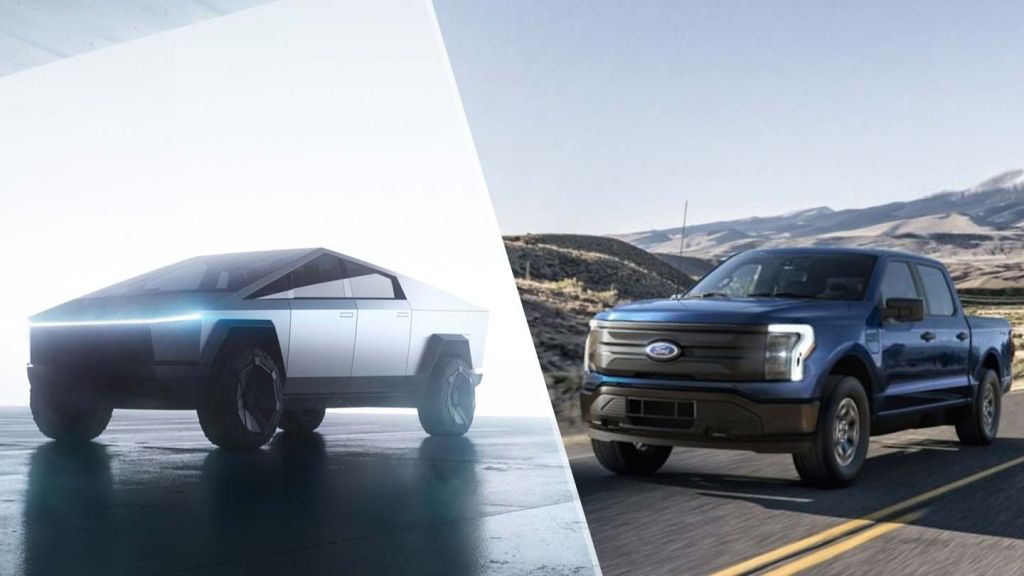
As far as capabilities, even EV trucks are useless for towing, both the Tesla Cybertruck and the Ford Lightning—both costing around $100,000 in the higher trim levels—aren’t so good at doing typical truck things. Sure, they produce a ton of low-end torque and are very fast. But the F-150 EV only went 90 miles pulling a camper and the Tesla only fared a little better.

7000lb luxury land yachts

And finally, we need to talk about plunging resale values. For a while EV was a novelty, the “way of the future” every suburban geek needed to virtue signal. But it appears that this is now starting to fade and reality is starting to take over again—46% of EV owners in the US plan to ditch EV to return back to ICE—and many will not recoup their cost because the floor is dropping out for used EVs:

A recent study from iSeeCars.com showed the average price of a 1- to 5-year-old used EV in the U.S. fell 31.8% over the past 12 months, equating to a value loss of $14,418. In comparison, the average price for a comparably aged internal combustion engine vehicle fell just 3.6%.

That’s bad news for the EV industry.  That is probably why Ford, after losing billions on their EV investments, has made plans to pivot back to hybrid.  Toyota, ever conservative, never made the mistake of getting sucked into the EV mania.  My wife’s C-Max (hybrid) has no range anxiety, saves fuel, and has a plug-in version that can go on battery for a length of a commute.  This is the right compromise.

ICE costs less to build, but the hybrid will likely emerge as the winner for being the best of both worlds. It has range like ICE, and torque like an EV, while also keeping its value and not requiring vast new expenditures to upgrade the electrical infrastructure. If costs are reflected in the market hybrid will come out victorious in the end.  Some can afford EVs today, but only because others are absorbing more than half of the real costs.

As a footnote, I’m not opposed to EVs nor do I think they are destined to go extinct. If resale values continue to drop I would even consider owning one. The whole point of this article is simply to give a bit of pushback against the Pollyannaish sentiments that would lead to an ill-advised mandate. There would be an enormous cost, and opportunity cost, that would come with this. Just the fact that EVs need massive subsidies to be sold should tell us enough. If it isn’t viable in the market it isn’t viable.

Love Is Transactional

Standard

A frequent complaint of Western men (who were burned) in a relationship with a Filipino woman is that she was only ever interested in his money and not truly in love.  I mean, it couldn’t possibly be that he was an entitled and whiny beach who expected her undying adoration while producing minimal returns, right?  She was supposed to love them like their dear mother who had let them live in the basement rent free for thirty years!

And you think I’m exaggerating.

Part of the problem (which is not a problem for those who understand the arrangement) is age-gap.  My wife and I have a difference in age that is normal or within several years of each other.  But frequently there is a gap of decades in these pairings and these men marrying women that are young enough to be their daughter (or granddaughter) don’t seem to get that she didn’t marry him for his charm or charisma.  She is hoping for a bit of financial security and her happiness will depend on his ability to deliver.

Many are aghast that Bill Belichick, 73 years old, would dare to enter into a romantic relationship with a 23 year old Jordan Hudson.  They say what business does a man his age have to date this young woman?  Isn’t it exploitative, an illegitimate relationship?  But they hate it because it exposes the reality of love.  Sure, the young cheerleader and old coach is extreme on the age scale.  And yet how is it any different from a 5′ tall 100lb female who picks a 220lb 6′ male rather than a guy that is her own size?

Is this gross?

Women Instinctively Marry Up

We all love those “living on a prayer” stories about two people surviving together against the odds.  And certainly there is an element of this type of spirit that we will needed to sustain love through thick and thin.   But, as my wife put plainly in our discussion of this, “You can’t live on just love.”  The practical is not as glamorous, we prefer not to see the crude mechanics that are always working beneath the surface.  And yet a man must deliver if he wants to have her adoration for more than the first year of marriage.

We don’t hear anything about Joseph when Jesus was an adult.  He’s already out of the picture.  And it is probably because he was older (maybe a widower) when he married Mary, a teenager, and died.  Traditionally an older and thus more established man was considered to be safer.  He already had his land and house.  He could provide support for her children and had a reputation going before him that younger men did not.  Why take a chance on an unknown commodity when there’s man who can afford to care for his new bride?

And despite the egalitarian push in the West women still want to marry up. High earning educated women do not lose this tendency towards hypergamy.  Sure, maybe they will settle for less, but prefer the man who can provide more.  This, incidentally, is why my pursuit of the impossibly failed, as she put, “You’re thirty years old living in Milton.”  Or, in other words, I lacked the size of ambition and type of social status she was into.  And, shallow as it sounds, this is just the honest truth.  Men marry youth and beauty, women marry size, strength and status.  

Potential Drives Attraction

Young women marry the poor young man’s potential, but all want financial security and physical protection.  While men, no matter how old or pious, appreciate women who of fertile age.  Men marry her potential to bear children.  This is reproductive instinct.  Even if both parties in a sexual relationship are not consciously interested in offspring—this is what drives their behavior.

He provides, she nurtures.

While the Belichick and Hudson pairing did raise my eyebrows and likely would not be possible if he wasn’t worth 70 million.  I’m also guessing they do have a few points of compatibility.  It is possible, you perverts, that they really do enjoy logic that much and have stimulating intellectual intercourse.  In the end, it doesn’t matter if your ideal says otherwise, you’ll always need to give something in order to get—nobody is going to fall in love with you for simply existing.  

Whether it is paid in cash up front or in IOUs of our future potential, we all must pay the bride’s dowry or move on.  If you’re old or ugly it is going to take a lot of money for her (and her family) to make her interested.  Only the young men can win by promising her the moon.  Of a certain age and you will need to deliver those goods up front.  

Hide this reality under layers of your storybook romantic fantasies and feelings of meant to be—love is transactional.

Going to the Well One Too Many Times

Standard

We had one of the best running backs in the state and had successfully run many toss sweeps during the year—probably a dozen times every game. 

It was the first round of the playoffs, and up against a rival that we had beaten handily earlier in the season.  The O-line dropped into their stance, the quarterback took the snap as our star took his step right, and—oh no!  

A linebacker, who had timed the cadence, anticipated the toss, plucks the ball out of the air, and a few seconds later turned this defensive prowess into six points.  And we never recovered.  We lost.

This is where the expression, “going to the well one too many times,” comes from.  A play can work hundreds of times, it can be the go-to option—until that one time when it becomes too predictable and the other team takes advantage.

Click here for a very similar play, not my own team, but close enough to trigger the bad memories.

Yes, Poles Can Shift

One of the big misunderstandings of current trends there is that they will go on forever.  If one is part of the cult of progress, change is seen as a march forward.  To the traditional there are endless cycles and seasons, the sun goes up and down.  To the cynical, humanity is on a downward trajectory, this slippery slope of social decay and spiral to the collapse of civilization.

In almost every case people expect that the current rules (or roles) can’t be flipped.  The winners today will keep on winning or what worked yesterday will keep on working as it always did—ad infinitum.

But long-term trajectories do change, cycles can be broken, powerful empires faded away into nothing and there have also been those massive breakthrough-type events that have completely changed expectations.  North is North, the compass is true as it always has been, and yet there is evidence that even this magnetic reference can flip.  

Things can go one way for a long time and feel very predictable and unchangeable.  But in one moment some threshold is crossed that upends the well-worn expectations.  The end of the epoch.  A critical mass is reached, the dam is finally breached, and the established paradigm blows up, and is washed away, like the linebacker running with the ball after picking off the toss.

Of course, in retrospect, we all claim to have seen it coming, that the signs were there, but few actually do.  If we did we would have invested better, acted differently, and taken full advantage.

Please Capitulate, Charlie!

In the Peanuts cartoon, there is the infamous football gag.  Lucy tells Charlie that she’ll hold the ball for him to kick and, despite her having tricked him many times before—by pulling the ball away right as he is wound up to kick, he is always fooled again.

Retail investors capitulating to short sellers.

This is how institutions have treated retail investors in the stock market.  In the past, when the market would downturn, the ‘smart money’ would short popular stocks, then spread FUD through hired shills to scare their ignorant counterparts who would then sell at a loss and move on.  When this retail capitulation would finally happen the market would finally be ready for the next cycle.

But now, in the meme stock era, the ‘Apes’ or those who learned from the 2008 crash, now hold, buy the dip, and refuse to sell.  This is not what the hedge funds and big banks had planned when they started to short AMC and GameStop.  They had planned to drive these companies into bankruptcy, and collect on their bets.  Instead, after over a year and a half of price manipulation (FTDs, dark pool abuse, naked shorts) and bashing, the selling has not happened.  This means they need to continue to pay the interest to maintain their short positions.

He’s hoping to wish this into reality…

It is a battle of wills, one retail rallying call being “I can be retarded longer than they can remain solvent,” and retail does control all of the exits in some heavily shorted stocks.  If retail does not throw in the towel, eventually the institutions will run out of new ways to kick the can down the road, they will get margin called and will have to cover.

At this point, retail investors have figured out the game.  They know how bashers are paid to scare them, they know how the price is manipulated, and they’re angry and not going to do what they’re ‘supposed’ to do.  Apes are not leaving.  And, at this point, this is a movement to expose the corruption in the market rather than simply an investment in a company we like.

If you want to be part of this history AMC and the new preferred equity called APE are trading for mere dollars.  You can even get free stocks by opening an account following this link.  This blog is not financial advice and investment is a risk, but we would love to have you as part of the Ape fam.

Maybe the pole shift won’t happen. Maybe Lucy has another trick up her sleeve. The future can’t be predicted. But we can be certain that trends almost always come to an end. Retail investors are no longer as easily fooled. This time Charlie Brown isn’t playing the game as expected.