
Rudolf Diesel: Thoughts about Idealism, Despair, Progress, Politics and Hope

Standard

Diesel powers the world economy.  I never considered the extent to which that is true until watching a documentary (click here to view it) about this type of internal combustion engine.  It is named after the inventor, a French-German mechanical engineer, Rudolf Diesel, and is the reason why global trade is possible to the extent it is.
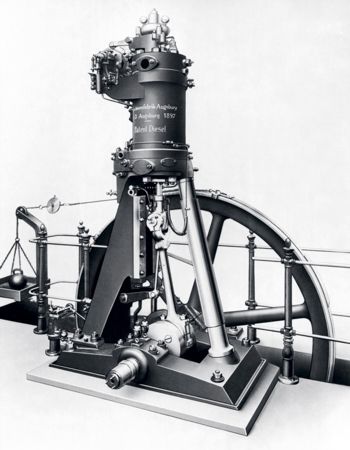
Early Diesel design, circa 1897

In considering the story of Diesel, his brilliant invention and the results, I could not help but see the pattern all too common with innovators.  Diesel’s life turned tragic, he was found floating in the North Sea, dead of an apparent suicide, and likely a result of his despair over the unintended consequences of his own design.

According to biographical accounts, Diesel was a utopian idealist who had hopes that his invention would be a catalyst for social change, free the common man and break corporate monopolies.  Unfortunately, while a revolution for transportation, Diesel power did not achieve the lofty social vision. 

Worse, the Diesel engine found use as a part in an efficient killing machine, the German U-boat, and this no doubt grieved the pacifist inventor.

Here are some observations…

#1) What is intended for good can often be used for evil.

Diesel had never intended his invention be used as a means of terrorizing North Atlantic shipping lanes.  And, likewise, many scientists and inventors had regrets related to their greatest contribution to the world.
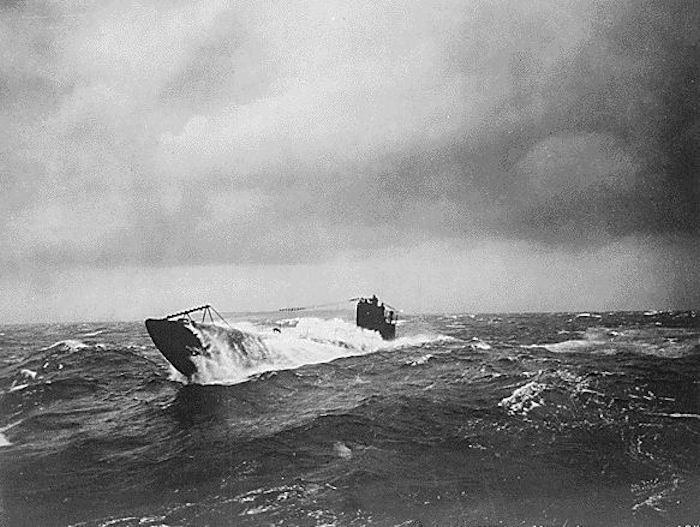
German U-boat, the original stealth weapon 

There are lists from K-cups to A-bombs online and many others.  For example, Henry Ford seemed to dislike the vast social changes and consumerist mindset made possible by his manufacturing revolution that helped automobiles become a fixture of American life.  Even this media, the internet, once thought to be the beginnings of an information age, has become a cesspool of pornography and ill-founded claims.

I worry about this as a blogger.  Once my thoughts are out there they cannot be contained again.  Will someone pick up my words and run with them in a direction I never intended?  It is a potential outcome that could scare a sensitive soul into silence and is at least a reason for me to be prayerful in what I post here.

I believe there are many people who do not thoroughly think through the potential unintended consequences of the ideas they promote.  There are many government programs and social movements intended for good that might actually be creating more problems than the one that they were intended to solve.

Which takes me to a second point…

#2) Yesterday’s revolution is today’s loathed source of inequality and evil.

It is ironic that the invention that did actually outcompete coal for market supremacy is now enemy #1 for many.  The internal combustion engine won in the marketplace because it was by far the cheapest most efficient means to power transportation and still remains. 

Given there are no steam powered cars, tractors, trains and ships anymore, it is clear that internal combustion is the best bang for the buck and remains to be rivaled.  Diesel powered locomotives and ocean going container ships are extremely powerful while being very economical.    

109,000-horsepower Wärtsilä-Sulzer RTA96-C

Diesel power still outperforms hybrid technology—A loaded Diesel powered class 8 truck is more efficient pound for pound than a Prius.

Think about it: It takes one gallon of fuel to move an 80,000lb truck five to seven miles.  A 2016 Prius, by comparison, carries a weight of around 4000lbs can go anywhere from 50 to 58 miles on a gallon of fuel.  It may seem the Toyota is greener until you consider that it is moving twenty times less weight.  Twenty Prius cars combined together, after dividing their individual consumption by twenty, would consume 2.5 to 2.9 gallons of fuel.  Now, obviously, combining Diesel and hybrid technology on the scale of class 8 truck would undoubtedly yield even greater results if fuel economy were the only concern, but the point remains that Diesel power is extremely efficient and effective—and only more so the larger the application.

So what’s the problem?

Well, the current popular perception is that the petroleum industry “big oil” is the enemy and conspires to hold back technology that would dramatically increase efficiency.  Worse than that, we are told that petroleum power is a source of global climate change and a threat to the global ecology.  Poor Diesel would be driven even further into despair if half this is true.  We fight over oil.

 #3) Progressive aims of our time are at odds with each other or self-contradictory.

Globalism, higher standard of living for more people and environmentalist ‘green’ movements are at odds with each other.  Pushing one direction will almost invariably come at the cost of the others. 

Progressive politicians may tout an idea of a ‘green economy’ as a jobs creator, but the reality has been that wind and solar energy can only remain competitive through heavy use of government subsidies.  Beyond that, even with the help, domestic ‘green’ manufacturing is unsustainable against foreign competition.  At best we will merely replace jobs lost by the heavy regulations placed on fossil fuels and raise costs of living across the board.

Furthermore, it was the progressive policies of the past century that have created the current conditions.  Government policies like the Rural Electrification Act, the Interstate highway system and trade agreements have actually moved us away from a more sustainable less polluting lifestyle.  Our cheap and easy movement from place to place has harmed community and local markets.

Rural Electrification Act propaganda poster.

It is hard to know how the current landscape would look had the progressives of yesterday had not literally paved the way for suburban sprawl, the trucking industry (that currently employs me) and driven us to embrace a coal powered grid.  But I do suspect more of our food would be locally grown, more of our products locally produced and solar energy far more the norm in places utilities would be to costly to maintain unless mandated by law.

In final analysis things might not be as dismal as they seem.

It is easy to focus on the negative without considering the good.  The means of today are likely as unsustainable as the means of yesterday and therefore the progress of the past century might not be the end of us after all.  The only consistent reality in the past two centuries has been that markets constantly change.

Canal boats an all the infrastructure to support them were soon replaced by steam power and railroads.  In Pennsylvania the lumber industry rose in prominence before a rapid decline after the states wooded mountains were reduced to stubble.  The coal industry once put food on the table for boat loads of immigrants before cheap efficient oil and a multitude other factors conspired against it.
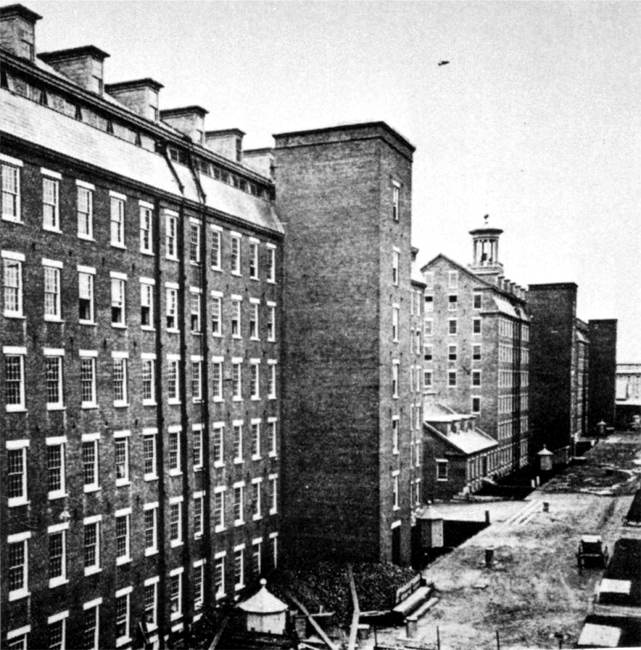
Bay State Mills, Lawrence, built 1845.

Manufacturing, from the once mighty water powered textile mills of the New England states to the formerly unstoppable domestic steel industry, has also migrated following cheaper labor and energy.  Each time promoting deep consternation and fear.  But so far the Luddites have yet to have the last laugh and a new balance is eventually found that usually benefits everyone.

Certainly the overconfidence and optimism about today’s new solution may become the big disappointment of tomorrow.  Yet, do we really wish to go back to a time when a transatlantic voyage was only something a religious zealot or crazy Viking explorer would do?  Would we really rather spend most of our time scrounging for just enough to eat as to avoid the possibility of mechanized warfare?

Nobody knows for certain why Diesel died... 

However, what is certain is that his invention changed the world and provided a means for interstate commerce and global trade that never existed before.  The pacifying effect of global trade, economic benefits of an expanded market place and inexpensive power are largely unappreciated.  But we probably do have Diesel to thank for helping create the long peace and prosperity of our time.

Maersk, Triple-E design, Diesel powered, container ship

In an age of information overload, where we know about beheadings in the Middle East before the people the next town over would have heard a century ago, it is difficult for our finite minds to contextualize and easy to become overwhelmed.  This, with an accompanying loss of faith, could be why middle-aged American white males are committing suicide (supposedly the most privileged in the world) and at an alarmingly increasing rate. 

Diesel’s pessimism about the future in retrospect seems to have been premature and his nightmarish perception of reality overstated.  In like manner many of our modern fears and despair inducing thoughts about the future could be negativity bias and nothing more.  Every generation seems to believe that the world is falling apart and still here we are.

Whatever the case, ignore the fear-mongering propaganda of the punditry and politicians.  Embrace temperance, a spiritual quality developed through faith, over mindless reaction and fearful impulse.  Trust God to secure the future, we can only live one day at a time and never ever lose hope!  If you are depressed about events in the world today, I invite you to see the higher perspective:

“Therefore we do not lose heart. Though outwardly we are wasting away, yet inwardly we are being renewed day by day. For our light and momentary troubles are achieving for us an eternal glory that far outweighs them all. So we fix our eyes not on what is seen, but on what is unseen, since what is seen is temporary, but what is unseen is eternal.” (2 Corinthians 4:16-18)

Perhaps the greater of two evils will be elected come November and drive the nation to complete ruin.  

Who knows besides God?

We may all die tomorrow, we will all die eventually, our work blown away in the wind of time and forgotten.  Everything comes to pass, nothing will remain as we know it today, but there is hope beyond all hope found in an eternal perspective.  So look up, because the sun is still shining and the future remains bright!

Do you see the light and feel the warmth of hope eternal?

If not, my prayer is for the blind to see…

What Mennonites Could Learn From Brandon Smith

Standard

His name was unknown.

He is a walk on linebacker on a college football team who started this season as a backup to a backup.  But, undaunted, he practiced and committed to being ready for that moment.

That moment came last Saturday when this unknown finally had his number called.  Brandon Smith, a number 47 on his iconic ‘no name’ blue and white jersey, finally got his chance. 

After yet another injury in a season plagued with injuries he was called upon and took the field.  He used the opportunity to lead a bruised and battered defensive unit and preserve a win for the team.

Smith, despite only having a few snaps at a college level until last week, was no bench warmer.  

Smith, a humble soft-spoken leader, was on the most successful high school football team in Lewisburg Green Dragons history, a team that advanced all the way to the state quarterfinals in 2010, and the backbone of an outstanding defense.

But more significantly than all of that, Smith was active in the local church and is by all accounts a young man fully committed to using his talents for the honor and glory of God.  He even turned down two scholarships to prestigious universities to walk on and suit up for Penn State because that is where he believed God wanted him.  

The reason why Mennonites do not show up to play ball.

The Mennonite tradition I was born into has a long list of activities that are not encouraged.  And, of those activities restricted or outright banned, one being participation in organized competitive sports and football was considered especially intolerable.

The reason for this is an idea called ‘non-conformity’ that is common to Mennonites and other Anabaptist groups.  It is based on a statement “be not conformed to this world” found in the book of Romans and in other Scriptural teaching about separation from the world.

This idea of non-conformity usually amounts (ironically enough) to conformity to a religious standard that is enforced primarily by church leaders.  The standards are different from group to group, but generally apply to technology usage, clothing style and entertainment.  Through their idea of non-conformity various Anabaptist groups have maintained their cultural distinctiveness in an ever changing world.

Unfortunately too often it seems the focus is on preserving a religious heritage and an ‘Anabaptist identity’ rather than a radical pursuit of God.  Wearing black socks or using a horse named Fred as transportation rather than a Ford does not change a person’s heart.

The problem is when non-conformity is nothing more than a human effort to please cultural expectations.

Conformity without transformation misses the point entirely and will keep us spiritually sidelined.

The bigger problem with Mennonite non-conformity and separation teaching is that it puts the emphasis in the wrong place.

Read the context:

“Do not conform to the pattern of this world, but be transformed by the renewing of your mind. Then you will be able to test and approve what God’s will is—his good, pleasing and perfect will.” (Romans 12:2)

The ‘be not conformed’ above is not a standalone statement.  Paul doesn’t leave us to guess his meaning and quickly follows with “but be transformed by the renewing of your mind” and is basically describing the need for something transformative to happen within us.

The word “transformed” is translated from a word “metamorphóō” (μεταμορφόω) that looks like metamorphosis and basically means the same thing.  It is a word used four times in the New Testament, twice it is translated “transfiguration” in reference to Jesus and twice (including Romans 12:2 above) to describe the change that takes place in a believer.

Transfiguration (Matthew 17:1-9, Mark 9:2-8, Luke 9:28-36) is a very significant event, the “greatest miracle” according to Thomas Aquinas, thought of as a bridge come between heaven and earth or perhaps what modern science would describe as a portal between dimensions.  It is where Jesus is seen by his disciples talking to Moses and Elijah and a voice proclaims Jesus as son.

The other time this significant word is used is in this passage:

“Even to this day when Moses is read, a veil covers their hearts. But whenever anyone turns to the Lord, the veil is taken away. Now the Lord is the Spirit, and where the Spirit of the Lord is, there is freedom. And we all, who with unveiled faces contemplate the Lord’s glory, are being transformed into his image with ever-increasing glory, which comes from the Lord, who is the Spirit.” (2 Corinthians 3:15-18)

It is quite clear in contextual usage that this word “transformed” is something spiritual, something God does, and not a matter of human effort.  In the passage from 2 Corinthians above it is about having a “veil” removed by the Spirit that allows us to be able to understand Scripture that leads to transformation.  In Romans 12:2 it is about a transformation that leads to renewal of mind.

What is renewal?

The word “renewal” as in “be transformed by the renewing of your mind” is translated from a word “anakainósis” (ἀνακαίνωσις) and describes a process.  In Romans 12:2 it is about the mind being changed through this transformative thing.  It is also a word used one other time in Scripture:

“At one time we too were foolish, disobedient, deceived and enslaved by all kinds of passions and pleasures. We lived in malice and envy, being hated and hating one another. But when the kindness and love of God our Savior appeared, he saved us, not because of righteous things we had done, but because of his mercy. He saved us through the washing of rebirth and renewal by the Holy Spirit, whom he poured out on us generously through Jesus Christ our Savior, so that, having been justified by his grace, we might become heirs having the hope of eternal life.” (Titus 3:3-7)

Again we see a process in which God intervened on our behalf while we were still lost, hopelessly blind to spiritual reality, and did something to change us.  It is not something we do for ourselves or a list of do’s and don’t’s passed down from generation to generation, it is something spiritual done in us by God’s grace.

Why Mennonites should stop playing for fun only and need to get serious about using their all for God’s glory.

Should I be brutally honest?

Our idea of non-conformity is more often a path to complacency rather than spiritual renewal.

We are doing it wrong…

We have become as the Pharisees who were obsessed with details, considered themselves to be the experts on all things Biblical, yet despite their diligent study of the book they rejected Jesus as savior (John 5:39-40) and totally missed the point.  They were “blind guides” who “strain out a gnat but swallow a camel” (Matthew 23:24) and we are there with them.

Instead of seeking after true transformation, and using everything in our life to bring glory and honor to God, we attempt to carefully divide up our activities into categories of “worldly” and spiritual.  Instead of integrate all areas of our life into our witness, we compartmentalize and become ineffective.

When we do participate sports, rather than see it as a way to a witness, we play for fun only.  In similar fashion, when we work we do it for money only, when use social media we use it exclusively for recreation only.  We think missions is only something that happens when we join our earnest religious peers on an airplane ride to Africa and otherwise arrange our lives in such a way that we miss opportunities staring us right in the face.

Instead of seeing athletic pursuits as a means a greater end, a chance to display Christian character to others, we see only the frivolity of sports.  Instead of seeing business as a mission to our customers and employees, we take a worldly approach by make profits a higher priority than people—then excuse it because it will give us more spices to tithe on Sunday or an opportunity to “travel over land and sea” as Jesus said (Mathew 23:15) the Pharisees did while calling them hypocrites and blind.

It is a problem called functional fixedness. In problem solving functional fixedness is when a person can only see things one way and therefore miss better solutions.

Could it be possible that this is because we got our poles reversed and have put our effort to achieve righteousness before real faith in God?

Could it be because we are non-conformed in outward appearance through artificial religious means, but have the same ‘worldly’ attitudes in our hearts and are not truly transformed through a renewal of our mind?

If so, we should stand up against our own hypocrisy like Jesus…

Jesus defied the religious expectations that he was supposed to conform to and so should we.

Jesus infuriated the adherents to the Bible-based religious tradition of his time.  He broke their rules of do’s and don’t’s as a way to point out their hypocrisy and true lack of faith.  Jesus, while they were busy arguing the theological minutia and details of application, was out healing and showing love.

Mennonites, like many other Christian denominations, are often so distracted by their own doctrines and dogmas that they fail at being actually faithful.  We are so concerned with preserving our own fundamentals that we neglect the larger matters of following after God’s way and the largest being genuine love for the world.

The truth is that we are never told by Jesus to physically separate ourselves from the world.

We should be in the world and not of the world, set apart in our attitude and approach to life rather than in outward appearance only. To truly follow after Jesus we need to be in the world, in places where the real people are and in the places that religiously self-righteous people avoid.

We need to consider the example of Paul:

“To the weak I became weak, to win the weak. I have become all things to all people so that by all possible means I might save some. I do all this for the sake of the gospel, that I may share in its blessings.” (1 Corinthians 9:22-23)

It is interesting to note that Paul, directly after telling us that for sake of the Gospel he has “become all things to all people” in the quote above, uses an analogy of an athlete preparing for competition.  It reminds me of the dedicated preparation of a faithful young man named Brandon Smith.

Smith was not only ready to take the field in terms of physical preparation either.  This week, after his debut on Saturday, his wife, Andrea, posted a status update on social media from her personal prayer journal.  It was an entry from exactly a year before and asking that her husband would have the opportunity to take the field:

That, my friends, is where it gets real.

We do not battle against flesh and blood, our battle is spiritual.  We do not win victory by artificial conformity and meaningless arbitrary rules either, we are fighting an unconventional war using asymmetrical tactics, we need the mind of Christ:

“The person with the Spirit makes judgments about all things, but such a person is not subject to merely human judgments, for, ‘Who has known the mind of the Lord so as to instruct him?’  But we have the mind of Christ.” (1 Corinthians 2:15-16)

Do you have the mind of Christ?  Have you been transformed by supernatural means of the Spirit?  Or are you just outwardly and artificially non-conformed through human efforts?  Whatever the case, do not bury the talents God has given you for fear of what others may think.

Smith is expected to get his first college start on Saturday afternoon against Michigan.  And, win or lose, I know #47 is playing for the right reasons.  I pray God blesses him and his wife as they serve.  I hope we all are prepared to serve wherever and whenever our own number is called.

The Day My Little Hope Died

Standard

I was a failure in my own mind.
My engagement ended. I had hurt someone that I loved deeply. My lofty romantic ambitions ended in a grinding and painful defeat. I was not the hero that saved the day.

I was confused, embarrassed, disappointed and determined to make up for my failure to deliver as promised.

That feeling of obligation only intensified when my ex-fiance became pregnant to another man a bit later. The relationship with the child’s father had not worked out. I was worried for both mother and child.

I wondered how my friend would be able to provide and decided I would offer the best support that I could as a friend. When I met Saniyah for the first time my fears began to subside. Holding her filled me with a fatherly pride.

Eventually, as my friend and her child were sufficiently cared for in her community, my initial fears were replaced with a little hope. Saniyah was real living proof that something good could come out of failure and represented hope that my friend would have the lifelong companion.

Nothing could prepare me.

It was a normal sunny spring day, March 26, 2009, a Thursday. I was still getting adjusted to my life on the road as a truck driver and had run hard that week.

I was still on the road when I received a text message. The contents, something about my friend’s baby being in the hospital, really didn’t register for some reason.

However, the message that came a bit later, the one telling me something unthinkable, I did understand and it hit hard.

“Why!?!”

My mind screamed for an answer.

There was a moment of intense anger.

Saniyah, only eighteen months old, was no longer with us. She has been found in her crib lifeless and blue. Her death caused by a combination of asthma and pneumonia. There was nothing that could be done to save her.

My work week ended abruptly. I told my dispatcher (whose office I was in at the time) that I would be unable to finish the week and had decided I would drive to be there for my friend. Soon after I was on the road headed east.

A surreal night and a mother’s wail.

The morning sun had been replaced by dark skies and driving rain. I drove through the torrential downpour, at the edge of control, the worn grooves of I-80 filled with water, and at a higher rate of speed than safe.

I arrived in Brooklyn that evening not even sure how I got there or what to expect. I had left without any real plan where I would stay or what I would do. All that mattered to me was that I would be there for my friend if she needed me.

I was soon feeling a bit better. My friend was willing to see me, her composure was amazing and soon we were back at her apartment with the small gathering of family and friends.

I had settled down on the couch. My friend was in the other room, which was connected by a large opening, she was looking through pictures as I chatted and then came a moment that will probably be with me to my dying day.

My strong friend, whose calm had been my comfort until then, let out a groan, a wail only a mother could make, and it was a sound that penetrated me to the deepest depths of my being.

That night, while she cried, I bit my lip and held back trying to be strong. But in that moment something broke, something tore deep inside me, I stared through the hole down into a hopeless and terrible darkness that I had not known before.

That was the day my little hope died.

We buried Saniyah a few days later. I recall staring at that little lifeless body, feeling helpless, overwhelmed and knowing that I did not have the faith to bring her back to life. I would have traded my own life to give Saniyah back to my friend.

The hole that stared back at me.

I stopped talking to members of my immediate family who did not attend the funeral. Before then I had been frustrated with a couple of my siblings who always seemed too busy when I called and now were too busy to honor the life of Saniyah.

It was not fair to them that they bore the brunt of my feelings (nor was it fair to the online community that I was a part of then) but I had a deep anger raging inside that could not be calmed. They became the more tangible enemy that I so desperately wanted.

And then there was the guilt. My friend had told me about Saniyah’s health issue and how the doctor seemed more interested in scamming the state than providing quality care. Why had I not intervened then and insisted that she see another physician?

I was not thinking rationally.

I was trying to stay one step ahead of a monster inside of me.

But I could not always run fast enough and in moments where I felt helpless, things that would only cause a healthy person a bit of concern, my gaze would turn inside and the nightmare would catch up to me.

I would look deep into that hole that had opened the night Saniyah died and a despair that I cannot begin to describe in words would envelop me. It is that thing of Lovecraftian horror, the words of Friedrich Nietzsche come to life, a terror that would leave me in pieces and sobbing.

My religion, largely an intellectual project, failed to provide me with good answers. I was, despite regular church attendance, an agnostic for all intents and purposes. My inability to protect those who I loved or prove my way to faith, along with a string of other failures to realize my dreams, left me hollow inside and feeling totally helpless.

The return of a new hope and purpose.

Tears still well up when I talk about Saniyah and the circumstances of her death. Life is never the same after an experience like that. But those episodes of helplessness and profound loss, of reliving that moment from the night she died, have gone away.

My anger subsided. My estranged relationships restored and mostly better than ever. My faith now built on foundation more substantial than the book knowledge that had been so woefully inadequate to save me. I have a bigger hope now than the little one based in my own efforts.

After years of struggle and questions too big for my own mind, I realized that the hope Saniyah represented still lives on. It is a hope built on trust on faith not of my own works and found in the sufficiency of God’s grace.

My temporary loss is heaven’s gain.

The Blessings Of Not Being Married As Planned

Standard

This was not the blog I had planned.  I have two finished blogs and had told a friend I may flip a coin to choose between them.  However, I was thrown a major curve ball which has caused me to wish to delay release of those blogs to go with a third option: Write this blog and share it first.

Enjoy…

When life does not go according to plan and you end up single, like me.

My plan was to be married by twenty-one.  I’m the relationship kind of guy.  I wanted to share my life with someone special more than anything else, wanted children, and therefore had planned to be married as soon as possible.  However, my plans to marry that high school crush passed along with my twenties and, despite my heroic efforts, I remain single to this day.

Anyhow, I decided to write this blog so my single (and wanting) friends can have a reason to smile.  I’m single, it was not entirely my choice, it has been extremely painful at times, profound loneliness stinks, and yet God has been faithful.  There have been many moments of deep despair and hopelessness, but I am here to tell you that there’s reason to hope and be happy.

I’ve decided to write about the things I would have missed out on and what I would not be today had I married when I planned.  It is hard to imagine what I would be for certain today had I married young and we have no way to know that counterfactual reality of might have been, yet there are some things that I am fairly certain about.

Six things I would not be had I as a married planned:

I would not be a blogger.  You are reading this blog because I have time to write it as a single person.  Writing is something I do not completely enjoy, but it is something that seems to be a gift I have and I do it mostly as an act of faith.  This blog was started a couple years ago as a response to the questions in my mind about my purpose in life that came after a “no” from a girl who was the embodiment of a the Mennonite ideal for a wife.

I would not own an awesome car.  Earlier this year it was my privilege to buy something most married men can only dream about and that being a brand new Shelby GT350 Mustang.  Sure, we should not live our lives for such material things, but it was nice to see my hard work and diligent saving pay off in a tangible (very thrilling) way.  So, while I would trade this mechanical beast for a wife and family in a heart beat, I still enjoy the memories of many grins and the experience.

I would not know the pain of rejection.  Pain is bad, right?  Well, not entirely actually, pain is temporary and with pain comes empathy and the ability to appreciate pleasure all the more.  Sure, we avoid pain, we probably should avoid unnecessary pain, and yet pain helps me to identify with those who suffer.  More significantly, it has allowed me the privilege of a deeper appreciation and understanding of my Lord and Savior who suffered for our sins.

I would not have the unique perspective that I do.  My experience as a single person with unfulfilled desires and social needs often unmet gives me a special vision for the church.  I say unfulfilled needs thinking about Maslow’s hierarchy of needs and the idea that people need deeper connection to thrive.  I can recall the many times I felt spiritually deficient, isolate from human touch and longed for a church that was more than superficially concerned.  The fact is, we were made for meaningful human connection and without it we become unhealthy.

I would have missed out on many wonderful friendships.  As part of my dealing with my own disappointment I became more open to being the answer for the needs of other people.  Because of what I had gone through it was my desire to help others in similar circumstances.  I have stepped out in faith and as a result have been very blessed.  The friendships gained would likely be impossible had I been a married man.  Investments made in Christian love for other people always seem to pay back in surprising ways.

I would not have been asked on a date.  There is a first time for everything and I had a first over the weekend.  When I wrote my last blog it was not with a clear personal agenda or self-pity.  There are some unanswered questions right now that keep me from being ready to make a serious romantic commitment.  My blog was to create awareness of an issue that is not being adequately addressed in the conservative Mennonite church that I know.  One thing for certain, I had not planned on being asked out on a coffee date by a very intriguing young woman.

But I do like my unplanned blessings and especially when they come because of faithful actions.

I have much to be thankful for as one blessed more than he deserves.

My next blog will be on the topic of marriage as martyrdom.  But before that I wanted to encourage my single friends to see the bigger perspective.  Those who remain single (because they were rejected by the world’s standard and not for prideful selfish reasons) may obtain the bigger crown because they are most like our Lord and Savior. 

So, to my single friends, remain faithful.  God may have some unplanned surprises in your future of a very pleasant variety.  Trust God, the one who holds the future, and not your own human perspective or a worldly understanding.  Live in true faith today and may God soon grant you the desires of your heart.

Smile too, it’s attractive.

Does One Voice Make A Difference?

Standard

“‘Meaningless! Meaningless!’ says the Teacher. ‘Utterly meaningless! Everything is meaningless.'”

The book of Ecclesiastes paints a bleak picture of life.  It describes how cycles of nature repeat and nothing really changes from before.  We labor yet we are soon to be forgotten along with our labor.

If that is how he felt then, then how should one feel today?  Meaning can be further lost in our current understanding of the vastness of time and space.  We rush with an ever quickening pace into a sea of nothingness.

“Then I applied myself to the understanding of wisdom, and also of madness and folly, but I learned that this, too, is a chasing after the wind. For with much wisdom comes much sorrow; the more knowledge, the more grief.” (Ecclesiastes 1:17-18)

Wisdom goes hand and hand with sorrow because the unwise do not realize they are unwise.  So a wise person is often stuck watching the foolishness of others unfold before their eyes without being able to do anything to stop it.  Knowledge of the patterns of people and history is often a source of painful helplessness.

What can a compassionate and intelligent person do but mourn the world then bury themselves in pleasurable indulgences so they can forget?  

The excesses of king Solomon, the writer of Ecclesiastes, were not a product of foolishness, they were an attempt to escape a maddening reality where all men (wise or foolish) would eventually perish.  His knowledge and wisdom made all of his pursuits become empty.

“The wise have eyes in their heads, while the fool walks in the darkness; but I came to realize that the same fate overtakes them both.  Then I said to myself, ‘The fate of the fool will overtake me also. What then do I gain by being wise?’  I said to myself, ‘This too is meaningless.’  For the wise, like the fool, will not be long remembered; the days have already come when both have been forgotten. Like the fool, the wise too must die!” (Ecclesiastes 2:14-16)

It is a reality that is inescapable, watching people make the same mistakes over and over again, seeing where the patterns of today will lead, being treated as a fool by those whom you are trying to warn, unable to convince them until it is too late and the die is already cast.  It is enough to make a wise person stop wasting their efforts.

This is the battle a writer who wishes to make a difference in the world must face.  There is no point in writing if there’s nobody to read or comprehend.  We wish to be understood so that others might gain from our experience and insights.  But in a world of over seven billion voices who has time to listen?  How can true wisdom seperate itself from the inane chatter?

Even my triumphs, even when a blog I write hits a chord and is viewed a thousand times, there is often a feeling of morose that follows.  My writing is never good enough and even if it was who’s actually listening?  I feel compelled to speak my mind yet then wonder if it is meaningful that I do say a word.  I fight off discouragement until it is time to write again.

However, what matters to me ultimately is not the thousands of anonymous visitors here.  No, it is the people, small and unimportant to the world, whom I’ve been able to encourage.  Whatever lofty ideas I share here matter very little in the end.  What matters is those who have found my love to be genuine and will remember someone cared about them.

The meaning in my life doesn’t come from being important to the world.  My meaning comes from being remembered and appreciated by those unnoticed and forgotten by the world.  If our efforts make a positive difference for one person then it is enough.  

My voice might not make much difference in the world.  But if I can change the world for one person and give them hope or answers then I have made a world of difference to them.  

I find the most meaning in life when I narrow my focus to loving one person.

Thoughts Of Anonymity 

Standard

​Walking down the sidewalk in Baltimore.  Looking for a place to eat after the company that was supposed to load me ran out of corn.  It was too late to find anything else, so I’m stranded for the night without a shower since yesterday afternoon.  I’m not sure how I feel about it.  On one hand I could be annoyed that someone else cared that little about my inconvenience, loss of time and income, that they didn’t make the effort to know there was enough corn.  I mean, it isn’t that difficult to know, the pile is there in the open and all they needed to do is look then make a call.  But, on the other hand, although sticky and sweaty from two days of July weather, I’m still alive and well.  I’m free to walk to a restaurant in what appears to be a nice part of the city.  I’m the scruffy guy amongst the people out on their jogs.  I probably don’t look to much worse than I typically do.  So why not enjoy the moment?  Still, I might rather be home doing nothing.  However, I’m one of those Americans who does what they are told, it is what keeps the economy going and yet is it good?  Should a guy my age be walking anonymously down the streets of a city where nobody knows him and nobody seems to care to know him?  I don’t think I want to think about it.  I will eat, maybe for a moment forget that I do not belong here and be quietly happy as the world passes by…

Just Say Yes!

Standard

Many of my readers may be too young to remember Nancy Reagan’s “Just Say No” anti-drug campaign.  But, right off the bat, I want to make sure that y’all know I am not encouraging experimentation with drugs. 

What I do intend to share is a choice, a basic philosophy change, that is key to faith and spiritual growth for those who share my personality type.  If you are one of those confident types who go charging headlong into everything, this might not be the blog post for you.

Anyhow, most of my life has been defined by my cautious restraint and some deep feelings of inadequacy.  I have been reluctant to start off in a direction without knowing that I will stay committed, fearful of failure, etc.  Who wants to waste time and effort on something not your true ‘calling’ in life, right?

Well, this is an approach, taken to an extreme, is completely faithless and ultimately results in endlessly spinning your mental wheels trying to decide what is yours to do or not to do.  Which is ironic, because this effort to be focused and directed can actually be the thing that keeps many from finding a greater vision.

But I decided recently, within the past few years, that my last excuse for waiting to be ready (passing the age when Jesus started his ministry) was gone.  Now was do or die time—time to stop making excuses.  I needed to step out more boldly in faith.  The first part of that has been for me to start using a word difficult to use: Yes.

That three letter word “yes” or rather my newly minted use of it has been transformative.  No, I don’t use it for everything (sorry, Kevin, maybe some other time) and I’m not advocating going across to the other extreme of over-commitment either.  But generally I have decided that “yes” will be my answer when asked.

What I am referring to in particular is my participation in my local church body, but to pursue things beyond that and find the spiritual vision out there waiting for me.  I have, despite my feeling unqualified, begun to say “yes” when asked to teach, to give devotionals, or otherwise step outside of my comfort zone.

I must admit, this is not easy for me, public speaking is not my forte and that might surprise those who know I’m quite capable of speaking when there’s a small and safe audience.  Running your mouth is quite a bit different from trying to find something substantive and worthwhile for a congregation of those who might not be impressed.

However, the experience has been rewarding.  First, I have proved that I am marginally capable despite my reservations.  Second, I have been encouraged by positive feedback, I am learning something new every time about how to prepare and am starting to find my voice.  Overall my fears were overstated.  Nobody picked up stones to kill me yet.

I’m also in good company for my feelings that long held me back.  Moses didn’t feel he was able to speak.  Jonah ran from the prophetic duty God had given to him.  And even Jesus struggled “take this cup away from me” before he submitted to God’s will and started a painful journey.  It is that willingness to say “yes” that leads to the greater vision of our life to be fulfilled.

So, for those fearful, for those cautious to a fault, to all you over-thinking people and analytical types.  To you folks I encourage saying “yes” and, not just once or twice, make it a new habit.  Make it your philosophy of faith and see what happens.  May you find the same blessings I have in my deliberate choice to be more available.

Perhaps vision is not something decided in advance, but something that intersects our path when we start off walking.  As a friend recently told me “it is easier to steer a ship that’s moving.”  And, at very least, doing something rather than nothing might give us helpful experience for when we do find *that* something.

Now, for those of you on the extreme other end and full of big ideas, for those of you who are routinely over-commitmented and sometimes frustrated, I recommend something else.  Have you ever considered that you are so full of yourself that you are like Martha, too busy in your religious duty and missing out on really hearing God? 

It seems the key to success in ministry is not having your own ability, your own ambition or you own agenda.  It is depending on God as your strength, stepping out in courage despite fears and being available when asked.  It is saying faithfully “yes” when your mind has a million reasons for saying no.

The church could do with far fewer self-described visionaries and self-important missionaries. The arrogant should stay home where they do less damage.  Instead what is needed is humble and ‘incapable’ men who earnestly seek to do God’s will despite their known weakness, present fears or past failures. 

The church needs more faithful examples like Isaiah who, seeing God’s glory, exclaimed, “Woe to me!  I am ruined!  For I am a man of unclean lips, and I live among a people of unclean lips, and my eyes have seen the King, the Lord Almighty.”  But later answered the call soon after and said, “Here am I. Send me!”

Or leaders like Paul…

“I came to you in weakness with great fear and trembling. My message and my preaching were not with wise and persuasive words, but with a demonstration of the Spirit’s power, so that your faith might not rest on human wisdom, but on God’s power.” (1 Corinthians 2:3-5)

God doesn’t need the qualified.  It is not about our being extraordinary or special in the eyes of our religious peers.  It is about being humble, generally available to others and ready to accept an opportunity to serve.  God wants those who simply say ‘yes’ when asked. 

Willingness to serve is a habit and a good habit.  It starts with our learning to use a three letter word when called upon.  So, take courage my timid friends, put your faith in the one who asks, and just say yes!

A Tempest in a Coffee Cup?

Standard

One may think from the news coverage that Christians are out, torches and pitchforks in hand, looking for coffee shops to burn.  The story is that Starbucks isn’t exploiting Christmas enough and this lack of proper capitalization for a profit of holiday has offended the sentiments of the unwashed religionist hoards.

This fury seems to have originated with a humorous poke at a bland Starbucks holiday cup design.  It was escalated by a fuddy-duddy blowhard extraordinaire (aka Joshua Feuerstein) who, apparently not seeing the joke, posted a video that urged a movement to trick hapless minions of secularism (aka Starbucks employees) into saying Merry Christmas.

And, since then—like that bar fight where nobody knows which drunken idiot started it or why they are fighting to begin with—the story of angry Christians has exploded into a media fiasco.  But strangely the two main characters in this brawl do not seem to exist as much more than mythological creatures and that has led some to wonder if the whole ordeal is a fabrication.

Where are these offended Christians?

In my cadre of conservative Christian social media commentating friends, I have yet to see one who is offended by the Starbucks design.  In fact, of my coreligionist friends voicing an opinion, I have observed two main camps:

1) The Apologists, or those annoyed by other Christians who are offended by Starbucks cups and have taken to social media to scold these theoretical entitlement-minded embarrassments to the Christian cause.

2) The Sanctimonious, or those who are suspicious that this controversy is created by the liberal irreligious media and take their high horse to condemn those annoyed as being pawns in this imagined nefarious plot.

Then there’s one last group made of non-religious friends:

3) The Amused, or those who watch with a little gleefulness, are not overly suspicious of the media and have little trouble imagining Christians that feel they are entitled to special treatment or would become outraged over something as silly as Starbucks cup.

My own opinion is that the whole thing has gotten blown out of proportion.  It has likely only gained traction because we are already accustomed to the cultural wars that take place over issues similar to this.  There is usually a skirmish or two this time of year (whether arguing for and against nativity scenes or some other cultural expressions of Christianity) and this has primed our pumps to expect it.

I also do contend, again, that Joshua Feuerstein represents a small segment of the general Christian population.  There’s always those who are perpetually offended on behalf of their own tribe (look at the Halloween costume controversy at Yale and the chaos at Mizzou as examples) and yet whether or not these outspoken activists represent much more than themselves is an open question.  My own anecdotal evidence suggests that those outraged by the cups are, at the most, a fringe element even amongst fundamentalists.

What’s with the media coverage, anyhow?

If one wants to study the interplay of the media echo chamber and social media viral phenomena they should start here.  There seems to be a positive feedback loop at work in this where a one-man movement on YouTube, picked up by the mainstream media, was then sifted through the amplifier of social media and each step promoting more to add their own opinions.  This has gone through several cycles of growing in magnitude.  Even Donald Trump weighed in suggesting a boycott of the mermaid logo brand.

I do not think this is a media reporting this ‘controversy’ is a coordinated attempt to discredit Christians.  Professional journalists are not any different from the rest of us and will report on what is the latest buzz as we do.  In the age of social media the feedback loop is faster and the amplification quicker than ever.  By the time people start breathing again, we all feel a bit duped and start to wonder how the insanity got started.

Newsflash: All news is manufactured!

And, furthermore, we all participate in manufacturing news when we share about events that interest us.  We present a product of our own perspective whenever we tell other people about anything.  As a professional news reporter, we also select the facts we believe are relevant and omit those that seem inconsequential.  We carefully craft our words to reach our target audience and create a narrative based in our own worldview.

The adage “if it bleeds it leads” holds generally true.  We are drawn to controversy and this latest fracas over Starbucks cups has struck a cord or we wouldn’t be talking about it.  There are evidently enough perpetually outraged Christians like Feuerstein to make a premise of widespread butthurt believable.  He may be a crude caricature of us, but there’s a reason that he’s not taken as parody and that’s likely because he’s representative of a type of person we know does exist.

My decaffeinated analysis of the issue…

Yet, the bigger story is that most people (Christian and secular alike) are seemingly more offended by the controversy itself than the plain red cups that started it.  So maybe we should be careful not to get too carried away in our own outrage over the outrage that may or may not be an outrage at all.  There are plenty of people sharing dumb opinions (Bill Nye on abortion for example) and this is probably a good reason to reserve judgment until the facts are spoken.

Anyhow, for the record, the only problem I have with Starbucks is the inferior quality of their brackish liquid.  I prefer my coffee with milk, sugar, in a Dunkin Donuts cup and agnostic.  If that offends you, then please, by all means, do complain and start a movement or something—I will sip away amused as my blog views climb.

“…whoever wants to become great among you must be your servant,  and whoever wants to be first must be your slave—just as the Son of Man did not come to be served, but to serve, and to give his life as a ransom for many.” (Matthew 20:26-28)

The Obession of Avoiding Stupidity

Standard

We all like to think we know something. Every person has knowledge, from the sophisticated intellectual with a large vocabulary to the redneck who touts their common sense, and for most this can give a smug sense of security. However, the more I study science and history the more I get the feeling that we all probably know far less than we think we know. Perhaps knowing to be humble in what you know is more important than having the dictionary memorized? Perhaps both redneck and professor have knowledge that the other would benefit to know?

Anyhow, here’s a blog by a smart young woman worthy of being read….

Emily Sara Smucker's avatarThe Girl in the Red Rubber Boots

Do you remember how it feels when they find out that you’re actually stupid?

I do.

I remember the day they discovered that I didn’t know where Honolulu was. When they found out that I didn’t know the freezing temperature of water. When they snickered in the corner because I thought that a bacon cheeseburger just had bacon on it for the meat, and no hamburger.

Clear memories, etched deep into my brain, because that’s what I was insecure about as a teen. I wasn’t insecure about my looks or my popularity or all those other things girls in books were insecure about, but I was insecure about my intellect. I even wrote myself a list of “Rules for Learning Things Without Looking Stupid.”

(Tip #1: If you don’t know something, don’t ask. Look it up on Google later. Tip #2: If you don’t get the joke, pretend you just…

View original post 878 more words