Pie in the sky…when you die…

Standard

The expression “pie in the sky” is used to describe an impractical idea.  It originated in the lyrics of the song, “The Preacher and the Slave,” that was written to the tune of a populis Christian hymn:

Long-haired preachers come out every night,
Try to tell you what’s wrong and what’s right;
But when asked how ’bout something to eat
They will answer with voices so sweet:

You will eat, bye and bye,
In that glorious land above the sky;
Work and Pray, live on hay,
You’ll get pie in the sky when you die.

If you are familiar with Christian hymns, you may recognize it as the same tune as “In the Sweet By and By.”  It was written in 1911 by Joe Hill as a protest song reflecting the frustration of those who were looking for something now. 

Hill pokes fun at Salvation Army street evangelists for their impracticality. His lyrics are cynical, self-interested and agnostic, but honest.

The critique of Christian evangelical efforts is stinging.

True evangelical faith…cannot lie sleeping…

Evangelical Christianity has earned a reputation.  It has frequently centered on condemnation of what those ‘outside the faith’ are doing wrong and yet lacks the introspection to know it is failing to live to the example it claims to promote. 

Jesus did more than sing happy hymns or preach sermons about future glory; he also healed, provided food, wine and urged his followers to give selflessly of themselves. The words of Jesus are reflected in this poem:

True evangelical faith cannot lie sleeping. It clothes the naked and comforts the sorrowful.
It gives to the hungry food and it shelters the destitute.

It cares for the blind and lame, the widow and the orphan child.
It binds up the wounded man and offers a gentle hand.
We must become everything to all men.

Abundantly we have received and gratefully we will respond.
So overcome evil with good and return hatred with love.
That is true evangelical faith.

That is the writing of Menno Simons (1496–1561) urging a Gospel that met real needs today.  It was put to music by Larry Nickel and would be much harder to parody as a message of pie in the sky only.  Each line can be traced to something Jesus told his followers.  It is a evangelicalism of practical value rather than only immaterial abstractions.  It promotes a faith of concrete action in contrast to words-only ministry.

A message that focuses on being a solution…

The mocking words of Hill point to a purely human effort.  While the ‘love’ of too many who profess faith is empty of real sacrifice and true empathy for human need.  Both are an incomplete message.  One piously over-spiritualizes faith while the other is dripping with resentment and bitter carnality.

The true evangelical faith of Jesus is bread today, shelter today and clothe today.  The example is a love of substance and help today rather than of just pleasant words.  It is so much more than impractical pie in the sky promises of something tomorrow.

Sailing Beyond Safe Waters

Standard

I’ve been on a journey of faith.  I have left the comfortable waters and ventured to territory of expectations where few would dare to go. 

Many people claim faith.  But oftentimes what some call faith is actually the safe harbor of religious tradition and cultural obligation.  They never go beyond what is reasonable to themselves or their peers, they live within reasonable boundaries and never question the limits of their own reasoning or grow beyond it.

It requires a small degree of faith to sail in a harbor and some skill too.  But, going beyond the harbor, sailing beyond the navigational charts, trusting that inner compass of promised lands over the horizon and beyond sight, that requires true faith.  It is a faith for a journey that can’t be planned in advance, a journey where provisions could run out, where there is no shoreline to see, where storms arise and hope can seem distant or even an impossibility.

Some days I do long for the simplicity of that harbor I left before starting this journey.  I pray that my faith will lead me to the place of solace that promised to be right over the horizon.  It becomes hard to believe your own eyes when a sight of land at a distance has too many times before become a mirage.  The food has become stale, the rations have been diminished and the ship has been in better repair.

Storms of fear and doubt come and go.  It is hard to distinguish friend from foe in a place where true colors are often hidden and only discovered after a cannon blast has ripped a hole in your side.  There are days of pleasantness, a good tailwind and clear skies.  There are days of fog, days of doldrums, dark nights, moments of terror and times where all seems hopeless.

Still, one has little choice, one must continue to sail on in faith because the harbor is too far gone to return back. You continue ahead knowing only in your heart that is land ahead.  It is a faint glimmer of hope in a vast empty ocean, but it is a hope that cannot be lost. 

So I continue in faith…

Finding your motivation…

Standard

I’ve been listening to a motivational video since a friend posted a link to it.  It is advice of Arnold Schwarzenegger, a man who rose to prominence through body building, with an unlikely accent began a career as an actor and then later was elected governor of California.

What he said resonates with me.  I know enough of his story to appreciate the ethic of hard work, confidence, need to overcome fear of failure, to break rules, to ignore naysayers and pursue visions.  We limit ourselves.  The truth is that I limit myself and it is because I doubt my chances for success.

Had Schwarzenegger thought like I do sometimes could he have accomplished what he has? 

No, probably not…

I am a driven and determined guy.  I dream of the impossible.  I hope for the impossible and I believe the impossible is possible by the grace of God.  For some faith is an excuse for them to sit on their hands and do nothing.  But for me faith means full investment in the visions that God has put on my heart.  There can be no compromise with those who tempt you to quit.

I have encountered the naysayers, they are many, and they will try to turn you from what is best.  For your good, they claim, you should settle for less and seek the compromise.  They will recount their own failure as reason, cite facts and present logics, but do not let their faithless words take away your courage.  Fight for what is right and good because you trust that God is right and good and is on the side of those who pursue righteousness and goodness.  Do not listen to the naysayers.

I have my own anxieties.  I too often have made excuses for myself and can too easily withhold my best effort with a fatalistic attitude.  Yet, when we do not put forward our best efforts because of fear, can we blame anyone other than ourselves for our own failure?  It is a lie to blame God or fate for our own failure unless we have truly invested our all.  Those who have done their part and still come up short have still won.

Another thing I have done too often is view failure as defeat.  Failure should instead be viewed as a learning experience.  As the saying goes: “If at first you don’t succeed, try, try again.”  If you give up at the first sign of trouble or after facing some tough opposition, then the goal must not be all that important to you.  To stay focused on the prize, despite the pain, the scars and torments of past failure, that is victory.

I am not afraid to think outside the box.  Sometimes success requires being alone and setting the trend yourself rather than wait on others.  Yes, I would rather the comforts and company of the group, but when the group is limiting God’s purpose for them or encouraging complacency, then one must lead.  A true leader does not wait to be sure others are following, they do not pay attention to rules that come between them and doing what God has for them.

Now, there are components I believe are missing from Schwarzenegger’s perspective, namely God’s providence and grace, nevertheless there is much true in his advice.  Those who have faith can overcome pain, failure, naysayers, fear, worldly rules and be willing to work their butts off for what they believe.

So find your motivation, do not be content to live mediocre and safe, go out and change the world with the fullness of your God given abilities.  To do less than your best, less than you are able to do, that is failure and faithlessness.

The Child of a Creative Mind

Standard

A couple months ago I was hit by a book idea.  I say ‘hit’ because that is exactly how it felt.  The source seemed external, the ideas flowed into my consciousness as if being downloaded and I worried I would not be able to get them out fast enough to keep my mind from bursting like an overfilled balloon.  The result was over 17,000 words and a ‘chapter’ that may actually transform into a first book of a series when it is the right time to pick up the project again.

The “Spirit of God” Found in Creativity

My ‘experience’ is not unique to me.  It was topic of a TED talk, “Your elusive creative genius,” where author Elizabeth Gilbert speaks of her thoughts after writing a book that went big and what she has learned since.  She describes a “protective psychological construct” ancient people used that has been displaced with individualistic rational humanism.  People of the past would attribute a “creative thing” other than themselves, which Gilbert argues was healthier and may relieve some of the anxieties felt by many creative people.

Interestingly Gilbert mentions the Greek word “daemons,” which translates as it may sound and is a spirit that possesses a person.  In the Christian lexicon, the word has a rather negative connotation and is the root of demonic.  Others, she claims, would chant “Allah, Allah, Allah” (translates “God, God, God”) when they caught a “glimpse of God” in the extraordinary expression of a person that could not be explained.  However, Gilbert does leave out one thing and that is how the Bible testifies similarly about a creative mind that originates from God and is God.

“Then Moses said to the Israelites, “See, the Lord has chosen Bezalel son of Uri, the son of Hur, of the tribe of Judah, and he has filled him with the Spirit of God, with wisdom, with understanding, with knowledge and with all kinds of skills— to make artistic designs for work in gold, silver and bronze, to cut and set stones, to work in wood and to engage in all kinds of artistic crafts. And he has given both him and Oholiab son of Ahisamak, of the tribe of Dan, the ability to teach others. He has filled them with skill to do all kinds of work as engravers, designers, embroiderers in blue, purple and scarlet yarn and fine linen, and weavers—all of them skilled workers and designers.”  (Exodus 35:30-35 NIV)

In today’s age it seems even the religious do not characterize craftsmanship as a spiritual gifting and yet we see in the passage above that the “Spirit of God” is given credit for artistry.  Many Christians today tend to compartmentalize their pursuits labeling some activities as ‘spiritual’ and others as ‘carnal’ or lower, but I believe this could be errant thinking.  Perhaps God deserves more credit for the things we commonly attribute to human enginuity or efforts?

If we saw our work (mundane or incredible) as an expression of the glory of God within us rather than our own selves we would be freed of the fear of rejection if our work is not received well or appreciated and also of the problematic overinflated ego if we are successful.  If our great thoughts, athletic talents, entrepreneurial spirit or any unique abilities are not our own it changes how we use them and should make us more apt to share them without reservation.  Giving others what God gave us is the ultimate act of worship.

Child[ren] Born of God’s Spirit

In the Gospel accounts it is noteworthy that the religious critics of Jesus credited demons or the devil (Matt 12:25-28, Mark 3:22-29, Luke 11:15-19) for the miracles he performed.  Jesus countered that his works were good and credited his power to perform and authority to the Spirit (or ‘finger’) of God.  But this wasn’t to merely borrow divinity, it was to claim divinity and to a people who believed in a distant removed God this was blasphemy.  It was in reply to a charge of blasphemy Jesus quoted Psalms 82:6:

“Jesus answered them, “Is it not written in your Law, ‘I have said you are “gods”’?  If he called them ‘gods,’ to whom the word of God came—and Scripture cannot be set aside—what about the one whom the Father set apart as his very own and sent into the world? Why then do you accuse me of blasphemy because I said, ‘I am God’s Son’?  Do not believe me unless I do the works of my Father.  But if I do them, even though you do not believe me, believe the works, that you may know and understand that the Father is in me, and I in the Father.”  (John 10:34-38 NIV)

Jesus appeals to their own Scripture where the Psalmist describes those “to whom the word of God came” as being divine or a ‘son’ of God.  But this idea of ‘sonship’ is not exclusive to Jesus alone, it is what Paul is talking about with the doing away of Scripture (the law) and becoming children of God through the faith of Jesus:

“Before the coming of this faith, we were held in custody under the law, locked up until the faith that was to come would be revealed. So the law was our guardian until Christ came that we might be justified by faith. Now that this faith has come, we are no longer under a guardian.  So in Christ Jesus you are all children of God through faith, for all of you who were baptized into Christ have clothed yourselves with Christ.”  (Galatians 3:23-27 NIV)

And…

“For those who are led by the Spirit of God are the children of God. The Spirit you received does not make you slaves, so that you live in fear again; rather, the Spirit you received brought about your adoption to sonship. And by him we cry, “Abba, Father.” The Spirit himself testifies with our spirit that we are God’s children.”  (Romans 8:14-16 NIV)

Embracing the Gifting of the Spirit

To be a ‘follower’ of Jesus is about much more than book knowledge and desperately trying to please God through our religious devotion.  No, those who share in Spirit that was in Jesus have freedom to use the gifts God gives.  Many who claim to know Jesus seem not to have embraced the power promised through the Spirit.  Could they be as the servant who buried his talent for fear (Matthew 25:14-30) and deceived?

“Don’t be deceived, my dear brothers and sisters. Every good and perfect gift is from above, coming down from the Father of the heavenly lights, who does not change like shifting shadows. He chose to give us birth through the word of truth, that we might be a kind of firstfruits of all he created.”  (James 1:16-18 NIV)

Do you have a “good and perfect gift” that is left idle for fear of what others may think?  If so, do not fear, be free of those who confine you with their cynicism or doubt, and embrace the gift.  We are given abilities both ‘natural’ or otherwise to bring glory to the creative mind of God.  So, write, sing, work, play, administer, encourage, dance, dig ditches and do everything to honor God.  Stop worrying and live more fully in the Spirit.

Literalism, Authority and the Promised Teacher

Standard

Many Christians refer to the entire Bible as the “word of God” and often base this on a few proof texts in the Bible.  Two popular choices of proof of this view are found in two different books of the Bible and both attributed to Paul the Apostle.

Is the Bible the infallible word of God?

“All Scripture is God-breathed and is useful for teaching, rebuking, correcting and training in righteousness, so that the servant of God may be thoroughly equipped for every good work.” (2 Timothy 3:16-17 NIV)

To some the passage above settles the question.  There we have it in clear English that the Scripture is “God-breathed” and therefore if God said it then there is little more to say after that, right? 

But there is more to be said…

First off the Bible was not written in English and we rely on the work of translators to give us their best interpretation of the books of the Bible.  And, as far as translation, the popular King James Version renders the “God-breathed” of the Timothy passage above as “given by inspiration of God,” which is an interpretation that could give a profoundly different impression. 

Second, the most literal interpretation is not always the best for conveying intended meaning.  For example, the word ‘Kindergarten’ translated from the original German that it is borrowed from literally means “children’s garden,” yet that is certainly not what the term actually means in common usage and not the original intent of the term either.  So, when Paul coined “theopneustos” to describe Scripture, we need to understand what he meant by it and not just assume how it renders literally in English is the most correct interpretation.

Third, if we are to be completely literal, we know writing is not accomplished by breathing and therefore “God-breathed” writing would be an absurdity.  I presume we all accept that “breathed” part isn’t completely literal; that Scripture was written by men who were in some way inspired (or led to write what God put on their hearts to share) and not literally air from divine lungs.

Forth, Paul did not consider all of what he wrote to be God’s own instruction.  Paul himself distinguishes in his own writing that some of what he says originates from “the Lord” while other portions he denotes are “not the Lord” (1 Corinthians 7:10-12) and that alone proves at least some of the Bible also contains instructions or ideas of men.

Fifth, one must consider the question of why the Bible contains hundreds of expressions like “thus saith the Lord” and “God said” if it is all the transcribed thoughts of God.  If all Scripture were spoken directly from the mouth of God then why would it be necessary to denote what God said and use quotes?  At very least there seems to be a difference between what is literally spoken by God in Scripture and Scripture in general.

So, in light of the evidence above, perhaps “theopneustos” should be taken to mean something less than literal.  Because, although Peter does refer to some of what Paul wrote as being Scripture (2 Peter 3:16), it is even questionable if Paul considered all of his own writing in Timothy to be Scripture. 

I do not believe Paul intended his words to be taken as many do and as an argument for the supremacy of Scripture.  If anything it is proof that Scripture was of questionable importance to the Spirit-led church and needed his endorsement.  What he says, in more basic terms, is that Scripture is useful to a Godly person and is writing inspired by God.  To say more than that could be to assume too much.

Who gave us the Bible or has authority to interpret it?

“Above all, you must understand that no prophecy of Scripture came about by the prophet’s own interpretation of things. For prophecy never had its origin in the human will, but prophets, though human, spoke from God as they were carried along by the Holy Spirit.”  (2 Peter 1:20-21 NIV)

Note the passage above does not say all Scripture is prophecy.  It tells us that did not originate “in the human will” or “by the prophet’s own interpretation” but it doesn’t say all Scripture is prophecy.  We know the Scripture includes things spoken as prophecy and attributed to God, we also know Scripture contains the words of ungodly people and Satan.  In other words, there is a difference between prophecy of Scripture and other things written Scripture.

The Bible we hold today is actually a collection of books and letters that were decided to be authentic and then compiled into one canonical book.  It is perhaps ironic, but many of the same people who say the Bible is the ultimate moral authority reject the institution that decided the books belonged in the Bible and those that did not.  They use Peter above to defend their own idea that the Bible is reliable without acknowledging their reliance on the determination of a tradition they reject.

The passage above is simultaneously used also by those who put moral authority in an institution or their own group.  The King James Version renders “prophet’s own interpretation of things” as being “private interpretation.”  Some use that to say we cannot understand Scripture as individuals and that we need them to tell us what it means.  Oddly enough, some of these who claim this means we need them also rejected the institution that canonized Scripture and claims we need them.

I ascribe to the other view that the passage from Peter isn’t intended to put power in the hands of a group.  I agree with those who interpret it to be talking about those who wrote the prophecy of Scripture and that their prophecy was given to them by God rather than their own imagination.  I do not see this as speaking of our interpretation of Scripture but of inspiration and reliability the prophecy contained therein.

Furthermore, it is being used in the context of their own testimony as believers and those filled with the Holy Spirit.  If we look immediately before the passage in quotations in verses 12-19 this is speaking in conjunction with the reliability of their own testimony and basically putting their own testimony on par with Scriptural prophecy.  The earlier part of the chapter (verses 3-11) mentions promises and  describes attributes which are strikingly similar to what Paul lists elsewhere as fruit of the Spirit.

What were we promised by Jesus would teach us?

“Grace and peace be yours in abundance through the knowledge of God and of Jesus our Lord.  His divine power has given us everything we need for a godly life through our knowledge of him who called us by his own glory and goodness. Through these he has given us his very great and precious promises, so that through them you may participate in the divine nature, having escaped the corruption in the world caused by evil desires.”  (2 Peter 1:2-4 NIV)

Before the book of second Peter mentions prophecy of Scripture and the authenticity their own testimony it alludes to something else.  It mentions “divine power” and a “knowledge” of God and Jesus that allow us to “participate in the divine nature.”  Those steeped in Biblical fundamentalism could assume these things are references to the Scripture, but I believe from examining Scripture that it is a reference to something bigger than Scripture and the actual source of Scriptural inspiration itself: The Holy Spirit.

Of the promises Jesus made, the one that most fits the description in 2 Peter is not a book knowledge.  Jesus promised believers something extraordinary:

“And I will ask the Father, and he will give you another advocate to help you and be with you forever—the Spirit of truth. The world cannot accept him, because it neither sees him nor knows him. But you know him, for he lives with you and will be  in you.  I will not leave you as orphans; I will come to you.”  (John 14:16-18 NIV)

Followers of Jesus weren’t promised a book of truth or an institution to guide them, but something much better.  Jesus promised them he will return, but not in physical form, and will provide help that will last forever: “the Spirit of truth.”  It is something that will neither seen nor known by those who do not believe.  It is an advocate, and advocate that will teach us all things, as Jesus explains:

“But the Advocate, the Holy Spirit, whom the Father will send in my name, will teach you all things and will remind you of everything I have said to you.”  (John 14:26 NIV)

This promise is further explained in more words, attributed to Jesus, in the Gospel of John:

“But when he, the Spirit of truth, comes, he will guide you into all the truth. He will not speak on his own; he will speak only what he hears, and he will tell you what is yet to come.  He will glorify me because it is from me that he will receive what he will make known to you.  All that belongs to the Father is mine. That is why I said the Spirit will receive from me what he will make known to you.”  (John 16:13-15 NIV)

I believe this truth ‘known’ from the “Spirit of truth” is the same knowledge of what 2 Peter speaks about.  It is also what 1 John 2 says keeps us from being deceived by antichrists:

“But you have an anointing from the Holy One, and all of you know the truth.  I do not write to you because you do not know the truth, but because you do know it and because no lie comes from the truth. I am writing these things to you about those who are trying to lead you astray.”  (1 John 2:20-21 NIV)

It seems to be speaking about the same thing promised by Jesus in the Gospel of John:

“As for you, the anointing you received from him remains in you, and you do not need anyone to teach you. But as his anointing teaches you about all things and as that anointing is real, not counterfeit—just as it has taught you, remain in him.”  (1 John 26-27 NIV)

We aren’t promised a book or an institution to teach us, we are promised “a Spirit of truth” that will teach, guide and remind us of what we need to know to keep from being deceived.  Paul speaks extensively about this in his letters to the Corinthian church, he contrasts “human wisdom” and that which is derived by the Spirit:

“This is what we speak, not in words taught us by human wisdom but in words taught by the Spirit, explaining spiritual realities with Spirit-taught words.  The person without the Spirit does not accept the things that come from the Spirit of God but considers them foolishness, and cannot understand them because they are discerned only through the Spirit.”  (1 Corinthians 2:13-14 NIV)

Paul continues in that chapter to describe a wisdom of a different origin and having the “mind of Christ” which allows us to transcend mere human judgment.  He quotes Scripture “it is written” as evidence and yet says that the was not known except as it was revealed by the Spirit.  In his second letter to the Corinthian church he speaks of a different type of book better than the Scripture that gives life rather than condemnation, is a source of competency and confidence:

“Such confidence we have through Christ before God. Not that we are competent in ourselves to claim anything for ourselves, but our competence comes from God. He has made us competent as ministers of a new covenant—not of the letter but of the Spirit; for the letter kills, but the Spirit gives life.  Now if the ministry that brought death, which was engraved in letters on stone, came with glory, so that the Israelites could not look steadily at the face of Moses because of its glory, transitory though it was, will not the ministry of the Spirit be even more glorious?”  (2 Corinthians 3:4-8 NIV)

Have you been baptized in the Spirit?

Many Christians today seem to be living in the old rather than new covenant and are under the law of death rather than Spirit.  Many prioritize their own knowledge or understanding of a book, still wait for a second coming of Christ and live spiritually powerless.  It reminds me of those whom Paul encounters in Acts 19 who he acknowledges as disciples, who were baptized in repentance by water and still had not received baptism in Jesus or the Spirit.  If you are unsure, consider what Jesus is recorded to have gave as final instruction:

“On one occasion, while he was eating with them, he gave them this command: “Do not leave Jerusalem, but wait for the gift my Father promised, which you have heard me speak about.  For John baptized with water, but in a few days you will be baptized with the Holy Spirit.”  (Acts 1:4-5 NIV)

Maybe you are one of those who are baptized in water and repentance.  Perhaps you are sincerely trying to use the Bible as an instruction manual or guide book.  It could be you read diligently, you might even speak the name of Jesus and travel the world on a mission to prove yourself before God or others.  You can be doing all those things without God’s word alive in you, the Pharisees did those things (Matthew 23) and we are told some who shared the name of Jesus are not known to him (Matthew 7:21-23) despite their works. 

Read John 5:16-47.  There is no salvation found in diligent study of Scripture.  One can have vast knowledge of Scripture and still not have ever known God’s word.  That was the case with those who rejected Jesus despite knowing the Scripture and it is the case for those who still believe a book knowledge can save them.  It is not the Bible that Christianity should center on, it is something else bigger, better and more unifying than a book:

“Make every effort to keep the unity of the Spirit through the bond of peace. There is one body and one Spirit, just as you were called to one hope when you were called; one Lord, one faith, one baptism; one God and Father of all, who is over all and through all and in all.”  (Ephesians 4:3-6 NIV)

Note that one of the one things not listed above is Scripture.  If Scripture were central to our oneness with God and unity together it seems something that should be mentioned.  We have mention of Spirit twice, mention of one Lord, one God and Father, one body, one faith, one hope, one baptism, but not a mention of a one book and Scripture.  It is Spirit emphasized throughout Scripture.

So what is the “word of God” mentioned in Scripture?

Stay tuned…

For the Love of Truth

Standard

“Truth does not need a bodyguard”  (Rhonda Strite)

The news out of Paris today (read here) is a reminder again of the power of ideas.  Twelve people are dead and apparently in killed defense of something deemed sacred.  Charlie Hebdo, a French satirical newspaper that showed less than flattering images of the prophet Muhammad, was the target of assassins today who apparently yelled “we have avenged the prophet” and fled the scene.

I do not believe these murderers speak for all Muslims nor even for the one they claim to have avenged and who should all be left to speak for themselves.  However, what the violence does speak for is the power of ideas.  It is obvious those responsible have been influenced to believe that prophets of God need to be honored by spilling of blood.  It is an idea that ‘truth’ must be defended by violence.

Defending the Image of Our God

This idea of violence in the name of honor isn’t exclusively religious territory either.  In fact, it is a quite common theme in personal romances gone sour.  I don’t even know where to start a list of popular songs about the angry and jilted person taking out their wrath on the vehicle of the a former lover who insulted their dignity by choosing to be intimately involved with someone else.  It is the same sentiment that leads a man to kill his wife and her new boyfriend in a fit of rage.  It is a defense of honor. It is an idea that the other person did damage to you or the reputation of what you value and now deserves to be harmed in return. But this kind of behavior does beg a question about character and specifically the character of a person who thinks violence is their right when insulted.

Since I am not an expert on Islamic teachings, I will leave that analysis to those who are and stick to what I do know.  What I do know well are teachings of another man who is recognized as a prophet by Muslims and that is the man named Jesus. The one who is called both “word” and “truth” in the Bible:

“The Word became flesh and made his dwelling among us. We have seen his glory, the glory of the one and only Son, who came from the Father, full of grace and truth.”  (John 1:14)

“Jesus answered, “I am the way and the truth and the life. No one comes to the Father except through me.  If you really know me, you will know  my Father as well. From now on, you do know him and have seen him.”  (John 14:6-7)

We, in this age of democracy and freedom of the press, can easily forget history. But there was a time not too long ago when insulting a king could cost a person their head.  Throughout human history leaders have demanded, upon penalty of death, that their image be honored and even worshipped. In the time Jesus lived and his followers after it was no exception.  There is speculation that the last book of the Bible was written in response to imperial cult in Rome to encourage believers who had to choose between faith and physical life.

A Different Image of God

Jesus was also referred to as a “king” or “lord” in scripture and yet one quite different from others in example.  He was was the king who served in the lowliest capacity and in a way that even confounded his most loyal followers.  He claimed a different type of leadership, a leadership by example and a radical idea even today in a day of competing individual rights:

“Jesus called them together and said, “You know that the rulers of the Gentiles lord it over them, and their high officials exercise authority over them.  Not so with you. Instead, whoever wants to become great among you must be your servant, and whoever wants to be first must be your slave—just as the Son of Man did not come to be served, but to serve, and to give his life as a ransom for many.”  (Matthew 20:25-28)

It is really an impossible standard in human terms.  Even self-proclaimed Christians are seemingly not able to live out this standard.  I am often caused to wonder about this commitment when I see outrage expressed over a song being played that openly calls religion a lie and overt concern with individual rights among those claiming to be of Christian faith.  It would appear the image of Jesus some claim to defend with their anger is more like the prophet Muhammad than the man described as being stripped naked, beaten mercilessly without a word, humiliated and killed like a common criminal.

Killing as a response to blasphemy is not unique to Islamists and was taught as part of the law of Moses in the Bible.  This Biblical law was enforced in ‘Christian’ United Kingdom (fully up until 1697 and in part until 1921) before falling out of favor.  We could blame religion for this idea of killing to honor or defend a person and idea, but that would be ignorant of the many examples of those who killed only because they themselves felt disrespected.  People have killed in the name of ideas ranging from defense of the Constitution of the United States to Imperialism and Marxism.

Does real truth need to be defended by killing those who dishonor it?

I believe an idea that needs us to kill to defend it is a weakling idea.  A god established on the blood of those who offend is a puny god indeed.  Unfortunately people like little gods and that includes many “people of the book” who confuse Bible for God and their own ideas for truth.  They confine God to the understanding of their own mind and the work of their own hands.  These are the fundamentalists who take offense on behalf of ‘truth’ and kill to defend it.  But I believe in a truth greater than my own mind, one that frees me of need to kill others to defend it and is personified in our following the ultimate example of self-sacrifice:

“To the Jews who had believed him, Jesus said, “If you hold to my teaching, you are really my disciples.  Then you will know the truth, and the truth will set you free.”  (John 8:31-32)

Many have killed in the name of Jesus.  Many feel God is honored in their defense of prophets or books.  Many study the scripture diligently without ever finding the word of God despite their best efforts and that is in fact recorded in the Christian scripture in John 5:16-47.  But there is another way to live.  I believe in a “way” a “truth” and “life” that is bigger than mere human knowledge.  I believe in an advocate that is beyond my own efforts to religiously memorize texts or methods.  The truth is a spiritual person and teacher, not a book or religion:

“If you love me, keep my commands.  And I will ask the Father, and he will give you another advocate to help you and be with you forever—the Spirit of truth. The world cannot accept him, because it neither sees him nor knows him. But you know him, for he lives with you and will be  in you. […] But the Advocate, the Holy Spirit, whom the Father will send in my name, will teach you all things and will remind you of everything I have said to you.”  (John 14:15-17, 26)

A Different Defense and Truth

The bigger view is that God can speak for himself and real truth does not need murder to protect it.  Silencing the voices that oppose us is a weak defense.  Do not kill the messenger and think you are defending truth.  Instead, speak the truth with love, because God is love.  There are many ideas that people use as justification to kill, but just one that is worth dying for and that is love.

“When you are brought before synagogues, rulers and authorities, do not worry about how you will defend yourselves or what you will say, for the Holy Spirit will teach you at that time what you should say.”  (Luke 12:11-12)

The law brings judgement, but the Spirit brings love and life. That should be our source and guide to all truth.

The Dilemma of a Colorful Thinker

Standard

I write this post with trepidation. I have been accused before of being too open with my thoughts by some. But I have been told by others that I am very guarded about my personal life and have been urged to express more of that. The truth is that my sharing is often intentionally not vulnerable. Talk may be cheap, but sharing my innermost feelings always comes with an emotional price tag and the risk feels too great. I can discuss abstract ideas for hours without wearying, but when I lay my deeper feelings out it leaves me exhausted, often also feeling degraded and disappointed.

I believe all people desire affirmation or acceptance. We also want to maintain our own separate identity, to be different from others and still be accepted. I had that conflict growing up as a religious minority. I wanted to be identified with my unique heritage. However, I also wanted to be treated as a unique individual and resisted being cornered with the many stereotypes of classmates. Questions, frequently asked without ill-intent, would often be framed as statements categorizing me, “you are X therefore you do Y and Z…”

Uniquely Mennonite; also a Unique Mennonite

I was born into a Mennonite home. Mennonites are a small Christian sect, a product of the Anabaptist movement that swept through Europe in the 1500’s and are known today for their traditional way of life and non-violent stance. Mennonite is both a religious denomination in that ‘members’ conform to certain established standards and, because historically many members come from within existing Mennonite families, it can also classify as a distinct ethnic group.

Most Mennonite children attend private schools and some, more frequently over the past couple decades, are home schooled. However, my parents chose differently, my siblings and I all attended the local public school. It was a consequential decision and a source of some inner turmoil for me as well. I am a proud alumnus of Lewisburg Area High School, yet there was a time where I begged my mom to home school me and throughout my schooling I always identified more strongly with my Mennonite sub-culture.

At school I conscientiously did not join my classmates in various activities. I would stand respectfully and silent during the reciting of the pledge of allegiance. As a devout Christian, I believed my allegiance was owed to something greater than country and I felt I could not pledge to anything besides God. I was separated in other ways as well. I did not grow up with a television at home, so I was out of the loop as far as popular culture and could not identify with much of the chatter about this or that celebrity. I didn’t wear shorts in the summer. I was odd.

But, in church, I did not always identify well with my Mennonite peers either, they had their own school experience and cliques. Prayers by church leaders would give specific mention of the students and staff of the Maranatha Christian School, but would leave out those few of us who attended elsewhere and I noticed it. The neglect of mention was completely unintentional, but it did contribute to a feeling of not mattering, that feeling was a source of insecurity then and lingers in my mind today. I never felt I fit into my school or church culture.

I savored my independent mindedness. I could feel privileged over both my public school and Mennonite peers at times. I had a spot amongst the misfits in both categories too. But, my finding a place among the misfits was to still feel excluded from the mainstream of both settings and was to be a double misfit. It was exclusivity with some exclusion or at least I felt excluded. I had one foot in with mainstream American thinking, with another in a culture that celebrates a persecuted past, and with that a mixed identity all my own.

My Place Amongst the Persecuted

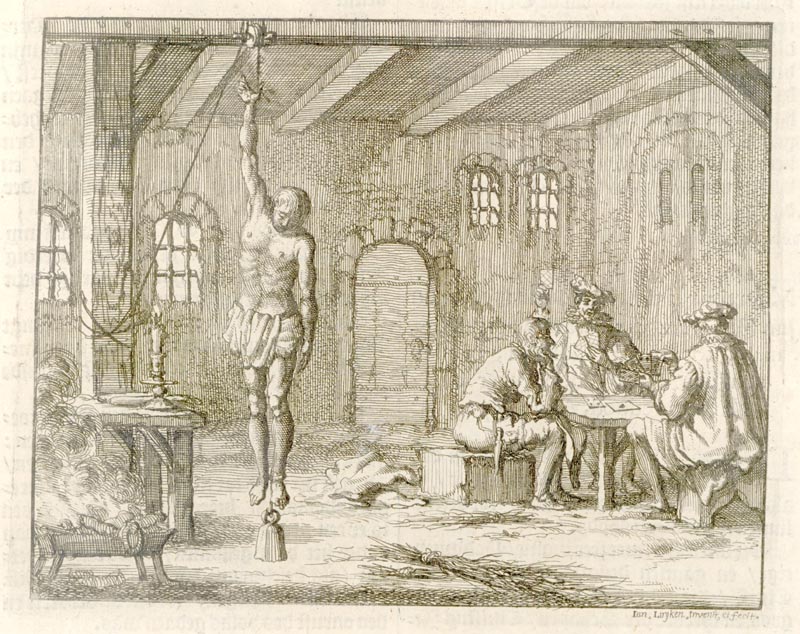
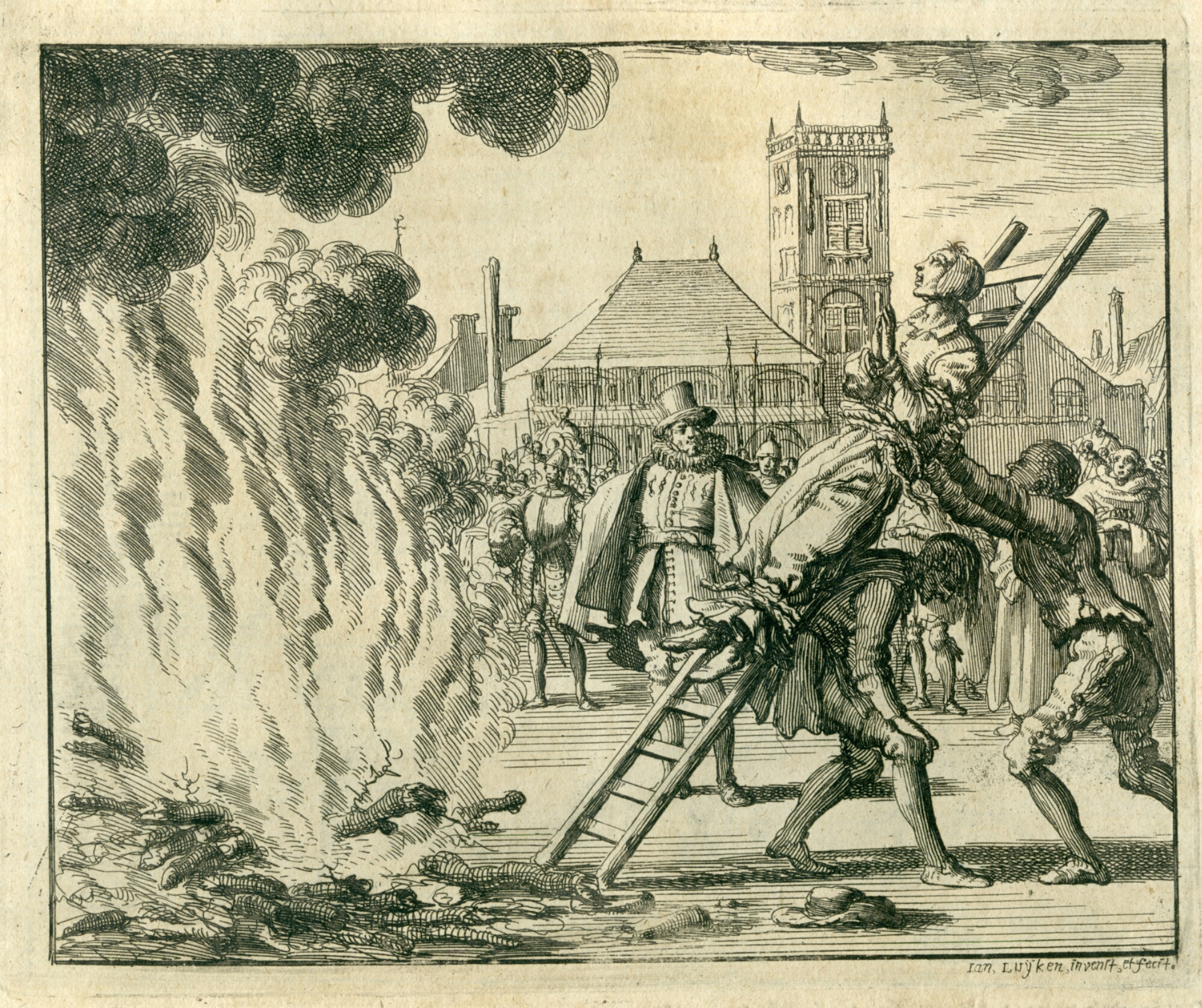
Mennonites have a long memory. We are dutifully reminded of acts of gruesome torture committed against our people from hundreds of years ago. There’s a book, Martyr’s Mirror, nearly as sacred as the Bible in many Mennonite (and Amish) homes, which is basically a chronicle of the violence done to Christian believers. The book includes haunting etchings of the terrifying ends of some who would not recant their faith under trial and these stories help shape Mennonite identity as a persecuted minority.
image

Torture of Geleijn Cornelus, Breda, 1572

Mennonites have a mistrust of mainstream society. Part of it is in a product of a religious emphasis to intentionally maintain a ‘non-conformed’ outward appearance and lifestyle. But the other big part is a real fear that persecution is just around the corner and that we could all soon suffer the same fate as our spiritual/ethnic fathers. Mennonites (and Amish) have been so insular and so separated from mainstream society that they actually have their own unique genetic disorders. Many still maintain their own German dialect, commonly referred to as “Pennsylvania Dutch” or “PA Dutch” for short, and church outsiders are referred to as “English” by Amish people.

The irony of it all is that Mennonites are more frequently adored than they are despised. Our biggest critics tend to be those who are disgruntled ex-members or those who had a bad experience in one church and judge all Mennonites based in it. We are treated both with respect and also patronizingly at times. My sister, a medical doctor, was once asked by a non-Mennonite if she would be interested in cleaning houses or babysitting, which could be taken as an insult to a person who was qualified for much more. Many have assumed my ignorance as well and apparently because of my rural and religious upbringing.

People do judge by outward appearances. People do make prejudiced assumptions based on ethnic heritage or religious connection and I have experienced this first hand. I believe that is likely why I have instinctively classified myself with the victims of prejudice rather than with the perpetrators. My unique upbringing may have been the reason why I was fascinated with history of racism in America. I read books; some of them required reading, but many others by curiosity and choice. The titles escape me, but I remember experiencing the civil rights era from the perspective of a woman in the NAACP, then living life as a young woman in Japanese internment camps and later spending time with a fictional lawyer named Atticus Finch.

My Struggle to Find Acceptance

I also have another identity and that one created in my slow development that earned me nicknames which included “micro” in them. I was short and small for my age. I was a late-bloomer beyond even my then diminutive size. I was older in my class, a polite and respectful student, I would often find more in common with adult teachers than my age-group peers, I had keen interest in history, was knowledgeable, but was also very innocent. I had little more than platonic interest in girls until my late school years and had mostly kept a safe distance from them. I did not seem to draw a whole lot of female attention either. I was an introvert in a crowd and shy around women.

With my struggle with stature, with a lack of strong social skills, athletic abilities, or other especially developed talents (besides being a non-stop daydreamer with some artistic gifts) and having not received an abundance of popular attention, I developed a bit of an inferiority complex. It only intensified as I became interested in dating and noticed many girls were more interested in a muscular, square shouldered or smooth talking male figures and I realized that just wasn’t me. I was this sensitive bundle of analytical thoughts without an adequate ability to express them. It was also furthered by the fact that I felt I was a misfit. I was way too religious for the more secular public school girls, but I was way too nuanced and philosophical for the cut-and-dried products of my own conservative religious culture.

For whatever reason, fate or fortune, I struck out with the first Mennonite girl I asked and that experience was where my confidence really began to wane. I had a an acute awareness of nuance differences of how people treat each other and knew too well how girls treated the ‘cool’ guys compared to those less popular. I was not disliked or mistreated. But I was also not that quintessential Mennonite guy either. It seemed the average Mennonite girl wanted this simple, macho, disinterested, reserved fellow and I did not fit that conventional mold. I was complicated; I alternately talked too much while not saying enough of the ‘right’ things, was fully Mennonite in some ways and not enough in others. I also lucked out with a church full of first cousins.

I was a deep-thinker, a conscientious person, fiercely loyal, told multiple times (by marriageable women) that I would make a wonderful husband, earnestly faithful, protective and gentle. I wanted to be the hero of the woman I admired, unfortunately I always seemed to play the cards of the villain or that’s how it felt my sincere efforts were received. It is against my nature (or maybe my Mennonite training) to harbor ill-will towards anyone. But feelings of rejection (both real and perceived) are as a poison to the soul. I have had my flashes of misogyny or jealousy, with those feelings immediately followed by longer moments of self-loathing and contempt for everything I was or was not. I was a victim of bad-timing, I was disadvantaged by my genetics, I was unfairly categorized and felt it all to be an injustice.

image

Drowning of Mattheus Mair, Wier, 1592

It may be irony, but it was black women who later affirmed my strengths and restored some of my confidence lost along the way. Like in the books I read, where I could identify with the female minority lead character, I felt minority women could somehow understand me and with them is where I felt most accepted. I was treated like I mattered. It did not hurt that some were educated beyond my Mennonite peers and could appreciate discussions of philosophy, psychology, sociology, identity and race.  Not wanting to produce a stereotype about Mennonites, but I would probably be more popular with my ethnic kinfolk if I would shoot more deer, get a big diesel truck, be an outstanding volleyball player and learn to love card games.

The Schizophrenic Demands of Insecure People

We live in a culture that both tells us to “be you” and yet also encourages conformity of thought or action and shames divergent thinking. We live in a society that preaches against stereotypes, that celebrates individuality and yet continually it categorizes people by race, religion or gender. I am simultaneously castigated as the perpetrator of racism and sexism, as a white male, but then instructed not to build identity around race or to make any judgments about sexuality. It is a feeling of being whipsawed, assailed for doing something that I have not done by those who are doing exactly what they say I shouldn’t do and that I didn’t do.

That is the dilemma of a colorful thinker: Do I go with those who say I should be identified with the perpetrators of historical violence? Or should I go with my instincts, my experience as a minority, and make my identity with the victims?

For me the choice is clear: I am neither victim nor villain. I have felt a victim of circumstance in the past. I have been treated unfairly, excluded unjustly, felt like a perpetual underdog. I have been condescended to and even discriminated against based in my race or religion. I have withstood bullies who picked on me because of my differences (my genetics did not lend to physical intimidation) and I have endured educated elitists who hurled insults, alleged my ignorance for challenging their perspectives and then would burned their straw-man effigies of me with an unwarranted glee. But I refuse to make my identity center on my claim to victimhood.
image

Burning of Anneken Hendriks, Amsterdam, 1571

I will not be like the bitter white co-worker who blamed his lack of success in college on not having the special privilege of affirmative action and would spout one racist opinion after another. I rebuked him without hesitation. I share no identity with his racism and hatred. I will likewise not patronize, show favoritism or cater to others simply on the basis of skin color and historical injustices. We all have challenges to overcome in life and it is easy to assume that our own are bigger or more real than someone else’s. I am not going to coddle and perpetuate the insecurities of any person, white, black or otherwise. I do not believe we help people overcome by treating people as helpless and hapless victims.

In discussions over race, with constructions like ‘white privilege’ and such, I have more frequently been lumped in with the perpetrators of racism rather than treated as a unique individual. It is frustrating, because Mennonites were some of the first to protest slavery and that is the identity that is more real to me than my skin color. Amish and Mennonites were even singled out in America for their ethnicity and conscience, some locked in prison during the First World War because they refused to fight. I feel, at times, that I have more in common with a persecuted minority than with anyone else. Yet, because I am a white male, some assume I could not possibly understand them and seemingly dismiss my perceptive without ever hearing it.

image

Burning of David and Levina, Ghent, 1554

I may not understand exactly what it feels like to be black in America. But I do know how it feels to be treated as inferior and less of a man on the basis of superficial things. I know too well what it is like to be categorized and stereotyped. I understand the conflict of one who loves their own heritage, has a defensive urge against those who attack their ethnic community and yet is still aware of the problems of their own people. I have a love-hate relationship with my own Mennonite religious/ethic heritage. I was taught to be afraid, not just of the police, but of mainstream society in general and some of my religious peers think they are persecuted because of perceived slights.

I have felt insulted and belittled at times. The slights were real and sometimes intentional too, but not always. I have found my reactions are a product of personal insecurities and sometimes little more than that. People all have their sources of insecurity. Conservatives fear a tyrannical government will soon take away their rights, thus fearfully stockpile guns and ammunition. Liberals think that the economic system is stacked against them and want government to impose on their neighbors allegedly as an act of justice. We can build identities around these insecurities. We may find people who share our fears and can look for evidence to ‘prove’ our own disadvantaged status or victim role. Unfortunately, while we do this, while we are demanding respect of our own person or people like us, we are also often leaving a wake of destruction behind us.

Insecure people produce more problems for themselves and others. We all know them, that super-sensitive person who is so insecure that they see an insult in even the most innocent requests or gestures. Take, for instance, a guy who told a story (apparently thinking his audience would be sympathetic) of a time he was driving down the road and a woman driving in the opposite direction scratched her nose as they passed. He knew an insult when he saw one. So he spun his vehicle around, aggressively pursued the offending party and gave a lecture on her disrespectful behavior. Of course, who knows why she touched her nose at that moment. Much more disturbing is a man who assumes an insult or injustice at every turn—and does not see his own offending belligerence.

Seeing Beyond Divisions of Black and White

I am a person with multiple identities and with none in particular. I am not alone either, I believe many Americans have many different identities and do not fit neatly into statistical categories. That said, Americans do also have bigger common identities of race or gender and these identities can sometimes be used to divide us. Our differences can be a cause for celebration, but they are also the basis of falsely dichotomous ‘us’ versus ‘them’ narratives and are used feed existing insecurities. But, treating every person like a unique person to be individually loved as a unique person, rather than in category of victim or villains, would solve a multitude of problems.

Pigeonholing, finger-pointing, scapegoating or shaming those who have offended me probably will not solve my own insecurities and I’m doubtful this type of action would ever create desirable results those whom I deem as guilty. Demonization usually only creates another class of victim. When we treat people like problems rather than people, when we throw them into categories of perpetrator on the basis of their appearance or history, then we have become contributors to the disease of prejudice rather than healers and helpers. If we want more heroic people in the world, then we must treat more people like heroes and as we wish to be treated. If we want dignity and respect for ourselves, then we need to stay committed to treating others with dignity and respect.

Healing of existing wounds will not come from two sides beating each other with superior arguments or competitive claims to offense. Tensions certainly will not be solved by making any person feel inferior or labeled as a villain. The urge to point out statistics about black men in response to those who cite statistics about police will not bring us closer to peace. The truth is if there is to be healing it will come from us learning to identify with all men, and not with only those who look like us or share our own opinions.

We need to recognize even our own intuitions, even those that are informed with history or statistical evidence, might be skewed, prejudicial and wrong. What we perceive to be true is not always whole or complete truth. We need to be more introspective, practice more constructive self-criticism, and address our own faults squarely. The assumptions we make about ourselves and about other people can hurt our chances for success. Yes, I could build a pretty solid rationalization to defend my own insecurities, but it would get me nowhere towards overcoming the obstacles to my success and, if reinforced long enough, could become a reason to not try at all.

Creating Shared Identities

It is impossible to say categorically that every white man has it better or every black woman has it worse and it is foolishness to assume it. A single black mother probably has more in common with a single white mother than she does with a black woman who is happily married. Then again, a black woman, who endures assumptions about her appearance, might actually be able to identify with a young Mennonite woman who dresses differently because of her own religious/ethnic heritage.

image

Dirk Willems rescuing his pursuer, Asperen, 1569

We need to endeavor to create shared identities bigger than race or gender or religion or even economic status and rid ourselves of crippling victim identities entirely. There are more of us misfits than there are those of us defined by statistics or stereotypes. We all have unique advantages or disadvantages and also our own special challenges to face. So, rather than dwell on ourselves only, or focus solely our own specific problems, we could realize struggle in various forms is common to all people and part of our shared humanity. I have my own struggles, you have your struggles and in sharing our burdens together we become brothers and sisters in the same fight rather than rivals or enemies.

I am not saying we should lose our unique identity either. What I am saying is that categories of white and black, privileged or persecuted, hero and villain are too small. We are colored, but not in black and white or shades of gray, we are truly many shades of many colors and uniquely our own person. We have many shared identities that could bridge our gaps and create common understanding, but to find them we need not to be bound to our past or prejudices.

My advice: Build an identity with those who overcome with love and despite the odds against them. Tune out those who only feed insecurity and fear.

(Click here for more Martyr’s Mirror images)

Promises of better things to come…

Standard

It has been an interesting year and a year of many firsts.  I suffered my first torn anterior cruciate ligament (and hopefully my last) in May and spent most of the year rehabbing it.

I am the proud owner of my first brand new car.  It is a handsome black 2014 Ford Fusion sedan with a five speed manual transmission and represents a vast improvement over my prior every day vehicles.

I have started my first real blog (unless a Xanga foray counts) and you are reading it.

Besides that, I have a first chapter to a book in rough draft form which is also a first for me.  I hope that effort will eventually lead to a first of writing a book if I can find the time to research for the second chapter.

It has been a year of intense feeling, both trials and triumphs, both of deep doubt and deeper faith, with many prayers answered with one that still waits.  Because the work is not finished, my theme from this past year will continue into the next year: With God (or faith) all things are possible.

I have faith God will continue to answer my prayers in amazing ways.  Apparently fortune favors the bold, so I will be bold in faith and boldly predict next year to be my best ever.  I do not expect all sunshine and roses, because bad days happen even in the best of circumstances, but I hope big regardless.

For next year I plan to continue doing what I am doing and improve at it.  I want to continue writing with a goal of improving my ability to communicate ideas.  I want to offer solutions where I can, to help encourage other people and strengthen the good side of things.

I want to continue to exercise regularly and remain physically fit despite a demanding schedule.  I realize good health can’t be taken for granted.  I know fitness, like all good things, isn’t something that happens accidentally, it is a result of initiative, work and God’s grace.

Speaking of work, I plan to continue driving, but will continue exploring options and hope to find something else by next year.  I am still unclear where, what or when I will find the next opportunity.  I have ruled nothing out.  I pray for God’s guidance.

I also want to be more meditative and prayerful.  I hope to read more, stay involved in spiritual development and active in the lives of others.  I pray to be a voice for faith, hope and love.  I want to grow stronger in all areas of life, be confident and live without excuses.

It is our bigger fights of faith that we have the most opportunity to grow and that is what I take into next year.  And, you can be a part of that, I do invite your input and about this blog in particular.  I would love feedback about the content and clarity of my writing.

Are there any topics you prefer of those I have posted on or suggestions of things I should discuss less or more?

Anyways, my work is nearly done for this year, a new year (even if just an arbitrary boundary) is a few hours away, and it is definitely an opportunity to reflect.  So, as I sit here with my tuna fritters and miracle whip ready to eat, anticipating a night full of activity, let me first thank you all for being a part of my life in 2014 and wish a happy new year…

God bless!

Why we give on Christmas

Standard

In America it is easy to take our advantages for granted.  We have worked hard, we have invested our abilities and taken advantage of the opportunity to build our dreams.  Therefore, it may seem, the fruits of our labor are an entitlement and not a gift, right?

Well, yes and no…

If we had stayed in bed all day waiting for prosperity to happen we would likely be impoverished and therefore our will to get out of bed is a big part of our success.  However, was it by your own will that you were born with two good legs and are even able to contemplate getting out of bed?

If we are entitled to what we produce by will, but did not produce our legs by will, then who or what do we credit for what our legs helped us produce?  I suppose we could start by thanking our parents, we could be grateful to them for the transmittal of the genetic material that produced our legs and giving them credit for our success.

Then the fact you are able to read this, we can thank are parents and teachers who taught us language.  But, even if they seem older than the hills, they didn’t invent language and nor did the generation before them.  So can we take credit for the ideas we gained through written or spoken language?

Our lives are inexorably intertwined and interconnected like the very internet on which you read this.  The inventors mostly unknown, the contributions of many virtually forgotten and the whole maintained by a nameless mass of humanity, yet we do benefit or we would not use it.

So who or what deserves credit for our success?

We prosper to the extent that we do by ‘standing on the shoulders of giants’ and our own efforts amplified by these gifts providence has bestowed upon us.  We cannot take for granted the privilege of a stable economic system and opportunities that even a grade school education provided for us.

If you travel to Haiti the contrast is clear.  In a place where government is especially corrupt and available resources few, even the most industrious person will have a difficult time getting ahead.  Oftentimes their best chance is by escaping to a better environment, yet that is not an option for all and some are stuck doing what they can to earn a meager wage.

Our success is a result of both collective and individual efforts.  Therefore, we all together (personally and all contributors to our lives big or small) deserve all, partial and no credit.  As a web of intersecting circular chains of causality of shared responsibility, deciding who actually deserves credit is actually a true paradox.  This paradox of our own will within determinism is something I chalk up to Providence.

We are created by the dust of stars…

In nature brutal violence and exploitation is normal.  A gazelle in Africa does not consider the rights of the living plants it consumes to be sacred nor does a lion that takes down a gazelle for its’ meat seem to agonize about the decision.  I doubt many would consider incarceration of a lions that killed a gazelle a moral necessity.

The recorded history of thousands of years of human history show a similar disregard for the life of those in the tribe across the river.  The idea of conquest or taking what you could in raids (that including enslaving members of the other tribe to labor or be concubines) was very common behavior and only very recently has become widely regarded as a morally repugnant thing.  It was kill or be killed.

From a logical, reasonable and collectively minded standpoint survival of the fittest is an obvious choice.  With the advent of modern science the idea that imbecile parents produce imbecile children, concerns about overpopulation and idea of gene selection became a basis for eugenics.  So from whence doth this ethic of protecting the weak or nonproductive person come from?

I think it is empathy.  The idea, contained in the proverb “there but for the grace of God go I” and a thought that we are fortunate for what we have been given, is that we should give to those with less because we would want to be helped.  It may be against nature and impractical thinking, but it is evidence that we can think beyond a materialistic perspective.  We see each other as spiritual beings with value just for our own existing.

I believe it is spiritual progress, awakening to more full awareness and transcending nature itself that drives our generosity.  We recognize our own success is not a simple matter of our own individual responsibility, choice and effort.  We realize we are not a product of any one person, institution or entity in this universe.  We are created from star dust, we suddenly have become awake to a reality that we somehow know is unfair and unbroken.

So where does this leave us and where do we go from there?

I turn to God.  I believe to acknowledge God is to humbly admit we cannot take credit for creating ourselves, that we cannot find answers for our existing in ourselves alone and we want to live out an ideal beyond ourselves.

Jesus prayed: “Thy kingdom co me on earth as it is in heaven,” which is literally asking for heaven on earth, and ultimately what faith is supposed to be about.  With this my prayer, I cannot be content to hoard what gifts I have been given for myself only, my family only or my own people only.  If I pray for heaven, I must be willing to create heaven and by that I must be willing to sacrifice myself to see this reality in my own life.

Love for God in the Christian Bible is always defined as giving of our abundance to those in need and commitment to self-sacrificial living.  It is a message to each of us personally to do our part in bringing the ‘good news’ to the world of God’s love for humanity.  It can be misconstrued as religion, as a guilt trip, as a means to judge others, and a tool of oppression, but the true calling of Jesus is for us to give what we have to give.  Rich or poor, male or female, American or other, we all have something to give other and, in our giving to each other, giving to God.

God has given us the ability to create a better world and many squander the opportunity by their immorality, their selfishness, greed, envy, etc.  But faith is acting despite what others do, faith is the only way we will fearlessly lead in bringing heaven to earth and faith is what is required of us.  It is our job, as people of faith, to be the healing hands, the feet ready to carry a load for those struggling and the loving voice.  With faith we can be the hands, feet and voice of God.

I am not talking about strictly charity either.  In fact, I think most of our giving is by our careers, our talents and time.  And, I will go further to say that there is nothing bad about profiting from your efforts, receiving without guilt and enjoying life.  However, I would caution against an entitled attitude that fails to recognize all you have been given that amplifies your own willing effort.  The investments of the blood, sweat and tears of many is what has made the American lifestyle possible.

“From everyone who has been given much, much will be demanded; and from the one who has been entrusted with much, much more will be asked.” (Luke 12:48b)

Those who think their security, prosperity and confidence is something they earned—rather than a gift from God—have no need to help those who are without and assume those without have done something to deserve being without.  However, those who know their affirmation and acceptance is only by the grace of God, who understand the very opportunities they have were by divine providence, they will give to those in need with a humble heart.  An ungiving person is an ungrateful person.

So, why do we give gifts on Christmas?

We give because, the Christ child, Jesus was given as a gift by God and we are grateful.  To those of Christian faith, Jesus is the living symbol of God’s ideal, his life the ultimate example and his laying down of his own life so we could know how to live the ultimate hope of humanity.  Our giving on the holiday is symbolic of the gift of the grace of God.

“Greater love has no one than this: to lay down one’s life for one’s friends.”  (John 15:13)

To give as much as we have been given is our expression of fullness of gratitude and that is our reasonable service to God.  If everyone had will to give their all then nobody would be without and in need.  Be a friend to all people of all nations, give your all and bring heaven to earth for someone this holiday besides you or your own kin.

Merry Christmas and God bless!

The problem of knowing…

Standard

Knowledge is power or that is what I am told.  But how does our knowing make us more capable and is that capability to know always from our own betterment?

The answer is, no, not always, and our knowledge could very well be less for our own betterment than we know.  The same knowledge of the human body used by a doctor to save life can also by others to take it.  Knowledge of how to start a fire gives one the ability to cook and create glass or steel, and yet it is also a tool of an arsonist.  If knowledge is power it can be a destructive power.  Knowledge can be power to do evil.

Increased knowledge does not equate to moral progress…

“Of all the problems which will have to be faced in the future, in my opinion, the most difficult will be those concerning the treatment of inferior races of mankind” (Leonard Darwin)

Knowledge can also be deceiving and dangerous when it is incomplete, over-interpreted or not properly contextualized.  Eugenicists, like Darwin in the quote above, claimed confidently that their knowledge of science gave them the ability to decide what races of men and women should be allowed to reproduce.  People too easily use knowledge that validates their own presuppositions to overreach and sometimes with deadly consequences.

The confident and exuberant knowledge based claims of one generation become the warnings to the next.  Things argued as logical, reasonable, fact based and morally responsible by one generation will sometimes be regarded as the atrocities of the next.  Eugenics in America has become a prime example.  Very intelligent and knowledgeable men (like Nikola Tesla) argued for sterilization of races they deemed inferior.  But, the results of these brilliant forward thinking men of yesteryear, we now as a society pay a price for today.

“Pride goes before destruction, a haughty spirit before a fall.”  (Proverbs 16:18)

One would think our knowledge of historical blunders would act to restrain our enthusiasm for allowing our knowledge today to delude us.  But increased knowledge does not equate to increased wisdom or humility.  Knowledge we possess can be a source of dangerous pride.  Pride that can blind us to the limits of our own knowledge and ability to reason correctly from the knowledge we possess.  Knowing what we do not know, being humble with what we think we know and listening to those who know differently from us can save us from our limited knowledge being our own destruction.

Known knowns, known unknowns and unknown unknowns…

“There are known knowns. These are things we know that we know. There are known unknowns. That is to say, there are things that we know we don’t know. But there are also unknown unknowns. There are things we don’t know we don’t know.” (Donald Rumsfeld)

Every fool in history was a likely victim of their own knowledge.  History is replete with examples of well-intended and intelligent men who misjudged on the basis of the knowledge they had.  I do not take Neville Chamberlain for an idiot because of his infamous “peace for our time” utterance after his meeting with Hitler gave hope of avoiding war.  In retrospect, with the knowledge available even then, one could have concluded very differently than Chamberlain and Hitler’s rise may have been thwarted saving countless lives.

Many terrible mistakes might have been avoided if people would have arrived at different conclusions using the greater available evidence or even the same knowledge they had making a bad judgment. Confidence in our ability to discern from our knowledge is good.  However, if our confidence is an insulation to keep us from hearing contrary opinions, if it is used to demean those who disagree and their perspectives, we are on a very dangerous road.  It is with more knowledge we can realize the conclusions we reached based in prior knowledge were overconfident, arrogant and wrong.

“Plans fail for lack of counsel, but with many advisers they succeed.”  (Proverbs 15:22)

More knowledge is not a savior of humanity.  Educated and knowledgeable people are some of the most dangerous people if they are unrestrained by moral conscience or humility.  There is a story of a new king (1 Kings 12) who decided to disregard the council of older advisors, choose to follow the advice of more agreeable peers and sowed the seeds of his own destruction.  We too risk the same when we seek the council of those who confirm our own biases and disregard the perspectives of those outside our own peer group or culture.

“…knowledge puffs up while love builds up. Those who think they know something do not yet know as they ought to know.” (1 Corinthians 8:1b-2)

Based in their knowledge people too often pick advisors who are no different from them.  It is a form of self-love.  From young people who turn to age-group peers, to fundamentalists (religious, scientific or otherwise) who vehemently defend their own various established dogmas and quickly dismiss any interpretation counter to their own, we need to be wary of our own potential knowledgeable ignorance.  Having an abundance of fact, logic and reason does not equate to having good discernment.  Knowing you could be wrong and not know what you believe you know could save you (or those you influence) plenty of sorrow and regret.

The advantage of not knowing and loving freely…

I believe we are often geared too much towards our own knowledge and not enough towards love and humility.  If we were more mindful of the limits to our own knowledge or more aware of the lessons of history (and able to apply them to ourselves) we would probably not be as quick to trust our own discernment.  Knowledge can lead to arrogance, but the right kind of knowledge can lead to our being humbled and able to submit to the way of love that defies common understanding.

“For I resolved to know nothing while I was with you except Jesus Christ and him crucified.”  (1 Corinthians 2:2)

Unpackaged: Knowing only Jesus Christ is to know only the Spirit of God and power of love, and to know only that could do more good for the world than a supercomputer of facts.  Love has more power than the combined intelligence of those who unlocked the secrets of the atom and the awe-ful results of their knowledge.

The world would be better with more who had the faith (and courage) of a young woman, Maryann Kauffman, who lost her husband to a senseless act of violence and choose knowing only Jesus or forgiveness rather than bitterness.  I can know without knowing that her pain is as real as anyone else’s, but evidently her love is bigger.

May we resolve to know goodness more completely and I know we will be better for it. There is no loss in willing self-sacrificial love…