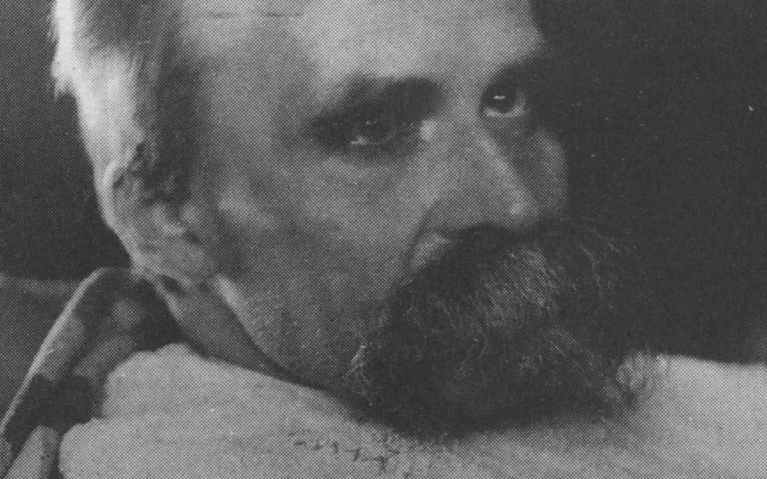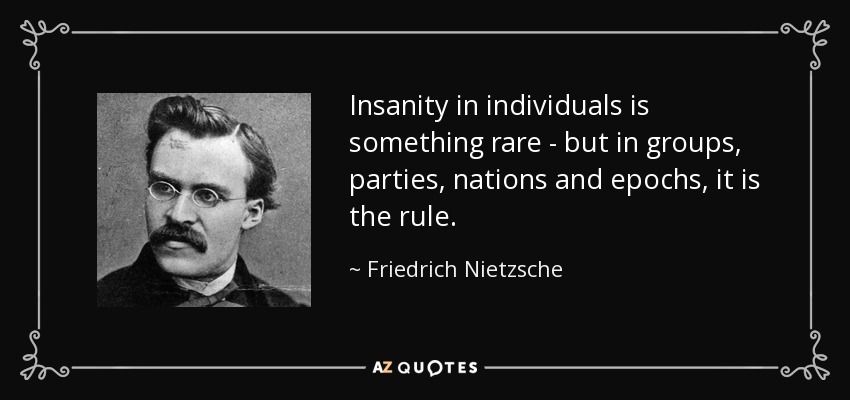
A religious fundamentalist might see Nietzsche’s “Madman” parable as an attack on faith. The German philosopher Friedrich Nietzsche’s mental decline and tragic end could seem like an obvious consequence. His bold claim that “God is dead” would naturally lead to madness, wouldn’t it?
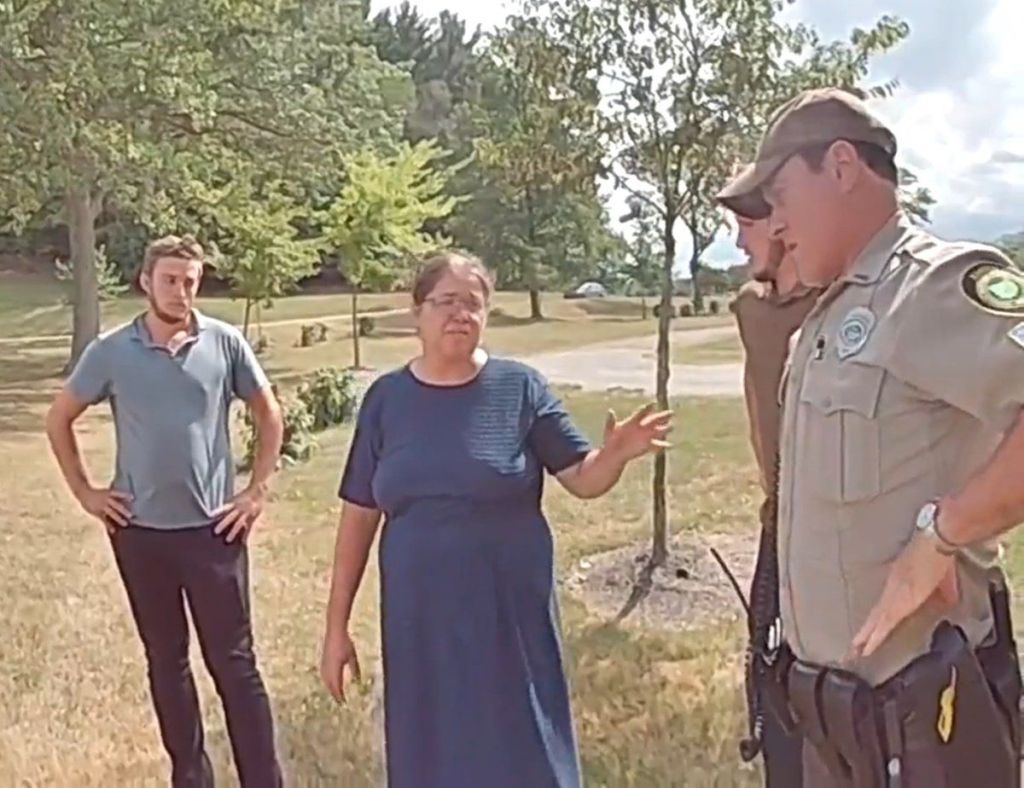
Recently, I came across the story of Ruth Miller, an Amish woman whose religious convictions led to an unthinkable act. In a state of spiritual delusion, she drove her 4-year-old son, Vincen, to a lake and “gave him to God” by throwing him into the water resulting in his drowning. This awful tragedy following immediately after the accidental drowning of her husband Marcus during a failed attempt to swim to a sandbar in an effort to prove his faith.
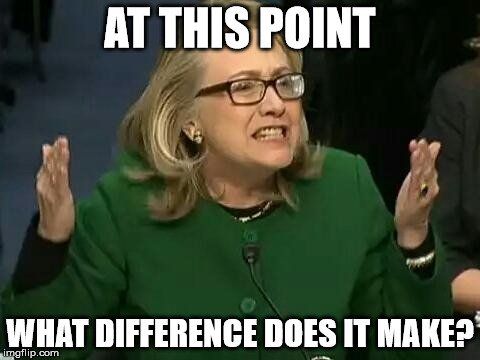
Both belief in God or disbelief really does not make a difference as far as our mental health. We can attribute beliefs to actions, like the divisive assumption—of black and white thinkers—that Decarlos Brown Jr. was motivated by racial animus. Or realize that our human psyche is capable of dangerous misfires no matter our skin color category or ideological affiliation. Black, Amish or Atheist, all can have psychological breaks from reality originating from family history or environmental factors.
In the case of Nietzsche, who suffered from a breakdown at the age of 44—while seeing a horse being flogged—the theories of why he declined range from neurosyphilis to the possibility of frontotemporal dementia and a brain tumor. It could be a combination of factors, and maybe the very thing that made him brilliant also part of his downfall?
Nietzsche had a busy and relentless mind, his “will to power” philosophy itself perhaps a way to cope with a world that didn’t align with what his cultural heritage told him. He had to take things to their ends, he was not content with the answers he was given and this tendency of his mind being rooted deep in the composition of his brain—progressive disease and circumstances finally pushing him over the edge into insanity?
Likewise, the Amish mother, a pious woman by appearances, didn’t process her religious teachings the same as others in her church and tradition. For better or for worse, most claim to take the Bible literally would never attempt to do the things that they’ve read in the book. In a modern context a parent who is willing to sacrifice a child to God is rightly considered mad. But for Abraham it was a proof of his righteousness:
By faith Abraham, when God tested him, offered Isaac as a sacrifice. He who had embraced the promises was about to sacrifice his one and only son, even though God had said to him, “It is through Isaac that your offspring will be reckoned.” Abraham reasoned that God could even raise the dead, and so in a manner of speaking he did receive Isaac back from death.
(Hebrews 11:17-19 NIV)
That’s one way to explain away an irrational act of Abraham tying up his child, and then putting him pyre to be a sacrifice to God. It is just plain madness otherwise. Is it really any wonder a delusional mind would follow this pattern in the Holy texts? I mean, truly, the crazier part is how we can read through this in Sunday school class without being a bit disturbed. Only when someone starts to act in this kind of ‘faith’ does anyone notice it is completely unacceptable.
Faith or lunacy?
But then we’re all mad. Half of us claim it is okay to dismember a living human being in the womb because their existence is a big inconvenience for an adult woman. While the other half thinks it is okay dismember a living human being in Gaza because of what Hamas did a couple of years ago. All seem willing to sacrifice little children in the ‘right’ circumstances. We’ll praise those who end the life of the innocent when this aligns with an imagined ideal outcome or future. We’ll all say the other is irrational and evil while justifying our own violence.
But, I digress, we should not blame the blackness of Decarlos Brown Jr. for his evil deed any more than the Amishness of Ruth Miller for what she did. The idea that we should not change our standards based on race should come with the general non-judgment based on race. Mental illness is mental illness, unbound by category. To judge actions without prejudice—based on race, faith, or even agnostic philosophy—requires us to comprehend the universal fragility of the human mind and our own susceptibility to delusion.
Last time around, I dismantled the myth of indestructible buildings—people dream of granite fortresses, their mental models blind to necessary trade-offs—meanwhile ballooning the cost of new construction and keeping more people are stuck in older less safe buildings. That same flawed thinking now fuels a frenzy over air disasters and my wife’s legitimate grumble over dental bills and paperwork that could choke a horse. Whether it’s planes plummeting or crowns now costing thousands, folks cling to busted models—piles of regulations, their wild conspiracies, or broken systems—that splinter when reality bites. In my truss design world, I double-check software because it’s half-baked; we should also scrutinize the narratives and red tape the same way, and not add more wreckage.
Air Disasters and the Partisan Haze
The wacky left, not to be outdone by the kook conspiracy right, keeps blaming air disasters on deregulation. Start with January 29, 2025: a Bombardier CRJ700, American Airlines Flight 5342, slammed into an Army Black Hawk over D.C.’s Potomac River, claiming 67 lives. Then a Canadian Dash 8 skidded off a snowy Quebec runway—no deaths, but headlines aplenty.
Now the April 10, 2025, Bell 206L-4 chopper crash in New York’s Hudson River, six gone, including Siemens exec Agustín Escobar and his family. X posts scream Trump’s crew gutted FAA rules. Never let truth get in the way of a partisan narrative, right? But the facts don’t bend. D.C. hit nine days into his second term—too soon for policy shifts to ripple. The Hudson chopper passed a March 1, 2025 inspection, clean as a new nail. NTSB points to D.C.’s air traffic staffing woes, Canada’s pilot error, New York’s likely mechanical failure—not slashed budgets.
Stats cut the haze. FAA data shows U.S. aviation incidents down since 2020, though Potomac’s toll spiked fatalities. Crashes in media hubs like D.C. or NYC feel like a deluge, but it’s perception, not reality. I’ve seen this hysteria before—folks panicked over food processing fires, but as someone who supplies building components we see many ‘fire jobs’ and not a surge. Fires due to hot bearings, bad wiring, heaters or dust are quite common and to be expected. The funny thing none of these food processing fire alarmists reported on the new feed mill near me—non-confirming news doesn’t go viral.
Then the tinfoil-hat crowd spins BlackRock plots because Escobar was aboard. What are the chances a Siemens exec’s on a chopper? Pretty high, honestly—they’re the ones dropping $500 a seat, not me touring the harbor for free, with my family, on the Staten Island Ferry. BlackRock’s got stakes everywhere; a link’s no bombshell. As far as the in-flight breakup of the Bell helicopter, my pilot brother snorted, “Never buy an air frame that does 30+ takeoffs and landings per day.” That is to say there’s a difference between a vehicle with highway miles and the one used as a weekend racer. Seized gearbox or stress fractures, not sabotage. The SEAL pilot’s fuel call was logistics, not a scream. Yet they weave a blockbuster rather than look at a shop log.
This echoes the indestructible building myth—deregulation won’t make planes drop tomorrow, nor do cabals rig bolts. More FAA rules don’t sharpen mechanics’ wrenches, just like overbuilt trusses don’t scoff at storms. That ELD mandate for trucks? It jacked costs, no safer roads. D.C.’s staffing gaps brewed for years; New York’s airspace is a madhouse, and always has been. Good design—trusses or aviation—leans on more clarity: sharpen skills, focused goals, while also acknowledging the risk baked in. Pilots should scan skies, not bury their heads in binders. But folks expect oceans to swallow us if one desk job’s cut, their models deaf to reality’s groan. Failures aren’t a secret plot nor will more rules prevent them all.
Healthcare’s Paperwork Quagmire
That same broken model—thinking more rules fix it all—bleeds us dry in healthcare, where compliance piles up and costs push higher. My Filipino wife got sticker shock: Over $2,000 for a crown! What??? Her gut said yank the tooth, but the doc—and me—aren’t keen on losing one of those original equipment food grinders. Before we hit the chair, she was annoyed by those butt-covering forms—shields for liabilities (“We asked about novacaine allergies!”) and traps to hunt you down if you don’t pay their yacht lease.
Earlier this year, my son’s middle school emailed another form, they’re playing dental cop to prove his exam. We lucked out—they took our word his Philippines checkup happened, sparing me need to send their paperwork to Baguio for my in-laws to wrangle. There, we’d stroll into a clinic, no appointment, $20 for a cleaning or filling. Ain’t swanky, but it’s sterile, does the job, and fits a $8/day wage world. Here, insurance bloats costs like student loans—dentists hike prices ‘cause the check’s guaranteed. The poor folks get Medicaid, rich get their implants—me: never had dental insurance in my life, other than my couple year subscription to a scam “discount” that did squat unless I was already shelling out.
Since the Affordable Care Act (ACA) was turned into law, healthcare costs per capita soared from $10,620 in 2010 to $14,570 in 2023—37.2% up, inflation-adjusted, per CMS. Life expectancy sagged, 78.7 to 77.5 years, says CDC, while costs kept climbing. Rather than keep your own doctor was the promise, choice is diminished. Big players like UnitedHealthcare—had controlled 15% market share, Statista—grew hungrier and doubled it. Locally, Evangelical Community Hospital is now under WellSpan, and Geisinger sold to Kaiser Permanente, a $95 billion beast, both 2023 deals. Less choice, more denials, like truss software spitting out only one overpriced and deficient design.
It is easy to forget the undemocratic way the ACA was formed. It was rushed to get around the results of a special election that would cost Democrats their filibuster-proof Senate. The Democrat Congress rammed through a trainwreck bill to circumvent their loss of Ted Kennedy’s seat. The last thing we needed, in healthcare, was another layer of management. Upset Americans—54% of the country wanting repeal—rose up in the mid-terms in opposition to this government takeover of their healthcare choice.
Unfortunately the oligarchy won and we were stuck with a deeply flawed bill, sold with lies, passed in the dark of night, that nobody wanted—results in more mergers while costs continue to explode.
Obama, getting creative to deal with the botched rollout of HealthCare.gov, created what was called United States Digital Service to fix the issues. This basically gave the Executive Branch a backdoor access to the newly minted government agency that was convenient for the Democrats at the time it was formed. And this, ironically, is now what gives DOGE the authority to do what they have been doing over the past few months. Whether you see DOGE as a phoenix rising from the ashes or a monster coming from the abyss—you have Obama to thank for it.
It’s like engineers, for compliance, ditching practical talks for nonsense specs that lead to an incoherent mess of conflicting interpretation—it produces more hassle for everyone downstream, not a sturdier roof or better structure. This compliance Kabuki—fancy waiting rooms, school nurse cops—doesn’t make better teeth or safer streets, it just bloats our bills and increases our taxes for nothing in return. Philippines clinics run lean on cash, keep it real. Here, we’re buried under a pile of paper.
Good design—trusses, planes, healthcare—cuts the fat, bets on need of good judgment over more forms. Models that preach more rules will save us or seeing secret plots are as off as thinking properly engineered roofs can never cave. The FAA didn’t fix Boeing’s focus on DEI over properly installed bolts in doors and the ACA only added to the cost of healthcare. We must quit chasing fixes that will only add more dead weight to an already strained structure—and ask: what’s propping this whole mess up? And why’s it heavy enough to crush a man’s soul?
A Different Blueprint: Stripping Away the Myths
Things on the periphery are tough to flesh out, like trying to find out what is happening beyond the event horizon of a black hole. We all live in this big bubble—a commonly shared safe space—where folks will bicker over set topics, blind to how both sides are tangled in a bigger myth. The structures we take for granted, holding us up, are just assumptions we gotta question. These bad models—rules to save planes, forms to fix teeth—are flawed assumptions like thinking buildings never fall. If we want to see reality clear, we’ve got to strip away these biases, prejudices, blind spots, layer by layer. That’s my design philosophy: ask silly questions, and then take ‘em seriously. I mean, why don’t banks handle healthcare instead of employers? Why can’t we get checkups at the local bar? No rule says payers have to be governments or bosses.
Most folks can’t see past their battle lines, let alone a third path. But if we look beyond the forms we know, we might find a better way. It’s about exploring our foundations—digging into the functional fixedness of old ideologies, dusty processes, and our creaky systems. In truss work, I don’t simply trust software math ‘til I test it; in life, and I don’t buy models ‘til I poke ‘em. We can do better by imagining something different—say, healthcare that’s cash-simple, like Baguio, or an aviation culture that trusts pilots over paper. Models preaching conspiracy plots or encouraging more red tape are as wrong as thinking roofs don’t cave.
In Japan, the electronic toll system on the Tomei Expressway and other routes crashed for 38 hours across Tokyo and six prefectures. The toll gates froze, smart interchanges shut, congestion piled up. And the operator, Central Nippon Expressway Company, had no fix in sight, so they threw open the gates, let drivers pass free, and simply asked them to pay later online. Most places, you’d expect folks to floor it and forget it. But over 24,000 drivers—some say 28,000—went online and paid up, no cops, no fines. An honor system.
The test of civilization?
That’s not just a country; that’s a different approach to problem solving. They didn’t lean on a coercion model—chasing violators or piling on rules. The culture is what made the difference. They could trust people to square up and people did. It’s a glimpse of what happens when you question our own status quo. Why are our systems so heavy, so distrustful, in the first place? Why does a Christian nation need government to solve all problems yet Japan does not? This may be a difference between our individualistic frontier mindset and their group harmony formed of rice cultivation. But it’s also the communal approach of Amish as well.
Mutual aid in Amish country is organic, not institutionalized, they don’t need bulky and wasteful organizations. They have built an identity together (like the Japanese have) and thus they voluntarily go along with the program. This may sound stifling, but is it really? Americans pay a boatload of taxes so that their bought off national leadership can bomb Gaza’s hospitals. Did we ever vote for that? No. The general public is just as indoctrinated and controlled by ideologies as a strict religious sect. The big difference is that Amish get their barn back days after a fire whereas the rest of us will spend the year sifting through insurance paperwork.
A sustainable future requires effective and efficient resource allocation that does not rely on costly bureaucracy or enforcement agencies. Governance is best internalized—something we do voluntarily as part of our collective identity or being part of a larger group. This will require discarding models and myths that aren’t beneficial. This idea that the world’s problems are either solved by some undefined ideal regulatory regime or are all caused by it’s evil twin of a secret world spanning scheme is simply fantasy that prevents reasonable discussions and pushes away from solutions that will better harness our human potential.
Cooperation doesn’t need to be top down or cumbersome and artificial. No, love for our own and self-sacrifice love is as coded into human DNA as conflict. And we should be taking a closer look at Japanese and Amish blueprint. Honor, a common code of ethics, shared cultural values, an internalized joint identity and being respectful to others can’t outsourced. Diversity is only strength when it harmonizes and follows the same tune. It is a combination of building a familial trust, deeper human relationships, and a societal mission that is worthy of fuller investment—not more programs, systems and rules.
Up until a few years ago, I basically trusted the medical establishment. Sure, even then I would question—like I do with everything else—and then make my own analysis the risks, costs and benefits. My mom’s rule of thumb “everything in moderation” seems to be reasonable in most circumstances. But I’ve grown more skeptical and not because I believe there is a conspiracy to make us all unhealthy either. I just think hubris can be blinding and institutions compromised.
So when it came time to decide whether or not to vaccinate my newborn daughter, my feelings were mixed. She is too precious to gamble. It is my job to protect her. And for that reason I needed to take another look at the question of childhood vaccines. This is my analysis as someone who is not trained in biology, I’m not a medical professional or an expert in any way, shape or form. This is merely the thought process of a concerned father wanting to do what is right and didn’t like the answers he was getting from those ‘credible’ sources.
So join me in a critical look at the topic of childhood vaccines and some things that raised my eyebrows as far as the science, some ethical questions raised recently and the online testimonials versus professional advice. It would take a book to properly cover a topic of this magnitude, but this is an overview and give some reasons for the decision I’ve made. This is a reach into the barrel to examine a few apples and get a little better picture of what else we may find upon further review.
Science: Ingestion… Injection… What Difference Does It Make?
One of my “does their own research” friends reposted a chart posted by Physicians for Informed Consent (PIC) showing the safe amounts of aluminum versus the amount injected with the hepB vaccine—according to their post, 250mcg is an amount 75x more than what is considered safe to be in the bloodstream of a 7.3lb infant. That sounds bad. But this information does beg a few questions.
First, why is aluminum toxic over a certain amount?
Second, does an injection go into the bloodstream?
And, third, why is this in the shot?
What was disconcerting is when I went CDC and WebMD sites and found that they were making an inaccurate comparison. In their defense of aluminum in vaccines they made a case based on the safe amounts to ingest and yet vaccines are injected. This is that kind of presentation that would leads fact-checkers to declare it misleading if it was in a Trump speech. Maybe my neighbor with the “believe science” placard in their yard isn’t going to notice this sleight of hand, but I certainly did. It certainly didn’t assure me much about their actual authority when they tried to pass to different means of entering the body as one and the same.
Oh, but it does…
However, the PIC information is equally as misleading. And they know it. The post is talking about safe amounts of aluminum in the bloodstream. And yet vaccines are not injected directly into blood vessels. No, the shot goes into soft tissue and the aluminum is slowly dissolved from there. So clearly it is not aiding a mission of informed consent anymore than the drug company sponsored content. It’s just propaganda. It is put out to feed the confirmation bias of anti-vaxxers and muddies the waters. The freaked out #protectyourkids mothers are not going to ask further questions.
The bigger question is what aluminum does in large amounts. Words like “toxic” can be tossed around in the same manner of Nazi or racist. But slapping a label of something does not make it accurate description nor is it equal to comprehension of the topic. The same authority establishing a “safe” versus “unsafe” levels of aluminum also tells us to get vaccinated. The whole point of adding aluminum is as an adjuvant, it is supposed to provoke an immune response and only is bad when it begins to build up—typically it is just expelled from the body without doing any damage.
Practically speaking one would need to be an expert on toxicology to truly know what ‘the science’ is and give informed consent, the rest of us are merely picking which side we want to trust. For me, I lean towards the consensus over the outliers, what it means is generally not ranking a relatively group—like PIC—over the larger group of physicians (who have children themselves) and believe that the benefits of vaccines outweigh the risks. Yes, professionals have blindspots, they are more married to the system too as bigger beneficiaries, but they’re also smart people trying to help and heal.
Ethics: Myth of the Abstaining Amish and Abortion Cells
One of those claims that come up over and over again online is that Amish are healthier because they don’t get the vaccines. Given what I know, working with Amish, I’ll put this somewhere between “96% of statistics are made up on the spot” and “Amish don’t pay taxes,” because it is just plain untrue. Back in 2011 my sister, a medical doctor, worked on a survey of 1000 Amish people and their attitudes towards vaccines. 85% of those surveyed had vaccinated at least some of their children. Sure, Amish lag behind the general population, and uptake varies as they’re not a monolith, and attitudes have likely shifted in the post-Covid era, but they aren’t totally abstinent—just hesitant.
To get into the complexity of the picture, in my brief survey of my office co-workers (I work for an Amish-owned company) there was an interesting anecdote. Apparently, his mother contracted measles while she was carrying one of his older sisters. The result were complications and his sister’s lifelong health issues. Needless to say, his mom became more in favor of vaccines after this and that has been the story for some time. The discomfort of subjecting our children to shots looms larger until we get a first-hand experience with the actual disease. A day or two of soreness and high temperatures is better than measles, polio, or other preventable diseases. The ethics shift towards the risk of intervention.
Speaking of ethics, another coworker—not Amish—piped up about how vaccines use aborted fetuses. This is technically true in the case of some vaccines, I’ll let Grok give a brief explanation:
Certain vaccines—like those for rubella, chickenpox, and some hepatitis strains—rely on cell lines originally derived from fetal tissue decades ago. These aren’t “aborted embryos” in the sense of fresh tissue being scooped up and tossed into a vat. Instead, we’re talking about two specific cell lines: WI-38 and MRC-5. WI-38 came from a fetus aborted in the 1960s in Sweden (elective, legal termination), and MRC-5 from a similar case in the UK. Scientists took lung cells from those fetuses, grew them in labs, and kept them replicating ever since. These cell lines are immortalized—meaning they’ve been dividing for generations, far removed from the original source.
Why use them? Viruses for vaccines (like rubella or varicella) often need human cells to grow, and these lines are stable, well-studied, and safe for producing big batches. The cells aren’t in the vaccine itself—they’re like a factory. The virus is grown in them, then harvested, purified, and processed so the final shot has no fetal cells, just the viral bits needed to trigger immunity. Think of it like using yeast to make beer—the yeast doesn’t end up in your bottle.
This longer explanation does not have the same punch as “they use aborted fetuses to make vaccines.” But, for me, it answers the ethical question. This use of these two cell lines to save lives is basically equivalent to planting of a flower garden over the grave of a murder victim. I’m no more guilty of that than I am for the land under my feet being soaked in the blood of conquered people. It is just what is. What was done is done and refusing to use vaccines derived from those cell lines is not going to restore the life that was taken. I have more of a problem with the characterization of this being too vague to give proper understanding.
The soil under our feet is soaked in blood, but not an ethical dilemma to put to good use.
In the end, both sides of this debate peddle their myths, misinformation and deception, calling those mRNA Covid jabs “safe and effective” one of those establishment lines that fell flat in the test of time. But, for me the ethics of putting my children at risk of preventable disease outweighs misgivings about something done over 50 years ago. We can’t bring back those killed, but we can make their lives worthwhile and honor the legacy they’ve created for us. My opinion would be vastly different if they were still harvesting fetal tissue to grow viruses.
It is more important that we are honest than we win a debate. There’s no excuse for the repeated and easily debunked claims about Amish or aborted cells to be shared. Those in the “do their own research” crowd need to do better. When I see people share videos made by a chiropractor, in a lab coat, going only by doctor, it makes me question their judgement more than anything else. Being an expert in doing bone adjustments is one thing, biology is completely another. People aren’t very good about picking their sources, let alone producing coherent ethics.
Tragedy Testimonials Versus Professional Recommendations
Another thing I’ve come across, on social media, is that case of a child that died very shortly after the vaccine was administered. The grieving parents, one of them a nurse, disagree with the autopsy report, that cited SIDS, and put blame on the shots. First off, the pain of losing a child is beyond anything else I’ve ever experienced (you can read my personal account, “The Day My Little Hope Died“) and always will leave many questions for those left behind. Second, in this case, it may feel better to externalize blame.
I’ll admit, I was a little put off by my medical provider (a Physician’s Assistant) who just brushed off my concerns about too much—too soon. This is my little darling, and it is my job to protect her, so at least entertain my anxieties a little. So that part where of her worry about her son’s sickness prior to getting a dose of vaccines being dismissed does resonate. That doctor should have shown a little more respect for a mother’s intuition and a nurse’s instincts. That said, we’re only getting one side of the story and from the perspective of someone not really in a good state of mind.
Just taking the testimonial at face value—not verifying any of the claims—they give a clue about what really happened with their own choice of words:
Melissa, who worked remotely, heard the baby fussing around 6:15 p.m. Her husband went in to check on him. He readjusted him, and rubbed his back as Fathers do. Baby Sawyer fell back to sleep.
When we were in the hospital for the birth of our daughter, before we took her home, they pounded it into our heads not to put loose items in her crib with her and never to allow her to sleep belly down. This is about SIDS (Sudden Infant Death Syndrome) when a perfectly healthy baby is put to bed, often laying on their belly, suffers from positional asphyxia and dies. Infants are completely helpless, they can’t readjust their position if their airway is somehow restricted and they could be gone in a matter of minutes.
So that particular paragraph really jumped out at me. I’m very sensitive to how people structure their thoughts, the phrases, and I have even identified a false accuser once only on the basis of the use of words that were conveyed through another person in a paraphrase. When I saw “as Fathers do” it came off as a slightly defensive posture—most especially next to “rubbed his back” in the context of a sleeping infant. One hand they’re being as honest as they are able to be in the circumstances. On the other hand they’ve just given corroborating evidence for the official autopsy report.
They can be forgiven for their blame game. It is hard enough to lose a child, but totally unthinkable to believe something you did may have contributed. When Sanyiah died I stopped speaking to two of my siblings (not that they noticed as busy as they were) for a year or two. Why? Well, they both were not at the funeral, in my mind they did not care enough about the little people in their lives (that meaning my ex-fiance who had personal ties to them) and were, in a round about way, part of the problem that caused the child’s death.
The real reason my anger was taken out on them, however, was that psychological need we have to find a scapegoat. And Melissa, rather than pile on her husband, which won’t help, has pointed somewhere else instead—which is better than their negative feelings being turned in on the marriage. It is a way of coping with tragedy. As far as testimonials go, three of my cousins had a seizure disorder, one of them died and two of them are severely disabled. After their issues with the first child, they decided not to vaccinate. But this made no difference in the end. The impulse to blame intervention is strong, yet correlation isn’t causation and often the truth is messier than those simple narratives we prefer.
In the case of baby Sawyer, it doesn’t have to be one thing or another. The risk factors for SIDS include both second hand smoke and overheating. It seems quite possible a bunch of vaccines, on top of being already sick, and then possibly being on their belly, all contributed to the end result. Medical professionals face big liabilities if they are at fault. There is a tendency to circle the wagons or become tight lipped rather than speculate when million dollar lawsuits can be the result. So maybe in a perfect world vaccines would be a bigger part of the SIDS discussion?
Still, aluminum in the bloodstream does not cause suffocation and 34 hours later is not description of a biological mechanism that links the injection to the outcome.
A Respectful Conclusion, My Final Risk Analysis…
No parent ever wants to be responsible for the suffering or death of their child. When I see my daughter’s eyes looking up at me it melts my heart. She already has me totally wrapped around her finger and I would not do anything that put her at an unnecessary risk. There is a temptation to take the “If it isn’t broke don’t fix it” approach to vaccines or basically do nothing. At least this way an intervention you signed off on didn’t directly cause the harm. Without the nudge of the doctor’s office I might fall off the schedule they have simply because it feels better.
But the body of evidence points to benefits that outweigh the risks. That is to say there are risks, vaccine injury is real, but there are risks to everything we do or don’t do. Would anyone have stepped on board the Titanic if they knew the icy ordeal that awaited them in the middle of the night? In 2022, motor vehicle accidents took the lives of 42,514 people. And yet we don’t see emotional testimonials online about the “mistake” it was to drive to Kansas or trying to caution us against this dangerous activity. This is because we have normalized the risk and tune it out—that and we think that only the bad drivers die when any of us could.
What could be improved is a little respect all around.
First off, this advice applies to the medical establishment. From Fauci on down there has been this attitude of near contempt for those who question their authority. A prime example is the statement of Dr Fauci when faced with scrutiny:
So it’s easy to criticize, but they’re really criticizing science because I represent science. That’s dangerous. To me, that’s more dangerous than the slings and the arrows that get thrown at me. I’m not going to be around here forever, but science is going to be here forever. And if you damage science, you are doing something very detrimental to society long after I leave. And that’s what I worry about.
Beyond hybris. Beyond martyr complex and a misdiagnosis of the situation. No, Fauci, you cannot say “I am the law” like a rouge police officer. That’s not science, that is just a delusion. Sure, it sucks to be questioned in your own area of expertise. I think this is why some physicians do sometimes gloss over concerns of patients. But this is what damages the credibility of the institutions of science more than anything else. When the top doctor confuses “the science” with his own position he’s dangerous.
Okay, you smug, and dangerous, SOB.
Second, those of us self-educated people, who have not gone through that rigorous process of medical school or taken any kind of advanced biology course should remain humble. No, my lack of proper terminology does not make me an idiot. Nor should a nurse and mother’s concerns about her sick baby getting shots be dismissed. But “did your own research,” while in the lobby of the chiropractor, does not make you an expert or unbiased.
In the end, no parent wants to gamble with their child’s life. Staring into my daughter’s trusting eyes, I feel the weight of that responsibility—and the pull to do nothing, to avoid any chance of harm through action. Yet, after sifting through the science, wrestling with ethical dilemmas, and listening to both heartbreaking stories and professional guidance, I’ve landed on this: the evidence tilts toward vaccines’ benefits outweighing their risks. It’s not a perfect system—vaccine injuries happen, and the medical establishment could stand to listen better—but the data holds up against the diseases they prevent. We all deserve more humility and respect in this conversation, from doctors to doubters like me. For my little girl, I’m choosing the path that keeps her safest, not just from needles, but from what they guard against.
Hit me up in the comments section below with your most powerful arguments for or against childhood vaccines.
It is hard to feel unique in a world of 7.75 billion people. Due to mass media we are also more aware of this and also now have all of the best in the world there to compare ourselves to. We see the best athletes, the most beautiful bodies, those with wealth and power day in and day out.
I am insignificant
At the same time, many young people did not have siblings to share the attention of their parents, only were given affirmation in their formative years, a participation trophy for showing up and—special as they are—don’t need to follow rules or ever answer to anyone.
In other words, we have a generation with deep insecurities, worried about their place in the vast sea of humanity, and then also raised to be self-absorbed narcissists.
Unlike the past generations, where you could be a big fish in a small pond, yet also needed to learn respect for boundaries and how to share or negotiate with others.
Unlike the meritocracy of the past, where you needed real accomplishments to earn privileges or praise, we have conditioned young people to believe that their satisfaction should come without sacrifice or effort.
It is very little wonder why so many of them are unfulfilled, dissatisfied with life, and out there seeking cheap distinction.
Distinction—Cheap or Valuable
We all know names like Elon Musk, Serena Williams, or Ron DeSantis. They are leaders in their realms of popular culture and sport, business or politics. And we can probably agree that some of their success is an inheritance of genetics, good fortune or the opportunities granted them.
However, what they are doing, like them or not, is producing results and with this are being rewarded for the things they do. They have outcompeted many, they distinguished themselves by showing up for work and by putting the time in. It is for that reason their recognition is earned. They do the things we care about and we make them famous for this unique resume.
Earlier this week I saw a story about Rose Namajunas, a diminutive female UFC fighter with a very big attitude that earned her the nickname “Thug Rose” in school, and how she’s being featured in a Victoria’s Secret ad campaign. The message “all expressions, no definitions,” with the word “undefinable,” do certainly fit her outsized personality and the mean head kicks she can deliver, all the while being very emotional.
The point a marketing strategy is cynical, it is to tickle ears and encourage more consumption of a particular good or service. Those who produced this advertising campaign did it trying to target a certain demographic in the hope of profit. And that target is probably not those who will ever have the same work ethic and skills as Rose, but is those who crave the same notoriety and ‘undefinable’ uniqueness.
We all wish to be significant, to distinguish ourselves from the pack, to be appreciated and loved. There are many who are looking for a shortcut or feel entitled to these things, they want the same acceptance, recognition and rewards as those at the top. They buy expensive clothes, the latest smart phones or cars beyond their budget, all trying to gain attention through their appearance rather than actual character.
There is hard-earned distinction and there is the cheap kind. There is the content creator who shares of their substance and then the one who destroys things for clicks. There is the pleasing gift of Abel and that unworthy offering of Cain. There is that real fulfillment which comes from making contribution and then the imitation that is outwardly prideful, expresses itself loudly, while truly being an envious, bitter and impoverished soul.
Personal Pronouns and No-name Jerseys
Penn State football has a long tradition of not putting the names of players on jerseys and this is to reinforce the notion of selfless team effort over a bunch of individuals only in it for themselves.
No name, all game
Success on the field and in life depends on our plugging in and sometimes putting aside our own preferences for the good of others. We can get more done by working together, respecting the established system, rather than demand that everyone makes special accomodations for us.
Yes, there is a time for grievances. We also should be a reasonable give and take so far as how individuals and the members of the group interact with each other.
And yet this idea that we should rewrite cultural conventions, negotiated over many centuries, simply so some ‘woke’ Karens can have power over others, is not a grievance I can ever honor. It is not reasonable for a person to decide the pronouns that apply to them or force us to go along with their newly invented categories.
We don’t need to be Amish, severely limiting individual expression to maintain community cohesion, but we also don’t want to keep on this path of total atomization either. There’s a reason why the barn raising religion is able to flourish while the rest of us are headed for Babal, confusion and collapse.
Rose By Any Other Name
This morning, pondering how the categories of mental illness are a bit arbitrary and how much I dislike how these labels pigeonhole people, there was the thought that my given name was the best possible diagnosis of me. I mean, I’m Joel. I don’t need a personal pronoun when I already have my own name and identity completely my own.
Ironically, the same people who want to have new pronouns for themselves also seem to revel in their mental illness as well. Anything to be different. It is a sort of humble-brag, a title of distinction of our era, to talk about your PTSD or bi-polar disorder. If you are the right person, if you can make yourself a part of the right identity group, then your self-declared victimhood will be treated as a virtue.
It goes beyond moral inversion. People think that you can slap the right label on a person and it will make up for their deficiencies. If only they were described right, if we would see their pink hair as an accomplishment, then they would love themselves. Of course, this is a lie, people so into themselves are always a black hole and no amount of love given will fill their deep void.
It is the spirit of those who are content to remain nameless, who get their numbers called for what they do for the whole, that actually matters. People will know what is great and what is not no matter what label is applied. I can never forget what W.E.B Du Bois wrote to a student:
Do not at the outset of your career make the all too common error of mistaking names for things. Names are only conventional signs for identifying things. Things are the reality that counts. If a thing is despised, either because of ignorance or because it is despicable, you will not alter matters by changing its name.
We can manipulate and massage language all we want, give people all the fancy titles they wish for, but in the end none of this word play can take away or lend to their value. If you want recognition contribute to the whole and your name will be known. Not to the whole world, but to those helped by your deeds. A rose called by any other name is still a rose.
The other day, driving home through a picturesque valley on a Sunday afternoon, I came across an Amish buggy with three young women, probably teenagers on their way to some activity after church. When it was my opportunity to pass, I noticed one had checked me out from the corner of my eye, and up the road about 100 yards past, I looked in the rearview mirror and the one girl waved.
So, of course, seizing the chance, with a goofy grin, I waved at my mirror. Instantly the waving girl covers her mouth as if shocked or embarrassed for having been caught. I would love to be a PA Dutch-speaking fly on the wall for that conversation.
Anyhow, I was out with my twenty-something cousin the other night, talking to the nineteen-year-old waitress about her older boyfriend when she declares, “I will never date any guy under thirty again!” it really did floor me. I mean, the complaint of the ‘impossibility’ was that I was “thirty years old living in Milton” and here is a young woman, far more attractive in some regards, saying that she would only date guys that age!
I guess it’s just how the cookie crumbles.
Prior to even considering the ‘impossibility’ I had a teenager who had shown interest and ruled her out simply on the basis of her age. Sure, I really enjoyed her company, we even went out on platonic dates a couple times, but a gorgeous person like her would never want a guy like me, given my age, average looks, and height—especially since I was a truck driver at the time.
Do you know the profile of the guy she married?
Yup, he’s older than me, no taller, very average as far as appearance and—a truck driver.
That’s one of the reasons why I felt confident about the impossibility, that I would not make the same mistake of assuming her disinterest or letting these things be a factor. But I would have no such luck, I would be disqualified by my age, despite my accomplishments, and there was no convincing this young woman otherwise. She felt I was useless concerning her ambitions.
I really can’t figure it out, but maybe I have gained perspective:
“I used to think that my life was a tragedy, but now I realize, it’s a comedy.”
Joker
The absurdity is that when I was serious and sincere the girls that one would think would be most attracted to me ignored me. It really did hurt. My confidence took a serious nosedive after years of this kind of treatment. But since then, I’ve learned that the impossible odds that I faced were a result of false advertising, not reality, those who I thought had great faith were fake.
It’s better to laugh at these kinds of people and move on to those who can appreciate what you have to offer. They aren’t worth your disappointment or tears. Treat them like the absurdity, not an impossibility, and move on. They’re the joke, not you.
And 9 out of 10 giggling Amish girls agree!
Edit 07/16/2022: Upon reflection of my tone, I realized that my fleshly desire for justice had leaked through and had taken the blog down to avoid looking bad. However, it has never been my desire to sugar coat of gloss over my own failures. That is why I have decided to republish this blog with this disclaimer added. The real point is that there has been progress. It is far better to finally see the absurdity of it all than to be so serious and linger in the hurts. Absolutely, I do believe there is unfinished business there, things that would be wonderful to resolve over a cup of coffee with the woman who said I would “make a wonderful husband” and yet my life no longer needs the approval or validation of the culture that she came to represent. No, I’m not 100% free, I have my moments of sadness. Nobody said that leaving father and mother (Matt 19:29) would be easy nor that we wouldn’t foolishly long for Egypt and slavery again. Still, my hints of lingering bitter aftertastes aside, things are going well when I’m able to laugh rather than cry about the devastating events of my past.
I recall my tears shed after the Nickel Mines school massacre, an incident where a man decided to take his disgruntlement out on some Amish girls, shooting them in the head one by one, before taking his own life. They were targeted, no doubt, for their innocence and vulnerability, what normal person would not be deeply troubled by such horrendous thing?
My emotion was wholly appropriate, especially for someone living in Lancaster County at the time, and yet was quite a bit different from my response to other very similar incidents. For example, when a deranged individual slaughtered dozens at Sandy Hook Elementary School, I did not shed a tear. I can’t tell you exactly why that is, it was very similar to the public school that I had attended and a child is a child, but somehow I was simply more removed from the tragedy and had to contemplate why I would value the Amish girls higher than those other children.
Of course, the key to understanding this is my identity: 1) I was born and raised Mennonite, 2) the Amish are the slightly more peculiar religious cousins of Mennonites and, 3) as someone with an Amish surname, they are actual (albeit very distant) cousins in my case. Sure, I had never met those girls nor did I know their particular families, but I could certainly identify with their culture. I could see something of my own childhood, of my family and of my religious identity in them, I mourned my own loss of innocence as much as their suffering a terrible evil.
Sandy Hook, by contrast, while tragic and as terrible, involved people who were less connected to me and thus my reaction was more muted. It just was not as personal to me and therefore I did not feel the same depth of pain. Had I known a child in the school my reaction would have been quite a bit different and perhaps a bit more like the day the child of a close friend died—that is simply the reality of our limited human perspective: One death, if it is made personal to us, will overrule the millions worldwide who have died in similar circumstances.
“A single death is a tragedy; A million deaths is a statistic.”
For Better Or Worse, Nobody Loves Everyone
Many Americans, back in the days when bumper stickers were more common, had “God bless America” message stuck to the backs of their automobile. It was one of those ways a person could show their care for all of their American neighbors and regardless of party affiliation, religious identity, country of origin or gender. Nearly all reading that message (given that it was displayed on American soil and not shared worldwide) shared that same identity and thus should have felt equally blessed by the message.
However, there is that small, hyper-competitive segment of the population, who (like Topper in the Dilbert cartoon above) simply can’t appreciate what other people appreciate and are determined to outdo their neighbors with their superior virtue. It is that spirit that seems to be behind the bumper stickers in retort to the “God bless America” variety, and proclaiming with great piety: “God bless the whole world, no exceptions!”
Of course, that “no exceptions” part at the end is necessary in case their less sophisticated neighbors, who only expressed love for those actually present and able to read the message, wouldn’t catch the drift.
It has made me wonder, does that same person never tell their spouse or significant other that they love them specifically?
Wife: “I love you, Barry!”
Husband: “I love all women, including you!”
Nothing smug or sanctimonious about that, nope, nothing at all demeaning of the other person either, it is simply a man with a far bigger love than that which can be exclusively reserved for one particular woman and is therefore extended to all women in the world.
Right…
Anyhow, I question if someone who claims to love everyone actually loves anyone.
Yes, certainly, the “God so loved the world” of John 3:16 doesn’t exclude anyone. We are also told that following after Jesus means that our loyalties to our family are secondary (Luke 14:26) to our calling to bring God’s love to the world. Still, we are also told that a man who doesn’t provide for his own family is worse than an unbeliever (1 Timothy 5:8) and also see love expressed for particular groups and individuals. So God loving the world doesn’t mean that our own love is not especially for some. In fact, while we are instructed to do good to all people, there is also special emphasis given:
Let us not become weary in doing good, for at the proper time we will reap a harvest if we do not give up. Therefore, as we have opportunity, let us do good to all people, especially to those who belong to the family of believers. (Galatians 6:9-10 NIV)
Love starts locally. Loving our neighbors means caring about those who cross our paths, preferring those right in front of us over some theoretical duty to all of humanity that is never made manifest in real life. In the story of the good Samaritan, remember, it was those who were too important or thinking of responsibilities down the road, who didn’t attend to the suffering soul beside the path of their greater ambitions. In other words, it is the simpleton, with heart, who stops to help you jump start your car and not the self-important pretentious snob, with a global vision and yet can’t see what is right in front of them.
Bottom line: It is good to love those who are close to us and even to prefer investing in those who, like us, are members of the household of faith. If a person cannot especially love their neighbors across the street, whom they have met, then how could they possibly love those whom they have never met around the world?
For whoever does not love their brother and sister, whom they have seen, cannot love God, whom they have not seen. (1 John 4:20 NIV)
Of Igorot and Mennonite Tribes…
When uncle Roland, a man I had met during my stay in the Philippines, disappeared and was later found murdered in an empty lot, the call for justice went out across social media. It spread like wildfire amongst a certain part of the Filipino population and that being the members of his Igorot tribe. The amazing part is that this collective effort very quickly located the stolen van and only potential lead for this vicious crime. The people who located the van? They were Igorots too, they happened to be on holiday in the “low lands” and spotted the abandoned vehicle.
Mennonites, like Igorots, also take notice when one of their own is missing or harmed. There have been several cases over the past few years that have exploded across the Mennonite online community and made a few individuals into household names. I mean who, in the Menno-sphere, can forget that young married couple, Marco and Mary Ann Kauffman, his life cut tragically short by home invader? Or the disappearance, and later reappearance, of Rodney Sweigart? When a Mennonite is in trouble it is natural that others of their religious tribe, even those who have moved on, respond with extra care and concern.
I was reminded of this once again when I could not resist sharing the story of a young woman, Sasha Krause, who vanished from a Mennonite outpost in Farmington, New Mexico.
Dozens of similar posts about missing persons have crossed my newsfeed, there is likely very little that my sharing (as someone on the other end of the country) will do to help, and yet there is this sort of tribal solidarity that compels me to take an interest, to be somehow involved and share. This young woman could as easily be my sister, my cousin, or any of the number of young Mennonite women whom I know and care about.
Tribal identities, like family identities, are a good thing in that they provide individuals with the protection of a group. The world we live in can be a very rough place and not a place that is very easily navigated alone. We, in the developed world, have a wide range of social programs that attempt to fill individual needs, but the best efforts that government put forward rarely come close to what can be offered by a community of those who share a religious, cultural or tribal identity in common. We have finite resources and prefer to distribute them amongst those who share our common biological heritage or cause.
The Two-edged Sword of Tribally Allocated Care…
Both Jesus and St Paul showed a heightened concern for those who shared their religio-cultural background. They certainly did not hold back in terms of criticism. In fact, their commentary on their Jewish people could be very easily misconstrued into anti-Semitism and very soon was quickly used that way once the Scripture became a subject of individual interpretation in the wake of the Protestant movement in Europe.
Likewise, when a concern goes viral on social media, especially when it involves a particular religious minority group, the feedback can quickly turn very negative. Prejudice can rear its ugly head, those with an ax to grind see an opportunity to promote their own grievances. There are always those who had an unfortunate encounter with that particular tribal group and it was the only bad thing that ever happened to them. So, in the minds of these offended folks, that tribe has become the root of all evil and representative of everything bad in the world. Those full of toxic bitterness will, in the guise of empathy and concern, sow their seeds of destruction.
Very rarely does publicly broadcast dirty laundry do much good when it comes from a tribal outsider without a real or personal connection to those involved. When you leave a tribe you pretty much lose any credibility within the tribe, you have made yourself an outsider by rejecting the group identity and therefore your opinion does not need to be taken seriously by the in-group anymore. To those in that in-group you will be viewed with suspicion, as an external threat to their group cohesion, and summarily dismissed. I’m not saying that is how it should be, that’s just how it is, people do not like judgments coming in from the outside and react defensively in most cases.
Tribal identities very often come with tribal obligations. Those who are showered with concern from within the tribe, even those who did not ask for it, in many cases are expected to give something back in return. Tribes have a sort of “I scratch your back, you scratch mine” arrangement that can go terribly wrong when the devotion to an individual from the tribe does not match the commitment that is reciprocated or vice versa. Feeling betrayed by your own is some of the deepest pain a person can feel. Indeed the world is a very lonely place for those who have been neglected or abandoned by those whom they expected would love them.
But, worse than that, tribes, while easily able to spot sin in all other tribes, too often shelter their own abusers or never see their own shortcomings as a group. Some tribes will, too often, send into exile those who dare to confront or challenge their status quo of the group. This is one thing Mennonites and motorcycle gangs have in common, albeit in different forms, the criminals enforce a “snitches get stitches” code” and too often Christian denominations misallocate forgiveness (for only those who have learned how to exploit their system) rather than follow the order of St Paul in 1 Corinthians 5:13: “Expel the wicked person from among you!”
There is also something more insidious when tribes become too insular or only concerned with protecting their own and that being their lack of care for those that are outside of their identity group. This misallocation of care is up last on my list, but it is certainly not the least as far as things that should concern a Christian.
Tribal Misallocation of Care…
I understand why people prefer their own families and tribes. It is something we are biologically hardwired to do. Religions are forced to hijack familial language, like “brother” and “sister,” in reference to fellow members in hopes of capturing that level of relationship within their ranks.
Tribalism has long frustrated me as a force of division and strife. What side of the OJ Simpson case someone came out on, for example, had much to do with a person’s race. The evidence available was the same, yet 67% of black Americans (polled in 1995) thought Simpson was innocent while a vast majority of whites saw him as guilty, that gap has since narrowed. But what that shows is how our perspectives are skewed by our tribal identities and the potential for terrible injustice this presents. The same is true of other identity divisions, such as gender or political affiliation, we tend to see only what is good for our tribe.
Over the past few years wished that I could somehow harness some of the tribal love that is on display in the various GoFundMe campaigns involving one identity group or another. An American, with the right group connections, can easily raise thousands or even hundreds of thousands and despite having insurance, government programs, etc. Meanwhile, a far greater need overseas will often only get a mediocre response because the people don’t look like us, we don’t know them, or simply cannot identify with their struggles being too far removed. That and, given the number of scams out there, we can’t trust outsiders.
Still, we should consider those less fortunate, those less fortunate than the unfortunate members of our own tribes, and love them too. That is the greater implications of Christian love, that our love will erase some of those disparities in care. If we truly believe Galatians 3:28, that “there is neither Jew nor Gentile, neither slave nor free, nor is there male and female,” and that we (as a church) “are all one in Christ Jesus,” then will we ever be satisfied with misappropriation of care based in those listed identities? Can a person be a feminist, a nationalist or an activist for lessor identity groups and a Christian?
When a Mennonite goes missing or is harmed it is easy to understand why other Mennonites take special notice. The idea of having equal love for all of humanity, even those whom you never met, is silliness. That said, when our tribal identities mean indifference or lack of equal empathy for other people whom we encounter who are outside of our group, then we are also putting our Christian identity second. It means we have made an idol of ourselves, our own identity, and should consider the words of Jesus:
If you love those who love you, what credit is that to you? Even sinners love those who love them. And if you do good to those who are good to you, what credit is that to you? Even sinners do that. And if you lend to those from whom you expect repayment, what credit is that to you? Even sinners lend to sinners, expecting to be repaid in full. (Luke 6:32-34 NIV)
Tribal Expansion…
Love starts locally, it means loving our own tribes. We must learn to love our own, those close to us are sometimes the most difficult to love or hardest to hold accountable. We should love our Trump-supporting neighbors as much as we love the Congolese refugee, the Democrat party loyalist as much as we do the unborn. Christian love has a global reach, it must reach across partisan lines, and should always make us wish to expand the borders of our tribe.
I believe Jesus would weep as much for Muslim children killed by a drone strike as I did for those Amish girls. God loves the missing or exploited Filipino worker overseas, who is only known by their family, as much as the Mennonite online community hopes for the safe return of Sasha Krause. We have our favorites, but God does not.
Christian love, in purest form, turns a world full of misfits and outsiders into one family where everyone belongs and nobody is left behind.
Growing up conservative Mennonite and going to a public school opened me up to many questions about my religion. However, while these inquiries were presented in form of a question, they often came off as statements:
“Hey, don’t Mennonites have horse and buggies, where’s yours?”
“Why don’t Mennonites pay taxes?”
Understand, this wasn’t intended as obnoxious, this was in elementary school and these classmates were genuinely curious. They were trying to take what they knew about Mennonites (or thought they knew) with what they observed in me and reconcile the two. I suppose these could be called “micro-aggressions” according to the currently popular terms, but I prefer a more gracious explanation.
Still, while I prefer to be gracious, the presumptions still annoyed me. This exposure might explain my sometimes strong visceral reaction to being pigeonholed in a debate. It might also have contributed to my desire to be a non-conformist in a culture that took pride in being non-conformed and did things a little different from other Mennonites. I’ve always wanted the right to speak for myself and for that reason have tried to give others the same respect and let them speak for themselves.
Anyhow, I’m pretty sure that any conservative Mennonite who spent time outside of their own religious cloister has experienced much of the same thing. The people asking if they are Amish, those inquiring if they ever considered the possibility there is no God, etc. And presumably, this would make us more careful not to do the same others. But that’s not always the case, as I’ve discovered…
Oh No, Not Again!!!
Since becoming Orthodox I’ve encountered the same kind of presumptions in a different form. This time, rather than public school peers, it is Mennonite family and friends. And it is not that I mind the questions either, but when someone starts with “I know a Catholic…” it reminds of those who cannot distinguish conservative Mennonites from Amish or Old Order Mennonites.
So I’ll start with that one…
“Aren’t Orthodox basically Catholics?”
Yes and no.
The word “Catholic” means universal. In the words of St Paul, there is “one body” (Rom 12:5, 1 Cor 10:17, 12:20, Eph 2:16, 4:4, etc.) and that is what universal or catholic means when applied to the Church. There may be multiple denominations, differences, and divisions within the Church, but there is only one universal Christian body of believers and that is what Catholic means. So, yes, all Orthodox Christians believe in a Catholic church, in that they believe there is only one universal Christian Church—that is what Biblical tradition tells us and that is what we must believe is true.
However, no, despite some similarities, we are not *Roman* Catholic. The early church had five patriarchs, one in Jerusalem, one in Alexandria, one in Antioch, one in Constantinople and another in Rome. These were geographic centers and separate jurisdictions of the early church and all were basically in agreement. However, in a similar fashion to how Amish split from other Anabaptists, there was a “Great Schism” in 1054 between the four patriarchs of the “East” and the Roman “West” over a variety of issues—including Rome’s unilateral addition to the creed (called the “filioque“) and the elevation of Papal power.
The Roman side veered towards more authority being granted to “Peter’s seat” in Rome. The Orthodox, by contrast, put more emphasis on maintaining Church tradition both written and spoken (or Orthodoxy) and hold that Peter was the “first among equals” rather than the “Vicar of Christ” in the way that the Romans do. This is a very significant difference of perspective, yet Orthodox and Roman Catholics do recognize each other at some level despite not being in Communion together. Both the Orthodox East and Roman West are Catholic in the sense they are parts of the universal Church, but they are not the same.
“Do Orthodox worship Mary?”
One of the first things a non-Orthodox will notice when entering an Orthodox sanctuary is the many pictures. These are called “icons” (after the Greek word for “image”) and are a visual representation of various saints, scenes, etc. This is a Christian tradition back to depictions in the Catacombs, there are icons of many virtuous Biblical characters, and of those most prominently displayed are those of Jesus and Mary the mother of Jesus. There is also mention of Mary, the mother of Jesus, “with the saints” throughout the divine liturgy and special honor is given to her.
However, Mary, while venerated (or honored) as the mother of our Lord, is never worshipped by an Orthodox Christian. Worship is only for the Trinity (Father, Son, and Holy Spirit) and all others are honored for their various roles. Mary’s role is more significant because her body was quite literally the ark of the new covenant. That is why Mary knew, early on, that “all generations will call me blessed” (Luke 1:48) and why Elizabeth (who were are told was “filled with the Holy Spirit”) loudly proclaims: “Blessed are you among women, and blessed is the child you will bear!” Nowhere in Scripture do we have a similar proclamation made and it is only right that the mother of Jesus is recognized by us in the same manner that she is by Elizabeth.
For Jesus to be fully man he needed a mother and his mother was Mary and that is why we celebrate her role. But that honor is not worship. In Chrismation, one has to make agree and make clear that their recognition of Mary and the saints in form of icons is “not unto idolatry” but for sake of “contemplation” and so that “we may increase in piety, and emulation of the deeds of the holy persons represented.” It is no more idolatry to venerate Mary and the saints than it is to have pictures of your grandparents on the wall or to speak of your own mother glowingly on Mother’s day or to treat your own children or spouse differently than other people. There is a vast difference between honor and worship.
“Why aren’t there Orthodox missionaries?”
This one caught me off guard. First off, every Orthodox Christian is (borrowing the words of Charles Spurgeon) “either a missionary or an imposter” and by this, I mean every member of the body of Christ is sent into the world as his representative. Sure, not every Christian is sent abroad in the manner of Hudson Taylor, but every Christian is called to be an ambassador for Christ (2 Cor. 5:20) and should do this wherever they are in the world. Secondly, Orthodox Christians, from St Paul onward have journeyed physically to spread the Gospel to the four corners of the world. Again, not all traveled to far away places, but every Orthodox believer is a missionary and there are no exceptions.
Some of the confusion of my Mennonite friends (who more or less proclaimed that Orthodox lack missionaries) could a product of Evangelical Protestantism and the influence this movement has had on defining their current practice. It seems many under that influence see missionary service as an activity that Christians do rather than an all-encompassing lifestyle. In other words, according to this mindset, one is only a missionary when shoving a tract in the face of an unsuspecting passerby or when they go with a group to do a project in a country that could use jobs more than donated labor. And yet, while that may be a part of what missionary work entails, this too is how we are to proclaim the good news:
“Slaves, obey your earthly masters in everything; and do it, not only when their eye is on you and to curry their favor, but with sincerity of heart and reverence for the Lord. Whatever you do, work at it with all your heart, as working for the Lord, not for human masters, since you know that you will receive an inheritance from the Lord as a reward. It is the Lord Christ you are serving.” (Colossians 3:22-24 NIV)
And, as far as Orthodox being missionaries in the forms more celebrated, there are many powerful examples of wonderworkers and martyrs for the faith. Orthodox don’t just travel to tropical paradises, do fun projects, and then jet back home again (back to their privileged lifestyles) after a few days or couple years. No, the Orthodox live in some of the most hostile places for a Christian to live and many have become the truest witness of Christ—they have died as martyrs for their faith, in this century as much as any other, and not only in the history books. It was not Protestant missionaries or Evangelicals being brutalized and beheaded by ISIS.
Furthermore, having entertained (very briefly) proselytizers of a sect widely viewed as heretical (even by Protestants) and having considered the words of Jesus about missionaries that make their converts twice as damned as themselves (Matt. 23:15) or those who will cry “Lord, Lord, have we not” when standing condemned in front of Him (Matt. 7:21-23) and listing their missionary works as if that is their salvation, there is something to be said for correct teachings and practice. The Orthodox, while all over the world (including Africa, where a baptism of 556 took place), seem to be more concerned with quiet and sincere obedience than they are with loud and proud professions.
“I’ve heard Orthodox don’t believe in being ‘born again’ experience, is this true?”
Conservative Mennonites, like other Evangelicals, tend to put much stock in a “born again” salvation experience. They take a phrase out of an analogy Jesus used (while speaking to Nicodemus in John 3:1-20) to explain spiritual transformation that must take place before someone can enter the kingdom of God. He likens being born of the Spirit to the wind, it is something mysterious, and then foretells his dying on the cross by likening it to the brass serpent Moses raised in the wilderness that healed those who looked upon it. And, yes, there is an experience, at the foot of the cross, for those who look up to Jesus and cry out for God’s mercy to them as a sinner.
However, salvation is not simply saying something and having an emotional experience attached or a once and done event, there’s so much more. We are told in the letters of St. Paul to “work out your salvation with fear and trembling” (Phil. 2:12) and then also that we are saved by grace “through faith” and as a “gift from God” (Eph. 2:1-10) rather than by our righteous works, which (with many other Biblical texts) could seem to present a contradictory view of salvation—splitting Protestants into competing camps of works versus faith, eternal security versus potentially losing our salvation, or Calvinist and Armenian. Meanwhile, Orthodox Christians avoid this debate entirely with a view of salvation that transcends easy categorization. We are saved, being saved, and will be saved so long as we continue to believe.
The Orthodox see salvation as a direction, not just a destination, as an intentional alignment with God’s perfect will and the choice we make daily in following after Jesus. In other words, salvation is less about declaring oneself to be “born again” or a singular event in time that we look back on and more about taking up our cross. Salvation is not a mere once-and-done transaction for them, it is a continuous relationship and being in Communion together with the body of Christ. So, yes, we should all be “born of the Spirit” and yet we should also be connected to the vine (John 15:1-8) or we will die as spiritual babies and never bear the fruit of salvation. Ultimately salvation is not a past event or a promised future reward, it is something we choose every day in our being faithful to God and living out the commitment to love each other.
“If we make every effort to avoid death of the body, still more should it be our endeavor to avoid death of the soul. There is no obstacle for a man who wants to be saved other than negligence and laziness of soul.”
+ St. Anthony the Great, “On the Character of Men and on the Virtuous Life: One Hundred and Seventy Texts,” Text 45, The Philokalia: The Complete Text (Vol. 1)
“I know an Orthodox and…”
It is one of the most annoying statements. Annoying because it is usually followed by some sort of negative characterization which they then use their anecdote to generalize about the entire two millennia of Orthodox Christianity and a church made up of hundreds of millions of people. It is a statement many Mennonites have encountered as well, which makes it all the more annoying when the same thing in slightly different form comes from the mouth of a Mennonite. I recall a time, broke down while driving truck, when the service technician (who didn’t know I was Mennonite) went on a long rant about some Mennonites he knew and how hypocritical Mennonites are, etc. Of course, his criticisms weren’t entirely incorrect nor are many of those leveled against the Orthodox (we don’t claim to be a church of perfect people) and yet they were definitely unfair to use as a basis to judge the entire group.
This tendency to remember their worse examples and our own best is a human universal. It is something called in-group-out-group-bias which means we tend to recall good examples of our own group (minimizing our bad) and bad examples of other groups (minimizing their good) or, in a word, favoritism. But this is especially true where the perfect church myth is prevalent or there is a lack of contemplation, introspection, and ownership. The smaller a group is, the easier it is to imagine that you are not like those others—those who do not live up to your own personal standards—and forget that a judgmental, divisive and prideful spirit is as sinful as anything else. Pointing out the faults of others is never a good defense. We should recall the story Jesus told about the confident religious elitist who thought only of his own righteousness in comparison to others and the humble man who begged only for mercy in his prayer:
To some who were confident of their own righteousness and looked down on everyone else, Jesus told this parable: “Two men went up to the temple to pray, one a Pharisee and the other a tax collector. The Pharisee stood by himself and prayed: ‘God, I thank you that I am not like other people—robbers, evildoers, adulterers—or even like this tax collector. I fast twice a week and give a tenth of all I get.’ “But the tax collector stood at a distance. He would not even look up to heaven, but beat his breast and said, ‘God, have mercy on me, a sinner.’ “I tell you that this man, rather than the other, went home justified before God. For all those who exalt themselves will be humbled, and those who humble themselves will be exalted.” (Luke 18:9-14)
So, anyhow, maybe you know an Orthodox Christian and can only recall bad things about them. But I probably know a few more and can tell you that they are just as sincere as any conservative Mennonite or other Evangelical I’ve met. Maybe you know some Orthodox who do not live to your own religious standards or can point to a historical blemish or two from a thousand years ago? Well, I’ll raise you one pedophile ordained by a Mennonite church in the past decade (here’s a list of some other Mennonite sexual abusers, if that’s not enough) and the Münster rebellion. Every denominational group has their less than celebrated moments and members, I can assure you of that. And if a group is too small to have a history of mistakes, that is not a great strength, it is a weakness, it only means they are more vulnerable. So “let he who is without sin cast the first stone” or maybe we should just take the advice of Jesus to be humble about ourselves and understand our own continual need of God’s mercy?
The Orthodox do not run from their history by starting a new denomination (or ‘non-denominational’ group) every time there’s a failure, they have their greater and lesser examples like every other group. But one thing that can be said is that they have maintained their unity centered on Christ and keeping the traditions of the Church from the time of the Apostles to the present moment. Fr Anthony, the Antiochian priest who served during my Chrismation, can trace his ordination all the way back to Peter and the first Gentile church, the church of Antioch (Acts 11:19-30) where believers were first called Christian. There is a great wealth of history to draw from, some cautionary tales, and many who were faithful until the end. Like the church that Paul preached to, the Church today is by no means perfect and yet, as Jesus promised, the “gates of hell” have not prevailed against the Church he founded.
For all of my non-Orthodox friends, the door is open, all people are welcomed, and there are good answers to questions for those who have them. There is truly a wonderful diversity within Orthodoxy, and a beauty of traditions—traditions packed with deep meaning—that span thousands of years. This is not something that one can begin to summarize in a blog post. There are volumes written and many more yet to be written about the Church.
But the best way to start learning about Orthodoxy is first-hand—to come and see.
Protestantism aimed to strip away the inauthentic part of Christian tradition and, in the process, fractured the church into many competing sects all claiming to be the authentic article.
I was reminded of this while attending an Amish wedding and thinking of how quickly many outside of this peculiar tradition would dismiss Amish forms as dead religion. The rituals of the service, all in German, while beautiful in their own rite, did not speak to me as an English speaking person. I’m also doubtful the words did much for the many dozing throughout the three hours of singing and sermon.
Many Evangelicals, because Amish do not hand out tracts or speak of their “born again” experience and whatnot, openly question the salvation of Amish. This includes many conservative Mennonites who (while also denouncing other Evangelicals as being too unorthodox) at least go through the motions of missions and schedule “revival meetings” every year to remind each other to be more authentic.
The Dilemma of a Doubly Non-conformed Mennonite…
Normally, in a traditional Mennonite context, non-conformity means conforming to their written (and unwritten) standards and being intentionally different from their “worldly” neighbors. But for me non-conformity has always meant more than only doing things acceptable for a Mennonite. For me non-conformity meant a) independence from public school peers and also b) authenticity at church.
I have spent my life as a non-conformed Mennonite. This was a constant tension for me. It made me uncomfortable with inauthentic conformity to Mennonite culture yet also always longing for full acceptance and wishing to be fully conformed. I never wanted to be anything other than Mennonite and accepted there. But it was equally important, as one seeking to be authentic as a matter of conscience, that I never do anything just to be accepted.
In practical terms this meant that I would not go to Bible school or to the mission field hoping to find a mate. I know this is how many Mennonites do find a partner (despite their stated intentions and anti-fraternization policies) but it seemed dishonest to me. So, as a result of this conviction to be forthright, I didn’t go and planned to go only when the reasons for going fully matched my expressed aims. That, more than anything else, is probably what ensured my bachelor status and one of many ways my desire for authenticity cost me.
Doing anything without a full commitment, including singing hymns while down and only half-hearted, was painful for me. I would sooner risk offense and remain silent than utter words without being completely genuine. For me authenticity meant not going through the motions and not doing cliché things only to please culture expectations. Unfortunately, in a culture that values conformity over authenticity, this was at odds with my hope for full acceptance.
What Does It Mean to Be Authentically Christian?
The other day I was talking to a couple curious about my religious roots. The question came up, “Do Mennonites love Jesus?” To that I answered “yes” but then went on to explain what differentiated Mennonites from other denominations. Mennonites, like their Amish cousins, claim to love Jesus. However, to be one of them you will need to prove your authenticity by keeping their traditions and following their rules.
Sadly, being authentically Mennonite does not make a person is authentically Christian. Even assuming that Mennonite standards were absolutely correct, even if a person were able to follow those standards perfectly to the letter, and even if these forms are of temporal benefit, there is no salvation to be found in religious conformity. We know this because Jesus said this when he encountered a man who had kept his religious tradition perfectly and was still lacking something:
Just then a man came up to Jesus and asked, “Teacher, what good thing must I do to get eternal life?”
“Why do you ask me about what is good?” Jesus replied. “There is only One who is good. If you want to enter life, keep the commandments.”
“Which ones?” he inquired.
Jesus replied, “‘You shall not murder, you shall not commit adultery, you shall not steal, you shall not give false testimony, honor your father and mother,’ and ‘love your neighbor as yourself.’”
“All these I have kept,” the young man said. “What do I still lack?”
Jesus answered, “If you want to be perfect, go, sell your possessions and give to the poor, and you will have treasure in heaven. Then come, follow me.” (Matthew 19:16-21)
We read that the disciples were “greatly astonished” by what Jesus had told this man. How could anyone be saved by this new standard that Jesus gave? This man had followed all the rules. He was the good Mennonite, did his missionary service, attended every service, tithed faithfully and was a reputable man, perhaps even homeschooled his children, but somehow this was not enough for Jesus.
1) Authenticity is not preserved in keeping tradition…
Tradition is intended to guard authenticity. Many measure the authenticity of others by how they measure up against their own tradition. Mennonites question if authenticity can be found amongst Amish singing their centuries old Ausbund hymns. Those not Mennonite, despite admiring our devotedness to our religious practices, question if we love Jesus.
Early Anabaptists and early Christians were right to understand that authentic Christianity was about more than keeping religious traditions. In fact, they often, to the vexation of the religious, dispensed with the established rules and defied tradition. They are like Paul and Barnabas who were adamant in their opposition to defenders of tradition:
Certain people came down from Judea to Antioch and were teaching the believers: “Unless you are circumcised, according to the custom taught by Moses, you cannot be saved.” This brought Paul and Barnabas into sharp dispute and debate with them. (Acts 15:1,2)
Basically these Judaizers (Galatians 2:14) were trying to force non-Jewish converts to keep Jewish customs and be circumcised as a condition for acceptance. But the apostle Paul preached against this and used language quite strong to express his contempt:
Mark my words! I, Paul, tell you that if you let yourselves be circumcised, Christ will be of no value to you at all. Again I declare to every man who lets himself be circumcised that he is obligated to obey the whole law. You who are trying to be justified by the law have been alienated from Christ; you have fallen away from grace. For through the Spirit we eagerly await by faith the righteousness for which we hope. For in Christ Jesus neither circumcision nor uncircumcision has any value. The only thing that counts is faith expressing itself through love.
You were running a good race. Who cut in on you to keep you from obeying the truth? That kind of persuasion does not come from the one who calls you. “A little yeast works through the whole batch of dough.” I am confident in the Lord that you will take no other view. The one who is throwing you into confusion, whoever that may be, will have to pay the penalty. Brothers and sisters, if I am still preaching circumcision, why am I still being persecuted? In that case the offense of the cross has been abolished. As for those agitators, I wish they would go the whole way and emasculate themselves! (Galatians 5:2-12)
Paul is saying that these traditionalists are at odds with authentic faith. He comically calls these defenders of circumcision to go further and completely emasculate themselves. It seems that the real problem with the Judaizers was not that they followed Jewish customs themselves, but that they tried to force to new converts to keep their traditions as if salvation depended on them and this came at the expense of authentic Christian love.
2) Authenticity is not a produced by destroying tradition…
Many in search of authenticity abandon tradition and try to rebuild from scratch. This has been the modus operandi of many since Martin Luther hammered out his ninety-five theses in 1517 in protest of the selling of indulgences and has led to the great fracturing of the church. Those seeking authenticity apart from established church traditions have gone in a thousand contradictory directions.
Some think authenticity comes from spontaneous and disorderly outbursts during church services, which goes against Paul’s instruction in 1 Corinthians 14:26-40:
If anyone speaks in a tongue, two—or at the most three—should speak, one at a time, and someone must interpret. If there is no interpreter, the speaker should keep quiet in the church and speak to himself and to God. Two or three prophets should speak, and the others should weigh carefully what is said.And if a revelation comes to someone who is sitting down, the first speaker should stop.For you can all prophesy in turn so that everyone may be instructed and encouraged. The spirits of prophets are subject to the control of prophets. For God is not a God of disorder but of peace—as in all the congregations of the Lord’s people.
Originality is not evidence of faith, innovation in worship is not a sign of deeper spiritual life, and being anti-formality does not make a person more authentically Christian. And, according to Paul, “God is not a God of disorder but of peace…”
In practical terms, this means God is probably not bedazzled by our light shows and high-powered musical programs. Conversely, nor is God likely to be impressed by our long-winded sermons, our wielding of giant leather-bound Bibles on Sunday mornings, our flowery prayers with “thees” and “thous” nor any of our other attempts to create authenticity apart from living in true faith and loving as Jesus commanded.
In a generation or two those who attempt to remedy dead orthodoxy by destroying tradition often end up in a weaker position and with a tradition more corrupt, more incomplete and more unbalanced than the one they left behind. Their innovations evolve into forms and soon the only stability they have comes from their condemnation of everyone who doesn’t conform to their own particular denominational brand.
3) Authenticity transcends our dichotomies…
Evangelicals (especially conservative Mennonite evangelicals who fear being confused with their more non-conformed brethren) look down on Amish and question the authenticity of their faith because they don’t use evangelical terms to describe their experience. But, in my working with Amish, I have found them to be very genuine and generous towards me. I do not see them as much different from conservative Mennonites in their focus on outward conformity and there is nothing that makes the conventions of modern Evangelicalism more authentic than the more traditional alternatives.
You can worship in a non-denominational house church or recite liturgy in a cathedral in Rome and miss the point of Christian faith entirely in both places. As many Mennonite ordained men lament, pleading and trying to prod through the blank stares of their congregations, “Did you think about the words you just sang?” And thus they prove that even the best-written hymns of the past couple hundred years can be sung beautifully and yet the meaning of the words missed. Which makes me wonder why they think their own appeals will be heard?
Whatever the case, true authenticity is not a product of the religious form one follows, it is not a matter of being more or less traditional. I have actually found it easier to worship God in a liturgical service than I did in the less ordered and less orthodox Mennonite setting that I grew up in. Why? Well, because it is an authentic love of God that gives our worship life. I’ve found it easier to lay aside all earthly cares while in a liturigical service. For me there is greater peace in the cloud of witnesses and ancient tradition than there is in the many opinions of a men’s Sunday school class.
That said, I firmly believe there are authentic Christians in the whole swath of traditions old and new from Anglican to Zionist and everything in between. What matters, what makes a Christian authentic, is not the costume that a person wears nor the prescribed language they use, what truly matters is whether or not we love each other as we were commanded. All tradition, and all abandonment thereof, is only meaningless noise without love:
If I speak in the tongues of men or of angels, but do not have love, I am only a resounding gong or a clanging cymbal. If I have the gift of prophecy and can fathom all mysteries and all knowledge, and if I have a faith that can move mountains, but do not have love, I am nothing. If I give all I possess to the poor and give over my body to hardship that I may boast,but do not have love, I gain nothing. (1 Corinthians 13:1-3)
Trucking paid well, but being on the road all week, like a vagabond, was not ideal—especially not for someone who wants to marry and have a family someday.
So, after seven years (going on eight) I had resolved to find another job by the end of the year. After being off for an extended period of time to rehab a torn ACL I figured that I owed my employer one more year, but after that my plan was to find something else.
However, the whole year had almost passed and nothing opened up. Finally, after hearing of another driving opportunity and decided that a job change would be sufficient enough, I decided to change companies for what seemed like a better gig and keep on truckin’…
Well, God must be a comedian, almost immediately after signing the papers for the new driving job the right opportunity came along. My friend, Titus Kuhns, was vacating his position as truss designer and that presented a unique opportunity for me.
But, I had a bit of a quandary…
Was it right to quit a job I had just taken?
The first day on my new trucking job, when things weren’t quite as anticipated, was enough to convince me to make the jump right then. I sent a text to Titus expressing my interest in the design job and stopped in for a visit at Triple D Truss later that week—I pretty much committed on the spot.
My training would start a few months later in the beginning of April. My old boss agreed to take me back until then (no point in me learning a new trucking job when I was already an expert at hauling commodities) and so I had my encore in the old blue Pete.
First impressions…
I’ve never worked in an office before, let alone for an Amish business, and didn’t really know what to expect.
Office hours started at 6:30am and, after a thirty-eight mile commute, I was a few minutes early. So, figuring there was safety in numbers, I waited for Titus to arrive and then followed him in.
The office has a friendly and relaxed atmosphere. That morning (and every morning since) my coworkers in the office all greet me with a pleasant “good morning, Joel!” That day, not really knowing the program, I mumbled my reply and followed Titus to his desk upstairs.
John, one of the co-owners, seems to set the tone for the office. He is upbeat, energetic, generous, and most importantly (for a fledging designer) a reassuring voice. He sort of bounces up the stairs, often has a broad smile on his face, and hardly has anything bad to say about anyone.
The other part of the partnership, Dan, is a bit more awkward on the surface, but is also every bit as friendly and understanding as John.
Next in line is ever cool and collected Nathaniel, his charisma makes him a great dispatcher and excellent salesman—he possess youthful enthusiasm that is contagious and a curiosity that will likely take him far.
And the newbie of the group (besides yours truly) is Norman, who does some of the random office tasks (with Mary and Linda who work part time) and is only sixteen.
Oh, and did mention that everyone in the office, including the bosses) is ten years younger than me?
Yup, somehow I’m the old guy now, not sure how that happened…
Anyhow, let the training begin!
Titus seemed to be playing game of Tetris, except one that involved designing an endless variety of trusses, while juggling the phone, and doing a multitude of other small tasks—like creating their office forms. The pile of stuff was overwhelming to my novice eyes and I worried that I wouldn’t be able to keep up.
What would happen when Titus left in a month?
I designed trusses on my first day. The design software, I learned, is occasionally cantankerous and will crash if you do things out of sequence or in what appeared to be random intervals to a complete rookie. But my natural aptitudes combine with a good teacher meant that I learned quickly.
The highlight that month—besides wonderful home cooked meals with Titus, his wife Daisy and adorable baby Rowan—was the week of training in Dallas Texas. Everything was paid, I ran around in my blaze orange Dodge Challenger rental (a free upgrade) and was taught to use the 3D layout software. I even had time to connect with an old friend, Richard Miller, and ate some of the best BBQ I’ve ever had.
Then it was back to Mill Hall. Titus was moving to Ohio at the end of the week and would leave me as the solo truss designer. I had many questions about how the next few weeks would transpire and didn’t entirely share the confidence of my trainer and co-workers.
Time to sink or swim…
My hope was to start Monday with a clear desk. I was slightly terrified by the layouts leftover from Friday and were now entirely my responsibility.
It my job to ensure that the quotes arrived to the customers and truss prints made it to the shop in a timely manner. The designers desk is at an important crossroads in the office. If I don’t get my work done production would grind to halt.
The first couple weeks were stressful, I was swamped, and my neck was sore because I was so tense. My brother Kyle described my job as “speaking order into chaos” and chaos seemed inevitable in the absence of my concentrated efforts.
Fortunately Titus was only a phone call away and, if things got too out of control, the metal plate vendor (whose software I was using) has designers and engineers on staff to take the overflow. Still, it was my job to coordinate the effort and keep chaos at bay.
After a few more weeks (and some overtime hours) I was fully in control of my work environment. It was nice to end the day with a desk clear of work. I had encountered the full range of what would be required of me and came out with my head still above water.
With each passing week keeping up has gotten easier and easier and more recently I have another problem.
The new problem?
Not being challenged.
Lately I’ve found myself facing a clean desk and blank screen. This partly the result of things slowing down from the spring rush, but also because I am getting better at knowing where to start and also when a truss is basically as good as it will get and, more importantly, how to avoid the time consuming pitfalls of the software.
“An expert is someone who knows some of the worst mistakes that can be made in his subject, and how to avoid them.” (Werner Heisenberg)
I might not be a truss design expert yet, but I’ve made good progress and have gained plenty of confidence in my abilities.
It is great finally getting paid to do something that I’m especially gifted to do. I love when I’m described as “the engineer” (my work is backed up by someone certified) and especially enjoy walking through the yard seeing completed projects knowing my part in the process.
It is even more rewarding when your trusses end up installed in your uncle’s new truck shop.
Being on top of things has afforded me the opportunity to work beside the guys on the truss shop floor, which is fun. It is also fun being the only non-Amish employee (other than the truck drivers) and especially that I share a last name with three in the office including one of the owners.
Overall the transition from gear jamming to desk jockey has been a smooth one.
The whole Trump phenomenon has been amazing to see. It has caused many lifelong and intellectually grounded Republicans to second guess their party affiliation. It has also caused a divide in the conservative Evangelical movement.
One thing for sure, most conservative Mennonites I know (who vote quietly, if at all, and tend to be motivated by social issues like abortion and lean right) have been politically orphaned by Trump.
Most, but not all…
Some Mennonites and Amish love the brash billionaire businessman. They are loud and unapologetic in their support. There is an ‘Amish PAC’ paying for billboards to urge our religious brethren to come out in favor of their man.
This post is about why some might be tempted. It is not a political post so much as it is a diagnosis of how a man as contentious and vile as Trump could have any appeal with members of a Christian sect (Anabaptism) historically known for it’s peace position and repudiation of excess wealth.
I would chalk up Trump’s appeal with some raised in Anabaptist tradition to several things. All of these things having to do with the way those raised in our communities are taught to think (or rather taught not to think) and what we fear. I write this post as a warning to those with ears to hear it.
1) We like simple concrete answers.
Trump speaks in crude, unrefined and basic terms. There is little nuance to his language and, even if he contradicts himself twice in the same day, his answers come off as assuringly absolute.
This gives some comfort to those raised in an environment where they were sheltered from the complexities of the current age. For those of less formal education he is less threatening with his broad terms, overly simplistic narratives and unrealistic yet concrete sounding solutions.
Conservative Mennonites and Amish have an anti-intellectual bent. Many of us (as those who value manual labor over mind work) mistrust academics and professionals. Providing by the sweat of our brow seems more honest than the alternative.
Unfortunately this attitude can lead us to being too dismissive of intellectual pursuits. It causes some to ignore the warnings of the better informed and makes them extra vulnerable to charlatans.
“The eye cannot say to the hand, ‘I don’t need you!’ And the head cannot say to the feet, ‘I don’t need you!’ On the contrary, those parts of the body that seem to be weaker are indispensable, and the parts that we think are less honorable we treat with special honor. And the parts that are unpresentable are treated with special modesty, while our presentable parts need no special treatment. But God has put the body together, giving greater honor to the parts that lacked it, so that there should be no division in the body, but that its parts should have equal concern for each other.” (1 Corinthians 12:21-25)
We need all types to be at our full strength as a body.
2) We equate business success to moral superiority.
Trump flaunts his wealth, exaggerates his self-worth and business acumen. On the surface this might seem antithetical to a culture that values modesty and simplicity, but in actuality it exposes something about our true priorities.
Amish and Mennonites are both frugal and industrious. Many are small business owners; some have done quite well for themselves and are proud of their accomplishments. They see Trump as one of them and the guy they can trust to guard their accumulated wealth.
There is this unspoken understanding (perhaps a result of some denominational cross-pollination or just human tendency) that wealth is always a blessing from God. Those with money in the church can buy their power and influence over even ordained leaders.
Sadly this is completely out of step with what Jesus taught and the early church practiced. It grieves me that many in our conservative Anabaptist circles seem to value profits over people and think in terms of bottom line rather than love.
“Those who want to get rich fall into temptation and a trap and into many foolish and harmful desires that plunge people into ruin and destruction. For the love of money is a root of all kinds of evil. Some people, eager for money, have wandered from the faith and pierced themselves with many griefs. But you, man of God, flee from all this, and pursue righteousness, godliness, faith, love, endurance and gentleness.” (1 Timothy 6:9-11)
Be on your guard against the allure of those promising worldly greatness and wealth.
3) We prefer authoritarian leaders.
Trump is an authoritarian. He promises to take care of business unilaterally and without apology. With him it is get in line or be run over and this is what many want. They want their own ideals railroaded even at the cost of consistency or conscience.
Many conservative Mennonite and Amish churches have departed from true brotherhood and rely on the heavy handed leadership of a bishop. Not having to decide for themselves gives some a feeling of security, a person can find their place without much effort or thought.
Thinking requires effort. Being involved in a community that disciples requires a huge commitment and added potential for frustration. Teaching temperance would require time we would rather spend on our own personal pursuits. So we outsource, we turn to strict rules (and roles) are easier to enforce and look to forceful leaders to impose our values.
This, again, is something condemned by Jesus. Our leaders are not supposed to be the tyrants of worldly example; they are supposed to be examples of self-sacrificial love and submission. But, instead of leading in this way, many look for someone to hitch their wagons to and do their work for them.
“Jesus called them together and said, “You know that the rulers of the Gentiles lord it over them, and their high officials exercise authority over them. Not so with you.” (Matthew 20:25-26a)
Be different. Take responsibility and serve as Jesus did.
4) We fear strong and outspoken women.
Trump is many things, but his chauvinism is something that stands out. His attacks on women who dare question him seem to be especially personal and nasty.
This, at first glance, seems incompatible with a religious culture that avoids harsh words. However, some conservative Anabaptist men are unaccustomed to women who stand up to them or question them directly. It is a threat to them and they see a hero in Trump because he says what is on their mind.
Trump is a chauvinistic like them. They don’t want a woman who questions or rivals them. Even highly qualified conservative Mennonite women are treated with too apparent distain by some male coworkers who think all women should be at home, in the kitchen, and raising children.
But this is not reflective of the attitude of Jesus. Men are supposed to be examples of humility, not entitled selfish brats. A good man is able to bite his tongue, withstand criticism and treats all people with respect even when they are undeserving.
“Joanna the wife of Chuza, the manager of Herod’s household; Susanna; and many others. These women were helping to support them out of their own means.” (Luke 8:3)
Women of faith in Scripture did more than sit at home waiting on their husbands tending children.
So, where do we go from here?
Those who disagree or like Trump may have already dismissed me as one of those highfalutin liberal weenies they love to loathe. However, I want to confession some of my own guilt for not always leading in the example of Jesus Christ. It is too easy for me to be defensive when confronted and feel justified.
Truth be told, whether you like Trump or despise him, we all can learn to do better. Life is sometimes complex, sometimes good people suffer while the wicked prosper, but we should avoid running from the challenge and reacting in fear rather than faith.
Politics is about power and control, that has a strong visceral appeal, but we (as people of faith) should desire something better. Our fulfilment should come in loving others as Jesus told us to love and our hope built on something more.
This world will pass, but true faith will endure from now into eternity. Put your investment where it counts, invest in the love of Jesus, forgive your enemies and be good to those who persecute you.
Jesus is the answer, not some bloviating businessman making promises of temporal greatness. Find security in God not governments and reject politics as usual.
“Therefore, dear friends, since you have been forewarned, be on your guard so that you may not be carried away by the error of the lawless and fall from your secure position. But grow in the grace and knowledge of our Lord and Savior Jesus Christ. To him be glory both now and forever! Amen.” (2 Peter 3:17-18)