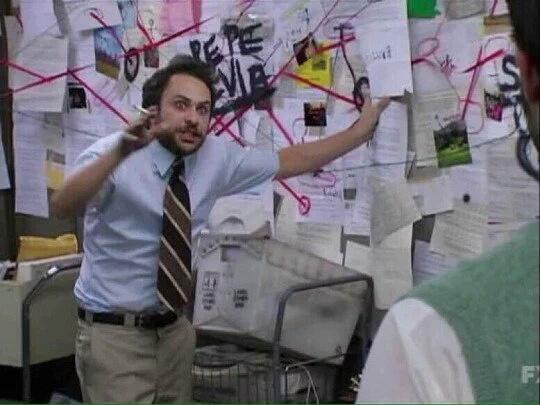
Conspiracies happen all of the time. It is not a surprise that people plot evil schemes and would be more strange if they did not. But it doesn’t mean that everything that happens is a conspiracy. Being old enough to recall the black helicopter theories and warnings of imminent UN takeover. Who can forget the FEMA camp claims and those pictures of ‘coffins’ Barack Obama’s administration would soon be loading us into? Strangely many dates come and go, but none of those who push these wild global plots come forward later and say, “You know, I may have been wrong about JFK being the Antichrist… “
Wild conspiracy theories are about political ideology more than evidence. It is oftentimes a product of those who feel disempowered and seek uncomplicated explanations. The left, for example, hallucinates nebulous things like systemic racism or white privilege. Not entirely claims without any merit and yet if it is used to explain every outcome—if you see it lurking behind everything people do—then stop, get some help! The fringe right likewise, turns to fantasy when reality is too hard for their simple minds to understand. Inflation can’t just be about the Fed printing trillions of dollars devaluing currency, no it must be fires at food processing facilities!
There is always a motivated misunderstanding of evidence that is involved beneath this kind of claim—a misuse of statistics and facts to form grandiose theories.
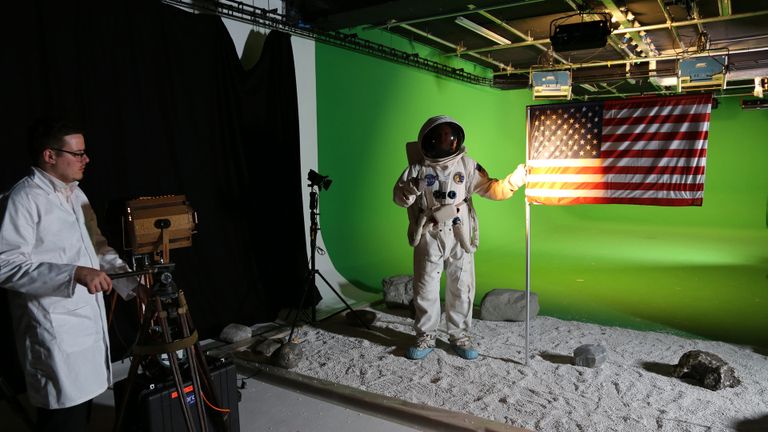
The common thread of conspiracy theories is that they can’t be disproven. They are all established on faith, firm belief evidence connecting all the dots can be found and can shape-shift as needed. If one part can be disproven they can simply move the goalposts or deny the evidence is legitimate. If someone does not want to believe that the moon landing happened you could show a Saturn V rocket, introduce them to one of the astronauts, thoroughly explain all of the alleged irregularities they see and they’ll still believe that it was faked.
It is a matter of political orientation, not facts or plausibility, and stems from assumptions and a general mistrust of the system.
To the conspiracy-minded folks, everything becomes a conspiracy, there can never be an accident, or a lone wolf attack, no such thing as coincidence in their world. Sandy Hook couldn’t be a deranged (drugged out) Adam Lanza. No, to Alex Jones it must’ve been a false flag with the casualties being crisis actors rather than real people. And some of those hunch I understand, this is what happens when every tragedy is treated cynically as an opportunity by control-freak politicians.
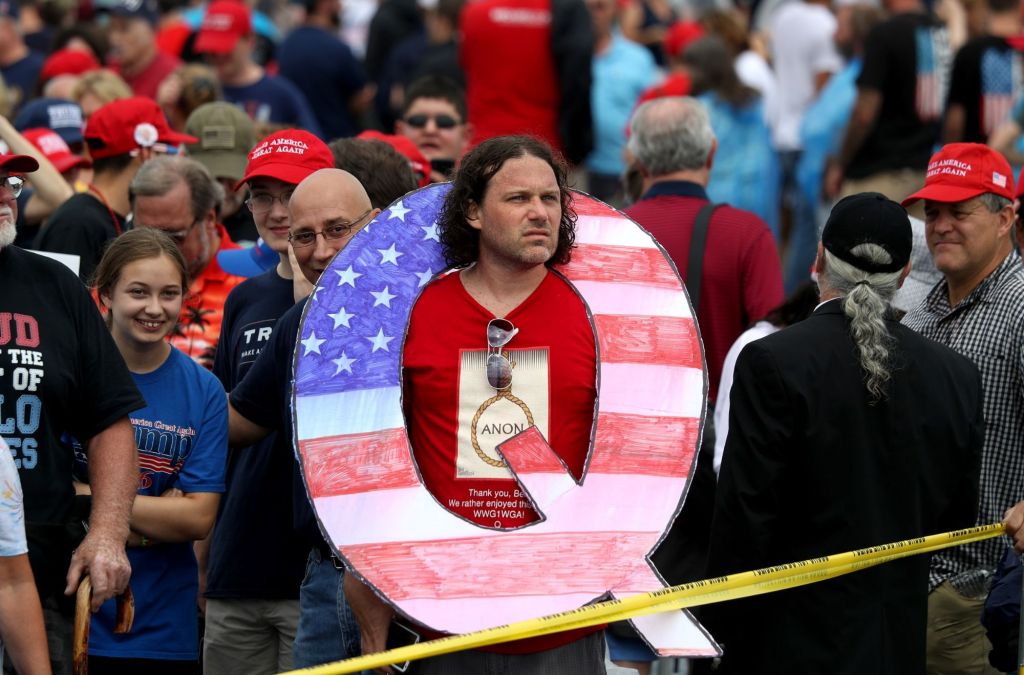
The real issue I have with Q-Anon, where all is a hidden criminal plot (and everything is going according to the plan) is how it sucks the oxygen out of the room for discussion of real observable corruption. The far-flung theories, worse, are used to discredit those reasonable concerns about the expansion of government power and proliferation of unaccountable agencies. We should be far more concerned with what those with power are ‘legally’ doing in plain sight—and not giving them cover of cockamamie theories they happily use to dismiss us all as crackpots.
That’s the irony here, the conspiracy theorist is aiding the conspiracy. For example, fact-checks of “Covid is a bioweapon” were used to strawman the reasonable questions about a possible Wuhan lab-leak. This is why we couldn’t have a serious conversation.
So why do the kooks need to speculate so far beyond the evidence? Why can’t they stick to what is known or factual, the most plausible explanation, rather than always having to gallop to the craziest possible conclusion? In some cases it might just be stupidity, that they simply aren’t very good at tracking normal human motivation. But in many cases, it is just a form of resentment, they are unserious people—with a massive inferiority complex—who both need to distinguish themselves and also discredit those who did attain more.
It is basically the working-class equivalent of pulling the race-card.
And yet this is not entirely without cause.
They’ve endured globalism, they have seen their jobs outsourced, prices rise and wages stagnate. This was not the America that was promised to them. A place where their own dreams would be the limit. They see things going the wrong way, opportunities drying up for people like them, as a flood of new faces replace the familiar. There has been a sort of conspiracy against them, but not in the way they imagine. Yes, in many ways, they have been screwed over by their betters—so perhaps that is where the deep suspicion originates?
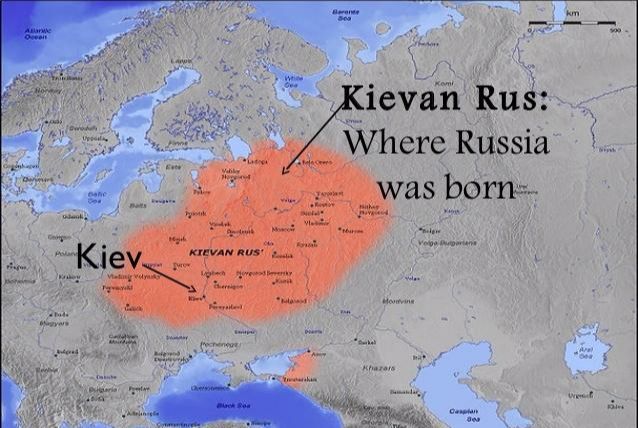
As with most reporting of current events, the presentation of the ongoing conflict between Russia and Ukraine is distorted. Both sides are engaged in their own propaganda. It is said that truth is the first casualty of war and, in the case of this one, the falsehoods span many decades. The first thing to do, to get beyond this, is explore the history leading to to the present…
862 —1242
East Slavic tribes, in the area of modern-day Ukraine, Belarus, and Russia unite to become the Kievan Rus’ people.
980 — 1015
Vladimir the Great brought Christianity to the Kievan Rus’ people. Often referred to, in the West, as the Eastern Orthodox, this tradition (practiced from Egypt all the way to Greece) broke from the Roman Catholics in 1054.
1237 — 1480
The Mongols invaded and, laying siege to Kiev in 1240, came out victorious. This begins a period of Mongol rule.
1547 — 1721.
Mongol rule fades. The Muscovy dynasty rises. This Tsarist Russia, with periods of chaos and conflict, including what is referred to as a Time of Troubles from 1598 to 1613, ends with the rise of Peter the Great and brings us to the modern age.
1721 to 1917
The Russian Empire expanded from historical Kievan Rus’ territory and, stretching around 8,800,000 square miles, became the third largest empire in history behind the British and Mongol empires.
Joseph Stalin, an ethnic Georgian, becomes the General Secretary and begins his rule over the Soviet Union. His reign is marked by the Great Purge, from 1936 to 1938, when from 700,000 to 1.2 million people are killed, the number including many Orthodox priests, and political dissidents are rounded to be sent to Gulags.
Vladimir Spiridonovich Putin and Maria Ivanovna Shelomova struggle to survive the brutal German siege of Leningrad (now the city of St Petersburg) and are nearly killed. Vladimir, who lost a couple brothers in the battles, was wounded by a grenade in the fighting and crippled for life. The pair met after the war, got married, and had a son named Vladimir Putin in 1952.
April 4, 1949
The North Atlantic Treaty Organization (or NATO) is formed in Washington DC as an alliance to oppose the Soviet Union. The Warsaw Pact was created in May of 1955 as a response.
February 19, 1954
Crimea, which was part of Russia since being annexed from the Ottomans back in 1783, was gifted to Ukraine by the Soviets as a gesture of friendship. This ethnically Tatar and Russian-speaking region is the site of a key warm-water Russian naval base.
Oct 16, 1962—Oct 29, 1962
The Soviet Union responded to the United States putting nuclear missiles in Italy and Turkey by sending their own missiles to Cuba. The Kennedy administration, after the failed Bay of Pigs invasion, authorized a CIA campaign of terrorism and sabotage within Cuba, answered with a naval blockade. The Cuban Missile Crisis ended when Moscow backed down after a secret deal where the offending US missiles were removed from Europe.
Nikita Khrushchev, Fidel Castro, and JFK
1979—1989
A pro-Soviet government took power in Kabul in 1978 and tried to counter Islamic traditionalism with steps towards modernization. They invited Soviet military advisors and this led to troops being deployed to help the Afghans suppress the insurgency. The CIA supplied the Afghan rebels and foreign fighters (including a Saudi named Osama Bin Laden) the Mujahideen, with weapons. The Soviets withdrew after a humiliating costly affair.
December 26, 1991
The Soviet Union collapsed, the Warsaw Pact dissolved, and Soviet republics (including Ukraine) given their independence. NATO begins an eastward expansion, absorbing former Soviet republics. Russia falls into disarray as oligarchs partner with the West to exploit the vast resources of that country—Ukraine also becomes known for extreme corruption.
March 24, 1999—June 10, 1999
NATO intervened on behalf of Kosovo rebels, who had been resisting Serbian authorities, and then demanded that the country be partitioned along ethnic lines.
December 31, 1999
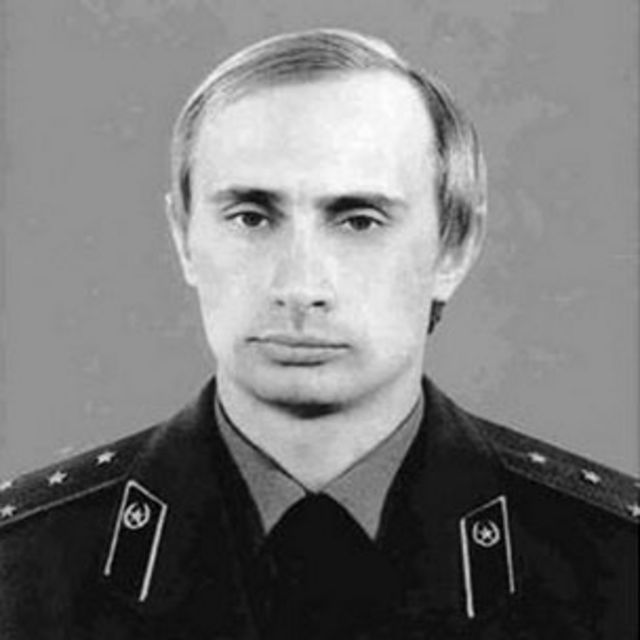
Vladimir Putin became the acting President of the Russian Federation when Boris Yeltsin unexpectedly resigned. From 2000 to 2004, after winning a special election, he begins to reform the country and reign in the oligarchs forcing them to answer to his government to keep their power. Putin opposes the expansion of NATO to his border, regarding it as a threat to Russian sovereignty, and makes this red line clear.
Vladimir Putin, a former KGB officer.
Nov 21, 2013—Feb 22, 2014
The democratically elected President of Ukraine, Viktor Yanukovych, decided to keep closer ties with Moscow over the European Union. This leads to protests in Maidan Nezalezhnosti (Independence Square) in Kiev. The protestors occupied the square, they had their own food production, medical, and broadcasting facilities, along with that, stages for speeches and performances, as well as their own security forces. This boiled over when snipers, still unidentified, fired on the crowd. Both police and protesters were killed in this attack. Before this escalation high-ranking US officials, then Secretary of State Victoria Nuland and the Ambassador to Geoffrey Pyatt, picked the replacement of Yanukovych who was later overthrown in the Maidan coup.
May 12, 2014
Hunter Biden, son of the then US Vice-President, Joe Biden, is given a seat on the board of Burisma Holdings, as a “legal advisor” and is paid over a million for this service. He gave Burisma executives access to his politically powerful father and later the elder Biden would brag, live on television, about a quid pro quo that got a Ukrainian prosecutor fired—who had been investigating Burisma corruption.
Like father, like son
Feb 20, 2014 – Mar 21, 2014
The Russians, believing their naval base in Crimea would be threatened by the new pro-West government, moved quickly to secure it from the Kievian nationalists. They already had a significant military presence there, it is a Russian-speaking area, and the Crimean status referendum, held on March 16, 2014, had an 87% turnout and was 97% in favor of reunification with Russia.
April 6, 2014–February 24, 2022
The Russian-speaking Donbas region also wanted more autonomy, they opposed Kiev’s efforts at “Ukrainianization,” which sought to erase their Russian heritage, and eventually declared their independence. These breakaways were invaded by the Kievan regime, starting a war that killed over 14,000 and lasted nearly eight years before the current Russian intervention.
Donbass, when nobody outside Ukraine cared about the war.
May 2, 2014
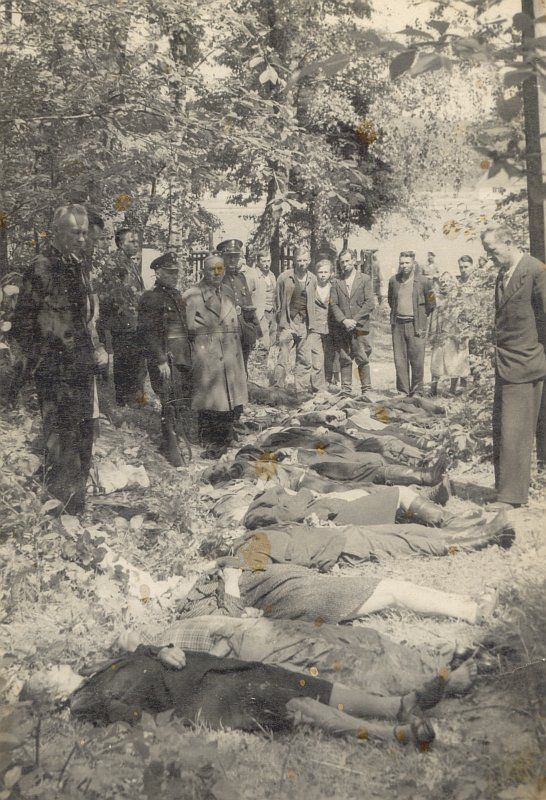
Protests around the country became violent again when the right-wing nationalists, who favored the new post-coup government that had been installed in Kiev, forced opposition demonstrators into a building that was set ablaze. This incident, the Odessa Massacre, burned alive 48 people, some of those who did manage to escape were beaten by the mob. Like the shootings used to justify the Maiden insurrection, nobody was arrested or charged for this mass murder.
April 21, 2019
Volodymyr Zelenskyy, a comedian, groomed by an oligarch, wins the second round of voting in a landslide victory and becomes the President of Ukraine. He promised to bring peace and end corruption. There was not much success on either front. Human rights abuses have only increased during his presidency and especially after the start of the Russo-Ukraine War.
Zelenskyy, the other Vlad.
February 24, 2022
After massing their troops on the Ukrainian border, Russia demands that the shelling of Donbas cease. When the attacks continue, the “special military operation” begins, which is condemned in the West as an “unprovoked invasion,” and is now effectively a proxy war between NATO and Russia. The bloodshed continues to the time of this writing.
Vladimir versus Volodymyr
While many commentators, on both sides, want to present this as a battle of good and evil, it is really a fight between spiritual (even actual) cousins. Those who say that Russia is the aggressor neglect that the war began years ago with the Ukrainian nationalists and their campaign against separatists, that this came about as a result of a coup apparently orchestrated by or at least with the direct aid of the US State Department. If Ukraine can be independent of Russia, or Kosovo from Serbia, why not Donbass? And who says that the Soviets handing over Crimea, in the 1950s, is more valid than the referendum that brought it back?
The US “rules-based international order” only makes sense for those who share the bias of those spoon-fed by US media. The legacy of CIA support for terrorism abroad and the violent overthrow of democratic leaders makes anything done by Russia seem like child’s play. The US acts with impunity around the world—provoking sanctioning, and invading with destructive campaigns of “shock and awe” anyone who dares to oppose its imperial aims. The US really had no business playing kingmaker in the backyard of Russia. The US enforces the Monroe Doctrine in the Western Hemisphere, why would Russia (or China) be happy with our military expansion in their own areas of national interest?
Us-rules based order
Sure, Russia isn’t faultless, by any means, and Putin is no St. Vladimir either. But, that said, neither is Zelenskyy or the Kievan (Kyivan) nationalist regime he represents.
Truthfully, the most significant difference between the two sides of the war may actually be their Slavic language dialects. Which is to say it isn’t much. Both sides commit war crimes, both lie about the other side, and both also share the same religious and ethnic heritage. They are natural allies, given their shared Kievan Rus’ history, which is probably why Western powers want to instigate and encourage the division. It is a family feud, a fratricidal war, and benefits only the US military-industrial complex.
Apparently, these Americans, reveling in a terrorist attack, are unable to differentiate between Saudi Arabian hijackers (Sunni Arabs) and Iranian civilians (Persian Shites) mercilessly gunned down in Tehran. I guess to them terrorism is only bad when American and European people are the targets?
What’s worse is the missed opportunity to defeat a common enemy (ISIS) and also to bridge a divide between two nations that should have never happened in the first place. This is probably because we have selective memory and remember the Iran hostage crisis of 1979 (when 52 American diplomats were taken hostage) yet not the decades of meddling by our government that led up to it.
Americans forget that we drew first blood in the conflict with Iran when our government (via the CIA) participated in the overthrow of the democratically elected Prime Minister of Iran in 1953. It was called “Operation Ajax,” it was intended to serve British oil interests and ended with our installing brutal monarchial rule under Mohammed Reza who was called the Shah (or king) of Iran.
With all the outrage over alleged Russian interference in our election and our own history of revolution against kings, it should be easy to understand what came next: The Iranians took their country back, the Shah escaped to the United States to avoid accountability, our government refused to send him back to stand trial in Iran, and in response, they took some of our diplomats hostage.
The great irony here is that the only Americans harmed were the eight US servicemen killed and four wounded in a helicopter crash during a bungled military operation to rescue the hostages. That’s not to mention the one Iranian civilian, who was guilty only of being in the wrong place at the wrong time and was killed by an Army Ranger’s shoulder-fired rocket.
Yet, despite our own casualties being self-inflicted, since then the U.S. government has made it their policy to do harm to the Iranian people. For example, there is a reason why some in our government knew Saddam Hussain had chemical weapons: we enabled him to use them against the Iranians.
The Iran-Iraq war started in the 1980s when Iraq invaded Iran, was a bloody conflict that cost more than a million lives. In response to the carnage Henry Kissinger, a former U.S. Secretary of State, smirked, “it is a pity they both can’t lose.”
It is little wonder that the Iranian leaders would seek a nuclear deterrence given our past (and present) aggression. From their perspective, it is simply a matter of survival given that U.S. leaders regularly threaten. For example, long-term Senator John McCain thought singing “bomb-bomb, bomb-bomb Iran” was funny and praised the leader of a Marxist terrorist organization that has murdered thousands of Iranians.
McCain actually met with the leadership of Mujahedin-e Khalq (MEK) to express his hopes that they would someday rule in Iran. The thought of this is horrifying to a secular Iranian friend of mine. My friend, while not a fan of the current Iranian government, says that she (and most other Iranians) do not want the MEK in power and are shocked that a prominent U.S. politician would openly support terrorism.
How quickly the American public forgets that our government (including McCain) also gave support (direct or indirect) to Osama Bin Laden when he was fighting a holy war against the Soviet Union. Of course, they do remember the blowback when the terrorist we helped to create turned his attention on us as a result of our meddling in his own part of the world.
Talk about karma.
And, no surprise, U.S. interventions (supported by then-Secretary of State, Hillary “we came, we saw, he died” Clinton, and none other than John McCain) have also resulted in the formation of ISIS. It is obvious that our leadership never learns from the blowback and the American public—putting it too lightly—is woefully ignorant of the misdeeds supposedly done on their behalf around the world.
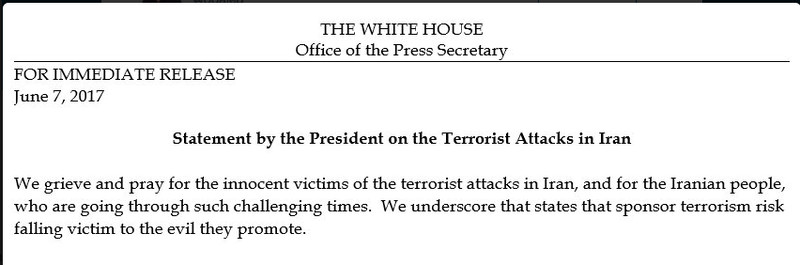
Any slight hope that the Trump administration would take a more sensible approach has pretty much disappeared when they responded to the terrorist attacks with political opportunism rather than solidarity against ISIS (who claimed responsibility for the attacks in the Iranian capital Tehran) and, in the process, we are driving further away many Iranians who once looked upon America as great despite our numerous violations of their sovereignty.
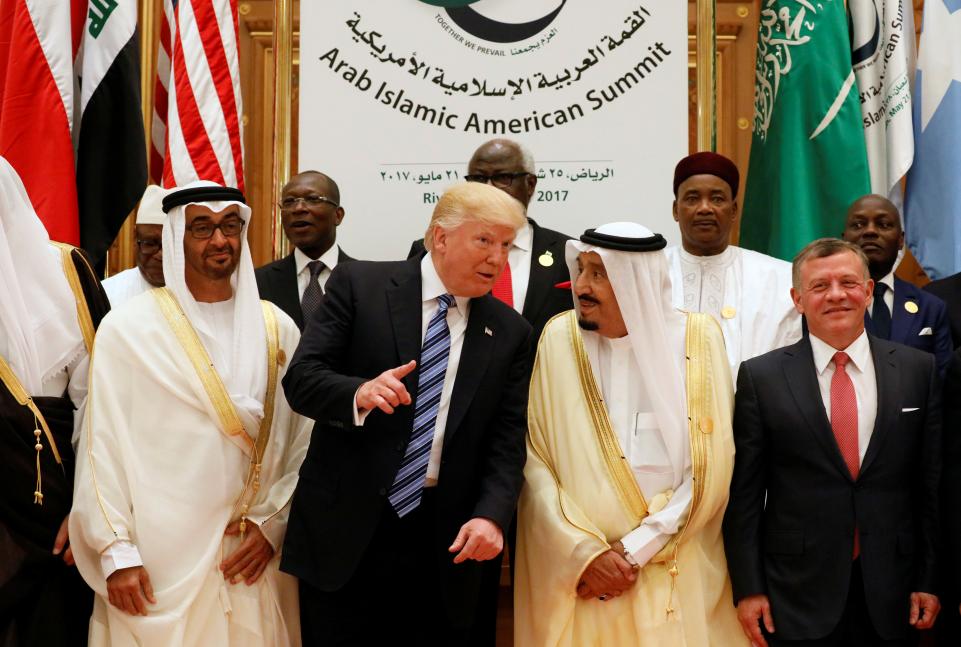
We put a travel ban on Iran who has never once attacked the American homeland and has only fought in defense against the attacks of the U.S. and our regional allies. But then no travel ban is applied to Saudi Arabia or any of the other countries where the 9/11 hijackers came from. It is absurd that we are still signing weapons deals with a nation that doesn’t allow women to drive, uses beheadings as punishment, funds the spread of Wahabbism worldwide, and backs ISIS, while opposing a nation merely fighting to keep us out.
Given our inability to admit hypocrisy or even to recognize our own mistakes, it is likely only a matter of time before the next group of U.S. supported “dissidents” and “freedom fighters” accomplish their objectives and then turn their bloodthirsty eyes on us, like Bin Laden did, and make their mission putting a permanent end to our hegemonic ambitions.
Those who do not learn from history are bound to repeat it. We are still sowing the wind, covertly killing anyone (including the murder of civilian scientists) who stands in the way of our global dominance, supporting terrorism against those who do not want to be our puppets and will likely reap yet another whirlwind as a result.










 Irregular Ideation