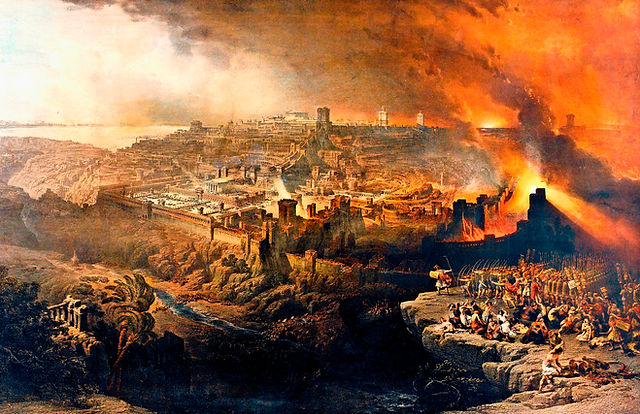
What Is Biblical Israel?

Standard

There is a nation in the world that identifies as Israel.  And, as we all know, if a person or group of people identify as something then this is what they are.  If I say that I’m a ham sandwich you better believe it!  Israel is what calls itself Israel.

That out the way, is that Israel the same as the Biblical Israel established by God?

If you were raised under Zionist teachings this isn’t even a question.  Of course, it is!  What else could it be?  Biblical criteria or qualifications, what are those?  I mean, how exciting would those end times novels be without our favorite backdrop???  And next, you’ll be telling us reality television is fake and that Caitlyn Jenner is a man and not a stunning and brave woman!?! 

Isn’t everyone who identifies as something that thing?

However, for those slightly more literate, and not born yesterday, the question of what the Biblical Israel is and if the state by the same name is the same thing is important.  For a Christian, up until the time of the reformation and a little after, this answer was quite clear and that is that Israel today is the remnant of the Jews who remained faithful—as well as those Gentiles converted. 

From the perspective of New Testament writers Israel is the Church or the body of those who believe—a religious affiliation and not a particular race.

About Religion, Not Race…

While still a member of a Mennonite church, I was not happy to have my religious identity be classified as an ethnic group.  In my own opinion I wasn’t born a Mennonite, it was my religion and something that I had to choose to participate in.  And yet there was truth to the claim.  There is was an ethnic component to being part of the group.  We shared a culture, and have our own common surnames, and many converts don’t fit in well.  

However, the most damning evidence, other than having unique genetic disorders, is the broad range of beliefs and practices under the Mennonite banner.  Those calling their church Mennonite span from those who are progressive and ordaining lesbian pastors to those very traditional still using horses and buggies for transportation.  So, when the only true common bond between all of these Mennonite groups is a sprinkling of Yoders, Gingrichs, Millers, or Barkmans, can it really be a religious belief system?  

Rev Michelle Yoder, a charismatic lesbian pastor of the Mennonite faith, sitting comfortably with partner in her electric Mennonite buggy as she makes her way through Africa

Okay, like a Facebook relationship status, it’s complicated.  People can and do convert to become Mennonite.  And, surprisingly enough, since a few decades ago, an African version of the Mennonite denomination has been growing rapidly to the point there are now more Mennonites in Congo than in Canada.  I mean, who knows if their doctrines or religious practices are anything that a North American conservative would recognize, nevertheless they do carry the name of Menno Simons in a direction he probably never imagined.

That’s one thing that the Orthodox generally put up front.  If you are Orthodox in Greece or a Greek community, then you’re a Greek Orthodox.  The liturgy and general practice are the same, established by canons, but there is also room for ethnic expression and use of the language common to the people.  In the Arabic world, for example, they use “Allah” where we use the Roman pagan word ‘God’ and have been using it before Islam even existed as a religion.  Anyhow, in Orthodoxy, unlike Mennonites, the identity is built from the substance of something established and a faith that is ancient.

Absurdly, when it comes to Judaism, we no longer care if they’re practicing or apostate, we slap that big ethnic label on them all and claim all of them have a claim to the land by their DNA.  To us, they’re all the same.  But that’s certainly not the case when it comes to Biblical Israel, not every part of the assembly was blessed, some were literally swallowed up by the earth, while others were put to death for disobedience, and the whole would end up in exile: 

But if you or your descendants turn away from me and do not observe the commands and decrees I have given you and go off to serve other gods and worship them, then I will cut off Israel from the land I have given them and will reject this temple I have consecrated for my Name. Israel will then become a byword and an object of ridicule among all peoples. This temple will become a heap of rubble. All who pass by will be appalled and will scoff and say, ‘Why has the Lord done such a thing to this land and to this temple?’ People will answer, ‘Because they have forsaken the Lord their God, who brought their ancestors out of Egypt, and have embraced other gods, worshiping and serving them—that is why the Lord brought all this disaster on them.’ ‭‭‭‭

1 Kings‬ ‭9:6‭-‬9‬ ‭NIV

It is quite clear that the covenant was even conditional for those who were biological offspring of Abraham.  Not only this, but people could become part of Israel who were not blood descendants of Abraham, Ruth the Moabite, or Rehab the prostitute, a Gentile, for example.  So it was never about ethnicity, it was always about obedience and the covenant conditional based upon obedience rather than bloodlines.

Chosen For Abraham’s Faith

The children of Israel were not picked for their superior genetics.  That’s not to say there aren’t very intelligent and extremely talented people of Jewish religious heritage.  Abraham was picked for being a righteous man:

And the LORD said, Shall I hide from Abraham that thing which I do; seeing that Abraham shall surely become a great and mighty nation, and all the nations of the earth shall be blessed in him? For I know him, that he will command his children and his household after him, and they shall keep the way of the LORD, to do justice and judgment; that the LORD may bring upon Abraham that which he hath spoken of him.

Genesis 18:17‭-‬19 KJV

It was Abraham’s righteousness and how he would guide his children to “keep the way of the Lord,” that God picked him.  God went on to set Israel aside through religion, not race, and those who did not keep the law would soon find themselves entirely cut off from the assembly of Israel.  There was never a blessing for simply being a blood relative of Abraham.  It was always conditioned on a faith that produced the work of obedience and this remains the case.  

Those born to keep the law of Moses must recognize their Lord and Savior or they’re no more blessed than the Benjamites put to the sword for their evil:

The tribes of Israel sent messengers throughout the tribe of Benjamin, saying, “What about this awful crime that was committed among you? Now turn those wicked men of Gibeah over to us so that we may put them to death and purge the evil from Israel.” But the Benjamites would not listen to their fellow Israelites. […] The Lord defeated Benjamin before Israel, and on that day the Israelites struck down 25,100 Benjamites, all armed with swords. […] The men of Israel went back to Benjamin and put all the towns to the sword, including the animals and everything else they found. All the towns they came across they set on fire.

Judges 20:12‭-‬13‭, ‬35‭, ‬48 NIV

If this were a Covenant merely about blood or genetics, then the Benjaminites really got shafted.  I mean, I’m not sure how anyone could construe being slaughtered wholesale as being a blessing or some special thing to be chosen for, “Congratulations, you’ve been selected to be purged!”  So this idea that anyone will ever be saved simply for their chosen race is wrong and there is only one true religion which is founded in Abraham’s seed, through the law of Moses, and is fulfilled in Christ.  

My favorite Jewish writer explains:

Those who want to impress people by means of the flesh are trying to compel you to be circumcised. The only reason they do this is to avoid being persecuted for the cross of Christ. Not even those who are circumcised keep the law, yet they want you to be circumcised that they may boast about your circumcision in the flesh. May I never boast except in the cross of our Lord Jesus Christ, through which the world has been crucified to me, and I to the world. Neither circumcision nor uncircumcision means anything; what counts is the new creation. Peace and mercy to all who follow this rule—to the Israel of God. 

Galatians 6:12‭-‬16 NIV

After Christ, even the law of circumcision becomes secondary to what St Paul describes as being “the new creation.” 

So it was the righteousness of Abraham, which was followed up with their being set aside by careful obedience to the law—which was the test of the Old Covenant—and finally, reconciliation through Christ that is salvation for all. 

It was NEVER only about ethnicity or race.  Modern descendants of the Jews must do the same as anyone else, repent and accept their King or perish. Repentance is the first step to salvation and that is what distinguishes true Israel from the counterfeit.  The first followers of Jesus were Jewish.  Christianity is the part of the assembly that remained faithful to their Lord while the others who rejected their rightful king are called anti-Christ:

Dear children, this is the last hour; and as you have heard that the antichrist is coming, even now many antichrists have come. This is how we know it is the last hour.  They went out from us, but they did not really belong to us. For if they had belonged to us, they would have remained with us; but their going showed that none of them belonged to us. […]  Who is the liar? It is whoever denies that Jesus is the Christ. Such a person is the antichrist—denying the Father and the Son.  No one who denies the Son has the Father; whoever acknowledges the Son has the Father also.” ‭‭

1 John‬ ‭2:18‭-‬19‬ ‭NIV‬‬

There are a great many who call themselves Christian today who have Scripture and yet no discernment whatsoever.  You don’t even need to believe in Jesus to understand what is being said in the passage.  Who is identified as the liar and anti-Christ?  1 John 2 very plainly tells us who: “It is whomever denies that Jesus is the Christ.”  That is to say those unfaithful to the covenant made with Abraham through their rejection of the Son—God in the flesh.

To say that some can deny the Son and still have a Covenant with the Father?  It is to basically throw out the entire Gospel of Jesus Christ.  It is completely moronic and a sign that someone was never truly part of the assembly of God.  If they truly belonged they would see their Lord as the fulfillment and not be so easily led astray.  When Jesus says “Salvation is from the Jews” he is not talking about an ethnic group, he is talking about himself and how he is the Messiah that was promised through the faithful seed of Abraham.

Chosen by Christ

It is really a form of idolatry to hold a race or ethnicity up as chosen by God for no reason other than their genetics.  That is not what the “Israel of God” ever was.  The assembly (or ‘ekklesia’) was always about those who were faithful, a remnant of Abraham’s seed that included Gentile converts, and turning it into an ethno-nationalist state is a perversion of what the original covenant between God and Abraham actually entailed.  A covenant is a two-edged sword, while it comes with blessings for those who obey there is also a list of curses for those who do not hold up their own end.

‭‭Jesus spoke to them again in parables, saying: “The kingdom of heaven is like a king who prepared a wedding banquet for his son. He sent his servants to those who had been invited to the banquet to tell them to come, but they refused to come. […] “But they paid no attention and went off—one to his field, another to his business. The rest seized his servants, mistreated them and killed them. The king was enraged. He sent his army and destroyed those murderers and burned their city. “Then he said to his servants, ‘The wedding banquet is ready, but those I invited did not deserve to come. So go to the street corners and invite to the banquet anyone you find.’ […] “For many are invited, but few are chosen.”

Matthew‬ ‭22:1‭-‬3‬,5-9,14 ‭NIV‬‬

Any guess which of those on the guest list killed the servants sent by the King?

The Biblical Israel, for those who believe in the Gospel of Jesus Christ, is that remnant of Jews who obey and follow after the Word of God incarnate.  This is always how Israel worked.  Some were pruned off the tree and others grafted in.  There were never special exceptions made for anyone merely on the basis of ethnicity or race.  The Church is the nation of those faith to the work of God that started with a Covenant with Abraham and needs no worldly state or rebuilt temple of stones.  Christians are the chosen people.

This essay doesn’t mean that there should be no modern state of Israel or that the mistreatment of any group of people in the world who have rejected Jesus is ever acceptable. We just need to know there’s a big difference between “identifies as’ and what is actually being referred to in the Bible.

On Topic of Dogs and Dismemberments

Standard

“The Lord disciplines the one he loves, and he chastens everyone he accepts as his son.” (Hebrews 12:6 NIV)

The other day someone commented, in response to a blog, that it was a “vicious attack” and then thumped me with a Scripture reference that I promptly forgot to read. But they couldn’t have read much more than that particular proof-text because, otherwise, they would be doing less Bible-thumping about my lack of their religious refinement and their protest sounded remarkably similar to those offended who stopped Jesus to ask him if he realized that his words were insulting to them.

My words were not slanderous nor untrue and not written to be meanspirited either. In fact, I never even mentioned a name, because my point was not about the person, it was about the behavior and errant ideas behind the behavior. Sure, it was a rebuke to those who engage in this sort of thing, but certainly not as severe as the preaching of Jesus and definitely not as scathing as what St. Paul had to say to these sorts of religious bluebloods who were trying to influence others to live by their standards:

It is for freedom that Christ has set us free. Stand firm, then, and do not let yourselves be burdened again by a yoke of slavery. Mark my words! I, Paul, tell you that if you let yourselves be circumcised, Christ will be of no value to you at all. Again I declare to every man who lets himself be circumcised that he is obligated to obey the whole law. You who are trying to be justified by the law have been alienated from Christ; you have fallen away from grace. For through the Spirit we eagerly await by faith the righteousness for which we hope. For in Christ Jesus neither circumcision nor uncircumcision has any value. The only thing that counts is faith expressing itself through love. You were running a good race. Who cut in on you to keep you from obeying the truth? That kind of persuasion does not come from the one who calls you. “A little yeast works through the whole batch of dough.” I am confident in the Lord that you will take no other view. The one who is throwing you into confusion, whoever that may be, will have to pay the penalty. Brothers and sisters, if I am still preaching circumcision, why am I still being persecuted? In that case the offense of the cross has been abolished. As for those agitators, I wish they would go the whole way and emasculate themselves!

(Galatians 5:1-12 NIV)

Paul was taking direct aim at the Judaizers (equivalent to the “good Mennonite” or others who hold their mastery of a particular tradition as a point of pride) for burdening others down with their rules and employed a very crude double entendre to make his point. I mean, circumcision is literally to “nip the tip” of the male genitalia, as part of the Jewish tradition, and Paul is telling them he wishes that these men would cut off the whole cucumber to prove how superior they are. Of course, he’s also saying he wishes they would leave the church, compares them to a contaminant, and is definitely not mincing his words to be polite.

Jesus would not have tickled the prissy ears of the pretentious. He was provocative. He would likely be called a racist today for using “dog” in reference to a Canaanite woman. St. Paul too, he would surely have made the religious prudes blush then and would have enraged our social police. Both men threw their rhetorical bombs at those who felt too secure in their self-righteous positions and they made no apologies for it. The truth is sometimes harsh. Waking people from the stupor of their pride can take some colorful persuasion. Yes, absolutely, we must keep our own pride in check, but passive and mealy-mouthed men are not living the example of Jesus.

In the end, the opinions of some clucking hen, taking offense on behalf of a man quite confident in himself already, means nothing to me. As the old saying goes, “Throw a rock into a pack of dogs, and the one that yips is the one that you hit.” Feel free to shatter my “glass house” of hypocrisy if you see where I do not live up to my profession. It is better that I am insulted today than be forever damned. Niceness is not a synonym for love and Jesus was not some “you do you” hippy either. And this insulted woman would know that if she would read (or was able to comprehend) the Bible. Jesus didn’t come so that we can be feckless and ineffectual, he came to upset the status quo and the religious elites were his favorite targets.

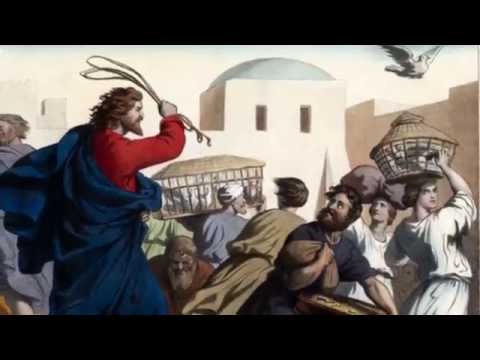
It is better that I rhetorically cut false teachings to pieces now, while those holding them can still be saved, than allow anyone to go unwarned to final their final judgment and be cut to pieces, thrown in a fire, and destroyed. The yelps of those insulted and offended are proof that the message is true enough to not be laughed off as a joke. Those using the Gospel of Jesus to sell their political-ideological Social Justice wares, trying to enslave others to their repackaged Marxist philosophy, will find no quarter here. I will whip them, and whip them good, with the truth of God’s word.

How God’s Economy Differs From Our Own

Standard

In three prior blogs (on topics of law, legalism and church authority) I’ve tried to present the Biblical basis and lay the theological groundwork necessary to establish concepts I will introduce in this post. I wish to remind my readers once again that I do not speak in any official capacity, I am not ordained, and encourage y’all to investigate these matters for yourselves rather than just take my word for it.

There are several cases in Scripture of people asking what they must do to be saved. In Acts 2:37-39, when the crowd asks what they must do, Peter answers:

Repent and be baptized, every one of you, in the name of Jesus Christ for the forgiveness of your sins. And you will receive the gift of the Holy Spirit. The promise is for you and your children and for all who are far off—for all whom the Lord our God will call.

Later, in Acts 16:31-34, a Roman jailer asks: “Sirs, what must I do to be saved?”

This is how Paul and Silas replied:

“Believe in the Lord Jesus, and you will be saved—you and your household.” Then they spoke the word of the Lord to him and to all the others in his house. At that hour of the night the jailer took them and washed their wounds; then immediately he and all his household were baptized. The jailer brought them into his house and set a meal before them; he was filled with joy because he had come to believe in God—he and his whole household.

We read the testimony of the apostle Paul, in Acts 22, where he describes his dramatic conversion on the road to Damascus. He describes a blinding light, being confronted by Jesus, and how he asked what he should do. He is told to continue on the road and meet a man named Ananias who restores his sight and then tells him: “Get up, be baptized and wash your sins away, calling on his name.”

And we also have this explanation of salvation by Peter:

For Christ also suffered once for sins, the righteous for the unrighteous, to bring you to God. He was put to death in the body but made alive in the Spirit. After being made alive, he went and made proclamation to the imprisoned spirits—to those who were disobedient long ago when God waited patiently in the days of Noah while the ark was being built. In it only a few people, eight in all, were saved through water, and this water symbolizes baptism that now saves you also—not the removal of dirt from the body but the pledge of a clear conscience toward God. It saves you by the resurrection of Jesus Christ… (1 Peter 3:18-21 NIV)

All of those passages answer the question of what a person must do. All of them mention water baptism as a necessary step in this process. This emphasis on baptism reflects the preaching of John the Baptist who tied the practice with true repentance. It also is what Jesus clearly taught:

“Very truly I tell you, no one can enter the kingdom of God unless they are born of water and the Spirit. (John 3:5 NIV)

This is likely the reason why baptism is a sacrament that, traditionally, in an emergency or circumstance where there is nobody else, can be administered by anyone. One can repent and believe in their mind, but baptism should follow—because that is what Jesus taught, it is what the early Church believed and to this very day is still the tradition of the Church.

So, we can all agree that baptism is a requirement for salvation, right?

Probably not.

This is one point where legalists might carve out exemptions, turn Scripture against Scripture, or otherwise downplay the necessity of baptism. But no amount of theological twisting can overturn the rule. Baptism is absolutely a requirement for salvation and to argue against that is to deny what is clearly recorded in Scripture. Jesus says that “no one can enter the kingdom” without being “born of water” and we must assume that is exactly what he meant.

The Thief On the Cross, Judas, and the Kingdom

Of Thy Mystical Supper, O Son of God, accept me today as a communicant. For I will not speak of Thy Mysteries to Thine enemies, neither like Judas will I give Thee a kiss. But like the thief will I confess Thee: remember me O Lord, in Thy Kingdom.

One of the starkest contrasts in Scripture is between the thief on the cross beside Jesus and Judas who betrayed Jesus. It wasn’t a comparison I had considered before hearing the Orthodox liturgy (in the quotes above) and yet is a parallel that is quite poetic and very significant.

On one side of the comparison, we have the man who did everything right from a legalistic standpoint. Judas had followed Jesus for years, from all appearances he had done everything required of a disciple and was even trusted enough to carry the common purse. But Judas, despite his outward devotion, seems to have been full of bitterness and ends up betraying Jesus with a kiss—before he took his own life. His name has become synonymous with betrayal and treason.

On the other side we have the account of two criminals crucified beside Jesus on the cross:

One of the criminals who hung there hurled insults at him: “Aren’t you the Messiah? Save yourself and us!” But the other criminal rebuked him. “Don’t you fear God,” he said, “since you are under the same sentence? We are punished justly, for we are getting what our deeds deserve. But this man has done nothing wrong.” Then he said, “Jesus, remember me when you come into your kingdom.” Jesus answered him, “Truly I tell you, today you will be with me in paradise. (Luke 23:39-43 NIV)

This man called “the thief” was a criminal who acknowledged that his punishment was just and defends Jesus against the mocker on the other cross. We have no reason whatsoever to believe he lived an upright or righteous life. There is no evidence of this man being baptized. He doesn’t ask Jesus into his heart nor does he recite a creed. He simply pleas, with his dying breaths and a little faith, “remember me” and Jesus, in response, tells him: “Today you will be with me in paradise.”

Does this mean that we should stop baptizing people?

Does this mean that we can continue in sin that grace may abound?

No and no.

There is no excuse for sin and there is no exemption for baptism either. There is, however, an order or a hierarchical arrangement of priorities and at the top of it is something beyond mere religion. What matters most is God’s grace and having the faith to fully put our trust in Him as our salvation. This something the thief could do and that Judas could not. Judas, for all his outward displays of righteousness and despite doing everything that was required of a disciple, had faith in his own understanding rather than in Jesus.

There are many sincere folks today who try to reduce Christianity to a list of dos and don’ts. And, instead of an abundance of life or resembling Jesus, they are rigid, anxious, jealous, judgmental, unforgiving and too often a stumbling block to those young in the faith. They believe that they are receiving salvation as a trade for their own righteousness and careful obedience. They often end up like Judas, bitter and critical, and refuse to truly put their faith in Jesus.

No amount of ritual obedience or religion can save a person who has faith only in themselves. We should like the thief who knows they are doomed without God’s mercy and not Judas who was righteous by outward appearance and lacked faith. Being a lowly criminal with a repentant heart is eternally better than being a disciple who judges others by his own standards and betrays Jesus.

God’s Economy Is Different From Our Own

Those trying to earn God’s favor, like the Pharisee who boasted in prayer about his righteousness compared to another man, have a desperate need to justify themselves. And, like the Prodigal son’s older brother who was angry because of the grace shown to his openly rebellious younger sibling, many have an entitled attitude and believe that their obedience and works means they are owed. It is because they believe that God’s economy is merit-based like their own. They try to earn points by obeying the law and fail to comprehend their own woefully inadequate position before Almighty God.

Jesus, in the parable of the laborers in the vineyard, contrasts God’s economy and our own:

“For the kingdom of heaven is like a landowner who went out early in the morning to hire workers for his vineyard. He agreed to pay them a denarius for the day and sent them into his vineyard. “About nine in the morning he went out and saw others standing in the marketplace doing nothing. He told them, ‘You also go and work in my vineyard, and I will pay you whatever is right.’ So they went. “He went out again about noon and about three in the afternoon and did the same thing. About five in the afternoon he went out and found still others standing around. He asked them, ‘Why have you been standing here all day long doing nothing?’ “ ‘Because no one has hired us,’ they answered. “He said to them, ‘You also go and work in my vineyard.’ “When evening came, the owner of the vineyard said to his foreman, ‘Call the workers and pay them their wages, beginning with the last ones hired and going on to the first.’ “The workers who were hired about five in the afternoon came and each received a denarius. So when those came who were hired first, they expected to receive more. But each one of them also received a denarius. When they received it, they began to grumble against the landowner. ‘These who were hired last worked only one hour,’ they said, ‘and you have made them equal to us who have borne the burden of the work and the heat of the day.’ “But he answered one of them, ‘I am not being unfair to you, friend. Didn’t you agree to work for a denarius? Take your pay and go. I want to give the one who was hired last the same as I gave you. Don’t I have the right to do what I want with my own money? Or are you envious because I am generous?’ “So the last will be first, and the first will be last.” (Matthew 20:1‭-‬16 NIV)

It is easy to understand why those who started early in the morning and worked all day might feel slighted at the end. They had spent their entire day sweating it out, trying to earn their wage, only for some to come during the day or even at the last hour and receive the same compensation. From a laborer’s perspective, it seemed unfair. Shouldn’t those who did more also get paid more for their efforts?

But the landowner had not hired them to judge such matters for themselves. It was the landowner’s money to spend as he wished, he was not obligated to hire anyone, he had gone out to find them, they had all agreed to the wage they were paid and were truly owed nothing more than what they had received. It was a fair wage when they were hired and that fairness did not change because of the landowner’s generosity to those hired later.

But what point was Jesus trying to make with this story?

It is interesting that this story comes right in the heels of the account of the rich young ruler who asked what he must do to be granted eternal life—which contains the same “the first shall be last” refrain. This man had kept the law from his youth. But when he asked what he lacked, this is how Jesus replied:

“If you want to be perfect, go, sell your possessions and give to the poor, and you will have treasure in heaven. Then come, follow me.” (Matthew 19:21 NIV)

If you stopped reading there you might end up like Judas who used those words of Jesus as a means to criticize an extravagant act of worship and to hide his own corrupt self-centered motives. There are many today who read the words of Jesus legalistically, they see the story of the rich man then add one more item to their list of religious requirements, and entirely missing the point.

However, there’s more to what Jesus said. If you keep reading you will see how the disciples were “greatly astonished” and ask Jesus “who then can be saved?” They, even as those who had already left everything behind to follow Jesus, understood the severity of what Jesus told the inquiring rich man. If keeping the law wasn’t enough, what then?

How Jesus answers is clear: With man this is impossible, but with God all things are possible. (Matthew 19:‬26 NIV)

That is the answer to the rich man’s question.

It is impossible.

That is also what the parable of the laborers is about. Those who had started early in the day represent those relying on their own efforts and are completely lacking appreciation for the one who made their earning anything possible. They were upset that the landowner was paying those who came later the same as them because they felt their labor had been devalued and yet the only value their labor had was what the landowner was willing to pay them. They didn’t create the circumstances of their own employment, how could they possibly be in any position to judge what was fair compensation for someone else?

The point Jesus is making is only God can save us. If you believe your works can save you, even if you sell all and give to the poor, you are no better than that rich man. The rich man had kept the law and yet lacked true faith in Jesus. He had faith in himself as a good religious person, he thought he could do something to save himself, and yet salvation does not come from our own effort.

The reason why it is difficult for a rich man to enter the kingdom is that they are able to depend on their own effort and thus are adequate without faith in their own minds. It was that self-sufficiency, the idea that a human can earn their way into eternal life, that Jesus confronts in the rich man. A person relying on themselves does not understand that without faith it is impossible to please God (Hebrews 11:6) or that their salvation depends fully on God’s choice and not their own:

You did not choose me, but I chose you and appointed you so that you might go and bear fruit—fruit that will last—and so that whatever you ask in my name the Father will give you. (John 15:16 NIV)

Akribeia: We Cannot Please God Through Perfection on Our Own Terms

There are many trying to please God with their own righteousness. That is to assume that God will somehow want or need us if we are good enough and that is completely absurd. It is a path to misery or arrogance. If you try to win God’s favor through your works and have any grasp of how your own best efforts compare to absolute perfection, you will be miserable. And, if you can delude yourself into believing that you are able to live to a perfect divine standard you are an insufferable moron.

Our salvation is not based on our own effort and cannot be. The rich man’s perfect obedience to the law of Moses couldn’t please God. And those trying to save themselves by turning the words of Jesus into a new law will likewise fail. Being a Christian requires obedience to a standard that goes well beyond the law of Moses and even beyond a legalistic interpretation of Jesus. It requires absolute and impossible perfection.

This is where the word “Akribeia” comes in. It is a Greek word (ἀκρίβεια) that means exactness or precision and refers to strict adherence to the law in Christian usage. We are all judged according to Akribeia and found lacking in comparison to this absolutely perfect standard. Even if you have followed the words of Jesus perfectly as a law you will still have fallen infinity short of God’s glory and are no better than the rich man or Judas.

No amount of obedience to the law, outside of God’s grace, can save anyone. Salvation is not something we receive in trade for our works. Our perfection doesn’t come from our works. We can’t even know what perfection is at God’s level, let alone live it out, and even if we could, that would still not entitle us to anything and would still leave us condemned to death with no hope of eternal life.

This is our salvation:

For it is by grace you have been saved, through faith—and this is not from yourselves, it is the gift of God—not by works, so that no one can boast. For we are God’s handiwork, created in Christ Jesus to do good works, which God prepared in advance for us to do. (Ephesians 2:8‭-‬10 NIV)

Jesus is what gives us currency in God’s economy and not our own righteousness. A person who even begins to comprehend how their own righteousness stacks up compared to absolute perfection will know that even their best efforts to follow the law will fall infinitely short. The very idea of pleasing God through our own works of righteousness is an insult and is basically to try to put ourselves on the same level as Almighty God.

To please God you need to be on an equal basis with God and that is not something we as a created being can do for ourselves. Our own righteousness is nothing but a filthy rag by comparison to the glory of God. That is why we must be clothed in the righteousness of Jesus (Romans 13:14, Galatians 3:27) and are made worthy through his work rather than our own.

Legalism doesn’t comprehend Akribeia. Legalists believe they can win God’s favor and therefore are always trying to prove their righteousness compared to others. They seem to believe that being perfect is like outrunning a bear in that you only need to be faster or better than the guy beside them. That is why they are critical rather than helpful, judgmental rather than merciful, and self-righteous rather than humble. They are like that unrepentant thief on the other cross who continued to mock and ridicule despite being condemned.

However, when you serve a God who is impossible to please by your own efforts you will not be jealous or upset about the grace that is shown to others. Instead, you will come beside the weak, forgive their sins as you have been forgiven, and help them to bear their burdens rather than pile more on. A humble person understands “there but for the grace of God go I” and realizes that even by their best efforts they would only be condemned by the perfect law of God. It is then, and only then, after we have exhausted our own riches and righteousness, that we can be saved.

Oikonomia: The Economy Of Jesus and the Church

The Old Testament law is severe by our modern standards and many believe that Jesus relaxed these standards. But that is incorrect. The law of Moses only addressed outward behavior, but Jesus emphasized that even our thoughts could make us guilty of sin. The reality is that Jesus added to the severity of the standard. In the Sermon on the Mount, he taught that lust was comparable to the sin of adultery and equates hatefulness to murder. By that standard, we are all condemned to die.

Yet, while Jesus is making things literally impossible for the rich man and other good religious people, simultaneously he’s allowing his disciples to break the written law:

One Sabbath Jesus was going through the grainfields, and as his disciples walked along, they began to pick some heads of grain. The Pharisees said to him, “Look, why are they doing what is unlawful on the Sabbath?” He answered, “Have you never read what David did when he and his companions were hungry and in need? In the days of Abiathar the high priest, he entered the house of God and ate the consecrated bread, which is lawful only for priests to eat. And he also gave some to his companions.” Then he said to them, “The Sabbath was made for man, not man for the Sabbath. So the Son of Man is Lord even of the Sabbath.” (Mark 2:23‭-‬28 NIV)

What?!?

Didn’t Moses, by command of God, have a man executed for merely picking up sticks on the Sabbath?

Note Jesus did not take the Pharisees to task for their interpretation of the law. But he does give times when the law was set aside and then goes on to explain something that is key—he turns attention from the letter of the Sabbath law to the spirit or reason behind it. He tells these religious experts that the Sabbath was created for the man rather than man for the Sabbath. In other words, the Sabbath law was instituted for the good of men and that reason for the law triumphed over the strict legalistic application.

Jesus can do that. He can for the same reason he could heal the blind, walk on water or turn water into wine. The one who created all things is not subject to anything and that includes the moral laws he created. Furthermore, the purpose and or intent of the law always supersedes the letter and therefore the one who knows the reason behind the law perfectly is free from the letter. And, while the written law is essentially the God of the legalist, we (together, as the Church) who are clothed in Jesus are given the same authority over the law and this authority is demonstrated in the early Church.

Jesus, in giving his authority to bind and loose, through the promise of the Holy Spirit, made it possible for the Church to rule on circumcision in a way that went directly against what the written law taught. Physical circumcision is still an explicit requirement according to the book of Leviticus, yet physical circumcision was dismissed by the apostle Paul. That loosing from the law led to conflict in the early church. Some were teaching that circumcision was still necessary for new converts while others were saying that this Scriptural requirement could be ignored. So the Church held a council in Jerusalem (Acts 15) and decided to waive the requirement.

We, as individuals, can’t pick or choose for ourselves what Biblical requirements apply to us. However, the Church (collectively) has the same authority as Jesus on matters of the law and can show the same grace (in other areas of law) that was argued in Jerusalem as far as circumcision. The Church can also expel an unrepentant evildoer as Paul demanded to be done in a letter to the Corinthians. The word for this is Oikonomia (οἰκονομία or “economia”) and literally means “household management” and is basically the same concept that allows anyone to be saved. If the written law cannot be overruled by God’s economy, we would all be condemned to death—who then could possibly be saved?

It is for freedom that Christ has set us free. Stand firm, then, and do not let yourselves be burdened again by a yoke of slavery.

Mark my words! I, Paul, tell you that if you let yourselves be circumcised, Christ will be of no value to you at all. Again I declare to every man who lets himself be circumcised that he is obligated to obey the whole law. You who are trying to be justified by the law have been alienated from Christ; you have fallen away from grace. For through the Spirit we eagerly await by faith the righteousness for which we hope. For in Christ Jesus neither circumcision nor uncircumcision has any value. The only thing that counts is faith expressing itself through love. (Galatians 5:1-6)

The law is a means, not an end.

Love is the end.

Who Are The True Children Of Abraham?

Standard

Over half a century ago there was a refugee crisis.

Vast numbers of people crossed the Mediterranean Sea. These refugees landed in a place where the inhabitants viewed them as illegal aliens, a threat to their way of life and dangerous.

There were terrorist bombings and assassinations perpetrated by those emerging from the sea—trying to gain a foothold. The native people were overwhelmed, they were unable to repel the invasion—driven from their ancestral homes and into poverty.

To many this happening is a fulfillment of prophecy and miracle from God. They use success in battle as evidence that God is on the side of the victors, they use Scriptural promises made to Abraham as proof texts, and urge the Christian church to fall in line.

But Jesus warned of false prophets who “will appear and perform great signs and wonders to deceive, if possible, even the elect.” (Matthew 24:24)

So, how do we know the difference between a miracle of God and deception? Are the nationalistic ambitions of some today reflective of the new covenant or is that a return to bondage? Is our new covenant one of physical reality or spiritual? Who are the true children of God?

#1) Jesus says clearly that children of Abraham by blood (who do not believe) are children of the devil, not God…

“‘Abraham is our father,’ they answered.

‘If you were Abraham’s children,’ said Jesus, ‘then you would do what Abraham did. As it is, you are looking for a way to kill me, a man who has told you the truth that I heard from God. Abraham did not do such things. You are doing the works of your own father.’

‘We are not illegitimate children,’ they protested. ‘The only Father we have is God himself.’

Jesus said to them, ‘If God were your Father, you would love me, for I have come here from God. I have not come on my own; God sent me. Why is my language not clear to you? Because you are unable to hear what I say. You belong to your father, the devil, and you want to carry out your father’s desires. He was a murderer from the beginning, not holding to the truth, for there is no truth in him. When he lies, he speaks his native language, for he is a liar and the father of lies. Yet because I tell the truth, you do not believe me! Can any of you prove me guilty of sin? If I am telling the truth, why don’t you believe me? Whoever belongs to God hears what God says. The reason you do not hear is that you do not belong to God.'” (John 8:39-47)

Jesus tells these ‘Jews’ that the true children of Abraham do as he did. Jesus suggests they are illegitimate children. They claim to be children of God because of their biological lineage and Jesus dismisses them as children of the devil.

Do we agree with them? Is God and Abraham their father? Or do we agree with Jesus?

#2) Paul says the old covenant will “soon disappear” and be replaced by the new and superior covenant of Jesus…

“But in fact the ministry Jesus has received is as superior to theirs as the covenant of which he is mediator is superior to the old one, since the new covenant is established on better promises. For if there had been nothing wrong with that first covenant, no place would have been sought for another. But God found fault with the people and said: ‘The days are coming, declares the Lord, when I will make a new covenant with the people of Israel and with the people of Judah. It will not be like the covenant I made with their ancestors when I took them by the hand to lead them out of Egypt, because they did not remain faithful to my covenant, and I turned away from them, declares the Lord. By calling this covenant ‘new,’ he has made the first one obsolete; and what is obsolete and outdated will soon disappear. (Hebrews 8:6-13)

This is where historical context matters.

The text above was written before the destruction of the temple and final ending of the inferior covenant’s sacrificial system.

Jesus represented the ending of the age, the fullness of a time, and a better way. The old covenant has disappeared, we live in the fulfillment of that prophecy above and should not look backwards.

A covenant is an agreement only good when both sides keep the terms. Paul clearly says that the old covenant was broken and God “turned away” from the people who broke the contract.

Nobody under the new covenant should be pining for a return of the old…

“We are not like Moses, who would put a veil over his face to prevent the Israelites from seeing the end of what was passing away. But their minds were made dull, for to this day the same veil remains when the old covenant is read. It has not been removed, because only in Christ is it taken away. Even to this day when Moses is read, a veil covers their hearts. But whenever anyone turns to the Lord, the veil is taken away. Now the Lord is the Spirit, and where the Spirit of the Lord is, there is freedom. (2 Corinthians 3:13-17)

Do you live in the freedom of the new covenant or do you remain with Moses in dullness of mind and persistent lacking of understanding?

#3) The physical or outward circumcision does not mean anything to God, the true circumcision is something internal and spiritual…

“A person is not a Jew who is one only outwardly, nor is circumcision merely outward and physical. No, a person is a Jew who is one inwardly; and circumcision is circumcision of the heart, by the Spirit, not by the written code. Such a person’s praise is not from other people, but from God.” (Romans 2:28-29)

Paul harkens back to the conditional promise given in Deuteronomy (chapter 30) where assurance is given “when you and your children return to the Lord your God and obey him with all your heart and with all your soul” that He “will circumcise your hearts and the hearts of your descendants, so that you may love him with all your heart and with all your soul, and live.

What circumcision is important to you? That of religious devotion and performed by human hands?

Or that circumcision of heart performed by spiritual means?

Physical circumcision is a cultural and religious tradition only—it is a ritual performed by men and has not real value to God. The true circumcision is the one performed by God when people “return” to Him and live in obedience to His voice.

#4) The true sheep hear His voice, the false teachers are unable to comprehend and despite their diligent study of Scripture…

“The Jews who were there gathered around him, saying, ‘How long will you keep us in suspense? If you are the Messiah, tell us plainly.’

Jesus answered, ‘I did tell you, but you do not believe. The works I do in my Father’s name testify about me, but you do not believe because you are not my sheep. My sheep listen to my voice; I know them, and they follow me.'” (John 10:24-27)

“And the Father who sent me has himself testified concerning me. You have never heard his voice nor seen his form, nor does his word dwell in you, for you do not believe the one he sent. You study the Scriptures diligently because you think that in them you have eternal life. These are the very Scriptures that testify about me, yet you refuse to come to me to have life.” (John 5:37-40)

We see these descendants of Abraham, even with their diligent study of Scripture, did not know God’s word or voice and did not accept Jesus. They are not heirs of the promise to Abraham and are not the true children of God.

#5) The book of Revelation and 1 John tells us physical descendants of Abraham who did not obey Jesus are not children of the covenant, they are damned liars…

“Who is the liar? It is whoever denies that Jesus is the Christ. Such a person is the antichrist—denying the Father and the Son. No one who denies the Son has the Father; whoever acknowledges the Son has the Father also.” (1 John 2:22-23)

“I will make those who are of the synagogue of Satan, who claim to be Jews though they are not, but are liars—I will make them come and fall down at your feet and acknowledge that I have loved you.” (Revelation 3:9)

Can the language of Scripture be anymore explicit?

Those who have rejected Jesus are the “antichrist” and seperated from God the Father. These are people who “claim to be Jews” yet really “are of the synagogue of Satan” and liars. We want to share no part in their self-deception.

#6) Those who accept Jesus are the true seed of Abraham and the rightful heirs, not an ethnic group determined by bloodline…

“So in Christ Jesus you are all children of God through faith, for all of you who were baptized into Christ have clothed yourselves with Christ. There is neither Jew nor Gentile, neither slave nor free, nor is there male and female, for you are all one in Christ Jesus. If you belong to Christ, then you are Abraham’s seed, and heirs according to the promise. (Galatians 3:26-2)

The early church dealt with the same issues we do today. Some wanted, due to religious heritage and ethnic background, to think of themselves as superior. But that is an idea in direct opposition to Scripture.

In Jesus the importance of physical bloodlines is wiped away completely. All who share the faith of Abraham are the real heirs of the promise and true children of God.

#7) So, what about Zionism and the resurrected state of Israel?

Many are bewitched and made fools (Galatians 3) by those in the church peddling the old covenant. Sensational claims grab our attention and sensational eschatology has become the biggest distraction from teaching true obedience to Jesus in many churches.

The book of Revelation does give a prophecy of the resurrected and seemingly invincible beast that emerges from the sea…

“One of the heads of the beast seemed to have had a fatal wound, but the fatal wound had been healed. The whole world was filled with wonder and followed the beast. People worshiped the dragon because he had given authority to the beast, and they also worshiped the beast and asked, ‘Who is like the beast? Who can wage war against it?'” (Revelation 13:3-4)

In the prior chapter we learn it is at war with the true offspring of God’s promise…

“Then the dragon was enraged at the woman and went off to wage war against the rest of her offspring—those who keep God’s commands and hold fast their testimony about Jesus.” (Revelation 12:17)

I don’t claim to know for certain what the beast is in the passages above. But I see that the “offspring” are defined as those who have a testimony about Jesus. I do also know that the antichrist is clearly defined in Scripture as those who have rejected Jesus as the son of God and we should have no part in their deception.

According to Scripture true descendants of Abraham are those who have heard, believed and followed after Jesus. The real circumcision is not one of a religious ritual, not one of a physical nation, but one of obedience and heart.

Coincidentally the modern state of Israel was formed May 15, 1947 or precisely 69 years and a day ago from the date of this post.