BAY-BEE, Identity Language and Oppression Narratives

Standard

The nurse pronounced baby as “BEE-bee” in our prenatal class and it got me thinking of how language develops.  Words will shift to reflect their usage.  The meaning eventually match with the reality when we attempt to disguise unpleasantness in flowery speech or try moral inversion.  Cultural values will shine through and snap understanding back where it was prior to the manipulation.

How did “bAy-bee” become “BEE-bee”?  

The latter evolution in pronunciation is cuter and therefore a better representation of the subject matter.  The word never will change the thing it describes.  Yes, words influence our perception, they also change to reflect a new understanding of the things that we are describing.  For example, the word “baby” only changed in pronunciation for me when considering the little human now within my wife’s belly.  It was no longer an abstraction or vague category, but a tiny vulnerable ball of loveable life.

When we experience something firsthand it is harder to deny what it is.  We can use the terms detached and technical to distance ourselves from the emotional content.  Say that a baby is just a clump of cells or some kind of parasite—up until the moment when we finally hold it in our hands.  To keep up the charade after this would be delusional or psychopathic.  It is not human to see an infant as anything other than precious.  The political lexicon becomes irrelevant.

A Tangled Ball Of Words 

Words trigger emotions.  I was thinking of this as a tear formed while the instructor in a prenatal class described the ideal of “skin to skin” and a soothing environment.  Some of this reaction may be feeling the weight of my wife’s pregnancy.  But it also has a lot to do with my own identity as the “premie” and “fighter” who struggled for life.  Discussion of baby care today compared to what it was for me.  The thing is, while my experience certainly impacted my development, I don’t have memories of the trauma.  It probably only looms large as a part of my personal identity because my mom told me what I went through and reinforced it.  The I gave further shape and form to it by attributing many of my struggles to the events of my birth—everything from my delayed growth to difficulties with focus in school.

However, it is impossible to know, outside of creating a genetic clone, if I would have been much better off with a normal birth or with more human touch rather than being in a plastic box with ‘stimulating’ music.  This had some impact, no doubt, and yet there is the bigger psychological complex I’ve built on top of this named thing.  Like an irritant in an oyster, it provided a nucleus to attach all of my insecurities to and blame for my failures and shortcomings.  With a normal birth would I have been more like my more accomplished siblings and less a mess?

However, it is very easy to reverse cause and effect to give ourselves an excuse for our being lazy and taking of exceptions.  We become the label that we apply to ourselves as much as it truly describes us.  We act the part.  Things of identity, like race, sexuality, religion, are as much a construct or fantasy as they are facts.  We live up to our name to an extent.  My mom would often tell me that my name meant “strong-willed” and it might be one of those self- fulfilling prophecies.  If we tilt confirmation bias in a direction it isn’t a big surprise if our character develops that direction.  It is like strapping a young tree to influence where it grows.

In a sense, nobody is truly “born this way,” it is a statement discredits conditioning and culture too much. But the environment itself doesn’t make us where we are as much as those descriptive words that reverberate in our heads.  A child that is called “stupid” by a parent or teacher may spend many years trying to sort through their doubts.  My dad letting me look over his blue prints and then giving some affirmation when spotted an error made by the engineers is likely what led to my being confident in my abilities and a career in design.  Our reality is influenced by use of language.

These are just personal observations, but it is also backed up by other sources that put it more succinctly:

Language is not just a medium of communication; it’s a lens through which we view the world and a mold that shapes our identity. From shaping cultural perceptions to influencing personal identities, language’s role is pivotal in constructing our social and personal realities.

Language as a Mirror and Molder of Reality and Identity

Language is more than a mere tool for communication.

It’s a portal through which we perceive and interpret the world.

Imagine how our understanding of colors evolves when we learn names for shades we previously couldn’t distinguish.

With each new word we acquire, a facet of reality emerges from obscurity, offering us a richer tapestry of experiences.

The Dynamic Relationship Between Language and Reality

 Neither of those sources are academic or truly authoritative, but do say what I’m saying in a different way and thus useful so far as my goal here which is to provoke thought.  New use of language reframes the world.  It can amplify our efforts and transform society as more people begin to see the world through the lens we provided.  Memes do this, as do pounding of propaganda headlines, it is why “fact-checkers” exist—all to reinforce a particular narrative.

With so much power in our words there is plenty of reason for cunning and conniving people to exercise this for their own selfish ends. 

They take advantage of insecurities and level accusations to shame or confuse the innocent. 

Wordsmiths, they could turn a baby into a villain and murderer into a saint—beware. 

His talk is smooth as butter, yet war is in his heart; his words are more soothing than oil, yet they are drawn swords. 

(Psalms 55:21 NIV)

There are some use the guise of compassion to gain control.  Their promises are about attaining power.  They seek only to bind us and yet many people are blinded to these motives because their identity has been hijacked by these nefarious actors.

Categories Are Social Constructs 

The structures and constructs of language are entirely fabricated.  There is no person who is “black” or “white” by birth, no, rather these are categories we create, clans that we join, and always artificial divisions.  We are often grouped by others using various label words and internalize the divisions as being inseparable from our own experience, in that we identify with other “rednecks” or “blue-collar” types as those ‘like us’ and yet also *become* like that.  Nothing requires a rural person to use country slang or go buy a massive diesel pick-up truck, some of the markers of this lifestyle (chewing tobacco or dress) can impact opportunities.  This is about politics, not genetics.  It is about the strength of an identity group that helps us gain power for ourselves.  Being a victim of an “ism” is a lever, a social tool or means to build a coalition against others.  

The individual without these groups, that is denied the right to put their fist in the air in solidarity with others ‘like them’ is weakest and most disadvantaged in this game.  That is the irony of the “systems of oppression” language.  Those who describe this kind of problem are actually creating it more than they are simply observing.  In the same way that observation in quantum mechanics is an influence of reality (collapses the wave function), the ‘study’ of human interaction is an interaction and is a product of our bias as much as it has basis in reality.  Those who are concerned with the existing ideas (of racism, sexism, or heterosexism) steal attention (and thus disenfranchise) victims of systemic heightism and those who lack privileges in ways not discussed, defined or even recognized.  The individual is the most vulnerable, a minority of one, and frequently abused by recognized groups.  Bullies travel in big groups—victims are often alone.

This line of questions quoted below is most likely well-intended, but is exploitative:

1) “Language both mirrors reality and helps to structure it” (2). Explain and give an example.

2)Racism, sexism, heterosexism, and class privilege are all interlocking systems of oppression that ensure advantages for some and diminish opportunities for others, with their own history and logic and self-perpetuating relations of domination and subordination (3). Explain what this means. Do you agree/disagree? Why?

3)What are the economic impacts of constructing race, class, and gender?

Sandwiched between the lines of this effort to build awareness (indoctrinate) are a pile of assumptions that, in the end, only serve to darken these artificial dividing lines. 

It is rewarmed class warfare rhetoric, Marxism, and is basically designed to feed envy or feelings of being an other and disenfranchised.  No, this is not to say that prejudice or abuse is entirely a social construct.  What it is to say, rather, is that their worldview, segregated by these simple binaries, is too compartmentalized and minimizing of other factors.

There isn’t one group of oppressor and one group of oppressed. 

There is no hierarchy of victimhood. 

Everything depends on the context or situation.  A Jewish student that is harassed on a college campus because of the IDF dropping bombs on Gaza is not privileged in this moment even if they are ‘white’ and rich.  Nor is it anti-Semitic to characterize the decades long campaign against the Palestinian people as an ethnic cleansing.  Labeling terms like “terrorist” or “occupier,” while useful to an extent, rarely explain accurately and are dehumanizing ends of conversation.

The whole point of claiming the existence of “interlocking systems of oppression” is to make anyone who dares to question their narrow perspective a part of a monolithic enemy rather than an individual with life experience to be respected.  It is truly the educated left’s own version of a conspiracy theory where anything they don’t like is part of some invisible system that can teased out of the statistical categories they created to emphasize identities based on color and physical features.  If some in one of these groups lag behind then some other group must be at fault.

Building humanity requires the de-emphasis of meaningless boundaries and formation of bonds based on behavior.  Skin color is not synonymous with culture or the choices one makes that shape their outcomes.  Yes, we must identify mistreatment of people on the basis of appearance, but this isn’t black and white, nor is it oppression to apply the same standard to all.  Indeed, some people are treated unfairly, but many end up being marginalized for antisocial behavior and yet claim to be victims of oppression when the chickens come home to roost.

Call A Turd a Baby…

Bringing this full circle, the word “baby” is cute (and the pronunciation of the word is becoming cuter) because babies are cute.  The language of description is merging more and more with the reality adorableness that we perceive in a human child by our instincts.  Using the word “baby” to describe an adult does not make them cute.  Albeit pet names, used to convey fondness, do imdue the quality a bit or at least will hijack some of the sentiment that associated with babies.  However, this is something that can only be stretched so far before the absurdity is too obvious.  

In this regard language that is used in an attempt to counter popular perspective, or overrule accurate description, will eventually take on the meaning that it was supposed to erase.   The language police can only temporarily remove a stigma (albeit never long enough to make the effort worthwhile) and it is because the unpleasant reality will always bubble to the surface again.  In fact, “special needs” today probably carries more negative baggage than the use of the words slow or retarded in the past.  

Likewise when a person is accepted at the university or get your job simply as a result of the particular identity group they belong to rather than only on the basis of equal qualifications this leads to an asterisk with the accomplishment—even when equally earned.  New terms like “diversity hire” will spontaneously and organically come into existence as a result of need to delineate between identity and merit based.  These, sadly, are far more damaging stereotypes applied to minorities who are outstanding by their own right.

Just as one cannot relabel a turd as a baby and expect people to cradle it once the truth is revealed, one can’t just apply credentials or distinguished titles to someone thinking this will change a lack of qualifications.  It will only degrade the meaning of words and in the long-term will do nothing to solve the socio-economic divide. 

Calling someone a fisherman and giving them a pile of fish is not the same thing as teaching them how to fish.  You can’t simply declare reality as the left believes they can.  Turds are only cute when the term is used ironically to describe something truly cute.
Finding the True Legacy of American Slavery

Standard

As a child, because of my father’s work in construction, my family would travel. My mother, someone as inquisitive and interested in learning as I am, would take us children to the various historic sites and museums near the areas we visited. A significant part of our time in the South was spent surveying Civil War battlefields, exploring plantation homes built in the Antebellum era, and pondering it all from the perspective of a proud Yankee.

At the time the devastation and destruction of the war were justified by the righteousness of the victors. Slavery was an affront to the notion that “all men are created equal” and thus this institution of human ownership remains an indelible stain on that founding ideal of this nation. This perspective made Abraham Lincoln a heroic figure, it made the Union soldiers honorable men, the North was morally superior to the South and that was that.

However, that was actually simplistic.

First, many of the casualties of war are innocent, the wrongs of our enemies not justify our own, and the reasons for a conflict are far more complex than the victor’s narrative, Second, slavery had been an institution since the beginning of human history and a subject of debate for the founders who ultimately decided that the constitutional federation of independent states against the British colonial power required some compromise. Third, the aggression of the North may have resulted in emancipation for slaves in the South, yet it did not improve the conditions of those treated like rented mules in Northern industries and mines nor did come without a cost. Furthermore, both sides in the Civil War relied on conscripts (poor men forced to risk life and limb to further the agenda of the powerful) and in the North disenfranchised whites (mostly Irish immigrants) rioted in New York City against the draft and taking their anger out on black city residents.

The human and economic costs of the Civil War were staggering. It is estimated that 620,000 men died in combat or from disease related to the horrid conditions and that’s not to mention the many more ‘casualties’ who returned physically or psychologically maimed. The direct impact was full 1.5 times the GDP of the time, for comparison, the 2017 GDP distributed per capita (19,485,400/325.7×1.5) is $89,739.33, and the indirect costs were far far greater. The total economic price tag of the conflict is conservatively estimated to be 10,360 million in 1860 dollars or an incomprehensible 315 billion dollars in today’s money and at a time when the US population (and GDP) was a fraction of today’s. Every man, woman, and child in the South lost the equivalent of $11,456 during the war and continued to lose long after the war due to the destruction—the vast majority of them never owned a slave.

Poor whites in America, especially in the South, had the double whammy (or maybe triple whammy?) of being forced to fight on behalf of the rich, of working for very little compensation themselves and then still being called privileged by their actually privileged counterparts. It wasn’t the moralizing Northern abolitionists who freed the slaves nor the Southern slave owners who felt the greatest pain of the brutal conflict. The people who paid the real price were the working class, they were the ones who lost the most in the war, a war over an institution no fault of their own, and are now held as responsible as the slave owners themselves. It is a path to resentment. People who feel powerless often take their feelings out on those with less power than they do. Sadly black Americans have historically been the recipients of this frustration while the true beneficiaries of their exploitation are never held accountable.

Slavery, at its peak, only accounted for a fraction of the nation’s GDP:

In the 1850s, the zenith of the cotton economy, it came to between 1 and 1.5 percent of the nation’s GDP, not a trivial sum. By this period, however, the United States was already the second-largest economy in the world and was investing every year between 13 and 15 percent of GDP in new capital. Even if the entire “slave surplus” were saved (which it wasn’t, because there were mansions to build and ball gowns to buy), it would have made a respectable contribution to growth, but it just wasn’t large enough to be the basis of an empire. (“Was America Built By Slaves?“)

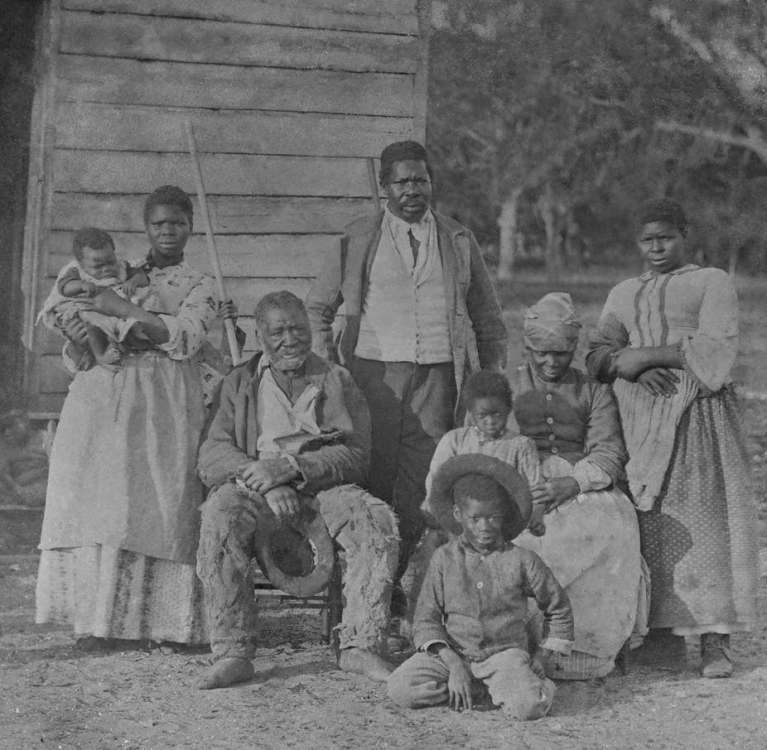
As the quote above suggests, most of that gain likely went to the slave owners themselves, spent on their lavish lifestyles then, on those plantation mansions that still exist in the South, and was not invested back into the economy in general. A significant portion of that wealth evaporated as a result of the war and emancipation. The value of a slave went from being $12,500 to $205,000 (in 2016 dollars) to effectively zero. So, in other words, if the 1860 census were correct that there were 3,953,761 slaves and the average price was around $800 in their dollars (or around $140,000 in our own) then slave owners lost around 554 billion dollars. Slaves, on the other hand, gained something priceless, that being their own freedom, and yet the cost of slavery to black Americans is truly incalculable.

The Incalculable Cost of Slavery…

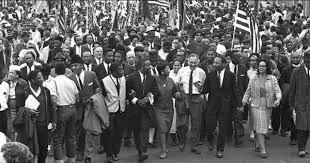
The cost of slavery to black Americans is incalculable and not in terms of economic impact. It is incalculable because of the lasting social consequences that can’t be assigned a number value. The suffering of black Americans did not end with the Civil War, they faced the lingering resentment of their white neighbors, all forms of discrimination, intimidation tactics and terrorism. Even with Constitutional amendments prohibiting slavery, recognizing their citizenship and granting voting rights, conditions did not improve dramatically for black Americans in the “Jim Crow” South. It took a further effort in the 1960s, the civil rights movement, to finally see some of these Constitutional rights fully realized and not before Dr. Martin Luther King Jr was murdered by an assassin’s bullet.

But, perhaps worse than the lynchings and segregation, one time events that can be adjudicated or something that can be addressed through legislation, is the immeasurable impact on the dignity of those who know that their ancestors were once treated as property and sub-human. I can’t really imagine how it would feel to have my own race being counted as 3/5ths of a person in my own country’s founding documents. There is no way to compensate for that psychologically and especially not when the widespread mistreatment was still in full force a mere generation ago. In such a context, it would be hard not to see any misfortune or measurable difference in outcome as somehow related to prior generations being robbed of their dignity and right to self-determination.

However, making matters astronomically worse is the fact that even many of those claiming to want to help often treat black people as their lessor and do more harm than good in their efforts to restore. A prime example of this is the so-called “War on Poverty” and how since then black marriage rates have plummeted and out-of-wedlock births skyrocketed. First, intact families are a greater predictor of future success than race. Second, making a person dependent on government handouts does nothing to restore their human dignity and, in fact, keeps them trapped. The welfare state has more or less enslaved the black community (and many others) to politicians who stoke fear of losing ‘benefits’ as a means to gain votes and maintain their own power.

Affirmative action programs do nothing to help confidence. No, if anything, they only further reinforce feelings of inferiority and, worse, feeds a notion that black accomplishments may deserve an asterisk. I can recall very well the conversation I had with a young man in the Midwest whom I confronted over his racism. He made no apologies, he embraced the description and then blamed his own lack of success in college on his not being given the same opportunities as minorities. Whether true in his case or not, it takes an extra dose of grace for a poor white person to not feel slighted and very easy to take out the frustration on the beneficiaries. I’ve had to fight this myself as someone who never finished college for mostly for financial reasons.

A few years ago I had hope, with the election of Barack Obama, that this would heal some of the wounds, bolster feelings of self-worth, and help us turn the page as a nation. Sadly, it has seemed to do the opposite. My opposition to increased government spending, as a lifelong conservative who doesn’t see more government control as the solution to every problem, was characterized in terms of race as was any opposition to his policies. Rather than be seized upon a moment of reconciliation, Obama’s race was used as political leverage, as a means to ostracized political opponents and advance a leftist policy agenda. The specter of racism is used to control, both to frighten some voters and also to smear others.

A decade ago I had believed that we were on our way to colorblind society, one like that Dr. King had envisioned where people would be judged by the content of their character rather than the color of their skin. Today I’m not even sure that is possible, the current political establishment benefits too much from identity politics and tribalism to allow that kind of society to form. It is hard not to feel cynical in a time when white vs black narratives dominate the headlines. And, while I believe this too shall pass, that the current racial tensions are an aftershock rather than a repeat of the past, there is also the reality that slavery is an unpayable debt.

The Unpayable Debt…

Some have suggested an idea of paying reparations to the descendants of slaves to right this historic wrong and would finally, once and for all, reconcile the injustice. There are those who have gone as far as to suggest a number, between $5.9 and 14 trillion dollars, as being suitable compensation or at least as a “meaningful” symbolic gesture and something that could improve race relations.

Those selling the idea of reparations say is that this is similar to payments made by Germany to those who suffered through the Holocaust at the hands of the Nazis.

However, those promoting the idea fail to mention the significant differences. The first difference being there are actual Holocaust survivors still alive today to receive the compensation for their loss, but there is not one former slave or slave owner still alive. A second big difference is that the abuses against the Jews in Germany were perpetrated directly by the government itself, whereas slavery was a private institution that existed long before the United States was a nation and was eventually ended by the government and at a very great cost. Hitler’s Germany didn’t stop themselves, the government stole directly from people and sent millions to slave labor camps or gas chambers to be killed—it was literal genocide.

But the bigger problem with reparations is who pays, who gets paid and how much?

It is not justice to make one generation pay for the sins of another. There are many in the United States who did not benefit from slave ownership. My own ancestors, for instance, did not own any slaves and the own possible way they might have benefitted is in slightly cheaper cotton. However, I didn’t receive any inheritance of money nor of cotton clothes from my grandparents. In other words, my savings is my own, from my own work, do I owe anyone (besides my cousin who just helped install flooring in my rental and the bank) nor do I feel any guilt for anything I’ve done. So why should the innocent be forced to pay any more than another person should be forced to work? Do two wrongs make a right? It would only be right to target those who actually did benefit directly from slavery and the complexities of that would be enormous. Would we go after the descendants of European and African slave traders as well?

And then there is the matter of determining who gets paid what. The reparations advocates come up with their dollar figure based on a calculation of hours worked, wages at the time, and interest that would be accrued. But that’s not how things really work. Again, the wages of my grandfathers and great-grandfathers were spent in their generation, dispersed into the economy, and there is nothing left for me. The reality is that the modern ancestors of slaves benefit from the economy in the same way that we all do, thus paying them with interest would not make any sense and especially when that money would be taken from their innocent fellow citizens. Then there’s the reality that not all American black people are ancestors of slaves, some of them are recent immigrants from Africa, some have mixed ancestry and others may actually be the ancestors of black slave owners. Yes, there were slave-owning black people in the American South—should their ancestors pay or be paid?

So, what do we do, start compensating based in DNA tests, as in, “You’re 1/5th black and thus entitled to X…”?

Do we prorate based on how much someone benefited from affirmative action?

Will multi-millionaires, those who obviously have done well, be paid?

Do we deduct welfare payments, etc?

Grading everyone based on their ancestors reinforces all the wrong ideas. It is measuring a person’s worth based on their ancestors rather than their own individual merits and exactly the thing we should be getting away from. Besides that, it is severely undervaluing the worth of a US citizenship, there are people fighting for the opportunity to be here, and our economy is much better here than it is in Africa. Yes, certainly a black person born into an urban environment may face unique difficulties. But then there are many immigrants who come here with nothing, who settle in the same neighborhoods and do advance. And where does it end, do we owe the followers of Joseph Smith for the systematic oppression of them and their religion? Do we owe the Republican party for the attacks against them by the KKK and lynchings of party members? It is just not a good direction to go, it is divisive, it will hurt the wrong people, and we are already deep in debt as a nation. Why should our grandchildren (black, white and other) pay interest to the Federal Reserve and other wealthy people for what is only a symbolic gesture and, if we are honest, won’t remove the stain of the past anyway?

The truth is that money won’t change anything as far as the past. Sure, I’m guessing many who would receive reparations like the idea, who wouldn’t take a windfall? But the reality is that all the compensation in the world cannot erase the legacy of slavery and all the wrong people would end up paying the price. A professional sports contract doesn’t make anyone forget injustice, many lottery winners often end up as poor as they were before, and money can’t be used to solve the problems created by money, to begin with. There are times when a financial settlement is the answer, when both parties directly involved (the aggrieved and the accused) are properly adjudicated. But billing the current generation for the sins of the past, especially without due process, is theft no better than slavery at worse and mere revenge at best.

The true legacy of slavery is that some are owed a debt that cannot be paid.

Wake Up, the Matrix isn’t Real!

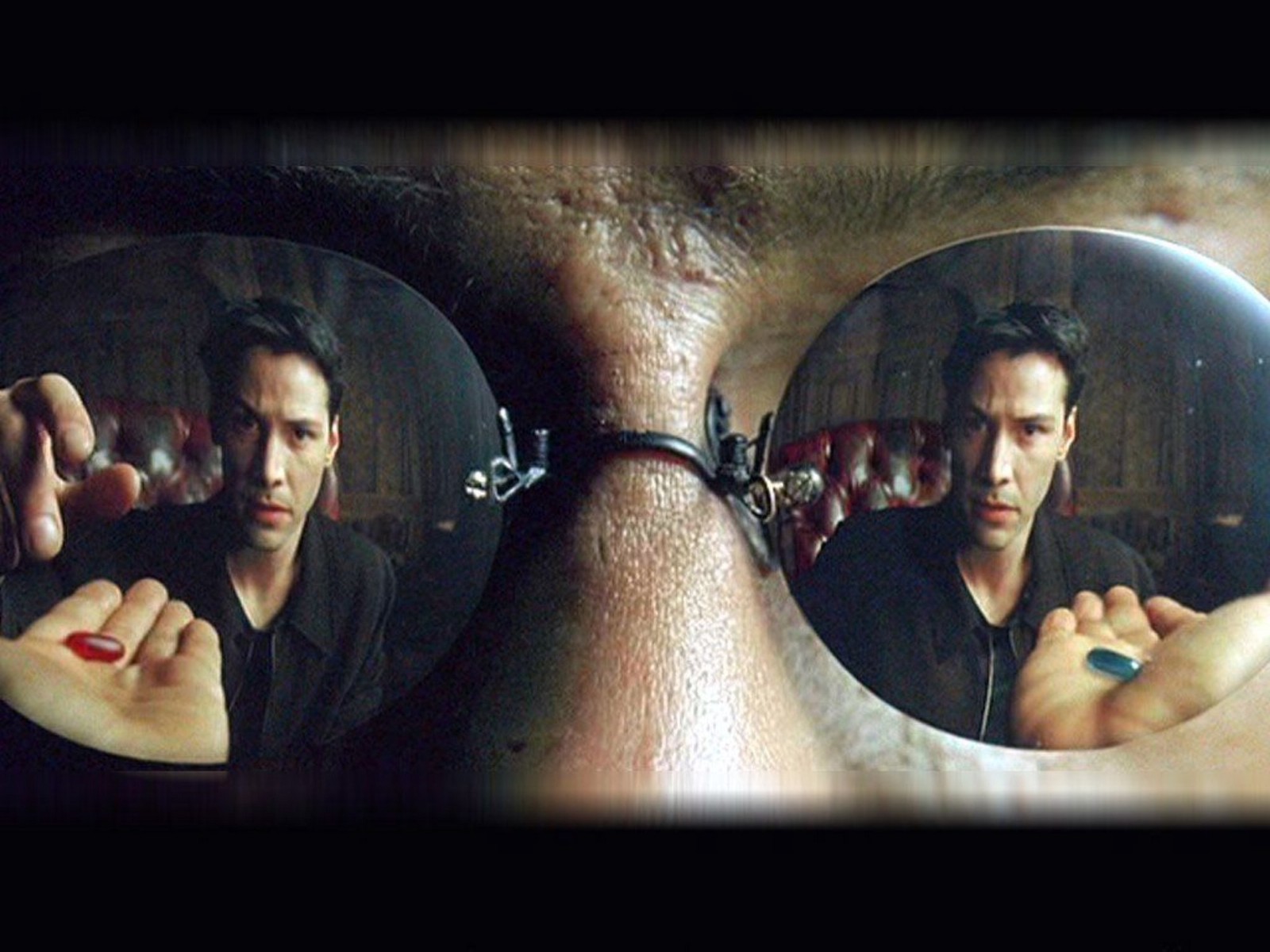
A matrix, according to Merriam Webster, is “something within or from which something else originates, develops, or takes form.” And we do live in a matrix where our ideas about race, history, advantage and disadvantage matter more than the actual facts. In other words, the matrix is the way we individually or collectively interpret the facts and use them to form our ideas. Our thought matrix, our assumptions based on our own interpretation of facts, plays a significant role in our outcomes. Overcoming the mental processes that keep us bound is key to success in life.

The other week I was driving to a job site and notice some nice new houses with their well-manicured lawns, spiffy two-car garages, and paved drives. I was overcome momentarily with a tinge of envy, a little regret, and mostly befuddlement at how some people could afford such things. The question immediately came to mind, “What did I do wrong?” I thought of my life, my disadvantages, the opportunities missed, and all those things that held me back from reaching my full potential. However, before I went too far along in that thought process, another question countered the first, “What did I do right?” My mind went first to all the thing I did right, but then to all my advantages compared to most people in the world and the things I did not choose.

Did I do anything right, say compared to that Haitian man I saw in Port Au Prince hauling a car body on his back or a woman born in Afghanistan, Saudi Arabia, etc?

Our mental construct, our prejudices, and preconceived ideas, a product of our culture and choices, can make a real difference in our outcomes. Sure, positive thinking cannot change the circumstances of where we are born, a good attitude does not mean that there will be fewer obstacles to our success in life, yet why not make the best of the opportunity we are given and live in gratitude for what we do have rather than envy of others or frustration because of what we lack?

Part of the problem is that there is a system of control, it helps to create our expectations, it feeds our insecurities and can keep us bound. The real systemic oppression is the idea that politics (or more money in our hands and power over others) is the answer to our problems. Money can’t fix what it created, money itself binds us to the system and the things that money buys rarely deliver the happiness that we think they will. Again, look into lottery winners, many people end up as unhappy as they were before their winnings and some worse off. So why do we measure success in terms of things that will not and cannot make us happy?

What we really need to do is reorient ourselves. We must reject the unhelpful categories and classifications that keep us bound and change the way we think. Grievance culture, tribal score keeping and trying to rank people by their outward appearance is a backward-facing, small-minded and, frankly, racist orientation. There is no group guilt for slavery any more than there is for inner-city crime, we need to stop seeing people as white, black, orange or whatever, building our own identities around those superficial things, and aim for something greater—aim for the future that we want, yet hasn’t fully arrived, where all people are judged by the content of their character rather than the color of their skin.

It Is Time to Think and Act Differently…

If I had my own life to do over I may have dithered less (convinced that higher education was the key to success in life because of what my teachers told me) and started driving truck earlier. It was my own pride (and anxieties) that kept me from taking the better options available to me and I suspect there are many who, like me, prevent their own success because of their aim. And I’m not at all saying that we should sell ourselves short or settle for less than our abilities can afford us. However, many do set themselves up for failure because they keep waiting for the big break, the breakthrough when everything they dream of finally comes to them and refuse to take full advantage of the actual opportunities they have.

Another thing I would do differently is stop worrying that other people had it in for me and believing that I was helpless when the reality was that I was unwilling to make the right sacrifices. Part of my difficulty in life was due to my refusal to act differently or accept that my own behavior was part of the problem. Sure, there is something to be said for authenticity and being true to ourselves, but sometimes overcoming requires us to act differently and accept what is truly reality over our own individual construct. To find success in the religious context where I was born I would need to accept their rules and my fighting with that reality, my “kicking against the pricks” or resisting the flow rather than harnessing it, had some undesirable consequences.

Cutting to the chase, we have agency and we do not. There are well-worn paths to success with risks worth taking, call them cultural conventions, and then there are the low-probability high-risk paths that lead many to ruin. For example, finding a profession like teaching, law enforcement, construction or accounting (as opposed to seeking to be a career actor, model, musician or professional athlete) is more likely to produce desirable results for most people. Feeding our insecurities, dwelling on slights (real or perceived), demanding others conform to our wishes or that they respect us for who we are, expecting too much, is a path to long-term disappointment.

Overcoming the matrix means we need to stop seeing things in black and white terms. Sure, things like “black culture” or “white privilege” do exist in some form, at very least as a construct in our minds, but they really are only terms that obscure a far more complex picture and keep us trapped in the problem rather than working towards the solution. The reality is not as simple as the narratives pushed by academics and advocacy groups. There is no one group with all the advantages nor another with all the disadvantages. There is a reason why the suicide rates for middle-aged white people have skyrocketed while black rates have declined and are considerably lower—something (like connections and community) that might be missed in the commonly touted measures of success?

Recently I read the story of a naval aviator, an officer name Thomas J Hudner Jr, who was awarded a Medal of Honor for his actions in the Korean War. His act? He intentionally crash-landed his Corsair to protect and attempt to rescue a comrade, Ensign Jesse L. Brown, whose airplane had been hit by ground fire and was behind enemy lines. Brown, who happened to be the first black naval aviator, did not survive despite the efforts of Hudner, however, what does survive is an example of brotherly love that transcends artificial racial divides and presents a reality worth building upon. That is the legacy that, if built upon, will free us all from the sins of the past.

Loving dangerously, that is my idea of real success in life.

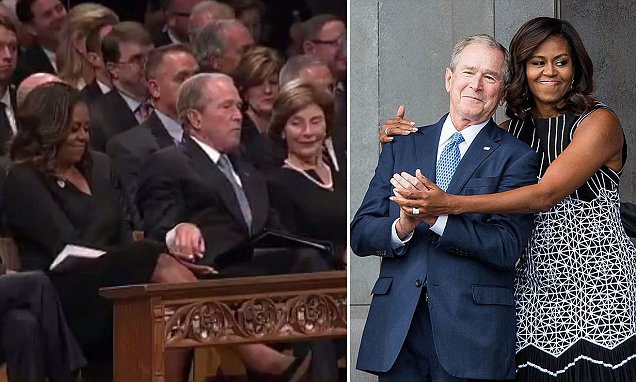
It is also neat, in these hyper-partisan times, to see George Bush Jr and Michelle Obama share some moments of common humanity together and continue this friendly exchange even at his father’s funeral. That is the symbolism that matters, that is the positive interaction we should aim for and the kind that can make a real difference in the world. If we love all people rather than prefer only those who look or act like us and orient ourselves to the hope of a better future rather than cling to our past and present suffering, we may well have a chance to build a better identity for ourselves as a nation. We may not be able to choose our inheritance, but we can work to create a better legacy for the next generation.

We, like Bush and Obama, have far too much in common to be at odds with each other.

Those who have faced hardship past or present should be heard and forgiven of their current insecurities. Those who have been indifferent to the suffering of others, out of ignorance or hardness of heart, should also be forgiven. And those two groups are all of us and have nothing to do with race. We are all victims, enslaved to a past that we didn’t create for ourselves, and all guilty of perpetuating the legacy to some degree. We can’t know what a person has been through by how they look on the outside and therefore we should love all people as we wish to be loved rather than by what we think they deserve. It is time to be courageously human, committed to true Christian love, rather than tribal, fearful and small.