
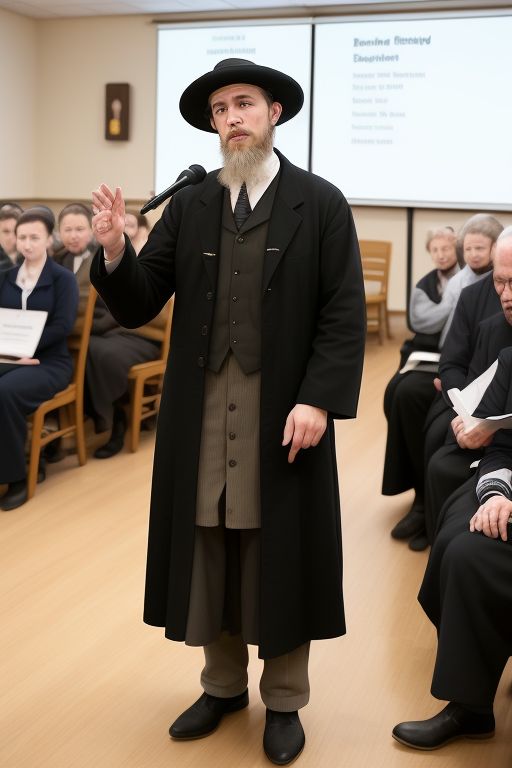
The First Anabaptist Identity Conference

Standard

Over the past couple of decades the liberal end of the conservative Mennonites and a few others get together to navel gaze about what it means to be them.  This “Anabaptist Identity Conference” (an annual event which some of us have dubbed the identity crisis) is truly a product of this time where nobody is sure of who they are as they once were.  There is a strong urge to seek out others, like us, as to bolster our shaking foundations. 

In this year’s event there is a line up of many meme worthy topics, like “The Anabaptists: Continuation of the Ancient Faith,” where ol’ David Bercot, a man who truly knows where his meal ticket comes from, will try to make the case that Anabaptism (as they define it) is somehow a direct lineage to the Apostle’s church.  This connecting the dots to make it fit narrative, of course, will play right into the confirmation bias of his audience who fawn over an educated outsider.  Maybe this year he’ll have pictures of whoopie pies painted in the catacombs?

Anyhow, some may believe that the first Anabaptist Identity Conference was held in 2007, in the Amish vacation Mecca called Sarasota, but there was one before this way back in 1536.  It occurred in the aftermath of an event that left Anabaptists then trying to find a path forward.  This is the Bocholt meeting that brought together survivors of the Münster rebellion and other factions in the Anabaptist movement:

In August 1536, the leaders of Anabaptist groups influenced by Melchior Hoffman met in Bocholt in an attempt to maintain unity. The meeting included followers of Batenburg, survivors of Münster, David Joris and his sympathisers, and the nonresistant Anabaptists.[4] At this meeting, the major areas of dispute between the sects were polygamous marriage and the use of force against non-believers. Joris proposed compromise by declaring the time had not yet come to fight against the authorities, and that it would be unwise to kill any non-Anabaptists. The gathered Anabaptists agreed to the compromise of no more force,[5] but the meeting did not prevent the fragmentation of Anabaptism.

No discussion of Anabaptism is complete without a little discussion about this crazy polygamous uprising.  Sure, the revisionist historians of the denomination may tell you otherwise, but the association is definitely there and the Wikipedia summary is accurate.  Menno Simons, in his 1539 Foundation Book, called the Münsterites “dear brethren” rather than claim they weren’t truly Anabaptists.  So are we really in a better position today to decide who is truly representative of the Anabaptist identity?  No, we’re not.

What is the Anabaptist identity?

In America it is mostly an ethnic group with a similar religious lineage.  Some within this category have openly lesbian pastors while others cling to traditional dress and buggies for transportation.  Unlike in the first 1536 identity conference, when their big debate was over use of violence, now the surviving Anabaptist groups agree on that and really not a whole lot other than that.  Even those who organize and attend the conference in the current year only represent a subset of the conservative Anabaptist groups.  The ‘spiritual’ lineage, while all claim it as their own, is too vague to put a finger on.

Men like Bercot and their ilk may want to declare the boundary lines even stricter than the early Anabaptists did, but that is just adding delusion upon a delusion.  No, I am not saying they aren’t Christians, that’s not my purveiw, but for one to claim they’re some kind of special remnant of the remnant is just plain grandiose.  And what comes to mind, at this juncture, is the “Stop It, Get Some Help” meme. 

Newsflash: You’re not even representative of the early Anabaptist —let alone the ancient church. 

This conference can’t speak for the plurality of the groups today who trace their roots the so-called “radical reformation” and do not have a voice in this identity rumination project.  What is hard to miss, for those outside looking in, is that this is an effort to preserve their distinction and not to seek the the unity in Christ that St Paul commanded (1 Corinthians 3) when some in the early church were busy commending themselves for their special identities.

I don’t have a problem with having an ethnic identity that is cherished.  I’m German, still Mennonite in many regards, and absolutely adore Old Order people.  I have no problem with having our own culture or celebrating our heritage.  It is why I encourage my son to keep his Igorot language and ways rather than have it all be erased in the American monoculture.  But there’s a vast difference between that and those basically arguing that they’re saved through heritage. 

Saying that Anabaptists are a “continuation of ancient faith” is only a half step away from being as crazy as the Schizophrenic who thinks they’re the second coming of Jesus.  The denominational ground you’re standing on is not sacred simply because you currently stand on it.  It is spiritually equivalent those Anabaptists in Münster declaring their own project to be the New Jerusalem.  We should know better than to live in that kind of self-delusion.  We should not condone or encourage it.

Is There Room for Both Primitive and Historical Churches?

Standard

Recently I had breakfast with an earnest young Mennonite man to hear a presentation on behalf of an organization that helps to educate pastors in India. My overall impression was good, they focused on empowerment of local leaders rather than creating dependencies, and it seemed a cause worthy of my support.

Part of the goal for this organization was to ground these new converts, who often are opposed and even persecuted by everyone, and establish them with correct doctrines. In many ways it is a ministry similar to that of Peter and Paul in the book of Acts. It is exciting to see that there is a primitive church established on the miracles Jesus promised.

However, and perhaps unfortunately, this organization and many others, while they do indeed serve in a way that I can appreciate, also promote their own theological perspective. It is founded and maintained by those who are themselves disconnected from the established tradition of the church and could likewise benefit from the council of their elders.

The Appeal and the Problems with Primitivism…

When we see new converts struggle in some foreign land we can easily see the need for increased understanding and structure.

Sadly, while we see their need, we often do not comprehend our own need.

For many years, as a child of Protestantism, I believed that my own sect had as complete an understanding of Christianity as there is and that I was individually able to discern truth. As I’ve grown into adulthood I started to become more aware of inaccurate teachings and my own fallibility as an individual.

I was raised in a denomination that promotes their own idea of primitivism. In other words, many in the church of my youth believe very sincerely that they are the spiritual successors of early Anabaptists and also the early church. Basically we assumed, based in where we were born or in our own personal interpretation, that we held a corner on the truth.

This, sadly, is a belief established on confirmation bias. It is the intellectual equivalent of comfort food and keeps many from digging a little deeper. To think the ground that you stand on is sacred because you’re standing on it is a terribly arrogant position. This often ends up like this:

I wrote to the church, but Diotrephes, who loves to be first, will not welcome us. So when I come, I will call attention to what he is doing, spreading malicious nonsense about us. Not satisfied with that, he even refuses to welcome other believers. He also stops those who want to do so and puts them out of the church. (3 John 1:9‭-‬10 NIV)

Primitivistic groups are experts at finding the evidence in favor of their perspective and pointing out the faults in other groups. They, like Diotrephes, exclude those who do not agree with them. And that is the biggest problem with primitivistic church groups, they do not all teach the same things, some are extremely heretical, and yet all believe they represent the real unadulterated truth and keep out all who disagree.

What is the Historical Christian Response to Primitivism?

Not all primitivism is bad. A person must start their journey of faith somewhere and a basic conceptual understanding of the foundations of Christianity is a good start. Note how Jesus corrects the disciples for trying to silence those who were working miracles in his name and yet were not connected directly to his ministry with the disciples:

“Master,” said John, “we saw someone driving out demons in your name and we tried to stop him, because he is not one of us.” “Do not stop him,” Jesus said, “for whoever is not against you is for you.” (Luke 9:49‭-‬50 NIV)

Jesus appears to endorse those working the miracles because they are correct in their basic understanding and doing his work. But that’s not to say we should be content to leave others ignorant and unconnected. I’m reminded of when Paul encountered some primitive believers:

While Apollos was at Corinth, Paul took the road through the interior and arrived at Ephesus. There he found some disciples and asked them, “Did you receive the Holy Spirit when you believed?” They answered, “No, we have not even heard that there is a Holy Spirit.” So Paul asked, “Then what baptism did you receive?” “John’s baptism,” they replied. Paul said, “John’s baptism was a baptism of repentance. He told the people to believe in the one coming after him, that is, in Jesus.” On hearing this, they were baptized in the name of the Lord Jesus. (Acts 19:1‭-‬5 NIV)

It is the duty of a Christian elder to disciple and instruct the young in the faith and increase their understanding of the truth in the same way Paul did. Those who are of the right Christian perspective will appreciate the help and encouragement of an elder. They have the attitude encapsulated in the words of Peter:

In the same way, you who are younger, submit yourselves to your elders. All of you, clothe yourselves with humility toward one another, because, “God opposes the proud but shows favor to the humble.” (1 Peter 5:5 NIV)

We, like those new believers in India who are eager to be taught, need to take the same attitude towards learning from those who represent the historical church. There is an established church. There is a true orthodoxy of Christian faith and practice. We, those born into a more primitive setting in particular, would be remiss not to submit to our own elders and especially when we tell others to follow our own teachings.

Leave Those Who Are Both Primitive and Proud…

There is only one option with those who are proud and unsubmissive like Diotrephes, we must leave them because their pride blinds them. We must follow the advice of Jesus when dealing with those promoting false religion:

Leave them; they are blind guides. If the blind lead the blind, both will fall into a pit. (Matthew 15:14 NIV )

There is extreme danger in relying on those who know little more than you do and who refuse to be accountable to anyone besides themselves. There are many denominations and parachurch organizations that fit that description. All have their subscribers who sip the same poisoned Kool-Aid (sometimes literally in the case of Jim Jones) and dismiss perspectives outside of their own.

We should rebuke the rebellious and those who deceive:

For there are many rebellious people, full of meaningless talk and deception, especially those of the circumcision group. They must be silenced, because they are disrupting whole households by teaching things they ought not to teach—and that for the sake of dishonest gain. (Titus 1:10‭-‬11 NIV)

Many denominations (and non-denominational groups) keep their independence for sake of being free of accountablility to others and having control in their own hands. This kind of purity based on personal preference has been the foundational principal for many cult groups and is a corrupt foundation even when it doesn’t end in a Münster Rebellion or mass suicide.

If you are part of a small group that teaches that they are the most authentic church (or excludes other Christians from fellowship who do not follow their litany of man-made regulations) be very wary. There are many people very confident in themselves, who think they have all the answers, who see themselves as pure—and are deceived by their pride.

Being Reconnected with the Historical Church…

My biggest temptation, when leaving the Mennonite denomination, was to do what many other Protestants do when disappointed with their denomination and that is to go start the “Perfect Church of Joel” or basically a new pure and primitive sect. That, of course, was a foolish impulse. Any church founded by me, while possibly strong in some areas, would also share my weaknesses and blindspots.

The impulse a “pure” church is a product of arrogance, a focus on the shortcomings of others rather than on our own, and ignorance of the historic church. The early church, believe it or not, was not exactly pristine of free from problems. Read through the Gospels, the book of Acts and Paul’s letters, there is controversy, there is disagreement and failure.

However, despite their quarrels and shortcomings, keeping unity was the refrain:

I appeal to you, brothers and sisters, in the name of our Lord Jesus Christ, that all of you agree with one another in what you say and that there be no divisions among you, but that you be perfectly united in mind and thought.(1 Corinthians 1:10 NIV)

Be completely humble and gentle; be patient, bearing with one another in love. Make every effort to keep the unity of the Spirit through the bond of peace. There is one body and one Spirit, just as you were called to one hope when you were called; one Lord, one faith, one baptism; one God and Father of all, who is over all and through all and in all. (Ephesians 4:2‭-‬6 NIV )

Finally, brothers and sisters, rejoice! Strive for full restoration, encourage one another, be of one mind, live in peace. And the God of love and peace will be with you. (2 Corinthians 13:11 NIV )

Unity of the church is a Christian imperative. Perfection on our own Mennonite, Lutheran, Mormon, Methodist or other denominational/separatist/sectarian terms is not.

There is truly no pure church, all are made of people who are imperfect, but there is a historically grounded church, one with a better claim on apostolic succession than any other, that keeps the traditions passed by word of mouth or letter, and is focused completely on Jesus Christ.

Unity should not be on our own terms. It is the responsibility of the younger to submit to the elder (according to Peter) and this is a teaching that can apply to both individuals and entire denominational structures. Those in primitive churches, therefore, as individuals or collectively, should make it their perogative to connect and be unified with the historic church.

My finding my place in the Orthodox Christian tradition was not an easy transition. It required me to think beyond my own individual preferences and perfectionistic impulses. It required me to submit to an understanding in many ways different from my own, I’ve had to sacrifice some of my primitivism, and seek unity in Christ rather than unity on my own terms.