

Wise As Serpents: Discernment in a World of Deception

Standard

I’ve heard stories of Mennonite old timers who would walk into a dealership, ask them to give their best price and then refuse to engage in any haggling beyond that. To them this concrete style of communication is commanded by Jesus and something I can respect. Their word was their bond. They did not play all the games. Business that is honest and done with a handshake.

What a pleasant and simple world it would be if everyone operated this way. No need for lawyers to read the fine print if everyone were an honest broker like this. But we do not live in that world. And there are those who love to exploit the trust of those born into Anabaptist religious cloisters. Every few years there’s another fraudster who sweeps through Amish and Mennonite country, selling the next big ‘investment’ and wiping out the hard earned savings of the unsuspecting—which is not to even mention those small scale “natural healing” swindles or grift seminars.

Apparently actual snake oil, sold by the Chinese, had some medicinal value, but the Clark Stanley version had no snake oil or healing qualities.

This is why healthy skepticism is necessary and discernment of character is a skill that must be learned. Born into one of these communities, I’m still far too trusting—most especially if someone starts to speak my language. “Oh, he stands up for the working class! They’re the defenders of freedom and democracy!” We fall for those who exploit us, who manufacture consent by various means, who claim to be like us and yet lack our Christian conscience. We are most susceptible to those who mimic our values as part of their deception.

Being a good or moral person can lead to being extra vulnerable. Some just lack the imagination for evil, which is wonderful innocence, but this is not optimal. Wisdom requires that we are able to read through a sales pitch and understand how propaganda works. A skilled liar plays on what you want to hear, they exploit the prejudices and preconceived ideas of any audience.  We need to be a step ahead of their schemes—which requires a little pattern recognition or small consideration of what may be hidden behind their words.

Letting Your Yea Be Yes, Nay Be Nay

Growing up, going to a public school, there was always that “I swear on my grandma’s grave” kid. Cued by your incredulous face, he would attempt to fortify his most questionable claims with this invocation of something else trustworthy.  And the whole reason for this is that their own word wasn’t good enough. And this swearing act itself would arouse my suspicions. If I can’t trust you in a small inconsequential claim—how could I ever trust your oath?

Obviously this was theatrics in Secondary school, but a manner of speech that Jesus targeted for rebuke:

Again, you have heard that it was said to the people long ago, ‘Do not break your oath, but fulfill to the Lord the vows you have made.’ But I tell you, do not swear an oath at all: either by heaven, for it is God’s throne; or by the earth, for it is his footstool; or by Jerusalem, for it is the city of the Great King. And do not swear by your head, for you cannot make even one hair white or black. All you need to say is simply ‘Yes’ or ‘No’; anything beyond this comes from the evil one.

(Matthew 5:33-37 NIV)

This is repeated in James 5:12 a bit more succinctly:

Above all, my brothers and sisters, do not swear—not by heaven or by earth or by anything else. All you need to say is a simple “Yes” or “No.” Otherwise you will be condemned.

Credibility is something built over time and lost in an instant. Swearing an oath won’t fix a loss of trust. But it does basically admit that your own word is not sufficient and this suggests a deeper problem. An oath is useful in a courtroom, where it is used as a dividing line between speech that is free and misleading words you can be prosecuted for—yet what Jesus says is part of a broader push in the direction of plain and honest speech. As St Paul instructs:

Therefore each of you must put off falsehood and speak truthfully to your neighbor, for we are all members of one body.

(Ephesians 4:25 NIV)

Practice truthfulness.

Humanity is one team, one body, so deception is a sin against all members.

The Bible is also full of examples of the opposite of this:

Those who flatter their neighbors are spreading nets for their feet.

(Proverbs 29:5 NIV)

Everyone lies to their neighbor; they flatter with their lips but harbor deception in their hearts. May the Lord silence all flattering lips and every boastful tongue.

(Psalm 12:2-3 NIV)

Not a word from their mouth can be trusted; their heart is filled with malice. Their throat is an open grave; with their tongues they tell lies [or flatter].

(Psalm 5:9 NIV)

My companion attacks his friends; he violates his covenant. His talk is smooth as butter, yet war is in his heart; his words are more soothing than oil, yet they are drawn swords.

(Psalms 55:20-21 NIV)

In all of these cases you have those who appear to be our friends and use flowery and agreeable speech to ensnare. We naturally suspect those who aren’t like us, who say the stuff we don’t like, but we trust those who speak our native tongue and seem to share our cultural values. That’s our blind side and vulnerability. A guy shows up in a nice suit, well-groomed, and we’ll just take him as credible. We’re susceptible to those who dress up their deception in the familiar—or who feed our prejudices.

Those Who Dress To Deceive

The Bible mentions flattery, a Trojan horse and the way some use to lower our guard, but the Gospel warns about this:

Watch out for false prophets. They come to you in sheep’s clothing, but inwardly they are ferocious wolves.

(Matthew 7:15 NIV)

Looks can be deceiving.

For there are many rebellious people, full of meaningless talk and deception, especially those of the circumcision group. They must be silenced, because they are disrupting whole households by teaching things they ought not to teach—and that for the sake of dishonest gain. One of Crete’s own prophets has said it: “Cretans are always liars, evil brutes, lazy gluttons.” This saying is true. Therefore rebuke them sharply, so that they will be sound in the faith and will pay no attention to Jewish myths or to the merely human commands of those who reject the truth. To the pure, all things are pure, but to those who are corrupted and do not believe, nothing is pure. In fact, both their minds and consciences are corrupted. They claim to know God, but by their actions they deny him. They are detestable, disobedient and unfit for doing anything good.

(Titus 1:10-16 NIV)

If it were easy to cut through the crap then there would be very little chance of anyone ever being deceived. But the worst enemies of Christ weren’t those who had openly hunted and tried to kill his followers. You knew to avoid them. It’s those who entered the church to subvert and undermine.

St Paul calls out those of the “circumcised group” and who have actions that deny the relationship they claim to have with God. Today we deal with something insidious, now embedded into several generations through propaganda and established prejudice.  We can’t see it because it hides within us, carries a familiar last name or claims to have devotion to the same values.

Many now believe it is okay to kill babies for an ethno-state.  They go to church on Sunday never realizing that they have departed from Christ:

Not everyone who says to me, ‘Lord, Lord,’ will enter the kingdom of heaven, but only the one who does the will of my Father who is in heaven. Many will say to me on that day, ‘Lord, Lord, did we not prophesy in your name and in your name drive out demons and in your name perform many miracles?’ Then I will tell them plainly, ‘I never knew you. Away from me, you evildoers!’

(Matthew 7:21-23 NIV)

Those who have yoked together with those who Jesus said are “of their father the devil” (John 8:44) are as doomed to hell as an unbeliever. The Covenant with Abraham was tied to sharing his faith and righteousness.  Likewise, you are not of Christ unless you obey his will no matter how “born again” you feel or how flowery you pray in front of the crowd. Enabling evil is just evil. Jesus called out the fakes who hid behind their mask of devotion and his earliest followers did the same. Stephen “cut them to the heart” challenging the Jewish leaders with a flurry of accusations—they killed him for telling the truth:

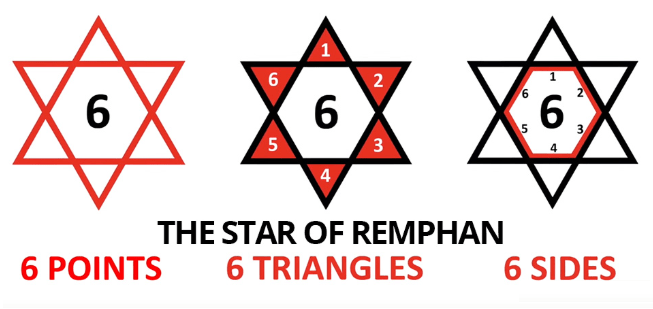
You have taken up the tabernacle of Molek and the star of your god Rephan, the idols you made to worship.  Therefore I will send you into exile’ beyond Babylon. (Acts 7:43 NIV)
Harmless as Doves, Yet…

The simple and honest are especially vulnerable to the cunning and crafty.  And it’s not always a matter of intelligence. It is about trust. It is about being a part of the same civilizational project. 

Some places you can leave front doors unlocked and not worry about being robbed.  Everyone is bought into the same moral code or same social contract, and thus respects the property and the rights of others who are partners in the overall work.  And the doors of our civilization are wide open—not turning people away is a wonderful Christian value and good.

However, this value also means many let their guard down around imposters who pretend to be like us and yet work to subvert, supplant, enslave or destroy what we’ve built.  They are a “snake in the grass” slithering, waiting for the moment of weakness to strike.  They’re the wolves who will accuse the sheepdog of being a bigger threat to the sheep while they plot to devour the flock.

Yes, an impulse towards being charitable is great, but also we need to be wary of those who do not share the same civilizational bond or social contract—this is what Jesus said:

I am sending you out like sheep among wolves. Therefore be as shrewd as snakes and as innocent as doves.

(Matthew 10:16 NIV)

There was this horrible story about a young man opening the door to two men who were dressed like UPS delivery drivers and ended up paying with his life. The fake employees pushed into the residence, with two others who had hidden around the corner, and they murdered the young man and two women in the home—all of this happening in front of two children under the age of five.

We trust based on appearance. If the men in the story above had been dressed like a couple hoodlums nobody would open that door. There’s little chance of a very foreign looking religion or culture slipping into our communities unnoticed. But when we see something familiar or someone speaking in a way to convince us they’re on our side we do not take precautions. We let them in without considering that they could have values completely different despite their surface level disguise.

Whether the Trojan horse gift or that bright beautiful serpent in the garden—it is the job of the discerning person to sound the alarm and protect their own community or home from evil schemes. You need to be able to think like the schemers do to anticipate the deception. The first thing the wolves do is attack and try to silence the voices of those who identify them as being a threat. They will always come after the watch dog first before devouring the sheep.

Fool Me Once Shame On You

Zionism had slipped into my former Mennonite church through Evangelicalism. The church was founded near the same time a state called Israel was founded with a brutal and cruel expulsion of indigenous people. But we celebrated plucky little Israel, as if they came about by a miracle rather than being a result of a campaign of terrorism or military means. For whatever reason Palestinians didn’t matter, as just another group of backwards Arabs, and I’m guessing this is *still* the majority opinion as far as fundamentalist part of the sect I was born in. It’s just part of a disconnect between the love they profess on Sunday and the politics they accept the rest of the week.

Even if the state of Israel is a part of God’s plan does not mean we should be the cheerleaders for genocide or the justifiers of abuse of others. The “I didn’t vote for Trump to be a pastor” crowd seems to be too happy with the totally merciless treatment of the native population—including their innocent children. Apparently God’s chosen are just to be exempted from Christian ethics and can just kill as they please.

It defies every message on grace and mercy ever shared from a church pulpits. We let a wolf into the church and it has devoured our humanity in the name of a worldly kingdom.

Unfortunately Zionist ideology, their sensational end times fantasy, has caused many to abandon the cause of Christ. The old serpent has slipped through the church doors decades ago and is now preaching from many pulpits. He infiltrates the ranks, pretends to share our values as he subtly undermines them, and soon what is up is down is up—with the ‘faithful’ defending a Sodomizing pedo protecting baby killing cult of elites and calling good old fashioned conservative American values.

Hasbura will tell you Goliath was a victim and David a villain.

The worst part is when even to question the official narrative, put out by those who lied wmv will lie again, is twisted into being an ‘evil’ worse than any other. They don’t seem to get that good institutions can be hijacked or that Jesus most certainly did insult those who held positions of authority and he did it by calling them out to their faces. This idea that we must shrink away from challenging the mask of righteousness worn to fool the masses is just flat out wrong. We must call out what the New Testament writers call the synagogue of Satan:

I know about the slander of those who say they are Jews and are not, but are a synagogue of Satan.

(Revelation 2:9 NIV)

In the end, we either are what we say we are or we’re not. That’s what yay be yay is truly about. James warns against being double-minded, about showing favoritism, and the New Testament is full of statements which emphasize no difference between Jew and Gentile in Christ. Israel isn’t a blessing nor is it protected by the hand of God. No, they are simply willing to do the treacherous and nasty things that are completely antithetical to the teachings of Jesus Christ. We need to be wiser understanding that some will lie to gain our money or support.

I Prefer Representatives, Sound Doctrine and the Holy Spirit Over False Choices

Standard

I was speaking with a friend a week or two ago (a conservative Mennonite searching for his place in the church) and he shared this quote:

“Doctrine is dead as a doorknob without the presence of the Holy Spirit in an individual’s life.” (Paul Washer)

That quote drop of a Calvinist commentator was annoying to me. It was annoying because it was shared in the context of a conversation about Orthodox worship and prayers. The clear implication being that established doctrine is somehow in conflict with spiritual life.

So, without hesitation, I asked my friend: “How do you know Washer’s doctrines (like the one you just quoted) are inspired by the Holy Spirit?”

My question was based on my own experience as one who had put his full confidence in the Holy Spirit and has since learned (the hard way) the need to be grounded in sound doctrine as well. In fact, it was my desire to follow the Spirit without compromise which had led to my pursuit of the impossibility, which led to my eventual disillusionment with the Mennonite denomination, which led me to the ancient faith of Orthodoxy and new spiritual life.

So, getting back to Washer’s quote, he presents a false choice between doctrine and the Holy Spirit. He, like many Protestant commentators, seems to equate established religious dogma with spiritual deadness. His quote suggests that we devalue church traditions (those pertaining to worship and prayer in the case of my friend) based in an assumption that what is new or spontaneous is somehow more authentic and real than something that has been passed down through many generations.

But is that truly the case?

Do we ever need to choose between established doctrine and authentic faith?

From what I can tell, church doctrine and real spiritual life originate from the same source (that source being the Holy Spirit) and thus we should not ever have to choose between the two. The traditions passed down by the church (including the canon of Scripture) and the Holy Spirit are never at odds. To deny the importance of church doctrines and tradition is basically to speak against the authority of Scripture:

“For the time will come when people will not put up with sound doctrine. Instead, to suit their own desires, they will gather around them a great number of teachers to say what their itching ears want to hear. They will turn their ears away from the truth and turn aside to myths.” (2 Timothy 4:3‭-‬4 NIV)

Nowhere in Scripture do I see sound doctrine being presented in contrast with living according to the Holy Spirit. However, I do see James tells us “faith without works is dead” (James 2:14-26) and also know, according to the Gospel (Matthew 7:22-24), that there will be those who have professed faith in Jesus, even worked miracles in his name, whom he will tell to depart because he never knew them and therefore authenticity of faith is about more than making a claim.

Thus I do question the basis for this commentator’s opinion and the many others out there of those who speak with a similar confidence about spiritual matters. By what authority do they speak? How do we know that they, along with their devoted followings, are not deceived? I mean these ‘spiritual’ commentators are often at complete odds with one another. Don’t believe me? Do a Google search “Paul Washer false teacher” and you’ll find dozens of articles denouncing him and his teachings.

So who is right? Who is wrong? How do we know?

My contempt for commentators…

My reaction to the Washer quote isn’t something unusual for me. I have a near-universal contempt for commentators and especially those who can’t at least ground their statements directly to something found in Scripture. And perhaps that strong aversion is because I have enough strong opinions of my own, more than my fill, and therefore seek something a little more grounded than mere opinions?

Not to be misunderstood, that’s not to say that I find no value in reading commentators. I do believe we can gain many valuable insights from listening to various men and women sharing their personal perspectives on spiritual issues.

But, that said, not all commentators are equal and anyone can say anything and our feelings (one way or another) about what someone says doesn’t make it any more or less true. There are likely false teachings that would resonate with any one of us and we should guard against being closed off to truth based on our emotions. We should remember that all religious groups are able to justify their own understanding of spiritual matters, many of them live morally upright lives, and can be very convincing to those who don’t know any different.

And, to be clear, I’m not just talking about those commentators who say “the Holy Spirit tells me thus and such” without offering any corroborating evidence from church history or Scripture. Being a Bible scholar or well-educated and intelligent does not make a person less susceptible to confirmation bias. No, if anything, being well-studied and smart brings a danger of pride and pride can prevent us from seeing our own biases and the many things we have missed in our studies.

Proof-texting, when a person soundbites Biblical texts at the cost of context, is a real problem for any commentator. That is why we have a multitude of denominations all claiming their authority comes from Scripture and, yet, can’t agree on some very basic issues. It isn’t that one side is more ignorant of the book than another nor that one side is less sincere about their profession of faith than another either—the problem is a lack of accountability to anything more than what feels right to us.

My own commentary on spiritual life…

Going back to Washer’s quote, I believe we can all agree that there is no life in the church or elsewhere without the Holy Spirit.

As the Orthodox pray on a regular basis:

“O Heavenly King, the Comforter, the Spirit of Truth, Who art everywhere and fillest all things; Treasury of Blessings, and Giver of Life – come and abide in us, and cleanse us from every impurity, and save our souls, O Good One.”

We know, from the creation narrative, that “the Spirit of God was hovering over the waters” (Genesis 1:2) and is also the “breath of life” (Genesis 2:7) that entered Adam. Life, both physical and spiritual, comes from the Holy Spirit, and we see this pattern throughout Scripture and even at the end of the Gospel when Jesus empowered the disciples to continue his ministry of forgiveness:

And with that he breathed on them and said, “Receive the Holy Spirit. If you forgive anyone’s sins, their sins are forgiven; if you do not forgive them, they are not forgiven.” (John 20:22‭-‬23 NIV)

Note how that parallels with the Genesis account where God breathes life into Adam. Note also that this being “breathed on” comes after the resurrection, after Jesus spent years teaching these men, and is what enabled them to fully understand what he had taught:

Then he opened their minds so they could understand the Scriptures. He told them, “This is what is written: The Messiah will suffer and rise from the dead on the third day, and repentance for the forgiveness of sins will be preached in his name to all nations, beginning at Jerusalem. You are witnesses of these things. I am going to send you what my Father has promised; but stay in the city until you have been clothed with power from on high. (Luke 24:45‭-‬49 NIV)

The disciples being “clothed with power from on high” (a step that should happen before we go out on our own commission) is something that happened in the book of Acts, on the day of Pentecost, when they received an outpouring of the Spirit and many came to believe in Jerusalem.

Truth, according to Paul’s commentary, in 1 Corinthians 2:6-16, is something revealed by the Holy Spirit. That is something that mirrors what Jesus said in his promise of a “Comforter” that would “guide you (his disciples) into all the truth” (John 16:13), and there is no way around it. All the Bible study and religious knowledge in the world cannot breath spiritual life into anyone.

All that said, sound doctrine and spiritual life are never at odds with each other. That it took a special outpouring of the Spirit before the disciples could understand what Jesus taught doesn’t make his prior effort useless. His teachings, if anything, provided substance, like the dust God formed up into a man in Genesis, and his breath the catalyst.

Furthermore, those waiting on the right feelings, or teachings that resonate with them and their own prior experience, will likely be like the rich young ruler who left disappointed after asking what he must do to be saved. Faith demands we go outside of our own comfort zone, that we go beyond our own understanding, preferences or calculations, and begin to walk before we have our eyes opened. In fact, the Spirit is something promised only to those who those who love Jesus and keep his commandments:

“If you love me, keep my commands. And I will ask the Father, and he will give you another advocate to help you and be with you forever—the Spirit of truth. […] “Anyone who loves me will obey my teaching. My Father will love them, and we will come to them and make our home with them. (John 14:15‭-‬17a‭, ‬23 NIV)

So, what comes first, belief and obedience to Jesus or is it the revelation of truth via the Holy Spirit that enables us to understand what we read?

That is a paradox and something that has always made me uncomfortable. Jesus appears to make obedience a prerequisite to spiritual revelation, which ran counter to my own intuition, and why I had always stressed the second half of the teaching rather than the first part. How could I know what is sound doctrine (as in the correct understanding of what Jesus taught enabling my obedience) without the Holy Spirit coming first?

My understanding was clouded by an individualistic filter…

One would think that I, as one raised in a church with Anabaptist heritage, would understand that interpretation of Scripture and establishing doctrine is something we do together, empowered by the Holy Spirit, as a church.

But somewhere along the line (somewhere between urban myths being shared from the pulpit and men like Bill Gothard being given a platform), I had lost trust in the ‘ordained’ leadership and other members to discern truth. And, as a result, I began to look beyond my religious peers for answers. Eventually, after an epiphany about faith, I began to find answers in Biblical passages that had once confounded me and became more confident in my own individual discernment through the Spirit.

However, that paradigm of understanding was incomplete and all came crashing down when my own individual ability to discern spiritual truth came into serious question.

It is easy to claim the Holy Spirit is leading you while you remain safe within the boat of religion. But true faith requires going beyond our own established range of possibilities, to let go of our own human logic and reason, and step out of the boat. I did that. I stepped out. I took a few steps across the waves and then was promptly overwhelmed by doubts—doubts that were, in part, a product of running headlong into the plans, prejudices and cynical calculations of those in the church whom I had still counted on to mirror my faith.

I had questions that I could not answer nor could be answered in the Mennonite context. I had lost faith in my Mennonite identity and Anabaptist heritage to provide reliable guidance. I felt I had been fooled, once again, misled by the desire to find meaning in my struggles and a delusional faith that the impossible would be made possible. I had nothing, besides an obligation to continue to fight for the hopes of my bhest, and needed answers.

Fortunately, I ran into a man, a fatherly figure, who did have answers that I needed and set me right again.

Fr. Anthony, an Orthodox priest, arrived in my life as if by divine appointment. He had the right attitude, asked the right questions, never said a disrespectful word about my Mennonite identity (offering praise for our “peace witness” instead) and could speak with an authority that was missing where I was coming from. There was no pressure. However, he always seemed to show up at the right time and was always able to explain things in a way that made sense to me.

The timing was right for me in the same way it was for the man St. Philip encountered on the road:

The Spirit told Philip, “Go to that chariot and stay near it.” Then Philip ran up to the chariot and heard the man reading Isaiah the prophet. “Do you understand what you are reading?” Philip asked. “How can I,” he said, “unless someone explains it to me?” So he invited Philip to come up and sit with him. (Acts 8:29‭-‬31 NIV)

In an individualistic understanding, this man (the eunuch) should’ve had all he needed to find salvation—I mean, according to what many Biblical fundamentalist commentators put forward, Scripture is basically self-explanatory and all we need to do is believe what we read, right?

But clearly, that is not the case.

The Bible itself tells us that somethings in it are difficult to understand (2 Peter 3:16) and this eunuch, an important and likely very intelligent person, could not discern for himself what was written in Isaiah.

The Holy Spirit did provide him with an interpretation, yet that interpretation came through a man named Philip. Philip did not speak his own “private interpretation” (2 Peter 1:20) as a mere commentator offering an opinion. He was a representative. He was a man both directed by the Spirit and also commissioned by the church in the book of Acts:

In those days when the number of disciples was increasing, the Hellenistic Jews among them complained against the Hebraic Jews because their widows were being overlooked in the daily distribution of food. So the Twelve gathered all the disciples together and said, “It would not be right for us to neglect the ministry of the word of God in order to wait on tables. Brothers and sisters, choose seven men from among you who are known to be full of the Spirit and wisdom. We will turn this responsibility over to them and will give our attention to prayer and the ministry of the word.”

This proposal pleased the whole group. They chose Stephen, a man full of faith and of the Holy Spirit; also Philip, Procorus, Nicanor, Timon, Parmenas, and Nicolas from Antioch, a convert to Judaism. They presented these men to the apostles, who prayed and laid their hands on them. (Acts 6:1-6)

Philip was chosen and ordained to be a representative of the apostles, the apostles who themselves were representatives of Christ. His authority to interpret Scripture went beyond being merely a product of his own religious studies. He was not simply a religious commentator spouting his own opinions. No, rather, he was ordained as a representative, as one judged to be “full of the Spirit and wisdom” by the church, and therefore had an authority greater than a mere commentator with an opinion.

My individualistic filter was wrong, I could not understand everything on my own, we still need those representatives who are sent:

How, then, can they call on the one they have not believed in? And how can they believe in the one of whom they have not heard? And how can they hear without someone preaching to them? And how can anyone preach unless they are sent? As it is written: “How beautiful are the feet of those who bring good news!” (Romans 10:14-15 NIV)

Why I prefer representatives…

Anyone can offer commentary, we hear ‘expert’ commentators tell us their opinions of sports, politics and the economy all the time. Some people prefer Paul Krugman, others Rush Limbaugh, and typically we choose those who confirm our existing biases to those who would challenge them. That is also true of Biblical commentators as well. We like those men whom we choose based on our own feelings, on what resonates with us or provide our itching ears with what we wish to hear. Unfortunately, commentators are not accountable to anything besides their own understanding and too often play to the prejudices of their particular audience.

A representative, by contrast, does not speak on their own authority and is ultimately accountable to the authority that sent, commisioned or ordained them.

For example, in a Republic, like the United States, we elect Representatives to speak on our behalf and represent our interests. There are also representatives of a corporation authorized to act on behalf of the collective group and must also answer to the other representatives of the group.

Jesus, likewise, came as a representative of the Father who sent him, on several occasions he tells his audience that he speaks on behalf of the Father and not by his own authority:

Not until halfway through the festival did Jesus go up to the temple courts and begin to teach. The Jews there were amazed and asked, “How did this man get such learning without having been taught?”

Jesus answered, “My teaching is not my own. It comes from the one who sent me. Anyone who chooses to do the will of God will find out whether my teaching comes from God or whether I speak on my own. Whoever speaks on their own does so to gain personal glory, but he who seeks the glory of the one who sent him is a man of truth; there is nothing false about him. (John 7:14-18 NIV)

Jesus is imploring his audience to test his credentials. He is saying that those who choose to do the will of God, by following his teachings, will find out if his words are true or not. In other words, his teachings are a testable hypothesis, established directly on the authority of the Father, and not just his opinions that can’t be verified one way or another. Jesus is not a commentator speaking by his own authority, but a representative, commissioned by the Holy Spirit (confirmed with a voice from heaven and dove descending upon him at his baptism) and spoke with the authority of the Father rather than his own.

The difference between a commentator and a representative is accountable to an authority beyond their own. If a representative goes beyond their commissioning they can be voted out or brought before a council and condemned. A commentator, on the other hand, only needs to be accountable to their own understanding and the whims of their particular audience—their authority rests on their own credentials rather than on a true commissioning by an authority already established.

Doesn’t the Holy Spirit make us representatives as well?

My answer to this question, with my shift in paradigm, has changed.

The answer is both yes and no.

Yes, in that we do, as individuals, receive authority from the Holy Spirit.

But, no, as far that authority giving us license to be free from accountability and operate apart from what has been established by Christ and his church.

The Holy Spirit, the true spiritual guide sent by the Father rather than a counterfeit spirit, should lead us into unity together rather than to divisions. The early church was full of commentators, some who claimed to have the authority of the Spirit or Scripture on their side, but the book of Acts shows us that not all commentators were equal and some had to be rebuked:

Then some of the believers who belonged to the party of the Pharisees stood up and said, “The Gentiles must be circumcised and required to keep the law of Moses.” The apostles and elders met to consider this question. After much discussion, Peter got up and addressed them: “Brothers, you know that some time ago God made a choice among you that the Gentiles might hear from my lips the message of the gospel and believe. God, who knows the heart, showed that he accepted them by giving the Holy Spirit to them, just as he did to us.

[…]

They chose Judas (called Barsabbas) and Silas, men who were leaders among the believers. With them they sent the following letter: The apostles and elders, your brothers, To the Gentile believers in Antioch, Syria and Cilicia: Greetings. We have heard that some went out from us without our authorization and disturbed you, troubling your minds by what they said… (Acts 15:5‭-‬8,22‭-‬24 NIV)

Heretical teachings in the church have always been sorted out by council and consensus.

Even St. Peter and St. Paul were accountable to the body of believers represented in this coming together of apostles and elders.

It is by this process we were even provided with a canon of Scripture: Councils, representatives of the church, decided what books belong in the Bible and which ones (while possibly still useful) did not meet the criteria of Orthodox teachings. Not every book, not every person, is equally authorized to speak on behalf of Christ and his church. The Holy Spirit does work in the life of the individual, but the Holy Spirit also speaks through the church and especially through those sent, ordained or commissioned by Christ and is church:

But we ought always to thank God for you, brothers and sisters loved by the Lord, because God chose you as firstfruits to be saved through the sanctifying work of the Spirit and through belief in the truth. He called you to this through our gospel, that you might share in the glory of our Lord Jesus Christ. So then, brothers and sisters, stand firm and hold fast to the teachings we passed on to you, whether by word of mouth or by letter. (2 Thessalonians 2:13‭-‬15 NIV)

We are told the church, empowered by the Holy Spirit, is “the pillar and foundation of the truth” (1 Timothy 3:15) and that is to say that the church does have authority over the individual as a representative of Christ. We really do need that—we really do need to be accountable to something more than our own ideas and/or interpretations—and should seek to hold fast to the teachings that have been passed by “word of mouth or by letter” of those who, through Christ and his church, have more authority than their own personal opinion.

Good commentary must be rooted in sound doctrine…

Anyone can claim to have the Holy Spirit, but not all who do are true representatives of Christ or his church, and we must use discernment. There have many heresies throughout the ages of those who felt they individually could discern truth without being accountable to anything besides their own religious knowledge and feelings of spiritual superiority to others. We need to be on the guard against their false teachings and also against being deceived by ourselves.

We are all very fortunate, we do not need to choose between the Holy Spirit and sound doctrine. This is a case where we can both have our cake and eat it. The church has preserved the teachings of Jesus, in traditions both written and spoken, as the basis for sound doctrine and that “breath of life” comes in our Communion together. We are not called to be “Lone Rangers” finding our own way, serving our own preferences, etc. We are called to be a part of the body of the church, representatives of the church past, present and future, this church:

And I tell you that you are Peter, and on this rock I will build my church, and the gates of Hades will not overcome it. I will give you the keys of the kingdom of heaven; whatever you bind on earth will be bound in heaven, and whatever you loose on earth will be loosed in heaven.” (Matthew 16:18‭-‬19 NIV)