
Oxygen Masks and Civilizational Math: Empathy’s Breaking Point

Standard

Anyone who has flown commercial knows the safety rundown before take-off.  You’re instructed on where to find lifejackets and how to put on the oxygen masks.  And one thing they emphasize is before taking care of anyone else, including children, they need to secure their own oxygen first.  This does not mean that a passenger shouldn’t care at all about anyone else.  What it means is that caring for ourselves first can make us more able to help others.

I came across a post of Facebook about the vandalism and terror campaign against Elon Musk’s Tesla brand.  In the comments I saw a left-wing activist justifying their violence by using a paraphrase of Musk, “empathy is a weakness.”  So I looked into the claim and found a quote of Musk during a Joe Rogan Experience podcast:

There’s a guy who posts on X who’s great, Gad Saad? … Yeah, he’s awesome, and he talks about, you know, basically suicidal empathy. Like, there’s so much empathy that you actually suicide yourself. So, we’ve got civilizational suicidal empathy going on. And it’s like, I believe in empathy, like, I think you should care about other people, but you need to have empathy for, for civilization as a whole, and not commit to a civilizational suicide. … The fundamental weakness of Western civilization is empathy, the empathy exploit. They’re exploiting a bug in Western civilization, which is the empathy response.

I’m not sure where “empathy is a weakness” can be found there.  What it seems Musk is saying is to keep everything in balance and not go to self-destructive extremes.  I would call it rational pragmatism rather than use a weird sounding “suicidal empathy” and yet it is a poignant point.  We can understand and share the feelings of others (empathy) while not destroying civilization in the process.  It is sort of how I always listen to my son, but don’t always give him stuff that he wants—because the soda and sweets could lead to tooth decay and diabetes.

This is the Gad Saad quote referenced by Musk in the interview:

Imagine an entire civilization that is taken over by an emotional parasite called suicidal empathy that trumps every other instinct that is within your adaptive repertoire. You are willing to sacrifice everything at the Altar of Suicidal Empathy. Nothing is more important than that.

What he’s taking on is the ideologies that demand we recognize, accept and finance every kind of bizarre behavior.  Money being sent for transgender operas when we have crumbling infrastructure, for example, this is what suicidal empathy looks like.  Or letting a confused men destroy women’s sports—there is an opportunity cost to these special accomodations and, with limited resources, it means many will suffer for the whims of a few demanding empathy in the form of their own exemptions and privileges.

My son may want me to taking him fishing every day.  To him I have limitless time and resources.  He says it would only take me a few minutes to drive him across town to his favorite spot.  But what he doesn’t really get is how doing this is difficult given I can’t just leave baby at home and it also cuts into my time to do the chores he neglects.  To him it seems simple and he reacts with disgust as if he is entitled to transportation and a life of leisure at the expense of everyone else in the house—yet the adults know better.

Performative Empathy vs. True Compassion

Nobody at DOGE is saying we should beat or bully transgender people or forbid people from donating to foreign causes.  What they have advocated is for efficient and effective use of public funds.  Yes, it could be called “tough love” and yet it is really essentially to the thriving—even surviving—of the country that we don’t bleed resources for minimal or no real return.  Government is not a charity, it relies on coercion to attain funds, for that reason it should only be used for things the majority of people support.

Those burning Tesla supercharger stations, smashing out dealership windows, or even attacking vehicles owned by individuals not named Elon may claim to represent the side of empathy, but their’s is only performative empathy and part of their partisan political agenda that is all about maintaining their own power and control over others.  Those same people forcing mandates, in the name of climate change, have now spun a 180 to creating unnecessary pollution.  They never cared about the planet—it is always about their belief they have the right to rule us.

That is what toxic empathy is about.  It is a manipulation game, a virtue signal, and like the jealous boyfriend’s love.  Sure, they say they love, and yet would murder before they would ever let their significant other go their own way or be apart from them.  This is, of course, symptomatic of leftism.  They want complete control over your life and yet call a billionaire greedy for being allowed to keep the wealth they’ve amassed.  And that’s the real culprit here: Envy.  It’s not that those on the left care so much about people, it is that they are looking for a moral justification for their rage against successful people.
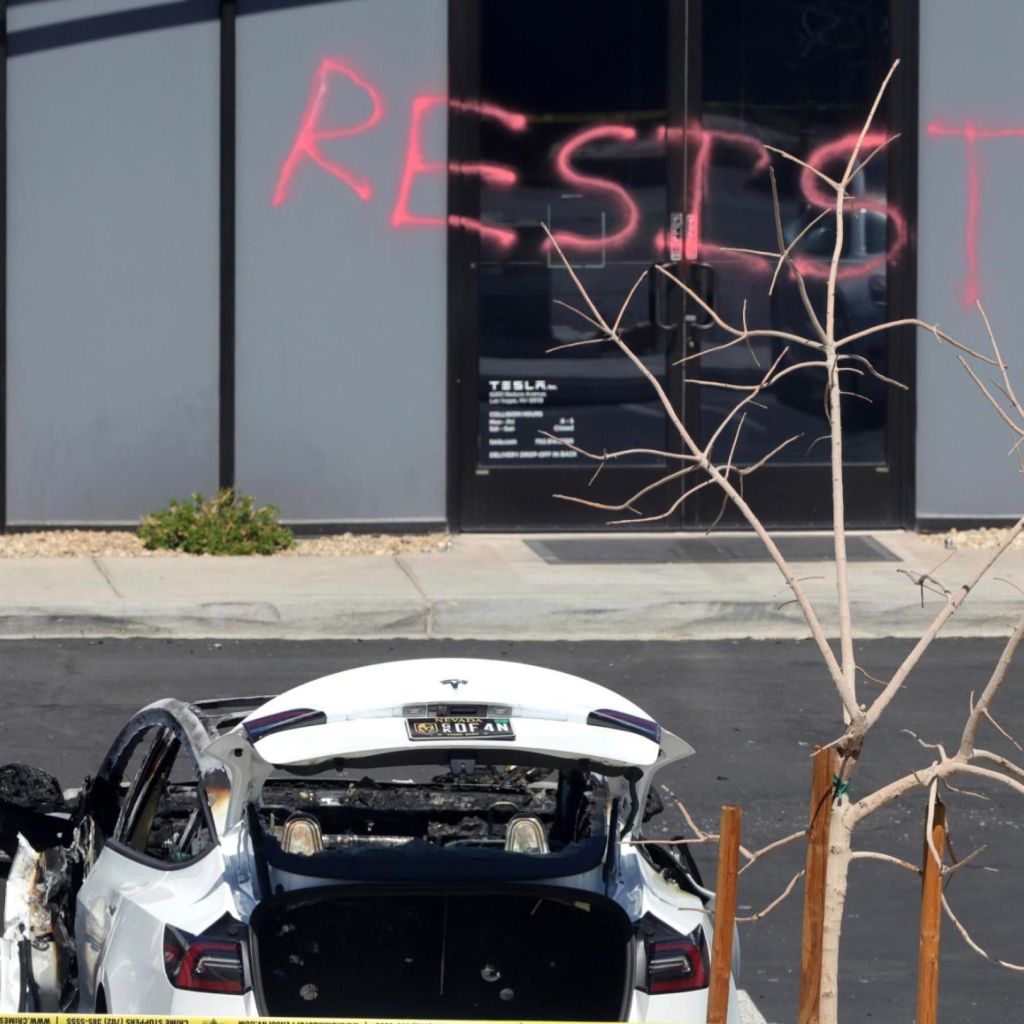
Leftist ’empathy’ strikes again.

Elon Musk is many things.  He’s extremely motivated.  A problem solver.  A billionaire.  A bit of an online troll.  A father of fourteen children.  Efficiency expert.  And also has Asberger’s syndrome.  It is that last item on the list that puts him at odds with normies who prefer lawyerspeak to bluntness.  Musk doesn’t coat anything in syrup, he analyzes, identifies the problem, and states it plainly rather than beat around the bush.  Contrast to the left, he puts logic and reasoning first—feelings second.

As an aside, CEOs and political leaders have a higher likelihood of being psychopaths.  It is what makes them good at their jobs.  You can’t make good decisions for a corporation or a country when you’re too zeroed in and obsessing over impacts to individuals.  That is going to lead to analysis paralysis and no necessary corrections being made.  Instead they think on the macro scale.  This is not to say they don’t care about the parts, but the good of the whole is what matters to them and they distribute concern according to the overall picture.  Sure it may seem cold and calculated—but serves the common good much better than empathy run amok.

As much as those on the left like to crow—as if their great empathy stretches across the globe—the reality is their typically very focused on their own feelings.

Their ’empathy’ is unsustainable.

Myopic.

Blind.

Christian compassion, in contrast, balances judgment and mercy. You do unto others as you want them to do to you, but also speak the truth in love—even when it gets you killed by an angry mob that doesn’t want to hear it. The tension or fusion of love and accountability keeps it grounded; it’s not a free-for-all where every whim gets a blank check. Unlike leftist empathy, which often bends toward appeasement or control, Christian compassion holds a line—help the widow and orphan, yes, but don’t burn down the house to warm them. It’s personal, not performative, and it doesn’t bankrupt the future for the sake of today’s applause.

Breathing Room for Civilization

In the end, the clash isn’t about empathy versus apathy—it’s about who gets to breathe first when the masks drop. Musk and Saad aren’t wrong to call out the self-inflicted wounds of suicidal empathy; they’re just pointing to the scoreboard: civilizations that forget their own oxygen don’t survive to help anyone. Leftist empathy, with its envy-fueled ‘virtue’ and reckless spending, dresses up as love but flirts with collapse—torching Teslas while preaching care, funding operas while bridges crumble. Christian compassion, for all its flaws, at least remembers the whole plane matters, not just the loudest sob story. We don’t need more performative tears or smashed windows—we need a hard reset on what keeps us aloft. Secure your mask, folks; the turbulence is just beginning.

The People Want a King, Part II: The Idolatry of the State and the Call to Self-Rule

Standard

A decade ago, in “The People Want a King, Part I,” I wrestled with the ancient cry of Israel—“Give us a king!”—from 1 Samuel 8, seeing in it a mirror to our own craving for centralized power. I cast Trump, then a looming figure on the horizon, as a Saul-like pretender—brash, self-absorbed, a king unfit for the throne. The heart of man, I argued, is frail and fearful, ever eager to trade liberty for the illusion of security. Now, ten years on, we revisit that cry, turning the lens inward and upward: what happens when the king we demand becomes a god we worship? And what might it mean to cast down that idol and govern ourselves under a higher law—one that admits no rival?

Let us begin with a heresy: government is not sacred. It is not a divine institution bestowed from on high, nor are its stewards a priestly caste anointed with heavenly oil. Scripture offers no such mandate. The state is a human construct—a tool, a mechanism, a servant of necessity. It is not the ekklesia, the called-out assembly of God’s people, nor the Kingdom of Heaven breaking through the veil. It is, at its core, a business: a transactional entity exchanging services for tribute. When it ceases to serve—when it grows fat and lazy, a Blockbuster Video in a Netflix world—it deserves no reverence, only replacement. To treat it otherwise is to fashion a golden calf from the scraps of bureaucracy.

Yet the cry persists: “The nation is too complex for such simplicity!” I encountered this objection recently, a rebuttal to my call for radical restructuring. The argument, draped in the garb of sophistication, insists that governance transcends mere commerce—that its intricacies demand a permanence beyond critique. This is a shade thrown at those, like the DOGE reformers, who dare to wield the axe of efficiency against the overgrowth of empire. It is a plea for the status quo, cloaked as concern for “public trust.” But trust in whom? The regime that has ruled longer than memory, entwined with corporate titans and special interests, bleeding the commons dry? The trust was shattered long before any billionaire CEO took the helm; it crumbled under tax rates that plunder and wars that pulverize the defiant.

Here lies the theological crux: complexity is not a virtue—it is a veil. In 1 Samuel 8, Samuel warned Israel that their king would take and take—sons, daughters, fields, flocks—until they were slaves in all but name. The modern state has fulfilled this prophecy with chilling fidelity, its mission creep a slow idolatry. What begins as a servant becomes a lord; what promises order delivers oppression. The labyrinthine bills, the thousand-page tomes of legislation—these are not signs of wisdom but of deceit, a Sanhedrin of scribes hiding corruption behind the law’s letter. To call this sacred is to confuse the Temple with the moneychangers’ tables.

Government as business is no mere metaphor—it is a functional truth. It trades protection and infrastructure for our coin and consent, a covenant not unlike the marketplace. Yet unlike the agora, where competition hones the blade of excellence, the state resists renewal. Private enterprise, for all its flaws, bends to the will of the consumer: Sears falls, Amazon rises. Governance, enthroned as monopoly, calcifies. Its priests—elected or appointed—crown themselves with divine right, decrying reform as sacrilege, a “threat to democracy.” But democracy is not their god; power is. And power, unchecked, builds altars to itself.

This is the sin of the political establishment: they have conflated the nation with their institution, the people with their rule. The nation is not the state, nor the state the nation—just as Israel was not its kings, nor its kings Israel. Government should reflect the imago Dei in its people, a stewardship of justice and flourishing. Instead, it mirrors Baal, demanding sacrifice from the many for the feast of the few. How is this sustained? Through a catechism of control—children reciting pledges, citizens taught to venerate the machine as eternal. To question it is to court excommunication.

Yet Scripture beckons us elsewhere. The restoration of governance requires a return to first principles: simplicity as clarity, transparency as righteousness, accessibility as the leveling of pride. The state’s convolution is no accident—it is a shroud for sin, a “you wouldn’t understand” that echoes the serpent’s whisper. To dismantle it is not anarchy but exorcism, a stripping back to the studs to expose what festers. The old guard, like Saul clinging to his throne, shriek at the loss of their sacred monopoly. But their divinity is a lie, and their temple must fall.

The Stagnation of the External, the Promise of the Internal

Consider the contrast: a business that squanders its capital dies; a government that squanders ours endures. This is the curse of external governance—its inertia defies the natural law of adaptation. Were it subject to the crucible of choice, only the fittest form would stand. Instead, it grows sclerotic, a Leviathan too holy to slay. And the people, seduced by its permanence, make it their idol. They crave a king to think for them, a mediator to absolve their agency. Politicians—prostitutes of the soul—oblige, peddling promises they half-believe, deluded into messiahs of their own making. Zelensky’s advisors call him mad with grandeur; Washington’s geriatrics are no different, mistaking their tenure for providence.

This is not governance but bondage, a learned helplessness masquerading as piety. The privately employed know their limits—life persists beyond their shift. But the state’s acolytes preach indispensability, as if only they can wield the scepter. Contrast this with self-governance: a people ruled not by fleshly lords but by principle, by the law written on their hearts. Jeremiah 31:33 whispers of such a day; Hebrews 8 seals it in Christ’s blood. At the civic level, this need not mean chaos but discernment—shuffling roles, pruning branches, trusting that micromanagement by fools yields only thorns.

Why, then, the sanctity of the status quo? It is the coward’s theology: easier to bow to mystery than to wrestle truth. As Israel preferred a king to the uncertainty of judges, so we prefer bureaucracy to responsibility. Samuel’s warning rings anew: the king takes, and we cry too late. External governance is not our salvation—it is our stagnation, a false god promising safety while forging fetters.

The Myth and Monuments of the Federal Cult

To cement this idolatry, the Federal government has woven a mythology and erected monuments rivaling the temples of old. Consider the Capitol, that domed sanctum of marble and myth, its steps ascending like an altar to a civic deity. The Lincoln Memorial, a brooding Parthenon, gazes over a reflecting pool as if to baptize the nation in its own reverence. These are not mere buildings—they are shrines, designed to awe, to whisper: “This is eternal, this is beyond you.” Like the ziggurats of Babylon or the temples of Rome, they fuse power with divinity, demanding obeisance from the pilgrim and the peasant alike. The Founding Fathers, recast as demigods, stare down from friezes and statues, their words carved into stone as if they were Moses descending Sinai. Big Brother is not God—yet here he looms, a surveillance state cloaked as savior, its all-seeing eye promising protection while its fist tightens the leash.

This cultic architecture is no accident—it sells the lie that the state is sacrosanct, its form immutable. The pledge of allegiance, recited by schoolchildren, is a liturgy; the flag, a totem; the Constitution, a holy writ too sacred to amend save by the high priests of amendment. Yet this is a sleight of hand. The Constitution, for all its brilliance, is a human document, not a divine oracle—its framers knew it, urging vigilance against its abuse. The Federal cult inverts this, turning a tool into a god, a means into an end. As the temples of Baal housed idols to blind the masses, so these monuments obscure the state’s frailty, its susceptibility to rot.

Enter January 6th, 2021—a day branded as a desecration, a violation of the “sacred ground” of democracy. The narrative drips with priestly indignation: rioters stormed the Capitol, profaned its halls, threatened the holy order. Politicians clutched their vestments, decrying the “insurrection” as an assault on the nation’s soul. But let us parse this claim with a smirk—how many have died at the hands of this government, overseas and at home, in the name of “protecting democracy”? Millions, if you tally the wars and drones, yet the single death of that day gets the sackcloth and ashes. If the Capitol is sacred, what makes it so? Not its service to the people—its corridors have long echoed with the clink of corporate coin and the murmur of self-interest. Not its fidelity to justice—its laws have sanctioned plunder at home and terror abroad, not least against Argentina, whose people still bear the scars of U.S.-backed meddling and economic strangulation. The sanctity, then, is a projection, a mythos guarding the idol. January 6th was chaos, yes—ugly, reckless, and lawless—but to call it a sacrilege assumes the temple was holy to begin with. It wasn’t. It was a house of power, not of God.

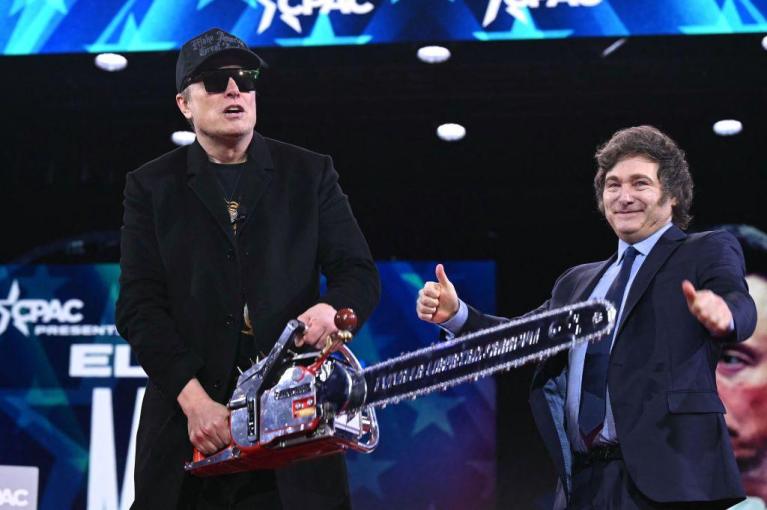
The true violation predates that day: the slow consecration of a bureaucracy into a deity, the elevation of marble over morality. Ancient temples hid their emptiness behind splendor; the Federal cult does the same, crying “blasphemy” when the curtain is pulled. January 6th didn’t defile a sacred space—it exposed a hollow one, a monument to a king the people demanded but never needed. And here’s where Argentina’s President Javier Milei enters, grinning like a Cheshire cat as he handed Elon Musk a chainsaw in 2025, etched with “Viva la libertad, carajo” (“Long live liberty, damn it”). Milei, who’s taken his own chainsaw to Argentina’s bloated state, wasn’t just gifting Musk a tool for bureaucracy—he was practically dancing with glee to see Musk turn it on the U.S. regime that’s bullied his nation for decades, from IMF debt traps to covert coups. It’s less a symbol of shared efficiency and more a middle finger to the empire, wrapped in a libertarian bow.

Trump’s Mandate and the Singular King

So where does Donald Trump fit in this unholy pantheon? In Part I, I cast him as a flawed Saul—brash, impulsive, a king more enamored with his own mirror than his people’s good. I stand corrected, or at least refined. Trump is no savior, nor should he be—Christians have but one King, enthroned above all earthly powers (Colossians 1:16-17). Yet he wields a mandate, both legal and theological, to tear down these idols, and therein lies his purpose—not as messiah, but as iconoclast.

Legally, Trump’s authority stems from the Constitution itself—a document that vests executive power in a president elected by the people (Article II, Section 1). His 2024 victory, a roar against the entrenched cult, grants him the democratic right to wield that power against inefficiency and corruption. The Federal government, swollen beyond its constitutional bounds, has no divine charter to resist pruning. The framers envisioned a lean state, not a Leviathan; Trump’s DOGE-inspired axe—however blunt—aligns with that original intent. He can shutter departments, slash budgets, and fire the high priests of waste, all within the law’s letter. The shrieks of “threat to democracy” from the old guard are the death rattles of a dethroned idol, not a defense of principle.

Theologically, his warrant runs deeper. Scripture abhors idolatry—Exodus 20:4-5 commands no graven images, no bowing to crafted gods. The Federal cult, with its temples and myths, is precisely that: a false deity usurping allegiance owed to Christ alone. When Jesus declared, “Render to Caesar what is Caesar’s, and to God what is God’s” (Matthew 22:21), He drew a line—Caesar gets coins, not worship. Trump, for all his bombast, serves as a wrecking ball to this blasphemy. He need not be pious to smash Baal’s altars; Gideon was a coward before he toppled the poles (Judges 6:27). If Trump’s tenure exposes the state’s hollow sanctimony—January 6th as symptom, not sin—then he fulfills a divine irony: a flawed vessel breaking a greater folly.

Yet here’s the correction to my 2015 take: Trump is not the point. I overstated his flaws as disqualifying, missing the forest for the trees. He’s no king to crown—Christians must reject all earthly thrones save one. “My kingdom is not of this world,” Christ said (John 18:36), and Paul echoed, “Our citizenship is in heaven” (Philippians 3:20). Trump’s role is transient—permitted, not ordained—to dismantle a false god, not to replace it. The Christian’s allegiance lies with the King of Kings, whose rule brooks no rival, be it Trump, Biden, or the marble gods of DC. Self-governance, then, is not just civic—it’s spiritual, a refusal to outsource our souls to any throne but His.

The Eschatological Hope

The people want a king, but the King we need refuses a throne of stone. To cling to the state as sacred is to repeat Israel’s folly, to trade the Spirit’s freedom for Saul’s spear. Self-governance is not utopia—it is obedience to a higher call, a shedding of idols for the stewardship God demands. Complexity is a liar’s refuge; trust is a martyr of our making. Let Trump tear down the temples—legally, he can; theologically, he should—but let us not crown him in their place. Overturn the tables, tear the veil, and build anew—not a kingdom of men, but a commonwealth of the free, under no crown but His.

Tesla’s Uphill Battle in the Trucking Industry…

Standard

There is no question that Elon Musk has changed the conversation as far as electric vehicles.  Musk, unlike his predecessors, focused on building an image of luxury and performance.

Electric powered vehicles, until the Tesla Model S arrived as an option, were boring, slow and impractical.  Now, while Musk’s cars still remain impractical for most people (both in terms of range and price) and while it remains to be seen whether or not his company could survive without corporate welfare, Tesla has at least undone some of the negative image of electric vehicles.

Tesla seems to be taking one more step in the direction of practicality with the introduction of commercial vehicle.  Semi, this latest opportunity for Musk to attract media attention, reminds me of something I would’ve drawn up in a middle school daydream: It has a sleek exterior, it is loaded up with LCD screens, it promises to perform at a level one would expect from a sports car, it is priced similar to other Class 8 trucks, and yet also makes me question if any experienced truck drivers were consulted in the design process…

Sure, middle school me would be salivating over this technological wonder.  However now, as one having had years of experience behind the wheel of a big rig, the center seating position, glare of screens, wheel fenders and charging times make it totally unappealing to me.

The ergonomic and design issues, obvious from a driver’s perspective, are covered in another former trucker’s article (click here if you want to know more about them) but there are more serious matters and practical concerns yet to be addressed.  Acceleration numbers and having the fastest truck on the road might increase coolness factor, but it might also leave all of your cargo on the road (or like the unmitigated disaster recalled unfondly from my days unloading trucks at the paint store) and distracts from questions of actual viability in the real world.

To many the promised 300-500 mile range and 30 minute recharging may seem wonderful. But, from a trucking industry standard, it is truly abysmal and completely impractical.  The range of an over-the-road diesel truck, with 250 gallons of fuel, is anywhere from 1000 to 2000 miles and it only takes fifteen minutes every other day to refill the tanks—multiple extra stops per day is intolerable given the current hours of service requirements.  

And, that’s assuming good conditions, what happens in cold weather when battery capacity is reduced by 40-50% like owners of other Telsa products have experienced?

It is no big secret that fossil fuels carry a greater amount of energy per pound than the alternatives currently available. This energy density is especially important in commercial trucking where every ounce of extra weight takes away from payload.  Batteries with the range Telsa has promised will certainly be very heavy and that will be a huge competive disadvantage.  It means you might need an additional Tesla truck to do what one diesel truck does—which wipes out any illusion of energy savings and cost effectiveness.

Then there is the question of longevity and servicing the truck.  It could very well be that the Tesla Semi will be completely reliable and go a million miles like a diesel truck.  But, even assuming that is the case, what sort of maintenance program and roadside assistance will they offer when things do inevitably go wrong?  Service infrastructure is a more significant in commercial trucking than it is in general.  Diesels are relatively easy to work on and the network is already established—those are questions that must be answered.

My own back-of-the-napkin analysis, based in what has already been said and can be reasonably assumed, is that this new Tesla offering will have the same liabilities of other battery electric vehicles except on a far larger scale.  The question of Tesla being the future of trucking (or is simply a niché vehicle for those who can afford the unavoidable range and weight disadvantages, as well as potential maintenance issues) is not answered.

Trucking companies, unlike wealthy luxury car buyers aided by government subsidies, need to be profitable and competive to survive.

What do my trucker friends think?