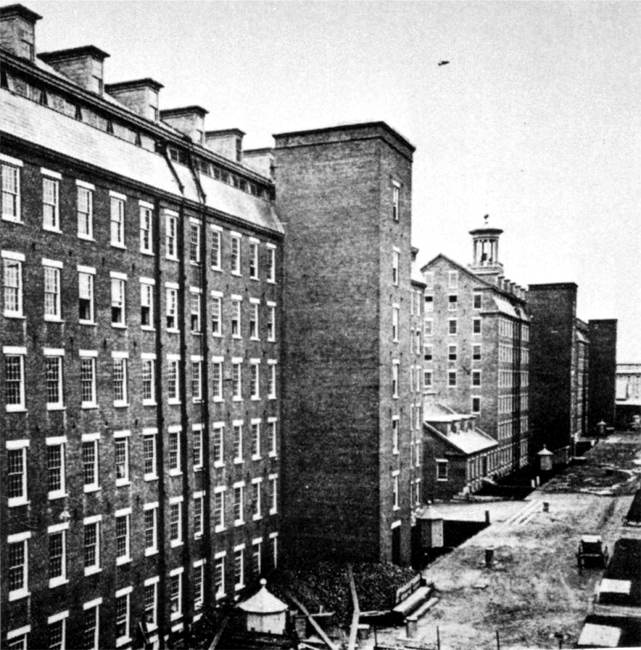
The Myth of an Indestructible Building

Standard

It was November 29, 1900, and fans filled the stadium in San Francisco for the annual Thanksgiving Day game between California Golden Bears and Stanford Cardinal. Some, not wanting to pay the entry fee (one dollar then, $40 in today’s money), climbed on a nearby glass factory roof to get their view of the action on the field.

The newly built factory roof collapsed about twenty minutes into the game. One hundred people fell as it gave way and plunged four stories down—many landing on the 500° F oven below. It was a horrific scene. Young people being cooked alive. What happened? The building roof wasn’t designed to hold a mass of spectators. It failed. Those who had climbed up were oblivious or did not have enough concern for the stress they were adding to the structure.
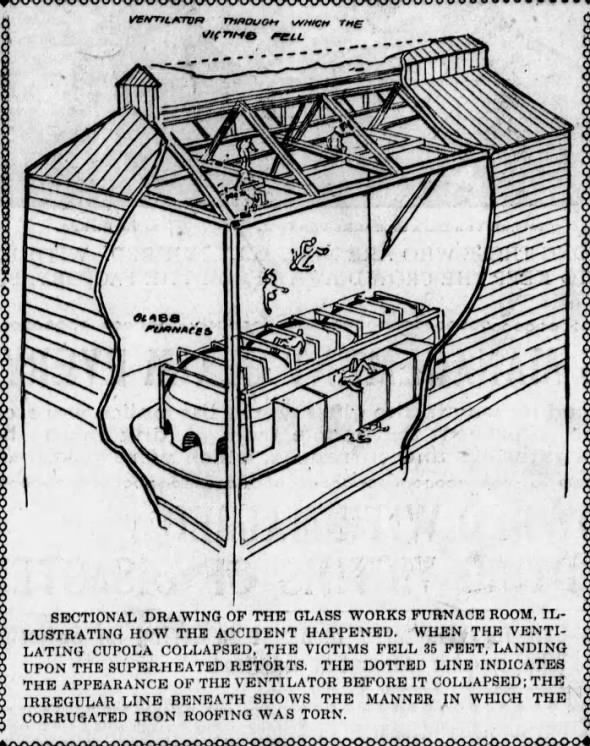
This tragedy wasn’t just a failure of design; it revealed a deeper misconception that buildings should be invincible, a myth that shapes our reactions to collapses even today. It goes further than engineering or physical buildings as well. Our models of reality are oversimplified at best and flat-out wrong in too many cases.

There is a common misconception and an unrealistic expectation about structures—many people seem to assume they are like blocks of granite. From those who believe that every building collapse is a conspiracy to those who think every failure demands stricter government regulations, the myth of an indestructible building continues due to a lack of understanding of engineering and the limitations.

Design Limits Are Not Defects

One key misunderstanding is design limits. Engineering is not about making a building too strong to ever fail. Unless we’re talking about the Great Pyramids, it’s all about trying to meet certain established parameters. An engineered building is designed to meet the expected conditions as defined by regional building codes. If the wind, snow, or loads exceed the designated standards, then there will likely be a collapse.

Earlier this year, after a heavy snowfall in upstate New York, many buildings had their roofs cave in (including this fire hall) because the weight of the snow was that much greater than the design weight. Sure, most engineers build an extra safety margin into their components, but eventually these limits are too far exceeded and you’ll end up with a tangled mess. This is why there are sideline roof shoveling businesses in these places where large snow accumulations are a regular occurrence.

Sure, code could force people to build to a much higher standard, making a collapse due to snow load virtually impossible. But this would increase the costs so much that it would price many people out of building a new house or barn. Engineering is all about compromise, more precisely about making the right compromises given the expected conditions. Yes, there is a case for making adjustments based on observation or after studies, but ultimately we build for what will work most of the time.

More Is Not Always Better

In the aftermath of the earthquake that had struck Myanmar and neighboring Thailand, there was a comment made to me in a chat hoping for more layers of regulation. This is a sentiment, in the specific context of rapid development of Bangkok, that seems more reflexive than reflective. It is a progressive impulse to believe that more interventions and rules are the answer.

The collapse of an unfinished tower in Bangkok, during the earthquake, sparks questions about building codes.  Was it missing sheer walls?  Did the contractor rush to ‘top it off’ quickly?  I want to know what the investigation finds.

But, for me, as someone who works in the construction industry and has occasionally needed to sift through these layers, I could not disagree more. Sure, better regulations may be needed. However, legalism doesn’t work in building standards any better than it does in churches. Sure, you need a code of some kind. And yet onerous regulation will add to the cost of construction, not necessarily improving the end results, and only making new housing less accessible.

It is, at best, the same trade-off discussion we can have about self-driving cars and the need for LIDAR. Sure, this expensive laser ranging system may marginally improve the results, but at what cost? Self-driving cars with cameras alone are already safer than human drivers. Keeping these systems at a price that is affordable will save more lives than pricing them out of reach for average people. It is, therefore, optimal to rollout the less expensive and safer tech even if it could be slightly improved.

At worst there is only more expense and no benefit to more layers of red tape. The real problem with rules is that they are written in language that needs interpretation. Unlike a classroom theoretical setting, in the real world you can’t just memorize the correct answers and pass the test. The ability to make a judgment call is far more important than adding to the pile of regulations. More rules can mean the more confusion and the truly critical matters get lost in the mess.

I see it over and over again, when different customers send the same job for a quote and all of them interpreting the engineering specifications their own way. It is the tire swing cartoon, a funny illustration of when the customer wants something simple and yet the whole process distorts the basic concept until it is unrecognizable. That is where my mind goes when we talk about adding layers. Is it increasing our safety or merely adding more points of failure?

This one stuck with me and should be standard equipment in every design department.  I first saw it as a child while visiting the engineering department of the construction company my dad worked for.

Some of it is just that some people are plain better at their jobs than others with the very same credentials. I am impressed by some engineers, architects, contractors, and code officers—not so much by others. I’m willing to bet the intuition of some Amish builders is probably more trustworthy than a team of engineering students’ textbook knowledge, full of theory, with no real or practical world experience. In the end any system is only ever as good as the users.

Theory Is Not Reality

My work relies on truss design software. I enter information and it does those boring calculations. When I started, I assumed that it was more sophisticated than it really is. I thought every load was accounted for and nothing assumed. But very soon the limits of this tool started to reveal themselves. It is only as accurate or true to reality as the engineers and developers behind it—and on the abilities of the user (me) understanding the gaps in the program.

When it comes to mental models—the kind of physics involved in engineering—only a few people seem able to conceptualize the force vectors. Things like triangulation, or compression and tension loads, are simply something I get. Maybe from my years of being around construction or that curiosity I had, as a child, that made me want to learn what holds a stone arch up or why there are those cables running through that concrete bridge deck. My model was built off of this childhood of building Lincoln Log towers (arranging them vertically) and occasionally making mini earthquakes.

I’m exasperated by this expectation that people have for skyscrapers to be indestructible or to topple over in the same manner of a tree—as if they’re a solid object. It also seems that the big difference between static and dynamic loads is lost on most people. They don’t understand why a building could start to pancake, one floor smashing the next, or how twisting due to extreme heat could undermine the structural integrity of a building without ever melting the steel. Of course this has to do with their beliefs or mistrusts that are not related to engineering—nevertheless it shows their completely deficient understanding of how the science works.

The concept in their head is off, their brain modeling is inaccurate, and their resolution may be so low they simply can’t grasp what the reality is. You try to explain basic things and their eyes glaze over—sort of like when Pvt. John Bowers tried to explain why the plants need water, and not the electrolytes in Brawndo, in the movie Idiocracy. Ignorant people will scoff before they accept a view different from their model of the world. The theory they believe rules over all evidence or better explanation.

On the other side are those who trust every established system without understanding it. They “believe science” and see more as an answer to every question. More rules, a larger enforcement apparatus, faith in their experts, without any feel for the problems encountered by the professionals or those in the field. If they had, they would question much more than they do. Human judgment is still at the base of it all. Or at least that is what the lead engineer told me while we discussed the limits of software and the need to be smarter than the tool.

Not even AI can give us the right balance of efficiency in design versus safety factor or what should be written in the code. It may be a better reflection of our own collective intelligence than any individual, but our own limits to see the world how it actually is are not erased by the machines we create. We are amplified, never eliminated, by the tools we create. So we’ll be stuck wrestling with our myths and theories until we take a final breath—only our flaws are indestructible.

Models of a Messy World

If truss software taught me anything, it’s that no model nails reality perfectly—not beams, not buildings, not life. We lean on these frameworks anyway, because the world’s too wild to face without a map. But just like those fans on that San Francisco roof in 1900, we often climb onto flimsy assumptions, mistaking them for solid ground. The myth of an indestructible building is just one piece of a bigger distortion: we think our mental models—of faith, of power, of people—are unshakable truths, when they’re really sketches, some sharper than others, of a reality we’ll never fully pin down.

Take religion. For some, it’s a cathedral of certainty, every verse a load-bearing beam explaining why the world spins. Others see it as a rickety scaffold, patched together to dodge hard questions. Both are models—ways to grapple with life’s big “why.” Politics is messier still. It’s like designing a city where everyone’s got their own codebook. One side swears by tight regulations, convinced they’ll keep the streets safe. Another group demands open plans, betting that freedom builds stronger foundations. Both sides act like their own ideological model is bulletproof, shouting past each other while the ground shifts—economies wobble, climates change, and people clash.

Then there’s prejudice, the shoddiest model of all. It’s like sizing up a beam by its color instead of its strength. Prejudice, always a shortcut to save us from the effort of real thought, fails because it’s static, blind to the dynamic load of human individuals. Good perception, like good engineering, adjusts to what’s real, not what’s assumed.

All these—religion, politics, prejudice—come down to how we see. Perception’s the lens we grind to make sense of the blur. Some folks polish it daily, questioning what they’re fed. Others let it cloud over, stuck on a picture that feels safe but warps the view. I think of those fans in 1900, not asking if the roof could hold them. They didn’t mean harm—they just saw what they wanted: a free seat, a clear view. We do the same, building lives on models we don’t test, whether it’s a god we trust, a vote we cast, or a snap judgment we make. The distortion isn’t just in thinking buildings won’t fall—it’s in believing our way of seeing the world is indestructible.

What makes a model reliable? Not that it’s right—none are. It’s that it bends without breaking, learns from cracks, holds up when life piles on the weight. In construction, we double-check measurements because we know plans lie. In life, we’d do well to double-check our certainties—about the divine, the ballot, the stranger next door. The San Francisco collapse wasn’t just about a roof giving way; it was about people trusting a picture that didn’t match the world. We’re still climbing those roofs, chasing clear views on shaky frames. Maybe the only thing we can build to last is a habit of asking: what’s holding this up? And what happens when it falls?

Reliable Sources

Standard

My initial reaction to the collapse of the Francis Scott Key Bridge was disbelief, I had just swiped open my phone, eyes adjusting after I rolled out of bed Tuesday morning, and saw the Daily Mail headline blazing on my Facebook news feed.  So immediately I Google “bridge collapse” and, sure enough, the highlighted results were full of similar headlines.  It must be true.

Since that moment there has been a flurry of speculation.  My first thought, of course, is was this deliberate?  Did the Russians do it?   But as I started to gather evidence, like the video showing the lights going out and puff of black smoke, mechanical failure was a plausible explanation.  That didn’t rule out some kind of sophisticated hacking attack, but then this isn’t a Tesla car or Hollywood fantasy where anything electronic can just be operated remotely through undisclosed magical means.

Theories are easy to create.  The hard part is to sift through the information pouring in and come up with something actually likely given probabilities and reliable sources.  A random guy online or old Larry at the parts counter isn’t trustworthy.  The corporate media is only slightly better, in that they at least get the general story right, yet are also politically motivated and basically parroting official sources or their ‘experts’ at a lower resolution.

What of these officials and experts?

I generally rate someone who has their own reputation on the line over someone who is spit balling and couldn’t change their own spark plugs.  Someone with credentials is a better choice for information given that they did put in the work to get their degree and prove their competence.  However, a PhD or government position doesn’t make a person honest or free of bias.  Those who get paid by the government are part of the political establishment and their partisan agenda should be assumed.

1) Professional Experience 

The sources that I trust are those who built a reputation outside of politics and within the industry—this is why I’ve subscribed to “What is Going on With Shipping?”  Later in the day of the collision and collapse of the bridge I found an established channel about maritime matters for explanation.  How do I know he’s credible?  His fluency is a start, he has the technical jargon and credibility with others who know shipping from first hand experience.  It is notable that nobody here is surprised that this incident could happen.  The details of his analysis give me confidence that the information is good.

Authority comes from having professional experience and a proven record.  When I picked my neck surgeon, for example, we had a conversation about his prior record and the procedure.  I sized him up.  He was articulate, empathetic, and had all the expected confidence of someone who could work a miracle of modern medicine.  He also was able to explain everything in terms that I could understand.  The trust I put in him paid off, my recovery was great and I’ve come back stronger than ever.  Licensing with charisma doesn’t mean someone is competent, but it definitely helps.

2) My Own Aptitude 

But my main tool for determining who to trust is based on my own aptitude.  I have a decent understanding of physics and spent my younger days curious about mechanical systems—and always needed to understand how they work.  I could turn a wrench.  I did my own diagnostics and repairs.  So when I do bring my car to the mechanic I’ve already done my homework. 

For example, when my car lost power right away I suspected the Ti-VCT system was to blame.  The engine then gave a code that supported this hypothesis and I took it to a local tire shop and inspection garage.  I told them exactly what to look for giving them a page of the diagnostics manual.  And yet, after having the car for a day or two (after changing the air filter and cleaning the MAF sensor) they concluded it could just be the car is old and losing compression.  Finally, after taking the time to look under the hood, I found the problem.  It was what I had been suspecting.  This time I took the vehicle to a real technician, a guy who with a reputation for good diagnosis, and he gave a beautiful technical explanation of what happens with a short in that system.  After an inexpensive repair I’ve had no issues since.

I’ve never worked in the engine room of a big cargo ship.  I know that they are huge and, despite involving the same principles, are on an entirely different scale.  For one, it takes a team to keep them running, this isn’t like your Toyota where you can simply turn the key, put it in drive and go.  No, they have a startup sequence and when I heard a play-by-play of the disaster unfolding, where the puff of black smoke was explained as being a fuel-air mixture imbalance when they were using a burst of compressed air to start the massive engine, I recalled hearing this being explained in a documentary and it all lined up with what I know about engines.  It is clear he was credible and therefore I felt the rest of his commentary had merit.  I’ll never trust the people who completely miss on the basics and then expect me to believe their conspiracy theories.

3) Most Plausible Explanation 

It could be the MV Dali crew were attacked by mind control aliens using the 5G cell phone network.  There’s no way to disprove this is not what happened.  However, it is not the most plausible explanation and certainly not the first stop (or last) of a reasonable analysis.  What is probable is the answer with the least amount of moving parts or crazy assumptions, which points currently in the direction that this was an accident waiting to happen or a matter of reasonable probabilities that needs no fanciful dreamt up explanation.

There are those times when fact is stranger than fiction.  But we should only go there if there is plain evidence of motives and the means.  Like when the Nord Stream pipeline exploded and prior to this the US President made a threat “We will bring an end to it.” It isn’t a big stretch to believe he had a hand in the sabotage.  The US Navy is one of the few in the world that have the capability of making this kind of attack, so that is a very plausible explanation.  It also wouldn’t just happen on its own or accidentally, so we do look for the potential connections.

Nothing is ever absolute.  We can’t know for certain.  But I’m going with the assessment of the professionals who don’t seem at all surprised that this could happen and can give an informative analysis.  I’ll weigh one of their opinions over ten thousand who claim that there’s something fishy or they feel it in their gut and who have never set foot in the bowels of a cargo ship.  The reliable sources are those with professional experience and are not tainted by ideologies or narratives that color their perspective of all events.

9/11 In Retrospect—Collapse of the New World Order

Standard

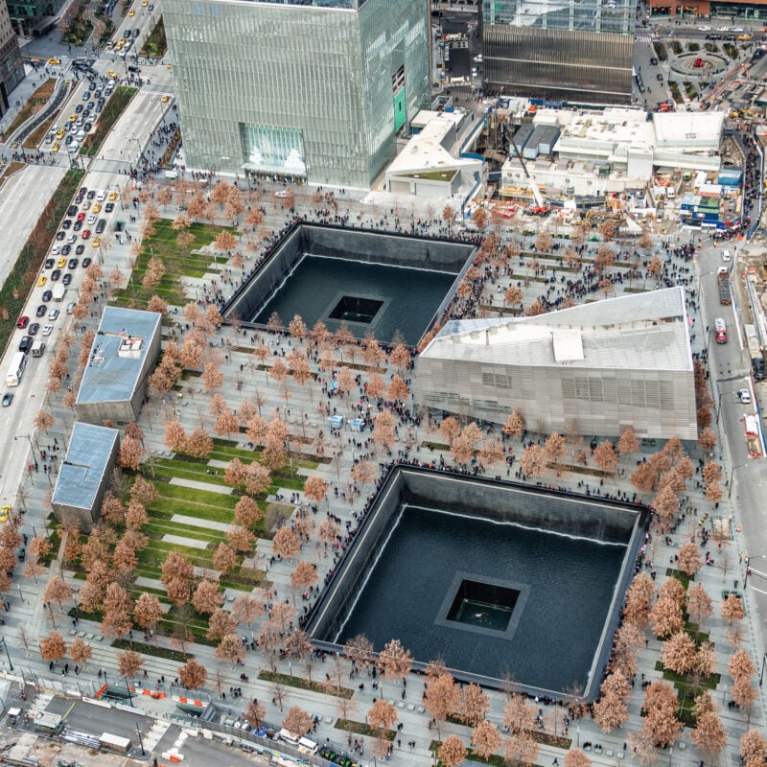
Visiting the site of the Twin Towers again has revealed how much my perspective of the has changed over the past few decades since the attacks.  The World Trade Centers, built in the 1970s, had once dominated the Financial District of Manhattan and represented both the pinnacle of engineering and the economic might of the American empire. 

Like the Pentagon struck the same day, they were symbols of American dominance.  Pillars of a system that, prior to that sunny September day, had seemed invulnerable.  The United States had won the Cold War, demonstrated unrivaled military might in the Gulf War (all but erasing the bitter aftertaste of Vietnam) and the 1990s felt almost as if it was the ‘end of history‘ with the final victory of liberal democracy over the world.

The NYC skyline is impressive even today, yet that September day the delusion of being untouchable had been wiped away and the trust of the system has continued to degrade as more are seeing the truth:  

1) Our government can’t keep us safe.  Many forget now that 9/11 was not the first attack on the World Center twins.  In 1993 a truck bomb had been detonated in the parking garage of the South Tower and could’ve taken down the towers had it been better placed.  But despite this, despite the billions we spent on intelligence agencies, the US had missed multiple opportunities to take down Osama Bin Laden.  All of our military strength was useless against a small group of dedicated men using box cutters and airliners.

2) They made us bleed.  While many around the world were horrified at the images, there were others who danced with glee as shock and awe covered Manhattan in dust.  It was a propaganda coup for those who opposed US hegemony as much as anything else, it proved that there could be repercussions for our policing and globalist policies.  Sure we would go on to kill Bin Laden.  But he more than accomplished his goal.  Not only did he bring down the towers, and strike the Pentagon, but he also goaded us into spending trillions on a fruitless war on terror.

But, beyond this, in the past twenty years, I have gone from being an apologist for the second invasion of Iraq to now being very deeply disillusioned.  And I’m not alone.  The world is no longer what it was in the 1990s where the US leads the way to a new age.  Rather many are starting to see through the shiny facade and realize that the system in its current form serves a few at the top.  But our banks, our government, and corporations routinely conspire to rob us.  There is no free market or true representatives of the people, it is a rigged game and the ‘house’ always wins.

Walking past Wall Street I remarked “This is the heart of the beast” and it is.  The money flowing through this place is the lifeblood of a nation, the very center of the current world order, and what enables the endless wars of our political regime.  The towers were not random targets.  Nor was the attack because they hate freedom and democracy, but rather it was a response to the imposition of US policies on their countries and the never-ending presence of our military in their own backyard to serve US economic interests that they resented. 

As wrong as it was to murder 2,977 people, this ‘collateral damage’ has long been a part of war, many Americans have no moral qualms about nuking the cities of Hiroshima or Nagasaki, and the US has killed hundreds of thousands of non-combatants.  So why is it such an outrage if others in the world employ a similar total war strategy against us?

If America once represented an ideal, that is fading due to relentless attacks by the left and the growing disillusionment of everyone else.  There has been a transition, over the last few decades in particular, from the time when athletes would wrap themselves in the flag to this time it has become controversial and even contemptible.  Even conservatives no longer trust national institutions and have embraced a myriad of conspiracy theories—including many about the 9/11 attacks.

Personally, I do not believe that the official narrative is entirely a lie.  I believe a group of men, funded by Al Qaeda, hijacked four fuel-laden airliners, two of them were flown into the towers, one struck the Pentagon and a fourth crashed into a field in Pennsylvania.  I do not see a need for a controlled demolition to explain why the buildings collapsed.  No this is not to say that our government didn’t know more prior, opportunistically exploit or even facilitate the attacks.  There’s simply a better explanation of everything that happened that day and since.

The fragility of our world order

As a young person everything that was had this feeling of permanence.  My parents and other adults were fixtures in my life.  It all felt robust and unchangeable.  But as time went on, grandparents passed away, trends came and went, seasons changed and I began to learn that nothing is forever.  Even concrete will degrade in strength and eventually, it will crumble away into dust.  Institutions are no different, they tend to have a lifecycle, at the very least require constant maintenance, and all these systems we rely upon to create order in our world are surprisingly fragile.

The New York City skyline has a robustness of appearance.  It is built off of the bedrock, the skyscrapers seemingly carved out of a single piece of polished granite.  This is by design.  The architects and engineers who built these monolithic-looking structures do want them to feel secure and safe.  And, for the most part, or under typical conditions, it is true—they are reliable.

However, they’re not indestructible.  

The Word Trade Centers, while massive and certainly marvels of engineering, under that shiny metal and glass veneer, were as flimsy as a stack of cards.  What made them great also created unique vulnerabilities.  Unlike the Empire State Building, a grid of I-beams and tapers in towards the top, the enormous twins had a center trunk section with long clear spanning trusses that were supported by the outer ‘skin’ of the buildings.  This had given them a large and unobstructed office space.  This was practical, but in retrospect became a fatal flaw in their design.

The WTC design was innovative, unusually lightweight construction with wide open floor spaces supported by trusses.

The impact of the airliners removed some of the structure.  No, this was not enough to cause a collapse, yet this was enough to add strain and reduce the load-carrying capacity of the buildings. The towers, despite getting hit by aircraft larger than the 124-ton Boeing 707, had exceeded expectations and absorbed the impact.  It was only after fires raged, out of control, that the heat had reduced the tensile strength of the steel enough that the floor trusses would deflect and could no longer hold the upper floors—at which point the top of the buildings began to fall into the lower—smashing one floor at a time until nothing but a cloud of dust and pile of rubble remained.

The popular meme “Jet fuel can’t melt steel” is clearly ignorant of the reality that you do not need to turn steel into liquid before it will fail.  An inferno of jet fuel mixed with office materials is more than enough to weaken a structure to the breaking point.  There is no need to explain this as controlled demolition or building 7, where there was damage to the structure, fires burning on ten floors, and the sprinkler systems disabled due to water main breaks.  

Still, many Americans have a huge problem accepting that these symbols of our strength could be taken down by a handful of zealots with box cutters.  It makes us feel insecure.  We want it to be more.  And thus it must be some kind of massive concerted effort, with an enormous cover-up, right?

This is, ultimately, a form of denial. 

Most Americans know that manufacturing jobs have been continually outsourced. But many do not fully comprehend the economic reasons why the US has gone from the nation that won WW2 with industrial power to the current situation nor how much they have benefitted. It is the status of the US Dollar as the world reserve currency and the Petrodollar arrangement that give US consumers the edge. Basically, in order to buy their oil from Saudi Arabia, other countries around the world needed to get their hands on our money and for this reason would sell us goods they produced at a bargain price.

The manufacturing backbone no longer exists.

The “new world order” George HW Bush hypothesized was never to be.  Bin Laden had answered and won on multiple fronts.  He caused us to question our own American identity, whether our leaders actually represent our good, and if their endless wars truly benefit us—which they don’t.  More importantly, he penetrated the illusion of permanence and strength that kept us blindly pulling the weight of empire for our masters.  Even 9/11 truthers, in their rejection of the official narrative, are part of this new anxiety undermining the tower of world dominance built in the post-WW2 era.

After two more wars where only the defense contractors and their political proxies came out as victors, after bailouts for the “too big too fail” and current institutional protection of the hedge fund billionaires against retail ‘Ape’ insurgents, more are waking up.  How the elites and political establishment gang up on populists, like Donald Trump or Bernie Sanders—brazenly rigging the DNC primary in 2015 and the Big Tech election interference this past cycle—has damaged faith in the democratic process.  And, lastly, having endured the Covid lockdowns, more question the notion of us being exceptionally free people.

Even if enough Americans remain under the spell and continue to support the collapsing regime, the rest of the world (at least beyond Western Europe and Australia) is not fooled by our propaganda.  After decades of BS and bullying, like those WMDs never found, many are rejecting the monopolar order and ready to work on plan B.  China, India, Middle-Eastern and African nations do not want to be perpetually subject to US economic threats and warfare.  And, after the Ukrainian sanctions, they’re taking steps to protect their own sovereignty against this imperial aggression.  BRICS is here and the supremacy of the Petrodollar, which is what has enabled the half-century US reign, is being challenged.

The pillars upon which the US economic might was built are now shaking and yet nobody seems to be focused on shoring up this foundation. The tower sways, but hubris blinds those who could prevent the collapse.

From confidence to doubt…

Bin Laden knew his 9/11 attacks would lead to massive overreach.  He understood that the arrogance of our leaders would lead to a flailing angry response.  No, the attacks were not enough to bring it all down but they did put the cracks in the base of this order and the future is no longer as certain as it was prior to that moment of horror and disbelief—when a bustling city and the most powerful country in the world was brought to a standstill. 

Those feelings of horror and helplessness and disbelief remain, like those abyss-like holes in the ground where the towers once stood.  We have all seen the writing on the wall.  The party may have continued, on the surface, but something has fundamentally changed underneath it all, the ground has shifted—as has our perception of our own untouchable position in the world.

History is not an end, the new world order is starting to look as frail as those geriatrics who rule us afraid to die and desperately cling to their power.   

The juggernaut of the US-led world order, which had briefly appeared to be an impenetrable fortress, is now unraveling and all it took is a little push.

Rudolf Diesel: Thoughts about Idealism, Despair, Progress, Politics and Hope

Standard

Diesel powers the world economy.  I never considered the extent to which that is true until watching a documentary (click here to view it) about this type of internal combustion engine.  It is named after the inventor, a French-German mechanical engineer, Rudolf Diesel, and is the reason why global trade is possible to the extent it is.

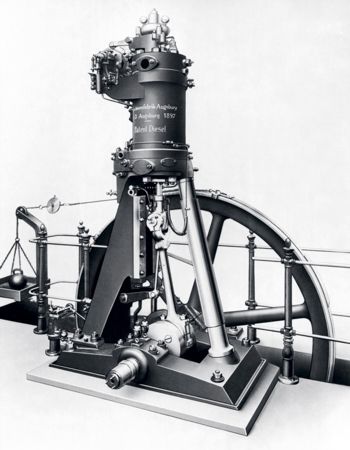
Early Diesel design, circa 1897

In considering the story of Diesel, his brilliant invention and the results, I could not help but see the pattern all too common with innovators.  Diesel’s life turned tragic, he was found floating in the North Sea, dead of an apparent suicide, and likely a result of his despair over the unintended consequences of his own design.

According to biographical accounts, Diesel was a utopian idealist who had hopes that his invention would be a catalyst for social change, free the common man and break corporate monopolies.  Unfortunately, while a revolution for transportation, Diesel power did not achieve the lofty social vision. 

Worse, the Diesel engine found use as a part in an efficient killing machine, the German U-boat, and this no doubt grieved the pacifist inventor.

Here are some observations…

#1) What is intended for good can often be used for evil.

Diesel had never intended his invention be used as a means of terrorizing North Atlantic shipping lanes.  And, likewise, many scientists and inventors had regrets related to their greatest contribution to the world.

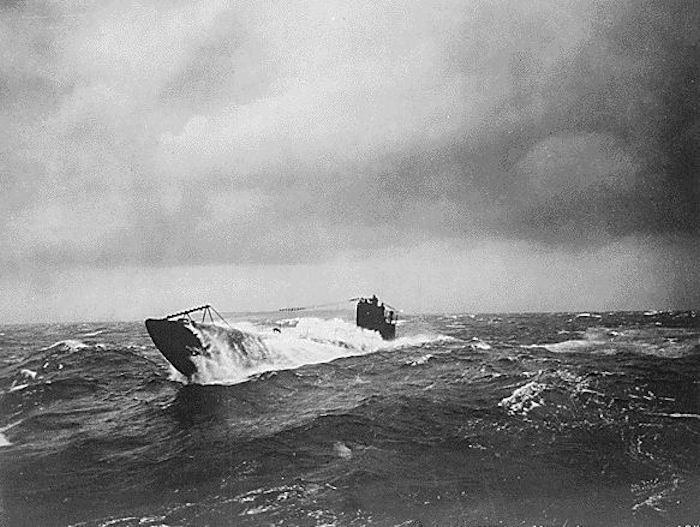
German U-boat, the original stealth weapon 

There are lists from K-cups to A-bombs online and many others.  For example, Henry Ford seemed to dislike the vast social changes and consumerist mindset made possible by his manufacturing revolution that helped automobiles become a fixture of American life.  Even this media, the internet, once thought to be the beginnings of an information age, has become a cesspool of pornography and ill-founded claims.

I worry about this as a blogger.  Once my thoughts are out there they cannot be contained again.  Will someone pick up my words and run with them in a direction I never intended?  It is a potential outcome that could scare a sensitive soul into silence and is at least a reason for me to be prayerful in what I post here.

I believe there are many people who do not thoroughly think through the potential unintended consequences of the ideas they promote.  There are many government programs and social movements intended for good that might actually be creating more problems than the one that they were intended to solve.

Which takes me to a second point…

#2) Yesterday’s revolution is today’s loathed source of inequality and evil.

It is ironic that the invention that did actually outcompete coal for market supremacy is now enemy #1 for many.  The internal combustion engine won in the marketplace because it was by far the cheapest most efficient means to power transportation and still remains. 

Given there are no steam powered cars, tractors, trains and ships anymore, it is clear that internal combustion is the best bang for the buck and remains to be rivaled.  Diesel powered locomotives and ocean going container ships are extremely powerful while being very economical.    

109,000-horsepower Wärtsilä-Sulzer RTA96-C

Diesel power still outperforms hybrid technology—A loaded Diesel powered class 8 truck is more efficient pound for pound than a Prius.

Think about it: It takes one gallon of fuel to move an 80,000lb truck five to seven miles.  A 2016 Prius, by comparison, carries a weight of around 4000lbs can go anywhere from 50 to 58 miles on a gallon of fuel.  It may seem the Toyota is greener until you consider that it is moving twenty times less weight.  Twenty Prius cars combined together, after dividing their individual consumption by twenty, would consume 2.5 to 2.9 gallons of fuel.  Now, obviously, combining Diesel and hybrid technology on the scale of class 8 truck would undoubtedly yield even greater results if fuel economy were the only concern, but the point remains that Diesel power is extremely efficient and effective—and only more so the larger the application.

So what’s the problem?

Well, the current popular perception is that the petroleum industry “big oil” is the enemy and conspires to hold back technology that would dramatically increase efficiency.  Worse than that, we are told that petroleum power is a source of global climate change and a threat to the global ecology.  Poor Diesel would be driven even further into despair if half this is true.  We fight over oil.

 #3) Progressive aims of our time are at odds with each other or self-contradictory.

Globalism, higher standard of living for more people and environmentalist ‘green’ movements are at odds with each other.  Pushing one direction will almost invariably come at the cost of the others. 

Progressive politicians may tout an idea of a ‘green economy’ as a jobs creator, but the reality has been that wind and solar energy can only remain competitive through heavy use of government subsidies.  Beyond that, even with the help, domestic ‘green’ manufacturing is unsustainable against foreign competition.  At best we will merely replace jobs lost by the heavy regulations placed on fossil fuels and raise costs of living across the board.

Furthermore, it was the progressive policies of the past century that have created the current conditions.  Government policies like the Rural Electrification Act, the Interstate highway system and trade agreements have actually moved us away from a more sustainable less polluting lifestyle.  Our cheap and easy movement from place to place has harmed community and local markets.

Rural Electrification Act propaganda poster.

It is hard to know how the current landscape would look had the progressives of yesterday had not literally paved the way for suburban sprawl, the trucking industry (that currently employs me) and driven us to embrace a coal powered grid.  But I do suspect more of our food would be locally grown, more of our products locally produced and solar energy far more the norm in places utilities would be to costly to maintain unless mandated by law.

In final analysis things might not be as dismal as they seem.

It is easy to focus on the negative without considering the good.  The means of today are likely as unsustainable as the means of yesterday and therefore the progress of the past century might not be the end of us after all.  The only consistent reality in the past two centuries has been that markets constantly change.

Canal boats an all the infrastructure to support them were soon replaced by steam power and railroads.  In Pennsylvania the lumber industry rose in prominence before a rapid decline after the states wooded mountains were reduced to stubble.  The coal industry once put food on the table for boat loads of immigrants before cheap efficient oil and a multitude other factors conspired against it.

Bay State Mills, Lawrence, built 1845.

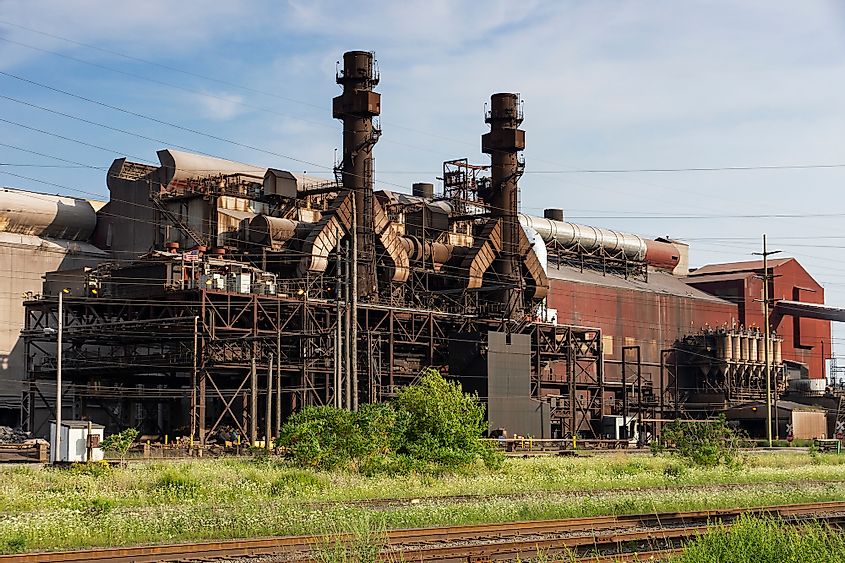
Manufacturing, from the once mighty water powered textile mills of the New England states to the formerly unstoppable domestic steel industry, has also migrated following cheaper labor and energy.  Each time promoting deep consternation and fear.  But so far the Luddites have yet to have the last laugh and a new balance is eventually found that usually benefits everyone.

Certainly the overconfidence and optimism about today’s new solution may become the big disappointment of tomorrow.  Yet, do we really wish to go back to a time when a transatlantic voyage was only something a religious zealot or crazy Viking explorer would do?  Would we really rather spend most of our time scrounging for just enough to eat as to avoid the possibility of mechanized warfare?

Nobody knows for certain why Diesel died... 

However, what is certain is that his invention changed the world and provided a means for interstate commerce and global trade that never existed before.  The pacifying effect of global trade, economic benefits of an expanded market place and inexpensive power are largely unappreciated.  But we probably do have Diesel to thank for helping create the long peace and prosperity of our time.

Maersk, Triple-E design, Diesel powered, container ship

In an age of information overload, where we know about beheadings in the Middle East before the people the next town over would have heard a century ago, it is difficult for our finite minds to contextualize and easy to become overwhelmed.  This, with an accompanying loss of faith, could be why middle-aged American white males are committing suicide (supposedly the most privileged in the world) and at an alarmingly increasing rate. 

Diesel’s pessimism about the future in retrospect seems to have been premature and his nightmarish perception of reality overstated.  In like manner many of our modern fears and despair inducing thoughts about the future could be negativity bias and nothing more.  Every generation seems to believe that the world is falling apart and still here we are.

Whatever the case, ignore the fear-mongering propaganda of the punditry and politicians.  Embrace temperance, a spiritual quality developed through faith, over mindless reaction and fearful impulse.  Trust God to secure the future, we can only live one day at a time and never ever lose hope!  If you are depressed about events in the world today, I invite you to see the higher perspective:

“Therefore we do not lose heart. Though outwardly we are wasting away, yet inwardly we are being renewed day by day. For our light and momentary troubles are achieving for us an eternal glory that far outweighs them all. So we fix our eyes not on what is seen, but on what is unseen, since what is seen is temporary, but what is unseen is eternal.” (2 Corinthians 4:16-18)

Perhaps the greater of two evils will be elected come November and drive the nation to complete ruin.  

Who knows besides God?

We may all die tomorrow, we will all die eventually, our work blown away in the wind of time and forgotten.  Everything comes to pass, nothing will remain as we know it today, but there is hope beyond all hope found in an eternal perspective.  So look up, because the sun is still shining and the future remains bright!

Do you see the light and feel the warmth of hope eternal?

If not, my prayer is for the blind to see…

The Mind of the Designer

Standard

I spent my childhood in my own world of daydreams.  While some children have imaginary friends when I was a child I created whole planets far away and untouched by war, want and all the things I knew weren’t right in this world.  This perfect place was my refuge from the mundanity of school work and I would doodle pieces of this world inside my head creating stories and imagining rescue.  There were times in elementary school where I was actually disappointed when these grand designs didn’t come to life so that I could be swept away in front of my stunned classmates.

My dreamy ideals eventually began to fade into an interest in more practical designs.  I had spatial intelligence, in that I could easily imagine things in three-dimensional form and convert the thought with pencil to paper.  As I got older I became interested in computer-aided design, I learned quickly how to convert the ideas in my brain to keystrokes and with my fingers I would build things on the screen.  It was very satisfying to hold a finished work printed on paper to show friends or family.  I had assumed at that point that my future would be engineering, design was natural to me, but life and God had other plans.

For various reasons my vision to be a mechanical engineer never was realized and with that came a sense of something missing and potential unrealized in my life.  It troubled me not being who I was ‘supposed’ to be, it was a little humiliating too to watch friends and classmates sprint past me to their own goals.  And, it was this need to fill a thirst to build, design or create that eventually pricked my interest in writing as an outlet.  A writer is an engineer with words; an author is defined as an originator or the one who gave existence to something and I wanted to use words to create snap shots of the ideas flying around my head.

Since then I have had mixed success sculpting words into interpretable sequences.  Writing to be understandable to another mind is sort of like trying to write code for a smart phone except you don’t know if you are dealing with an iPhone, Android, Blackberry, Windows phone or even if it is a smart phone at all.  Writing depends on both the author and interpreter to ‘be on the same’ page.  If the writer misses a line of code in trying to explain or if the writer and reader interpret the code of symbols we call language differently then the picture in the mind of the receiver created in words will be distorted and sometimes lost on them completely.

Needless to say, the challenge of communication of ideas with words is both frustrating at times and fulfilling for me.  When I sense a connection with another person through my written creations it is a wonderful feeling of accomplishment and especially when it encourages or inspires them to create new things in their own life.  In writing my ideas can live inside of other people, when I write the designs of my own mind are transferred to one or multiple others, thus a piece of me now lives in them and now has potential to grow to something more than I myself could ever have imagined.  Writing makes both the world of the reader and the writer bigger; the reader taking a part of the writer with them and the writer living in the mind of the reader.

To me that ability to build ideas makes the frustration of potential failures to communicate and the time spent drawing my thoughts out in paragraphs well-worth the effort.  I love to turn abstractions in my mind into appreciable designs, using words like my paint and dictionaries like a palette full of shades of color.  Writing is an art form, words give an author the power to create universes never seen before and the ability to live in the minds of those who are able to translate their work.  I write because I still like to create.  I write because I enjoy engineering solutions to problems and using words as a means to draw the designs put in my head.

Ideas change your reality so think of good designs and then build them with the means you have been given to express them.  Engineering is a field with endless possibilities, so build the good designs in your own mind and create the world you know should be.  So, bring heaven to earth one pen stroke, one act of kindness, one carried burden, one painted picture and one small step at a time.  Together, brick by brick we can build the world God intends.  If you pray “on earth as it is in heaven” with sincerity, then believe in it and make that design live through you; bring glory to God with the creative designer’s mind you have been given.

My writing is ultimately an act of worship to the Master Designer and Author of the universe; it is a means to love my fellow creation, to fellowship with them and to mirror my own Creator to them.  I write to love Master by loving the creation by expressing designs with the work of my mind, words and hands.  I create a new world with the ideas of my own mind, I am a child of my Father.  I, like God, am an engineer at heart.