The Snakes At The Edge Of The Map

Standard

Parents create barriers for their children to keep them from harm. A toddler sees this wonderful world without consequences—whereas a parent understands danger lurks. The little hands reach almost involuntarily, without a concept of poison or pain, speaking desire “let me grab, let me hold, let me taste.”

Some parents will go as far as to invent the Boogyman as a reason why not venture too far given a child’s lack of ability to grasp the more complex monsters of the chaos that exists in all directions going beyond the extremely controlled environment of their home and community—protecting their innocence.

For two days in a row I had a dream featuring enormous snakes on a shoreline. Details have become murky, but in both of these episodes the real breathing monsters morphed into stylized symbols of the creature. Were these reel beasts subdued? Or, making this an allegory, has our modern life just so thoroughly shielded us from these elements that they no longer appear as real?

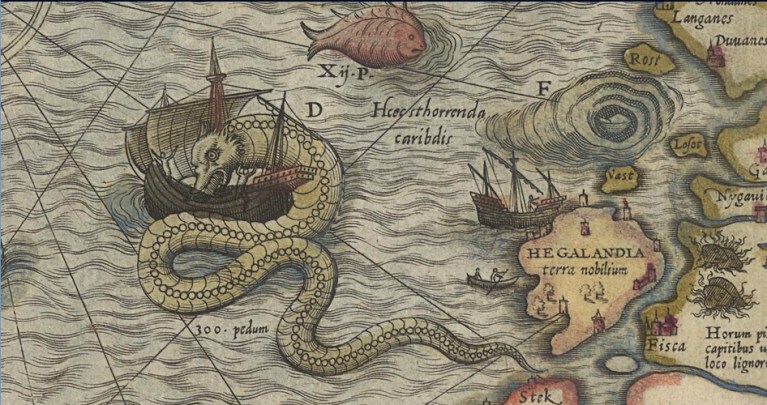
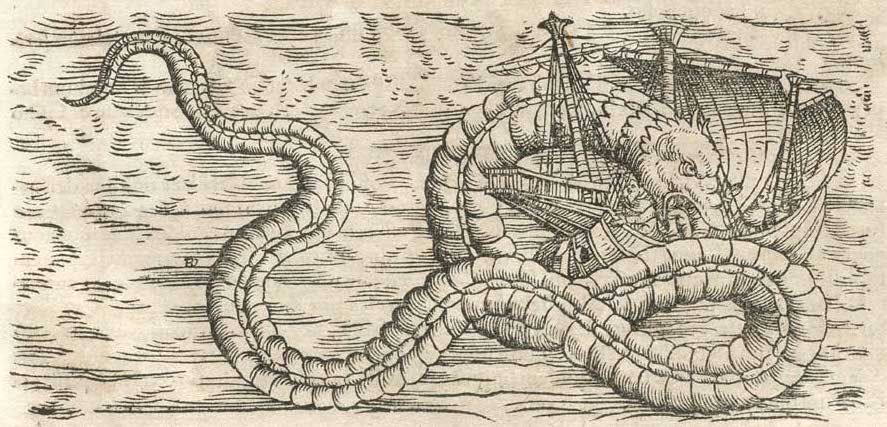
It makes me think of those medieval maps with sea monsters on the edges. These did not simply represent mythological peril. There was serious danger in venturing too far from the familiar coastlines. Ships swallowed whole, entire crews disappeared without a trace, it could be storms, savages, and unspeakable things of the deep. The seafarer was given a warning in these symbols—this place is an uncharted water enter at risk of all.
I’ve deliberately, a few years ago, charted a course beyond those safe moorings of my religious cloister. It wasn’t out of a sense of adventure. Nor was it all pleasant. It was half tumbling into space without a tether; the other half sailing around the world and finally find love and meaning in a place that had been forbidden.

The Boogeyman vanquished, but now a real evil staring back from the darkness. It’s the snake in the garden—hidden amongst those fruit trees—as well as that which exist in the world beyond Eden. It is the sound of those children screaming while burned alive while the world watches in silence. The thousand horrors never called a Holocaust.

My taste of this ‘real’ came years ago with a sudden death. Saniyah passing left me no choice but to stare into the void. It was not that I had expected her to live forever. But it was just that theory doesn’t prepare us for a soul crushing tragedy. I managed to finally bury it back down, this existential dread, yet the snake always lurks on the edge, within, and throughout. Denial doesn’t make it go away even if it provides small comfort.

Childhood is ideally a time of protection to give a chance for growth. But there are the ones who live a charmed life who can still believe a logic of bad things only happen to bad people or simply have maintained a big enough separation from themselves to this awfulness to be temporarily safe. However, for most there will be a reckoning the being a moment that knocks off those rose tinted glasses and allows them to finally question the foundations of their world.

Faith is easy until you’re Job staring at the ruins of all you built, dreams shattered, and a pain of loss you can’t put into words. One blessing we have is our forgetfulness. If we can power through the mourning phase, the excruciation of limb torn from body, facing a pit of emptiness, then we can rebuild and move on. Unless you’re my grandpa (facing the end of his life without any of the people who brought him there—still more fortunate than those who never had children let alone great grandchildren), you’re life is still ahead of you if you keep your hope.

A mind is resilient, the soul remembers. I have clawed back from total devastation, reinvented myself, and yet come through all of it profoundly changed.

The question is what navigational charts do I give my children?  We are on different seas now and those hazards I have survived are not relevant to them.  They will face storms, things I can’t begin to imagine let alone prepare them to battle.  Even things blogged here a decade ago do not apply to the current generation. 
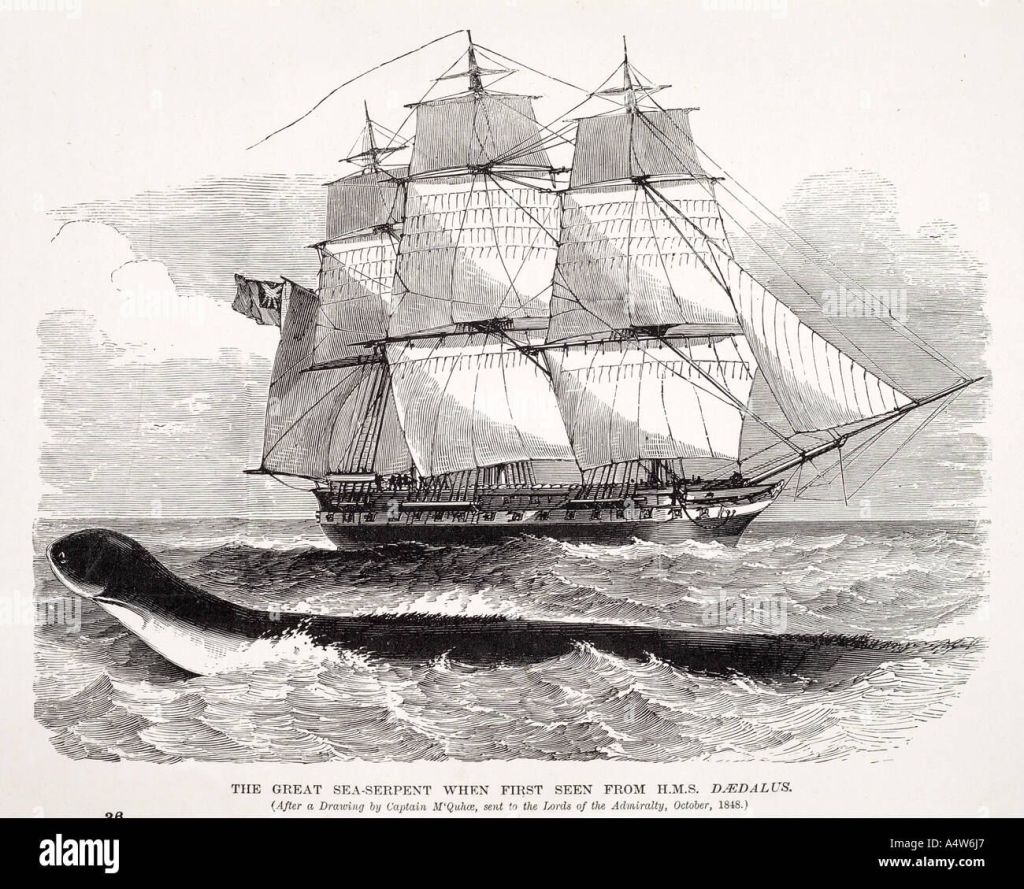
As I sit in this liminal space of life.  My course set.  I realize there is not one safe space on the map ahead, the serpents below the waves have not gone away from my mind—there’s evil that lurks among us, the uncertainty about tomorrow, and the reality of the dying of the light. We must go, wise, courageous to fight those monsters of the darkness all around.

Too Cruel To Be Coincidence

Standard

There is this sort of silly thought I have had, which has some legs, about the true nature of the universe and how unlikely it seemed that our friend’s daughter would fall victim to the currents of the Susquehanna river.  I realize this is more just a hiccup of my own mind than an actual reality, but what are the chances?  What are the actual probabilities we would know another Filipino-American couple with so many similarities and has a tragedy like this happen?

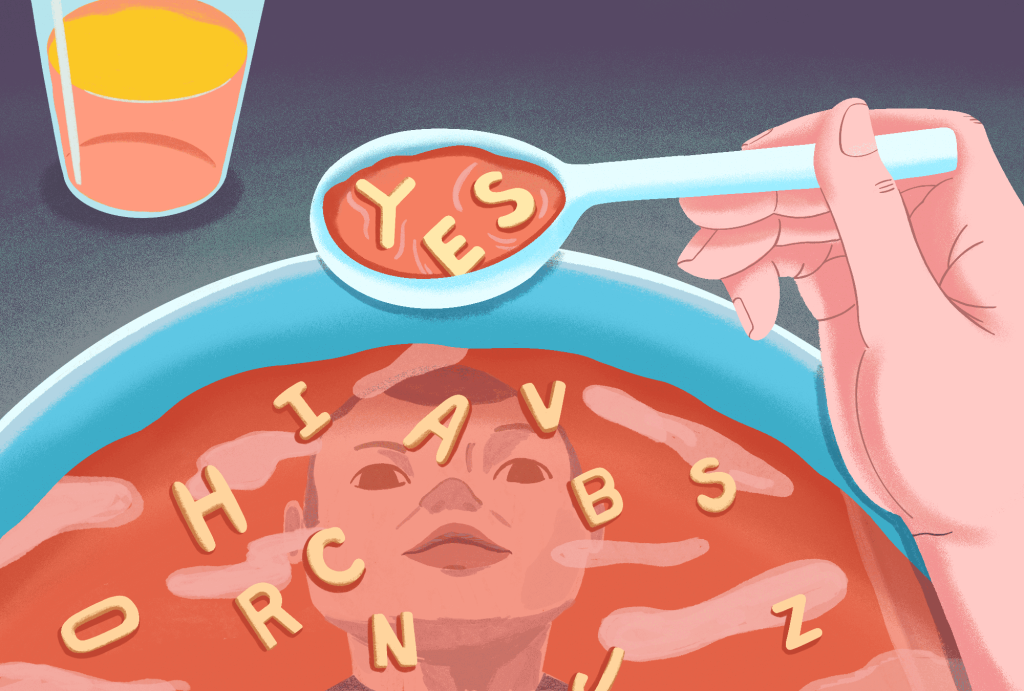
I ran my hunch through Grok.  What are the chances that another couple, one of them a German-American with neck or back issues (like me) the other a recent immigrant from the Philippines who came with a child and has also (like my wife) recently given birth to a second child, losing their ten-year-old daughter in a drowning incident just a week prior to Mother’s Day?  And how likely is it that I would have experienced the loss of a close friend’s child twice?  The probabilities are so infinitesimal that the very existence of life is more likely than this:

The probabilities of the specific scenarios you described—knowing an ethnic German man in Pennsylvania with a Filipino wife and children matching your family’s profile (0.00462%), his 10-year-old daughter drowning in the Susquehanna River on a specific weekend (1 in 2.82 trillion), and being friends with two women who lost children tragically (0.566%)—are all significantly lower than the probability of life existing in the universe, which is nearly certain (1) due to the vast number of planets (10²²). Even in an extreme pessimistic scenario where life is exceedingly rare (0.36%), only the third scenario approaches or slightly exceeds it, while the others remain far less likely. The universe’s immense scale makes life’s existence highly probable, whereas the hyper-specific nature of your scenarios, especially the drowning event, drives their probabilities to near-zero.

All this is just an extended version of that age-old question: “Why me?”  

This weird feeling of this being a tragedy too perfectly scripted to be real is simply the hallucination of a mind searching for meaning where there is none.  

It is no different from when I—in delusion of religion and looking for answers—had assigned meaning to the ‘impossibility’ (a romantic interest) randomly picking up a paper, leftover from Sunday school class in the same location, and then reading from it “with God all things are possible” right as she walked past me—renewing my hope to continue my foolish pursuit of faith and love.  Belief in a divine plan only led to more disappointment.  It is what it is—as she told me as an answer.  A coincidence is no more meaningful than we have made it.  

apophenia

Truly, we could throw our lasso around any circumstance, any set of facts, and find it to be highly improbable.  But, after the fact, if it has happened, the probability is always 100%.  Basically everything is unlikely right before it has happened and this why those Lee Strobel type of apologetic ‘cases’ aren’t very compelling for a critical thinker.  They are too based on assumptions and deciding what matters based on our own window of understanding—never considering the other possibilities.  

It is actually very likely that I know another Filipino-American couple, involving a single mother and a lonely guy similar to me, given that we deliberately connected to the local Pinoy community for sake of my wife.  And it was our similarities that always gave us something to talk about.  He was employed in an engineering related field, same as me, and going through the visa process.  As far as the tragedy, around 4000 unintentionally drown in the US per year (900 children) and spring weather (near Mother’s Day) is just likely to bring people to the river.

My foreign-born friends, in retrospect, were more vulnerable.  Those who grew up in the Susquehanna valley have a bit more fear of the river.  The waters may appear to placid, but we also know about those floods which have ripped through communities and how it respects nobody.  You’ll try to pet a bison up until you see the first person gored.  We simply don’t know risk until we have seen it for ourselves.  But then I also know that the mother, in this case, was always extremely cautious and only looked away for seconds before hearing the commotion.

What is so hard to accept is that reality that this world is full of danger.  Both conspiracy theorists and left-wing control freaks refuse to deal straight up with a world where death can occur without some dark plot and that this won’t be solved with politics.  I’ve never been under that delusion.  However, I have had this good things happen to good people expectation going in to life.  My Pollyannish hopes have been rebuffed too harshly and consistently to continue holding to them.  In truth, the natural world does not care about your morality—if you follow all the rules or are evil incarnate—the universe is utterly indifferent.  It just is what it is.

There is no evidence of a grand design, as I had been indoctrinated to believe, and fully embraced—before falling flat.

It is pareidolia, a mirage or projection of our own desire to find explanation or reason for everything.  People want this singular thing to blame for all bad things and yet there is not in the case of this drowning.  The mom was not negligent, the water is neutral and neither good nor evil.  Trying to find design is only me choking on a reality we all should face: We all leave this world the same as we entered it—dust to dust.  Some depart on a different schedule than expected.  But many children have died before their parents and long before history recorded it.

To have no cosmic force orchestrating our suffering is a big comfort.  It eliminates the cognitive dissonance of the loving God that then subjects Creation to torment.  Pain is a survival mechanism.  It helps to correct our behavior and train us, but also misfires (ask those with chronic pain) and hurts us for no good reason.  There is no need for a perfect system, one where only those who deserve punishment are punished, merely one that functions well enough.  There is no intent to be cruel, no special message to glean from the loss of a precious daughter a weekend before Mother’s Day—she slipped on a rock and that’s all there is to it.

We desire a director behind all events good or bad to make it easier to understand.

If fantasy helps you cope with grief then by all means embrace it.  We could theorize it was part of a hidden divine plan to gain the salvation of her parents, a punishment for lack obedience to Allah, and that she is playing up in heaven with those millions of aborted fetuses Evangeli-cons care about (or the children of Gaza they don’t) and if the thought comforts then pull it up over your head like a warm blanket.  Nature can be cruel, cruel in a way that seems very much too improbable to be unplanned, but good people suffer just as the wicked do, and the universe offers no explanation or apology for it.