
Vaccine Safety and Skepticism: A Father’s Perspective

Standard

Up until a few years ago, I basically trusted the medical establishment. Sure, even then I would question—like I do with everything else—and then make my own analysis the risks, costs and benefits. My mom’s rule of thumb “everything in moderation” seems to be reasonable in most circumstances. But I’ve grown more skeptical and not because I believe there is a conspiracy to make us all unhealthy either. I just think hubris can be blinding and institutions compromised.

So when it came time to decide whether or not to vaccinate my newborn daughter, my feelings were mixed. She is too precious to gamble. It is my job to protect her. And for that reason I needed to take another look at the question of childhood vaccines. This is my analysis as someone who is not trained in biology, I’m not a medical professional or an expert in any way, shape or form. This is merely the thought process of a concerned father wanting to do what is right and didn’t like the answers he was getting from those ‘credible’ sources.

So join me in a critical look at the topic of childhood vaccines and some things that raised my eyebrows as far as the science, some ethical questions raised recently and the online testimonials versus professional advice. It would take a book to properly cover a topic of this magnitude, but this is an overview and give some reasons for the decision I’ve made. This is a reach into the barrel to examine a few apples and get a little better picture of what else we may find upon further review.

Science: Ingestion… Injection… What Difference Does It Make?

One of my “does their own research” friends reposted a chart posted by Physicians for Informed Consent (PIC) showing the safe amounts of aluminum versus the amount injected with the hepB vaccine—according to their post, 250mcg is an amount 75x more than what is considered safe to be in the bloodstream of a 7.3lb infant. That sounds bad. But this information does beg a few questions.

First, why is aluminum toxic over a certain amount?

Second, does an injection go into the bloodstream?

And, third, why is this in the shot?

What was disconcerting is when I went CDC and WebMD sites and found that they were making an inaccurate comparison. In their defense of aluminum in vaccines they made a case based on the safe amounts to ingest and yet vaccines are injected. This is that kind of presentation that would leads fact-checkers to declare it misleading if it was in a Trump speech. Maybe my neighbor with the “believe science” placard in their yard isn’t going to notice this sleight of hand, but I certainly did. It certainly didn’t assure me much about their actual authority when they tried to pass to different means of entering the body as one and the same.
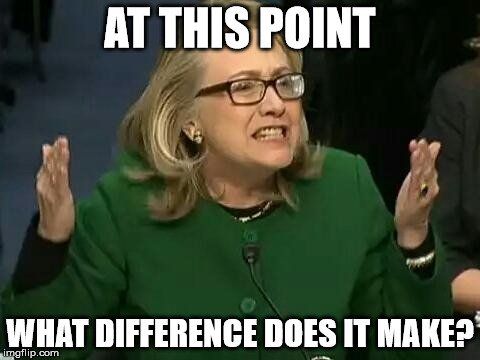
Oh, but it does…

However, the PIC information is equally as misleading. And they know it. The post is talking about safe amounts of aluminum in the bloodstream. And yet vaccines are not injected directly into blood vessels. No, the shot goes into soft tissue and the aluminum is slowly dissolved from there. So clearly it is not aiding a mission of informed consent anymore than the drug company sponsored content. It’s just propaganda. It is put out to feed the confirmation bias of anti-vaxxers and muddies the waters. The freaked out #protectyourkids mothers are not going to ask further questions.

The bigger question is what aluminum does in large amounts. Words like “toxic” can be tossed around in the same manner of Nazi or racist. But slapping a label of something does not make it accurate description nor is it equal to comprehension of the topic. The same authority establishing a “safe” versus “unsafe” levels of aluminum also tells us to get vaccinated. The whole point of adding aluminum is as an adjuvant, it is supposed to provoke an immune response and only is bad when it begins to build up—typically it is just expelled from the body without doing any damage.

Practically speaking one would need to be an expert on toxicology to truly know what ‘the science’ is and give informed consent, the rest of us are merely picking which side we want to trust. For me, I lean towards the consensus over the outliers, what it means is generally not ranking a relatively group—like PIC—over the larger group of physicians (who have children themselves) and believe that the benefits of vaccines outweigh the risks. Yes, professionals have blindspots, they are more married to the system too as bigger beneficiaries, but they’re also smart people trying to help and heal.

Ethics: Myth of the Abstaining Amish and Abortion Cells

One of those claims that come up over and over again online is that Amish are healthier because they don’t get the vaccines. Given what I know, working with Amish, I’ll put this somewhere between “96% of statistics are made up on the spot” and “Amish don’t pay taxes,” because it is just plain untrue. Back in 2011 my sister, a medical doctor, worked on a survey of 1000 Amish people and their attitudes towards vaccines. 85% of those surveyed had vaccinated at least some of their children. Sure, Amish lag behind the general population, and uptake varies as they’re not a monolith, and attitudes have likely shifted in the post-Covid era, but they aren’t totally abstinent—just hesitant.

To get into the complexity of the picture, in my brief survey of my office co-workers (I work for an Amish-owned company) there was an interesting anecdote. Apparently, his mother contracted measles while she was carrying one of his older sisters. The result were complications and his sister’s lifelong health issues. Needless to say, his mom became more in favor of vaccines after this and that has been the story for some time. The discomfort of subjecting our children to shots looms larger until we get a first-hand experience with the actual disease. A day or two of soreness and high temperatures is better than measles, polio, or other preventable diseases. The ethics shift towards the risk of intervention.

Speaking of ethics, another coworker—not Amish—piped up about how vaccines use aborted fetuses. This is technically true in the case of some vaccines, I’ll let Grok give a brief explanation:

Certain vaccines—like those for rubella, chickenpox, and some hepatitis strains—rely on cell lines originally derived from fetal tissue decades ago. These aren’t “aborted embryos” in the sense of fresh tissue being scooped up and tossed into a vat. Instead, we’re talking about two specific cell lines: WI-38 and MRC-5. WI-38 came from a fetus aborted in the 1960s in Sweden (elective, legal termination), and MRC-5 from a similar case in the UK. Scientists took lung cells from those fetuses, grew them in labs, and kept them replicating ever since. These cell lines are immortalized—meaning they’ve been dividing for generations, far removed from the original source.

Why use them? Viruses for vaccines (like rubella or varicella) often need human cells to grow, and these lines are stable, well-studied, and safe for producing big batches. The cells aren’t in the vaccine itself—they’re like a factory. The virus is grown in them, then harvested, purified, and processed so the final shot has no fetal cells, just the viral bits needed to trigger immunity. Think of it like using yeast to make beer—the yeast doesn’t end up in your bottle.

This longer explanation does not have the same punch as “they use aborted fetuses to make vaccines.” But, for me, it answers the ethical question. This use of these two cell lines to save lives is basically equivalent to planting of a flower garden over the grave of a murder victim. I’m no more guilty of that than I am for the land under my feet being soaked in the blood of conquered people. It is just what is. What was done is done and refusing to use vaccines derived from those cell lines is not going to restore the life that was taken. I have more of a problem with the characterization of this being too vague to give proper understanding.
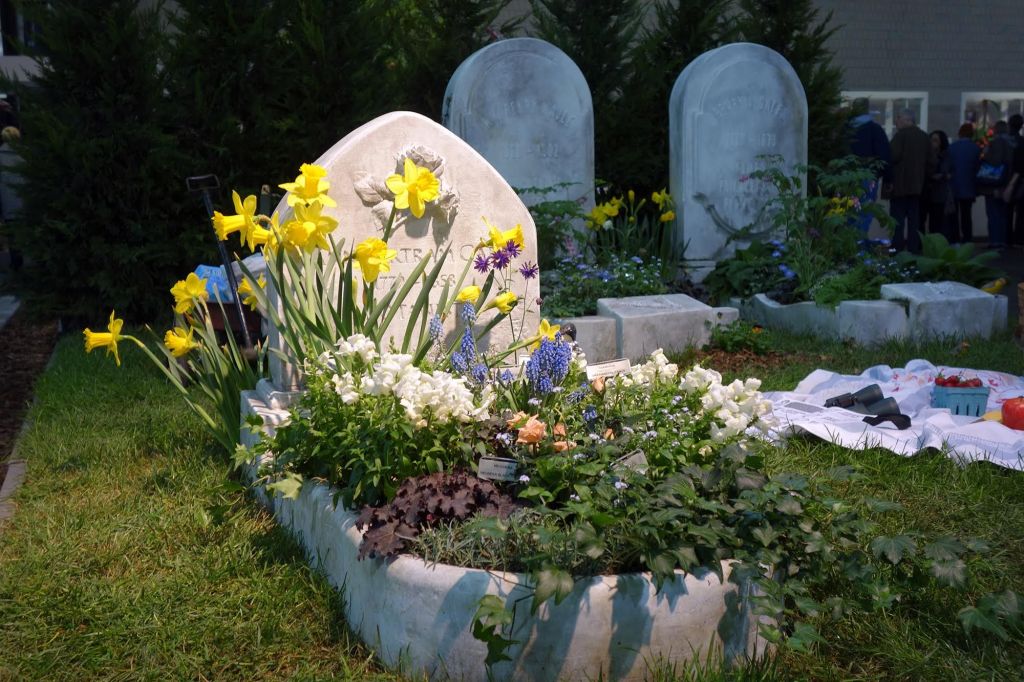
The soil under our feet is soaked in blood, but not an ethical dilemma to put to good use.

In the end, both sides of this debate peddle their myths, misinformation and deception, calling those mRNA Covid jabs “safe and effective” one of those establishment lines that fell flat in the test of time. But, for me the ethics of putting my children at risk of preventable disease outweighs misgivings about something done over 50 years ago. We can’t bring back those killed, but we can make their lives worthwhile and honor the legacy they’ve created for us. My opinion would be vastly different if they were still harvesting fetal tissue to grow viruses.

It is more important that we are honest than we win a debate. There’s no excuse for the repeated and easily debunked claims about Amish or aborted cells to be shared. Those in the “do their own research” crowd need to do better. When I see people share videos made by a chiropractor, in a lab coat, going only by doctor, it makes me question their judgement more than anything else. Being an expert in doing bone adjustments is one thing, biology is completely another. People aren’t very good about picking their sources, let alone producing coherent ethics.

Tragedy Testimonials Versus Professional Recommendations

Another thing I’ve come across, on social media, is that case of a child that died very shortly after the vaccine was administered. The grieving parents, one of them a nurse, disagree with the autopsy report, that cited SIDS, and put blame on the shots. First off, the pain of losing a child is beyond anything else I’ve ever experienced (you can read my personal account, “The Day My Little Hope Died“) and always will leave many questions for those left behind. Second, in this case, it may feel better to externalize blame.

I’ll admit, I was a little put off by my medical provider (a Physician’s Assistant) who just brushed off my concerns about too much—too soon. This is my little darling, and it is my job to protect her, so at least entertain my anxieties a little. So that part where of her worry about her son’s sickness prior to getting a dose of vaccines being dismissed does resonate. That doctor should have shown a little more respect for a mother’s intuition and a nurse’s instincts. That said, we’re only getting one side of the story and from the perspective of someone not really in a good state of mind.

Just taking the testimonial at face value—not verifying any of the claims—they give a clue about what really happened with their own choice of words:

Melissa, who worked remotely, heard the baby fussing around 6:15 p.m. Her husband went in to check on him. He readjusted him, and rubbed his back as Fathers do. Baby Sawyer fell back to sleep.

When we were in the hospital for the birth of our daughter, before we took her home, they pounded it into our heads not to put loose items in her crib with her and never to allow her to sleep belly down. This is about SIDS (Sudden Infant Death Syndrome) when a perfectly healthy baby is put to bed, often laying on their belly, suffers from positional asphyxia and dies. Infants are completely helpless, they can’t readjust their position if their airway is somehow restricted and they could be gone in a matter of minutes.

So that particular paragraph really jumped out at me. I’m very sensitive to how people structure their thoughts, the phrases, and I have even identified a false accuser once only on the basis of the use of words that were conveyed through another person in a paraphrase. When I saw “as Fathers do” it came off as a slightly defensive posture—most especially next to “rubbed his back” in the context of a sleeping infant. One hand they’re being as honest as they are able to be in the circumstances. On the other hand they’ve just given corroborating evidence for the official autopsy report.

They can be forgiven for their blame game. It is hard enough to lose a child, but totally unthinkable to believe something you did may have contributed. When Sanyiah died I stopped speaking to two of my siblings (not that they noticed as busy as they were) for a year or two. Why? Well, they both were not at the funeral, in my mind they did not care enough about the little people in their lives (that meaning my ex-fiance who had personal ties to them) and were, in a round about way, part of the problem that caused the child’s death.

The real reason my anger was taken out on them, however, was that psychological need we have to find a scapegoat. And Melissa, rather than pile on her husband, which won’t help, has pointed somewhere else instead—which is better than their negative feelings being turned in on the marriage. It is a way of coping with tragedy. As far as testimonials go, three of my cousins had a seizure disorder, one of them died and two of them are severely disabled. After their issues with the first child, they decided not to vaccinate. But this made no difference in the end. The impulse to blame intervention is strong, yet correlation isn’t causation and often the truth is messier than those simple narratives we prefer.

In the case of baby Sawyer, it doesn’t have to be one thing or another. The risk factors for SIDS include both second hand smoke and overheating. It seems quite possible a bunch of vaccines, on top of being already sick, and then possibly being on their belly, all contributed to the end result. Medical professionals face big liabilities if they are at fault. There is a tendency to circle the wagons or become tight lipped rather than speculate when million dollar lawsuits can be the result. So maybe in a perfect world vaccines would be a bigger part of the SIDS discussion?

Still, aluminum in the bloodstream does not cause suffocation and 34 hours later is not description of a biological mechanism that links the injection to the outcome.

A Respectful Conclusion, My Final Risk Analysis…

No parent ever wants to be responsible for the suffering or death of their child. When I see my daughter’s eyes looking up at me it melts my heart. She already has me totally wrapped around her finger and I would not do anything that put her at an unnecessary risk. There is a temptation to take the “If it isn’t broke don’t fix it” approach to vaccines or basically do nothing. At least this way an intervention you signed off on didn’t directly cause the harm. Without the nudge of the doctor’s office I might fall off the schedule they have simply because it feels better.

But the body of evidence points to benefits that outweigh the risks. That is to say there are risks, vaccine injury is real, but there are risks to everything we do or don’t do. Would anyone have stepped on board the Titanic if they knew the icy ordeal that awaited them in the middle of the night? In 2022, motor vehicle accidents took the lives of 42,514 people. And yet we don’t see emotional testimonials online about the “mistake” it was to drive to Kansas or trying to caution us against this dangerous activity. This is because we have normalized the risk and tune it out—that and we think that only the bad drivers die when any of us could.

What could be improved is a little respect all around.

First off, this advice applies to the medical establishment. From Fauci on down there has been this attitude of near contempt for those who question their authority. A prime example is the statement of Dr Fauci when faced with scrutiny:

So it’s easy to criticize, but they’re really criticizing science because I represent science. That’s dangerous. To me, that’s more dangerous than the slings and the arrows that get thrown at me. I’m not going to be around here forever, but science is going to be here forever. And if you damage science, you are doing something very detrimental to society long after I leave. And that’s what I worry about.

Beyond hybris. Beyond martyr complex and a misdiagnosis of the situation. No, Fauci, you cannot say “I am the law” like a rouge police officer. That’s not science, that is just a delusion. Sure, it sucks to be questioned in your own area of expertise. I think this is why some physicians do sometimes gloss over concerns of patients. But this is what damages the credibility of the institutions of science more than anything else. When the top doctor confuses “the science” with his own position he’s dangerous.

Okay, you smug, and dangerous, SOB.

Second, those of us self-educated people, who have not gone through that rigorous process of medical school or taken any kind of advanced biology course should remain humble. No, my lack of proper terminology does not make me an idiot. Nor should a nurse and mother’s concerns about her sick baby getting shots be dismissed. But “did your own research,” while in the lobby of the chiropractor, does not make you an expert or unbiased.

In the end, no parent wants to gamble with their child’s life. Staring into my daughter’s trusting eyes, I feel the weight of that responsibility—and the pull to do nothing, to avoid any chance of harm through action. Yet, after sifting through the science, wrestling with ethical dilemmas, and listening to both heartbreaking stories and professional guidance, I’ve landed on this: the evidence tilts toward vaccines’ benefits outweighing their risks. It’s not a perfect system—vaccine injuries happen, and the medical establishment could stand to listen better—but the data holds up against the diseases they prevent. We all deserve more humility and respect in this conversation, from doctors to doubters like me. For my little girl, I’m choosing the path that keeps her safest, not just from needles, but from what they guard against.

Hit me up in the comments section below with your most powerful arguments for or against childhood vaccines.

Do you vaccinate your children, why or why not?

Bring Back Providence

Standard

If there’s one pet peeve of mine, greater than all of the many others, it is the misuse of language that destroys meaning.  Sure, words evolve, their usage changing from one generation to the next, but it is religious terms that get watered down that are most offensive to me.  The word “miracle” is the chief amongst them.

A miracle, at least according to proper use, is supposed to be something that is completely inexplicable and deviates against natural law or is supernatural.  No, you getting all green lights on the way to your nephew’s piano recital is not a miracle!  That is easily explained as simply good timing and does not require any angels holding back traffic or special Divine intervention to explain.

So, a few years back I made a wonderful friend, a beautiful Algerian woman named Hajar.  Other than being full of life and laughter, even telling my car that she missed it on our second meeting, she was a devout Muslim.  She prayed five times a day, ate Halal food, and frequently used the Arabic term “inshallah” as part of discussing future plans.  The meaning?  If God wills.

Now, before I get jumped by someone.  No, the word “Allah” itself is not bad.  It is, in fact, used by Orthodox Christians in the Levant (or from there) and the word existed long before Islam and is no more a pagan in origin than “God” is.  So, yeah, unless you’re also in the mood to throw out “hell” for the pagan roots of that word and concept, you can forget what that ignorant fundamentalist preacher told you. 

Anyhow, back on words and pet peeves, it really should be part of our vocabulary to say “if God wills” rather than simply declare.  I know, we’re bold Westerners, things usually do go our way, we’re lazy efficient, and do not think we need to acknowledge our lack of control on a regular basis.  But this is, indeed, a wholly appropriate and strongly recommended Christian practice:

Now listen, you who say, “Today or tomorrow we will go to this or that city, spend a year there, carry on business and make money.” Why, you do not even know what will happen tomorrow. What is your life? You are a mist that appears for a little while and then vanishes. Instead, you ought to say, “If it is the Lord’s will, we will live and do this or that.”

(James 4:13‭-‬15 NIV)

The reason James mentions this, and that we should employ the advice liberally, is because we can so easily slip into a mode of self-sufficiency and arrogance.  This is also an attitude that Jesus spoke very strongly against, read the parable of the Rich Fool (Luke 12:16-21), and, therefore, frequent use of the phrase “Lord willing” is something worth considering for the faithful.

Even if someone doesn’t believe in God, or at least not the Biblical version, this ability to comprehend one’s own place in the universe can help to guard against deadly hubris.  We are simply not able to dictate outcomes, no matter how advanced our science has become, and are better to remain humble and understand our own place as those created from the dust of the cosmos.  We are at the mercy of forces far beyond our own control.

Going full circle, what is a word that could be used, better than using miracle, to describe good fortune or our getting things right?  I like Providence.  It both acknowledges God and also is not an overstatement.  It was a word once more frequently used and bringing it back into circulation is the perfect antidote to the dumbing down of culture.

Babel and the Upper Limits of Human Reasoning

Standard

Being raised in a fundamentalist sect meant taking the Genesis accounts as being a historical narrative.  I had been taught, and had for many years accepted without question, the idea that the veracity of the Gospel message hinged on the most ‘literal’ interpretation of the first book of the Biblical canon.

This understanding of this book had worked fine to get me through my school years.  I gave my high school biology teacher, Mr. Toohey, an atheist who had once considered the priesthood, a headache debating the textbook claims about mutations, millions of years, and Macro Evolution.  At this age, I thought this style of apologetics, debating science using the words of Scripture, was a key to securing the faithful against doubts and winning unbelievers.

Unfortunately, while this understanding may serve well those who do not venture too far from the Young-Earth Creationism intellectual ghetto, against what amounts to strawman versions of secularist arguments, it doesn’t hold up as nicely against a serious challenge and has left many religiously indoctrinated high and dry in their years in a university-level science program.  There is a reason why many in my former religious tradition are terrified of higher education. 

Even seminary was a synonym for cemetery to one of my childhood Bible-thumping pastors.  It should make one wonder.  If the foundation of faith is so flimsy that it can’t be tested, that it can only be sustained by ignorance, then what’s the point?

Sadly, it was a false choice, this dichotomy between science and religion, education and faith.

Getting the Cart Ahead of the Horse

The Biblical fundamentalists got everything exactly backward.  The truth of Christ does not depend on proving the Scripture, word for word, is completely 100% historically accurate and scientifically verifiable.  It is nice when those things do align, sure.  And yet, no matter how many mundane parts of the Biblical narrative are established this way, the fantastic claims are never proven.

If a politician lists off ten facts and nine of them turn up true according to the fact-checkers, does that make the final most grandiose claim true?

No, no it does not.

One of the most persuasive tricks of liars is to hide their one falsehood amongst a long list of facts and true statements.  And likewise, someone could prove 99.9% of Biblical claims and still not have touched anything of the miracles.  The Bible is true because it says it is true might work for idiots and the indoctrinated, but it is always circular reasoning and there being a town of Bethlehem doesn’t mean Jesus walked on water nor establish His divinity and conquering of death.

No rational person believes that a prophet flew from Jerusalem to Mecca, on a half woman half horse with a tail of a peacock, because they read it in a book.  I’m certainly not going to wear magical underwear because some dude, a few hundred years ago, claims he received golden tablets from the angel Gabriel.  So why would any reasonable person expect someone to believe a book written thousands of years ago?  Sorry, Ken Ham, I don’t care how many replica Arks you build, you’re not winning skeptical minds or hearts with this effort.

Human efforts fail. 

When Sarai reasoned with Abram to produce an heir through her maidservant, how did that go for them?

We know it didn’t go too well and have the commentary of St. Paul:

Tell me, you who want to be under the law, are you not aware of what the law says? For it is written that Abraham had two sons, one by the slave woman and the other by the free woman. His son by the slave woman was born according to the flesh, but his son by the free woman was born as the result of a divine promise.  These things are being taken figuratively: The women represent two covenants. One covenant is from Mount Sinai and bears children who are to be slaves: This is Hagar. Now Hagar stands for Mount Sinai in Arabia and corresponds to the present city of Jerusalem, because she is in slavery with her children. But the Jerusalem that is above is free, and she is our mother. For it is written: “Be glad, barren woman, you who never bore a child; shout for joy and cry aloud, you who were never in labor; because more are the children of the desolate woman than of her who has a husband.”  Now you, brothers and sisters, like Isaac, are children of promise. At that time the son born according to the flesh persecuted the son born by the power of the Spirit. It is the same now. But what does Scripture say? “Get rid of the slave woman and her son, for the slave woman’s son will never share in the inheritance with the free woman’s son.”  Therefore, brothers and sisters, we are not children of the slave woman, but of the free woman.

(Galatians 4:21‭-‬31 NIV)

Here we see the contrast of human efforts “according to the flesh” and those of a spiritual and Divine origin.  St. Paul emphasizes the “son” which is “born by the power of the Spirit” as an alternative to the “son” human reasoning that produced conflict and heartache.

It is amazing how many times St. Paul, and Jesus before him, encountered those who believed Scripture word for word and rejected Jesus as Lord.  They, in many ways, had a stricter interpretation of the text than many of us do and did not face the strong headwind of modern science and philosophy either.  And yet, even meeting Jesus in the flesh, seeing him with their own eyes, taking Scripture as literally as anyone, they saw Jesus as the imposter and rejected Him.  So, how then can we be saved?

Fortunately, that question is answered many times over and over again, by St. Paul, and has next to nothing to do with the book of Genesis.  The truth of Scripture is established on Christ, and His church, which established the canon of Scripture and does those “greater things” that Jesus promised would come through the power of the Spirit.  Yes, we preach and teach, but only God can bring the increase.  So, the apologetics industry starts us out on the wrong foot and doesn’t produce true faith in Christ. 

Our salvation does not depend on our own understanding of a book.  St. Paul, in Romans 9:16, states clearly, that our sonship depends on God’s mercy, not human desire or effort.  Scripture is the cart, not the horse.  We accept that the Bible is true because we believe in Christ, and His Church, not because we can establish it through our human reasoning or effort.  Faith is a work of the Spirit, a gift from God, not a product of our knowledge or works.  Those trying to ‘prove’ the Bible are on a fool’s errand. trying to save themselves, slaves to human reasoning, lost and confused.

What Does That Have to Do with Babel?

Hopefully, the Noah rode on a T-Rex crowd is too triggered with that intro, because now we shift to something they may find more agreeable and that being the even greater monument to human reasoning and effort. 

But, first, the tower of Babel narrative:

Now the whole world had one language and a common speech.  As people moved eastward, they found a plain in Shinar and settled there.  They said to each other, “Come, let’s make bricks and bake them thoroughly.” They used brick instead of stone, and tar for mortar.  Then they said, “Come, let us build ourselves a city, with a tower that reaches to the heavens, so that we may make a name for ourselves; otherwise we will be scattered over the face of the whole earth.”  But the Lord came down to see the city and the tower the people were building. The Lord said, “If as one people speaking the same language they have begun to do this, then nothing they plan to do will be impossible for them. Come, let us go down and confuse their language so they will not understand each other.”  So the Lord scattered them from there over all the earth, and they stopped building the city. That is why it was called Babel—because there the Lord confused the language of the whole world. From there the Lord scattered them over the face of the whole earth.

(Genesis 11:1-9 NIV)

This story is likely the origin of the phrase, “men plan, God laughs.”  Actual historical event, ancient myth or both, does not matter, the tower of Babel narrative is so much more.  The account speaks to human limits and hubris, a true story told over and over again in history and a lesson repeated in different ways with each passing generation.  The moment humans forget their place, begin to rely on their own cleverness and start to see themselves equal to their own Creator, the clock to destruction begins to tick.

These people, in the Biblical account, had somehow overcome the odds, they evidently were a resource-rich civilization, more powerful than external threats, and ready to cement their name in history.  But just when heaven seemed within their grasp, the very thing that they had sought to avoid, being scattered, brought the entire endeavor grinding to a halt.  Now Babel, the name a play on words that meant “to confuse,” is a synonym for colossal human failure.  Sure, maybe it is an origin story for the diversity of language.  But, undeniably, it is also a cautionary tale.

Other accounts tell us that this confusion of languages, by God, was to save humanity from the total destruction of another flood.  In other words, it was an act of mercy to prevent an even greater calamity to end this project and scatter the people.  But, more than that, it is a lesson about not leaving God out of the equation.  What does that mean?  Well, that means that we can’t see everything and, without humility to reign in our ambitions, we are an existential threat to ourselves.  The proud fall because they cannot imagine the factors that they, in their overblown confidence, have missed.

Our Modern Towers of Human Arrogance

“I will destroy the wisdom of the wise; the intelligence of the intelligent I will frustrate.”

(Isaiah 29:14 NIV)

History is replete with examples of bold declarations followed by catastrophe.  Neville Chamberlain’s quip of having secured “peace in our time,” through a treaty with Adolf Hitler, comes to mind.  Hillary Clinton was, according to the experts, most definitely going to win over Donald Trump.

But now it is time to tie all these threads together.  The same thing that brought about the Protestant schism, also led to the Enlightenment, spread of Democracy, and, ultimately, the rejection of God. 

This “age of reason” got off to a relatively good start, scientific discovery, development of technology, and representive government has enabled us to be more free and prosperous that many prior generations.  However, as the tower of our knowledge and independent spirit rose, as we have made leaps in medicine, even landed a man on the moon, when American exceptionalism (the ultimate expression of Protestantism) finally conquered all, and our hegemony was nearly unchallenged, suddenly a day of reckoning seems to be upon us and this colossus, this oversized imagine of human endeavor, seems in danger of collapse.

A couple of decades ago it felt as if we were on the cusp of a new epoch.  Racism vanquished, our old enemies irrelevant, the world connected as never before, the internet ready to put all knowledge at our fingertips and the stars seemingly within our reach.  Secularism and science had triumphed over superstition and myth, we imagined no religion, nothing to kill or die for, as Coca-cola taught the world to sing.  Former seminaries, our universities, forgetting God, became temples of human reason.   “We didn’t need church or religion to be good people,” the atheists cried, while standing on the shoulders of theologians whom they dismissed, “in fact, we’ll go further without it!”

However, my own optimism has unravelled over the past decade or two. 

Star Trek and the Jetsons still remains, firmly, in the realm of science fiction.  The internet is a cesspool, filled with crackpot opinions, censored by billionaires bullies who pretend to be gatekeepers of truth while they spread misinformation, and nothing like a child of the 90s would’ve imagined.  As church attendance slips, depression and drug usage has steadily increased—along with suicides and mass shootings.

Our universities, rather than continue to value free thought and expression, now have strict speech codes and safe spaces.  The minds that once sought to improve the human experience, now only deconstruct tradition and erode the very ground that their institutional ivory towers were constructed upon, too drunk with nihilism to care.  Even Coke brand, that once celebrated human diversity, has joined the graceless cult of woke in attacking “whiteness” and civilization itself—as if they have forgotten what has made their own comfortable ‘privileged’ life possible. 

The government, “for the people,” that at least gestured towards the needs of the citizenry, now only serves global corporations, the powerful elites and special interests. The US flag, once a symbol of hope, the American ideal, and our unity as diverse people, something black athletes proudly wrapped themselves in less than a generation ago, has now been reimagined as a representation of oppression and hate. Our faith in our institutions is failing, the left decrying systemic racism, the right suspecting election fraud, nearly everyone feeling unheard.

We’re a civilization consuming itself and maybe it is because we’ve forgotten this:

You, my brothers and sisters, were called to be free. But do not use your freedom to indulge the flesh; rather, serve one another humbly in love. For the entire law is fulfilled in keeping this one command: “Love your neighbor as yourself.” If you bite and devour each other, watch out or you will be destroyed by each other.

(Galatians 5:13‭-‬15 NIV)

We don’t go to church anymore, a trend that started before the pandemic and has only been accelerated, and “love your neighbor” is now used as a guilt trip rather than a reason to change our own toxic attitudes or be involved on behalf of others. John Kennedy’s call to service, “And so, my fellow Americans: ask not what your country can do for you – ask what you can do for your country.” Those words, spoken today, would likely be derided as some kind of dangerous “ism” in today’s me-first, my tribe, my way or the highway, divisive identity driven, you’re literally a Nazi if you disagree, political environment.

Have we reached new heights only to implode?

What is really going on here?

Pride Cometh Before the Fall

Satan, we’re told, was the very best of the angels. His magnificent greatness eventually led him to believe that he was a rival to God. Jesus warned his disciples, having returned exuberant from working miracles, that he had seen Satan “fall like lightening from heaven” (Luke 10:18) and reminded them of their place before the Almighty.

Hubris is the downfall of many and the idea that we can find all of the answers for ourselves is that. With each success, with every innovation and breakthrough, there is a danger and risk of overconfidence.

In the past few centuries have seen our knowledge and abilities increase like no other time in recorded human history. The West threw off the authority of Rome, with the reasoning that every man was able to comprehend Scripture outside of the tradition of the church. Not long after, the authority of Scripture itself was called into question. Why do we need a book of myths written by those who lack our sophistication and understanding of the world? God was erased from our institutions, prayers only a ceremonial and many imagine themselves to be self-made or little gods. It is the height of ignorance:

You turn things upside down, as if the potter were thought to be like the clay!  Shall what is formed say to the one who formed it, “You did not make me”  Can the pot say to the potter, “You know nothing”?

(Isaiah 29:16 NIV)

But it isn’t only the cultural elites, the atheists, the politicians who only pay lip service or liberal theologians whittling away at morality until there’s nothing left. This spirit of self-reliance, and arrogance, permeates through the whole civilization. We are blinded by information, buried in jargon, tangled in complexity, yet think we’re englightened.

We should be pumping the brakes, as technology advances faster than our ability to comprehend the consequences, I see it even (or especially) in those emerging from sheltered religious cloisters. Sure, the are the reactionaries, afraid of all change or improvement, but then there are those who have a little education and embrace it all nof realizing the potential. Our brightest minds are working on things much more dangerous than nuclear weapons, creating biological agents, developing artificial intelligence, considering climate altering measures, all potentially having the possibility of irreversible side-effects, and truly playing with fire.

Elon Musk—not a Luddite

We believe we are in control but are most definitely not and, with our new power, are one or two mistakes from an unmitigated disaster.

Like the tower of Babel, which likely took years of planning and building layer upon layer, our modern civilization was built. Our confidence has grown and exponentially along with our accomplishments. We’re clever, we found cures for disease, invented means to travel to the ends of the earth and beyond. But the higher we ascend the easier it is to forget what we are and where we came from. We didn’t create ourselves nor do we know as much as we think we know and this should always keep us humble.

Thinking we are God or next thing to God will, inevitability, lead to chaos, confusion and ultimate collapse into disorder. The bigger our collective endeavor gets, the more we live on our own reasoning and strength rather than depend on faith, the less able we are to cooperate, we erode the very foundations of civilization and the destruction will be swift. God, in His mercy, will scatter us before we become too foolish, with our great knowledge, to be saved. Human reasoning is a dead end, we cannot transcend ourselves outside of God’s help. If we reject that help we will fall.