
Conspiracy Central

Standard

Conspiracies happen all of the time. It is not a surprise that people plot evil schemes and would be more strange if they did not.  But it doesn’t mean that everything that happens is a conspiracy.  Being old enough to recall the black helicopter theories and warnings of imminent UN takeover.  Who can forget the FEMA camp claims and those pictures of ‘coffins’ Barack Obama’s administration would soon be loading us into?  Strangely many dates come and go, but none of those who push these wild global plots come forward later and say, “You know, I may have been wrong about JFK being the Antichrist… “
Wild conspiracy theories are about political ideology more than evidence.  It is oftentimes a product of those who feel disempowered and seek uncomplicated explanations.  The left, for example, hallucinates nebulous things like systemic racism or white privilege.  Not entirely claims without any merit and yet if it is used to explain every outcome—if you see it lurking behind everything people do—then stop, get some help!  The fringe right likewise, turns to fantasy when reality is too hard for their simple minds to understand.  Inflation can’t just be about the Fed printing trillions of dollars devaluing currency, no it must be fires at food processing facilities

There is always a motivated misunderstanding of evidence that is involved beneath this kind of claim—a misuse of statistics and facts to form grandiose theories.

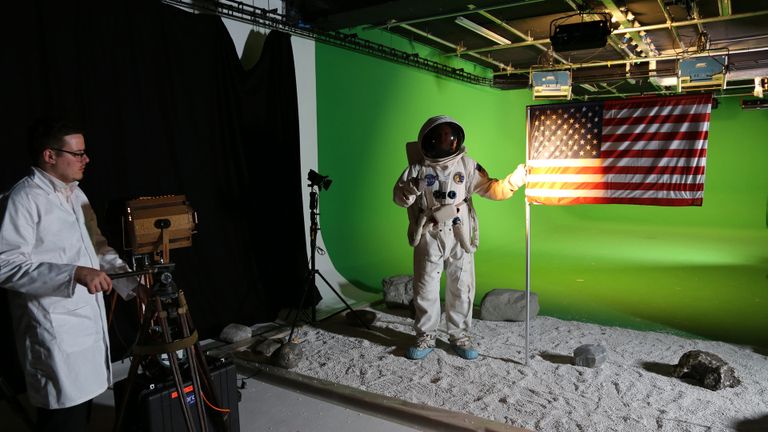
The common thread of conspiracy theories is that they can’t be disproven.  They are all established on faith, firm belief evidence connecting all the dots can be found and can shape-shift as needed.  If one part can be disproven they can simply move the goalposts or deny the evidence is legitimate.  If someone does not want to believe that the moon landing happened you could show a Saturn V rocket, introduce them to one of the astronauts, thoroughly explain all of the alleged irregularities they see and they’ll still believe that it was faked. 
It is a matter of political orientation, not facts or plausibility, and stems from assumptions and a general mistrust of the system.

To the conspiracy-minded folks, everything becomes a conspiracy, there can never be an accident, or a lone wolf attack, no such thing as coincidence in their world. Sandy Hook couldn’t be a deranged (drugged out) Adam Lanza.   No, to Alex Jones it must’ve been a false flag with the casualties being crisis actors rather than real people.  And some of those hunch I understand, this is what happens when every tragedy is treated cynically as an opportunity by control-freak politicians. 
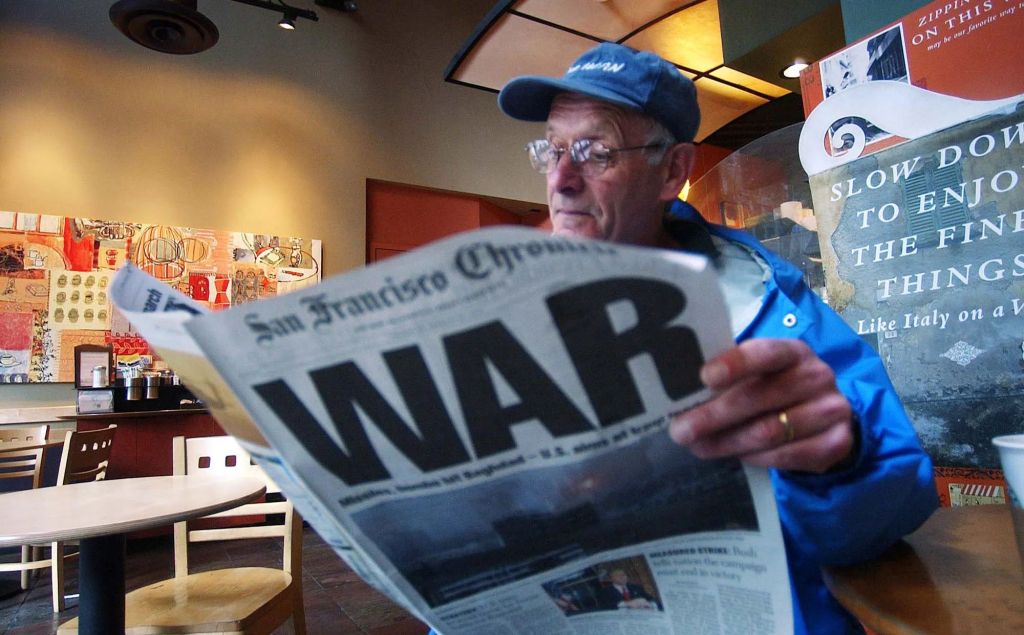
Why did we go to war with Iraq after 9/11? 

Is it so hard to believe that the CIA may have played some role in the JFK assassination when they do regime change all around the world?

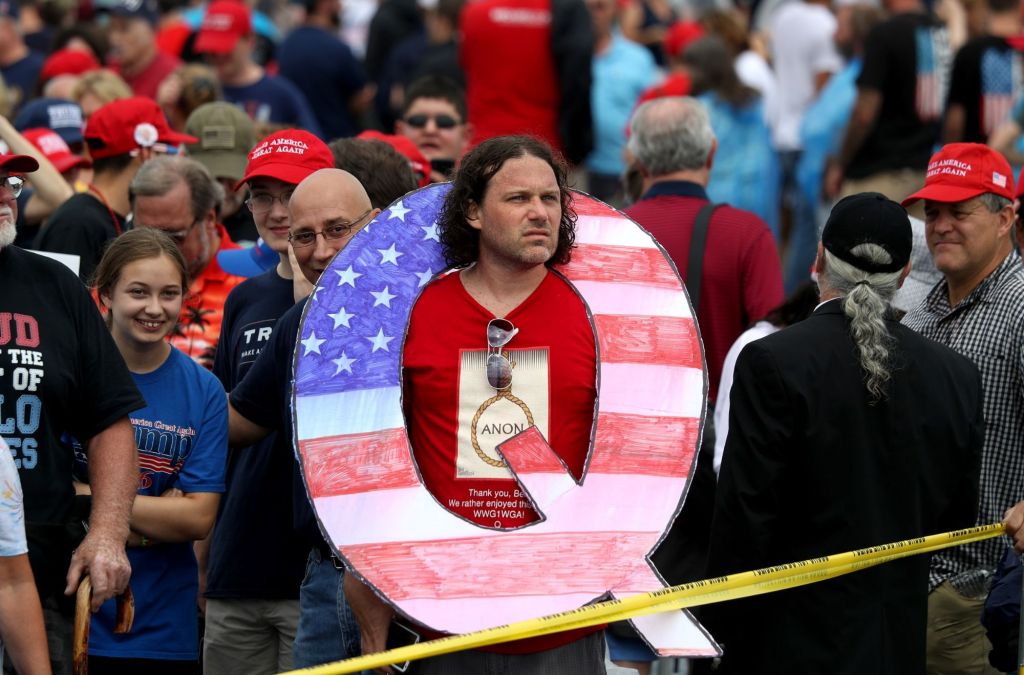
The real issue I have with Q-Anon, where all is a hidden criminal plot (and everything is going according to the plan) is how it sucks the oxygen out of the room for discussion of real observable corruption.  The far-flung theories, worse, are used to discredit those reasonable concerns about the expansion of government power and proliferation of unaccountable agencies.  We should be far more concerned with what those with power are ‘legally’ doing in plain sight—and not giving them cover of cockamamie theories they happily use to dismiss us all as crackpots.
That’s the irony here, the conspiracy theorist is aiding the conspiracy.  For example, fact-checks of “Covid is a bioweapon” were used to strawman the reasonable questions about a possible Wuhan lab-leak.  This is why we couldn’t have a serious conversation.  

So why do the kooks need to speculate so far beyond the evidence?  Why can’t they stick to what is known or factual, the most plausible explanation, rather than always having to gallop to the craziest possible conclusion?  In some cases it might just be stupidity, that they simply aren’t very good at tracking normal human motivation.  But in many cases, it is just a form of resentment, they are unserious people—with a massive inferiority complex—who both need to distinguish themselves and also discredit those who did attain more.

It is basically the working-class equivalent of pulling the race-card.  

And yet this is not entirely without cause.

They’ve endured globalism, they have seen their jobs outsourced, prices rise and wages stagnate.  This was not the America that was promised to them.  A place where their own dreams would be the limit.  They see things going the wrong way, opportunities drying up for people like them, as a flood of new faces replace the familiar.  There has been a sort of conspiracy against them, but not in the way they imagine.  Yes, in many ways, they have been screwed over by their betters—so perhaps that is where the deep suspicion originates?

[Don’t] Trust The Narrative

Standard

The truth of a story is not proportional to our investment in it.  The Marvel Cinematic Universe, for example, is a movie franchise worth nearly 23 billion dollars and has no basis reality other than locations.  And still, despite being complete fiction, people are obsessed.  We treat the characters as if they’re real, repeat their lines, cosplay to participate in the fantasy, and it does seem that many would rather be lost in this exciting world of make-believe than live their actual lives.

It is really interesting how outside observers of religions (other than their own) have no difficulty dismissing the beliefs and practices.  The claims of L. Ron Hubbard, or Joseph Smith, or Muhammad ibn Abdullah aren’t all that compelling to non-adherents.  I mean, come on, riding through the sky on a horse with a woman’s head and the tail of a peacock sounds more like a crazy acid trip than something to take seriously, right?  But for this raised in an Islamic country, this makes more sense than Trinity or resurrection.

I’m quite certain that the Biblical narrative, whether Genesis or the Gospels, would have been far less believable had I not been indoctrinated as a child.  I mean, it made sense to me then.  My parents and every other respectable adult that I knew held to this belief system.  It would actually be rather strange had I rejected this outright.  It was only later that the vast differences between even various Mennonite sects, and facing challenges to my assumptions, that I even knew how to question.

Of course, this doesn’t make those raised outside of organized religion any more rational.  Secular ideas, like Evolution and Global Warming, have taken on their own narrative framework, similar to religion, that far exceeds the actual evidence.  Not all of the gaps can be explained by Natural Selection.  And climate apocalypticism has strange similarities to the “end times” prophecies common with many caught up in Evangelicalism.  Al Gore is basically Harold Camping with corporate sponsorship.

Most of these narratives can’t be entirely falsified.  The decades and decades of dire predictions from climate alarmists haven’t come true, yet they keep moving the goal posts, even making claims in contradiction to those prior, and the next generation of conscientious young people are none the wiser.  Likewise, the doctrines and practices of traditional religions evolve and get twisted every which way, to the point that you can’t get people raised in the same denomination to agree.  

The strangest thing is how these various movements never die even when their claims are falsified.  For example, the Seventh-day Adventists arose from the false Millerite prophecy that Jesus would return on October 22, 1844.  The date came and went without event.  But, despite this Great Disappointment, some who saw their central claim proven false still regrouped and continued on their way again.  Perhaps the investment made was too much to simply give it up?  

It’s sort of like I don’t expect the “believe science” midwits to ever comprehend how many times the experts get it wrong or reconsider.  They’ll probably go on praising Dr. Fauci as a saint even after the puppy experimentation scandal, even after the NIH now admits to funding of gain-of-function research, and probably because it would cause too much discomfort to consider that their trust may have been misplaced.

It takes a boatload of evidence to overturn these narratives we have built up in our minds.  Bad ideas, like Marxism, even if they fail miserably in one place, are often recycled and reintroduced.  At the same time, credit for plain luck is given to whatever a person wants to have credit.  A boom economy, with the President you voted for, and it is obviously a product of wise leadership, right?  The sun came up right after you prayed?  Must be the grace of God.

All religion, all political ideologies, the trust we have in certain institutions or people, is part of our embracing narratives.  Whether you believe vaccines cause autism or ended Polio depends more on who (or what) you accept as an authority than the actual evidence.  Past narratives might seem irrational to you, like the idea that autism was caused by “refrigerator moms,” yet made complete sense to many influential and intelligent ‘scientific’ people at one time.  Those who go against the currently popular ‘expert’ consensus can expect persecution.

All this to say that we aren’t as good at discerning truth as we imagine.  In many cases what we believe is nearly as much fiction as Captain America fighting against Hydra.  It isn’t just the conspiracy theorist kooks buying into narratives despite evidence to the contrary, we all do, we all believe a blend of religious propaganda, political indoctrination, and out-of-context or unqualified facts stitched together, and much of it as absurd as the narratives we reject.