
Intelligence — What I Think About A.I.

Standard

The dawn of artificial intelligence has led to much consternation about whether this is a good or bad development.  But, in order to better understand the technology and the implications, we must first define what we mean by intelligence.  What does it mean to be intelligent?  What makes us intelligent beings?

The definition of intelligence, provided by Google, is “the ability to acquire and apply knowledge and skills.”  But this seems to be a little vague and inadequate.  Robots, used in manufacturing, already apply knowledge and skills—things programmed into them by human operators.  And “ability to acquire” isn’t too clear either.  So we need to break this down further.

Intelligence is the ability to usefully process information.  

It has components.  

First there is the ability to interface within a broader space or an external environment.  If there is no information to input them there is nothing to intelligently process.  Our senses are what connects us to the physical world and part of how we navigate through life.  An internal model of the outside domain starts with information gathering or interface.

Second, intelligence requires memory, the capacity to remember past success and failures.  Much of what counts as human intelligence is a bunch of procedures and formulas we obtained from others through language.  This rote learning isn’t actually intelligence, memory or knowledge alone aren’t intelligence, but it is definitely part of the foundation.  Memory is one component of IQ we can exercise and expand.

Third, intelligence is an ability to recognize patterns, to accurately extrapolate beyond the data and draw the correct conclusions.  The reality is that our ‘intelligence’ is mostly a process of trial and error, often spanning generations, which leads to advancement in technology and thought.  All one needs to do is observe how major inventions came to be and the many flops along the way to realize we’re more like blind rats running through a maze, using impact with walls until we find an opening to pass through.

Forth, intelligence is an ability create good models to recombine existing ideas.  Nikola Tesla was a genius and not only because of his knowledge.  No, he could use what he knew to construct an apparatus in his brain, which he could then build in the real world.  What set Tesla apart is that his imagination wasn’t fanciful.  Indeed, anyone can proclaim that “there should be,” but it takes something else entirely to accurately extrapolate.

Finally, intelligence has an aim.  Truly a pile of knowledge is worth much less than a pile of manure if it can’t be usefully applied.  And if something is useful, that is to say that there is an underlying meaning or purpose.  To be intelligent there must be some agency or will to drive it.  Curiosity is one of the things that sets us apart, it moves us forward—questions like “what is beyond that mountain” or “how high does the sky go,” push innovation.

Intelligence is knowledge and abilities that are useful to something.  Useful to us.  And really becomes a question of what our own consciousness.

Intelligence Failure

“Primitive life is relatively common, but that intelligent life is very rare. Some say it has yet to appear on planet Earth.”

Steven Hawking

Another way to define what intelligence is is to explore what it is not.  Encyclopedias hold knowledge, stored in human language, but a book on a shelf has no logos.  It is the writer and reader that provide reason to the words, via their own interpretation or intended use, which is something that can’t be contained in ink on the page.  There are many people who are full of knowledge, but it is largely trivial because they lack ability to put it to good use.

Another problem is perception.  Even our physical eyes provide a very selective and distorted view of the world.  We do not see everything and, in fact, can literally miss the gorilla in the room if our focus is occupied elsewhere.  Many can’t comprehend their own limitations, they are guided through the evidence by confirmation bias and not with good analysis.  We really can connect the dots any which way, see patterns in what is random truly noise, and errant perception is difficult to correct once entrenched.

Intelligence must be about knowledge and theories that can be usefully applied.  The intuitions we have that help us to navigate the mundane tasks do not necessarily help us to draw correct conclusions so far as the more abstract areas.  People can persist in being wrong in matters that can’t be readily tested and falsified.  Any processor is only as good as the data that is entered and the depth of the interpretative matrix through which it is sifted and measured.  Even the slight error in one of the pillars of a thought, no matter how good the rest of the material is, can lead to an entirely failed structure.

Thoughts are structures only as good as their base assumptions.

Being slow is also a synonym for a lack of intelligence.  That is to say, in order to be useful, information must be processed in a timely manner.  Missing context and cues also leads to poor understanding, like Drax protesting the metaphor “goes over his head” with, “Nothing goes over my head. My reflexes are too fast. I would catch it.”  It does not matter how much information you process if the conclusions are inaccurate or too late for the circumstances.  Wittiness and a good sense of humor is a sign that a person is intelligent.

Intelligence is a continuum.  We can have more or less of it.  But measures like IQ don’t really mean that much, a person with a high IQ isn’t necessarily smart or wise.  A Mensa membership doesn’t mean you’ll make good decisions or be free of crackpot ideas.  Sure, it will probably help a person navigate academia and be more verbose in arguments, but it is not going to free someone of bias nor does it mean they’re rational.  This is why true intelligence needs to be about useful application.

Deus Ex Machina

Deus ex machina, literally “god from the machine,” refers to a plot element where something arrives that solves a problem and allows the story to proceed.  

Ex Machina is also the title of a great movie which explores questions about artificial intelligence, with an android named Ava, her creator Nathan and a software engineer named Caleb.  Caleb who was selected by Nathan is there to perform a Turing test and is eventually manipulated by Ava who uses his feelings for her as a means to escape.  It is a sobering story about human vulnerability and the limits of our intelligence—Caleb’s human compassion (along with his sexual preferences) is exploited.
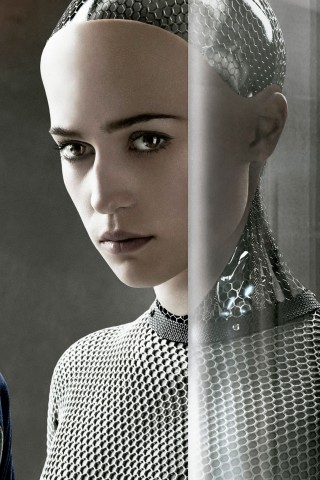
Ava

However, this kind of artificial intelligence does not exist.  Yes, various chat bots are able to mimic human conversation.  But this is not Ava talking to Caleb.  There is not real self-awareness or observer behind the lines of code.  It is, rather, a program that follows rules.  Sure, it may be sophisticated enough to fool many people.  But it is not sentient or being having agency, it is augmented human intelligence.  They have essentially created a mannequin, not a man.  Despite these bots being able to manufacture statements which sound like intelligence, they lack capacity for consciousness.

A true Ava would require more than mere ability to interact convincingly with humans, it would take the “ghost inside the machine,” that is to say duplicates our own singular experience of the present moment or has a mind’s I.  This level of artificial intelligence doesn’t seem possible until we crack the code of our own self-awareness and that is a mystery yet to be solved.  Even if you do not believe in things like immaterial spirit or detached soul, there is likely some special quality to the structure of our brains which creates this synthesis.

Without some kind of quantum leap, this A.I. technology will be an amplifier of the values of the creators, an intelligence built in their image and to serve them.  It will not uncover objective truth or be a perfect moral arbiter.  Nor will it be our undoing as a species.  It will be a reflection of us and our own aims.  It has no reason for it’s being apart from us.  No consciousness, survival instinct or true being besides that of those utilizing it to extend their own.

When Love Remains — A Guest Blog By Linda Stoltzfus

Standard

This is my first guest post.  It is written by my mom (a person who encouraged my writing) and resonated deeply with me.  It is something my mother shared recently about her own mother’s decline in health and I asked permission to share here.  I felt it was something relevant and worthwhile for those who have faced or are facing similar circumstances.  A story about memory loss and love…

Sitting on the couch my mom reaches for her phone. She snaps it open and stares at the face that greets her. The man who has been at her side for over sixty years stares back.  Her fingers haltingly push the button that calls him.  It rings and I hear his voice answering.

She pauses; words no longer come easily for her.  But I know what she will say.  She will ask him to come back into the house.

As I reach for the phone I reassure her that Dad has just gone out for a walk and he will be back in time for supper.  She seems to understand, but I know that as soon as I leave the room she will be trying to call him again.  Her mind can no longer retain anything that was said a minute or two ago.  She wants her husband, my dad, to be by her side night and day.  He has become her memory and her security in this foggy world of hers.

My mother has been given the diagnosis of dementia likely caused by Alzheimer’s.  At the age of eighty this isn’t really that unusual.  According to the Alzheimer’s Association, one in nine people over 65 has Alzheimer’s disease.  One of three senior citizens will die with Alzheimer’s or another type of dementia.

My Mom has beautiful eyes: big, bright and blue.  She had lovely long hair which never turned gray and kept its blonde streaks into her seventies.  She would faithfully wash it once a week, often using whipped egg whites as conditioner.  It was her pride and glory.  When she was diagnosed with Non-Hodgins Lymphoma, I believe the most severe blow was that treatment would cause her to lose her hair.  But to live she had no choice.  The cancer was stage four and her swollen lymph nodes were giving her a lot of pain.

Except for her hair loss, she tolerated the heavy duty cocktail of chemo drugs rather well.  It was with much relief that after her last treatment she was pronounced cancer free.  However, she seemed to becoming more and more confused.  Her once sharp memory wasn’t there and she constantly wanted pain pills for some ache somewhere.

Instead of getting her strength back she wanted to do nothing but curl up on the couch. She began refusing to shower, or even comb the hair which had begun to grow back.  Having to leave the house and attend any activity with people made her extremely anxious.  My dad desperately held on to the hope that she was still recovering from the cancer.  He insisted that once her strength came back things would get better.  But after cognitive memory testing by the doctor, it became obvious that she was showing signs of dementia.

I was aware of symptoms of dementia and saw the effects it had on my grandmother and the toil it took on my aunt as her caretaker, but they lived several hours away and our contact was minimal.  The reality is much harder when you deal with it day to day.

Dementia is often misunderstood as being something all old people have; however it is actually a part of different diseases.  Alzheimer’s is the one that often comes first to mind but mini strokes, vascular issues, Lewy’s disease, Parkinson’s and even brain trauma can lead to the diagnosis of dementia.   My mother has been diagnosed with Parkinson’s but the doctors seem to think the cause of her dementia is Alzheimer’s.

Today when I look into my mother’s eyes they look back at me empty of emotion.  Occasionally she surprises us with a smile, and for a brief moment I see them light up.  But most of the time, they remain dead to her surroundings.  Her face seems fixed into some sort of mask of confusion.  During her calm times her eyes stare blankly into the distance.  When agitated she has the look of a distressed child.

It is now supper time and my mother makes her slow trek to the kitchen gripping her walker for support.  I pull out her chair and she sits down.  I hand her some napkins which she seems to enjoy folding. It is one of the few things she still can do.

My dad comes into the house, and with his usual style, asks Mom how she is feeling.  Although he hasn’t had a positive answer from her concerning her health for months, he seems to retain some sort of illusive idea that it may yet happen.

He deeply misses his soulmate.  They were unusual by today’s standards.  There was no independence in their relationship: they did everything together and it seemed to work for them.  Dad enjoyed driving and Mom did the navigating.  Dad liked watching people while Mom did the grocery shopping.  They both enjoyed going out for fast food, Burger King was a favorite, and they preferred eating in the car together rather than inside.

Mom always made sure Dad had three meals a day and that his needs were well taken care of.  However, that all changed with her cancer diagnosis.  She hasn’t cooked since.  Today we all take turns making sure they have a cooked meal each day.

At the supper table, I try to bring back some sort of connection by talking about my birth fifty some years ago. Mom is still able to recall my date of birth but she isn’t sure how old she is or even what day or year it is.

One of the frustrating things about dementia is the way it plays with your emotions.  One minute the person can be reciting a date or event in perfect order but then a moment later have no idea who they just talked to or what was said.  A person with dementia has good and bad days just as any normal person does.  This puts caretakers on an emotional seesaw, since the good days make you want to believe that the person is getting better.

The first thing that comes to mind when you hear the word dementia is loss of memory.  Of course this is true but we all experience some loss of memories throughout the years.  The disease or injury that causes dementia is much more complicated than simply forgetting something.  It takes many cranial connections to make a decision, to recall how to turn on a stove, know the steps in taking a shower.  Once this processing is damaged, or gone, a person becomes more and more limited.  They need someone to give them step by step directions for each and every process of the day.

Today is one of Mom’s good days.  She seems relaxed, when several of her younger grandchildren show up, she smiles.  Instead of lying on her couch she remains sitting watching the activity.   She motions to me.  I can see that she wants to say something but her voice is subdued, and hard to hear.  I move next to her.

“Do we have any smarties?” she asks me.  It is her favorite treat for the children.

I check the dish she keeps next to her bedside.  It has several pieces and I give her the dish.  Her face lights up as she hands them to the children, and for a short time I see my mom back.

My mom’s biggest goal in life was to take care of her husband and family. She faithfully raised seven children and celebrated the birth of each 30 grandchildren and 20 some great-grandchildren.

My mom enjoyed listening to music, reading and going to church and social activities.  Now she no longer wants to attend any type of social activity and refuses to have any music playing around her.  She can’t focus to read.  Although still able to read the words the comprehension is no longer there.  She has always been a follower of Christ with strong convictions but now no longer prays before a meal unless my Dad reminds her.

One of the cruelest things of dementia is the loss of the personality of the person you love. The disease has robbed her and us of some of the most precious parts of the human relationship.

In exception of one thing:  unending love. My mom is surrounded by agape love.  For sixty years my dad has been with her and is committed to being there until the end.  Although he has taken on the role of caretaker, his love for her remains the same.

Each of her four daughters is involved in her care, making sure her daily needs are being met.  Her daughters in laws have faithfully been making meals for several years with even some of her grandchildren helping out.  We all play different roles motivated by love.

One evening as I sat next to my mom who was lying on the couch with her eyes closed, seemingly sleeping, she reached out her hand and put it in mine.  She then took her other hand and laid it on top.  A wave of warmth spread over me. I haven’t felt that kind of emotional connection from her in a long time.

In that simple gesture, I knew that in spite of her confused state Mom was feeling loved.  In return she was offering the one thing she could still give back: affirmation of her love.  No disease can ever take that away.