The Myth of an Indestructible Building

Standard

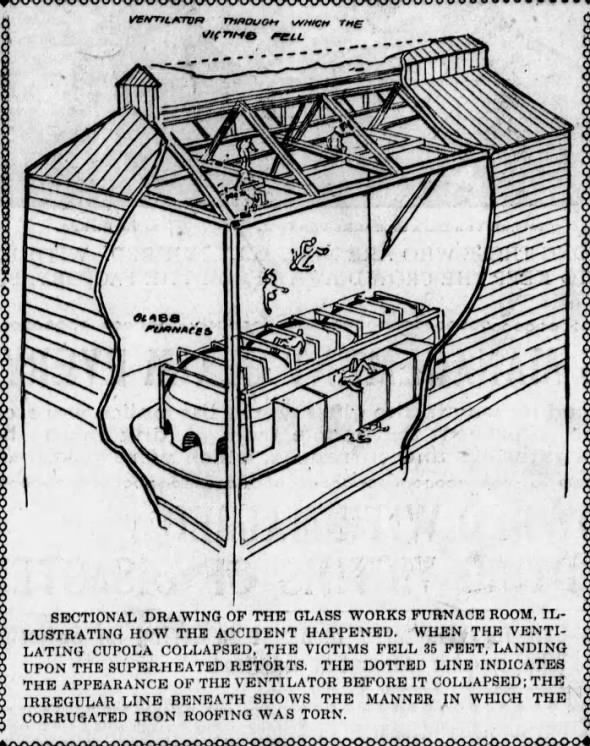
It was November 29, 1900, and fans filled the stadium in San Francisco for the annual Thanksgiving Day game between California Golden Bears and Stanford Cardinal. Some, not wanting to pay the entry fee (one dollar then, $40 in today’s money), climbed on a nearby glass factory roof to get their view of the action on the field.

The newly built factory roof collapsed about twenty minutes into the game. One hundred people fell as it gave way and plunged four stories down—many landing on the 500° F oven below. It was a horrific scene. Young people being cooked alive. What happened? The building roof wasn’t designed to hold a mass of spectators. It failed. Those who had climbed up were oblivious or did not have enough concern for the stress they were adding to the structure.
This tragedy wasn’t just a failure of design; it revealed a deeper misconception that buildings should be invincible, a myth that shapes our reactions to collapses even today. It goes further than engineering or physical buildings as well. Our models of reality are oversimplified at best and flat-out wrong in too many cases.

There is a common misconception and an unrealistic expectation about structures—many people seem to assume they are like blocks of granite. From those who believe that every building collapse is a conspiracy to those who think every failure demands stricter government regulations, the myth of an indestructible building continues due to a lack of understanding of engineering and the limitations.

Design Limits Are Not Defects

One key misunderstanding is design limits. Engineering is not about making a building too strong to ever fail. Unless we’re talking about the Great Pyramids, it’s all about trying to meet certain established parameters. An engineered building is designed to meet the expected conditions as defined by regional building codes. If the wind, snow, or loads exceed the designated standards, then there will likely be a collapse.

Earlier this year, after a heavy snowfall in upstate New York, many buildings had their roofs cave in (including this fire hall) because the weight of the snow was that much greater than the design weight. Sure, most engineers build an extra safety margin into their components, but eventually these limits are too far exceeded and you’ll end up with a tangled mess. This is why there are sideline roof shoveling businesses in these places where large snow accumulations are a regular occurrence.

Sure, code could force people to build to a much higher standard, making a collapse due to snow load virtually impossible. But this would increase the costs so much that it would price many people out of building a new house or barn. Engineering is all about compromise, more precisely about making the right compromises given the expected conditions. Yes, there is a case for making adjustments based on observation or after studies, but ultimately we build for what will work most of the time.

More Is Not Always Better

In the aftermath of the earthquake that had struck Myanmar and neighboring Thailand, there was a comment made to me in a chat hoping for more layers of regulation. This is a sentiment, in the specific context of rapid development of Bangkok, that seems more reflexive than reflective. It is a progressive impulse to believe that more interventions and rules are the answer.

The collapse of an unfinished tower in Bangkok, during the earthquake, sparks questions about building codes.  Was it missing sheer walls?  Did the contractor rush to ‘top it off’ quickly?  I want to know what the investigation finds.

But, for me, as someone who works in the construction industry and has occasionally needed to sift through these layers, I could not disagree more. Sure, better regulations may be needed. However, legalism doesn’t work in building standards any better than it does in churches. Sure, you need a code of some kind. And yet onerous regulation will add to the cost of construction, not necessarily improving the end results, and only making new housing less accessible.

It is, at best, the same trade-off discussion we can have about self-driving cars and the need for LIDAR. Sure, this expensive laser ranging system may marginally improve the results, but at what cost? Self-driving cars with cameras alone are already safer than human drivers. Keeping these systems at a price that is affordable will save more lives than pricing them out of reach for average people. It is, therefore, optimal to rollout the less expensive and safer tech even if it could be slightly improved.

At worst there is only more expense and no benefit to more layers of red tape. The real problem with rules is that they are written in language that needs interpretation. Unlike a classroom theoretical setting, in the real world you can’t just memorize the correct answers and pass the test. The ability to make a judgment call is far more important than adding to the pile of regulations. More rules can mean the more confusion and the truly critical matters get lost in the mess.

I see it over and over again, when different customers send the same job for a quote and all of them interpreting the engineering specifications their own way. It is the tire swing cartoon, a funny illustration of when the customer wants something simple and yet the whole process distorts the basic concept until it is unrecognizable. That is where my mind goes when we talk about adding layers. Is it increasing our safety or merely adding more points of failure?

This one stuck with me and should be standard equipment in every design department.  I first saw it as a child while visiting the engineering department of the construction company my dad worked for.

Some of it is just that some people are plain better at their jobs than others with the very same credentials. I am impressed by some engineers, architects, contractors, and code officers—not so much by others. I’m willing to bet the intuition of some Amish builders is probably more trustworthy than a team of engineering students’ textbook knowledge, full of theory, with no real or practical world experience. In the end any system is only ever as good as the users.

Theory Is Not Reality

My work relies on truss design software. I enter information and it does those boring calculations. When I started, I assumed that it was more sophisticated than it really is. I thought every load was accounted for and nothing assumed. But very soon the limits of this tool started to reveal themselves. It is only as accurate or true to reality as the engineers and developers behind it—and on the abilities of the user (me) understanding the gaps in the program.

When it comes to mental models—the kind of physics involved in engineering—only a few people seem able to conceptualize the force vectors. Things like triangulation, or compression and tension loads, are simply something I get. Maybe from my years of being around construction or that curiosity I had, as a child, that made me want to learn what holds a stone arch up or why there are those cables running through that concrete bridge deck. My model was built off of this childhood of building Lincoln Log towers (arranging them vertically) and occasionally making mini earthquakes.

I’m exasperated by this expectation that people have for skyscrapers to be indestructible or to topple over in the same manner of a tree—as if they’re a solid object. It also seems that the big difference between static and dynamic loads is lost on most people. They don’t understand why a building could start to pancake, one floor smashing the next, or how twisting due to extreme heat could undermine the structural integrity of a building without ever melting the steel. Of course this has to do with their beliefs or mistrusts that are not related to engineering—nevertheless it shows their completely deficient understanding of how the science works.

The concept in their head is off, their brain modeling is inaccurate, and their resolution may be so low they simply can’t grasp what the reality is. You try to explain basic things and their eyes glaze over—sort of like when Pvt. John Bowers tried to explain why the plants need water, and not the electrolytes in Brawndo, in the movie Idiocracy. Ignorant people will scoff before they accept a view different from their model of the world. The theory they believe rules over all evidence or better explanation.

On the other side are those who trust every established system without understanding it. They “believe science” and see more as an answer to every question. More rules, a larger enforcement apparatus, faith in their experts, without any feel for the problems encountered by the professionals or those in the field. If they had, they would question much more than they do. Human judgment is still at the base of it all. Or at least that is what the lead engineer told me while we discussed the limits of software and the need to be smarter than the tool.

Not even AI can give us the right balance of efficiency in design versus safety factor or what should be written in the code. It may be a better reflection of our own collective intelligence than any individual, but our own limits to see the world how it actually is are not erased by the machines we create. We are amplified, never eliminated, by the tools we create. So we’ll be stuck wrestling with our myths and theories until we take a final breath—only our flaws are indestructible.

Models of a Messy World

If truss software taught me anything, it’s that no model nails reality perfectly—not beams, not buildings, not life. We lean on these frameworks anyway, because the world’s too wild to face without a map. But just like those fans on that San Francisco roof in 1900, we often climb onto flimsy assumptions, mistaking them for solid ground. The myth of an indestructible building is just one piece of a bigger distortion: we think our mental models—of faith, of power, of people—are unshakable truths, when they’re really sketches, some sharper than others, of a reality we’ll never fully pin down.

Take religion. For some, it’s a cathedral of certainty, every verse a load-bearing beam explaining why the world spins. Others see it as a rickety scaffold, patched together to dodge hard questions. Both are models—ways to grapple with life’s big “why.” Politics is messier still. It’s like designing a city where everyone’s got their own codebook. One side swears by tight regulations, convinced they’ll keep the streets safe. Another group demands open plans, betting that freedom builds stronger foundations. Both sides act like their own ideological model is bulletproof, shouting past each other while the ground shifts—economies wobble, climates change, and people clash.

Then there’s prejudice, the shoddiest model of all. It’s like sizing up a beam by its color instead of its strength. Prejudice, always a shortcut to save us from the effort of real thought, fails because it’s static, blind to the dynamic load of human individuals. Good perception, like good engineering, adjusts to what’s real, not what’s assumed.

All these—religion, politics, prejudice—come down to how we see. Perception’s the lens we grind to make sense of the blur. Some folks polish it daily, questioning what they’re fed. Others let it cloud over, stuck on a picture that feels safe but warps the view. I think of those fans in 1900, not asking if the roof could hold them. They didn’t mean harm—they just saw what they wanted: a free seat, a clear view. We do the same, building lives on models we don’t test, whether it’s a god we trust, a vote we cast, or a snap judgment we make. The distortion isn’t just in thinking buildings won’t fall—it’s in believing our way of seeing the world is indestructible.

What makes a model reliable? Not that it’s right—none are. It’s that it bends without breaking, learns from cracks, holds up when life piles on the weight. In construction, we double-check measurements because we know plans lie. In life, we’d do well to double-check our certainties—about the divine, the ballot, the stranger next door. The San Francisco collapse wasn’t just about a roof giving way; it was about people trusting a picture that didn’t match the world. We’re still climbing those roofs, chasing clear views on shaky frames. Maybe the only thing we can build to last is a habit of asking: what’s holding this up? And what happens when it falls?

Fairytales and Football Gossip

Standard

We all know a story about a little girl going to her grandma’s house and is confronted by a talking wolf who convinces her to go astray.  But this written account is predated by tales with similar characters, and yet not exactly the same.  In the end, no matter the version, we read it as being a fairytale and understand that it should not be taken as being a historically accurate record of an event.  Why?  Well, animals don’t talk and we were told it is an old fable.

I had to think of this while seeing so many fundamentalist friends share a false claim that Travis Kelce threatened to quit the Kansas City Chiefs if they did not cut the currently embattled franchise kicker.  This part of the hysteria (both in response and in reaction to the response) over the conservative kicker’s commencement address that promotes traditional Catholicism.  Normally it would be customary for these Protestant friends to bash those who believe in Jesus in the same manner as Harrison Butker.  But, in politics, I guess the enemy of my enemy is my friend—suddenly those who give special honor to Mary are now acceptable?

The problem with this Kelce claim is that it is as fictional as Little Red Riding Hood and being spread as fact.  I mean, I would think that credibility is important to Evangelicals, being that their mission in life is to convince others a man literally walked on water and then rose from the dead because they read about it in a book.  But nope, they share the most urban legends of any demographic on my friends list.  For those who say that they know the Truth, personally, this should be a huge embarrassment—except it never is.

Those who have no ability to detect fakes or frauds, who spread blatant lies, really aren’t in a place to preach their values.

As much as I support Butker’s freedom of speech and think the cancel culture outrage over his comments is ridiculous, I really do not find a home amongst those who accept any claim that confirms their ‘Biblical’ views on social media.  All it takes is a satire site say that there has been evidence of the Red Sea crossing has been found or that a solar eclipse is passing over seven towns in the US named Nineveh and they will spread these blatant falsehoods to the ends of the Earth because they can’t be bothered to verify the claim before posting it.

If the religious adherents truly occupied the high ground of truth why would they dare to risk their credibility?

Whether it is fake news or just exaggerated tales, that believers are gullible or in people in denial in the manner of a sports fan who can only see what promotes their team as good, the cost is credibility.  A consensus of idiots is meaningless.  I have no reason to think that prior generations were any better at sorting out the facts from the fictional BS.  It is just disheartening, for someone who had hope of a marked difference between the faithful and the frauds.

The truth is that Travis Kelce (and his brother Jason) have come out in support of Butker.  So maybe it is time for some professing ‘Christians’ caught spreading this malicious gossip to do what their religion requires, humble themselves, and repent?

Wolves will likely talk before these reactionaries reconsider anything…

Christmas Without A Doubt

Standard

One remarkable thing about being a father is the perspective it gives on my own doubts of God.  While out shopping Y-dran would come across the perfect Christmas gift, he had to have, and then persistently remind us not to forget.  His need for control over what he got really could take away from the whole joy of giving and was a matter of his trust.  He is not sure of my ability or will to give him what is good.

Good Gifts 

Jesus used the analogy of a parent giving to their children to describe God’s disposition towards His creation:

Which of you, if your son asks for bread, will give him a stone? Or if he asks for a fish, will give him a snake? If you, then, though you are evil, know how to give good gifts to your children, how much more will your Father in heaven give good gifts to those who ask him!

(Matthew 7:9‭-‬11 NIV)

It is fun to see a child’s face light up when they receive a gift and it is likely because of this kind of feedback that we are so happy to give.  A good father wants to satisfy all of the needs of their children. They want to give them the best and would never torment them by giving them bad things.  It is especially easy for me to give to Y-dran as a reward for his helpful spirit.  I would give to him regardless, but it is much easier to give when he is being helpful or well-behaved.  I’m reluctant to give anything when he has an entitled attitude or makes demands.  I mean, I really don’t want to raise a son who can’t wait or ever hear the word “no” the first time.  Teaching him what is right is the best gift I can give.

My Father’s Son?

Just months into being a father I can see my own dad coming out and I don’t like it.  It is far too easy to greet inquiries with annoyance and not give the attention a child needs.  He really does know when I’m not making him a priority in my life.  Sure, we will remind him that we put the food on the table and shelter over his head.  However, to be honest, a very small portion of my income goes to him and I would need shelter for myself even if I did not have a family to care for.  And the truth is that I can be thrifty with money to the point of miserliness.

I have been at war with myself since bringing Y-dran into my life.  I’m really trying to be rid of the old man that lives in me, the one who makes others feel inadequate, that sees the financial bottom line as more important than family time, and to be the father who is truly self-sacrificial and involved in a meaningful way rather than merely playing the role.  But the reality is that the apple does not fall far from the tree and I am my father’s son.  I will need to battle it out with my own selfishness and self-righteous defense mechanisms.

Stepfather of Jesus

To some, the idea of raising another man’s son might be a deal breaker.  There was a story from earlier this year about a 5-year-old boy, in China, left behind at his kindergarten after the man raising him as a son found out that he was not the biological father.  

Joseph deliberated the same thing when he found out that Mary, the mother of Jesus, was pregnant:

This is how the birth of Jesus the Messiah came about: His mother Mary was pledged to be married to Joseph, but before they came together, she was found to be pregnant through the Holy Spirit. Because Joseph her husband was faithful to the law, and yet did not want to expose her to public disgrace, he had in mind to divorce her quietly. 

(Matthew 1:18-19 NIV)

Jesus, according to the Jewish writings of the Talmud, was an illegitimate child, the bastard son of a Roman soldier, and Mary a whore.  And Joseph, prior to a special visit from angels, would have every reason in the world to assume the same.  Even after being assured that the child was of the Holy Spirit, the stepfather of Jesus would no doubt have had to face the whispers of the scandal.  The angel didn’t visit his entire village to tell them and this was not like our times either when it is out of wedlock pregnancy is common.

Fortunately, for me, I’ve not had a struggle with the prospect of being a stepfather and, if anything, it was the prospect of being Y-drans father that kept me from giving up on the relationship after over three years of being apart and waiting.  It is one thing for two adults to break off their own romantic engagement, quite another to leave a boy who already calls you “daddy” behind.  I was willing to fight for the opportunity to earn the trust and love of Y-dran.  If anything, he was the best reason to marry his mother.

Our Father in Heaven 

Many social conservatives tend towards the harshness of a Chinese man who abandoned a toddler for not being his own. But this is not an attitude that is reflective of God:

He is a father to the fatherless and an advocate for widows.  God rules from his holy dwelling place.  God settles in their own homes those who have been deserted; he frees prisoners and grants them prosperity. 

(Psalms 68:5-6a)

Joseph, in taking Jesus called “the son of Mary” by skeptics in Mark 6:3 (an interesting word choice to say the least) as his son was reflective of the fatherly love of God.  Joseph shouldered this wrongful disgrace the same way that God, despite being Holy, is willing to bear the weight of our sin and even call us his own children.

If a man knows the significance of this, of St Paul’s declaration that believers become the sons of God by adoption (Romans 8:15; 9:26; Galatians 3:26) would he ever deny any child an opportunity to have a father?  

There is a sense in which we get back what we give, that there is reciprocity or a kind of karma.  If we are like the servant who buried his talents in fear or the one that refused to forgive another a debt after being pardoned, we will get the unpleasant or judgmental side of God.  We will get what we expect or demonstrate in our own actions.  Therefore, if we want grace for our own sins, to call God our Father, then we must put that old man to death, and be a father figure like the father we never had.  No one had a perfect earthly father, some have been abandoned by the man who should have been that man, but we can all be that source of structure, stability, and abiding love if we choose to be like our heavenly Father.

Why Believe In Sky Daddy?

One of the most intriguing things about the world that we are in is its symmetry and scalability.  There are repeating patterns, from the Nautilus shell to the spiral arms of the galaxy, that are amazingly paralleled in the language of mathematics and yet we really know nothing.  Science is not about knowing, it is only ever about probabilities, we can expect certain things based on prior observation.  And, in that light, the phrase “on earth as it is in heaven” can take another meaning.

The idea of God is ridiculed today and for good reason.  Many who claim to believe in God are completely petty and selfish people, quarreling over buttons on blouses, divided by political ideology and denomination, and full of self-righteousness or pride.  If God exists, then why do Christians live on their own strength and without faith?

It could be that our Father, God, is some kind of invention or an imaginary stand-in used to represent an ideal.  In other words, an Uncle Sam or Rosie the Riveter type of character there as a special example to bring out our best effort.  We know well today that people can believe almost anything, we have those who pretend to be animals and others who take on identities that do not match with the physical reality of their bodies.  So with all of this absurdity on display around us is it not possible that our traditional beliefs could be delusional as well?

Could God be the perfect dad to make up for the deficiencies of our own dad or provide us with a measure of security when our own father dies?  Or a Santa character, watching if we’re naughty or nice, and a manipulation tool used to keep children in line?

Speaking of Santa…

The Real St. Nick 

The Orthodox celebrate St Nicholas.  He is not a fat and jolly man dressed in a red suit who lives in the North Pole with elves and a sleigh pulled by reindeer.  He was a bishop, in Asia Minor, who drop bags of coins into the window of a home at night to help a poor father pay the dowry for his daughters and rescued three girls from prostitution.  So, he gave gifts, and yet he wasn’t giving trinkets to satisfy the demands of spoiled children.  No, he was a man led by Christian compassion and making a difference in his time.

How a holy man becomes the guy crying out “ho ho ho” is truly beyond me. 

A centuries-old game of telephone, I suppose? 

But it does show us that there is something that is real behind even this most distorted and commercialized image.  In other words, the atheist using the myth of Santa Claus as a reason to dismiss God is ignorant.  The myth is based on truth.  Many have rejected only a false image or caricature of God.  They run with “the man upstairs” kind of trope, but the God of Scripture is beyond comprehension and not a mere man.

For my thoughts are not your thoughts, neither are your ways my ways,” declares the Lord. “As the heavens are higher than the earth, so are my ways higher than your ways and my thoughts than your thoughts.

(Isaiah 55:8‭-‬9 NIV)

Many simply have the wrong concept of God.  They ​​have rejected the deity of their hypocritical parents or that of judgmental religious fundamentalists and the guy on television always asking for donations.  They see God as the petty tyrant, always out to get in the way of their enjoyment of life or trying to destroy them, and not the Creator who is good and loves mankind.

Daddy Doesn’t Love Me

It doesn’t take long, as a parent, to realize that children need some guidance for their own good.  If Y-dran were left completely to his own devices he would spend his entire day watching mindless content.  The tablet wars have been raging in our home as we try to reign in the entertainment monster.  And that is the worst part, while sucked into the vortex he changes from attentive and helpful to a different child.  This morning he became extremely upset after the WiFi doesn’t keep up with his media demands.

Y-dran may believe that we limit his time and that we refuse to get a better home internet plan because we don’t care.  But what he doesn’t realize is that the tablet is a parent’s easy way out.  If we actually didn’t care we would just let him play or watch endlessly and without any restrictions.  Sure, the end result would be a young person not prepared for success in life, and yet we would at least temporarily spare ourselves of the need to deal with his temper tantrums, right?  Of course, we are thinking of his long-term good which is why we deny his access despite his current wishes.

We can see unanswered prayers as neglect or we can believe that our not always getting what we want is truly the benevolence of our Creator who sees beyond our very limited perspective.  I mean, maybe there is no God, or maybe God is malicious and mean like some contend, but how will either one of those beliefs help us to do better in our life?  I believe in the Father who gives good gifts to His children because that’s the father that I want to be—even when they don’t understand my rules or appreciate my love.

The King (Government) Can’t Save You… (The Long Delayed Part 2 To “The People Want A King)

Standard

Originally, a few years ago, I had planned a multi-part series, “The People Want A King,” to discuss the establishment of rulers in the Biblical narrative and make it applicable to our own times. The short version is that God gave his people a king, while warning them of the costs, because they wanted to be like other nations.

The costs were great…

  • Kings demanded more and more for themselves.
  • The centralization of power from many to few only increased the magnitude of corruption without providing a solution.
  • And, ultimately, the king could not provide the protection the people had sought when they established the throne.

People then, like people now, wanted an authority figure, someone to lead them and take responsibility for their lives. They ended up with nothing but trouble: Higher taxes, more wars for the glory of the crown, and a growing number of rules that applied to them but never the ruler. Even the good kings did horrendous things with the power that had been entrusted to them and our modern-day governments not much different in that regard.

Despite this, most people can’t even imagine a world without governments and many still look to leaders to act as a wise fatherly figure in times of crisis. Some would even like the government to play a nurturing role, they fantasize about this motherly figure that gives them everything and asks nothing but love in return. It seems that a majority of people believe that government leaders (or at least those of their own political party) are imbued with special powers of discernment and serve a role that can’t be questioned.

“Put not your trust in princes, in a son of man, in whom there is no salvation.”

(Psalm 146:3)

Christians are told on multiple occasions to pray for and respect civil authorities. We are told by St. Paul that the punishment of evil is for our good and therefore we should not resist. But that said, this idea that government leaders, the representatives of bureaus and bureaucracies, have some sort of god-like infallibility and superior wisdom is plain wrong. We cannot trust them to save us any more than anyone else. And if we learn anything from their mistakes we should know:

The Myth of Special Knowledge or Abilities

For the amount of faith that some seem to have in our institutions, you may think that our leaders have a near-perfect batting average. It does not take long to compile a list of huge government blunders and starting with the handling of Covid-19. The virus wasn’t even on the radar of many of our elected officials before things got bad in Italy and when they finally did respond they did in a manner that did not make sense.

For example, state governments forced nursing homes to take Covid-19 patients. They literally took Covid-19 directly to our most vulnerable populations, where 2/3rds of the deaths in my state have occurred. And, simultaneously, they prevented those least threatened by the disease from working or going to school—which resulted in an uptick of overdoses and suicides. This also at the same time Pennsylvania Health Secretary, Dr. Levine, was removed their own 95-year-old mom from a personal care home.

So, take your pick, gross incompetence, or plain evil, either way, state officials responded the exact opposite of what would actually make sense, in a way that would actually maximize the harm done, and these are the people we trust with our collective welfare?

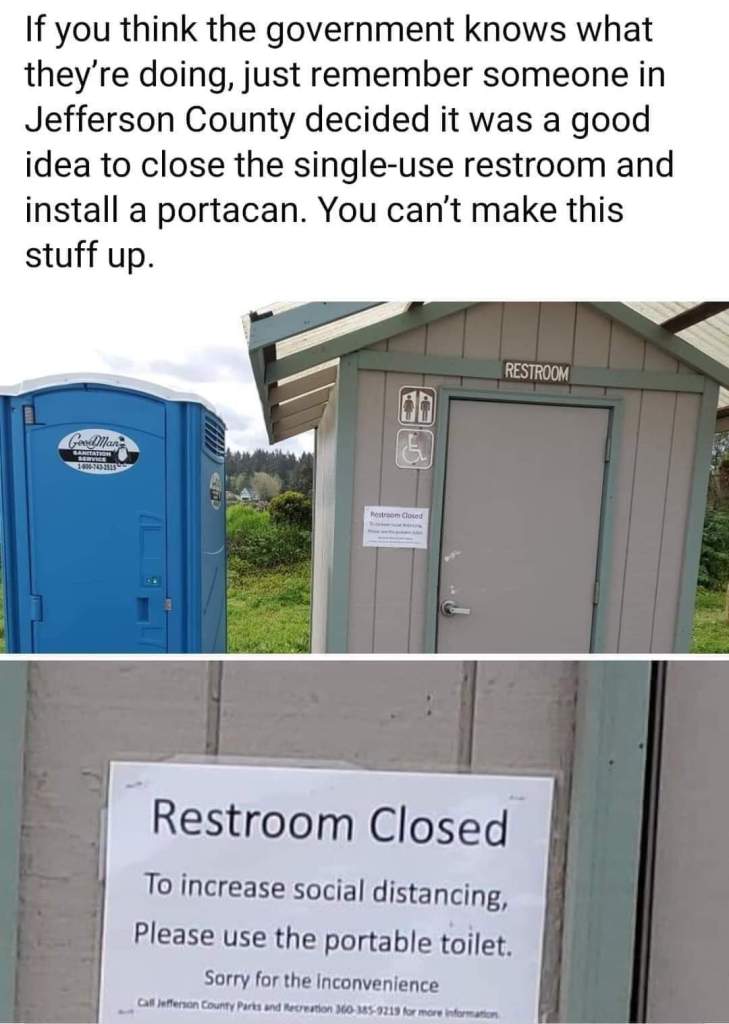
And then there is the not so small matter of shutting down rest areas in a time when truck drivers, always essential, were as essential as ever. You would think that if the goal were to stop the spread of the virus you would want your road warriors to have clean and easily accessible restroom facilities, along with a safe place to sleep. But, to this day, many rest areas remain closed and those open have dingy unheated porta-potties rather than open their regular restrooms to travelers. In a time when health and hygiene is supposedly our focus, they have forced unsanitary and stressful conditions on essential workers. Even after being confronted on this, they continue to persist with this asinine policy with absolutely no regard for the well-being of truckers.

Sure, this could be a mistake. There certainly is no reason to assume that there is some sort of malicious intention here. But it does demonstrate that they lack a special power of discernment over the rest of us. It should make us consider that maybe their whole perspective is wrong. I mean, if their judgment of small matters is so poor, why should we take their word on large matters?

Could it be that those who were elected for their charisma and/or party affiliation and are not truly qualified to lead anything?

Could it be that various government officials were appointed for political reasons, made their careers in places where job performance didn’t actually matter too much, and are incompetent?

Yes, government leaders can get caught up in hype and hysteria just like the rest of us. No, neither they nor their advisors have a special power of discernment. This reality may be disconcerting to those who want a benevolent dictator to tell them what to do, nevertheless, it is true.

The same leaders who nonsensically force truckers to use the least sanitary option could also be blissfully unaware of the severe (and deadlier) economic impact they are inflicting on us. The same leaders who forced nursing homes to take Covid-19 patients, evidently knowing the likely outcome, could be completely calloused to the pain that they are inflicting on you.

Myth That Only Government Can Do Great Things

There are many who are skeptical of government and yet default to the idea that we need to provide us with various services. I mean, who would build the roads if it wasn’t for PennDOT, right?

Of course, never mind that PennDOT doesn’t build roads, they take our money through taxes and then subcontract the actual building to private companies. The reason for this is very simple: The government can never match private for-profit enterprises for efficient use of resources because there is simply no incentive to do so. Therefore, due to this disconnect, when the government does do anything themselves it is insanely expensive and prone to failure.

Government funded and ready for launch!

A prime example, from a century ago, was the competition between Samuel Pierpoint Langley and two brothers from Ohio, Orville and Wilber Wright, to build the first powered flying machine. Langley, funded by the government and fawned over by the media, he had all the right connections and credentials, but his overwrought design ended up in the Potomac River. The Wrights, by contrast, had little to no attention, didn’t even have high school diplomas, ran a bicycle sales and repair business, and beat Langley to powered flight with a very low budget and simple design. But, despite this, it is Langley’s name that graces an Army airbase, the CIA headquarters, and a NASA center.

Oopsies!

Speaking of NASA, the agency has, at great taxpayer expense, done some amazing things. We take for granted the satellites in orbit, the trips to the moon and back, along with the many things this government agency had pioneered that have since become integrated into our own lives. Could one person ever rival these great accomplishments?

The answer is yes.

The answer is that Elon Musk, with SpaceX, can do everything NASA is doing and at a far lower price. It costs a fraction of what the government spent historically for Space X to launch:

“Between 1970 and 2000, the cost to launch a kilogram to space remained fairly steady, with an average of US$18,500 per kilogram. When the space shuttle was in operation, it could launch a payload of 27,500 kilograms for $1.5 billion, or $54,500 per kilogram. For a SpaceX Falcon 9, the rocket used to access the ISS, the cost is just $2,720 per kilogram.”

But it isn’t just space flight that is made easier and less expensive through private innovation. No, at a time when the US Postal Service, a government entity that is supposed to be self-sustaining, can barely make ends meet, there is Jeff Bezos and Amazon making a tremendous profit while delivering tons of products. Sure, Amazon uses the Postal Service, and yet the lack of ability of the government enterprise to modernize and adapt to the current market conditions that is proving to be a fatal flaw. As they beg for another taxpayer bailout, Bezos and others will continue to prove that the same task can be done better and with lower overhead costs.

The idea that there is any worthwhile project that is beyond the reach of the brilliant innovators of the present, without it being financed directly by the government, is completely bogus. Yes, certainly, unlike the Wright Brothers, the Musks and Bezos of this generation do take every tax break or advantage offered to them by government. But you could eliminate all of that entanglement and they would still do it better than any government agency at a fraction of the cost. The government never actually does great things. No, at best it is only ever a middleman that hires people or companies, supposedly on our behalf, that does the great things.

Myth That Only Government Can Keep Us Safe

If you look at the big problems of the past couple of decades that may require government sized intervention, from the 9/11 attacks to the viral outbreak originating in Wuhan, there is a disturbing pattern that emerges. Not only did this super expensive security apparatus not stop the various events and keep us safe, but it may also have actually been the cause of these events due to their prior interventions.

There likely would not be the Islamic Republic of Iran today had it not been for the CIA’s meddling in the domestic politics of Iran. Osama Bin Laden had been an ally in our government’s proxy war against the Soviet Union before he became a threat that cost trillions. Our top US health advisor, across multiple US administrations, Dr. Anthony Fauci, is linked to the organization that funded bat and coronavirus research in a lab in none other than (drumroll, please) Wuhan, China.

No, this is not a conspiracy theory, I’m not even convinced it was malicious in intent in any of the cases above. I agree with Hanlon’s Razor, “Never attribute to malice that which is adequately explained by stupidity.” But, regardless, there is certainly a strong case to make that high-ranking government officials do not comprehend the consequences of their actions, do not account for the blowback, and their solutions often create bigger problems.

Are you sure you want the same people who created the problem, in the first place, to manage the response as well?

Maybe it is time for a second opinion…

And then there is the inconvenient truth that many in government are the actual criminals!

Well, not that those truly guilty are ever prosecuted by the same standards applied to us or others of lower political status. Case and point: General Flynn was criminally prosecuted for what amounts to a perjury trap and in the context of an investigation that had no legal basis, to begin with, but a certain prominent US politician lied under oath to Congress and never faced any real threat of punishment.

No, we are no better today than in the time of kings when it comes to equal justice. Those with real power (usually the combination of media and government agencies sympathetic) are never held accountable or to nearly the same standard that is applied to the average person. Even in Pennsylvania, where nursing homes were forced by the state government to take Covid-19 patients, guess who is being investigated by the state Attorney General for the resultant deaths? If you guessed the governor’s administration that ordered the sick into the nursing homes, then you would be wrong. Nope, instead, they will investigate the nursing homes, which is a typical “smokescreen” strategy or means to distract from those who truly should be held accountable.

The Myth of the Significant Party Difference

One of the most persistent and most blinding myths of politics is that the two parties represent something vastly different. If you are one of those Obama fanboys who still believes that his administration was scandal-free even now, because he says so, even after the “Fast and Furious” gun-running scandal, after weaponization of the IRS against political rivals, and actually believe he didn’t know anything about the Watergate-esque spying under his watch, then you are a complete tool. Likewise, if you see Trump as being a saint because he says some Christian things and posed with some pastors, then you are an insufferable fool.

The real difference between the two men is that Obama is and expects to be catered to as one who can wax eloquent in a manner that sends shivers down the legs of other social elites, while Trump is a populist who knows how to work a crowd and is old (or rich) enough not to care what the talking heads think. If you don’t see Obama as being as narcissistic and corrupt as Trump then you probably also side against Biden’s accuser, with a corroborated allegation of sexual assault, while screaming #believewomen only a couple years ago because that is what you were told to do. Trump might be a bully, an unapologetic Twitter troll, but Obama is the popular snob who snickers behind the backs of those of lower status while knowing how to work the system in his own favor.

The only reason that I find Trump tolerable is that he offends who aren’t accustomed to being called out and is the underdog in the fight. The fact that Trump is loathed by the corporate media and political establishment, both Republicans and Democrats, is enough reason to like him. Most Trump ‘scandals’ amount to little more than elaborate misinformation campaigns. For example, when Trump suggested hydroxychloroquine had promise as a treatment option for Covid-19, something many doctors agree with, this was equated to telling people to drink poison and is still being ridiculed. Why? Well, because Trump said it and they hate him with a blinding passion. They would probably rather die than acknowledge that Trump is right.

But, in the end, I do not see Trump as a savior any more than any other politician. Sure, I am glad that he’s a challenge to the status quo. It’s fun to see his rivals become unglued and expose themselves as being as nasty under the thin veneer of their fancier, more sophisticated, language. However, the idea that any particular political party or person has all the right answers, or that Trump can be trusted with power more than anyone else, is balderdash. Trump should be mistrusted. He is as fallible as anyone else. My only complaint is that those attacking him, often for overtly political reasons, never face the same level of scrutiny nor are ever held accountable for their abuses.

The Myth of Having to Be Pro- or Anti-government

After writing all of that one might assume that I’m anti-government. I’m not. I believe that governments exist for a reason and abolishing them would not result in harmonious perfection. The same evils that plague government leaders would not simply go away because we eliminate the government and there is a moral order enforced by the state even if we do not fully agree with it. Sure, we may not like that a State Trooper gives us a speeding ticket and yet most of us are appreciative when a murderer is brought to justice in a way that we couldn’t do individually for ourselves.

In the Philippines, where the central state is relatively weak and law enforcement resources stretched thin, murderers often face no consequences. I know this from having experienced it first hand, the men who murdered uncle Roland are still free despite strong leads because the police there do not have the ability to follow up. By contrast, in the United States, even with the smallest leads, government investigators were able to find the killer of Sasha Krause recently and Marco Kauffman before that. That closure provided doesn’t bring back those loved ones taken away, but it certainly does help to take a killer off of the street and to provide some deterrence against others who would do evil.

If the United States government were to disband the relief from the tyranny we know would be extremely temporary and the peace short-lived as something would come in to fill the vacuum. A disorganized band of anarchists will do very little to stop even a Mexican cartel, let alone the People’s Republic of China, or anyone else who decided to take advantage. The peaceable folk who enjoy prosperity under the umbrella of government protection would either need to lose their disposition or learn to appreciate the taxation without representation of armed thugs who take whatever they want, including the innocence of their daughters, without ever needing to face consequences. We would be foolish not to consider the benefits of our imperfect order over the likely alternatives.

But, that said, I’m under no delusion as far as the righteousness of our social elites and governing authorities. They are as flawed and lacking in good discernment anyone else and often too often greedy for more power by any means.

Anyhow, I had sat on this post for a couple of weeks because I didn’t know how to finish. The tragic circumstances of George Floyd’s death, while in the hands of the Minneapolis Police, underscores the point of this blog quite well. No matter how intentioned or carefully formed, there is no escaping the reality that governments aren’t any better than the people that populate their nations. There is simply no escape for this reality, that no government in history or currently existing can save us from ourselves. The only hope for perfect justice is through faith in the kingdom where the fears, prejudice and greed, lust for power and lawlessness, are finally defeated in the hearts of men. Where we can govern ourselves according to the example of Jesus Christ.

Trump: The Man and the Myth

Standard

A fellow Christian (and conservative) friend asked me to list the problems I had with Donald Trump as a Republican candidate. The hard part is knowing where to start.

Trump claims to be conservative. He is definitely saying things that resonate with those who are concerned about jobs, border security and immigration. But, I believe proven character and integrity is far more important than what a person claims about themselves.

Trump supporters are convinced he is genuine simply because he says things they want to hear. Yet seem to forget that the art of demagoguery is to say what plays well with a particular crowd. Trump is shrewd enough to make a sale, but is he honest?

Myth #1—Trump ‘says it how it is’ and is honest.

Trump’s claim to fame is not personal integrity or conservatism. He is known for salesmanship and a bestselling book, “The Art of a Deal,” where he talks about creating a big impression. In other words, try to create an appearance of success and dazzle.

image

Trump parroting popular prejudice doesn’t make a him honest anymore than me moonwalking makes me Michael Jackson. There’s a strong possibility he may just be saying what some want to hear in order to make the sale. Those saying that Trump ‘says it how it is’ might want to consider who they are dealing with.

Trump, like the used car salesman who sold you that clunker, is trying to make a deal with you.

image

Sure, he might not be saying what ‘they’ want to hear, just as a used car salesman might also act like he’s at odds with the management because the deal he is making with you is going to cost ‘them’ too much. But that doesn’t mean you take the salesman at their word on it!

From a Christian perspective, there is even more need to be discerning and skeptical of claims that sound good to us:

“For the time will come when people will not put up with sound doctrine. Instead, to suit their own desires, they will gather around them a great number of teachers to say what their itching ears want to hear. They will turn their ears away from the truth and turn aside to myths.” (2 Timothy 4:3-5)

Trump has claimed a mythological net worth of near nine billion dollars, but Trump’s actual net worth is half of what he claims according to Forbes. So is Trump clueless about his own business holdings? Or does he know that the attention span of the average person is short and that he can dazzle people with a huge number that they’ll never check?

Even Trump’s business prowess seems as grossly exaggerated. Yes, he’s extremely wealthy, but he also had a huge head start and his daddy’s fortune to build from. It is said that the first million is the hardest and there’s some truth to that. You are far ahead when you can reinvest rather than spend your income on necessities. Trump had that advantage.

The real way to measure Trump is to put his accomplishments in perspective of his own peers:

image

Reality check: Trump’s success really is not as impressive when put in proper context. Trump is trying to make a sale, he is out to make a big impression with his target audience and willing to deceive.

Myth #2—Trump is rich and therefore he cannot be bought.

John D. Rockefeller, the world’s wealthiest man, was once asked: “How much money is enough money?”. His reply: “Just a little bit more.”

Rockefeller’s answer should be the end of this myth that the rich man cannot be bought or bribed. G.K. Chesterton took it a step further and said:

“You will hear everlastingly that the rich man cannot be bribed. The fact is, of course, that the rich man is bribed; he has been bribed already. That is why he is a rich man.”

I could understand how a secular person could be fooled into believing that wealth is a virtue. But a Christian has absolutely no excuse, Jesus makes mention of the “deceitfulness of riches” (Mark 4:19) and may well have been paraphrasing the book of Habakkuk:

“Wealth is deceitful. Greedy people are proud and restless—like death itself they are never satisfied.”

Could it be that Trump is rich because he has already been bought?

The wealth of a man does not prove anything positive about his character or integrity. There are good wealthy people, but there are also many wealthy people who would steal from their own grandmother and wouldn’t think twice about scamming you.

Is every wealthy person a crook? No, certainly not! I disagree with those who automatically equate wealth and greed. However, in many cases great wealth can be a sign of moral bankruptcy.

One of Trump’s holdings could say a bit about his philosophy in business and in life. That is that he’s in the Casino business. Sure, this is a perfectly legal enterprise, gambling is an activity many people enjoy, but it is also a game stacked against the participant, the house always wins, and the people who can least afford it are often the losers.

Reality check: Trump’s wealth may be legally acquired, but that doesn’t mean it was acquired through morally upright and non-exploitative means.

Myth #3—Trump is a political outsider and not an ‘establishment’ candidate.

During the debate Trump was asked:

“You’ve also supported a host of other liberal policies, you’ve also donated to several Democratic candidates, Hillary Clinton included, Nancy Pelosi. You explained away those donations saying you did that to get business related favors. And you said recently, quote, “when you give, they do whatever the hell you want them to do.”

Trump answered:

“You better believe it… I will tell you that our system is broken. I gave to many people. Before this, before two months ago, I was a businessman. I give to everybody. When they call, I give. And you know what? When I need something from them, two years later, three years later, I call them. They are there for me. And that’s a broken system.”

Now some may say such a brazen admission is a ‘breath of fresh air’ and refreshing honesty. I suppose a serial killer bragging about how he outwitted investigators could also be considered the same. But I’m not sure a shameless corruption is an improvement over the run of the mill variety.

If Trump were a poor person gaming the welfare system to his own advantage and bragging about it, would we applaud his shameless corruption or condemn it?

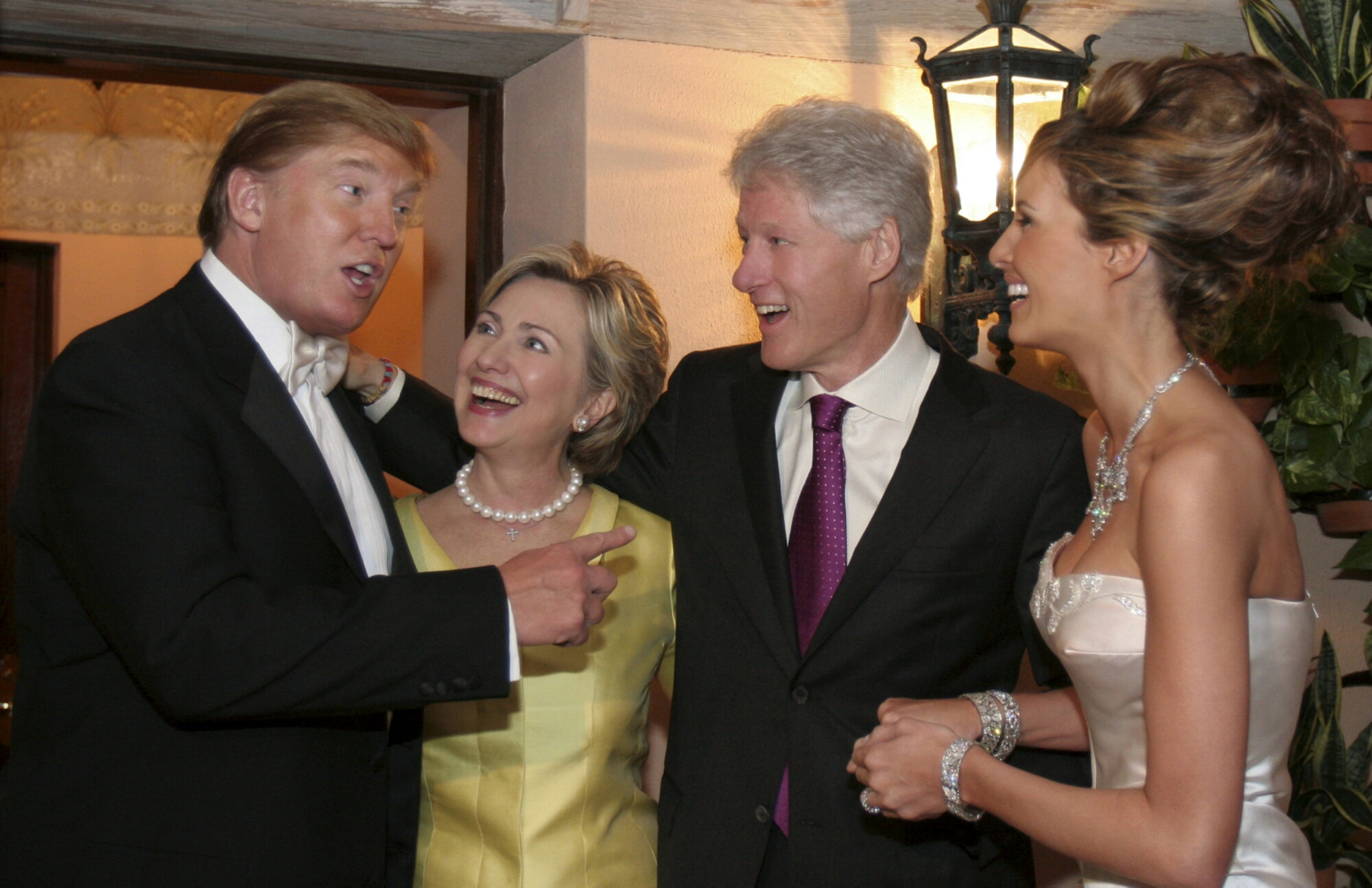
If Trump were a politician, would an ‘everyone else is doing it’ rationale and a witty response about the Clinton’s attending his wedding absolve him of guilt for being complicit in corruption?

Then there’s the matter of Trump’s attempts to use eminent domain for personal gain. As a National Review editorial puts it:

“Donald Trump’s covetous nature is not in dispute, but what many may forget is that he’s no great respecter of the admonition not to steal, either: The man has a track record of using the government as a hired thug to take other people’s property.”

Trump tried to use government power to force a widow from her property and was struck down in court. That is the modern day equivalent of king Ahab seizing Naboth’s vineyard (1 Kings 21) and is the kind of crony capitalism that is the problem.

There are two sides of the political establishment. One side is the politicians and the other side is men like Trump who work tirelessly to corrupt politicians. Men with money, like Trump, who exploit the system for personal gain, are just as much the problem as crooked politicians who take their money.

image

Trump is as much a part of the political establishment as a Bush or a Clinton. He is not an ‘outsider’ by any stretch of the imagination. So, it is time to see past the sales pitch, do not be dazzled by a man who has never proven himself loyal to anything besides his own self-interest.

Reality check: Trump shows no sign of having embraced Christian ethics. Trump’s confessions of his own corruption come without any sign of remorse and repentance.

Myth #4—Trump will govern differently than he does business.

If we have not learned by now maybe we will never learn. But every manipulator on the planet claims that they will change if only you give them what they want.

Trump shows no sign of remorse or repentance for exploiting the system for personal gain, yet we are supposed to believe he would never abuse government power for personal gain if he secures the White House?

If you believe that, I have a bridge I am selling…