
Echoes of Imperialism: From Pearl Harbor to Venezuela – Parallels in Desperation and Decline

Standard

In the annals of history, empires often have become cornered by their ambitions and are forced into desperate acts that hasten their downfall. Imperial Japan in the lead-up to World War II provides a stark example: backed into an economic stranglehold by US oil embargoes, it launched a very daring attack on Pearl Harbor in a bid for survival. And, today, the United States faces a eerily similar predicament—not as the embargoes’ enforcer, but as a nation grappling with big resource dependencies, massive mounting debts, and quickly eroding global influence. This parallel becomes extremely vivid when examining U.S. policies toward Venezuela—where the act of desperate aggression of Imperial Japan echos Trump’s bold moves on Greenland and the kidnapping of Nicolás Maduro. Drawing on historical precedents and the current events, we see superpower teetering on the edge—actions driven more by vulnerability than strength.

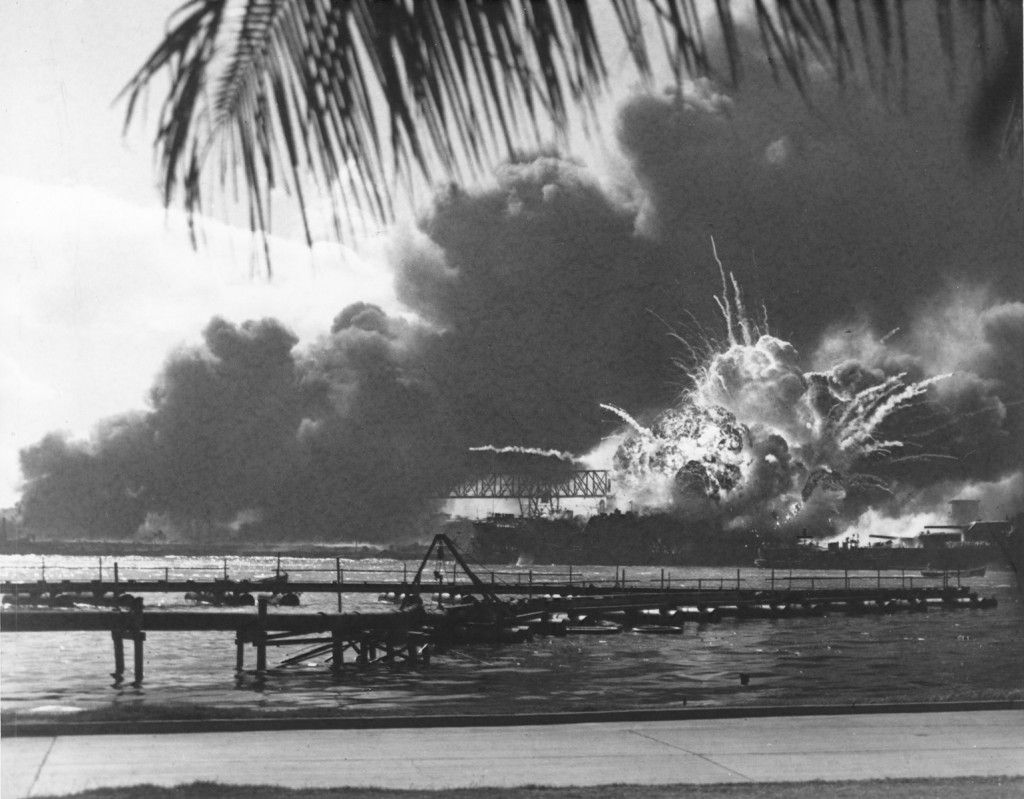
To fully understand this analogy, recall the circumstances that propelled Japan toward Pearl Harbor. In the 1930s and early 1940s, Japan’s imperial expansion in Asia relied heavily on imported oil, much of it from the United States. When President Franklin D. Roosevelt imposed an oil embargo in 1941—as a response to Japan’s actions in China and Indochina—this act was a declaration of an economic war. And it also set a countdown timer on Japan’s military machine. Without fuel, their economy and war efforts would grind to a halt and within months. Faced with this dire situation—down seven points with a minute left on the clock, as one might say—Japan opted for a Hail Mary: a surprise attack on the US Pacific Fleet at Pearl Harbor on December 7, 1941. The hope was to cripple U.S. naval power long enough to negotiate a favorable peace deal and secure resource access. Tactically brilliant, the audacious strike was an amazing success, devastated battleships and caused enormous damage. However, not wanting to risk detection, the Japanese decided against a third wave and left fuel depots and repair facilities ready to use. Crucially, the U.S. aircraft carriers, that would prove decisive in the coming battles, were absent from moorings.
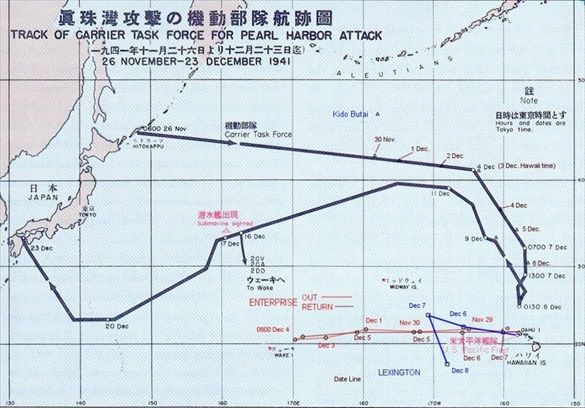

Perfectly planned and executed.

The Japanese leaders underestimated America’s resolve and their unmatched industrial capacity—which soon out-produced and overwhelmed them. What began as a bid for survival ended in their total humiliating defeat.

Fast-forward to the present, and the United States occupies the opposite seat at the table—or rather, a mirrored one. Once the architect of oil embargoes, America now imports much of its oil, and has refineries optimized for heavy crude from sources like Saudi Arabia, Russia, and Venezuela. Our economy ticks like a time bomb, burdened by dependencies on foreign production (notably China for manufacturing) and a military that, while formidable, also shows cracks of vulnerability. Recent simulations highlight this: in combined naval exercises, a relatively cheap ($100 million) diesel air-independent propulsion (AIP) submarine has “sunk” a powerful $6 billion nuclear U.S. Navy aircraft carrier, underscoring how newly arrived asymmetric threats could shatter the illusion of invincibility. This mirrors Japan’s overconfidence in its naval prowess, only to face industrial and logistical realities.

Nowhere is this desperation more apparent than in the US . dealings with Venezuela, a nation long in the shadow of the American empire.

Nobody comes close to the US in military capabilities.

South America’s history is riddled with bullying US interventions prioritizing corporate interests over national sovereignty—from the violence of CIA-orchestrated coups to those direct military incursions—a history that has birthed the term “Banana Republic.” For over a century, as long as resources flowed northward, Washington turned a blind eye to the most brutal regimes and their human rights abuses. The US military has often served solely as an enforcement arm of a handful billionaire oligarchs, who in turn fund politicians in DC in a corrupt cycle of public risk for private gain masquerading as Capitalism.

U.S.-Backed Kidnappings, Assassinations and Coups in Latin America Since 1950

1954 — Guatemala — President Jacobo Árbenz — Overthrown in CIA Operation PBSUCCESS

1960s, 70s, 80s — Cuba — Prime Minister Fidel Castro — The US tried to assassinate him about 634 times and invaded the country during the Bay of Pigs

1961 — Dominican Republic — Rafael Trujillo — US-backed coup and assassination

1964 — Brazil — President João Goulart — US-supported coup

1965 — Dominican Republic — President Juan Bosch — US-supported coup

1970 — Chile — General René Schneider — US-supported kidnapping and assassination

1971 — Bolivia — President Juan José Torres — US-supported coup

1973 — Chile — President Salvador Allende — US-backed coup and “suicide” of Allende

1976 — Argentina — President Isabel Perón — US-backed coup

1976 — Bolivia (in exile in Argentina) — former President Juan José Torres — US-supported assassination

1981 — Panama — General Omar Torrijos — Death in suspicious plane crash with likely US support

1981 — Ecuador — President Jaime Roldós — Death in suspicious plane crash with likely US support

1983 — Grenada — Prime Minister Maurice Bishop — US invasion and removal of Bishop in Operation Urgent Fury

1980s — Nicaragua — Sandinista government — Sustained covert regime-change war

1989 — Panama — Gen. Manuel Noriega — Invasion, kidnapping and transfer to US custody in Operation Just Cause

2002 — Venezuela — President Hugo Chávez — Kidnapped by US-backed military forces for less than 48 hours before being restored to power

2004 — Haiti — President Jean-Bertrand Aristide — Kidnapped and flown to Africa on a US military plane

2009 — Honduras — President Manuel Zelaya — US-backed kidnapping and coup

Venezuela’s “crime” was simple: asserting control over its vast oil reserves. When the government nationalized assets for sake of their people, the U.S. corporations and their political allies responded with their crippling sanctions—akin to thugs blocking shoppers from a well-stocked store. These measures aren’t about justice; they’re punishment for defying the empire. Claims that Venezuela “stole” oil infrastructure built by U.S. firms ignore offers to compensate, which were rebuffed. Why accept a fair payment when gross exploitation of resources is far more profitable? Recent actions under President Trump, including the controversial removal of the Venezuelan leader Nicolás Maduro to face a US judge, smack of desperation: a bid to seize assets and bolster a faltering balance sheet. It’s framed as liberating a people from Socialism, but the real reason is resource control.

US propaganda blames Venezuelan suffering on internal policies—like universal healthcare—ignoring how our sanctions starve their economy. Socialism is not a problem in Israel—why only here?

Judge Alvin Hellerstein will decide Maduro’s fate.

Meanwhile, alternative oil sources like Saudi Arabia or Russia remain volatile and keeping access is an increasingly risky proposition.

And, while I firmly believe mutual respect could yield great prosperity for the US and Venezuela—would both allow the migrants fleeing poverty to stay home and secure stable energy for the US without war—that is a peaceful solution that is far less profitable for US-based oil billionaires.  Maduro had also taken a strong stance against the killing in Gaza.  The country of Venezuela—under Hugo Chávez—banned usery and enforced a regime of conservative morals (US pornography banned and on gay marriage) all of which defies US banking and business interests.

This imperial overreach extends to the broader economic woes in the US, painting a picture of a nation painting itself into a corner. The US national debt, which first hit $1 trillion in 1981, now ballooned to $38 trillion and now they add a nearly trillion dollars every other month in an unsustainable parabolic ascent.  The US currency debasement, endless printing of money, punishes global holders, and is fueling the rise of BRICS as the safer alternative to the dollar’s long abused “exorbitant privilege.” Worse, all this government spending, regardless of the party, simply funnels wealth to oligarchs via their political connections—a trickle-down economics by another name. So called “tax cuts for the rich” are derided, and yet inflation achieves this exact same redistribution upward. The weaponization of the dollar, more importantly, erodes faith in its reserve currency status, undermining the very foundations of the post-World War II systems on which US strength rests—like Bretton Woods and the Petrodollar.
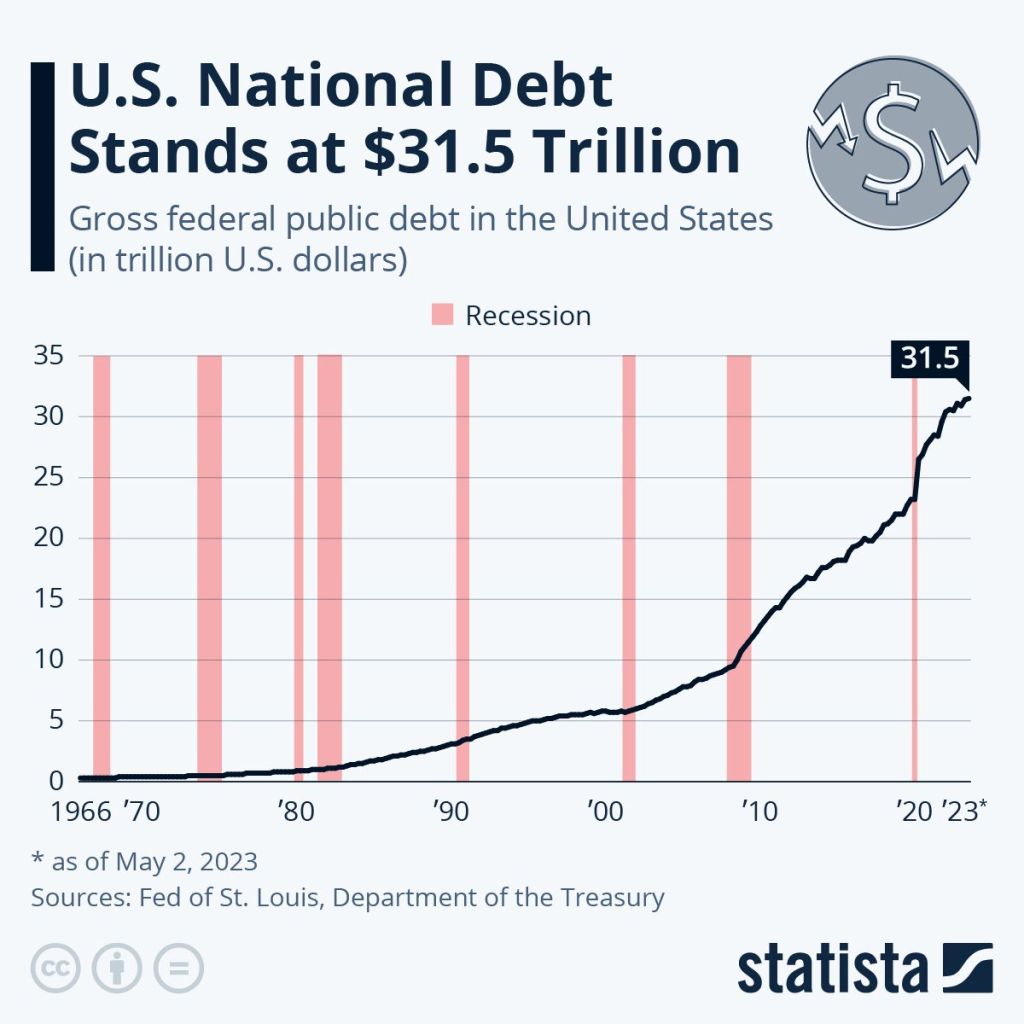
Our creditors can yank the rug at any time.

Compounding this loss of US reputation is a propaganda machine straight out of George Orwell’s 1984. No, show trials and kangaroo courts aren’t relics of Soviet excess; they’re very much alive in US actions against the figures like Maduro, tried in a rigged system far from impartiality. Maduro’s criticism of Gaza violence preceded his ouster, timed suspiciously after meetings between Trump and Israeli leaders. Media manipulates the narratives—vanishing massive supporting rallies or amplifying astroturf campaigns—much like the staged toppling of Saddam Hussein’s statue in Iraq, later regretted by participants who longed for pre-invasion stability. Skepticism abounds: those who saw through Russian collusion hoaxes or Trump’s prosecutions as lawfare suddenly swallow anti-Venezuela propaganda whole, revealing partisan blindness over principle. Lady Justice’s blindfold is absent at the top, swayed by partisan politics and payments. We endure psyops, cancel culture, thought policing, and memory holes, us screaming “2+2=5” at our cult leaders’ behest.

In historic parallel, the US supported Gaza genocide also evokes a direct comparison to Japan’s Nanjing Massacre, the unverified casualties now dwarfing historical horrors. America’s “Zionist” alignment only isolates us further on a world stage, very similar to Japan’s Axis ties. Trump’s tactical “success” in Venezuela may prove a strategic blunder, like Pearl Harbor: a short-term victory that awakens global resistance. And forcing the Danes to relinquish Greenland only drives a wedge deeper. Other nations witnessing another blatant disrespect of sovereignty—applying US laws extraterritorially, flouting the “rules based order” precedents—will only serve accelerate de-dollarization or even lead to alliances against us.
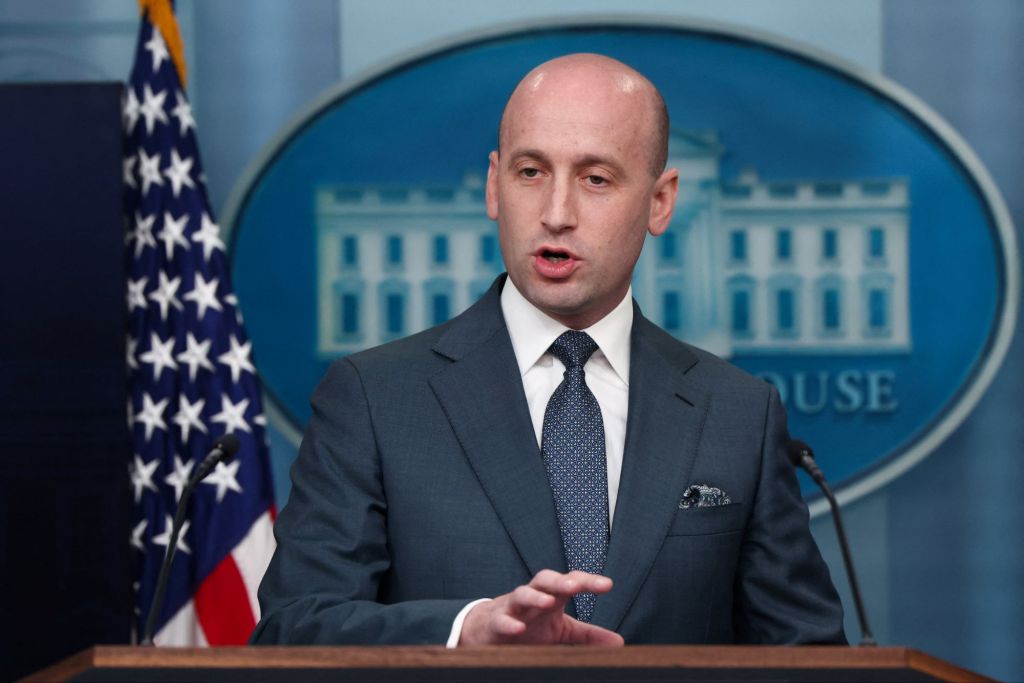
Stephen Miller: “only power and the willingness to use it matters.”

In conclusion, expansion oriented Zionist America, much like the Soviet Union of old, now perpetrates atrocities and abuses—from the bloodshed in Gaza to the brazen seizure of foreign leaders and threats—that erode our moral foundation and alienate the world. This path of treating partner nations like a pimp does a prostitute—the extracting resources through coercion and sanctions—is unsustainable. There are far better ways to achieve our goals beyond application of brute force—unlike the recent assertion by Zionist Trump adviser Stephen Miller saying “only power and the willingness to use it matters.” Embracing mutual respect, fair negotiations, and genuine diplomacy could foster true alliances, allowing us to secure resources without conflict, and also restore America’s standing. History warns that all empires built on military domination crumble; it’s time to choose a different course before our own Hail Mary seals our fate.

Redemption In An Age Of Unjust Outrage—Should People Be Given Second Chances?

Standard

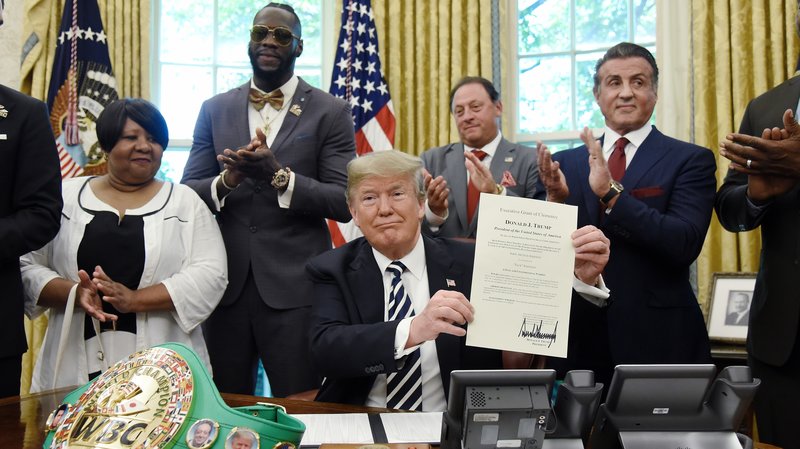
President Trump’s State of the Union address was very well received and perhaps some of the reason for that being his call for redemption. Two of the special guests had been incarcerated during the Clinton administration (when things like “mandatory minimums” and “three strikes,” often disproportionately impacting minorities, became Federal law) and have been recently given their freedom.

The first mentioned was Alice Johnson who had been convicted in 1996 for her involvement in a cocaine trafficking organization (apparently not the CIA), sentenced to life in prison, and having their sentence commuted by the Trump administration:

Inspired by stories like Alice’s, my Administration worked closely with members of both parties to sign the First Step Act into law. This legislation reformed sentencing laws that have wrongly and disproportionately harmed the African-American community. The First Step Act gives non-violent offenders the chance to re-enter society as productive, law-abiding citizens. Now, States across the country are following our lead. America is a Nation that believes in redemption.

The second guest mentioned, in relation to this redemption theme, was a man named Matthew Charles. Charles, with a face that beamed with gratitude, had been sentenced to 35 years in 1996 for selling crack cocaine in 1996 and became the first prisoner released under the “First Step Act” signed into law recently by Trump.

Like the President or not, this kind of criminal justice reform—after decades of excessive punishments—is something worthy of our praise. It is a first step back towards what once made America great and that being the opportunity to move on from our past failures, both individual or collective, and pursue a better tomorrow together.

Grievance Culture Never Forgives

Unfortunately, while legislative reforms are important, the President can’t undo a cultural progression away from Christian ideas of redemption and towards that of eternal grievance. Those sentenced by an outrage mob in the “court of public opinion” cannot face their accusers, they are denied any form of due process and are rarely, if ever, pardoned.

Media fueled public shaming campaigns, often at the behest of social justice warriors or their sympathizers, have destroyed careers mid-flight over a bad joke on Twitter—who can forget Justine Sacco’s sardonic quip about Africa, AIDS and race? One moment she was an anonymous leftist speaking cryptically about her white privilege to a small circle of friends and the next she is an international pariah for an allegedly racist remark.

Then there is Austen Heinz, the socially awkward genetic researcher and entrepreneur, who was driven to suicide by a bullying campaign led by Huffington Post, Daily Mail, BuzzFeed and other clickbait media sources.

His crime? He mentioned, off-the-cuff, some potential to change feminine scents, which was characterized as being “misogynistic” and “sexist” in one sensational story after another. Who knows what amazing breakthroughs someone as brilliant as Heinz could’ve produced in his lifetime had it not been cut tragically short by those who profit by pushing identity politics and division?

That’s not to say that there is no pushback against this sort of abuse. The wrongly accused boys from Covington Catholic High School are being represented in defamation lawsuits after suffering harassment and threats as a result of a media campaign, involving celebrities and other public figures, to shame them. One of the vicious commentators, Kathy Griffen, who called for their identities to be revealed and falsely accused them of using Nazis signs.

To Forgive Or Not To Forgive?

Of course who can forget the Brett Kavanaugh hearings or ignore the current uproar in Virginia over a photo in Democrat Governor Ralph Northam’s medical school yearbook showing a man in blackface with a Klansman?

And that’s not to mention the two sexual assault allegations that surfaced since then against Virginia’s Lt Governor, Justin Fairfax, and a Duke basketball player. Reportedly Fairfax used his knowledge of a young woman’s prior rape allegation being quashed by university officials as a means to victimize her again since he believed she would be unlikely to report as a result of her prior experience.

In all of these cases the evidence and allegations are different. They all should be addressed on their individual merits and in the correct venues. But all are also in the realm of politics and from many years ago, which really does significantly complicate matters. Who or what many believe seems to become more of a matter of whose ideological team you are on or the potential political fallout more than the actual veracity of the claims being made.

Political campaigns have long relied on digging up comments, years old, served up out of context, is simply how the game has been played. That said, that doesn’t take away from the seriousness of the more serious allegations, it is one thing to accuse someone of being a racist, sexist, or liar (largely subjective judgements) and quite another to be accuse them of rape. The latter accusation is either objective reality or it is not, potentially criminal behavior, and definitely reflective of a serious character flaw if true.

Still, with the lessor offenses or with unsubstantiated allegations, at what point do we forgive “human frailty” (as the Wall Street Journal puts it), remember that “all have sinned and fallen short of the glory of God” (Romans 2:10), “judge not lest ye be judged” (Matthew 7:2), and move on? Should we ever treat human failure (real or alleged) like a permanent stain, a reason to always be suspicious of a person, or an irredeemable blemish? I would say no, based on the references provided above, but then…

Maybe Forgiveness Is Only For Some…?

One of the problems with how forgiveness is often used is that is used as a license for our friends and political/religious/tribal peers while simultaneously denying the same privilege to others. This is why a perceived smirk can become a national outrage while actual violence in malls is dismissed as “teenage boredom” and largely ignored.

I’ve long been against collective punishment for individual sins. I’m part of that generation who had Martin Luther King’s “content of character” rather than “color of skin” speech drilled into them and have always made a sincere effort to put that axiom urging judgment based on individual merit to practice. But I’ve found that this steadfast conclusion makes me a relic in the time of intersectionality, group shaming, unforgivable guilt for some and permanent victim status for others.

Perhaps this current generation is a correction to the overly optimistic outlook of my own?

Stereotypes are not entirely baseless, statistics do bear out differences in attitudes, behavior, and outcomes of groups, which could be proof of systemic oppression or simply our own cultural and biological inheritance. There is a reason why many professional athletes are typically of one demographic and chess players are of another, it has to do with discrimination and yet is discrimination based on ability despite coinciding with differences in race or gender. So it is conceivable, as well, that some groups are more likely to become school shooters and for others to me more generally violent as well.

There is a time for generalization…

For there are many rebellious people, full of meaningless talk and deception, especially those of the circumcision group. They must be silenced, because they are disrupting whole households by teaching things they ought not to teach—and that for the sake of dishonest gain. One of Crete’s own prophets has said it: “Cretans are always liars, evil brutes, lazy gluttons.” This saying is true. Therefore rebuke them sharply, so that they will be sound in the faith and will pay no attention to Jewish myths or to the merely human commands of those who reject the truth. (Titus 1:10‭-‬14 NIV)

There may indeed be tendencies of groups that should be called out. That said, I doubt very much that St Paul, in the passage above, is making a case for unforgivingness or collective punishment. No, I’m quite certain that he, as one who once persecuted and killed Christians before his dramatic conversion, understood very much the need for redemption or he himself would forever be condemned. Had he been held to the same standard of today he would likely be completely disqualified from leadership and certainly never embraced as a brother by those whom he harmed.

Forgiveness Is For Those Who Repent.

One of those other problematic teachings that I’ve frequently encountered (particularly in my Mennonite religious culture) is this idea that forgiveness should be bestowed upon all people regardless of what they do or how often. This is based in a misapplication of Christian examples in a way that too often provides shelter for repeat sexual abusers and others who have learned how to game the system.

This idea that forgiveness removes any sort of accountability for sin is dead wrong. Sure, Zaccheaus needed to be forgiven for his taking advantage of people as a tax collector, but he also needed to repent of his sin and repentance required taking responsibility (financial or otherwise) for the wrong he had done.

In other words, had Zaccheaus been a child-molester simply admitting the sin or even an “I’m so sorry” speech is not enough, he would need to also face the civil penalties for his actions and also the social consequences as well.

The plea of Jesus on the cross, “Father forgive them for they know not what they do,” was not permission for those in the crowd chanting “crucify him” to go on murdering innocent people or an escape from need for repentance. Those in that outraged mob who called for his death would eventually need to repent and face the consequences of their sins like everyone else.

Forgiveness does not absolve a person from need to repent. Yes, there are times when we need to forgive those who have offended us without them repenting, we should always give a second chance (even 70 x 7 chances) to those who do truly repent (ie: have confessed and also paid the penalties for their sin), but this idea that forgiveness means complete freedom from consequences or removes the need to repent fully is not at all Christian—repentance is a requirement.

So, yes, we must forgive as we want to be forgiven and we should also not hold a grudge against those who have wronged us, but there is no indication that those who do not repent will be forgiven by God and we owe it to them to tell them the truth. Furthermore, according to 1 Corinthians 5:1-12, we should not even associate with a person who calls themselves a Christian and continues to live in unrepentant sin.

So, returning to the question initially asked…

Should People Be Given Second Chances?

The answer is both yes and no.

Forgiveness is something conditional. Jesus called for repentance, saying “go and sin no more” to a woman whom he forgave, and using a parable of a man forgiven a great debt who did not forgive to illustrate the point that forgiveness can be revoked for the unrepentant.

Second chances are for those who acknowledge their error (and repent) or can’t be found guilty of wrongdoing after the matter has been addressed in the appropriate manner.

There should also be allowance for growth—people do mature and change. There should also be some tolerance given to all people, because nobody is perfect, we all have our flaws, and would probably look pretty bad if our lives were put under the microscope of the outrage mobs. However, this tolerance and allowance should not only be for those who are on our team.

For example, we cannot say that blackface is the unpardonable sin of racism in one case and then play it off as a “coming of age ritual” (it certainly wasn’t for me) because our own guy got caught. We can’t treat a boy’s expression as a “facecrime” (thank you, George Orwell) worthy of national contempt while totally ignoring the grown men yelling homophobic and bigoted things (or worse, describe their hateful and intentionally provocative slurs as “preaching about the Bible and oppression” (*ahem* CNN) while simultaneously heaping condemnation on a boy for wearing a MAGA hat and an awkward smile.

That said, I would expect more from a fellow Christian, raised in a good home and under good instruction, than I would from some random dude on the street. Jesus did say that more will be expected from those who are given more (Luke 12:48) and that may mean we hold some to a higher standard. And yet we should also be aware that our own judgment is clouded by prejudice, that we don’t see everything a person is going through or the disadvantages they’ve faced in their lives, and therefore should err on the side of forbearance in all cases.

So there is no simple answers.

I do believe that our culture, due to social media, click-bait stories and a progressive decline in moral values, has veered dangerously away from forgiveness and redemption. We should definitely think twice before joining an outrage mob, we also need to do whatever it takes to keep partisan politics and tribal identities from perverting our judgment, and we should always give as many second chances to others as we would want for ourselves.

No matter your politics, you very well could be the next less-than-perfect person turned into an unforgivable villain by the mob, so keep that in mind next time you see a sensational headline, read a poorly concieved Tweet or watch a video clip without context.