Dismantling of the Penn State Colossus

Standard

Growing up, college sports, or even sports in general, were not part of my world. My father didn’t toss a football with me in the backyard or gather us around the TV for games—work was his recreation, and that was our normal. I had no reason to care. But something shifted later in high school, culminating in my going out for football my senior year, and I found myself very drawn to Penn State, captivated by the legacy of Joe Paterno and the blue-and-white pride that defined it.

In the years just prior to my tuned in, Penn State had soared to new heights, claiming two national championships and cementing its place as a powerhouse. For that fleeting moment, the Nittany Lions were the best in the gane. State College, just to the west of me, was the heart of this empire—a house that Paterno, a son of Italian immigrants from Brooklyn, had built. He was not just a coach; he was a living legend, embodying the loyalty, community, and tradition that made Penn State more than a football team—it was a shining symbol of our American values at their finest.

I didn’t love Paterno because he won every game. In fact, other than a Rose Bowl win, the program had definitely taken a half step back from the prominence of the 1980s. It was their “success with honor” mantra and Paterno’s commitment to the “kids” as part of his “Grand Experiment” philosophy that had attracted me. Paterno’s stated mission was not only to win on Saturday, but to build men through the game. At least according the brand, the win at all costs attitude was anathema. We are Penn State meant being at a higher standard on and off the field.

The Scandalous End of an Era

There are many good things that Paterno is rightfully remembered for. But history is not kind to those not true to their values and the legacy of “success with honor” is not what any of us wanted as fans from a distance. The man who lived in a very modest house adjacent to the campus—and had donated $4.2 million to the university library—was embroiled in a situation completely at odds with the character of his program. This, of course, being the horrific revelations about Jerry Sandusky—a former Paterno assistant—who was found guilty of sexual abuse of children and was for years according to the allegations.

Shock and denial are a natural response as a defense mechanism. Penn State fandom was more part of our identity where the “We are” was supposed to be a call to a certain moral code and standard. It was supposed to be about more W’s on Saturday and thus it was unthinkable that there was a sexual predator potentially being protected by the program. Those of us who accepted that it happened still wanted to minimize and keep it separate from the man who had preached excellence on and off the field. To this day this is something to be wrestled with—what did he really know and when?

My current stance is that Paterno prioritized the program over everything else. Similar to how religious institutions (like CAM or the Catholic church) too often try to deal with embarrassing issues internally—as a way to minimize fallout—there’s always the desire to save the ‘mission’ by undermining pursuit of the full truth or actual justice. In the end this little leaven of a moral compromise for sake will leaven the whole lump. However, expediency often trumps principles and the putting of reputation first started with Todd Hodne, in the 1970s, when the rapes of the prized Long Island football recruit began to be known. Paterno wanted to deal quietly with these kinds of ‘problems’ and it would blow up in his face at the end.
Hodne was a violent and vile predator.  Initially the rape allegations were hushed.

In my conversations with a cousin, who is a generation younger than me and far less of an idealist, my being completely appalled at fan behavior in the wake of coach Franklin’s collapse is silliness. He says the toxicity is everywhere and, basically, that I should not expect the Penn State football community to be exceptional. Even in response to my own posts on social media some of my friends believe that it is okay to make their vicious attacks against players and future prospects—because apparently sportsmanship is not a goal in the era of NIL money?  To me there has been something we have lost in our dignity and self-respect when we pile on young athletes and those who have invested far more than most in the bleachers ever did.

It feels like the culture has been hollowed out. An ethos has been lost. And my own disappointment with the sudden realization of the total absence of anything that actually distinguishes Penn State today, other than a few symbols and slogans, the final dismantling of the Paterno legacy that I’ve protected so long is complete. Why pretend? Integrity was neglected. And the thin veneer of The Grand Experiment philosophy has long ago worn away, we are not what we’ve claimed to be, we’re just another sports ball brand—class and character a mere facade.

Penn State peaked in the 1980s and has been in a ‘wilderness’ of ten win seasons since. 

Demystifying is the first step in dismantling the Colossus. With the transfer portal and NIL the era of loyalty and commitment to a higher ideal is over. But this shifting is one that goes beyond the football field or Penn State fan base. This is just a microcosm of the failure of the United States of being this “city on a hill” that was imagined by Puritan preacher John Winthrop. The “We are” is a localized flavor of American exceptionalism or the declaration of our unique quality and superiority over others. It is delusion.

It is also decay…

Reclaiming Lost American Values

The erosion of American values, particularly those intangible qualities that once defined community, loyalty, and collective spirit, is vividly reflected in the current state of college football, the influence of Name, Image, and Likeness (NIL) deals, and the broader societal shift toward prioritizing money over meaning. These three threads—Penn State’s football struggles, the commodification of college athletics, and the personal lesson of a child fixated on monetary rewards—converge to reveal a deeper cultural loss that is harder to pinpoint but profoundly felt.

At Penn State, the football program’s collapse mirrors a broader unraveling of shared purpose. The team’s 3-3 record in 2025, with losses to Northwestern, UCLA, and Oregon, has extinguished playoff hopes, compounded by the season-ending injury to quarterback Drew Allar. The program, once ranked #2, has been plagued by self-inflicted wounds—stupid penalties, turnovers, and a lack of team chemistry despite returning key players. The toxic “fire Franklin” narrative, fueled by fans and possibly amplified by wealthy alumni, has created a vicious cycle of negativity. This environment, where success is taken for granted and loyalty to coach James Franklin is eroded, reflects a loss of the communal spirit that once defined college football.

The fans’ inability to appreciate last year’s achievements, coupled with the pressure of high expectations, has turned a storied program into a cautionary tale of how a community’s values—patience, unity, and resilience—can erode under the weight of entitlement and short-term thinking. The prospect of rebuilding under new leadership may spark a recruiting bounce or an influx of NIL funds, but it also risks perpetuating a cycle where only wins and money matter, leaving little room for the intangible pride that once fueled rivalries like the one against Ohio State.

The field at Beaver Stadium is now “West Shore Home Field” after a large donation.  How long before Penn State’s no-name jerseys are replaced with corporate sponsors?

This shift is starkly evident in the rise of NIL, which has transformed college football from a bastion of amateurism into a billionaire’s playground. The purity of the sport, where loyalty to a program and the concept of the student-athlete once held sway, has been supplanted by a system where, as Mark Cuban’s “big number” donation to Indiana University athletics illustrates, wealth dictates outcomes. Fans no longer celebrate players who stay an extra year out of commitment; instead, they view them as paid mercenaries, unworthy of respect or admiration unless they deliver victories.

This also mirrors a broader societal decline in volunteerism and good sportsmanship—values that once rivaled capitalism in shaping America’s identity. The community spirit that made school sports a unifying force has been replaced by a transactional mindset, where loyalty is bought, not earned. This shift reflects a deeper cultural loss: the unquantifiable sense of duty to others or something greater than oneself, whether a team, a school, or a nation.

As the current system prioritizes individual profit over program or principle, it signals a collapse of the traditions that made college football a symbol of American unity, leaving behind a hollow pursuit of wins at any cost.
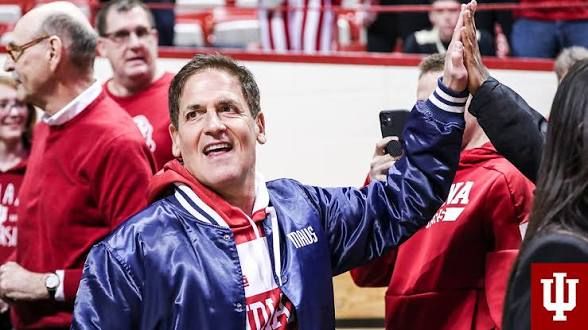
Now billionaires and corporations rule college athletics in the age of NIL.

This same erosion of values plays out on a personal level for me, where my tying my son’s chores to cash rewards has instilled a mindset in him that everything must have an immediate reward or monetary payoff. This mirrors the broader societal trend where wealth is the sole measure of success, undermining the concept of family as a unit bound by mutual care rather than financial transactions.

In cultures like the Philippines, where my wife is from, multigenerational support is just a given, but in America, the collapse of family unit and community has fueled reliance on pay based systems like elderly care, which often exploit the most vulnerable and leave little for future generations.

This shift away from communal responsibility toward an extreme individualism and personal profit reflects a loss of the intangible values—selflessness, duty, and shared burden—that once made America redeemable, if not great. And the rise of socialism, decried by conservatives, is less a cause than it is a symptom of this deficiency, as needy people seek external systems to replace the community support that has faded.

These threads—Penn State’s demoralized and debased fanbase, commodification of college sports through NIL in general, and my own struggle as a father of a teenager to instill non-monetary values—point to a broader cultural decay. The current loss of American values like loyalty, community, and tradition is not easily quantified, as they were woven into the fabric of what it meant to be American, and never before required definition or separate designation.

NIL, like the toxic fan culture or a child’s fixation on cash, is a symptom of a deeper disease: a society that prioritizes money and winning over the unmeasurable qualities that once held it together. This shift, felt more than seen, leaves us grappling with a question: if we cannot identify what we’ve lost, how can we hope to reclaim it?

Records Come and Go—Family Is Forever

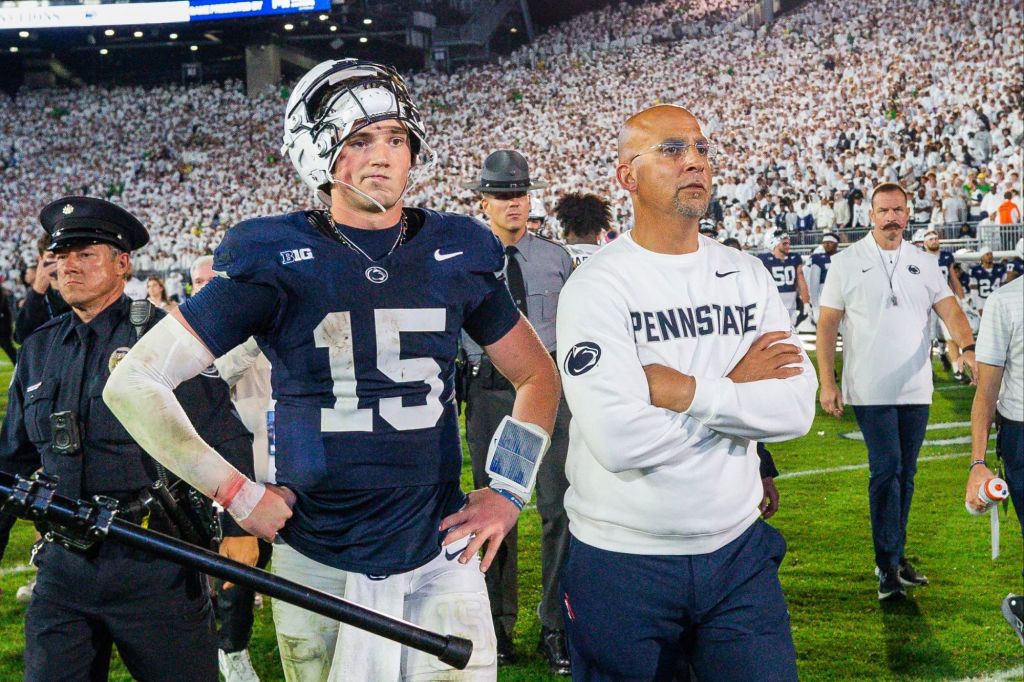
After the Northwestern game, a third loss this year, Franklin waited until everyone else—including his daughter—had gone through the tunnel before he strode through. This is likely because he knew what awaited him—taunts and trash being hurled.

Father and daughter.  Franklin was determined to be a better father than his own.

In comparison to the stupid entitled clowns, Franklin is a class act. He is the father protecting his family. A standard bearer for Paterno (an Italian surname that means father) or at least the commendable part of the late coach’s legacy. I have seen some of the comments online, one claiming Franklin was arrogant because he had only answered one of their emails or something of similar entitled quality—as if he could just sit responding to every moron harassing him. But the players who played for him are unanimous in their support.

In fact, one of the saddest things I’ve seen is the current Penn State roster expressing their guilt over his firing for “not playing well enough” to please the raving lunatics. They didn’t fail Franklin, the fans failed them and the Penn State tradition.

The players taking responsibility is a sign of a relationship with a man who told them his demands of them as players start with love and end with love. In other words, this was a high pressure environment, expectations were high, and yet it was for their good that he challenged them to be better. And, truth be told, Franklin’s teams punch above their weight. He was a player’s coach and that is why Penn State is bleeding top recruits who were coming to State College for something different under his leadership.

The “fire Franklin” types love to talk about how he “couldn’t win the big game” and yet neglect to mention his teams were almost always coming in as the underdog and with less talent and depth than their top ranked rivals. Or, in basic English, he was coaching them up to the level of the elites. And this a testament to his philosophy that had built on the positive part of Paterno’s legacy—he valued the players for more than the wins or losses and they responded with loyalty and inspired football.

Nobody will ever say Franklin was the best game manager or play caller. But then the online critics keep going back to a couple plays a decade ago. A run on 4th and five against Ohio State or kicking a field goal in a 28-0 Michigan game ending the shutout. But ultimately they were one play from the national championship game last year and Franklin was third behind two other coaches from 2022–2024 with a 34-8 overall record during that span—trailing only Kirby Smart (Georgia, 39-5) and Ryan Day (Ohio State, 36-7) for wins. Good luck finding the guy who will top that after we cut the soul out of the program that drew the talent that we did have. Who will come to State College to be nitpicked and unappreciated?

I loved a family man arriving at Penn State and to see it end as it has just makes me think we don’t deserve what we have.

The toxic part of the Penn State fan base is transactional. They believe their watching a game entitles them to perfection execution and results. I mean, imagine that, a howling mass of ingratitude made of mostly grown men who are apparently that unhappy with how their own life went that everything now is a matter of wins on Saturday. Most did not go to The Pennsylvania State University nor do they have any real investment in any tradition of excellence—like that which was upheld by Franklin’s family approach.

Franklin deserved better. He was not a DEI hire. He is certainly not a terrible coach. It is his players—who carry on his legacy—that actually matter. Penn State football should never be about pleasing drunk Uncle Ricos who failed at life, it should continue to be oriented towards success in life. Truly the few Saturdays under the lights are not a measure of a man. Franklin’s tenure should be remembered as a battle against wider societal decay—where the development of moral character and the building of community are too often sacrificed for the fleeting victories or short-term financial gains.

Pattern recognition isn’t for everyone.
Twelve teams with the most National Championships

Both Nick Saban and Urban Meyer, who are legendary coaches, expressed their support for Franklin. And to think delusional Penn State fans believed that they could replace Franklin with one of these two (already past retirement age) by waving a little money in their faces. No, nobody is coming to State College to be unappreciated for producing one winning season after another. We will be lucky to find any successful coach who is tempted by the job—let alone replace all of those who decommitted or will transfer now that James Franklin is gone.

Values Beyond the Scoreboard

In this blog—Irregular Ideation—my struggle with the disconnect between stated values and the values they truly live out. People claim to believe one thing and yet live something else. I’ve dealt with this in the religious and romantic sphere, the disappointment, this false notion that virtue would always win over mere physical or economic superiority. Mennonites teach that the meek shall inherit the Earth or that the first shall be last—these being Christian concepts about the kingdom of Jesus. But the reality lived is always different from that ideal preached.

The reality is that everyone is in it to win it. Yes, even that sweet and submissive young woman doesn’t date no scrubs. Sure, maybe a pious individual will adjust some language or settle on one rather than playing the field, but ultimately they’re going for the status or strength and attractiveness everyone else in the world pursues. Some overestimate the market value they have, but even in love we are being self-sacrificial or altruistic. We’re motivated by hormones and sexual desires—often things we’re not even totally aware of behind our wall of moral rationalizations and narratives.

With denial of this is the delusion that good things will happen to good people. We tend to confuse physical beauty with virtue as it serves our own carnal desires to see them as one and the same. I mean, who wants to say the quiet part out loud by admitting they picked Joe over Bob because he was taller or had charisma? We may say things about nurturing or character traits but this is code for nice breasts and big biceps. So what I am getting at is that we dress all this stuff up as something it is not and revelation of what is underneath is not debasement—it simply exposes what always existed.

From Paterno trying to bury the truth about Todd Hodne to the firing of Franklin, the true ruthless nature of college football culture is revealed.

Beaver Stadium rises out of the valley floor, an edifice, a temple where sacrifices were made in the name of success.

Beaver Stadium rises up from the farm fields of Happy Valley, a monument to Pennsylvania pride, like the “city on a hill” of American exceptionalism. But success was not built on anything different here as it was anywhere else. What is buried is the reality it is always about aggression, financial gain, and wins. The Grand Experiment failed and Penn State had to be like everyone else if it wanted to reach the top. Furthermore, there is a sense in which every program becomes a sort of family or builds men—Paterno was only unique for highlighting this.

Are there values beyond the scoreboard?

Is it a zero-sum game?

Yes and no. Friedrich Neitzsche describes “slave morality” or a system of ethics that reverses what we naturally value and then says this denial of reality is virtue. Woke is a manifestation of this, where they attempt to turn the world on its head and celebrate obesity, ugliness, criminal behavior or lack of ambition—and create an artificial reality—rather than deal squarely with the world as it is. Body positive isn’t going to spare you health consequences if you’re obese. Fair or not we must at some point deal with the cards we’ve been dealt and rise above our station or accept what we are. Mutilation of yourself to be something you’re not ends as badly as well. There really are no shortcuts to success or Uno Reverse cards to play—it is what it is on the scoreboard that matters to the world in the end.

Ultimately we also have our limits. We need expectations to match our abilities or we’ll end up in a spiral—always chasing what is beyond our reach rather than just building on what we have. I’ve seen it many times, those who leave a consistent and reliable partner, thinking they’ll do better out in the market, only to find out that (yet never will admit) that their discontentment played a trick on them and they had it better before than after. Not everyone can be a National Champion every year—it just isn’t possible—but we can have a family or community that respects all members and seeks only their best rather than tear them down.

Symbolic?

So maybe Penn State football does need to be dismantled and rebuilt to be great again?

It could be that, like the children of Israel in the wilderness, we’ll need this generation to pass so our children can enter the promised land?

If the foundation laid has led to this ugly spirit of entitlement then it was flawed. We might need to decide if football is so important we will lose our humanity or the immeasurable qualities not displayed on a scoreboard—for a “big game” win that won’t matter in a year or two. What does it truly matter if we gain the and lost our soul?

A race to the lowest common denominator is the end of civilization. Despite my lament above, I don’t believe life is all about money, sex and power—which ever order they come in. I still believe my elderly grandma had a beauty that was unsurpassed and morality is not just a smokescreen for our failure to be the best. Maybe the impossibility for me is possibility for my children. I cannot stay disillusioned. But, like I did in finally leaving my religious roots, I may need to also bury that delusion of Penn State excellence both on and off the field.
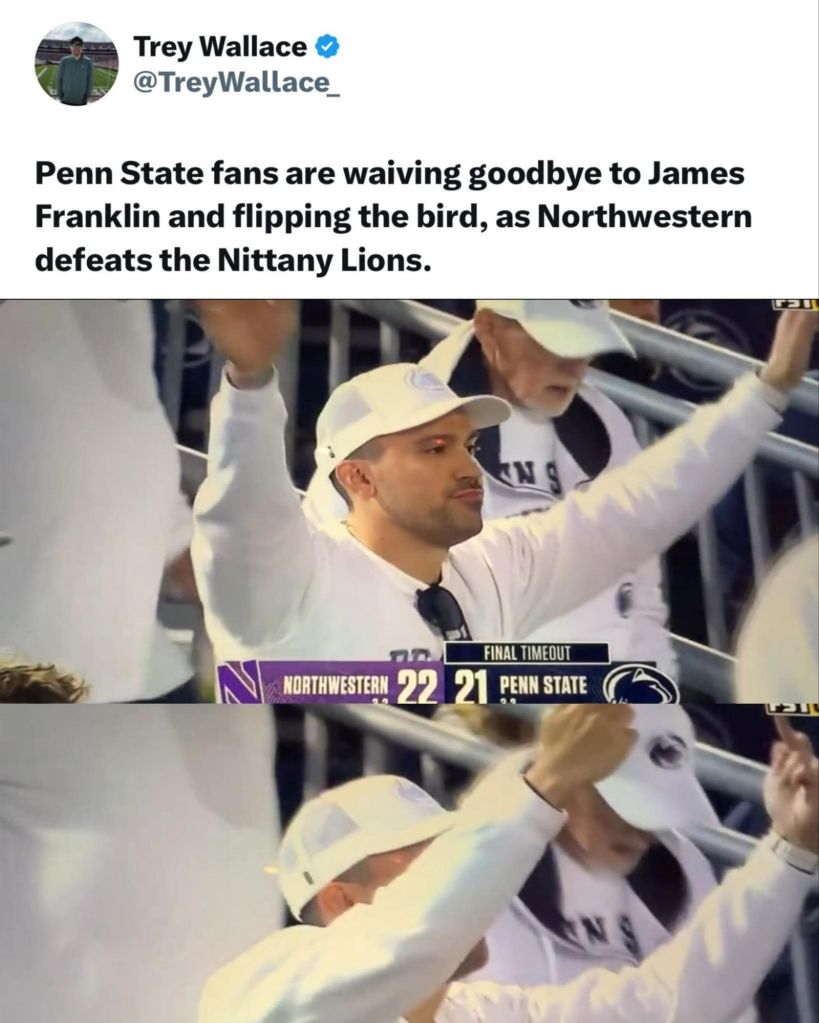
Not the tradition that made Penn State great.

Maybe the failure of The Grand Experiment was all Paterno’s own personal failure? Or maybe the message never went beyond the young men who loved him like players love Franklin today. But the Colossus now lies in ruins making me wonder if it was ever great to begin with. They didn’t just fire Franklin—they pushed over what remained of an ideal for sportsmanship, they’ve fully demolished the mythology that so inspired me. A giant ‘moral’ idol is gone—will something real rise up in its place?

The UCLA Ambush: Penn State’s Upset and the Push to Fire Franklin

Standard

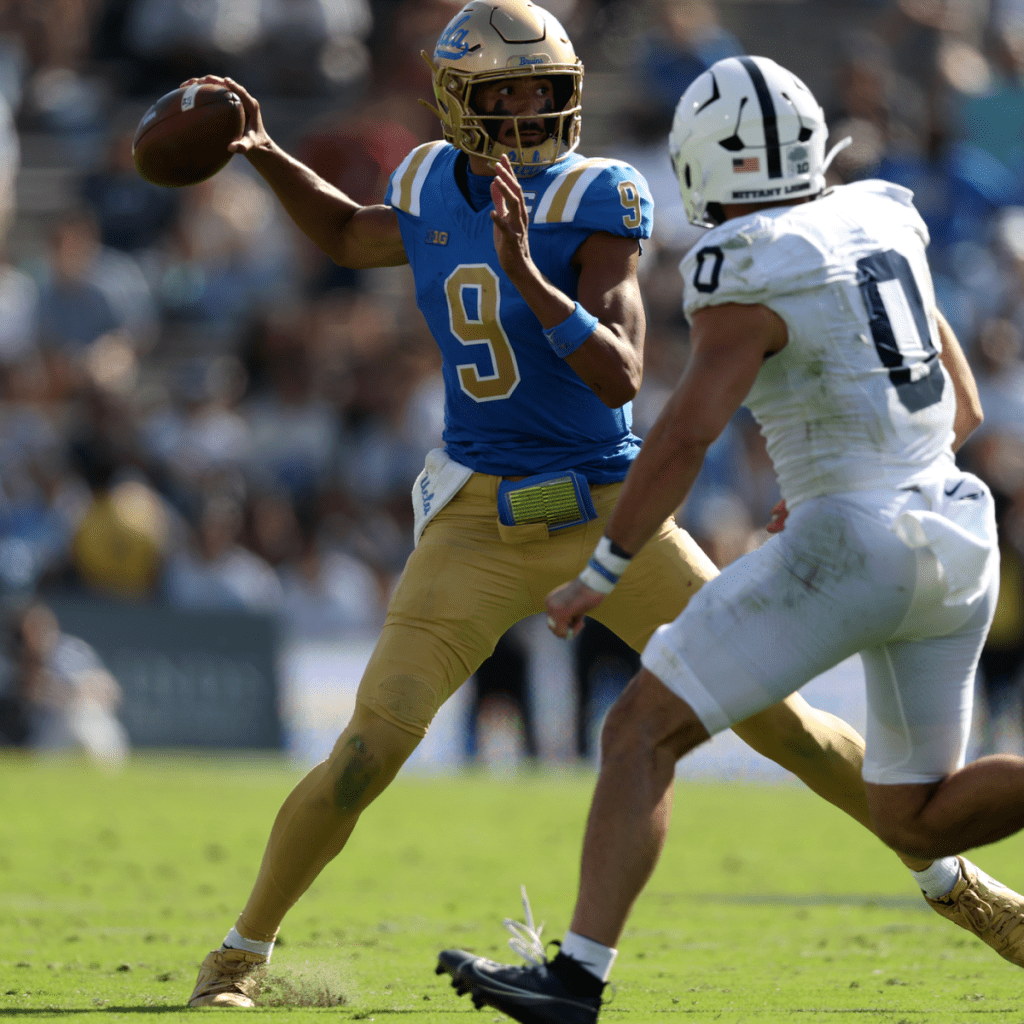
Nobody could have known, as Penn State and UCLA warmed up on a sunny California Saturday, that this was going to be an upset for the ages. The boys from State College were coming off a huge disappointment in Happy Valley, traveled the over twenty-five hundred miles, and probably hoped to get up early on a struggling program that had just fired their head coach and started the season with four straight loses.

7-0

On the side lines Drew Allar and company geared up for their opening drive. Eager to answer, not having any doubt whatsoever of eventual outcome. Their defense would start to tighten up and just wait until we get this Penn State offense rolling against an inferior defense.

Neuheisel had different plans. They knew that their opponent wouldn’t stay sleeping for long and football is a huge momentum sport. The wind was at his back, this was the time to roll the dice, employ a little bit of trickery and kick the on-side kick. I’ve seen this before. A local high school coach with a team coming out of a long slump world do this in one or two games just to help his squad get their feet under them. Sure, you don’t recover and give the other team very good field position. But it’s unexpected and totally deflates the opposition if you get the ball back again.

A big gamble pays off.

UCLA would easily recover the short kick to the far side and suddenly the score was ten to zip with the favorites trailing.

10-0

James Franklin didn’t need this. But he did not have time to waste either. He felt some pressure, “can’t win the big game” was now screaming in his ears. However, unlike the fair weather fans who have never coached a game in their lives, winning games in real life wasn’t like them hitting the right button combos on their game controller, and they had watched film all week on a team that is now doing things they couldn’t do before. It wasn’t like he hasn’t felt pressure like this in the past. He hoped to get on the board then settle in to a rhythm where eventually talent would takeover.

Allar did engineer a drive, after a scary near fumble about gave the Bruins the ball back one more time, and brought the Lions within three by the end of the first quarter.

10-7

But UCLA’s quarterback, Nico Iamaleava, a proven talent who started his college career at Tennessee where he was 10-3, didn’t plan to make this easy for the visitors and went right back to work answering quickly to put the Lions down two scores again. He was hungry. And that is where the upset really started to pick up pace. Penn State would remain scoreless throughout the second, obviously now back on the ropes, and was discombobulated.

27-7

In the third quarter Penn State finally would wake up, with their offense finally finding a little traction. Drew Allar, shaking off earlier struggles, connected with Khalil Dinkins for a 40-yard touchdown pass, narrowing the gap to 27-14. Moments later, a special teams miscue by UCLA gave Penn State a spark when Liam Clifford returned a punt 6 yards for a touchdown, bringing the score to 27-21. The Nittany Lions’ sideline erupted, sensing a shift in momentum, and the Rose Bowl crowd grew tense as Penn State’s defense started to apply pressure.

Deluca, a walk-on, is good.  But Rojas is better.

But UCLA’s young play caller, Neuheisel, kept his composure. Leaning on Nico’s dual-threat ability, the Bruins answered with a 1-yard touchdown run by Iamaleava, restoring a 13-point lead at 34-21. The aggressive nothing to lose playcalling, including a mix of designed runs and quick passes, kept Penn State’s defense (still adjusting to the sudden loss of Tony Rojas during the week) guessing and prevented them from settling into a rhythm.

34-21

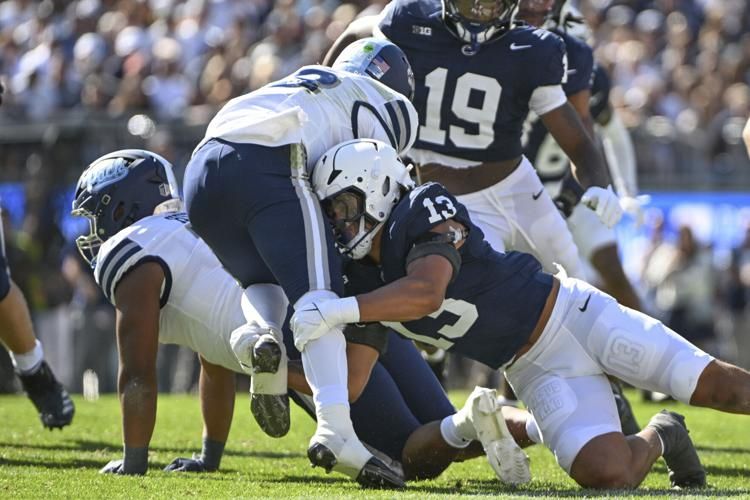
In the fourth quarter, Penn State mounted a furious comeback. Kaytron Allen punched in a 2-yard touchdown run, cutting the deficit to 34-28. The Nittany Lions’ defense forced a stop, and Allar led another drive, finding Kyron Hudson for a 15-yard touchdown pass to make it 34-35. With the game within reach, Penn State’s hopes soared. But Iamaleava, showcasing his poise, responded with a 7-yard touchdown run and a successful 2-point conversion pass to Kwazi Gilmer, pushing UCLA’s lead to 42-35 with 6:41 left.In the final minute, Penn State drove deep into UCLA territory, facing a 4th-and-2 with 37 seconds remaining. The Nittany Lions needed a conversion to keep their hopes alive, but UCLA’s Scooter Jackson burst through for a clutch tackle-for-loss on Allar, forcing a turnover on downs. With the game all but sealed, UCLA’s punter, Will Karoll, took an intentional safety on the ensuing punt, making the final score 42-37.

Final Score: 42-37, UCLA

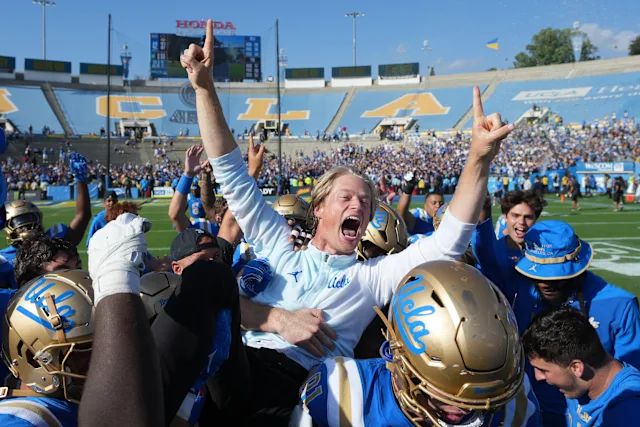
The Rose Bowl erupted as UCLA celebrated their first win of the season and their first victory over a top-10 opponent since 2010. For Penn State, the loss marked a second straight Big Ten defeat, dropping them to 3-2 and raising questions about their playoff aspirations and adding more fuel to the “fire Franklin” fire. And, at this point, his hopes of a playoff run or National Championship this year are on life support. Coming off a 21st “big game” loss a week earlier, where Franklin has continued to lose to the top ten ranked teams—despite usually winning the UCLA-type games—makes it an even more stinging defeat.

So how does this happen?

“Any given Sunday” applies to professional football and is this idea that any NFL team can beat any other on any given matchup. It is, in that case, about league parity and the fact that they strive for a competitive balance. Just because a game isn’t a “big game” according to fan expectations and current rankings doesn’t mean that winning is just a given. And Penn State is one of the teams consistently good enough that every other team is going to come prepared. You know that even in Columbus, despite having success against Franklin, they still mark the big game on the calendar. This is also how the Buckeyes get beat by Michigan annually—the Wolverines come ready for them.

So UCLA was in the perfect position for an underdog ambush. There was no way for the Penn State coaching staff to prepare, a new coach with nothing to lose can pretty much do anything and nobody will question it. If the on-side kick, after their first score, was recovered by the Lions, commentators will shrug, “well, at least he’s trying to give his team an edge against a heavy favorite.” So there’s nothing to lose in the risky play. But Franklin can’t be as freewheeling, there are expectations to win and thus anything special he does will be judged as the reason why they lost—a damned if you do, damned if you don’t scenario.

The upset comes down to a UCLA getting a big opening lead from playing good football and a little trickery. Then you have a better quarterback in Nico than is indicated by the team’s 0-4 record. After that you have Penn State still trying to find their identity losing a key defensive starter, Tony Rojas, only days before. Adding to the woes Jim Knowles, a proven defensive coordinator, fresh off his national championship, didn’t adjust to the big third down threat of Iamaleava. It is as if he just expected superior talent to get the job done and it didn’t. Apparently he did spy with Dominic DeLuca, replacing Rojos, who just couldn’t make those critical third down stops. Knowles shut down Iamaleava with his Ohio State talent last year. Are we really going to blame coaching?

But the real story here is that football is an emotional sport and Penn State came in to this contest with their butts dragging. They got beat during the White Out despite. That monkey of the “big game” struggles still not off their back. They were on the road a long way from home. Sure, they probably have a slightly more talented group, but UCLA got some momentum early and didn’t get off of the gas as the beleaguered then 7th ranked team finally stated to wake up.

Fire Franklin?

There has been a lot of fans chirping, over the past few years about Franklin’s inability to “win the big game” and what this means is that, despite his winning the games that he is expected to win, he has a twenty-one game losing streak against top ten teams, and this is especially irksome considering Penn State has not beaten rival Ohio State since 2016 (my last game in attendance), and, therefore, according to this group he must suck as a coach, right?

But this is just a total lack of appreciation for the reality of college football. No, while Penn State has always been good, the elite teams were decades ago, in the 1980s and Franklin’s record really isn’t all that different from the legendary Joe Paterno who went 3-12 in his first 15 top-5 games. And then there’s the fact that Penn State went in as the underdog in all but 3 of these 21 top ten match ups. Paterno actually lost more top ten contests as a higher ranked team going in. And so the field has tilted in favor of the winners of the majority of these frequently cited 21 Franklin losses and many of them still ended up being very close games. The recent Oregon Ducks game at home being a prime example, going into double overtime before another painful end.

So why does Penn State lose ‘big’ games?

First of all this whole big game standard is nonsense. Every single game at this level is a big game. Even in those warm up games there is usually enough talent on the other side to pull off the upset. Who can forget how Appalachian State humbled the mighty Wolverines. Second, that said, the outcome of the game often will come down to talent and depth. That is what I believe gives the perennial elites their edge, it is the program itself that draws the talent and whomever is coaching gets the credit. So how have the teams Franklin taken to top ten match ups stacked up? Was there a talent gap?

According to Grok:

Yes, in many cases: A talent gap existed in 15 of 21 losses, particularly against Ohio State (7-0 in these matchups) and Michigan (4-0), where opponents’ rosters were stacked with higher-rated recruits. Ohio State’s average class rank of 2.2 reflects a near-NFL pipeline (e.g., 5-stars like J.T. Tuimoloau in 2021 or Jeremiah Smith in 2024), while Penn State’s ~10–13 range, though top-tier, lacked the same elite depth. Against Oregon (2024, 2025), Oregon’s NIL-fueled classes (No. 3–6) outpaced PSU’s, contributing to losses. These gaps align with probabilities: teams with top-5 classes win ~65–70% of top-10 matchups when facing teams ranked 8–15, per historical betting data.

So Penn State was the underdog and does not draw as well as teams more known to be in the national championship discussion, which means Franklin may even have these teams punching above their weight to keep it close. They’re not head and shoulders above UCLA. And this won’t change with a new coach. Historically the Nittany Lions have been committed to the scholar-athlete concept, Paterno valued academic performance as much as on field success, which does limit the talent pool a little bit. To abandon this is to lose what it means to me Penn State. The win at all costs crowd clearly don’t get this.

Interim UCLA play caller is Jerry Neuheisel had a game plan that his opponents could not possibly know. In his mind this would be an ambush, with slight adjustments here and there he knew he could take advantage of a sleep walking Nittany Lions squad. He won the coin. Perfect. Time to get some of that Bruin confidence back. With just a bit of luck, better execution and efficiency on third downs they clawed their way from the Big Ten basement and drew first blood.

All of that considered, there is still plenty legitimate criticism. Franklin getting too conservative in play-calling contributes—call it “playing not to lose” rather than take the risks necessary to win. But some of this stems from, and is becoming a self-fulfilling prophecy or due to pressure from a fan base that never lets the team move on from a loss. Fueled by their very unrealistic expectations, they amplify the failures and aid opponents. Who will want to replace Allar or Franklin after seeing the nastiness online because a team lost some games to better competition? Penn State fans need to realize that they are truly the monkey on the back of the program.

Urban Meyer weighing in on Franklin is worth a Beaver Stadium full of ungrateful idiots:

I think he’s doing a great job. I think you talk, Ryan Day‘s got a Wolverine problem, and Penn State’s got a couple problems; Oregon. Everyone’s just got their little flaws they’ve got to work out. So is criticism right, to answer your question? Yes. Is it time to make a change or even talk about that? Absolutely not.

That’s a voice of experience and expertise.

Players back Franklin, Jason Cabinda on X:

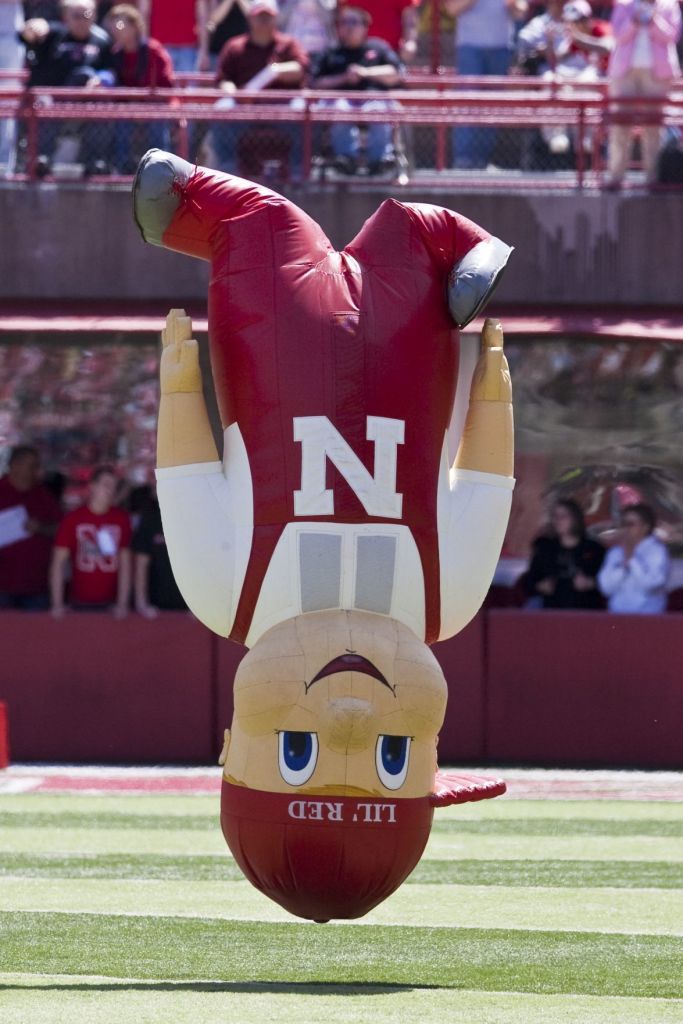
Those Sunday morning quarterbacks who believe replacing Franklin will just magically make the program elite are sorely mistaken and could end up dooming us like Nebraska after firing one head coach after another in a pursuit of relevance. Nebraska’s spiral began with the 2003 dismissal of Frank Solich, who had a 58-19 record (.753) and a 1999 Big 12 title, but was deemed insufficiently elite after 9-3 and 7-7 seasons. His replacement, Bill Callahan, went 27-22 (.551) with no conference titles, followed by Bo Pelini’s 66-27 (.710) tenure, which was axed despite consistent 9–10-win seasons due to big-game failures (0-4 vs. top-10 teams). Subsequent coaches—Mike Riley (19-19, .500), Scott Frost (16-31, .340), and in the interim Mickey Joseph—plummeted Nebraska to irrelevance, with a combined 35-70 (.333) from 2015–2022, no bowl wins since 2015, and a drop from top-10 recruiting classes to the 20s by 2020, per 247Sports. Fan unrest on social media mirrors Penn State’s “Fire Franklin” cries, but Nebraska’s 22-year title drought and their 4-8 average seasons since 2016 highlight the risks of chasing that mythical “elite” coach—the potential of destabilizing Penn State’s consistent 10-win program under Franklin for a gamble that could yield decades of actual mediocrity.

Huskers blamed the coach and went downhill since.

Alas, this terrible upset, after an emotional loss to a legitimate top ranked team, could be the final blow for Franklin. If he can’t get this veteran and talented group to get over the hump, a win in Columbus or a National Championship, the pressure may finally be at the point where he’ll part ways. However, it will likely be a victory short lived for those demanding his firing. First, it will cost $48.7 million to buy out his contract, draining vital resources. Second, odds are he will be like Andy Reid going from Philly to Kansas City and suddenly all those 50-50 games tilt his way—while Penn State slides as players go elsewhere and coaches come and go.

Update: Things just went from bad to worse for Penn State.  This week they have lost to Northwestern, at home, and drop to 3-3 on the season.  And the opponents only getting tougher from here on out.  Football in a very emotional sport and this team just can’t get it done on the field anymore.  The chemistry you would think would be there by returning so many key players just isn’t.  There was a ton of very negative pressure being put on the program with the “fire Franklin” and that would rob anyone of their enthusiasm.  But at this point, this far into a coaches tenure, seeing this kind of collapse?  It really does not matter if it is a self-fulfilling prophecy of the fans themselves.  We were very oddly victims of our own success last year, going into the season #2 in the nation just shows how high the expectations had been, but we lost to Oregon in the first real test, then had a disaster against a resurgent UCLA team, and now did not rebound at home against Northwestern.  Now even the remote hope of playoffs is off the table, Drew Allar is out for the season with an injury, Oregon lost to Indiana and there’s really nothing positive to say about this team.  There are certain the great individual efforts, but they really have not processed (or at least not fast enough) towards being a team and maybe because they’ve all lost faith in each other?  It really does not matter the exact cause or who is most at fault (Franklin, the booing fans or just the fates), this is probably the time to go in a different direction at the top.  Until now I could hold on to “oh so close” and the probabilities.  But I didn’t expect the wheels to come off like this.  And Saturday again it was another grinding painful defeat with the promising stop opening series ending with Allar being picked.  With stupid penalties giving the Wildcats new life.  It was a loss that was self-inflicted.  There is no recovery for Franklin now, redemption meant winning out the regular season and now one must wonder if we can win even one conference game.  Traveling to Columbus this year will be brutal, I fear, because we probably won’t have that rivalry mojo that at least kept the games respectably close.  The program will need to rebuild regardless and better to do that with someone else at the top.  That is going to shut up the idiot naysayers for at least a year.  It will give a recruiting bounce if we get the right name.  And there might even been a surge of NIL money if many of the wealthy Penn State alumni were also on the fire Franklin bandwagon.  The biggest disappointment with me, in all of this, is the fact that we got what we deserved.  Those who were still yelling “fire Franklin” after last year could not appreciate success—winning was taken for granted.  Now they will know rock bottom and there’s a likelihood that the slide won’t stop after Franklin.  What coach or player, with a choice to go elsewhere, will want to play in such a toxic environment?

A Rose By Any Other Name

Standard

It is hard to feel unique in a world of 7.75 billion people.  Due to mass media we are also more aware of this and also now have all of the best in the world there to compare ourselves to.  We see the best athletes, the most beautiful bodies, those with wealth and power day in and day out.

I am insignificant

At the same time, many young people did not have siblings to share the attention of their parents, only were given affirmation in their formative years, a participation trophy for showing up and—special as they are—don’t need to follow rules or ever answer to anyone.  

In other words, we have a generation with deep insecurities, worried about their place in the vast sea of humanity, and then also raised to be self-absorbed narcissists.  

Unlike the past generations, where you could be a big fish in a small pond, yet also needed to learn respect for boundaries and how to share or negotiate with others. 

Unlike the meritocracy of the past, where you needed real accomplishments to earn privileges or praise, we have conditioned young people to believe that their satisfaction should come without sacrifice or effort.

It is very little wonder why so many of them are unfulfilled, dissatisfied with life, and out there seeking cheap distinction.

Distinction—Cheap or Valuable

We all know names like Elon Musk, Serena Williams, or Ron DeSantis.  They are leaders in their realms of popular culture and sport, business or politics.  And we can probably agree that some of their success is an inheritance of genetics, good fortune or the opportunities granted them.

However, what they are doing, like them or not, is producing results and with this are being rewarded for the things they do.  They have outcompeted many, they distinguished themselves by showing up for work and by putting the time in.  It is for that reason their recognition is earned.  They do the things we care about and we make them famous for this unique resume.

Earlier this week I saw a story about Rose Namajunas, a diminutive female UFC fighter with a very big attitude that earned her the nickname “Thug Rose” in school, and how she’s being featured in a Victoria’s Secret ad campaign.  The message “all expressions, no definitions,” with the word “undefinable,” do certainly fit her outsized personality and the mean head kicks she can deliver, all the while being very emotional.

The point a marketing strategy is cynical, it is to tickle ears and encourage more consumption of a particular good or service.  Those who produced this advertising campaign did it trying to target a certain demographic in the hope of profit.  And that target is probably not those who will ever have the same work ethic and skills as Rose, but is those who crave the same notoriety and ‘undefinable’ uniqueness.

We all wish to be significant, to distinguish ourselves from the pack, to be appreciated and loved.  There are many who are looking for a shortcut or feel entitled to these things, they want the same acceptance, recognition and rewards as those at the top.  They buy expensive clothes, the latest smart phones or cars beyond their budget, all trying to gain attention through their appearance rather than actual character.  

There is hard-earned distinction and there is the cheap kind.  There is the content creator who shares of their substance and then the one who destroys things for clicks.  There is the pleasing gift of Abel and that unworthy offering of Cain.  There is that real fulfillment which comes from making contribution and then the imitation that is outwardly prideful, expresses itself loudly, while truly being an envious, bitter and impoverished soul.

Personal Pronouns and No-name Jerseys

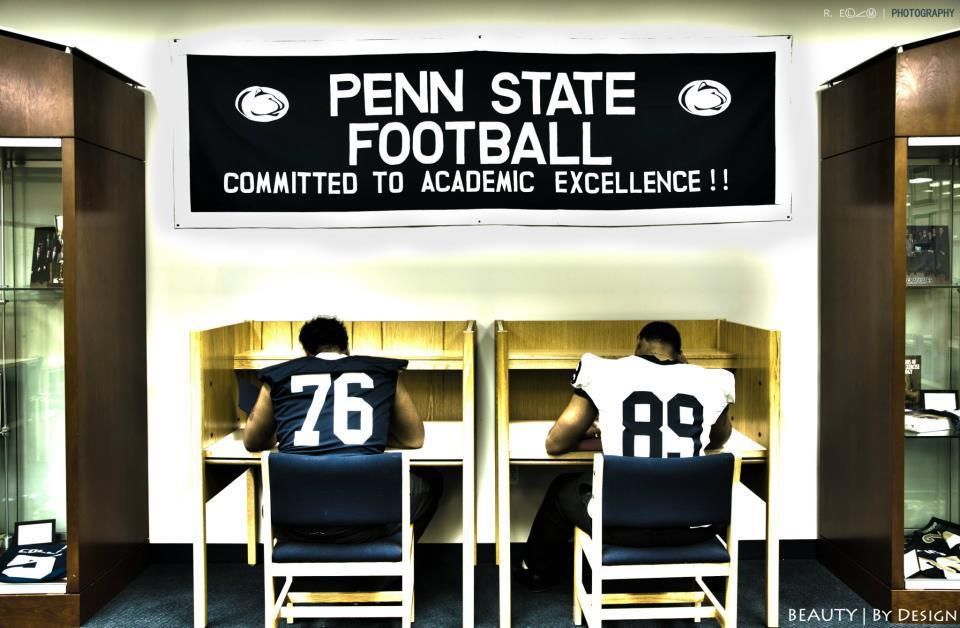
Penn State football has a long tradition of not putting the names of players on jerseys and this is to reinforce the notion of selfless team effort over a bunch of individuals only in it for themselves.  

No name, all game

Success on the field and in life depends on our plugging in and sometimes putting aside our own preferences for the good of others.  We can get more done by working together, respecting the established system, rather than demand that everyone makes special accomodations for us.

Yes, there is a time for grievances.  We also should be a reasonable give and take so far as how individuals and the members of the group interact with each other.

And yet this idea that we should rewrite cultural conventions, negotiated over many centuries, simply so some ‘woke’ Karens can have power over others, is not a grievance I can ever honor.  It is not reasonable for a person to decide the pronouns that apply to them or force us to go along with their newly invented categories.  

We don’t need to be Amish, severely limiting individual expression to maintain community cohesion, but we also don’t want to keep on this path of total atomization either.  There’s a reason why the barn raising religion is able to flourish while the rest of us are headed for Babal, confusion and collapse.

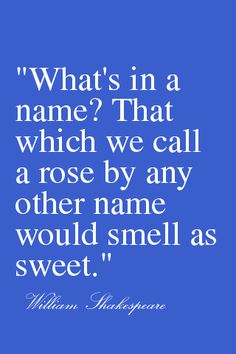
Rose By Any Other Name

This morning, pondering how the categories of mental illness are a bit arbitrary and how much I dislike how these labels pigeonhole  people, there was the thought that my given name was the best possible diagnosis of me.  I mean, I’m Joel.  I don’t need a personal pronoun when I already have my own name and identity completely my own.  

Ironically, the same people who want to have new pronouns for themselves also seem to revel in their mental illness as well.  Anything to be different.  It is a sort of humble-brag, a title of distinction of our era, to talk about your PTSD or bi-polar disorder.  If you are the right person, if you can make yourself a part of the right identity group, then your self-declared victimhood will be treated as a virtue.

It goes beyond moral inversion.  People think that you can slap the right label on a person and it will make up for their deficiencies.  If only they were described right, if we would see their pink hair as an accomplishment, then they would love themselves.  Of course, this is a lie, people so into themselves are always a black hole and no amount of love given will fill their deep void.

It is the spirit of those who are content to remain nameless, who get their numbers called for what they do for the whole, that actually matters.  People will know what is great and what is not no matter what label is applied.  I can never forget what W.E.B Du Bois wrote to a student:

Do not at the outset of your career make the all too common error of mistaking names for things. Names are only conventional signs for identifying things. Things are the reality that counts. If a thing is despised, either because of ignorance or because it is despicable, you will not alter matters by changing its name.

The Name “Negro”

We can manipulate and massage language all we want, give people all the fancy titles they wish for, but in the end none of this word play can take away or lend to their value. If you want recognition contribute to the whole and your name will be known. Not to the whole world, but to those helped by your deeds. A rose called by any other name is still a rose.

Cultural Problems: How the Real Slim Shady Became President

Standard

I would be tempted to quote entertainment mogul Shawn Carter (aka Jay Z) who once told the world about his ninety-nine problems, but he uses a word that degrades women and it shouldn’t be repeated here.

Carter’s “99 problems” came to my mind, I admit because I’ve been a consumer of his products and also that of his cohorts.  Music and movies, from many producers, have been a part of my life and undoubtedly had an influence too.  I can still remember listening to Eminem (Marshall Matthers III) rap about using drugs, abusing homosexuals, killing his wife, etc.

It might seem strange that a straight-edge Mennonite kid from rural Pennsylvania would find anything in common with violent and hate-filled lyrics.  I could lie and pretend it was all for sake of amusement and didn’t reflect anything of my own character.  But, truth be told, even knowing nothing of a rough life in the ghetto, and having no animosity towards police or Sir Elton John, the words resonated with my own deep feelings of anger and frustration at the time.

Eminem actually offered some good insight into his lyrics.  He was right when he concluded a musical social commentary with the following words: “I guess there’s a Slim Shady in all of us…”  That is probably what made his music so popular.  People could identify with him.  He gave a voice to millions, especially underprivileged young men who were tired of being told how to think and worrying about the correct political language to use and just wanted to let loose.

The Two-way Street Between Artist and Audience

Hollywood producers and musical executives often hide behind this idea that their art merely reflects what is real.  That is their way of washing their hands of responsibility and it seems reasonable enough considering what I’ve just confessed about my own inner struggles.  However, that is only half true, the whole truth is that their creative expression also shapes our world or we would not call it creative—what resonates or reflects can also help to shape and influence.

The entertainment industry is well-aware of their social influence.  True, we reject their most heavy-handed efforts.  I could care less about what Matt Damon thinks about gun violence, Brokeback Mountain didn’t tempt me in the least, and, sorry Dr. Dre, I still have no hate for police.  I take full responsibility for my own less than wholesome thoughts and wrong attitudes.  Nevertheless, I use the word “problems” and somehow Jay-Z comes to my mind.

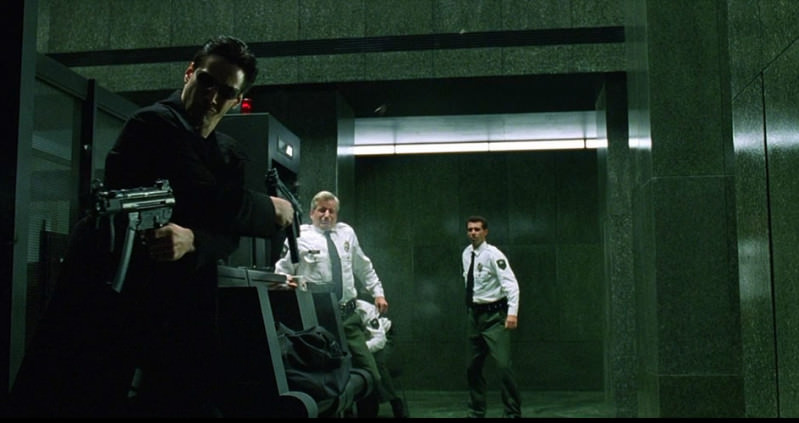
Movies, music and other media are intended to influence and most definitely do have influence.  Sure, watching The Matrix didn’t cause anyone to go on a murderous rampage, but is it only coincidence that a mere month after this film was released two boys wearing long dark trench coats killed 13 of their classmates in Columbine High School?  Could it be they were partially inspired by a scene where two characters wearing long dark trench coats enter a building lobby and gun down everyone?

Again, individuals should be held accountable for their own actions.  But the same also goes for those who create content and play a significant role in defining popular culture.  Quentin Tarantino’s blood lusts might be portraying Nazis, Antebellum Southerners, or any of the others we have decided it is okay to completely dehumanize, but he can’t decide how others will apply the moral framework he presents and should probably think a bit more about unintended consequences of his violent ideations.

Writers, musicians, actors, artists, directors, executives, commentators, professional athletes, television hosts, and others employed in the entertainment industry are out to recreate this country in their own image.  And, many of them, in their race to profit off of the lowest common denominator, have shown themselves lacking in good moral judgment and need to take more credit for the results of their work.  Many have made their billions by promoting moral turpitude, have created an audience to consume their filth, and yet then are outraged that a vulgar man is elected President?

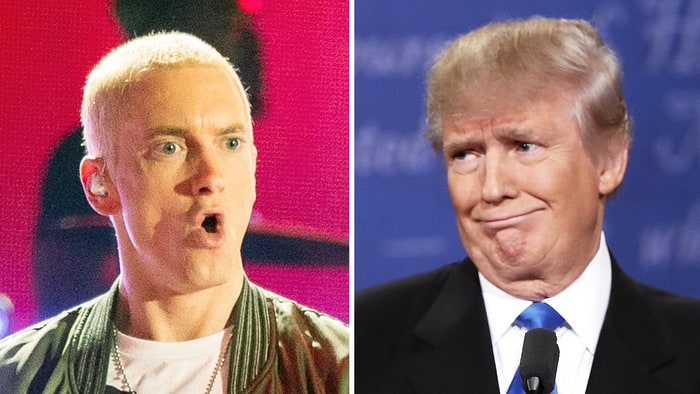
The entertainment media was all beside themselves recently with excitement when Eminem went off on an explicit rant parroting common accusations against Trump.  In breathless headlines he become a heroic figure, a part of their resistance, and suddenly relevant again.  I guess it doesn’t matter that he helped to condition a whole generation to think it is funny to degrade women and minorities?  He made dirty locker room talk seem tame by comparison.

Hollywood Hypocrisy Has Been Exposed

“There is nothing concealed that will not be disclosed, or hidden that will not be made known. What you have said in the dark will be heard in the daylight, and what you have whispered in the ear in the inner rooms will be proclaimed from the roofs.” (Luke 12:2‭-‬3 NIV)

Those within the media echo chamber might not see the hypocrisy yet many Americans do and are tired of sanctimonious multi-millionaire celebrity elites telling them what to think, how to vote, or who should lead them.  The rebellion is on, the plebs have started to tune out your lectures years ago when the double standard became too big to ignore, and it is time for some serious introspection.

When Larry Flynt, a purveyor of sleaze, gets on his high horse, and again offers millions to find dirt on the Donald, does he ever consider repenting of his own immorality first?

Then we have Harvey Weinstein, a prominent figure in Hollywood, a wealthy Hillary Clinton supporter, and known sexual predator.  I say known because his behavior was apparently common knowledge amongst media elites and ignored.  For whatever reason, perhaps because of shared political ideology or cash payoffs and career opportunity or fear of their own sins coming to light, for years and years nobody spoke out publically against him:

“Weinstein’s behavior was reportedly an open secret in the circles in which he ran, which includes entertainment and politics. So much so, in fact, that shows like NBC’s “30 Rock” openly referenced his predatory habits. Twice. The comedian Seth McFarlane also referred to Weinstein’s abusive nature during the 2012 Oscar nominees announcements. Despite all of this, Clinton maintains she knew nothing about the producer’s appetites.”

I guess what we deem to be “deplorable” depends on who does the crime.  If Joe Paterno and everyone at Penn State should be held responsible for Jerry Sandusky’s abuse of young boys, does that mean everyone in Hollywood and the media (who buried Weinstein’s transgressions) be held to the same standard?  Is it time to investigate the Clinton campaign to find out what they knew and when?

Those questions will be answered in time.  I personally do not know the circumstances or various actors involved well enough to render any judgment.  But there are many who should probably think carefully about what they say in condemnation of others.

Weinstein, perhaps in a bid to deflect attention from his own sins (or in a failed effort to garner the support of other progressive elites) said he would target his anger at the NRA.  The absurdity of this, a man in an industry that hides behind the first amendment (apparently only angry for getting caught) targeting an organization that defends the second amendment…

Maybe it is because men of his ilk have been using that script for years?

They objectify women, they glorify violence, they stir up racial animosity and then pick a scapegoat to act outraged about.  Instead of admitting their own role in the problem they would rather blame an organization that existed long before the upward trend in mass shootings of the past few decades.  They want to blame guns—nevermind the inconvenient truth that actual machine guns were completely legal until 1986 and long before this precipitous increase in violence.  It is time they stop deflecting and blame shifting and take ownership of their part of the problem.

Trump Is the Symptom, Not the Disease

Sorry, Hollywood hypocrites, many of those who consumed your entertainment (and found their own inner Slim Shady) also voted for the candidate who spurned cultural conventions in his rise the top and waved his middle finger in the air like he just didn’t care. In other words, he is just a slightly different version of you.

Trump is merely the first politician to take full advantage of the shift in American values.  He did not create the culture, he didn’t even create the character he is playing—we can thank Mike Judge, the movie Idiocracy and President Comacho for the inspiration.  So, if you really want to defeat Trump, start by addressing those privileged elites who lowered our cultural standards, encouraged the abandonment of traditional values, and created an audience primed for a vulgarian to lead them.

It is time we stop privileging a few with ready-made excuses.  It is time to stop lambasting only those who help our political ends and ignoring the problems of our own side.  We all share some of the blame for the society we together have created, we all need to take a long hard look at where we are headed and how our own actions contribute to the problem.

409

Standard

“There is a case for telling the truth; there is a case for avoiding the scandal; but there is no possible defense for the man who tells the scandal, but does not tell the truth.” G.K. Chesterton

A few years ago a man I respected greatly became the center of a media frenzy that ended his storied career as a coach and respected mentor.  The popular narrative at the time was that he had participated in a cover-up and sheltered a sexual predator.  It was an idea based in speculation rather than actual fact, there wasn’t even a semblance of due process before he was fired (literally in the dark of night) and yet with sanctimonious glee many presumed his guilt.  It was disturbing to watch for a person actually concerned with justice.

The man, Joe Vincent Paterno, had coached football at Penn State from 1966 to 2011 and during the time had amassed 409 victories.  But his biggest contribution was not on something recorded in the Sunday morning paper. What earned him a spot in the hearts of many who cared very little about football was his character and concern for bigger things.  He was loyal to the concept of student-athlete, was a trailblazer for civil rights once standing up to an opponent that requested some of his players not participate because of their skin color and practically built the university library through his donations.

Obviously none of the accolades one can list about him would excuse Paterno if he were truly guilty of what many had surmised.  But it is a record that should call us to question the narrative as presented and keep us from joining in a rush to judgment.  Well, the push back has begun and the facts seem to support a less damning verdict.  It is for that reason the NCAA has relented on the punitive measures they took against Paterno and that punished athletes who had nothing whatsoever to do with anything criminal or morally reprehensible.

Still, there are some blowhard moralizers who still refuse to ‘get it’ and insist on painting a whole community as willfully ignorant for not sharing in their own surmising and their own selective memory.  Among them sticking to the presumptuous early narrative is Keith Olbermann who blasted those who celebrate the restoration of a legacy that includes 409 wins.  His persistent to neglect fact in his prosecution of Paterno and Penn State fans the subject of an ‘open letter’ response…

>>>click here to read it<<<