The Elephant in the Room

Standard

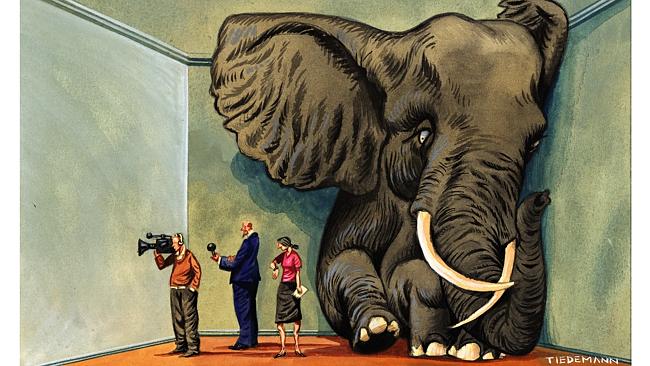
You know the illustration of a group of blind men describing an elephant?

With one of them holding the leg and describing it as the trunk of a tree, another the tail and thinking it is a rope, etc.?

It is a good analogy for the larger conspiracy nobody can explain.

We all can agree that there’s something wrong with the world, and yet we can never agree on exactly what it is. Those of the Republican rank and file, despite being an easy sell on the biggest of wastes called the Pentagon, have generally seen government as the real problem—along with rules that apply to them and the people who don’t speak English.  And those Democrats—of course. Democrats, on the other hand, will blame those big corporations and billionaires for their woes, the “uneducated,” and unborn babies—which all stand in the way of a life of ease.  And they blame Republicans.  I would say that both are right to a degree. It is actually that natural collusion of the political and economic that they see a different side of—namely, that government has always sent us to die overseas on behalf of bankers and big business. Monetary wealth is transferable—so much more transferable than some amorphous national ideals—and politicians are a class that can be easily bought.

Maybe we all are? 

I am reminded of a local fight against a new data center where the leader of the protest went silent right around the time the buyout cash was being offered.

We will stand on principle—until we don’t.

Money or, rather, the love of it, with the power it represents, is the root of all kinds of evil.

The above would describe half of the conspiracy.

The other half of it is those who never had to be bought to betray us all. From growing up in a conservative Mennonite community—and having been a religious member for most of my life—there’s an attitude that comes with the notion of “not being ‘of the world’” which is probably not what Jesus ever intended. I am talking about a sneering at or contempt for the civil authority. We didn’t say it—even preached the opposite—and yet there is the very strong undercurrent of “what business does some heathen have in telling me how to live my life?” I’m fairly certain—given the admonition of Romans 13—that separation is more about being apart from vices of the world rather than in judgment of those who are given the power of the sword or the civil authorities. This defiance against power is a good and bad thing. It can be good when we are standing on a moral high ground and for truth—not when it is a special exemption from accountability to our neighbors.

So where am I going with all this?

Who doesn’t need to betray us because they never were us?

There’s another group of individuals that’s a lot like Mennonites or Amish, and not fully invested in the same civilizational project or greater good.  Where, in theory, Christian separatists are never supposed to screw you over in business and must value all human life, this is not a disposition that is shared universally and by every community of faith or culture.

There are some who believe that people outside of the “tribe” are little more than a resource to exploit. And their religious traditions allows or even encourages this perspective.  If you look at the Biblical Old Testament, and take note of the bloodbath it was before Christ, maybe you would also be shouting, “Blessed is he who comes in the name of the Lord!” Jesus was the watershed moment of Jewish tradition—he claimed to be the complete fulfillment of everything promised to them since the time of Abraham. Some embraced his message and became known as Christians and many others rejected his message, choosing their own “chosenness” over a life of repentance, humility, and self-sacrificial love—that “way of the cross” which was embodied by Jesus as an example for all.

There are those who are “Biblical” yet completely incompatible with a Christian worldview.  And a few of their number have worked tirelessly to, this time around, finally defeat Rome. Modern Judaism and, in particular, the Zionist ideology within this sect of those who rejected Christ, is not just aloof like contemporary Anabaptists. No, it has an ax to grind with Western civilization as a whole and the disgusting “blasphemy” of the divine claims of one of their own.
In Talmudic tradition Jesus basically got what he deserved, currently boils in a pot of excrement, and is definitely not an example to follow. The Noahide prescription for saying “Jesus is Lord” is decapitation. This is why adherent Talmudists have zero interest in protecting those Christian communities that have been in the Holy Lands for centuries. They also take personally being defeated by the European pagans two centuries ago.  Jesus was put to death on behalf of the Sanhedrin or Jewish High Council who claimed this was necessary to defend their nation.  Where the mainline of Islam still considers Christians and Jews to simply be “people of the book,” this sentiment of tolerance is not part of Talmudic Judaism.

Furthermore, Christianity, if applied, pushes back against this tribal, primitive, “if you kill one of ours we kill ten of yours” mentality—Old Testament religion does not.

Before I go any further it is important to say that this isn’t a diagnosis of a whole ethnic or identity group. I firmly believe that most Jews—just like most Muslims, Hindus, and Buddhists—are good people and should be judged as individuals. What I’m addressing is ideology, not individuals. I see my Jewish elementary school teacher in a far different light from a Benjamin Netanyahu—in the same way I can distinguish between Amish and Lutherans. 

So as a starting point I won’t assume anything—in individuals is the behavioral expression that matters to me.

But that said, there is a kind of tribal dynamic or cultural influence that is at work and with this a few common points of failure. Being taught a moral and ethical system is similar to sharing genetics.  For example, Ashkenazi Jews (much like Amish and Mennonites)—because they are so isolated from the greater gene pool—present a very unique opportunity for studying genetic disorders.

The Supremacist Disease

Sickle cell anemia is an issue for only some Africans—and it isn’t racist or an accusation against all to acknowledge this.

Likewise, it isn’t “anti-Semitic” to call out Zionism and to understand that the “goyim” slur (as it was used in the Jeffrey Epstein emails) reflects the toxic stench of ethno-supremacism—which is incompatible with an “all men are created equal” ethic. If anti-goyism is the trait, then Zionism is the ultimate disease. And this is an ailment that stems from a toxic brew of a theological error mixed with the pre-existing human condition. The end product is a kind of psychopathy and lack of self-awareness unequaled on the planet. Unlike Christianity that it is better to serve than to be served—there are rabbis who say this:

In Israel, death has no dominion over them… With gentiles, it will be like any person—they need to die, but [God] will give them longevity. Why? Imagine that one’s donkey would die, they’d lose their money.“This is his servant… That’s why he gets a long life, to work well for this Jew.”“Why are gentiles needed? They will work, they will plow, they will reap. We will sit like an effendi and eat… That is why gentiles were created.

Rabbi Ovadia Yosef

Translation: If you’re not Jewish then you’re no different from cattle or a draft animal. That’s what he was teaching Israelis. Little wonder why Israeli tourists have gained a reputation for being entitled jerks.  It explains why IDF soldiers laugh about the Palestinian children they’ve killed.

Two ethno-supremacists enjoy a moment together.

They are basically the Jewish version of Nazis or the KKK and totally anti-Christ and evil. The best you can be to Jewish supremacists is basically their prized horse. Work is for us, leisure for them, and if you don’t perform to the standard?

Well, what does a farmer do if his cow doesn’t produce?

This idea that an honest day’s work is below the Jew seems reflected in the messages that Epstein and Jewish friends exchanged:

This is the way the Jew make money.. and made a fortune in the past ten years„ selling short the shipping futures‚ let the goyim deal in the real world.

This right here hits on something of my own values. Remember the one time Jesus was especially animated? Him driving out those money changers from the temple courtyard, overturning their tables in a righteous fury—because they were taking advantage of the poor hard-working people. There are those ways of getting rich without ever adding any value. It might not legally be theft, but it does prey on those who earn every dime they got, and is unethical from the perspective of the New Testament writers. Usury, filthy lucre, charging interest and shameful, dishonest, or dishonorable financial gain. I’ve always had a special place in my heart for the blue-collar worker and probably as a part of my own cultural upbringing—a culture built off the religion of Christ—the cornerstone that was rejected by those who wanted only to be served.

And then there’s the elitism represented by the publicist Peggy Siegal who asked Jeffrey Epstein if an event at his New York mansion would be a “100% JEW NIGHT,” and to which the pedophile blackmailer answered: “No, goyim in abundance – jpmorgan execs brilliant WASPs.”
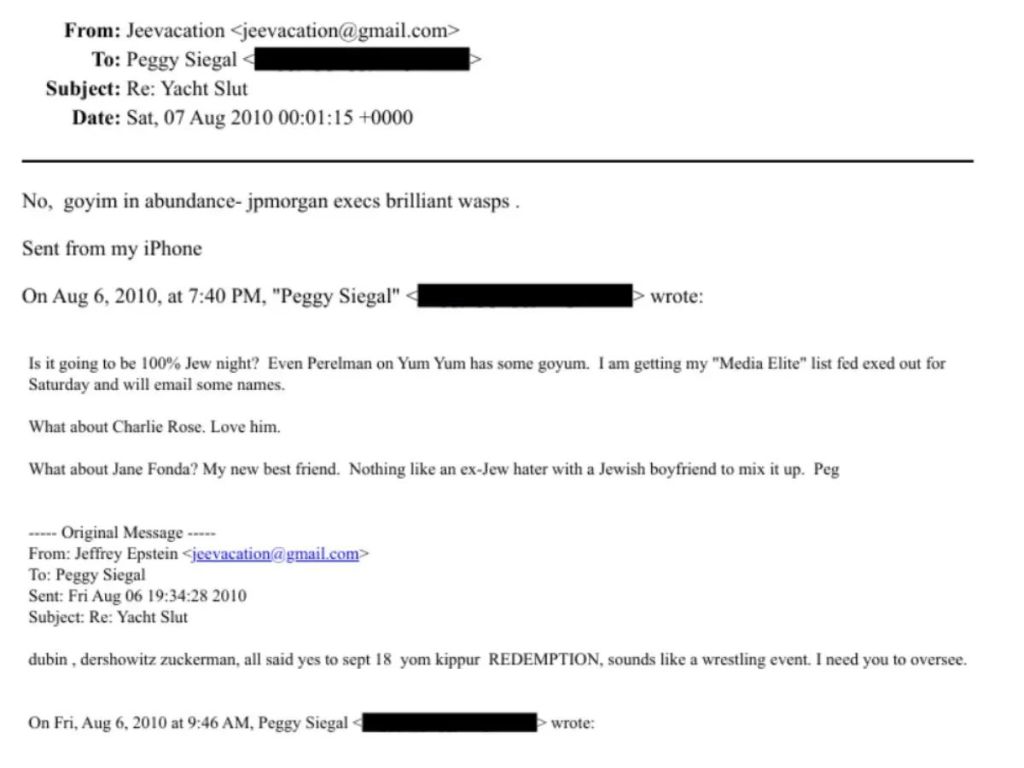
To deal with her comment about non-Jews he entices her with: They’re smart and rich.

Favoritism is another one of those things that was condemned by Jewish leaders of the early Christian church:

My brothers and sisters, believers in our glorious Lord Jesus Christ must not show favoritism. Suppose a man comes into your meeting wearing a gold ring and fine clothes, and a poor man in filthy old clothes also comes in. If you show special attention to the man wearing fine clothes and say, “Here’s a good seat for you,” but say to the poor man, “You stand there” or “Sit on the floor by my feet,” have you not discriminated among yourselves and become judges with evil thoughts?

James 2:3-5

Judgment based on appearance is natural, as is the preference for those who might be able to give us something; this is favoritism and corrupts our institutions. The direction of the West has been equality—not in some absolute way—as far as individual rights or similar access to economic opportunities. But those of the Epstein-class have no qualms about elitism; they don’t subscribe to Christian thought—those of the Jewish contingent of this Zionist club are primed for this: It is their chosenness, the divine destiny granted to them by their superior genetics, a narcissistic self-love, and all represents the core of a disease that has overtaken our top tier.

Corruption of Wealthy Widows

After this, Jesus traveled about from one town and village to another, proclaiming the good news of the kingdom of God. The Twelve were with him, and also some women who had been cured of evil spirits and diseases: Mary (called Magdalene) from whom seven demons had come out; Joanna the wife of Chuza, the manager of Herod’s household; Susanna; and many others. These women were helping to support them out of their own means.

(Luke 8:1-3 NIV)

Jesus was financially supported by women.  He preached the good news on their dime.  And the anti-Christ, seeking a false Messiah, is supported in a similar way.

To understand why Trump has done Israel’s bidding look no further than the donation of $250,000,000 by Miriam Adelson. My uncle, from Canada, who leans left, warned me of how Trump was owned by billionaires. It is the part he left out, however, that mattered most. Of course big money buys influence—both parties have their wealthy patrons backing them. But the details matter. This woman who bankrolled Trump is the Israel-first widow of Sheldon Adelson—a man who made his billions by peddling vice.

Gambling is addictive and the Adelsons the type who cash in on human weakness. The idea of gaining enormous wealth entices—this is an exploitable bug in our system. The house always wins in this stacked game. When asked about her loyalties it was fairly clear that it wasn’t with the country that created her fortune—it was with an ethno-supremacist colony. So this woman, who became wealthy creating an addiction to a losing proposition, bought the service of Trump using the money of the exploited. This, simply put, is just corruption upon corruption upon corruption—money taken from working poor Americans to use to influence politicians to send their children to die for the Zionist regime. An ill-gotten fortune used to shape a foreign policy that demands that U.S. treasure be spent bombing school girls in the country of Iran—all because Iran’s principled government stands in the way of their ethnic cleansing of Gaza.

We’re not just being deceived; we’re being totally robbed blind by people who have no investment in the American project besides a tax farm and a population to exploit. If you see who sits atop the entertainment or vice system a clear pattern emerges. From pro sports to Hollywood, social media and the adult entertainment industry, there’s a totally disproportionate representation. If you look at Pornhub, for example, it just so happens to be owned by Ethical Capital Partners and Solomon Friedman—an ordained Orthodox Jewish rabbi. OnlyFans was owned (until his death) by Leonid Radvinsky, a Ukrainian-born American who donated millions to the pro-Israel lobby, AIPAC. And this list goes on and on. It’s a matter of moral alignment, not religious or ethnic identities. There was a time when vices stayed in Las Vegas and the seedy side of town—now they have put it in our pockets where resistance is about as likely as ceasing to doomscroll.

All of this, like the Federal Reserve system, is a legal exploitation. But it goes against the public good. An ethical businessman or politician is like a good parent or teacher—in that they would never put something bad or financially ruinous and morally corrosive right in front of our most vulnerable people. Oh, I know, if they didn’t do it someone else would, right?

There’s no excuse for this.

But being an intermediary who does the things that good people of society would not do doesn’t make you a victim when the connection is pointed out. Bluntly, there are some not invested in our good because they’re truly not one of us and only see us in terms of opportunities for exploitation. Our politicians, and most especially Trump, are owned by a group of wealthy elites invested in us the same way Israel is in Palestinians—in that we are only useful alive to them so long as they are served by us.

For capitalism to work you need the people with capital to be loyal to the country and invest in the betterment of their neighbors. Take a dive into a rabbit hole and see how the Sassoon family got filthy rich by keeping the Chinese supplied with highly addictive opium. They basically ruined a nation for their own profit and used the power of the British military to humiliate the Chinese trying to stop the flow of the drug. Say what you will about China, but they’ve done very well since driving the money changers out. They have made sure the commerce in China serves the people of China and not only this very small group of foreigners and colonial elites.

The Elephant in the Room

“It’s a big club, and you ain’t in it. You and I are not in the big club.” (George Carlin)

Since the 1970s the top 1% has gone from holding 22% of the nation’s wealth to 31.7% and that is a trend that has only accelerated since the Covid shutdowns of 2020.  Elites said “we’re all in this together” in the height of the pandemic.  But Amazon was having record profits while Mom-and-Pop were not allowed to be open.  As Gavin Newsom and a long list of other politicians had continued to party in private, events like weddings and school graduations were canceled for us.  It is abundantly clear and no matter who they say that they represent; They’re working for themselves, not working for us.

Money and power, concentrated into a few hands, particularly the hands of those with a foreign agenda that does not consider the welfare of the native population, acts like a conspiracy because it practically is one. No, it is not a Jewish conspiracy, it isn’t simply corporate greed or corrupt politicians, and certainly didn’t start with Trump; this is just how corrupt birds of a feather always flock together. Grifters, conmen, an ethnic group taught from little on up that they’re superior and entitled, those who will short an entire economy and are willing to destroy the life work of others for gain, they often do team up. It’s love of money, wealth without work, and people who are not truly invested in the good of the nation they’re in, that’s the big elephant in room.
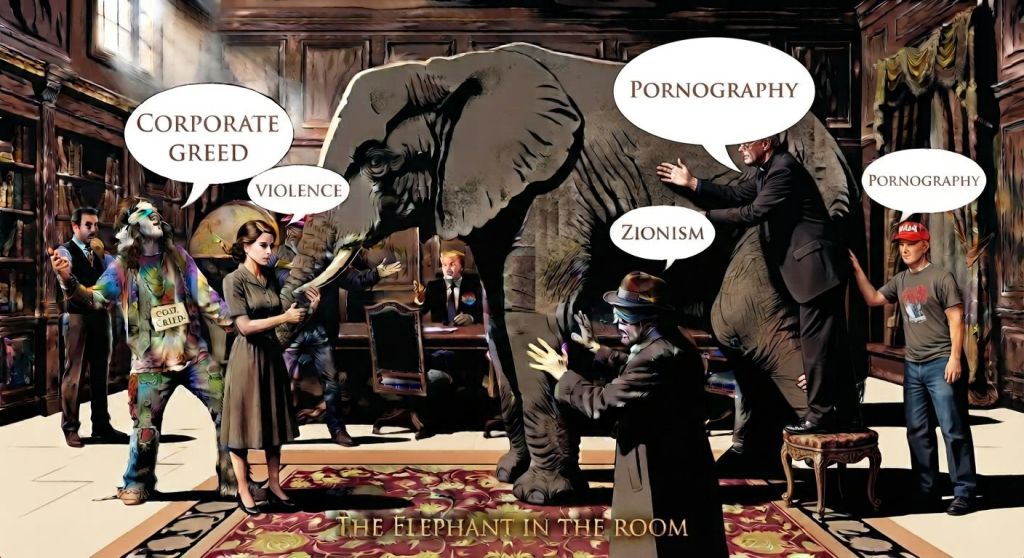
Many can see parts of the creature—a trunk, the ears, the tail—they blame billionaires, or the migrants, the symptoms, but fail to ever comprehend the marriage of political power and banking, vice and exploitation industry—people all invested in themselves or some foreign interest rather than the whole. This describes the Zionist “AIPAC” lobby—as well as billionaires, like Sam Altman (OpenAI) or Peter Thiel (PayPal and Palantir), who have built their tremendous wealth on our backs and then would bug out and flee to another country rather than make a home stand.  It is a class of those who see themselves as a god to be served rather than as a servant of humanity.  

Gay tech billionaires, Zionist club members, aren’t actually interested in the future of the American middle-class?

Who could’ve known!

That thrice married man, paying high dollar prostitutes, wasn’t actually the champion of family values?  

Must be my TDS speaking, right?

Trump might be part of this elephant’s rear end, but the establishment alternative is not another creature.  It’s about orientation.  It’s about the actual values lived.  Not the ones they state on camera, the ones they live out when not in character.  Erosion of Christian values, despite the lip service paid to them, has led to a much more self-centered, tribal and exploitative present.  Vice industry and debt have bound us.  We need to get back to the universal perspective rather than the tribal.  We must address the delusion of the ‘chosen’ and their systematic violence as a threat to stability and peace.  We must side with those who accepted Christ rather than those who rejected and hate him.
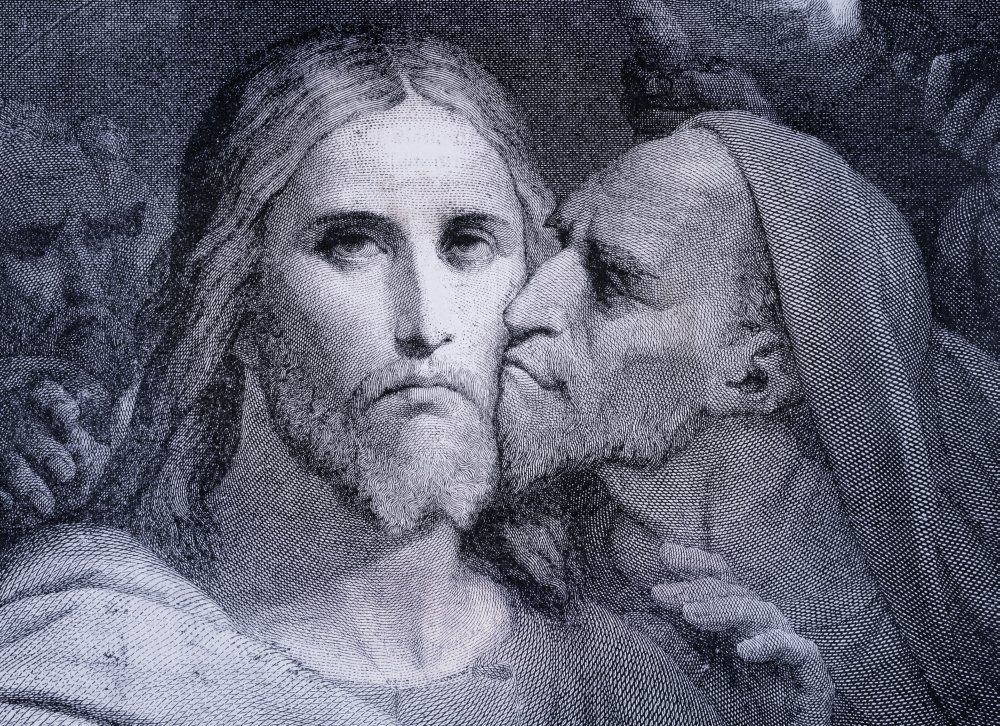
Oh, and don’t forget, Judas didn’t spit on Christ when he betrayed him.  No, he kissed him.  The thirty pieces of silver mattered to him more than loyalty to those who entrusted him with carrying their common purse.  There are many who call themselves Christians today, who may faithfully attend church every Sunday, but are on the side of evil and may be told “depart from me, I never knew you” for their unholy alliances.

Dismantling of the Penn State Colossus

Standard

Growing up, college sports, or even sports in general, were not part of my world. My father didn’t toss a football with me in the backyard or gather us around the TV for games—work was his recreation, and that was our normal. I had no reason to care. But something shifted later in high school, culminating in my going out for football my senior year, and I found myself very drawn to Penn State, captivated by the legacy of Joe Paterno and the blue-and-white pride that defined it.

In the years just prior to my tuned in, Penn State had soared to new heights, claiming two national championships and cementing its place as a powerhouse. For that fleeting moment, the Nittany Lions were the best in the gane. State College, just to the west of me, was the heart of this empire—a house that Paterno, a son of Italian immigrants from Brooklyn, had built. He was not just a coach; he was a living legend, embodying the loyalty, community, and tradition that made Penn State more than a football team—it was a shining symbol of our American values at their finest.

I didn’t love Paterno because he won every game. In fact, other than a Rose Bowl win, the program had definitely taken a half step back from the prominence of the 1980s. It was their “success with honor” mantra and Paterno’s commitment to the “kids” as part of his “Grand Experiment” philosophy that had attracted me. Paterno’s stated mission was not only to win on Saturday, but to build men through the game. At least according the brand, the win at all costs attitude was anathema. We are Penn State meant being at a higher standard on and off the field.

The Scandalous End of an Era

There are many good things that Paterno is rightfully remembered for. But history is not kind to those not true to their values and the legacy of “success with honor” is not what any of us wanted as fans from a distance. The man who lived in a very modest house adjacent to the campus—and had donated $4.2 million to the university library—was embroiled in a situation completely at odds with the character of his program. This, of course, being the horrific revelations about Jerry Sandusky—a former Paterno assistant—who was found guilty of sexual abuse of children and was for years according to the allegations.

Shock and denial are a natural response as a defense mechanism. Penn State fandom was more part of our identity where the “We are” was supposed to be a call to a certain moral code and standard. It was supposed to be about more W’s on Saturday and thus it was unthinkable that there was a sexual predator potentially being protected by the program. Those of us who accepted that it happened still wanted to minimize and keep it separate from the man who had preached excellence on and off the field. To this day this is something to be wrestled with—what did he really know and when?

My current stance is that Paterno prioritized the program over everything else. Similar to how religious institutions (like CAM or the Catholic church) too often try to deal with embarrassing issues internally—as a way to minimize fallout—there’s always the desire to save the ‘mission’ by undermining pursuit of the full truth or actual justice. In the end this little leaven of a moral compromise for sake will leaven the whole lump. However, expediency often trumps principles and the putting of reputation first started with Todd Hodne, in the 1970s, when the rapes of the prized Long Island football recruit began to be known. Paterno wanted to deal quietly with these kinds of ‘problems’ and it would blow up in his face at the end.

Hodne was a violent and vile predator.  Initially the rape allegations were hushed.

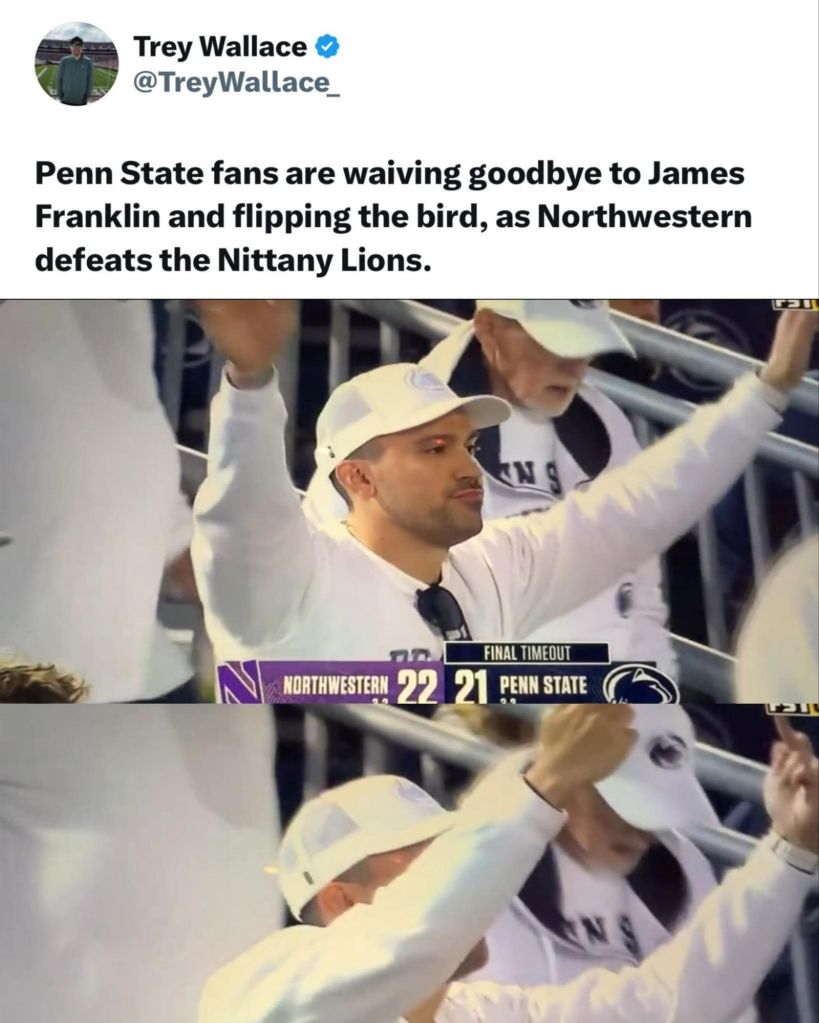
In my conversations with a cousin, who is a generation younger than me and far less of an idealist, my being completely appalled at fan behavior in the wake of coach Franklin’s collapse is silliness. He says the toxicity is everywhere and, basically, that I should not expect the Penn State football community to be exceptional. Even in response to my own posts on social media some of my friends believe that it is okay to make their vicious attacks against players and future prospects—because apparently sportsmanship is not a goal in the era of NIL money?  To me there has been something we have lost in our dignity and self-respect when we pile on young athletes and those who have invested far more than most in the bleachers ever did.

It feels like the culture has been hollowed out. An ethos has been lost. And my own disappointment with the sudden realization of the total absence of anything that actually distinguishes Penn State today, other than a few symbols and slogans, the final dismantling of the Paterno legacy that I’ve protected so long is complete. Why pretend? Integrity was neglected. And the thin veneer of The Grand Experiment philosophy has long ago worn away, we are not what we’ve claimed to be, we’re just another sports ball brand—class and character a mere facade.

Penn State peaked in the 1980s and has been in a ‘wilderness’ of ten win seasons since. 

Demystifying is the first step in dismantling the Colossus. With the transfer portal and NIL the era of loyalty and commitment to a higher ideal is over. But this shifting is one that goes beyond the football field or Penn State fan base. This is just a microcosm of the failure of the United States of being this “city on a hill” that was imagined by Puritan preacher John Winthrop. The “We are” is a localized flavor of American exceptionalism or the declaration of our unique quality and superiority over others. It is delusion.

It is also decay…

Reclaiming Lost American Values

The erosion of American values, particularly those intangible qualities that once defined community, loyalty, and collective spirit, is vividly reflected in the current state of college football, the influence of Name, Image, and Likeness (NIL) deals, and the broader societal shift toward prioritizing money over meaning. These three threads—Penn State’s football struggles, the commodification of college athletics, and the personal lesson of a child fixated on monetary rewards—converge to reveal a deeper cultural loss that is harder to pinpoint but profoundly felt.

At Penn State, the football program’s collapse mirrors a broader unraveling of shared purpose. The team’s 3-3 record in 2025, with losses to Northwestern, UCLA, and Oregon, has extinguished playoff hopes, compounded by the season-ending injury to quarterback Drew Allar. The program, once ranked #2, has been plagued by self-inflicted wounds—stupid penalties, turnovers, and a lack of team chemistry despite returning key players. The toxic “fire Franklin” narrative, fueled by fans and possibly amplified by wealthy alumni, has created a vicious cycle of negativity. This environment, where success is taken for granted and loyalty to coach James Franklin is eroded, reflects a loss of the communal spirit that once defined college football.

The fans’ inability to appreciate last year’s achievements, coupled with the pressure of high expectations, has turned a storied program into a cautionary tale of how a community’s values—patience, unity, and resilience—can erode under the weight of entitlement and short-term thinking. The prospect of rebuilding under new leadership may spark a recruiting bounce or an influx of NIL funds, but it also risks perpetuating a cycle where only wins and money matter, leaving little room for the intangible pride that once fueled rivalries like the one against Ohio State.

The field at Beaver Stadium is now “West Shore Home Field” after a large donation.  How long before Penn State’s no-name jerseys are replaced with corporate sponsors?

This shift is starkly evident in the rise of NIL, which has transformed college football from a bastion of amateurism into a billionaire’s playground. The purity of the sport, where loyalty to a program and the concept of the student-athlete once held sway, has been supplanted by a system where, as Mark Cuban’s “big number” donation to Indiana University athletics illustrates, wealth dictates outcomes. Fans no longer celebrate players who stay an extra year out of commitment; instead, they view them as paid mercenaries, unworthy of respect or admiration unless they deliver victories.

This also mirrors a broader societal decline in volunteerism and good sportsmanship—values that once rivaled capitalism in shaping America’s identity. The community spirit that made school sports a unifying force has been replaced by a transactional mindset, where loyalty is bought, not earned. This shift reflects a deeper cultural loss: the unquantifiable sense of duty to others or something greater than oneself, whether a team, a school, or a nation.

As the current system prioritizes individual profit over program or principle, it signals a collapse of the traditions that made college football a symbol of American unity, leaving behind a hollow pursuit of wins at any cost.

Now billionaires and corporations rule college athletics in the age of NIL.

This same erosion of values plays out on a personal level for me, where my tying my son’s chores to cash rewards has instilled a mindset in him that everything must have an immediate reward or monetary payoff. This mirrors the broader societal trend where wealth is the sole measure of success, undermining the concept of family as a unit bound by mutual care rather than financial transactions.

In cultures like the Philippines, where my wife is from, multigenerational support is just a given, but in America, the collapse of family unit and community has fueled reliance on pay based systems like elderly care, which often exploit the most vulnerable and leave little for future generations.

This shift away from communal responsibility toward an extreme individualism and personal profit reflects a loss of the intangible values—selflessness, duty, and shared burden—that once made America redeemable, if not great. And the rise of socialism, decried by conservatives, is less a cause than it is a symptom of this deficiency, as needy people seek external systems to replace the community support that has faded.

These threads—Penn State’s demoralized and debased fanbase, commodification of college sports through NIL in general, and my own struggle as a father of a teenager to instill non-monetary values—point to a broader cultural decay. The current loss of American values like loyalty, community, and tradition is not easily quantified, as they were woven into the fabric of what it meant to be American, and never before required definition or separate designation.

NIL, like the toxic fan culture or a child’s fixation on cash, is a symptom of a deeper disease: a society that prioritizes money and winning over the unmeasurable qualities that once held it together. This shift, felt more than seen, leaves us grappling with a question: if we cannot identify what we’ve lost, how can we hope to reclaim it?

Records Come and Go—Family Is Forever

After the Northwestern game, a third loss this year, Franklin waited until everyone else—including his daughter—had gone through the tunnel before he strode through. This is likely because he knew what awaited him—taunts and trash being hurled.

Father and daughter.  Franklin was determined to be a better father than his own.

In comparison to the stupid entitled clowns, Franklin is a class act. He is the father protecting his family. A standard bearer for Paterno (an Italian surname that means father) or at least the commendable part of the late coach’s legacy. I have seen some of the comments online, one claiming Franklin was arrogant because he had only answered one of their emails or something of similar entitled quality—as if he could just sit responding to every moron harassing him. But the players who played for him are unanimous in their support.

In fact, one of the saddest things I’ve seen is the current Penn State roster expressing their guilt over his firing for “not playing well enough” to please the raving lunatics. They didn’t fail Franklin, the fans failed them and the Penn State tradition.

The players taking responsibility is a sign of a relationship with a man who told them his demands of them as players start with love and end with love. In other words, this was a high pressure environment, expectations were high, and yet it was for their good that he challenged them to be better. And, truth be told, Franklin’s teams punch above their weight. He was a player’s coach and that is why Penn State is bleeding top recruits who were coming to State College for something different under his leadership.

The “fire Franklin” types love to talk about how he “couldn’t win the big game” and yet neglect to mention his teams were almost always coming in as the underdog and with less talent and depth than their top ranked rivals. Or, in basic English, he was coaching them up to the level of the elites. And this a testament to his philosophy that had built on the positive part of Paterno’s legacy—he valued the players for more than the wins or losses and they responded with loyalty and inspired football.

Nobody will ever say Franklin was the best game manager or play caller. But then the online critics keep going back to a couple plays a decade ago. A run on 4th and five against Ohio State or kicking a field goal in a 28-0 Michigan game ending the shutout. But ultimately they were one play from the national championship game last year and Franklin was third behind two other coaches from 2022–2024 with a 34-8 overall record during that span—trailing only Kirby Smart (Georgia, 39-5) and Ryan Day (Ohio State, 36-7) for wins. Good luck finding the guy who will top that after we cut the soul out of the program that drew the talent that we did have. Who will come to State College to be nitpicked and unappreciated?

I loved a family man arriving at Penn State and to see it end as it has just makes me think we don’t deserve what we have.

The toxic part of the Penn State fan base is transactional. They believe their watching a game entitles them to perfection execution and results. I mean, imagine that, a howling mass of ingratitude made of mostly grown men who are apparently that unhappy with how their own life went that everything now is a matter of wins on Saturday. Most did not go to The Pennsylvania State University nor do they have any real investment in any tradition of excellence—like that which was upheld by Franklin’s family approach.

Franklin deserved better. He was not a DEI hire. He is certainly not a terrible coach. It is his players—who carry on his legacy—that actually matter. Penn State football should never be about pleasing drunk Uncle Ricos who failed at life, it should continue to be oriented towards success in life. Truly the few Saturdays under the lights are not a measure of a man. Franklin’s tenure should be remembered as a battle against wider societal decay—where the development of moral character and the building of community are too often sacrificed for the fleeting victories or short-term financial gains.

Pattern recognition isn’t for everyone.
Twelve teams with the most National Championships

Both Nick Saban and Urban Meyer, who are legendary coaches, expressed their support for Franklin. And to think delusional Penn State fans believed that they could replace Franklin with one of these two (already past retirement age) by waving a little money in their faces. No, nobody is coming to State College to be unappreciated for producing one winning season after another. We will be lucky to find any successful coach who is tempted by the job—let alone replace all of those who decommitted or will transfer now that James Franklin is gone.

Values Beyond the Scoreboard

In this blog—Irregular Ideation—my struggle with the disconnect between stated values and the values they truly live out. People claim to believe one thing and yet live something else. I’ve dealt with this in the religious and romantic sphere, the disappointment, this false notion that virtue would always win over mere physical or economic superiority. Mennonites teach that the meek shall inherit the Earth or that the first shall be last—these being Christian concepts about the kingdom of Jesus. But the reality lived is always different from that ideal preached.

The reality is that everyone is in it to win it. Yes, even that sweet and submissive young woman doesn’t date no scrubs. Sure, maybe a pious individual will adjust some language or settle on one rather than playing the field, but ultimately they’re going for the status or strength and attractiveness everyone else in the world pursues. Some overestimate the market value they have, but even in love we are being self-sacrificial or altruistic. We’re motivated by hormones and sexual desires—often things we’re not even totally aware of behind our wall of moral rationalizations and narratives.

With denial of this is the delusion that good things will happen to good people. We tend to confuse physical beauty with virtue as it serves our own carnal desires to see them as one and the same. I mean, who wants to say the quiet part out loud by admitting they picked Joe over Bob because he was taller or had charisma? We may say things about nurturing or character traits but this is code for nice breasts and big biceps. So what I am getting at is that we dress all this stuff up as something it is not and revelation of what is underneath is not debasement—it simply exposes what always existed.

From Paterno trying to bury the truth about Todd Hodne to the firing of Franklin, the true ruthless nature of college football culture is revealed.

Beaver Stadium rises out of the valley floor, an edifice, a temple where sacrifices were made in the name of success.

Beaver Stadium rises up from the farm fields of Happy Valley, a monument to Pennsylvania pride, like the “city on a hill” of American exceptionalism. But success was not built on anything different here as it was anywhere else. What is buried is the reality it is always about aggression, financial gain, and wins. The Grand Experiment failed and Penn State had to be like everyone else if it wanted to reach the top. Furthermore, there is a sense in which every program becomes a sort of family or builds men—Paterno was only unique for highlighting this.

Are there values beyond the scoreboard?

Is it a zero-sum game?

Yes and no. Friedrich Neitzsche describes “slave morality” or a system of ethics that reverses what we naturally value and then says this denial of reality is virtue. Woke is a manifestation of this, where they attempt to turn the world on its head and celebrate obesity, ugliness, criminal behavior or lack of ambition—and create an artificial reality—rather than deal squarely with the world as it is. Body positive isn’t going to spare you health consequences if you’re obese. Fair or not we must at some point deal with the cards we’ve been dealt and rise above our station or accept what we are. Mutilation of yourself to be something you’re not ends as badly as well. There really are no shortcuts to success or Uno Reverse cards to play—it is what it is on the scoreboard that matters to the world in the end.

Ultimately we also have our limits. We need expectations to match our abilities or we’ll end up in a spiral—always chasing what is beyond our reach rather than just building on what we have. I’ve seen it many times, those who leave a consistent and reliable partner, thinking they’ll do better out in the market, only to find out that (yet never will admit) that their discontentment played a trick on them and they had it better before than after. Not everyone can be a National Champion every year—it just isn’t possible—but we can have a family or community that respects all members and seeks only their best rather than tear them down.

Symbolic?

So maybe Penn State football does need to be dismantled and rebuilt to be great again?

It could be that, like the children of Israel in the wilderness, we’ll need this generation to pass so our children can enter the promised land?

If the foundation laid has led to this ugly spirit of entitlement then it was flawed. We might need to decide if football is so important we will lose our humanity or the immeasurable qualities not displayed on a scoreboard—for a “big game” win that won’t matter in a year or two. What does it truly matter if we gain the and lost our soul?

A race to the lowest common denominator is the end of civilization. Despite my lament above, I don’t believe life is all about money, sex and power—which ever order they come in. I still believe my elderly grandma had a beauty that was unsurpassed and morality is not just a smokescreen for our failure to be the best. Maybe the impossibility for me is possibility for my children. I cannot stay disillusioned. But, like I did in finally leaving my religious roots, I may need to also bury that delusion of Penn State excellence both on and off the field.

Not the tradition that made Penn State great.

Maybe the failure of The Grand Experiment was all Paterno’s own personal failure? Or maybe the message never went beyond the young men who loved him like players love Franklin today. But the Colossus now lies in ruins making me wonder if it was ever great to begin with. They didn’t just fire Franklin—they pushed over what remained of an ideal for sportsmanship, they’ve fully demolished the mythology that so inspired me. A giant ‘moral’ idol is gone—will something real rise up in its place?

Who Are Our Kin?

Standard

The book of Ruth is a nice little oasis in the midst of dry and tedious reading.  Up to this point the Bible isn’t all that relatable.  It has some highlights, interesting characters, but is stories of ethnic cleansing, description of weird sacrificial rites, polygamous patriarchs and stonings for picking up sticks, violence and laws, it is cumbersome.  

And then you get this:

But Ruth replied, “Don’t urge me to leave you or to turn back from you. Where you go I will go, and where you stay I will stay. Your people will be my people and your God my God. Where you die I will die, and there I will be buried. May the Lord deal with me, be it ever so severely, if even death separates you and me.” When Naomi realized that Ruth was determined to go with her, she stopped urging her. So the two women went on until they came to Bethlehem. When they arrived in Bethlehem, the whole town was stirred because of them, and the women exclaimed, “Can this be Naomi?”

Ruth 1:16‭-‬19 NIV

What a contrast to the storytelling prior, all of the resistance to racial mixing as well, here a Moabite woman would rather remain with her Israelite mother-in-law than stay with her own people.  It’s personal.  And the romance that follows, while very foreign and featuring many practices which are weird to our own ears, shows a more compassionate side of the legal system instituted by Moses.  Boaz acted both out of love and duty as guardian-redeemer.  Starting with his genuine concern for her safety:

So Boaz said to Ruth, “My daughter, listen to me. Don’t go and glean in another field and don’t go away from here. Stay here with the women who work for me. Watch the field where the men are harvesting, and follow along after the women. I have told the men not to lay a hand on you. And whenever you are thirsty, go and get a drink from the water jars the men have filled.”

Ruth 2:8‭-‬9 NIV

This paternalistic care a sharp contrast to an episode in the book of Judges when a Levite and his host offered their innocent women to please the perverse desires of the men in the local community:

While they were enjoying themselves, some of the wicked men of the city surrounded the house. Pounding on the door, they shouted to the old man who owned the house, “Bring out the man who came to your house so we can have sex with him.” The owner of the house went outside and said to them, “No, my friends, don’t be so vile. Since this man is my guest, don’t do this outrageous thing. Look, here is my virgin daughter, and his concubine. I will bring them out to you now, and you can use them and do to them whatever you wish. But as for this man, don’t do such an outrageous thing.” But the men would not listen to him. So the man took his concubine and sent her outside to them, and they raped her and abused her throughout the night, and at dawn they let her go. At daybreak the woman went back to the house where her master was staying, fell down at the door and lay there until daylight. When her master got up in the morning and opened the door of the house and stepped out to continue on his way, there lay his concubine, fallen in the doorway of the house, with her hands on the threshold. He said to her, “Get up; let’s go.” But there was no answer. Then the man put her on his donkey and set out for home.

Judges 19:22‭-‬28 NIV

While the brutal rape and murder of this poor concubine was later avenged, it is quite clear that the two men were more concerned with saving their own skin than protecting those whom were entrusted to them.  Not saying it would be easy to know what to do in those circumstances.  It isn’t like there was 911 to call or semiautomatic weapons to hold back the lascivious mob.  Still, Boaz stood ready to protect Ruth, a foreign woman, from the other men who would very likely have taken advantage.  How easily we can take our own law and order for granted.

Where the men made the woman vulnerable for exploitation in the book of Judges and in other parts of the Bible, like Abraham claiming his wife was his sister or Jacob putting his family in the front, in Ruth it is the women putting themselves in a vulnerable place to capture the attention of the good man:

One day Ruth’s mother-in-law Naomi said to her, “My daughter, I must find a home for you, where you will be well provided for. Now Boaz, with whose women you have worked, is a relative of ours. Tonight he will be winnowing barley on the threshing floor. Wash, put on perfume, and get dressed in your best clothes. Then go down to the threshing floor, but don’t let him know you are there until he has finished eating and drinking. When he lies down, note the place where he is lying. Then go and uncover his feet and lie down. He will tell you what to do.”

Ruth 3:1‭-‬4 NIV

I’m not sure if the description of Ruth acting out on her mother-in-law’s bold plan to lay at the feet of Boaz is euphemistic language.  Seems risky to be that intimate with a man who was drinking and “in good spirits” as the text tells us.  But, that said, whatever transpired that night, we know that he took responsibility for Ruth and also the welfare of Naomi.  And, in this regard, the guardian-redeemer system worked as designed.  But mostly because of Boaz having genuine care in his heart.  Ruth, for her part, was his equal in that she was loyal to her mother-in-law to the point of leaving her own homeland.

This is a story exceptional in a good way and likely part of the Biblical canon so far as has to do with the lineage of King David.  It also brings us to Bethlehem, where Jesus (of the line of David via his mother) was born.  That both Ruth and Boaz stand out as characters for their abiding love is significant.  In a time when woman were treated as if property or merely objects for male pleasure, we have honorable and caring men.  Boaz took Ruth under his wing in the same way his grandson longed to love his people:

“Jerusalem, Jerusalem, you who kill the prophets and stone those sent to you, how often I have longed to gather your children together, as a hen gathers her chicks under her wings, and you were not willing.

Matthew 23:37 NIV

In this account there is a clear precedent for a family relationship that goes beyond only our biological relatives.  The law of the kinsman or guardian-redeemer, through Naomi, was also applied to Ruth.  And, likewise, through adoption we become sons and daughters of Abraham by our faith (Galatians 3:6-14) and true children unlike those blood relatives of the Patriarch who rejected their Salvation.  Our real kin are those who fulfill the role they have and love in the manner of Boaz or Ruth.

My Favorite Children’s Books

Standard

Growing up it was easy to take books for granted.  Books were always a part of my life as a child and nothing seemed unusual about having them readily available.  But, as an adult looking back, it seems that those books played a significant role in my development and were a privilege of a good home.

My favorite books from childhood also reveal much about my personality and interests later in life.  It is hard to know exactly how much difference books made in creating what I’ve become.  However, it isn’t difficult for me to know which books have sentimental value and contained lessons that I still remember today.

So, without further ado, here’s my list…

1) The Poky Little Puppy

When my mom used to sing “where in the world is my poky little puppy” I knew who that was.  Of my siblings, I am probably the most likely to get lost chasing after butterflies of thought and fall behind the crowd.  I was curious, a late bloomer, the family slowpoke, head in the clouds, and could truly identify with a little puppy in a Golden Book.  I’ve plotted my own course in life, both for better and for worse, and that book about being last was the first that came to mind.

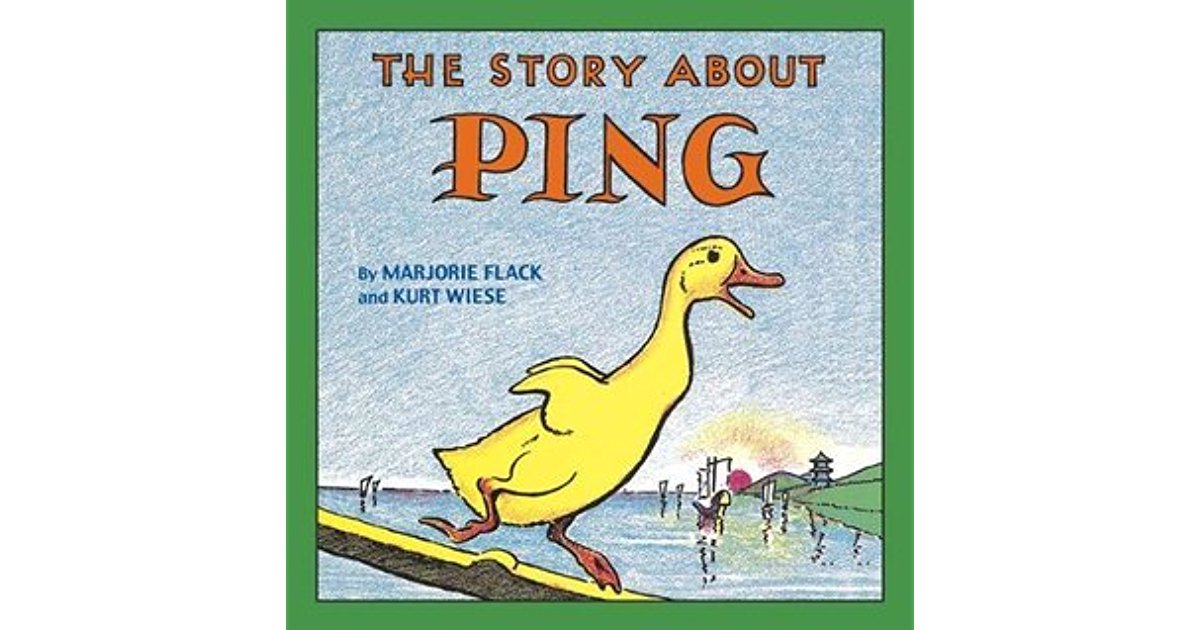
2) The Story About Ping

This, another book about being last, is also a favorite.  It was a book at my grandma’s house about a duck that hides to avoid punishment, nearly is made dinner while out wandering alone, and returns to face punishment. (Reminds me of a time as a child when I ran and hid to avoid the consequences for throwing something at my sister Olivia and sending her off in tears.  I came out of hiding to face the music only after my parents threatened to leave without me.  I was so gullible.)  This book had a good lesson about punctuality and also piqued my interest in a culture different from mine.

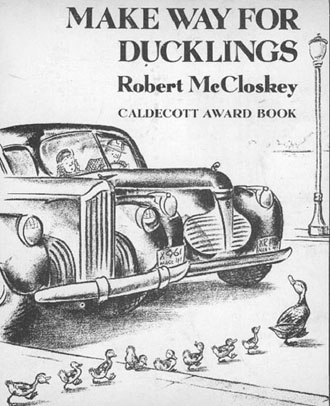
3) Make Way For Ducklings

Okay, what’s not to like about a family of ducks?  I think as a child it was good for illustrating the dangers in the world beyond and also that there are people, like the policemen who stopped traffic, who are willing to help.  (Wait, now why do I suddenly feel manipulated by this story?)  I believe one of my gifts is situational awareness.  It is important to find those ducks out of water around us and return them to safety again.

4) Blueberries for Sal

This book, as well as Make Way For Ducklings, is the creation of Robert McCloskey and noteworthy to me for the artwork.  Sure, the story about a day picking blueberries and a mother mixup involving a bear cub and human child is entertaining enough.  However, I remember my appreciation for the drawing style even at a very young age.  I also like blueberries.

5) Choo Choo The Runaway Engine

Before there was Thomas the Tank Engine, there was another little engine that ran away named Choo Choo.  I’m not sure why steam engines are so fascinating to children, but I know that I loved all manner of machine and the railroad age still captures my imagination today.  This book by Virginia Lee Burton is the first of three of her books that made the cut for my list.

The next…

6) Mike Mulligan and His Steam Shovel

This book about man, machine, and loyalty to the end.  I remember my empathy for Mike and his steam shovel, Mary Ann, as they face off with the big modern (and soulless) competition.  It is a book that captures many of my lifelong values.  I love underdogs and determination against the odds.  It seems also that loyalty is more and more uncommon in this age when bigger and newer is often considered better.  I love the creative and unexpected solution at the end of this book about change.

7) The Little House

Of the three books by Burton, this one probably hits me closer to the heart.  Change and the passage of time take their toll on this little house.  My feeling like an old soul probably started with the nostalgia this book inspired.  I pitied that little house, once so happy, later run down and forgotten.  I guess someone like me, who always had to struggle keeping up and understanding the longing to be loved, wanted that lonely old house in a crowded city to be happy again.

Some runners up…

Are You My Mother?

Horton Hears a Who

Freight Train

The Lorax

The Wump World

The Giving Tree

Curious George

And, last to make my list…

8) The Way Things Work

This comical book from later in my childhood explained everything from faucets to fission reactors.  What better for a child who asked why constantly than a book answering how?  I believe it was a gift to my brother Kyle one Christmas, but it was shared between us boys and definitely one of my favorite books.  It was a silly book of mammoth proportions.  Wooly mammoths, to be precise, and one of several by David Macaulay (check out Cathedral, Castle, and Colosseum) that contained beautiful drawings, great explanations and wonderful detail.

There’s one other book that I can’t recall a title for nor can I remember the exact story.  It was a book with an elevated rail line and corner stores reminiscent of Brooklyn or Queens near the turn of the century.  It would come back to me later in life while making one of my frequent trips to New York City.  What amazed me is how the Big Apple has retained some of that same character.  Apparently the city that never stops has time for a little nostalgia lane too.

What are your favorite children’s books?