
The Irreplaceable Personality of J. LaVerne Moyer

Standard

Grandpa Moyer was an extraordinary man. No, he wasn’t a President, not a preacher, and it isn’t like his name is known far and wide for any reason. He was a goofy guy, he would say silly things at the dinner table (earning the giggles from us grandkids and also Grandma’s sharp “LaVerne” rebuke) and his accomplishments may be easy to dismiss. But—while understated and quirky—he was very successful in life.

Joseph LaVerne Moyer was born on August, 15, 1935 to Mabel (Groover) and Joseph R. Moyer. He was the last of seven children and a big surprise to his parents—given that his mother’s tubes had been tied. He grew up with the doting care of his older sisters, as the baby of the family, and has been preceded in death by his parents, siblings and Mildred (Derstine) his beloved wife of nearly 61 years. They had seven children together, as well as 32 grandchildren, 56 great grandchildren and 3 great great grandchildren.  He passed away on Monday, October 26, 2026 at 91 years old.

Grandpa Moyer always seemed to have the anxious grasp on existence that I know too well. Maybe it was that tractor accident as a child that still showed scars from a nasty compound fracture? He told us this story and how without penicillin (a recent medical innovation at the time) this serious injury may have killed him. As a boy he watched formations of WW2 bombers practicing overhead and also lost an uncle, an aviator, who was ferrying a multi-engine aircraft that crashed due to mechanical issues. His dad used horses to farm during the war years and fuel shortages. A formative experience mixed with genetics meant he was always aware of the passage of time, the risks of life—seeing both the wonder and tragedy of it all.

He was a strong man. He would do pull ups off of the door frame—on only a couple fingers—as a grandpa. He credited milking cows by hand for his incredible grip strength. That along with his youth spent hauling manure in a wheelbarrow is where he got his upper body strength. And this extraordinary ability lasted up until his heart surgery.  Still, even with a pace maker installed, he maintained an active lifestyle, enjoyed bike rides, walking, and hunting in Colorado. He may have been an average man in physical stature, but had the fierce determination of a wolverine to set himself apart.

One last trip to Colorado weeks ago.

What do I admire most about him? Well, he had his fear, his melancholy, those laments about life, dark moments and yet never quit. He expressed his doubts and despair very openly in a way that might made some assume weakness. But, in the end, he conquered challenges. Most impressive was how he traded a secure job, as a milkman in Southeast Pennsylvania, to pursue his passion to farm. He packed up his young family (my mom being the eldest) and headed to the wilderness of the less developed North.  Leaving “down home” took incredible courage.

The first couple years of farming were not easy. And yet he embraced new practices—one of the first to contour his crops, to embrace no-till, and eventually in the formation of JL Moyer & Sons to supplement the farm with a milling operation. He was no stick in the mud, “I’m doing it like Pappy and his Pappy did.”  He was a man willing—albeit grudgingly at times—to make changes necessary to make. I saw him as a man still growing in his perspective, and who would often ask me for my thoughts even as I moved away from Republican dogma familiar to him.  I might have puzzled him but he didn’t dismiss me.

The things I won’t forget? First, his boyish grin. He somehow came off as youthful even in his old age. His unfiltered commentary may contribute to that. It was a little embarrassing and always amusing. For example, once, at the reception of a cousin’s wedding, in a room full of Beachy Amish strangers and all the miscellaneous conservative Mennonites, he took the microphone and blurted out: “Vote for Trump!” No, this wasn’t a liberal audience. However it goes against the cultural stance against political involvement. He said the quiet part out loud.  We blamed this brazenness on his Lutheran half, through his father. But it was simply part of a his colorful personality. He was always his own person.

Part of his lore was the dozen or so ladies he had dated before he met grandma. He was charming and handsome. And he never really lost those attractive qualities. However, his entire adult life revolved around the woman he loved, he was a temperamental yet loyal man. The respect he had for his wife was a redeeming grace.  Once their commitment was made they kept it.  They had a bond now rare. And he wasn’t always easy to get along with either.  Before being mellowed by old age us older grandchildren saw some of his heat. (Something you start to understand when the Roku remote goes missing for the nth time and it starts to feel like a conspiracy.). However, despite stress and his wide emotional range, his Mildred always remained sacred to him and was a rock in his life.

And after her passing, in 2017, he was never the same. He became the lone survivor among his siblings.  He was sad for a good reason.  Their old home became a shrine.  He kissed her picture as a spontaneous religious practice.  Still with the vitality to remarry and simply realizing (while he occasionally flirted with this idea) that what he had was irreplaceable.

And Grandpa is irreplaceable.

The man who visited the hospital right after my traumatic birth, noted my grip on his finger as a sign that I would pull through—fight recognizing fight.  From those bear hugs while sitting on his lap in the farm house kitchen, to a few weeks ago my sitting with tears as he lay on the couch and gripping his hand one last time, he remained a fixture in my life.  Still lucid and yet too weak to go on because of a failing heart, he was there. 

Not a picture of him I would show before now, but from this spring.

My mom may remember a volatile father figure who had struggled with bouts of depression. But I remember a man who would pack up and go visit us with Grandma (and my aunts) while we were following my dad’s construction work—decades ago. He made a life for himself as someone who didn’t let anxiety rule despite it plaguing him his entire life.

I felt a special bond for other reasons. I’ve always felt more a clone of him than of my own dad. I was the eldest grandson and we had spent a significant amount of time together during my childhood. He also loved cars. A Ford Model A one of his first, as I recall, and always had a fairly new Suburban parked in the driveway. He was sentimental. He had a favorite Oldsmobile station wagon, 1970s vintage, that remains roadworthy. Like him I also cannot let go and keep one of my first cars in storage.

When I got my Shelby GT-350 he became one of the first to drive it—only missing one gear while he (in his 80’s then) was driving fairly aggressive.


Our lives took us in very different directions. He married the Mennonite girl next door at a young age—they grew together. I struggled to find one who would accept my quirks and ended up going to the opposite side of the planet to find a woman to be my wife—with both of her and I sort of set in our ways. He had lost his true love while I was still waiting for mine.  This had sobered me, a bit, knowing that all good things come to an end even before beginning my marriage. We will share a few seasons together then no more.  Grandpa is irreplaceable, a personality seasoned by his own unique life experience, but this echo of him still remains in me despite a life that is very different from his.
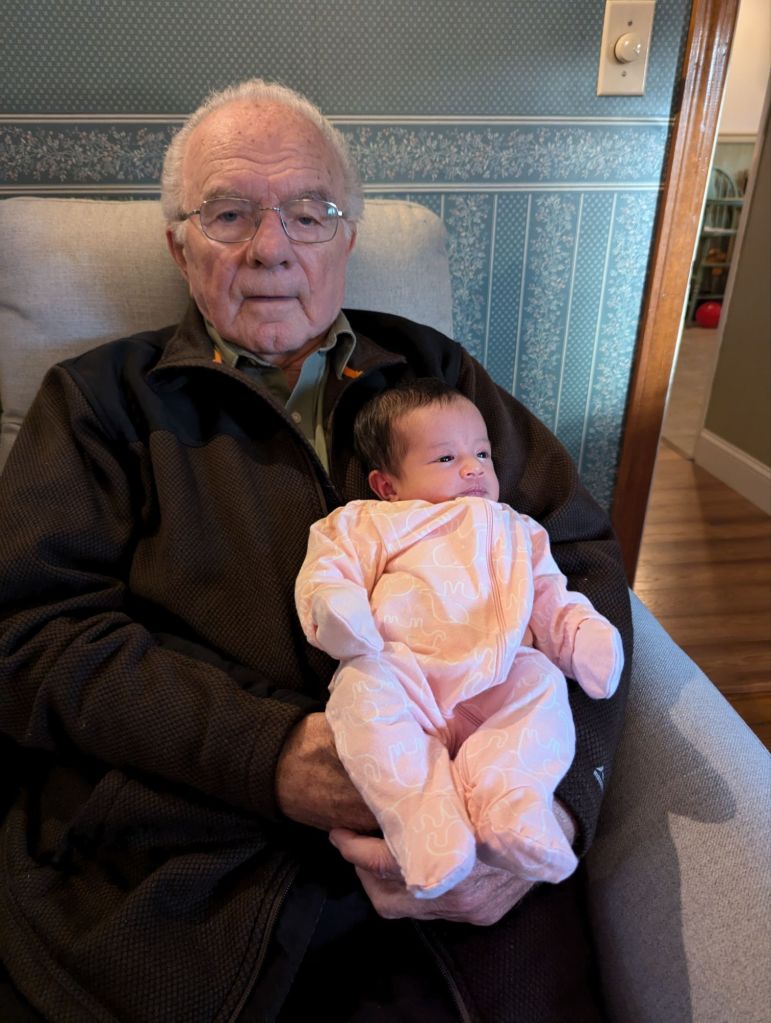
Soon we will lay him in the dirt. Once again he’ll be beside the woman who, with him, produced the generation that produced me. We will all join him someday as well. But go out and live with the fullness of life that he did despite having to stare mortality in the face. We all must die and yet that is not a reason not to live. Those worries about whether or not the planting will be possible with the weather or if the crops will get enough rain to grow are over for him. We are the produce, the final testament to what he was—the fruit of his successful life.
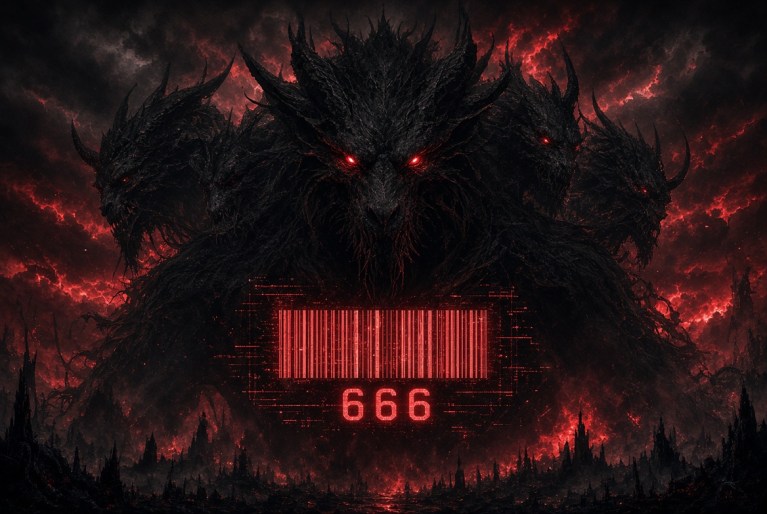

Choose Your Alliances: Revelation, the Mark, and the End of Religious Freedom

Standard

I have never been much of an eschatology guy. So much of the interpretation of relies on confirmation bias, like a fortune cookie or horoscope where the language is vague enough anyone can make the words apply to themselves. I was happy to stay on the sidelines other than a brief flirtation with a Preterist perspective.

But seeing how geopolitics have shaped up and our own domestic situation—given how much a small group of the most die-hard of Christ deniers has gained such control over the U.S. economically and politically—I have had to consider some less than fuzzy math concerning the end of this age. While many figures have been named as the anti-Christ, only one group has been dedicated to total destruction of Christian faith from the very beginning and never forgets anything even after thousands of years.

The Beast De-banks Peace Advocates

It’s only now, with de-banking and the arrival of digital currency that some of what’s said in the book of Revelation comes to life:

The second beast was given power to give breath to the image of the first beast, so that the image could speak and cause all who refused to worship the image to be killed. It also forced all people, great and small, rich and poor, free and slave, to receive a mark on their right hands or on their foreheads, so that they could not buy or sell unless they had the mark, which is the name of the beast or the number of its name. This calls for wisdom. Let the person who has insight calculate the number of the beast, for it is the number of a man. That number is 666.

(Revelation 13:15-18 NIV)

Scott Ritter is an outspoken critic against the endless war. I remember—in the pause between active combat in Iraq—he was the chief weapons inspector who had been tasked with verifying if Saddam Hussain had destroyed his chemical weapons stockpile and knew from his own work that it was no longer a threat. He, like Joe Kent currently, because of his experience with false claims became vocal in opposition to wars and has paid a professional price. But this also goes beyond losing high profile jobs. Ritter in January of this year, had tried to use his debit card and couldn’t. He had been de-banked or shut-off from his money and completely without explanation.

That is exactly the pattern of the beast. If you don’t worship it—or bear it’s mark—then it will cut you off from all resources. This is only now possible with digital currency and global banking infrastructure.

Human Effort and Chosen Counterfeits

The number six carries with it tremendous symbolic value. In the book of Genesis the sixth day of creation pertains to mankind—it represents a height of human achievement without worship of God. In Exodus 20:9-11 there’s a command “Six days shall you labor and do all your work.” This is our maximum potential through our own labor and striving or are limitations, imperfection and attempt at self-reliance. And exactly what St Paul is addressing in Galatians 4:22-23:

For it is written that Abraham had two sons, one by the slave woman and the other by the free woman. His son by the slave woman was born according to the flesh, but his son by the free woman was born as the result of a divine promise.

According to this, not all sons of Abraham are created equal. In the verses following he explains the allegory pertains to the two covenants. The slave woman “corresponds to the present city of Jerusalem, because she is in slavery with her children.” While, in stark contrast, “the Jerusalem that is above is free, and she is our mother.” He goes on to say those of this defunct old covenant “will never share the inheritance with the free woman’s son.” In other words, human effort—being genetically related to Abraham or even perfectly keeping the law of Moses—will never save a person.

Human effort will never get us to heaven—but can take us to hell.

So when you put three sixes together this is the height of human effort. It is the rejection of God. It is the religion that remains of those who rejected Christ and—according to 1 John 2:23—does not have Father: “Nobody who denies the Son has the Father.” This is to say those of the “synagogue of Satan,” in the book of Revelation (2:9, 3:9), “who claim to be Jews though they are not.” And this is a deception Jesus warned about, according to Matthew 24:24-25:

For false messiahs and false prophets will appear and perform great signs and wonders to deceive, if possible, even the elect. See, I have told you ahead of time.

The words “the elect” is interesting here and it refers to those chosen by God of the faithful remnant of His people. Being chosen is not about blood lineage or an entitlement from being born in a particular group. It’s always a matter of Divine work or faith in God. This claim that some can still find their salvation through Moses or their earthly Jerusalem is false. That is a purely human effort even if they make claims of the miraculous. There are those who say we should worship them like we do Jesus. There are those who say God should repent to them for his sin. This is the antithesis of Christianity—symbolized with a star with six points, six triangles and six sides:

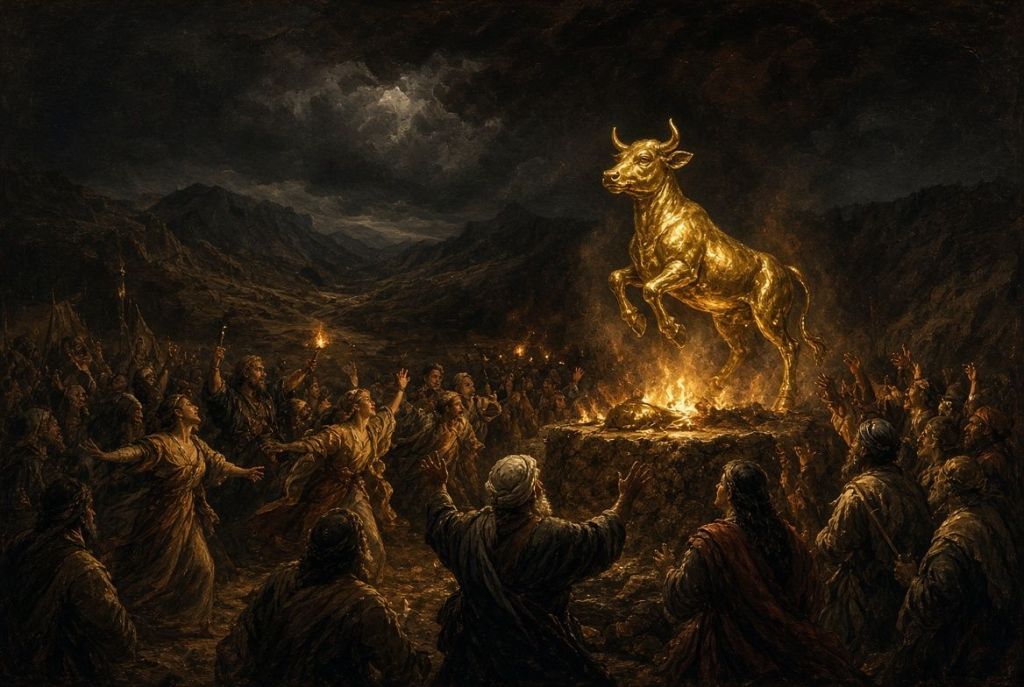
But our ancestors refused to obey him. Instead, they rejected him and in their hearts turned back to Egypt. They told Aaron, ‘Make us gods who will go before us. As for this fellow Moses who led us out of Egypt—we don’t know what has happened to him!’ That was the time they made an idol in the form of a calf. They brought sacrifices to it and reveled in what their own hands had made. But God turned away from them and gave them over to the worship of the sun, moon and stars. This agrees with what is written in the book of the prophets: “ ‘Did you bring me sacrifices and offerings forty years in the wilderness, people of Israel? You have taken up the tabernacle of Molek and the star of your god Rephan, the idols you made to worship. Therefore I will send you into exile’ beyond Babylon.

(Acts 7:39-43 NIV)

Stephen was murdered for claiming that his own people—who had rejected Christ—were of Rephan and not God.

Not Overanalyzing the Anti-Christ

Who is the liar? It is whoever denies that Jesus is the Christ. Such a person is the antichrist—denying the Father and the Son. No one who denies the Son has the Father; whoever acknowledges the Son has the Father also.

(1 John 2:22-23 NIV)

Everyone from the Pope to Barack Obama has been accused of being thee anti-Christ and yet the term seems to describe all who deny Christ rather than a specific figure. It could be that there’s the ultimate example of this, but anti-Christ is simply anti-Christ and it really does not need to be made any more complicated than that. By their works you shall know them. Those truly in Christ will behave a certain way, display the fruit of the Spirit, and those anti-Christ do not.

Those who see suffering and are indifferent, who are themselves perpetual victims, war-like, demanding, cruel, vindictive, nasty and self-indulgent, that is Satanic.

When Jesus was tempted by the kingdoms of the world he rejected the offer. There are others who had the same offer, some of his tribe, who are willing to sell their souls and that is anti-Christ. To those seeking after a worldly kingdom or political power the way of the cross or self-denial is foolishness. They want everyone to bend a knee to them and treat them as gods. The truth, however, is they will be forever slaves to sin and must repent of their pride to be saved.

When you look at who controls the financial system, who owns our politicians, and what is becoming the dominant military power, it is fairly obvious which symbol will be used as the required license for commerce. Who other those who already arguing we should worship them?

Breaking the Yoke

The difficulty with evil is that it invites us to respond in kind, to meet controlling people with our own attempts to control, hate with hate, violence with violence. But Jesus is a clear alternative. He offered forgiveness of sin to all rather than blood guilt. His focus is on morality and faith not ethnicity or the power to force compliance. He rejected all material wealth, a chance to rule kingdoms of this world, and chose to serve rather than be served. He was repudiating the religious culture of his ethnic tribe which had strayed far from it’s moral foundation in the faith of Abraham—that saw blessing as a deserved entitlement rather than God’s grace.

There are many who do not know Christ and living an unrepentant life. It’s impractical to remove ourselves from entirely all of them—it is hard to be a light to the world while not being engaged. However, this is profoundly different from marriage of Christianity with a totally anti-Christ people seeking after the destruction of our faith even if not open and honest about it:

Do not be yoked together with unbelievers. For what do righteousness and wickedness have in common? Or what fellowship can light have with darkness? What harmony is there between Christ and Belial? Or what does a believer have in common with an unbeliever?

(2 Corinthians 6:14-15 NIV)

Nobody who denies that Jesus is the Christ is a believer in the God of the Bible—they’re anti-Christ. This is something very explicitly spelled out in Scripture.

When I see a character like Ben Shapiro get in front of the Turning Point USA crowd and tell them to deny Christ. He doesn’t admit it outright. But that is what Talmudic Noahide Laws imply. Belief in Jesus as being son of God is considered idolatry according to this code and punishable by decapitation. That is the end game: Which is to finish what his ancestors started in demanding that Jesus be put to death, the stoning of Stephen, and working towards the total eradication of the Christian perspective. This is what happens when you partner with the anti-Christ. You’ll end up as dead as Charlie Kirk and a legacy taken over by the enemies of the cross.

At a time when some want to bring back the public execution (only for the ‘terrorists’ for now) and criticism of a particular group of people is virtually outlawed in some places, we must remain aware of the trajectory we are on and where it will soon lead. Those of Orthodox Christian tradition were a majority in Russia—and a higher percentage than are Christian in the U.S. today. The Bolsheviks only represented 1 to 1.5% of the population and they started as being a party of mostly ethnic minorities. The peak of their popular support was 24% and yet by 1922 they were powerful enough to ban all opposition. And by the end the church was purged.

We have been infiltrated. The leaven in the lump has began corrupt every institution of our Christian nation. There are now many who profess Christ and yet promote what is diametrically opposed to Christ. And I don’t need to name it other than to call it what it is and that is anti-Christ. The spirit of anti-Christ is preached by many fundamentalists and some even being paid for this betrayal by those who seek to destroy Christianity—who have a tribalist cult memory spanning a millennia and cannot forgive.

Anti-Christ will bring hell to Earth if we stay idle. While Christianity is about bringing the kingdom of heaven to practical application, the rejection of Christ brings the complete opposite and a regression back to the time of genocidal wars and the end of freedom of religion by those who never shared our Christian values. We need to disentangle ourselves now or prepare to be controlled by multiple coercive means if we refuse to deny Christ ourselves. There is good and evil in the world—and we need to choose our alliances wisely while we still have the freedom to do so.

One Standard for All: Consent, Risk, and the Cornell Fraternity Case

Standard

They love to claim the mantle of common sense, decency and American values, they accuse the ‘other side’ of being corrupting, full of a spirit of bitterness and destructive of civilization. But the reality is they’re just partisans with a lens, who judge everything by the assumed identity of those involved, and this recent Cornell sexual assault case no exception.

First of all, the incident at Chi Phi fraternity house, on October 19–20, 2024, is murkier than a rape case where an totally unwilling person is preyed upon in the street. There were drugs and alcohol involved—and maybe some consent as well. (Update: Details remain disputed) Initially the young woman seemed in denial, after one participant had sent a text apologizing, admitting she was “super clouded” and distinguishing “I really liked being with you and Matt” while saying they should have left out the other men. So, under the New York law (which is very likely to soon change) voluntary intoxication has meant a higher burden of proof—and is why local prosecutors decided (correctly) not to press charges. Something can be immoral, evil even, but not illegal.

Second, it is clear she didn’t consent to all that happened and what happened beyond what she consented to was an assault. Her initial comments suggested it and the later confirm it: “My reputation is destroyed and I’m utterly ashamed. All I do is sleep and cry all day.” That is her distress and realization, once out of the stupor of the day after, and a result of something less than consensual—where she was incapacitated.

Risky Behavior and Impulse Control

Living in a college town it is not unusual for the music to thump at the fraternities and off campus party houses. Getting wasted on the weekends is tradition—as bad as it may be—and I am certain these events are full of regrettable choices. When I see how these young women dress, putting feminine sexuality on full display, clearly intoxicated, and then surrounded by young men full of hormones and desire? This is a match on tinder type of situation. As much as it has been preached in the orientation process, that expressed consent is non-negotiable, the lack of impulse control of youth with a boatload of alcohol on top of that—means bad choices will be made.

What’s funny, however, is when the cultural conservatives, who see deterrence as a way to stop everything from terrorism to theft—do not want to discourage this kind of rape the same as we DUI. They try to argue her responsibility and yet deny that young men have any responsibility whatsoever. This is not the perspective of those seeking justice for all people. This is a reaction of ugly and entitled people who believe ‘liberal’ women deserve to be raped—for rejecting them (in the case of incel men) or for their being free in ways these prudes disapprove.

It’s the same spirit of those in the ‘woke’ left claiming Charlie Kirk being shot was karma because of his pro-2nd Amendment stance: “Oh, he got what was coming to him for his promotion of hate!”

Civilization was not built by those who will decide who is or is not the victim based on tribal alignments. Both right and left, at the extreme, only ever see the criminal justice system as being another means to punish ideological enemies. Equal treatment and protection of all vulnerable gives way to a scorekeeping based on gender, religion and race. We don’t need to deter the young men from ‘gang banging’ a young woman unable to consent because she probably votes for Kamala Harris. The same right that which tells us about racial minorities who lack the impulse control will say “boys will be boys” if they believe it’s one of their own.

Justice is about having one standard for all people. It does not excuse behavior based on circumstances. Are we going to say that shoplifting isn’t a crime because merchants who do not keep their items for sale behind a locked case are asking for it? If a display is an invitation, considered implied consent, then maybe we should decriminalize theft in cases where items weren’t properly secured—requiring proof of the cut chain before we consider a bike to be stolen? Or we could simply be consistent and say that violators (all, not some) should have controlled their urges and prosecute according to the law rather than our biased feelings.

Pornification of Sex

What’s more disturbing is the hidden sexual culture undercurrents of this Cornell case—the obvious of two men with one woman is bad enough. But this idea that she wanted the large group of random men to take their turn on her? This is an attitude that is built on the pornography consumption rather the accurate understanding of average female desires or physiology. I’m sorry—while this is a trope of adult content—normal women don’t consent to seven hours of sex. Paid sex workers do this sort of thing because it is a job. However, this seems to have built an expectation with the consumers.

Pornification of sex is widespread. No pun intended. Where we see everything through the lens of our own pleasure rather than in a context of procreation. She’s a commodity, a consumable, rather than a commitment to love or cherish for life. We have normalized deviance, acts degrading of women, and it’s why we’re now indifferent to sexual assault—we have been desensitized by an industry which exploits our vulnerability and fosters carnal appetites. Women are objectified in this media and young men programmed to only think of themselves. And it is why we want to treat a group of intelligent college age males as being incapable—because we have debased ourselves in private.

One way to remove their shame is to blame-shift. Even (or especially) conservative men refuse to take personal responsibility. They believe they would be completely pure if not for exposure to this constant temptation or if the women of their fantasies simply made themselves available—they feel entitled and angry towards women. This is, incidentally, why they see pink haired feminists as being full of contempt for attractive women. That is projection. It is them mere externalizing their own inner condition and thinking this ability to see the sins of others means they are superior when it’s just a distraction or a lack of self-awareness.

Rebuilding a Culture of Respect

As the father of a 14-year-old boy I’ve now realized that respect for others, women in particular, is something that must be taught—taught by parents. Yes, some might be a bit more empathetic and able to put on the shoes of someone else. Male aggression is something that must be tempered, passion channeled in positive directions, or else you have idle hands doing that Devil’s work.

As the father of a toddler daughter, knowing her teenage years and young adulthood will be here faster than I’m ready for, I want her to be her own first layer of protection. She needs to understand that many men are not well-trained or good. Modesty is a form of self-respect. Keeping ourselves out of risky circumstances can spare us a world of pain and shame. She needs to understand that not all men are gentlemen who will protect her—many men are have an entitled attitude and seething, deeply resentful of women for their standards that excluded them, and will use intoxication to excuse evil.

Truly conservative men, in the West, should follow the self-sacrificial example of Christ who showed compassion for the weak and not judgment. If a man wants respect, as a deserving person, then he doesn’t make any excuses. He asks for her permission rather than just take what he wants. He protects himself from risk by not putting temptation in front of himself and avoids the potential rape allegation. He protects all women simply as a manifestation of his good character without expecting anything in return.

Nice-guy syndrome, or those who will bend over backwards to please a women hoping for sexual favors in return, is a lacking self-respect. The manosphere is just the male version of grievance culture, men who lack impulse control and want to live as animals doing whatever their hormones tell them to do, while then also lamenting the collapse of civilization because women don’t simply respect them for their merely existing. They do not believe they need consent because in their twisted mind every woman is just a whore. It’s male vice dressed as a strength—men who do not value themselves or can’t fill a protective role of a truly good man and, therefore, they’re resentful.

A gentleman does not decide who deserves respect or not based on appearance. They are the self-controlled agents of civilization in all circumstances. He’s self-governed, he is concerned about morality and ethics, not just the legal limits or what he can possibly get away with. He’s not entitled. Not petty or lacking compassion. He will not touch a woman without a marriage license. It does not matter to him what the ‘other side’ has done, he is consistently what he is without making any excuses. If there was one man like this who existed in that Cornell frat he would have protected the young woman.

Ignorance is Not an Excuse

If a group of brown skinned men assaulted a young woman for wearing a short skirt we would make the correct moral judgement. A woman who is basically unconscious is not able to give consent. It doesn’t matter what you think about her style of dress nor if she voluntarily consumed intoxicants or not. If consent laws don’t currently cover this then they most certainly should be updated. My own daughter won’t be ignorant of risks and yet my son will likewise understand that he is responsible, being a civilized man, for his own actions.

If it’s wrong to take a bike because it’s out unchained then it’s wrong to see her spread legs as permission. That said, there should be a different statute applied to such cases of two intoxicated parties. Yes, it is rape, it is rape and requires punishment so a young man thinks about this as the consequences if he takes substance that supercharges his already lacking impulse control. However I don’t think we should say it is the same as a case where everyone is sober. But the true conservative doesn’t exploit the vulnerable in any circumstance. Barbarians don’t need to have consent. Good men do not let their circumstances dictate their response.

The Insidious ‘Good Men Must Do Bad Things’ Myth

Standard

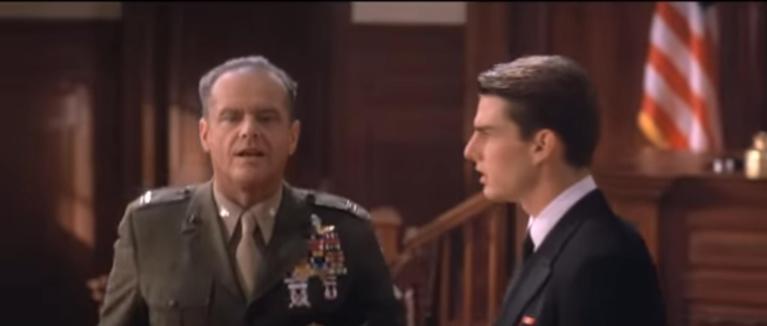
A Few Good Men has memorable lines. The courtroom drama is about a pair of Marines charged in the hazing death of an unpopular recruit. One of the accused refuses to take a plea deal, standing on principle, believing they did nothing wrong—claiming they were just following orders. It all culminates with a verbal battle between the defense lawyer, Lt. Daniel Kaffee (Tom Cruise) and sneering Col. Nathan R. Jessep (Jack Nicholson) the superior officer who was behind a deadly hazing incident. Col Jessup, when finally pressed for the truth, exclaims “You can’t handle the truth!” and then he goes on a diatribe:

Son, we live in a world that has walls, and those walls have to be guarded by men with guns. Who’s gonna do it? You? You, Lt. Weinberg? I have a greater responsibility than you could possibly fathom. You weep for Santiago and you curse the Marines. You have that luxury. You have the luxury of not knowing what I know; that Santiago’s death, while tragic, probably saved lives. And my existence, while grotesque and incomprehensible to you, saves lives. You don’t want the truth because deep down in places you don’t talk about at parties, you want me on that wall. You need me on that wall. We use words like honor, code, loyalty. We use these words as the backbone of a life spent defending something. You use them as a punchline. I have neither the time nor the inclination to explain myself to a man who rises and sleeps under the blanket of the very freedom that I provide, and then questions the manner in which I provide it! I would rather you just said “thank you” and went on your way, Otherwise, I suggest you pick up a weapon and stand a post. Either way, I don’t give a damn what you think you are entitled to!

What is brilliant about this rant is it comes off as what it is: A justification from an arrogant man who sincerely believes that he is standing for good even when he’s clearly in the wrong.

Jessup is not a mustache twirling caricature of a villain.  He is someone with moral reasoning that many can relate to or even may side with. He’s arguing that those who put him on the stand are insulated from the truly life and death decisions he must make and should simply accept his role of protector—not question his judgment.

This fictional statement is a variation on the idea “…people sleep peaceably in their beds at night only because rough men stand ready to do violence on their behalf.” 

The quote above, often misattributed to George Orwell who actually said this: “Men can only be highly civilized while other men, inevitably less civilized, are there to stand guard and feed them.”

Orwell himself paraphrasing Rudyard Kipling who wrote of the “thin red line” and rebuked the people making a mockery of “uniforms that guard you while you sleep” in his 1890 poem “Tommy” written from the perspective of a British infantryman.

This rejection of pacifism is common. It’s a part of the jingoistic fervor and cult thinking of those who demand we fall into line when our political establishment beats those war drums.

Don’t you know they are protecting you?

We should be grateful, they say, or we would be speaking German, be Communist, or forced to convert to Islam!

We’re now at a stage of preemptive war, which directly violates our U.S. Constitution, claiming it is necessary to “defend freedom and democracy” from the uncivilized.

There’s certainly no end to the violence that these self-assured ‘defenders’ will do on behalf of us—and would do to us to save us from ourselves.

Good Men Must Do Bad Things

This blog is a response to a request:

After reading that piece on dogma, I’m curious. Should you be willing to create a similar criticism of the “sometimes, good men must do bad things” mantra, I’d be very interested in your take.

That quote might be a paraphrase of Suits—a television legal drama—where a character uses this reasoning as their excuse to bend or break rules. The full quote from the series: “Sometimes good guys gotta do bad things to make the bad guys pay.” And the show popular Yellowstone also has a line similar, “Sometimes good men have to do real bad things.”

I don’t know enough about those shows to know if this is intended as ironic. But it has a strong resemblance to the evil is competence and thus good statement by Peter Thiel, the co-founder and board chairman of Palantir. 

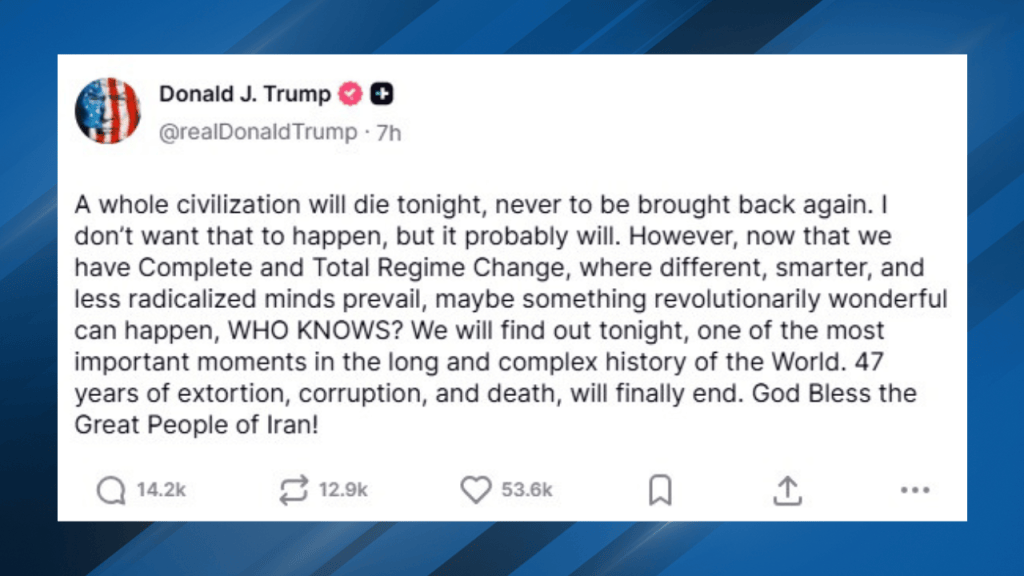
This idea of exemption to do evil for sake of good is something both the far right and left agree on—whether “punch a Nazi” memes by Antifa or it is Trumpanyau saying we may need to nuke Iran to prevent Iran from having nukes. Basically, it is an idea we can be good while we do bad things and yet the other side can never be forgiven.

“It became necessary to destroy the town to save it”

What this looks like is fundamental attribution error crossbred with moral relativism. I declare someone evil and list off the evil things they’ve done. And then justify things often many times worse in response and it’s all good because I’ve designated them as being evil. Unfortunately, as convenient as this circular thinking is for the dogmatic partisan, it is about as reliable as our ability to accurately assess our own driving skills—where 73% to 93% of people believe that they are an above average driver. We classify our bad as being a result of circumstances and then assess the failure of others as being something inborn or a character flaw.

The moral relativism accompanying this is how we judge an action by who is doing the action rather than apply the same standard to all. From the perspective of the Imperial Japanese, being economically and militarily strangled by the U.S. oil embargo, the attack on Pearl Harbor was a necessary evil. They had a better reason to surprise attack when and where they did than the U.S. has had in wars since then and yet our infamy must be always forgotten. During the Vietnam War the CIA “neutralized” (kidnapped, tortured or killed) tens of thousands who were accused of collaborating with the North—no trials or proof needed. Did you know that?

In 1988, Iran Air Flight 655 was shot down over the Persian Gulf, killing all 290 souls, by a U.S. Navy destroyer. The crew and commanding officer of that ship got medals. In the 1991 Gulf War the U.S. killed 408 Iraqi civilians in a single strike against the Amiriyah shelter—which we knew was being used by civilians during the Iran-Iraq War. And even after the bombs stopped dropping the brutal economic sanctions killed hundreds of thousands of Iraqis. The Vietnamese people, even to this day, suffer unusually high rates of rare birth defects due to the widespread use of Agent Orange and other chemical defoliant decades ago—to just dismiss this all as ‘collateral damage’ is not very pro-life.

But aren’t you glad we tried to save you from the Commies?!?

It is just so strange to see the same people who justify total obliteration of two cities in Japan being so upset when U.S. economic and military interests are targeted by those who have been subjected to far worse.

The point being, people always come up with justifications for their own evil.  Even the total psychopath can often defend heinous acts with a moral reasoning: “He looked at me wrong so—acting 100% in self-defense—I bashed his face in with a hammer.”  If we name a date, and ignore the context of all that happened prior, we can claim we’re fighting for justice—when, in reality, the other side has as much justification as we do or more.

It’s a world where all violent people believe they are the good guy forced to do bad things.

Tired Analogies and Immoral Math

On a religious forum, mostly pacifists, there was always a ‘sheepdog’ guy or that one person who self-designated themselves as a protector of the herd.

You see, he was not an unsuspecting sheep like everyone else.

No, not at all!

He was an exception, the ever protective guard of  decency and goodness—who only every so often took an accidental bite out of a sheep.

What’s interesting is you’ll never find a sheepdog metaphor anywhere in Biblical texts, it is simply something invented, a cover story.  What you do find is a division between sheep and goats.  The goats are those unruly, stubborn or independent animals—used in Scripture as a metaphor for the cruel and exploitative leaders or those who bully the sheep. They will be sorted out of the faithful flock at the final judgment.

And the other animal mentioned? 

The wolf in sheep’s skin.

These are actual predators who wrap themselves up in an innocent appearance—to divide and devour the sheep. It sounds a bit like those sheepdogs, right?

In my own experience this sheepdog schtick was often just an excuse for their aggression against voices defying their self-asserted authority in all things. Nobody had elected them to the role. It was all their own personal judgement.

Unfortunately, few seem able to see through the phony knights in shining armor—who turn rivals into a dragon to slay rather than an equal to treat with the respect they demand for themselves.

The real issue is when we make exceptions for ourselves that we don’t accept if turned on us. For example, collateral damage. We say that the death of innocents is simply a part of war and unavoidable. But if it were our own child burned alive would we be okay with it—as just a part of war?

True morality values all people and their rights like our own. It never justifies killing of innocents or the treatment of some lives as expendable.

Good people do good to all people and not only a chosen few.

All lives matter or none do.

If you make exceptions for yourself to violate the rule eventually it boomerangs back—those who live by the sword die by the sword.

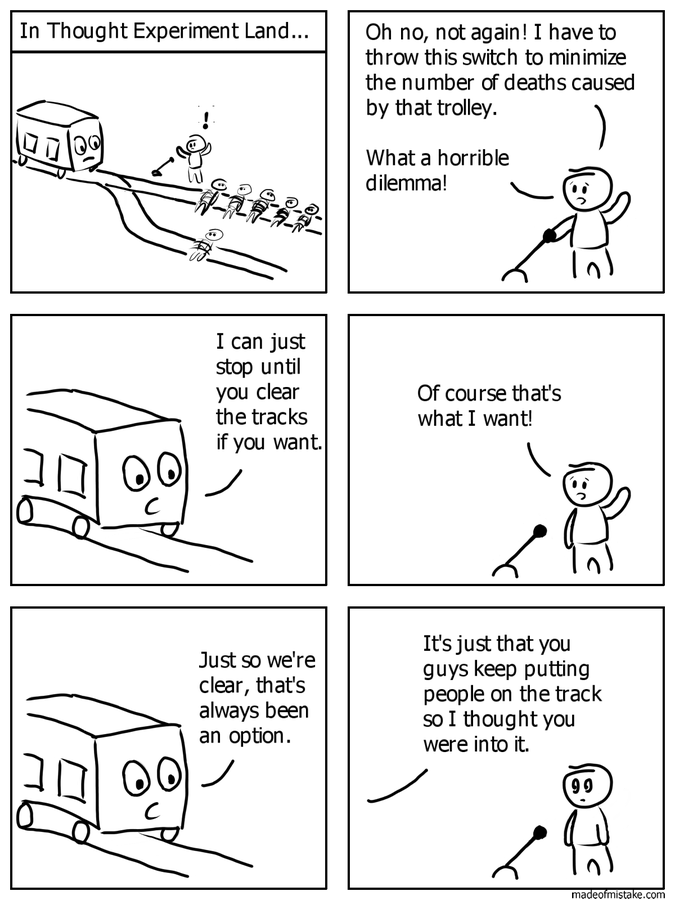
Using the ends to justify the means, playing God with Trolley problem math, choosing which lives matter—rather than treat all people with dignity and respect—is a moral logic 100% anti-Christ.

The ‘miracle’ is escaping the false dichotomy of those who aren’t good problem solvers.

Jesus, in his response to the condemning attitude of the Pharisees against sinners, told the Parable of the Lost Sheep.  In the story he reasoned that a good shepherd leaves their ninety-nine sheep to find the one lost.  In his morality saving 99% was not good enough.  And, like Abraham, he was not okay with close enough or even one person being harmed when it could be avoided.

If one sinner isn’t expendable in the eyes of God—then what is the worth of an innocent child’s life?

When you’re okay with killing one person for the sake of some imaginary “greater good” you’ll justify a million. That is the genocidal math, the cold calculation behind nearly all industrial scale mass murder campaigns—trying to kill their way to peace. They claim it is a binary choice, either us or them, save more lives by switching the track and killing one instead.

This is the kind of justification or rationalization that allowed men like Stalin, Hitler, Mao, Pol Pot, Truman and Netanyahu today. One might be completely fine with the slaughter of innocents when they’re ideologically aligned with those who are doing the killing, yet agreement doesn’t make it any less evil—and silence is to be complicit in the murder.

You’re Not Exceptional…

So maybe one suffers from main character syndrome, their own grandiosity delusions and narcissism—they understand good and evil only in terms of what serves them as an individual or a tribal identity group? Or they just think they have a special clarity of mind to make “hard decisions” on who should be sacrificed or saved? But this arrogance will only lead to hell. Those who claim to do evil for goodness sake are almost always just doing evil—dressing it up in the language of necessity so they never have to look in the mirror and be honest with themselves.

Every parent with a child understands that one evil doesn’t justify another.

Col. Jessep, while violating military ethics and the law, positioned himself as being a protector of civilization. Likewise many in the world make excuses for their own lack of civility—the “they started it” or “ist” labeling exemptions. The whole “violence is the only language they understand” rationale by those whom themselves only seem to be restrained from by force. 

Every accusation is a confession?

The difference is semantics—not substance. The worst offenders believe the sanitized descriptions of their own brutality and atrocities they commit makes them less a “terrorist” than those whom they hate—yet this righteous veneer is stripped away under cross-examination. It is only in their own mind they’re special.

Woe to those who call evil good and good evil, who put darkness for light and light for darkness, who put bitter for sweet and sweet for bitter. Woe to those who are wise in their own eyes and clever in their own sight.

Isaiah 5:20-21 NIV

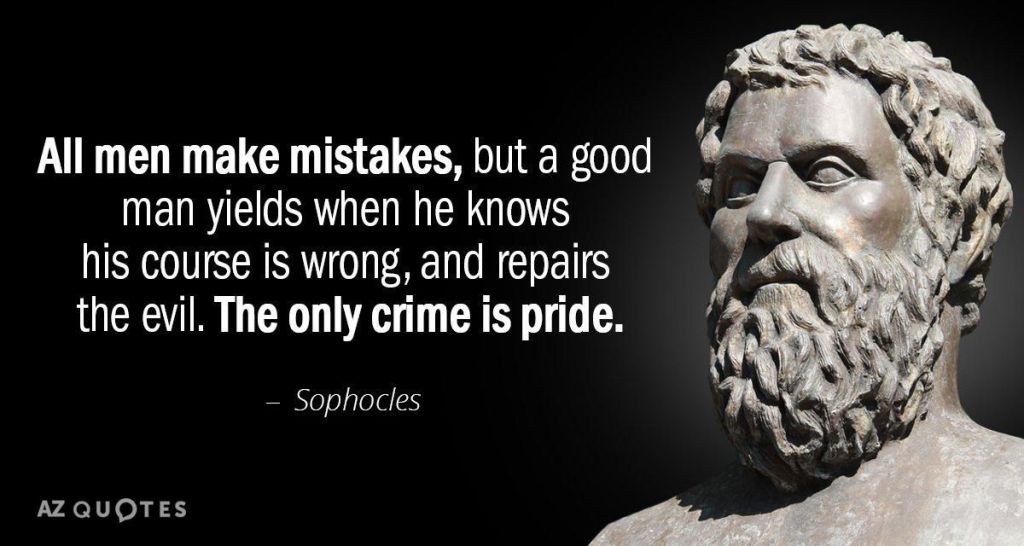
You can’t be good while you are doing evil—good is what it continually does. Certainly we all fall short. We all have bad days and make mistakes. A good person is one who is able to admit wrong doing rather than try to whitewash evil. Giving exemptions for some and harsh penalties for others is just favoritism and a sin. There is one standard for all people and that is to love others (our neighbors) as ourselves. When you start to defend “your people” rather than humanity it leads to a breakdown of morality and ethics that only creates more conflict. The double standard is to make exceptions for evil and a good person does not.

Good morality starts with an idea that we all stand in front of a neutral judge. It applies a consistent standard for all people.

Good morality doesn’t ask who is pulling the trigger—it asks whether a trigger should be pulled at all.

True integrity means abandoning self-serving or tribal math which values our rights more than theirs.  It means accepting that we are not the exception to the rule—and abiding by universal moral principle. Until we drop the self-righteous rationalizations of our own violations and submit ourselves to a single, impartial standard of love and justice, we will remain trapped in an endless cycle of violence of our own making—and prove to the rest of the world that we are precisely what we have accused our enemies of being: Lawless, agents of chaos, and just plain evil no matter how we dressed it.

Nobody thinks they’re evil. No they’re just a good person forced to do bad things. They are victims of circumstances, compelled by the evil of others to neglect common moral decency and do bad things. They may even claim to be on the wall guarding civilization from itself, but the truth is they represent an erosion of morality more than the foreigner beyond they say we should fear: They’re the barbarians and savages! But those who do evil for goodness sake are worse than the uncivilized who do bad in ignorance.

A person who knows what is right and exempts themselves is evil. If you’re good, then you will do good for goodness sake—without exception.