

The Insidious ‘Good Men Must Do Bad Things’ Myth

Standard

A Few Good Men has memorable lines. The courtroom drama is about a pair of Marines charged in the hazing death of an unpopular recruit. One of the accused refuses to take a plea deal, standing on principle, believing they did nothing wrong—claiming they were just following orders. It all culminates with a verbal battle between the defense lawyer, Lt. Daniel Kaffee (Tom Cruise) and sneering Col. Nathan R. Jessep (Jack Nicholson) the superior officer who was behind a deadly hazing incident. Col Jessup, when finally pressed for the truth, exclaims “You can’t handle the truth!” and then he goes on a diatribe:

Son, we live in a world that has walls, and those walls have to be guarded by men with guns. Who’s gonna do it? You? You, Lt. Weinberg? I have a greater responsibility than you could possibly fathom. You weep for Santiago and you curse the Marines. You have that luxury. You have the luxury of not knowing what I know; that Santiago’s death, while tragic, probably saved lives. And my existence, while grotesque and incomprehensible to you, saves lives. You don’t want the truth because deep down in places you don’t talk about at parties, you want me on that wall. You need me on that wall. We use words like honor, code, loyalty. We use these words as the backbone of a life spent defending something. You use them as a punchline. I have neither the time nor the inclination to explain myself to a man who rises and sleeps under the blanket of the very freedom that I provide, and then questions the manner in which I provide it! I would rather you just said “thank you” and went on your way, Otherwise, I suggest you pick up a weapon and stand a post. Either way, I don’t give a damn what you think you are entitled to!

What is brilliant about this rant is it comes off as what it is: A justification from an arrogant man who sincerely believes that he is standing for good even when he’s clearly in the wrong.

Jessup is not a mustache twirling caricature of a villain.  He is someone with moral reasoning that many can relate to or even may side with. He’s arguing that those who put him on the stand are insulated from the truly life and death decisions he must make and should simply accept his role of protector—not question his judgment.

This fictional statement is a variation on the idea “…people sleep peaceably in their beds at night only because rough men stand ready to do violence on their behalf.” 

The quote above, often misattributed to George Orwell who actually said this: “Men can only be highly civilized while other men, inevitably less civilized, are there to stand guard and feed them.”

Orwell himself paraphrasing Rudyard Kipling who wrote of the “thin red line” and rebuked the people making a mockery of “uniforms that guard you while you sleep” in his 1890 poem “Tommy” written from the perspective of a British infantryman.

This rejection of pacifism is common. It’s a part of the jingoistic fervor and cult thinking of those who demand we fall into line when our political establishment beats those war drums.

Don’t you know they are protecting you?

We should be grateful, they say, or we would be speaking German, be Communist, or forced to convert to Islam!

We’re now at a stage of preemptive war, which directly violates our U.S. Constitution, claiming it is necessary to “defend freedom and democracy” from the uncivilized.

There’s certainly no end to the violence that these self-assured ‘defenders’ will do on behalf of us—and would do to us to save us from ourselves.

Good Men Must Do Bad Things

This blog is a response to a request:

After reading that piece on dogma, I’m curious. Should you be willing to create a similar criticism of the “sometimes, good men must do bad things” mantra, I’d be very interested in your take.

That quote might be a paraphrase of Suits—a television legal drama—where a character uses this reasoning as their excuse to bend or break rules. The full quote from the series: “Sometimes good guys gotta do bad things to make the bad guys pay.” And the show popular Yellowstone also has a line similar, “Sometimes good men have to do real bad things.”

I don’t know enough about those shows to know if this is intended as ironic. But it has a strong resemblance to the evil is competence and thus good statement by Peter Thiel, the co-founder and board chairman of Palantir. 

This idea of exemption to do evil for sake of good is something both the far right and left agree on—whether “punch a Nazi” memes by Antifa or it is Trumpanyau saying we may need to nuke Iran to prevent Iran from having nukes. Basically, it is an idea we can be good while we do bad things and yet the other side can never be forgiven.

“It became necessary to destroy the town to save it”

What this looks like is fundamental attribution error crossbred with moral relativism. I declare someone evil and list off the evil things they’ve done. And then justify things often many times worse in response and it’s all good because I’ve designated them as being evil. Unfortunately, as convenient as this circular thinking is for the dogmatic partisan, it is about as reliable as our ability to accurately assess our own driving skills—where 73% to 93% of people believe that they are an above average driver. We classify our bad as being a result of circumstances and then assess the failure of others as being something inborn or a character flaw.

The moral relativism accompanying this is how we judge an action by who is doing the action rather than apply the same standard to all. From the perspective of the Imperial Japanese, being economically and militarily strangled by the U.S. oil embargo, the attack on Pearl Harbor was a necessary evil. They had a better reason to surprise attack when and where they did than the U.S. has had in wars since then and yet our infamy must be always forgotten. During the Vietnam War the CIA “neutralized” (kidnapped, tortured or killed) tens of thousands who were accused of collaborating with the North—no trials or proof needed. Did you know that?

In 1988, Iran Air Flight 655 was shot down over the Persian Gulf, killing all 290 souls, by a U.S. Navy destroyer. The crew and commanding officer of that ship got medals. In the 1991 Gulf War the U.S. killed 408 Iraqi civilians in a single strike against the Amiriyah shelter—which we knew was being used by civilians during the Iran-Iraq War. And even after the bombs stopped dropping the brutal economic sanctions killed hundreds of thousands of Iraqis. The Vietnamese people, even to this day, suffer unusually high rates of rare birth defects due to the widespread use of Agent Orange and other chemical defoliant decades ago—to just dismiss this all as ‘collateral damage’ is not very pro-life.

But aren’t you glad we tried to save you from the Commies?!?

It is just so strange to see the same people who justify total obliteration of two cities in Japan being so upset when U.S. economic and military interests are targeted by those who have been subjected to far worse.

The point being, people always come up with justifications for their own evil.  Even the total psychopath can often defend heinous acts with a moral reasoning: “He looked at me wrong so—acting 100% in self-defense—I bashed his face in with a hammer.”  If we name a date, and ignore the context of all that happened prior, we can claim we’re fighting for justice—when, in reality, the other side has as much justification as we do or more.

It’s a world where all violent people believe they are the good guy forced to do bad things.

Tired Analogies and Immoral Math

On a religious forum, mostly pacifists, there was always a ‘sheepdog’ guy or that one person who self-designated themselves as a protector of the herd.

You see, he was not an unsuspecting sheep like everyone else.

No, not at all!

He was an exception, the ever protective guard of  decency and goodness—who only every so often took an accidental bite out of a sheep.

What’s interesting is you’ll never find a sheepdog metaphor anywhere in Biblical texts, it is simply something invented, a cover story.  What you do find is a division between sheep and goats.  The goats are those unruly, stubborn or independent animals—used in Scripture as a metaphor for the cruel and exploitative leaders or those who bully the sheep. They will be sorted out of the faithful flock at the final judgment.

And the other animal mentioned? 

The wolf in sheep’s skin.

These are actual predators who wrap themselves up in an innocent appearance—to divide and devour the sheep. It sounds a bit like those sheepdogs, right?

In my own experience this sheepdog schtick was often just an excuse for their aggression against voices defying their self-asserted authority in all things. Nobody had elected them to the role. It was all their own personal judgement.

Unfortunately, few seem able to see through the phony knights in shining armor—who turn rivals into a dragon to slay rather than an equal to treat with the respect they demand for themselves.

The real issue is when we make exceptions for ourselves that we don’t accept if turned on us. For example, collateral damage. We say that the death of innocents is simply a part of war and unavoidable. But if it were our own child burned alive would we be okay with it—as just a part of war?

True morality values all people and their rights like our own. It never justifies killing of innocents or the treatment of some lives as expendable.

Good people do good to all people and not only a chosen few.

All lives matter or none do.

If you make exceptions for yourself to violate the rule eventually it boomerangs back—those who live by the sword die by the sword.

Using the ends to justify the means, playing God with Trolley problem math, choosing which lives matter—rather than treat all people with dignity and respect—is a moral logic 100% anti-Christ.
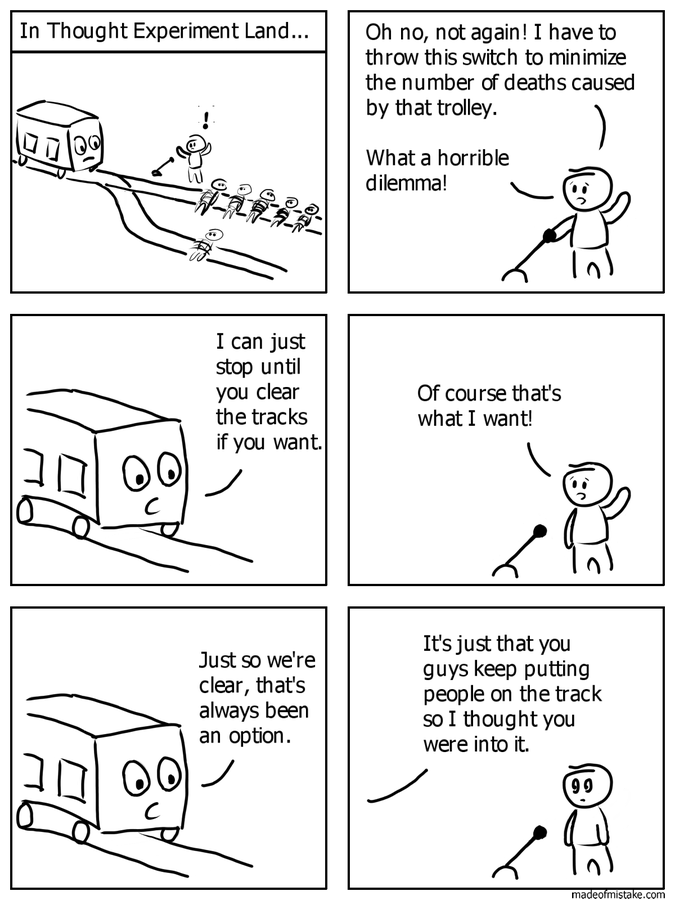
The ‘miracle’ is escaping the false dichotomy of those who aren’t good problem solvers.

Jesus, in his response to the condemning attitude of the Pharisees against sinners, told the Parable of the Lost Sheep.  In the story he reasoned that a good shepherd leaves their ninety-nine sheep to find the one lost.  In his morality saving 99% was not good enough.  And, like Abraham, he was not okay with close enough or even one person being harmed when it could be avoided.

If one sinner isn’t expendable in the eyes of God—then what is the worth of an innocent child’s life?

When you’re okay with killing one person for the sake of some imaginary “greater good” you’ll justify a million. That is the genocidal math, the cold calculation behind nearly all industrial scale mass murder campaigns—trying to kill their way to peace. They claim it is a binary choice, either us or them, save more lives by switching the track and killing one instead.

This is the kind of justification or rationalization that allowed men like Stalin, Hitler, Mao, Pol Pot, Truman and Netanyahu today. One might be completely fine with the slaughter of innocents when they’re ideologically aligned with those who are doing the killing, yet agreement doesn’t make it any less evil—and silence is to be complicit in the murder.

You’re Not Exceptional…

So maybe one suffers from main character syndrome, their own grandiosity delusions and narcissism—they understand good and evil only in terms of what serves them as an individual or a tribal identity group? Or they just think they have a special clarity of mind to make “hard decisions” on who should be sacrificed or saved? But this arrogance will only lead to hell. Those who claim to do evil for goodness sake are almost always just doing evil—dressing it up in the language of necessity so they never have to look in the mirror and be honest with themselves.

Every parent with a child understands that one evil doesn’t justify another.

Col. Jessep, while violating military ethics and the law, positioned himself as being a protector of civilization. Likewise many in the world make excuses for their own lack of civility—the “they started it” or “ist” labeling exemptions. The whole “violence is the only language they understand” rationale by those whom themselves only seem to be restrained from by force. 

Every accusation is a confession?

The difference is semantics—not substance. The worst offenders believe the sanitized descriptions of their own brutality and atrocities they commit makes them less a “terrorist” than those whom they hate—yet this righteous veneer is stripped away under cross-examination. It is only in their own mind they’re special.

Woe to those who call evil good and good evil, who put darkness for light and light for darkness, who put bitter for sweet and sweet for bitter. Woe to those who are wise in their own eyes and clever in their own sight.

Isaiah 5:20-21 NIV

You can’t be good while you are doing evil—good is what it continually does. Certainly we all fall short. We all have bad days and make mistakes. A good person is one who is able to admit wrong doing rather than try to whitewash evil. Giving exemptions for some and harsh penalties for others is just favoritism and a sin. There is one standard for all people and that is to love others (our neighbors) as ourselves. When you start to defend “your people” rather than humanity it leads to a breakdown of morality and ethics that only creates more conflict. The double standard is to make exceptions for evil and a good person does not.
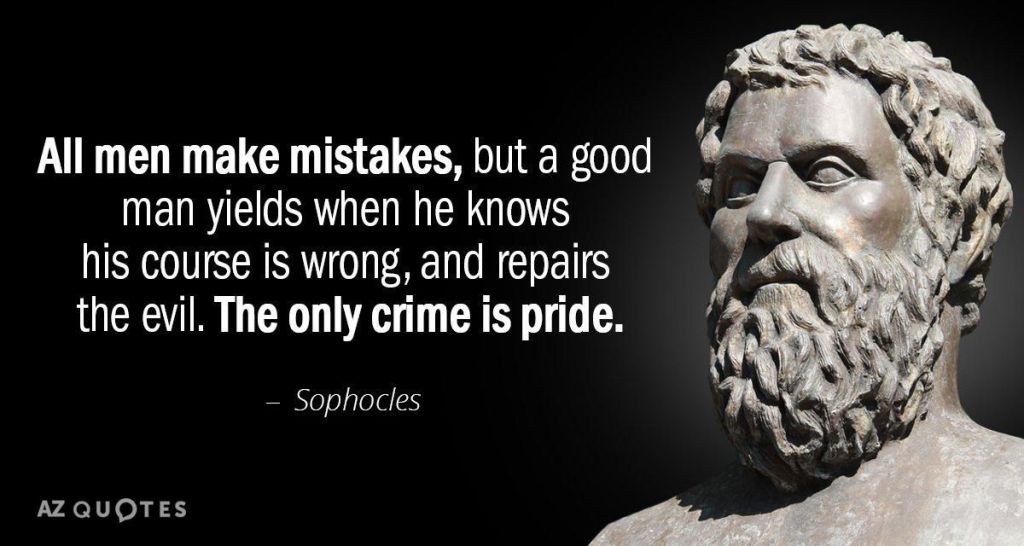
Good morality starts with an idea that we all stand in front of a neutral judge. It applies a consistent standard for all people.

Good morality doesn’t ask who is pulling the trigger—it asks whether a trigger should be pulled at all.

True integrity means abandoning self-serving or tribal math which values our rights more than theirs.  It means accepting that we are not the exception to the rule—and abiding by universal moral principle. Until we drop the self-righteous rationalizations of our own violations and submit ourselves to a single, impartial standard of love and justice, we will remain trapped in an endless cycle of violence of our own making—and prove to the rest of the world that we are precisely what we have accused our enemies of being: Lawless, agents of chaos, and just plain evil no matter how we dressed it.

Nobody thinks they’re evil. No they’re just a good person forced to do bad things. They are victims of circumstances, compelled by the evil of others to neglect common moral decency and do bad things. They may even claim to be on the wall guarding civilization from itself, but the truth is they represent an erosion of morality more than the foreigner beyond they say we should fear: They’re the barbarians and savages! But those who do evil for goodness sake are worse than the uncivilized who do bad in ignorance.

A person who knows what is right and exempts themselves is evil. If you’re good, then you will do good for goodness sake—without exception.
Mennonite Non-resistance Revisted

Standard

The term “Mennonite” describes a broad spectrum of people.  There’s everything from the liberal “progressive” types who ordain lesbians to those still using horses for transportation in the outermost conservative backwoods.  But there is one thing that unites all Mennonites under one banner and that an inheritance of pacifism called non-resistance.

It is a theological perspective I’ve argued in favor of many times.  In fact, it was a case that I made in an essay while enrolled at a secular university in front of a room full of incredulous classmates.

In retrospect, the Gnadenhutton massacre (when a native American tribe of pacifist converts were senselessly slaughtered by Pennsylvania militia men) was not as compelling an example of faith to those who did not already share my Mennonite indoctrination.  I can’t recall anyone in the room who accepted my reasoning that it was better these people not to defend themselves and their families.

But, for me, like most born into a Mennonite home, non-resistance was simply the most plain and obvious reading of the teachings of Jesus.  How could someone read “love your enemies” and not reject all use of force?

Well, with a few more years under my belt, it is time to revisit the topic of non-resistance and take a closer look at the proof-texts used keeping a couple questions in mind.  What does the text of the passage actually say and what does the greater context of Scripture provide to us as additional clues?

I’ll start with the linchpin…

1) What does Jesus mean by love your enemies?

The Sermon on the Mount, where the phrase “love your enemies” is used by Jesus, seems like the most reasonable starting point.  This is the text:

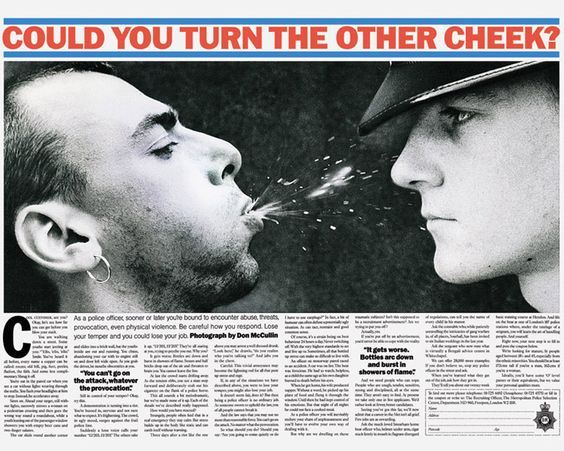
“You have heard that it was said, ‘Eye for eye, and tooth for tooth.’  But I tell you, do not resist an evil person. If anyone slaps you on the right cheek, turn to them the other cheek also.  And if anyone wants to sue you and take your shirt, hand over your coat as well.  If anyone forces you to go one mile, go with them two miles.  Give to the one who asks you, and do not turn away from the one who wants to borrow from you. “You have heard that it was said, ‘Love your neighbor and hate your enemy.’  But I tell you, love your enemies and pray for those who persecute you, that you may be children of your Father in heaven. He causes his sun to rise on the evil and the good, and sends rain on the righteous and the unrighteous.  If you love those who love you, what reward will you get? Are not even the tax collectors doing that?  And if you greet only your own people, what are you doing more than others? Do not even pagans do that?  Be perfect, therefore, as your heavenly Father is perfect. (Matthew 5:38‭-‬48 NIV)

First, Jesus brings up a part of Old Testament law that was being used in a literal and incorrect way to govern interpersonal relationships.  The “eye for an eye” concept was not intended so that everyone would go around as vigilantes and demanding punishment.  It was, in the context it was given, a guideline to keep civil punishments in proportion to the crime rather than too harsh or too lenient.

Jesus gives an alternative to the tit-for-tat misuse of the law of Moses.  He says to do the opposite.  Instead of returning return slap for slap he says to turn the other cheek.  Rather than fight a lawsuit over a shirt he says to give the person your coat.  He says to go the extra mile rather than resist going only one mile.  What he presents is an a means to break out of a downward spiral where everyone loses.  In other words, it is better to be twice insulted or doubly inconvenienced than it is to live out an endless feud like Hatfields and McCoys.

Jesus confronts this idea some had that it was okay to only love those who treat them well (their neighbors) and not their “enemies” or those hostile towards them.  However, he does not use life-or-death situation to illustrate his point nor does he argue against protecting the innocent.  There is no indication that his words are aimed at the work of government either.  He is speaking about personal rather than national enemies.

2) What does “vengeance is mine” mean?

Another important non-resistance prooftext is found in the book of Romans.  The apostle Paul, in context of how to love and serve others, says:

Bless those who persecute you; bless and do not curse. Rejoice with those who rejoice; mourn with those who mourn. Live in harmony with one another. Do not be proud, but be willing to associate with people of low position. Do not be conceited. Do not repay anyone evil for evil. Be careful to do what is right in the eyes of everyone. If it is possible, as far as it depends on you, live at peace with everyone. Do not take revenge, my dear friends, but leave room for God’s wrath, for it is written: “It is mine to avenge; I will repay,” says the Lord. On the contrary: “If your enemy is hungry, feed him; if he is thirsty, give him something to drink. In doing this, you will heap burning coals on his head.”  Do not be overcome by evil, but overcome evil with good. (Romans 12:14‭-‬21 NIV )

This passage basically restates what Jesus taught.  Paul expounds on the idea of not answering evil with evil and backs this claim using passages from the Old Testament.  The words “vengeance is mine” come directly from the book of Deuteronomy and is not a repudiation of legitimate justice being served or it would contradict the context in which it was given.  Instead, this phrase appears to be directed against taking personal revenge outside of what God has established.  I say this because Paul does:

Let everyone be subject to the governing authorities, for there is no authority except that which God has established. The authorities that exist have been established by God. Consequently, whoever rebels against the authority is rebelling against what God has instituted, and those who do so will bring judgment on themselves. For rulers hold no terror for those who do right, but for those who do wrong. Do you want to be free from fear of the one in authority? Then do what is right and you will be commended. For the one in authority is God’s servant for your good. But if you do wrong, be afraid, for rulers do not bear the sword for no reason. They are God’s servants, agents of wrath to bring punishment on the wrongdoer. Therefore, it is necessary to submit to the authorities, not only because of possible punishment but also as a matter of conscience.  This is also why you pay taxes, for the authorities are God’s servants, who give their full time to governing. Give to everyone what you owe them: If you owe taxes, pay taxes; if revenue, then revenue; if respect, then respect; if honor, then honor. (Romans 13:1‭-‬7 NIV)

It is interesting that Paul instructs to “overcome evil with good” and goes on to explain that those in authority who punish the evildoer are “God’s servant for good” and not to be resisted when serving in that role.  If it were sinful for governing authorities to punish evil it is strange that they are described as servants of God.

Does this mean that we can punish those who personally offend us?

No, absolutely not.

It is not okay for us to take matters of justice into our own hands.  There was never a license for individuals to act unilaterally and outside the established justice system in the Old Testament.  The role (or rule) given for individuals was the same then as it was when Paul restates the argument.  Love for “enemies” is not a new teaching:

If your enemy is hungry, give him food to eat; if he is thirsty, give him water to drink.  In doing this, you will heap burning coals on his head, and the Lord will reward you. (Proverbs 25:21‭-‬22 NIV)

That is Proverbs.

That is how they were to treat their personal enemies in Old Testament times.

That is how Paul taught that Christians must deal with their personal enemies in his time.

Many arguing for non-resistance cherry-pick the phrase “vengeance is mine” and “overcome evil with good” and “heap burning coals” while neglecting important context.  These phrases must be understood in the context they are given.  Jesus was not contradicting the Old Testament nor rebuking government officials, rather he was correcting those who were misusing the words as an excuse to be unloving, to fight evil with evil and take personal vengeance.

3) My kingdom is not of this world…

When Jesus was arrested he told Peter to put his sword away and, remaining consistent in his message, warned that people who live by the sword will die by the sword.  Even when faced with the corrupt use of government power we are not given a pass to resist with violence.  And Jesus goes further to explain this when being questioned after his arrest:

Pilate then went back inside the palace, summoned Jesus and asked him, “Are you the king of the Jews?”

“Is that your own idea,” Jesus asked, “or did others talk to you about me?”

“Am I a Jew?” Pilate replied. “Your own people and chief priests handed you over to me. What is it you have done?”

Jesus said, “My kingdom is not of this world. If it were, my servants would fight to prevent my arrest by the Jewish leaders. But now my kingdom is from another place.”

“You are a king, then!” said Pilate. 

(John 18:33‭-‬36 NIV)

Pilate was trying to establish the guilt or innocence of Jesus.  The Jewish authorities presented Jesus as someone deserving death.  The Romans only used capital punishment in some cases and that is why it was very important how Jesus answered.  If he answered “yes” when asked about being “king of the Jews” that would amount to insurrection and a crime punishable by crucifixion.  So Jesus presents himself as being of a different kingdom and one that is not a threat to Roman rule.

It is important to understand “my kingdom is not of this world” in that context.  Jesus is never at odds with the established government.  That isn’t his realm, he did not rebuke Pilate or the soldiers for doing their jobs, the legitimate punishment of evildoers is not something a Christian should ever oppose.  Jesus, even when wrongfully accused, did not curse his captors or repay their evil for evil.  Instead, he said “Father, forgive them, for they know not what they do!” (Luke 23:24)  That is an example to follow in our own experience with injustice.

That is not to say we should give up our rights and renounce our citizenship anymore than we should give up eating physical food.  Paul, in Acts 16, after being unlawfully detained and beaten, expected his privileges as a Roman citizen be respected and demanded that he should be released out the front gate.  But he did so in the right time, when the mistake was already acknowledged by the authorities, and without resisting arrest or imprisonment.  Paul, like Jesus, was willing to suffer personal loss as means to show God’s love.  He positioned himself as an ambassador of another kingdom and yet was not opposed justice in this world.

False dichotomies, non-resistance proof-texts and truth…

“A text without context is a pretext for a prooftext.” (Dr. D. A. Carson)

Proof-texting is a misuse of a Biblical text.  It is when a person takes small snips of a text to make their argument and neglects important contextual information in the process.  Mennonites, despite their very sincere intentions, are no exception—they are not free from this tendency to be led by confirmation bias.  They, like all other people, have an emotional attachment to their established beliefs, which causes blindness to evidence that runs contrary to their existing ideas, and this limits their ability to reach a fuller understanding of Scripture.

My youthful black and whiteness, while self-satisfying at the time, did not well-represent the texts used.  The either/or propositions of those arguing non-resistance are often false dichotomies based in misapplication of a Biblical text.  For example, the phrase “my kingdom is not of this world” is not an excuse to skip out on your taxes, the words “vengeance is mine” are not a repudiation of those employed by governments to punish evil, and “love your enemies” does not mean looking the other way and turning a blind eye towards injustice or abuse.  It is possible to both represent the kingdom of heaven and physically protect the innocent.

The truth is often represented by both/and.  Personal vengeance is forbidden, punishment of evildoers is ordained, and it takes wisdom to know what applies to the circumstances one finds themselves in.  Sometimes we need to be vocal about our rights, like Paul, other times we should maintain our silence and endure the abuse, but we should always place the welfare of others above our own.  Turning the other cheek does not imply giving a sexual predator your daughter after he raped your wife.  Overcoming evil with good does not mean being a pacifist doormat.

Mennonite non-resistance goes wrong when it is used as basis to judge those who God has ordained to punish evil.  If someone believes that resisting evil through physical means is always wrong and itself evil, then they are accusing God of hypocrisy for what he instituted. Jesus questioned the judgment of the Pharisees, but he never questioned the authority of the Romans nor did he call for them to lay down their weapons as he did with Peter.

It is not our role to judge those who use the sword to punish evil and protect the innocent.

Love does not require others to die on behalf of our own personal convictions.

Jesus never spoke against defending the weak nor did he make a case against subduing (or otherwise stopping) a deranged person intent on doing harm.  Being of a heavenly kingdom, at very least, does not mean one should be opposed to justice being served by those whom God has ordained and instituted for that purpose.  We can both support those who punish the evildoer and also “love our enemies” without the two ever coming into conflict.  In fact, if we oppose the protection of the innocent, we are ourselves in conflict with the command to love as Jesus did and giving preference to evil.

Does this mean I’m going to start to pack heat during a church service?  No, not at all!  Mass shootings, put in proper statistical context, are not something that concerns me.  I choose not to live my life as one paranoid.  I’ve put my trust in God.  I’ve decided that firearms used for protection are better in the hands of those better trained.

My own perspective, in further reflection upon Scripture, is a bit more nuanced than before.  However, I will say this in closing, it does reflect poorly on Christians when they appear to be more fearful of death than their supposedly faithless neighbors.

In context of eternity what will we lose in sacrificing ourselves for the good of others?