Oxygen Masks and Civilizational Math: Empathy’s Breaking Point

Standard

Anyone who has flown commercial knows the safety rundown before take-off.  You’re instructed on where to find lifejackets and how to put on the oxygen masks.  And one thing they emphasize is before taking care of anyone else, including children, they need to secure their own oxygen first.  This does not mean that a passenger shouldn’t care at all about anyone else.  What it means is that caring for ourselves first can make us more able to help others.

I came across a post of Facebook about the vandalism and terror campaign against Elon Musk’s Tesla brand.  In the comments I saw a left-wing activist justifying their violence by using a paraphrase of Musk, “empathy is a weakness.”  So I looked into the claim and found a quote of Musk during a Joe Rogan Experience podcast:

There’s a guy who posts on X who’s great, Gad Saad? … Yeah, he’s awesome, and he talks about, you know, basically suicidal empathy. Like, there’s so much empathy that you actually suicide yourself. So, we’ve got civilizational suicidal empathy going on. And it’s like, I believe in empathy, like, I think you should care about other people, but you need to have empathy for, for civilization as a whole, and not commit to a civilizational suicide. … The fundamental weakness of Western civilization is empathy, the empathy exploit. They’re exploiting a bug in Western civilization, which is the empathy response.

I’m not sure where “empathy is a weakness” can be found there.  What it seems Musk is saying is to keep everything in balance and not go to self-destructive extremes.  I would call it rational pragmatism rather than use a weird sounding “suicidal empathy” and yet it is a poignant point.  We can understand and share the feelings of others (empathy) while not destroying civilization in the process.  It is sort of how I always listen to my son, but don’t always give him stuff that he wants—because the soda and sweets could lead to tooth decay and diabetes.

This is the Gad Saad quote referenced by Musk in the interview:

Imagine an entire civilization that is taken over by an emotional parasite called suicidal empathy that trumps every other instinct that is within your adaptive repertoire. You are willing to sacrifice everything at the Altar of Suicidal Empathy. Nothing is more important than that.

What he’s taking on is the ideologies that demand we recognize, accept and finance every kind of bizarre behavior.  Money being sent for transgender operas when we have crumbling infrastructure, for example, this is what suicidal empathy looks like.  Or letting a confused men destroy women’s sports—there is an opportunity cost to these special accomodations and, with limited resources, it means many will suffer for the whims of a few demanding empathy in the form of their own exemptions and privileges.

My son may want me to taking him fishing every day.  To him I have limitless time and resources.  He says it would only take me a few minutes to drive him across town to his favorite spot.  But what he doesn’t really get is how doing this is difficult given I can’t just leave baby at home and it also cuts into my time to do the chores he neglects.  To him it seems simple and he reacts with disgust as if he is entitled to transportation and a life of leisure at the expense of everyone else in the house—yet the adults know better.

Performative Empathy vs. True Compassion

Nobody at DOGE is saying we should beat or bully transgender people or forbid people from donating to foreign causes.  What they have advocated is for efficient and effective use of public funds.  Yes, it could be called “tough love” and yet it is really essentially to the thriving—even surviving—of the country that we don’t bleed resources for minimal or no real return.  Government is not a charity, it relies on coercion to attain funds, for that reason it should only be used for things the majority of people support.

Those burning Tesla supercharger stations, smashing out dealership windows, or even attacking vehicles owned by individuals not named Elon may claim to represent the side of empathy, but their’s is only performative empathy and part of their partisan political agenda that is all about maintaining their own power and control over others.  Those same people forcing mandates, in the name of climate change, have now spun a 180 to creating unnecessary pollution.  They never cared about the planet—it is always about their belief they have the right to rule us.

That is what toxic empathy is about.  It is a manipulation game, a virtue signal, and like the jealous boyfriend’s love.  Sure, they say they love, and yet would murder before they would ever let their significant other go their own way or be apart from them.  This is, of course, symptomatic of leftism.  They want complete control over your life and yet call a billionaire greedy for being allowed to keep the wealth they’ve amassed.  And that’s the real culprit here: Envy.  It’s not that those on the left care so much about people, it is that they are looking for a moral justification for their rage against successful people.
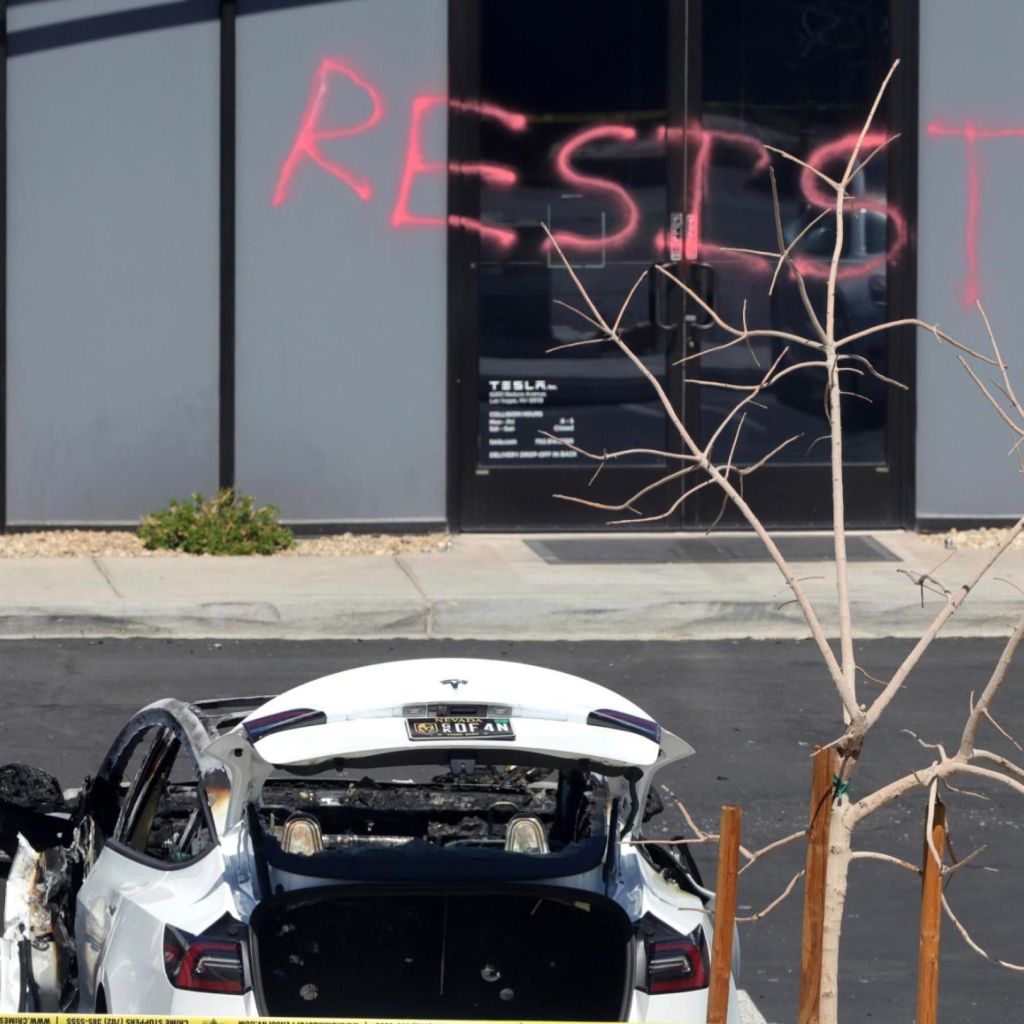
Leftist ’empathy’ strikes again.

Elon Musk is many things.  He’s extremely motivated.  A problem solver.  A billionaire.  A bit of an online troll.  A father of fourteen children.  Efficiency expert.  And also has Asberger’s syndrome.  It is that last item on the list that puts him at odds with normies who prefer lawyerspeak to bluntness.  Musk doesn’t coat anything in syrup, he analyzes, identifies the problem, and states it plainly rather than beat around the bush.  Contrast to the left, he puts logic and reasoning first—feelings second.

As an aside, CEOs and political leaders have a higher likelihood of being psychopaths.  It is what makes them good at their jobs.  You can’t make good decisions for a corporation or a country when you’re too zeroed in and obsessing over impacts to individuals.  That is going to lead to analysis paralysis and no necessary corrections being made.  Instead they think on the macro scale.  This is not to say they don’t care about the parts, but the good of the whole is what matters to them and they distribute concern according to the overall picture.  Sure it may seem cold and calculated—but serves the common good much better than empathy run amok.

As much as those on the left like to crow—as if their great empathy stretches across the globe—the reality is their typically very focused on their own feelings.

Their ’empathy’ is unsustainable.

Myopic.

Blind.

Christian compassion, in contrast, balances judgment and mercy. You do unto others as you want them to do to you, but also speak the truth in love—even when it gets you killed by an angry mob that doesn’t want to hear it. The tension or fusion of love and accountability keeps it grounded; it’s not a free-for-all where every whim gets a blank check. Unlike leftist empathy, which often bends toward appeasement or control, Christian compassion holds a line—help the widow and orphan, yes, but don’t burn down the house to warm them. It’s personal, not performative, and it doesn’t bankrupt the future for the sake of today’s applause.

Breathing Room for Civilization

In the end, the clash isn’t about empathy versus apathy—it’s about who gets to breathe first when the masks drop. Musk and Saad aren’t wrong to call out the self-inflicted wounds of suicidal empathy; they’re just pointing to the scoreboard: civilizations that forget their own oxygen don’t survive to help anyone. Leftist empathy, with its envy-fueled ‘virtue’ and reckless spending, dresses up as love but flirts with collapse—torching Teslas while preaching care, funding operas while bridges crumble. Christian compassion, for all its flaws, at least remembers the whole plane matters, not just the loudest sob story. We don’t need more performative tears or smashed windows—we need a hard reset on what keeps us aloft. Secure your mask, folks; the turbulence is just beginning.


Morality as a Fluid Mess: Conditioning, Conflict, and the Mirage of Universality

Standard

We cling to morality like it’s a lighthouse in the fog—steady, universal, guiding us home. But it’s a lie. It’s a battered flag, flapping in whatever wind our tribe’s blowing, stitched from the yarns we’re spun by family, faith, or flag. Raised Mennonite, I drank in peace and love for the outsider as if they were carved in my bones—until I saw they weren’t. Nature doesn’t whisper “thou shalt not kill”; it shrugs while we slit throats or swipe bread when the need hits. History’s littered with it: Biblical Israel butchered Canaanites—whole towns, babies dashed on rocks—‘cause God handed them the deed (Deuteronomy 7:1-2), and the faithful sang psalms over the ashes. 

Fast-forward to 2025: Israel pounds Gaza, kids buried in rubble, and the justification’s “security”—Hamas tunnels, rockets, survival. Insiders nod; it’s moral, necessary. Morality’s no fixed star—it’s a mirror, reflecting who we’re with and what we want.Look around today, and it’s the same mess. Russia rolls tanks into Ukraine, March 2025 still grinding on, flattening Mariupol redux—schools, hospitals, grandmas in the crosshairs. Putin’s line: “denazification,” protecting Russian speakers, historical destiny. His people buy it, or enough do—state TV’s been marinating them in it for years. The West screams “war crimes!”—sanctions pile up, Zelensky’s a saint on X—but that’s the outsider’s perch. Kyiv’s got its own blood on the slate: shelling Donbas for a decade, shrugging at Russian-speaking dead. Both sides sanctify their kills; morality bends to the banner. Or take the U.S.: Trump loyalists storm Capitol Hill in ‘21, “stolen election!” on their lips, while Biden’s crew locks ‘em up, crowing “democracy!” Same act—violence for a cause—flips from treason to justice depending on the lens. It’s not universal; it’s us-versus-them, conditioned to the core.

Look around today, and it’s the same mess. Russia rolls tanks into Ukraine, March 2025 still grinding on, flattening Mariupol redux—schools, hospitals, grandmas in the crosshairs. Putin’s line: “denazification,” protecting Russian speakers, historical destiny. His people buy it, or enough do—state TV’s been marinating them in it for years. The West screams “war crimes!”—sanctions pile up, Zelensky’s a saint on X—but that’s the outsider’s perch. Kyiv’s got its own blood on the slate: shelling Donbas for a decade, shrugging at Russian-speaking dead. Both sides sanctify their kills; morality bends to the banner. Or take the U.S.: Trump loyalists storm Capitol Hill in ‘21, “stolen election!” on their lips, while Biden’s crew locks ‘em up, crowing “democracy!” Same act—violence for a cause—flips from treason to justice depending on the lens. It’s not universal; it’s us-versus-them, conditioned to the core.

Objections bubble up like clockwork. The optimists—call ‘em Pinker’s crowd (2011)—say genocide’s revulsion proves we’ve got a moral spine, empathy baked in from caveman days. Hunter-gatherers shared meat, Confucius preached kindness—see, we’re wired for good! But that’s a half-truth, and a flimsy one. Those old tribes cared for their own; strangers got the club. Same with today’s wars: Ukraine’s defenders weep for Bucha’s mass graves but gloss over their own artillery sins. Israel’s critics howl at Gaza’s death toll—over 40,000 by late 2024, per UN counts—yet Hamas rockets barely dent their outrage. Why? Fundamental attribution error: outsiders slap “evil” on the doer—Russia’s a monster, Israel’s a bully—while ignoring the stew they’re boiling in: encirclement fears, decades of tit-for-tat bombs. Insiders don’t see villainy; they see survival, righteousness, their conditioning kicking in. Evolution’s no saint—it’ll cheer cooperation or carnage, whichever keeps the clan breathing.

Objections bubble up like clockwork. The optimists—call ‘em Pinker’s crowd (2011)—say genocide’s revulsion proves we’ve got a moral spine, empathy baked in from caveman days. Hunter-gatherers shared meat, Confucius preached kindness—see, we’re wired for good! But that’s a half-truth, and a flimsy one. Those old tribes cared for their own; strangers got the club. Same with today’s wars: Ukraine’s defenders weep for Bucha’s mass graves but gloss over their own artillery sins. Israel’s critics howl at Gaza’s death toll—over 40,000 by late 2024, per UN counts—yet Hamas rockets barely dent their outrage. Why? Fundamental attribution error: outsiders slap “evil” on the doer—Russia’s a monster, Israel’s a bully—while ignoring the stew they’re boiling in: encirclement fears, decades of tit-for-tat bombs. Insiders don’t see villainy; they see survival, righteousness, their conditioning kicking in. Evolution’s no saint—it’ll cheer cooperation or carnage, whichever keeps the clan breathing.

Zoom out, and the pattern’s stark. Morality’s a tool, not a truth—always has been. Libertarians’ll shoot to guard their patch, Marxists’ll guillotine for the proletariat, U.S. elites’ll drone-strike weddings to keep oil flowing—all cloaked in principle, all serving their pack. Russia’s “special operation” is Ukraine’s genocide; Israel’s “self-defense” is Palestine’s ethnic cleansing. The outsider’s gasp—those viral X posts of Kyiv’s ruins or Rafah’s craters—ain’t proof of a moral bedrock; it’s just a rival script, misreading situation as sin. We’re not debating ethics to polish some eternal gem; we’re wrestling over whose story rules. Take the Houthi strikes in Yemen, 2025 heating up: U.S. bombs “terrorists,” Saudis cheer, while aid workers tally starved kids—same act, split morals. Conditioning calls the shots.

The rebuttal’s got one last kick: if morality’s so fluid, why bother refining it? They say it’s progress, not just haggling—reason taming our beastly side. But that’s wishful polish on a cracked hull. Ukraine’s Zelensky begs for NATO jets, Israel’s Netanyahu quotes scripture for settlers, Trumpers and progressives sling “fascist” like mud—reason’s just a megaphone for the tribe. Authenticity’s the only anchor: own the bias, ditch the sanctimonious dance. Russia’s generals don’t lose sleep over Bucha; Israel’s brass don’t flinch at Gaza’s toll—they’ve got their why, and it’s enough. Outsiders clutch pearls—#WarCrimes trending—because they’re not in the fight. Morality’s a fluid mess, shifting with the players, not a lighthouse. Stop pretending it’s more.

Stepping back from the fray—whether it’s Putin’s moves in Ukraine or Hamas’s salvos from Gaza—offers an authenticity that sidesteps the knee-jerk noise and stares down our own fundamental attribution error. Take Putin: some tag him as a ruthless tyrant, others see a strategist pushing back—NATO’s ring of bases and war games from Poland to the Baltics isn’t exactly a welcome mat, but Russia’s leveling cities isn’t a handshake either. Hamas gets the same split: outsiders call them terrorists, yet in Gaza—two million penned in, scrappy and stubborn—they’re fighting a chokehold, though rockets don’t win halos. My Mennonite roots nudge me to judge NATO’s chest-thumping ‘values’ or Hamas’s bloodshed, but I’ve got my own baggage—my folks kept the world at arm’s length too, just with hymns, not guns. Seeing that, owning how my lens twists the view, points a pragmatic way forward: not crowning heroes or villains, but cutting through the sanctimony—NATO’s not spotless, Gazans aren’t pawns, and I’m no referee, just a guy sorting his own slant in the mess.

When the time for pragmatism has passed…

Standard

Conventional wisdom is usually your best bet in many circumstances.  But there are times when following regular protocol and procedure is not a good option.  Following the rules can ensure failure in some cases.

What I have in mind is a story from the waning moments of the Vietnam war and an amazing last ditch effort. 

image

In a desperate bid to escape a Vietnamese pilot commandeered a Chinook helicopter, loaded up his family and headed out to sea.  Short on fuel they found the USS Kirk. 

Unfortunately, the large twin rotor helicopter was too big to land on the ship, but undeterred they hovered over the deck and dropped children into the waiting arms of sailors. 

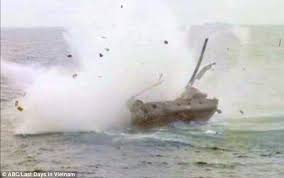
The copilot bailed, but the pilot had to find a way to ditch in the ocean and survive.  So he lowered the aircraft, tilted it one way and jumped the other.  His strategy worked.  The pilot survived the crash unscathed and was rescued.

image

Following the rules would not have produced the desired results in those circumstances.  Determination, not losing hope despite obstacles and creative effort were the keys to success.

Sometimes winning requires wrecking a few helicopters.