The Displaced Aggression Of Ruby Hamad  

Standard

As someone who prefers getting news from non-Western sources, I occasionally read Al Jazeera for some perspective, and that is how I came across an article, “Imane Khelif and Western delusions of white innocence” and had to hit back.  For the remainder of this blog, I will identify as a minority woman to obtain maximum victim points, and so I don’t need to pull my punches.

Editorials are often wild swings, some are so off-balance and contrived that they invite a counterpunch.  I had no idea who Ruby Hamad was.  But her profile reveals a Syrian-Lebanese woman obsessed with ‘white’ European women and how they are loved more than her.  She has made her name through her racist and misogynistic attacks on ‘white’ feminists.  It’s a little bit weird given how white she is.  But hatred is not always rational—she only has a platform because she helps ‘woke’ white leftists with their self-loathing.

In response to the recent outcry, about the two Olympic boxers who had previously failed their gender eligibility test, Hamad politicizes.  She rides on her favorite hobby horse—that being ‘white’ women—and she tries to reframe the discussion as being about the protection of ‘white’ women rather than a matter of maintaining integrity and fairness in the competition.

Now typically I’m sympathetic to those trying to break free of US hegemony and who are tired of their national stability and desire to self-govern being constantly undermined by US-led Western powers.  European colonizers are responsible for the current disorder in many parts of the world.  And, I also believe the Palestinian voice should be heard and that their innocent population should be protected by international law like any other occupied nation, and the killing of children and non-combatants in Gaza is horrendous.

Victims aren’t just Israeli — nor are ‘people of color’ the only ones who suffer injustice.

However, Hamad does exactly what those on the Zionist side do to Palestinians—with a broad swipe she tries to make all people in a place share guilt for what governments have done.  In essence, she has exactly the same attitude as Israeli spokespeople who claim that all in Gaza share in the blame for the Hamas incursion and—outraged that we care that Palestinian babies die—then turn the attention back to the suffering of their own people on October 7th. 

It is a whataboutism.  A deflection.  And doesn’t deal with the actual issue.

This does highlight one aspect of the controversy, that being the solidarity with the two athletes centers on racial or religious identity rather than their gender.  Those who most vehemently deny the complexity of the gender question are Arabs (or Taiwanese, in the case of Lin Yu-ting), which suggests their political partisanship and that the racial motivation is a projection that is entirely their own  Hamad believes that it must be about white women because this is how she thinks.  But it is really about how gender is defined to keep competition fair.

I guess Istanbul is now white?

Hamad flails in her attack.  She makes the row about the Italian boxer crying—which totally reinvents the chronology and ignores the reality of where it all started.  People had already been talking about the disqualifications of Khelif and Yu-ting, by the International Boxing Association because of failed gender tests.  It had nothing to do with how they looked, where they came from, or the race of the women pounded by them.  It is, rather, everything to do with alleged XY chromosomes and higher testosterone levels, and fairness to female athletes.
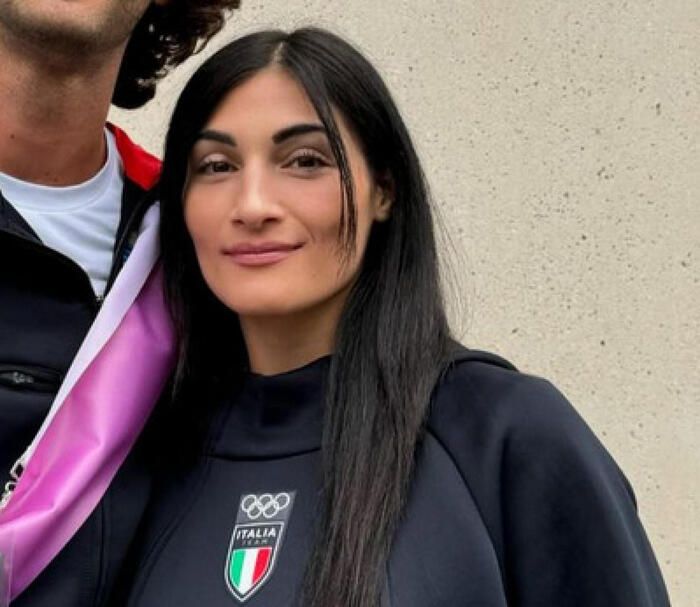

Guess which one is a woman of color?

But the truth does not need to line up with her narrative.  An Italian woman, who has a darker complexion than Haman, is now made into the token example of “white woman tears” for being upset after a disappointing loss to a physically superior opponent.  Imagine that, someone who put an enormous amount of time into their sport, then forced to quit the fight after 46 seconds due to the strength of the blows that were landing, having very strong emotions…

Scandalous whiteness! 

Had silly Hamad spent 46 seconds thinking instead of trying to force the evidence to fit her own toxic ideology, you would have missed this rhetorical beat-down.

The biggest irony of this all is that Hamad is in complete alignment with the old imperial left—who, by far, are the most meddlesome of the political elements of the West both in the world and domestically with a constant barrage of moralizing emotive nonsense.  Like concern over ‘misgendering’ a trans ‘man’ who is competing as a woman and is born a woman at the same time they tell us we can’t question the gender on birth certificates or passports. 

The self-loathing face of white privilege.

It is truly only the privileged people who have the time to virtue signal and stir up division between people, the rest of us need to work and provide for our families—hoping these lunatics don’t start another war.

What makes this personal is I have a good friend who is Algerian and is one of the most beautifully feminine women I’ve ever met.  Had she not been a devout Muslim (who, unlike Khelif, wore the traditional dress which always included a Hajab) there may have been been good chance of a romantic relationship between us.  So this notion that European femininity is somehow different or more vulnerable is plain ridiculous.  Khelif is no more representative of Algerian or Arab femininity than I am Britney Spears.
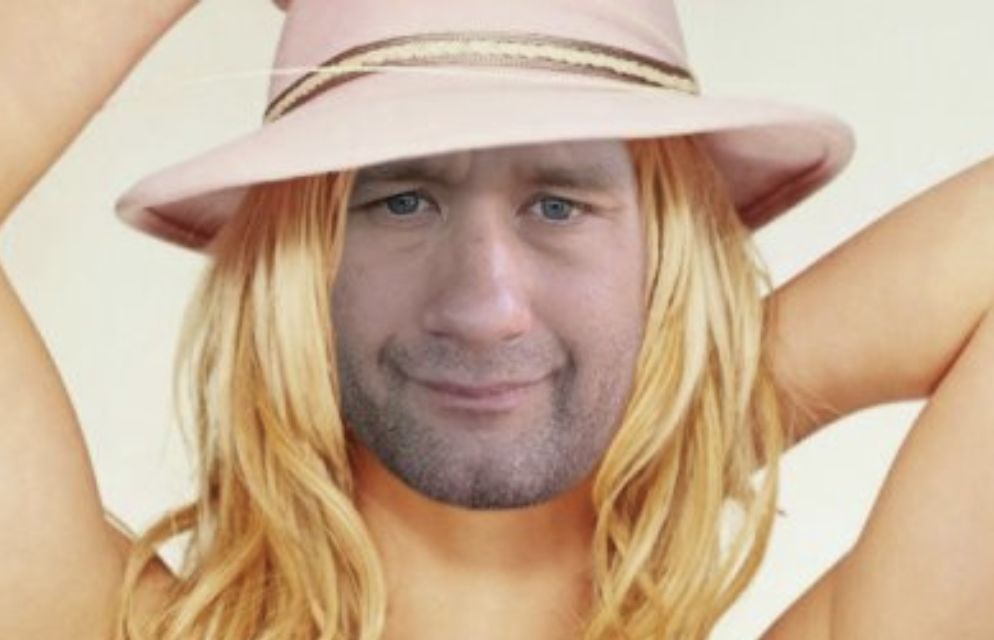
Stunning and brave!

Ultimately this is all political.  Hamad does not care about boxing, certainly not things like safety or fairness.  She is just another myopic and mean-spirited partisan who only cares about injustice when it comes to her people.  She’ll never write an article about the Arab abuse of their foreign help (many of them vulnerable women of color) nor is she intellectually curious enough to know about the slave trade of Europeans (yes, many women) by Muslim Arabs who raided shipping and became enshrined in the anthem of the US Marine Corps: “To the shores of Tripoli.” 

Incidentally, the ‘Barbary’ pirates capturing US sailors for ransom led to the re-establishment of the Marines.  At the time, the US was not oriented towards global dominance and only started along that path of being a sea power because of this provocation.

Muslim Arabs, before they were conquered themselves, pillaged the Christian Middle East and subjugated all in their path.  No, this is to villainize them or say that ‘white’ is better.  What it is to say is that conquest is human and we’re all guilty of the best and the worst parts.  The only real difference between myself and the Hamad types is that I want to escape the tribalism of the past while she thrives on it.  I envision a world where everyone wins whereas she can only be happy when those who she declares “not white” rule.  She’s not truly anti-colonial, she is simply enraged that her own tribe lost the civilizational struggle to those she believes are inferiors.

In addition to this, she is like the angry PhD candidate, also from a Syrian background as I recall, and as vile as Hamad, who—despite a progressive feminist lean—was very racially prejudiced and to the point that she scorned me for my once having a black fiance—told me she would never go with a man who had been with a black woman.  This is what makes me amused when Hamad gestures towards the African American grievance.  Blacks may have been second class in the US, but they would be far worse off in the Arab world she represents.

The truth is that men beating women is as acceptable in Algeria as it is across Arab and Muslim regions.  I believe this is why intelligent women from these places have such cognitive dissonance.  They believe, on the one hand, this religious cultural identity makes them better.  But then, on the other hand, they’re also battered and afraid of the men in their own places.  They’re resentful.  They would love to be treated as a Western woman and protected.  This is why they want to see the women they envy to be hurt.  It is displaced aggression:

Displaced aggression is a statistically robust psychological phenomenon. It involves a specific form of attack prompted by rumination on anger-inducing experiences and/or revenge-related thoughts, which might lead to the expression of anger on innocent people. Often, victims of aggression will not seek to confront the actual source of aggression (the original provocateur), and instead bully subordinates in an effort to relieve themselves of the stress that they carry.

Incidentally, in a conversation with a black female neighbor, she described the toxic reality of the community she left and how much she loves to live amongst us ‘white’ rural people who encouraged her rather than trying to tear her down and ruthlessly compete.  Her mother, an alcoholic, used to deride her with the slur that she was ‘white’ for showing a little bit of ambition and self-respect.  This black woman wisely chose to bring her children to the safety of a community still governed by a culture of self-restraint and looking out for the vulnerable.

White women are targets of jealous rage.  Hamad would be better to acknowledge the true origin of her self-loathing and challenge the framing that makes her only care about the tears of those who look like her.

Hamad’s book “White Tears Brown Scars” is an attack on feminism and the West’s culture of protecting women.  She popularized the phrase “white women’s tears” as a way to downplay and dismiss the suffering and display of emotions by white women.  It is dehumanization.  Making her sexual rivals into manipulative animals that do not deserve our empathy or concern.  A license for calloused and cruel disregard in response to actual injustice.  What it really amounts to is an attempt to normalize the abuse of women who step out of line—which is allowed in the Islamic culture that produced Hamad. 

Ruby Hamad should clean up her own side of the street first before commenting on ours.

But I reject her, with her displaced aggression, because it is not okay for men to beat women—despite what her Syrian–Lebanese culture or the Quran says:

Men are in charge of women by [right of] what Allah has given one over the other and what they spend [for maintenance] from their wealth. So righteous women are devoutly obedient, guarding in [the husband’s] absence what Allah would have them guard. But those [wives] from whom you fear arrogance – [first] advise them; [then if they persist], forsake them in bed; and [finally], strike them. But if they obey you [once more], seek no means against them. Indeed, Allah is ever Exalted and Grand.

This is key to understanding the big difference in attitudes between Christian and Islamic traditions, I know the Old Testament treats women more as property of men—like the Quran—but the Gospel radically changed the conversation.  St Paul tells husbands to sacrifice themselves for their wives like Christ died for the Church. 

My wife tells me you couldn’t walk around in her home country like American women do, go out in revealing clothes, alone.  She claims men where she lives would take it as being an invitation for assault and they would likely find your body in the ditch.  If it is ‘white privilege’ or some form of imperialism for women to be able to stroll safely through their own community, then so be it.  I’m not going to apologize for valuing the tears of my wife, the woman I love, over Hamad’s bitterness about not being able to find a man like me.  I’m quite alright with a daughter who cries.

Two Kinds Of Black

Standard

Identity is fluid, a physical characteristic is not.  I had identified as being “Mennonite” for many years of my life.  It was not much of a choice for me.  Raised in a Mennonite home, participated in a Mennonite church, and had internalized the values, the belief system, etc.  Mennonite was simply what I was and it still remains by ethnic/cultural background.  Leaving the community does not mean I’ll escape the genetic realities of my birth tribe.  

Is an identity surface level or deeper?

There was many of these labels that have to do with our social status, some we pick and others are picked for us.  In school if you’re into sports, hang out with other athletes, it is going to get you a “jock” designation and likely also stereotype applied with that.  Likewise, if were to wear a particular wardrobe to conform with a group of self-described non-conformists then you’re Goth or Emo.  People tend to coagulate into identity group—they find others who are like them and also become more like those whom they identify with.

But there’s a huge difference between these identities built around how we dress or who we associate with and those like eye color, bone structure or genitalia.  Sure, someone can dye their hair purple and claim that they are an astronaut, but that does not change what they were born with nor does it make them qualified to fly a space shuttle.  There are those ‘assigned’ categories that need to be objective facts rather than some kind of self-identity or cosplay act.  Science needs to have clear definitions or the endeavor is impossible.  And society simply can’t let you be a medical doctor because you feel like you should be a Porsche owner while you’re stuck driving a Kia.

Anyhow, getting to the point, a big problem with these conversations is that people are using the same words to mean something different.  For example, Rachel Dolezal, the woman who identified as ‘black’ despite her being born a daughter of European parents and having their biological characteristics, yet she could be ‘black’ for many years.  In my mind she can be both black or not black depending on what the term is describing—is it the genetic inheritance or the adopted culture?

I mean, think of Eminem’s lyrics: “I am the worst thing since Elvis Presley, to do Black music so selfishly and use it to get myself wealthy.”

Technically, if it is a ‘white’ artist doing the writing and performing, what is so ‘black’ about it?  He’s performing in English.  He’s doing naval gazing more common with the self-loathing European culture and his lyrics were about being some weird trailer trash hybrid rather than the themes common with the gangsta rap I knew growing up where it was at least presented as being something to take seriously.  How is a genre of music a skin color?  Asians are quite good at playing instruments and music first developed by the West—is that appropriation?

In many cases ‘black’ is not referring to something truly immutable.  No, rather it is about a lifestyle, a set of values, a certain way of behaving and, by this definition, it is perfectly legitimate for someone to identify as black without African genetics.  In other words, it is more like belonging to political party or religion than something someone is born.  And this is how suddenly the far left can claim work ethic or nuclear families are ‘white’ despite the Africans I know being as hard working and loyal to their spouses as any other person.

It is grotesque, horrendously racist, when a political candidate tells a whole segment of the population that if they don’t vote for him then, “You ain’t black.

Of course that was to intentionally confuse actual skin color and everything associated with it, with a ideology and perspective.  It is to rob the targets (black people who think differently than him) of their identity and is a form of gaslighting.  An outsider doesn’t get to decide what people should or should not belong.  It is inappropriate and bullying behavior, this truly is the worst kind of manipulation, it reinforces stereotypes and denies the true diversity within a category of color.

So identity is fluid.  We can change our own idea of what we are.  Still, there are also the fixed points determined by birth, a physical characteristic, that even if the surface level manifestations are surgically changed and hormones artificially employed, cannot be chosen or changed.  A man can behave in a feminine way, a woman in a masculine way, yet he doesn’t lose a Y chromosome simply for declaring himself a woman.  Sure, he can have his male anatomy reconstructed to resemble the female sex.  But there is more to being a woman.

Due to chromosomal abnormalities, there may not be a binary of male and female, but there most certainly is between female and not female.  It is one thing for the man once known as Bruce Jenner to reject the typical male role and change his name.  But that does not change the fact that he fathered his children and lacks the real hardware to be a woman.  Again, Rachel Dolezal can act in a manner that is associated with those of African origins, even fool the NAACP with her outward appearance, but she is not truly African American.

We do not need to recognize every claim as being valid.  I can’t just thrash around in the pool, march up to the podium and demand to be recognized as the winner of a swim meet without the necessary qualifications or actual achievement.  Why then is it ever okay for someone with male genitals and body to dominate in a female category for simply changing his name and having the powers that be join him in his psychosis?  

Changing your name and official category doesn’t change the physical reality.

It is a serious threat to civilization to attack the common language in this manner and it cannot be taken lightly.  One person with a delusion is not a problem.  However, when it is a significant portion of society going off the rails together then very quickly becomes dangerous.  Matters of our preference and culture are subjective, what is feminine or masculine is not set in stone, but science and reason must be built on something that is objective.  There must be a wall between identity that is merely social construct and that which is grounded in substance.

A Short Response to Systemic Heightism

Standard

The following is intended both as serious and satire.  The serious part is that the statistics are real, shortness is practically a crime.  The satire is how little those who typically decry such things care about forms of discrimination not as popularized and yet as established in fact as any other.

Systemic heightism is everywhere.  This discrimination against people on the basis of shorter than average stature is something that is deeply embedded into culture and our institutions.  For men, in particular, it means a lifetime of being denied opportunities for some and height privilege for others.

Shortness and Statistics 

In terms of available statistics, and actually proven discrimination, short men are most disadvantaged of any group of people both in history and modern times. 

There is a distinct wage gap driven by height:

“…researchers estimate that each additional centimeter of height is associated with a 1.30% increase in annual income. In other words, a person who is 5 feet 6 inches making $50,000 per year would expect to make about $2,000 more if they were 5 feet 7 inches, and $4,000 more if they were 5 feet 8 inches.”

https://www.forbes.com/sites/traversmark/2020/04/16/your-height-has-a-big-impact-on-your-salary-new-research-seeks-to-understand-why/

It isn’t only a matter of income either, but status: 90% of CEOs are of above average height.  Try playing college sports, let alone get an athletic scholarship, if you’re below average height.  Even in the Bible a man named Saul was made king simply for being taller than average.  Meanwhile, David, a short man, was ridiculed, and had to literally kill a giant to prove his worth.  

Many short men are never given the chance to prove themselves and this is especially true in the realm of romance.  Women on dating sites openly, and rudely, dismiss short men writing in their profiles things like “must be 5′-10″ or over to ride.”  Of course, most women are more covert in their height discrimination and simply ignore potential suitors who who don’t meet their requirements.

Some women say what others conceal, but the preference is proven in the numbers.

A 2006 study, by the University of Chicago, found that a man who is 5’6” needs an additional $175,000 to be as desirable as a man who is approximately 6′ tall and only makes $62,500 a year.  Talk about an uphill battle.  Not only do short men get paid less, on average, but they also need more money in order to get an equal opportunity to be considered desirable to women.

Given that single men have a deceased life expectancy, presenting a 32% greater risk for men, being especially short is basically a death sentence.

Getting the Short End of Stick

Deniers of systemic heightism try to explain away the discrimination by victim blaming.  They will often claim that lack of confidence that is the real issue.  However, this is adding insult to injury.  A short man can’t even be confident without risking an attempt to diminish him on the basis of his height.  An assertive tall man is considered to be confident, to have leadership potential, while a short man with similar qualities will often be accused of “small man syndrome” or having a Napoleon complex.

Napoleon was often pictured with his tall elite soldiers and not actually unusually short.

Even in language, terms like “great stature” indicate something good, while phrases like “short tempered” are indicative of a flaw in character.  And not to forget those many common expressions, like “getting the short end of the stick” or “coming up short” that associate shortness with inadequacy or misfortune.  There is even implicit heightism expressed in the statues of famous people being enormous in size.  It is inescapable, ‘bigger’ is typically paired with ‘better’ and nobody cares about the harm done.

Over the course of a lifetime a short man will have endured being last picked in gym class despite his tenacity, friend-zoned by women who admire his character and yet are not at all romantically interested.  He’ll literally be overlooked by his employers and routinely denied promotions.  It will cost him years of his life.  But there will never be reparations, never even be a bit of sympathy, because nobody sees shortness the same way that they do gender or skin color.  

The Long and Short 

We’ll never have social media campaigns to affirm shortness because it would just seem too silly, plus even short men (already self-conscious) would reject the effort.  I mean who really wants to be praised, falsely, for a characteristic that makes less attractive than others?  It is better to just deal with it, use the disadvantage as motivation, prove that a guy can be short of stature and still a bigger man than most.  That is the best and truly the only way to overcome adversity, to show the world who you are.

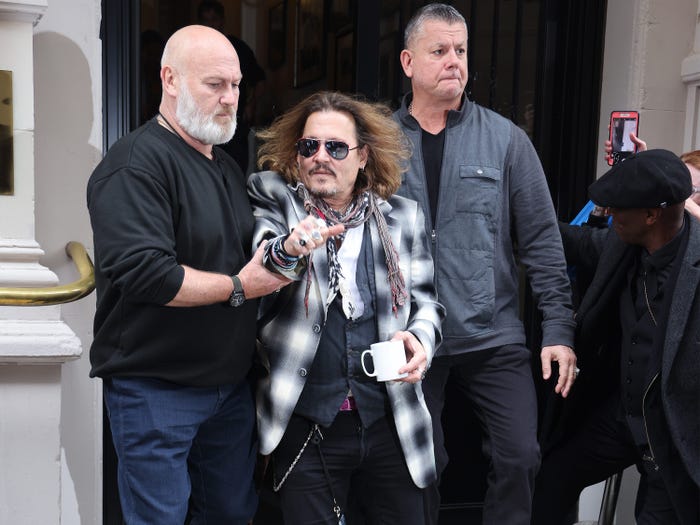
Johnny Depp with bodyguards

Maybe this is why the most powerful and influential men are actually on the shorter end of the scale?  Many actors and a significant number of billionaires are of average or below average height.  Maybe it is because they knew that they would be overlooked without going 110% in everything they do?  The long and short is that we can forever wallow in our disadvantage or we can turn it into a strength.  No, it does not make it fair, nothing ever is fair, still nobody will ever come to the rescue of short men.

The worst thing we can do to anyone is pity them and make them dependent on our help to be actualized.  It is the true racist, and the real sexist, who assumes that some need their help or uses their ‘sensitivity’ to such things for their own socal advancement, a person dealing honestly will value character above all else and not allow themselves to be biased one way or another, favorably or unfavorably, on the basis of outward appearance.

Elliott Rogers is a poster child of grievance culture and where he was the real problem.

In the end, hurting people come in all shapes and sizes.  It is impossible to quantify and rank such things and completely a fool’s errand to try to compensate people for every disadvantage they face in life.  Furthermore, in trying, we make the problem worse in that we actually reinforce the feelings and the perception of inferiority in those we’re trying to help.  It also leaves those not receiving this special treatment, and as disadvantaged or more, feeling even more neglected.

Sure, absolutely, a little awareness of the unique difficulties some encounter can go a long way to helping. And yet grievance is often a tool used by toxic and controlling people so they can have their way without putting forth the required effort for success themselves.  There’s a vast difference between pity dating a short guy and giving him a chance despite his lack of statute.  We should help people because they are people, not because they tall or short, black or white, male or female.

Short men, by dwelling on their grievance, will only exasperate their disadvantage. It may be cathartic to whiny and complain, but it doesn’t bring a person closer to feeling accepted. Having ‘pride’ events, marches declaring we matter, even months where members are extolled, can never actually produce the legitimacy that those snared in their grievances crave. It is only in finding our identity in something else that we’re free.

Mennonite Values and Love That Transcends Difference

Standard

The other day it occurred to me that many of my most faithful Mennonite friends married across divisions of ethnicity and race.  In fact, three out of the three friends I was with yesterday are married to women who were born in foreign countries and later became US citizens.

Interracial marriage is not unusual in modern America anymore.  A full 17% of newlyweds in the United States married across racial or ethnic lines according to Pew Research Center.  This has been a steady trend for many decades and with this increase in interracial marriages the stigma has decreased—only a small percentage of Americans remain opposed to marriages across racial lines.

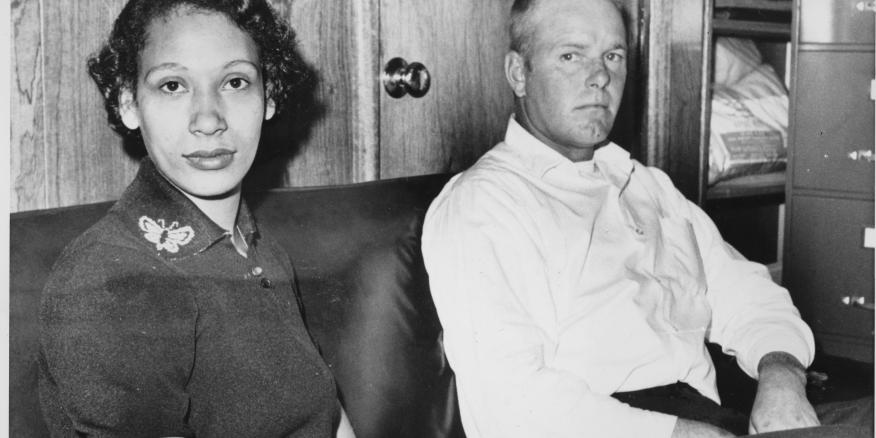
Mildred and Richard Loving who, in 1967, refused to be separated even when facing prison time.

Mennonites have tended to lag behind the general population in many regards and this is one of those areas.  It was only a few years ago that my Mennonite pastor (educated at Bob Jones University where interracial relationships were banned until the 1990’s) cautioned me against this kind of relationship citing cultural differences.  It is probably safe to assume that his views are not unusual in the conservative end of the Mennonite denomination.

Have Mennonites have began to catch up with the mainstream?

I know that interracial dating was unusual and even discouraged in the Mennonite church of my youth.  That is why my realization about so many of my friends being married interracially was astonishing to me.  I’m not sure if it is only a local anomaly or a general across-the-board trend.  However, I do know that there were very few others in the conservative Mennonite church when I was in a romantic relationship with a black woman just over a decade ago.

Some of it could be explained by inner-city outreach projects.  Typically Mennonites have been raised in rural parts of the country and sheltered from non-Mennonites.  My own experience was slightly different due to my public school education, which likely made me more open to relationships outside of my own ethnic group (my first real crush was not a Mennonite or white girl) and yet many of my religious peers caught up with a bit of exposure to the world outside their ethnic enclaves.  Followers of Jesus Mennonite Church (in Brooklyn, New York) accounts for many of the relationships across racial lines that I know about in the more traditional end of the denomination.

But, before anyone gets too excited, this does not mean attitudes have changed much with most conservative Mennonites.  I have heard many young men (who likely have not met too many girls besides their sisters or cousins) state that they would not be interested in dating a girl of a different race.  It is probably even less acceptable for a Mennonite female to marry outside her ethnic fold, and many of the couples in interracial relationships do not remain Mennonite.

Generally one cannot deviate too far from the Mennonite cultural norm and expect to be embraced.  It was hard enough for me, a Mennonite guy with some unorthodox views, to find a girl born in a Mennonite home that would give me the time of day.  I could not imagine being a convert from outside trying to get a date with someone of a popular family with an established Mennonite pedigree.

Mennonites barely have the faith to ask or date anyone—let alone someone who doesn’t meet a long list of qualifications, race and ethnicity likely included.

Why do some Mennonites marry across racial or ethnic lines?

One thing my friends have in common is that they married older.  I do not see them as purposefully trying to find girls from a different ethnic group or race either.  Most of them are down to earth and practical guys who found a girl who gave them a chance and connected with them.  It seems that girls from non-Mennonite background are more willing to be friends first, are less driven by impossible purity culture ideals, and much more appreciative of a guy who treats them with respect—even if he is not tall, smug or otherwise full of himself…

By all appearances, those Mennonites marrying across racial lines are not trying to make a political statement.  Ironically, the virtue-signaling types (the most outspoken cradle Mennonites about racial issues) seem to marry the whitest and then preach to everyone else about about being more accepting of immigrants, etc.  Those actually marrying across racial lines, on the other hand, are doing it for pragmatic reasons and real love for the person they married rather than to be superior to anyone else or prove anything about themselves.  And that’s not to say my friends will not defend their wives and children from racists—they might not be vocal or making a show of it, but are solid men and their loved ones not to be trifled with.

Those who married across racial lines seemed motivated truly by love.  They would have likely also married someone of their own ethnicity or race had the right circumstances come along.  But, that said, they are extraordinary, they married out of a love that could transcend superficial differences and therefore their relationships have a potential others do not.  They were willing to go outside of the conventional ideals of their parent’s generation, even of their religious peers, and may have even faced some extra resistance along the way.  That may be why they are some of the most loyal, caring and mature people that I know—they are simply willing to go in love where others have not.

My recommendation to those on the fence…

Those advising against interracial dating often don’t have a clue what they are talking about.  Yes, there are differences to overcome, but that is also true of any committed relationship and it certainly is not reason to quit before you started.  Go on some dates, find out if your personalities compliment or collide and then decide your next step—is that really too difficult or complicated?

It does not seem that my friends who married interracially regret their choice.  I do know there are a number of those who married ethnic Mennonites who have had second thoughts.  Indeed, sometimes those seemingly perfect candidates (according to Mennonite cultural ideals) are not what they appear to be at first glance and pleasing their near-impossible standards can be a real headache.  So, if it is a choice between being taken for granted by some entitled brat or more fully appreciated by someone who has seen real struggle in their lives, isn’t the right choice obvious enough?

Take my advice guys.  Stop pining for that girl that snubbed your first inquiry.  If she didn’t see your interest in her as reason enough to go on a date or two, then she isn’t worth any more of your time.  Quit being a pathetic lapdog.  That will only feed her sense that you have nothing to offer her (that she can’t already have) and further convince her that she is out of your league.  Be a man, go where you are needed in the world, be a real leader, move on.

For those girls who have never been asked, same deal.  Broaden your horizons, stop trying to please people who don’t lift a finger on your behalf, and you might soon find there are many faithful Christians who don’t have a familiar Mennonite surname.

Godly character, not skin color or religious pedigree, is what makes a marriage work.