
The Three Different Kinds Of Mechanics

Standard

We tend to lump things together that shouldn’t be. In other words, there is plenty of diversity within categories and this is something true of those whom we call mechanics. And the significant difference in mechanics is analogous to other professions, which is where this essay will end up.

The other week my old reliable Ford Focus began to act up. I had traveled, with my family, to a company picnic and everything was fine on the way out. However, on the trip home there was something that was not right. The power delivery was rough when trying to accelerate but smooth enough while cruising and immediately my mind went to the trick this 2.0 L had up its sleeve.

The ‘Duratec 20‘ has Mazda DNA. It uses direct injection and variable valve timing (or Ti-VCT) to make 160 hp while still delivering decent fuel mileage. With a 12.1:1 compression ratio, it has a decent torquey feel for a 4-banger, and—paired up with a five-speed—it is fast enough to be fun.

And to the point that a week prior to this, on the way to church, a late 90s Honda Civic with a loud pipe did the customary flyby, and we just so happened to line up at the next red light. So, as was necessary, to the slight embarrassment of my wife and great amusement of my son, I do the hard launch. It bogged a bit, despite my loading up a bit prior to releasing the clutch, so I dumped it down completely, the tires chirped, I hit second hard and I was grinning a couple of car lengths ahead before they knew what had happened. Not an actual race, but I’m pretty sure I had the edge even if they were ready for me.

The engine light would eventually come on in the next day or two. And, sure enough, checking the code at AutoZone, it came up as a camshaft sensor. That was something I could handle. I swapped in the new part. But it didn’t fix the problem. I noticed that the negative battery terminal had some corrosion and, with the help of a cousin, we cleaned that. Still, no dice. The issue persisted.

Shop #1: The Inspection Garage

With the help of a mechanic friend of mine, who sent me the applicable page of the diagnostics manual, I determined that the problem was now beyond my shadetree abilities. It was potentially a crank sensor fault (that for some reason shows up as being the cam sensor) or involved some sort of wiring issue. I took it to the garage, within walking distance, which had given me a better deal for vehicle inspection than the dealer could offer.

I left them with the page of the manual. I returned to a vehicle with a drained battery and still acting up despite their efforts. They had cleaned the throttle body, changed the air filter, and not overcharged me for that service. However, the problem was not fixed, and the explanation he gave—that the car (with over 230,000 miles) was old and probably down on compression—did not satisfy me.

I had assumed that they had run down the diagnostics checklist, as I had basically told them to do, and that weekend decided to take a look again with the aid of a mechanically inclined brother-in-law at our family summer get-together. My sister has a 2016 Focus, which had corrected the wiring harness issue, and immediately, while looking at her engine bay, I noticed how the Ford had moved these wires from where they were on my own 2014.

So I took another look at that, I lifted the harness on my car where it was against the engine and, sure enough, I could see the cover was worn through and a little copper was shining. Uh-oh. With a small piece of electrical tape and a spirited tested drive, the diagnosis was clear—that was the problem and I would need to take it to a shop that was capable of following my instructions.

Shop #2: The Technician

After pricing my options, I decided on a garage that had helped me with another mystery issue years ago with my Jaguar XJR. Jake, the owner, was an expert at diagnostics and, in a conversation with Jason who he trained as his replacement, it was clear that this guy knew his stuff. Now, granted, in this case, I had already provided the diagnosis. However, I could tell that he understood the systems of the vehicle far better than the guy at the inspection garage.

This is the kind of mechanic you need when the issue is more than an alternator or something obvious that only needs to be removed and replaced. Anyone can turn a wrench. Quite a few can go down the diagnostics checklist and eventually find the solution. But the actual technician type is a different breed, he is the guy who writes the manual and can even feel what is going on after a short test drive. These are the Ken Miles, can-improve-what-already-is kind, who in different circumstances may have become an engineer or even a doctor.

The technicians are professionals. They have a high IQ and a wealth of knowledge. And it is about much more than having the correct certifications or a toolbox full of Snap-On tools. Some simply do not have the aptitude even if they went through years of training and others do. The technician could be working in the back alley of Manila or at the dealership down the road. There are different levels even within this group, but what sets them apart is their intuitions and ability to model the complex systems of a vehicle in their heads. He’s as smart as your cardiologist.

Shop #3: The Scam Artist

Years ago my brother took his Ford Tempo in for a routine inspection. This was his first car and basic transportation for a teenager. And only cost a few thousand dollars, which was basically all he could afford at the time. The tire shop is in the middle of town and looks decently professional. I think of this incident each time I see their advertising two decades later.

The bill he got was more than the value of the car. Apparently, they decided that every suspension part was out of tolerance and maybe they were technically correct, who knows?

What I do know is that my dad took severe issue with this and helped my brother negotiate a slightly better price for the work. Still, they soaked him for a huge amount of money and have lost our business since then. They were at the level of the inspection shop, or your local Walmart Auto Care Center, as far as their abilities and yet telling us with absolute conviction that the car was not safe to drive without the laundry list of parts with labor they installed without so much as a phone call to my brother.

Dealerships can overcharge. But usually, they are more reputable and not just replacing parts because they have you over the barrel and have a bonus to make. These are the types who would convince your grandma she needs the blinker fluid filled and muffler bearings replaced. They aren’t technicians (they would too be ashamed of themselves if they were) and are basically just swindlers with a wretch to use as part of the scheme. Their diagnosis is always something expensive.
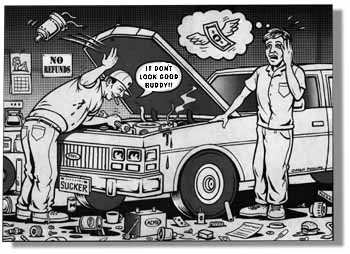
What Kind Of ‘Mechanic’ Is Your Doctor?

This understanding of different types of mechanics applies to all professions. Not every college graduate with the right credentials is equally qualified. Some engineers are really good at the classroom stuff, they know the code and can be completely anal about largely irrelevant or unimportant details. Others really get what makes structure work, it is intuitive to them, and what they build is likely safer than the variety that dots all of the I’s and crosses all the T’s according to the IBC 2021.

Doctors come in many varieties as well. There are those types who get into things like cosmetics or reconstructive surgeries, chasing after the big bucks, and then there are the others who want to run a clinic or set up a family practice to help as many people as possible. The country ‘doc’ driving the F-150 is a different breed than the one with a BMW or Porsche. One is practicing medicine, and the other has a profitable business that requires some medical skills. And, in both cases, competency is not strictly a matter of gathering the right diploma or getting through the board requirements.

My own hunch is that most doctors are more like the inspection shop mechanic. They’re not out to screw you over and they also do good work for the most part. However, they got where they did because they were at least of slightly average intelligence and good at navigating the system. This doesn’t mean that they are actually doing the real number crunching of the diagnostics themselves. No, it means that they can match a list of symptoms with what they can find in the Merck manual and write a (barely legible) prescription. This could mean that they miss things, over-prescribe, or basically share in the same failures as the entire medical establishment.

So, how reliable is the system?

Well, I’m not sure.

When I read things like, Why Most Published Research Findings Are False, and how the Lancet published (then later retracted) studies that cautioned against the use of Hydroxychloroquine or how Ivermectin was skewered as being “horse dewormer” despite being an effective anti-viral medication, it seems that politics may be dictating the science. And we all know that politics is heavily influenced by cold hard cash. So, let’s think, who benefits from keeping these kinds of cheap widely available therapeutics from the market? There was an industry that made $90 billion from the pandemic and also has connections to the corporate media apparatus. Who knows how far this big money penetrates government agencies and impacts regulations or policies.

But I do know this has been said…

“It is simply no longer possible to believe much of the clinical research that is published, or to rely on the judgment of trusted physicians or authoritative medical guidelines. I take no pleasure in this conclusion, which I reached slowly and reluctantly over my two decades as editor of The New England Journal of Medicine”

Marcia Angell, MD

And this…

“The case against science is straightforward: much of the scientific literature, perhaps half, may simply be untrue. Afflicted by studies with small sample sizes, tiny effects, invalid exploratory analyses, and flagrant conflicts of interest, together with an obsession for pursuing fashionable trends of dubious importance, science has taken a turn towards darkness”

Richard Horton, editor of The Lancet

I’m assuming these two would know a little about the current state of science and medicine.

So how does a doctor separate the wheat from the chaff?

It is not right that some see the failures of some as a reason to dismiss it all. Getting taken advantage of by one repair shop doesn’t make all mechanics crooks. Still, how does a patient know if their doctor is doing a high-level analysis of the evidence, is capable of critical thinking and going beyond the book, or if he’s just following the pack without doing any truly independent diagnostics? It really takes someone a bit removed from the profession, who doesn’t share their biases or bad remedies, to give the corrective treatment. Maybe a car mechanic turned doctor (the guy in the featured picture) would have some useful perspective on the topic?

Whatever the case, if we can’t trust everyone who is licensed by the state to inspect vehicles, we should be even more skeptical of those who want to put things into our bodies. They don’t even have to be bad or intend harm, it could simply be that they are asleep at the wheel, putting trust in institutions that have been compromised and corrupted. At the very least, the body is extremely complicated and even our most advanced methods are crude. We may not know that our modern versions of bloodletting are of negligible value or even harmful for another century or two. This is why we customers, the patients, should never be pressured one way or another even if the science is supposedly settled.

Yes, even those at the top of the profession today may be tomorrow’s quacks…

Note the “slow poison” written on the mixing device.
The Rise of the Christian Influencer

Standard

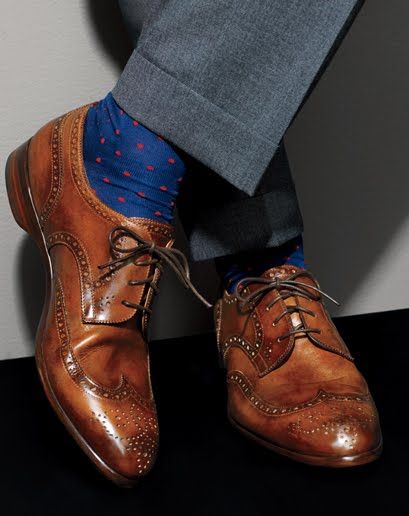
The man had charisma.  He wore a swanky grey sport coat and a shiny pair of quality brown dress shoes, that all went along with his well-manicured hair.  He stood out in this crowd of mostly Amish gathered for the seminar. 

I tend not to pay for such things.  I have a knack for learning through non-conventional means, namely running into walls until I get to the correct answer, and have also learned quite a bit from observation.  My own ticket had been provided by my company and I was there with the rest of the office staff to hear what this life-coaching speaker had to say about customer service and listening. 

The content was good.  It seemed worthwhile advice for those seeking to improve their customer experience and grow their business.  However, I kept thinking about the Christian themes mixed into his message.  This son of a missionary did not preach a sermon nor did he mention the Gospel of Jesus Christ.  Still, there was definitely an attempt to relate to the audience at a level of their religious values.

This sort of thing, good or bad, seems like the latest development in Christian missions.  In times past, the church was the church, those ordained and sent were more open about their underlying goals, urging repent and be baptized, and those personally profiting off the message were condemned:

“Unlike so many, we do not peddle the word of God for profit. On the contrary, in Christ we speak before God with sincerity, as those sent from God.”

(2 Corinthians 2:17 NIV)

Now, the man before us, he represented a non-profit entity and was giving advice that pertained to sales and serving customers.  Still, he did reference Scripture amongst his quotes of self-improvement gurus and even used the phrase “word of God” at one point in his presentation.  He would use our familiarity with the “good book” to bolster his claims and even shared some theological perspective. 

Again, I have no problem with this man nor the particular presentation.  In the business world this kind of consulting and advice is likely key to reaching the next level of sales and I’m sure we will do many of the things that he recommended.

However, what did stand out, and is the reason for writing this blog, is this trend towards a mission of influence rather than open proclaiming of the Gospel and, in many ways, I was at the forefront of this evolution.  My blogs, often a mix of theology, philosophy, and personal observation, is not openly declared as a Christian mission.  Still, I have used this media, and my understanding of Scripture, to do pretty much the same thing (minus the monetization) of this life coach of Anabaptist background.

So here’s some thoughts…

Where Did It All Begin?

The church has always had influential men and inspiring women.  Some rose in prominence, even have their writings and stories recorded in the canon of Scripture for our benefit.  The Orthodox have many noteworthy figures, Early Church Fathers, including St John Chrysostom, the archbishop of Constantinople, a man who took on the abuses of ecclesiastical and political authorities of his own time, and whose Divine Liturgy we celebrate to this very day, his name means “golden-mouthed” in Greek and he definitely had a way with words to match the description.

However, those in Scripture, as well as St John Chrysostom, were themselves all under the authority and guidance of the other Christians.  They were also very open about their mission.  They were unabashed preachers of the Gospel of Jesus Christ.  They weren’t your life coach using Christian themes to decorate a business oriented daylong consulting session for $150 a head.  St Paul may have made tents to support himself and his ministry, yet I’m not sure that he sold them using Christian themes.  Just saying.  His ministry was ministry and business was business.

But there is a sort of murkiness to many modern-day efforts, where they aren’t part of the church per se nor even announcing themselves as a ministry, and it is by design.  So how did we get here?

The starting point of the current Western paradigm is obviously the Protestant schism with the leadership in Rome.  The intention of Martin Luther, ordained by the Roman Catholic Church, was not to start a denomination.  He wanted reforms and had good reason for his critiques.  And yet his written protests quickly became a catalyst, many took things much further than he had ever intended and we have the multitude of denominations as his most significant accomplishment.

Still, despite this, the church, even or especially with those of the radical reformation, remained a collection of individuals with accountability to each other.  Sure, the Anabaptists were more localized, led by shared statements of faith, and collectively agreed upon congregational rules rather than by a hierarchical structure, but it was never every-man-for-himself or a free-for-all.  Those who spoke were ordained by various means, not simply a man full of his own ideas and finding a following.

The turning point? 

I think around the turn of the last century represents a shift.  The whole tent revival circuit, where a dynamic speaker, an Evangelist, would get up in front of the crowd and wow the audience with his polished salvation message.  Many were sold the Gospel in this manner, walked the sawdust trail, the circus would eventually leave town and life would go back to normal or the new normal, I suppose?

The next stage in development was the parachurch missionary organization.  By parachurch, these organizations are run seperately from the denomination, are often subject only to their own board members, and seek funding for themselves.  Basically, any ambitious person, with some natural musical or speaking talent, interested in travel, can start a prison ministry, missionary training institute or what have you, and only with as much ties to the existing church structure as they want.  All one must do is set up their nonprofit, find investors, buy the bus, and be on their way to preach the word as their adoring wife glows beside them.

Yet, as all things, the traveling Evangelist and other obvious Christian missionary efforts, including openly Christian contemporary artists, have become tired old tropes.  The in-your-face presentation, the lack of follow-up or one-dimensionality of the presentation, the realization that the novelty had worn off of the original form, the scams, and scandals, has led to a third wave of influencer and that’s the one that doesn’t even announce the Christian intentions at all.

Sometimes this lack of openly expressed intention is to avoid legal prohibition.  For example, teaching English in Asian countries that would not otherwise invite Christian missionaries.  Other times it is to add a practical element, after preaching and charities failed to help solve many underlying conditions, which gave rise to micro-lending groups.  Sometimes this repackaging is to sell the mission itself as something exciting, an adventure rather than some kind of dull service opportunity, and part of an effort to make Christianity relevant to the next generation.

After watching the presentation the other day, I suggested to a left-leaning Mennonite friend that we go on tour together for sake of racial reconciliation and healing.  Why not?  I think I could probably work the crowd, with a little practice, and definitely believe in the cause, could leading faith-related seminars be my calling too?

In theory, this cause-oriented Christian influencer thing seems great.  We can have sportsman’s banquets, business seminars, and TED Talk the unsuspecting heathens (or even the more traditional religious types) with a flashy Powerpoint presentation, funny stories and down to earthiness.  And yet, this does seem to get things out of order, it puts values first and repentance second. 

More troubling, from the Evangelist of the past century, to parachurch missionary organization of the past decades, to the influencers of the present, the distance between the activity and actual purpose has grown.  The Evangelist preached without providing adequately in discipleship.  The missionary went without being sent or accountable to the church.  And the motivational speaker, while referencing the Bible, never announced a Christian intention.  And it makes me wonder, how far can we detach values or ministries from the Church, and cause of Christ, before it becomes entirely self-interested and divorced from Christ?

At what point is it all just a moneymaking scheme, devoid of actual spiritual substance?

I mean, we’ve all seen it, the shyster, the con man, the ministry with a board of directors full of families and “yes man” friends, the Televangelist, the guy selling a product, an ideology, a Ponzi scheme.  There is sometimes a very fine line between the less scrupulous, eyebrow-raising efforts, and the more accepted manifestations.  Are we someday going to have Christian pornography, subtle Christian themes, maybe an actor pick up a Bible and read a passage before the main event, to hopefully plant that seed of influence? 

Where does it end?

The Rise and Fall of the Christian Influencer

David Ramsey, James Dobson, Ravi Zacharias, Ken Ham, and Bill Gothard are familiar names in conservative Mennonite circles.  Ramsey with his financial advice, Dobson with his focus on the culture war, Zacharias with his appeals to reason, Ham for his fundamentalist theme park, and Gothard an earlier version of life coaching seminars.  The point of all of these men, at least as expressed, was to advise, consult, and influence.  They are all men who took aspects of their religious values and turned it into an enterprise.

None of the men above represent a church denomination.  They rely on selling merch, the loyal support of people like you, and donations to expand their reach.  They have built ministry campuses, a literal ark in the state of Kentucky, a few massage parlors here and there, and are only accountable to their own ministry boards.  Usually the focus, at least initially, is around one illustrious character, a strong personality, who is too often surrounded by the cult he has created rather than those who will challenge.

There now seems like a parachurch organization for every niche.  The list of bloggers, authors, evangelists, producers of all sorts, continues to grow and especially now in the age of social media.  It costs me nothing but time to set up my account on WordPress and start spewing out my perspectives.  Perhaps, if I were a bit more ambitious, I would write a book, do a book tour, and eventually be at your Lady’s Tea event sharing what I learned about life and love from the book of Ecclesiastes.   Book your reservations now as available slots are filling fast!

But the parachurch is the downfall of the church.  Too often these ‘ministries’ have come at the expense of the local body of believers, submitting and serving each other in love.  Too often it is something guided more by the spirit of Diotrephes, wanting things our own way and seeking those who agree, rather than by Christ.  That is why we have seen a growing number of scandals come to light, of leaders forced to resign by outside pressure or disgraced after death for their hidden sinful deeds.  I know, speaking for myself, it is too easy for me to shun deeper involvement in the actual church because it is difficult, not determined by my feelings of inspiration, and this is something that must be repented.

Jesus was willing to serve, but he didn’t determine the cross he was required to carry and, instead, submitted to the will of the Father.  The disciples, and St Paul, likewise, were not Lone Rangers, doing it their own way, without accountability or oversight.  Those with gifts aren’t to use those gifts to serve themselves or build their own empires.  They were sent and commissioned by the church, under the umbrella of those ordained to lead, and not independent contractors pursuing their own pet causes.

The Christian life is not about values, certainly not about self-promotion or having the right program either, but is about our Communion together with other believers, both past and present, and with Christ.  From that, the Holy Spirit, from our accountability to each other, our true obedience, transformation will come from inside out and love will flow out to change the world.  The values and culture come from that rather than being taught at seminars, religious institutions, or Bible schools.

We don’t need more influencers.  We don’t need more parachurch organizations or a return to tent revival meetings either.  Many of these things are mere human efforts that will ultimately fail.  What we really need is the body of Christ, to partake and participate together in the life of the one true Church. 

On Cynicism, Courage and the Real War On Christmas

Standard

A week ago someone had called my grandpa and identified himself as being my younger brother. He needed to be bailed out after some kind of traffic law infraction. My grandpa, not one quick to give vast sums of money over a phone call, quizzed his ‘grandson’ and inquired as to why he did not ask his parents first. The spoof caller answered that he wasn’t getting with his parents, at which point it was obviously a scam and my grandpa hung up.

The other day my grandpa called to inform me that someone had just called claiming to be me, his eldest grandson. This time he hung up without hearing another word.

On the same day my grandpa told me about this I had a plea for help, on social media, from an orphanage in Pakistan. Their profile pictures featured a bunch of dear children and those images momentarily tugged at my heartstrings. However, there was no way to verify who they really were. So, I tried to kindly explain my brotherly assistance was required elsewhere. When continued to repeat the request for a Christmas donation, like a broken record, I blocked them. I’ll probably be slower to accept a similar friend request in the future to avoid the need to try to reason with someone only interested in my wallet.

The communication era has brought the world together in ways unimaginable a century or two ago. And, with that development, predatory hoards from around the world can now invade our personal space at any given moment. The marauders no longer need to travel in longboats over dangerous seas, they simply pick up the phone and pretend to be your grandchildren.

This is frustrating for me. There are so many legitimate needs, including that of my family in the Philippines, and these are the real victims of the scammers and schemers. Those who exploit our kindness and generosity do a great disservice to the people around the world who work hard, experience hardship, and could use a little help. It is easy to become callous and uncaring under the deluge of requests. But we must have the courage to care even when there’s a chance of being exploited.

What is the real war on Christmas?

Political activists are constantly claiming a war here or a war there. The left claims that not providing women with free stuff constitutes a “war on women” and the right, not to be left out of the grievance culture fun, whines about the words “Merry Christmas” not being on Starbucks cups—who can forget Joshua Feuerstein’s coffee cup fury and the backlash?

But the real war on Christmas has little if anything to do with corporate marketing and tit-for-tat politics.

Christmas is not about compelling others to use a particular greeting or ensuring that religious displays are allowed in public spaces.

Christmas is a celebration, for the Christian faithful, of the most incredible gift ever given, that being the incarnation of God’s logos in the person of Jesus Christ and the opportunity for our divine adoption. This miraculous birth, to a virgin mother, represents a new hope for humanity and a reason to change ourselves. The true Christmas spirit is our being filled with this same spirit of love and giving of life for the good of others that Jesus embodied.

Turning Christmas into the latest battleground of a broader culture war is to entirely miss the point. Giving Starbucks hell isn’t going to further the message of glad tidings and joy, that’s for certain, and is not likely to win any hearts or minds either. Pettiness is never going to convince a skeptic to consider the Gospel of Jesus Christ. It is a distraction at best.

The commercialization of the holiday also takes away from the true reason for the season. The birth of our Lord and Savior wasn’t really intended to inspire stampedes of shoppers hoping to wrestle a few dollars of savings from their neighbors. But Christmas has become a marketing boon for retailers and they (along with the rest of our culture) push people to spend money they don’t have for things they don’t need—things manufactured using underpaid foreign workers while the bulk of the profits enriching a few globalist elites. It is a scheme nearly as exploitative as the telephone scammers, but completely legal.

However, those two things (culture wars and commercialization) are mere symptoms of the bigger disease and the one thing that can undermine the Christmas spirit in us—the soul-eating disease called cynicism. If Christmas has a true enemy in this world it is cynicism. Cynicism is a cancerous attitude. It is natural (albeit unhealthy and inhumane) response to a world full of self-interested people and corrupt institutions. The cynical person is one who has seen behind the curtain, who may have been taken advantage of once or twice and is now too overtaken by their skepticism to truly love their neighbors.

It is often the disillusioned idealist who becomes a bitter, critical, and faithless or cynical. Cynicism is, in that sense, a product of those who exploit trust for financial gain, a result of fatigue of being hit from all angles, and a retreat to a position of disengagement. But it is not dispassionate, as it often claims to be with a shrug, nor is this retreat from personal involvement a moral high ground. No, in reality, cynicism is an excuse for being uncaring, cold-hearted and self-centered.

The clever trick of the cynic is to be uncharitable while presenting oneself as being someone concerned about morality or morally upright for being able to identify the evil intentions of others. But the reality is that cynic is a hypocrite merely using the abuses of others as a cover for their own true self-interested indifference. They might cite scams as a reason why not to care and yet will always have another excuse waiting in the wings if that one isn’t applicable. They are simply unwilling to give of themselves.

Truly the cynic is a coward. They are too cowardly to do good in the face of evil, to be vulnerable and take a chance of being exploited. They are also too cowardly, fearing the social cost of revealing the full truth of their real underlying lack of concern for others, to make a full commitment to the evil they truly envy and yet claim to despise. The irony of the cynic is that they are as selfish and as much a part of the problem as the people that they claim has caused their cynical condition.

Caring requires courage and courage requires commitment…

It takes courage to have life experience and not be cynical. I’ve held back on giving to many charitable causes because some of them did seem more like self-interested scams. There is definitely a case for good stewardship, we should be “wise as serpents” because there are “wolves” (Matthew 10:16) who would devour us and lay waste to our hard-earned savings. It does the world no good to empower criminals or encouraging laziness in those who could learn to help themselves.

However, the dividing line between a person desperately in need of love and one merely taking advantage of the generosity of others is razor-thin. In fact, in many cases, there are overlapping motives in those asking for help, some genuine and others corrupt, and knowing how to respond requires a great deal of wisdom and discernment.

For example, a single mother, raised by the system, may indeed be inclined to take advantage of the charity offered and especially the half-hearted kind that comes out of religious obligation rather than a full commitment to love. They might simply intend to get what they can get before moving on. In those cases, it is easy to dismiss such a person, to conclude that they are unwilling to make the changes necessary to be free of their current circumstance, wash our hands, and move on.

Unfortunately, while there is a time to let people learn from their mistakes, the salvation of those who are mired in generational poverty (or otherwise unable to help themselves) often requires an investment that is beyond reasonable. In other words, it takes an investment of faith rather than of mere religious obligation. It requires the courage and commitment to look beyond the risk of being exploited and to unconditionally love another person before they have proven themselves worthy of our help. Faith means being the hands and feet of Jesus.

Had God waited for us to be worthy of his love, he would not have sent his son, we would still be waiting for a Savior and be hopelessly lost in our sin forever. The true Christmas story is God showing us how to love by becoming personally involved and being completely willing to sacrifice himself as an example for us to follow:

Do nothing from selfishness or empty conceit, but with humility of mind regard one another as more important than yourselves; do not merely look out for your own personal interests, but also for the interests of others. Have this attitude in yourselves which was also in Christ Jesus, who, although He existed in the form of God, did not regard equality with God a thing to be grasped, but emptied Himself, taking the form of a bond-servant, and being made in the likeness of men. Being found in appearance as a man, He humbled Himself by becoming obedient to the point of death, even death on a cross. (Philippians 2:3-7)

Christianity and cynicism are completely at odds with one another. They might be similar in that both see the chance of being taken advantage of and exploited, but are completely different in how they respond to that chance. The cynical person lives based on fear and uses their knowledge of the risk as a reason to do nothing for those in need. The Christian, by contrast, makes a commitment to do good despite the strong possibility they will suffer great loss for their efforts.

A Christian must go to war with their cynicism, they must help that diseased man heaped at their doorstep, they must aid the broken traveler discarded along the path they trod and must make an unreasonable commitment to overcome evil with good. That is how soldiers win wars, they understand the risk and are still willing to sacrifice themselves for the cause. It takes courage to overcome our fears, to give ourselves as a sacrifice for the good of others, and live out the true meaning of Christmas.

Be courageous and don’t let the scammers and schemers turn your Christmas spirit into cynicism!