On December 4, 2024, a shadowy figure, in a dark hoodie, waited for his opportunity, ran across the street, and then fired three shots. A married father of two stumbled to the ground as his killer fled the scene. Brian Thompson, the CEO of UnitedHealthcare was murdered and his killer allegedly a 26-year-old, disgruntled by botched a neck surgery that had left him in pain and disabled.
As father of two, husband of one, who had severe neck issues, and surgery, I had a lot of empathy for both men. Very clearly this was an act of misdirected rage. The killer, like most of us, wanted someone to blame for their life falling apart and a very wealthy insurance company chief executive made a convenient target, made a scapegoat, for a system that is broken at multiple levels.
When I was initially injured, in my twenties, I went to Dr. Rajjoub, he was known as one of the leading neurosurgeons in the area from what my mom found and we sat waiting in his office for a long time. When we finally got to the exam room, the doctor was very brisk, “physical therapy.”
My parents and I sat with our jaws open. And my mom, a bit faster on her feet, stammered a protest.
Rajjoub broke his stride. And he explained, very briefly, that better surgery options, like disk replacements, were on their way and I should wait. And amazingly enough, a little physical therapy would get me back on my feet again. He was right.
Fast-forward to a couple of years ago and a decade or so after this conversation and my neck pain was back with a vengeance. And this time physical therapy, after an ill-advised trip to a chiropractor, would not produce sufficient results. I knew with the numbness and loss of strength, the window of opportunity was beginning to close, there would need to be surgery soon or I may never be restored to full use of my right arm.
So I got an appointment with a specialist, at our local hospital, explained the history and my current symptoms. This neurosurgeon agreed that it was time to go under the knife and we began to discuss the particulars of the procedure he would do. What he would describe is a neck fusion. They bond a few vertebrae together, around the injury area, to bring some stability and restore the gap for the pinched nerve to travel through.
I was underwhelmed. I didn’t wait this long to get an inferior surgery. So, once again, I enlisted the help of my mom. And the goal was to find an alternative option who would do a replacement rather than a fusion. We ended up contacting Virginia Spine Institute and I was soon talking to a young energetic Bucknell graduate. We exchanged stories about my home town, and common experience at the local watering hole, before we got down to the business at hand.
One of the items to consider, going in, was that this medical group was out-of-network, my insurance would likely reimburse for a little and yet not nearly the whole cost. But, given I only have one neck to spare, and that VSI seemed state of the art—I went with my gut and bit the bullet.
The results were phenomenal.
My veteran physical therapist was totally amazed at the speed of my progress.
As if to confirm my decision, already on my way back to work, I went through the drive thru at Dunkin a few days after the surgery, still wearing the neck collar as precaution, and had a brief exchange with the cashier who gave an account of her own experience with neck surgery. She had the fusion, was still dealing with chronic pain, and validated every concern that I had with the outdated practice.
An activity not doctor recommended.
So why did she, and the killer of Thompson, have a surgery that should be discarded to the annals of medical history?
There are multiple contributing factors, as always, insurance companies slow in their acceptance of change, surgeons who don’t want to get trained in a whole different way of doing things when they have mortgage to pay plenty of work, but truly at the heart of it all is the FDA moving at a turtle’s pace. The agency has lagged well behind counterparts in Europe and who knows why. There is no Big Fusion industry lobby to blame as far as I can tell. So what’s the hold up?
This approval process really underlines the misplaced faith many have in government agencies. While Europeans were getting a far better option, literally for decades, those of us under the protective care of a Federal regulatory bureau, suffered the ‘cure’ barely an improvement on the disease. And really need to ask the question why. Why can the FDA work fast to approve a pharmaceutical and yet not to ban dangerous red dyes?
The answer is likely a combination of lack of political will and bureaucracy. The real problem is this notion these institutions are all science and not political or biased.
It is tempting to just call it incompetence (or cook up some cockamamie theory) but it is more than that. We do fusion surgery rather than risk replacements and that is because what is established seems less risky than a newer procedure. There is probably a big assumption that because an opinion exists there is no need to move quickly. And then an agency is made of people. It is not some monolith constructed of pure unadulterated science. No, it is rather like where you work, an institution that is really only ever as good as the management.
Many smart people work at the FDA. But it is not their job to make sure that the latest technology gets to the consumer. They do their assigned tasks. And thus some items may fall through the cracks.
The most tragic part of Thompson’s murder is that it targeted someone who was doing their job and working within conditions set by the industry and the government. This idea that removing a profit motive will just magically fix everything is wrong. What is truly needed is a major disruption of status quo for regulatory agencies. There is really nothing sacrosanct or unquestionable that the FDA does. Science needs scrutinized, the experts miss things and have their own private motives.
Furthermore, the rising cost of healthcare doesn’t have one singular cause. The left wants to explain everything bad as being a result of evil capitalism, whereas the right always wants a secret plot to destroy the health of America, but the reality is much more complex and not nearly as exciting as these two ideologically driven fantasies. It is simply the limits of system and cost of the technology in many cases, coupled with a crippling burden of compliance.
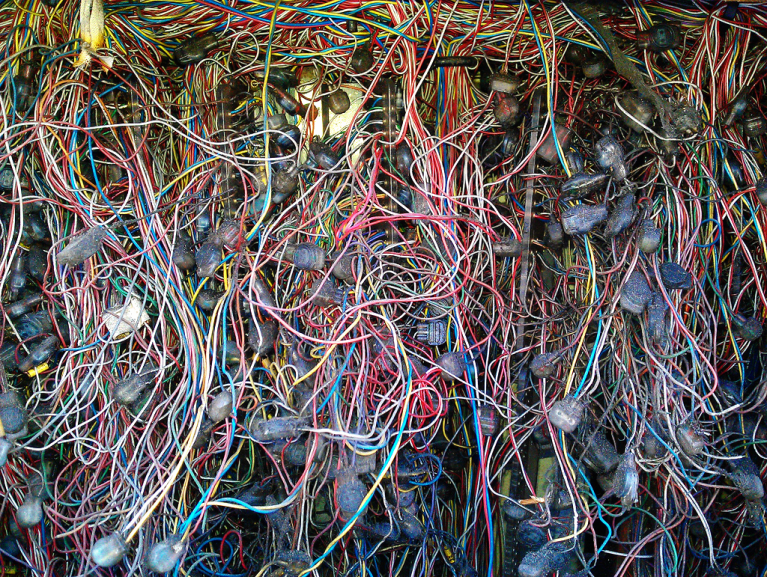
There is a big reason why the small medical practices are disappearing, swallowed up by giant politically connected and bureaucratic nightmares. There is also a reason why, in the age of the ACA requirements, insurance companies must push back against waste of invested resources. We’re all caught in a tangled ball of competing interests and may need our Alexander to take a sword to this gigantic seemingly unsolvable knot.
Isn’t Socialism wonderful?
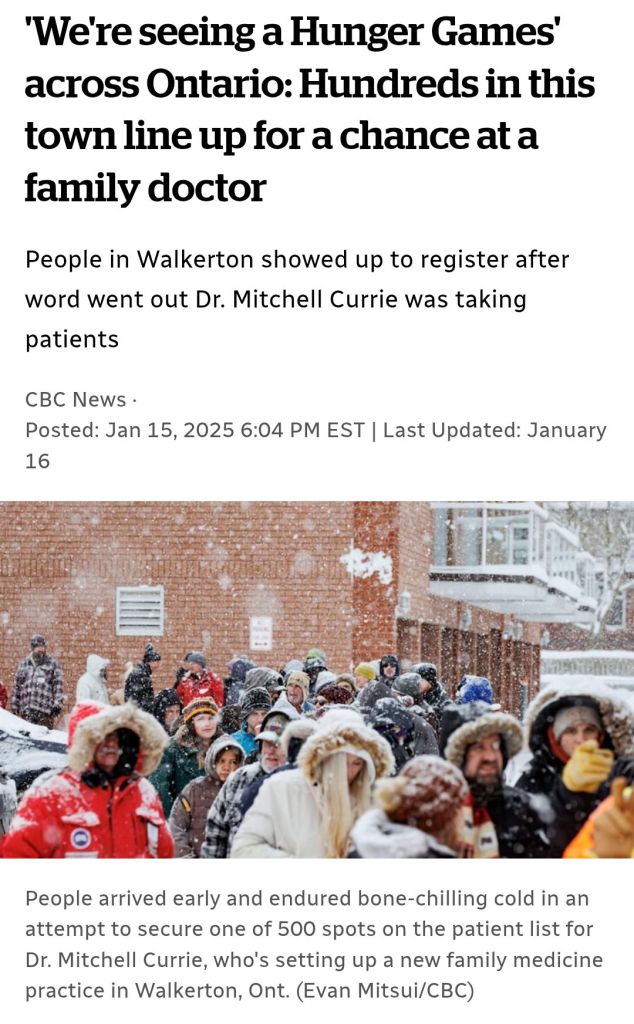
This is why I’m willing to give new Health Secretary Robert Kennedy Jr. a chance. We need reform and we needed it yesterday, it is decades overdue like the eventual approval of the disk replacement surgery that has allowed my return to an active and fulfilled life. And, if you don’t like it, then maybe you should try Canada where healthcare is free, if you can get through the line. Amazing how nobody blames public health officials—until you get one who goes against the status quo they claim to hate.
We tend to lump things together that shouldn’t be. In other words, there is plenty of diversity within categories and this is something true of those whom we call mechanics. And the significant difference in mechanics is analogous to other professions, which is where this essay will end up.
The other week my old reliable Ford Focus began to act up. I had traveled, with my family, to a company picnic and everything was fine on the way out. However, on the trip home there was something that was not right. The power delivery was rough when trying to accelerate but smooth enough while cruising and immediately my mind went to the trick this 2.0 L had up its sleeve.
The ‘Duratec 20‘ has Mazda DNA. It uses direct injection and variable valve timing (or Ti-VCT) to make 160 hp while still delivering decent fuel mileage. With a 12.1:1 compression ratio, it has a decent torquey feel for a 4-banger, and—paired up with a five-speed—it is fast enough to be fun.
And to the point that a week prior to this, on the way to church, a late 90s Honda Civic with a loud pipe did the customary flyby, and we just so happened to line up at the next red light. So, as was necessary, to the slight embarrassment of my wife and great amusement of my son, I do the hard launch. It bogged a bit, despite my loading up a bit prior to releasing the clutch, so I dumped it down completely, the tires chirped, I hit second hard and I was grinning a couple of car lengths ahead before they knew what had happened. Not an actual race, but I’m pretty sure I had the edge even if they were ready for me.
The engine light would eventually come on in the next day or two. And, sure enough, checking the code at AutoZone, it came up as a camshaft sensor. That was something I could handle. I swapped in the new part. But it didn’t fix the problem. I noticed that the negative battery terminal had some corrosion and, with the help of a cousin, we cleaned that. Still, no dice. The issue persisted.
Shop #1: The Inspection Garage
With the help of a mechanic friend of mine, who sent me the applicable page of the diagnostics manual, I determined that the problem was now beyond my shadetree abilities. It was potentially a crank sensor fault (that for some reason shows up as being the cam sensor) or involved some sort of wiring issue. I took it to the garage, within walking distance, which had given me a better deal for vehicle inspection than the dealer could offer.
I left them with the page of the manual. I returned to a vehicle with a drained battery and still acting up despite their efforts. They had cleaned the throttle body, changed the air filter, and not overcharged me for that service. However, the problem was not fixed, and the explanation he gave—that the car (with over 230,000 miles) was old and probably down on compression—did not satisfy me.
I had assumed that they had run down the diagnostics checklist, as I had basically told them to do, and that weekend decided to take a look again with the aid of a mechanically inclined brother-in-law at our family summer get-together. My sister has a 2016 Focus, which had corrected the wiring harness issue, and immediately, while looking at her engine bay, I noticed how the Ford had moved these wires from where they were on my own 2014.
So I took another look at that, I lifted the harness on my car where it was against the engine and, sure enough, I could see the cover was worn through and a little copper was shining. Uh-oh. With a small piece of electrical tape and a spirited tested drive, the diagnosis was clear—that was the problem and I would need to take it to a shop that was capable of following my instructions.
Shop #2: The Technician
After pricing my options, I decided on a garage that had helped me with another mystery issue years ago with my Jaguar XJR. Jake, the owner, was an expert at diagnostics and, in a conversation with Jason who he trained as his replacement, it was clear that this guy knew his stuff. Now, granted, in this case, I had already provided the diagnosis. However, I could tell that he understood the systems of the vehicle far better than the guy at the inspection garage.
This is the kind of mechanic you need when the issue is more than an alternator or something obvious that only needs to be removed and replaced. Anyone can turn a wrench. Quite a few can go down the diagnostics checklist and eventually find the solution. But the actual technician type is a different breed, he is the guy who writes the manual and can even feel what is going on after a short test drive. These are the Ken Miles, can-improve-what-already-is kind, who in different circumstances may have become an engineer or even a doctor.
The technicians are professionals. They have a high IQ and a wealth of knowledge. And it is about much more than having the correct certifications or a toolbox full of Snap-On tools. Some simply do not have the aptitude even if they went through years of training and others do. The technician could be working in the back alley of Manila or at the dealership down the road. There are different levels even within this group, but what sets them apart is their intuitions and ability to model the complex systems of a vehicle in their heads. He’s as smart as your cardiologist.
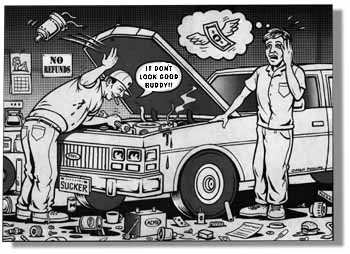
Shop #3: The Scam Artist
Years ago my brother took his Ford Tempo in for a routine inspection. This was his first car and basic transportation for a teenager. And only cost a few thousand dollars, which was basically all he could afford at the time. The tire shop is in the middle of town and looks decently professional. I think of this incident each time I see their advertising two decades later.
The bill he got was more than the value of the car. Apparently, they decided that every suspension part was out of tolerance and maybe they were technically correct, who knows?
What I do know is that my dad took severe issue with this and helped my brother negotiate a slightly better price for the work. Still, they soaked him for a huge amount of money and have lost our business since then. They were at the level of the inspection shop, or your local Walmart Auto Care Center, as far as their abilities and yet telling us with absolute conviction that the car was not safe to drive without the laundry list of parts with labor they installed without so much as a phone call to my brother.
Dealerships can overcharge. But usually, they are more reputable and not just replacing parts because they have you over the barrel and have a bonus to make. These are the types who would convince your grandma she needs the blinker fluid filled and muffler bearings replaced. They aren’t technicians (they would too be ashamed of themselves if they were) and are basically just swindlers with a wretch to use as part of the scheme. Their diagnosis is always something expensive.
What Kind Of ‘Mechanic’ Is Your Doctor?
This understanding of different types of mechanics applies to all professions. Not every college graduate with the right credentials is equally qualified. Some engineers are really good at the classroom stuff, they know the code and can be completely anal about largely irrelevant or unimportant details. Others really get what makes structure work, it is intuitive to them, and what they build is likely safer than the variety that dots all of the I’s and crosses all the T’s according to the IBC 2021.
Doctors come in many varieties as well. There are those types who get into things like cosmetics or reconstructive surgeries, chasing after the big bucks, and then there are the others who want to run a clinic or set up a family practice to help as many people as possible. The country ‘doc’ driving the F-150 is a different breed than the one with a BMW or Porsche. One is practicing medicine, and the other has a profitable business that requires some medical skills. And, in both cases, competency is not strictly a matter of gathering the right diploma or getting through the board requirements.
My own hunch is that most doctors are more like the inspection shop mechanic. They’re not out to screw you over and they also do good work for the most part. However, they got where they did because they were at least of slightly average intelligence and good at navigating the system. This doesn’t mean that they are actually doing the real number crunching of the diagnostics themselves. No, it means that they can match a list of symptoms with what they can find in the Merck manual and write a (barely legible) prescription. This could mean that they miss things, over-prescribe, or basically share in the same failures as the entire medical establishment.
“It is simply no longer possible to believe much of the clinical research that is published, or to rely on the judgment of trusted physicians or authoritative medical guidelines. I take no pleasure in this conclusion, which I reached slowly and reluctantly over my two decades as editor of The New England Journal of Medicine”
“The case against science is straightforward: much of the scientific literature, perhaps half, may simply be untrue. Afflicted by studies with small sample sizes, tiny effects, invalid exploratory analyses, and flagrant conflicts of interest, together with an obsession for pursuing fashionable trends of dubious importance, science has taken a turn towards darkness”
I’m assuming these two would know a little about the current state of science and medicine.
So how does a doctor separate the wheat from the chaff?
It is not right that some see the failures of some as a reason to dismiss it all. Getting taken advantage of by one repair shop doesn’t make all mechanics crooks. Still, how does a patient know if their doctor is doing a high-level analysis of the evidence, is capable of critical thinking and going beyond the book, or if he’s just following the pack without doing any truly independent diagnostics? It really takes someone a bit removed from the profession, who doesn’t share their biases or bad remedies, to give the corrective treatment. Maybe a car mechanic turned doctor (the guy in the featured picture) would have some useful perspective on the topic?
Whatever the case, if we can’t trust everyone who is licensed by the state to inspect vehicles, we should be even more skeptical of those who want to put things into our bodies. They don’t even have to be bad or intend harm, it could simply be that they are asleep at the wheel, putting trust in institutions that have been compromised and corrupted. At the very least, the body is extremely complicated and even our most advanced methods are crude. We may not know that our modern versions of bloodletting are of negligible value or even harmful for another century or two. This is why we customers, the patients, should never be pressured one way or another even if the science is supposedly settled.
Yes, even those at the top of the profession today may be tomorrow’s quacks…
“I have the secret art to cure. Each malady, which men endure.”
Note the “slow poison” written on the mixing device.
There are many alt-right types who use IQ statistics to distinguish between groups of people, and yet they themselves do not seem to grasp statistics or even understand what IQ actually measures. They suggest their own lack of intelligence through this. And, given that their use of IQ is most often directed at those whom they deem to be inferior races and is what makes them feel superior, this is deliciously ironic.
Yes, certainly IQ does matter. But it matters in the same way that hitting a golf ball and bench pressing do as being a measure of overall athleticism. Sure, it does differentiate natural ability for those with equal training, and yet says very little about the inborn abilities of those coming from vastly different circumstances. In other words, I can out bench many bigger men who never saw a gym. But not because they couldn’t outperform me if they put the same time in. And, likewise, the kind of intelligence that IQ tests measure is built on practice.
So, basically, without a multi-variant analysis, the results of IQ tests tell us very little. A person can score high because they are genetically gifted. They could score high because they had a stable home, good nutrition, and high-quality education. And, like Koreans getting taller on average, lower average IQ today does not mean the same will be true tomorrow or if all circumstances were equal. In fact, IQ tests are increasing generation by generation, this is called the “Flynn Effect” and not necessarily a result of people actually getting smarter than their grandparents.
No, IQ tests tend to focus on a kind of abstract reasoning that has no practical application for prior generations or those who are raised outside of an advanced economic system. My ability to reason through engineering problems may unlock earning potential in a very controlled environment and yet doesn’t mean I would survive a day in the Amazon basin or on the streets of Rio. So this assumption that my test scores prove something about my superiority is basically nonsense.
Sure, not everyone has the mental capacity to solve differential equations. But that doesn’t mean everyone who couldn’t solve them prior to Isaac Newton and Gottfried Leibniz was an idiot.
The really crazy thing about racial supremacist mid-wits (or at least those who I know of European ancestry) is that they will so often make fun of the pointy-headed intellectuals (those who outscore them in IQ while lacking street smarts) only to turn around and use IQ statistics to create a racial pecking order. I mean, if IQ is a reason for some to rule, why do these same people turn to wild conspiracy theories to explain why many Ashkenazi Jews are disproportionately more successful (academically) and in positions of power or influence? Why not just assume they are the next stage of human evolution?
The truth is culture and environment have a large part to play in our development. What is prioritized in homes and communities can make a huge difference in outcomes. If my dad was an attorney and I was sent to a prep school, I would probably be more likely to score higher and go further in pursuit of a professional career. Alternatively, if I was raised in a place where everyone was obsessed with track speed and achieving celebrity status, I doubt I would’ve grown up playing with Legos or visiting various museums with my parents. My own 97th percentile IQ was likely built on experience as much as anything else.
Lastly, it is worth noting that outliers do not tell us a whole lot. Interestingly enough, men are both smarter and dumber than women and this has to do with standard distribution or how the bell curve works. What this means is that there can be more or less diversity within categories. Or, put otherwise, some Kenyans being excellent long-distance runners doesn’t mean all are and this superiority of some Kenyans will tell us even less about those on the other end of the African continent. Too often we look at the cream of the crop (or bad actors) as an indication of the whole and yet group statistics never tell us about individuals.
Air-travel has become safer than ever and that due, in large part, to the increase in automated systems in the cockpit. However, with this advanced technology there comes a downside and the downside being that an otherwise perfectly functional aircraft (I.e., mechanically sound) with competent operators, can be lost because of a small electronic glitch somewhere in the system.
This issue was discussed, at length in response to the crash of Air France flight 447, an Airbus A330, in 2009, when an issue with an airspeed indicator and automated systems led to pilot confusion—which, in the end, resulted in a plunge into the ocean and the loss of all 228 people on board. The pilots were ultimately responsible for not responding in the correct way (they were in a stall and needed to push the nose down to recover lift) and yet the reason for their failure is as complex as the automated systems that were there to help them manage the cockpit.
One of the more common questions asked in cockpits today is “What’s it doing now?” Robert’s “We don’t understand anything!” was an extreme version of the same. Sarter said, “We now have this systemic problem with complexity, and it does not involve just one manufacturer. I could easily list 10 or more incidents from either manufacturer where the problem was related to automation and confusion. Complexity means you have a large number of subcomponents and they interact in sometimes unexpected ways. Pilots don’t know, because they haven’t experienced the fringe conditions that are built into the system. I was once in a room with five engineers who had been involved in building a particular airplane, and I started asking, ‘Well, how does this or that work?’ And they could not agree on the answers. So I was thinking, If these five engineers cannot agree, the poor pilot, if he ever encounters that particular situation . . . well, good luck.” (“Should Airplanes Be Flying Themselves?,” The Human Factor)
More recently this problem of complexity has come back into focus after a couple disasters involving Boeing 737 MAX 8 and 9 aircraft. Initial reports have suggested that at an automated system on the aircraft has malfunctioned—pushing the nose down at low altitudes on take-offs as if responding to a stall—and with catastrophic consequences.
It could very well be something as simple as one sensor going haywire. It could very well be that everything else on the aircraft is functioning properly except this one small part. If that is the case, it certainly not something that should bring down an aircraft and would not have in years past when there was an actual direct mechanical linkage between pilot and control surfaces. But, now, since automated systems can override pilot inputs and take away some of the intuitive ‘feel’ of things in a cockpit, the possibility is very real that the pilots simply did not have enough time to sift through the possibilities of what was going wrong enough to diagnose the issue, switch to a manual mode, and prevent disaster.
The FAA, following after the lead of China and the Europeans, has decided to ground the entire fleet of Boeing 737 MAX 8 and 9 aircraft pending the results of the investigations. This move on the part of regulators will probably be a big inconvenience for air travelers. Nevertheless, after two incidents, and hundreds dead, it is better to take the precaution and get to the bottom of the issue.
President Trump’s off-the-cuff Twitter response, basically stating “the complexity creates danger,” was met with the usual ridicule from those who hate the man and apparently do not understand hyperbole. (It ironic that some, who likely see themselves as sophisticated, have yet to see that through Trump’s putting-it-in-simple-layman’s-terms shtick.) However, technically incorrect is not the same as totally wrong and there is absolutely nothing ridiculous about the general point being made—there are unique (and unforeseeable) problems that come with complex systems.
The “keep it simple, stupid” mantra (aka: KISS principle) is not without merit in an age where our technology is advancing beyond our ability to control it. If a minor glitch in a system can lead to a major disaster, that is dangerous complexity and a real problem that needs to be addressed. Furthermore, if something as simple as flight can be made incomprehensible, even for a trained professional crew, then imagine the risk when a system is too complicated for humans alone to operate—say, for example, a nuclear power plant?
Systems too complex for humans to operate?
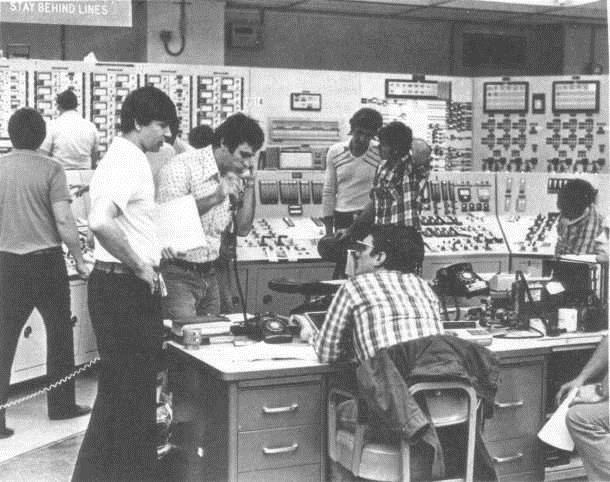
On the topic of dangerous complexity, I’m reminded of the meltdown of reactor two at Three Mile Island and the series of small human errors leading up to the big event. A few men, who held the fate of a wide swath of central Pennsylvania in their hands, made a few blunders in diagnosing the issue with serious consequences.
Human operators aren’t even able to comprehend the enormous (and awful) potential of their errors in such circumstances—they cannot fear to the same magnitude or to the proportion of the possible fallout of their actions—let alone have the ability to respond correctly to the cascade of blaring alarms when things did start to go south:
Perrow concluded that the failure at Three Mile Island was a consequence of the system’s immense complexity. Such modern high-risk systems, he realized, were prone to failures however well they were managed. It was inevitable that they would eventually suffer what he termed a ‘normal accident’. Therefore, he suggested, we might do better to contemplate a radical redesign, or if that was not possible, to abandon such technology entirely. (“In retrospect: Normal accidents“. Nature.)
The system accident (also called the “normal” accident by Yale sociologist, Charles Perrow, who wrote a book on the topic) is when a series of minor things go wrong together or combine in an unexpected way and eventually lead to a cataclysmic failure. This “unanticipated interaction of multiple factors” is what happened at Three Mile Island. It is called ‘normal’ because people, put in these immensely complex situations, revert to their normal routines and (like a pilot who has the nose of his aircraft inexplicably pitch down on routine take off) they lose (or just plain lack) the “narrative thread” necessary to properly respond to an emerging crisis situation.
Such was the case at Three Mile Island. It was not gross misconduct on the part of one person nor a terrible flaw in the design of the reactor itself, but rather it was a series of minor issues that led to operator confusion and number of small of mistakes that soon snowballed into something gravely serious. The accident was a result of the complexity of the system, our difficulty predicting how various factors can interact in ways that lead to failure and is something we can expect as systems become more and more complex.
And increased automation does not eliminate this problem. No, quite the opposite, it compounds the problem by adding another layer of management that clouds our ability to understand what is going on before it is too late. In other words, with automation, not only do you have the possibility of mechanical failure and human error, but you also have the potential for the automation itself failing and failing in a way that leaves the human operators too perplexed to sort through the mess of layered systems and unable respond in time. As the list of interactions between various systems grows so does the risk of a complex failure.
[As a footnote, nuclear energy is cleaner, safer and far more reliable than wind and solar farms. And, in the same way, that it is safer to fly than to drive, despite perceptions to the contrary, the dangers of nuclear are simply more obvious to the casual observer than the alternatives. So, again, with the fierce opposition to nuclear power by those who are unwittingly promoting less effective and more dangerous solutions, the human capacity to make good decisions when faced with the ambiguous problems created by the interaction of various complex systems does certainly come into question.]
Has modern life become dangerously complex?
There is no question that technological advancement has greatly benefited this generation in many ways and few would really be willing to give up modern convenience. That said, this change has not come without a cost. I had to think of that reality over the past few weeks while doing a major overhaul of how we manage information at the office and considering how quickly years of work could vanish into thin air. Yes, I suppose that paper files, like the Library of Alexandria burned, are always susceptible to flames or other destructive forces of nature. But, at least fire (unlike the infamous “blue screen of death“) is a somewhat predictable phenomenon.
Does anyone know why the Bluetooth in my car syncs up sometimes and not always?
Or why plugging my Android phone into the charger causes my calls in Facebook Messenger to hiccup (I.e., disconnects and reconnects multiple times) sometimes but not always?
I’m sure there is a reason hidden somewhere in the code, a failed interaction between several components in the system, but it would take an expert to get to the bottom of the issue. That’s quite a bit different from the times when the problem was the rain and the solution was cutting down a few trees to create a shelter. That was also true in the early days of machines as well—a somewhat mechanically inclined person could maintain and repair their own automobiles. However, the complicating factor of modern electronics has put this do-it-yourself option out of reach for all but the most dedicated mechanics.
Life for this generation has also become exponentially more complex than it was for prior generations when travel was as fast as your horse and you were watching your crops grow rather than checking your Facebook feed updates every other minute. It is very easy to be overwhelmed, as individuals, by information overload. The common man is increasingly over his head in dealing with the technological onslaught. We have become increasingly dependent on technology that we cannot understand ourselves and fails spontaneously, without warning, at seemingly the most inopportune times.
Advanced modern technology represents a paradigm shift as much as the invention of the automobile was a revolution for personal transportation. We have gone from analog to digital—a change that has opened a whole new realm of possibilities and also comes with a new set of vulnerabilities as well that go beyond the occasional annoyance of a computer crash. We really have no idea how the complexity of the current system will fare against the next Carrington Event (a solar storm that caused widespread damage and disruptions to the electric grid in 1859—a time of very basic and sturdy technology) nor are we able to foresee the many other potential glitches that could crash the entire system.
It is easy to be lulled into thinking everything will be okay because it has been so far. But that is a false security in a time of complex systems that are extremely sensitive and vulnerable. As when a pilot of a sophisticated airliner fails to comprehend the inputs or like the flustered operators of a nuclear reactor when the alarm bells ring, our civilization may be unable to respond when the complex systems we now rely on fail in an unexpected way that we could not predict. It is not completely unlikely that a relatively small glitch could crash the entire system and lead to a collapse of the current civilization. That is the danger of complexity, having systems that are well beyond our ability to fix should they fail in the right way at the wrong time.
The last human invention will be too complex to control and could be our demise…
Computers far exceed the human capacity to process information. We’ve come a long way from Deep Blue versus Garry Kasparov in the 90s and the gap between man and machine continues to grow wider after our best representatives were surpassed. Yet, while vastly faster in their abilities, computers have long only been able to do what they were programmed to do and thus their intelligence is limited by the abilities of their human programmers.
However, we are on the cusp of development of this technology and the implications far beyond the finite capacity of the human mind to grasp. We could very soon couple the processing speed of a computer with a problem-solving ability similar to that of a human. Except, unlike us, limited by our brain size and relatively slow processing speed, this “machine learning” invention (a video on the progress so far) could continue to expand its own intellectual abilities.
Machine learning is a massive paradigm shift from the programmed computers we currently use. It would lead to super-intelligence beyond our ability to fathom (literally) and, any more than a monkey can control us, could not be stopped. Imagine something that is always a hundred steps beyond any scenario we could imagine and has less in common with us (in terms of raw intelligence) than we do with an ant—would it have any reason not to treat us better than bacteria?
There was a time when I would not have believed that artificial intelligence was possible in my lifetime and a time after that when I would’ve thought it is something we could control. That was naive, artificial intelligence would, at very least, be unpredictable and almost totally unstoppable once the ball got rolling. It could see us as a curiosity, solve cancer simply because it could in a few nanoseconds—or it could kill us off for basically the same reason. Hopefully, in the latter case, it would see our extermination as not being worth the effort and be on to far greater things.
It remains to be seen whether artificial intelligence will solve all of our problems or see us as a problem and remove us from the equation. This is why very intelligent men, who love science and technological advancement, like Elon Musk, are fearful. Like the atomic age, it is a Pandora’s box that, once opened, cannot be closed again. But unlike a fission bomb that is dependent on human operators, this is a technology that could shape a destiny for itself—an invention that could quite possibly make us obsolete, hardly even worth a footnote in history, as it expanded across our planet and into the universe.
In fact, it is in your smartphone, it enables facial recognition and language translation. It also helps you pick a movie on Amazon by predicting what might interest you based on your prior choices.
Artificial intelligence technology could be our future. It could be that last invention that can finally manage all of these dangerous complex systems that modern convenience is so dependent upon and allow us to return to our simple pleasures. Or it could be a dangerous complexity in and of itself, something impossible to control, indifferent to our suffering and basically (from a human perspective) the greatest evil we ever face in the moments before it ensures our extinction.
Artificial super-intelligence will be complexity beyond our control, a dangerous complexity, and comes with risks that are humanly unimaginable. It could either solve all of our problems in dealing with disease and the complexity of our current technology—or it could make our woes exponentially greater and erase our civilization from the universe in the same way we apply an antibiotic to a pathogen. It is not ridiculous or absurd to think a little about the consequences before flipping the “on” switch of our last invention.
Should we think about simplifying our lives?
It is important, while we still reign supreme as the most inventive, intelligent and complex creatures on this planet, that we consider where our current trajectory will lead. Technological advancement has offered us unique advantages over previous generations but has also exposed us to unique stresses and incredible risks as well. Through technology, we have gained the ability to go to the moon and also to destroy all life on this planet with the push of a button.
Our technologies have always come as two-edged swords, with a good side and bad side. Discovering how to use fire, for example, provided us with warmth on a winter night and eventually internal combustion engines, but has often escaped our containment, destroyed our properties, cost countless lives, and creates air pollution. Rocks, likewise, became useful tools in our hands, they increased our productivity in dramatic fashion, but then also became a means to bash in the skulls of other humans as a weapon. For every positive development, there seems to be corresponding negative consequences and automation has proved to be no different.
The dramatic changes of the past century will likely seem small by comparison to what is coming next and there really is no way to be adequately prepared. Normal people can barely keep up with the increased complexity of our time as it is, we are already being manipulated by our own devices—scammers use our technology against us (soon spoof callers, using neuron networks, will be able to perfectly mimic your voice or that of a loved one for any nefarious purpose they can imagine) and it is likely big corporations will continue to do the same. Most of us will only fall further behind as our human weakness is easily used against us by the use of computer algorithms and artificial intelligence.
It would be nice to have the option to reconsider our decisions of the past few decades. Alas, this flight has already departed, we have no choice but to continue forward, hope for the best, and prepare for the worse. We really do need to consider, with the benefits, the potential cost of our increased dependence on complex systems and automation. And there is good reason to think (as individuals and also a civilization) about the value of simplifying our lives. It is not regressive or wrong to hold back a little on complexity and go with what is simple, tried and true.











 Irregular Ideation