Should the Church Have Rituals and Traditions?

Standard

Of those traditions kept by my conservative Mennonite church, a foot-washing ritual was one of the more notable. It is a practice based on the example of Jesus who washed the feet of the disciples and then instructed them to follow his example:

When he had finished washing their feet, he put on his clothes and returned to his place. “Do you understand what I have done for you?” he asked them. “You call me ‘Teacher’ and ‘Lord,’ and rightly so, for that is what I am. Now that I, your Lord and Teacher, have washed your feet, you also should wash one another’s feet. I have set you an example that you should do as I have done for you. Very truly I tell you, no servant is greater than his master, nor is a messenger greater than the one who sent him. Now that you know these things, you will be blessed if you do them.” (John 13:12-17, NIV)

So, twice a year with Communion, after a sermon about some aspect of the sacrifice Jesus made, after partaking of some bread and grape juice together and then another short reminder of why we were doing the stuff we did, the men would be dismissed to the basement (leaving the women the upstairs to do their symbolic washing) and on the way down we men would pair up with the guy beside us or another guy that we selected for whatever reason.

We would remove our shoes and socks, then proceed to one of the plastic basins arranged in front of folding chairs, then take turns solemnly splashing water on each other’s feet and dabbing them dry again with a towel provided. Once finished with this ritual procedure most would shake hands (those less inhibited would kiss) and engage in awkward small talk or make a comment about keeping their washing partner in prayer over the next few months.

In our time, this act of foot washing is little more than a symbolic act of service. But when Jesus washed the feet of his disciples it was something of practical value to those traveling the dusty roads in sandals and a task typically reserved for the servants. In that context, it was a very significant gesture and represented a whole new approach to leadership. In the Mennonite context, this practice is sometimes nothing more than a ritual and tradition.

Is reinvention of orthodoxy the answer to dead faith?

People often equate ritual and tradition in the church to dead faith. As a result, those disgruntled with dead faith swing in the direction of innovation and spontaneity hoping to find something authentic and real. Unfortunately, while the first generation of those who discard an established tradition often experience the excitement of something new, their children do not get a temporary emotional bump from the change. It should be no surprise when these children continue down the same path and throw out practices that their parents considered to be sacred and essential.

The idiom, “Don’t throw the baby out with the bathwater,” (derived from a German proverb “das Kind mit dem Bade ausschütte”) is a warning against destroying something good in our zeal to be rid of what is bad. This saying was first recorded in 1512 and right before Martin Luther touched off a revolt against the established church. It is a phrase, frequently used by Luther himself, perhaps worried people would take what he started too far. It remains a very popular expression with Protestants (including Mennonites) who are trying desperately to retain their own children.

There is much in Scripture about the sins of fathers being transmitted to the next generation (Exodus 34:6-7, Leviticus 26:39, Deuteronomy 5:8-10) and seems to apply to our own circumstances today. Children, through genetics or behavioral patterning, often acquire the strengths of their parents. A parent’s good example can lead their children to good habits. And, in the same manner, children often also inherit the defects, blind-spots, and weaknesses of their parents as well. Children build both on the success and also on the sins and/or shortcomings of the prior generation.

So, it should not be a big surprise that the children of Protestants continue down a path of independence, reinterpretation of Scripture and departure from what was established. Protestantism, with the inordinate focus on one’s own interpretation of Scripture, has led to further division, ever-increasing individualism, and significant loss of Christian character. Many Protestants, following the example of their forefathers, assume that the path to spiritual life is found in throwing off of traditions and rituals—but I believe they are terribly mistaken.

Orthodox tradition and ritual is not at fault for abuses of the institutions of the church…

What is the basis for tradition and ritual in the church?

Many seem to forget that Jesus was a Jew and faithfully kept the Jewish religious tradition. Jesus did speak against those who “let go of the commands of God and are holding on to human traditions” (Mark 7:8, NIV) or in other words those who prioritized religious rituals over love for others.

Yet Jesus did not dismiss ritual and tradition as completely unimportant either. Jesus and early Jewish converts to Christianity (while ranking the substance of faith higher than the religious symbolism) did not totally disregard the traditions that had been established.

To truly love Jesus means to follow his example and keep his commands. This, according to the words of Jesus, is requisite to the indwelling of the Holy Spirit:

If you love me, keep my commands. And I will ask the Father, and he will give you another advocate to help you and be with you forever—the Spirit of truth. The world cannot accept him, because it neither sees him nor knows him. But you know him, for he lives with you and will be in you. I will not leave you as orphans; I will come to you. Before long, the world will not see me anymore, but you will see me. Because I live, you also will live. On that day you will realize that I am in my Father, and you are in me, and I am in you. Whoever has my commands and keeps them is the one who loves me. The one who loves me will be loved by my Father, and I too will love them and show myself to them. (John 14:15‭-‬21, NIV)

Many church rituals (like Baptism, Communion and foot washing) are directly from the Gospels and given as instruction to the disciples by Jesus. And, it is in the Gospels that we read that Jesus gave authority to his disciples. He told Peter and the disciples this:

And I tell you that you are Peter, and on this rock I will build my church, and the gates of Hades will not overcome it. I will give you the keys of the kingdom of heaven; whatever you bind on earth will be bound in heaven, and whatever you loose on earth will be loosed in heaven. (Matthew 16:18‭-‬19, NIV)

The early church clearly had a hierarchy with real authority and one that built upon the foundation of Jesus Christ. It is the writings of these early church fathers that contain their witness to the life of Jesus and also provide their reader with further divinely-inspired instruction. This is what they said:

So then, brothers, stand firm and hold to the traditions that you were taught by us, either by our spoken word or by our letter. (2 Thessalonians 2:15, NIV)

Scripture didn’t just drop out of the sky written on golden tablets. No, rather it is a collection of inspired writings compiled and later canonized by the authority of a church council. That, the Bible, is the written tradition of the church (or “letter”) and is a source widely accepted as authoritative. However, in Protestant churches, because they reject any authority besides their own, the “spoken word” of church tradition has not been firmly held—it is neglected and forgotten.

The complete disregard for the oral tradition of the church is no different from cutting a chunk out of Scripture. Sure, as a person can refrain from applying the instruction Paul gives in regards to veiling (and not veiling) in 1 Corinthians 11 and still be Christian, these things aren’t necessary to be saved. However, this represents the deterioration of church tradition and a serious problem. At some point, we cannot claim to be following after the example of Jesus and continue to abandon the practices of the church he established.

There is a real loss when the established tradition is tossed in favor of a more ‘contemporary’ program. Moreover, those leaving their religious traditions often continue to benefit from the values it helped to instill in them. Sadly, the full cost is often only felt in subsequent generations who didn’t have the unappreciated benefits of the old tradition—the children raised without tradition have lost the helpful reminders given to their parents and also an important stabilizing tie to the historic church.

What makes tradition and ritual important?
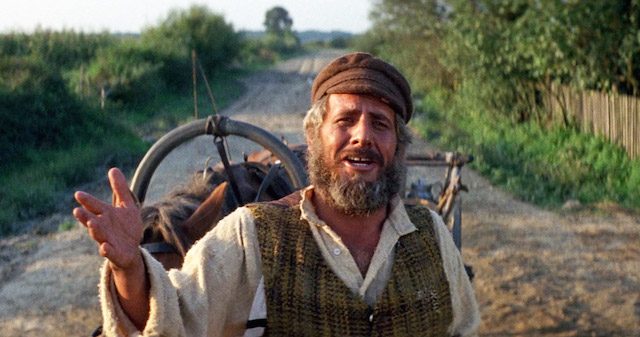
The musical “Fiddler on the Roof” contains the following monologue:

“A fiddler on the roof. Sounds crazy, no? But in our little village of Anatevka, you might say every one of us is a fiddler on the roof, trying to scratch out a pleasant, simple tune without breaking his neck. It isn’t easy. You may ask, why do we stay up here if it’s so dangerous? We stay because Anatevka is our home. And how do we keep our balance? That, I can tell you in a word—tradition!
Because of our traditions, we’ve kept our balance for many, many years. Here in Anatevka we have traditions for everything—how to eat, how to sleep, how to wear clothes. For instance, we always keep our heads covered and always wear a little prayer shawl. This shows our constant devotion to God. You may ask, how did this tradition start? I’ll tell you—I don’t know! But it’s a tradition. Because of our traditions, everyone knows who he is and what God expects him to do.

Tevye’s character is a Jewish father standing at this intersection of religious tradition and compromise in the name of progress. He points to one of the reasons why traditions are formed and that is balance. Traditions and rituals are established to help provide stability and order to our lives.

Rituals also help reduce anxiety and increase confidence even for those who do not believe they are beneficial:

Recent research suggests that rituals may be more rational than they appear. Why? Because even simple rituals can be extremely effective. Rituals performed after experiencing losses – from loved ones to lotteries – do alleviate grief, and rituals performed before high-pressure tasks – like singing in public – do in fact reduce anxiety and increase people’s confidence. What’s more, rituals appear to benefit even people who claim not to believe that rituals work. While anthropologists have documented rituals across cultures, this earlier research has been primarily observational. Recently, a series of investigations by psychologists have revealed intriguing new results demonstrating that rituals can have a causal impact on people’s thoughts, feelings, and behaviors. (“Why Rituals Work,” Scientific American)

At practice and before games my high school football team went through the same “warm-up” routine. Some of the reason for this was to physically prepare us to prevent injury through stretching and get us warmed up. But the other part, perhaps even the larger and more significant part, is what this ritual did psychologically to calm our nerves and get us mentally prepared. This practice and pre-game ritual made us better individually and also helped our cohesiveness as a team.

Beyond that, it is what Jesus taught and showed by example. Jesus did not entirely do away with his Jewish rituals and traditions. In fact, he added to them, going as far as to give the disciples a template for a simple prayer (given in contrast to the arrogant public prayers of religious elites and “babbling like pagans”) and this “Lord’s prayer” is still practiced—even in Protestant churches. If one understands the value of Baptism and Communion then there should be no argument. Rituals are important to help to pattern, influence and shape our minds.

Traditions provide us with a structure that helps us to navigate our lives. When Paul urges believers to conduct their worship “in a fitting and orderly way” (1 Corinthians 14:40) it is not intended to stifle their freedom or individuality. It is rather to free them from chaos and confusion. We are creatures of habit, we do not do well in a constantly shifting environment, and therefore ritual is even more important in these tumultuous times.

As Tevye said, traditions are reminders of who we are and what God expects from us.

So what to do with dead orthodoxy?

It is fairly obvious that people can continue in religion long after they’ve become spiritually dead. Ritual and tradition, while a benefit to the faithful, cannot preserve faith. Christianity is not as simple as checking the right boxes. As Jesus told the perplexed Nicodemus “you must be born again” and about how the Spirit works like “wind” that “blows wherever pleases” (John 3:1-21) there is a profound mystery in this that goes beyond a religious program and all human rationality.

Protestants, of all people, should know this. Every generation there is a new method that comes along, another “remnant” group shilling their own version of the Gospel, the next author trying to pump the purpose back into Christianity or yet another list of fundamentals, ordinances or doctrines, and all these movements eventually seem to end up in the same place again. Often these re-inventors end up leaving their children even more ignorant of church history and with even less to grasp onto. Some might declare themselves to be the more pure, but they are also void of any tradition with staying power and the proof is in the legacy they leave.

Dead orthodoxy is a result of dead faith. And, in the same manner, that new window dressing won’t help to stabilize a wooden structure weakened by termites, reinventing traditions and rituals will never bring spiritual life back where the church has fallen off its foundation. The foundation of faith is Jesus, his faithful church is constructed upon that foundation—with the traditions it has passed on both in written and spoken form for our benefit—and there is no spiritual life gained in throwing this legacy out.

In fact, it is arrogant to think that we would be better to start from scratch and create our own new orthodoxy rather than draw from the experience and wisdom accumulated over many generations. It is basically to say that we today are better than all those faithful Christians of the past two millennia who kept these traditions and saw fit to pass them on to us.

  • Does the ritual of Baptism ever take away repentance?
  • Can our Communion practice come at the expense of our love for Christ’s body?
  • Should we stop celebrating Christmas and Easter because they aren’t found in the Bible and have been corrupted by American culture?
  • Our ridding ourselves of these established and orthodox Christian practices will not draw us any closer to God.

Yes, the foot-washing tradition practiced at my Mennonite church is worthless if the act does not truly represent our heart. The veiling is often associated with the failures of Mennonite men to lead in the example of Christ and thus the practice of the veil is often discarded by ex-Mennonite women. But both represent cases of throwing out the baby with the bathwater. It is not the ritual of foot washing or the imperfect application of 1 Corinthians 11:2-16 that is at fault. Tradition and ritual should never be blamed for our lack of those things that should come from the heart.

True, faith is not established upon religious rituals or traditions and they certainly can be corrupted. The apostle Paul had to sternly warn early Christians against the abuse of the Lord’s Supper and had to further define the practice in an effort to prevent them from abusing it. But what he didn’t do is throw his hands up and say: “Okay, no more Communion, let’s go back to the basics and just show our love for each other through charitable acts!” No, he urged them to rediscover, not reinvent, and that is what the faithful do.

The solution to dead orthodoxy is not reinvention. The solution to dead orthodoxy is to address the real problem and renew the heart of faith that makes the tradition meaningful and allows the ritual to come alive.

What tradition should we keep?

Every denomination has rituals and traditions. The format of a Mennonite service, for example, intended to be a bit less formal, can be very dry and predictable. The song leader leads some songs, men argue our pet issues in Sunday school class while women sit in stony silence in theirs, the deacon (after pleading for us to think about the meaning of the hymns we just sang) goes through the laundry list of activities and repeat prayer requests, after another song the preacher does his thing as some doze in the pews, and finally, the congregation is dismissed to talk about farming, hunting, sports or politics.

At some point, all-new “movements” end up creating a new ritual and tradition. John and Charles Wesley introduced a radical new “methodical” approach to study and life. This eventually became the “Methodist” denomination. Mennonites take their denominational name from Menno Simons, a Catholic priest that became caught up in the Anabaptist movement, and now are mostly an ethnic church known for a “peace witness” and shoo-fly pies.

Not all religious rituals and traditions are equal in history or value. Sunday school, revival meetings, VBS, “sweetheart banquets,” mother’s day celebrations, Bible schools, and church retreats are part of the Mennonite church calendar, but they are certainly not the equivalent of Ascension day, Lent season, Paschal feast or many of the other long-established orthodox practices that some have abandoned in the past few centuries. I would rather we started to look at what was established early and has worked for many generations than try to create a dumbed-down, less historically grounded version.

The tradition of many Protestant churches has become so watered down there is little left to reinvent besides the Bible. As a result, those seeking an emotional high through change are running out of options and when their current experience isn’t satisfying anymore, some decide to toss the Bible next. That is the progressive approach. That is the approach that confuses their own temporal feelings of pleasure with spiritual gain.

In conclusion…

Faith is not created by ritual and tradition nor can it be increased by discarding them. Spiritual life comes through obedience and is also a mysterious work of God. We aren’t saved through our religious devotion. A person can go through the motions of Baptism, Communion, foot washing or any other orthodox Christian practice without ever having a change of heart.

That said, the truly faithful do benefit from the reminders, the structure, and patterns for behavior that orthodox rituals and traditions provide. In my own experience, it has helped me to worship in a manner that has been established over many generations. To join together with that “cloud of witnesses” (Hebrews 12:1) and to worship as Christians did for thousands of years has been a tremendous experience that cannot be duplicated with a new light show and smoke machine.

A person who burns down their house because they don’t like some of the decorations on the walls might be momentarily free. But the enjoyment and empowerment of this newfound simplicity and freedom will soon be a desperate struggle to protect themselves from the elements. And the same goes for those who think they gain through taking an eraser to the rituals, traditions and established orthodoxy of the church. The benefits are fleeting and the cost of trying to restore what was lost is great.

Yes, some necessary structure can be built back in a generation or two after the full loss of the change is felt, but not without slavish effort to restore it and where is the freedom in that?

A life unfettered by any established ritual and historical tradition might seem ideal for the freedom and simplicity that it promises. However, not all is as advertised, the freedom is an illusion and the reality created is often quite complicated. Taking a wrecking ball to an established order often leads to only chaos and more confusion. Worse, it robs the next generation of their religious inheritance and leaves children worse off than their perpetually dissatisfied parents.

Our faith should be founded on Jesus, our religion grounded on the truth of his word, our life lived in obedience to the Spirit, and that means keeping the traditions passed down by his church. Spiritual life is restored through genuine repentance and not by abandoning ritual. Renewed faith comes with our humble obedience and not by reinventing traditions.

Jesus did not discard all rituals and tradition nor should we. There is a place for both in the church. It is a connection that we need now more than ever in the shifting sands of our time. Perhaps it is time for some reflection, rediscovery, and restoration?

In Search of Authenticity at an Amish Wedding…

Standard

Protestantism aimed to strip away the inauthentic part of Christian tradition and, in the process, fractured the church into many competing sects all claiming to be the authentic article.

I was reminded of this while attending an Amish wedding and thinking of how quickly many outside of this peculiar tradition would dismiss Amish forms as dead religion.  The rituals of the service, all in German, while beautiful in their own rite, did not speak to me as an English speaking person.  I’m also doubtful the words did much for the many dozing throughout the three hours of singing and sermon.

Many Evangelicals, because Amish do not hand out tracts or speak of their “born again” experience and whatnot, openly question the salvation of Amish.  This includes many conservative Mennonites who (while also denouncing other Evangelicals as being too unorthodox) at least go through the motions of missions and schedule “revival meetings” every year to remind each other to be more authentic.

The Dilemma of a Doubly Non-conformed Mennonite…

Normally, in a traditional Mennonite context, non-conformity means conforming to their written (and unwritten) standards and being intentionally different from their “worldly” neighbors.  But for me non-conformity has always meant more than only doing things acceptable for a Mennonite.  For me non-conformity meant a) independence from public school peers and also b) authenticity at church.

I have spent my life as a non-conformed Mennonite.  This was a constant tension for me.  It made me uncomfortable with inauthentic conformity to Mennonite culture yet also always longing for full acceptance and wishing to be fully conformed.  I never wanted to be anything other than Mennonite and accepted there.  But it was equally important, as one seeking to be authentic as a matter of conscience, that I never do anything just to be accepted.

In practical terms this meant that I would not go to Bible school or to the mission field hoping to find a mate.  I know this is how many Mennonites do find a partner (despite their stated intentions and anti-fraternization policies) but it seemed dishonest to me.  So, as a result of this conviction to be forthright, I didn’t go and planned to go only when the reasons for going fully matched my expressed aims.  That, more than anything else, is probably what ensured my bachelor status and one of many ways my desire for authenticity cost me.

Doing anything without a full commitment, including singing hymns while down and only half-hearted, was painful for me.  I would sooner risk offense and remain silent than utter words without being completely genuine.  For me authenticity meant not going through the motions and not doing cliché things only to please culture expectations.  Unfortunately, in a culture that values conformity over authenticity, this was at odds with my hope for full acceptance.

What Does It Mean to Be Authentically Christian?

The other day I was talking to a couple curious about my religious roots.  The question came up, “Do Mennonites love Jesus?”  To that I answered “yes” but then went on to explain what differentiated Mennonites from other denominations.  Mennonites, like their Amish cousins, claim to love Jesus.  However, to be one of them you will need to prove your authenticity by keeping their traditions and following their rules.

Sadly, being authentically Mennonite does not make a person is authentically Christian.  Even assuming that Mennonite standards were absolutely correct, even if a person were able to follow those standards perfectly to the letter, and even if these forms are of temporal benefit, there is no salvation to be found in religious conformity.  We know this because Jesus said this when he encountered a man who had kept his religious tradition perfectly and was still lacking something:

Just then a man came up to Jesus and asked, “Teacher, what good thing must I do to get eternal life?”

“Why do you ask me about what is good?” Jesus replied. “There is only One who is good. If you want to enter life, keep the commandments.”

“Which ones?” he inquired.

Jesus replied, “‘You shall not murder, you shall not commit adultery, you shall not steal, you shall not give false testimony, honor your father and mother,’ and ‘love your neighbor as yourself.’”

“All these I have kept,” the young man said. “What do I still lack?”

Jesus answered, “If you want to be perfect, go, sell your possessions and give to the poor, and you will have treasure in heaven. Then come, follow me.” (Matthew 19:16-21)

We read that the disciples were “greatly astonished” by what Jesus had told this man.  How could anyone be saved by this new standard that Jesus gave?  This man had followed all the rules.  He was the good Mennonite, did his missionary service, attended every service, tithed faithfully and was a reputable man, perhaps even homeschooled his children, but somehow this was not enough for Jesus.

1) Authenticity is not preserved in keeping tradition…

Tradition is intended to guard authenticity.  Many measure the authenticity of others by how they measure up against their own tradition.  Mennonites question if authenticity can be found amongst Amish singing their centuries old Ausbund hymns.  Those not Mennonite, despite admiring our devotedness to our religious practices, question if we love Jesus.

Early Anabaptists and early Christians were right to understand that authentic Christianity was about more than keeping religious traditions.  In fact, they often, to the vexation of the religious, dispensed with the established rules and defied tradition.  They are like Paul and Barnabas who were adamant in their opposition to defenders of tradition:

Certain people came down from Judea to Antioch and were teaching the believers: “Unless you are circumcised, according to the custom taught by Moses, you cannot be saved.” This brought Paul and Barnabas into sharp dispute and debate with them. (Acts 15:1,2)

Basically these Judaizers (Galatians 2:14) were trying to force non-Jewish converts to keep Jewish customs and be circumcised as a condition for acceptance.  But the apostle Paul preached against this and used language quite strong to express his contempt:

Mark my words! I, Paul, tell you that if you let yourselves be circumcised, Christ will be of no value to you at all. Again I declare to every man who lets himself be circumcised that he is obligated to obey the whole law. You who are trying to be justified by the law have been alienated from Christ; you have fallen away from grace. For through the Spirit we eagerly await by faith the righteousness for which we hope. For in Christ Jesus neither circumcision nor uncircumcision has any value. The only thing that counts is faith expressing itself through love.

You were running a good race. Who cut in on you to keep you from obeying the truth? That kind of persuasion does not come from the one who calls you. “A little yeast works through the whole batch of dough.” I am confident in the Lord that you will take no other view. The one who is throwing you into confusion, whoever that may be, will have to pay the penalty. Brothers and sisters, if I am still preaching circumcision, why am I still being persecuted? In that case the offense of the cross has been abolished. As for those agitators, I wish they would go the whole way and emasculate themselves! (Galatians 5:2-12)

Paul is saying that these traditionalists are at odds with authentic faith.  He comically calls these defenders of circumcision to go further and completely emasculate themselves.  It seems that the real problem with the Judaizers was not that they followed Jewish customs themselves, but that they tried to force to new converts to keep their traditions as if salvation depended on them and this came at the expense of authentic Christian love.

2) Authenticity is not a produced by destroying tradition…

Many in search of authenticity abandon tradition and try to rebuild from scratch.  This has been the modus operandi of many since Martin Luther hammered out his ninety-five theses in 1517 in protest of the selling of indulgences and has led to the great fracturing of the church.  Those seeking authenticity apart from established church traditions have gone in a thousand contradictory directions.

Some think authenticity comes from spontaneous and disorderly outbursts during church services, which goes against Paul’s instruction in 1 Corinthians 14:26-40:

If anyone speaks in a tongue, two—or at the most three—should speak, one at a time, and someone must interpret.  If there is no interpreter, the speaker should keep quiet in the church and speak to himself and to God.  Two or three prophets should speak, and the others should weigh carefully what is said.  And if a revelation comes to someone who is sitting down, the first speaker should stop.  For you can all prophesy in turn so that everyone may be instructed and encouraged.  The spirits of prophets are subject to the control of prophets.  For God is not a God of disorder but of peace—as in all the congregations of the Lord’s people.

Originality is not evidence of faith, innovation in worship is not a sign of deeper spiritual life, and being anti-formality does not make a person more authentically Christian.  And, according to Paul, “God is not a God of disorder but of peace…”

In practical terms, this means God is probably not bedazzled by our light shows and high-powered musical programs.  Conversely, nor is God likely to be impressed by our long-winded sermons, our wielding of giant leather-bound Bibles on Sunday mornings, our flowery prayers with “thees” and “thous” nor any of our other attempts to create authenticity apart from living in true faith and loving as Jesus commanded.

In a generation or two those who attempt to remedy dead orthodoxy by destroying tradition often end up in a weaker position and with a tradition more corrupt, more incomplete and more unbalanced than the one they left behind.  Their innovations evolve into forms and soon the only stability they have comes from their condemnation of everyone who doesn’t conform to their own particular denominational brand.

3) Authenticity transcends our dichotomies…

Evangelicals (especially conservative Mennonite evangelicals who fear being confused with their more non-conformed brethren) look down on Amish and question the authenticity of their faith because they don’t use evangelical terms to describe their experience.  But, in my working with Amish, I have found them to be very genuine and generous towards me.  I do not see them as much different from conservative Mennonites in their focus on outward conformity and there is nothing that makes the conventions of modern Evangelicalism more authentic than the more traditional alternatives.

You can worship in a non-denominational house church or recite liturgy in a cathedral in Rome and miss the point of Christian faith entirely in both places.  As many Mennonite ordained men lament, pleading and trying to prod through the blank stares of their congregations, “Did you think about the words you just sang?”  And thus they prove that even the best-written hymns of the past couple hundred years can be sung beautifully and yet the meaning of the words missed.  Which makes me wonder why they think their own appeals will be heard?

Whatever the case, true authenticity is not a product of the religious form one follows, it is not a matter of being more or less traditional.  I have actually found it easier to worship God in a liturgical service than I did in the less ordered and less orthodox Mennonite setting that I grew up in.  Why?  Well, because it is an authentic love of God that gives our worship life.  I’ve found it easier to lay aside all earthly cares while in a liturigical service.  For me there is greater peace in the cloud of witnesses and ancient tradition than there is in the many opinions of a men’s Sunday school class.

That said, I firmly believe there are authentic Christians in the whole swath of traditions old and new from Anglican to Zionist and everything in between.  What matters, what makes a Christian authentic, is not the costume that a person wears nor the prescribed language they use, what truly matters is whether or not we love each other as we were commanded.  All tradition, and all abandonment thereof, is only meaningless noise without love:

If I speak in the tongues of men or of angels, but do not have love, I am only a resounding gong or a clanging cymbal. If I have the gift of prophecy and can fathom all mysteries and all knowledge, and if I have a faith that can move mountains, but do not have love, I am nothing. If I give all I possess to the poor and give over my body to hardship that I may boast, but do not have love, I gain nothing. (1 Corinthians 13:1-3)

Missionaries From Hell? (Matthew 23:13-15)

Standard

Jesus may have said his yoke is easy, but it is not easy for someone born and raised outside the conservative Mennonite culture to become Mennonite—especially not a woman.

Mennonites are not the only ones that demand conformity to a list of cultural expectations. Fundamentalist sects all have their fundamentals, their own special set of rules, cultural expectations, or doctrinal essentials that they use as tests for membership.

For example, a very sincere and sweet Christian friend of mine was asked about her view of “Once Saved, Always Saved” theology. Her questioner, someone who believes in eternal security, did not like her answer and now counts her as lost. To them salvation depends on our ability to parrot a theological position, a work of the mind, and no nuances are allowed.

And these false dichotomies, based on personal opinion, exist at all levels. If your hermeneutic allows for some flexibility interpreting the creation narrative of Genesis, then Ken Ham (including his partner in self-promoting pseudo-scientific dogmatism, Bill Nye) will insist that you should be an agnostic.

Nothing is further from the truth.

Jesus rebukes religious gatekeepers and damned missionaries.

The text…

Woe to you, teachers of the law and Pharisees, you hypocrites! You shut the door of the kingdom of heaven in people’s faces. You yourselves do not enter, nor will you let those enter who are trying to. Woe to you, teachers of the law and Pharisees, you hypocrites! You travel over land and sea to win a single convert, and when you have succeeded, you make them twice as much a child of hell as you are. (Matthew 23:13‭,‬15)

Jesus confronts the religious elites, who had positioned themselves as the final arbiter of truth, and he rudely knocks them off their pedestal. He confronts them for shutting people out who might otherwise enter and says they make those few they do convert “twice the child of hell” as that they are. That is a shocking reproach for those who are diligently religious.

Missionary service is typically unquestioned and perhaps that is because many of us feel guilt for not doing enough ourselves? But missionaries get no free pass from Jesus; on the contrary, he rebukes them even more severely and describes them as being counterproductive. I hope, after considering that, it goes without saying that missionary service can be a false indication of sincere faith and love for God.

There are many reasons why a person might want to be a missionary other than pure love for God and other people. Traveling, in our day and age, is fun and many enjoy the adventure. There are also the duty-bound “do-gooder” religious types, motivated more by fear than love. But there is an even more insidious reason why a person may choose to be a missionary service, and that is the power over others it offers:

1) Power of peer respect: There is no question that being a missionary is considered honorable amongst religious people. It draws positive attention. Those who have served in a visible way are often given special praise and in my church it is almost a prerequisite to being ordained. It can become a basis for ranking members of the church into higher and lower tiers. When used that way, it goes directly against the admonition of Jesus to be a brotherhood of equals earlier in his sermon.

2) Power of material resources: I know missionaries who go out like Jesus sent his disciples (Mark 6:7-13) in the power of the Spirit and with little more the shirts on their backs. Unfortunately, we do not embody that kind of faith anymore. Our missionaries rely on the power of their own calculations and often with enough resources to live comfortably beyond the reach of the people they are trying to evangelize. This can create a situation where people serve the missionaries’ whims for no reason other than attaining access to their resources. Being treated as royalty can also be gratifying to those who hold this power.

3) Power to be a religious gatekeeper: Everyone, including the religious elites condemned by Jesus, believes they are right, and that sanctimonious feeling can be the basis to becoming an evangelist. Recently a friend shared the testimony of Megan Phelps-Roper who was raised in Westboro Baptist Church and joined in their protests as a child. It was through conversation with the “other side” that she realized her spirit was wrong and repented.

Unfortunately, there are many who never do get knocked off their pedestal, never do humble themselves in the light of God’s grace, and do damage to the cause of Christ. They position themselves as the final arbiters of truth, as gatekeepers to the kingdom with the licence to shut people out, and the words of Jesus apply to them just as much as they did to the religious elites in the original audience.

Knowledge can become a barrier to truth when it leads to dead religion rather than following in faith.

We shut people off from the truth when we center our faith on our own religious “knowledge” rather than on the grace of our Lord Jesus Christ. These “all or nothing,” black-and-white propositions are a distraction from the substance of Christian faith. Obsession on theological minutia causes confusion rather than bringing clarity, and our additional requirements take away from the simple truth of the Gospel message:

If you declare with your mouth, “Jesus is Lord,” and believe in your heart that God raised him from the dead, you will be saved. For it is with your heart that you believe and are justified, and it is with your mouth that you profess your faith and are saved. As Scripture says, “Anyone who believes in him will never be put to shame.” For there is no difference between Jew and Gentile—the same Lord is Lord of all and richly blesses all who call on him, for, “Everyone who calls on the name of the Lord will be saved.” (Romans 10:9‭-‬13)

We should remember what Jesus said to his disciples when they took issue with someone speaking in the power of Jesus name outside their exclusive club:

“Master,” said John, “we saw someone driving out demons in your name and we tried to stop him, because he is not one of us.” “Do not stop him,” Jesus said, “for whoever is not against you is for you.” (Luke 9:49‭-‬50)

It should be noted that in the verse just prior to this, the disciples were having an argument over who amongst them would be greatest. Jesus answers them by bringing a child beside him and declaring that whoever would be most welcoming to that child in his name would be greatest. I’m guessing that child wasn’t 100% theologically correct.

We should serve others in truth of self-sacrificial love and in humility rather than in superiority of knowledge.

There are many who go out in the strength of their own knowledge. They never do comprehend the significance of God’s grace, and are blind though they think they see:

We know that “We all possess knowledge.” But knowledge puffs up while love builds up. Those who think they know something do not yet know as they ought to know. But whoever loves God is known by God. (1 Corinthians 8:1b‭-‬3)

Some say it is the thought that counts.

It is also said that the road to hell is paved with good intentions.

But before we say or think too much, we should take heed of what Jesus said and consider it a warning against an idea that our salvation comes from our religious diligence or right ideas. Instead we must be an example of the grace shown to us while we were yet dead in our sins.

We need to hold the door open for those wishing to enter and lower the threshold, rather than trip them up with our own pet doctrines.

We are not called to be gatekeeper; instead, we are called to serve in love and humility.

Let’s let God be the final arbiter of truth.

What Mennonites Could Learn From Brandon Smith

Standard

His name was unknown.

He is a walk on linebacker on a college football team who started this season as a backup to a backup.  But, undaunted, he practiced and committed to being ready for that moment.

That moment came last Saturday when this unknown finally had his number called.  Brandon Smith, a number 47 on his iconic ‘no name’ blue and white jersey, finally got his chance. 

After yet another injury in a season plagued with injuries he was called upon and took the field.  He used the opportunity to lead a bruised and battered defensive unit and preserve a win for the team.

Smith, despite only having a few snaps at a college level until last week, was no bench warmer.  

Smith, a humble soft-spoken leader, was on the most successful high school football team in Lewisburg Green Dragons history, a team that advanced all the way to the state quarterfinals in 2010, and the backbone of an outstanding defense.

But more significantly than all of that, Smith was active in the local church and is by all accounts a young man fully committed to using his talents for the honor and glory of God.  He even turned down two scholarships to prestigious universities to walk on and suit up for Penn State because that is where he believed God wanted him.  

The reason why Mennonites do not show up to play ball.

The Mennonite tradition I was born into has a long list of activities that are not encouraged.  And, of those activities restricted or outright banned, one being participation in organized competitive sports and football was considered especially intolerable.

The reason for this is an idea called ‘non-conformity’ that is common to Mennonites and other Anabaptist groups.  It is based on a statement “be not conformed to this world” found in the book of Romans and in other Scriptural teaching about separation from the world.

This idea of non-conformity usually amounts (ironically enough) to conformity to a religious standard that is enforced primarily by church leaders.  The standards are different from group to group, but generally apply to technology usage, clothing style and entertainment.  Through their idea of non-conformity various Anabaptist groups have maintained their cultural distinctiveness in an ever changing world.

Unfortunately too often it seems the focus is on preserving a religious heritage and an ‘Anabaptist identity’ rather than a radical pursuit of God.  Wearing black socks or using a horse named Fred as transportation rather than a Ford does not change a person’s heart.

The problem is when non-conformity is nothing more than a human effort to please cultural expectations.

Conformity without transformation misses the point entirely and will keep us spiritually sidelined.

The bigger problem with Mennonite non-conformity and separation teaching is that it puts the emphasis in the wrong place.

Read the context:

“Do not conform to the pattern of this world, but be transformed by the renewing of your mind. Then you will be able to test and approve what God’s will is—his good, pleasing and perfect will.” (Romans 12:2)

The ‘be not conformed’ above is not a standalone statement.  Paul doesn’t leave us to guess his meaning and quickly follows with “but be transformed by the renewing of your mind” and is basically describing the need for something transformative to happen within us.

The word “transformed” is translated from a word “metamorphóō” (μεταμορφόω) that looks like metamorphosis and basically means the same thing.  It is a word used four times in the New Testament, twice it is translated “transfiguration” in reference to Jesus and twice (including Romans 12:2 above) to describe the change that takes place in a believer.

Transfiguration (Matthew 17:1-9, Mark 9:2-8, Luke 9:28-36) is a very significant event, the “greatest miracle” according to Thomas Aquinas, thought of as a bridge come between heaven and earth or perhaps what modern science would describe as a portal between dimensions.  It is where Jesus is seen by his disciples talking to Moses and Elijah and a voice proclaims Jesus as son.

The other time this significant word is used is in this passage:

“Even to this day when Moses is read, a veil covers their hearts. But whenever anyone turns to the Lord, the veil is taken away. Now the Lord is the Spirit, and where the Spirit of the Lord is, there is freedom. And we all, who with unveiled faces contemplate the Lord’s glory, are being transformed into his image with ever-increasing glory, which comes from the Lord, who is the Spirit.” (2 Corinthians 3:15-18)

It is quite clear in contextual usage that this word “transformed” is something spiritual, something God does, and not a matter of human effort.  In the passage from 2 Corinthians above it is about having a “veil” removed by the Spirit that allows us to be able to understand Scripture that leads to transformation.  In Romans 12:2 it is about a transformation that leads to renewal of mind.

What is renewal?

The word “renewal” as in “be transformed by the renewing of your mind” is translated from a word “anakainósis” (ἀνακαίνωσις) and describes a process.  In Romans 12:2 it is about the mind being changed through this transformative thing.  It is also a word used one other time in Scripture:

“At one time we too were foolish, disobedient, deceived and enslaved by all kinds of passions and pleasures. We lived in malice and envy, being hated and hating one another. But when the kindness and love of God our Savior appeared, he saved us, not because of righteous things we had done, but because of his mercy. He saved us through the washing of rebirth and renewal by the Holy Spirit, whom he poured out on us generously through Jesus Christ our Savior, so that, having been justified by his grace, we might become heirs having the hope of eternal life.” (Titus 3:3-7)

Again we see a process in which God intervened on our behalf while we were still lost, hopelessly blind to spiritual reality, and did something to change us.  It is not something we do for ourselves or a list of do’s and don’t’s passed down from generation to generation, it is something spiritual done in us by God’s grace.

Why Mennonites should stop playing for fun only and need to get serious about using their all for God’s glory.

Should I be brutally honest?

Our idea of non-conformity is more often a path to complacency rather than spiritual renewal.

We are doing it wrong…

We have become as the Pharisees who were obsessed with details, considered themselves to be the experts on all things Biblical, yet despite their diligent study of the book they rejected Jesus as savior (John 5:39-40) and totally missed the point.  They were “blind guides” who “strain out a gnat but swallow a camel” (Matthew 23:24) and we are there with them.

Instead of seeking after true transformation, and using everything in our life to bring glory and honor to God, we attempt to carefully divide up our activities into categories of “worldly” and spiritual.  Instead of integrate all areas of our life into our witness, we compartmentalize and become ineffective.

When we do participate sports, rather than see it as a way to a witness, we play for fun only.  In similar fashion, when we work we do it for money only, when use social media we use it exclusively for recreation only.  We think missions is only something that happens when we join our earnest religious peers on an airplane ride to Africa and otherwise arrange our lives in such a way that we miss opportunities staring us right in the face.

Instead of seeing athletic pursuits as a means a greater end, a chance to display Christian character to others, we see only the frivolity of sports.  Instead of seeing business as a mission to our customers and employees, we take a worldly approach by make profits a higher priority than people—then excuse it because it will give us more spices to tithe on Sunday or an opportunity to “travel over land and sea” as Jesus said (Mathew 23:15) the Pharisees did while calling them hypocrites and blind.

It is a problem called functional fixedness. In problem solving functional fixedness is when a person can only see things one way and therefore miss better solutions.

Could it be possible that this is because we got our poles reversed and have put our effort to achieve righteousness before real faith in God?

Could it be because we are non-conformed in outward appearance through artificial religious means, but have the same ‘worldly’ attitudes in our hearts and are not truly transformed through a renewal of our mind?

If so, we should stand up against our own hypocrisy like Jesus…

Jesus defied the religious expectations that he was supposed to conform to and so should we.

Jesus infuriated the adherents to the Bible-based religious tradition of his time.  He broke their rules of do’s and don’t’s as a way to point out their hypocrisy and true lack of faith.  Jesus, while they were busy arguing the theological minutia and details of application, was out healing and showing love.

Mennonites, like many other Christian denominations, are often so distracted by their own doctrines and dogmas that they fail at being actually faithful.  We are so concerned with preserving our own fundamentals that we neglect the larger matters of following after God’s way and the largest being genuine love for the world.

The truth is that we are never told by Jesus to physically separate ourselves from the world.

We should be in the world and not of the world, set apart in our attitude and approach to life rather than in outward appearance only. To truly follow after Jesus we need to be in the world, in places where the real people are and in the places that religiously self-righteous people avoid.

We need to consider the example of Paul:

“To the weak I became weak, to win the weak. I have become all things to all people so that by all possible means I might save some. I do all this for the sake of the gospel, that I may share in its blessings.” (1 Corinthians 9:22-23)

It is interesting to note that Paul, directly after telling us that for sake of the Gospel he has “become all things to all people” in the quote above, uses an analogy of an athlete preparing for competition.  It reminds me of the dedicated preparation of a faithful young man named Brandon Smith.

Smith was not only ready to take the field in terms of physical preparation either.  This week, after his debut on Saturday, his wife, Andrea, posted a status update on social media from her personal prayer journal.  It was an entry from exactly a year before and asking that her husband would have the opportunity to take the field:

That, my friends, is where it gets real.

We do not battle against flesh and blood, our battle is spiritual.  We do not win victory by artificial conformity and meaningless arbitrary rules either, we are fighting an unconventional war using asymmetrical tactics, we need the mind of Christ:

“The person with the Spirit makes judgments about all things, but such a person is not subject to merely human judgments, for, ‘Who has known the mind of the Lord so as to instruct him?’  But we have the mind of Christ.” (1 Corinthians 2:15-16)

Do you have the mind of Christ?  Have you been transformed by supernatural means of the Spirit?  Or are you just outwardly and artificially non-conformed through human efforts?  Whatever the case, do not bury the talents God has given you for fear of what others may think.

Smith is expected to get his first college start on Saturday afternoon against Michigan.  And, win or lose, I know #47 is playing for the right reasons.  I pray God blesses him and his wife as they serve.  I hope we all are prepared to serve wherever and whenever our own number is called.

Marriage as Martyrdom: The Truly Christian View of Love and Romance

Standard

Do you want to know a secret?

You are never ready for marriage nor are you ever worthy of anyone’s faithful abiding love—and nobody is.

We are all fatally flawed, even those of us who are more capable of hiding it beneath a facade, and eventually our own immanent human weakness will be made known.

Some, for fear of being exposed as the frauds, never open themselves up fully to the love of others. They prefer the safety of the illusion that they are able to create (in the solitary confines of their own minds) to the risk of honesty about their own hopelessness. This is a worldly approach to love, it is all about proven performance, all about carefully maintained outward appearances and it lacks true faith.

Others make themselves vulnerable. They confess their faults openly and let their flaws be known. They would rather deal with the pain of rejection than deal dishonesty with themselves or others. These people have hope of finding real love because they have humbled themselves, they have taken this risk to confessed their own sinful imperfection, and choose to live in faith of forgiveness rather than in fear.

Christian love transcends existing reality and, in true communion with God, seeks to find a more glorious future—it reaches out in faith rather than dwell alone in fear of our imperfection.

Jesus sacrificed all while we were still dead in our sins, Jesus healed even those who did not take time to thank him, and faithful followers must do the same. Christian love is a preemptive love, it is a truly selfless love only possible through means of God’s grace and a genuine spiritual transformation.

Christian love is always a gift given to those completely undeserving.

In contrast, the secular world has a version of love that is special favor distributed based on past performance. It is only given out in expectation of a return bigger than the investment made and abandoned quickly when the initial pleasurable feelings of an expected return fade. It it is a selfish false love despite the selfless romantic language it is often disguised in. It is a love of “what’s in it for me?” and is the only kind of love those without the Spirit of God can show.

The religious hypocrite may too use the language of faith and grace to describe their love. However, with a bit of testing of spirits, sometimes their lack of truth in love can be revealed and their acting the part (as hypocrites) will be known. This self-seeking love and self-serving spirit is found all over the church—even tacitly sanctioned in the romance and courtship arena. But in marriage the truth of our love is known.

Is our conservative Mennonite idea of romance purely Christian or somewhat worldly?

I must vote the latter.

As much as I hear talk about being the “right person” and emphasis on past and anticipated performance it is quite evident that we have an idea of love being something that is deserved. It is the very antithesis of the Gospel of Jesus Christ we profess. If love were indeed something earned then we would all be stuck in an impossible situation in relation to God and hopeless.

It is paradoxical, but many of the things the world uses as a basis to reject people and withhold love are the very things only love can cure. For example, many prefer to criminalize addiction and take putative measures against addicts. Unfortunately this approach is often extremely counterproductive, we drive those suffering further towards the margins of society, and a growing body of research shows that connection (a practical expression of love) is the solution.

We in the church, as religious people, do make an effort to reach out to those on the margins of society. I have great respect for those faithfully involved in prison ministry, who visit the elderly interned in nursing facilities or for those who conduct clubs for disadvantaged children. However, these are also things that can be done mostly out of obligation or religious duty, an attempt to earn the favor of God, and not out of genuine Christian love for others.

We can maintain a facade of Christian love in church and church activities. But there is a point when the truth of the kind of love we possess will be brought to light. And, while I’m not talking about only romantic love, our romantic and marital love is where this mask can no longer be maintained. Sure, we can fake self-sacrificial love around our religious peers when preening for their approval, but we will not give away our whole life for our lie and therefore must keep some places off limits.

It is ironic that many conservative Mennonites (the same who affirm a belief in a doctrine that would preclude them even defending loved ones) also preach an extremely self-serving me-first worldly idea of romance. I’ve had a father literally whip out a calculator while trying to explain why I was ineligible to court his daughter. It is appalling faithless hypocrisy and yet never really seriously questioned.

My way or the highway: If I can’t marry who I want to marry, why marry at all?

Marriage, as something self-interested, means we will only marry when the calculations favor our own interests. This, again, is a worldly idea of love and the antithesis of actual Christian love.

Unfortunately many in the church, going against their profession of faith, will only marry when they believe that it will produce a future advantage for them and choose based in things like family pedigree or past performance. They rely on their own understanding and not faith in God.

Such might have been the case when a young woman named Emily Cavanaugh turned down a suitor back in the spring of 1938. She rejected a young man’s love because he didn’t seem to be getting anywhere in life and she believed he would never amount to much. She wanted a leader in the church and, by her analysis, he lacked that potential.

That young man rejected by Emily later preached to millions. He even acted as a personal advisor in matters of faith to Presidents of the most powerful nation in the world. I had the honor of hearing him speak to the multitude at Flushing Meadows Corona Park in Queens. His name is familiar to many people today.

The man?

Evangelist Billy Graham…

One should note carefully that all of the significant men in Scripture were losers and outcasts by worldly standards. Noah was a drunk, Abraham was too old, Isaac had his head in the clouds, Jacob was a liar, Moses had murdered a man and couldn’t speak confidently and this pattern of God using the unlikely candidates continues into the New Testament. Matthew was a collaborator with an enemy occupation, Thomas had doubts about Jesus, Peter was a basically racist (with a bark much bigger than his bite) and a Paul was actually abusive against the faithful. They were misfits, but God saw what others did not.

Consider what God told Samuel when he was in search of a leader for his people:

“Do not consider his appearance or his height, for I have rejected him. The Lord does not look at the things people look at. People look at the outward appearance, but the Lord looks at the heart.” (1 Samuel 16:7)

The man who fit the requirements was King David. David, unlike Saul before him, was not a man of impressive stature and was a mere shepherd (a menial task) at the time Samuel found him. What David had was a strong faith that was not recognized by his peers and yet was already known to God. The courageous warrior and Biblical hero that we know today only emerged later in the story. One can imagine the faith that it took for Samuel to anoint this unknown commodity as the future leader of a nation.

I believe those who reject a suitor (or a marriage eligible woman) based in their own expectations and arbitrary standards may want to reconsider their own profession of faith in a man run out of his own home town as a false prophet. I would recommend some reflection on the words Jesus spoke to his Bible-believing (and deceived) detractors:

“Have you never read in the Scriptures: ‘The stone the builders rejected has become the cornerstone; the Lord has done this, and it is marvelous in our eyes’?” (Matthew 21:42)

Jesus was also turned down by his rightful bride because he was deemed unsuitable. That is a reality worth considering when it comes to how we pick and choose today. Perhaps our reasonable standards today are wrongheaded and unGodly? Perhaps we are no better than our unfaithful religious predecessors?

Do our American ideals for love and marriage fail in delivering orthodox Christian imagery?

Marriage, in western society at least, has somehow become a legal arrangement dependent on human vows and will. But this “till death do we part” contract view of matrimony is not necessarily the most faithful understanding in Christian tradition. In fact it is this view that makes the very definition of marriage dependent on human whims. Marriage has become about us rather than about God.

But, what if we were to put God at the center of the marriage union instead of human effort and need?

The Orthodox Christian marriage tradition (in contrast to our Western and somewhat Catholic originated ideas) puts much more emphasis on the eternal perspective and mystery of God. And, in fuller recognition that God is the one who creates the martial bond, they make no wedding vows. To them God makes a marriage commitment sacred, not human promises.

Most significantly, the Orthodox view puts stronger emphasis on the symbolic and positive spiritual value of Christian marriage. It does not treat marriage as if a mere compromise for human weakness. As an Orthodox friend of mine explains it:

“…marriage is the means blessed by God from the very beginning for a man and a woman to be yoked together in order that they might achieve union with God. In Orthodox Christian teaching, the original intention of God is reaffirmed by Jesus in his teachings and in his blessing of the Marriage Feast at Cana. Furthermore, the Orthodox put a great deal of emphasis upon the mystery of Christ and his Church—the Bridegroom imagery of Ephesians 5 and see marriage as one very important manifestation of God’s love for his children.”

(Fr. Anthony Roeber, priest of the Antiochian Orthodox Christian Archdiocese of North America and Professor of Early Modern History & Religious Studies, Penn State.)

Conservative Mennonites do like their symbolism. We have persistently held onto symbolic Christian practices (like veils, kisses of charity and foot washing) long after the mainstream church abandoned or neglected them. This cultural penchant for resisting change could give the impression of faithfulness. Unfortunately, our reality of heart can sometimes be vastly different from what we display outwardly.

Is our concept of marriage a reflection of a radical commitment to Christian self-sacrificial love? We might say that our romantic endeavors are God honoring and rooted in faith, but is this actually true? Or, beneath the veil of religious symbolism, is our romance spiritually vacant and about our own personal preferences?

Love as God loves and for God wants to do through us, not for what we want to choose for ourselves.

I believe emphasis on choice and knowing (on our own terms) often comes at the expense of faith. There is cognitive dissonance in the church when you compare our courtship ideals to what we expect in marriage. In courtship we forget about God’s perspective and adopt a worldly approach. Yet then we expect that self-centered attitude to disappear once some religious ritual is performed?

Marriage is not about our choosing what is best for ourselves. To be successful in marriage requires commitment to self-sacrificial love and giving up our own rights to another. I believe that our American/Western culture is hung up choice and independence, it is to our own spiritual detriment too, but there are few who address this weakness in our courtship ideal. We push human calculations, our own personal or political advantages, and not faith.

The worldly perspective of romantic love is self-centered and is only about a person getting what they want. But the true Christian ideal is martyrdom:

“Submit to one another out of reverence for Christ. Wives, submit yourselves to your own husbands as you do to the Lord. For the husband is the head of the wife as Christ is the head of the church, his body, of which he is the Savior. Now as the church submits to Christ, so also wives should submit to their husbands in everything. Husbands, love your wives, just as Christ loved the church and gave himself up for her to make her holy, cleansing her by the washing with water through the word, and to present her to himself as a radiant church, without stain or wrinkle or any other blemish, but holy and blameless. In this same way, husbands ought to love their wives as their own bodies. He who loves his wife loves himself. After all, no one ever hated their own body, but they feed and care for their body, just as Christ does the church—’For this reason a man will leave his father and mother and be united to his wife, and the two will become one flesh.’ This is a profound mystery—but I am talking about Christ and the church. However, each one of you also must love his wife as he loves himself, and the wife must respect her husband.” (Ephesians 5:21-33)

That, a text oft used at weddings, is a great guide to marital relationship. However, to remain consistent, isn’t this the same reality of love that should be guiding our lives and including the whole process leading to marriage from start to finish? Can we truly expect Christian love to be made manifest in marriage when we married for selfish gain or to advance our own personal agenda religious and otherwise?

A faithful follower of Jesus should marry because they wish to better serve God by their devoted self-sacrificial love to another. It should not be a market based decision, a weighing of available options and determination to select what will be most beneficial to ourselves. When marriage is about our own plans and ambitions it becomes as a business transaction between two people. Yes, we can dress it up in the language of love or romance and celebrate it together in religious formality, but we might as well call it what it is: legal prostitution.

There is sometimes a vast difference between what people say they believe and what they actually believe in practice. We can claim to be ready to sacrifice anything in service to God, but are we actually willing to sacrifice our right to marry or marry the person of our own choosing? Do we bring honor to God in our romance or are we as self-seeking and carnally minded as our secular neighbors?

It’s not what you can obtain through romantic pursuits, but about the glory God will obtain. Marriage, for a Christian, should be a great testimony of our faithfulness, a practical display of a transcending self-sacrificial and eternal commitment to love.

Our romance, according to the most ancient of Christian traditions, can be our greatest witness and testimony of faith put to practice. In truest form marriage is a dying to ourselves for love of another or, in other words, martyrdom.

What Are ‘Christian’ Values?

Standard

The culture war continues. 

The latest salvo in the fight is over the current segregation of public restrooms.  The proponents of change and traditionalists battle it out for control on social media and in the public arena. 

Both argue the moral inferiority of the other side.  Both claim to be defending the security of their loved ones.  Both threaten to take punitive measures against those who do not comply with their demands. 

It is a fight where nobody seems to win and everyone comes out a loser.  But what if this two sided debate is actually false dichotomy?  Could there be a third option solution where all could win? 

Perhaps, if all sides of this struggle for control could put down their rhetorical and political weapons for a moment, there is a better example to follow?

I believe there is a better ‘third’ way that is neither dogmatically religious nor demandingly progressive.  I believe there is an alternative where all can win and none lose. 

However, before I can get to the solution I need to discuss where the other options fall short and to do this I have defined a few categories. 

(Please understand in advance that there is overlap between my categories and many people may not fall neatly into one or another.)

1) Liberal ‘progressive’ or secular values are marketed as love, tolerance, inclusion and open-mindedness.  The promise is a more fair or high-minded society, but the result is often as petty and even more divisive than what it seeks to replace.  It is morally incoherent, in one breath claiming to be non-judgmental and making more allowance for free expression, but in the next moment enforcing strict dogmas of politically correct language and behavior. 

Those who do not comply with the moral edicts of progressives should be prepare to be shamed, belittled and bullied into silence.  Those who fall away, question or challenge the new orthodoxy will be labeled as a bigot, racist, homophobe, misogynist, hateful or insensitive.  The shouts of “don’t judge me” are often only a tool to drown out dissent and not a consistently applied principle.  These bleeding hearts are out for blood as much as those they accuse of lacking understanding or compassion.

2) Conservative ‘nationalistic’ or established values are the present cultural norms and current notions of common sense.  This is the flag waving proud patriotic perspective held by those who believe their own values (football, freedom and frequent beer consumption) represent the greatness of the American past, present and future.  These are the biggest defenders of the status quo, their status quo, and never minding that their current cherished culture was formed yesterday.

These are the people who complain about outsourced jobs while simultaneously shopping at Walmart and criticizing as lazy those who aren’t as successful as them.  This is the moral majority of the moment that sees their own privileges and preferences as fundamental rights without respect or consideration of those who see differently.  They have also abandoned the traditional values of their parents and grandparents yet still condemn those who go a step further than them.

In their eyes America was almost always right.  Historic injustice is white washed with a brush of romanticism.  Slavery, racial inequality, segregation of schools, massacres and other abuses against native people are forgotten.  The sins of our modern imperialistic aggression and global hegemony are downplayed.  “It’s ‘merica, baby, land of the free, home of the brave!”

3) Religious ‘fundamentalist’ or traditional values are those out of the mainstream who claim to represent God’s will and freely judge all people—especially those outside of their own sub-cultural group.  These self-proclaimed sanctimonious gatekeepers to the realm of moral truth annoy everyone who doesn’t share their own interpretations.  People call them the “Bible-thumpers” and they come with a “holier then thou” attitude that is a major turn off to those outside their own cult.

They pose as authorities on spiritual matters.  However, their knowledge doen’t seem to know much beyond their proof-texting and dogmas.  They use “the Bible says” and selectively quote the Old Testament when it suits their own agenda.  But gloss over and don’t deal honestly with other culturally inconvenient Biblical realities like captured brides, naked prophets and daughters sacrificed in God’s name.

They make fun of the sensitivity of the progressives and then cry “persecution” when they themselves are opposed.  They feel entitled to a special privileged position in society as God’s favorites.  They use grace as a cover for their own sins without extending the same to those who sin differently or disagree.

4) Faithful ‘Spirit And In Truth’ followers are those who pick up the cross and live to be a consistent example of self-sacrificial love.  These are those who seek to be the literal embodiment of Jesus Christ. This means they follow his commandments to love their neighbors as themselves, to do unto others as they would have them do for us and, while seeking to purify themselves of evil, leave judgment outside to God. 

It is a way that doesn’t seek power to impose on others and instead is committed to self-sacrificial love and leadership by example.  It is the beautiful alternative to the endless cycles of reaction, retaliation and repeat again.  It forgives and frees others of their sin debt to us.  It builds a new identity in Jesus and is a truth that is lived more than preached.

How are Christian values different from progressive values?

There are some similarities.  Jesus broke from the established religious and cultural standard.  He identified with the societal outcasts and was full of compassion for hurting people. 

But Jesus did not turn to more law or greater regulation of offending behavior as the solution.  He did not urge a political fight or demand his voice be heard by government authorities.  He did not lead massive protests against the privileged and powerful.  Instead Jesus showed the example to follow, he offered his own life as atonement for the sins of others and forgave offenses.

How are Christian values different from ‘traditional’ American values?

There are many who characterize America as a ‘Christian’ nation and really do a disservice to the truth in this.  America does have some ‘Christian’ values reflected in its history and did certainly provide a haven of religious freedom. 

However, this conveniently glosses over the fact that founding fathers were not faithful.  Thomas Jefferson, for example, cut out portions of the Bible he found disagreeable.  Ben Franklin lived immorally according to a Christian standard. 

The individualism, materialism and entitlement mentality of modern America is not in the least bit reflective of the teachings of Jesus.

How are Christian values different from religious and Biblical fundamentalist values?

Oftentimes it seems those who are closest to the truth who are the furthest away.  Or, at least, this was the case with those who inherited the Scripture in Jesus day and thought of themselves as experts in morality.  But human efforts, even the most diligent of human efforts, cannot bring anyone a step closer to the truth. 

The truth, as found in Jesus, is not an accumulation of knowledge and careful application that leads to moral superiority.  No, the way of Jesus is acknowledgement of our inability—it is humble, repentant and is fully dependent on the grace of God.

Putting down Peter’s sword

We could have everyone forced to use the ‘right’ restroom without accomplishing anything more than Peter’s sword:

“Then Simon Peter, who had a sword, drew it and struck the high priest’s servant, cutting off his right ear. (The servant’s name was Malchus.) Jesus commanded Peter, ‘Put your sword away!  Shall I not drink the cup the Father has given me?'” (John 18:10-11)

Peter thought he was defending the truth and mission of Jesus, but actually stood in the way of God’s plan.  Peter, who was rebuked on several occasions for his lack of understanding and overzealousness, treated the servant as sword practice.

By contrast, the John’s account treats the man Peter wounded as a unique individual with a name: Malchus.  And, in a parallel account (Luke 22:51) Jesus demonstrates a different way, he heals the ear of Malchus—a man sent to bring him to his death—and showed the true Christian value.

Peter was fighting a losing battle.  He had his own vision different from that of Jesus.  He thought he was defending truth when in reality he was a part of the problem.  He thought his act was one of total commitment to the cause when it was in fact the opposite.

Peter’s act is perfect a metaphor of what happens when those of us who claim faith in Jesus go out militantly defending our own religious values with political force—we cut off ears.

And picking up the cross to follow Jesus…

“From that time on Jesus began to explain to his disciples that he must go to Jerusalem and suffer many things at the hands of the elders, the chief priests and the teachers of the law, and that he must be killed and on the third day be raised to life.  Peter took him aside and began to rebuke him.  ‘Never, Lord!’ he said.  ‘This shall never happen to you!’  Jesus turned and said to Peter, ‘Get behind me, Satan!  You are a stumbling block to me; you do not have in mind the concerns of God, but merely human concerns.'” (Matthew 16:21-23)

Here Peter was completely willing to fight for the kingdom of God, but for his enthusiasm is called small minded, a stumbling block and mouthpiece for Satan.

Can you imagine how Peter felt? 

Jesus continues…

“Then Jesus said to his disciples, ‘Whoever wants to be my disciple must deny themselves and take up their cross and follow me.  For whoever wants to save their life will lose it, but whoever loses their life for me will find it.  What good will it be for someone to gain the whole world, yet forfeit their soul?  Or what can anyone give in exchange for their soul?'” (Matthew 16:24-26)

This was not what Peter or the other disciples had in mind.  They pictured themselves as co-rulers of a worldly kingdom and had been arguing things like who would sit on the right hand of Jesus on his earthly throne when they finally defeated Rome.

But Jesus paints a picture entirely different.  He’s predicting his death, a painful and humiliating death on a Roman cross, while urging them to follow the same path of self-sacrificial love.  He was trying to explain a reality bigger than their worldly political visions and values.

What are Christian values?

Jesus, after being baptized, after receiving the Spirit’s anointing and being tempted in the wilderness, announced the start of his ministry by quoting the prophet Isaiah:

“The Spirit of the Lord is on me, because he has anointed me to proclaim good news to the poor.  He has sent me to proclaim freedom for the prisoners and recovery of sight for the blind, to set the oppressed free, to proclaim the year of the Lord’s favor.”  (Luke 4:18-19)

That is where we start.  That is Christian values in a nutshell. 

“For God did not send his Son into the world to condemn the world, but to save the world through him. Whoever believes in him is not condemned, but whoever does not believe stands condemned already…”  (John 3:17-18)

That’s the good news.   Jesus didn’t come to condemn anyone, but to heal the sick, restore sight to the blind, forgive impossible debts, reconcile relationships with God and bring freedom to those condemned to death.  It was a message of restoration and hope, not condemnation.

Christian values begin and end in living out the example of Jesus Christ.  Jesus was not a progressive, not a defender of cultural status quo nor a religious fundamentalist, his values were higher and spiritual.  He was not seeking legal power or political advantage so he could impose on others, that wasn’t his fight.

“Jesus said, ‘My kingdom is not of this world. If it were, my servants would fight to prevent my arrest by the Jewish leaders. But now my kingdom is from another place.'”  (John 18:36)

Having Christian values means one shares the same priorities as Jesus.  It means talking up the cross of self-sacrificial love and showing the way of grace.  Jesus was not a cultural warrior seeking to impose values by force of law or a sword, instead he is an advocate for those lost in sin. 

Ultimately it doesn’t matter what restroom your neighbor uses, that is an argument where both sides lose and a distraction. What matters is how our own attitudes and actions reflect those of Jesus Christ. 

We must put our rhetorical swords down. We must love our (political) enemies and heal rather than cut off ears.

Why we give on Christmas

Standard

In America it is easy to take our advantages for granted.  We have worked hard, we have invested our abilities and taken advantage of the opportunity to build our dreams.  Therefore, it may seem, the fruits of our labor are an entitlement and not a gift, right?

Well, yes and no…

If we had stayed in bed all day waiting for prosperity to happen we would likely be impoverished and therefore our will to get out of bed is a big part of our success.  However, was it by your own will that you were born with two good legs and are even able to contemplate getting out of bed?

If we are entitled to what we produce by will, but did not produce our legs by will, then who or what do we credit for what our legs helped us produce?  I suppose we could start by thanking our parents, we could be grateful to them for the transmittal of the genetic material that produced our legs and giving them credit for our success.

Then the fact you are able to read this, we can thank are parents and teachers who taught us language.  But, even if they seem older than the hills, they didn’t invent language and nor did the generation before them.  So can we take credit for the ideas we gained through written or spoken language?

Our lives are inexorably intertwined and interconnected like the very internet on which you read this.  The inventors mostly unknown, the contributions of many virtually forgotten and the whole maintained by a nameless mass of humanity, yet we do benefit or we would not use it.

So who or what deserves credit for our success?

We prosper to the extent that we do by ‘standing on the shoulders of giants’ and our own efforts amplified by these gifts providence has bestowed upon us.  We cannot take for granted the privilege of a stable economic system and opportunities that even a grade school education provided for us.

If you travel to Haiti the contrast is clear.  In a place where government is especially corrupt and available resources few, even the most industrious person will have a difficult time getting ahead.  Oftentimes their best chance is by escaping to a better environment, yet that is not an option for all and some are stuck doing what they can to earn a meager wage.

Our success is a result of both collective and individual efforts.  Therefore, we all together (personally and all contributors to our lives big or small) deserve all, partial and no credit.  As a web of intersecting circular chains of causality of shared responsibility, deciding who actually deserves credit is actually a true paradox.  This paradox of our own will within determinism is something I chalk up to Providence.

We are created by the dust of stars…

In nature brutal violence and exploitation is normal.  A gazelle in Africa does not consider the rights of the living plants it consumes to be sacred nor does a lion that takes down a gazelle for its’ meat seem to agonize about the decision.  I doubt many would consider incarceration of a lions that killed a gazelle a moral necessity.

The recorded history of thousands of years of human history show a similar disregard for the life of those in the tribe across the river.  The idea of conquest or taking what you could in raids (that including enslaving members of the other tribe to labor or be concubines) was very common behavior and only very recently has become widely regarded as a morally repugnant thing.  It was kill or be killed.

From a logical, reasonable and collectively minded standpoint survival of the fittest is an obvious choice.  With the advent of modern science the idea that imbecile parents produce imbecile children, concerns about overpopulation and idea of gene selection became a basis for eugenics.  So from whence doth this ethic of protecting the weak or nonproductive person come from?

I think it is empathy.  The idea, contained in the proverb “there but for the grace of God go I” and a thought that we are fortunate for what we have been given, is that we should give to those with less because we would want to be helped.  It may be against nature and impractical thinking, but it is evidence that we can think beyond a materialistic perspective.  We see each other as spiritual beings with value just for our own existing.

I believe it is spiritual progress, awakening to more full awareness and transcending nature itself that drives our generosity.  We recognize our own success is not a simple matter of our own individual responsibility, choice and effort.  We realize we are not a product of any one person, institution or entity in this universe.  We are created from star dust, we suddenly have become awake to a reality that we somehow know is unfair and unbroken.

So where does this leave us and where do we go from there?

I turn to God.  I believe to acknowledge God is to humbly admit we cannot take credit for creating ourselves, that we cannot find answers for our existing in ourselves alone and we want to live out an ideal beyond ourselves.

Jesus prayed: “Thy kingdom co me on earth as it is in heaven,” which is literally asking for heaven on earth, and ultimately what faith is supposed to be about.  With this my prayer, I cannot be content to hoard what gifts I have been given for myself only, my family only or my own people only.  If I pray for heaven, I must be willing to create heaven and by that I must be willing to sacrifice myself to see this reality in my own life.

Love for God in the Christian Bible is always defined as giving of our abundance to those in need and commitment to self-sacrificial living.  It is a message to each of us personally to do our part in bringing the ‘good news’ to the world of God’s love for humanity.  It can be misconstrued as religion, as a guilt trip, as a means to judge others, and a tool of oppression, but the true calling of Jesus is for us to give what we have to give.  Rich or poor, male or female, American or other, we all have something to give other and, in our giving to each other, giving to God.

God has given us the ability to create a better world and many squander the opportunity by their immorality, their selfishness, greed, envy, etc.  But faith is acting despite what others do, faith is the only way we will fearlessly lead in bringing heaven to earth and faith is what is required of us.  It is our job, as people of faith, to be the healing hands, the feet ready to carry a load for those struggling and the loving voice.  With faith we can be the hands, feet and voice of God.

I am not talking about strictly charity either.  In fact, I think most of our giving is by our careers, our talents and time.  And, I will go further to say that there is nothing bad about profiting from your efforts, receiving without guilt and enjoying life.  However, I would caution against an entitled attitude that fails to recognize all you have been given that amplifies your own willing effort.  The investments of the blood, sweat and tears of many is what has made the American lifestyle possible.

“From everyone who has been given much, much will be demanded; and from the one who has been entrusted with much, much more will be asked.” (Luke 12:48b)

Those who think their security, prosperity and confidence is something they earned—rather than a gift from God—have no need to help those who are without and assume those without have done something to deserve being without.  However, those who know their affirmation and acceptance is only by the grace of God, who understand the very opportunities they have were by divine providence, they will give to those in need with a humble heart.  An ungiving person is an ungrateful person.

So, why do we give gifts on Christmas?

We give because, the Christ child, Jesus was given as a gift by God and we are grateful.  To those of Christian faith, Jesus is the living symbol of God’s ideal, his life the ultimate example and his laying down of his own life so we could know how to live the ultimate hope of humanity.  Our giving on the holiday is symbolic of the gift of the grace of God.

“Greater love has no one than this: to lay down one’s life for one’s friends.”  (John 15:13)

To give as much as we have been given is our expression of fullness of gratitude and that is our reasonable service to God.  If everyone had will to give their all then nobody would be without and in need.  Be a friend to all people of all nations, give your all and bring heaven to earth for someone this holiday besides you or your own kin.

Merry Christmas and God bless!

What We Believe, Does It Matter?

Standard

What we believe matters.  What we believe changes our reality.  Belief matters because it changes the way we act.  If a person believes something they will live in a way that reflects the reality of their mind and work to create that reality.

If I believe I am disadvantaged, discriminated against or am cut off from a path to success, then I have also excused myself from making a full effort to overcome.  However, if I believe success is achieved by meeting challenges and adversity without making any excuses, then my trying may overcome the obstacles.  If I believe success comes from hard work and perseverance I will actively pursue it rather than wait around for my fate to be determined by my circumstances.

In practical or pragmatic terms it is better to believe there is hope.  Hopeless people go through the motions of life, they hold back because of their cynical attitudes and when their lack of effort results in failure they take it as proof of determinism.  When we believe things cannot be changed we are actually promoting that end.  There is truth to the idea of a self-fulfilling prophecy.  We can build positive or negative feedback loops depending on what we believe and how what we believe changes the way we act or react.

Some saw only giants…

What we believe changes how we view the evidence.  In the Bible there are multiple accounts where perspective had practical consequences.  There is the story of twelve Israelite men sent to spy on Canaan (Numbers 13) who saw the same evidence differently.  Ten of the twelve saw only impossible odds, plead their reasonable case against the promise, convinced the multitude to fear and doomed themselves to wandering.  However, two of the twelve saw victory over the obstacles and they did eventually see the promise fulfilled for them.  Unfortunately, because of the unbelief of others, even their fulfillment was delayed.

With a negative perspective could very well be robbing ourselves of a chance for success.  But, not only that, we may be robbing others as well because we aren’t giving our full potential.  When we take a fatalistic ‘it is what it is’ attitude towards something what we are actually doing is saying that we are unwilling to take steps to change what ‘is’ and make it better.  It is not an acceptance of reality, no, it is an excuse to be mediocre.  It is justification of our being indifferent rather than taking steps in faith to change circumstances for ourselves or others.

Cynicism and skepticism seem to be the ‘gods’ of our time.  And, while I am an advocate for critical thinking, I desire to use it as a means to strengthen humanity and not to destroy faith in the better.  I am not arguing in favor of foolhardiness.  I do not believe faith in the future is an excuse to be ignorant or unaware.  But, what I am saying is that we need to shoot for the impossible or we won’t even live the best of the possible.  It is the faithful who should be leading the way towards the ideal and without compromise or fear.

Unbelieving Christians…

There are many who claim to believe that the fantastic claims of the Bible are true and yet few who seem to accept the full implications of what doth dwell therein.  It is subtle, it often hides under cloak of theology or spiritual language, but underlying this ‘appearance of godliness’ (2 Timothy 3:5) is a heart of unbelief and doubt.  I can tolerate defeatism outside the church, but within the community of faith defeatism is inexcusable, it is spiritually dangerous ground and robs of us of our full potential as people of faith.  There are three areas where I see Christians accepting defeat and in the process defrauding themselves and the world.

“Be perfect, therefore, as your heavenly Father is perfect.” (Matthew 5:48)

The Bible tells us all have sinned and fallen short of the glory of God (Romans 3:23) and that to set the stage for our understanding a need for saving grace.  Yet that is NOT an excuse to continue in sin. (Romans 6:1) The mentality that will lead to spiritual victory is that which seeks to overcome sin rather than wallow in excuses for sin.  I can hear the chorus of “yeah, buts” in protest.  I know all the excuses because I have made them.  To those making excuses by citing religious tradition and theological exemption, read Mark 7:13.

Ironically, it is sometimes the same who attempt to apply the letter of their own law or tradition, who justify their own personal and group shortcomings.  They strain on gnats and swallow camels (Matthew 23) sowing the seeds of their own failure.  All have sinned.  Sin is falling short of perfect love.  We need grace for our own failings and need to show grace as those shown grace.  However we aim for perfection because to aim for less we are actually sabotaging our full potential and will likely feel need to justify ourselves by pointing out the failures of our neighbors.

To those I have judged for their sins while not dealing completely with my own, I apologize and offer my repentance.

“This, then, is how you should pray: “‘Our Father in heaven, hallowed be your name,     your kingdom come, your will be done, on earth as it is in heaven…” (Matthew 6:9)

This is the prototypical prayer Jesus offered his followers.  It is commonly referred to as the “Lord’s prayer” and recited religiously.  But, if one were to consider the implications, it should change our expectations and how we live.  There are two things we can assume, a) we could assume we are to pray this as mere wishful thinking, or b) we can take it literally and do our part to bring heaven to earth in faith.  It is an unfortunate feature of popular eschatology that seems to dampen the enthusiasm of some to make a positive contribution by a presumption that it will not make a difference what we do.

When we see the world with a rental car mentality we cease to take care of it as a gift from God.  Worse, too often this attitude is not just negligence towards the environment, but it also seeps into our attitude towards people and we become as Jonah sitting waiting (even hoping) for the judgment of the polluted and imperfect world.  To have that perspective is to extinguish our potential as a salt and light in the world (Matthew 5:13-16) and deprive our neighbors along with future generations of a better world.  We are essentially tying the hands of God (goodness) when we accept a corrupt world.  It is our job as people of faith to swim against the current and bring heaven to earth.

“Have faith in God,” Jesus answered. “Truly  I tell you, if anyone says to this mountain, ‘Go, throw yourself into the sea,’ and does not doubt in their heart but believes that what they say will happen, it will be done for them.  Therefore I tell you, whatever you ask for in prayer, believe that you have received it, and it will be yours.”  (Mark 11:22-24)

The passage above, a refrain repeated in the Gospels. It identifies the real root of our low expectations and the root of our low expectations is a heart of faithlessness.  We do not see the full potential of God’s love for us because we do not believe, pray in belief and act in full faith.  This cynical faithless attitude is the same that prevented Jesus from doing works he was doing among others who had faith (Matthew 13:53-58, Luke 4:14-30, Mark 6:1:6) and it is a spirit still alive today in religious circles today.  It is a spiritual ignorance, it is an idea that boxes in God by our own understanding, and limits our full potential.

Beware of what you think you know lest you repeat the same mistakes of those who limited not only themselves but also those who were with them.  Faith is not fatalistic.  Faith is a mind set on success in all areas of life, having a heart that believes all things are possible and acting with a will to overcome impossibility.  It is an attitude without fear of giants, not deterred by walls or oceans and has hope in all people.  It is with this kind of faith that the promises of God are made real as experiences today rather than a mythology in the past or a delusion about the future.

The radical faith…

I say, instead of spreading unbelief or doubt, and instead of living in doom or despair, become open to the better possibility and act to make it a reality.  I’m not saying to be ignorant of suffering, nor that life is all sunshine and rainbows for those with radical faith.  No, if anything, with higher expectations comes a greater burden; a person who believes does not sit idle waiting for the future to come to them.  A person with faith is more active and vulnerable.  Still, those who try and stumble occasionally are better than those who spiritualize their defeatism and never act practically to bring what is better into reality.

“In the same way, faith by itself, if it is not accompanied by action, is dead.   But someone will say, “You have faith; I have deeds.” Show me your faith without deeds, and I will show you my faith by my deeds.” (James 2:17-18)

Believe and live life an abundance rather than be resigned to fear or failure.  Be wise, be aware and live in faith.

Go bring heaven to earth.

Make no excuses.