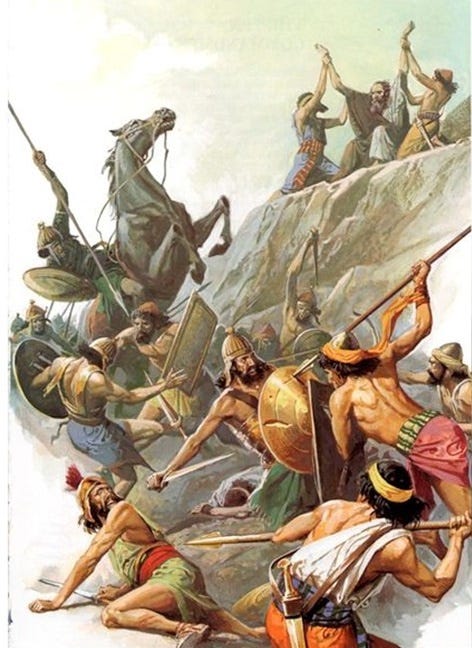
We cling to morality like it’s a lighthouse in the fog—steady, universal, guiding us home. But it’s a lie. It’s a battered flag, flapping in whatever wind our tribe’s blowing, stitched from the yarns we’re spun by family, faith, or flag. Raised Mennonite, I drank in peace and love for the outsider as if they were carved in my bones—until I saw they weren’t. Nature doesn’t whisper “thou shalt not kill”; it shrugs while we slit throats or swipe bread when the need hits. History’s littered with it: Biblical Israel butchered Canaanites—whole towns, babies dashed on rocks—‘cause God handed them the deed (Deuteronomy 7:1-2), and the faithful sang psalms over the ashes.
Fast-forward to 2025: Israel pounds Gaza, kids buried in rubble, and the justification’s “security”—Hamas tunnels, rockets, survival. Insiders nod; it’s moral, necessary. Morality’s no fixed star—it’s a mirror, reflecting who we’re with and what we want.Look around today, and it’s the same mess. Russia rolls tanks into Ukraine, March 2025 still grinding on, flattening Mariupol redux—schools, hospitals, grandmas in the crosshairs. Putin’s line: “denazification,” protecting Russian speakers, historical destiny. His people buy it, or enough do—state TV’s been marinating them in it for years. The West screams “war crimes!”—sanctions pile up, Zelensky’s a saint on X—but that’s the outsider’s perch. Kyiv’s got its own blood on the slate: shelling Donbas for a decade, shrugging at Russian-speaking dead. Both sides sanctify their kills; morality bends to the banner. Or take the U.S.: Trump loyalists storm Capitol Hill in ‘21, “stolen election!” on their lips, while Biden’s crew locks ‘em up, crowing “democracy!” Same act—violence for a cause—flips from treason to justice depending on the lens. It’s not universal; it’s us-versus-them, conditioned to the core.
Look around today, and it’s the same mess. Russia rolls tanks into Ukraine, March 2025 still grinding on, flattening Mariupol redux—schools, hospitals, grandmas in the crosshairs. Putin’s line: “denazification,” protecting Russian speakers, historical destiny. His people buy it, or enough do—state TV’s been marinating them in it for years. The West screams “war crimes!”—sanctions pile up, Zelensky’s a saint on X—but that’s the outsider’s perch. Kyiv’s got its own blood on the slate: shelling Donbas for a decade, shrugging at Russian-speaking dead. Both sides sanctify their kills; morality bends to the banner. Or take the U.S.: Trump loyalists storm Capitol Hill in ‘21, “stolen election!” on their lips, while Biden’s crew locks ‘em up, crowing “democracy!” Same act—violence for a cause—flips from treason to justice depending on the lens. It’s not universal; it’s us-versus-them, conditioned to the core.
Objections bubble up like clockwork. The optimists—call ‘em Pinker’s crowd (2011)—say genocide’s revulsion proves we’ve got a moral spine, empathy baked in from caveman days. Hunter-gatherers shared meat, Confucius preached kindness—see, we’re wired for good! But that’s a half-truth, and a flimsy one. Those old tribes cared for their own; strangers got the club. Same with today’s wars: Ukraine’s defenders weep for Bucha’s mass graves but gloss over their own artillery sins. Israel’s critics howl at Gaza’s death toll—over 40,000 by late 2024, per UN counts—yet Hamas rockets barely dent their outrage. Why? Fundamental attribution error: outsiders slap “evil” on the doer—Russia’s a monster, Israel’s a bully—while ignoring the stew they’re boiling in: encirclement fears, decades of tit-for-tat bombs. Insiders don’t see villainy; they see survival, righteousness, their conditioning kicking in. Evolution’s no saint—it’ll cheer cooperation or carnage, whichever keeps the clan breathing.
Objections bubble up like clockwork. The optimists—call ‘em Pinker’s crowd (2011)—say genocide’s revulsion proves we’ve got a moral spine, empathy baked in from caveman days. Hunter-gatherers shared meat, Confucius preached kindness—see, we’re wired for good! But that’s a half-truth, and a flimsy one. Those old tribes cared for their own; strangers got the club. Same with today’s wars: Ukraine’s defenders weep for Bucha’s mass graves but gloss over their own artillery sins. Israel’s critics howl at Gaza’s death toll—over 40,000 by late 2024, per UN counts—yet Hamas rockets barely dent their outrage. Why? Fundamental attribution error: outsiders slap “evil” on the doer—Russia’s a monster, Israel’s a bully—while ignoring the stew they’re boiling in: encirclement fears, decades of tit-for-tat bombs. Insiders don’t see villainy; they see survival, righteousness, their conditioning kicking in. Evolution’s no saint—it’ll cheer cooperation or carnage, whichever keeps the clan breathing.
Zoom out, and the pattern’s stark. Morality’s a tool, not a truth—always has been. Libertarians’ll shoot to guard their patch, Marxists’ll guillotine for the proletariat, U.S. elites’ll drone-strike weddings to keep oil flowing—all cloaked in principle, all serving their pack. Russia’s “special operation” is Ukraine’s genocide; Israel’s “self-defense” is Palestine’s ethnic cleansing. The outsider’s gasp—those viral X posts of Kyiv’s ruins or Rafah’s craters—ain’t proof of a moral bedrock; it’s just a rival script, misreading situation as sin. We’re not debating ethics to polish some eternal gem; we’re wrestling over whose story rules. Take the Houthi strikes in Yemen, 2025 heating up: U.S. bombs “terrorists,” Saudis cheer, while aid workers tally starved kids—same act, split morals. Conditioning calls the shots.
The rebuttal’s got one last kick: if morality’s so fluid, why bother refining it? They say it’s progress, not just haggling—reason taming our beastly side. But that’s wishful polish on a cracked hull. Ukraine’s Zelensky begs for NATO jets, Israel’s Netanyahu quotes scripture for settlers, Trumpers and progressives sling “fascist” like mud—reason’s just a megaphone for the tribe. Authenticity’s the only anchor: own the bias, ditch the sanctimonious dance. Russia’s generals don’t lose sleep over Bucha; Israel’s brass don’t flinch at Gaza’s toll—they’ve got their why, and it’s enough. Outsiders clutch pearls—#WarCrimes trending—because they’re not in the fight. Morality’s a fluid mess, shifting with the players, not a lighthouse. Stop pretending it’s more.
Stepping back from the fray—whether it’s Putin’s moves in Ukraine or Hamas’s salvos from Gaza—offers an authenticity that sidesteps the knee-jerk noise and stares down our own fundamental attribution error. Take Putin: some tag him as a ruthless tyrant, others see a strategist pushing back—NATO’s ring of bases and war games from Poland to the Baltics isn’t exactly a welcome mat, but Russia’s leveling cities isn’t a handshake either. Hamas gets the same split: outsiders call them terrorists, yet in Gaza—two million penned in, scrappy and stubborn—they’re fighting a chokehold, though rockets don’t win halos. My Mennonite roots nudge me to judge NATO’s chest-thumping ‘values’ or Hamas’s bloodshed, but I’ve got my own baggage—my folks kept the world at arm’s length too, just with hymns, not guns. Seeing that, owning how my lens twists the view, points a pragmatic way forward: not crowning heroes or villains, but cutting through the sanctimony—NATO’s not spotless, Gazans aren’t pawns, and I’m no referee, just a guy sorting his own slant in the mess.
The book of Ezra is difficult to read. It ends with God’s prophet breaking up marriages between Israelite men and foreign women, leaving these wives abandoned, with their children, without once considering their welfare. Not only is it cold and callused, but all this talk of the impurity of these people is also disturbingly like that of the ethnonationalist rhetoric leading to genocide in modern times.
My own mixed family has encountered some difficulties with those who put their own tribe first recently at work and school.
My son, a very friendly and outgoing kid, has had some issues with a few bullies. One of these adversaries slapped him hard on the side of his head at the bus stop. Eventually, my son and this attacker had an all-out brawl on the sidewalk and my son says he got the upper hand before an adult intervened. But now my son is afraid of being the victim of another surprise attack and feels very much alone against the group. Which is the worst part, the one who is instigating the violence, telling other kids that my son insulted them or otherwise provoked, is himself a newly arrived racial minority—albeit from a much less friendly urban culture.
My wife recently started a new job at a local meat packing facility, staffed primarily by those from Spanish-speaking countries, and faces a similar uphill battle. They preferred their own for promotions and sabotaged the work of another Filipino who took one of these better-paid positions. The upper management is seemingly unaware of this dynamic, perhaps seeing all ethnic minorities as the same, but it is very real to those who directly encounter it and see the discrimination first-hand. It really is not ‘people of color’ versus white as is the binary often presented. No, there are local majorities, and also many rivalries that are within racial minorities.
Something my wife observed early on is that you need to know someone to get a job. As it turns out, that is true, she had applied at her current employer and never heard from them in weeks. Finally, she found out that a fellow Filipino worked there, reached out, got a recommendation, and a few days after this she was interviewed. Her ethnic contingent, within the company, has increased to three as they also have convinced another to join them against Hispanics.
My ideal solution to my son’s situation would be for him to have an older sibling or cousin to help him. It is just automatic that family will look out for family and yet this dynamic does not contradict the sad reality of the rest of this post. There is a fine line between this preference for our own blood and racial discrimination and bullying behavior. In fact, it is basically the same thing. We prefer our genetic division and general ethnic category to others. And this may be why the older Asian girl on the bus takes a little more interest in my son? Instincts may cause her to treat him like she may a little brother. At the very least his polite and respectful behavior is common across most Asian cultures.
Discrimination is a survival mechanism. An individual who truly treated everyone exactly the same would soon find themselves to be depleted of resources. Without a tribe or a gang, nobody is strong enough to stand up to the bullies in the real world. You’re either in the dominant (physically superior and better organized) group or you’ll be harassed into serving it. Even the legendary heroes of ancient times tended to have an army to back them up. And outward appearance is simply the easiest way to align ourselves given that this was always a natural division of people across time.
This all starts at a very young age. At only three months old babies will start to prefer faces of their own race to others. This idea that children need to be taught to be racists has no basis in science. Yes, conditioning and socialization will come into play, but this is only a sharping of inborn tendencies. We will trust those who look like us over those who are foreigners. This can metastasize into racist ideologies and the hatred of those ‘impure’ others. But it is not unnatural.
Inhuman Nature and the Alternative
Defenders of Biblical ethno-nationalism will say that the problem was more about these people being idol worshippers. And yet the people of Israel certainly weren’t free of this and they themselves would frequently follow after these false gods. Why weren’t these impurities abandoned? Ezra gave them an opportunity to repent and remain part of the group despite this disobedience. They, as the seed of Abraham, were given preferential treatment simply for their bloodline and not only as a result of their different behavior.
Being truly human is about going beyond the primal and transcending even ourselves. No, we may never convince all to find a common bond beyond the lowest hanging fruit that is skin color or facial features. Still, those I’ve been able to identify with the most, at least other than siblings or biological cousins, do not belong to my own race.
My wife and I started as geographically far apart as two people could possibly be on this planet. Her people, Igorots, were very tribal and primitive up until a half-century ago, my own Swiss-German heritage may seem the opposite. But her rural agrarian roots make her more similar to me than one may assume. Her people are stoic, with a strong work ethic, and are very much like my own grandparents. Our son, to whom I am a step-father, is completely different than me in terms of his athleticism compared to my own clumsiness. Still, we do share many interests and are peas in a pod.
Unnatural love is that which is extended to those who do not look like us. It is to try to be fair to all people, of all races, rather than show favoritism. It starts with simply not mistreating those who are different from us and trying to find the humanity in others. It is to put our common values and aims at a higher level of importance than appearance, which is to say seeing the heart rather than outward appearance.
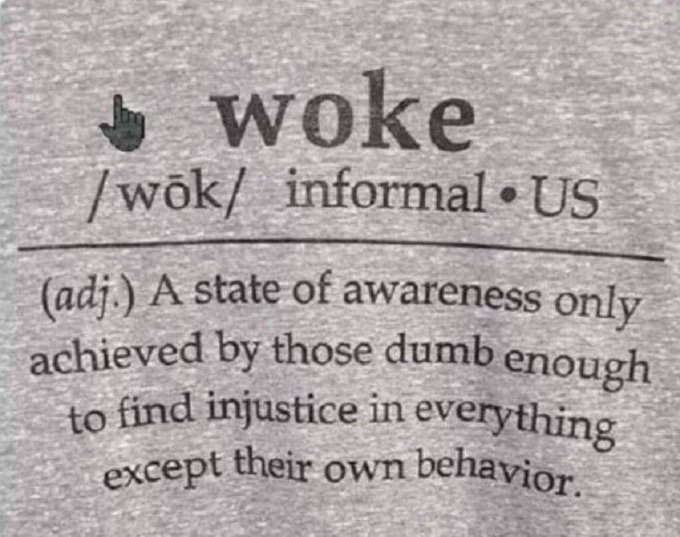
This is not ‘diversity is our strength’ or some kind of woke BS either.
The left is as divisive as the right or worse. They hold everyone to a different standard, based on their outward appearance, and call this inclusion. But all they really do is replace a meritocracy with a victim hierarchy and then use past injustice as an excuse to do the same thing to others today. Actual virtue or contribution does not matter in this ideological dogma, it is always about outward appearance. The bully is of another color and the discrimination goes in a new direction, but it is just more division by the lowest common denominator.
Common values are our strength. Working towards the same cultural and civilizational goals, rather than only what is good for our own ethnic identity group, is where diversity of abilities is useful. Bullies cost us resources, discrimination for reasons other than good or behavior is unjust, and being totally colorblind may be impossible. However, we can work to correct our own prejudice and towards a common goal. It will take some faith and leading by example, it will a change of heart from the current paradigm:
“There is neither Jew nor Gentile, neither slave nor free, nor is there male and female, for you are all one in Christ Jesus.” (Galatians 3:28 NIV)
It is that, unity in Christ, or we revert back to the ethnic wars, cleansings, disregard, and other abuses of the Old Testament. We can live in a world where it is tribe against tribe, man against woman, and soon every man for themselves, or we can find ways to overcome our differences and see our better potential realized. We’ll never be completely fair, favoritism is natural, but we can aim for it. We don’t need to slaughter each other over our shades of difference.
I recall my tears shed after the Nickel Mines school massacre, an incident where a man decided to take his disgruntlement out on some Amish girls, shooting them in the head one by one, before taking his own life. They were targeted, no doubt, for their innocence and vulnerability, what normal person would not be deeply troubled by such horrendous thing?
My emotion was wholly appropriate, especially for someone living in Lancaster County at the time, and yet was quite a bit different from my response to other very similar incidents. For example, when a deranged individual slaughtered dozens at Sandy Hook Elementary School, I did not shed a tear. I can’t tell you exactly why that is, it was very similar to the public school that I had attended and a child is a child, but somehow I was simply more removed from the tragedy and had to contemplate why I would value the Amish girls higher than those other children.
Of course, the key to understanding this is my identity: 1) I was born and raised Mennonite, 2) the Amish are the slightly more peculiar religious cousins of Mennonites and, 3) as someone with an Amish surname, they are actual (albeit very distant) cousins in my case. Sure, I had never met those girls nor did I know their particular families, but I could certainly identify with their culture. I could see something of my own childhood, of my family and of my religious identity in them, I mourned my own loss of innocence as much as their suffering a terrible evil.
Sandy Hook, by contrast, while tragic and as terrible, involved people who were less connected to me and thus my reaction was more muted. It just was not as personal to me and therefore I did not feel the same depth of pain. Had I known a child in the school my reaction would have been quite a bit different and perhaps a bit more like the day the child of a close friend died—that is simply the reality of our limited human perspective: One death, if it is made personal to us, will overrule the millions worldwide who have died in similar circumstances.
“A single death is a tragedy; A million deaths is a statistic.”
For Better Or Worse, Nobody Loves Everyone
Many Americans, back in the days when bumper stickers were more common, had “God bless America” message stuck to the backs of their automobile. It was one of those ways a person could show their care for all of their American neighbors and regardless of party affiliation, religious identity, country of origin or gender. Nearly all reading that message (given that it was displayed on American soil and not shared worldwide) shared that same identity and thus should have felt equally blessed by the message.
However, there is that small, hyper-competitive segment of the population, who (like Topper in the Dilbert cartoon above) simply can’t appreciate what other people appreciate and are determined to outdo their neighbors with their superior virtue. It is that spirit that seems to be behind the bumper stickers in retort to the “God bless America” variety, and proclaiming with great piety: “God bless the whole world, no exceptions!”
Of course, that “no exceptions” part at the end is necessary in case their less sophisticated neighbors, who only expressed love for those actually present and able to read the message, wouldn’t catch the drift.
It has made me wonder, does that same person never tell their spouse or significant other that they love them specifically?
Wife: “I love you, Barry!”
Husband: “I love all women, including you!”
Nothing smug or sanctimonious about that, nope, nothing at all demeaning of the other person either, it is simply a man with a far bigger love than that which can be exclusively reserved for one particular woman and is therefore extended to all women in the world.
Right…
Anyhow, I question if someone who claims to love everyone actually loves anyone.
Yes, certainly, the “God so loved the world” of John 3:16 doesn’t exclude anyone. We are also told that following after Jesus means that our loyalties to our family are secondary (Luke 14:26) to our calling to bring God’s love to the world. Still, we are also told that a man who doesn’t provide for his own family is worse than an unbeliever (1 Timothy 5:8) and also see love expressed for particular groups and individuals. So God loving the world doesn’t mean that our own love is not especially for some. In fact, while we are instructed to do good to all people, there is also special emphasis given:
Let us not become weary in doing good, for at the proper time we will reap a harvest if we do not give up. Therefore, as we have opportunity, let us do good to all people, especially to those who belong to the family of believers. (Galatians 6:9-10 NIV)
Love starts locally. Loving our neighbors means caring about those who cross our paths, preferring those right in front of us over some theoretical duty to all of humanity that is never made manifest in real life. In the story of the good Samaritan, remember, it was those who were too important or thinking of responsibilities down the road, who didn’t attend to the suffering soul beside the path of their greater ambitions. In other words, it is the simpleton, with heart, who stops to help you jump start your car and not the self-important pretentious snob, with a global vision and yet can’t see what is right in front of them.
Bottom line: It is good to love those who are close to us and even to prefer investing in those who, like us, are members of the household of faith. If a person cannot especially love their neighbors across the street, whom they have met, then how could they possibly love those whom they have never met around the world?
For whoever does not love their brother and sister, whom they have seen, cannot love God, whom they have not seen. (1 John 4:20 NIV)
Of Igorot and Mennonite Tribes…
When uncle Roland, a man I had met during my stay in the Philippines, disappeared and was later found murdered in an empty lot, the call for justice went out across social media. It spread like wildfire amongst a certain part of the Filipino population and that being the members of his Igorot tribe. The amazing part is that this collective effort very quickly located the stolen van and only potential lead for this vicious crime. The people who located the van? They were Igorots too, they happened to be on holiday in the “low lands” and spotted the abandoned vehicle.
Mennonites, like Igorots, also take notice when one of their own is missing or harmed. There have been several cases over the past few years that have exploded across the Mennonite online community and made a few individuals into household names. I mean who, in the Menno-sphere, can forget that young married couple, Marco and Mary Ann Kauffman, his life cut tragically short by home invader? Or the disappearance, and later reappearance, of Rodney Sweigart? When a Mennonite is in trouble it is natural that others of their religious tribe, even those who have moved on, respond with extra care and concern.
I was reminded of this once again when I could not resist sharing the story of a young woman, Sasha Krause, who vanished from a Mennonite outpost in Farmington, New Mexico.
Dozens of similar posts about missing persons have crossed my newsfeed, there is likely very little that my sharing (as someone on the other end of the country) will do to help, and yet there is this sort of tribal solidarity that compels me to take an interest, to be somehow involved and share. This young woman could as easily be my sister, my cousin, or any of the number of young Mennonite women whom I know and care about.
Tribal identities, like family identities, are a good thing in that they provide individuals with the protection of a group. The world we live in can be a very rough place and not a place that is very easily navigated alone. We, in the developed world, have a wide range of social programs that attempt to fill individual needs, but the best efforts that government put forward rarely come close to what can be offered by a community of those who share a religious, cultural or tribal identity in common. We have finite resources and prefer to distribute them amongst those who share our common biological heritage or cause.
The Two-edged Sword of Tribally Allocated Care…
Both Jesus and St Paul showed a heightened concern for those who shared their religio-cultural background. They certainly did not hold back in terms of criticism. In fact, their commentary on their Jewish people could be very easily misconstrued into anti-Semitism and very soon was quickly used that way once the Scripture became a subject of individual interpretation in the wake of the Protestant movement in Europe.
Likewise, when a concern goes viral on social media, especially when it involves a particular religious minority group, the feedback can quickly turn very negative. Prejudice can rear its ugly head, those with an ax to grind see an opportunity to promote their own grievances. There are always those who had an unfortunate encounter with that particular tribal group and it was the only bad thing that ever happened to them. So, in the minds of these offended folks, that tribe has become the root of all evil and representative of everything bad in the world. Those full of toxic bitterness will, in the guise of empathy and concern, sow their seeds of destruction.
Very rarely does publicly broadcast dirty laundry do much good when it comes from a tribal outsider without a real or personal connection to those involved. When you leave a tribe you pretty much lose any credibility within the tribe, you have made yourself an outsider by rejecting the group identity and therefore your opinion does not need to be taken seriously by the in-group anymore. To those in that in-group you will be viewed with suspicion, as an external threat to their group cohesion, and summarily dismissed. I’m not saying that is how it should be, that’s just how it is, people do not like judgments coming in from the outside and react defensively in most cases.
Tribal identities very often come with tribal obligations. Those who are showered with concern from within the tribe, even those who did not ask for it, in many cases are expected to give something back in return. Tribes have a sort of “I scratch your back, you scratch mine” arrangement that can go terribly wrong when the devotion to an individual from the tribe does not match the commitment that is reciprocated or vice versa. Feeling betrayed by your own is some of the deepest pain a person can feel. Indeed the world is a very lonely place for those who have been neglected or abandoned by those whom they expected would love them.
But, worse than that, tribes, while easily able to spot sin in all other tribes, too often shelter their own abusers or never see their own shortcomings as a group. Some tribes will, too often, send into exile those who dare to confront or challenge their status quo of the group. This is one thing Mennonites and motorcycle gangs have in common, albeit in different forms, the criminals enforce a “snitches get stitches” code” and too often Christian denominations misallocate forgiveness (for only those who have learned how to exploit their system) rather than follow the order of St Paul in 1 Corinthians 5:13: “Expel the wicked person from among you!”
There is also something more insidious when tribes become too insular or only concerned with protecting their own and that being their lack of care for those that are outside of their identity group. This misallocation of care is up last on my list, but it is certainly not the least as far as things that should concern a Christian.
Tribal Misallocation of Care…
I understand why people prefer their own families and tribes. It is something we are biologically hardwired to do. Religions are forced to hijack familial language, like “brother” and “sister,” in reference to fellow members in hopes of capturing that level of relationship within their ranks.
Tribalism has long frustrated me as a force of division and strife. What side of the OJ Simpson case someone came out on, for example, had much to do with a person’s race. The evidence available was the same, yet 67% of black Americans (polled in 1995) thought Simpson was innocent while a vast majority of whites saw him as guilty, that gap has since narrowed. But what that shows is how our perspectives are skewed by our tribal identities and the potential for terrible injustice this presents. The same is true of other identity divisions, such as gender or political affiliation, we tend to see only what is good for our tribe.
Over the past few years wished that I could somehow harness some of the tribal love that is on display in the various GoFundMe campaigns involving one identity group or another. An American, with the right group connections, can easily raise thousands or even hundreds of thousands and despite having insurance, government programs, etc. Meanwhile, a far greater need overseas will often only get a mediocre response because the people don’t look like us, we don’t know them, or simply cannot identify with their struggles being too far removed. That and, given the number of scams out there, we can’t trust outsiders.
Still, we should consider those less fortunate, those less fortunate than the unfortunate members of our own tribes, and love them too. That is the greater implications of Christian love, that our love will erase some of those disparities in care. If we truly believe Galatians 3:28, that “there is neither Jew nor Gentile, neither slave nor free, nor is there male and female,” and that we (as a church) “are all one in Christ Jesus,” then will we ever be satisfied with misappropriation of care based in those listed identities? Can a person be a feminist, a nationalist or an activist for lessor identity groups and a Christian?
When a Mennonite goes missing or is harmed it is easy to understand why other Mennonites take special notice. The idea of having equal love for all of humanity, even those whom you never met, is silliness. That said, when our tribal identities mean indifference or lack of equal empathy for other people whom we encounter who are outside of our group, then we are also putting our Christian identity second. It means we have made an idol of ourselves, our own identity, and should consider the words of Jesus:
If you love those who love you, what credit is that to you? Even sinners love those who love them. And if you do good to those who are good to you, what credit is that to you? Even sinners do that. And if you lend to those from whom you expect repayment, what credit is that to you? Even sinners lend to sinners, expecting to be repaid in full. (Luke 6:32-34 NIV)
Tribal Expansion…
Love starts locally, it means loving our own tribes. We must learn to love our own, those close to us are sometimes the most difficult to love or hardest to hold accountable. We should love our Trump-supporting neighbors as much as we love the Congolese refugee, the Democrat party loyalist as much as we do the unborn. Christian love has a global reach, it must reach across partisan lines, and should always make us wish to expand the borders of our tribe.
I believe Jesus would weep as much for Muslim children killed by a drone strike as I did for those Amish girls. God loves the missing or exploited Filipino worker overseas, who is only known by their family, as much as the Mennonite online community hopes for the safe return of Sasha Krause. We have our favorites, but God does not.
Christian love, in purest form, turns a world full of misfits and outsiders into one family where everyone belongs and nobody is left behind.







 Irregular Ideation