Fitzwater

Standard

Someone with the name “Fitzwater” came across my social media feed the other day and made me think of someone I had met years ago. She was a waitress at a local Thai restaurant. I’m not sure of the exact circumstances, but we ended up going on friendly date together. We talked about her autistic son. She was a single mom. And how she struggled to make ends meet. Life eventually took us different directions, she fell off my radar as her presence on social media ended, and I had forgotten about the “Nikki” in my phone contacts.

That is up until Friday, when I decided to do a deeper look into her whereabouts. Since we lacked any common friends (other than Adam Bartlett who is deceased) and maybe that is why I never got the news. My hope was that she was married, got her feet back under her, and wondered about that kid she loved so much that she borrowed money to give him an exceptional Christmas. It was a total shock to come across an obituary for Nicole E. Welton. I opened the link and the picture was the Nikki I had known. She was dead for over five years now—only 32 at the time of her passing.

Was it a drug overdose?

She never told me she was a user. She did tell me I was “too good” for her and was so thin that I had to wonder.

So I continued my search, and pondered a bit about what had come of her son after she passed?

I found the answer:

PA – Nicole Welton, 32, & Son, 11 – Double-Death Investigations – Lancaster Cnty

Oh no!

And a few clicks later I would find the tragic truth. This kind and wonderful human being died in a murder-suicide. She shot her own son before turning the gun on herself in the motel room two hours south. Her son was her faithful companion, she told me, “My son is with me. So I never feel alone”  That is where her heart always was—which made wince when I saw this in the article:

Diamantoni said he was not releasing the boy’s name. He said the boy was living with his father not his mother.

She lost custody?

What a terrible thing for a single mother, in her thirties, to lose a child she brought into the world even if it was for good reason. It does not justify what she did. And yet she was in despair and her 11-year-old boy was probably the only reason she had holding her back from suicide.  In that she couldn’t leave him behind as the only soul that she felt loved her anymore. Selfish? Perhaps. But maybe a distorted effort to ‘protect’ him, an autistic (ADHD according to an article I’ve read since) child, from having to deal with her choice to end it all. I’ll never know, I just feel she was never going to leave him behind. 

This was confirmed, later, when I read how her son’s dad was seeking to expand his custody and there was a court date the same day…

I had to go read through our conversations and several things jumped out. First, what she told me about her nasty C-section scar and how unattractive it made her. Although I never saw for myself, she was a beautiful and attractive person—both physically and otherwise. This struggle with body image came up several times. Second, I had more or less friend zoned her from the beginning, wuth my impossibility obsession then being a topic in the thread. I never led her on—but I never gave her a chance either.

It’s just so jarring considering how my life has gone since then. I’ve finally emerged from the wilderness. My wife, my 13-year-old son, the baby daughter that brightens my world, all that has happened since that brief moment of connection with Nikki. It makes me wish I could have done more to change the trajectory she was on, although I don’t know what I could have done for her. With her dies someone who said I was an angel and the single platonic moment we had shared. This the second suicide of a relatively young person that I had invested time in trying to help—and could easily have been me had my Bhest not intervened.

Two lives cut tragically short. How else can the tribute to them read? A young boy, born the way he was, the apple of his mother’s eye, and then killed by the one who bought him into the world. His mom, never quite able to get around that corner, dreaming of the fairytale and stuck in the bog of single parenthood—burdened by her lack of self-confidence.

Why someone who was always so kind and considerate to me was not more generous to herself?

My mind simply can’t compute such things.

One thing, before I finish, is the other victim in all of this and that is the father of the boy who was left reeling. She never told me she was married. All I had ever known was her maiden name. And I don’t know what led to their separation. What I do understand now is that relationships are hard work and that we’ll never find the ‘perfect’ one. There are many miserable marriages and I don’t think people should stay in an abusive situation. But being alone to face the world isn’t ideal either. I wish Nikki, Dante, and the grieving dad I’ve never met could have had their own happily ever after together.

Cultural Erasure in the Age of Corporatism: Preserving Local Identity and Sovereignty

Standard

Cultural erasure is often discussed in the context of dramatic examples. Communist efforts to eradicate religious practice or the forced assimilation of Native Americans are two clear instances. Another is the British schoolgirl punished for wearing a Union Jack on a day meant to celebrate cultural diversity. Yet, a more insidious form of cultural erasure is sweeping through the United States, infiltrating every small town under the guise of free markets and capitalism.

What I’m referring to is corporatism, partnered with consumerism. This country was once defined by businesses owned by average people—those “mom and pop” shops. That is no longer the case. Capital and control are increasingly concentrated in the hands of a few (see this video on BlackRock), and choice is largely an illusion in this age of mega-corporations. We have become a nation of employees. Yes, small businesses and boutiques still exist, but they are the exception. Our regulatory regime favors economies of scale, benefiting established players who can absorb compliance costs.

Illusion of choice

On the road—hauling commodities—this economic transformation is alarming to anyone who cares to notice. Local mills and grain elevators have been bought up or are in the process of being acquired by major players. Businesses where locals once knew the owner have been transferred, one after another, to corporate boards far removed from the operations.This trend spans every industry. Thriving downtowns and corner stores have been replaced by Walmarts. Ironically, when communities regain a “local” option, it’s often a Dollar General. The impact extends beyond retail. Doctors can no longer afford to practice independently, and hospitals are absorbed by larger systems to manage ballooning compliance costs. Local communities have lost true choice as corporate brands dominate.

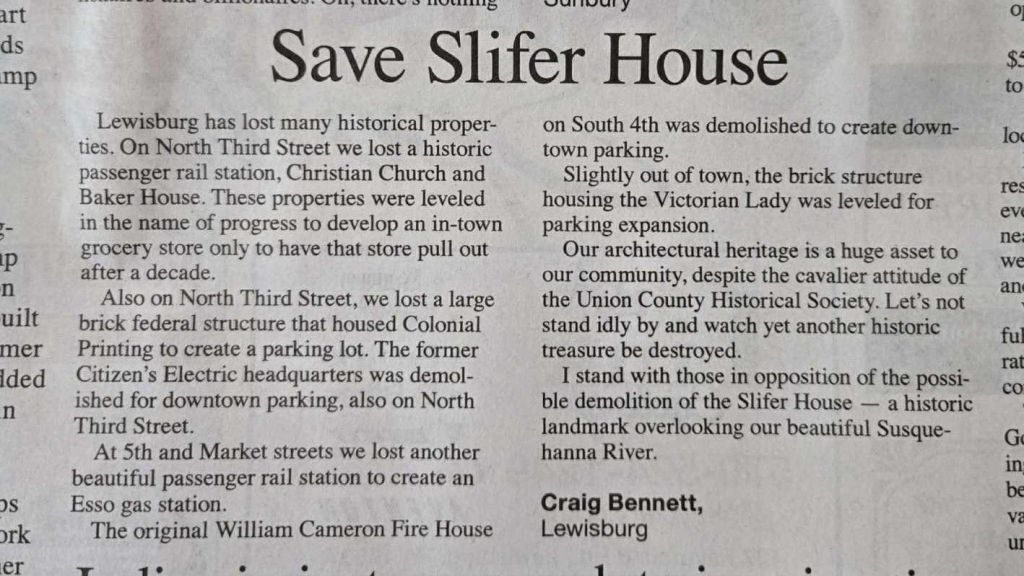
Even decisions within our towns are outsourced. Consider the plan to bulldoze Slifer House, a local landmark designed by a notable architect, listed on the National Register of Historic Places, and honoring a man who played a significant role in the town’s history. This building, originally a private residence, later an orphanage, and then a hospital, faces demolition. The board deciding its fate is disconnected from the community, concerned only with maximizing revenue at the expense of our shared heritage.

https://www.change.org/p/save-the-historic-slifer-house-from-demolition

I spoke with a township supervisor, a relative, and received the typical canned response about property rights. But this boilerplate conservatism fails in an era where BlackRock owns vast swaths of the economy, and we all now owe our souls to the company store. It’s not a free market when Larry Fink can mandate DEI policies across every place we shop or work.  Consumer choice doesn’t exist when all options on the shelf (see this video on BlackRock) are owned by the same entities.  Property rights may have built the middle-class, but appeals to them cannot address this systemic erosion of agency and destruction of ownership society by the current corporatism.

A town known for its Victorian charm and yet can’t protect this heritage from corporate interests.

This corporatist-consumerist machine erodes local identity and sovereignty by homogenizing communities. Regional dialects, traditions, and histories are drowned out by standardized corporate aesthetics and practices. The local diner with its quirky charm is replaced by a chain restaurant with identical menus and decor nationwide. The family-owned hardware store, where the owner knew your name, gives way to a big-box retailer staffed by transient workers. These shifts strip away the unique character of our towns, leaving behind this sanitized, generic, board approved and predictable landscape that could be anywhere—or nowhere.

Retaining local identity and sovereignty requires deliberate resistance to this tide. Communities must protect what matters to them, prioritize policies that support small businesses, such as giving tax incentives for independent retailers (rather than Jeff Bezos) or simply streamlined regulations that don’t disproportionately burden the little guy. Local governments should not side with entities outside of town, but rather should empower residents of the community to have a say in decisions affecting historic landmarks like Slifer House, ensuring that distant corporate interests don’t override community values. Grassroots movements can foster local pride by celebrating regional festivals, preserving historic sites, and promoting artisans who embody the town’s heritage.

Better options closer to home?

Sovereignty also means reclaiming economic agency. Communities could explore cooperative business models, where locals collectively own and operate enterprises, keeping profits and decision-making power in the hands of residents. Supporting farmers’ markets, local craftspeople, and regional supply chains can reduce dependence on corporate giants. Education plays a role too—teaching younger generations the value of their town’s history and traditions fosters a sense of ownership that no corporate boardroom can replicate.

Ultimately, the fight against cultural erasure through corporatism and consumerism is a fight for self-determination. It’s about choosing to preserve what makes our communities distinct, even when the deck is stacked in favor of scale and sucking out profits. By valuing local identity over corporate convenience, we can reclaim the soul of our towns and ensure they remain places worth calling home. Property rights were meant to protect local control—not to consolidate then outsource all decisions to out-of-towners.

Why Do Holocausts Happen? A Case Study in Gaza

Standard

Holocausts and genocides occur because atrocities are obscured by layers of justification, propaganda, and denial. Historically, these layers have enabled mass violence by fostering ignorance or apathy among populations. In Nazi Germany, the genocide of six million Jews was justified through antisemitic propaganda blaming Jews for economic woes and civil unrest, despite only a small fraction being involved in communist movements. Most Germans did not need to endorse the “Final Solution”; they only needed to remain ignorant or in denial, facilitated by censorship, secrecy, and moral rationalizations.

This pattern of denial and justification is evident in other genocides, such as the Communist purges in the Soviet Union, China, and Cambodia, where millions were killed to eliminate perceived threats to a utopian vision. The logic behind these atrocities often follows a “utopian cost-benefit analysis,” akin to the Trolley Problem in ethics: committing a painful or immoral act is justified if it promises immense societal benefits. For example, in Stalin’s purges, an estimated 680,000–1.2 million people were executed to “secure” the revolution, with the promise of a classless society outweighing individual lives. This reasoning holds that if a perfect society is achievable, no sacrifice is too great.

This same moral calculus can be applied to the ongoing conflict in Gaza, which constitutes a genocide. By examining the mechanisms of denial, propaganda, and prejudice, we can see how atrocities are enabled today, just as they were historically.

The Gaza Conflict as Genocide

The situation in Gaza meets the criteria for genocide under the UN Genocide Convention, which defines it as acts committed with intent to destroy, in whole or in part, a national, ethnic, racial, or religious group.

Since October 7, 2023, when Hamas attacked Israel, allegedly killing 1,200 people and taking 250 hostages, Israel’s military response has resulted in over 43,000 confirmed Palestinian deaths (as of June 2025, per Gaza Health Ministry estimates) and displaced 1.9 million people, or 90% of Gaza’s population, according to UN reports. The scale and nature of these actions—targeting civilian infrastructure, restricting aid, and statements of intent—suggest genocidal intent.

Israeli Prime Minister Benjamin Netanyahu’s 2023 reference to Palestinians as “Amalek”—a Biblical group the Israelites were commanded to exterminate—signals intent to dehumanize and destroy. This rhetoric has been followed by actions: the bombing of 70% of Gaza’s healthcare facilities (WHO data), the blockade of food and water leading to starvation (UNRWA reports of 1 in 5 Gazans facing acute hunger), and incidents like the February 2024 attack on a crowd seeking aid, killing 112 civilians (per Gaza authorities). These actions systematically target the conditions necessary for Palestinian survival, aligning with the Genocide Convention’s criteria.

Layers of Denial and Propaganda

Genocides thrive when atrocities are hidden or justified. In Gaza, denial is facilitated by restricting information. The unprecedented killing of 185 journalists since October 2023 (Committee to Protect Journalists data) limits independent reporting, while Israel’s control over access to Gaza restricts international observers.  The proposed U.S. TikTok ban, justified on national security grounds, may also suppress unfiltered footage from Gaza, as the platform has been a key source of firsthand accounts. For example, X posts from Gazan users often share videos of destruction, but these are dismissed as unverified or biased, while Israeli military statements are rarely scrutinized with the same skepticism.

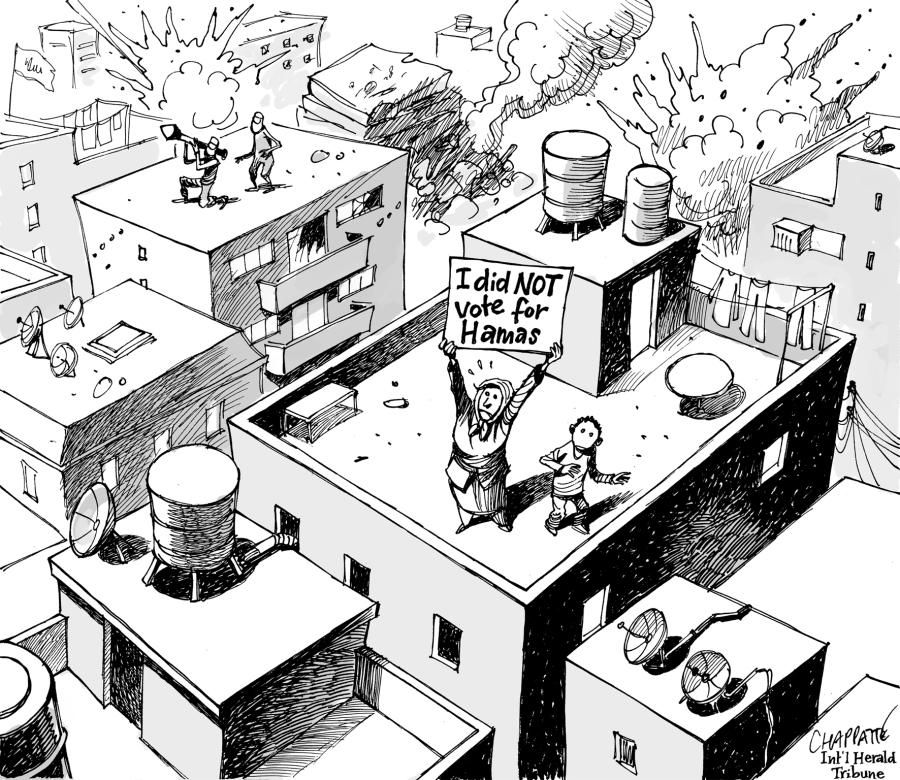
Does Israel deserve destruction because they voted for a terror sponsor named Netanyahu?

Propaganda further obscures the truth. The narrative that Gazans “deserve” their suffering because they elected Hamas in 2006 ignores key facts: only 8% of Gaza’s current population (given the median age of 18 and population growth) could have voted in that election, and no elections have occurred since. Collective punishment of civilians, including children who comprise 47% of Gaza’s population, is justified through this lens of collective guilt, a tactic reminiscent of historical genocides.

Prejudice and Moral Reasoning

Prejudice fuels apathy. In Western discourse, Islamophobia often leads to skepticism of Palestinian claims, even when supported by evidence from groups like Amnesty International or Human Rights Watch. For example, reports of torture in Israeli detention centers, corroborated by Palestinian Christians and secular activists, are dismissed, while IDF explanations face less scrutiny. This selective skepticism mirrors the antisemitic prejudice that enabled the Holocaust, where Jewish suffering was ignored or blamed on the victims.

The “utopian cost-benefit analysis” in Gaza is tied to ideological goals, such as fulfilling religious prophecies (e.g., Zionist visions of a Greater Israel) or ensuring Israeli security and long-term peace. These goals are presented as justifying extreme measures, much like the Nazi vision of a “pure” Germany or the Communist dream of a classless society. The logic posits that eliminating Hamas, even at the cost of civilian lives, will bring lasting peace. Yet, this ignores the disproportionate harm: 70% of Gaza’s casualties are women and children (UN data), undermining claims of precision targeting.

Addressing Counterarguments

Critics argue that Israel’s actions are defensive, targeting Hamas rather than Palestinians as a group. They point to Hamas’s use of civilian areas for military operations, which complicates urban warfare. However, the scale of destruction—leveling entire neighborhoods, as documented by satellite imagery—and the blockade’s impact on non-combatants (like the malnourished dying baby in the featured picture) suggest a broader intent. While Hamas’s actions are indefensible, they do not justify collective punishment, which violates international humanitarian law.

Others claim the genocide label is inappropriate because Palestinians are not being exterminated on the scale of the Holocaust. Yet, genocide does not require total destruction; the Rwandan genocide, for instance, killed 800,000 Tutsis in 100 days, and Gaza’s death toll, combined with deliberate starvation and displacement, fits the legal definition of targeting a group “in part.”

The Role of Silence

Silence enables genocide. In Nazi Germany, many who knew of the camps chose not to act, fearing repercussions or believing the propaganda. Today, those aware of Gaza’s suffering often choose apathy, swayed by prejudice or the promise of a greater good. This is not to equate all silence with complicity—some lack access to reliable information—but ignoring well-documented atrocities, such as those reported by the UN and NGOs, perpetuates harm.

Conclusion

Holocausts and genocides persist because societies allow them to, through denial, prejudice, and flawed moral reasoning. The situation in Gaza, with its systematic destruction and dehumanizing rhetoric, bears the hallmarks of genocide, enabled by global silence and selective outrage. To prevent history’s repetition, we must challenge propaganda, demand accountability, and reject the notion that any utopian goal justifies the sacrifice of innocent lives.  Speak out, seek the truth, and act—because silence in the face of atrocity is a choice with consequences.