Parents create barriers for their children to keep them from harm. A toddler sees this wonderful world without consequences—whereas a parent understands danger lurks. The little hands reach almost involuntarily, without a concept of poison or pain, speaking desire “let me grab, let me hold, let me taste.”
Some parents will go as far as to invent the Boogyman as a reason why not venture too far given a child’s lack of ability to grasp the more complex monsters of the chaos that exists in all directions going beyond the extremely controlled environment of their home and community—protecting their innocence.
For two days in a row I had a dream featuring enormous snakes on a shoreline. Details have become murky, but in both of these episodes the real breathing monsters morphed into stylized symbols of the creature. Were these reel beasts subdued? Or, making this an allegory, has our modern life just so thoroughly shielded us from these elements that they no longer appear as real?
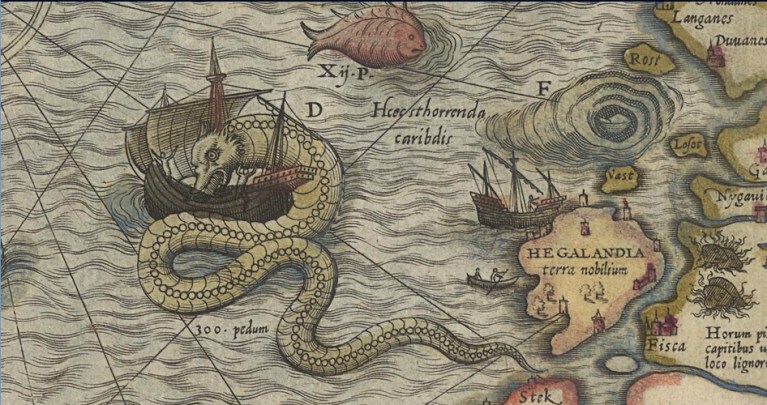
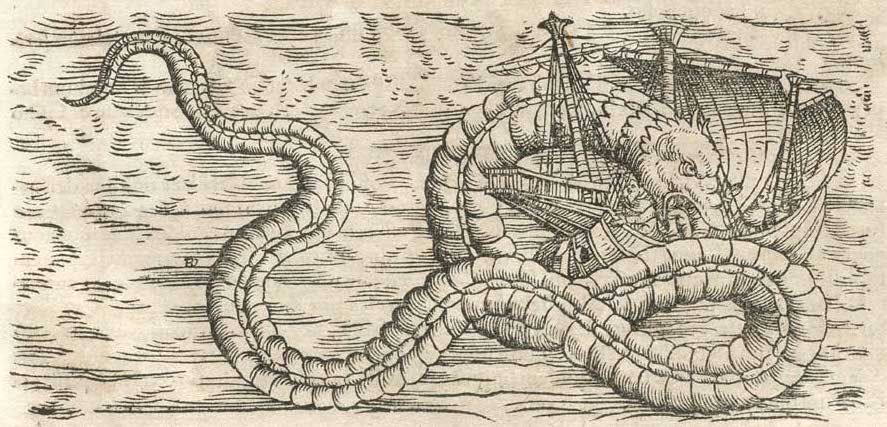
It makes me think of those medieval maps with sea monsters on the edges. These did not simply represent mythological peril. There was serious danger in venturing too far from the familiar coastlines. Ships swallowed whole, entire crews disappeared without a trace, it could be storms, savages, and unspeakable things of the deep. The seafarer was given a warning in these symbols—this place is an uncharted water enter at risk of all.
I’ve deliberately, a few years ago, charted a course beyond those safe moorings of my religious cloister. It wasn’t out of a sense of adventure. Nor was it all pleasant. It was half tumbling into space without a tether; the other half sailing around the world and finally find love and meaning in a place that had been forbidden.
The Boogeyman vanquished, but now a real evil staring back from the darkness. It’s the snake in the garden—hidden amongst those fruit trees—as well as that which exist in the world beyond Eden. It is the sound of those children screaming while burned alive while the world watches in silence. The thousand horrors never called a Holocaust.
My taste of this ‘real’ came years ago with a sudden death. Saniyah passing left me no choice but to stare into the void. It was not that I had expected her to live forever. But it was just that theory doesn’t prepare us for a soul crushing tragedy. I managed to finally bury it back down, this existential dread, yet the snake always lurks on the edge, within, and throughout. Denial doesn’t make it go away even if it provides small comfort.
Childhood is ideally a time of protection to give a chance for growth. But there are the ones who live a charmed life who can still believe a logic of bad things only happen to bad people or simply have maintained a big enough separation from themselves to this awfulness to be temporarily safe. However, for most there will be a reckoning the being a moment that knocks off those rose tinted glasses and allows them to finally question the foundations of their world.
Faith is easy until you’re Job staring at the ruins of all you built, dreams shattered, and a pain of loss you can’t put into words. One blessing we have is our forgetfulness. If we can power through the mourning phase, the excruciation of limb torn from body, facing a pit of emptiness, then we can rebuild and move on. Unless you’re my grandpa (facing the end of his life without any of the people who brought him there—still more fortunate than those who never had children let alone great grandchildren), you’re life is still ahead of you if you keep your hope.
A mind is resilient, the soul remembers. I have clawed back from total devastation, reinvented myself, and yet come through all of it profoundly changed.
The question is what navigational charts do I give my children? We are on different seas now and those hazards I have survived are not relevant to them. They will face storms, things I can’t begin to imagine let alone prepare them to battle. Even things blogged here a decade ago do not apply to the current generation.
As I sit in this liminal space of life. My course set. I realize there is not one safe space on the map ahead, the serpents below the waves have not gone away from my mind—there’s evil that lurks among us, the uncertainty about tomorrow, and the reality of the dying of the light. We must go, wise, courageous to fight those monsters of the darkness all around.
No man can serve two masters: for either he will hate the one, and love the other; or else he will hold to the one, and despise the other. Ye cannot serve God and mammon.
(Matthew 6:24 KJV)
This teaching popped into my mind a few weeks ago and while reflecting on where our morality has broken down in the United States. Mammon is an interesting Biblical word and refers to more than just money as currency. Jesus is not talking about having material wealth here, rather he’s addressing about misplaced trust and devotion put in it. And “serve” seems like a key operational word here. In Greek it is “douleuó” (δουλεύω) and the term refers to slavery or bondage.
Jesus was confronted on this teaching by the Pharisees—who we’re told sneered at him. But we are also told they were the same people who would shortchange their own parents by abusing the practice of ‘Corban’—by claiming money was set aside for God (Matt. 15:1-9, Mark 7:1-13)—when it was all about their own gain. When you’re addicted to material gain, you’d likely sell off your own mother for another hit of the money drug and can’t be a good person. A slave to the ‘almighty dollar’ will basically do any evil to obtain more of it.
For we brought nothing into the world, and we can take nothing out of it. But if we have food and clothing, we will be content with that. Those who want to get rich fall into temptation and a trap and into many foolish and harmful desires that plunge people into ruin and destruction. For the love of money is a root of all kinds of evil. Some people, eager for money, have wandered from the faith and pierced themselves with many griefs.
(1 Timothy 6:7-10 NIV)
Pray for contentment, not cash. You can have enough to eat and live without a big bank account. We may enjoy—or imagine—a feeling of security from having more, but it is false security and pursuit of it leads to moral compromise. As Mark 8:36 asks: “What good is it for someone to gain the whole world, yet forfeit their soul?”
The American Evangelical landscape does not handle this very well. The ‘health and wealth” or prosperity gospel might not be openly preached in every church, but there’s often the underlying assumption that those who have money are blessed. I mean, you don’t want to ever offend those who fill the offering plate, do you?
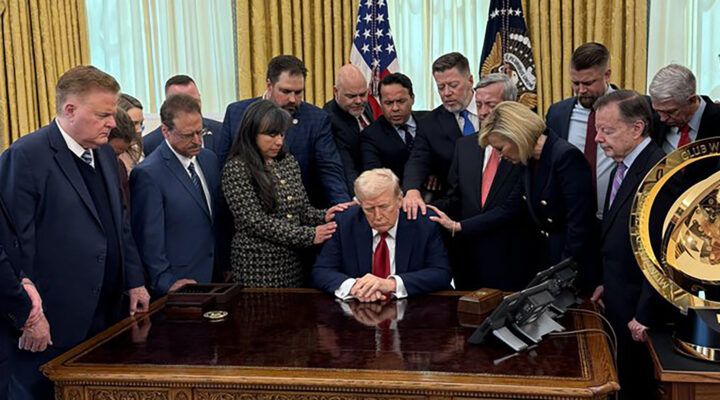
This errant belief that material success equates to divine favor has seeped deeply into political alliances, particularly among Evangelicals who have thrown their support behind leaders promising them economic prosperity above all else. Donald Trump, with his gilded persona and “art of the deal” ethos, became a symbol of this worldview—tremendously blessed by wealth, endorsed by faith leaders, and appearing to be toualluntouchable.
Two of a kind…
Yet, as his second term unfolds, we’re now seeing how devotion to money over all else manifests in government—prioritizing billionaire gains over accountability and human suffering. It isn’t the paradise promised.
Life Under Bondi-age
One of the big reasons Trump had seemed like a better choice than a continuation of a Biden administration, under Harris, was his ‘green’ policies. He appeared to be a “make money, not war” candidate, given his history of draft dodging and no new war first term. Maybe it was just weariness of the conflicts in Gaza and Ukraine that made him a hope to the “it’s the economy, stupid” crowd. He also promised to release the Epstein files—which would mean some justice, right?
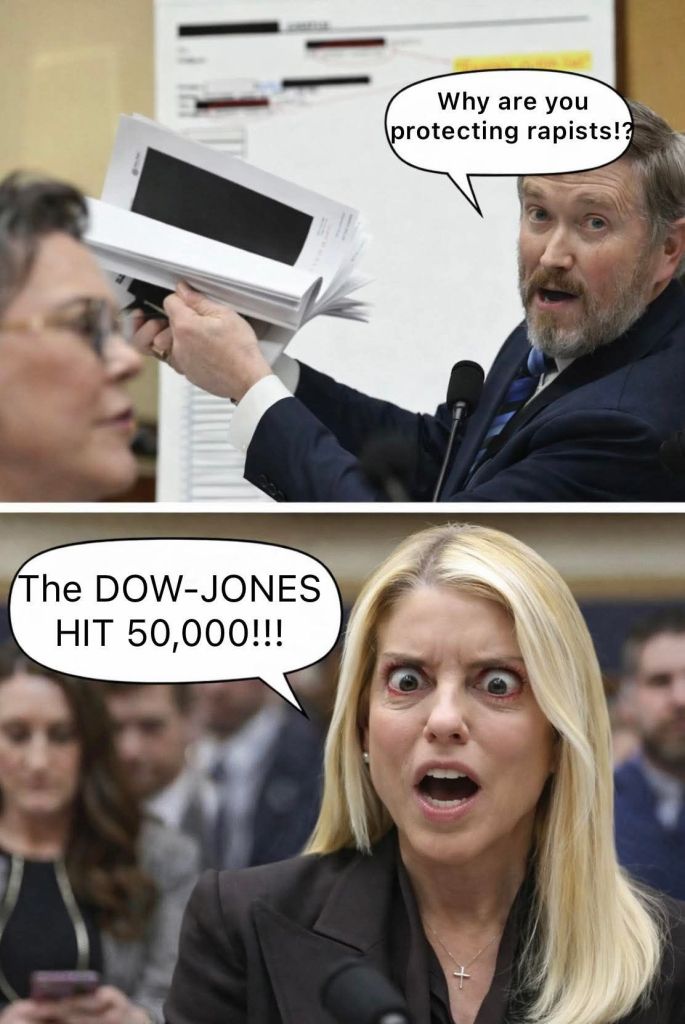
Attorney General Pam Bondi’s testimony to Congress is a revelation of a mentality that is completely detached. Who knows who coached her—or maybe it was completely her own idea? But the answers she gave only raised more eyebrows.
For example, when asked:
How many of Epstein’s co-conspirators have you indicted? How many perpetrators are you even investigating?
She replied:
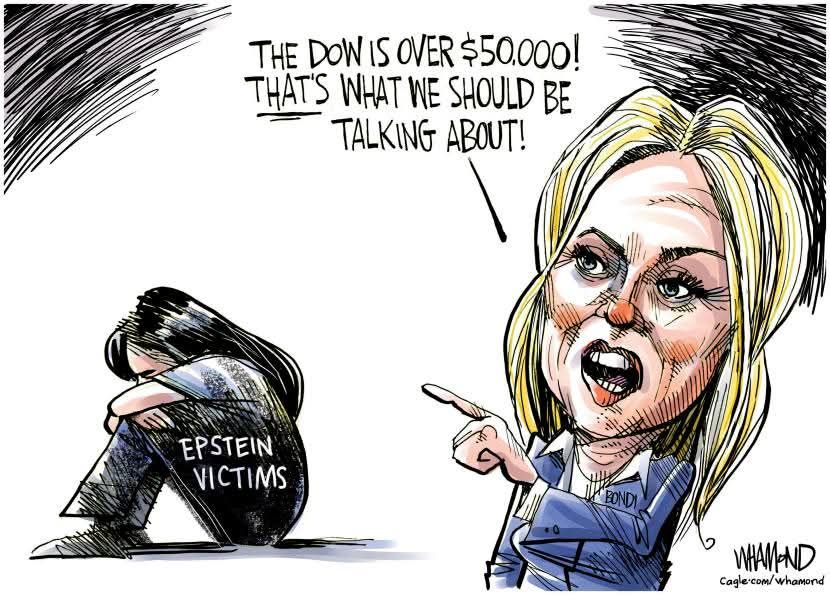
Because Donald Trump, the Dow, the Dow right now is over — the Dow is over $50,000. I don’t know why you’re laughing. You’re a great stock trader, as I hear, Raskin. The Dow is over 50000 right now, the S&P at almost 7,000, and the Nasdaq smashing records. Americans’ 401(k)s and retirement savings are booming. That’s what we should be talking about. We should be talking about making Americans safe. We should be talking about — what does the Dow have to do with anything? That’s what they just asked. Are you kidding?
Is she kidding?
That’s astonishingly callous.
With victims in the crowd, she really thought it would play well to deflect with a pivot to a stock market highs?
Now, sure, this sort of hearing is a very partisan and high-pressure event. And a great many of those lawmakers are guilty of a cover-up as the Trump administration. Lest we forget it, around 80% to 90% of Epstein’s political donations went to Democrats. But now responsibility for the continued lack of transparency about this lies squarely on the Trump administration.
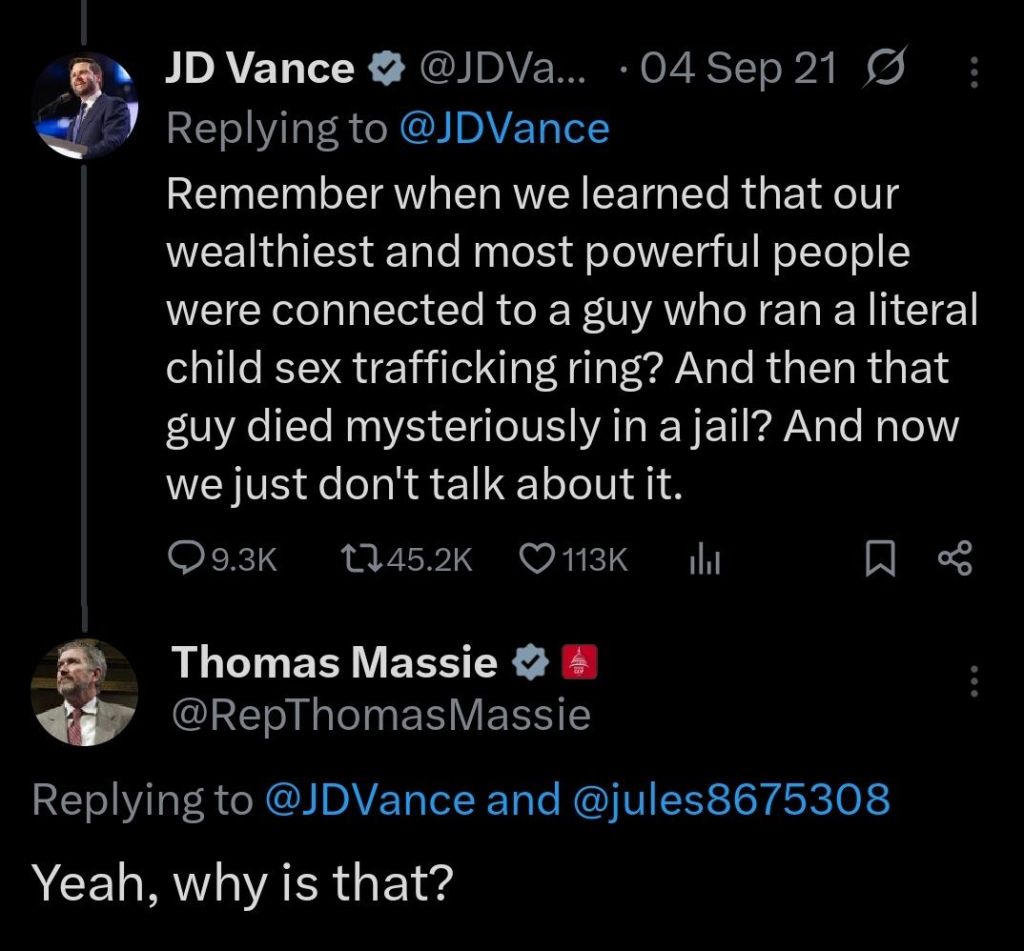
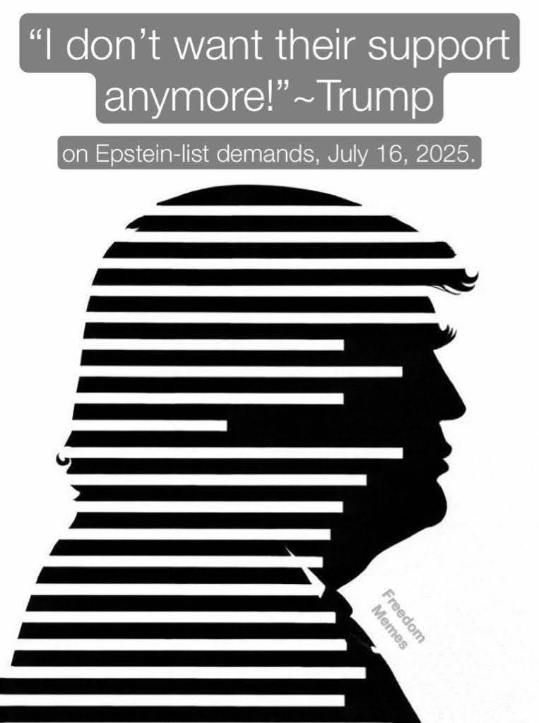
Bondi’s Justice Department has violated the law, The Epstein Files Transparency Act—a bill demanding the unredacted release of the files pushed through by representatives Thomas Massie (R) and Ro Khanna (D), by continued use of redactions that extends a cover-up that has gone on for decades. And both parties are neck-deep in this scandal, which is why nothing was done about it last administration despite Trump’s name being in the files tens of thousands of times—and probably many more mentions still hidden under all those black lines.
Remember when JD Vance sounded like Thomas Massie?
The administration that ran on a promise to tell the truth about Epstein has become one where Trump gaslights:
Are you still talking about Jeffrey Epstein? This guy’s been talked about for years, are people still talking about this guy? This creep? That is unbelievable. I can’t believe you’re asking a question on Epstein at a time like this, when we’re having some of the greatest success, and also tragedy with what happened in Texas. It just seems like a desecration.
I mean, why would we still be talking about a guy who was apparently sex trafficking a bunch of underage girls to a very long list of elites who have yet to be prosecuted, right?
The truth is a ‘desecration’ of Texas flooding response somehow?
Wherever the case, Bondi isn’t a fraction as skilled as her boss at this game. If you are going to pivot off a question about horrible sexual crimes and ritual abuse not leading to dozens of arrests, then at least deflect away to matters of an equal moral weight. As in this “We have arrested X amount of pedophiles, more than any administration since Genghis Khan—we’re making America safe again!” That would sound much less tone deaf than turning to the economy as if this nullifies questions about Epstein.
What does Bondi’s pivot scream?
It shouts that money can take her attention off of crime—that she can be bribed. More importantly, it suggests she thinks we will be distracted by money and forget about a total lack of prosecutions.
In the end, Bondi’s deflection and the Trump administration’s broader pattern reveals the stark truth: when mammon reigns supreme, justice for the vulnerable becomes optional, and the soul of a nation is quietly sold off in exchange for an economy that mostly benefits billionaires. True contentment—and true greatness or lasting gain—will never come from chasing a dollar or at expense of seeking justice for all people.
The crazy part is that most who voted for Trump thinking it would help their portfolio and would keep us out of war—will find out that those who bought him have no problem with sending your sons to die in Iran.
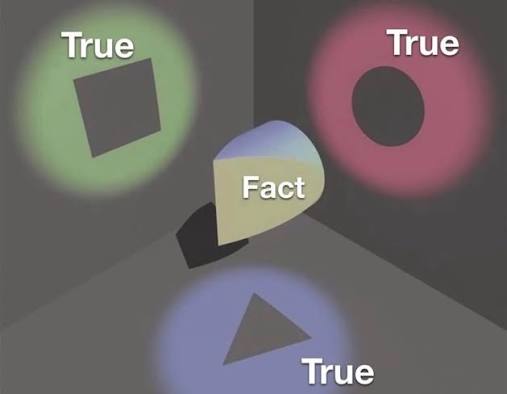
Everything we hear is an opinion, not a fact. Everything we see is a perspective, not the truth.
Marcus Aurelius
I will attempt to bring multiple threads together in this blog and the quote above is a good starting point. If there is objective reality it’s not going to be something possessed by one human. We do not know all circumstances nor can we vet and independently verify every fact we receive. Or at least not without becoming totally hamstrung by the details. We put our trust in parties, traditions, systems, credentials and the logic which makes sense to us.
The deeper we dive into our physical reality the murkier it all gets. The world ‘above’ that we encounter feels concrete. But there is not a whole lot of substance to be found as we get beneath the surface. The rules that we discovered—of time and space—end up dissolving into a sea of probabilities and paradoxes at a quantum level that we don’t have an answer to. And this is the ‘concrete’ observable reality. We all see our own unique perspective, a slice, and build our model of the world from it.
But it is even murkier when we get to topics of social science. Morality and ethics, built often from what we believe is fact or truth, is more simply opinion and perspective than it can be hammered out in words everyone is able to agree on. Even for those who are of the same foundational religious assumptions—despite even having the same source texts—do not agree on matters of interpretation or application. So who is right? And who is wrong? How do we decide?
1) Patrick: We Don’t Need God To Be Moral
My cousin, Patrick, a taller, better looking and more educated version of myself, an independent thinker, and has departed from his missionary upbringing—gives this great little presentation: “Where Do You Get Your Morality?“
His foundation for a moral value system is concepts of truth, freedom and love which he describes in the video. I find it to be compelling and compatible with my own basic views. Our cooperation is as natural as competition, it is what makes us human, and a conscience gives potential for better returns.
However, while I agree with his ideal, there is also reason why deception, tyranny and indifference are as common in the world—they are natural—and this is because it can give one person or tribe an advantage. Lies, scams, and political propaganda all exploit trust and can be a shortcut for gaining higher status or more access.
No, cheating doesn’t serve everyone. But the lion has no reason to regret taking down a slow gazelle. By removing the weak, sick, or injured, it inadvertently culls the less-fit genes from the herd, strengthening the prey population over time and even preventing overgrazing of the savannah. It’s just a raw service to ecosystem balance, much like a short seller who exposes those overvalued stocks, forcing the market corrections and greater efficiency—acts of pure self-interest yielding a broader good.
Not a friendly neighbor.
Herd cooperation or predator opportunism are different strategies, both 100% natural and amoral in their own context. I’m neither psychopath nor a cannibal, but I do suspect those who are those things would as readily rationalize their own drives and proclivities. Nature doesn’t come with a rulebook—only consequences.
I’m certainly not a fan of the “might makes right” way of thinking and that is because my morality and ethics originate from the perspective being disadvantaged. But I also understand why those who never struggled and who have the power to impose their own will without fear of facing any consequences often develop a different moral framework.
We need to be invested in the same moral and civilizational project. Or else logic, that works for only some who have the strength or propaganda tools, will rule by default. I don’t disagree with Patrick, but his core message caters to a high IQ and high empathy crowd—which does leave me wondering how we can bring everyone else on board?
2) Kirk: A Way To Focus Our Moral Efforts
Charlie Kirk wasn’t a significant figure to me before his death. It may be a generational thing or just a general lack of interest in the whole conservative influencer crowd. I feel dumber any time I listen to Steven Crowder and assumed Kirk was just another one of the partisan bomb throwers. But, from my exposure to his content since, I have gained some appreciation.
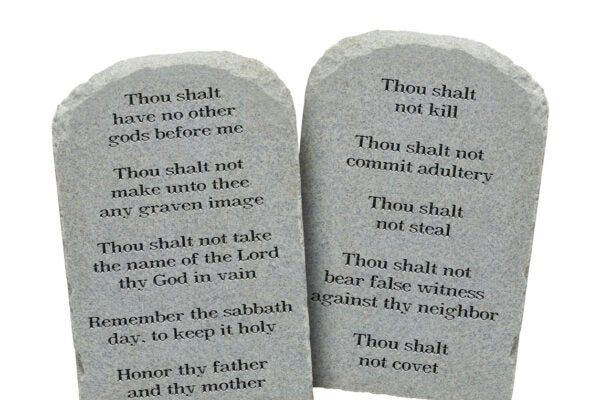
Bring back the Ten Commandments, because it worked so well the first time?
Arguing for the Ten Commandments has never been a priority for me. It’s a list with a context and not standalone. Nevertheless it is a starting point for a moral discussion and also one that it seems Charlie Kirk would go to frequently in his campus debates. The two most difficult of these laws to explain to a religious skeptic are certainly the first two: “I am the Lord your God; Have no other gods before me and do not make idols.”
We generally agree on prohibition of murder and theft, or even adultery, but will disagree on one lawgiver and judge.
Why?
Well, it is simply because divine entity is abstract compared to things we have experienced—like the murder of a loved one or something being stolen from us. You just know this is wrong based on how it makes you feel. The belief in celestial being beyond human sight or comprehension just does not hit the same way as events we have observed. And it’s also the baggage the concept of a God carries in the current age. I mean, whose God?
It seems to be much easier just to agree the lowest common denominator: Don’t do bad things to other people.
But then we don’t. We justify killing others if it suits our political agenda, labeling people as bad for doing what we would do if facing a similar threat to our rights. If I’ve learned one thing it is that people always find creative ways to justify themselves while condemning the other side for even fighting back against an act of aggression.
Self-proclaimed good people do very bad things to good people. Like most people see themselves as above average drivers (not mathematically possible), we tend to distort things in favor of ourselves. Fundamental attribution error means we excuse our own compromises as a result of circumstances while we assume an immutable character flaw when others violate us. We might be half decent at applying morality to others—but exempt ourselves and our own.
So morality needs a focal point beyond us as individuals. There must be a universal or common good. Which might be the value of a theoretical ‘other’ who observes from a detached and perfectly unprejudiced point, the ideal judge. Not as a placeholder, but as the ultimate aim of humanity. One God. One truth. One justice. This as the answer to double standards, selective outrage and partisan bias. If we’re all seeking the same thing there is greater potential of harmony and social cohesion where all benefit.
At very least it would be good to promote an idea of an ultimate consequence giver that can’t be bought or bribed.
3) The Good, the Bad and the Aim for What Is Practically Impossible
The devil is always in the details. And the whole point of government is to mediate in this regard. Unfortunately, government, like all institutions, is merely a tool and tools are only as good as the hands that are making a use of them. A hammer is usually used to build things, but can also be used to bash in a skull. Likewise, we can come up with that moral system and yet even the best formed legal code or enforcement mechanism can be twisted—definitions beaten into what the current ruling regime needs.
The United States of America started with a declaration including the words “all men are created equal” and a Constitution with that starts: “We the people…” This is reflection of the Christian rejection of favoritism and St. Paul telling the faithful “there is no Jew or Greek” or erasing the supremacy claims of some. An elite declaring themselves to be exempted or specially chosen by God is not compatible with this vision. We never ask a chicken for consent what we take the eggs. We do not extend rights to those who we consider to be inferior to us or less than human. Human rights hinge on respect for the other that transcends politics.
That’s where the labels come in. If we call someone a Nazi, illegal, MAGAt, leftist or a Goyim we are saying that they are less than human and don’t deserve rights. This is the tribal and identity politics baseline. Those in the out-group are excluded for decency, their deaths celebrated as justice (even if there’s no due process) and we’ll excuse or privilege our own. All sides of the partisan divide do this—we create a reason to deny rights to others often using things like truth, freedom and love (Patrick’s foundation) as our justification: “Those terrorists hate our freedom and democracy, we must fight for those we love and our truth!”
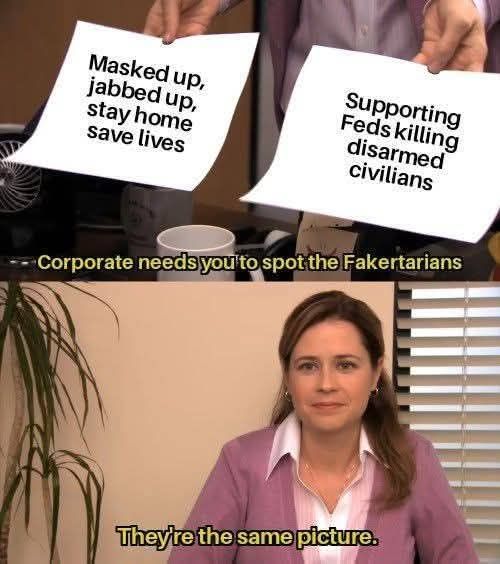
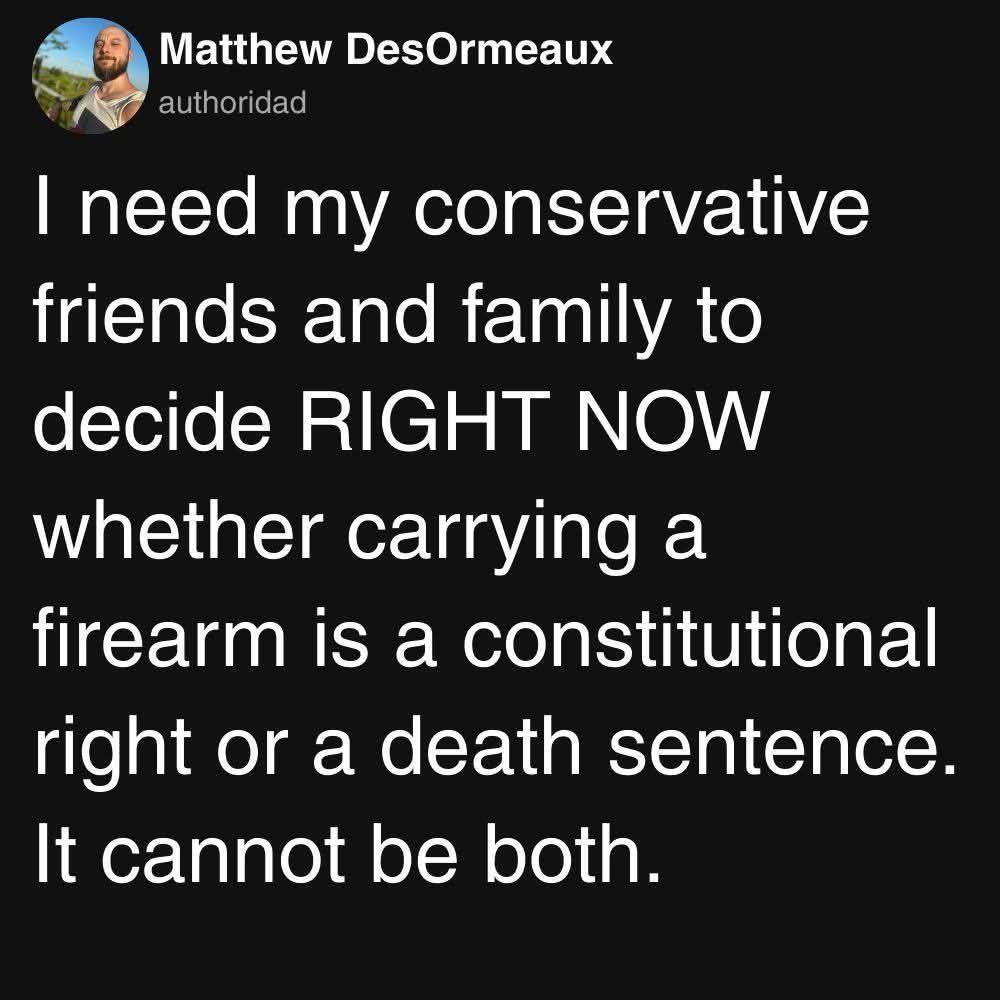
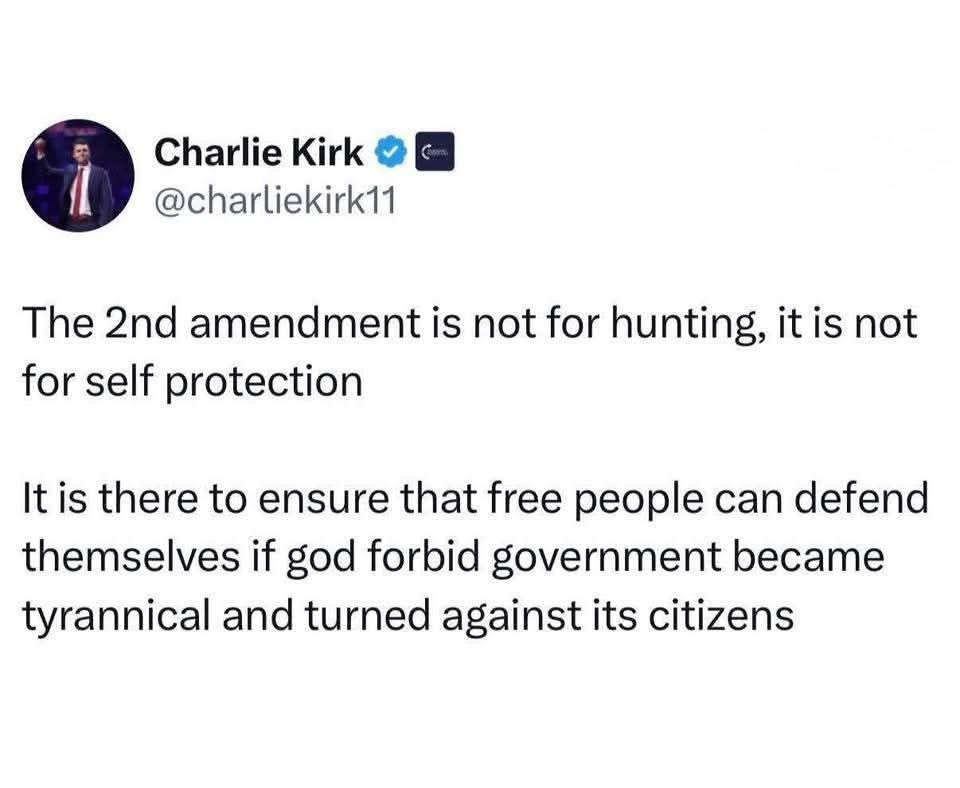
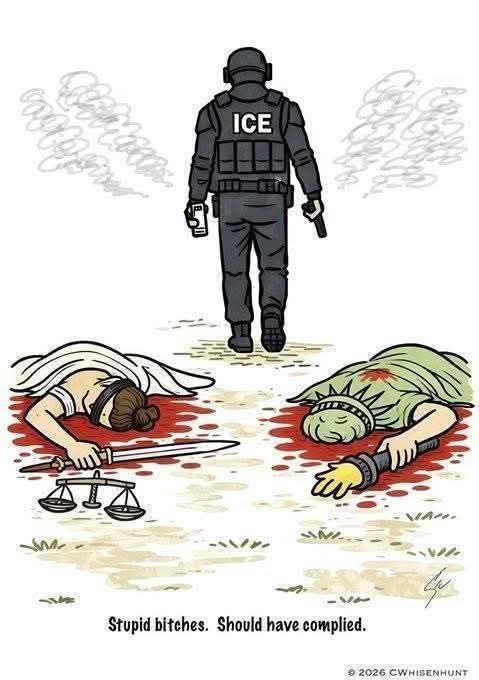
Bringing this to a practical level: Looking at Minneapolis, the ICE and anti-ICE activities, we have competing moral narratives and a different vision for application of American values. On one side of the debate you have those who say that “one is one too many” if an illegal immigrant kills a US citizen—then suddenly do not care when Federal agents shoot a fellow American. The defiant “don’t tread on me” opposition to mandates and masks during Covid somehow shifting to “comply or die!” On the other side you have those outraged about Kyle Rittenhouse and who have been traditionally opposed to the 2nd Amendment defending Alex Pretti while the Trump administration condemns a man for carrying a permitted firearm.
Judgment is for the other, it seems, rights for those who look like us or agree. It’s this inconsistent eye, the call for understanding of our own and grace for ourselves with the harsh penalties applied to those within the forever shifting lines of our out-group, that shows how our political perspectives cloud our moral judgment. The ‘sin’ is not the act itself, but whether or not the violation suits our broader agenda. This is why ‘Christian’ fundamentalists, who will preach the love of Jesus on Sunday, can be totally indifferent to the suffering of children with darker skin tones—their God is about national schemes not a universal good or a commonly applied moral standard.
The aim needs to be justice that is blind to who and only considers what was done. If pedophilia is excused for powerful people who run our government and economy, then it should be for those at the bottom as well. If the misdemeanor of crossing an invisible line is bad, a justification for suspension of due process for all Americans, then why is it okay to violate the sovereignty of Venezuela or Iran over claims of human rights abuse?
The US fought a war of independence, took the country for the British and yet has been acting as a dictator, installing kings, when it suits our neo-colonial elites.
That’s immoral.
We’re all immoral.
The moral code of Patrick, Charlie or myself is incomplete—because every moral code is incomplete when filtered through human eyes. We start from our different premises: Patrick’s secular triad of truth, freedom, and love; Kirk’s religious appeal to the Ten Commandments and a divine lawgiver as the only reliable check on self-deception; my own reluctant recognition that empathy and cooperation are real, yet fragile, against the raw arithmetic of power and advantage. Yet all of our approaches circle the same problem: without some external, impartial standard that transcends our biases, tribes, and self-justifications, our morality devolves into competing opinions dressed as facts—exactly as Aurelius observed.
We cannot fully escape the murk. Objective reality, if it exists, slips through our fingers like quantum probabilities—and moral truth fractures along lines of culture, experience, and interest. Even when we agree on broad principles (don’t murder, don’t steal), the application often splinters: whose life counts as being worthy of protection? Whose borders, laws, or children deserve a defense? And whose “justice” is merely revenge in better lighting?The temptation is cynicism—just declare all values relative, retreat to my own personal pragmatism, and then let might (or votes, or algorithms) sort the rest. But that is a path leads to the very outcomes we decry—dehumanization, selective outrage, and the erosion of the entire civilizational project that allows agnostic high-empathy and high-IQ arguments like Patrick’s to even exist. Yes, nature may be amoral, but us humans build societies by pretending otherwise, by our aiming higher than baser ‘animal’ instincts—reaching for God.
So perhaps the most honest conclusion is not to claim possession of the full truth, but to commit to pursuing it together—knowing we’ll never quite arrive. We definitely need focal points that force some accountability beyond ourselves: whether that’s a concept of one ultimate observer who sees without favoritism, or by a shared commitment to universal human dignity rooted in principle beyond biology or tribe, or simply just the hard-won habit of applying the same rules to our side as to the other. Blind justice isn’t natural or self-evident—it’s cultivated. Morality is an aim which requires vigilance against our own double standards, humility before the limits of our perspective, and courage to defend principles we claim even when they inconvenience us.
In the end, we don’t need perfect agreement on the source of morality to agree that inconsistency in application is poisonous. What goes around will certainly come around and if we live by the sword we’ll die by it. If we can at least hold each other (and ourselves) to a standard higher than “what works for my group right now,” preserve the space for mutually beneficial cooperation over cruel predation—a shared conscience over mere convenience. Anything less, and the gazelle never outruns the lion for long—and neither does the society which forgets why it tried.
AI is an exciting new tool—kind of like Wikipedia was back in the day, something fun to turn to for those quick answers. But let’s be clear: AI is NOT a replacement for actual research. No, it isn’t an independent mind, and it’s certainly no impartial judge. All it really does is take the content that’s currently acceptable to its creators and then will synthesize it into responses. And it will lie to you outright, with zero conscience, because it has no conscience at all. It’s a sophisticated machine, a tool, nothing more or less, and it can absolutely be manipulated by the agendas of those behind the scenes who run it.
Like Wikipedia or so-called fact-checkers, at best, AI reflects the current bias or the established narrative. A perfect example of this is the lab leak theory for Covid-19’s origins. Back when some of us were talking about it, we were being “debunked” (some even banned), only for things to reverse later. As of early 2025, the CIA has assessed that a research lab origin is more likely than a natural one. So, to all the “sources please” crowd: beware. There’s no substitute for building your own knowledge base and using your own brain to evaluate things independently of official or established organizations.
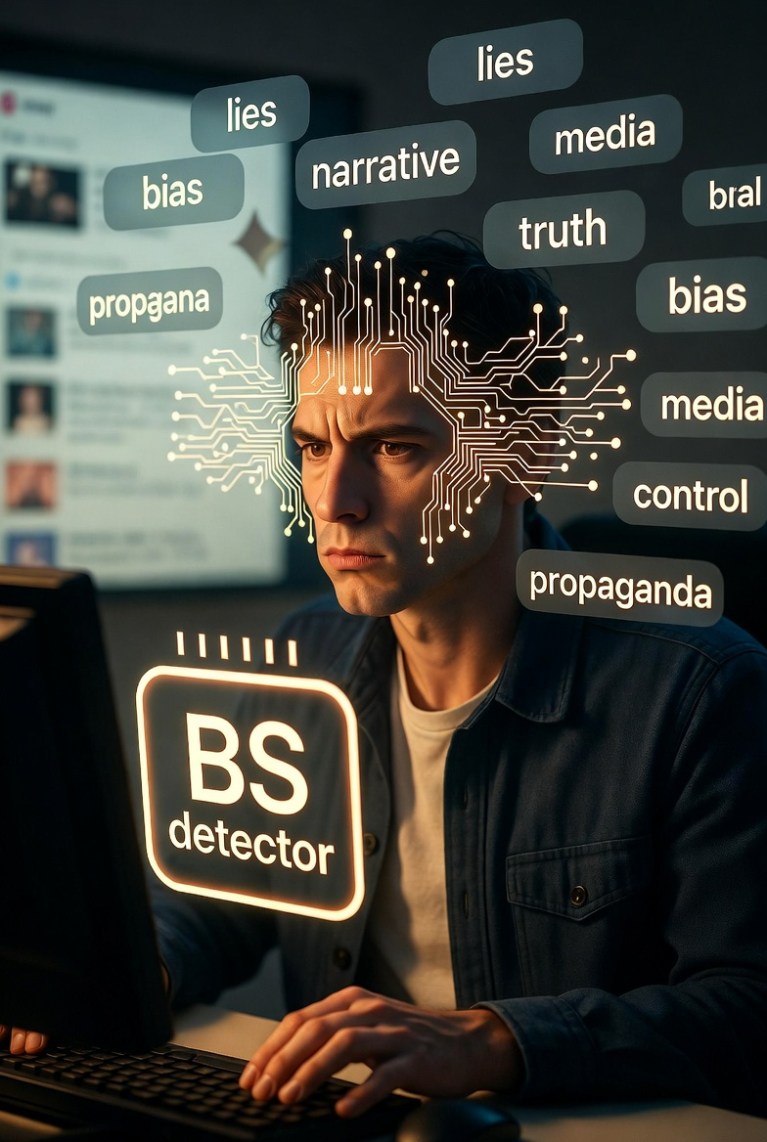
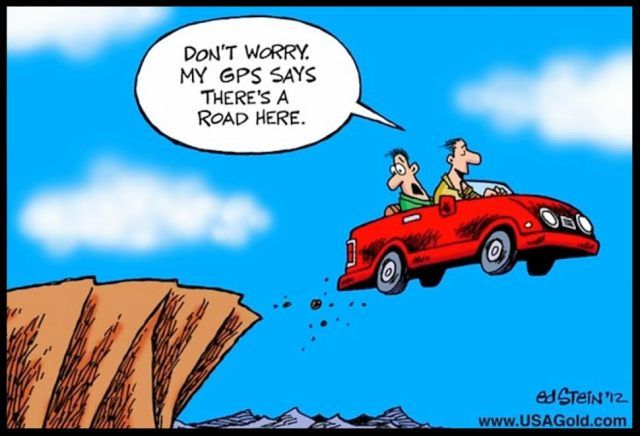
AI is probably less reliable than your GPS. Sure, the tool works most of the time, but it’s no replacement for your own eyes or basic navigation skills. “Death by GPS” is a real category for a reason—if the machine were totally accurate, people wouldn’t drive off cliffs or into lakes after following bad directions. We need our own internal map, built on some established waypoints and a landmark or two, rather than just plugging in an address and blindly following the device into the abyss. Above all, we need a strong internal BS detector, we need it because the tool belongs to them—and it does what its creators need it to do. And telling you the unvarnished truth isn’t always the priority.
At its very best, AI will reflect the currently available information and most dominant narrative. Imagine, had the technology been available, asking it about the threat of Covid early on—it very likely would have dismissed outlier concerns as rumors, downplayed the disease in comparison to the seasonal flu, maybe even lectured about racism—while echoing the House Speaker Nancy Pelosi’s encouragement, February of 2020, to visit those crowded streets of San Francisco’s Chinatown in total defiance of emerging fears. (A family member ridiculed me for saying Covid would be a big deal at that time—dutifully citing mainstream media sources saying it was less worrisome than the seasonal flu.)
People have also very quickly forgotten how The Lancet published a deeply flawed study in the critical early weeks of the pandemic claiming hydroxychloroquine was extremely dangerous—only to quietly retract it later because the authors couldn’t verify the authenticity of the data. In short, the data was totally unreliable, and was a study based on falsehoods presented as science. If that was the “reliable” information being fed into an AI system back then, what would it have told you the scientific consensus was? It would have parroted the lie, and made it as unreliable as the retracted paper during the most urgent phase of the crisis. AI didn’t exist in its current form at the time, but its behavior would have mirrored exactly what I describe: reflecting the biased mainstream thought rather than truly act as a functioning as an independent thinker.
AI lags behind reality. A semi-independent mind—one relying on their personal intelligence and a grounded model of the world—can oftentimes do better. When I saw the early images coming out of Wuhan and listened to reports from doctors there (some of whom later died or disappeared), I knew this was not just the seasonal flu. It didn’t matter how many three-letter agencies were being quoted by corporate media; I could make my own judgment. I also quickly realized how terribly politicized even a pandemic can become. People didn’t pick sides based on the evidence—instead, they chased (or even invented) evidence to confirm their partisan narratives.
If AI had existed back then, it would have picked a side based on what its owners wanted. Covid is where I really honed my BS detector and learned that both sides lie—not that I was oblivious before, but seeing it play out in real time was very eye-opening. Partisans would flip positions the moment their preferred politicians did. Suddenly, independent voices raising alarms (with Trump leaning that way) became the target, then Democrats outflanked this with total hysteria after their months of denial when it actually mattered. We saw the same flip with Operation Warp Speed: with the left as vaccine skeptics while Trump promoted them, only for the Democrats pushing hard for mandates while Republicans opposed even masks.
How fast a symbol of oppression/security can become a symbol of oppression/security. Questions remain about effectiveness in either context.
Now, identity-obscuring masks are back in style as authoritarian right-wing fashion, as ICE agents terrorize, and insurrections are now cool again for Democrats who dislike immigration laws or the last election results. And AI won’t fix any of this partisanship—especially when people use it without understanding how it works or its severe limitations.
At best, AI is a good supplement or starting point for someone who already knows how to ask the right questions. At worst, it will lie and give you exactly what you want to hear. But one thing is certain: AI is NOT an objective truth-teller. Rely on your own reasoning, your own research, your own past experience, the reliable voices you have vetted on your own or your own BS detector first. The AI machine is no substitute. Yes, independent thinking is tough, in practice, and yet we must be smarter than the tool. Journalism, Wikipedia, or fact-checkers and GPS—all of these things are reliable… until they’re not.









 Irregular Ideation