From Hero To Heel To Healed—Fragments From An Estranged Relationship

Standard

It has been well over a year now since I’ve left the conservative Mennonite culture. I wrote about my grievances in the time leading up to and after my departure. My life has gone in a direction that I never expected. I did my best to bury the hurts, forgive at some level, and move on.

However, it seems recently some of those hurts have come bubbling back up through the rubble of hopes that were hastily bulldozed over them and have become a risk to the flower beds that I’ve planted to keep that part of my life contained in the past. There is a lingering question of how to forgive those who never admit (or even realize) that they had any responsibility to me whatsoever and have likely moved on without a second thought about their own decisions.

Before my Chrismation, I did reach out to the Mennonite leader, the father of the impossibility, and offered my forgiveness and confessed some faults. It was at least a token of forgiveness that was necessary for me to transition. But forgiveness is not as easy as saying the words and, as an Orthodox friend recently told me, it is a process. Sometimes it is a process that takes years of letting go of the lingering hurts. We are not robots, the emotional wounds we have as the result of the abandonment or abuses of others are real, and broken relationships that continue to be broken make healing more difficult. Show me a person who can forgive in a moment and I’ll show you someone who has never lost anything of real value to them.

Anyhow, because it has become impossible for me to write about anything else, it is time to clear these things out of my mind and give room for other things. There is something about sharing thoughts here, to know that my suffering was not in vain and can possibly be of some benefit to those who have experienced similar things, that seems to help the healing process. Yes, we will always bear the scars, we cannot erase the past through forgiveness, and no amount of sharing about something will undo what was done. But hopefully, in sharing some of these stories, this will help remove some of that shame and feelings of the experience being a total waste.

“God, give me an opportunity to be a hero…”

Someday, after my final repose, inscribed on my gravestone there should be the words: “He prayed strange prayers and received answers that were even stranger.”

This is a story of one of those answered prayers.

It was so terribly frustrating for me to be a Mennonite man, now somehow into his thirties not knowing how he got there and unmarried—despite a strong desire for a wife and children.

It was not the stigma of singleness (in a religious culture that prefers the married) that bothered me. No, it was more the lack of opportunity to be the “knight in shining armor” and valued by a woman. I longed to be the protector and provider. And, since I was confident that a God-fearing woman who saw my heart would give me a chance to further prove my courage, character, and conviction to her, I prayed: “God give me the opportunity to be a hero…”

It was shortly after praying that prayer that there was this “progressive supper” activity for the youth. We were to be divided up into small groups of four or five and then sent on our way to various homes to eat the different courses of a meal. That evening the ‘impossibility’ (the young woman that most embodied my own Mennonite ideals) was there along with her sister. So, wanting a chance to prove myself and to be paired with her, I prayed: “Please, God, you know my heart, let me be in the right place at the right time.”

Well, this is where things got a bit weird. The youth leader assigned the impossibility along with her sister to a group that did not include me. I accepted this fate and thanked God anyway. But that’s when the leader, for reasons that were never explained, stopped, said “no” and then proceeded to reassign the sisters—putting them together with me and two other youth. My resigned thanks became a “Hallelujah!” (still silent) as I began to imagine the pleasant conversations we would have that evening. I also began telling myself to remain calm, to just be myself, and enjoy the time together with them without having any expectations beyond that.

“Everyone remain calm!”

Foreshadowing is only supposed to happen in movies. However, en route to our first stop the sister of the impossibility informed us that she was sensitive to having sweets on an empty stomach. Well, guess what? Lo and behold, by some terrible coincidence, it was dessert first. At our first stop of the evening, we had a rich and sugary treat, that soon followed by another drive to our next stop and the next part of our meal…or at least that was the plan.

Well, the sister of the sensitive stomach was right, the combination of dessert with some slightly aggressive driving on bumpy back roads (it wasn’t me driving) proved too much for her to endure. She gave only a whisper of a warning before the entire contents of her stomach were unceremoniously and forcefully expelled. There was vomit everywhere in the back of the truck when we finally got stopped. It was distributed across the back seat and covered her clothing too. It was definitely not a pleasant sight to take in and especially not for those who had been planning to eat.

My first words, as the human contents of burst out the doors of the truck, were an attempt to maintain some order and (to the later amusement of some of the passengers) I exclaimed: “Everyone, remain calm!” We now had a crisis on our hands and the two other passengers—now fighting with their own sensitivity issues—were ill-equipped to manage this sort of event. So it was up to me to formulate a plan that would both maintain some dignity for this young woman and also spare the others as much as possible.

I decided, after contemplating our various options, that we would all drive together to the next stop (a few miles further down the road) and then go our separate ways from there.

So, we collected ourselves, got back in the truck, and finally to a place where we could do some cleaning up. The other two, dry-heaving themselves, split as soon as we arrived. The two sisters were busy with the mess. I figured would appreciate their privacy in this.  So I offered to run the necessary supplies they would need from the house and let them to themselves. Glad to be of assistance, I made a couple trips with towels, buckets of water, and whatever else they requested.

“You would make a great husband…”

In all this, I had to reconsider my own prayers. Perhaps I should have been more careful about what I prayed? Maybe it was a little selfish of me to pray that I could be the hero? It really was not my intention to have someone else suffer so I could be heroic to them. (So, sister of the impossibility, if you ever read this blog, I’m sorry if my answer to prayer came about as a result of something bad happening to you—that certainly was not the plan.)

Then again, how was it my fault?

My mind did its usual overanalysis as I scurried between the house and the disaster area trying to be helpful.

My contemplation was interrupted, on one of my trips with supplies, when the impossibility turned to me and words come from her mouth that I never expected to hear directly from her mouth. With sincerity in her voice, she says: “You will make a great husband for someone someday.”

Oh my!

This compliment nearly caused me to run around the house screaming praises to God. However, I didn’t think that would be the right response, so I opted instead to remain calm, smile, and say a humble “thank you” rather than run around dancing with all my might like King David seeing the return of the Ark of the Covenant.

I also noted very carefully exactly what she had said. She had said “husband for someone” and probably included that “someone” as to create some distance and keep the compliment from being a brazen indication of her own personal interest in me. And, yet, while it meant nothing besides what she said, I could not help but see this endorsement of my “great” potential as being only a good thing as far as my further hopes regarding her. I rejoiced for having been given the rare opportunity to demonstrate an ability to serve and to be recognized as being husband material by my secret crush.

“It is an impossibility…”

They had always presented themselves as if they were a Thomas Kincaid painting and something out of reach for me. But, boosted by a spiritual growth spurt, I began to think that my own ideal was in alignment with the one they represented and that gave me the confidence to dream. Still, there were some big obstacles to overcome, most of them related to my age and their status as top-tier conservative Mennonites. I had been in the lower caste my entire life. Could a man change his stars?

For the first time in my life, taking the advice of an eccentric friend, I decided to write a father. As advised, I wrote merely to tell him of my admiration for his family and his daughter in particular. Of course, being the nice guy that he is, he wrote back and thanked me. But then he implied that his daughter was somehow out of my league. It sparked some indignation and in my response I made it clear and said, in paraphrase: “Not that she shouldn’t be interested in me.” I mean, what had I done so horribly wrong that I wasn’t in the same class as him or his family?

I never asked for permission to ask her. However, he did grant me permission in a subsequent email. But then he added, in yet another message, that “it was an impossibility” that I would date his daughter. That’s a pretty hard hit for a guy to take. However, in a few days, I was reminded of how my latest journey of faith had begun and that it started with believing what Jesus said about all things being possible with faith. How could he, a mere man, make this bold declaration that went directly in opposition to what we could know from Scripture? I decided to believe what God said over his word.

It was from this point on that his daughter became the “impossibility” and, after praying that the impossible be made possible, I was bound by faith to follow through. At this point, those who would try to discourage the pursuit only further fueled the fire. I was not chasing after something rational or that I understood. Faith had to be going beyond what was possible for me or what’s the point? If everything can be explained by science or reason, why not apply Occam’s razor and dispose of any additional spiritual explanation of life?

No, faith required the pursuit of the impossible. My very salvation depended on the impossible being possible—that being a flawed and frail human, like me, made righteous before a perfect God. If I couldn’t be loved by the daughter of a good Mennonite man, how could I ever stand a chance before God? If faith couldn’t overcome all of our differences, which weren’t actually that big when it came down to it, then how could faith overcome sin and death? I had no choice but to believe. To not believe was spiritual death.

So I prayed, with as much faith as I could ever have, “God, I would crawl through a wilderness of broken glass to be made right, make the impossible possible,” and committed wholly to doing my part in faith. On that same day an hour or so later, I tore my ACL. It was some of the most excruciating physical pain I’ve ever experienced and yet nothing near the emotional agony that I would experience. I’ve been changed over the past few years, changed in ways that cannot be undone, and changed in ways that I could not have expected. I did my part for God even if others didn’t do their part for me.

“Father, if you are willing, take this cup away from me.”

I had read the story of Billy Graham and heard some other notable Christian leaders who had their hearts broken by young women who couldn’t see the potential in them. I also considered how Jesus died betrayed, stripped naked, and in a completely undignified manner, after praying, even pleading “until his sweat was like drops of blood falling to the ground” (Luke 22:39-44), that God takes the “cup” of suffering from him. I prayed and cried at night begging God: “Please God, please, I’m not strong enough, I can’t be like Jesus, I’m too weak!”

Night after night, I tossed and turned with anxiety and fear. What if my faith proves to be in vain? What if the impossible is truly impossible and my dreams of overcoming my own shortcomings to find the abundant life a lie? Perhaps my whole enterprise of faith was nothing more than an evolutionary coping mechanism to keep me going on despite the obvious? How will I live when my final hopes to have a place amongst my own Mennonite people proves, once again, to be a delusion? I desperately implored God to spare me the pain of another rejection and write for me a story of triumph against the odds instead. I promised I would tell the amazing story to the world when it was all over and use it to strengthen the faith of those who are in the Mennonite church.

I wanted to be a hero in the way of David. The man is known for his bravery in combat against the giant and loved by his people. His heroism was something that women literally sang and danced in the streets to celebrate. He was courageous and charismatic in a way that even made a king jealous and yet was righteous in God’s eyes. David only ever suffered as a result of his own sin, but was still regarded as a man after God’s own heart (1 Sam 13:14) and outlived those who opposed him. That is the hero story that we love and not that story of fading into irrelevance, as someone who didn’t have quite what it took and, while always chasing a mirage in hopes of finally seeing their destiny emerge, would never amount to anything in the end

I believe that Jesus, as a human being like us, would have rather had David’s life than face rejection, betrayal, and abandonment of even his most faithful followers. He prayed alone in Gethsemane, even his closest companions could not comprehend the burden on his heart and be there for him in his hour of need. The heroism of Jesus was the kind that should be terrifying to anyone. He was the rightful king of his people, killed in the most gruesome, torturous, and mocking way possible. Those who should’ve recognized him only saw him as a threat to their religious culture and many treat him with contempt to this very day. How awful it would be to be on that cross in agony both physical and emotional, enough to make a righteous man cry out: “My God, my God, why have you forsaken me?”

I felt so weak. It is one thing to die and be recognized as a hero—It is quite another to be rejected and alone. At least Jesus had someone to mourn him as he hung on the cross and understood that his pain would result in a victory over death, but what would I have?

How would I endure to the end if my rationality would win the day and my fears of my irredeemable inadequacy realized?

A sunny day before the storm…

A few weeks prior I had taken advantage of a unique opportunity to talk to the impossibility where there would be nobody watching us. As one who fought a long battle with social anxieties, I needed to remove anything that would make things potentially more awkward, I found out (from her) that she would be cleaning the church that afternoon and decided this would likely be the best chance I would have. Still, when I finally pulled up to the carport I was already shaking like a leaf and praying that it would all go well. I peered through the door hoping that I would not startle her. I saw her in the sanctuary sweeping, she turned, I waved, her face lit up with a smile and she came to the door.

After that sunny afternoon, I had to work hard to quell the idea that her father was wrong and remind myself that there would likely be some adversity yet to come. Things went so much better than I had anticipated. I mean she had a big smile on her face, she stepped closer rather than away when I expressed my hopes that we could get to know each other better and even gave me her phone number when I asked. For a couple hours, I was on cloud nine and eagerly imagining all those things that I would tell her in that first conversation. She had told me that she was quite busy and then assured me that we would talk on an upcoming mission trip. In the next couple of weeks, I was excited while simultaneously still worried and trying to reign in my anticipation of the things to come.

The trip was an absolute disaster for me. She totally ignored me on the entire bus trip out and then carefully avoided me when we finally arrived. I was already exhausted by day two or three, I could not wait any longer, and decided to break the silence and asked if we would talk as she had promised. She assured me that we could. We arranged to leave dinner a bit early that night and talk things over. So we set off on a stroll that evening where she confidently expressed her plans for life (in contrast to what she had assumed my dreams were) and where I sputtered desperately trying to gain some traction in the conversation and could find none. It was surreal, to say the least, I was at once enraptured by having her full attention and then also extremely unsettled by my inability to articulate anything in my heart.

Her words would echo in my ears for the weeks that followed. They were an inescapable reality and the very thing that I had worked so hard to overcome. She wiped away any sense of accomplishment I had with eight words:

“You are thirty years old, living in Milton.”

Those words, meant as a gentle explanation, confirmed my worst fears. I was stuck in an impossible situation. Her ambitions mirrored my own, but I had long lacked many of the abilities she seemed to possess in spades, and that’s what had attracted me to her in the first place. I had pictured us as a composite—two different types of material bonded together (in faith) and stronger together. But she saw things differently, she saw me as someone content to be mediocre in Milton, a liability as far as her own grand plans, and I lacked any words to answer her misconceptions about me.

She certainly didn’t mean her words to be hurtful and I didn’t take them as offensive. She had simply assumed that this simple life in a small town, without adventure, was what I had intended. What she didn’t know is how much her own ideals were my own nor how I had struggled to overcome feelings of failure despite having my own house, a decent job, etc. Her words hit like a ton of bricks because they were true and reflected an inescapable reality of my life. I never lacked for a heart. But, despite my strong desire to be on the field of play contributing in a meaningful way, I was always seemed stuck watching from the sidelines—lacking the natural size, coordination, or talent to be successful.

I had made my leap in faith, I reached out for the impossibility, for the Mennonite ideal that had eluded me in so many ways over the years, and there was nobody reaching back. I fought a new war with doubt. Maybe I was doomed to fail no matter what I did? Perhaps my higher ideals were only ever a delusion and even the best Mennonite girls were as carnal as anyone, preferring athletic and arrogant men? Could it be my prayers for the impossible to be made possible, a hope against hope, was nothing but a mind trick I played on myself to hold off the obvious?

We had to draw our conversation to a close. She was being eaten alive by mosquitos and it would’ve been unmerciful to extend our time together by a minute longer. So, having lost the debate before it even started, not knowing how to end this walk together, I offered to pray with her and she agreed. I prayed. It was my last hope in an increasingly hopeless situation. And then something happened that made things go from bad to worse. A group of guys came around the corner (probably looking for her as clueless teenage guys do) and now my secret of a year or more was out. I didn’t want to face them and their judgments. I had wanted something extraordinary and the same old answer I always got.

Everyone knew now and those hopes of a final victory over the odds faded into the night sky along with my intelligible thoughts. Overhead the lightning flashed, there were things going on under the surface, but for the moment my mind was eerily silent as I wandered off into the wilderness.

“Once I swore that I would die for you…”

It almost seems a miracle that I was found so quickly of all the many places that I could’ve been. Two men, both whom have earned my respect over the years as true friends, drove out from the reservation, headed right in the direction that I had ended up going, and found me curled up on a bench. It had been my intention to spend the night there. I had no other plans.

When they arrived and hoisted me into the truck. The calm broke. Both the surface calm that covered the broiling of my subconscious mind and also of the skies overhead. At nearly the same time that they got me into the truck, the rains started pouring down and so did my tears. All of those hopes over the years that ended in dismal failure came flooding back. Instead of being as strong in faith as I should’ve been, I panicked. I wanted to die, I wanted to be left alone to wither and die in the wilderness.

I stare into this mirror
So tired of this life
If only you would speak to me
Or cared if I’m alive
Once I swore I would die for you
But I never meant like this
I never meant like this
No I never meant like this

It had been rough for me over the past few years, the solitary life of a truck driver was not a good fit for my temperament, but I had overcome my depression related to the death of Saniyah, and had finally turned a corner spiritually that enabled me to dream big again. That all came crashing down again. Fear had won the day, I was stuck in a nightmare and there was no escape—I had done everything I could do to believe and failed miserably again.

Worse, this time, unlike other times, I had left myself no safety net, no plan ‘B’ or escape hatch. I lept and grasped nothing but empty space.

It is one thing to die and be recognized as a hero. It is entirely another thing to have made a complete fool of yourself, to have finally put all your faith in a God of the impossible, and to end up with nothing besides a deepening shame. Mentally I folded under the pressure, which only made me blame myself all the more, and I panicked.

She did what was predictable. The impossibility, the one who was able to clean up her sister’s vomit and run fearlessly to the edge of a cliff, now recoiled at my sight. She drew back in fear and who could blame her? I both pitied her and desperately wanted to explain everything that had led me to asking her and a chance for redemption. I wrote a long letter, fourteen pages long, and spent months writing and refining it, but I never sent it because she would probably never read or understand it if she did.

“With God all things are possible.”

The road out of despair was paved with Adderall and writing my thoughts here and elsewhere. After weeks of seesawing, one day suicidal and the next determined to live in faith, I decided it was time to address one of those things that had always seemed to get in the way of my success, and that being my difficulties focusing. A friend of mine, studying neuroscience, said that I was definitely suffering from attention-deficit disorder and highly recommended a particular amphetamine.

So, out of options, I gave it a try and it was absolutely amazing. Not only could I focus, but the entire world seemed more brightly colored and sharp. My social anxieties vanished, I could carry a conversation with people I had avoided before, I was more driven in general, and even wrote a book about faith while on the prescription. It was a miracle to me. The day after starting the drug I woke up early on a Sunday morning and thought to myself, “Wow, this is what it must feel like to be Betty Miller!”

I was feeling so good, after weeks of turmoil, that suddenly I wondered why I would even care about the impossibly? I mean, life was great without her…And then I turned to see it staring me in the face, something I hadn’t noticed before on the calendar, the words: “With faith all things are possible.” It sobered me. I was reminded again of the commitment of faith I had made to God in prayer and rebuked myself for being so easily manipulated by my feelings. I had to follow through or I was unfaithful.

Alas, it seems all good things come to an end, at least as far as those artificial means go, and the side effects of my stimulant (that somehow doubled as a mood stabilizer) began to outweigh the benefits. I had difficulty sleeping and began to have this weird fixation with numbers that was suggestive of an induced schizophrenia. So I quit. However, while my positivity did drop off, mostly back to my old baseline, the drug acted like a kickstart to get me going again and, for the most part, the new equilibrium remained.

It was in the time after, months after the whole ordeal of the trip and aftermath, that I was finally able to have a short (but normal) conversation with the impossibility. It was great because it was progress in a relationship that had become estranged. But it also left me feeling down because she would be soon leaving for a long time and might very well spend enough time with some other guy to get over that initial threshold. Love, despite my own difficulties finding it, is not that complicated—we don’t fall in love with strangers or those whom we hold at arm’s length.

I was melancholy that evening, brooding over the possibility that the very brief conversation we had in the kitchen might be our last when she (the impossibility) passes by holding a paper. For reasons I’ll never comprehend, one of the other young people in the room, right at the moment she is near me, asks what is on the paper. Without a pause the answer came, she spoke the theme of my pursuit of the impossibility, “With God all things are possible.”

“If you go, take me with you…”

Time had passed. I was back driving truck again and would soon be starting a new job that would get me off the road. She had returned from her world travels and again I was contemplating my best approach.

My feelings were now mixed. There was someone else who had come into my life in the interim, it was someone who had become very precious to me, and it was almost unbearable to think about walking away from her. She was a little lost sheep when I had found her, someone even more alone in the world than a lonely truck driver, and it seemed wrong that I would abandon her—even for a life with my Mennonite ideal.

There seemed to be no good answer to the dilemma. Yes, I had carefully explained my own situation to this precious person, my bhest, that it was impossible for me to marry her and the impossibility one of those reasons. But it still seemed extremely cruel that I would be there for her every day for a year, pull her out of the pit of despair, and then leave her to fend for herself again. I mean, how unfair would that be? I cared too much about her to let that happen yet couldn’t imagine any woman (Mennonite or otherwise) allowing me to maintain that kind of relationship.

There was never a need for me to cross that bridge.

It was the Facebook status update that I had dreaded for so long. There she was, the impossibility, with that prototypical Mennonite guy and the kind I couldn’t compete with—athletic, adventurous, and having the right religious pedigree. They had met on the missionary/Bible school/Mennonite matchmaking circuit. And, since dating is now equivalent to engaged in this culture, I knew the pursuit of impossibly within the Mennonite world was over.

I tried hard to hold off the downward plunge.

The tears would fall once again.

My faith, as a Mennonite, really did die that night, along with my will to live, and there’s only one reason that I’m still here today. That reason being that my bhest never let go. I asked her if she would be okay if I went away, obviously implying my self-inflicted death, and bhest had the only answer that ended my ideation. She said, “If you go, take me with you.” And I decided right then and there that I would continue on if only for her good. It was one thing to kill my own hopes, but I couldn’t kill that little hope that I saw grow in my bhest and it was that seed of faith that I left in her that had now become my own salvation.

My last Sunday as a Mennonite…

I had long become disillusioned with my religious upbringing over the unquestioning devotion to a fundamentalist theological perspective adopted only a century ago and yet continued to hold on to an Anabaptist reformer’s hope. The father of the impossibly was one of those that I had counted on to see this shift and help restore some of that unwavering commitment to Christ and the Holy Spirit. But it was now clear that his calculator weighed more heavily in his decisions than a faith that allowed for the mysterious.

My experience over the past couple of years was that straw that broke the camel’s back. It was supposed to be the triumph of faith in a Mennonite context and ended up only revealed a deeper carnality in even the best of my religious peers that was only different from the world in how it was dressed. It was too much for me to take. I couldn’t continue with them anymore. However, I decided to be strong, to go one more Sunday and leave with whatever dignity I had left.

So I went that one last time, I sat in the back and the only place where I knew I could best avoid the discomfort of holding back my emotions while trying to small talk. And I did manage to keep my composure for the length of the service and also for the gap period afterward. The impossibility may or may not have been there amongst the crowd, but it no longer mattered. The building was now cleared out beside my mom (who was the librarian) and John, a truly humble man, a good listener, and the most recently ordained.

My mom, knowing how difficult it had been for me over the past couple of years, told me how proud she was of me, and, in the nearly empty church, I fell apart. I sobbed. I had tried. I had invested all my hopes within the Mennonite denomination and fought long and hard for a place there. That was over now, it had become unbearable to remain anymore. The impossibility had been that last-ditch effort to restore something that had been lost over the years.

She confessed that she could not love me the way that I wanted to be loved. It had now become impossible for me to live as they wanted me to live, as a beggar in a land of plenty, as one whittling away his hopes in a religious culture that offered mostly platitudes and hardly any real-world solutions. It was time to give them what they wanted and be on my way to something else. I’ve had nobody question that decision or ask me to remain with them—which confirmed all my reasons for the divorce.

May I have my closure now?

I’m in a better place than I was while still trying to make things work in a place where I didn’t belong anymore and time will heal. That said, that doesn’t mean that I don’t struggle with the things that transpired over the years. I’m not sure what forgiveness looks like in a case like this? Do I owe anything more than letting them live their lives in peace? Have I said enough now?

Still, healing is difficult and forgiveness is a process that is especially hard when those who hurt you make no acknowledgment of any failure on their part. It is not easy walking away from the identity that was everything to you. I’ve struggled a little lately with some leftover emotions, a wish for some kind of closure with the impossibility and want of a way to finally bury it all forever.

The good news is that there’s finally someone who sees me as their hero and someone that they can love like that. In fact, I’m preparing for another trip to the other side of the world to be with my precious bhest once again. While I was praying for the impossible to be made possible my bhest prayed that her bhest would not be taken from her. Her prayers were answered. And perhaps my impossible has been made possible in a way that I could never have expected?

To be continued…

Salvation from the Dark Cave — 5 Parallels Between the Rescue in Thailand and Spiritual Transformation

Standard

When I first heard the news about the Wild Boars, a youth soccer team, having gone missing in Thailand, I assumed these twelve boys along with their young coach were hopelessly lost in the flooded cave system and probably already dead or likely would be before anyone reached them. It had been over a week since they had disappeared and there seemed to be little hope of finding them alive.

For that reason, I was very happy to read the news of their being discovered by two British divers who were aiding the rescue efforts. Somehow, despite their ordeal of having to flee deeper into the cave to avoid the rising flood waters and having been trapped in the pitch blackness without food or light for over a week, these players and their coach were still alive. And what a great relief it must’ve been for them to see a person from the outside emerge from those murky waters that had entombed them.

However, that moment of joy was soon replaced by a new fear when considering the perilous journey they now had to face in order to make their escape. The divers who found them were some of the best in the world and many of these boys didn’t even know how to swim—let alone swim in conditions that experts described as extremely dangerous and conditions that tragically did cost one of their rescuers his life.

The question became one of could these boys be saved without a miracle?

This World Is A Dark Cave

We, unlike those boys who had been outside the cave, have never been beyond this world. While we can imagine that there could be something beyond, we are truly bound by what we can touch, taste, see or perceive in our minds. For many reality only extends as far as they are able to fathom. And yet science has discovered spectrums of light beyond our vision and philosophy has long challenged us to go beyond even ourselves, our rational minds, in our thinking.

Greek philosopher Plato imagined a scenario, the Allegory of the Cave, in which we were all born bound in a cave where most are chained where they can only see a shadow of greater reality projected onto the wall in front of them and some of these life-long prisoners are eventually freed. Those freed, we discover, have great difficulty explaining this greater perspective to those still bound. This scenario is pretty much describing our own perception of reality in a nutshell.

Some desire to look beyond the shadows and find a measure of freedom. However, there are many others who are content to live with the shadows and in denial. They are bound by religion, ensnared by the entertainment industry, distracted the pursuit of wealth, blinded by the daily grind or unable to see for any number of reasons and never realize that they are in a cave and chained to a wall and only seeing shadows of something greater.

There are also those who have realized they are trapped in a cave and yet also see the waters, have probed the escape routes from this reality and have understood the true impossibility of their predicament. They have lost hope. They are depressed and living in despair because they know that they are trapped and there’s nothing they can do about it.

Jesus Emerged From the Murky Waters

Those Thai boys and their coach had to know that they were doomed without divine intervention or outside help. During the rainy season (that started early and caught them by surprise) lasts into October and they only had supplies for an afternoon. The coach seems to have did his best to look after the boys, withholding rations from himself to give them a better chance of survival, and yet what he could provide was never going to save them from death in the darkness.

Even a strong swimmer had no chance to escape the under water labyrinth that separated them from the outside world. To find another path or dig their way out was impossible given their lack of necessary tools and provisions. Their resources (besides the water they could lick off the walls) were already exhausted. Even their oxygen supply was starting to dwindle and would disappear long before the flood waters would recede. They only had their prayers and hope for a rescue mission to hold back despair—without a savior were doomed.

That is essentially the story for all of humanity and the background for the Gospel of Jesus Christ. We are born, our forefathers having wandered deep into a cave of sin and our escape from this blocked by the waters of death. This whole world, the entire universe, in fact, is bound by physics to eventually run out of energy and our descendants, no matter how technologically advanced, will not escape that. This is a reality that can cause an intelligent forward-thinking person to wonder what is the point of living if death is all the future holds.

Drawing by Manatsawin Mungsungnoen

If one can imagine how welcomed a sight those British cave divers were for the boys and coach trapped in complete darkness and facing imminent death, then they can also imagine the feeling of elation that the disciples of Jesus felt having seen him after his emergence from the murky waters of death—His resurrected body, their resurrected hopes, and proof positive of his claim that there is eternal life for those who follow after Him.

We Must Take the Plunge of Faith

The happiness about those lost being found was soon replaced with a big question about how to get them from the cave to freedom. How could this half starved group of youngsters and their coach (who was even worse for the wear after selflessly giving his rations to the boys) get out of their subterranean prison?

Many options were discussed and ruled out one by one. There simply was not enough time for other solutions when oxygen levels began to drop, with the fullness of the monsoon season about to begin, and the consensus became clear: They would need to dive out like their saviors or die in the cave. This was something that had been impossible for them before, it was something extremely dangerous even for a veteran cave diver, and would be absolutely terrifying for someone claustrophobic. None of them were swimmers, let alone in any physical condition to match the world class athletes who found them, and I’m sure their fears could keep them paralyzed.

Where does one find the faith to do the impossible?

That was my question a few years ago.

You jump in, that’s how…

We Cannot Save Ourselves

The truth is, while we must take the plunge under the murky waters and swim for all we are worth, the journey out of the cave is not one we are able to do on our own strength. Like the rescue in Thailand took the coordinated effort of many men and women, we cannot possibly complete our journey to freedom without a community or the help of others. Rather we need to partake of the provisions left for us by those who have followed after Christ. We need to firmly grasp the guiding rope of the written and spoken tradition that the Church (2 Thessalonians 2:15) has left for us. And must also submit to those ordained to lead us to safety and who are responsible for leading us to salvation:

Have confidence in your leaders and submit to their authority, because they keep watch over you as those who must give an account. Do this so that their work will be a joy, not a burden, for that would be of no benefit to you. (Hebrews 13:17 NIV)

We live in an age where purported authorities are questioned, and rightly, for their abuses. There are many self-proclaimed (and self-promoting) religious experts who claim to have spiritual knowledge and have yet to truly take the plunge of faith themselves. These false teachers. They are ordained only by themselves, by their own arrogance, and are whom Jesus describes as being blind guides. You can know them by their fruits:

“Watch out for false prophets. They come to you in sheep’s clothing, but inwardly they are ferocious wolves. By their fruit you will recognize them. Do people pick grapes from thornbushes, or figs from thistles? Likewise, every good tree bears good fruit, but a bad tree bears bad fruit. A good tree cannot bear bad fruit, and a bad tree cannot bear good fruit. Every tree that does not bear good fruit is cut down and thrown into the fire. Thus, by their fruit you will recognize them. (Matthew 7:15‭-‬20 NIV)

Be sure that those who lead you have a true connection to the world beyond. Do they shine a light that pushes back against the darkness? Do they bring you nourishment and spiritual air? For those trapped in the cave in Thailand, it is clear who came from the outside and why they are there. The rescuers come with provisions, they administered first aid to those in need and built the trust of the boys to follow their lead and instructions.

These teachers, without a doubt, played a critical role in the salvation of those trapped in the cave and we too need those who have experience beyond our own to provide calm and guide us through the fog, currents, and confusion of life.

We Must Die to Save Others

As I entered the church building on Sunday the final act of the rescue mission started. The Gospel text was, interestingly enough, about some friends of a paralytic and their faith that carried him to Jesus:

Jesus stepped into a boat, crossed over and came to his own town. Some men brought to him a paralyzed man, lying on a mat. When Jesus saw their faith, he said to the man, “Take heart, son; your sins are forgiven.” (Matthew 9:1‭-‬2 NIV)

The account goes on with Jesus first addressing the naysayers and critics for their evil thoughts before going on to fully heal this man. But this detail about Jesus seeing the faith of these men is something I had missed before. It was their carrying him, like the divers leading the boys out of the hopeless depths, that led to this man being forgiven and freed from his paralysis. It is our job to carry each other back to Christ and that is the purpose of a Christian community and the Church. It is our faith that leads to the healing of others.

Like these men carrying their friend or the “buddy system” of experienced divers leading the young boys through the darkness to the light, we too must serve a role in the salvation of others. The Christian mission is to participate in the salvation of others in much the same way as those, who came from around the world and volunteered to risk their own lives—not for financial gain, not for their own biological children and not compelled by force. They simply saw a need, a desperate need, and became the solution.

Sgt Major Saman Kunan

Many have sacrificed time and volunteered their talents to aid in the search and rescue effort in Thailand. But one man, Sgt Major Saman Kunan, a retired Thai Navy diver, gave his own life so those boys could be saved. This hero, after delivering oxygen canisters needed for the daring escape, ran out of oxygen himself and perished.

And that is the responsibility of all Christians. We are to find lost sheep, feed them, heal their wounds, lead them out of harm’s way, and even give our lives for them. We are to be Christ in every sense of the word and that means dying to ourselves and saving the lost from their dark cave.

We need to be faithful to those who are lost without a hope.

Going From Point A To Point B — Ten Big Steps In the Right Direction

Standard

When I prayed, a few years ago, for the impossible to be made possible, I could not have imagined where that simple statement of faith would take me.

My problem in life has never been lack of ideals or absence of ambition; I have long had a vision for life, a heart for people around the world and desire to serve God’s kingdom. However, knowing how to get from point A (my ideals) to point B (actualization) was always the problem.

The Servant Who Buried His Talent

Some can accomplish their goals, they are able to be very directional and focused. That was my older sister. She was top of her class, all-state in violin, followed through on her vision to be a doctor, is published for her research and has her own clinic. She married while in medical school and has four wonderful children

Me, on the other hand, I quit violin lessons in frustration after a month, struggled immensely trying to concentrate in school, and felt like an underachiever. I wanted to be an engineer. However, I lacked my own ideas where to go. So, I decided to apply to the same college my sister picked from her list.

But, after being accepted, ended up deferring rather than start classes in the fall. And, other than attend my sister’s graduation, I never did go to Elizabethtown College. I continued to work. My jobs (before truck driving) really did not really pay enough for me to get ahead. My dreams had been meput on hold. I felt like the servant who buried his talents and hated it—there seemed to be no answer as to how to rectify my situation.

Spiritual Awakening and New Hope Discovered

Finally, I had an epiphany, I discovered the Holy Spirit. Scripture, the writings of the apostle Paul in particular, became alive. This new understanding made me bolder. My guilt for underachieving dissipated. I now rested in God’s grace. I had worked through the death of Saniyah and found a new hope. I also paid off my house and was now financially secure. There was momentum in my life and it felt good.

Still, with my chronic dithering and endless indecision, I also felt as if I had lost a decade of my life. I was in my thirties and somehow missed my calling in the church, didn’t have a career that felt long-term and was unmarried. To fail at one out of those things was bad enough. But all three? It was unthinkable. Sure, I had life experience, I didn’t feel bound to my past failures either, and yet I still felt held back by an invisible wall.

It was in this midst of my trying that I cried out to be “made right” and began my journey of these past several years. I knew my limitations. My desire was to be taken beyond what held me back and be fully what I was supposed to be. I told God I would crawl across a wilderness of broken glass if need be. I asked for the impossible to be made possible.

These are the things that have transpired since then…

1) I rehabbed a torn ACL. One of the problems with truck driving is that it sedentary and I had gained some weight. I was trying to start an exercise program. But it is really difficult to establish a new habit when you are out on the road and your weekly schedule is always in flux.

Well, the same day I prayed for the impossible, I tore my ACL and was off work for six months so I could do physical therapy.

An answer to prayer?

Tearing my ACL, while terribly painful and a setback, was an opportunity for a change of lifestyle. I came out of physical therapy stronger than ever and made it a priority to continue the exercise routine. I can jump higher than I could at twenty and even after reinjuring that knee.

It seemed that God had answered. That gave confidence to further pursue impossibility and go further to find my missing piece…

2) I asked an ethnic Mennonite girl, in person. Part of the reason I’ve remained single so long is because of my crippling social anxieties. It is difficult to get a date if you are unable to approach the women whom you are most interested in getting to know better and attractive unmarried Mennonite women terrified me.

But I was determined not to make the mistake of not asking in person this time. And, after a conversation with her father (in which he gave me permission to ask, but told me flat out that a relationship with her was an “impossibility” in a follow-up message) I waited for that right time. It came one day when she told me she was going to be cleaning at the church.

I was shaking like a leaf when I got to the church door. I prayed she wouldn’t be startled. She was vacuuming in the sanctuary, she turned, spotted me outside, and smiled. It was a great relief that the conversation went as well as it did. I had expressed myself clumsily and still clearly enough. She was smiling and stepping in. Amazingly enough, she did not run, she said we could talk when things settled down for her and things had gone as well as one could expect.

Ultimately her Mennonite ideals made it impossible for her to love me enough to even have some ice cream and talk with me. But I had triumphed over my fears, I had pursued the impossibility and, in faith, rejecting human understanding and calculations. I was willing to be foolish in faith in a way that those who best embodied my Mennonite ideals could not (or were unwilling to) reciprocate.

3) I wrote a book. In the throes of her rejection a few weeks later, which included the words “You’re thirty years old in Milton,” I began writing. I began writing and eventually ended up with a letter fourteen pages long which explained my thoughts on faith, the development of romantic thoughts, and how, with faith to bind us in unity, our differences would actually make us stronger together.

After weeks and weeks of effort, of writing, rewriting and fine tuning, that letter was never sent. As hostile as she was acting towards me since our talk it seemed an act of futility and the letter still sits on my desk unsent. It wasn’t the right time, I decided, and would only drive her further away. No argument I could make, no matter how sincere or reasonable, would win her heart.

However, the writing of that letter convinced me of something and that is my ability to write. Armed with a new found confidence (and a new found ability to focus thanks to the miracle of an Adderall prescription) I began to write a book. The final product was over 17,000 words long, a book about faith, “Paradox of Faith” and remains unpublished in need of a final edit that has not been completed.

4) I started a blog. The book project led to the blog. It seemed like a good idea to refine my writing and articulation of thoughts. Interestingly enough, my first blogs seemed to attract more atheist and thinkers than my Mennonite religious peers. However, as I began to open up and be more honest about my own struggles, my Mennonite audience grew. The blogs hardest to share, because of the vulnerability they required, had the most significant response.

The most amazing part is that my message went viral amongst Mennonites *after* I left the denomination. It seems quite absurd, the whole time I had held my tongue about my deeper struggles (for fear of being rejected) and my moment of greatest acceptance came with my brutal honesty and with my letting go of my fears.

5) I bought my dream car. When I had asked the ethnic Mennonite, the impossibility, I was driving a mid-90’s Ford Contour that I had pieced together. It’s a long story why, I could certainly have afforded a better vehicle, cars had always been a passion of mine, but my mode of daily transportation really didn’t matter to me at this point and I had bigger things on my mind.

But, after her rejection, and on the advice of my mom, I decided to find a newer car. I started to search the used car lots and ended up with a brand new, 2014, Ford Focus. There truly is something special about being the first owner. This car was a quantum leap over the 90’s model trade-in. Practically speaking, this might have been my best purchase ever because it gets 40mpg and I got it for the same price as two year old used cars of the same model.

That wasn’t my dream car.

Years before this the current deacon of my former church, a youth advisor then, had given me a hard time about my modified (and R-title) 1992 Mercury Cougar. A conservative Mennonite can own farms and businesses worth well over a million dollars, a fleet of trucks, an airplane, a boat, without anyone raising an eyebrow. Yet, buy anything resembling a sports car and there will be disapproval.

My entire life I had curtailed my passions to please my Mennonite peers and live by their culturally conditioned ideals. I had believed that by playing by their rules they would have my back, they would lovingly help me to bear my burdens, and would truly treat me as a brother. As the betrayal became clear, upon realizing that my fears of their disapproval didn’t matter anymore, I was free and ordered a brand new 2016 Shelby GT350.

Still, I had some second thoughts after committing to the purchase. Like Judas, the money corrupted betrayer of Jesus, I questioned the excess, “Wouldn’t that be better spent on the poor?” But decided to follow through and to dedicate this ridiculous car to God, to hold it openly as we should all our possessions, to give rides to those who ask, and sell it as soon as that is required.

You would be amazed at the friendships and opportunities that opened up as a result of my buying that car and not caring so much what a small number of religious hypocrites thought. And, truth be told, not many Mennonites actually cared one way or another anyways, I was merely a prisoner of my own people-pleasing tendencies, and my conscience is clear before God.

6) I finally got the ‘right’ job. One of those things I begged of my Mennonite peers was a chance to be off the road. Some are cut out for solitude, those long hours alone in a truck cab, far away from home, but for me it was like solitary confinement, detrimental to my mental health, and started to lead to some bizarre thoughts. You really cannot know how much you need other people, even as background noise, until they are absent.

Perhaps my nagging paid off, perhaps as a consolation prize for pursuing the impossibility, or just chalk it up to God’s provision; but it was the father of the impossibility who mentioned my name to Titus (Titus, at the time, a Facebook friend, probably the result of my blogging, and not some I had met in person) who was seeking a replacement for himself as a truss designer.

Titus contacted me and the rest is history. So I owe my current job, in part, to the man who refused to recommend me to his daughter and must always give him credit for that. And, a bit over a year in, it truly is a great fit for my natural abilities. My work environment is wonderful and I couldn’t be happier. Finally my passion for engineering has found a place where it is useful.

7) I bought a rental. I really only wanted to live a small and safe life. That was my ideal as a Mennonite. And figured that once I paid my house off I would just build some savings as cushion and kick back a bit. However, a strange thing happened when I finally reached that point where I could just relax.

I owned my home outright. I owed not a dime on that unattainable dream car purchased a year before. I had given up on the Mennonite ideals (and delusions) that had kept me captivated. I could have done nothing besides maintain a lifestyle that had seemed ideal for most of my life. But somehow I ended up buying a cute little house and decided to be a landlord.

I’m not sure where that will lead. But, for the benefit of others, I hope some day to own some land and establish a business somewhere else.

Where, you might ask?

Well, that’s next…

8) I lived entirely for someone else’s good. Ecclesiastes does contain some timeless wisdom. One of them being that everything under the sun is, of itself, vanity and meaningless. I had everything I’ve ever wanted in life. I even had some ridiculous things besides. But lacked that one thing that mattered and that being the love that would last forever.

My vision of a composite of too different individuals in faith and love seemed to have failed. The Mennonite impossibility was engaged (actually, had just started dating, but that is essentially the same as engaged in the conservative Mennonite realm) and deep despair engulfed what had remained of my hopes in the denomination of my youth. I thought to end my miserable life.

Yet, while my faith internally had been extinguished, the purest part of it had survived externally in that seed of hope I planted in someone on the complete opposite side of the world. As I sank under the waves of doubt, she grabbed hold of my hand and refused to let me slip away into oblivion. I had no reason left in myself to live. However, I could not bear to see my precious bhest—the one who had been a little lost sheep when I found her—suffer on account of me.

She asked me to be strong for her and I decided then and there that I would live if only for her good. My intentions had not been romantic when we first started talking a year before and my Mennonite ideals would have prevented a relationship with her before then. But the true impossibility was being made possible in my heart. God had provided as promised.

9) I went around the world. I don’t have the millennial urge for experience. Yes, I wanted to help those in need around the world and was extremely attracted to the missionary zeal of the Mennonite ideal. But I lacked the impetus to do it on my own and hoped that this impossibility would be made possible through a Mennonite who, like my eldest sister, did have the ability to set her objectives and reach them.

Bhest, my precious bhest, gave me that clear direction of where I needed to go. I purchased my ticket in the spring of last year, brushed off my dusty passport, and planned this trip that would take me a full twelve timezones from home. And it was an amazing trip. It was absolutely wonderful to be embedded with her family during their holiday celebration a few months ago.

There is much that needs to be worked through. It is not easy to connect two lives on the literal opposite ends of the globe. My relationship with her means a permanent divorce with my Mennonite ideals. But, with God and faith, all things are possible and that was the promise that had set me on my way a few years ago.

I had my own ideas of what impossibility was and my version required other people to change. But God’s impossibility required me to change, it required me to sacrifice my own Mennonite ideals and seek what is greater faith and love. I had to choose between my Mennonite identity and what is truly Christian ideals.

10) I’ve gone beyond Mennonite. It wasn’t my own choice. I very much understand why many remain Mennonite. Who would leave their own version of Hobbiton in the Shire and second breakfasts for a true journey of faith and self-sacrificial love, right? But circumstances beyond my control have forced me to go beyond what I know, beyond my ethnic group, and find the Jesus beyond the Mennonite tomb.

Mennonite Ideals Had Entombed My Faith

Last Sunday, the Sunday of myrrh bearing women, was about the women who went the tomb to find Jesus. These women, unlike the male disciples that had fled, had remained faithful to Jesus even in his death and had gone to his grave to find him:

On the first day of the week, very early in the morning, the women took the spices they had prepared and went to the tomb. They found the stone rolled away from the tomb, but when they entered, they did not find the body of the Lord Jesus. While they were wondering about this, suddenly two men in clothes that gleamed like lightning stood beside them. In their fright the women bowed down with their faces to the ground, but the men said to them, “Why do you look for the living among the dead?” (Luke 24:1‭-‬5 NIV)

Wow.

How profound.

My Mennonite ideals were built around my own understanding. Like those faithful women, I had entombed Jesus within my own assumptions about what is and is not possible. Even in my seeking after the impossibility I had been imprisoned by my own concepts of possibility and became extremely confused when my own limited understanding of faith died.

Many Mennonites are, likewise, prisoners to their own cultural ideals and confirmation bias. They, like Mary Magdelene, who initially didn’t recognize the resurrected Jesus, are so focused in on their own forms of devotion and so bound to their own cultural expectations, that they miss the obvious. They toil away, so faithful to their ideals, and are in denial of the greater things God has established for them by His grace.

I have traveled from point A to point B. It may not have been a straight path. I’ve spent too many years wandering the wilderness due to the limits of my own understanding and my anxieties. But the impossible becomes possible as soon we are willing to step out in faith and the promised land awaits those who do.

When is the last time you have aimed for the impossible, the truly impossible, and found God faithful in way you could not expected?

Should the Church Have Rituals and Traditions?

Standard

Of those traditions kept by my conservative Mennonite church, a foot-washing ritual was one of the more notable. It is a practice based on the example of Jesus who washed the feet of the disciples and then instructed them to follow his example:

When he had finished washing their feet, he put on his clothes and returned to his place. “Do you understand what I have done for you?” he asked them. “You call me ‘Teacher’ and ‘Lord,’ and rightly so, for that is what I am. Now that I, your Lord and Teacher, have washed your feet, you also should wash one another’s feet. I have set you an example that you should do as I have done for you. Very truly I tell you, no servant is greater than his master, nor is a messenger greater than the one who sent him. Now that you know these things, you will be blessed if you do them.” (John 13:12-17, NIV)

So, twice a year with Communion, after a sermon about some aspect of the sacrifice Jesus made, after partaking of some bread and grape juice together and then another short reminder of why we were doing the stuff we did, the men would be dismissed to the basement (leaving the women the upstairs to do their symbolic washing) and on the way down we men would pair up with the guy beside us or another guy that we selected for whatever reason.

We would remove our shoes and socks, then proceed to one of the plastic basins arranged in front of folding chairs, then take turns solemnly splashing water on each other’s feet and dabbing them dry again with a towel provided. Once finished with this ritual procedure most would shake hands (those less inhibited would kiss) and engage in awkward small talk or make a comment about keeping their washing partner in prayer over the next few months.

In our time, this act of foot washing is little more than a symbolic act of service. But when Jesus washed the feet of his disciples it was something of practical value to those traveling the dusty roads in sandals and a task typically reserved for the servants. In that context, it was a very significant gesture and represented a whole new approach to leadership. In the Mennonite context, this practice is sometimes nothing more than a ritual and tradition.

Is reinvention of orthodoxy the answer to dead faith?

People often equate ritual and tradition in the church to dead faith. As a result, those disgruntled with dead faith swing in the direction of innovation and spontaneity hoping to find something authentic and real. Unfortunately, while the first generation of those who discard an established tradition often experience the excitement of something new, their children do not get a temporary emotional bump from the change. It should be no surprise when these children continue down the same path and throw out practices that their parents considered to be sacred and essential.

The idiom, “Don’t throw the baby out with the bathwater,” (derived from a German proverb “das Kind mit dem Bade ausschütte”) is a warning against destroying something good in our zeal to be rid of what is bad. This saying was first recorded in 1512 and right before Martin Luther touched off a revolt against the established church. It is a phrase, frequently used by Luther himself, perhaps worried people would take what he started too far. It remains a very popular expression with Protestants (including Mennonites) who are trying desperately to retain their own children.

There is much in Scripture about the sins of fathers being transmitted to the next generation (Exodus 34:6-7, Leviticus 26:39, Deuteronomy 5:8-10) and seems to apply to our own circumstances today. Children, through genetics or behavioral patterning, often acquire the strengths of their parents. A parent’s good example can lead their children to good habits. And, in the same manner, children often also inherit the defects, blind-spots, and weaknesses of their parents as well. Children build both on the success and also on the sins and/or shortcomings of the prior generation.

So, it should not be a big surprise that the children of Protestants continue down a path of independence, reinterpretation of Scripture and departure from what was established. Protestantism, with the inordinate focus on one’s own interpretation of Scripture, has led to further division, ever-increasing individualism, and significant loss of Christian character. Many Protestants, following the example of their forefathers, assume that the path to spiritual life is found in throwing off of traditions and rituals—but I believe they are terribly mistaken.

Orthodox tradition and ritual is not at fault for abuses of the institutions of the church…

What is the basis for tradition and ritual in the church?

Many seem to forget that Jesus was a Jew and faithfully kept the Jewish religious tradition. Jesus did speak against those who “let go of the commands of God and are holding on to human traditions” (Mark 7:8, NIV) or in other words those who prioritized religious rituals over love for others.

Yet Jesus did not dismiss ritual and tradition as completely unimportant either. Jesus and early Jewish converts to Christianity (while ranking the substance of faith higher than the religious symbolism) did not totally disregard the traditions that had been established.

To truly love Jesus means to follow his example and keep his commands. This, according to the words of Jesus, is requisite to the indwelling of the Holy Spirit:

If you love me, keep my commands. And I will ask the Father, and he will give you another advocate to help you and be with you forever—the Spirit of truth. The world cannot accept him, because it neither sees him nor knows him. But you know him, for he lives with you and will be in you. I will not leave you as orphans; I will come to you. Before long, the world will not see me anymore, but you will see me. Because I live, you also will live. On that day you will realize that I am in my Father, and you are in me, and I am in you. Whoever has my commands and keeps them is the one who loves me. The one who loves me will be loved by my Father, and I too will love them and show myself to them. (John 14:15‭-‬21, NIV)

Many church rituals (like Baptism, Communion and foot washing) are directly from the Gospels and given as instruction to the disciples by Jesus. And, it is in the Gospels that we read that Jesus gave authority to his disciples. He told Peter and the disciples this:

And I tell you that you are Peter, and on this rock I will build my church, and the gates of Hades will not overcome it. I will give you the keys of the kingdom of heaven; whatever you bind on earth will be bound in heaven, and whatever you loose on earth will be loosed in heaven. (Matthew 16:18‭-‬19, NIV)

The early church clearly had a hierarchy with real authority and one that built upon the foundation of Jesus Christ. It is the writings of these early church fathers that contain their witness to the life of Jesus and also provide their reader with further divinely-inspired instruction. This is what they said:

So then, brothers, stand firm and hold to the traditions that you were taught by us, either by our spoken word or by our letter. (2 Thessalonians 2:15, NIV)

Scripture didn’t just drop out of the sky written on golden tablets. No, rather it is a collection of inspired writings compiled and later canonized by the authority of a church council. That, the Bible, is the written tradition of the church (or “letter”) and is a source widely accepted as authoritative. However, in Protestant churches, because they reject any authority besides their own, the “spoken word” of church tradition has not been firmly held—it is neglected and forgotten.

The complete disregard for the oral tradition of the church is no different from cutting a chunk out of Scripture. Sure, as a person can refrain from applying the instruction Paul gives in regards to veiling (and not veiling) in 1 Corinthians 11 and still be Christian, these things aren’t necessary to be saved. However, this represents the deterioration of church tradition and a serious problem. At some point, we cannot claim to be following after the example of Jesus and continue to abandon the practices of the church he established.

There is a real loss when the established tradition is tossed in favor of a more ‘contemporary’ program. Moreover, those leaving their religious traditions often continue to benefit from the values it helped to instill in them. Sadly, the full cost is often only felt in subsequent generations who didn’t have the unappreciated benefits of the old tradition—the children raised without tradition have lost the helpful reminders given to their parents and also an important stabilizing tie to the historic church.

What makes tradition and ritual important?

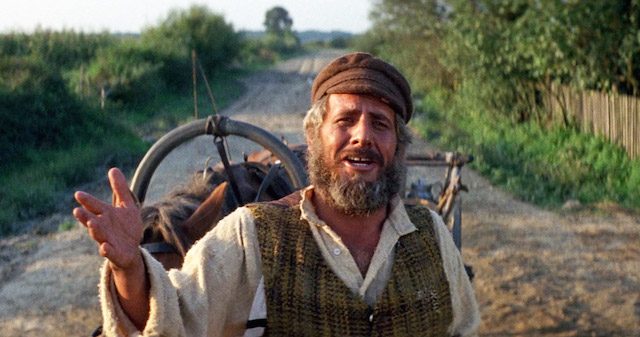
The musical “Fiddler on the Roof” contains the following monologue:

“A fiddler on the roof. Sounds crazy, no? But in our little village of Anatevka, you might say every one of us is a fiddler on the roof, trying to scratch out a pleasant, simple tune without breaking his neck. It isn’t easy. You may ask, why do we stay up here if it’s so dangerous? We stay because Anatevka is our home. And how do we keep our balance? That, I can tell you in a word—tradition!
Because of our traditions, we’ve kept our balance for many, many years. Here in Anatevka we have traditions for everything—how to eat, how to sleep, how to wear clothes. For instance, we always keep our heads covered and always wear a little prayer shawl. This shows our constant devotion to God. You may ask, how did this tradition start? I’ll tell you—I don’t know! But it’s a tradition. Because of our traditions, everyone knows who he is and what God expects him to do.

Tevye’s character is a Jewish father standing at this intersection of religious tradition and compromise in the name of progress. He points to one of the reasons why traditions are formed and that is balance. Traditions and rituals are established to help provide stability and order to our lives.

Rituals also help reduce anxiety and increase confidence even for those who do not believe they are beneficial:

Recent research suggests that rituals may be more rational than they appear. Why? Because even simple rituals can be extremely effective. Rituals performed after experiencing losses – from loved ones to lotteries – do alleviate grief, and rituals performed before high-pressure tasks – like singing in public – do in fact reduce anxiety and increase people’s confidence. What’s more, rituals appear to benefit even people who claim not to believe that rituals work. While anthropologists have documented rituals across cultures, this earlier research has been primarily observational. Recently, a series of investigations by psychologists have revealed intriguing new results demonstrating that rituals can have a causal impact on people’s thoughts, feelings, and behaviors. (“Why Rituals Work,” Scientific American)

At practice and before games my high school football team went through the same “warm-up” routine. Some of the reason for this was to physically prepare us to prevent injury through stretching and get us warmed up. But the other part, perhaps even the larger and more significant part, is what this ritual did psychologically to calm our nerves and get us mentally prepared. This practice and pre-game ritual made us better individually and also helped our cohesiveness as a team.

Beyond that, it is what Jesus taught and showed by example. Jesus did not entirely do away with his Jewish rituals and traditions. In fact, he added to them, going as far as to give the disciples a template for a simple prayer (given in contrast to the arrogant public prayers of religious elites and “babbling like pagans”) and this “Lord’s prayer” is still practiced—even in Protestant churches. If one understands the value of Baptism and Communion then there should be no argument. Rituals are important to help to pattern, influence and shape our minds.

Traditions provide us with a structure that helps us to navigate our lives. When Paul urges believers to conduct their worship “in a fitting and orderly way” (1 Corinthians 14:40) it is not intended to stifle their freedom or individuality. It is rather to free them from chaos and confusion. We are creatures of habit, we do not do well in a constantly shifting environment, and therefore ritual is even more important in these tumultuous times.

As Tevye said, traditions are reminders of who we are and what God expects from us.

So what to do with dead orthodoxy?

It is fairly obvious that people can continue in religion long after they’ve become spiritually dead. Ritual and tradition, while a benefit to the faithful, cannot preserve faith. Christianity is not as simple as checking the right boxes. As Jesus told the perplexed Nicodemus “you must be born again” and about how the Spirit works like “wind” that “blows wherever pleases” (John 3:1-21) there is a profound mystery in this that goes beyond a religious program and all human rationality.

Protestants, of all people, should know this. Every generation there is a new method that comes along, another “remnant” group shilling their own version of the Gospel, the next author trying to pump the purpose back into Christianity or yet another list of fundamentals, ordinances or doctrines, and all these movements eventually seem to end up in the same place again. Often these re-inventors end up leaving their children even more ignorant of church history and with even less to grasp onto. Some might declare themselves to be the more pure, but they are also void of any tradition with staying power and the proof is in the legacy they leave.

Dead orthodoxy is a result of dead faith. And, in the same manner, that new window dressing won’t help to stabilize a wooden structure weakened by termites, reinventing traditions and rituals will never bring spiritual life back where the church has fallen off its foundation. The foundation of faith is Jesus, his faithful church is constructed upon that foundation—with the traditions it has passed on both in written and spoken form for our benefit—and there is no spiritual life gained in throwing this legacy out.

In fact, it is arrogant to think that we would be better to start from scratch and create our own new orthodoxy rather than draw from the experience and wisdom accumulated over many generations. It is basically to say that we today are better than all those faithful Christians of the past two millennia who kept these traditions and saw fit to pass them on to us.

  • Does the ritual of Baptism ever take away repentance?
  • Can our Communion practice come at the expense of our love for Christ’s body?
  • Should we stop celebrating Christmas and Easter because they aren’t found in the Bible and have been corrupted by American culture?
  • Our ridding ourselves of these established and orthodox Christian practices will not draw us any closer to God.

Yes, the foot-washing tradition practiced at my Mennonite church is worthless if the act does not truly represent our heart. The veiling is often associated with the failures of Mennonite men to lead in the example of Christ and thus the practice of the veil is often discarded by ex-Mennonite women. But both represent cases of throwing out the baby with the bathwater. It is not the ritual of foot washing or the imperfect application of 1 Corinthians 11:2-16 that is at fault. Tradition and ritual should never be blamed for our lack of those things that should come from the heart.

True, faith is not established upon religious rituals or traditions and they certainly can be corrupted. The apostle Paul had to sternly warn early Christians against the abuse of the Lord’s Supper and had to further define the practice in an effort to prevent them from abusing it. But what he didn’t do is throw his hands up and say: “Okay, no more Communion, let’s go back to the basics and just show our love for each other through charitable acts!” No, he urged them to rediscover, not reinvent, and that is what the faithful do.

The solution to dead orthodoxy is not reinvention. The solution to dead orthodoxy is to address the real problem and renew the heart of faith that makes the tradition meaningful and allows the ritual to come alive.

What tradition should we keep?

Every denomination has rituals and traditions. The format of a Mennonite service, for example, intended to be a bit less formal, can be very dry and predictable. The song leader leads some songs, men argue our pet issues in Sunday school class while women sit in stony silence in theirs, the deacon (after pleading for us to think about the meaning of the hymns we just sang) goes through the laundry list of activities and repeat prayer requests, after another song the preacher does his thing as some doze in the pews, and finally, the congregation is dismissed to talk about farming, hunting, sports or politics.

At some point, all-new “movements” end up creating a new ritual and tradition. John and Charles Wesley introduced a radical new “methodical” approach to study and life. This eventually became the “Methodist” denomination. Mennonites take their denominational name from Menno Simons, a Catholic priest that became caught up in the Anabaptist movement, and now are mostly an ethnic church known for a “peace witness” and shoo-fly pies.

Not all religious rituals and traditions are equal in history or value. Sunday school, revival meetings, VBS, “sweetheart banquets,” mother’s day celebrations, Bible schools, and church retreats are part of the Mennonite church calendar, but they are certainly not the equivalent of Ascension day, Lent season, Paschal feast or many of the other long-established orthodox practices that some have abandoned in the past few centuries. I would rather we started to look at what was established early and has worked for many generations than try to create a dumbed-down, less historically grounded version.

The tradition of many Protestant churches has become so watered down there is little left to reinvent besides the Bible. As a result, those seeking an emotional high through change are running out of options and when their current experience isn’t satisfying anymore, some decide to toss the Bible next. That is the progressive approach. That is the approach that confuses their own temporal feelings of pleasure with spiritual gain.

In conclusion…

Faith is not created by ritual and tradition nor can it be increased by discarding them. Spiritual life comes through obedience and is also a mysterious work of God. We aren’t saved through our religious devotion. A person can go through the motions of Baptism, Communion, foot washing or any other orthodox Christian practice without ever having a change of heart.

That said, the truly faithful do benefit from the reminders, the structure, and patterns for behavior that orthodox rituals and traditions provide. In my own experience, it has helped me to worship in a manner that has been established over many generations. To join together with that “cloud of witnesses” (Hebrews 12:1) and to worship as Christians did for thousands of years has been a tremendous experience that cannot be duplicated with a new light show and smoke machine.

A person who burns down their house because they don’t like some of the decorations on the walls might be momentarily free. But the enjoyment and empowerment of this newfound simplicity and freedom will soon be a desperate struggle to protect themselves from the elements. And the same goes for those who think they gain through taking an eraser to the rituals, traditions and established orthodoxy of the church. The benefits are fleeting and the cost of trying to restore what was lost is great.

Yes, some necessary structure can be built back in a generation or two after the full loss of the change is felt, but not without slavish effort to restore it and where is the freedom in that?

A life unfettered by any established ritual and historical tradition might seem ideal for the freedom and simplicity that it promises. However, not all is as advertised, the freedom is an illusion and the reality created is often quite complicated. Taking a wrecking ball to an established order often leads to only chaos and more confusion. Worse, it robs the next generation of their religious inheritance and leaves children worse off than their perpetually dissatisfied parents.

Our faith should be founded on Jesus, our religion grounded on the truth of his word, our life lived in obedience to the Spirit, and that means keeping the traditions passed down by his church. Spiritual life is restored through genuine repentance and not by abandoning ritual. Renewed faith comes with our humble obedience and not by reinventing traditions.

Jesus did not discard all rituals and tradition nor should we. There is a place for both in the church. It is a connection that we need now more than ever in the shifting sands of our time. Perhaps it is time for some reflection, rediscovery, and restoration?

When You Die Along With Your Dreams

Standard

“He had come a long way to this blue lawn, and his dream must have seemed so close that he could hardly fail to grasp it. He did not know that it was already behind him, somewhere back in that vast obscurity beyond the city, where the dark fields of the republic rolled on under the night.”

Those words have haunted me since I read them in high school.  Jay Gatsby was a fictional character, a creation of F. Scott Fitzgerald’s mind, but his story of seeking something from his past (a something that seemed close enough to grab yet was already forever behind him) has stuck with me.

Gatsby’s fixation, a moment from his youth, a girl named Daisy, continued to flirt with and torment him.  The green light at the end of her dock across the water was to him a beacon of hope.  He had taken the long way around (as one not born rich) and worked hard to increase his social status, he had achieved more than most men who started where he did—yet he still was not acceptable to her or those of her class and never would be despite his effort.

“…but now he found that he had committed himself to the following of a grail. He knew that Daisy was extraordinary, but he didn’t realize just how extraordinary a ‘nice’ girl could be. She vanished into her rich house, into her rich, full life, leaving Gatsby—nothing. He felt married to her, that was all.”

Daisy, to everyone besides Gatsby, was a frivolous person, oblivious to the carnage in her wake, and a strange obsession for a man who had everything.  But to him, in his mind looking backward, she represents something that had escaped him, perhaps the innocence of his youth or just a moment of time that passed him by that could not be recaptured despite the greatness he achieved.  It could be as simple as his wanting her acceptance.

Ultimately Gatsby’s dream of a restored youthful romance ended in his actual death.  He was murdered, the result of a confusing set of circumstances involving Daisy’s recklessness, and his deluded hopes died with him.  It was sad end, but almost the most merciful end, because he was locked in and could not escape a tragic fate.

The Mennonite Gatsby…

I’ve always been a nostalgic and sentimental person.  For better or worse, I’ve often been last to leave, the one who held on a little longer, and a person guided more by loyalties than practical concerns.  This disposition is probably why Gatsby’s hopeless pursuit of things already behind him had resonated with me.   It was sometimes difficult for me to distinguish the past from the future.

This backward orientation is also part of my religious cultural inheritance.  Mennonites, like other Anabaptist groups, seem to find most of their identity in defining historical figures and moments.  Ideas like non-conformity, while originating as a reference to a radical transformation of heart, have become primarily about maintaining a cultural status quo and preserving a Mennonite appearance.  Mennonite attempts to re-brand their denomination usually reach backward for their inspiration.

Unfortunately, the past, no matter how hard you reach for it, will always stay right beyond your grasp.

And, eventually, a person reaching back rather than forward will sacrifice the only opportunity they have for a future.

There was an ideal within the Mennonite church that had held me captive for many years.  It is the story of those who do all the right Mennonite things, who find their perfect Mennonite partner, have their beautiful half dozen kids, find their special place in the church, and feel good about themselves in the process.  I had failed to achieve at many points along the way and still had hopes that someday the right pieces would fall into place for my happily-ever-after story to begin.  It was the day that never came.  My Mennonite dream was somewhere in my past, forever behind me, but I was so heavily invested and didn’t know how to let go.

In the past year, mostly in one cataclysmic moment, the dreams of my continued participation in the Mennonite church were extinguished.  It was not that I was disallowed, I was not excommunicated nor was it physically impossible for me to attend, but the desire to belong that had propelled me onward for many years had disappeared.  After years of struggle, after years of faithful devotion to a hope against hope, there was simply nothing left about the denomination for me to love.

Could Gatsby have continued to live on after his dream died?

The outcome I had feared was now upon me and inescapable.  But, unlike Gatsby whose end came with poetic grace, my story continued brutally on—a forced march into the void that had become my life.  There was no longer a reason within myself to continue on.  Had I not had someone who needed me, who told me that if I go to take them with me, I would certainly have ended my own miserable existence.

I continued to walk although dead inside.

I continued to do my job but without a reason besides that one person who had their hopes tied up in me.

Later, in the spring, I mourned with my grandpa who lost his wife of six decades.  He had lost the wife he knew, who spent all those many years faithfully beside him, who shared a part in so many of his memories and could never be replaced.  Her death had profound implications for someone who had hoped to someday achieve what they had.  It is a dark moment of realization that all of our cherished dreams will eventually die—only my dreams of having what my grandparents did in their years together died before ever being born and thus would never get so much as a decent burial.

In truth, what was me has died with my dreams and is now gone forever.  I am the same person and yet there is this strong feeling that I’m a different person in a body that was once occupied by someone else.  I don’t care about many of the things that I once did.  I’m not as afraid to take risks that were once impossible for me.  And, nearly a year after setting foot in my old church, I do not miss any of it.  My friends from the past remain my friends, but there is nothing about being Mennonite that appeals to me like it once did.  Even discussing Mennonite issues has become more difficult because it has stopped mattering anymore.

I’ve done what was impossible for me this past year.  I’ve left the Mennonite denomination and have no intention of going back—there is nothing there for me anymore.  There is not a feeling of loss nor even understanding of why I longed to be a part of everything there.  I’m living beyond the death of my dreams, I’ve died with my dreams, and I am a different person.  My Mennonite dream betrayed me, it left me to die cold and alone, but God’s love never left my side.

My hopes built over many years had expired.  However, by God’s grace, I’ve continued on in love and have found deeper faith.  We will all die, everything in this world will pass away, and with it even the meaning of our struggles here.  But, after all, is stripped away from our existence, gone forever and never to return, only true love remains.

A friend from my new church posted this…

“Everything betrays you: family, friends, acquaintances, riches, sensory pleasures. Even your own body will leave you at some point. All the elements of nature deceive you. So make sure you cleave to God, because He alone is love.” —Saint John of Kronstadt (20th century)

In Search of Authenticity at an Amish Wedding…

Standard

Protestantism aimed to strip away the inauthentic part of Christian tradition and, in the process, fractured the church into many competing sects all claiming to be the authentic article.

I was reminded of this while attending an Amish wedding and thinking of how quickly many outside of this peculiar tradition would dismiss Amish forms as dead religion.  The rituals of the service, all in German, while beautiful in their own rite, did not speak to me as an English speaking person.  I’m also doubtful the words did much for the many dozing throughout the three hours of singing and sermon.

Many Evangelicals, because Amish do not hand out tracts or speak of their “born again” experience and whatnot, openly question the salvation of Amish.  This includes many conservative Mennonites who (while also denouncing other Evangelicals as being too unorthodox) at least go through the motions of missions and schedule “revival meetings” every year to remind each other to be more authentic.

The Dilemma of a Doubly Non-conformed Mennonite…

Normally, in a traditional Mennonite context, non-conformity means conforming to their written (and unwritten) standards and being intentionally different from their “worldly” neighbors.  But for me non-conformity has always meant more than only doing things acceptable for a Mennonite.  For me non-conformity meant a) independence from public school peers and also b) authenticity at church.

I have spent my life as a non-conformed Mennonite.  This was a constant tension for me.  It made me uncomfortable with inauthentic conformity to Mennonite culture yet also always longing for full acceptance and wishing to be fully conformed.  I never wanted to be anything other than Mennonite and accepted there.  But it was equally important, as one seeking to be authentic as a matter of conscience, that I never do anything just to be accepted.

In practical terms this meant that I would not go to Bible school or to the mission field hoping to find a mate.  I know this is how many Mennonites do find a partner (despite their stated intentions and anti-fraternization policies) but it seemed dishonest to me.  So, as a result of this conviction to be forthright, I didn’t go and planned to go only when the reasons for going fully matched my expressed aims.  That, more than anything else, is probably what ensured my bachelor status and one of many ways my desire for authenticity cost me.

Doing anything without a full commitment, including singing hymns while down and only half-hearted, was painful for me.  I would sooner risk offense and remain silent than utter words without being completely genuine.  For me authenticity meant not going through the motions and not doing cliché things only to please culture expectations.  Unfortunately, in a culture that values conformity over authenticity, this was at odds with my hope for full acceptance.

What Does It Mean to Be Authentically Christian?

The other day I was talking to a couple curious about my religious roots.  The question came up, “Do Mennonites love Jesus?”  To that I answered “yes” but then went on to explain what differentiated Mennonites from other denominations.  Mennonites, like their Amish cousins, claim to love Jesus.  However, to be one of them you will need to prove your authenticity by keeping their traditions and following their rules.

Sadly, being authentically Mennonite does not make a person is authentically Christian.  Even assuming that Mennonite standards were absolutely correct, even if a person were able to follow those standards perfectly to the letter, and even if these forms are of temporal benefit, there is no salvation to be found in religious conformity.  We know this because Jesus said this when he encountered a man who had kept his religious tradition perfectly and was still lacking something:

Just then a man came up to Jesus and asked, “Teacher, what good thing must I do to get eternal life?”

“Why do you ask me about what is good?” Jesus replied. “There is only One who is good. If you want to enter life, keep the commandments.”

“Which ones?” he inquired.

Jesus replied, “‘You shall not murder, you shall not commit adultery, you shall not steal, you shall not give false testimony, honor your father and mother,’ and ‘love your neighbor as yourself.’”

“All these I have kept,” the young man said. “What do I still lack?”

Jesus answered, “If you want to be perfect, go, sell your possessions and give to the poor, and you will have treasure in heaven. Then come, follow me.” (Matthew 19:16-21)

We read that the disciples were “greatly astonished” by what Jesus had told this man.  How could anyone be saved by this new standard that Jesus gave?  This man had followed all the rules.  He was the good Mennonite, did his missionary service, attended every service, tithed faithfully and was a reputable man, perhaps even homeschooled his children, but somehow this was not enough for Jesus.

1) Authenticity is not preserved in keeping tradition…

Tradition is intended to guard authenticity.  Many measure the authenticity of others by how they measure up against their own tradition.  Mennonites question if authenticity can be found amongst Amish singing their centuries old Ausbund hymns.  Those not Mennonite, despite admiring our devotedness to our religious practices, question if we love Jesus.

Early Anabaptists and early Christians were right to understand that authentic Christianity was about more than keeping religious traditions.  In fact, they often, to the vexation of the religious, dispensed with the established rules and defied tradition.  They are like Paul and Barnabas who were adamant in their opposition to defenders of tradition:

Certain people came down from Judea to Antioch and were teaching the believers: “Unless you are circumcised, according to the custom taught by Moses, you cannot be saved.” This brought Paul and Barnabas into sharp dispute and debate with them. (Acts 15:1,2)

Basically these Judaizers (Galatians 2:14) were trying to force non-Jewish converts to keep Jewish customs and be circumcised as a condition for acceptance.  But the apostle Paul preached against this and used language quite strong to express his contempt:

Mark my words! I, Paul, tell you that if you let yourselves be circumcised, Christ will be of no value to you at all. Again I declare to every man who lets himself be circumcised that he is obligated to obey the whole law. You who are trying to be justified by the law have been alienated from Christ; you have fallen away from grace. For through the Spirit we eagerly await by faith the righteousness for which we hope. For in Christ Jesus neither circumcision nor uncircumcision has any value. The only thing that counts is faith expressing itself through love.

You were running a good race. Who cut in on you to keep you from obeying the truth? That kind of persuasion does not come from the one who calls you. “A little yeast works through the whole batch of dough.” I am confident in the Lord that you will take no other view. The one who is throwing you into confusion, whoever that may be, will have to pay the penalty. Brothers and sisters, if I am still preaching circumcision, why am I still being persecuted? In that case the offense of the cross has been abolished. As for those agitators, I wish they would go the whole way and emasculate themselves! (Galatians 5:2-12)

Paul is saying that these traditionalists are at odds with authentic faith.  He comically calls these defenders of circumcision to go further and completely emasculate themselves.  It seems that the real problem with the Judaizers was not that they followed Jewish customs themselves, but that they tried to force to new converts to keep their traditions as if salvation depended on them and this came at the expense of authentic Christian love.

2) Authenticity is not a produced by destroying tradition…

Many in search of authenticity abandon tradition and try to rebuild from scratch.  This has been the modus operandi of many since Martin Luther hammered out his ninety-five theses in 1517 in protest of the selling of indulgences and has led to the great fracturing of the church.  Those seeking authenticity apart from established church traditions have gone in a thousand contradictory directions.

Some think authenticity comes from spontaneous and disorderly outbursts during church services, which goes against Paul’s instruction in 1 Corinthians 14:26-40:

If anyone speaks in a tongue, two—or at the most three—should speak, one at a time, and someone must interpret.  If there is no interpreter, the speaker should keep quiet in the church and speak to himself and to God.  Two or three prophets should speak, and the others should weigh carefully what is said.  And if a revelation comes to someone who is sitting down, the first speaker should stop.  For you can all prophesy in turn so that everyone may be instructed and encouraged.  The spirits of prophets are subject to the control of prophets.  For God is not a God of disorder but of peace—as in all the congregations of the Lord’s people.

Originality is not evidence of faith, innovation in worship is not a sign of deeper spiritual life, and being anti-formality does not make a person more authentically Christian.  And, according to Paul, “God is not a God of disorder but of peace…”

In practical terms, this means God is probably not bedazzled by our light shows and high-powered musical programs.  Conversely, nor is God likely to be impressed by our long-winded sermons, our wielding of giant leather-bound Bibles on Sunday mornings, our flowery prayers with “thees” and “thous” nor any of our other attempts to create authenticity apart from living in true faith and loving as Jesus commanded.

In a generation or two those who attempt to remedy dead orthodoxy by destroying tradition often end up in a weaker position and with a tradition more corrupt, more incomplete and more unbalanced than the one they left behind.  Their innovations evolve into forms and soon the only stability they have comes from their condemnation of everyone who doesn’t conform to their own particular denominational brand.

3) Authenticity transcends our dichotomies…

Evangelicals (especially conservative Mennonite evangelicals who fear being confused with their more non-conformed brethren) look down on Amish and question the authenticity of their faith because they don’t use evangelical terms to describe their experience.  But, in my working with Amish, I have found them to be very genuine and generous towards me.  I do not see them as much different from conservative Mennonites in their focus on outward conformity and there is nothing that makes the conventions of modern Evangelicalism more authentic than the more traditional alternatives.

You can worship in a non-denominational house church or recite liturgy in a cathedral in Rome and miss the point of Christian faith entirely in both places.  As many Mennonite ordained men lament, pleading and trying to prod through the blank stares of their congregations, “Did you think about the words you just sang?”  And thus they prove that even the best-written hymns of the past couple hundred years can be sung beautifully and yet the meaning of the words missed.  Which makes me wonder why they think their own appeals will be heard?

Whatever the case, true authenticity is not a product of the religious form one follows, it is not a matter of being more or less traditional.  I have actually found it easier to worship God in a liturgical service than I did in the less ordered and less orthodox Mennonite setting that I grew up in.  Why?  Well, because it is an authentic love of God that gives our worship life.  I’ve found it easier to lay aside all earthly cares while in a liturigical service.  For me there is greater peace in the cloud of witnesses and ancient tradition than there is in the many opinions of a men’s Sunday school class.

That said, I firmly believe there are authentic Christians in the whole swath of traditions old and new from Anglican to Zionist and everything in between.  What matters, what makes a Christian authentic, is not the costume that a person wears nor the prescribed language they use, what truly matters is whether or not we love each other as we were commanded.  All tradition, and all abandonment thereof, is only meaningless noise without love:

If I speak in the tongues of men or of angels, but do not have love, I am only a resounding gong or a clanging cymbal. If I have the gift of prophecy and can fathom all mysteries and all knowledge, and if I have a faith that can move mountains, but do not have love, I am nothing. If I give all I possess to the poor and give over my body to hardship that I may boast, but do not have love, I gain nothing. (1 Corinthians 13:1-3)

Mennonite Values and Love That Transcends Difference

Standard

The other day it occurred to me that many of my most faithful Mennonite friends married across divisions of ethnicity and race.  In fact, three out of the three friends I was with yesterday are married to women who were born in foreign countries and later became US citizens.

Interracial marriage is not unusual in modern America anymore.  A full 17% of newlyweds in the United States married across racial or ethnic lines according to Pew Research Center.  This has been a steady trend for many decades and with this increase in interracial marriages the stigma has decreased—only a small percentage of Americans remain opposed to marriages across racial lines.

Mildred and Richard Loving who, in 1967, refused to be separated even when facing prison time.

Mennonites have tended to lag behind the general population in many regards and this is one of those areas.  It was only a few years ago that my Mennonite pastor (educated at Bob Jones University where interracial relationships were banned until the 1990’s) cautioned me against this kind of relationship citing cultural differences.  It is probably safe to assume that his views are not unusual in the conservative end of the Mennonite denomination.

Have Mennonites have began to catch up with the mainstream?

I know that interracial dating was unusual and even discouraged in the Mennonite church of my youth.  That is why my realization about so many of my friends being married interracially was astonishing to me.  I’m not sure if it is only a local anomaly or a general across-the-board trend.  However, I do know that there were very few others in the conservative Mennonite church when I was in a romantic relationship with a black woman just over a decade ago.

Some of it could be explained by inner-city outreach projects.  Typically Mennonites have been raised in rural parts of the country and sheltered from non-Mennonites.  My own experience was slightly different due to my public school education, which likely made me more open to relationships outside of my own ethnic group (my first real crush was not a Mennonite or white girl) and yet many of my religious peers caught up with a bit of exposure to the world outside their ethnic enclaves.  Followers of Jesus Mennonite Church (in Brooklyn, New York) accounts for many of the relationships across racial lines that I know about in the more traditional end of the denomination.

But, before anyone gets too excited, this does not mean attitudes have changed much with most conservative Mennonites.  I have heard many young men (who likely have not met too many girls besides their sisters or cousins) state that they would not be interested in dating a girl of a different race.  It is probably even less acceptable for a Mennonite female to marry outside her ethnic fold, and many of the couples in interracial relationships do not remain Mennonite.

Generally one cannot deviate too far from the Mennonite cultural norm and expect to be embraced.  It was hard enough for me, a Mennonite guy with some unorthodox views, to find a girl born in a Mennonite home that would give me the time of day.  I could not imagine being a convert from outside trying to get a date with someone of a popular family with an established Mennonite pedigree.

Mennonites barely have the faith to ask or date anyone—let alone someone who doesn’t meet a long list of qualifications, race and ethnicity likely included.

Why do some Mennonites marry across racial or ethnic lines?

One thing my friends have in common is that they married older.  I do not see them as purposefully trying to find girls from a different ethnic group or race either.  Most of them are down to earth and practical guys who found a girl who gave them a chance and connected with them.  It seems that girls from non-Mennonite background are more willing to be friends first, are less driven by impossible purity culture ideals, and much more appreciative of a guy who treats them with respect—even if he is not tall, smug or otherwise full of himself…

By all appearances, those Mennonites marrying across racial lines are not trying to make a political statement.  Ironically, the virtue-signaling types (the most outspoken cradle Mennonites about racial issues) seem to marry the whitest and then preach to everyone else about about being more accepting of immigrants, etc.  Those actually marrying across racial lines, on the other hand, are doing it for pragmatic reasons and real love for the person they married rather than to be superior to anyone else or prove anything about themselves.  And that’s not to say my friends will not defend their wives and children from racists—they might not be vocal or making a show of it, but are solid men and their loved ones not to be trifled with.

Those who married across racial lines seemed motivated truly by love.  They would have likely also married someone of their own ethnicity or race had the right circumstances come along.  But, that said, they are extraordinary, they married out of a love that could transcend superficial differences and therefore their relationships have a potential others do not.  They were willing to go outside of the conventional ideals of their parent’s generation, even of their religious peers, and may have even faced some extra resistance along the way.  That may be why they are some of the most loyal, caring and mature people that I know—they are simply willing to go in love where others have not.

My recommendation to those on the fence…

Those advising against interracial dating often don’t have a clue what they are talking about.  Yes, there are differences to overcome, but that is also true of any committed relationship and it certainly is not reason to quit before you started.  Go on some dates, find out if your personalities compliment or collide and then decide your next step—is that really too difficult or complicated?

It does not seem that my friends who married interracially regret their choice.  I do know there are a number of those who married ethnic Mennonites who have had second thoughts.  Indeed, sometimes those seemingly perfect candidates (according to Mennonite cultural ideals) are not what they appear to be at first glance and pleasing their near-impossible standards can be a real headache.  So, if it is a choice between being taken for granted by some entitled brat or more fully appreciated by someone who has seen real struggle in their lives, isn’t the right choice obvious enough?

Take my advice guys.  Stop pining for that girl that snubbed your first inquiry.  If she didn’t see your interest in her as reason enough to go on a date or two, then she isn’t worth any more of your time.  Quit being a pathetic lapdog.  That will only feed her sense that you have nothing to offer her (that she can’t already have) and further convince her that she is out of your league.  Be a man, go where you are needed in the world, be a real leader, move on.

For those girls who have never been asked, same deal.  Broaden your horizons, stop trying to please people who don’t lift a finger on your behalf, and you might soon find there are many faithful Christians who don’t have a familiar Mennonite surname.

Godly character, not skin color or religious pedigree, is what makes a marriage work.

Are You Better Than Joel Osteen?

Standard

Religious fundamentalists and their irreligious secular counterparts have found something in common—that being their shared hatred of Joel Osteen.
Osteen, a best-selling author, pastor of the gigantic Lakewood Church in Houston, has long been bashed for his positive spin on Biblical teachings and preaching what is often called prosperity gospel. Many on the religious right have long regarded him as a false teacher for the lack of fire and brimstone in his message. Meanwhile many on the left have long accused him of being hypocritical for stating that homosexuality is a sin (or his “gay problem” as Salon describes it) and for his embrace of wealth.

The latest media-fueled outrage started when JustOn Baze, a gay activist, found time—in the middle of a hurricane—to visit Osteen’s church. Baze and his friend posted a live video on Facebook that showed some parts of the exterior of the Lakewood building unflooded. His vitriolic commentary launched a shaming campaign on social media, which was reported on dutifully by the clickbaiting corporate media, and soon became a unique opportunity for activists on both sides to join forces.

Overnight, because the church was not immediately open, many on the right and left lined up to unleash their judgments of this celebrity pastor. No amount of explanation was sufficient, the conclusions had been drawn that Osteen deserves condemnation and now the effort to disparage him is in full gear…

I will not join those critical of Osteen.

I do not judge him. I do not know enough about the circumstances following Harvey to render judgment of his response. I know he has opened the doors after the storm in cooperation with the city efforts and his congregation will likely be involved in the recovery after the deluge.

I also know that most Americans should be careful not to condemn anyone for their wealth. Considering the median income in the US is over $51,000, and it takes only $32,000 to be in the top 1% of income earners in the world, we are all wealthy. Even our poor are provided for through social programs and I’m quite sure those who lost all in Houston will find a way to recover with or without a vow of poverty from Osteen.

When over 90% of Americans households have a car—a privilege less than 9% of the world can share in—we have plenty of reason to be generous and humble. We, as wealthy Americans, even those who lost all in Houston, have a billion reasons not to be judgmental of those wealthier than us. I can’t be critical of Osteen or his congregation when I consider how wealthy I am relative to most in the world.

It is really none of my business what Osteen and his congregation do with their collective resources. Their building, his salary and home, is something they worked for and therefore their perogative.

What good will come from attacking them?

We should consider this admonition:

“Brothers and sisters, do not slander one another. Anyone who speaks against a brother or sister or judges them speaks against the law and judges it. When you judge the law, you are not keeping it, but sitting in judgment on it. There is only one Lawgiver and Judge, the one who is able to save and destroy. But you—who are you to judge your neighbor” (James 4:11‭-‬12)

We should consider the words of Jesus:

“Do not judge, or you too will be judged. For in the same way you judge others, you will be judged, and with the measure you use, it will be measured to you.” (Matthew 7:1‭-‬2)

It is easy to see ourselves as the good guys and feel justifed in our condemnation. But Jesus gives clear warning: We will be judged as we judge. That is good reason not to bash anyone. That is good reason to be gracious to all people—including Osteen.

Where should our focus be?

Our focus should be on living righteously ourselves. Our focus should be on showing true love and compassion to all people and especially where it is needed the most.

This week, looking through friend requests, I saw a picture on one of their pages that broke my heart:

Who will come to her aid?
Who will help the many like her born into poverty?

Filipino street children live like that every day and not just after a natural disaster. My readership is large enough that we could do something big for many children who were not given the same opportunities we have. We could fund an orphanage, programs to help set these children in the direction of success, and still have plenty left over for ourselves.

We don’t need to be better than anyone besides ourselves. Instead of bashing celebrities, our focus should be on being better than our former selves, repenting of our own sins and showing the way through example. That is true Christian leadership, that is the “good news” of Jesus Christ, and our responsibility to the world.

Who shares my vision for street children in the Philippines?

Who would help me in such an endeavor?

Paradox of Faith and Believing Before You Believe

Standard

A few years ago, having finally fully embraced the promises of Jesus, I set out on a journey of faith and pursued the impossible love only possible with faith.  I wanted to transcend that “it” that always kept me just short of success and finally put to rest the fear of being the servant who buried his talent.

My mom had always told me that God had saved me for a special purpose.  My name, she told me, meant strong-willed and the name was appropriate given that my first week of life was a desperate fight to survive.  But my fierce determination and persistence could not have kept me alive.  It is only because of the dedicated care of physicians (including my uncle Elam) and nurses, along with the prayers of relatives and friends, that I am writing now.

Still, that was a battle that didn’t end without some scars both physical and otherwise.  I was the late-bloomer, notably smaller than my same-age peers, often riddled with anxieties, and seemed perpetually stuck trying to catch up—but never able.  There have been many times in my life when it felt like one of those nightmares where you know what to do but your reaction is slowed and you can’t avoid the disaster.

Failure and Moving Forward

Over the years I began to doubt my mom’s words.

What great purpose could I have, a thirty-year-old living in Milton?

But, spurred by faith, I decided it was now or never; I put aside feelings of inadequacy and began to write.  I wrote a book, “Paradox of Faith,” and then started to blog here.  I decided to say “yes” when asked to speak at church and my confidence grew as a result.

However, I still wanted to trust God more; I decided to go all in on faith and reach out for something impossible for me.  I thought I should be a missionary overseas (an activity very encouraged in my church) and yet knew that it was something that I would need some help to do.  So I prayed earnestly for a way to overcome my limitations and then reached out to those whom I trusted were my brothers and sisters in faith.

What I got in response was a cold shoulder and harsh dose of the faithless reality behind their well-polished religious facade.  Not only couldn’t they help me, but they smiled to my face then slandered me behind my back, and drove my faith into the rocks with their complete indifference.  I have to wonder how many of them realize that I’ve stopped attending their church six or seven months ago?  I’m obviously not needed there, nor do I feel especially wanted or truly cared for by most who attend there.

I hit the rocks again.

If it was not for one person, someone on the opposite side of the world, who told me, “if you go, take me with you,” I would likely have ended my life by my own hand.  But, I had helped them through their own time of despair and desperation, I believed they would be thrown back into chaos and confusion if I failed them—I could kill my own hope, but I could not rob them of theirs.  My faith had been ruthlessly murdered by those who were supposed to help it, but my precious bhest was determined to pull me back from the grave.

It has been a real struggle, despite all the good things going on in my life, to see past this failure of faith in my church.  I’ve always been a Mennonite, I wore it on my sleeve, it has been my identity both religious and cultural, where I sought acceptance and validation—but there’s no way to remain there after all that has transpired over the past couple years.

But how do you go forward when you lost your faith?

I cared and yet I didn’t.

I was angry and simultaneously indifferent.

I continued living on the outside but my hope inside was dead.

I wanted to forgive those who had hurt me—but, without faith, how was it possible?  Why would I?

One of the reasons I continued writing was because of the unconditional love of a good stranger, now my editor and friend.  They came to me like the angel that ministered to Elijah, telling me that my writing had spoken to them and offering to help.  This wonderful person offered to be my faith when I had none and didn’t abandon or harshly judge me.

I began attending a church of another older Christian tradition.  That choice was the result of a fatherly figure who came into my life about a year prior and had gained my trust with his humility.  I was amazed by his prompt and detailed answers to my inquiries.  For the first time in years I left church feeling renewed.

But then something happened.  I spooked.  I looked back and became mired in those questions nobody could answer.

I did not attend any services for a couple months.  However, a few weeks ago, because of my special someone, my bhest, telling me she needed me to be strong in faith for her, and a timely meeting with my wise fatherly friend, I decided to follow the paradoxical advice given to John Wesley who also doubted:

“Preach faith until you have it; and then, because you have it, you will preach faith.”

As someone who sought to be authentic, that advice (basically “fake it until you make it”) bothered me when I first read it years ago.  It seemed dishonest to me.  It also seemed silly and irrational.  If we must fake something being real for it to become real in our mind, then what’s the point?  Isn’t that the very definition of delusion? Why not only believe what is real instead?

But now the choice wasn’t about me anymore, it was about the one that I loved, my bhest, and to love them properly required me finding my faith again.  I could not find it in those who took it, nor produce it of myself.  I was already reaching down as deeply within myself as I could to find faith and coming up empty.  And yet, right at the right time, right before a meeting with my fatherly adviser, my mind was ready to receive some council.

We met to discuss my “God problem” and first agreed that there is no rational means to prove the existence of God.  With the mystery of God established, he broke my dilemma down to two options: 1) accept a life void of deeper meaning and purpose—nihilism, or 2) live with the assumption of something greater to come, embrace the mystery of God, and have faith.

He encouraged me to attend services again and that’s what I did.  My questions are not all answered, but with his help I’ve established the right trajectory again, and—oddly enough—my feelings of faith have begun to return as I act in faith for those whom God loves.

What is the paradox of faith?

Jesus, according to the Gospel of Mark, came upon a crowd in an uproar and asked what was going on.  A man, the father of a sick child, explained that the disciples could not heal his son.  To this, Jesus tells the crowd, “You unbelieving generation, how long shall I stay with you?” and then requested the boy be brought to him.  The father explained the boy’s condition then gave his plea:

“…if you can do anything, take pity on us and help us.

“‘If you can’?” said Jesus.  “Everything is possible for one who believes.”

Immediately the boy’s father exclaimed, “I do believe; help me overcome my unbelief!” (Mark 9:22b‭-‬24)

This father seems to have both belief and unbelief in him.  His initial plea is so weak that Jesus repeats it back as if to test the man a bit.  At this the exasperated father beautifully expresses a contradiction that only a person who has truly ventured out in faith can know: “I do believe, so help me to believe!”

It is this father’s contradiction that has become real to me as I ventured out in faith, the deeper we go the less we can rely on ourselves and must reach for something bigger.  Here are three paradoxes of faith I have encountered:

A) True faith is acting in faith before you have faith.  Faith is setting out in a direction, even when the outcome is uncertain, often while facing controversy and even despite some self-contradiction.  Faith is not the absence of doubt.  Faith is taking the first bold step in spite of your fears, anxieties and doubts.  Faith means deviating from what is our natural inclination, letting go of our own human understanding and reaching for what is only possible with God.  Faith, from a practical standpoint, is courage in the face of the impossibility.

Faith requires different things of different people.  It could mean swallowing pride and dipping in your own version of the river Jordan like was required of Naaman.  It could mean selling all you have, giving up your awesome plans and leaving your family behind.  It could mean marriage or remaining single.  There is no one-size-fits-all prescription in faith.  But faith is never passive, nor does it mean being placid; it takes persistence, and requires that we step out of the boat, like Peter:

But Jesus immediately said to them: “Take courage! It is I. Don’t be afraid.”

“Lord, if it’s you,” Peter replied, “tell me to come to you on the water.”

“Come,” he said.

Then Peter got down out of the boat, walked on the water and came toward Jesus. But when he saw the wind, he was afraid and, beginning to sink, cried out, “Lord, save me!”

Immediately Jesus reached out his hand and caught him. “You of little faith,” he said, “why did you doubt?” (Matthew 14:27‭-‬31)

That is an astonishing story.  Peter is both believing and disbelieving at the same time.  He challenges Jesus to prove that he is who he claims to be: “Lord, if it be you…”  Peter, bold as ever, asked for a miracle that applied to him.  There is no passivity or hesitation there, either.  Peter is willing to get out of the boat and attempt the impossible.  He is actually putting to practice the “take courage” part.  He, like the father with the sick child, is asking Jesus: “I believe, so help me believe!”

There are many religious people who avoid the humiliation of coming up empty-handed by re-branding their true faithlessness as “godly contentment” or being “realistic” or not testing God.  But the truth is that it takes no faith at all to sit on your hands, take life as it comes and do nothing.  Faith aims for the impossible at risk of failure.

You don’t have faith unless you practice faith and to practice faith means to love as Christ loved.  Faith is like a muscle that must be exercised to become strong and atrophies when unused.  The exercise of faith is to love your neighbors and especially brothers and sisters in faith.

Faith comes from praxis of faith.

B) Faith is acting in love before you feel love.  Anyone can love as the world loves.  Anyone can “fall in love” with someone who is attractive, adventurous and otherwise convenient to their own personal ambitions.  It is easy to love those who have already proven their value or have what you want, but loving only those who are like you and only because you anticipate getting something in return is not Christian love.

The church of my childhood is good at loving their own and especially good at loving those who represent their ideals.  (I know, because I am like them; I have shared their ambitions, I wanted a Mennonite wife and friends.)  But we are not good at loving those who are different.   We do not love courageously or in faith.  Sadly, with few exceptions, the love I’ve received at my church seems primarily to be a very explicable human kind of love (for biological family or for their religious cliques) and not the exceptional kind of love that transcends differences.

Why don’t we love as Jesus commanded?

The problem is when feelings lead rather than faith.  Many go through the motions of outreach and missions.  However, it is too often only a do-gooder project, a chance to prove our religious chops, a way to feel good about ourselves, and not sacrificial or done in sincere love.  The problem is not that we are bad people.  The problem is that it truly is difficult, perhaps even impossible, to love those who do not produce feelings of love within us first.  We may excuse our lack of love as “being a good steward” and wise use of resources, but could it be that we simply do not have the faith to go beyond our own calculations of another person’s worth?

We use what we know about other people as a reason not to invest in them.  We treat idioms like, “you can’t teach an old dog new tricks” as if they are truths.  We use our past and prejudices as guides rather than give freely to those who ask (Matthew 5:42) and trust God.  We do not act in an open-handed way towards others when we presume to know the future based on what we know of past performance.  Unfortunately, in doing this, we too often feed a self-fulfilling prophecy and are actually contributing to their failure.

The paradox?

Sometimes feelings of love come only after you practice love first.  Sometimes it is only after we have invested significantly in another person’s success that we begin to care about their circumstances.  Faithful love is not based on feelings.  Faithful love is doing more than what we are able to rationalize or justify as prudent in our own minds.  Faithful love means loving even when you may never see the results.

Faithful love is only possible for those who know that they did not deserve love themselves and act accordingly.  We were saved by grace and therefore should show grace to those who need salvation.

C) Nobody can save themselves.  Some of us can live in an illusion of independence, but even those without my traumatic birth experience needed the life support of a mother’s womb to survive and could not exist otherwise.  We are not self-creating nor self-sustaining creatures and all have gained through the work of others.  Nobody gives birth to themselves—not even a hermit in Alaska or Chuck Norris.

The same is true of our Christian life.  No man has saved themselves through their own efforts.  We cannot come to faith and remain faithful outside of Christ and the church he established.  I did not come to faith by my own efforts nor has anyone else.  Even the Bible is a written testimony of faith given, compiled, preserved, translated and interpreted by the church.  We are saved by grace through faith (Ephesians 2:8) and this means that someone else acted graciously on our behalf to even give us a choice to act in faith.

I could get more into the theology and theory here.  But cutting to the chase…

Here’s How the Theory Played Out For Me

My own journey of faith started a new chapter a few years ago.  My faith was stronger than ever, but still could not overcome that invisible enemy that always seemed to keep me just short of success.  So, putting it all on the line, I prayed, “God, make the impossible possible for me” and believed (despite my unbelief) that faith would prevail.

But I did not sit and wait around doing nothing.  I resolved to be an answer to prayer before getting my answer to prayer.  I began to say “yes” (despite my feelings of inadequacy) and became more willing to take on new friendships with strangers that my religious peers would consider risky or dangerous.  I decided to love as I wished to be loved and not worry about my image so much.

Meanwhile, as I reached out in faith, my own hope against hope hit a wall of opposition and from the very people I had trusted to be faithful.  These were supposed to be the ones who would stand up for me, give me a chance, and show me love, but instead I got betrayal and lies.  It was confusing to me.  They would all say that they believed that the extraordinary claims of the Bible were true, but they sure didn’t act like it.

Eventually their doubts became mine.  My experience over the past few years seemed to be only a delusion.  The promises about faith written in the Bible seemed untrue; the existence of God isn’t something we can prove, and I just wanted to be free from the commitment that had just drug my heart through the mud.

Two Are Indeed Better Than One

Two are better than one, because they have a good return for their labor:  If either of them falls down, one can help the other up. But pity anyone who falls and has no one to help them up.  Also, if two lie down together, they will keep warm. But how can one keep warm alone?  Though one may be overpowered, two can defend themselves. A cord of three strands is not quickly broken. (Ecclesiastes 4:9‭-‬12)

It was because of the words of one very precious person that I didn’t act on my suicidal ideations.  A year before it was my turn to save them from their despair.  She was a single mother at the end of her rope, a little lost sheep, in a cold, dark, indifferent world, and not sure where to turn for help.  In her first message, after I accepted her friend request, she basically apologized and told me she was unworthy to be my friend.  My heart was instantly filled with compassion for her and I made it my mission to restore her faith.

Little did I know that a year later she would be acting as my Jesus and refusing to let go of my hand as I slipped beneath the waves.  She was my only reason not to throw in the towel on life.  I lived for her because there was nothing in myself left worth living for.  Later it dawned on me, in my faithfulness to her over the past year, I had sowed the seeds for my deliverance from despair.  In my love for her I found just enough meaning to the fight when I needed it most.

Around the time I had given up on faith, I got a friend request out of the blue.  This person, someone of admirable conviction and unusual love, was excited about something I wrote in a blog about an unnatural love only possible with faith.  Unbeknownst to them, the paradigm of faith that inspired my words was crashing and burning around me.   As much as I wanted to, I could no longer believe my own words anymore and had given up.

I more or less told this inquiring reader, albeit in different words: “the show is over, I was a peddler of nonsense, so move along now and don’t trip on the wreckage of my hopes and dreams.”  But, this new friend, instead of taking my advice, offered to be my faith, to be as Hur and Aaron who held up the hand of Moses:

As long as Moses held up his hands, the Israelites were winning, but whenever he lowered his hands, the Amalekites were winning. When Moses’ hands grew tired, they took a stone and put it under him and he sat on it. Aaron and Hur held his hands up—one on one side, one on the other—so that his hands remained steady till sunset. (Exodus 17:11‭-‬12)

They believed in the mission even when I was too exhausted to continue.  More than that, they offered the love that could only be explained by faith, they loved me through some of my most unlovable moments, and have not once failed in their commitment to be my editor.  It is probably their encouragement that kept me plugging away and writing my experience.

Angels, Transition and Forgiveness

This is where the story gets interesting.  To me, offering to edit my blogs was something only an angel would do.  So, to express my gratitude, while feeling beleaguered like Elijah in the wilderness, I announced on Facebook that I had found an “angel” and that choice of wording would become significant a couple days later.

But just before all that, not having a clue what would soon transpire, before my faith ran into a road block, I had blogged about a job transition that I knew was coming and also a premonition that something else bigger was lurking ahead.  Since posting that blog, the word “transition” had indeed been a big theme of my life.   That is why I clicked on a link about transitions that came up on my news feed.

The video, posted by a Christian friend, was one of those prophetic speakers that play to confirmation bias in the same way that fortune cookies and horoscopes do.  Basically, if you keep an insight vague enough it can be personalized by the reader and applied to almost any situation.  I’m pretty skeptical of these things and normally don’t pay too much attention.  However, the word “transition” in the title had hooked me.

I listened, nodding, as he talked about the difficulty of transition, he compared our transitioning to how an army is vulnerable when moving and explained how God would send an angel to guard over the transition.  Suddenly he had my full and undivided attention.  His advice?  He stressed the importance of forgiveness as necessary for success in the new endeavor—which is a message hit me right in the heart and, after hearing that word, forgive is what I wanted to do.

I had been given someone as an angel to guard over my transition.  I’m not sure if it is just a coincidence or not.  Maybe I’m reading meaning into it that isn’t there?  But the message was a profound reminder that the only successful way forward is the path of forgiveness.

Some Final Thoughts About Faith, Doubt, Encouragement and Love

No man, no matter how strong in faith, talented or independent can do it alone.  We need each other and often more than we know.

Maybe you are too proud to ask for help?  Perhaps you believe faith means stoicism?  If that is the case, then please consider that even Jesus wanted companionship in his hour of tribulation and that some of the most noteworthy characters in Scripture were sometimes cowards even after seeing amazing things directly from God’s hand.

If Jesus literally could not carry his cross without help, why do we think we can bear our burdens alone?

If our Savior struggled with anxieties in the garden of Gethsemane, why do we feel like we have failed because of our own fear and doubt?

There may be times when our faith is tested while we are alone and we must do our best to stand.  But that doesn’t mean we should leave others alone in their trials and tribulations.  Being a member of the body of Christ means “if one part suffers, every part suffers with it” (1 Corinthians 12:26) and James tells us that our faith is expressed by how those in the church help each other:

What good is it, my brothers and sisters, if someone claims to have faith but has no deeds?  Can such faith save them?  Suppose a brother or sister is without clothes and daily food.  If one of you says to them, “Go in peace; keep warm and well fed,” but does nothing for their physical needs, what good is it?  In the same way, faith by itself, if it is not accompanied by action, is dead.  (James 2:14-17)

There will be times where we all stumble and fall in faith.  We should encourage each other.  Do not be impatient when someone does not respond instantly to your love.  Sometimes it takes time for the water and nutrients to soak in.  Healing does not happen overnight for those who have been abandoned or severely wounded by the betrayals and indifference of others.

Who have you encouraged today?

Who have you helped?

My prior investment in others was the only thing that gave me the will to fight on.  The investment of others in my life is the only reason I am here writing today.  Do not neglect the important work of being your brother’s keeper.  Love those nobody else loves.  Love those that are unlovely and require faith to love.

Help With My Impossible Task

The church of my youth is full of nice people; a few did call to check in and probably more do care about me than took the time to inquire.  Most of them are very decent people, in my opinion.  However, I still found myself too often feeling spiritually malnourished while with them and I can’t live with settling for mediocrity or going through the motions.  A final act of betrayal by those in the group whom I trusted most left me spiritually dead and has convinced me of a need to change.  I would not have survived had not God provided ministering angels (in human form) to guard over me and I won’t ask for that again.

Thus, I find myself needing to do the impossible.  I am forced to transition from the church where I spent nearly four decades of my life to an orthodoxy that still feels foreign to me.  It is not my first choice, it has not been easy for me, and yet it is what I must do to remain faithful.  Big chunks of my identity, if not my entire identity, were caught up in my Mennonite denomination and letting go of that is difficult.  And not just that, the church is literally full of my family members; aunts, uncles, cousins and only remaining grandparent.  Until recently it was easy and comfortable to be there just putting in time.  But I know that I must live in faith and Jesus said to leave all behind and follow him.

So, as a final request, please pray for me to have a spirit of forgiveness.  I must do the impossible and move on from the denomination that I loved, but cannot move on while hanging onto my hurts or carrying bitterness.  My sincere faith was treated as garbage, the help provided by those I regarded to be my brotherhood for years was too often given grudgingly and seemingly always too little too late.  It is hard to forgive those do not take responsibility for their actions (or lack thereof) and should do better, but…

“Father forgive them for they know not what they do!”

Fundamentally Flawed: How Mennonites Failed To Be Faithful

Standard

I grew up believing my Mennonite religious tradition originated as a part of the Anabaptist movement.  I would’ve been incredulous had someone told me then that our theological underpinnings and practice actually originated from a completely different source and a much later time.

It has taken me decades to come to the full realization that conservative Mennonites (and especially those in the Charity movement) are not truly Anabaptist anymore.  We have, as a result of years of absorbing teachings from other sources, morphed into something quite different from our fore-bearers.

The evolution has been slow and over many generations.  However, these small changes, added together, have become something profound and with very deep implications.  We might self-describe as Mennonite or Anabaptist, but are, in reality, something else entirely and have a mindset completely different from our ancestors.

If you want to see the contrast, compare us (conservative Mennonites) to our Old Order cousins and then consider how differently we approach things.  We might share the same genetic origins (and surnames) yet do not have much in common as far as our theological ideas and practices.

So, who is real and who is the impostor?

Consider that everything from Sunday school to revival meetings, four-part singing to our eschatological perspective, and Zionism, is not originally Mennonite or Anabaptist.  They were things added (and often with great controversy) within the past century and some only the last few decades.

The reality is that our relatives from a generation or two ago swallowed fundamentalist theological innovations hook, line, and sinker.  They did so without realizing the divergent path this represented.  It might have begun with a subtle change of focus, a slight ideological shift, but the difference in final outcomes is huge.

We have gone from from a question of “is it Christ-like” to one of “is it biblical” and many of us don’t even know why that’s a problem.

Our ancestors might have been radical followers of Jesus.  Yet, most of us, despite our additional Mennonite packaging and a little Anabaptist flair (added back in to make us feel special about ourselves) are simply plain old biblical fundamentalists.

What Is Biblical Fundamentalism?

It is a new idea.  It is a conservative Protestant reaction to modernism.  It is a hermeneutical system that re-imagines “word of God” to be a book rather than something far more dynamic and alive.  It turns belief in Jesus into a process of finding a code of ethics in Scripture and creating doctrine—but misses the essence of what it means to truly follow him.

Biblical fundamentalism is an extension of a Protestant idea.  In fundamentalism the religious experience is centered on Scripture-alone (sola Scriptura) and neglects a large swath of Christian tradition.  It is a heresy only possible since the invention of the printing press.

Before Johannes Gutenberg’s invention, in 1440, and widespread literacy, it would have been a hard sell to convince people that God’s word (or logos) came to the masses primarily in book form.

Fundamentalists have literally deified a book, they made it an object of worship, and yet have irrationally thrown aside the institution of the church that delivered it to them.  They have essentially made Holy Scripture an coequal part of the Trinity, synonymous with Jesus Christ, usually at the expense of the Holy Spirit and almost always at the expense of church unity.  If we look at the long-term results, the fruit of the Protestant reformation has undeniably been the fracturing of the church into smaller and smaller bits.

The Scripture-alone view has led to many bizarre interpretations of the text and a hyper-individualism that makes our unbelieving neighbors seem forbearing and cooperative by comparison.  It has led to a religion characterized by legalism and dogmatism.  Making the Bible into an infallible object has led to weird fixations on particular translations (like KJV-onlyism) that make no sense considering that the original text wasn’t written in old English.

In many cases biblical fundamentalists are simply conservatives stubbornly reading their own preconceived ideas back into the text (or proof-texting) rather than taking an honest and open Berean approach.  Fundamentalism started out of fear and as a defensive posture against higher criticism and modernism.  It is limited because it is based on assumptions that are wrongly taken as infallible truths.

It is a religious perspective that never leads to unity or true brotherhood because it is based on personal interpretation rather than a collective and historical understanding through the body of believers.  In Protestantism everyone has become their own pope and their own individual understanding of the Bible their only god.

When Did Biblical Fundamentalism Enter the Mennonite Tradition?

Anabaptism quickly lost its way after a good start.  It soon devolved from radical faith, that challenged everything, into a religious tradition that couldn’t be questioned.  But despite that, it maintained a distinct community ethic and (after reigning in violent factions) developed a strong peace witness.  Ideas like non-conformity and non-resistance were passed down as a teleological “who we are” rather than a theological argument.

However, that “who we are” was too often missing the spiritual component that inspired it.  As a result, many Mennonites over the past few centuries started to look for energy from outside of the Anabaptist tradition.

Protestant movements that led to biblical fundamentalism have long had an appeal to conservative-minded Mennonites.  Pietism, revivalism and biblical fundamentalism have all breathed life into what had become dead orthodoxy.  But these movements did not share the same theological underpinnings of original Anabaptism.  And, instead of help, they have further eroded the Mennonite community, as many splits since then bear witness.

Biblical fundamentalism took root in the Mennonite culture when the longtime standard of the Schleitheim confession (established in 1527) was supplemented in 1921.  The adoption of “Christian Fundamentals” represented a dramatic change of thinking from anything truly Anabaptist.  It mirrored the polemic (or apologetic) style of the Protestant theologians and borrowed language from their work “The Fundamentals” which is the basis of ‘Christian’ fundamentalism.  The shift in priorities is clear, we went from a more practical lived-out ideal to an argumentative obsession with our “doctrines” and a new fixation on a particular brand of biblical literalism.

Our more scholarly and fighting approach has backfired.  The Mennonite church has split multiple times along “conservative” and “liberal” lines since then, both sides using their own interpretation of the Bible as their basis and coming out at different conclusions.  Our going from a perspective that prioritized loving submission to each other to one that elevates an individual’s own (personal, dogmatic and inerrant) interpretation of Scripture has not worked well for us.  It continues to bear the same fruit of division in our denomination as it did in Protestantism in general.

Sadly, we have increasingly farmed out the discipleship duties of the church brotherhood to “Bible institutes” and foolishly turned to fundamentalist icons like Bill Gothard, Michael Pearl or Ken Ham for our understanding of Scripture.  And worse, while a liberal arts education is viewed as a potential pitfall, biblical fundamentalist schools like Bob Jones (where racial segregation was enforced until the 1990’s) and Liberty University (whose founder gave his full-throated endorsement to a divisive and immoral political candidate) are not seen as dangerous.

Why?

Because we have become something different from what we claim to be.

Fundamentalist indoctrination has now become woven into the fabric of our Mennonite experience and is indistinguishable from our authentic Anabaptist heritage to most born into our denomination.  We teach our children lyrics like: “The B-I-B-L-E, now that’s the book for me, I stand alone, on the word of God, the B-I-B-L-E!” or “I love the Bible, I love the Bible, I love the Bible, it is the word of God.”  Which is cringe-worthy when you consider those songs are fundamentalist propaganda, with little basis in Scripture, that are priming a child’s confirmation bias for life.

In their embrace of fundamentalism, conservative Mennonites have lost the fight for the soul of Anabaptist tradition.

Many have confused the fundamentalism of the past century with a “third way” Anabaptist heritage and are fooled into thinking they are winning the war when they are actually fighting for the other side.  In reality, while we think we are still Anabaptists, we have actually been invaded and conquered by our former persecutors.

How Was Authentic Anabaptism Different?

True Anabaptism, while having very high regard for the Holy Scripture, understood the importance of community of faith and attempted an orthodoxy around simple obedience to the instructions of Jesus.  It was Christocentric rather than bibliocentric, meaning that the words of Scripture were to be illuminated through the life of Christ and via the Spirit.  The focus, as a result, was less on theological navel-gazing and more on living true evangelical faith.  Or, in other words, they made practical real world application of Christian love.

Gelassenheit, or the idea of self-surrender and resignation to God’s will, meant submission to the body of believers.  Early Anabaptists understood the importance of community of faith and the part that community (and discipleship) played in salvation of the individual.  They taught that faith produces a practical change in lifestyle.

Fundamentalism, by contrast, puts emphasis on personal experience, stresses the importance of dutiful Bible reading, takes a cerebral (modernist) approach to understanding Biblical text and often gets mired in the theoretical.

Authentic Anabaptism was more teleological than it was deontological in that it was more about just “being” something rather than it was about creating theology or a system of rules.

While fundamentalism reduces Jesus to the level of Moses (makes him into just another man trying to establish a code of ethics and doctrinal framework as a means to salvation) the Anabaptist perspective took emphasis away from the individual, it put an individual in a community of faith (representative of God’s kingdom) and made love in the brotherhood something practical rather than theoretical.  It was less “the Bible says so” (supported by a position paper) and more “this is what we are” using spiritual fruit as evidence.

Our Old Order brethren still carry on the vestiges of an Anabaptist perspective with their focus on maintaining a community of faith.  That, at very least, provides them with some stability and a little protection from being blown hither and thither by the winds of doctrine.  I can see this in my Amish coworkers who exhibit a genuine and simple faith as if it is breathing for them.  Sure, they might not loudly proclaim themselves “born again” or be able to give a detailed explanation of every practice, but they do have a unity of spirit that we as modern “conservative” Mennonites have lost.

Modern Mennonites, like other fundamentalists, are taught to depend on themselves and take an extremely individualistic approach to matters of faith.  We do not see ourselves as our brothers’ keepers (other than to argue with them in men’s Sunday school class) and are quick to split over what we see as “more biblical” based on our own personal interpretation.  We have lost the concept of the body of Christ (and our being the incarnation together) that once made us unique.

Why Has Anabaptism Failed?

Anabaptism started on the right track, but subsequent generations have abandoned what was a teleological (and Spirit-led) faith for something manufactured, deontological and fundamentalist.  Sure, we have more theological knowledge than ever, but we lack spiritual wisdom to contextualize, comprehend or properly apply what we know.

It is bizzare that we cling to fundamentalist innovations of the past century as if all truth depended on it (things like revival meetings, Sunday school, modern eschatological interpretations and Creationism) yet neglect the richer traditions of the church.

Even our Amish brethren celebrate important days on the Christian calendar (Pentecost and Ascension Day) that are forgotten by most of us.  Anabaptism has failed, in part, because it separated itself from the greater cloud of witnesses and universal church that together represent the body of Christ.

We failed also because we, like many religious fundamentalists today, study the Bible thinking a book alone can lead us and this, unfortunately, is a complete rejection of the means that Jesus said would be provided for those who believe.

Jesus promised that we would have the Holy Spirit to “teach us all things” and stressed living in simple obedience through those means—with loving submission to each other as something central.  That is something quite different from a mental assent to a bunch of religious doctrines or dogmas.

We fail because we face backward towards our ancestors as if they hold the answers for today and forget that those before us looked forward full of the Spirit.  They did not dwell in the past.  Instead, they were dependent on each other and had Christ as their head.  We should not be trying to recreate their movement or looking for fundamentals.  We should instead be in full and sincere pursuit of faith as they were.

What To Do?

I believe we would do well to be humble about our heritage, consider the fallibility of our own inherited base assumptions, and reach for an understanding broader, deeper and richer than our own.  Yes, being a Mennonite is as good a place to start as any other, but it cannot be where we remain or it leads to spiritual stagnation.

Faith fossilized into mere Biblical fundamentals is no better than the dead orthodoxy and the faithless modernism it was supposed to protect against.  Faith is something that is supposed to be lived out while moving boldly in a direction and is not something reducible to a set of theological propositions and ‘Biblical’ doctrines.