The quote in title, an unintentionally honest comment from a pious young woman, will continue to ring in my ears for decades to come. Scripture describes the word of God being “sharper than any two-edged sword,” but her romantic rejection came more like a hammer blow to my Mennonite worldview where spiritual was supposed to outweigh physical gain. I had patterned my life, up to that point, around a sort of practicality over flash and suddenly realized what I thought was an asset was actually liability.
I was reminded of these words again as my wife’s glowing approval of the monstrosity in my driveway, a Ford Explorer ST, still feels out of place for me. I mean, granted, I was not keen on transitioning to family life with a pedestrian option like a minivan or boring SUV. But I didn’t expect my always frugal—cost conscious—female counterpart to go along with it 100%. She was supposed to pump the brakes and did not. I’ve realized, in this, that every woman is happy with the nice things and won’t say no if you provide it for them. We’ve both agreed to blame the baby for our reckless financial decision.
So, back to Milton, a place I’ve since moved on from and to the higher cost town across the river. Up until the words from the mouth of this wholesome girl, I had thought having a little house completely paid off would be worth something—even attractive. After all she claimed to be interested in missionary service and what better place to get a start, right? From what I had believed, there are needs anywhere there are people and where better to start than a deteriorating industrial town? Milton is an example of the rust belt, a place of declining opportunities and costs of outsourcing production.
The phrase “you’re thirty years old living in Milton” was simply accurate conveyance of her underlying priorities. There’s always the difference between what we say we are and the actual truth. Even in the secular culture there’s a romanticization of the love of two impoverished people who stand together in desperate circumstances. And those raised in an environment where Christian mission is supposed to be first, living as one poor as a church mouse amongst common people would seem the ideal.
But it is not. No, this young woman, like the one who had rejected me for not pursuing a title of “missionary” or “pastor” years prior, was clearly after status. They will not say it outright, probably are not even aware, but it is a kind of glamour they seek in service. A call to some exotic location to impress their religious peers. Sure, a Bentley may not be status in a conservative Anabaptist church, but the ability to jet around the world (often on someone else’s dime) is thrilling where it is considered sacrifice. It is currency, a way to gain status in a community of faith or be seen as righteous.
Resources are showered on the ministry or mission. Sure, it comes with stress, my 9-5 does as well, but the payoff is proportional. And not talking about “treasures in heaven” or God’s favor. A pastor has access to the community resources. It is social power as much as it is a position of responsibility and there are always those who want to curry a little favor. Again, it also comes with more scrutiny as well, but most tend to minimize the costs when they set off in a particular direction. Besides that, for the Mennonite woman, this is for the broad shoulders of her husband to bear, right?
The high expectations of my wife have been a little surprising to me. To her credit, she has been putting up with a partly finished remodel of old house since marrying and moving in. But yet, despite coming from the Philippines, her standards are now close to that of an American woman. We comment about our son’s demands for what the other kids have, but often fail the test ourselves. I mean, is it at all coincidence that I decide to finally pull the trigger on a new vehicle after a Mennonite workmate showed up with his new truck? Probably not.
And that’s the bottom line here. We are all after power in different forms. Be it money, be it land, access to resources or just status in our peer group. What I’ve found is that a religiously trained (or ‘spiritual’) person is no different. No, all they do is give a righteous cover to their personal ambition. They live in a delusion. Materialism is bad, they will say, but they are fine with your donation of money so they can buy a bigger missionary compound in Southeast Asia. And, under the fluff of my own pursuit of love was the same sexual motivation of all men.
I hated when a physiatrist summarized my obsession with the impossibility as being a “sexual attraction” and dismissed it initially as a woman who knew nothing of my heart as a man of God. But now I realized this is undoubtedly the correct assessment. Men want sexually attractive women and women want high status men. This is an essential part of our nature—a matter of survival for our genes—a young healthy woman is able to bear children and a wealthy or connected man can give them much more than a thirty year old living in Milton.
I’ve moved on from Milton, but cannot move on from the reality I have encountered head on, we’re sexual creatures living in material reality and can’t escape this by denial. I had been better to learn this decades ago rather than cling to a naive notion of love where it ends like a storybook. But I am now living the best life available to me and hope that my wife is happy with her decision. She’s won my heart asking for the “simple and happy life” and now I want to give her that and everything else wonderful this world offers. The best thing we gained was the child born almost a year ago now…
It’s never too late to live the life that you should—which is more about perspective than what you possess—even if you were denied love for being thirty years old and living in Milton.
Watching my son’s football game, it felt as if there was an inflection point. The game got off to a rocky start—their offense stumbled on the first drive, the defense gave up a score, and that was the story of the first half. But in the second half, the game’s momentum changed—the defense sparked a three-and-out, their offense finally got on the board, and it was a whole new game. Even luck tilted in their favor, unlike the first half.
So what happened?
How does a team that gave up eight points rally to score fourteen in a comeback?
An inflection point is a change where it feels as if a giant pendulum has swung, reached a peak in one direction, and shifted to a new or opposite course. The momentum shift may become clear only afterward, but often it’s something detectable in the air—an event or palpable shift in attitude that changes the entire complexion. In the game, it could’ve been a small adjustment by the coaches or simply an opportunity to reflect on mistakes and correct them. It could be that the ball broke in the right direction, a matter of probabilities, with the change mostly an illusion. But football is an emotional sport, and even dumb luck can inspire better play from everyone.
We also witnessed a similar shift during the presidential election. Biden was apparently leading in the polls (if such things are to be believed), and then Butler happened. The event came after the disastrous first presidential debate, where Biden clearly was not as advertised, yet it was the image of defiance—“fight, fight, fight”—that sealed the deal. Elon Musk saw this as reason to put his full weight behind Trump, and with a few McDonald’s drive-through moments and photo ops with garbage trucks, the greatest upset win since 2016 was complete.
Love him or loath him, Butler should have been a warning shot for the left—trying to kill your political opposition only makes them stronger and Trump won with a younger browner vote.
The paragraphs above were written before the murder of Charlie Kirk. Over the past few days, he went from the “prove me wrong” guy debating college kids to the center of a national debate. Since his death, there has been a groundswell of support. As those on the left reveal themselves through celebrations of his death and mockery, Kirk’s Turning Point organization has been flooded with 54,000 requests for new chapters at high schools and colleges. His death is a catalyst, much like the two assassination attempts against Trump, and a potential inflection point in the national conversation.
Before the U.S. Civil War officially began, there was an early attempt to free the slaves. John Brown, an evangelical Christian, believed he was on a mission from God to end slavery in the U.S. and led an insurrection that ended with a raid on a federal armory at Harpers Ferry in October 1859. Even before this, the issue of legal slavery had resulted in violent confrontations. In 1837, the abolitionist Elijah Parish Lovejoy was shot while facing down a mob of pro-slavery vandals who were attempting to destroy his printing press. This event sent shockwaves through the U.S. and galvanized John Brown to publicly declare:
“Here, before God, in the presence of these witnesses, from this time, I consecrate my life to the destruction of slavery.”
John Brown fired the opening shots of civil war, his fierce opposition to slavery inspired by the murder of abolitionist Elijah Parish Lovejoy.
As a writer, I do not create the sentiment of my audience. I merely put into words what other people are thinking or help them organize their thoughts. In other words, if it resonates, it is only because I’ve stated something they’ve already noticed. It also emboldens—when people realize they are not alone in what they see—which is how regimes fall. When people know that others share their understanding and are given a means to articulate it, all it takes is a little push to turn popular sentiment into decisive action.
Synchronicity is one way to describe this. I have often observed many of my friends—likely tuned into similar sources and sharing the same basic assumptions—simultaneously reach an identical conclusion in response to events.
The assassination of Kirk is a moment that galvanizes. It has starkly illustrated how far apart the two partisan sides have become. Some celebrate the murder, spewing vile hatred for a man who was truly a moderate with views similar to those of many Americans. Others are rightly appalled, realizing there is no reasoning or unity with those who believe disagreement deserves a death sentence—that Kirk deserved the bullet.
In a civil society, matters can be debated. If a person says things we don’t like, we still honor their human rights and show respect despite disagreement. But to those on the far left, a statement of fact or an opinion they hate is declared “hate speech,” and saying it out loud constitutes a crime of “spreading hate” that deserves death. This is not an embellishment—a direct quote: “Let this be a lesson to all those conservative freaks, all those weirdos… you’re next in line.” This is a threat we must take seriously when the other side laughs and mocks Kirk’s death—they are not like us.
This is an inflection point, one of those culminating moments where conservatives are independently reaching the same conclusion, and a movement can become galvanized. It will arm Trump to crack down on Antifa and the left-wing in ways he could not have before, with the critical mass of public support he needs.
Freedom of speech doesn’t mean people must associate with you. I’ve never seen the ‘right’ react with such energy before.
In reality, Charlie Kirk wasn’t an extremist leading anything; he represented the quiet majority who are still able to appreciate the difference between men and women and who want laws applied equally for the protection of all Americans—not favoritism or special preferences for some based on identity or political ideology. They are Charlie. He did not radicalize anyone. All he did was try to explain his perspective and articulate what many believe. But he will now be a rallying cry—like the death of Lovejoy that led to John Brown’s vow—that point in a conflict where the tolerance has been exhausted and it is necessary for the sane to make a stand.
Even for me, as someone who attempts to stake out a position independent of both popular sides, I must go with the side least likely to kill me as a default. There’s nothing I share in common with those who are gleeful and cracking jokes about a man deliberately killed in front of his fans, wife, and young daughters. Cheering for domestic terrorism cannot be tolerated. The backlash against those who couldn’t show civility even after a man’s murder will be a turning point, like the momentum shift in a football game—the people are done playing nice with these monsters.
Anyone who has flown commercial knows the safety rundown before take-off. You’re instructed on where to find lifejackets and how to put on the oxygen masks. And one thing they emphasize is before taking care of anyone else, including children, they need to secure their own oxygen first. This does not mean that a passenger shouldn’t care at all about anyone else. What it means is that caring for ourselves first can make us more able to help others.
I came across a post of Facebook about the vandalism and terror campaign against Elon Musk’s Tesla brand. In the comments I saw a left-wing activist justifying their violence by using a paraphrase of Musk, “empathy is a weakness.” So I looked into the claim and found a quote of Musk during a Joe Rogan Experience podcast:
There’s a guy who posts on X who’s great, Gad Saad? … Yeah, he’s awesome, and he talks about, you know, basically suicidal empathy. Like, there’s so much empathy that you actually suicide yourself. So, we’ve got civilizational suicidal empathy going on. And it’s like, I believe in empathy, like, I think you should care about other people, but you need to have empathy for, for civilization as a whole, and not commit to a civilizational suicide. … The fundamental weakness of Western civilization is empathy, the empathy exploit. They’re exploiting a bug in Western civilization, which is the empathy response.
I’m not sure where “empathy is a weakness” can be found there. What it seems Musk is saying is to keep everything in balance and not go to self-destructive extremes. I would call it rational pragmatism rather than use a weird sounding “suicidal empathy” and yet it is a poignant point. We can understand and share the feelings of others (empathy) while not destroying civilization in the process. It is sort of how I always listen to my son, but don’t always give him stuff that he wants—because the soda and sweets could lead to tooth decay and diabetes.
This is the Gad Saad quote referenced by Musk in the interview:
Imagine an entire civilization that is taken over by an emotional parasite called suicidal empathy that trumps every other instinct that is within your adaptive repertoire. You are willing to sacrifice everything at the Altar of Suicidal Empathy. Nothing is more important than that.
What he’s taking on is the ideologies that demand we recognize, accept and finance every kind of bizarre behavior. Money being sent for transgender operas when we have crumbling infrastructure, for example, this is what suicidal empathy looks like. Or letting a confused men destroy women’s sports—there is an opportunity cost to these special accomodations and, with limited resources, it means many will suffer for the whims of a few demanding empathy in the form of their own exemptions and privileges.
My son may want me to taking him fishing every day. To him I have limitless time and resources. He says it would only take me a few minutes to drive him across town to his favorite spot. But what he doesn’t really get is how doing this is difficult given I can’t just leave baby at home and it also cuts into my time to do the chores he neglects. To him it seems simple and he reacts with disgust as if he is entitled to transportation and a life of leisure at the expense of everyone else in the house—yet the adults know better.
Performative Empathy vs. True Compassion
Nobody at DOGE is saying we should beat or bully transgender people or forbid people from donating to foreign causes. What they have advocated is for efficient and effective use of public funds. Yes, it could be called “tough love” and yet it is really essentially to the thriving—even surviving—of the country that we don’t bleed resources for minimal or no real return. Government is not a charity, it relies on coercion to attain funds, for that reason it should only be used for things the majority of people support.
Those burning Tesla supercharger stations, smashing out dealership windows, or even attacking vehicles owned by individuals not named Elon may claim to represent the side of empathy, but their’s is only performative empathy and part of their partisan political agenda that is all about maintaining their own power and control over others. Those same people forcing mandates, in the name of climate change, have now spun a 180 to creating unnecessary pollution. They never cared about the planet—it is always about their belief they have the right to rule us.
That is what toxic empathy is about. It is a manipulation game, a virtue signal, and like the jealous boyfriend’s love. Sure, they say they love, and yet would murder before they would ever let their significant other go their own way or be apart from them. This is, of course, symptomatic of leftism. They want complete control over your life and yet call a billionaire greedy for being allowed to keep the wealth they’ve amassed. And that’s the real culprit here: Envy. It’s not that those on the left care so much about people, it is that they are looking for a moral justification for their rage against successful people.
Leftist ’empathy’ strikes again.
Elon Musk is many things. He’s extremely motivated. A problem solver. A billionaire. A bit of an online troll. A father of fourteen children. Efficiency expert. And also has Asberger’s syndrome. It is that last item on the list that puts him at odds with normies who prefer lawyerspeak to bluntness. Musk doesn’t coat anything in syrup, he analyzes, identifies the problem, and states it plainly rather than beat around the bush. Contrast to the left, he puts logic and reasoning first—feelings second.
As an aside, CEOs and political leaders have a higher likelihood of being psychopaths. It is what makes them good at their jobs. You can’t make good decisions for a corporation or a country when you’re too zeroed in and obsessing over impacts to individuals. That is going to lead to analysis paralysis and no necessary corrections being made. Instead they think on the macro scale. This is not to say they don’t care about the parts, but the good of the whole is what matters to them and they distribute concern according to the overall picture. Sure it may seem cold and calculated—but serves the common good much better than empathy run amok.
As much as those on the left like to crow—as if their great empathy stretches across the globe—the reality is their typically very focused on their own feelings.
Their ’empathy’ is unsustainable.
Myopic.
Blind.
Christian compassion, in contrast, balances judgment and mercy. You do unto others as you want them to do to you, but also speak the truth in love—even when it gets you killed by an angry mob that doesn’t want to hear it. The tension or fusion of love and accountability keeps it grounded; it’s not a free-for-all where every whim gets a blank check. Unlike leftist empathy, which often bends toward appeasement or control, Christian compassion holds a line—help the widow and orphan, yes, but don’t burn down the house to warm them. It’s personal, not performative, and it doesn’t bankrupt the future for the sake of today’s applause.
Breathing Room for Civilization
In the end, the clash isn’t about empathy versus apathy—it’s about who gets to breathe first when the masks drop. Musk and Saad aren’t wrong to call out the self-inflicted wounds of suicidal empathy; they’re just pointing to the scoreboard: civilizations that forget their own oxygen don’t survive to help anyone. Leftist empathy, with its envy-fueled ‘virtue’ and reckless spending, dresses up as love but flirts with collapse—torching Teslas while preaching care, funding operas while bridges crumble. Christian compassion, for all its flaws, at least remembers the whole plane matters, not just the loudest sob story. We don’t need more performative tears or smashed windows—we need a hard reset on what keeps us aloft. Secure your mask, folks; the turbulence is just beginning.
Up until a few years ago, I basically trusted the medical establishment. Sure, even then I would question—like I do with everything else—and then make my own analysis the risks, costs and benefits. My mom’s rule of thumb “everything in moderation” seems to be reasonable in most circumstances. But I’ve grown more skeptical and not because I believe there is a conspiracy to make us all unhealthy either. I just think hubris can be blinding and institutions compromised.
So when it came time to decide whether or not to vaccinate my newborn daughter, my feelings were mixed. She is too precious to gamble. It is my job to protect her. And for that reason I needed to take another look at the question of childhood vaccines. This is my analysis as someone who is not trained in biology, I’m not a medical professional or an expert in any way, shape or form. This is merely the thought process of a concerned father wanting to do what is right and didn’t like the answers he was getting from those ‘credible’ sources.
So join me in a critical look at the topic of childhood vaccines and some things that raised my eyebrows as far as the science, some ethical questions raised recently and the online testimonials versus professional advice. It would take a book to properly cover a topic of this magnitude, but this is an overview and give some reasons for the decision I’ve made. This is a reach into the barrel to examine a few apples and get a little better picture of what else we may find upon further review.
Science: Ingestion… Injection… What Difference Does It Make?
One of my “does their own research” friends reposted a chart posted by Physicians for Informed Consent (PIC) showing the safe amounts of aluminum versus the amount injected with the hepB vaccine—according to their post, 250mcg is an amount 75x more than what is considered safe to be in the bloodstream of a 7.3lb infant. That sounds bad. But this information does beg a few questions.
First, why is aluminum toxic over a certain amount?
Second, does an injection go into the bloodstream?
And, third, why is this in the shot?
What was disconcerting is when I went CDC and WebMD sites and found that they were making an inaccurate comparison. In their defense of aluminum in vaccines they made a case based on the safe amounts to ingest and yet vaccines are injected. This is that kind of presentation that would leads fact-checkers to declare it misleading if it was in a Trump speech. Maybe my neighbor with the “believe science” placard in their yard isn’t going to notice this sleight of hand, but I certainly did. It certainly didn’t assure me much about their actual authority when they tried to pass to different means of entering the body as one and the same.
Oh, but it does…
However, the PIC information is equally as misleading. And they know it. The post is talking about safe amounts of aluminum in the bloodstream. And yet vaccines are not injected directly into blood vessels. No, the shot goes into soft tissue and the aluminum is slowly dissolved from there. So clearly it is not aiding a mission of informed consent anymore than the drug company sponsored content. It’s just propaganda. It is put out to feed the confirmation bias of anti-vaxxers and muddies the waters. The freaked out #protectyourkids mothers are not going to ask further questions.
The bigger question is what aluminum does in large amounts. Words like “toxic” can be tossed around in the same manner of Nazi or racist. But slapping a label of something does not make it accurate description nor is it equal to comprehension of the topic. The same authority establishing a “safe” versus “unsafe” levels of aluminum also tells us to get vaccinated. The whole point of adding aluminum is as an adjuvant, it is supposed to provoke an immune response and only is bad when it begins to build up—typically it is just expelled from the body without doing any damage.
Practically speaking one would need to be an expert on toxicology to truly know what ‘the science’ is and give informed consent, the rest of us are merely picking which side we want to trust. For me, I lean towards the consensus over the outliers, what it means is generally not ranking a relatively group—like PIC—over the larger group of physicians (who have children themselves) and believe that the benefits of vaccines outweigh the risks. Yes, professionals have blindspots, they are more married to the system too as bigger beneficiaries, but they’re also smart people trying to help and heal.
Ethics: Myth of the Abstaining Amish and Abortion Cells
One of those claims that come up over and over again online is that Amish are healthier because they don’t get the vaccines. Given what I know, working with Amish, I’ll put this somewhere between “96% of statistics are made up on the spot” and “Amish don’t pay taxes,” because it is just plain untrue. Back in 2011 my sister, a medical doctor, worked on a survey of 1000 Amish people and their attitudes towards vaccines. 85% of those surveyed had vaccinated at least some of their children. Sure, Amish lag behind the general population, and uptake varies as they’re not a monolith, and attitudes have likely shifted in the post-Covid era, but they aren’t totally abstinent—just hesitant.
To get into the complexity of the picture, in my brief survey of my office co-workers (I work for an Amish-owned company) there was an interesting anecdote. Apparently, his mother contracted measles while she was carrying one of his older sisters. The result were complications and his sister’s lifelong health issues. Needless to say, his mom became more in favor of vaccines after this and that has been the story for some time. The discomfort of subjecting our children to shots looms larger until we get a first-hand experience with the actual disease. A day or two of soreness and high temperatures is better than measles, polio, or other preventable diseases. The ethics shift towards the risk of intervention.
Speaking of ethics, another coworker—not Amish—piped up about how vaccines use aborted fetuses. This is technically true in the case of some vaccines, I’ll let Grok give a brief explanation:
Certain vaccines—like those for rubella, chickenpox, and some hepatitis strains—rely on cell lines originally derived from fetal tissue decades ago. These aren’t “aborted embryos” in the sense of fresh tissue being scooped up and tossed into a vat. Instead, we’re talking about two specific cell lines: WI-38 and MRC-5. WI-38 came from a fetus aborted in the 1960s in Sweden (elective, legal termination), and MRC-5 from a similar case in the UK. Scientists took lung cells from those fetuses, grew them in labs, and kept them replicating ever since. These cell lines are immortalized—meaning they’ve been dividing for generations, far removed from the original source.
Why use them? Viruses for vaccines (like rubella or varicella) often need human cells to grow, and these lines are stable, well-studied, and safe for producing big batches. The cells aren’t in the vaccine itself—they’re like a factory. The virus is grown in them, then harvested, purified, and processed so the final shot has no fetal cells, just the viral bits needed to trigger immunity. Think of it like using yeast to make beer—the yeast doesn’t end up in your bottle.
This longer explanation does not have the same punch as “they use aborted fetuses to make vaccines.” But, for me, it answers the ethical question. This use of these two cell lines to save lives is basically equivalent to planting of a flower garden over the grave of a murder victim. I’m no more guilty of that than I am for the land under my feet being soaked in the blood of conquered people. It is just what is. What was done is done and refusing to use vaccines derived from those cell lines is not going to restore the life that was taken. I have more of a problem with the characterization of this being too vague to give proper understanding.
The soil under our feet is soaked in blood, but not an ethical dilemma to put to good use.
In the end, both sides of this debate peddle their myths, misinformation and deception, calling those mRNA Covid jabs “safe and effective” one of those establishment lines that fell flat in the test of time. But, for me the ethics of putting my children at risk of preventable disease outweighs misgivings about something done over 50 years ago. We can’t bring back those killed, but we can make their lives worthwhile and honor the legacy they’ve created for us. My opinion would be vastly different if they were still harvesting fetal tissue to grow viruses.
It is more important that we are honest than we win a debate. There’s no excuse for the repeated and easily debunked claims about Amish or aborted cells to be shared. Those in the “do their own research” crowd need to do better. When I see people share videos made by a chiropractor, in a lab coat, going only by doctor, it makes me question their judgement more than anything else. Being an expert in doing bone adjustments is one thing, biology is completely another. People aren’t very good about picking their sources, let alone producing coherent ethics.
Tragedy Testimonials Versus Professional Recommendations
Another thing I’ve come across, on social media, is that case of a child that died very shortly after the vaccine was administered. The grieving parents, one of them a nurse, disagree with the autopsy report, that cited SIDS, and put blame on the shots. First off, the pain of losing a child is beyond anything else I’ve ever experienced (you can read my personal account, “The Day My Little Hope Died“) and always will leave many questions for those left behind. Second, in this case, it may feel better to externalize blame.
I’ll admit, I was a little put off by my medical provider (a Physician’s Assistant) who just brushed off my concerns about too much—too soon. This is my little darling, and it is my job to protect her, so at least entertain my anxieties a little. So that part where of her worry about her son’s sickness prior to getting a dose of vaccines being dismissed does resonate. That doctor should have shown a little more respect for a mother’s intuition and a nurse’s instincts. That said, we’re only getting one side of the story and from the perspective of someone not really in a good state of mind.
Just taking the testimonial at face value—not verifying any of the claims—they give a clue about what really happened with their own choice of words:
Melissa, who worked remotely, heard the baby fussing around 6:15 p.m. Her husband went in to check on him. He readjusted him, and rubbed his back as Fathers do. Baby Sawyer fell back to sleep.
When we were in the hospital for the birth of our daughter, before we took her home, they pounded it into our heads not to put loose items in her crib with her and never to allow her to sleep belly down. This is about SIDS (Sudden Infant Death Syndrome) when a perfectly healthy baby is put to bed, often laying on their belly, suffers from positional asphyxia and dies. Infants are completely helpless, they can’t readjust their position if their airway is somehow restricted and they could be gone in a matter of minutes.
So that particular paragraph really jumped out at me. I’m very sensitive to how people structure their thoughts, the phrases, and I have even identified a false accuser once only on the basis of the use of words that were conveyed through another person in a paraphrase. When I saw “as Fathers do” it came off as a slightly defensive posture—most especially next to “rubbed his back” in the context of a sleeping infant. One hand they’re being as honest as they are able to be in the circumstances. On the other hand they’ve just given corroborating evidence for the official autopsy report.
They can be forgiven for their blame game. It is hard enough to lose a child, but totally unthinkable to believe something you did may have contributed. When Sanyiah died I stopped speaking to two of my siblings (not that they noticed as busy as they were) for a year or two. Why? Well, they both were not at the funeral, in my mind they did not care enough about the little people in their lives (that meaning my ex-fiance who had personal ties to them) and were, in a round about way, part of the problem that caused the child’s death.
The real reason my anger was taken out on them, however, was that psychological need we have to find a scapegoat. And Melissa, rather than pile on her husband, which won’t help, has pointed somewhere else instead—which is better than their negative feelings being turned in on the marriage. It is a way of coping with tragedy. As far as testimonials go, three of my cousins had a seizure disorder, one of them died and two of them are severely disabled. After their issues with the first child, they decided not to vaccinate. But this made no difference in the end. The impulse to blame intervention is strong, yet correlation isn’t causation and often the truth is messier than those simple narratives we prefer.
In the case of baby Sawyer, it doesn’t have to be one thing or another. The risk factors for SIDS include both second hand smoke and overheating. It seems quite possible a bunch of vaccines, on top of being already sick, and then possibly being on their belly, all contributed to the end result. Medical professionals face big liabilities if they are at fault. There is a tendency to circle the wagons or become tight lipped rather than speculate when million dollar lawsuits can be the result. So maybe in a perfect world vaccines would be a bigger part of the SIDS discussion?
Still, aluminum in the bloodstream does not cause suffocation and 34 hours later is not description of a biological mechanism that links the injection to the outcome.
A Respectful Conclusion, My Final Risk Analysis…
No parent ever wants to be responsible for the suffering or death of their child. When I see my daughter’s eyes looking up at me it melts my heart. She already has me totally wrapped around her finger and I would not do anything that put her at an unnecessary risk. There is a temptation to take the “If it isn’t broke don’t fix it” approach to vaccines or basically do nothing. At least this way an intervention you signed off on didn’t directly cause the harm. Without the nudge of the doctor’s office I might fall off the schedule they have simply because it feels better.
But the body of evidence points to benefits that outweigh the risks. That is to say there are risks, vaccine injury is real, but there are risks to everything we do or don’t do. Would anyone have stepped on board the Titanic if they knew the icy ordeal that awaited them in the middle of the night? In 2022, motor vehicle accidents took the lives of 42,514 people. And yet we don’t see emotional testimonials online about the “mistake” it was to drive to Kansas or trying to caution us against this dangerous activity. This is because we have normalized the risk and tune it out—that and we think that only the bad drivers die when any of us could.
What could be improved is a little respect all around.
First off, this advice applies to the medical establishment. From Fauci on down there has been this attitude of near contempt for those who question their authority. A prime example is the statement of Dr Fauci when faced with scrutiny:
So it’s easy to criticize, but they’re really criticizing science because I represent science. That’s dangerous. To me, that’s more dangerous than the slings and the arrows that get thrown at me. I’m not going to be around here forever, but science is going to be here forever. And if you damage science, you are doing something very detrimental to society long after I leave. And that’s what I worry about.
Beyond hybris. Beyond martyr complex and a misdiagnosis of the situation. No, Fauci, you cannot say “I am the law” like a rouge police officer. That’s not science, that is just a delusion. Sure, it sucks to be questioned in your own area of expertise. I think this is why some physicians do sometimes gloss over concerns of patients. But this is what damages the credibility of the institutions of science more than anything else. When the top doctor confuses “the science” with his own position he’s dangerous.
Okay, you smug, and dangerous, SOB.
Second, those of us self-educated people, who have not gone through that rigorous process of medical school or taken any kind of advanced biology course should remain humble. No, my lack of proper terminology does not make me an idiot. Nor should a nurse and mother’s concerns about her sick baby getting shots be dismissed. But “did your own research,” while in the lobby of the chiropractor, does not make you an expert or unbiased.
In the end, no parent wants to gamble with their child’s life. Staring into my daughter’s trusting eyes, I feel the weight of that responsibility—and the pull to do nothing, to avoid any chance of harm through action. Yet, after sifting through the science, wrestling with ethical dilemmas, and listening to both heartbreaking stories and professional guidance, I’ve landed on this: the evidence tilts toward vaccines’ benefits outweighing their risks. It’s not a perfect system—vaccine injuries happen, and the medical establishment could stand to listen better—but the data holds up against the diseases they prevent. We all deserve more humility and respect in this conversation, from doctors to doubters like me. For my little girl, I’m choosing the path that keeps her safest, not just from needles, but from what they guard against.
Hit me up in the comments section below with your most powerful arguments for or against childhood vaccines.
My own views have migrated from spiritual imagination to sustainable compared to the unsustainable. Civilization was built by the participation of many who assumed roles that fit their qualifications and now is on the brink of collapse as we deny nature. We’re on a path that is unsustainable because we deny nature.
What is nature?
Nature is that, as we mature beyond the age of childhood, inborn sexual desires lead us to seek a partner. And, when successful, “A man leaves his father and mother and is united to his wife, and they become one flesh.” (Gen 2:24 NIV) The purpose of this joining of man and woman? A multiplication from two to three, four, five, or more. That is to say that in marriage we’re fruitful.
The point of this blog is not to be preachy or tell anyone what to do, rather it is to outline a problem and share a few Bible references for fun. Scripture is part of the tradition and foundation of our civilization and could help us to diagnose where things are possibly going wrong as we stumble. All across the developed world population collapse looms and it will be a disaster for little old you.
This is a topic even more important if you’re irreligious, think this is all there is, and aren’t aiming for “treasures in heaven,” because it could impact your retirement plans. This is purely a numbers game how it plays out, if there aren’t enough people to make stuff or provide services, there is nothing for you to buy—your current lifestyle might be the high point of your life.
But even if you are ‘heavenly-minded’ there is still plenty of reason to reconsider some of the attitudes that I’ve witnessed within conservative groups. Truly, fundamentalists need to fix their courtship gambit more than anyone else. There are plenty of women in those circles who are ‘married to Jesus’ and are really only married to themselves, their idealistic visions—and in total denial of the real cause of their lack of success.
I call out women, in particular, because they are the true gatekeepers of romance. If you are a half-ambitious guy you just know this, I’ve been turned down so many times that I have lost count. There were some, basically average, girls who would sooner get cancer and die than go on a first date with me or a man who did not fit a long list of superficial or social status requirements.
Yeah, it worked out for some of them, but a great many wasted their fertile years trying for unattainable perfection.
What does the Bible say?
This know also, that in the last days perilous times shall come. For men shall be lovers of their own selves, covetous, boasters, proud, blasphemers, disobedient to parents, unthankful, unholy, without natural affection, trucebreakers, false accusers, incontinent, fierce, despisers of those that are good, traitors, heady, highminded, lovers of pleasures more than lovers of God; having a form of godliness, but denying the power thereof: from such turn away. For of this sort are they which creep into houses, and lead captive silly women laden with sins, led away with divers lusts, ever learning, and never able to come to the knowledge of the truth. (2 Timothy 3:1-7 KJV)
I don’t think this is the end of all, but it might be the end of us. Typically verses like those above get applied to those who are outside the group. It is “the world” that is full of narcissistic self-seeking types. And indeed the secular-minded have led the way as far as being unbound to any natural responsibility. But the church is often guilty of the same things albeit covertly and wearing a righteous disguise—in the manner of the Pharisees:
And he continued, “You have a fine way of setting aside the commands of God in order to observe your own traditions! For Moses said, ‘Honor your father and mother,’ and, ‘Anyone who curses their father or mother is to be put to death.’ But you say that if anyone declares that what might have been used to help their father or mother is Corban (that is, devoted to God)—then you no longer let them do anything for their father or mother. Thus you nullify the word of God by your tradition that you have handed down. And you do many things like that.” (Mark 7:9-13 NIV)
What Jesus is addressing is how the most pious of his day would use sanctimonious claims to override practical commands. In the example he gives they were claiming to be saving their resources to give to God and thus not able to take care of their parents. It was an excuse. They used the missional as a cover for their big neglects closer to home and, likewise, many today say that they are fully dedicated to God’s kingdom by doing fun projects in Uganda—but are they loving their brothers and sisters in Christ?
I suppose we could blame St Paul for being seemingly all over the map on marriage and if we should pursue it. Then again, maybe the point of 1 Corinthians 7 where he makes singleness a higher calling is simply for the sake of encouraging those who did not find that special person and basically reminding them they have greater freedom to do God’s work while not married. But it is abundantly clear that church growth comes through the production of children. And women, those most likely to be led astray, play the most vital role in this:
I do not permit a woman to teach or to assume authority over a man; she must be quiet. For Adam was formed first, then Eve. And Adam was not the one deceived; it was the woman who was deceived and became a sinner. But women will be saved through childbearing—if they continue in faith, love and holiness with propriety. (1 Timothy 2:12-15 NIV)
Again, I don’t expect anyone to believe this, this could simply be the misogynistic blathering of an entitled Jewish guy who found Jesus as a means to advance his social agenda. But, if you’re a Christian, then what exactly does “Women will be saved through childbearing” mean so far as the church today?
First, this is an allusion to Mary and her role in the salvation of the world. According to the Gospel, God chose to come into the world through the natural means of pregnancy and birth. Second, it tells us something about the vital role of women in the church and matches or supersedes any speaking role. This absurdity that shaping the world comes only through opening our mouths is why many women sacrifice their potential as the literal creators of the future.
Motherhood Is Most Important
Feminism measures value in only the most masculine terms. It tells us that the natural and traditional role of women is worthless and that women need to compete with men for money and political power. But the core of this ideology is an attack on motherhood and doing that one thing no man could ever do—only a woman can give birth.
But the degrading of motherhood is not only a matter of women being told that they need to be toxically independent of men economically, but also in turning children into a burden, a parasite and something to be exterminated before they have a chance to say, “Momma.” Birth control and abortion send a message that the next generation is not important, that it is a liability rather than an asset, and there is nothing further from the truth.
During COVID the same people who told us to mask up or we’re killing Grandma or had made shrines to George Floyd continued to lead the assault on the youngest and most vulnerable population. It makes no sense, old people will die no matter what we do to protect them. Black women terminate their pregnancies five times the rate that other women do, but the topic of the day is black lives matter and protecting others through our own self-sacrifice?
The reality is that the war on motherhood is sacrificing our own future. We really should be thinking of our Grandma and what the world will be like if we don’t follow in her footsteps by raising the next generation. The reality is that Social Security is a Ponzi scheme and can only be sustained through population growth. Even if it were paid for, money has no value unless there is someone to offer their labor in exchange for it. That savings of dollars is useless without any qualified people to fill positions.
Our narcissism will catch up to us one way or another. The short-sighted pursuit of a career will have consequences. Taking the pleasures while denying the responsibilities that nature has intended will inevitably lead to a snapback. We can artificially cheat the system for only so long before nature starts to push back to eliminate a threat. History is littered with those who thought themselves to be gods only to be humbled.
The Sustainable Church
Evangelicalism, in particular the focus on conversionism, the Bible out of context of the religious tradition that formed it, and a focus on activism, has eroded communities and put the primary conduit of the Gospel (children of Christians) in second place to information distribution efforts. The true Church is about Communion, about bringing a little of the heavenly kingdom to Earth, it is about households being saved. And that is where a woman’s role of bringing new life into the world—which is what sustains any ‘spiritual’ movement.
We need less talk. Rather than push more speaking roles or more of those glamorous foreign adventures, as if this wasn’t only what St. Paul and a handful of others did in the early Church, there should be a move to what has been most effective for centuries and truly where grows a community of the faith. We need to give the men who wish to be married and provide for their wives and families the opportunity to be fathers. We do it by normalizing the natural good again.
There is an overabundance of glory-seeking men and women, desperate for higher social rank and more attention. They love to have their name on a prayer card while living on the dime of others. They’re too busy with information warfare to realize that the most powerful witness of Christ is love closer to home. It was the ‘important’ people who Jesus had condemned for ignoring the bloodied man left for dead along their path or stepping over Lazarus as they went about their business—they thought themselves righteous and were on the road to hell.
There are many reasons why the Christian West is dying and declining birthrates are the biggest contributing factor. This is partly due to the emphasis on missionary work rather than the ministry of motherhood. We would save more people—save even our own future—if we shifted back to fruitfulness and being multiplied. If you have a worldview to spread you don’t do it with tracts shoved in faces. No, you do it by doing it or good old-fashioned procreation. So get married young, have many babies, and you’ll be blessed in your old age.
The role of mothers is as important as any man in the church and most will find out too late why that is. Don’t be one of those who has only regret to accompany them in their twilight years. You’ll need to decide if holding out for Mr Right is truly worth postponing your greatest calling. Many men, currently banished to singleness, would make good husbands and fathers if given a chance.
After reading a review of Gran Torino, a Clint Eastwood movie from 2008, that dismissed it as shallow in its exploration of racism, I’ve decided to explore some of the depth of the movie that was missed. It was a great story about finding common ground, that takes a bit of twist at the end from the typical Clint Eastwood film. My family (mixed race and culture) could appreciate the themes more than the average viewer—yet is a beautiful redemption story that all people can enjoy as well.
“Get off my lawn!'”
The story is about an angry old man who is not dealing well with change. Walter ‘Walt’ Kowalski, a Polish-American retired auto worker, Korean War veteran, and recent widower—his beloved wife passing right before the start of the narrative.
In the opening frame, he fits a stereotype of an elderly homeowner defending their patch of turf from an encroaching world. It seems every small town has one. That guy who trims his front lawn with scissors and does not deal well with the trespasses of the younger generation, the snarling “get off my lawn” line from the movie became an instant meme.
Why?
It is just too familiar.
The expression captures the essence of a fading dream. The American middle class values property ownership. A lawn, once a complete luxury and exclusively for wealthy estates, had become the mark of post-WW2 affluence. Walt was the beneficiary of this period of economic growth. He had lived a quintessential suburban life.
But now it had become a nightmare. It is not the same neighborhood anymore. The once tidy little homes, owned by people like him, had fallen into disrepair as a new group of immigrants took over. The woman who he built a home with was gone. His sons bought foreign brand vehicles and betrayed the legacy their father had built working at Ford. The world Walt had known was falling apart and he was bitter.
That patch of land, other than the ghosts of his past, was all Walt really had left. To set foot on it was to violate his sacred space. It was a shrine. And his 1972 Gran Torino in the garage likely represented the pinnacle of his productive career. Since the Korean War ended in 1953, this would put this car purchase around two decades into civilian life with a young family and point when the future looked bright. So he was clinging to what was left of his identity and willing to defend it with deadly force.
Demons of the Past
Early on we see Walt, the tough guy, who is playing a part. His racist language is a part of the facade—a barrier he puts up—because the alternative is to be vulnerable—or a victim. He is still haunted by his war experience, in the beginning using it as a threat, saying he could kill without remorse:
“Yeah? I blow a hole in your face and then I go in the house… and I sleep like a baby. You can count on that. We used to stack fucks like you five feet high in Korea… use ya for sandbags.”
However, later, when it comes to stopping the neighbor boy from taking revenge, we see the reality under the surface:
“You wanna know what it’s like to kill a man? Well, it’s goddamn awful, that’s what it is. The only thing worse is getting a medal… for killing some poor kid that wanted to just give up, that’s all. Yeah, some scared little gook just like you. I shot him in the face with that rifle you were holding in there a while ago. Not a day goes by that I don’t think about it, and you don’t want that on your soul.“
Just like today, where Russians are called “Orcs” and portrayed as subhuman by propagandists, racial and ethnic slurs were used against various Asian enemies of US policy in the region. But for Walt, he knew better, he knew that it was not a demon at the receiving end of his rifle. He had murdered a human child and he felt immense regret. Note how he says “poor kid” rather than all of the racist terms he used freely throughout his conversations. It is almost as if, up to this point, he had to reinforce the dehumanizing descriptions to keep ahead of his shame. The truth is Walt didn’t sleep like a baby. No, he was running his sins his entire life and exhausted.
War propaganda then and now. Enemies are always portrayed as evil and subhuman.
Walt’s racism was part of his pretty much equal-opportunity disdain for other people, including the young parish priest, and his own family. He was a broken and hurting man, who had driven away his children and was hiding his own terminal illness. What he needed was some compassion, a safe place where he could finally let his guard down, and it was the persistent effort of a young Hmong neighbor that finally broke through his wall of insults.
Finding Common Ground
The review, that sparked my response, tried to overlay a “white savior” trope on the story and completely missed that it was Walt who was being saved!
*spoiler alert*
Yes, ultimately, Walt sacrificed himself for the sake of the Asian family next door. But this only after Sue, played by an actual Hmong actress (some critics panned the amateurism, others praised), went above and beyond to disrupt his dismal world.
She was his savior.
It was by her effort that he would face the demons of his past and could be at peace with his Creator. It was a redemption story, a story of an old man who had lost his wife, lost his children, lost his religion and even lost his neighborhood, but finds life again by learning to love his enemies.
I can feel this character. My own life didn’t go as planned. I had to leave the religious culture where my hopes had been built. I had a beautiful Asian woman who was patient with me while I was still lost in delusion and did not give up when times were difficult. Now we have a blended-culture home. Yes, my Filipino wife and son are different from me in many regards. However, after seven years of knowing each other and now over a year of being married, our love has only continued to grow. Some of my happiest moments were with her family in the Philippines and recently while visiting her relatives in Canada.
I am Walt.
My ‘Sue’ did save me.
The real story of Gran Torino is an old man who finds more common ground with those he had thought were strange than he does with his own children. Once Walt had got past the superficial differences he realized he had more connection to these Hmong people than many who looked like him. Unlike the war, he was now defending real people and not political ideologies. He was fighting for the local community, against those within who are destroying it, and not gunning down random boys thrown into a conflict not truly their own. The storyline is a comparison between perspectives and shows us what really matters in the end.
It is about relationships, not race.
It is about building bridges.
The ongoing dialogue between Walt and his priest demonstrates this. The priest, who is of European descent based on appearance, is at first scoffed at by the grizzled military veteran for his youthfulness. The baby-faced “Padre” is bluntly rejected by him:
“I think you’re an overeducated 27-year-old virgin who likes to hold the hands of superstitious old ladies and promise them everlasting life.“
But, despite this insult, Father Janovich will not go away. And eventually, with his persistence, he does earn the respect of Walt. The bond, built over a few beers, culminates with Confession and Walt is finally able to have the guilt that had plagued him since Korea absolved. Now he is free and at peace, ready for a last act that goes contrary to expectations and confirms the redemptive arc.
It was faith that saved Walt, both that of the young woman who withheld judgment and didn’t allow his wall of nastiness to stop her and finally of the persistent outreach of the Church. And it is only because of this concerted effort that we get to see the protagonist do what is right. By the end of the film, Walt has overcome those demons driving his anti-social behavior and also has gained a son worthy of his prized Gran Torino.
Now To Review the Reviewer…
Why did the critic miss the obvious?
The reviewer who inspired me to write my own was projecting their own worldview onto the script. Eastwood is a rare conservative Hollywood producer. In fact, so conservative he spoke at a Republican National Convention and gave a mock interview with an empty chair, used to represent Obama, and he calls Biden “a grin with a body behind it.” Perhaps it is this that the review is responding to? But I think it goes a bit deeper than that.
The Marxist left sees the world as being a zero-sum game, or that for some people to gain others must lose, and thus everything is a competition for power. But, not only this, but everything is divided up into strictly bounded categories based on their skin color, financial status, or sexual classification. If someone cooperates across these lines then they are an “Uncle Tom” or traitor. So the themes of Gran Torino just do not compute. Asians are collaborators. Walt is an irredeemable privileged white man, he needs to be canceled—not humanized.
So, since we can’t have everyone come out as a winner, the only thing the woke reviewer has left is to hallucinate something color-coded and negative. Thus they see a movie that tells us to reach across lines of age, culture, and race as just another “white savior” trope. It is bizarre, such a narrow and distorted perspective, to entirely miss everything and then to insert what is not actually there. Yes, Walt saves, but in the context of others saving him, and that’s not even the point. The point of is that color (or age) doesn’t matter, finding our common ground and community does.
Gran Torino isn’t a perfect movie. It may go a bit overboard with ethnic slurs at times. But, then again, the comedic relief of the barber and Walt exchanging these insults as terms of endearment is also great commentary. Why do we let words be “violence” when the same utterances can be laughed at in another context? It is because these words have the power we give them. What this is suggesting is that we can go further when we reframe the conversation.
The left wants to believe that our behavior is determined by what others have done to us—Eastwood says we can be free to live above their rules.
Politics may be all about power, in-group and out-group, but love overcomes all.
There are questions that frame an issue the wrong way and are only answered by asking another question. One of them is: How can you raise another man’s son? The only real question for me is how could I claim to love my wife and then not love HER children?
Maybe I simply look at the world differently from other men. But the initial question to me comes off as sounding like “how can you love another man’s daughter?” Answer: “Well, we are the same species and it just happens naturally, I suppose?”
I believe the real issue is when someone is looking at step-parenting from a detached or deconstructionist view. In this framing it is all about biology and evolution. In other words, we should be like lions who kill the offspring of male rivals, not raising them as our own. It is a sort of Social Darwinistic construct where a man should only ever be concerned about raising the product of his own immediate genetic insemination.
But I think this is truly a very naive view of human relationships. We get along with our relatives as far as we relate to them and not after we DNA test them for our paternity. It is the same for my son and I. Probably a bit over six years ago I met this goofy kid with a bit of a crooked grin. He was endearing to me for his energy and his incredible ability to make friends anywhere. And, a few years later, when he asked me if he could call me “Daddy,” the die was cast.
The thing is, when I learned my bhest had a son I knew any romance with her would be a two for one deal. It was never a question for me. I did put considerable thought to it, worried more that this young person would accept me for this important role.
There was assurance, along the way, that helped me settle my worries and came from a stepdaughter who absolutely adored her stepfather. She told me that the fact he had choose to love her like a daughter made it a special love. Good step-parents don’t make a mistake when they bring a child into their lives. By contrast, there are many biological parents who become parents because they were unable to control sexual impulses.
In conclusion, my question is to those who ask the question: How could you not love a beautiful child, a wonderful miracle of life, who makes no judgement of you for your own multitude of faults? A child can form attachment to any adult who loves them as a parent loves and the same works for men who are committed to love.
Despite our variety of gifts and superficial differences of appearance, we’re all genetic cousins. My wife comes from the opposite side of the world, like our son, yet we are a couple very much compatible. Sure, there are differences in cultural expectations, or personality conflicts that come along, but it is really what you’re willing to put in as far as building the bond that matters.
If you could not love or even raise a child simply because they aren’t genetically your own then my only advice is to step up your game. Any man, who still has a functional reproductive system, can impregnate fertile women. That doesn’t make him a father or worthy of raising a child. No, it is always a choice to take responsibility for the needs and future of another unique individual.
It was our joint love for Ydran that helped us to push through years of waiting. If it were only the future of two adults going separate ways would have been easier. But when he called me “Daddy” on the phone, something changed in me and after that there was no way I would simply abandon him to fate.
In storytelling, there is a plot device called a MacGuffin. This is an object, character, or event used to push the narrative forward and yet isn’t all that important in and of itself. In other words, a thing that creates motivation and yet never even needs to be revealed to the audience. We are supposed to believe this is something significant or valuable and that’s all we need to be told.
The contents of the briefcase are left a mystery despite being pivotal in motivating the characters.
While reading through the Old Testament and pondering how temple worship worked, it is hard not to see the Ark of the Covenant as a sort of MacGuffin. Sure, their God was not a thing. And yet this sacred object, we’re told, contained something of God’s presence and would even strike dead those who innocently mishandled it. Of course, most people may never have seen it, it was kept behind a veil in the temple where few had access, but all would be told of the sacredness.
“Then spake Solomon, The LORD said that he would dwell in the thick darkness. I have surely built thee an house to dwell in, a settled place for thee to abide in for ever.”
(1 Kings 8:12-13 KJV)
In fact, it was made sacred as much by this treatment as much as what actually dwelled within it. The mythology surrounding it, as in the cultural or religious significance that was given to it, was extremely powerful. Starting a special priestly class, Tabernacle and ritual practice, later the impressive structure of the Temple, there was a huge investment in this sacred object. And yet, for all the attention it got, the Ark itself was usually kept hidden in darkness, guarded, within the Holy of Holies and behind a veil.
Holy Of Holies
There are other things hidden behind a veil with significant motivational power. One of them being the marriage MacGuffin. For me this was a pursuit of something sacred, the church does consider the marriage bed to be sacred, and there is a whole mythology that is constructed around marriage.
This is what made it so jarring when, during my pursuit of the impossibly, a psychiatrist would classify it as “sexual attraction.” They had just heard me describe a pure and faith-driven quest only to reframe it in such crass terms. How dare they! I was after love, not sex! It really did offend me at the time. With their clinical roughness, they had penetrated the veil of my marriage delusion. It was an act of sacrilege.
My childhood innocence is beyond recovery at this point. For whatever reason, those of us born into a fundamentalist purity culture believe that we must be in denial of our own sexual urges that lead to marriage. This is strange given how blunt St. Paul is on the topic, in 1 Corinthians 7:9, advising those who “burn with passion” to get married and basically get a room. Why the veil of secrecy, these many euphemistic expressions to cover and mystify the bumping of uglies?
Speaking of erotic euphemism:
“Awake, O north wind; And come, thou south; Blow upon my garden, That the spices thereof may flow out. Let my beloved come into his garden, And eat his pleasant fruits.”
(Song of Solomon 4:16 KJV)
Why blush, be embarrassed or ashamed by this?
Could it be that without dressing this whole affair up with great ceremony, white bridal veils, teary-eyed parents, and such, we would have to face the reality of being creatures as hormone-driven as two ducks on a pond? I mean, why aren’t we as honest as Solomon was in his poetry: “Roses are red, violets are blue, you have large breasts, that’s why I love you!” Without white lies or half-truths, would our version of romance even survive?
So what is underneath the veil?
All of those things that I’ve discovered in the intervening years, that’s what…
Bride or prostitute. Is the only difference the price each requires?
To the extent I was in deep denial of my own sexuality, I was doubly in denial of the sexual nature of my female counterparts within the conservative Anabaptist culture. The young lady who first propositioned, then made it all awkward and worried about somehow being ‘defiled’ if she got coffee with me has long since dropped the veil. She has joined the others whom I had held in such high regard, revealed now as not being nearly as prudish or pure as I had once imagined. That’s not a criticism or judgment either. It is just the reality of the situation.
So, when the impossibly told me “I cannot not love that you the way that you wanted to be loved” what she was really saying the same thing as those Tinder girls with “must be 6′ or over to ride” in their profiles. She wanted a guy who got her juices flowing, certainly someone a bit more rugged and traditionally masculine than me. And, I mean, why not? Why hide it? Marriage is not only (or even primarily) about the high ideal that is advertised. It is also about our scratching the itch. Which is to say getting down and dirty with someone who meets the correct physical qualifications.
Also, perhaps it is that the fantasy is more satisfying than the act itself? We read how Amnon, King David’s eldest son, had such an infatuation with his half-sister Tamar. It tells us after having his way with her he despised her. Or consider the disgust of Victorian-era art critic John Ruskin when, in marriage, he discovered that women aren’t like porcelain dolls. You’ll have to forgive him, they put skirts over piano legs back then to keep the eyes of men safe from the unveiled feminine form. Maybe there are some things that are better chased than caught? If we find what we went looking for we might be shocked at what we found.
Sacred Fertility & Symbolism
The final stop on this exploration of sacred and taboo has to do with something that I can’t unsee now that I’ve seen it. I’m bound to lose half of my final two readers for going here.
Nevertheless, I’m not here to please the pearl-clutching crowd.
For me, this is not about toppling sacred cows or making people uncomfortable, it is about being honest enough to see reality for what it is and correcting our own perspectives of the cultural baggage we’ve inherited.
First, what drives much of the Old Testament Biblical narrative? We know Abraham’s story, how he wanted an heir, and yet how Sarai, his wife, was unable to produce. In this Genesis account we see various cases where wombs are opened or closed. And the punishment of Michal, for rebuking her dancing husband, was that she had no child until the day of her death. Being fruitful and multiplying was a high priority, as well as having sons to carry on the family line.
As an aside, we live in a very sterile world in comparison to our ancestors, we’ve become sheltered and sensitive to the point many do not eat meat or want their children exposed to death. This wasn’t an option at the time when Scripture was written. There is a kind of earthiness to their world and perspective, something more primal or real, a brutality of life difficult to stomach. It is with this reality in mind, that we also have different sexual taboos and could be more prudish than they were about such things.
Second, I was sitting in church and taking a look at the colorful streams of light pouring through a stained glass image of Jesus pulling Adam and Eve from the grave. My moment of appreciation for this beauty was interrupted by my noticing part of the symbolism. Jesus is shown to be emerging from an oval shape, at the bottom of which are the covers of their opened tombs. Requiring very little, if any, imagination, it bears striking resemblance to one Christian symbol even an iconoclastic Protestant would likely recognize, and that being a vertically arranged “Jesus fish” or Ichthys.
Light and life shining down…
However, concurrent to this, and a cause of some momentary shame, was the thought “That’s a vulva!” I mean, how inappropriate to think that any part of the female anatomy, let alone those private nether regions, be put on prominent display or be associated with Christ!
But is it really?
A mother, Mary, is necessary for the birth of Jesus. Without her, and her womb that is miraculously made made more spacious than the heavens, there is no salvation for mankind. It didn’t matter if God could have used any other way, all we know is that he used this young woman and all of the faithful since have followed the lead of Elizabeth, who full of the Holy Spirit loudly proclaimed:
“Blessed are you among women, and blessed is the child you will bear! But why am I so favored, that the mother of my Lord should come to me?”
(Luke 1:42-43 NIV)
As far as the symbolism, I would find that indeed my observation had basis in reality as the Ichthys is a version of Vesica Piscis (literally “fishes bladder” in Latin) or, in sacred geometry, the oval that two intersecting circles create an oval and said to be the place where spiritual and physical worlds interface. According to Syriac Press, in ancient Mesopotamia, it was used as a symbol of the combination of masculine and feminine energies that create a Divine Child. Any pagan coincidence, like those with baptism, only serves to reinforce the power of the symbolism.
In a time when many settle for ‘fur babies’ over producing human offspring and the unique female contribution to the world is dismissed by feminists seeking male roles— when real women are mocked by men who pretend to menstruate—we need to start doubling down on our celebration of this reproductive role of women. Phrases like “saved through childbearing” did not come into the Bible by accident. The world was saved by the one who came out of Mary’s fertile womb and we ought not to downplay or be embarrassed by this.
Empty Vessel—Dying Corpse
Solomon’s Temple was destroyed in 586 BC, by the Babylonians, and the fate of the Ark within it is unknown. This loss of sacred relics did not stop the Jewish faithful from rebuilding the temple, in 515 BC, but does make one wonder how much the contents mattered. So long as the people were kept in awe that’s all that really seemed to be the point whether the edifice truly contained anything of real value or not. With nothing behind the veil, the people still did the ritual and sacrifice.
Why?
It seems sort of analogous to the US Dollar, a currency once backed by actual gold and now only by faith people continue to hold in the economic system it represents. The harsh reality is that it has become merely a means to exploit. It is a way for a few elites to rob the value of the savings of other people by printing more money for themselves. Those money changers Jesus chased out of the Temple were the amateurs. The real professionals never get caught. The carefully maintained veil of secrecy around the Federal Reserve ensures that this particular scam continues for a long long time.
But, I digress.
G. K. Chesterton once wrote, “a corpse crawling with worms has an increased vitality,” and that “a dead man may look like a sleeping man a moment after he is dead,” trying to describe the subtle yet significant difference between truly sacred tradition and a cheap gimmick version of this religion that was intended to replace it. Perhaps this is what has me disillusioned? With so many things, once the veil is lifted (which few ever dare to do) so much of the enticing mystery and popular mythology which propelled us forward falls apart. And in this way some of the life I had felt early on feels more like decomposition.
Perhaps this is what is left when you’re the dog who has finally caught the car? Nothing left to do but pee on the tire and continue on your way again. The anticipation leading up to the day of revelation may be more exciting than the moment the veil is lifted and when all is seen. Ruskin may have spent the rest of his life waxing eloquently about his female love interest. Or maybe—just maybe—that MacGuffin which led us to the point we’re at today was merely a plot device to move the story forward and the only truly sacred part of the encounter is the fruit produced?
Sexual pleasure is fleeting. We’re lured there by our imaginations, by our desire for what is beyond the veil of marriage, but it can all be a bit anti-climactic and even repulsive once you consider it after it is finally unwrapped from the flowery speech and those flawless air-brushed mental pictures. But fatherhood, by contrast, seeing the great potential of my son, tending to his needs, pruning as needed, is something extremely fulfilling. It is what has emerged from the womb that brings us renewed life and hope. Pity the barren, the dying corpse who has lifted the veil and only saw the emptiness of their pursuits.
One remarkable thing about being a father is the perspective it gives on my own doubts of God. While out shopping Y-dran would come across the perfect Christmas gift, he had to have, and then persistently remind us not to forget. His need for control over what he got really could take away from the whole joy of giving and was a matter of his trust. He is not sure of my ability or will to give him what is good.
Good Gifts
Jesus used the analogy of a parent giving to their children to describe God’s disposition towards His creation:
Which of you, if your son asks for bread, will give him a stone? Or if he asks for a fish, will give him a snake? If you, then, though you are evil, know how to give good gifts to your children, how much more will your Father in heaven give good gifts to those who ask him!
(Matthew 7:9-11 NIV)
It is fun to see a child’s face light up when they receive a gift and it is likely because of this kind of feedback that we are so happy to give. A good father wants to satisfy all of the needs of their children. They want to give them the best and would never torment them by giving them bad things. It is especially easy for me to give to Y-dran as a reward for his helpful spirit. I would give to him regardless, but it is much easier to give when he is being helpful or well-behaved. I’m reluctant to give anything when he has an entitled attitude or makes demands. I mean, I really don’t want to raise a son who can’t wait or ever hear the word “no” the first time. Teaching him what is right is the best gift I can give.
My Father’s Son?
Just months into being a father I can see my own dad coming out and I don’t like it. It is far too easy to greet inquiries with annoyance and not give the attention a child needs. He really does know when I’m not making him a priority in my life. Sure, we will remind him that we put the food on the table and shelter over his head. However, to be honest, a very small portion of my income goes to him and I would need shelter for myself even if I did not have a family to care for. And the truth is that I can be thrifty with money to the point of miserliness.
I have been at war with myself since bringing Y-dran into my life. I’m really trying to be rid of the old man that lives in me, the one who makes others feel inadequate, that sees the financial bottom line as more important than family time, and to be the father who is truly self-sacrificial and involved in a meaningful way rather than merely playing the role. But the reality is that the apple does not fall far from the tree and I am my father’s son. I will need to battle it out with my own selfishness and self-righteous defense mechanisms.
Stepfather of Jesus
To some, the idea of raising another man’s son might be a deal breaker. There was a story from earlier this year about a 5-year-old boy, in China, left behind at his kindergarten after the man raising him as a son found out that he was not the biological father.
Joseph deliberated the same thing when he found out that Mary, the mother of Jesus, was pregnant:
This is how the birth of Jesus the Messiah came about: His mother Mary was pledged to be married to Joseph, but before they came together, she was found to be pregnant through the Holy Spirit. Because Joseph her husband was faithful to the law, and yet did not want to expose her to public disgrace, he had in mind to divorce her quietly.
(Matthew 1:18-19 NIV)
Jesus, according to the Jewish writings of the Talmud, was an illegitimate child, the bastard son of a Roman soldier, and Mary a whore. And Joseph, prior to a special visit from angels, would have every reason in the world to assume the same. Even after being assured that the child was of the Holy Spirit, the stepfather of Jesus would no doubt have had to face the whispers of the scandal. The angel didn’t visit his entire village to tell them and this was not like our times either when it is out of wedlock pregnancy is common.
Fortunately, for me, I’ve not had a struggle with the prospect of being a stepfather and, if anything, it was the prospect of being Y-drans father that kept me from giving up on the relationship after over three years of being apart and waiting. It is one thing for two adults to break off their own romantic engagement, quite another to leave a boy who already calls you “daddy” behind. I was willing to fight for the opportunity to earn the trust and love of Y-dran. If anything, he was the best reason to marry his mother.
Our Father in Heaven
Many social conservatives tend towards the harshness of a Chinese man who abandoned a toddler for not being his own. But this is not an attitude that is reflective of God:
He is a father to the fatherless and an advocate for widows. God rules from his holy dwelling place. God settles in their own homes those who have been deserted; he frees prisoners and grants them prosperity.
(Psalms 68:5-6a)
Joseph, in taking Jesus called “the son of Mary” by skeptics in Mark 6:3 (an interesting word choice to say the least) as his son was reflective of the fatherly love of God. Joseph shouldered this wrongful disgrace the same way that God, despite being Holy, is willing to bear the weight of our sin and even call us his own children.
If a man knows the significance of this, of St Paul’s declaration that believers become the sons of God by adoption (Romans 8:15; 9:26; Galatians 3:26) would he ever deny any child an opportunity to have a father?
There is a sense in which we get back what we give, that there is reciprocity or a kind of karma. If we are like the servant who buried his talents in fear or the one that refused to forgive another a debt after being pardoned, we will get the unpleasant or judgmental side of God. We will get what we expect or demonstrate in our own actions. Therefore, if we want grace for our own sins, to call God our Father, then we must put that old man to death, and be a father figure like the father we never had. No one had a perfect earthly father, some have been abandoned by the man who should have been that man, but we can all be that source of structure, stability, and abiding love if we choose to be like our heavenly Father.
Why Believe In Sky Daddy?
One of the most intriguing things about the world that we are in is its symmetry and scalability. There are repeating patterns, from the Nautilus shell to the spiral arms of the galaxy, that are amazingly paralleled in the language of mathematics and yet we really know nothing. Science is not about knowing, it is only ever about probabilities, we can expect certain things based on prior observation. And, in that light, the phrase “on earth as it is in heaven” can take another meaning.
The idea of God is ridiculed today and for good reason. Many who claim to believe in God are completely petty and selfish people, quarreling over buttons on blouses, divided by political ideology and denomination, and full of self-righteousness or pride. If God exists, then why do Christians live on their own strength and without faith?
It could be that our Father, God, is some kind of invention or an imaginary stand-in used to represent an ideal. In other words, an Uncle Sam or Rosie the Riveter type of character there as a special example to bring out our best effort. We know well today that people can believe almost anything, we have those who pretend to be animals and others who take on identities that do not match with the physical reality of their bodies. So with all of this absurdity on display around us is it not possible that our traditional beliefs could be delusional as well?
Could God be the perfect dad to make up for the deficiencies of our own dad or provide us with a measure of security when our own father dies? Or a Santa character, watching if we’re naughty or nice, and a manipulation tool used to keep children in line?
Speaking of Santa…
The Real St. Nick
The Orthodox celebrate St Nicholas. He is not a fat and jolly man dressed in a red suit who lives in the North Pole with elves and a sleigh pulled by reindeer. He was a bishop, in Asia Minor, who drop bags of coins into the window of a home at night to help a poor father pay the dowry for his daughters and rescued three girls from prostitution. So, he gave gifts, and yet he wasn’t giving trinkets to satisfy the demands of spoiled children. No, he was a man led by Christian compassion and making a difference in his time.
How a holy man becomes the guy crying out “ho ho ho” is truly beyond me.
A centuries-old game of telephone, I suppose?
But it does show us that there is something that is real behind even this most distorted and commercialized image. In other words, the atheist using the myth of Santa Claus as a reason to dismiss God is ignorant. The myth is based on truth. Many have rejected only a false image or caricature of God. They run with “the man upstairs” kind of trope, but the God of Scripture is beyond comprehension and not a mere man.
For my thoughts are not your thoughts, neither are your ways my ways,” declares the Lord. “As the heavens are higher than the earth, so are my ways higher than your ways and my thoughts than your thoughts.
(Isaiah 55:8-9 NIV)
Many simply have the wrong concept of God. They have rejected the deity of their hypocritical parents or that of judgmental religious fundamentalists and the guy on television always asking for donations. They see God as the petty tyrant, always out to get in the way of their enjoyment of life or trying to destroy them, and not the Creator who is good and loves mankind.
Daddy Doesn’t Love Me
It doesn’t take long, as a parent, to realize that children need some guidance for their own good. If Y-dran were left completely to his own devices he would spend his entire day watching mindless content. The tablet wars have been raging in our home as we try to reign in the entertainment monster. And that is the worst part, while sucked into the vortex he changes from attentive and helpful to a different child. This morning he became extremely upset after the WiFi doesn’t keep up with his media demands.
Y-dran may believe that we limit his time and that we refuse to get a better home internet plan because we don’t care. But what he doesn’t realize is that the tablet is a parent’s easy way out. If we actually didn’t care we would just let him play or watch endlessly and without any restrictions. Sure, the end result would be a young person not prepared for success in life, and yet we would at least temporarily spare ourselves of the need to deal with his temper tantrums, right? Of course, we are thinking of his long-term good which is why we deny his access despite his current wishes.
We can see unanswered prayers as neglect or we can believe that our not always getting what we want is truly the benevolence of our Creator who sees beyond our very limited perspective. I mean, maybe there is no God, or maybe God is malicious and mean like some contend, but how will either one of those beliefs help us to do better in our life? I believe in the Father who gives good gifts to His children because that’s the father that I want to be—even when they don’t understand my rules or appreciate my love.




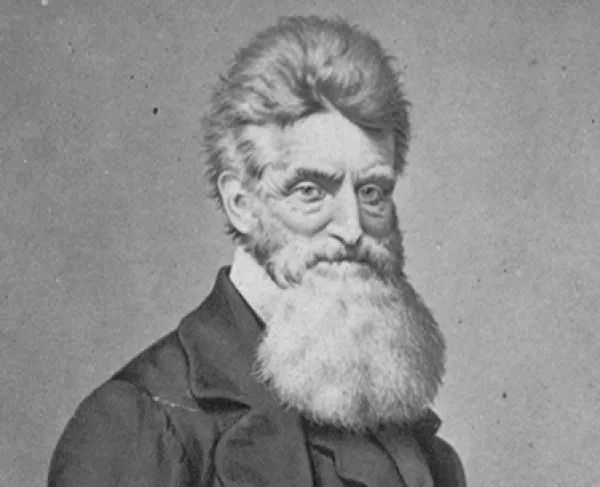

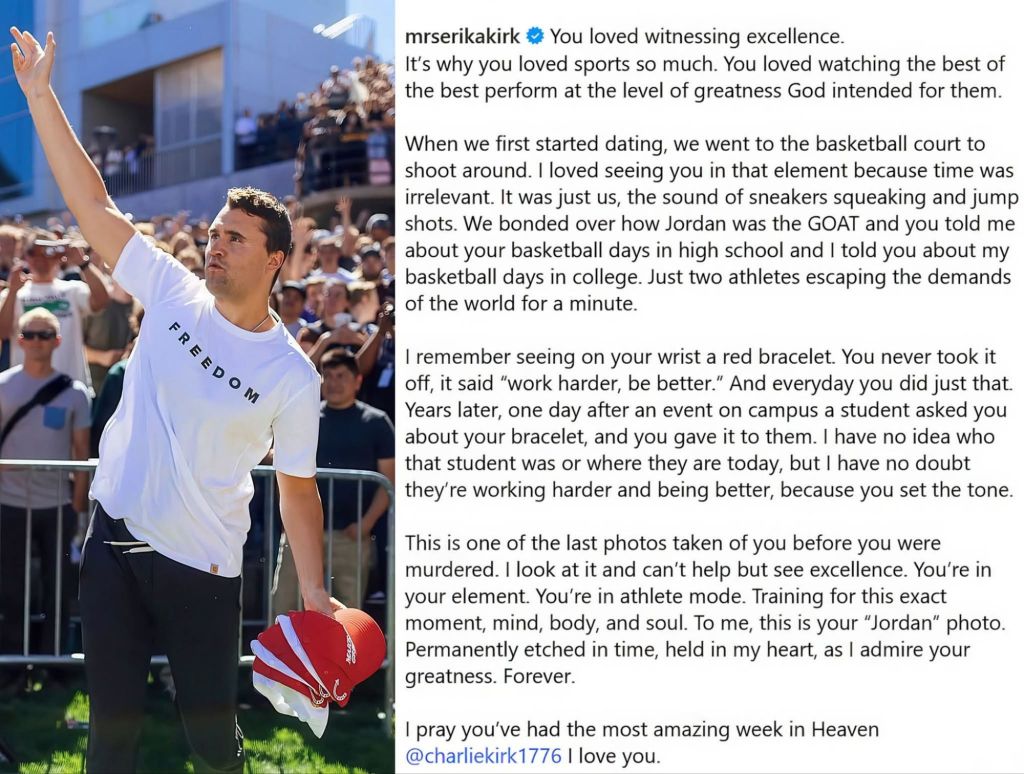



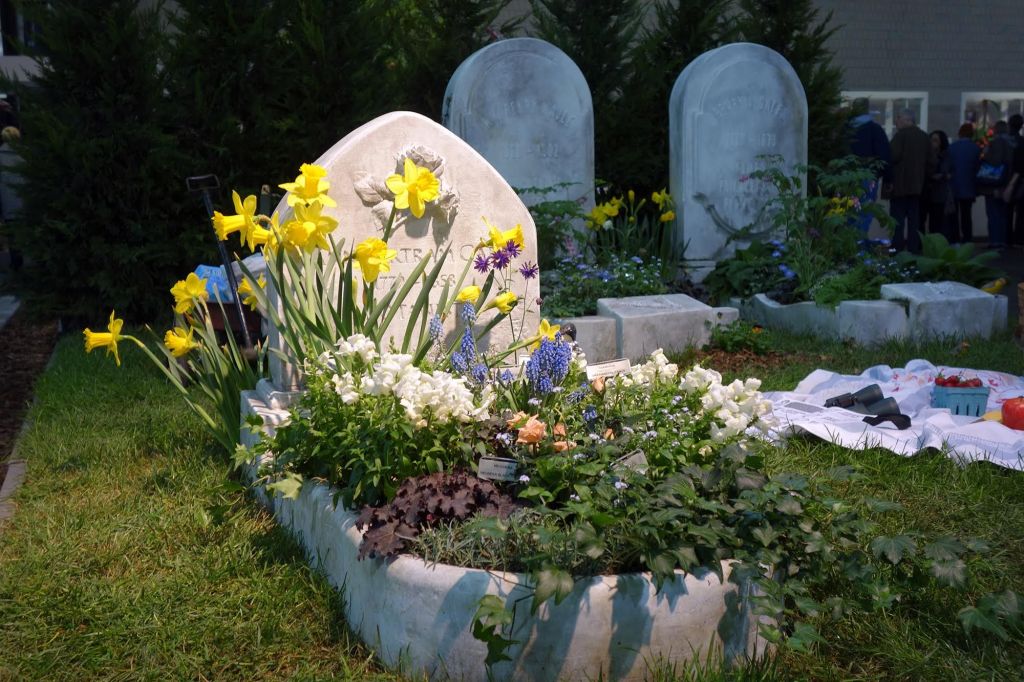

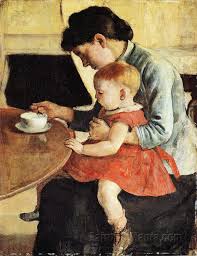



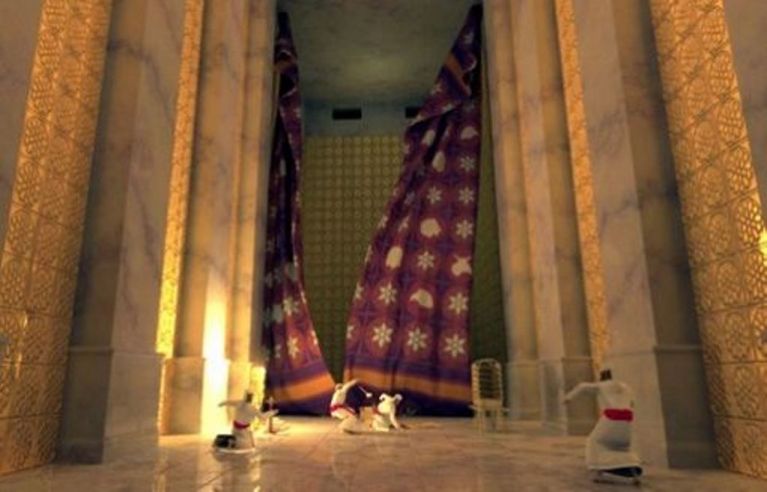






 Irregular Ideation