There are questions that frame an issue the wrong way and are only answered by asking another question. One of them is: How can you raise another man’s son? The only real question for me is how could I claim to love my wife and then not love HER children?
Maybe I simply look at the world differently from other men. But the initial question to me comes off as sounding like “how can you love another man’s daughter?” Answer: “Well, we are the same species and it just happens naturally, I suppose?”
I believe the real issue is when someone is looking at step-parenting from a detached or deconstructionist view. In this framing it is all about biology and evolution. In other words, we should be like lions who kill the offspring of male rivals, not raising them as our own. It is a sort of Social Darwinistic construct where a man should only ever be concerned about raising the product of his own immediate genetic insemination.
But I think this is truly a very naive view of human relationships. We get along with our relatives as far as we relate to them and not after we DNA test them for our paternity. It is the same for my son and I. Probably a bit over six years ago I met this goofy kid with a bit of a crooked grin. He was endearing to me for his energy and his incredible ability to make friends anywhere. And, a few years later, when he asked me if he could call me “Daddy,” the die was cast.
The thing is, when I learned my bhest had a son I knew any romance with her would be a two for one deal. It was never a question for me. I did put considerable thought to it, worried more that this young person would accept me for this important role.
There was assurance, along the way, that helped me settle my worries and came from a stepdaughter who absolutely adored her stepfather. She told me that the fact he had choose to love her like a daughter made it a special love. Good step-parents don’t make a mistake when they bring a child into their lives. By contrast, there are many biological parents who become parents because they were unable to control sexual impulses.
In conclusion, my question is to those who ask the question: How could you not love a beautiful child, a wonderful miracle of life, who makes no judgement of you for your own multitude of faults? A child can form attachment to any adult who loves them as a parent loves and the same works for men who are committed to love.
Despite our variety of gifts and superficial differences of appearance, we’re all genetic cousins. My wife comes from the opposite side of the world, like our son, yet we are a couple very much compatible. Sure, there are differences in cultural expectations, or personality conflicts that come along, but it is really what you’re willing to put in as far as building the bond that matters.
If you could not love or even raise a child simply because they aren’t genetically your own then my only advice is to step up your game. Any man, who still has a functional reproductive system, can impregnate fertile women. That doesn’t make him a father or worthy of raising a child. No, it is always a choice to take responsibility for the needs and future of another unique individual.
It was our joint love for Ydran that helped us to push through years of waiting. If it were only the future of two adults going separate ways would have been easier. But when he called me “Daddy” on the phone, something changed in me and after that there was no way I would simply abandon him to fate.
I feel the need to preface this once again with a trigger warning for those who won’t read through and will miss my point. No, I’m not saying what Hamas did was justified. Nor am I saying that Israel should not respond. But I am trying to confront a bias, motivated by a misuse of Scripture, that is leading our side to look the other way at what amounts to dumping white phosphorous on innocent children and then pretending this is a just response to the death of Israelis. I am addressing what clouds the moral judgment here and not saying that one side or the other should just take the abuse.
I’m addressing the false dichotomy exposed in this letter from Albert Einstein (Jewish) in his opposition to the terrorism that was taking place. He wrote this right after a massacre carried out by Zionist extremists and warning of what would eventually become the horrendous reality of the Nakba and why Palestinians today are reluctant to leave their homes today. They know the history even if you’re ignorant. Read what Einstein wrote and then study what happened next…
To be clear, Einstein was not against a Jewish homeland. He was simply against the violent means being employed that have led to the current hatred. Had more followed his advice then we wouldn’t be facing yet another bloody war today. When will we learn?
Framing Issues
Had the British managed to put down the bloodthirsty terrorists who fought to “water the tree of liberty” by violently taking over their American colonies, does that mean they never existed? No, they (along with their weird pagan offshoot religion that required regular human sacrifice to keep their tree nourished) did exist and they existed as a distinct entity the moment that they declared themselves to be independent. And to say otherwise would be dumb.
One of the stupidest arguments ever made is “tHeRe Is nO PaLeStINe” as if the millions of people pushed into Gaza and West Bank simply do not exist. By that sort of semantic and legal argument, there was never a state of Israel prior to May 14, 1948. Sure, there were a people called the children of Israel and a kingdom of David, but never a STATE by that name, and certainly not one that was a Western-style democracy, prior to a bunch of Europeans moving to British-controlled Mandatory Palestine (which is what it was called) and most certainly a nation with the world’s strongest standing army is not the same one as found in the Scriptures. No, that doesn’t mean they should be run into the sea or not recognized as a legitimate nation (although many do not) and yet we must deal with the reality that the land was occupied before European settlers arrived to claim it. Historical claims may make a nice romantic script, for those with no skin in the game, but telling people that their grievance of being displaced doesn’t exist because you don’t like the name is asinine. It is reasoning that may get you likes in your echo chamber but suggests you are silly and should not be taken seriously by those with a modicum of intelligence. It’s not like the Palestinians are going to stop their fight against those who took their deeded land because you claim they don’t exist.
Furthermore, legal recognition does not change what something is. By now we all should know this. The governments of the world can call black white or white black and it doesn’t change the nature of color. Calling a man a woman or your affinity for your pet a marriage doesn’t make it true. We have the absolute right to question legal precedent or to hold to whatever existed in our minds prior to their changes. Maybe your modern definitions are simply ignorant of the original meaning and the other side is right. You might eventually be blotted off from the face of the Earth and forgotten. But it doesn’t mean you or the perspectives you held don’t exist. A person’s perspective still exists even if opposed by the powerful who have better propaganda and denying it exists is plain dumb.
Palestinians exist even if they are erased from the land or never officially recognized by many in the United States. That’s not a statement that will suit many from my fundamentalist religious background. But they’re simply not dealing with reality, it is denial, and ridiculous. Einstein called it Palestine. It was Palestine. The modern-day Israeli state came after.
Who were the Samaritans?
They were people deemed illegitimate by the pure-blooded religious elites. They made a counterclaim to what the other descendants of Abraham Jesus mingled with saw as their own exclusive property. The Samaritans had their own priests (apparently descendants of Aaron directly) and, contrary to the belief of their Jewish rivals, also continuously occupied the land like their Semitic cousins.
This is what makes how Jesus recognized these people so significant. We learn, in his conversation with a Samaritan woman, that true worship wasn’t about location, including Jerusalem, but about Spirit and truth. If this wasn’t clear enough, the parable of the good Samaritan was a slap in the face of those whom Jesus addressed. A Samaritan more righteous than their own best? Jesus was intentionally antagonizing. He intended to offend and insult them.
The point, however, remains that salvation is not a birthright. It is not about your claim to be or ethnic inheritance. The Christian truth is about what we do, and how we love, and never a matter of our worship ritual or genetics. The measure of Christian pedigree is faith, pure and simple, like that of Abraham—which is what makes a person a son or daughter of Abraham.
Jesus didn’t mince words when addressing those who believed they would be saved by their ethnicity or Abrahamic bloodline:
Abraham is our father,” they answered. “If you were Abraham’s children,” said Jesus, “then you would do what Abraham did. As it is, you are looking for a way to kill me, a man who has told you the truth that I heard from God. Abraham did not do such things. You are doing the works of your own father.” “We are not illegitimate children,” they protested. “The only Father we have is God himself.” Jesus said to them, “If God were your Father, you would love me, for I have come here from God. I have not come on my own; God sent me. Why is my language not clear to you? Because you are unable to hear what I say. You belong to your father, the devil, and you want to carry out your father’s desires. He was a murderer from the beginning, not holding to the truth, for there is no truth in him. When he lies, he speaks his native language, for he is a liar and the father of lies.
(John 8:39-44 NIV)
There are not multiple paths, according to Jesus, but only one way, truth, and life for all to come to the Father. Galatians makes it clear that Abraham’s seed is fulfilled fully in Christ and all who believe in Him:
The promises were spoken to Abraham and to his seed. Scripture does not say “and to seeds,” meaning many people, but “and to your seed,” meaning one person, who is Christ. […] So in Christ Jesus you are all children of God through faith, for all of you who were baptized into Christ have clothed yourselves with Christ. There is neither Jew nor Gentile, neither slave nor free, nor is there male and female, for you are all one in Christ Jesus.
(Galatians 3:16, 26-28 NIV)
Romans affirms what St Paul said above in Galatians:
So too, at the present time there is a remnant chosen by grace. […] What then? What the people of Israel sought so earnestly they did not obtain. The elect among them did, but the others were hardened…
(Romans 11:5, 7 NIV)
The “remnant” is those who believed in Jesus. While the “hardened” are those who rejected Him and, in their unbelief and ignorance, crucified the one who was called their King. And, for those who contort and turn the Gospels inside out trying to revert to a Covenant that passed away, Hebrews 8:13, I despise your bastardization of truth. Those who would replace His Kingdom “not of this world” with a modern secular state are not legitimate scholars or Christians.
I reject your ignorant religion.
I reject your indifferent religion.
I reject your false religion.
The true Christ isn’t an ethno-nationalist or waiting on yet another stone temple to be built. And I don’t really care what your Scofield reference or some random guy on YouTube says. Christian Zionism is a contradiction of terms. I’m perfectly fine with European Jews finding a homeland and defending it. But it should never be confused with the fulfillment of anything more than that. We should instead be looking for the new Jerusalem. So stone me like Stephen for repeating what he said: “The Most High does not live in houses made by human hands.”
Count me with the Samaritans.
A blessing or a curse?
Since the 1950s, no other nation has shown more perfect loyalty or full allegiance to the state of Israel than the United States. The Biden administration is no exception and doubling down on what Trump started. For this have accumulated a mountain of debt, a decay of our institutions, and sharp moral decline as more and more Americans fall away from faith. Sure, we are materially wealthy, for now, but churches are empty and those that remain are temples to consumerism rather than self-sacrificial love. If support for this country is a blessing then I guess we’ll need to redefine that word like we have been with everything else lately. Or maybe consider we’ve gotten things wrong?
The direction of the US doesn’t look good right now and maybe that is because we’re like the Jeruselum condemned by Ezekiel:
“‘Now this was the sin of your sister Sodom: She and her daughters were arrogant, overfed and unconcerned; they did not help the poor and needy. They were haughty and did detestable things before me. Therefore I did away with them as you have seen. Samaria did not commit half the sins you did. You have done more detestable things than they, and have made your sisters seem righteous by all these things you have done. Bear your disgrace, for you have furnished some justification for your sisters. Because your sins were more vile than theirs, they appear more righteous than you. So then, be ashamed and bear your disgrace, for you have made your sisters appear righteous.
(Ezekiel 16:49-52 NIV)
Maybe it is time to stop focusing on the sins of Samaria and consider our own. Sure, maybe IsRaEl hAs ThE rIgHt To DeFeND iTsElF, but then so do the other Semitic people in that region. Consider that we are Haman, from the book of Esther, unwittingly building our own gallows as we justify our unjust vengeance against undeserving people. We’re not a righteous judge. The children of Gaza did not attack Israel. It is not anti-Semitic to stand with Einstein or recognize the unjust suffering of the Semitic people in Gaza. It is not our allegiance to the state of Israel that will bring us blessings, only allegiance to the king of the true Israel can do that and we must all repent of our delusions otherwise.
“The propagandist’s purpose is to make one set of people forget that certain other sets of people are human.”
Aldous Huxley
Most on one side of this issue likely will not even get this far into reading this. For daring to question the narrative they’ve swallowed I’ll probably be quickly dismissed by some as a “terror apologist” or worse. Nevertheless, for those who know that I don’t take positions lightly or without due diligence, this post will help explain my position on the ongoing conflict between Israel and the Palestinians. But more important than that this blog is aimed at addressing the brazen dishonesty of the fundamentalist cheerleaders.
First of all, for anyone conservative who has come through the past few years and is still lacking skepticism about what the political establishment is saying really deserves to be exploited. Now that Hamas has attacked we can now trust the same media that saw riots as “mostly peaceful protests” and then calls MAGA supporters “insurrectionists” for their questioning the election results??? Are you really that dumb?!? Why don’t you at least consider that the same people who distort the truth here, who seize upon the parts of the evidence that support their own agenda on domestic issues, might also do the same thing there?
Second, okay, so you never heard ‘our side’ chanting “death to Gazans” and yet let’s not be cute about this. Both sides are dedicated to the destruction of the other. Israel slowly but surely takes all of Palestine. Hamas is fully committed to ending Israel. How genocidal that would end up being is anyone’s guess—but these stories from a couple Israeli Defense Force veterans can give us some idea, they burned people alive and shot school children—watch them talk about it and then moralize to me about how only one side is barbaric or evil.
No, this horrendous history of atrocities on both sides certainly does not justify anything that Hamas did in the past week. But what should we expect to happen when that boy crying when an air strike killed his entire family grows up? Is it a surprise when he’s angry and blames the nation that dropped the bomb? Are we just going to gloss over the fact that the Israeli prime minister, Benjamin “Bibi” Netanyahu, is in a leaked video saying to make it painful for the Palestinians and that basically anything is a military target? What does that mean? Are we going to play ignorant?
This is why I can’t take seriously people who only condemn one side and never the other, this selective moral outrage is not about true care for children. Those who quickly share unverified accounts of beheaded babies and then never even acknowledge those thousands of innocent Palestinians who have died in the indiscriminate and brutal bombing campaigns are being dishonest. No, not saying that there must be complete equivalency or proportionality in a war. but let’s not pretend that only one side is a victim of terrorism. It just looks really disingenuous to only care about the children of one side.
Getting this out of the way…
My point is not to convert you from one side to the other. My point is that the common presentation of this conflict is a false dichotomy and we have the option of choosing none of the above. We can stand with the true victims, those innocent people caught in the crossfire, and oppose all of the militant parties. That is where I stand. Furthermore, I will mostly address the propaganda and war crimes of one side. Why? It is because my typical audience is completely biased toward the West’s narrative and certainly not because I am unaware of what the other side has done. We don’t need to be partisans.
The big lie is that this conflict is not about ethnic cleansing on both sides. Israel has systematically, since May 14, 1948, pushed the native inhabitants out of their land and then played the role of victim when their militarily weaker opponents employed asymmetrical warfare tactics against the occupation. Israel has turned Gaza into an open-air prison, but we only care when Hamas strikes back. American Evangeli-cons believe every claim without skepticism when it is made by Israel (burned babies) as if a party in the conflict has reason to be truthful—why are we such fools?
It Is Okay To Bomb Nazi Children!
Maybe you do not know what Jewish neo-con Ben Shapiro (as well as Isreal’s Prime Minister) meant when he pronounced the people of Gaza to be Amalek?
But I do:
This is what the Lord Almighty says: ‘I will punish the Amalekites for what they did to Israel when they waylaid them as they came up from Egypt. Now go, attack the Amalekites and totally destroy all that belongs to them. Do not spare them; put to death men and women, children and infants, cattle and sheep, camels and donkeys.’
So let’s just be honest about it! Let’s not say that this is about human rights or preventing ethnic cleansing when it is all about clearing the place for a Jewish ethnic state. Stop being a coward, and say that you’re okay with babies being killed (as long as it is their babies) and with millions of people who are being displaced from their land—all because you have stupidly embraced an errant eschatology that replaces the Church, which was established by Christ, with reemergent nation of those who have fully rejected Him.
Or you could just join me in agreement with St Paul:
Understand, then, that those who have faith are children of Abraham. Scripture foresaw that God would justify the Gentiles by faith, and announced the gospel in advance to Abraham: “All nations will be blessed through you.” So those who rely on faith are blessed along with Abraham, the man of faith. […] The promises were spoken to Abraham and to his seed. Scripture does not say “and to seeds,” meaning many people, but “and to your seed,” meaning one person, who is Christ.
(Galatians 3:7-9, 16 NIV)
Understand yet?
Support for a modern ethno-nationalist state has no connection to the promises given to Abraham. Sure, many have been made into useful idiots for this cause, by the twisting of Scripture, but Jesus didn’t promise a patch of land along the Mediterranean coast and the Jews do not share Christian values any more than Muslims do. Both sides of the Israeli-Palestinian conflict have chanted for the death of the other. One sees us as being Infidels and the other calls us Goyim. When has Israel, a country declared ‘our greatest ally’ according to many of our greasy-haired politicians, ever defended our borders? The blessing is they get a ton of US aid and send propaganda pictures of their most attractive women in uniform in return.
There’s no denying the tragedy of what has been unfolding over the past few days. We have seen the pictures and videos, very real, of terrified young people. One moment they were enjoying a music festival, the next they were being mercilessly gunned down. And yet I did not see the same level of concern from fundamentalists for the victims of the Pulse nightclub attack. These same people overwhelmed with concern about Israel do not think twice about collective punishment and forcing Gazans into the desert before there is provision for them—this isn’t about protecting innocents or looking out for the most vulnerable, it is about wiping Gazans off the map by wherever means available at this time.
Christian compassion is that none should perish and all will be saved. It isn’t about a political entity called Israel or any kingdom of this world. Our battle, if we were indeed servants of Christ as we claim, should not be against flesh and blood. Jesus commanded us to love our enemies and do good to those who mistreat us. That’s coming from a man who was tortured, unjustly nailed to a cross, and killed by an occupying power. So why again do we support the death of Palestinian children simply for living in the wrong place at the wrong time?
The title of this blog is a repeated line from a popular song, “Personal Jesus,” covered by Johnny Cash. According to the writer, this song is “about being a Jesus for someone else” and more specifically the mentoring role Elvis Presley had played in the life of his wife Priscilla. The power of these words is how they change meaning depending on the artist who sings them. When it was covered by Marilyn Manson they came off as being mocking and derisive.
My own thoughts, hearing the song, always brings me to the popular Evangelical phrase “accept Jesus as your personal Lord and Savior” and the theological implications. Unintentionally, it is a commentary on how the Christian religion has been reinvented in this consumerist and individualistic age. It is all about you. Jesus is now personal, like a boyfriend, and pretty much whatever you want him to be. There is no obligation to others, no real need for self-sacrificial love, or becoming part of the body of believers, only to hold a kind of positive sentiment in your heart.
And this is what I encountered in the church of my youth. Except for those few symbolic expressions of community and caring, carry-overs from those radical Anabaptist roots, it was pretty much everyone for themselves—which is how most of us preferred it to be. I mean, sure, we would tell the other guy we would be praying for him after ritual foot washing, some would still call you brother as if simply saying it made it true, but that was generally the extent of it. We all had our own families if there was ever a real need, the church projects were generally for the elderly and those few favorites.
Saved Together
Orthodoxy has a more robust view of Holy Communion and could, in theory, answer the overly independent view of salvation. At the very least, with our partaking of the body and blood together central to worship, this puts to rest this idea that the internet preacher is enough. Life in Christ is about His body and His physical presence, not only something we hold in our minds as true. It is not only our knowledge of Christ and mental assent but is also about making His example the basis of our actions—being an incarnation.
Faith is not about what we claim to believe, it is about how we act:
Carry each other’s burdens, and in this way you will fulfill the law of Christ. […] Do not be deceived: God cannot be mocked. A man reaps what he sows. Whoever sows to please their flesh, from the flesh will reap destruction; whoever sows to please the Spirit, from the Spirit will reap eternal life. Let us not become weary in doing good, for at the proper time we will reap a harvest if we do not give up. Therefore, as we have opportunity, let us do good to all people, especially to those who belong to the family of believers.
(Galatians 6:2, 7-10 NIV)
Carrying of burdens is about more than mere “thoughts and prayers” or those mostly empty expressions. No, it is all about providing real relief to others, being that ‘neighbor’ like the good Samaritan or the true advocate like St. Paul was for Onesimus. It is not enough to only say “Go in peace; keep warm and well fed,” without ever helping others with their actual needs as we read in James 2:16. It is our job to be our brother’s keeper, that is to look after their needs like we would our own or that of a family member. This is what a community of faith is supposed to be about and also key to our salvation.
“If anyone falls, he falls alone. But nobody is saved alone.”
—Alexei Khomiakov
For some, their salvation comes from the hand we offer. For others, their salvation comes from offering that hand. The early church had this saying, “unus Christianus, nullus Christianus.” That is to say that one Christian is no Christian. This is what it means to follow Christ, this is what being in Communion is really about. Sure the ritual and religious practice matters. But the true substance in the blood and the flesh we are to consume is in how we become the hands and feet of Jesus. To do otherwise, to only partake without acting in genuine love is to drink unworthily and bring damnation upon ourselves:
In the first place, I hear that when you come together as a church, there are divisions among you, and to some extent I believe it. No doubt there have to be differences among you to show which of you have God’s approval. So then, when you come together, it is not the Lord’s Supper you eat, for when you are eating, some of you go ahead with your own private suppers. As a result, one person remains hungry and another gets drunk. […] So then, whoever eats the bread or drinks the cup of the Lord in an unworthy manner will be guilty of sinning against the body and blood of the Lord.
(1 Corinthians 11:18-21, 27 NIV)
Stay In Your Lane
Sadly, within Orthodoxy, for some, it is about lighting a candle, making a sign of the cross, paying their membership dues (tithes), and regular church attendance. In other words, all about going through the motions. They don’t want to be bothered by real relationships or overcoming differences—let alone be concerned with the salvation of their fellow parishioners.
Sheesh, let the priest do his job! Mind your own business! Don’t you have enough sins of your own to attend to?
I’ve even heard clergy give advice like “stay in your lane” as if there’s no difference between confrontation of lingering issues and petty fault-finding…
I’ll back up a second and agree fully that we should be “work[ing] out [our] salvation with fear and trembling” (Phil 2:13), which does imply some introspection and that we start first with the beam in our own eye. But, that said, even this admonition is addressed to “my dear friends” or the church body and not as a personal note. So even this could be used to further the view of salvation that is about collective effort and not some sort of personal experience we have while sitting in the pew deliberately not noticing elephants in the room as our penance.
There are some who do not seem to realize that their mother’s scold, “If you don’t have anything nice to say don’t say anything at all,” isn’t written in Scripture, but this is:
“‘Do not do anything that endangers your neighbor’s life. I am the Lord.“ ‘Do not hate a fellow Israelite in your heart. Rebuke your neighbor frankly so you will not share in their guilt. “ ‘Do not seek revenge or bear a grudge against anyone among your people, but love your neighbor as yourself. I am the Lord.
(Leviticus 19:16b-18 NIV)
Speaking the truth is not always pleasant to the ears of those hearing it and yet it is part of what love does. It is not that we should never confront, rather it is the SPIRIT of how we approach these sins or shortcomings of others. So, sure, staying in our lane is good, but that doesn’t mean we should never alert someone driving with their headlights off at night since we have also done the same in the past. It may feel like ‘keeping the peace’ to sweep everything under the rug or let the ‘problem’ go away by ignoring it—but it’s also an unloving attitude.
“Church is not a social club…”
I’ve now encountered it in two very different religious traditions. When that cry is made for real brotherhood, deeper connections or genuine relationships are met with the strong suggestion that you’re not spiritual enough and a reminder that church is for worshipping God and superficial interactions. If you expect a little more then you’re turning it into a social club. This is an inversion. It is a psychological projection and a garbage excuse. It’s telling a person seeking medical care that hospitals are about the awe of the building and reverence for the institution, that they should go to the dance club if they so desperately want to be touched by someone.
These phony physicians only add insult to injury, they are exactly the type of religious authorities that Jesus rebuked:
“The teachers of the law and the Pharisees sit in Moses’ seat. So you must be careful to do everything they tell you. But do not do what they do, for they do not practice what they preach. They tie up heavy, cumbersome loads and put them on other people’s shoulders, but they themselves are not willing to lift a finger to move them.
(Matthew 23:2-4 NIV)
For them, it is all about the right image, the dress standards, and keeping their perfect attendance record. Basically, they check all of the right boxes. Performative religion. And who knows? Maybe their Bible study and prayers, ten hours a day, really does it for them? Who am I to say that their mission to Uganda was entirely a self-indulgent display of privilege and a waste of resources? But I’ll also say that those who travel the world while doing the bare minimum for those whom God put right at their own doorstep are condemned as hypocrites by Jesus.
The church is established by the same God who told us that it is not good for man to be alone. Good for you if you need nobody in your life. Jesus is your homeboy? But most of us need those meaningful and sometimes messy interactions with other humans. That is what family is. That’s what hospitals are built to facilitate. And that is what a church is literally supposed to be. If you don’t need a doctor maybe you are the doctor and your salvation requires you to show up to attend to those sick and suffering? Why call would we call each other brothers and sisters in Christ if this weren’t the case? If the church isn’t at all about social interactions—why do we waste the gas?
Those who say that church isn’t a social club are right. It is also not an art museum where pretentious people go to engage politely and then share a light snack. It should be much more than that. It should be a refuge we can flee, the juniper tree where God sends angels to comfort and attend to the physical needs of Elijah, a garden of Gethsemane where the disciples are not sleeping in hours of need, it should be intimate and practical, a hospital or home. A place to be ministered to and minister to each other. It’s both where we share our moments of happiness and also mourn with those who mourn.
Church is a family or it is just fake.
Post Script: Those who personalize Jesus tend to depersonalize their religion. Protestant or Orthodox, it doesn’t matter, they want to claim their great devotion with their embrace of abstraction and their own prescribed practices, but seem to forget that pure religion is about the human touch (James 1:27) and what they do materially for others is how to show their love for Jesus. Our salvation does not come apart from the body of Christ. Communion isn’t only what we partake of on a Sunday morning, it is what we participate in as far as loving others and, in particular, the community of believers. You cannot stay in your lane, avoiding people in a pretense of righteousness, and also love God.
As Grady’s ears laid back and he launched, I knew it was already too late. CJ had thrown the ball not thinking about the cable that we had attached to the harness on the German Shepherd. The words slipped “you idiot,” as the slack very quickly disappeared with each eager bound, none of this could be reversed as the K-9 finally reached the end of the line and was abruptly jerked off his feet.
As the bewildered pooch collected himself, my choice of words continued to reverberate in my mind. I had just pronounced a serious epithet against my son. I’m doubtful he had weighed my use of that language as heavily as I did. However, when I later apologized to him, he also admitted that he doesn’t always think things through. My own impulse a few days earlier, upon seeing the picture of this handsome pup, had led to this moment and now I was wondering if we were truly ready for this kind of responsibility?
Disruptive Force
Despite my being warned about the breed by several friends, we decided to drive the four hours to meet Grady and basically planned to take him if there were no glaring issues to convince us otherwise. I wanted a dog that would offer protection to my family when I was away from home and also could match the energy of an eleven-year-old boy. I knew it would be disruptive. I had long avoided pet ownership because I did not feel that I could ever provide enough attention. But now this care and training obligation would be spread out to the three of us, right?
Grady was indeed very energetic and friendly too, or at least he was once we got past his initial trepidation. But was also bigger than I had imagined. His nose and eyes were level with the kitchen countertop. And could do a lot of damage fast, as we soon learned after we had left him tied (rather than crated) and in a bout of separation anxiety he decided to lay waste to the cucumber plants. That was a definitive moment, in his short time with us, that left a dilemma. What do we do with him when we leave the house since he can’t be trusted not to go into tornado mode?
The Real Costs
Dogs are a time-consuming liability and we knew this going in. For us, we had avoided the purchase price and yet still had to drive the four hours to pick Grady up and then stock up on items he would need. Dog food isn’t cheap. We needed a good crate, the cable, a water dish, a food dispenser, and a couple of toys as well. But the real costs of having a large pet would be much greater. He would need to be licensed. And heaven forbid that they ever get sick or injured. Someone has to pay for that beautiful veterinary clinic!
It is no wonder many Americans struggle to survive. The family pet, while it does provide companionship and therapy to some, rivals boats and race cars as far as endless money pits go. And, unlike fishing or hunting gear, is also a threat to your leather couch. You’ll pay a premium for rent. But the real problem is that every suggestion people gave us for correcting Grady’s undesirable habits would take more of our money. Don’t want him in a crate? Get a kennel. Oh, obedience school is great for discipline issues and keep the dog sitter on speed dial!
I couldn’t afford the additional expense right now. But the cost I really could not afford is the time it was taking from my family to give the dog attention. Grady paced from one of us to the next, wanting to be played with and we would rather be left to our own devices. I felt guilty about this neglect. My son was already overwhelmed (to the point of tears) cleaning mounds of manure and Charlotte is ready to start working soon this won’t have time to spend with the dog either. So what happens when we’re all at work or school during the day? Is it fair to leave a large animal penned in a small cage?
Anxiety Embodied
I’m sure, over a period of weeks or months some kind of routine would emerge. Grady would learn some rules and calm down as he became a little more comfortable in his surroundings. However, there was still that undeniable reality that this creature, lovely as he is, was going to bring a level of disorder and chaos. He was an embodiment of the anxiety that runs around in my brain, and a source of additional stress that outweighed the benefits. We would need to plan the rest of our lives around him, worried about what he was doing at home, finding a caregiver if we wanted to travel, and my plate is already full enough.
All this had been anticipated. And, after the flower pot incident, the honeymoon period was already over. It’s just one thing to think about possibilities and another to wonder if it is wrong to leave a howling dog crated all night downstairs. This only really added to my problems, he created more work for my wife and son, and every dollar I spent on him is another that isn’t available for those more pressing needs. And his rescuer, who had stipulated he be indoors most of the time, had offered to take him back if need be.
Sunday morning brought the last straw that finally broke the camel’s back. I had gotten out of bed early and took Grady out to the yard to give him an opportunity to relieve his bowels and bladder. After he did, and I considered the light drizzle, I decided he should come in with me. I was just thinking about how this would be in the wintertime, preparing some coffee, when a commotion erupted from the front room. CJ announced, “Grady pooped on the carpet again!” That was a third strike, the third time he took a dump inside the house in the four days with us, and I finally had enough.
“The Dog Days Are Over”
There was a lot to love about Grady. Those hilarious heavy sighs after he would give up on us and flop on the floor. The way he laid his ears back and tugged us down the sidewalk out on walks. I wish I could have seen him at the park with CJ when they both played together in the creek. We all liked the oaf, all except the family cat which was banished to the front porch for her own safety, and it was sad to have to return him.
But, as if to confirm the decision, as we sat in the restaurant free of an obligation having cut our losses an hour prior, the song came on “the dog days are over.”
We weren’t ready, or at least not for a Grady, and at least I’m relieved to have the routine return to normal. Once the vomit is cleaned off the back seat of my car life can go on as it did. I knew the moment I used the words “you idiot,” my frontal lobe was too overwhelmed to restrain this bark, that I was probably in over my head. My son is owed my care and focus, and my wife and I need our quality alone time as well, it just does not make sense to divide my attention in more directions.
I suppose one is only an idiot if they can’t admit their mistakes and make necessary changes?
The book of Ruth is a nice little oasis in the midst of dry and tedious reading. Up to this point the Bible isn’t all that relatable. It has some highlights, interesting characters, but is stories of ethnic cleansing, description of weird sacrificial rites, polygamous patriarchs and stonings for picking up sticks, violence and laws, it is cumbersome.
And then you get this:
But Ruth replied, “Don’t urge me to leave you or to turn back from you. Where you go I will go, and where you stay I will stay. Your people will be my people and your God my God. Where you die I will die, and there I will be buried. May the Lord deal with me, be it ever so severely, if even death separates you and me.” When Naomi realized that Ruth was determined to go with her, she stopped urging her. So the two women went on until they came to Bethlehem. When they arrived in Bethlehem, the whole town was stirred because of them, and the women exclaimed, “Can this be Naomi?”
Ruth 1:16-19 NIV
What a contrast to the storytelling prior, all of the resistance to racial mixing as well, here a Moabite woman would rather remain with her Israelite mother-in-law than stay with her own people. It’s personal. And the romance that follows, while very foreign and featuring many practices which are weird to our own ears, shows a more compassionate side of the legal system instituted by Moses. Boaz acted both out of love and duty as guardian-redeemer. Starting with his genuine concern for her safety:
So Boaz said to Ruth, “My daughter, listen to me. Don’t go and glean in another field and don’t go away from here. Stay here with the women who work for me. Watch the field where the men are harvesting, and follow along after the women. I have told the men not to lay a hand on you. And whenever you are thirsty, go and get a drink from the water jars the men have filled.”
Ruth 2:8-9 NIV
This paternalistic care a sharp contrast to an episode in the book of Judges when a Levite and his host offered their innocent women to please the perverse desires of the men in the local community:
While they were enjoying themselves, some of the wicked men of the city surrounded the house. Pounding on the door, they shouted to the old man who owned the house, “Bring out the man who came to your house so we can have sex with him.” The owner of the house went outside and said to them, “No, my friends, don’t be so vile. Since this man is my guest, don’t do this outrageous thing. Look, here is my virgin daughter, and his concubine. I will bring them out to you now, and you can use them and do to them whatever you wish. But as for this man, don’t do such an outrageous thing.” But the men would not listen to him. So the man took his concubine and sent her outside to them, and they raped her and abused her throughout the night, and at dawn they let her go. At daybreak the woman went back to the house where her master was staying, fell down at the door and lay there until daylight. When her master got up in the morning and opened the door of the house and stepped out to continue on his way, there lay his concubine, fallen in the doorway of the house, with her hands on the threshold. He said to her, “Get up; let’s go.” But there was no answer. Then the man put her on his donkey and set out for home.
Judges 19:22-28 NIV
While the brutal rape and murder of this poor concubine was later avenged, it is quite clear that the two men were more concerned with saving their own skin than protecting those whom were entrusted to them. Not saying it would be easy to know what to do in those circumstances. It isn’t like there was 911 to call or semiautomatic weapons to hold back the lascivious mob. Still, Boaz stood ready to protect Ruth, a foreign woman, from the other men who would very likely have taken advantage. How easily we can take our own law and order for granted.
Where the men made the woman vulnerable for exploitation in the book of Judges and in other parts of the Bible, like Abraham claiming his wife was his sister or Jacob putting his family in the front, in Ruth it is the women putting themselves in a vulnerable place to capture the attention of the good man:
One day Ruth’s mother-in-law Naomi said to her, “My daughter, I must find a home for you, where you will be well provided for. Now Boaz, with whose women you have worked, is a relative of ours. Tonight he will be winnowing barley on the threshing floor. Wash, put on perfume, and get dressed in your best clothes. Then go down to the threshing floor, but don’t let him know you are there until he has finished eating and drinking. When he lies down, note the place where he is lying. Then go and uncover his feet and lie down. He will tell you what to do.”
Ruth 3:1-4 NIV
I’m not sure if the description of Ruth acting out on her mother-in-law’s bold plan to lay at the feet of Boaz is euphemistic language. Seems risky to be that intimate with a man who was drinking and “in good spirits” as the text tells us. But, that said, whatever transpired that night, we know that he took responsibility for Ruth and also the welfare of Naomi. And, in this regard, the guardian-redeemer system worked as designed. But mostly because of Boaz having genuine care in his heart. Ruth, for her part, was his equal in that she was loyal to her mother-in-law to the point of leaving her own homeland.
This is a story exceptional in a good way and likely part of the Biblical canon so far as has to do with the lineage of King David. It also brings us to Bethlehem, where Jesus (of the line of David via his mother) was born. That both Ruth and Boaz stand out as characters for their abiding love is significant. In a time when woman were treated as if property or merely objects for male pleasure, we have honorable and caring men. Boaz took Ruth under his wing in the same way his grandson longed to love his people:
“Jerusalem, Jerusalem, you who kill the prophets and stone those sent to you, how often I have longed to gather your children together, as a hen gathers her chicks under her wings, and you were not willing.
Matthew 23:37 NIV
In this account there is a clear precedent for a family relationship that goes beyond only our biological relatives. The law of the kinsman or guardian-redeemer, through Naomi, was also applied to Ruth. And, likewise, through adoption we become sons and daughters of Abraham by our faith (Galatians 3:6-14) and true children unlike those blood relatives of the Patriarch who rejected their Salvation. Our real kin are those who fulfill the role they have and love in the manner of Boaz or Ruth.
As with most reporting of current events, the presentation of the ongoing conflict between Russia and Ukraine is distorted. Both sides are engaged in their own propaganda. It is said that truth is the first casualty of war and, in the case of this one, the falsehoods span many decades. The first thing to do, to get beyond this, is explore the history leading to to the present…
862 —1242
East Slavic tribes, in the area of modern-day Ukraine, Belarus, and Russia unite to become the Kievan Rus’ people.
980 — 1015
Vladimir the Great brought Christianity to the Kievan Rus’ people. Often referred to, in the West, as the Eastern Orthodox, this tradition (practiced from Egypt all the way to Greece) broke from the Roman Catholics in 1054.
1237 — 1480
The Mongols invaded and, laying siege to Kiev in 1240, came out victorious. This begins a period of Mongol rule.
1547 — 1721.
Mongol rule fades. The Muscovy dynasty rises. This Tsarist Russia, with periods of chaos and conflict, including what is referred to as a Time of Troubles from 1598 to 1613, ends with the rise of Peter the Great and brings us to the modern age.
1721 to 1917
The Russian Empire expanded from historical Kievan Rus’ territory and, stretching around 8,800,000 square miles, became the third largest empire in history behind the British and Mongol empires.
Joseph Stalin, an ethnic Georgian, becomes the General Secretary and begins his rule over the Soviet Union. His reign is marked by the Great Purge, from 1936 to 1938, when from 700,000 to 1.2 million people are killed, the number including many Orthodox priests, and political dissidents are rounded to be sent to Gulags.
Vladimir Spiridonovich Putin and Maria Ivanovna Shelomova struggle to survive the brutal German siege of Leningrad (now the city of St Petersburg) and are nearly killed. Vladimir, who lost a couple brothers in the battles, was wounded by a grenade in the fighting and crippled for life. The pair met after the war, got married, and had a son named Vladimir Putin in 1952.
April 4, 1949
The North Atlantic Treaty Organization (or NATO) is formed in Washington DC as an alliance to oppose the Soviet Union. The Warsaw Pact was created in May of 1955 as a response.
February 19, 1954
Crimea, which was part of Russia since being annexed from the Ottomans back in 1783, was gifted to Ukraine by the Soviets as a gesture of friendship. This ethnically Tatar and Russian-speaking region is the site of a key warm-water Russian naval base.
Oct 16, 1962—Oct 29, 1962
The Soviet Union responded to the United States putting nuclear missiles in Italy and Turkey by sending their own missiles to Cuba. The Kennedy administration, after the failed Bay of Pigs invasion, authorized a CIA campaign of terrorism and sabotage within Cuba, answered with a naval blockade. The Cuban Missile Crisis ended when Moscow backed down after a secret deal where the offending US missiles were removed from Europe.
Nikita Khrushchev, Fidel Castro, and JFK
1979—1989
A pro-Soviet government took power in Kabul in 1978 and tried to counter Islamic traditionalism with steps towards modernization. They invited Soviet military advisors and this led to troops being deployed to help the Afghans suppress the insurgency. The CIA supplied the Afghan rebels and foreign fighters (including a Saudi named Osama Bin Laden) the Mujahideen, with weapons. The Soviets withdrew after a humiliating costly affair.
December 26, 1991
The Soviet Union collapsed, the Warsaw Pact dissolved, and Soviet republics (including Ukraine) given their independence. NATO begins an eastward expansion, absorbing former Soviet republics. Russia falls into disarray as oligarchs partner with the West to exploit the vast resources of that country—Ukraine also becomes known for extreme corruption.
March 24, 1999—June 10, 1999
NATO intervened on behalf of Kosovo rebels, who had been resisting Serbian authorities, and then demanded that the country be partitioned along ethnic lines.
December 31, 1999
Vladimir Putin became the acting President of the Russian Federation when Boris Yeltsin unexpectedly resigned. From 2000 to 2004, after winning a special election, he begins to reform the country and reign in the oligarchs forcing them to answer to his government to keep their power. Putin opposes the expansion of NATO to his border, regarding it as a threat to Russian sovereignty, and makes this red line clear.
Vladimir Putin, a former KGB officer.
Nov 21, 2013—Feb 22, 2014
The democratically elected President of Ukraine, Viktor Yanukovych, decided to keep closer ties with Moscow over the European Union. This leads to protests in Maidan Nezalezhnosti (Independence Square) in Kiev. The protestors occupied the square, they had their own food production, medical, and broadcasting facilities, along with that, stages for speeches and performances, as well as their own security forces. This boiled over when snipers, still unidentified, fired on the crowd. Both police and protesters were killed in this attack. Before this escalation high-ranking US officials, then Secretary of State Victoria Nuland and the Ambassador to Geoffrey Pyatt, picked the replacement of Yanukovych who was later overthrown in the Maidan coup.
May 12, 2014
Hunter Biden, son of the then US Vice-President, Joe Biden, is given a seat on the board of Burisma Holdings, as a “legal advisor” and is paid over a million for this service. He gave Burisma executives access to his politically powerful father and later the elder Biden would brag, live on television, about a quid pro quo that got a Ukrainian prosecutor fired—who had been investigating Burisma corruption.
Like father, like son
Feb 20, 2014 – Mar 21, 2014
The Russians, believing their naval base in Crimea would be threatened by the new pro-West government, moved quickly to secure it from the Kievian nationalists. They already had a significant military presence there, it is a Russian-speaking area, and the Crimean status referendum, held on March 16, 2014, had an 87% turnout and was 97% in favor of reunification with Russia.
April 6, 2014–February 24, 2022
The Russian-speaking Donbas region also wanted more autonomy, they opposed Kiev’s efforts at “Ukrainianization,” which sought to erase their Russian heritage, and eventually declared their independence. These breakaways were invaded by the Kievan regime, starting a war that killed over 14,000 and lasted nearly eight years before the current Russian intervention.
Donbass, when nobody outside Ukraine cared about the war.
May 2, 2014
Protests around the country became violent again when the right-wing nationalists, who favored the new post-coup government that had been installed in Kiev, forced opposition demonstrators into a building that was set ablaze. This incident, the Odessa Massacre, burned alive 48 people, some of those who did manage to escape were beaten by the mob. Like the shootings used to justify the Maiden insurrection, nobody was arrested or charged for this mass murder.
April 21, 2019
Volodymyr Zelenskyy, a comedian, groomed by an oligarch, wins the second round of voting in a landslide victory and becomes the President of Ukraine. He promised to bring peace and end corruption. There was not much success on either front. Human rights abuses have only increased during his presidency and especially after the start of the Russo-Ukraine War.
Zelenskyy, the other Vlad.
February 24, 2022
After massing their troops on the Ukrainian border, Russia demands that the shelling of Donbas cease. When the attacks continue, the “special military operation” begins, which is condemned in the West as an “unprovoked invasion,” and is now effectively a proxy war between NATO and Russia. The bloodshed continues to the time of this writing.
Vladimir versus Volodymyr
While many commentators, on both sides, want to present this as a battle of good and evil, it is really a fight between spiritual (even actual) cousins. Those who say that Russia is the aggressor neglect that the war began years ago with the Ukrainian nationalists and their campaign against separatists, that this came about as a result of a coup apparently orchestrated by or at least with the direct aid of the US State Department. If Ukraine can be independent of Russia, or Kosovo from Serbia, why not Donbass? And who says that the Soviets handing over Crimea, in the 1950s, is more valid than the referendum that brought it back?
The US “rules-based international order” only makes sense for those who share the bias of those spoon-fed by US media. The legacy of CIA support for terrorism abroad and the violent overthrow of democratic leaders makes anything done by Russia seem like child’s play. The US acts with impunity around the world—provoking sanctioning, and invading with destructive campaigns of “shock and awe” anyone who dares to oppose its imperial aims. The US really had no business playing kingmaker in the backyard of Russia. The US enforces the Monroe Doctrine in the Western Hemisphere, why would Russia (or China) be happy with our military expansion in their own areas of national interest?
Us-rules based order
Sure, Russia isn’t faultless, by any means, and Putin is no St. Vladimir either. But, that said, neither is Zelenskyy or the Kievan (Kyivan) nationalist regime he represents.
Truthfully, the most significant difference between the two sides of the war may actually be their Slavic language dialects. Which is to say it isn’t much. Both sides commit war crimes, both lie about the other side, and both also share the same religious and ethnic heritage. They are natural allies, given their shared Kievan Rus’ history, which is probably why Western powers want to instigate and encourage the division. It is a family feud, a fratricidal war, and benefits only the US military-industrial complex.
There was a time when I could simply say “I’m Mennonite.” That is what I was. It was my religion, culture and ethnicity wrapped up into one tidy package. It was as real to me as my gender and first name. But now, having left the denomination of my youth behind, it is really difficult to buy-in to a new identity or at least not to the extent of feeling a significant attachment to the distinguishing title.
We live in a great identity crisis. We might celebrate more identities than ever, and yet somehow along the way, we have lost the very meaning of the words that we use to define these identity categories.
What is an identity?
An identity is a word used to distinguish one from another. Or a statement of what we are in comparison to the whole group. Are you Catholic or Protestant? Black or white? A Republican, Democrat or Independent? And whether it is identity or not has much to do with the emotional weight that we place on these categories and terms. In other words, blue-eyed is certainly a category that some of us belong to, but is not currently an true identity marker.
There are also various kinds of identity, there are those inborn or assumed—Charlotte, due to her inherited genetics, is Kankanaey, and would be no matter what she believed about herself or if she prefers that another term be used. Then there are those types of identities that are less about our immutable being and more about what we are doing. By contrast, trucker or truck driver is an identity, and even comes with a license to prove it, but it is not something that is actually written in a CDL holder’s DNA.
Trump ‘identifies’ as a trucker…
Identity is never something we can select for ourselves. I can claim to be a Dill Pickle and even legally require the moniker be used in reference to me. But this is never going to change what other people will perceive me to be. Identity is something that others construct, with us, and not only a thing that we independently choose for ourselves. Put another way, a rose by any other name is still a rose and even if we paint it blue. And blue does not become yellow because we switch the color identity labels either.
Our “I am” identity…
I’m sexually attracted to the female form and this has dictated my priorities and activities throughout the years. But, as important as it is to me, I don’t tout my ‘straight’ preference as being my identity. I am many things, but my sexuality is not something to hang my sense of who I am on. There are no hetero pride parades for this reason and no need to fly a special banner in front of my house to announce my preferences either. Sexuality is not who we really are.
So, when someone says “I am gay,” my mind always must go to the question, “you are a sexuality?” The reality is that this identity is about far more than what they do in bed. It is about the community or lifestyle and an identity built around being their status as an exception. Being “gay” is just as much about the social aspect as the orientation. It is not just something you only do in private. No, it requires a public display and solidarity with others like you. If it were simply about sex there would be no parades or neverending need to be legitimized by others. Identity is bigger than the individual.
And trans is simply the next level. Those calling themselves “trans” may (in direct contradiction with their biological gender assignment) self-identify as a man or a woman. But those who are truly male or female simply are and there is no need for hormones, reconstruction of genitals or to exaggerate gender stereotypes with weird provocative displays. On the other hand, no matter how much surgery is performed on the body of a ‘trans’ person they will always be trans. The more trans people try to force others to recognize them (despite our own eyes) the more they will stand out as being different. Which is truly the point.
Identity is about our distinguishing ourselves from the larger group. It is also about what is the most important thing to us. If a person were ask who I am I would probably start with my given name. That is where I am oriented in society, as a product of my parents, and also gives others a shorthand to address my person. Then I might mention my role as a husband and father as those things are currently the most meaningful parts of my life. Of course, also in the mix is my religious affiliation and occupation. Sexuality, while very important, wouldn’t even make the top of the list.
Furthermore, there is no need for anyone to defy their own eyes or be forced to recognize anything about me against their will. Identity is not only about what I declare. A large part of real identity is what others recognize with no coercion. If I had to demand that my son call me daddy or that my wife appreciate my bad cooking the same as she did the work of a master chef, would their bending to my will really make me any more legitimately those things? No, it would certainly not! It would make me a bully and look very insecure.
The Identity Gambit…
Special identity is a way to gain advantage over others. In the past it was about having the right privileging title or family pedigree. Now it has become a no holds barred fight between various victim categories. But in both cases it was about unearned respect, about people who did not do anything noteworthy enough in their lives to be recognized and thus invent illegitimate reasons why others must genuflect to them. These frauds are enabled by those who have twisted morality and a corrupted political system.
Stop. I look like a police officer!
People can lie about their identity for many reasons. Impersonation of a police officer, for example, gives a person false authority and ability to manipulate the unsuspecting. Or stolen valor, in the case of those who, for attention, dress like and pretend to be a military veteran. Sure, the act is usually off, since these posers don’t have the requisite qualifications, but it fools enough people that they get the payoff of the true identity—or at least until caught. Then again, prancing around and pathologically pretending to be a girl is now extremely lucrative for some men.
Pretending to be a doctor or airline pilot is something children do innocently and yet it would be silly to legally recognize this as not to make them feel bad. True identity is not an act or a costume we put on.
Shedding identity…
Identity is powerful. For example, a person calling themselves a “gangsta” or “thug” is declaring a whole package of behaviors and dress styles. It is a choice as well as a habit, they could change and yet their momentum is in a particular direction. They have been conditioned, for years and years, by culture and peers, to assume this posture towards the world.
There is some truth to the statement, “you can take the boy out of the country, but you can’t take the country out of the boy.” We have many things instilled in us, accents to tastes, but this is not written into our DNA and doesn’t mean it is an “I am what I am” excuse. We will send children to speech therapy if they have an impediment rather than let them be their true selves. We can and should modify things that an identity is built from. This notion of a genuine self that can’t be changed is ridiculous.
Right now there is a Ukrainian vs. Russian war. The narrative we’re being sold is that there is a vast difference between the two sides—that this is a fight between freedom and democracy or authoritarian rule. We are told the Russians are barbaric and cruel, the Ukrainian’s heroic and capable. But both are from the same Kievan Rus origins, speak a dialect of the same language, and truly have much more in common with each other than they do with us. Furthermore, the regime in Kiev is hopelessly corrupt, and had been shelling those trying to escape this rule for years prior to the Russian invasion—it isn’t a distinction worth dying over.
Ukraine vs. Russia is more like the US Civil War than WW2.
The reality is we are not bound to identity, especially not to those that are more about what we are currently doing rather than our actual being. We choose our divisions as much as we are born with them. Sure, we can’t help what side of a border we are born on nor if our personality traits are judged as being masculine or feminine. But we can decide what is most important to us. And, more importantly, we can pick identities that are greater than sexuality or gender. We must reject this idea that we can’t change or improve while also accepting what we are and were born to be.
Many people get off from being contrarian and offending others, they especially enjoy being able to force others to go along with their language games. But, in the end, their ‘preferred pronoun’ is a distinction without a difference. We will remain what we are no matter how we dress it up or how much we compel others to go along with the delusion and falsehoods we peddle. It is only in our spiritual transformation, in finding a bigger purpose, that we can be free from needing the approval and attention of others.
More and more I have no identity to cling to outside of being who I am. I am what I am and don’t need to hide behind a special label or find my place in the world. While many in my religious past hold conference in search of their identity and as many converts in the tradition in which I currently participate tout the Orthodox adjective in the manner some do they/them pronouns, I have little interest in joining them in this inane competition. St Paul, in Galatians 2:38, would have us shed our divisive identities for a joint identity in Christ.
One remarkable thing about being a father is the perspective it gives on my own doubts of God. While out shopping Y-dran would come across the perfect Christmas gift, he had to have, and then persistently remind us not to forget. His need for control over what he got really could take away from the whole joy of giving and was a matter of his trust. He is not sure of my ability or will to give him what is good.
Good Gifts
Jesus used the analogy of a parent giving to their children to describe God’s disposition towards His creation:
Which of you, if your son asks for bread, will give him a stone? Or if he asks for a fish, will give him a snake? If you, then, though you are evil, know how to give good gifts to your children, how much more will your Father in heaven give good gifts to those who ask him!
(Matthew 7:9-11 NIV)
It is fun to see a child’s face light up when they receive a gift and it is likely because of this kind of feedback that we are so happy to give. A good father wants to satisfy all of the needs of their children. They want to give them the best and would never torment them by giving them bad things. It is especially easy for me to give to Y-dran as a reward for his helpful spirit. I would give to him regardless, but it is much easier to give when he is being helpful or well-behaved. I’m reluctant to give anything when he has an entitled attitude or makes demands. I mean, I really don’t want to raise a son who can’t wait or ever hear the word “no” the first time. Teaching him what is right is the best gift I can give.
My Father’s Son?
Just months into being a father I can see my own dad coming out and I don’t like it. It is far too easy to greet inquiries with annoyance and not give the attention a child needs. He really does know when I’m not making him a priority in my life. Sure, we will remind him that we put the food on the table and shelter over his head. However, to be honest, a very small portion of my income goes to him and I would need shelter for myself even if I did not have a family to care for. And the truth is that I can be thrifty with money to the point of miserliness.
I have been at war with myself since bringing Y-dran into my life. I’m really trying to be rid of the old man that lives in me, the one who makes others feel inadequate, that sees the financial bottom line as more important than family time, and to be the father who is truly self-sacrificial and involved in a meaningful way rather than merely playing the role. But the reality is that the apple does not fall far from the tree and I am my father’s son. I will need to battle it out with my own selfishness and self-righteous defense mechanisms.
Stepfather of Jesus
To some, the idea of raising another man’s son might be a deal breaker. There was a story from earlier this year about a 5-year-old boy, in China, left behind at his kindergarten after the man raising him as a son found out that he was not the biological father.
Joseph deliberated the same thing when he found out that Mary, the mother of Jesus, was pregnant:
This is how the birth of Jesus the Messiah came about: His mother Mary was pledged to be married to Joseph, but before they came together, she was found to be pregnant through the Holy Spirit. Because Joseph her husband was faithful to the law, and yet did not want to expose her to public disgrace, he had in mind to divorce her quietly.
(Matthew 1:18-19 NIV)
Jesus, according to the Jewish writings of the Talmud, was an illegitimate child, the bastard son of a Roman soldier, and Mary a whore. And Joseph, prior to a special visit from angels, would have every reason in the world to assume the same. Even after being assured that the child was of the Holy Spirit, the stepfather of Jesus would no doubt have had to face the whispers of the scandal. The angel didn’t visit his entire village to tell them and this was not like our times either when it is out of wedlock pregnancy is common.
Fortunately, for me, I’ve not had a struggle with the prospect of being a stepfather and, if anything, it was the prospect of being Y-drans father that kept me from giving up on the relationship after over three years of being apart and waiting. It is one thing for two adults to break off their own romantic engagement, quite another to leave a boy who already calls you “daddy” behind. I was willing to fight for the opportunity to earn the trust and love of Y-dran. If anything, he was the best reason to marry his mother.
Our Father in Heaven
Many social conservatives tend towards the harshness of a Chinese man who abandoned a toddler for not being his own. But this is not an attitude that is reflective of God:
He is a father to the fatherless and an advocate for widows. God rules from his holy dwelling place. God settles in their own homes those who have been deserted; he frees prisoners and grants them prosperity.
(Psalms 68:5-6a)
Joseph, in taking Jesus called “the son of Mary” by skeptics in Mark 6:3 (an interesting word choice to say the least) as his son was reflective of the fatherly love of God. Joseph shouldered this wrongful disgrace the same way that God, despite being Holy, is willing to bear the weight of our sin and even call us his own children.
If a man knows the significance of this, of St Paul’s declaration that believers become the sons of God by adoption (Romans 8:15; 9:26; Galatians 3:26) would he ever deny any child an opportunity to have a father?
There is a sense in which we get back what we give, that there is reciprocity or a kind of karma. If we are like the servant who buried his talents in fear or the one that refused to forgive another a debt after being pardoned, we will get the unpleasant or judgmental side of God. We will get what we expect or demonstrate in our own actions. Therefore, if we want grace for our own sins, to call God our Father, then we must put that old man to death, and be a father figure like the father we never had. No one had a perfect earthly father, some have been abandoned by the man who should have been that man, but we can all be that source of structure, stability, and abiding love if we choose to be like our heavenly Father.
Why Believe In Sky Daddy?
One of the most intriguing things about the world that we are in is its symmetry and scalability. There are repeating patterns, from the Nautilus shell to the spiral arms of the galaxy, that are amazingly paralleled in the language of mathematics and yet we really know nothing. Science is not about knowing, it is only ever about probabilities, we can expect certain things based on prior observation. And, in that light, the phrase “on earth as it is in heaven” can take another meaning.
The idea of God is ridiculed today and for good reason. Many who claim to believe in God are completely petty and selfish people, quarreling over buttons on blouses, divided by political ideology and denomination, and full of self-righteousness or pride. If God exists, then why do Christians live on their own strength and without faith?
It could be that our Father, God, is some kind of invention or an imaginary stand-in used to represent an ideal. In other words, an Uncle Sam or Rosie the Riveter type of character there as a special example to bring out our best effort. We know well today that people can believe almost anything, we have those who pretend to be animals and others who take on identities that do not match with the physical reality of their bodies. So with all of this absurdity on display around us is it not possible that our traditional beliefs could be delusional as well?
Could God be the perfect dad to make up for the deficiencies of our own dad or provide us with a measure of security when our own father dies? Or a Santa character, watching if we’re naughty or nice, and a manipulation tool used to keep children in line?
Speaking of Santa…
The Real St. Nick
The Orthodox celebrate St Nicholas. He is not a fat and jolly man dressed in a red suit who lives in the North Pole with elves and a sleigh pulled by reindeer. He was a bishop, in Asia Minor, who drop bags of coins into the window of a home at night to help a poor father pay the dowry for his daughters and rescued three girls from prostitution. So, he gave gifts, and yet he wasn’t giving trinkets to satisfy the demands of spoiled children. No, he was a man led by Christian compassion and making a difference in his time.
How a holy man becomes the guy crying out “ho ho ho” is truly beyond me.
A centuries-old game of telephone, I suppose?
But it does show us that there is something that is real behind even this most distorted and commercialized image. In other words, the atheist using the myth of Santa Claus as a reason to dismiss God is ignorant. The myth is based on truth. Many have rejected only a false image or caricature of God. They run with “the man upstairs” kind of trope, but the God of Scripture is beyond comprehension and not a mere man.
For my thoughts are not your thoughts, neither are your ways my ways,” declares the Lord. “As the heavens are higher than the earth, so are my ways higher than your ways and my thoughts than your thoughts.
(Isaiah 55:8-9 NIV)
Many simply have the wrong concept of God. They have rejected the deity of their hypocritical parents or that of judgmental religious fundamentalists and the guy on television always asking for donations. They see God as the petty tyrant, always out to get in the way of their enjoyment of life or trying to destroy them, and not the Creator who is good and loves mankind.
Daddy Doesn’t Love Me
It doesn’t take long, as a parent, to realize that children need some guidance for their own good. If Y-dran were left completely to his own devices he would spend his entire day watching mindless content. The tablet wars have been raging in our home as we try to reign in the entertainment monster. And that is the worst part, while sucked into the vortex he changes from attentive and helpful to a different child. This morning he became extremely upset after the WiFi doesn’t keep up with his media demands.
Y-dran may believe that we limit his time and that we refuse to get a better home internet plan because we don’t care. But what he doesn’t realize is that the tablet is a parent’s easy way out. If we actually didn’t care we would just let him play or watch endlessly and without any restrictions. Sure, the end result would be a young person not prepared for success in life, and yet we would at least temporarily spare ourselves of the need to deal with his temper tantrums, right? Of course, we are thinking of his long-term good which is why we deny his access despite his current wishes.
We can see unanswered prayers as neglect or we can believe that our not always getting what we want is truly the benevolence of our Creator who sees beyond our very limited perspective. I mean, maybe there is no God, or maybe God is malicious and mean like some contend, but how will either one of those beliefs help us to do better in our life? I believe in the Father who gives good gifts to His children because that’s the father that I want to be—even when they don’t understand my rules or appreciate my love.
There is an intermediate step between our own lonely individualism and some sort of wonky religious or hippie flower child 1960s-style communalism. There is plenty of room in between the extremes.
My thoughts about this ideal were sparked again by my interactions with a young woman, on the anxious left-wing activist side of things, thinking to declare as a philosophy major, who wanted me to check out some websites about cooperatives.
While I do not embrace the full package of left-wing ideology, I do see the huge deficit of viable communities and the economic forces that are behind this erosion. We have traded the mom-and-pop stores downtown for the corporately owned big box.
This is as unhealthy an arrangement as the mass-produced junk food many Americans choose. And yet, if you question this regime of suburban sprawl and consumerism, you’ll get a response similar to the dialogue, in the movie Idiocracy, when Joe suggests using water rather than Brawndo, an energy drink, for irrigating the crops:
“Community, like a cult or Jonestown?”
If you bring up the word commune there will probably be a strong visceral reaction on the part of conservatives. There is this delusion of independence, a crucial component of the American cultural mythos, which is what drives many to trade community (and potential for their greater success) for a payment plan.
Whereas a generation or two ago, there was the church and social clubs to provide some level of mutual support, now we have a class of some who make it and others who are an unforeseen circumstance and paycheck away from dependence on welfare programs. We have traded flesh and blood relationship for faceless state or corporate bureaucracy and a truckload of paperwork.
The current system is so woefully inefficient that we’re probably working twice as hard for half the rewards. Governments, banks, and big corporations are profiting massively by keeping us divided up and dependent on their systems. Many believe that they are free because they can watch smut or own a deadly weapon, but they’re really slaves to debt and tossed about by entities that have no actual concern for their well-being or wellness.
But, despite their slavery to this system, the moment you suggest that they consider an alternative, working together with those of like-mind towards a common goal, there is strong resistance. I mean, how dare you suggest that they give up their own property (that the bank owns anyway) or learn how to share anything?
Reducing the friction of commerce…
The reality is, unless you live alone on your Alaskan homestead, you are dependent on other people. And my thought here is that we should be more intentional about this and choose what makes the most sense.
The idea of a cooperative is basically to remove the dead weight of a business and distribute profits more evenly amongst the employed. It means that all involved in the enterprise share in both the risks and the rewards. Instead of paying interest to banks or making dozens of taxed transactions, all of this cost can be eliminated. What it all means, in the end, is working less for more in return.
For example, instead of everyone buying their own lawn mower or hiring someone, why not have one person do this for the community and earn credits?
My own vision is a mix of both cooperation and autonomy, which is negotiated between the members and the group. There would not be everyone living in some kind of compound or anything like that, everyone could have their own residence. There would simply be more shared space for all, fewer redundancies, and potentially more access to costly tools or equipment.
The economics of this kind of cooperative arrangement is so superior that once it was started it would vastly outpace those trying to do it on their own through the currently conventional means. Ever wonder why so many motels and gas stations are owned by immigrants? It is because they are financed through their ethnic communities and have eliminated the friction of interest.
Americans, by contrast, always seem to see everything as a competition. They’ll buy the biggest most ridiculous SUV, they truly can’t afford, to keep up with the Joneses and the only real winner is the financer of this silly display of excess. We would rather sacrifice our time so that the boss can get his hunting land or an executive makes their bonus than give up this faux image of self-reliance and work together.
Finding our commonality…
A successful cooperative arrangement does require some sort of connection or common purpose to unite the individuals. In the early Church, their having “all things in common” was a byproduct of faith and a commitment to Christ. The ideological left, on the other hand, begins with a different moral premise and that is the abolition of private property or Capital. In both cases, there is a shared identity that is the glue.
That is the biggest roadblock in the rapidly atomizing West, where Protestantism has led to a proliferation of denominations with competing claims and now the dissolution of a shared or universal purpose. Everything is about us now, about our own opinions and wants, to the point that many marriages end in a protest called divorce. We can’t sacrifice anything in the present, even if our greater integration as a whole would be better for us in the end.
But there is a huge potential upside. If we could find a way to look past ourselves for a moment and understand how cooperation is a means to reduce friction or cost. However, the real need is for more people to let go of this delusion that they are better off on their own and that security comes only through money in their bank account. The absurd part is that we already do lend our time to many people, for a wage, their services, or whatever, and would do better to choose better partners.
If there was a way to make cooperative arrangements more palatable I would. The real problem is that anytime we gain the slightest advantage over our neighbors we would rather keep it all for ourselves. Many cannot see past this pointless competition and appreciate the great gain of voluntarily distributing costs or sharing responsibilities. Perhaps this is why we can’t have nice things? I know it is why so many are lonely and discontent. They are looking in the wrong direction for fulfillment.
There are always tradeoffs for every arrangement. And yet there are also things that we are biologically wired for and denying them is to our detriment. We are social creatures. We have a neurological reward system built around having positive meaningful interactions with other people. The economic benefits of greater cooperation, at a local level, would be enormous and the social benefits even greater.



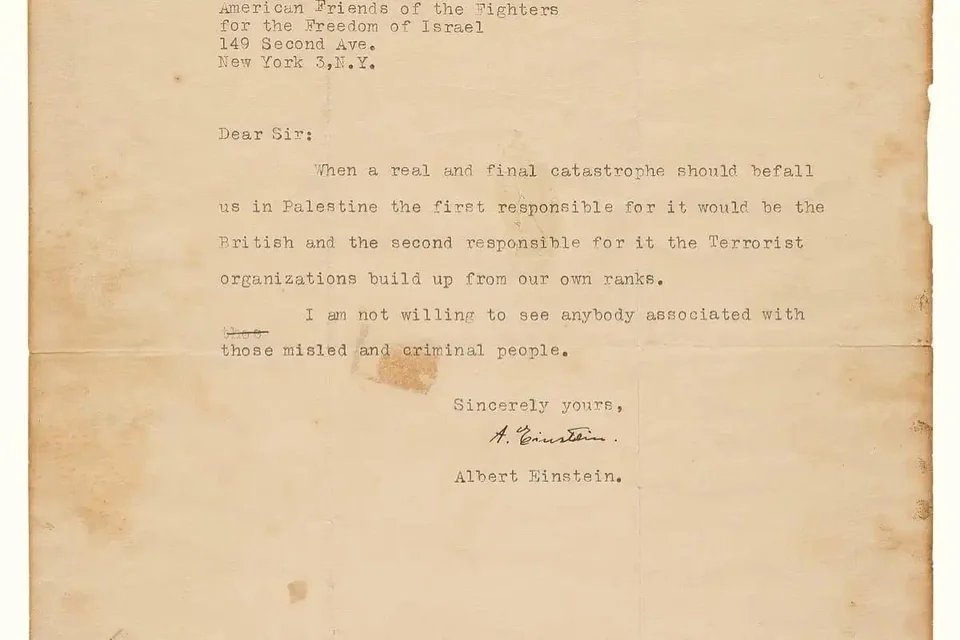


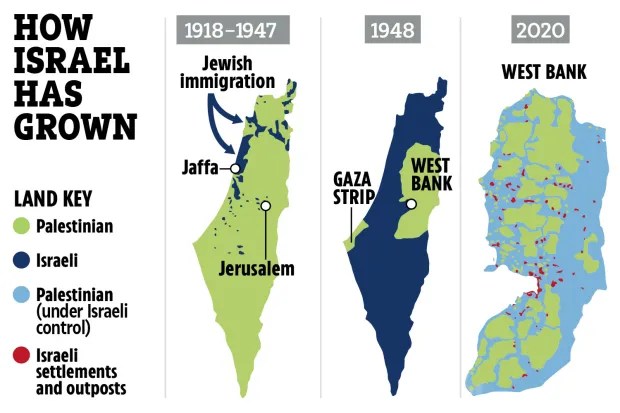








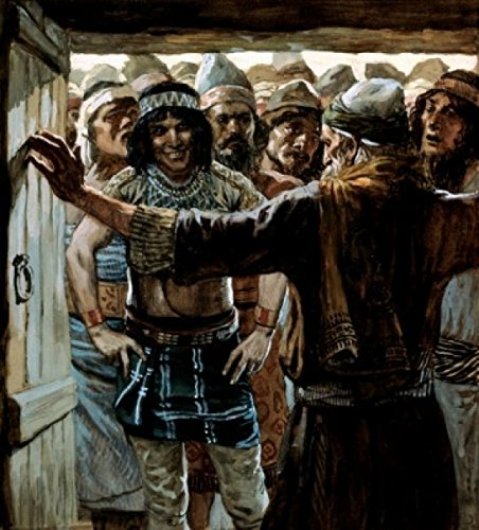

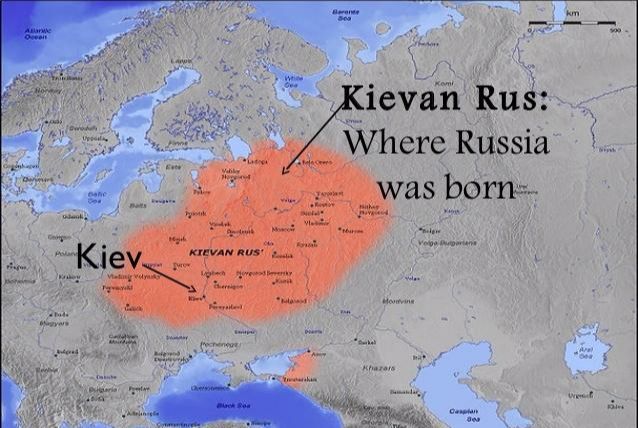


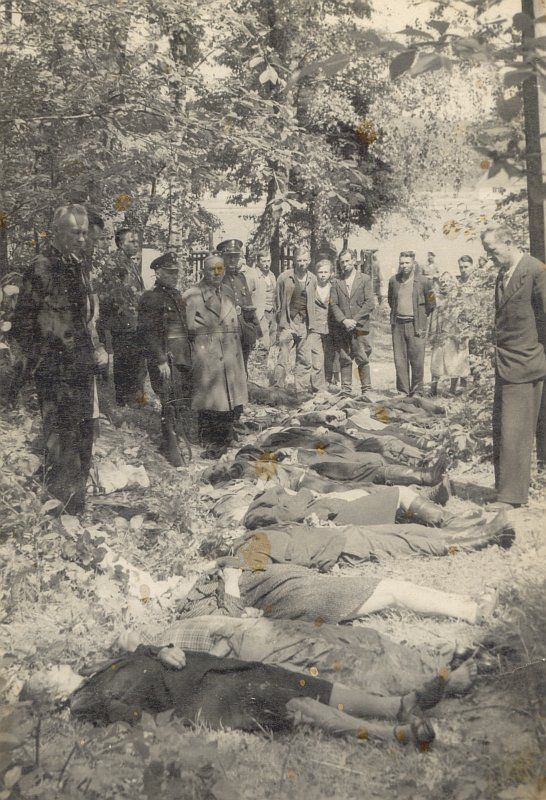

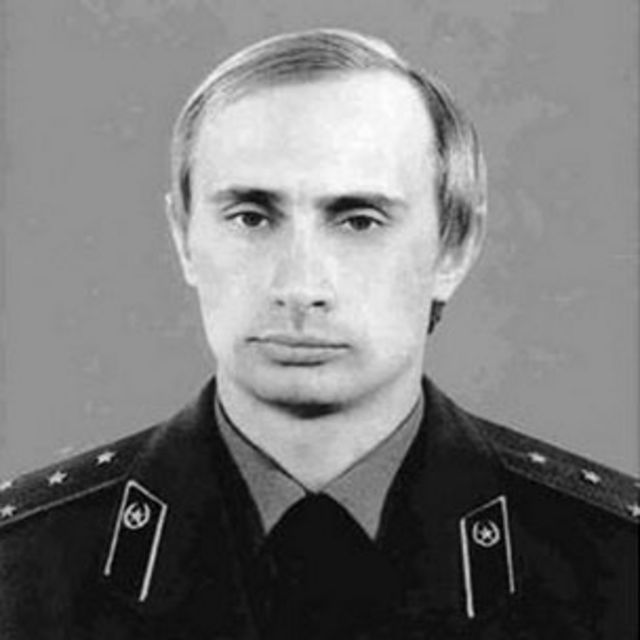







 Irregular Ideation