Cultural erasure is often discussed in the context of dramatic examples. Communist efforts to eradicate religious practice or the forced assimilation of Native Americans are two clear instances. Another is the British schoolgirl punished for wearing a Union Jack on a day meant to celebrate cultural diversity. Yet, a more insidious form of cultural erasure is sweeping through the United States, infiltrating every small town under the guise of free markets and capitalism.
What I’m referring to is corporatism, partnered with consumerism. This country was once defined by businesses owned by average people—those “mom and pop” shops. That is no longer the case. Capital and control are increasingly concentrated in the hands of a few (see this video on BlackRock), and choice is largely an illusion in this age of mega-corporations. We have become a nation of employees. Yes, small businesses and boutiques still exist, but they are the exception. Our regulatory regime favors economies of scale, benefiting established players who can absorb compliance costs.
On the road—hauling commodities—this economic transformation is alarming to anyone who cares to notice. Local mills and grain elevators have been bought up or are in the process of being acquired by major players. Businesses where locals once knew the owner have been transferred, one after another, to corporate boards far removed from the operations.This trend spans every industry. Thriving downtowns and corner stores have been replaced by Walmarts. Ironically, when communities regain a “local” option, it’s often a Dollar General. The impact extends beyond retail. Doctors can no longer afford to practice independently, and hospitals are absorbed by larger systems to manage ballooning compliance costs. Local communities have lost true choice as corporate brands dominate.
Even decisions within our towns are outsourced. Consider the plan to bulldoze Slifer House, a local landmark designed by a notable architect, listed on the National Register of Historic Places, and honoring a man who played a significant role in the town’s history. This building, originally a private residence, later an orphanage, and then a hospital, faces demolition. The board deciding its fate is disconnected from the community, concerned only with maximizing revenue at the expense of our shared heritage.
I spoke with a township supervisor, a relative, and received the typical canned response about property rights. But this boilerplate conservatism fails in an era where BlackRock owns vast swaths of the economy, and we all now owe our souls to the company store. It’s not a free market when Larry Fink can mandate DEI policies across every place we shop or work. Consumer choice doesn’t exist when all options on the shelf (see this video on BlackRock) are owned by the same entities. Property rights may have built the middle-class, but appeals to them cannot address this systemic erosion of agency and destruction of ownership society by the current corporatism.
A town known for its Victorian charm and yet can’t protect this heritage from corporate interests.
This corporatist-consumerist machine erodes local identity and sovereignty by homogenizing communities. Regional dialects, traditions, and histories are drowned out by standardized corporate aesthetics and practices. The local diner with its quirky charm is replaced by a chain restaurant with identical menus and decor nationwide. The family-owned hardware store, where the owner knew your name, gives way to a big-box retailer staffed by transient workers. These shifts strip away the unique character of our towns, leaving behind this sanitized, generic, board approved and predictable landscape that could be anywhere—or nowhere.
Retaining local identity and sovereignty requires deliberate resistance to this tide. Communities must protect what matters to them, prioritize policies that support small businesses, such as giving tax incentives for independent retailers (rather than Jeff Bezos) or simply streamlined regulations that don’t disproportionately burden the little guy. Local governments should not side with entities outside of town, but rather should empower residents of the community to have a say in decisions affecting historic landmarks like Slifer House, ensuring that distant corporate interests don’t override community values. Grassroots movements can foster local pride by celebrating regional festivals, preserving historic sites, and promoting artisans who embody the town’s heritage.
Better options closer to home?
Sovereignty also means reclaiming economic agency. Communities could explore cooperative business models, where locals collectively own and operate enterprises, keeping profits and decision-making power in the hands of residents. Supporting farmers’ markets, local craftspeople, and regional supply chains can reduce dependence on corporate giants. Education plays a role too—teaching younger generations the value of their town’s history and traditions fosters a sense of ownership that no corporate boardroom can replicate.
Ultimately, the fight against cultural erasure through corporatism and consumerism is a fight for self-determination. It’s about choosing to preserve what makes our communities distinct, even when the deck is stacked in favor of scale and sucking out profits. By valuing local identity over corporate convenience, we can reclaim the soul of our towns and ensure they remain places worth calling home. Property rights were meant to protect local control—not to consolidate then outsource all decisions to out-of-towners.
After reading a review of Gran Torino, a Clint Eastwood movie from 2008, that dismissed it as shallow in its exploration of racism, I’ve decided to explore some of the depth of the movie that was missed. It was a great story about finding common ground, that takes a bit of twist at the end from the typical Clint Eastwood film. My family (mixed race and culture) could appreciate the themes more than the average viewer—yet is a beautiful redemption story that all people can enjoy as well.
“Get off my lawn!'”
The story is about an angry old man who is not dealing well with change. Walter ‘Walt’ Kowalski, a Polish-American retired auto worker, Korean War veteran, and recent widower—his beloved wife passing right before the start of the narrative.
In the opening frame, he fits a stereotype of an elderly homeowner defending their patch of turf from an encroaching world. It seems every small town has one. That guy who trims his front lawn with scissors and does not deal well with the trespasses of the younger generation, the snarling “get off my lawn” line from the movie became an instant meme.
Why?
It is just too familiar.
The expression captures the essence of a fading dream. The American middle class values property ownership. A lawn, once a complete luxury and exclusively for wealthy estates, had become the mark of post-WW2 affluence. Walt was the beneficiary of this period of economic growth. He had lived a quintessential suburban life.
But now it had become a nightmare. It is not the same neighborhood anymore. The once tidy little homes, owned by people like him, had fallen into disrepair as a new group of immigrants took over. The woman who he built a home with was gone. His sons bought foreign brand vehicles and betrayed the legacy their father had built working at Ford. The world Walt had known was falling apart and he was bitter.
That patch of land, other than the ghosts of his past, was all Walt really had left. To set foot on it was to violate his sacred space. It was a shrine. And his 1972 Gran Torino in the garage likely represented the pinnacle of his productive career. Since the Korean War ended in 1953, this would put this car purchase around two decades into civilian life with a young family and point when the future looked bright. So he was clinging to what was left of his identity and willing to defend it with deadly force.
Demons of the Past
Early on we see Walt, the tough guy, who is playing a part. His racist language is a part of the facade—a barrier he puts up—because the alternative is to be vulnerable—or a victim. He is still haunted by his war experience, in the beginning using it as a threat, saying he could kill without remorse:
“Yeah? I blow a hole in your face and then I go in the house… and I sleep like a baby. You can count on that. We used to stack fucks like you five feet high in Korea… use ya for sandbags.”
However, later, when it comes to stopping the neighbor boy from taking revenge, we see the reality under the surface:
“You wanna know what it’s like to kill a man? Well, it’s goddamn awful, that’s what it is. The only thing worse is getting a medal… for killing some poor kid that wanted to just give up, that’s all. Yeah, some scared little gook just like you. I shot him in the face with that rifle you were holding in there a while ago. Not a day goes by that I don’t think about it, and you don’t want that on your soul.“
Just like today, where Russians are called “Orcs” and portrayed as subhuman by propagandists, racial and ethnic slurs were used against various Asian enemies of US policy in the region. But for Walt, he knew better, he knew that it was not a demon at the receiving end of his rifle. He had murdered a human child and he felt immense regret. Note how he says “poor kid” rather than all of the racist terms he used freely throughout his conversations. It is almost as if, up to this point, he had to reinforce the dehumanizing descriptions to keep ahead of his shame. The truth is Walt didn’t sleep like a baby. No, he was running his sins his entire life and exhausted.
War propaganda then and now. Enemies are always portrayed as evil and subhuman.
Walt’s racism was part of his pretty much equal-opportunity disdain for other people, including the young parish priest, and his own family. He was a broken and hurting man, who had driven away his children and was hiding his own terminal illness. What he needed was some compassion, a safe place where he could finally let his guard down, and it was the persistent effort of a young Hmong neighbor that finally broke through his wall of insults.
Finding Common Ground
The review, that sparked my response, tried to overlay a “white savior” trope on the story and completely missed that it was Walt who was being saved!
*spoiler alert*
Yes, ultimately, Walt sacrificed himself for the sake of the Asian family next door. But this only after Sue, played by an actual Hmong actress (some critics panned the amateurism, others praised), went above and beyond to disrupt his dismal world.
She was his savior.
It was by her effort that he would face the demons of his past and could be at peace with his Creator. It was a redemption story, a story of an old man who had lost his wife, lost his children, lost his religion and even lost his neighborhood, but finds life again by learning to love his enemies.
I can feel this character. My own life didn’t go as planned. I had to leave the religious culture where my hopes had been built. I had a beautiful Asian woman who was patient with me while I was still lost in delusion and did not give up when times were difficult. Now we have a blended-culture home. Yes, my Filipino wife and son are different from me in many regards. However, after seven years of knowing each other and now over a year of being married, our love has only continued to grow. Some of my happiest moments were with her family in the Philippines and recently while visiting her relatives in Canada.
I am Walt.
My ‘Sue’ did save me.
The real story of Gran Torino is an old man who finds more common ground with those he had thought were strange than he does with his own children. Once Walt had got past the superficial differences he realized he had more connection to these Hmong people than many who looked like him. Unlike the war, he was now defending real people and not political ideologies. He was fighting for the local community, against those within who are destroying it, and not gunning down random boys thrown into a conflict not truly their own. The storyline is a comparison between perspectives and shows us what really matters in the end.
It is about relationships, not race.
It is about building bridges.
The ongoing dialogue between Walt and his priest demonstrates this. The priest, who is of European descent based on appearance, is at first scoffed at by the grizzled military veteran for his youthfulness. The baby-faced “Padre” is bluntly rejected by him:
“I think you’re an overeducated 27-year-old virgin who likes to hold the hands of superstitious old ladies and promise them everlasting life.“
But, despite this insult, Father Janovich will not go away. And eventually, with his persistence, he does earn the respect of Walt. The bond, built over a few beers, culminates with Confession and Walt is finally able to have the guilt that had plagued him since Korea absolved. Now he is free and at peace, ready for a last act that goes contrary to expectations and confirms the redemptive arc.
It was faith that saved Walt, both that of the young woman who withheld judgment and didn’t allow his wall of nastiness to stop her and finally of the persistent outreach of the Church. And it is only because of this concerted effort that we get to see the protagonist do what is right. By the end of the film, Walt has overcome those demons driving his anti-social behavior and also has gained a son worthy of his prized Gran Torino.
Now To Review the Reviewer…
Why did the critic miss the obvious?
The reviewer who inspired me to write my own was projecting their own worldview onto the script. Eastwood is a rare conservative Hollywood producer. In fact, so conservative he spoke at a Republican National Convention and gave a mock interview with an empty chair, used to represent Obama, and he calls Biden “a grin with a body behind it.” Perhaps it is this that the review is responding to? But I think it goes a bit deeper than that.
The Marxist left sees the world as being a zero-sum game, or that for some people to gain others must lose, and thus everything is a competition for power. But, not only this, but everything is divided up into strictly bounded categories based on their skin color, financial status, or sexual classification. If someone cooperates across these lines then they are an “Uncle Tom” or traitor. So the themes of Gran Torino just do not compute. Asians are collaborators. Walt is an irredeemable privileged white man, he needs to be canceled—not humanized.
So, since we can’t have everyone come out as a winner, the only thing the woke reviewer has left is to hallucinate something color-coded and negative. Thus they see a movie that tells us to reach across lines of age, culture, and race as just another “white savior” trope. It is bizarre, such a narrow and distorted perspective, to entirely miss everything and then to insert what is not actually there. Yes, Walt saves, but in the context of others saving him, and that’s not even the point. The point of is that color (or age) doesn’t matter, finding our common ground and community does.
Gran Torino isn’t a perfect movie. It may go a bit overboard with ethnic slurs at times. But, then again, the comedic relief of the barber and Walt exchanging these insults as terms of endearment is also great commentary. Why do we let words be “violence” when the same utterances can be laughed at in another context? It is because these words have the power we give them. What this is suggesting is that we can go further when we reframe the conversation.
The left wants to believe that our behavior is determined by what others have done to us—Eastwood says we can be free to live above their rules.
Politics may be all about power, in-group and out-group, but love overcomes all.
There are questions that frame an issue the wrong way and are only answered by asking another question. One of them is: How can you raise another man’s son? The only real question for me is how could I claim to love my wife and then not love HER children?
Maybe I simply look at the world differently from other men. But the initial question to me comes off as sounding like “how can you love another man’s daughter?” Answer: “Well, we are the same species and it just happens naturally, I suppose?”
I believe the real issue is when someone is looking at step-parenting from a detached or deconstructionist view. In this framing it is all about biology and evolution. In other words, we should be like lions who kill the offspring of male rivals, not raising them as our own. It is a sort of Social Darwinistic construct where a man should only ever be concerned about raising the product of his own immediate genetic insemination.
But I think this is truly a very naive view of human relationships. We get along with our relatives as far as we relate to them and not after we DNA test them for our paternity. It is the same for my son and I. Probably a bit over six years ago I met this goofy kid with a bit of a crooked grin. He was endearing to me for his energy and his incredible ability to make friends anywhere. And, a few years later, when he asked me if he could call me “Daddy,” the die was cast.
The thing is, when I learned my bhest had a son I knew any romance with her would be a two for one deal. It was never a question for me. I did put considerable thought to it, worried more that this young person would accept me for this important role.
There was assurance, along the way, that helped me settle my worries and came from a stepdaughter who absolutely adored her stepfather. She told me that the fact he had choose to love her like a daughter made it a special love. Good step-parents don’t make a mistake when they bring a child into their lives. By contrast, there are many biological parents who become parents because they were unable to control sexual impulses.
In conclusion, my question is to those who ask the question: How could you not love a beautiful child, a wonderful miracle of life, who makes no judgement of you for your own multitude of faults? A child can form attachment to any adult who loves them as a parent loves and the same works for men who are committed to love.
Despite our variety of gifts and superficial differences of appearance, we’re all genetic cousins. My wife comes from the opposite side of the world, like our son, yet we are a couple very much compatible. Sure, there are differences in cultural expectations, or personality conflicts that come along, but it is really what you’re willing to put in as far as building the bond that matters.
If you could not love or even raise a child simply because they aren’t genetically your own then my only advice is to step up your game. Any man, who still has a functional reproductive system, can impregnate fertile women. That doesn’t make him a father or worthy of raising a child. No, it is always a choice to take responsibility for the needs and future of another unique individual.
It was our joint love for Ydran that helped us to push through years of waiting. If it were only the future of two adults going separate ways would have been easier. But when he called me “Daddy” on the phone, something changed in me and after that there was no way I would simply abandon him to fate.
As with most reporting of current events, the presentation of the ongoing conflict between Russia and Ukraine is distorted. Both sides are engaged in their own propaganda. It is said that truth is the first casualty of war and, in the case of this one, the falsehoods span many decades. The first thing to do, to get beyond this, is explore the history leading to to the present…
862 —1242
East Slavic tribes, in the area of modern-day Ukraine, Belarus, and Russia unite to become the Kievan Rus’ people.
980 — 1015
Vladimir the Great brought Christianity to the Kievan Rus’ people. Often referred to, in the West, as the Eastern Orthodox, this tradition (practiced from Egypt all the way to Greece) broke from the Roman Catholics in 1054.
1237 — 1480
The Mongols invaded and, laying siege to Kiev in 1240, came out victorious. This begins a period of Mongol rule.
1547 — 1721.
Mongol rule fades. The Muscovy dynasty rises. This Tsarist Russia, with periods of chaos and conflict, including what is referred to as a Time of Troubles from 1598 to 1613, ends with the rise of Peter the Great and brings us to the modern age.
1721 to 1917
The Russian Empire expanded from historical Kievan Rus’ territory and, stretching around 8,800,000 square miles, became the third largest empire in history behind the British and Mongol empires.
Joseph Stalin, an ethnic Georgian, becomes the General Secretary and begins his rule over the Soviet Union. His reign is marked by the Great Purge, from 1936 to 1938, when from 700,000 to 1.2 million people are killed, the number including many Orthodox priests, and political dissidents are rounded to be sent to Gulags.
Vladimir Spiridonovich Putin and Maria Ivanovna Shelomova struggle to survive the brutal German siege of Leningrad (now the city of St Petersburg) and are nearly killed. Vladimir, who lost a couple brothers in the battles, was wounded by a grenade in the fighting and crippled for life. The pair met after the war, got married, and had a son named Vladimir Putin in 1952.
April 4, 1949
The North Atlantic Treaty Organization (or NATO) is formed in Washington DC as an alliance to oppose the Soviet Union. The Warsaw Pact was created in May of 1955 as a response.
February 19, 1954
Crimea, which was part of Russia since being annexed from the Ottomans back in 1783, was gifted to Ukraine by the Soviets as a gesture of friendship. This ethnically Tatar and Russian-speaking region is the site of a key warm-water Russian naval base.
Oct 16, 1962—Oct 29, 1962
The Soviet Union responded to the United States putting nuclear missiles in Italy and Turkey by sending their own missiles to Cuba. The Kennedy administration, after the failed Bay of Pigs invasion, authorized a CIA campaign of terrorism and sabotage within Cuba, answered with a naval blockade. The Cuban Missile Crisis ended when Moscow backed down after a secret deal where the offending US missiles were removed from Europe.
Nikita Khrushchev, Fidel Castro, and JFK
1979—1989
A pro-Soviet government took power in Kabul in 1978 and tried to counter Islamic traditionalism with steps towards modernization. They invited Soviet military advisors and this led to troops being deployed to help the Afghans suppress the insurgency. The CIA supplied the Afghan rebels and foreign fighters (including a Saudi named Osama Bin Laden) the Mujahideen, with weapons. The Soviets withdrew after a humiliating costly affair.
December 26, 1991
The Soviet Union collapsed, the Warsaw Pact dissolved, and Soviet republics (including Ukraine) given their independence. NATO begins an eastward expansion, absorbing former Soviet republics. Russia falls into disarray as oligarchs partner with the West to exploit the vast resources of that country—Ukraine also becomes known for extreme corruption.
March 24, 1999—June 10, 1999
NATO intervened on behalf of Kosovo rebels, who had been resisting Serbian authorities, and then demanded that the country be partitioned along ethnic lines.
December 31, 1999
Vladimir Putin became the acting President of the Russian Federation when Boris Yeltsin unexpectedly resigned. From 2000 to 2004, after winning a special election, he begins to reform the country and reign in the oligarchs forcing them to answer to his government to keep their power. Putin opposes the expansion of NATO to his border, regarding it as a threat to Russian sovereignty, and makes this red line clear.
Vladimir Putin, a former KGB officer.
Nov 21, 2013—Feb 22, 2014
The democratically elected President of Ukraine, Viktor Yanukovych, decided to keep closer ties with Moscow over the European Union. This leads to protests in Maidan Nezalezhnosti (Independence Square) in Kiev. The protestors occupied the square, they had their own food production, medical, and broadcasting facilities, along with that, stages for speeches and performances, as well as their own security forces. This boiled over when snipers, still unidentified, fired on the crowd. Both police and protesters were killed in this attack. Before this escalation high-ranking US officials, then Secretary of State Victoria Nuland and the Ambassador to Geoffrey Pyatt, picked the replacement of Yanukovych who was later overthrown in the Maidan coup.
May 12, 2014
Hunter Biden, son of the then US Vice-President, Joe Biden, is given a seat on the board of Burisma Holdings, as a “legal advisor” and is paid over a million for this service. He gave Burisma executives access to his politically powerful father and later the elder Biden would brag, live on television, about a quid pro quo that got a Ukrainian prosecutor fired—who had been investigating Burisma corruption.
Like father, like son
Feb 20, 2014 – Mar 21, 2014
The Russians, believing their naval base in Crimea would be threatened by the new pro-West government, moved quickly to secure it from the Kievian nationalists. They already had a significant military presence there, it is a Russian-speaking area, and the Crimean status referendum, held on March 16, 2014, had an 87% turnout and was 97% in favor of reunification with Russia.
April 6, 2014–February 24, 2022
The Russian-speaking Donbas region also wanted more autonomy, they opposed Kiev’s efforts at “Ukrainianization,” which sought to erase their Russian heritage, and eventually declared their independence. These breakaways were invaded by the Kievan regime, starting a war that killed over 14,000 and lasted nearly eight years before the current Russian intervention.
Donbass, when nobody outside Ukraine cared about the war.
May 2, 2014
Protests around the country became violent again when the right-wing nationalists, who favored the new post-coup government that had been installed in Kiev, forced opposition demonstrators into a building that was set ablaze. This incident, the Odessa Massacre, burned alive 48 people, some of those who did manage to escape were beaten by the mob. Like the shootings used to justify the Maiden insurrection, nobody was arrested or charged for this mass murder.
April 21, 2019
Volodymyr Zelenskyy, a comedian, groomed by an oligarch, wins the second round of voting in a landslide victory and becomes the President of Ukraine. He promised to bring peace and end corruption. There was not much success on either front. Human rights abuses have only increased during his presidency and especially after the start of the Russo-Ukraine War.
Zelenskyy, the other Vlad.
February 24, 2022
After massing their troops on the Ukrainian border, Russia demands that the shelling of Donbas cease. When the attacks continue, the “special military operation” begins, which is condemned in the West as an “unprovoked invasion,” and is now effectively a proxy war between NATO and Russia. The bloodshed continues to the time of this writing.
Vladimir versus Volodymyr
While many commentators, on both sides, want to present this as a battle of good and evil, it is really a fight between spiritual (even actual) cousins. Those who say that Russia is the aggressor neglect that the war began years ago with the Ukrainian nationalists and their campaign against separatists, that this came about as a result of a coup apparently orchestrated by or at least with the direct aid of the US State Department. If Ukraine can be independent of Russia, or Kosovo from Serbia, why not Donbass? And who says that the Soviets handing over Crimea, in the 1950s, is more valid than the referendum that brought it back?
The US “rules-based international order” only makes sense for those who share the bias of those spoon-fed by US media. The legacy of CIA support for terrorism abroad and the violent overthrow of democratic leaders makes anything done by Russia seem like child’s play. The US acts with impunity around the world—provoking sanctioning, and invading with destructive campaigns of “shock and awe” anyone who dares to oppose its imperial aims. The US really had no business playing kingmaker in the backyard of Russia. The US enforces the Monroe Doctrine in the Western Hemisphere, why would Russia (or China) be happy with our military expansion in their own areas of national interest?
Us-rules based order
Sure, Russia isn’t faultless, by any means, and Putin is no St. Vladimir either. But, that said, neither is Zelenskyy or the Kievan (Kyivan) nationalist regime he represents.
Truthfully, the most significant difference between the two sides of the war may actually be their Slavic language dialects. Which is to say it isn’t much. Both sides commit war crimes, both lie about the other side, and both also share the same religious and ethnic heritage. They are natural allies, given their shared Kievan Rus’ history, which is probably why Western powers want to instigate and encourage the division. It is a family feud, a fratricidal war, and benefits only the US military-industrial complex.
There was a time when I could simply say “I’m Mennonite.” That is what I was. It was my religion, culture and ethnicity wrapped up into one tidy package. It was as real to me as my gender and first name. But now, having left the denomination of my youth behind, it is really difficult to buy-in to a new identity or at least not to the extent of feeling a significant attachment to the distinguishing title.
We live in a great identity crisis. We might celebrate more identities than ever, and yet somehow along the way, we have lost the very meaning of the words that we use to define these identity categories.
What is an identity?
An identity is a word used to distinguish one from another. Or a statement of what we are in comparison to the whole group. Are you Catholic or Protestant? Black or white? A Republican, Democrat or Independent? And whether it is identity or not has much to do with the emotional weight that we place on these categories and terms. In other words, blue-eyed is certainly a category that some of us belong to, but is not currently an true identity marker.
There are also various kinds of identity, there are those inborn or assumed—Charlotte, due to her inherited genetics, is Kankanaey, and would be no matter what she believed about herself or if she prefers that another term be used. Then there are those types of identities that are less about our immutable being and more about what we are doing. By contrast, trucker or truck driver is an identity, and even comes with a license to prove it, but it is not something that is actually written in a CDL holder’s DNA.
Trump ‘identifies’ as a trucker…
Identity is never something we can select for ourselves. I can claim to be a Dill Pickle and even legally require the moniker be used in reference to me. But this is never going to change what other people will perceive me to be. Identity is something that others construct, with us, and not only a thing that we independently choose for ourselves. Put another way, a rose by any other name is still a rose and even if we paint it blue. And blue does not become yellow because we switch the color identity labels either.
Our “I am” identity…
I’m sexually attracted to the female form and this has dictated my priorities and activities throughout the years. But, as important as it is to me, I don’t tout my ‘straight’ preference as being my identity. I am many things, but my sexuality is not something to hang my sense of who I am on. There are no hetero pride parades for this reason and no need to fly a special banner in front of my house to announce my preferences either. Sexuality is not who we really are.
So, when someone says “I am gay,” my mind always must go to the question, “you are a sexuality?” The reality is that this identity is about far more than what they do in bed. It is about the community or lifestyle and an identity built around being their status as an exception. Being “gay” is just as much about the social aspect as the orientation. It is not just something you only do in private. No, it requires a public display and solidarity with others like you. If it were simply about sex there would be no parades or neverending need to be legitimized by others. Identity is bigger than the individual.
And trans is simply the next level. Those calling themselves “trans” may (in direct contradiction with their biological gender assignment) self-identify as a man or a woman. But those who are truly male or female simply are and there is no need for hormones, reconstruction of genitals or to exaggerate gender stereotypes with weird provocative displays. On the other hand, no matter how much surgery is performed on the body of a ‘trans’ person they will always be trans. The more trans people try to force others to recognize them (despite our own eyes) the more they will stand out as being different. Which is truly the point.
Identity is about our distinguishing ourselves from the larger group. It is also about what is the most important thing to us. If a person were ask who I am I would probably start with my given name. That is where I am oriented in society, as a product of my parents, and also gives others a shorthand to address my person. Then I might mention my role as a husband and father as those things are currently the most meaningful parts of my life. Of course, also in the mix is my religious affiliation and occupation. Sexuality, while very important, wouldn’t even make the top of the list.
Furthermore, there is no need for anyone to defy their own eyes or be forced to recognize anything about me against their will. Identity is not only about what I declare. A large part of real identity is what others recognize with no coercion. If I had to demand that my son call me daddy or that my wife appreciate my bad cooking the same as she did the work of a master chef, would their bending to my will really make me any more legitimately those things? No, it would certainly not! It would make me a bully and look very insecure.
The Identity Gambit…
Special identity is a way to gain advantage over others. In the past it was about having the right privileging title or family pedigree. Now it has become a no holds barred fight between various victim categories. But in both cases it was about unearned respect, about people who did not do anything noteworthy enough in their lives to be recognized and thus invent illegitimate reasons why others must genuflect to them. These frauds are enabled by those who have twisted morality and a corrupted political system.
Stop. I look like a police officer!
People can lie about their identity for many reasons. Impersonation of a police officer, for example, gives a person false authority and ability to manipulate the unsuspecting. Or stolen valor, in the case of those who, for attention, dress like and pretend to be a military veteran. Sure, the act is usually off, since these posers don’t have the requisite qualifications, but it fools enough people that they get the payoff of the true identity—or at least until caught. Then again, prancing around and pathologically pretending to be a girl is now extremely lucrative for some men.
Pretending to be a doctor or airline pilot is something children do innocently and yet it would be silly to legally recognize this as not to make them feel bad. True identity is not an act or a costume we put on.
Shedding identity…
Identity is powerful. For example, a person calling themselves a “gangsta” or “thug” is declaring a whole package of behaviors and dress styles. It is a choice as well as a habit, they could change and yet their momentum is in a particular direction. They have been conditioned, for years and years, by culture and peers, to assume this posture towards the world.
There is some truth to the statement, “you can take the boy out of the country, but you can’t take the country out of the boy.” We have many things instilled in us, accents to tastes, but this is not written into our DNA and doesn’t mean it is an “I am what I am” excuse. We will send children to speech therapy if they have an impediment rather than let them be their true selves. We can and should modify things that an identity is built from. This notion of a genuine self that can’t be changed is ridiculous.
Right now there is a Ukrainian vs. Russian war. The narrative we’re being sold is that there is a vast difference between the two sides—that this is a fight between freedom and democracy or authoritarian rule. We are told the Russians are barbaric and cruel, the Ukrainian’s heroic and capable. But both are from the same Kievan Rus origins, speak a dialect of the same language, and truly have much more in common with each other than they do with us. Furthermore, the regime in Kiev is hopelessly corrupt, and had been shelling those trying to escape this rule for years prior to the Russian invasion—it isn’t a distinction worth dying over.
Ukraine vs. Russia is more like the US Civil War than WW2.
The reality is we are not bound to identity, especially not to those that are more about what we are currently doing rather than our actual being. We choose our divisions as much as we are born with them. Sure, we can’t help what side of a border we are born on nor if our personality traits are judged as being masculine or feminine. But we can decide what is most important to us. And, more importantly, we can pick identities that are greater than sexuality or gender. We must reject this idea that we can’t change or improve while also accepting what we are and were born to be.
Many people get off from being contrarian and offending others, they especially enjoy being able to force others to go along with their language games. But, in the end, their ‘preferred pronoun’ is a distinction without a difference. We will remain what we are no matter how we dress it up or how much we compel others to go along with the delusion and falsehoods we peddle. It is only in our spiritual transformation, in finding a bigger purpose, that we can be free from needing the approval and attention of others.
More and more I have no identity to cling to outside of being who I am. I am what I am and don’t need to hide behind a special label or find my place in the world. While many in my religious past hold conference in search of their identity and as many converts in the tradition in which I currently participate tout the Orthodox adjective in the manner some do they/them pronouns, I have little interest in joining them in this inane competition. St Paul, in Galatians 2:38, would have us shed our divisive identities for a joint identity in Christ.
There is an intermediate step between our own lonely individualism and some sort of wonky religious or hippie flower child 1960s-style communalism. There is plenty of room in between the extremes.
My thoughts about this ideal were sparked again by my interactions with a young woman, on the anxious left-wing activist side of things, thinking to declare as a philosophy major, who wanted me to check out some websites about cooperatives.
While I do not embrace the full package of left-wing ideology, I do see the huge deficit of viable communities and the economic forces that are behind this erosion. We have traded the mom-and-pop stores downtown for the corporately owned big box.
This is as unhealthy an arrangement as the mass-produced junk food many Americans choose. And yet, if you question this regime of suburban sprawl and consumerism, you’ll get a response similar to the dialogue, in the movie Idiocracy, when Joe suggests using water rather than Brawndo, an energy drink, for irrigating the crops:
“Community, like a cult or Jonestown?”
If you bring up the word commune there will probably be a strong visceral reaction on the part of conservatives. There is this delusion of independence, a crucial component of the American cultural mythos, which is what drives many to trade community (and potential for their greater success) for a payment plan.
Whereas a generation or two ago, there was the church and social clubs to provide some level of mutual support, now we have a class of some who make it and others who are an unforeseen circumstance and paycheck away from dependence on welfare programs. We have traded flesh and blood relationship for faceless state or corporate bureaucracy and a truckload of paperwork.
The current system is so woefully inefficient that we’re probably working twice as hard for half the rewards. Governments, banks, and big corporations are profiting massively by keeping us divided up and dependent on their systems. Many believe that they are free because they can watch smut or own a deadly weapon, but they’re really slaves to debt and tossed about by entities that have no actual concern for their well-being or wellness.
But, despite their slavery to this system, the moment you suggest that they consider an alternative, working together with those of like-mind towards a common goal, there is strong resistance. I mean, how dare you suggest that they give up their own property (that the bank owns anyway) or learn how to share anything?
Reducing the friction of commerce…
The reality is, unless you live alone on your Alaskan homestead, you are dependent on other people. And my thought here is that we should be more intentional about this and choose what makes the most sense.
The idea of a cooperative is basically to remove the dead weight of a business and distribute profits more evenly amongst the employed. It means that all involved in the enterprise share in both the risks and the rewards. Instead of paying interest to banks or making dozens of taxed transactions, all of this cost can be eliminated. What it all means, in the end, is working less for more in return.
For example, instead of everyone buying their own lawn mower or hiring someone, why not have one person do this for the community and earn credits?
My own vision is a mix of both cooperation and autonomy, which is negotiated between the members and the group. There would not be everyone living in some kind of compound or anything like that, everyone could have their own residence. There would simply be more shared space for all, fewer redundancies, and potentially more access to costly tools or equipment.
The economics of this kind of cooperative arrangement is so superior that once it was started it would vastly outpace those trying to do it on their own through the currently conventional means. Ever wonder why so many motels and gas stations are owned by immigrants? It is because they are financed through their ethnic communities and have eliminated the friction of interest.
Americans, by contrast, always seem to see everything as a competition. They’ll buy the biggest most ridiculous SUV, they truly can’t afford, to keep up with the Joneses and the only real winner is the financer of this silly display of excess. We would rather sacrifice our time so that the boss can get his hunting land or an executive makes their bonus than give up this faux image of self-reliance and work together.
Finding our commonality…
A successful cooperative arrangement does require some sort of connection or common purpose to unite the individuals. In the early Church, their having “all things in common” was a byproduct of faith and a commitment to Christ. The ideological left, on the other hand, begins with a different moral premise and that is the abolition of private property or Capital. In both cases, there is a shared identity that is the glue.
That is the biggest roadblock in the rapidly atomizing West, where Protestantism has led to a proliferation of denominations with competing claims and now the dissolution of a shared or universal purpose. Everything is about us now, about our own opinions and wants, to the point that many marriages end in a protest called divorce. We can’t sacrifice anything in the present, even if our greater integration as a whole would be better for us in the end.
But there is a huge potential upside. If we could find a way to look past ourselves for a moment and understand how cooperation is a means to reduce friction or cost. However, the real need is for more people to let go of this delusion that they are better off on their own and that security comes only through money in their bank account. The absurd part is that we already do lend our time to many people, for a wage, their services, or whatever, and would do better to choose better partners.
If there was a way to make cooperative arrangements more palatable I would. The real problem is that anytime we gain the slightest advantage over our neighbors we would rather keep it all for ourselves. Many cannot see past this pointless competition and appreciate the great gain of voluntarily distributing costs or sharing responsibilities. Perhaps this is why we can’t have nice things? I know it is why so many are lonely and discontent. They are looking in the wrong direction for fulfillment.
There are always tradeoffs for every arrangement. And yet there are also things that we are biologically wired for and denying them is to our detriment. We are social creatures. We have a neurological reward system built around having positive meaningful interactions with other people. The economic benefits of greater cooperation, at a local level, would be enormous and the social benefits even greater.
It is hard to feel unique in a world of 7.75 billion people. Due to mass media we are also more aware of this and also now have all of the best in the world there to compare ourselves to. We see the best athletes, the most beautiful bodies, those with wealth and power day in and day out.
I am insignificant
At the same time, many young people did not have siblings to share the attention of their parents, only were given affirmation in their formative years, a participation trophy for showing up and—special as they are—don’t need to follow rules or ever answer to anyone.
In other words, we have a generation with deep insecurities, worried about their place in the vast sea of humanity, and then also raised to be self-absorbed narcissists.
Unlike the past generations, where you could be a big fish in a small pond, yet also needed to learn respect for boundaries and how to share or negotiate with others.
Unlike the meritocracy of the past, where you needed real accomplishments to earn privileges or praise, we have conditioned young people to believe that their satisfaction should come without sacrifice or effort.
It is very little wonder why so many of them are unfulfilled, dissatisfied with life, and out there seeking cheap distinction.
Distinction—Cheap or Valuable
We all know names like Elon Musk, Serena Williams, or Ron DeSantis. They are leaders in their realms of popular culture and sport, business or politics. And we can probably agree that some of their success is an inheritance of genetics, good fortune or the opportunities granted them.
However, what they are doing, like them or not, is producing results and with this are being rewarded for the things they do. They have outcompeted many, they distinguished themselves by showing up for work and by putting the time in. It is for that reason their recognition is earned. They do the things we care about and we make them famous for this unique resume.
Earlier this week I saw a story about Rose Namajunas, a diminutive female UFC fighter with a very big attitude that earned her the nickname “Thug Rose” in school, and how she’s being featured in a Victoria’s Secret ad campaign. The message “all expressions, no definitions,” with the word “undefinable,” do certainly fit her outsized personality and the mean head kicks she can deliver, all the while being very emotional.
The point a marketing strategy is cynical, it is to tickle ears and encourage more consumption of a particular good or service. Those who produced this advertising campaign did it trying to target a certain demographic in the hope of profit. And that target is probably not those who will ever have the same work ethic and skills as Rose, but is those who crave the same notoriety and ‘undefinable’ uniqueness.
We all wish to be significant, to distinguish ourselves from the pack, to be appreciated and loved. There are many who are looking for a shortcut or feel entitled to these things, they want the same acceptance, recognition and rewards as those at the top. They buy expensive clothes, the latest smart phones or cars beyond their budget, all trying to gain attention through their appearance rather than actual character.
There is hard-earned distinction and there is the cheap kind. There is the content creator who shares of their substance and then the one who destroys things for clicks. There is the pleasing gift of Abel and that unworthy offering of Cain. There is that real fulfillment which comes from making contribution and then the imitation that is outwardly prideful, expresses itself loudly, while truly being an envious, bitter and impoverished soul.
Personal Pronouns and No-name Jerseys
Penn State football has a long tradition of not putting the names of players on jerseys and this is to reinforce the notion of selfless team effort over a bunch of individuals only in it for themselves.
No name, all game
Success on the field and in life depends on our plugging in and sometimes putting aside our own preferences for the good of others. We can get more done by working together, respecting the established system, rather than demand that everyone makes special accomodations for us.
Yes, there is a time for grievances. We also should be a reasonable give and take so far as how individuals and the members of the group interact with each other.
And yet this idea that we should rewrite cultural conventions, negotiated over many centuries, simply so some ‘woke’ Karens can have power over others, is not a grievance I can ever honor. It is not reasonable for a person to decide the pronouns that apply to them or force us to go along with their newly invented categories.
We don’t need to be Amish, severely limiting individual expression to maintain community cohesion, but we also don’t want to keep on this path of total atomization either. There’s a reason why the barn raising religion is able to flourish while the rest of us are headed for Babal, confusion and collapse.
Rose By Any Other Name
This morning, pondering how the categories of mental illness are a bit arbitrary and how much I dislike how these labels pigeonhole people, there was the thought that my given name was the best possible diagnosis of me. I mean, I’m Joel. I don’t need a personal pronoun when I already have my own name and identity completely my own.
Ironically, the same people who want to have new pronouns for themselves also seem to revel in their mental illness as well. Anything to be different. It is a sort of humble-brag, a title of distinction of our era, to talk about your PTSD or bi-polar disorder. If you are the right person, if you can make yourself a part of the right identity group, then your self-declared victimhood will be treated as a virtue.
It goes beyond moral inversion. People think that you can slap the right label on a person and it will make up for their deficiencies. If only they were described right, if we would see their pink hair as an accomplishment, then they would love themselves. Of course, this is a lie, people so into themselves are always a black hole and no amount of love given will fill their deep void.
It is the spirit of those who are content to remain nameless, who get their numbers called for what they do for the whole, that actually matters. People will know what is great and what is not no matter what label is applied. I can never forget what W.E.B Du Bois wrote to a student:
Do not at the outset of your career make the all too common error of mistaking names for things. Names are only conventional signs for identifying things. Things are the reality that counts. If a thing is despised, either because of ignorance or because it is despicable, you will not alter matters by changing its name.
We can manipulate and massage language all we want, give people all the fancy titles they wish for, but in the end none of this word play can take away or lend to their value. If you want recognition contribute to the whole and your name will be known. Not to the whole world, but to those helped by your deeds. A rose called by any other name is still a rose.
Have I mentioned that I’m tired of religious people and the prescriptions they give?
The real Jesus was defiant. He upended the systems and standards of his time. He was intentionally offensive to the self-righteous religious elites and then completely gentle with those who were broken. There was no one-size-fits-all, no attempt to simplify the process. Salvation is a walk of faith, not our ability to keep a set of fixed rules or pray a certain way, it is about our heart.
No, I’m not saying this as favoring the more libertine amongst us. Being “free in Christ” is not a license to do whatever we want. It is not about being ‘spiritual’ rather the religious either. Rather it as about love:
It is for freedom that Christ has set us free. Stand firm, then, and do not let yourselves be burdened again by a yoke of slavery. […] You, my brothers and sisters, were called to be free. But do not use your freedom to indulge the flesh; rather, serve one another humbly in love.”
(Galatians 5:1, 13 NIV)
A great deal of my social media connections are unregenerate social conservatives. They love those fading structures that once kept people bound to their moral standards and yet lack any comprehension of grace or their own need of it. They may see themselves as being righteous, for their exceptional ability to keep up certain cultural conventions, but they are very much like those rebuked and condemned by Jesus.
But still the alternative is not to go in the complete opposite direction. It is not better to have no structure, to completely defy all cultural convention or use Christian freedom as an excuse to do whatever we please. No, rather it is to serve and save others:
Though I am free and belong to no one, I have made myself a slave to everyone, to win as many as possible. To the Jews I became like a Jew, to win the Jews. To those under the law I became like one under the law (though I myself am not under the law), so as to win those under the law. To those not having the law I became like one not having the law (though I am not free from God’s law but am under Christ’s law), so as to win those not having the law. To the weak I became weak, to win the weak. I have become all things to all people so that by all possible means I might save some. I do all this for the sake of the gospel, that I may share in its blessings.
(1 Corinthians 9:19-23 NIV)
Which is to reiterate the example of Christ:
…whoever wants to become great among you must be your servant, and whoever wants to be first must be slave of all. For even the Son of Man did not come to be served, but to serve, and to give his life as a ransom for many.”
(Mark 10:43-45 NIV)
Our love for God is always, always, a matter of how we treat each other. If we can’t love the people we see, specifically our brothers and sisters in Christ, then our claim to love God is a lie. (1 John 4:20) Therefore, to be free in Christ, is not to shirk responsibility to each other. It is not worshipful, at least not of God, to go to church (or not go) for own sake:
“Therefore, if you are offering your gift at the altar and there remember that your brother or sister has something against you, leave your gift there in front of the altar. First go and be reconciled to them; then come and offer your gift.
(Matthew 5:23-24 NIV)
This is putting reconciliation with each other, true reconciliation. before or ahead of the ritual worship that religious people do. No, it is not negotiable. This is the command of Jesus. And yet it is so often reversed. It is acceptable to act or go through the motions of righteousness, but not to ask for the same authenticity that put Jesus at odds with the religious authorities.
Had Jesus just followed the rules and did what was expected he would never have been a threat to anyone. The reality is that he saw through the empty gestures. He was not impressed with those pious people who had their performative religion. His call was for genuine love, to be merciful as our Father is merciful:
On hearing this, Jesus said, “It is not the healthy who need a doctor, but the sick. But go and learn what this means: ‘I desire mercy, not sacrifice.’ For I have not come to call the righteous, but sinners.”
(Matthew 9:12-13 NIV)
That’s our true worship, to truly forgive and love those undeserving and broken.
Early Christians had a saying “unus Christianus, nullus Christianus,” which is to say that one Christian is no Christian. This is to say that our Communion together, in Christ, needs to go beyond merely sharing the same physical space for a few hours or it is fake. True Christianity can’t be reduced to mere individualistic pursuit of the Divine. It is not an “only God can judge me” freedom from duty to others.
I could quote two dozen other texts and it would not matter. So many are caught up in their own corrupted ‘traditions’ that they’ll always miss the forest for the trees. But I’m not interested in dime-store Christianity, the kind that only loves in prescribed ways. I want the real deal, the kind that frees and truly forgives. I want what is alive, what has the true Spirit of truth and love in it, not the lifeless self-serving counterfeit form.
It’s not that the wonderful symbolism and designated acts of ‘Christian’ service are unimportant or useless either. But it’s just that none of it really matters if it is not a part of something genuine. As Jesus said, in Matthew 23:15, a person can “travel over land and sea to win a single convert” and only be successful in making their new convert “twice as much a child of hell” as themselves. In that case it would be better to do nothing at all.
Even the mystical “cup of salvation” can be our damnation if we drink unworthily (1 Corinthians 11:29) or in disregard and without care for His body. The body of Christ meaning, at times, our fellow members of the Church or the people we encounter who are in need of love:
For I was hungry and you gave me something to eat, I was thirsty and you gave me something to drink, I was a stranger and you invited me in, I needed clothes and you clothed me, I was sick and you looked after me, I was in prison and you came to visit me.
Conflict is everywhere, anywhere there are two are more gathered there is potential for conflict. We currently watch the lingering hostilities between the West and Russia unfold into open war in Ukraine, between people of a common Kyivan Rus’ religious and cultural heritage. The reasons are complex (watch this video for a deeper dive) and beyond the scope here.
Nevertheless, the same things that cause wars between nations also lead to schism and splits in the church, and despite the exhortation of St. Paul to make every effort to maintain unity:
Be completely humble and gentle; be patient, bearing with one another in love. Make every effort to keep the unity of the Spirit through the bond of peace. There is one body and one Spirit, just as you were called to one hope when you were called; one Lord, one faith, one baptism; one God and Father of all, who is over all and through all and in all.
(Ephesians 4:2-4 NIV)
If we would ask most who profess Christ, they would probably agree that the Church should be united, there should not be rifts or denominations, yet that’s probably where the agreement would end. The body of believers has split hundreds of different ways, over matters of theology, history, structure, worship style, politics, or personalities.
But, before we get to the broader conflicts and division within Christianity, I’ll confess that I’m currently in my own conflict. This is why I am both the right and the wrong person to write about this topic. I am the wrong person because the impasse has not been resolved yet despite a small gesture on the part of the other person. My anger has exasperated the issue. And yet I’m also still wanting to find peace with this other person and honest resolution.
Conflict is Nothing New or Unexpected
If an enemy were insulting me, I could endure it; if a foe were rising against me, I could hide. But it is you, a man like myself, my companion, my close friend, with whom I once enjoyed sweet fellowship at the house of God, as we walked about among the worshipers.
(Psalms 55:12-14 NIV)
I believe we can all identify with the text above. We expect an enemy to do us harm and will find ways to maintain distance. However, when someone that we trust acts in a deliberately hurtful way, exploiting our vulnerabilities, the betrayal of a friend is the worst kind of pain. It is hard to come back to the table when someone professing Christ, who worshipped with us, seemingly close in spirit, totally destroys our trust.
That said, restoration of what is broken is part and parcel of Christianity. Indeed, we’re told that if we can’t forgive a person who owes us, then we will not be forgiven by God. (Matthew 6:4,5) This is something that Jesus expounded on in the parable of the unforgiving servant, a man who begs for mercy for a vast sum of money he owed, is forgiven, and then turns around to demand from a fellow servant.
And yet, no teaching of Jesus should be taken out of context either. Jesus was not, I repeat, was not telling us to sweep sin under a rug or not hold people accountable for their abuses. This certainly was not unilateral and unconditional forgiveness without repentance:
“If your brother or sister sins, go and point out their fault, just between the two of you. If they listen to you, you have won them over. But if they will not listen, take one or two others along, so that ‘every matter may be established by the testimony of two or three witnesses.’ If they still refuse to listen, tell it to the church; and if they refuse to listen even to the church, treat them as you would a pagan or a tax collector. (Matthew 18:15-17 NIV)
So many conflicts within the Church could be solved if we would go directly to the other person who had caused our offense. This process above is prescriptive and may keep a mere misunderstanding from blowing up into something that leads to separation or divides a congregation. First, before consulting anyone else, we should try to settle the issue amongst ourselves. Then, if that doesn’t work, it is time to seek the counsel of others and confront together. And, if that fails, if they refuse collective council, we should part ways.
It is similar to this explicit command from St. Paul:
I wrote to you in my letter not to associate with sexually immoral people—not at all meaning the people of this world who are immoral, or the greedy and swindlers, or idolaters. In that case you would have to leave this world. But now I am writing to you that you must not associate with anyone who claims to be a brother or sister but is sexually immoral or greedy, an idolater or slanderer, a drunkard or swindler. Do not even eat with such people. What business is it of mine to judge those outside the church? Are you not to judge those inside? God will judge those outside. “Expel the wicked person from among you.”
(1 Corinthians 5:9-13 NIV)
Forgiveness is not the same thing as tolerance for unrepentant sin. The church cannot be a hospital if we let the infection of sin to spread, like a superbug, untreated and ignored. The antiseptic is to confront the issue, to give opportunity for confession and repentance to begin the healing process. But, if the limb refuses treatment, then (as an absolute last resort) it must be amputated to save the body, as St. Paul had asked rhetorically in the lead up to the verses above: “Don’t you know that a little yeast leavens the whole batch of dough?”
In cases of actual unrepentant sin, conflict is entirely appropriate. The church cannot be allowed to become an incubator for sin. The toxicity can quickly spread and destroy the fellowship and health of a congregation. It takes proactive pastoral involvement, like that of St. Paul, to keep things from spiraling out of control. Yes, we should pray about all things. Sure, we should not judge without mercy and willingness to forgive the repentant. Still, we must confront sin, endure the discomfort of effective conflict resolution, and not simply resign to fate.
Not All Separation is Sin
Too many seem to skip over the book of Acts and miss the opportunity to see how Christianity played out in the early church:
Some time later Paul said to Barnabas, “Let us go back and visit the believers in all the towns where we preached the word of the Lord and see how they are doing.” Barnabas wanted to take John, also called Mark, with them, but Paul did not think it wise to take him, because he had deserted them in Pamphylia and had not continued with them in the work. They had such a sharp disagreement that they parted company. Barnabas took Mark and sailed for Cyprus, but Paul chose Silas and left, commended by the believers to the grace of the Lord.
(Acts 15:36-40 NIV)
This seemed like an amicable separation between Paul and Barnabas. Nevertheless, it was an unresolved conflict and they parted ways over it. There is no indication that either of the men was harboring an unforgiving spirit or in the wrong for this and, in the end, it probably helped the Gospel to reach more people than if they had stuck together. That is why with my own current conflict I may simply move on rather than make an effort to settle things. It is sometimes not worth the energy to continue with someone that does not see things the way we do.
Going separate ways, rather than trying to push through a conflict, may serve a greater purpose. At the very least, as with Abraham and Lot who parted ways over the turf wars between their respective herdsmen, we’ll gain a little peace. The key is that we don’t harbor ill-will or bring any hostilities with us Note that Paul and Barnabas did not go out and start competing church groups. They stayed within the same body of faith, carried on the same tradition, and simply moved in a different direction.
Is Ecumenicalism the Answer?
A church unified in teaching and mission should be the desire of all Christians. Some achieve this by declaring themselves the remnant and carrying on the great tradition of Diotrephes who turned away even the Apostles:
I wrote to the church, but Diotrephes, who loves to be first, will not welcome us. So when I come, I will call attention to what he is doing, spreading malicious nonsense about us. Not satisfied with that, he even refuses to welcome other believers. He also stops those who want to do so and puts them out of the church.
(3 John 1:9-10 NIV)
Declaring yourself to be the true church and everyone else imposters is certainly convenient and yet not really employing be completely humble. I mean, sure, when I was Mennonite I wanted a church unity built around the doctrines that I was taught. It is easy to assume that the ground that we stand on is sacred simply because we’re standing on it. However, that is not an attitude or spirit that will ever overcome our existing conflicts.
Many are tempted to see ecumenicalism as the better alternative. Let’s all just give up on the particulars, find our common ground in Jesus, sing kumbaya while holding hands together, and move on, right?
But this is a race to the lowest common denominator, we would need to throw out almost everything to reach some kind of consensus. We would end up with a vague picture of the real Jesus and only end up creating one more faction. That’s the grand irony of universalist, non-denominational or ecumenical efforts, they never do actually solve the divisions and only end up creating another group of those willing to compromise for sake of creating a kind of unity that doesn’t really amount to much.
Pope Francis greets Ecumenical Patriarch Bartholomew of Constantinople outside the Basilica of St. Nicholas in Bari, Italy, July 7. The pope met leaders of Christian churches in the Middle East for an ecumenical day of prayer for peace in the region. (CNS photo/Vatican Media) See POPE-ECUMENICAL-ENCOUNTER-BARI July 9, 2018.
Eccumenticalism tends to be a denial of the reasons why the conflicts exist. It glosses over serious differences in theology and practice. It appeals to a “can’t we all just get along” sentiment, it is modeled off of the democratic process that many in our time embrace rather than the Gospel, and is not the way of the early church.
How Did the Early Church Settle Disputes?
The early church was not conflict-free. And had a fair amount of heretical teachings and false prophets that needed to be addressed. But one of the big disputes was between the Judiazers, those of Jewish background who wished to impose Jewish law on all new converts, and those who did not see this as necessary:
Certain people came down from Judea to Antioch and were teaching the believers: “Unless you are circumcised, according to the custom taught by Moses, you cannot be saved.” This brought Paul and Barnabas into sharp dispute and debate with them. So Paul and Barnabas were appointed, along with some other believers, to go up to Jerusalem to see the apostles and elders about this question. The church sent them on their way, and as they traveled through Phoenicia and Samaria, they told how the Gentiles had been converted. This news made all the believers very glad. When they came to Jerusalem, they were welcomed by the church and the apostles and elders, to whom they reported everything God had done through them. Then some of the believers who belonged to the party of the Pharisees stood up and said, “The Gentiles must be circumcised and required to keep the law of Moses.” The apostles and elders met to consider this question. After much discussion, Peter got up and addressed them: “Brothers, you know that some time ago God made a choice among you that the Gentiles might hear from my lips the message of the gospel and believe. God, who knows the heart, showed that he accepted them by giving the Holy Spirit to them, just as he did to us. He did not discriminate between us and them, for he purified their hearts by faith. Now then, why do you try to test God by putting on the necks of Gentiles a yoke that neither we nor our ancestors have been able to bear? No! We believe it is through the grace of our Lord Jesus that we are saved, just as they are.” The whole assembly became silent as they listened to Barnabas and Paul telling about the signs and wonders God had done among the Gentiles through them. When they finished, James spoke up. “Brothers,” he said, “listen to me. Simon has described to us how God first intervened to choose a people for his name from the Gentiles. The words of the prophets are in agreement with this, as it is written: “ ‘After this I will return and rebuild David’s fallen tent. Its ruins I will rebuild, and I will restore it, that the rest of mankind may seek the Lord, even all the Gentiles who bear my name, says the Lord, who does these things’— things known from long ago. “It is my judgment, therefore, that we should not make it difficult for the Gentiles who are turning to God.
(Acts 15:1-19 NIV)
This conflict was not solved by democracy or popular vote. No, it was decided by a council of elders and Apostles, who then told the rest of the Church what the right approach would be. It also went against a strict interpretation and application of Scripture. It was both hierarchical and required submission. We might not like that this dispute was decided from the top down. We can question the authority of this council or those that followed after, nevertheless, this was how conflicts over theology and practice were settled.
The Embrace of the Apostles Peter and Paul, Cretan school, Angelos Akotantos, 1st half 15th century
This is the strength of Orthodoxy; Orthodoxy centers on the Orthodoxy rather than hierarchy and that does mean the tradition of the Apostles, passed on “by word of mouth or by letter,” (2 Thess. 2:15) a canon of teachings (including Scripture) that have been established as authentic through councils of the Church, and has been held fast by the faithful throughout the centuries.
So Orthodoxy is the Answer to Conflict?
Many Orthodox Christians will tout their unbroken lineage all that way back to the Apostles. Our way of worship goes back over a millennium, the liturgy of St. John Chrysostom celebrated from the 5th Century on and is unrivaled in terms of the beauty of the content and structure. We are the ancient Church tradition and, indeed, Holy Communion is a mystical experience when in the presence of all those through the centuries who have participated. Such unity!
We’ll talk about the Great Schism and do some of that necessary handwringing about the literally thousands of divisions within Protestantism. I mean, judge for yourself, is there any civilization more divided against itself than the West? Even Roman Catholicism, with its progressive Pope and sex abuse scandals, is quite at odds with itself despite having a defined hierarchical structure.
Had I entered Orthodoxy with blind idealism, expecting the perfect church, I would probably have left even before getting started. The Orthodox may have the richest of Christian traditions, it is certainly a treasure trove for those who appreciate history and want to participate in a Christianity recognizable to those in the early Church. There is also a defined hierarchy to settle disputes. I mean, what could possibly go wrong? And yet the same conflicts of personalities and politics happen here as much as anywhere else.
Pretty much simultaneous to my entering the fold, the Ukrainian Schism took place. The gist of the dispute was that the Archbishop of Constantinople and Ecumenical Patriarch Bartholomew decided unilaterally to grant autocephaly (or independence) to the Ukrainian church. The problem was that this overstepped canonical law and violated the jurisdiction of the Moscow Patriarchate. For sake of context, Bartholomew is pretty much the patriarch of a city that no longer exists, is supported by American churches, and is acting outside of his authority in a way reminiscent of the very Papal abuse that led to the Great Schism between East and West in 1054.
And then there were those families that left my own parish, led by a homeschooling mom from a Protestant background, who made some vicious (and completely unfounded, I was on the council and reviewed the books) accusations against the new priest. This woman, one of those pious and outwardly perfect types, the kind that can fool all of the frivolous old ladies, sends up all of the red flags of a classic manipulator. Things didn’t go her way and, therefore, that was proof of abuse and fraud. I tried to be her friend. I don’t completely connect with our new priest myself, and yet she’s way out of line.
Of course, I come from a Mennonite background, where no dispute is too petty to divide over. We would part ways over hairstyles.
The most disappointing fissure, however, other than my own personal conflict with someone that I thought was a real friend, is that between Abbott Tryphon and Ancient Faith Ministries. Tryphon, a convert to Orthodoxy, is a great writer and a favorite of my parish priest. I follow him on social media. He had a falling out with Ancient Faith over his more overtly political content. Of course, the accusations fly between sides, some say that one side has been compromised, has connections to this industry, or that, while the other would say it was over someone getting too entangled in worldly politics.
In other words, both sides are making essentially the same claim about the other and it probably does stem from both sides holding slightly different partisan perspectives. I can understand the perspectives that both sides have. I do not see worldly politics as being a good mix with the Gospel of Jesus Christ and yet I also see that a prophetic voice must speak to the issues relevant to the time. Still, Tryphon, though very eloquent, seems the more butt-hurt of the two parties and even alienated some of his own audience with his lashing out.
I would actually side against Tryphon, based on his visible conduct, if it weren’t for one thing and that thing being that I’m just like him when hurt. He’s a passionate man, someone who speaks with conviction, a bit black and white, and completely like me.
Division Makes Us All Weak
There is no religious system or culture that can prevent conflicts. We can go through all of the correct motions, speak all of the right words, have a perfect understanding of Christianity at a theoretical level, and yet totally fail to resolve conflicts.
Returning to the passage from Ephesians, from the start of the blog, the “make every effort to keep the unity of the Spirit through the bond of peace” is preceded by “Be completely humble and gentle; be patient, bearing with one another in love.” That’s the hard part. When hurt or offended we don’t want to wait, we want to speak out rashly and let them feel a little of our own anguish.
And yet St Paul does not tell us to bury our grievances in the name of keeping unity and peace either:
Then we will no longer be infants, tossed back and forth by the waves, and blown here and there by every wind of teaching and by the cunning and craftiness of people in their deceitful scheming. Instead, speaking the truth in love, we will grow to become in every respect the mature body of him who is the head, that is, Christ. From him the whole body, joined and held together by every supporting ligament, grows and builds itself up in love, as each part does its work.
(Ephesians 4-14-16 NIV)
We should not lose our sensitivity:
So I tell you this, and insist on it in the Lord, that you must no longer live as the Gentiles do, in the futility of their thinking. They are darkened in their understanding and separated from the life of God because of the ignorance that is in them due to the hardening of their hearts. Having lost all sensitivity, they have given themselves over to sensuality so as to indulge in every kind of impurity, and they are full of greed. That, however, is not the way of life you learned when you heard about Christ and were taught in him in accordance with the truth that is in Jesus. You were taught, with regard to your former way of life, to put off your old self, which is being corrupted by its deceitful desires; to be made new in the attitude of your minds; and to put on the new self, created to be like God in true righteousness and holiness. Therefore each of you must put off falsehood and speak truthfully to your neighbor, for we are all members of one body.
(Ephesians 4:17-25 NIV)
Instead, we need to find a way to navigate through conflicts, to speak truthfully and reject falsehood, while still being completely gentle, humble, and patient at the same time. It is both prayerful and proactive. The potential growth of the church is stunted both by those aggressively confrontational and overly passive in their approach. Again, what good is a hospital that only ever talks about infection without ever treating it? Likewise, who would go to a hospital where they a browbeaten and belittled constantly?
Having the right spirit is the start to resolving (or even completely avoiding) conflicts. There is a need for open and direct communication. We should also not let things stretch out too long, where we let things stew, as Ephesians 4:26-27 says: “In your anger do not sin”: Do not let the sun go down while you are still angry, and do not give the devil a foothold.” The more that I think about something the more upset I can become. I tend to soften up very quickly when face-to-face with someone, it is harder to hold on to the grievance.
Oh No, Here We Go Again!
When I entered Orthodoxy, trying to put the deep disappointments behind me, and already having the romance question answered by Charlotte, I was determined to remain friendly, and yet aloof and impersonal enough not to get hurt. The people were nice at the small parish, a good mix of ages, coffee hour conversations could go deep and I very quickly warmed up to most of the regular attenders.
In the intervening years, there has been some change and conflict. The long-serving Fr. Dan, who helped to build the parish, retired (his last service my Chrismation) and the search was on for a new rector. Unfortunately, not everyone was happy with the choice and almost immediately set to undermine the new priest. I tried to steer clear of those politics, choosing to remain faithful to the parish community despite my own personality conflicts with the burly bearded Harley riding Baptist convert. He’s a gruff man with a golden heart.
It was in the midst of the pandemic, after that initial quarantine phase in the spring of 2020, that a new person started to attend. She looked like someone who could be cradle Orthodox, with dark curly hair, and her veil with a long dress reminded me of the traditional Mennonite style that I loved. So I pretty much had to introduce myself and make them feel welcomed. I can’t really remember how that went, she was reserved and a little standoffish, and yet Orthodoxy provided a bond that allowed us to develop what seemed to be an authentic brotherly and sisterly relationship.
We spent a fair amount of time talking about our long-distance love interests, we became a sort of two-person support group for those waiting on their significant other to arrive, comforting and encouraging each other, and I found the greatest joy when her tall handsome man arrived one evening for vespers. I was so excited, in fact, that I offered to play the part of the photographer to make sure that this moment was captured.
I didn’t realize then that this would be the high point of the relationship. Uriah’s death meant I needed some space to process and mourn. I pulled back. And pulled back even more after a sarcastic remark was directed at me. It wasn’t meanspirited or meant to hurt, but I simply didn’t have the emotional armor for it and decided to let her be with her new nihilistic Ortho-bro Millennial buddies. A church isn’t supposed to be a social club or clique of cool kids snickering at everyone else, I could find more neutral company until I got my feet under me again, and that’s what I did.
It was mutual avoidance at this point. I wanted space, she never really loved me anyway (later revealing that our friendship was fake when I did try to reconcile) and this was fine.
However, eventually, this arrangement started to wear thin for me. It seemed dishonest or out of sorts with the loving claims we made with our mouths during worship together. It was too reminiscent of those cold shoulders Mennonite girls give when they want the pudgy less than hygienic misfit to get the hint and not Christian. So I did what I thought I do well, wrote an email, shelved that one, and wrote another less emotionally charged version that I sent.
Unfortunately, the signals that I got back were not conciliatory and some of the comments seemed to be very intentionally aimed at my known vulnerabilities, I was falsely accused of being romantically interested (100% not the case) and pretty much had everything thrown back in my face. It was at this point some of my past started to bubble back up, seeing her would trigger severe discomfort and a flight reflex. She did gesture to try to make it right and try I have not seen much evidence of a change of heart either.
Rather than reconcile with me directly and be honest, she seems determined to maintain the distance by getting intermediaries involved. And my initial anxiety attacks have morphed into intense feelings of anger from what feels like a betrayal and lies. I don’t trust her anymore and I don’t trust anyone to mediate. I can’t see platitudes or empty motions as being a way forward and would rather stick to the avoidance strategy. So the one triumph for true brotherhood in Christ ends in a messy quagmire.
It’s Not You, It’s Me
“We have met the enemy and he is us.”
The truth is that my interpersonal conflict, like all in the Church, is a problem with me as much (or more) than it is them. I have trust issues and an impossible ideal, the initial estrangement was my fault, she has her own baggage to deal with and is now moving to protect herself from me. In her mind, and in the mind of her allies, I am the unstable and manipulative party in this conflict. She is, no doubt, being encouraged to write me off and move on. I’ve given her reason (like telling her “stay away from me”) to never talk to me again.
So, what is my reason for spilling my guts in a blog once again?
Maybe so that someone reading can offer a solution or that those who are prayer warriors can help by begging God to remove those blinders from our eyes and free us from the bindings of fear. I had initially loved this person because they appeared to be sincere and that (during a sermon about martyrs and contemplating my own weakness of faith) I decided it would be worth dying beside her rather than leaving her to face death alone. It is tragic that we should end up dying now in opposition to each other due to our past. Please pray for me, a sinner, that I can learn humility and live a life of repentance.
This brings me to the final point and another reason why I’m sharing this openly: We cannot solve those broader schisms and divisions within the Church if we can’t even love those who are right in front of us enough to lower our defensive posture or give a second chance to those undeserving. Healing, within the body of Christ, can only be accomplished by working locally to resolve our own conflicts with humility, gentleness, and patience. We cannot conquer the world for the Kingdom when we’re at war with ourselves.
Furthermore, it takes being at peace with who we are as individuals, petty, unworthy, afraid and broken, to solve our own inner conflicts, before we’re going to do much good in our communities. My own insecurities, no doubt, are what cloud my judgment and lead to the wrong kind of response. The Gordian knot that I project onto this situation is less an external reality and more a reflection of my internal state. I am frustrated with my lack of progress. I did find great comfort in this friend who is complex and conflicted like me.
Now my true character has been revealed. I’m not this wonderful even-keeled guy. My emotions do get the best of me. I’m not at peace with myself all of the time and sometimes do look outward for a resolution to this inner battle. Unfortunately, looking to others for security and stability, will leave us further hurt. They have their baggage too, they respond wrong, misunderstand, misrepresent, manipulate, lie and will otherwise disappoint. That’s why spiritual healing has to start with me—with getting my own conflicted heart right.
A person can attend every church service, faithfully tithe, and beneath this righteous public display be concealing an adulterous affair. One can go through the ritual of Holy Communion without being truly reconciled with their brother or right with God. False religion makes a mockery of the Church and the true faith of the Saints.
It is because of that fake devotion that many do throw the baby out with the bathwater and conclude that all religious practice is useless. My generation, for better or worse, longs for authenticity and has rejected the motions of religion on that basis. We all know hypocrites, those who dressed in the correct prescribed manner, who acted right and abused, neglected, or mistreated us.
This is likely one of the reasons why church attendance is dropping. People had a bad experience (or many) and decided it is better to stay home than to simply show up for sake of appearance. Why hang out with people who are phony, who do not truly live out what they claim to believe, yet will judge you because you are sincere and don’t follow all of their forms?
This is, after all, what Jesus did during his ministry, he challenged the pretentious, the religious elites, and brought the focus back to being genuine in love for each other. And yet this is not to say that he was not an observant Jew or irreligious. We know he was taken to the temple as a child, we know he was active in his own synagogue and kept the feasts.
Sure, he chased out the corruption. Sure, he corrected the misuse of the law. And there was also the condemnation of those who were circumcised and imposed their tradition on new believers. But that doesn’t mean that Christianity was without ritual or religion, it certainly does not mean we would be better to practice our faith only when we feel like it or completely agree with the application.
Authenticity is a good thing. However, as an artistic cousin of mine (employed as a writer and musician in Nashville) once told me, you must practice even when you do not feel like it. That is why I write almost constantly, and whether I feel like it or not, because regular practice is the only way we get better at anything. If we always waited for the right amount of inspiration before going to work we would severely limit our potential.
Practice makes perfect and going to the gym every day, the repetition of various motions with the right amount of intensity, will allow us to build strength over time. That is the power of religion. It is not vain repetition to go through the motions of prayer or treating others with love, that is what builds muscle memory and leads to gain. Had we just stayed home, to prove our authenticity or whatever, we would miss out on the opportunity for growth.
The danger of taking authenticity too far is that we never show up because we don’t feel like it. My natural disposition would be to attend St. Mattress on Sunday morning and not have to face some people and their hurtful behavior that is inconsistent with their Christian profession. It is triggering, it feeds deep-seated doubts and makes me uncomfortable. Still, I go to work in the morning or the gym despite feeling unmotivated.
That is why we go through the motions of religion. Faith is what it does. And, if you want to move mountains or slay giants, then you need to show up for the small tasks as well. David was a good shepherd who tended and protected sheep before he became king of his people. Daniel prayed, faithfully, three times a day, before he faced down the lions. Religion, going through the motions, can strengthen us.
However, at the same time, we can’t expect any gain through the ritual alone, at some point this must translate into tangible acts of love or it is fake. The Pharisees, we are told, were diligent in their religion and yet unloving in their actions. The church should never be a toxic environment where problems are never adequately addressed. St. Paul was brutal in his letters in addressing neglected issues. James too makes it clear that profession without concern for our brothers and sisters is not enough:
What good is it, my brothers and sisters, if someone claims to have faith but has no deeds? Can such faith save them? Suppose a brother or a sister is without clothes and daily food. If one of you says to them, “Go in peace; keep warm and well fed,” but does nothing about their physical needs, what good is it? In the same way, faith by itself, if it is not accompanied by action, is dead.
(James 2:14-17 NIV)
By this we know love, that he laid down his life for us, and we ought to lay down our lives for the brothers. But if anyone has the world’s goods and sees his brother in need, yet closes his heart against him, how does God’s love abide in him? Little children, let us not love in word or talk but in deed and in truth.
(1 John 3:16-18 NIV)
Religious discipline, without love for each other, is only ever a dead work. It is false security for those relying upon their own strength. We’re not saved by the number of prayers we pray nor by our participation in the rituals and tradition of the Church. All of this, without genuine love, is “a resounding gong or a clanging cymbal,” a hollow act, worthless noise, and meaningless.
Maybe do not have any unmet material needs anymore, like those mentioned in the passages above, but we do have emotional needs and a need for real connection. And, let’s not forget that Judas betrayed Jesus with a kiss, we can even go through the motions of intimacy and love. The truth of our faith depends on the authenticity of our love one for another; what we withhold from our brothers and sisters we withhold from God.
It is disappointing when the church is like a social club, people go through the motions of relationships, and there is no true depth or commitment to real love. It does seem that many lean towards this idea that Christianity is a “personal relationship with Jesus” or something between them and God alone, basically impractical religion, but that is not the attitude of those in the true Church. There is no love for God required to sit alone at home.



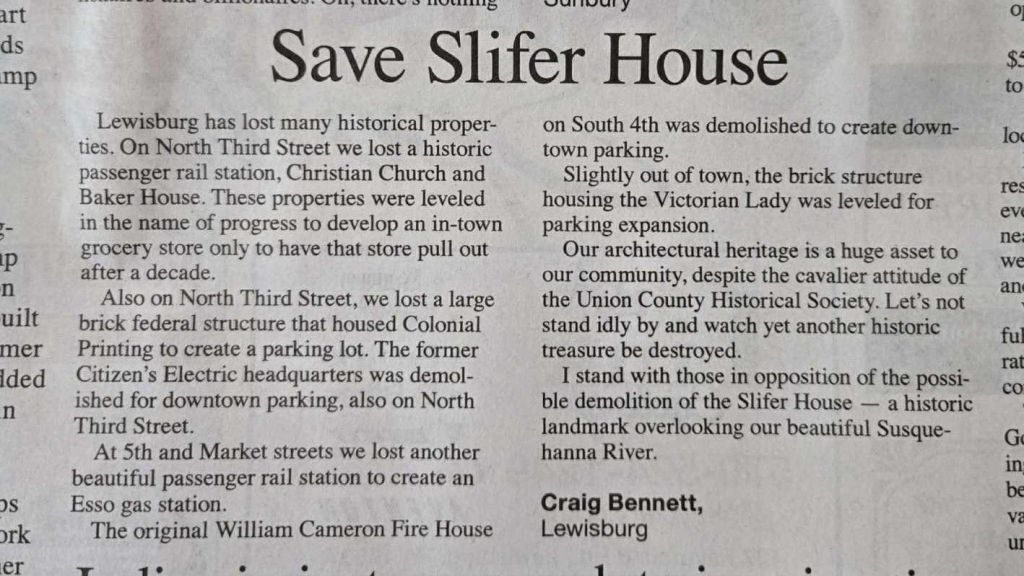





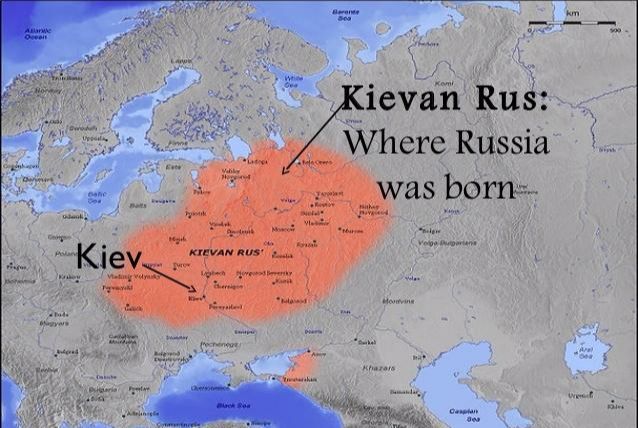


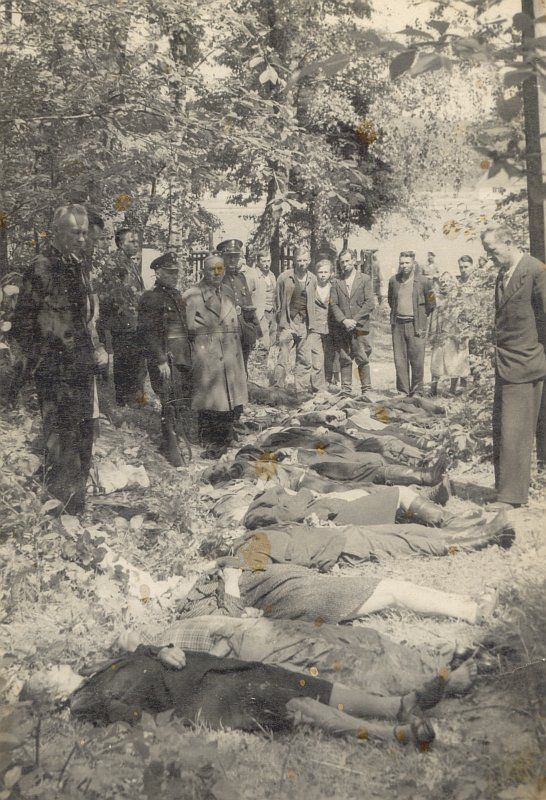

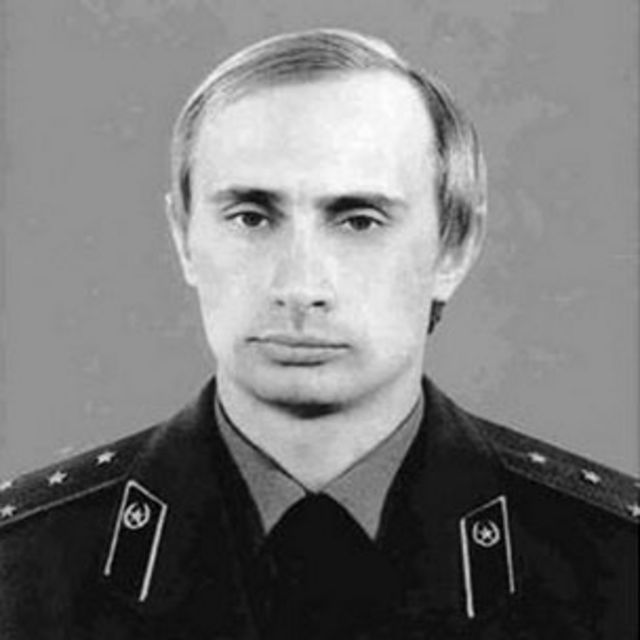
















 Irregular Ideation