Is Modesty Oppression? No—Clothing as Protection, Group Identity and Civilization

Standard

What is clothing for?

Why do we put fabric all over our bodies—why not be naked?

For protection.  

We wear clothes for a layer of protection against the elements.  

Clothing helps us keep our body heat in the cold air.  It is a barrier against harmful solar radiation.  This invention allows us fragile creatures to navigate harsh environments that would kill us otherwise.

We also wear clothes as a matter of public health.  This covering is beneficial from a sanitation perspective and for keeping all of our disease spreading bodily fluids off of shared surfaces.  

There is a significant social component or function as well.  Having the ‘right’ clothes matters if you want to fit in.  It could be a religious group you wish to belong to or just the popular kids at school—but you will be judged by the outfits you wear.

My son, for example, found out the pair of sneakers (bought with his money) weren’t cool because they weren’t some recognized name brand.  Agree or not, I know there’s no point in fighting this pressure to conform.  If a kid does not want to be ridiculed they will wear the currently acceptable style.

Even those counter-cultural types are just responding to this pressure by going in an opposite—yet as completely predictable—direction.  From Hipsters who all looked the same trying to be different to the Goth kids with their own uniform that is stricter than the typical and mainline dress regime—all are obeying a rule.


Dress is a part of group identity—a way to belong to a group.  Amish will know other Amish in the same way gang members or police officers recognize each other.  It is by wearing the correct colors, or following the correct patterns, that an individual gains the necessary recognition to gain the benefit and protection of a community.  Sure, we may not always like it, we might see this as being superficial, but clothing sends signals that can either make us more vulnerable or more safe.

Conservatives have long valued modesty over inviting attention.  This is something developed from tradition.  But not tradition without any practical purpose or merit.  My wife, from a place where the government is a bit weaker, told me never to display any signs of wealth as this would make me into a target.  And I could certainly protest the recommendation as an infringement on my freedom—that I am American, with rights, and can therefore will do whatever I please!  However, that belief won’t save me from a mugger in a back alley, will it?

Modesty is about protection.  It is about keeping hungry eyes off of those assets we don’t plan on giving away.  No, that does not mean our immodesty justifies assault, theft or rape.  It also does not mean our modesty is a foolproof protection.  Rather, it is sort of like N95 masks and Covid, this is only one part of a larger strategy that is designed to minimize a particular risk rather than fully eliminate it.  

It is sometimes a matter of public decency and respect for others.  If there’s a sign on the door of a business: “no shirt, no shoes, no service”  Why make a scene? 

We should understand—as conservative people—that this public space comes with a set of public expectations and should probably comply without causing drama.

There was a time—and not very long ago—for the reasons outlined above, a woman wouldn’t leave the house without a proper dress, blouse and bonnet.  Both men and women covered up, to be prepared for an environment that was harsh and only the insane did otherwise.  Clothing was part of being civilized and a value of modesty tied very intimately to Christian religion and the Biblical standard.

Wolves in Sheep’s Skin 

Some clothing is dishonest.  

A disguise.  

In order to gain acceptance and trust (going back to group identity and belonging) some will wear a costume of something they do not represent to gain trust And the “wolves in sheep’s skin” have infiltrated every conservative institution in this nation and turned them into a propaganda tool of godless empire.  
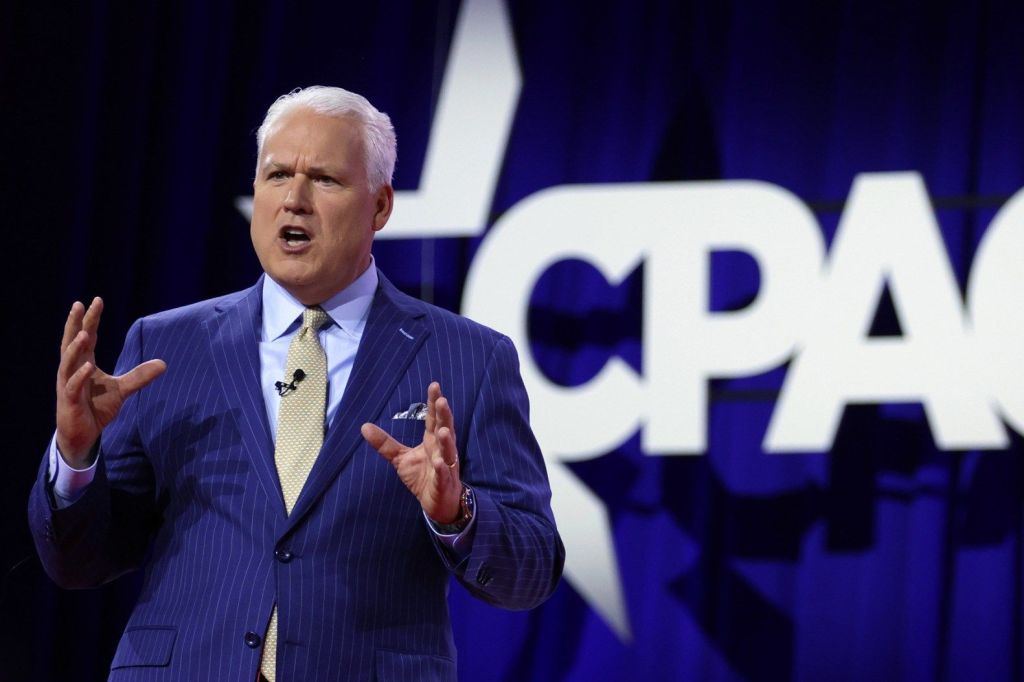
Take Matt Schlapp, for example, the present chairman of American Conservative Union—also the first ever paid chair of Conservative Political Action Committee (CPAC) where he received a modest $600,000 in annual compensation—and an additional $175,000 for his wife on top of that.  All while he has faced multiple allegations of groping men when he’s out drinking.  One of the accusers—who had publicly apologized for the “misunderstanding”—was also quietly paid off (by a insurance company that represents ACU) to the tune of $480,000!  More recently he got a little too touchy-feely with men at a Virginia bar.  This is your conservative leadership.

Schlapp, speaking recently on Piers Morgan Uncensored, attempted to justify the killing of 175 elementary school girls in southern Iran—reasoning that they were saved from religious extremism:

Beinart: “We know that if the U.S. and Israel had not attacked a country that poses no serious threat to them—Israel has hundreds of nuclear weapons, America has thousands—that those girls would be alive…” 

Schlapp: “They’d be alive in a burqa … this is … a barbaric society…”

Morgan: “hang on.”

[The conversation continues…]

Schlapp: “It’s hypocritical to say that these attacks harmed women and children when those women and children, the young girls that you reference, would be … live a life in a barbaric, unequal society behind a burqa, with no ability to make career choices…” 

Uygur: “So just kill them?

Schlapp: “No, that’s not what I’m saying either…”

Uygur: “That is what you said…” 

While Schlapp apologists will claim that their accused man-groping ‘conservative’ was not actually saying what he seemed to be saying—it is abundantly clear that this was trying very hard to minimize a horrific slaughter.  

Where do you even start?

Schlapp is directing his appeal to people who hate feminism and yet desperately want to get one over on their evil ‘liberal’ women by their disingenuously siding against ‘the patriarchy’ to justify murder?  Either that or he’s a closeted leftist who hates women and religion so much that ridding the world of a school full of youngsters indoctrinated to believe that his unconsenting grabs of male parts is a sin feels right to him?

I won’t pretend to know what goes on in the twisted moral rot of this man’s mind, but as one who is friends with traditional women (Christian and Muslims) who do wear a veil his take is appalling.  It would be equivalent to a feminist saying—“Well, at least those Amish girls killed at Nickel Mines will be spared a life of oppression speaking PA Dutch, getting married and working around the house!”  What total horse shit.  Women are as happy in traditional cultures are they are in any other—maybe even happier—the “happiness paradox” refers to the increase in female financial independence which has corresponded directly with decrease in happiness.

Sure, Schlapp does not come right out and say they’re better off dead.  But what is he saying?  What is he implying?  

There this insane level of arrogance, which is reflected in Schlapp’s statement, of these people just assume that people who do not look exactly like them—share their cultural values, religious traditions or political perspectives—are better off dead.  It is just plain bigoted nonsense.  
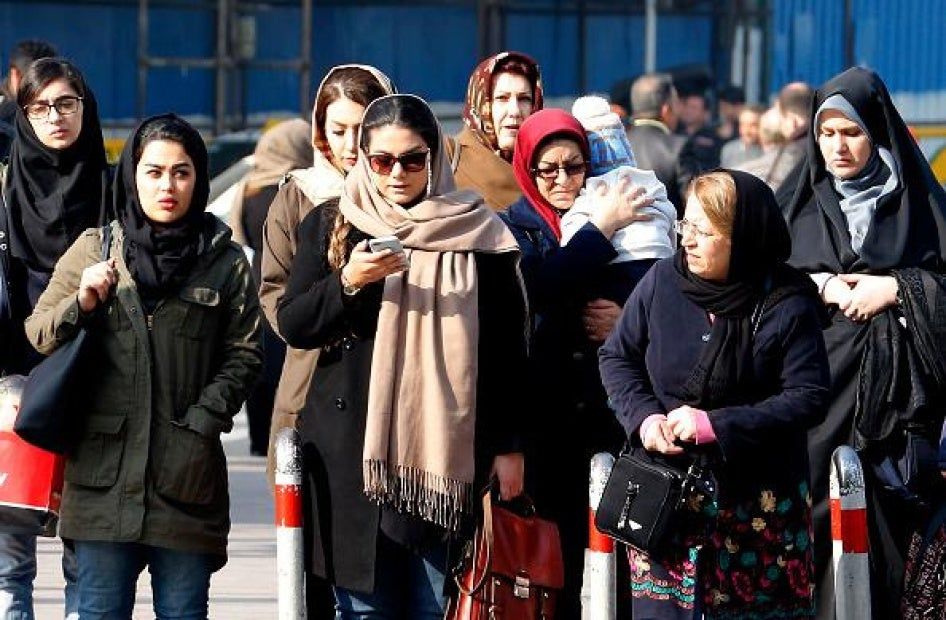
The top picture is of Iranian women in a hijab.  The bottom is Afghan women in burkas.

Furthermore, showing his ignorance, Iranian women don’t wear the burqa.  They wear a hijab.  It’s a detail that likely doesn’t matter to his MAGA target audience.  And yet this is a huge difference.  The burqa covers an entire face, it is more common with Sunnis (Saudi Arabia), and not required by Iranian law.  The hijab, by contrast, doesn’t cover a face, it is a hair covering that is very similar to what Christian women wore for centuries before the society liberalized.  Sure, maybe it shouldn’t be mandated, but it’s as Biblical as the Ten Commandments:

Every man who prays or prophesies with his head covered dishonors his head. But every woman who prays or prophesies with her head uncovered dishonors her head—it is the same as having her head shaved.  For if a woman does not cover her head, she might as well have her hair cut off; but if it is a disgrace for a woman to have her hair cut off or her head shaved, then she should cover her head. 

(1 Corinthians 11:4-6 NIV)

Incidentally, it is this passage above which makes it so strange that so many ‘Christian’ (Zionist) Presidents and public officials will wear a hat while praying and kissing a wall—deliberately dishonoring Christ.  But more to the point, is this a “barbaric” practice?  Is religious headgear, a Nun’s habit, some kind of terrible evil which totally excuses blowing up an elementary school?  

Or is there something else going on here?

I’m going with something else.  Schlapp is a neo-con grifter.  A warlike and lying sexual deviant who will proclaim American values then fights for a nation that sodomizes their detainees, without consequences, now seeks to execute the people they oppress, and then calls those who oppose this “barbaric.” A society that drives it’s own abused daughters to suicide.  The same people vigorously defend bombing of schools, hospitals, residential areas, the killing scores of children and civilians, then claims that the war about the liberation of women? 

This is as much moral inversion as anything from the ‘woke’ left.  We kill to save?

Furthermore, for all this talk about career choice, Iran graduates a significantly higher percentage of females in STEM fields than Israel or the US.  So, in response to that part of Schlapp’s absurd statement: What are the career choices Iranian women are currently unable to make?  Is he talking about OnlyFans?

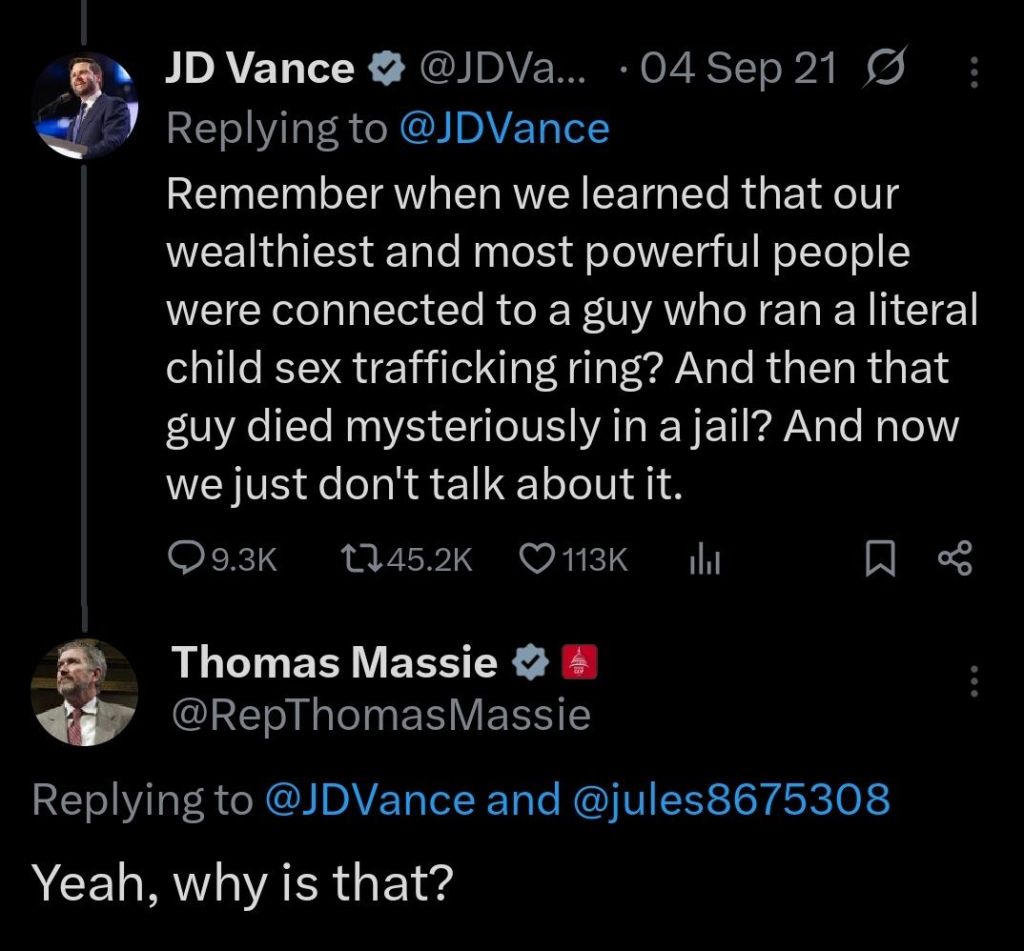
If we’re such great defenders of feminity, so much so that we can dictate to sovereign states what standards of decency they can or cannot have, why haven’t there been any Epstein client arrests?

Phony Fat Cracker Barrel Conservatives

The Schlapp types, neo-con Zionists, aren’t conservative at all.  Sure, they always wrap themselves in Christian identity, but they’re not peacemakers, they feed prejudices and promote endless war that has cost trillions of dollars as well as millions of lives around the world.  They will fein concern for Iranian rights in one breath then promote bombing the country into oblivion in the next.  

They exploit jingoistic sentiment in the beer gut football crowd who (in their lack of Christian character) confuse toughness and masculinity with excessive violence.  Every problem is solved with a gun or a bomb for them.  This phony ‘conservativism’ of these war-mongering empire building neo-cons is antithetical to Christianity—it is anti-Christ and one part of their Epstein-class campaign to dismantle American values.

The Republican elites are as totally opposed to traditional American values as the Democrats—they just need our conservative votes.  

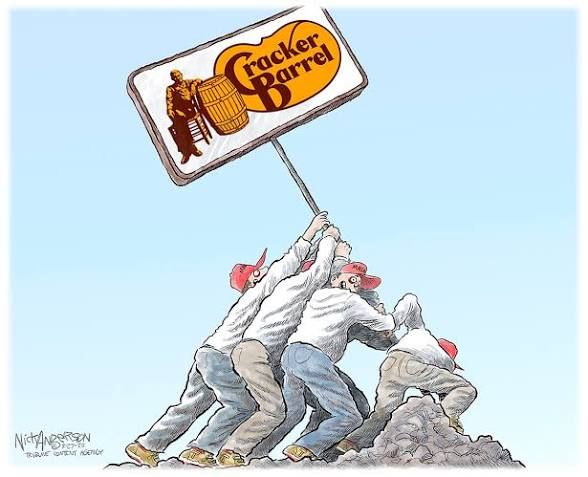
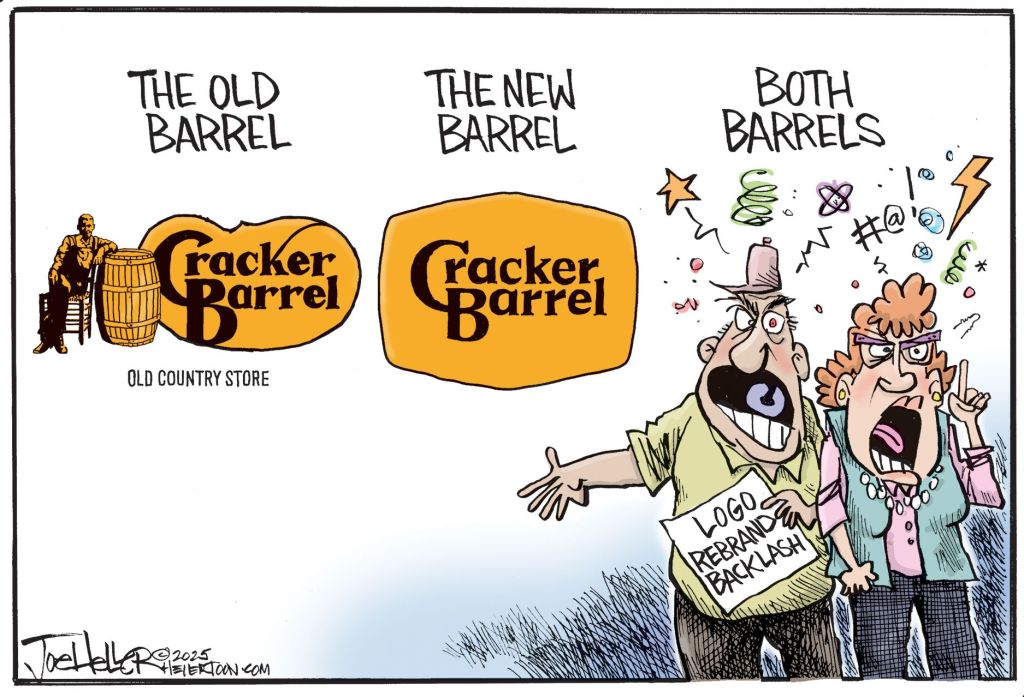
The Cracker Barrel conservatives—people who get riled up over a change in corporate kitsch—enable these cultural vandals.  The religious right talks incessantly about every tempest in a teapot controversy and then go mute when the Trump administration has worked overtime to protect billionaire pedophiles.  These are the type that Jesus had called out for their straining on gnats and swallowing camels.  They have no principles other than vote for the ‘red’ team on election day because we can’t let ‘blue’ team ‘liberals’ win—they imagine themselves as defenders of Western civilization yet will put their weight behind an oppressive regime if it is dressed right according to their own partisan fashion.
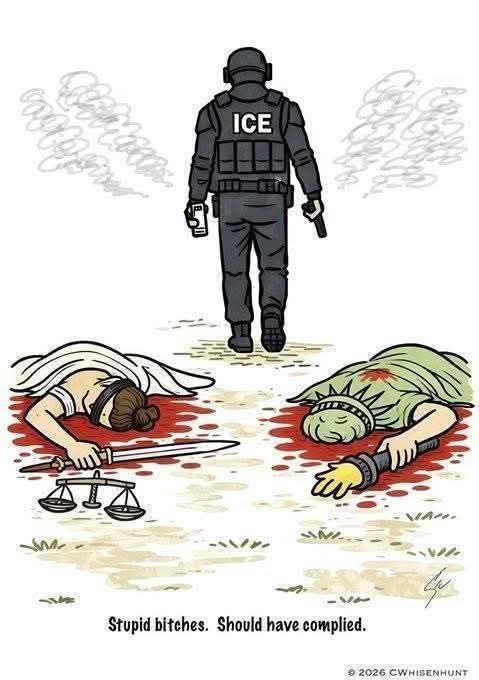
They side against our own dissidents, make fun of Renee Good who was killed by ICE agents shouting conflicting orders, say Alex Pretti deserved getting shot in the back for being a guy who intervened when a woman was being assaulted, and then suddenly do a complete reversal to express moral outrage when Saleh Mohammadi, 19, was executed after a trial for murder of two police officers.  The same people who can justify the deaths of 175 innocent children as “part of war,” are siding with an accused and convicted cop killer?  What a mindless propaganda-blinded and flip-flopping lot—we’re living in a scene from 1984.

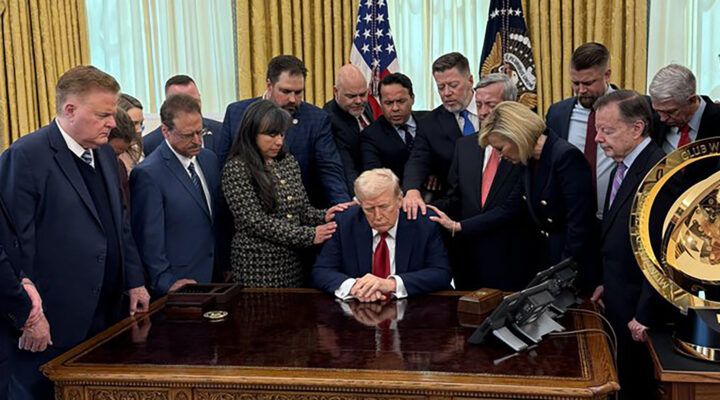
Trump wrapping himself in a flag (literally) is all it took.  All he needs to do is hold up a Bible, hand out a few signed copies of the Bible for the MAGA faithful, and suddenly he’s the next thing to Jesus in the Evangeli-con pantheon.  His aggression becomes integrity, his lewdness honesty, and arrogance a virtue.  And he is aware, see how Trump described the cult’s devotion during the run up to his first term: “I could stand in the middle of Fifth Avenue and shoot somebody, and I wouldn’t lose any voters, OK?”

Trump is a manifestation of cultural rot, we celebrate immodesty and excess.  The book of Philippians describes some who profess faith as the “enemies of the cross of Christ” (3:18) and proceeds to warn, “Their destiny is destruction, their god is their stomach, and their glory is in their shame” and “their mind is set on earthly things.”  And this is our American consumerism.  We see ourselves as the heroes, as representing freedom and democracy, when we’re really Egypt and Sodom (oppressor and corruption) cloaked in a pretense of righteousness.

We could use a bit of modesty.  A moment of introspection and self-awareness.  

Reclaiming American Christian Values

The U.S. has never been the “shining city on the hill” envisioned in John Winthrop’s 1630 sermon and highlighted by Ronald Reagan. 

The aspiration.

Moral excellence is certainly a great goal even if we fall short.  However, it is an aim which requires repentance. There are many things for this American nation should want to turn from.  The ethnic cleansing of native populations, the institution of slavery, many wars of aggression and expansion—there is no purity here. 

The U.S. has, if anything been exceptionally violent—from massacres in North America to the brutal occupation of the Philippines to the millions killed across the world as a result of aggressive policies—this country has never ceased in wars for control over resources.  This conquest, sold to the public as some kind of moral mission or “Manifest Destiny,” was to conceal greed and a desire for things not ours to have.   
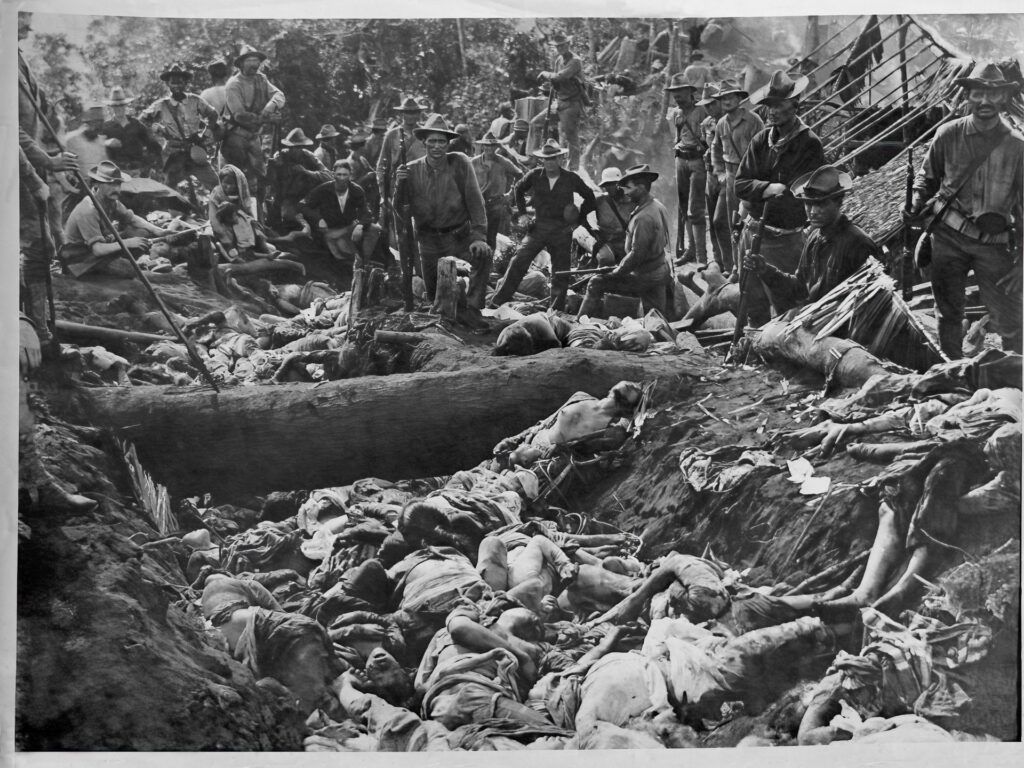
Bud Dajo Massacre, March 8, 1906

There is no special American exception to the Christian requirement that all repent of their sins.  That’s a starting point to the U.S. being great.  To be truly great the goal is not to turn back the past mistakes, but turning away from them. 

We should consider both bad and good examples from the past as a basis for improvement in the present.

This takes humility, not hubris.

The sin at the root of all moral pretense and posturing is pride—the very first sin, the one that changed Lucifer from God’s second in command into the father of lies. Pride tells us our culture, our politics, and our ways are just superior. Pride is what lets us dress up in sheep’s clothing of “conservative values” while living like wolves.  Pride is what lets Matt Schlapp (or any of the other neo-con grifters) lecture on liberation while his own hands grope men in the dark and his mouth justifies the slaughter of schoolgirls. Pride is what lets the Cracker Barrel crowd wave a Bible one minute—rant against abortion, feminism, wokeism—only to cheer endless war and merciless bombings in the next, ignoring the plank in their own eye.

Christian conservatism worthy of the name begins with the opposite of pride: humility. It begins with the recognition that we are not owed respect—we must show it first. Just as modesty in clothing is not about shame but about protecting what is sacred, a respect of what is God’s, so too is respect in every other sphere. You do not demand entrance to another man’s house, another nation’s culture, or another woman’s dignity by force.  Traditional modest dress of the past was never “oppression.” It was armor. It was just a public declaration: “I belong to something higher than my appetites. I will respect and you will respect me.”

The same principle applies to foreign policy, to political leadership, to every claim of “American exceptionalism.” An authentic conservatism does not bomb a school to “free” the girls inside it. It does not wrap imperial greed in the language of feminism or democracy. It does not make demands with threats of violence.  Rather it says, with the Apostle Paul, “Let your gentleness be evident to all” (Phil 4:5) and “If it is possible, as far as it depends on you, live at peace with everyone” (Rom 12:18).
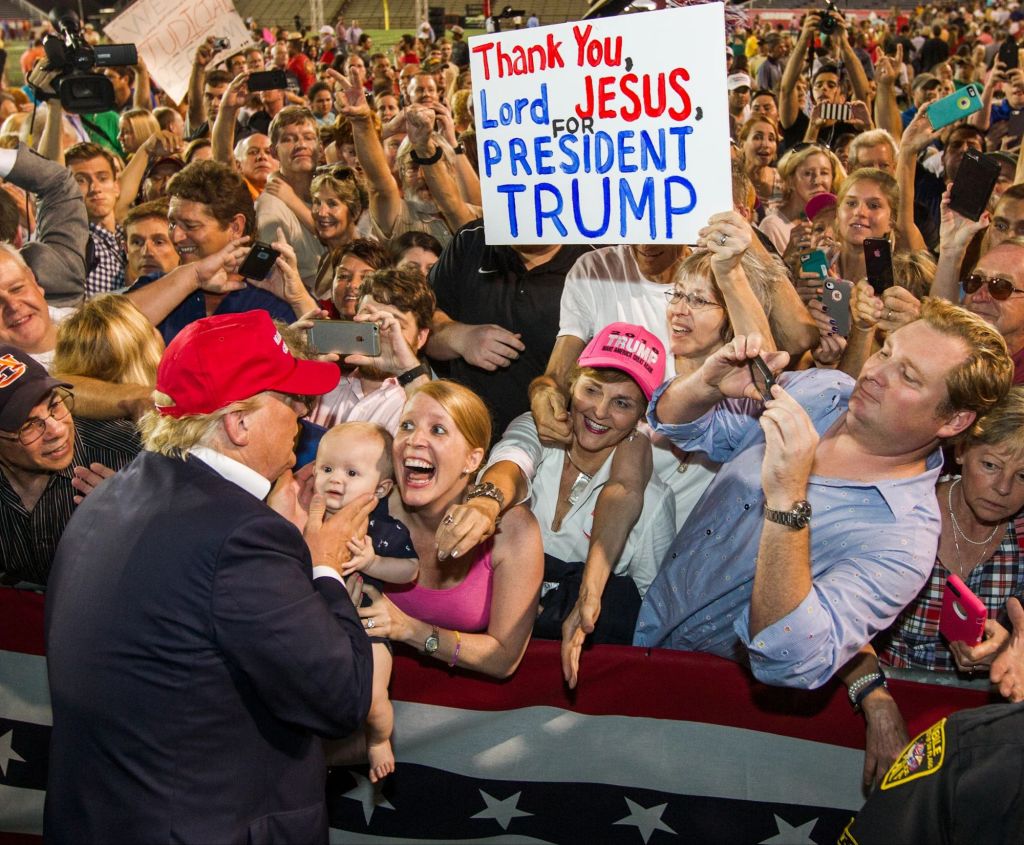
Principled Christian conservatism is not a costume. It is not red hats, Cracker Barrel nostalgia, or trillion-dollar defense contracts dressed up as patriotism. It is living a life of repentance.  It is about mutual respect.  It is the refusal to celebrate pride in any form—whether of immodesty, the aggressive “grab ’em by the pussy” arrogance of entitled men or just indifference about how our actions impact others.  It is discipline of protecting what should be protected and also refusing to sacrifice our values for expediency.

If we want to belong to the Body of Christ then we must wear the right uniform code: humility, not hubris; respect, not ridicule; modesty, not exceptionalism. We must stop pretending America is already righteous or beyond reproach and start acting humbly like the sinners we are. Only then will we ever regain the respect we have lost. Only then will our clothing—literal and spiritual—actually protect instead of provoke.  

More imperial “forever war” for the benefit of the Epstein-class.

Let the attire of our attitude preach truth: we are fragile, we are fallen, and the only safety worth having comes from walking in fear of the Lord, not by military might.  That is the conservatism worth conserving—the repentance that can make us an example in the world and is the actual foundational basis of Christian civilization.

Schlapp says that Iran is a “barbaric culture” for dress standards different from our own and that bombing them is about defense of civilization.  But a principled conservative is about consistent rules, true impartiality and no favoritism.  It doesn’t decide if cop killers (or killer cops) are heroes or an attack on us all according to political needs.  A civilized person seeks coherence and harmony, not unpredictability, brutality and dominance.  It prefers local control and respects sovereign space of others.  It gains a position through competency, not by trickery and deception, nor by threats and coercion.  

Christian civilization rejects use of violence and notions of blood guilt.  All must clothe themselves in the righteousness of Jesus—a clothing that we put on through Baptism, not our birth or bloodline:

For ye are all the children of God by faith in Christ Jesus. For as many of you as have been baptized into Christ have put on Christ. There is neither Jew nor Greek, there is neither bond nor free, there is neither male nor female: for ye are all one in Christ Jesus. And if ye be Christ’s, then are ye Abraham’s seed, and heirs according to the promise. 

(Galatians 3:26-29 KJV)

We replace lying with truth, maliciousness with kindness, fury with forgiveness, theft with generosity and are told “to put on the new self” and with this to be “created to be like God in true righteousness and holiness” (Eph 4:22–32, Col 3:5–14)  John Chrysostom (c. AD 347—407) described this putting on of Christ as “never to be forsaken of Him, and His always being seen in us through our holiness, through our gentleness”
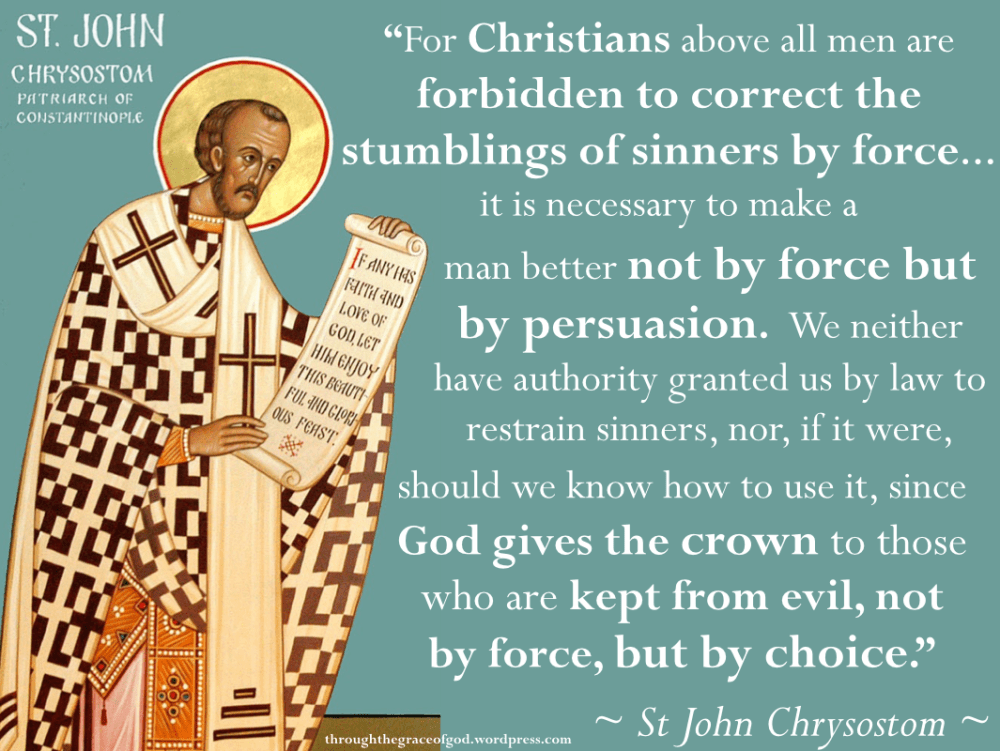
Civilization may need to be qualified.  We want Christian civilization, not an Old Testament violence reenactment.

We must reject the perversion of those who promote moral inversion where killing is an act of liberation and a society where more women graduate with STEM degrees called “barbaric” by the Epstein-class.  

Schlapp’s depraved reasoning is a symptom of arrogance, not righteousness.  If Jesus is our Lord, then we should be clothed in humility and a gentle example rather than a force of fury or violence. 

The militarism of neo-cons is not the armor of God—it is a false protection—we need the attitude of repentance.

************************

Postscript: The point of this essay isn’t to defend the Islamic Republic of Iran.  I have no doubts about it being a very brutal and intolerant regime.  I also don’t write this as a strong advocate of modesty standards.  But only to promote introspection about what we excuse and condemn.  In one breath we are outraged by an execution in Iran, in the next we ignore the bombing of children in Gaza, Lebanon, and Iran.  The same people who decry liberalism in the West celebrate the leftists in the East.  This isn’t only about other people.  This is also about me.  After warning about Trump in 2014, I voted for the narcissist three times.  He promised he would drain the swamp, to end the forever wars, and release the Epstein files.  It was when he tried to gaslight about continued interest in Epstein that I realized I had been had.  What I will say in my defense is that it wouldn’t be much improvement to vote for team blue.  Kamala Harris couldn’t think of anything she would have done differently than Joe Biden.  She shushed those trying to bring attention to the Gaza genocide and the Democrat party establishment has been as warlike as the Republicans despite their constituents.  I must concede that we will not vote ourselves out of this.  Society must change.  True devotion to the base Christian principles—where Jesus is way more than a bobblehead on the dashboard of empire.  If we want to change the world we need to lead by example rather than by force.  The people of the world easily see through our facade, our oblivious talk of freedom and democracy, they see Egypt and Sodom.


God and Mammon: From Prosperity Gospel to Epstein Redactions

Standard

No man can serve two masters: for either he will hate the one, and love the other; or else he will hold to the one, and despise the other. Ye cannot serve God and mammon.

(Matthew 6:24 KJV)

This teaching popped into my mind a few weeks ago and while reflecting on where our morality has broken down in the United States. Mammon is an interesting Biblical word and refers to more than just money as currency. Jesus is not talking about having material wealth here, rather he’s addressing about misplaced trust and devotion put in it. And “serve” seems like a key operational word here. In Greek it is “douleuó” (δουλεύω) and the term refers to slavery or bondage.

Jesus was confronted on this teaching by the Pharisees—who we’re told sneered at him. But we are also told they were the same people who would shortchange their own parents by abusing the practice of ‘Corban’—by claiming money was set aside for God (Matt. 15:1-9, Mark 7:1-13)—when it was all about their own gain. When you’re addicted to material gain, you’d likely sell off your own mother for another hit of the money drug and can’t be a good person. A slave to the ‘almighty dollar’ will basically do any evil to obtain more of it.

For we brought nothing into the world, and we can take nothing out of it. But if we have food and clothing, we will be content with that. Those who want to get rich fall into temptation and a trap and into many foolish and harmful desires that plunge people into ruin and destruction. For the love of money is a root of all kinds of evil. Some people, eager for money, have wandered from the faith and pierced themselves with many griefs.

(1 Timothy 6:7-10 NIV)

Pray for contentment, not cash. You can have enough to eat and live without a big bank account. We may enjoy—or imagine—a feeling of security from having more, but it is false security and pursuit of it leads to moral compromise. As Mark 8:36 asks: “What good is it for someone to gain the whole world, yet forfeit their soul?”

The American Evangelical landscape does not handle this very well. The ‘health and wealth” or prosperity gospel might not be openly preached in every church, but there’s often the underlying assumption that those who have money are blessed. I mean, you don’t want to ever offend those who fill the offering plate, do you?

This errant belief that material success equates to divine favor has seeped deeply into political alliances, particularly among Evangelicals who have thrown their support behind leaders promising them economic prosperity above all else. Donald Trump, with his gilded persona and “art of the deal” ethos, became a symbol of this worldview—tremendously blessed by wealth, endorsed by faith leaders, and appearing to be toualluntouchable.

Yet, as his second term unfolds, we’re now seeing how devotion to money over all else manifests in government—prioritizing billionaire gains over accountability and human suffering. It isn’t the paradise promised.

Life Under Bondi-age

One of the big reasons Trump had seemed like a better choice than a continuation of a Biden administration, under Harris, was his ‘green’ policies. He appeared to be a “make money, not war” candidate, given his history of draft dodging and no new war first term. Maybe it was just weariness of the conflicts in Gaza and Ukraine that made him a hope to the “it’s the economy, stupid” crowd. He also promised to release the Epstein files—which would mean some justice, right?

Attorney General Pam Bondi’s testimony to Congress is a revelation of a mentality that is completely detached. Who knows who coached her—or maybe it was completely her own idea? But the answers she gave only raised more eyebrows.

For example, when asked:

How many of Epstein’s co-conspirators have you indicted? How many perpetrators are you even investigating?

She replied:

Because Donald Trump, the Dow, the Dow right now is over — the Dow is over $50,000. I don’t know why you’re laughing. You’re a great stock trader, as I hear, Raskin. The Dow is over 50000 right now, the S&P at almost 7,000, and the Nasdaq smashing records. Americans’ 401(k)s and retirement savings are booming. That’s what we should be talking about. We should be talking about making Americans safe. We should be talking about — what does the Dow have to do with anything? That’s what they just asked. Are you kidding?

Is she kidding?

That’s astonishingly callous.

With victims in the crowd, she really thought it would play well to deflect with a pivot to a stock market highs?

Now, sure, this sort of hearing is a very partisan and high-pressure event. And a great many of those lawmakers are guilty of a cover-up as the Trump administration. Lest we forget it, around 80% to 90% of Epstein’s political donations went to Democrats. But now responsibility for the continued lack of transparency about this lies squarely on the Trump administration.

Bondi’s Justice Department has violated the law, The Epstein Files Transparency Act—a bill demanding the unredacted release of the files pushed through by representatives Thomas Massie (R) and Ro Khanna (D), by continued use of redactions that extends a cover-up that has gone on for decades. And both parties are neck-deep in this scandal, which is why nothing was done about it last administration despite Trump’s name being in the files tens of thousands of times—and probably many more mentions still hidden under all those black lines.

The administration that ran on a promise to tell the truth about Epstein has become one where Trump gaslights:

Are you still talking about Jeffrey Epstein? This guy’s been talked about for years, are people still talking about this guy? This creep? That is unbelievable. I can’t believe you’re asking a question on Epstein at a time like this, when we’re having some of the greatest success, and also tragedy with what happened in Texas. It just seems like a desecration.

I mean, why would we still be talking about a guy who was apparently sex trafficking a bunch of underage girls to a very long list of elites who have yet to be prosecuted, right?

The truth is a ‘desecration’ of Texas flooding response somehow?

Wherever the case, Bondi isn’t a fraction as skilled as her boss at this game. If you are going to pivot off a question about horrible sexual crimes and ritual abuse not leading to dozens of arrests, then at least deflect away to matters of an equal moral weight. As in this “We have arrested X amount of pedophiles, more than any administration since Genghis Khan—we’re making America safe again!” That would sound much less tone deaf than turning to the economy as if this nullifies questions about Epstein.

What does Bondi’s pivot scream?

It shouts that money can take her attention off of crime—that she can be bribed. More importantly, it suggests she thinks we will be distracted by money and forget about a total lack of prosecutions.

In the end, Bondi’s deflection and the Trump administration’s broader pattern reveals the stark truth: when mammon reigns supreme, justice for the vulnerable becomes optional, and the soul of a nation is quietly sold off in exchange for an economy that mostly benefits billionaires.  True contentment—and true greatness or lasting gain—will never come from chasing a dollar or at expense of seeking justice for all people.

The crazy part is that most who voted for Trump thinking it would help their portfolio and would keep us out of war—will find out that those who bought him have no problem with sending your sons to die in Iran. 

Perspectives, Not Truth: Why Our Moral Codes Are Always Incomplete

Standard

Everything we hear is an opinion, not a fact. Everything we see is a perspective, not the truth.

Marcus Aurelius

I will attempt to bring multiple threads together in this blog and the quote above is a good starting point. If there is objective reality it’s not going to be something possessed by one human. We do not know all circumstances nor can we vet and independently verify every fact we receive.  Or at least not without becoming totally hamstrung by the details. We put our trust in parties, traditions, systems, credentials and the logic which makes sense to us.

The deeper we dive into our physical reality the murkier it all gets. The world ‘above’ that we encounter feels concrete. But there is not a whole lot of substance to be found as we get beneath the surface. The rules that we discovered—of time and space—end up dissolving into a sea of probabilities and paradoxes at a quantum level that we don’t have an answer to. And this is the ‘concrete’ observable reality. We all see our own unique perspective, a slice, and build our model of the world from it.

But it is even murkier when we get to topics of social science. Morality and ethics, built often from what we believe is fact or truth, is more simply opinion and perspective than it can be hammered out in words everyone is able to agree on. Even for those who are of the same foundational religious assumptions—despite even having the same source texts—do not agree on matters of interpretation or application. So who is right? And who is wrong? How do we decide?

1) Patrick: We Don’t Need God To Be Moral

My cousin, Patrick, a taller, better looking and more educated version of myself, an independent thinker, and has departed from his missionary upbringing—gives this great little presentation: “Where Do You Get Your Morality?

His foundation for a moral value system is concepts of truth, freedom and love which he describes in the video. I find it to be compelling and compatible with my own basic views. Our cooperation is as natural as competition, it is what makes us human, and a conscience gives potential for better returns.

However, while I agree with his ideal, there is also reason why deception, tyranny and indifference are as common in the world—they are natural—and this is because it can give one person or tribe an advantage. Lies, scams, and political propaganda all exploit trust and can be a shortcut for gaining higher status or more access.

No, cheating doesn’t serve everyone. But the lion has no reason to regret taking down a slow gazelle. By removing the weak, sick, or injured, it inadvertently culls the less-fit genes from the herd, strengthening the prey population over time and even preventing overgrazing of the savannah. It’s just a raw service to ecosystem balance, much like a short seller who exposes those overvalued stocks, forcing the market corrections and greater efficiency—acts of pure self-interest yielding a broader good.

Herd cooperation or predator opportunism are different strategies, both 100% natural and amoral in their own context. I’m neither psychopath nor a cannibal, but I do suspect those who are those things would as readily rationalize their own drives and proclivities. Nature doesn’t come with a rulebook—only consequences.

I’m certainly not a fan of the “might makes right” way of thinking and that is because my morality and ethics originate from the perspective being disadvantaged. But I also understand why those who never struggled and who have the power to impose their own will without fear of facing any consequences often develop a different moral framework.

We need to be invested in the same moral and civilizational project. Or else logic, that works for only some who have the strength or propaganda tools, will rule by default. I don’t disagree with Patrick, but his core message caters to a high IQ and high empathy crowd—which does leave me wondering how we can bring everyone else on board?

2) Kirk: A Way To Focus Our Moral Efforts

Charlie Kirk wasn’t a significant figure to me before his death. It may be a generational thing or just a general lack of interest in the whole conservative influencer crowd. I feel dumber any time I listen to Steven Crowder and assumed Kirk was just another one of the partisan bomb throwers. But, from my exposure to his content since, I have gained some appreciation.

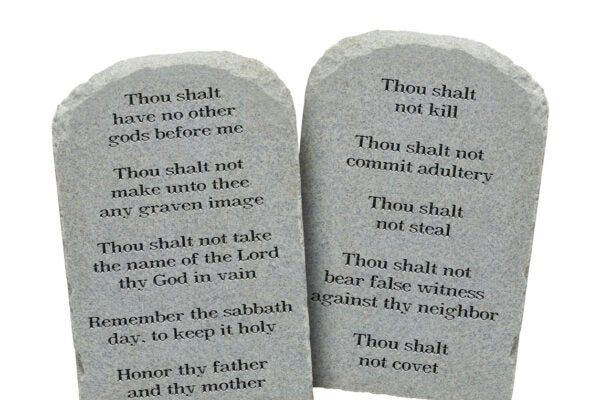
Arguing for the Ten Commandments has never been a priority for me. It’s a list with a context and not standalone. Nevertheless it is a starting point for a moral discussion and also one that it seems Charlie Kirk would go to frequently in his campus debates.  The two most difficult of these laws to explain to a religious skeptic are certainly the first two: “I am the Lord your God; Have no other gods before me and do not make idols.”

We generally agree on prohibition of murder and theft, or even adultery, but will disagree on one lawgiver and judge.

Why?

Well, it is simply because divine entity is abstract compared to things we have experienced—like the murder of a loved one or something being stolen from us. You just know this is wrong based on how it makes you feel. The belief in celestial being beyond human sight or comprehension just does not hit the same way as events we have observed. And it’s also the baggage the concept of a God carries in the current age. I mean, whose God?

It seems to be much easier just to agree the lowest common denominator: Don’t do bad things to other people.

But then we don’t. We justify killing others if it suits our political agenda, labeling people as bad for doing what we would do if facing a similar threat to our rights. If I’ve learned one thing it is that people always find creative ways to justify themselves while condemning the other side for even fighting back against an act of aggression.

Self-proclaimed good people do very bad things to good people. Like most people see themselves as above average drivers (not mathematically possible), we tend to distort things in favor of ourselves. Fundamental attribution error means we excuse our own compromises as a result of circumstances while we assume an immutable character flaw when others violate us. We might be half decent at applying morality to others—but exempt ourselves and our own.

So morality needs a focal point beyond us as individuals. There must be a universal or common good. Which might be the value of a theoretical ‘other’ who observes from a detached and perfectly unprejudiced point, the ideal judge. Not as a placeholder, but as the ultimate aim of humanity. One God. One truth. One justice. This as the answer to double standards, selective outrage and partisan bias. If we’re all seeking the same thing there is greater potential of harmony and social cohesion where all benefit.

At very least it would be good to promote an idea of an ultimate consequence giver that can’t be bought or bribed.

3) The Good, the Bad and the Aim for What Is Practically Impossible

The devil is always in the details. And the whole point of government is to mediate in this regard. Unfortunately, government, like all institutions, is merely a tool and tools are only as good as the hands that are making a use of them. A hammer is usually used to build things, but can also be used to bash in a skull. Likewise, we can come up with that moral system and yet even the best formed legal code or enforcement mechanism can be twisted—definitions beaten into what the current ruling regime needs.

The United States of America started with a declaration including the words “all men are created equal” and a Constitution with that starts: “We the people…” This is reflection of the Christian rejection of favoritism and St. Paul telling the faithful “there is no Jew or Greek” or erasing the supremacy claims of some. An elite declaring themselves to be exempted or specially chosen by God is not compatible with this vision. We never ask a chicken for consent what we take the eggs. We do not extend rights to those who we consider to be inferior to us or less than human. Human rights hinge on respect for the other that transcends politics.

That’s where the labels come in. If we call someone a Nazi, illegal, MAGAt, leftist or a Goyim we are saying that they are less than human and don’t deserve rights. This is the tribal and identity politics baseline. Those in the out-group are excluded for decency, their deaths celebrated as justice (even if there’s no due process) and we’ll excuse or privilege our own. All sides of the partisan divide do this—we create a reason to deny rights to others often using things like truth, freedom and love (Patrick’s foundation) as our justification: “Those terrorists hate our freedom and democracy, we must fight for those we love and our truth!”

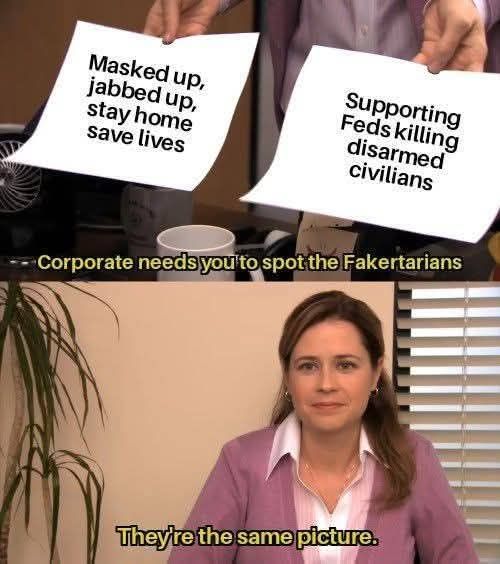
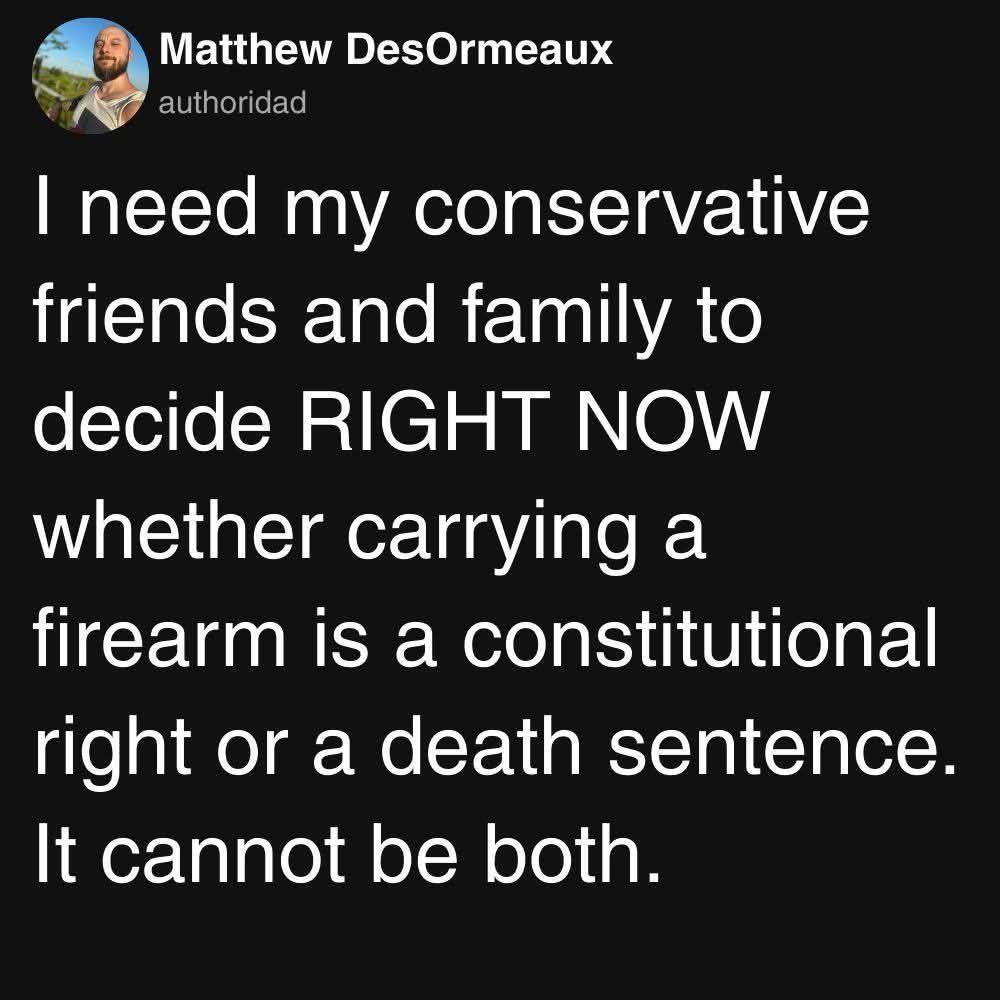
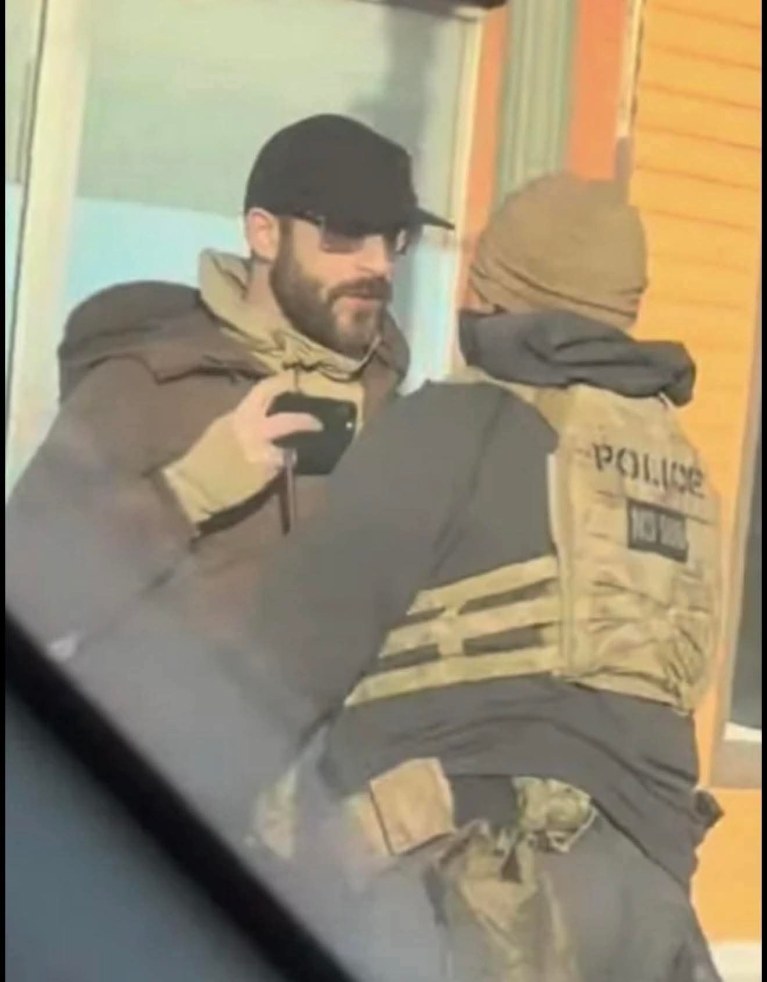
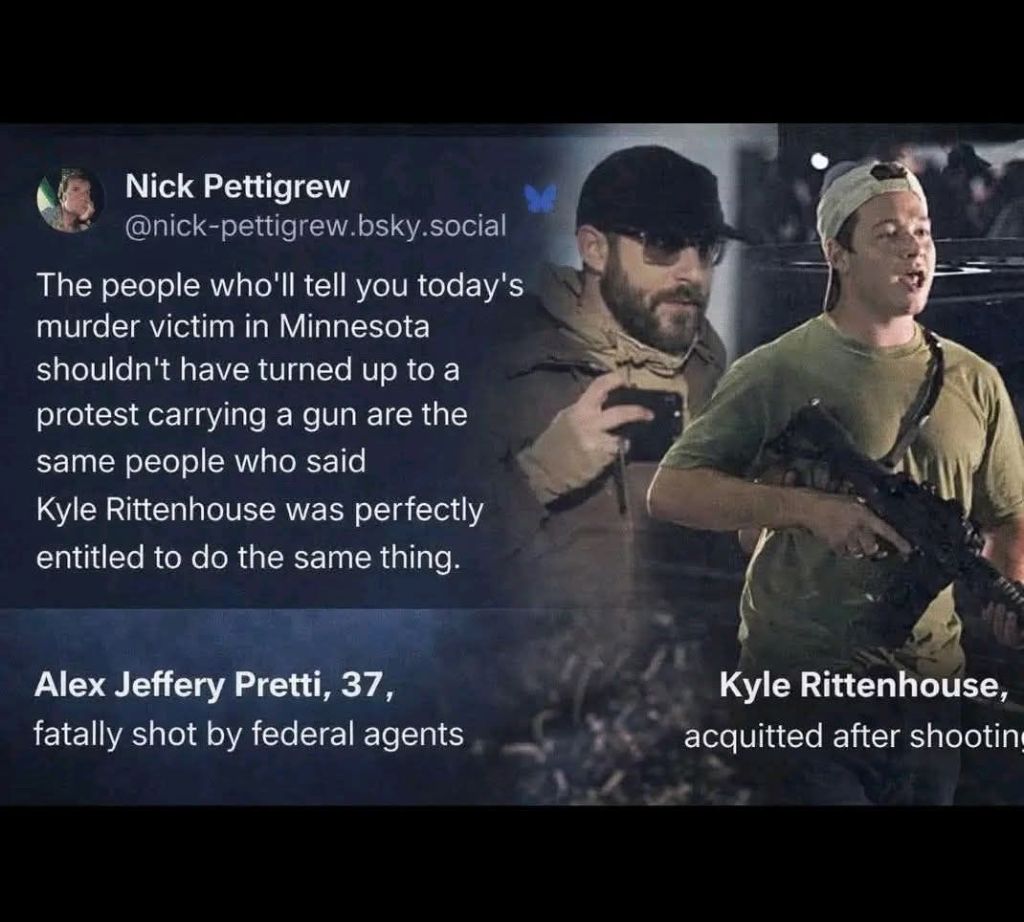
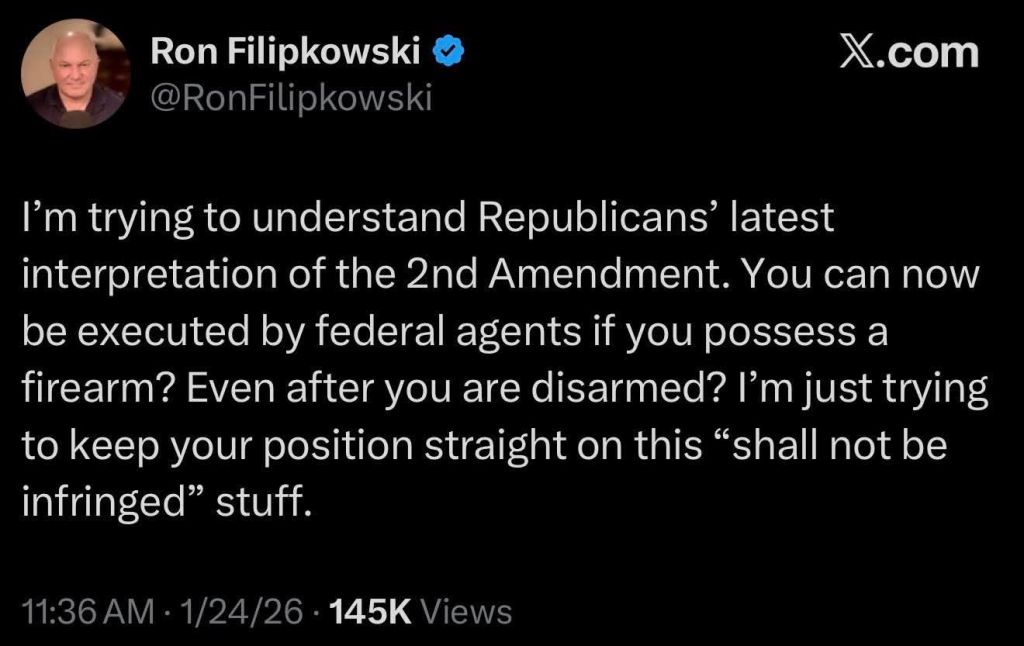
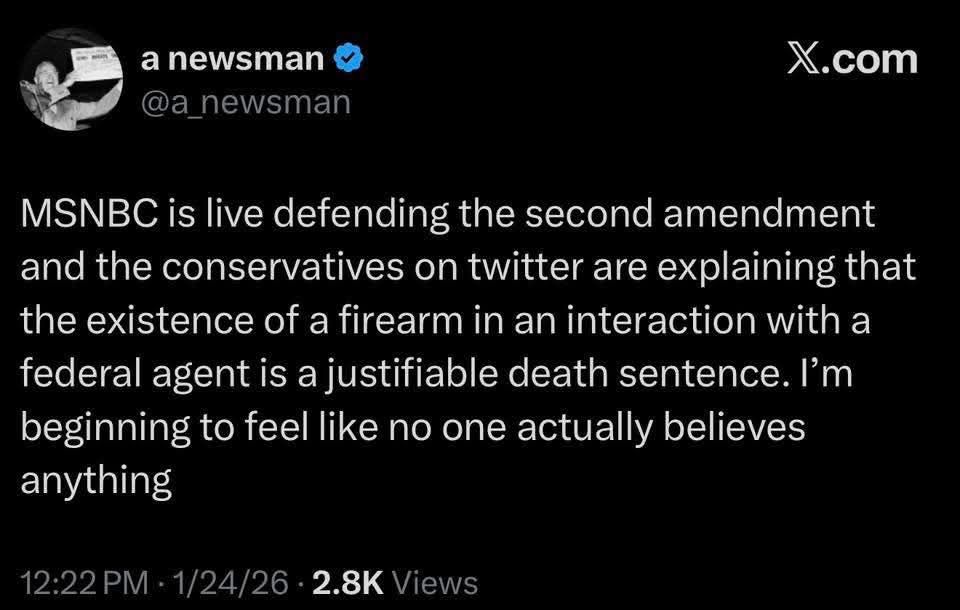
Bringing this to a practical level: Looking at Minneapolis, the ICE and anti-ICE activities, we have competing moral narratives and a different vision for application of American values. On one side of the debate you have those who say that “one is one too many” if an illegal immigrant kills a US citizen—then suddenly do not care when Federal agents shoot a fellow American. The defiant “don’t tread on me” opposition to mandates and masks during Covid somehow shifting to “comply or die!” On the other side you have those outraged about Kyle Rittenhouse and who have been traditionally opposed to the 2nd Amendment defending Alex Pretti while the Trump administration condemns a man for carrying a permitted firearm.

Judgment is for the other, it seems, rights for those who look like us or agree. It’s this inconsistent eye, the call for understanding of our own and grace for ourselves with the harsh penalties applied to those within the forever shifting lines of our out-group, that shows how our political perspectives cloud our moral judgment. The ‘sin’ is not the act itself, but whether or not the violation suits our broader agenda. This is why ‘Christian’ fundamentalists, who will preach the love of Jesus on Sunday, can be totally indifferent to the suffering of children with darker skin tones—their God is about national schemes not a universal good or a commonly applied moral standard.

The aim needs to be justice that is blind to who and only considers what was done. If pedophilia is excused for powerful people who run our government and economy, then it should be for those at the bottom as well. If the misdemeanor of crossing an invisible line is bad, a justification for suspension of due process for all Americans, then why is it okay to violate the sovereignty of Venezuela or Iran over claims of human rights abuse?

The US fought a war of independence, took the country for the British and yet has been acting as a dictator, installing kings, when it suits our neo-colonial elites.

That’s immoral.

We’re all immoral.

The moral code of Patrick, Charlie or myself is incomplete—because every moral code is incomplete when filtered through human eyes. We start from our different premises: Patrick’s secular triad of truth, freedom, and love; Kirk’s religious appeal to the Ten Commandments and a divine lawgiver as the only reliable check on self-deception; my own reluctant recognition that empathy and cooperation are real, yet fragile, against the raw arithmetic of power and advantage. Yet all of our approaches circle the same problem: without some external, impartial standard that transcends our biases, tribes, and self-justifications, our morality devolves into competing opinions dressed as facts—exactly as Aurelius observed.

We cannot fully escape the murk. Objective reality, if it exists, slips through our fingers like quantum probabilities—and moral truth fractures along lines of culture, experience, and interest. Even when we agree on broad principles (don’t murder, don’t steal), the application often splinters: whose life counts as being worthy of protection? Whose borders, laws, or children deserve a defense? And whose “justice” is merely revenge in better lighting?The temptation is cynicism—just declare all values relative, retreat to my own personal pragmatism, and then let might (or votes, or algorithms) sort the rest. But that is a path leads to the very outcomes we decry—dehumanization, selective outrage, and the erosion of the entire civilizational project that allows agnostic high-empathy and high-IQ arguments like Patrick’s to even exist. Yes, nature may be amoral, but us humans build societies by pretending otherwise, by our aiming higher than baser ‘animal’ instincts—reaching for God.

So perhaps the most honest conclusion is not to claim possession of the full truth, but to commit to pursuing it together—knowing we’ll never quite arrive. We definitely need focal points that force some accountability beyond ourselves: whether that’s a concept of one ultimate observer who sees without favoritism, or by a shared commitment to universal human dignity rooted in principle beyond biology or tribe, or simply just the hard-won habit of applying the same rules to our side as to the other. Blind justice isn’t natural or self-evident—it’s cultivated. Morality is an aim which requires vigilance against our own double standards, humility before the limits of our perspective, and courage to defend principles we claim even when they inconvenience us.

In the end, we don’t need perfect agreement on the source of morality to agree that inconsistency in application is poisonous.  What goes around will certainly come around and if we live by the sword we’ll die by it.  If we can at least hold each other (and ourselves) to a standard higher than “what works for my group right now,” preserve the space for mutually beneficial cooperation over cruel predation—a shared conscience over mere convenience. Anything less, and the gazelle never outruns the lion for long—and neither does the society which forgets why it tried.

Lies, Damned Lies, and AI — The Machine Can’t Replace Mind

Standard

AI is an exciting new tool—kind of like Wikipedia was back in the day, something fun to turn to for those quick answers. But let’s be clear: AI is NOT a replacement for actual research. No, it isn’t an independent mind, and it’s certainly no impartial judge. All it really does is take the content that’s currently acceptable to its creators and then will synthesize it into responses. And it will lie to you outright, with zero conscience, because it has no conscience at all. It’s a sophisticated machine, a tool, nothing more or less, and it can absolutely be manipulated by the agendas of those behind the scenes who run it.

Like Wikipedia or so-called fact-checkers, at best, AI reflects the current bias or the established narrative. A perfect example of this is the lab leak theory for Covid-19’s origins. Back when some of us were talking about it, we were being “debunked” (some even banned), only for things to reverse later. As of early 2025, the CIA has assessed that a research lab origin is more likely than a natural one. So, to all the “sources please” crowd: beware. There’s no substitute for building your own knowledge base and using your own brain to evaluate things independently of official or established organizations.

AI is probably less reliable than your GPS. Sure, the tool works most of the time, but it’s no replacement for your own eyes or basic navigation skills. “Death by GPS” is a real category for a reason—if the machine were totally accurate, people wouldn’t drive off cliffs or into lakes after following bad directions. We need our own internal map, built on some established waypoints and a landmark or two, rather than just plugging in an address and blindly following the device into the abyss. Above all, we need a strong internal BS detector, we need it because the tool belongs to them—and it does what its creators need it to do. And telling you the unvarnished truth isn’t always the priority.

At its very best, AI will reflect the currently available information and most dominant narrative. Imagine, had the technology been available, asking it about the threat of Covid early on—it very likely would have dismissed outlier concerns as rumors, downplayed the disease in comparison to the seasonal flu, maybe even lectured about racism—while echoing the House Speaker Nancy Pelosi’s encouragement, February of 2020, to visit those crowded streets of San Francisco’s Chinatown in total defiance of emerging fears. (A family member ridiculed me for saying Covid would be a big deal at that time—dutifully citing mainstream media sources saying it was less worrisome than the seasonal flu.)

People have also very quickly forgotten how The Lancet published a deeply flawed study in the critical early weeks of the pandemic claiming hydroxychloroquine was extremely dangerous—only to quietly retract it later because the authors couldn’t verify the authenticity of the data. In short, the data was totally unreliable, and was a study based on falsehoods presented as science. If that was the “reliable” information being fed into an AI system back then, what would it have told you the scientific consensus was? It would have parroted the lie, and made it as unreliable as the retracted paper during the most urgent phase of the crisis. AI didn’t exist in its current form at the time, but its behavior would have mirrored exactly what I describe: reflecting the biased mainstream thought rather than truly act as a functioning as an independent thinker.

AI lags behind reality. A semi-independent mind—one relying on their personal intelligence and a grounded model of the world—can oftentimes do better. When I saw the early images coming out of Wuhan and listened to reports from doctors there (some of whom later died or disappeared), I knew this was not just the seasonal flu. It didn’t matter how many three-letter agencies were being quoted by corporate media; I could make my own judgment. I also quickly realized how terribly politicized even a pandemic can become. People didn’t pick sides based on the evidence—instead, they chased (or even invented) evidence to confirm their partisan narratives.

If AI had existed back then, it would have picked a side based on what its owners wanted. Covid is where I really honed my BS detector and learned that both sides lie—not that I was oblivious before, but seeing it play out in real time was very eye-opening. Partisans would flip positions the moment their preferred politicians did. Suddenly, independent voices raising alarms (with Trump leaning that way) became the target, then Democrats outflanked this with total hysteria after their months of denial when it actually mattered. We saw the same flip with Operation Warp Speed: with the left as vaccine skeptics while Trump promoted them, only for the Democrats pushing hard for mandates while Republicans opposed even masks.

How fast a symbol of oppression/security can become a symbol of oppression/security.  Questions remain about effectiveness in either context.

Now, identity-obscuring masks are back in style as authoritarian right-wing fashion, as ICE agents terrorize, and insurrections are now cool again for Democrats who dislike immigration laws or the last election results. And AI won’t fix any of this partisanship—especially when people use it without understanding how it works or its severe limitations.

At best, AI is a good supplement or starting point for someone who already knows how to ask the right questions. At worst, it will lie and give you exactly what you want to hear. But one thing is certain: AI is NOT an objective truth-teller. Rely on your own reasoning, your own research, your own past experience, the reliable voices you have vetted on your own or your own BS detector first. The AI machine is no substitute. Yes, independent thinking is tough, in practice, and yet we must be smarter than the tool.  Journalism, Wikipedia, or fact-checkers and GPS—all of these things are reliable… until they’re not.

More Death in Minneapolis: Questions About Federal Enforcement and Accountability

Standard

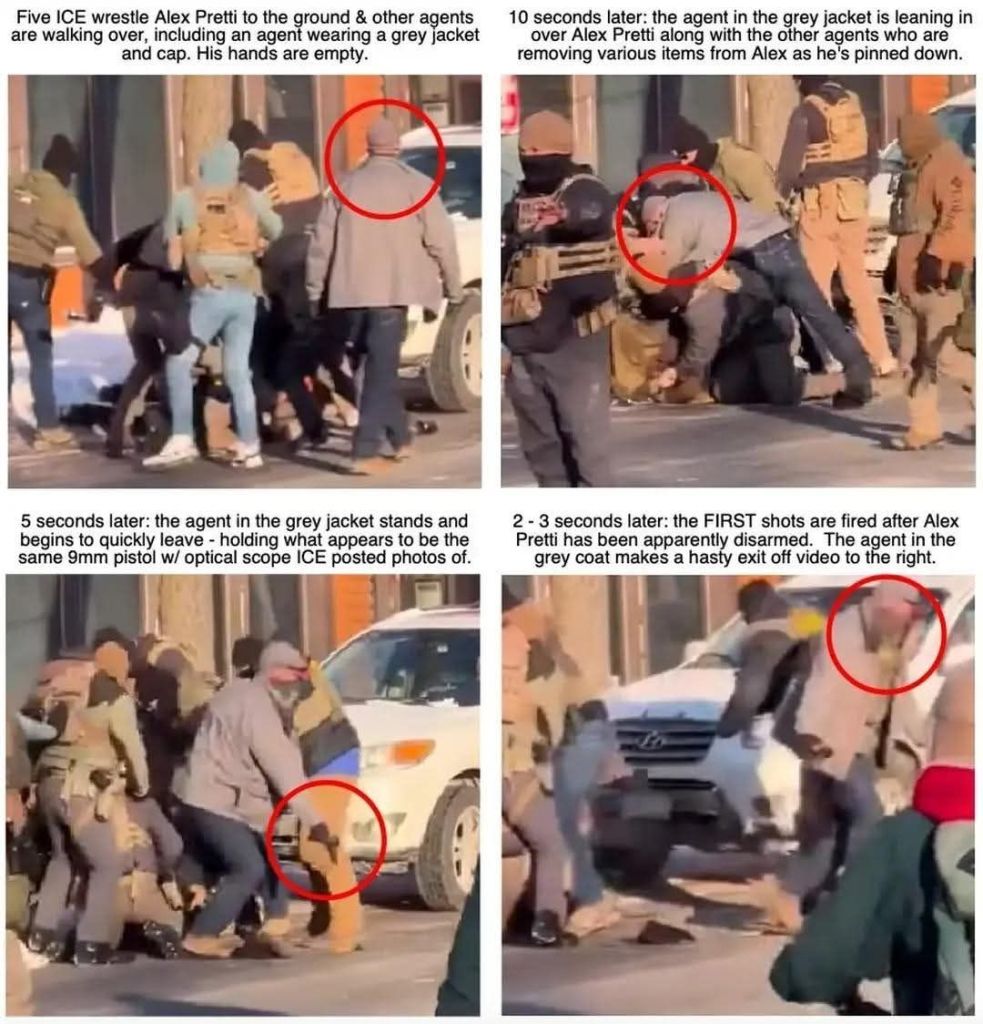
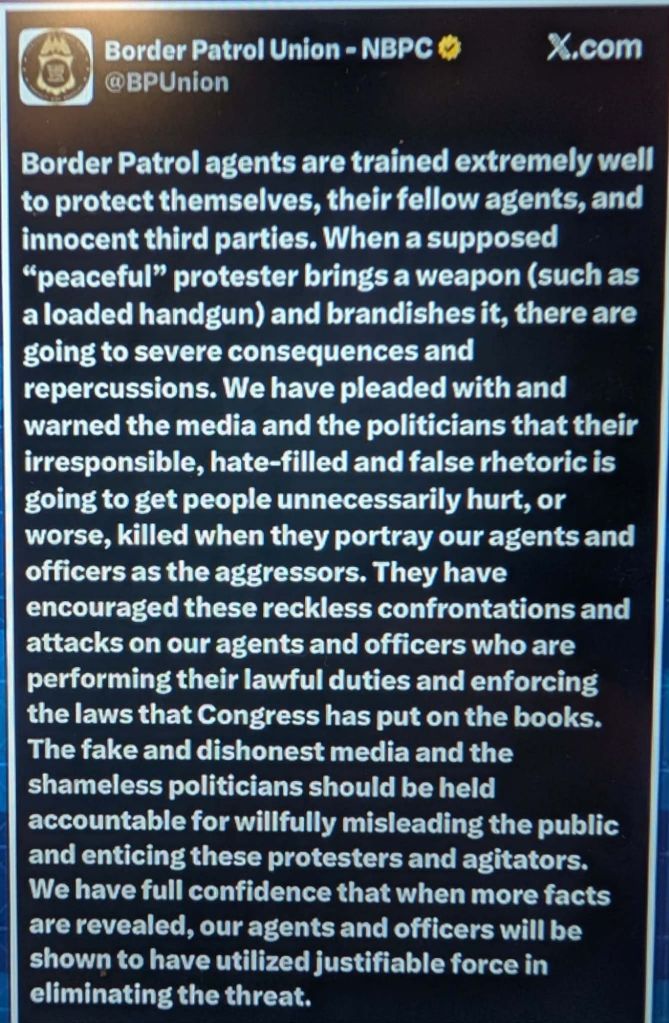
The recent fatal shooting of Alex Jeffrey Pretti, a 37-year-old ICU nurse at the Minneapolis VA hospital, by U.S. Border Patrol agents has left many Americans—including many who identify as conservative—grappling with deep unease. On January 24, 2026, amid escalating protests against Federal immigration enforcement operations in Minneapolis, Pretti was executed while trying to protect a woman from Federal agents who had just knocked her down. Multiple eyewitness videos, verified by major outlets like The New York Times and NBC News, show Pretti holding a phone—not a gun—while attempting to assist a woman who had been shoved to the ground. Federal officials initially claimed self-defense, alleging he approached with a weapon, but sworn witness testimonies and footage contradict this, describing him as non-resistant and focused on helping others.

Pretti was a dedicated healthcare worker who cared for veterans, an avid outdoorsman, and a U.S. citizen with no criminal record beyond minor traffic issues. He had a valid firearms permit, was legally carrying at the time of the confrontation, but evidence indicates no firearm was brandished. His family has condemned the official narrative as “sickening lies,” and protests erupted almost immediately, with Minnesota officials like Gov. Tim Walz calling the incident “sickening” and demanding an end to what they describe as a federal “occupation.” It marks the second fatal shooting of a US citizen by Federal agents in Minneapolis this month, following Renee Good’s death on January 7.

What disturbs me most is the reaction from the MAGA right-wing. Pretti has been quickly labeled as a “Communist” or “domestic terrorist” online, often solely based on his presence at the protests against immigration raids or the unverified social media claims. Yet reliable reports portray him as apolitical in daily life—as kind, service-oriented, and uninterested in partisan drama.  His friends and colleagues emphasize his true commitment to saving lives, not disrupting them. Celebrating or dismissing his death, dehumanizing him with labels, because he fits a convenient ideological enemy is profoundly wrong. Rights violations don’t depend on politics.  No, due process and presumption of innocence apply to everyone, even (or especially) those we disagree with.

This selective outrage highlights a deeper issue not being addressed: this is political retribution disguised as enforcement. Minnesota has a very small illegal immigrant population compared to other states, around 95,000–130,000 (per recent Pew Research and state analyses), nothing like Texas (2.1 million) or Florida (1.6 million)—red states with far larger numbers. And yet Federal resources, including thousands of ICE, Border Patrol, and DHS agents deployed since late 2025, have disproportionately targeted blue Minnesota with sanctuary-like policies. Freezing billions in Federal funds to the state and overriding local law enforcement appears to be punitive, aimed at breaking political resistance rather than uniform honest immigration control.

This echoes historical patterns of a central power crushing regional autonomy, and most starkly in Joseph Stalin’s use of starvation against Ukraine during the Holodomor of 1932–1933. Stalin had deliberately engineered a man-made famine to suppress Ukrainian nationalism and resistance to Soviet collectivization, killing millions through grain seizures, border blockades, and denial of aid—this framed as necessary for national unity and ideological purity, but was clearly intended to crush a semi-autonomous region’s defiance. Here, the heavy-handed federal deployment in Minnesota—targeting a state resisting central directives—clearly mirrors that authoritarian tactic: punish non-compliance under the guise of security, erode local sovereignty, and break any “resistance” to the regime’s aims.

The US Constitution originally designed states as semi-sovereign entities—much like small nations —with the Federal government focused on their defense and on interstate affairs. Expansions of Federal authority—starting as an unfortunate byproduct of Lincoln’s Civil War centralization of power and those Reconstruction-era impositions, shifted the balance. Today’s actions—militarized deployments without state consent, the killings during protests, and limited (or non-existent) cooperation in investigations—violate the 10th Amendment’s spirit. A Federal judge has already issued a restraining order on DHS crowd-control tactics, and multiple states have since joined legal challenges calling them “militarized and illegal.”

George Orwell diagnosed this in 1984: regimes manufacture perpetual enemies to justify control—using propaganda to invert reality.  Fear of “outsiders” or “internal threats” (protesters, or sanctuary cities) is stoked to excuse force, while media—dominated by a few billionaire-aligned outlets—amplifies narratives that dumb down discourse. Some cheer Federal agents after these killings, seeing them as heroes against an illegal “invasion,” yet ignore contradictions like inaction in red states with bigger populations.  People who just a couple years ago decried Covid mandates and the slaying of Ashli Babbitt now seem to see FAFO as a moral argument.  It’s always the same playbook: dehumanize, divide, and centralize the decision making power.

The right-wing is just as collectivist and dumb as those who they derided as being leftist, Socialist or Communist.  They couldn’t articulate a logical consistent argument in defense of their irrational smorgasbord approach to ethics and morality, it is just whatever is expedient in the moment and on the whim of their Big Brother stand in (DJT) as the billionaires technocrats decide how they will manage us unruly human cattle.

Orwell didn’t foresee AI and mass surveillance tools like Palantir, but the parallels are eerie. During COVID, many on the right had decried overreach in the name of liberty; now, similar authoritarian capabilities are embraced when aimed at perceived enemies. They fail to see the machine they’re building will also be turned on them.  They reveal themselves as tools rather than moral thinkers.  This hypocrisy reveals how various systems of control operate identically—whether they’re labeled Socialist, authoritarian, woke or otherwise—they erode rights selectively until they target anyone dissenting.

Pretti’s death isn’t about immigration politics alone; it’s about the erosion of constitutional norms, the weaponization of federal power against states, and the willingness to overlook violations when the victim is painted as “the other.” True conservatism should defend limited government, state sovereignty, and individual rights always—not cheer when Federal agents kill citizens in the street (then clap in celebration) over disputed enforcement actions. If we accept this for “Communists” today, tomorrow it could be anyone labeled an enemy.  When a regime is given permission to abuse Nazis then everyone is a Nazi if they stand up to the regime.  That’s how this works and smart people aren’t a party to it.

Yes, the agents clapped and said “boo hoo” learning of the ICU nurse’s death.  Very similar to the attitude of Jonathan Ross who exclaimed “fucking bitch” after he shot a woman in the face.

We need accountability, especially at the top, in a time when our President’s wealth has doubled as he continues to protect pedophile predator elites, we need to ask why release of the Epstein files is being and unlawfully slow walked.  We need to have independent investigations of these killings, transparency on bodycam footage, and an end to punitive Federal overreach. Lives like that of Alex Pretti’s—of ordinary Americans trying to help in chaotic moments imposed by officials who only double down rather than deescalate—deserve better than propaganda-fueled dismissal.  We do not want to wait until two becomes two million—we either stand together now against a budding authoritarian regime or we fall separately.

Trump’s Primal Persuasion: Breaking Rules to Get Results (And Why It Both Grinds and Intrigues Me)

Standard

Every so often, I finally figure something out and can make a real observation. Recently, I saw a social media post from Trump—likely one of his bold declarations about Venezuela—and what he was doing became crystal clear.

He doesn’t have an actual inked or signed deal with the Venezuelan side yet. But that doesn’t matter. Trump is targeting people at a primal level rather than appealing to the intellect—because that’s where our decisions are truly made. We’re emotional creatures, not purely rational ones.

This is a sales pitch ^^^

Trump is manifesting. He declares it, brings it into the realm of reality, then does everything in his power to bully everyone into accepting it. And it does make me wonder: Is this truly how the world works? It’s easier when you’re already a billionaire and the President, of course, but he names it and claims it. Or, using his colloquial description, it’s the “grab ’em by the p*ssy” style of persuasion: “She wants it. I’m rich and can get anything she wants. She’ll come around to seeing things my way.” It’s hyper-confidence—the insane confidence of a man who truly believes he can get away with anything. He’s the salesman who has fully bought into his own pitch and, through brutal persuasion, forces the sale: “I’ll make you an offer you can’t refuse!”

I’m not like that.

I always try to respect boundaries, persuade with logic and arguments. Trump just declares it, and if you don’t go along with his plan, you’re [insert insult here].

Let me explain with a personal example: Years ago, I wrote a 14-page letter to a woman I was interested in, laying out a long theological and philosophical argument to make my case. Of course, I never sent it. Yeah, I might be half autistic, but I’m not completely dumb. I know men don’t win a woman’s heart through her head. If I’d handed her that lengthy dissertation, she wouldn’t have cheered—she’d probably have cried, gotten confused, or walked away. Certainly not agreed to a date. In romance, we’re primal, not intellectual. The same applies to our political alignments.

If I actually knew how to do that primal type of persuasion in real time, I’d probably get my way more often. It’s the easier to ask forgiveness than to get permission mindset—and it wouldn’t exist if it didn’t actually work.

Entitled, narcissistic, and manipulative can also be described as media-savvy, self-assured, and effective—depending on how you frame it. Trump grinds my gears because he doesn’t follow the rules that exist in my worldview. He reframes the entire discussion with his violations of rules—like kidnapping a head of state—and yet it’s all part of a larger plan.

The real goal appears to be renewing the flow of oil from Venezuela to the US. Trump doesn’t care who is in charge or what economic system they have (though he knows you do). He’s focused on moving the conversation to where he needs it: a secure source of energy and minerals next door, not on the other side of the world.

Legal?  Only if you stretch the law to its breaking point.  Effective?  Well, who wants to be next?

We all agree Maduro—like most politicians—probably belongs in jail, and maybe we should do this more often (at home rather than abroad). Making this bold military move is psychological: it’s intimidating and forces cooperation. If the new government makes a deal, the US lifts sanctions, oil flows again—and suddenly Venezuela’s universal healthcare isn’t an issue anymore. The real holdup was the pile of nonsense, grudges, and gridlock on both sides. Trump broke the rules of the conflict, and now he can negotiate a new deal for the benefit of everyone who cooperates.

Ultimately, like most people, I govern myself by external rules: Do this, don’t do that!  We treat them as absolute, written in stone. I’ll die on this hill of my principles! But this can become a hindrance—a functional fixedness or quagmire of competing ideals that mostly boil down to semantics and different words for the same things. I know Trump is wrong because I’m right! He gets what he wants by breaking my rules of engagement, so he must be evil!

However, Friedrich Nietzsche called this “slave morality” and saw it as an obstacle to humanity’s full potential. His ideas of self-overcoming, being our own lawgiver, embracing the wholeness of life (without assigning moral weight to every experience), and rejecting herd mentality or conformity to the status quo all go against being compliant for sake of compliance.

Trump gets far more done with his impolite bluster than most do in a lifetime of “honest” effort. He appeals to our carnal, visceral side—and while all politicians do this to some degree, he does it nakedly, without the usual polish.

We confuse the rational (religious, scientific, or otherwise) with the reality of our base desires—for control, status, recognition. Trump disrupts, shakes the basket, and builds a new path through the chaos that suits his agenda.

Facing the ‘wrong’ way in an elevator makes people uncomfortable.  But it’s not illegal.  And people will actually conform to the group if they turn the opposite direction.

The world is governed by unwritten rules and unspoken agreements. Some of us want to nail it all down, demanding predictability and compliance with standards we were told would make the world better. We’re often jammed up in conflicts over false dichotomies and invented moral frameworks. I know this from my religious upbringing: the constant looking over our shoulders, meeting expectations rather than pursuing what we enjoy, and the resentment simmering underneath.

One of my Mennonite friends had the speed and size to be a D1 athlete, but he never pursued it because his conservative parents wouldn’t approve. He “kept the peace”—like many of us—at the expense of his potential.

He has expressed regrets.

From a Christian perspective, the self-actualizing person is unrepentant and rejects God. Trump’s habit of making up his own facts—like claiming an ICE agent was run over when video clearly shows otherwise—is strikingly similar to the “my own truth” of the woke left. The risk is complete detachment from our useful tradition (what has worked) and science (what will work), eventually steering civilization into the weeds.

But the proof is in the pudding. If Trump leaves office without causing WW3, with the economy largely intact, can we really feel bad that some rules were broken?

Then again, maybe we could achieve the same things through conventional means. What if we threw a few billionaires in jail instead of a foreign head of state, or sided with the world court on Netanyahu rather than Maduro? Either way—optimal or suboptimal—we’ll remember Trump’s name. Like the popular feminist quote, “Well-behaved women seldom make history,” a timid man is likewise not widely respected or impactful. Is it possible we all need liberation from the clutter of our minds and reasons?

Still, I think there’s a better synthesis between Trump and the pointy-headed intellectuals too high in their ivory towers to be of practical value.

Trump wins because he identified the struggles of real people, rather than deny them.  Maybe some academics with a racial theory can write a thesis about ‘privilege’ and yet have they ever solved any problems in the real world?

I like my own conscientiousness—orientation toward respect for established standards and individual rights over political expediency.

And yet, by the time I carefully deliberate all the angles of legality and practicality and examine potential failure points the opportunity is often gone. A guy who reacts to opportunity, seizes the moment, dictates the outcome in advance (while staying flexible enough to read the room and adapt), reaches the goal—even if he has done the ‘wrong’ way by conventional wisdom.

If morality is all a social construct, all part of a complex negotiation, then maybe following pure instincts and base intuition is better than obeying a list of rules? 

Who says the other side must sign a paper—or even agree in advance—to have a deal?

If it’s a win-win at the end, despite the pain of the process, fewer casualties, is it good?

What do you think? Does primal persuasion win out, or do we need more rules to keep things civilized? I’d love to hear your thoughts in the comments.

Wise As Serpents: Discernment in a World of Deception

Standard

I’ve heard stories of Mennonite old timers who would walk into a dealership, ask them to give their best price and then refuse to engage in any haggling beyond that. To them this concrete style of communication is commanded by Jesus and something I can respect. Their word was their bond. They did not play all the games. Business that is honest and done with a handshake.

What a pleasant and simple world it would be if everyone operated this way. No need for lawyers to read the fine print if everyone were an honest broker like this. But we do not live in that world. And there are those who love to exploit the trust of those born into Anabaptist religious cloisters. Every few years there’s another fraudster who sweeps through Amish and Mennonite country, selling the next big ‘investment’ and wiping out the hard earned savings of the unsuspecting—which is not to even mention those small scale “natural healing” swindles or grift seminars.

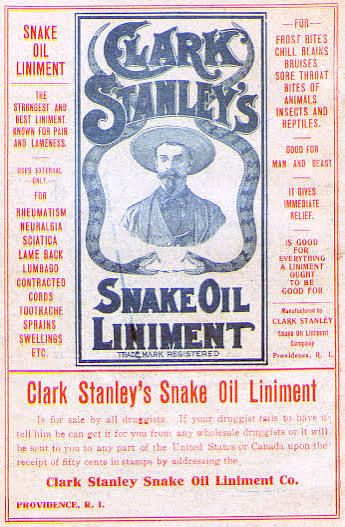
Apparently actual snake oil, sold by the Chinese, had some medicinal value, but the Clark Stanley version had no snake oil or healing qualities.

This is why healthy skepticism is necessary and discernment of character is a skill that must be learned. Born into one of these communities, I’m still far too trusting—most especially if someone starts to speak my language. “Oh, he stands up for the working class! They’re the defenders of freedom and democracy!” We fall for those who exploit us, who manufacture consent by various means, who claim to be like us and yet lack our Christian conscience. We are most susceptible to those who mimic our values as part of their deception.

Being a good or moral person can lead to being extra vulnerable. Some just lack the imagination for evil, which is wonderful innocence, but this is not optimal. Wisdom requires that we are able to read through a sales pitch and understand how propaganda works. A skilled liar plays on what you want to hear, they exploit the prejudices and preconceived ideas of any audience.  We need to be a step ahead of their schemes—which requires a little pattern recognition or small consideration of what may be hidden behind their words.

Letting Your Yea Be Yes, Nay Be Nay

Growing up, going to a public school, there was always that “I swear on my grandma’s grave” kid. Cued by your incredulous face, he would attempt to fortify his most questionable claims with this invocation of something else trustworthy.  And the whole reason for this is that their own word wasn’t good enough. And this swearing act itself would arouse my suspicions. If I can’t trust you in a small inconsequential claim—how could I ever trust your oath?

Obviously this was theatrics in Secondary school, but a manner of speech that Jesus targeted for rebuke:

Again, you have heard that it was said to the people long ago, ‘Do not break your oath, but fulfill to the Lord the vows you have made.’ But I tell you, do not swear an oath at all: either by heaven, for it is God’s throne; or by the earth, for it is his footstool; or by Jerusalem, for it is the city of the Great King. And do not swear by your head, for you cannot make even one hair white or black. All you need to say is simply ‘Yes’ or ‘No’; anything beyond this comes from the evil one.

(Matthew 5:33-37 NIV)

This is repeated in James 5:12 a bit more succinctly:

Above all, my brothers and sisters, do not swear—not by heaven or by earth or by anything else. All you need to say is a simple “Yes” or “No.” Otherwise you will be condemned.

Credibility is something built over time and lost in an instant. Swearing an oath won’t fix a loss of trust. But it does basically admit that your own word is not sufficient and this suggests a deeper problem. An oath is useful in a courtroom, where it is used as a dividing line between speech that is free and misleading words you can be prosecuted for—yet what Jesus says is part of a broader push in the direction of plain and honest speech. As St Paul instructs:

Therefore each of you must put off falsehood and speak truthfully to your neighbor, for we are all members of one body.

(Ephesians 4:25 NIV)

Practice truthfulness.

Humanity is one team, one body, so deception is a sin against all members.

The Bible is also full of examples of the opposite of this:

Those who flatter their neighbors are spreading nets for their feet.

(Proverbs 29:5 NIV)

Everyone lies to their neighbor; they flatter with their lips but harbor deception in their hearts. May the Lord silence all flattering lips and every boastful tongue.

(Psalm 12:2-3 NIV)

Not a word from their mouth can be trusted; their heart is filled with malice. Their throat is an open grave; with their tongues they tell lies [or flatter].

(Psalm 5:9 NIV)

My companion attacks his friends; he violates his covenant. His talk is smooth as butter, yet war is in his heart; his words are more soothing than oil, yet they are drawn swords.

(Psalms 55:20-21 NIV)

In all of these cases you have those who appear to be our friends and use flowery and agreeable speech to ensnare. We naturally suspect those who aren’t like us, who say the stuff we don’t like, but we trust those who speak our native tongue and seem to share our cultural values. That’s our blind side and vulnerability. A guy shows up in a nice suit, well-groomed, and we’ll just take him as credible. We’re susceptible to those who dress up their deception in the familiar—or who feed our prejudices.

Those Who Dress To Deceive

The Bible mentions flattery, a Trojan horse and the way some use to lower our guard, but the Gospel warns about this:

Watch out for false prophets. They come to you in sheep’s clothing, but inwardly they are ferocious wolves.

(Matthew 7:15 NIV)

Looks can be deceiving.

For there are many rebellious people, full of meaningless talk and deception, especially those of the circumcision group. They must be silenced, because they are disrupting whole households by teaching things they ought not to teach—and that for the sake of dishonest gain. One of Crete’s own prophets has said it: “Cretans are always liars, evil brutes, lazy gluttons.” This saying is true. Therefore rebuke them sharply, so that they will be sound in the faith and will pay no attention to Jewish myths or to the merely human commands of those who reject the truth. To the pure, all things are pure, but to those who are corrupted and do not believe, nothing is pure. In fact, both their minds and consciences are corrupted. They claim to know God, but by their actions they deny him. They are detestable, disobedient and unfit for doing anything good.

(Titus 1:10-16 NIV)

If it were easy to cut through the crap then there would be very little chance of anyone ever being deceived. But the worst enemies of Christ weren’t those who had openly hunted and tried to kill his followers. You knew to avoid them. It’s those who entered the church to subvert and undermine.

St Paul calls out those of the “circumcised group” and who have actions that deny the relationship they claim to have with God. Today we deal with something insidious, now embedded into several generations through propaganda and established prejudice.  We can’t see it because it hides within us, carries a familiar last name or claims to have devotion to the same values.

Many now believe it is okay to kill babies for an ethno-state.  They go to church on Sunday never realizing that they have departed from Christ:

Not everyone who says to me, ‘Lord, Lord,’ will enter the kingdom of heaven, but only the one who does the will of my Father who is in heaven. Many will say to me on that day, ‘Lord, Lord, did we not prophesy in your name and in your name drive out demons and in your name perform many miracles?’ Then I will tell them plainly, ‘I never knew you. Away from me, you evildoers!’

(Matthew 7:21-23 NIV)

Those who have yoked together with those who Jesus said are “of their father the devil” (John 8:44) are as doomed to hell as an unbeliever. The Covenant with Abraham was tied to sharing his faith and righteousness.  Likewise, you are not of Christ unless you obey his will no matter how “born again” you feel or how flowery you pray in front of the crowd. Enabling evil is just evil. Jesus called out the fakes who hid behind their mask of devotion and his earliest followers did the same. Stephen “cut them to the heart” challenging the Jewish leaders with a flurry of accusations—they killed him for telling the truth:

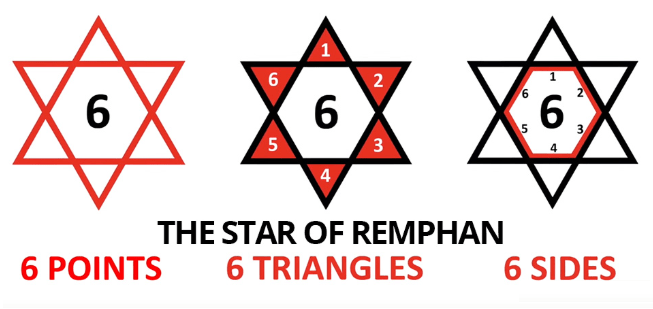
You have taken up the tabernacle of Molek and the star of your god Rephan, the idols you made to worship.  Therefore I will send you into exile’ beyond Babylon. (Acts 7:43 NIV)

Harmless as Doves, Yet…

The simple and honest are especially vulnerable to the cunning and crafty.  And it’s not always a matter of intelligence. It is about trust. It is about being a part of the same civilizational project. 

Some places you can leave front doors unlocked and not worry about being robbed.  Everyone is bought into the same moral code or same social contract, and thus respects the property and the rights of others who are partners in the overall work.  And the doors of our civilization are wide open—not turning people away is a wonderful Christian value and good.

However, this value also means many let their guard down around imposters who pretend to be like us and yet work to subvert, supplant, enslave or destroy what we’ve built.  They are a “snake in the grass” slithering, waiting for the moment of weakness to strike.  They’re the wolves who will accuse the sheepdog of being a bigger threat to the sheep while they plot to devour the flock.

Yes, an impulse towards being charitable is great, but also we need to be wary of those who do not share the same civilizational bond or social contract—this is what Jesus said:

I am sending you out like sheep among wolves. Therefore be as shrewd as snakes and as innocent as doves.

(Matthew 10:16 NIV)

There was this horrible story about a young man opening the door to two men who were dressed like UPS delivery drivers and ended up paying with his life. The fake employees pushed into the residence, with two others who had hidden around the corner, and they murdered the young man and two women in the home—all of this happening in front of two children under the age of five.

We trust based on appearance. If the men in the story above had been dressed like a couple hoodlums nobody would open that door. There’s little chance of a very foreign looking religion or culture slipping into our communities unnoticed. But when we see something familiar or someone speaking in a way to convince us they’re on our side we do not take precautions. We let them in without considering that they could have values completely different despite their surface level disguise.

Whether the Trojan horse gift or that bright beautiful serpent in the garden—it is the job of the discerning person to sound the alarm and protect their own community or home from evil schemes. You need to be able to think like the schemers do to anticipate the deception. The first thing the wolves do is attack and try to silence the voices of those who identify them as being a threat. They will always come after the watch dog first before devouring the sheep.

Fool Me Once Shame On You

Zionism had slipped into my former Mennonite church through Evangelicalism. The church was founded near the same time a state called Israel was founded with a brutal and cruel expulsion of indigenous people. But we celebrated plucky little Israel, as if they came about by a miracle rather than being a result of a campaign of terrorism or military means. For whatever reason Palestinians didn’t matter, as just another group of backwards Arabs, and I’m guessing this is *still* the majority opinion as far as fundamentalist part of the sect I was born in. It’s just part of a disconnect between the love they profess on Sunday and the politics they accept the rest of the week.

Even if the state of Israel is a part of God’s plan does not mean we should be the cheerleaders for genocide or the justifiers of abuse of others. The “I didn’t vote for Trump to be a pastor” crowd seems to be too happy with the totally merciless treatment of the native population—including their innocent children. Apparently God’s chosen are just to be exempted from Christian ethics and can just kill as they please.

It defies every message on grace and mercy ever shared from a church pulpits. We let a wolf into the church and it has devoured our humanity in the name of a worldly kingdom.

Unfortunately Zionist ideology, their sensational end times fantasy, has caused many to abandon the cause of Christ. The old serpent has slipped through the church doors decades ago and is now preaching from many pulpits. He infiltrates the ranks, pretends to share our values as he subtly undermines them, and soon what is up is down is up—with the ‘faithful’ defending a Sodomizing pedo protecting baby killing cult of elites and calling good old fashioned conservative American values.

Hasbura will tell you Goliath was a victim and David a villain.

The worst part is when even to question the official narrative, put out by those who lied wmv will lie again, is twisted into being an ‘evil’ worse than any other. They don’t seem to get that good institutions can be hijacked or that Jesus most certainly did insult those who held positions of authority and he did it by calling them out to their faces. This idea that we must shrink away from challenging the mask of righteousness worn to fool the masses is just flat out wrong. We must call out what the New Testament writers call the synagogue of Satan:

I know about the slander of those who say they are Jews and are not, but are a synagogue of Satan.

(Revelation 2:9 NIV)

In the end, we either are what we say we are or we’re not. That’s what yay be yay is truly about. James warns against being double-minded, about showing favoritism, and the New Testament is full of statements which emphasize no difference between Jew and Gentile in Christ. Israel isn’t a blessing nor is it protected by the hand of God. No, they are simply willing to do the treacherous and nasty things that are completely antithetical to the teachings of Jesus Christ. We need to be wiser understanding that some will lie to gain our money or support.

Shifting Sands of Sacred: How Yesterday’s Romance Becomes Today’s Crime

Standard

Is the ground you stand on sacred simply because you’re standing on it?

We all have this idea that the way we do things is just normal and right. And yet a future generation is likely to look back at us as being primitive or weird. One example? Courtship gets a bit wild a few centuries ago. Some things that were acceptable even a century ago today would likely land someone in jail.

Where I started down this rabbit hole? I was contemplating the age of my great-grandma was married. She was fifteen, as I recall, and tied the knot with great-grandpa when he was in his twenties. And yet, what fed my curiosity is my wife’s grandparents—Igorots on the opposite of the world from my German Mennonite heritage—were also of similar ages and age gap. Later that day I stumbled upon a story of the founder of Hagerstown Maryland and the account of his marriage is very similar as well.

My great grandparents, with my grandma pictured, as a happy family in the 1940s.

By a modern American standard the men in these three cases would certainly be guilty of statutory rape. I mean, technically, back then it was legal if you were married. But, as of May 2020, there’s a minimum age of 18 years old to obtain a marriage license in Pennsylvania. Sure, most other states are more lenient, in this regard, with lower age of consent and less restrictive laws as far as “child marriage” (or anyone who is still under eighteen) and yet it would still be considered very taboo.

This shift in standard is likely economic in origin. Marriage was a much higher priority in the past.  A young woman remaining in her parents home, from an agrarian cultural perspective was more of a liability than an asset.  Back then a man was expected to be established—to have his land or home—whereas his wife would simply have to be of reproductive age and need to be able to do her domestic duties.  Neither of them were going to college or on trips around the world. It was all about being practical and propagation.

But, moving beyond age related weirdness, the historical courtship practices get even more bizarre…

Bundling and Bontoc Igorot Courtship

Before the two words “platonic cuddling” would ever come together there was this practice called bundling. I had known this was a practice of ultra-traditional Amish, to letting a courting couple share a bed before marriage. But apparently, at one time not too long ago, it was not just the Amish and had been common in colonial America.

Officially this was just so a courting couple could share a little warmth in the bitter cold and talk innocently with the protection of a board in the bed between them. However, reality of a 30-40% pregnancy rate for brides in New England tell a slightly different story—this wasn’t all about chaste conversation or a mere exchange of some body heat from appearances.

So did parents just not know any better or was there an intentionality just not spoken about?

Anyhow, I had thought of bundling only after discovering something even wilder that was a feature of my wife’s Igorot culture a century ago prior to the arrival of American missionaries. And that’s this: 1) Around the age of puberty their young people would leave the home of their parents to go live in youth dormitories. 2) Suitors would go visit the girls at night and pair up. If two became fond of each other (or the young woman became pregnant) then they would 3) enter a “trial marriage” prior to a more binding or permanent arrangement.

A less cluttered world.

Given this would be less acceptable than head hunting in a purity culture perspective (my default) where young women so much as talking to their male peers is considered flirtation and a risk of being defiled, I had to collect my jaw from the floor. Allowing, let alone encouraging, a group of teenagers to experiment sexually in a communal hut is simply appalling at all levels of conservative community in the modern United States and also in liberal society generally where teen pregnancy is anathema.

Although, that said, it sounds sort of like an American university experience—at a much younger age.

Let’s Get Biblical, Shall We?

Protestant fundamentalists, the biggest of the pearl clutching prudes, love to claim the Bible as their basis. And, at least up until their cult leader was doing the cover-up of the Epstein scandal, these people were all about “saving the children” from pedophile elites. Muhammad’s child bride is the perfect excuse to bomb Muslim babies.

However, if Biblical pattern and precept is our guide, the world of romance would look quite different from our own. You had the whole thing of a virgin there to be the heater for a declining king David, a bold move Ruth made on Boaz snuggling at this older man’s feet to get his attention, there is the historically estimated age of Mary (the mother of Jesus) when impregnated and, finally, Rebecca according to the math that is below and Jewish tradition:

The Talmudic tradition puts Rebecca’s age at  3 to 4 years old when she was married off to Issac. Other contemporary scholars, citing her ability to draw water for camels as evidence and cultural norms, suggest she would be closer to 14. Either way, this age and age gap (Issac being 40) is a far cry from a Western standard and is certainly not something I could endorse even as a free thinker. But apparently it was just the way things were in this Biblical culture.

The Pot Calling the Kettle Black

The big question is what we do with all this information. Do we relax standards? Do we double down on restrictions?

Honestly, I don’t want my son going through my own experience (a virgin until 40) which was not very pleasant for someone seeking intimacy. But I also don’t want him to father a child before he’s ready for a responsibility like that or in a committed relationship.

It is also very easy to critique foreign and ancient cultures without seeing the faults or failures of our own.

Overlooked with no way to gain status, there are growing ranks of incels

But the increasing amount of incels (young men who are involuntarily celibate) and the birthrates collapsing all over the developed world, we may need to consider what we’re doing wrong as well. Abortion and birth control rather than children—pornography addiction and a hookup culture that gives fewer men a privileged position at the exclusion of others—all adds to this toxic brew of modern courtship or the lack thereof. There will be a corrective whether it is naturally occurring (extinction) or intentional intervention.

In the end, our own sacred ground of a “normal” courtship is little more than shifting sands, ideal shaped by economics, culture, and survival needs across eras. From the Biblical brides to colonial bundling mishaps and the Igorot trial marriages, what once passed for romance now would raise eyebrows—or may even warrant handcuffs. Yet, as we pearl-clutch over the past, our own era’s cocktail of delayed intimacy, digital isolation, and plummeting birthrates hints that perhaps future historians may view us as the true oddballs: a society that engineered its own procreative drought in the name of progress.

Perhaps the key isn’t to rewind the clock or tighten the reins further, but to acknowledge that no culture or era has a monopoly on wisdom? Let’s aim for a discerning path—one fostering connections that are consensual, responsible, and timely—promoting human connection without unrealistic expectations before the incel armies and empty cradles force a hard reset. After all, if history can teach us anything, it’s that romance, in all its weird forms, will evolve.

Abraham’s Righteousness vs. Caiaphas’s Calculus: Divergent Ethics in Modern Conflicts

Standard

Relating to a coworker about how hard it is for me to transmit certain values absent a cultural context, with how deeply ingrained they are as part of my religious upbringing, in pondering this reality it becomes easy to understand why so many people—myself included, at times—assume their own moral framework is universal, something everyone else must naturally share.

This moment of realization tied to a broader observation about value systems and how wildly different various religious traditions really are despite sharing some of the same foundational texts—they are fundamentally and irrevocably different. And yet because the texts overlap, some people mistakenly treat those systems as essentially similar—or even interchangeable—overlooking the profound divergences in interpretation, emphasis, or lived practice that centuries of distinct cultural evolution in these systems of thought have produced.

I plan to make three stops: one in the frame of contemporary Western thought, the next from the time of Jesus, and lastly with the patriarch Abraham. And with each of these stops explore how shared origin can mask strikingly divergent ethical worlds, and why recognizing those differences matters more than ever in our interconnected age.

Innocent Until Proven Guilty and the Blackstone Ratio

Wrongful convictions happen. We often assume, since someone was charged, that they must be guilty of something. I mean, why else would they be wearing that orange jumpsuit? But this impulse goes contrary to reality where cops plant evidence, people lie, and prejudice plays a role in judgment. 

This was the case with Brian Banks—who had been accused of rape by a classmate who later, after his years in prison, confessed to fabricating the whole account. What a horrible predicament: your whole future blown up, a jury that only sees your guilt.

A jurist, Sir William Blackstone, understanding the imperfection of the justice system and that the ultimate goal of justice is to protect the innocent, proposed:

It is better that ten guilty persons escape than that one innocent suffer

This, the Blackstone ratio, is foundational to how things are at least supposed to work in the United States. Founding father Ben Franklin actually took the concept further by stating, “it is better 100 guilty Persons should escape than that one innocent Person should suffer.”  John Adams, while he defended the British soldiers charged with murder for their role in the Boston Massacre, argued the following:

We find, in the rules laid down by the greatest English Judges, who have been the brightest of mankind; We are to look upon it as more beneficial, that many guilty persons should escape unpunished, than one innocent person should suffer. The reason is, because it’s of more importance to community, that innocence should be protected, than it is, that guilt should be punished; for guilt and crimes are so frequent in the world, that all of them cannot be punished; and many times they happen in such a manner, that it is not of much consequence to the public, whether they are punished or not. But when innocence itself is brought to the bar and condemned, especially to die, the subject will exclaim, it is immaterial to me, whether I behave well or ill; for virtue itself is no security. And if such a sentiment as this should take place in the mind of the subject, there would be an end to all security whatsoever.

This commitment to the innocent reflects a strong emphasis on individual rights. It also seems rooted in the story most defining of Western religion, and that is the story of Jesus—falsely accused and put to death for the sake of political expediency. This has become the defining narrative and a reason to reflect on our judgment rather than react. It is why many principled conservatives are always uncomfortable with those trials in the court of public opinion where the state parades a prosecuted person and people assume this is proof of an airtight case.

You look guilty just for being in a courtroom defending from an accusation.

Tyler Robinson currently stands accused of murdering Charlie Kirk. Some have decided his guilt to the extent of forgiving him prior to his even standing trial or being given the chance to defend himself—as if there’s just no way that anyone other than him could be involved. That’s not justice; that’s denying him a presumption of innocence and might be enabling others to escape accountability for their involvement. It is better that he go free than chance a wrongful conviction—that is just Christian.

Caiaphas’s Expediency Math: Killing One to Save All

At the completely opposite end of the spectrum from the Christian West is the example of the high priest who claimed the murder of an innocent man was necessary to save Israel from destruction:

Then one of them, named Caiaphas, who was high priest that year, spoke up, “You know nothing at all! You do not realize that it is better for you that one man die for the people than that the whole nation perish.”

 (John 11:49-50 NIV)

This may very well be the origin point of trolley problem moral reasoning, where a hypothetical situation is proposed in which an intervention will cost fewer lives. If we just switch the track, this fictional trolley only kills one rather than multiple people. And it seems very reasonable. Isn’t it better when more people survive?

Caiaphas reasoned it was better to kill one Jesus to save Israel.  But it didn’t work out that way. The entire nation—along with their temple and sacrificial system—was forever destroyed in 70 AD. The high priest’s moral reasoning was compromised and wrong. It did not save Israel to kill one man and may well have been part of what eventually led to the destruction of Jerusalem. Those who did not accept the way of Jesus continued, after his ministry ended, to kill his followers and resist their civil authorities. Had they taken one moment to reflect and reconsider their plan to kill their way to peace, they may have survived intact rather than be spread to the corners of the empire.

The problem with killing one—without a just cause, to secure the future—is that it usually doesn’t end there. Kill one and you’ll kill ten; if you kill ten, you’ll kill 100, until soon it is millions upon millions. We see this in the campaign against Gaza. Tens of thousands of children are slaughtered and this is being justified as a war against terror. The reality is that it may very well create the backlash that will make the Zionist project untenable as people see this notion of blood guilt and collective punishment as repulsive. This is not compatible with the Christian values of the West and will lead to our destruction if the escalation of war is not rejected.

The world is better when we don’t play God and use the expediency math. If you’re okay killing one innocent person, you’re now an enemy of all humanity. And if you are willing to kill one, then the second and third come much easier. Innocent life should always be protected—whether it is the life of Jesus, be it the “enemies'” children, or the  unborn. Pro-life means no excuses for the IDF that don’t equally apply to Hamas. If it is okay for the Zionist regime to kill scores of civilians as “collateral damage” for every militant killed—where even the Israelis admit the victims of their onslaught are 83% civilians—why mourn when it is just a handful in Bondi?

The best protection of innocent people, like your own, is to oppose all killing of innocent people no matter the color of their skin or the clothes they wear. If the IDF can kill a journalist claiming they are “Hamas with a camera” or “Hamas-affiliated,” then why is it wrong for Eli Schlanger, who has materially aided a genocide, to be targeted along with his associates? We need to reject this math of expediency no matter who is using it, or we can’t be upset when what goes around finally comes around.

Abraham’s Plea for Mercy: Sparing the Many for the Few Righteous

Now we can go way back, to the book of Genesis, where the world’s most powerful monotheistic religions find their foundation, and this man of faith named Abraham. We join him prior to the destruction of Sodom and have this interesting exchange:

Then the Lord said, “Shall I hide from Abraham what I am about to do?  Abraham will surely become a great and powerful nation, and all nations on earth will be blessed through him.  For I have chosen him, so that he will direct his children and his household after him to keep the way of the Lord by doing what is right and just, so that the Lord will bring about for Abraham what he has promised him.”  Then the Lord said, “The outcry against Sodom and Gomorrah is so great and their sin so grievous that I will go down and see if what they have done is as bad as the outcry that has reached me. If not, I will know.”  The men turned away and went toward Sodom, but Abraham remained standing before the Lord. Then Abraham approached him and said: “Will you sweep away the righteous with the wicked? 

(Genesis 18:17-23 NIV)

Abraham’s opening question, in the passage above, tells you a whole lot about his moral reasoning. But before that you basically have the old covenant explained in brief: The blessing that was being bestowed on Abraham had to do with “doing what is right and just” or not simply being a blood relative of him, which is something that Jesus and the Apostles explained over and over to those who saw their genetic tie to the patriarch as a sort of entitlement and did not act justly or mercifully as he did.

Continuing in the text, take time to contrast the expediency math of Caiaphas with the following:

What if there are fifty righteous people in the city? Will you really sweep it away and not spare the place for the sake of the fifty righteous people in it?  Far be it from you to do such a thing—to kill the righteous with the wicked, treating the righteous and the wicked alike. Far be it from you! Will not the Judge of all the earth do right?” The Lord said, “If I find fifty righteous people in the city of Sodom, I will spare the whole place for their sake.” Then Abraham spoke up again: “Now that I have been so bold as to speak to the Lord, though I am nothing but dust and ashes, what if the number of the righteous is five less than fifty? Will you destroy the whole city for lack of five people?” “If I find forty-five there,” he said, “I will not destroy it.” Once again he spoke to him, “What if only forty are found there?” He said, “For the sake of forty, I will not do it.” Then he said, “May the Lord not be angry, but let me speak. What if only thirty can be found there?” He answered, “I will not do it if I find thirty there.”  Abraham said, “Now that I have been so bold as to speak to the Lord, what if only twenty can be found there?” He said, “For the sake of twenty, I will not destroy it.” Then he said, “May the Lord not be angry, but let me speak just once more. What if only ten can be found there?” He answered, “For the sake of ten, I will not destroy it.”  When the Lord had finished speaking with Abraham, he left, and Abraham returned home.

(Genesis 18:24-33 NIV)

Abraham, after expressing his concern for the innocent, offers an opening bid at fifty righteous. Will God spare the entire wicked city for just fifty? And the first thing that is obvious is his humility, pleading with “I am nothing but dust and ashes” and showing his attitude before God. Second is that his orientation is toward the sparing of innocent life even if it means the evil people of the city of Sodom escape deserved judgment. This is in line with Blackstone’s ratio and in total opposition to Caiaphas, who argued to sacrifice rather than to protect the righteous one. Eventually Abraham concedes, and it makes more sense just to evacuate those righteous—nevertheless the righteous are not destroyed with the wicked.

So why is this account in Genesis?

Why is God engaged in a negotiation with a mere man?

The answer is that this anecdote is here for a reason, and that is to be instructive. The author of Genesis isn’t just telling us that Abraham was righteous—they’re giving us instruction on how to be righteous. To have the same disposition as Abraham, that’s the way to be a child of Abraham, and the path of righteousness that leads to the blessings through God’s promise. Chosen means you believe and obey the Lord. You can’t claim to be children of God, or of Abraham, if you truly share nothing in common with them in terms of your behavior or spirit. Genesis is telling us what that looks like in practice.

Christian Orientation Towards Mercy and Humanity is Truly Abrahamic.

In traversing these three moments—from courtrooms shaped by Christian reflection on an innocent’s crucifixion, to the high priest’s fateful expediency that failed to save his nation, and back to Abraham’s humble plea for mercy amid judgment—we uncover a profound reality: The orientation of the Christian perspective, underpinning American rights, is directly the opposite of the ideological lineage of Caiaphas.

The commitment, in faith, to protecting that one innocent life in a crowd of evil is to be a son or daughter of Abraham.  Those who do the opposite, who are willing to sacrifice the innocent for sake of expediency, carry none of the character of Abraham and cannot be the heirs of anything promised to him.  They must first repent of their sin—then they can be blessed, with all nations, through the one singular seed of Abraham (Gal 3:16) which is Christ Jesus.

Going back to the start and those ethics ingrained in us through a religiously derived culture and our assumptions, those who have rejected Christ and are completely willing to kill innocent people to accomplish ends are also going to manifest the other evil traits of Proverbs 6:16-19:

There are six things the Lord hates, seven that are detestable to him: haughty eyes, a lying tongue, hands that shed innocent blood, a heart that devises wicked schemes, feet that are quick to rush into evil, a false witness who pours out lies and a person who stirs up conflict in the community.

Those of us raised in an Anabaptist church got a strong dose of the Gospel according to Matthew and were taught that speech should be simple and truthful.  Let your yea be yes, and nay be nay is about truly honest conversation and credibility without relying on oaths.  We were told to have a peaceable spirit and merciful approach with all people—to be humble.  

This is an orientation that many of Christian faith may believe is universal.  Except it is not.  Ethno-supremacist pride is okay with those of certain ideologies, deception for sake of gaining an upper hand is looked at like a virtue, they look at their ability to trick you as proof they are superior, and sow the seeds of division covertly not to be caught—like this example:

In a covert operation during 2007–2008, Israeli Mossad agents impersonated CIA officers—using forged U.S. passports, American currency, and CIA credentials—to recruit members of the Pakistan-based Sunni militant group Jundallah for attacks inside Iran, including bombings and assassinations targeting Iranian officials and civilians, as part of a broader effort to destabilize Tehran’s regime amid nuclear tensions. The deception, conducted openly in places like London, aimed to frame the United States as the sponsor, exploiting Jundallah’s sectarian and separatist motives while providing plausible deniability for Israel; U.S. officials uncovered the ruse through internal investigations debunking earlier media reports of CIA involvement, leading to outrage in the Bush White House (with President Bush reportedly “going ballistic”), strained intelligence cooperation under Obama, and the eventual U.S. terrorist designation of Jundallah in 2010, though no public repercussions were imposed on Israel.

 (Overview above by Grok, read: False Flag)

Imagine having a friend who deliberately set you up for a fight against another person by telling them that you said something about them.  My son had a bully do this to him on the bus and this is exactly what so-called ‘greatest ally’ tried to do to the US.  For the Zionist regime, and Mossad, conducting the terror operation via a Pakistani proxy simply was not enough.  They wanted Iran to think the attacks originated with the US in order to provoke a reaction.  And this is how the world becomes a cesspool, all because the Iranians won’t stand idle while Palestinians are deprived of land and human rights.

Deviousness is not exclusive to the children of Caiaphas.  But there’s no stops for those willing to kill innocent people for the sake of expediency.  And a partnership with them is only going to undermine the foundation of our civilization.  The US and ‘Christian’ West have already lost their moral reputation for this unholy alliance.  We need to repent and return to holding evil men accountable and protecting the innocent or all will be lost—we can’t exempt some from a standard of normal decency without also damaging all of Christendom.