Abraham’s Righteousness vs. Caiaphas’s Calculus: Divergent Ethics in Modern Conflicts

Standard

Relating to a coworker about how hard it is for me to transmit certain values absent a cultural context, with how deeply ingrained they are as part of my religious upbringing, in pondering this reality it becomes easy to understand why so many people—myself included, at times—assume their own moral framework is universal, something everyone else must naturally share.

This moment of realization tied to a broader observation about value systems and how wildly different various religious traditions really are despite sharing some of the same foundational texts—they are fundamentally and irrevocably different. And yet because the texts overlap, some people mistakenly treat those systems as essentially similar—or even interchangeable—overlooking the profound divergences in interpretation, emphasis, or lived practice that centuries of distinct cultural evolution in these systems of thought have produced.

I plan to make three stops: one in the frame of contemporary Western thought, the next from the time of Jesus, and lastly with the patriarch Abraham. And with each of these stops explore how shared origin can mask strikingly divergent ethical worlds, and why recognizing those differences matters more than ever in our interconnected age.

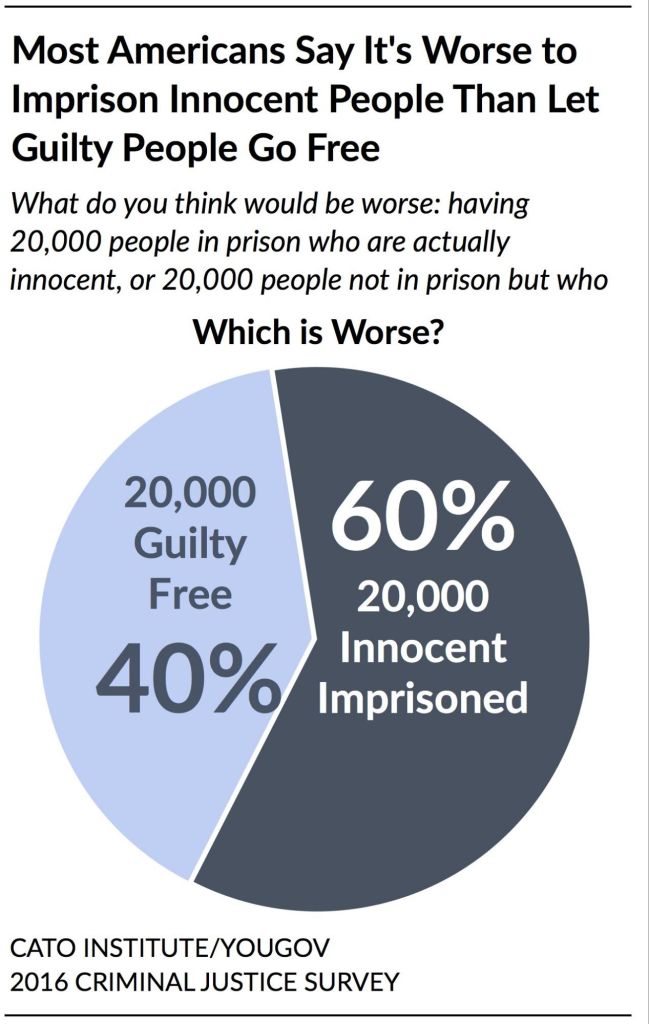
Innocent Until Proven Guilty and the Blackstone Ratio

Wrongful convictions happen. We often assume, since someone was charged, that they must be guilty of something. I mean, why else would they be wearing that orange jumpsuit? But this impulse goes contrary to reality where cops plant evidence, people lie, and prejudice plays a role in judgment. 

This was the case with Brian Banks—who had been accused of rape by a classmate who later, after his years in prison, confessed to fabricating the whole account. What a horrible predicament: your whole future blown up, a jury that only sees your guilt.

A jurist, Sir William Blackstone, understanding the imperfection of the justice system and that the ultimate goal of justice is to protect the innocent, proposed:

It is better that ten guilty persons escape than that one innocent suffer

This, the Blackstone ratio, is foundational to how things are at least supposed to work in the United States. Founding father Ben Franklin actually took the concept further by stating, “it is better 100 guilty Persons should escape than that one innocent Person should suffer.”  John Adams, while he defended the British soldiers charged with murder for their role in the Boston Massacre, argued the following:

We find, in the rules laid down by the greatest English Judges, who have been the brightest of mankind; We are to look upon it as more beneficial, that many guilty persons should escape unpunished, than one innocent person should suffer. The reason is, because it’s of more importance to community, that innocence should be protected, than it is, that guilt should be punished; for guilt and crimes are so frequent in the world, that all of them cannot be punished; and many times they happen in such a manner, that it is not of much consequence to the public, whether they are punished or not. But when innocence itself is brought to the bar and condemned, especially to die, the subject will exclaim, it is immaterial to me, whether I behave well or ill; for virtue itself is no security. And if such a sentiment as this should take place in the mind of the subject, there would be an end to all security whatsoever.

This commitment to the innocent reflects a strong emphasis on individual rights. It also seems rooted in the story most defining of Western religion, and that is the story of Jesus—falsely accused and put to death for the sake of political expediency. This has become the defining narrative and a reason to reflect on our judgment rather than react. It is why many principled conservatives are always uncomfortable with those trials in the court of public opinion where the state parades a prosecuted person and people assume this is proof of an airtight case.
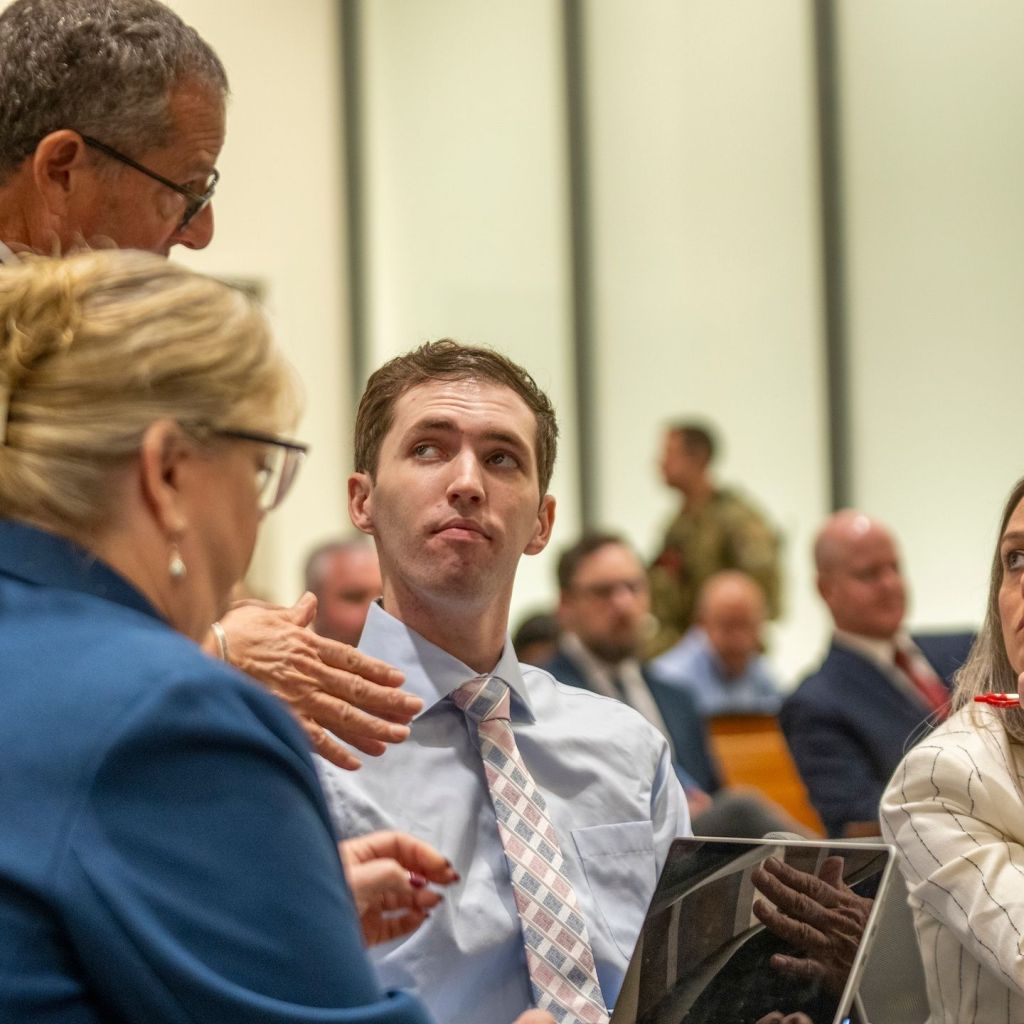
You look guilty just for being in a courtroom defending from an accusation.

Tyler Robinson currently stands accused of murdering Charlie Kirk. Some have decided his guilt to the extent of forgiving him prior to his even standing trial or being given the chance to defend himself—as if there’s just no way that anyone other than him could be involved. That’s not justice; that’s denying him a presumption of innocence and might be enabling others to escape accountability for their involvement. It is better that he go free than chance a wrongful conviction—that is just Christian.

Caiaphas’s Expediency Math: Killing One to Save All

At the completely opposite end of the spectrum from the Christian West is the example of the high priest who claimed the murder of an innocent man was necessary to save Israel from destruction:

Then one of them, named Caiaphas, who was high priest that year, spoke up, “You know nothing at all! You do not realize that it is better for you that one man die for the people than that the whole nation perish.”

 (John 11:49-50 NIV)

This may very well be the origin point of trolley problem moral reasoning, where a hypothetical situation is proposed in which an intervention will cost fewer lives. If we just switch the track, this fictional trolley only kills one rather than multiple people. And it seems very reasonable. Isn’t it better when more people survive?

Caiaphas reasoned it was better to kill one Jesus to save Israel.  But it didn’t work out that way. The entire nation—along with their temple and sacrificial system—was forever destroyed in 70 AD. The high priest’s moral reasoning was compromised and wrong. It did not save Israel to kill one man and may well have been part of what eventually led to the destruction of Jerusalem. Those who did not accept the way of Jesus continued, after his ministry ended, to kill his followers and resist their civil authorities. Had they taken one moment to reflect and reconsider their plan to kill their way to peace, they may have survived intact rather than be spread to the corners of the empire.
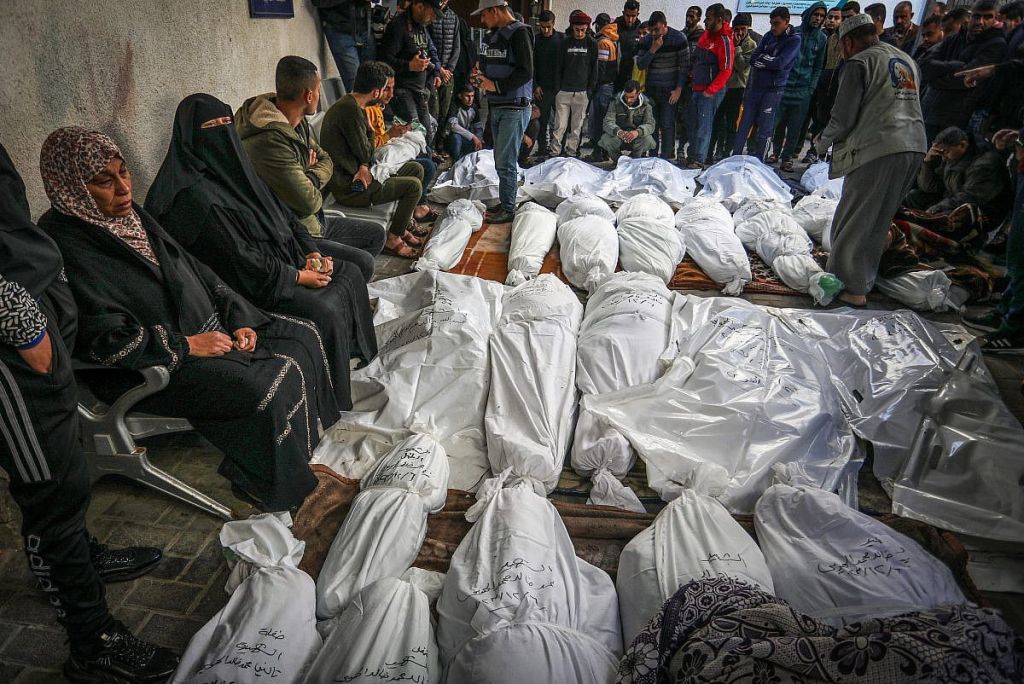
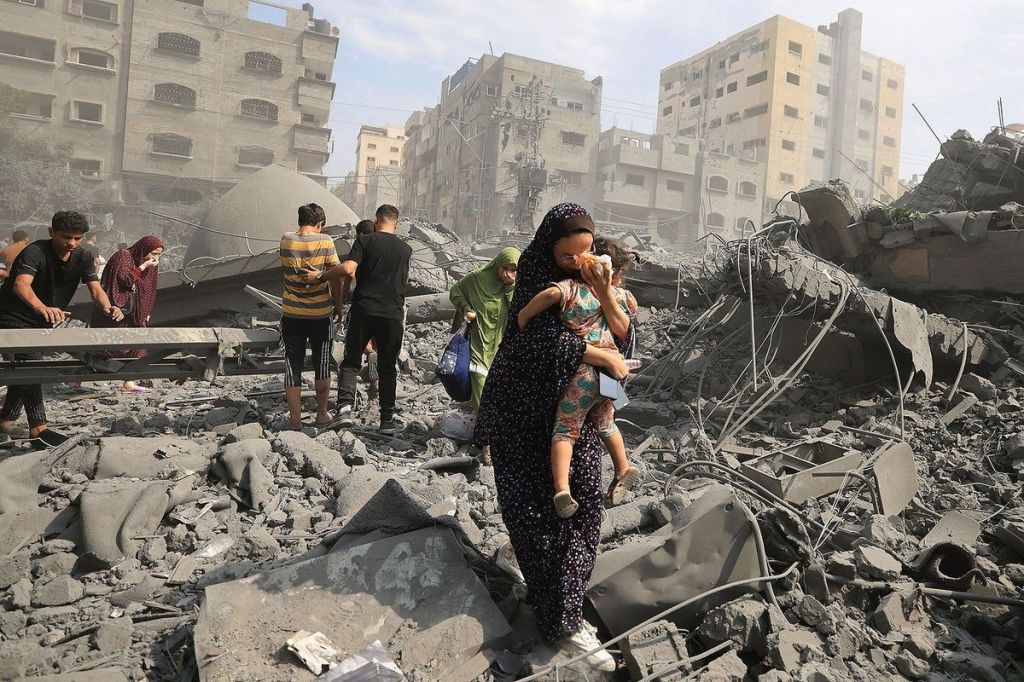
The problem with killing one—without a just cause, to secure the future—is that it usually doesn’t end there. Kill one and you’ll kill ten; if you kill ten, you’ll kill 100, until soon it is millions upon millions. We see this in the campaign against Gaza. Tens of thousands of children are slaughtered and this is being justified as a war against terror. The reality is that it may very well create the backlash that will make the Zionist project untenable as people see this notion of blood guilt and collective punishment as repulsive. This is not compatible with the Christian values of the West and will lead to our destruction if the escalation of war is not rejected.

The world is better when we don’t play God and use the expediency math. If you’re okay killing one innocent person, you’re now an enemy of all humanity. And if you are willing to kill one, then the second and third come much easier. Innocent life should always be protected—whether it is the life of Jesus, be it the “enemies'” children, or the  unborn. Pro-life means no excuses for the IDF that don’t equally apply to Hamas. If it is okay for the Zionist regime to kill scores of civilians as “collateral damage” for every militant killed—where even the Israelis admit the victims of their onslaught are 83% civilians—why mourn when it is just a handful in Bondi?

The best protection of innocent people, like your own, is to oppose all killing of innocent people no matter the color of their skin or the clothes they wear. If the IDF can kill a journalist claiming they are “Hamas with a camera” or “Hamas-affiliated,” then why is it wrong for Eli Schlanger, who has materially aided a genocide, to be targeted along with his associates? We need to reject this math of expediency no matter who is using it, or we can’t be upset when what goes around finally comes around.

Abraham’s Plea for Mercy: Sparing the Many for the Few Righteous

Now we can go way back, to the book of Genesis, where the world’s most powerful monotheistic religions find their foundation, and this man of faith named Abraham. We join him prior to the destruction of Sodom and have this interesting exchange:

Then the Lord said, “Shall I hide from Abraham what I am about to do?  Abraham will surely become a great and powerful nation, and all nations on earth will be blessed through him.  For I have chosen him, so that he will direct his children and his household after him to keep the way of the Lord by doing what is right and just, so that the Lord will bring about for Abraham what he has promised him.”  Then the Lord said, “The outcry against Sodom and Gomorrah is so great and their sin so grievous that I will go down and see if what they have done is as bad as the outcry that has reached me. If not, I will know.”  The men turned away and went toward Sodom, but Abraham remained standing before the Lord. Then Abraham approached him and said: “Will you sweep away the righteous with the wicked? 

(Genesis 18:17-23 NIV)

Abraham’s opening question, in the passage above, tells you a whole lot about his moral reasoning. But before that you basically have the old covenant explained in brief: The blessing that was being bestowed on Abraham had to do with “doing what is right and just” or not simply being a blood relative of him, which is something that Jesus and the Apostles explained over and over to those who saw their genetic tie to the patriarch as a sort of entitlement and did not act justly or mercifully as he did.

Continuing in the text, take time to contrast the expediency math of Caiaphas with the following:

What if there are fifty righteous people in the city? Will you really sweep it away and not spare the place for the sake of the fifty righteous people in it?  Far be it from you to do such a thing—to kill the righteous with the wicked, treating the righteous and the wicked alike. Far be it from you! Will not the Judge of all the earth do right?” The Lord said, “If I find fifty righteous people in the city of Sodom, I will spare the whole place for their sake.” Then Abraham spoke up again: “Now that I have been so bold as to speak to the Lord, though I am nothing but dust and ashes, what if the number of the righteous is five less than fifty? Will you destroy the whole city for lack of five people?” “If I find forty-five there,” he said, “I will not destroy it.” Once again he spoke to him, “What if only forty are found there?” He said, “For the sake of forty, I will not do it.” Then he said, “May the Lord not be angry, but let me speak. What if only thirty can be found there?” He answered, “I will not do it if I find thirty there.”  Abraham said, “Now that I have been so bold as to speak to the Lord, what if only twenty can be found there?” He said, “For the sake of twenty, I will not destroy it.” Then he said, “May the Lord not be angry, but let me speak just once more. What if only ten can be found there?” He answered, “For the sake of ten, I will not destroy it.”  When the Lord had finished speaking with Abraham, he left, and Abraham returned home.

(Genesis 18:24-33 NIV)

Abraham, after expressing his concern for the innocent, offers an opening bid at fifty righteous. Will God spare the entire wicked city for just fifty? And the first thing that is obvious is his humility, pleading with “I am nothing but dust and ashes” and showing his attitude before God. Second is that his orientation is toward the sparing of innocent life even if it means the evil people of the city of Sodom escape deserved judgment. This is in line with Blackstone’s ratio and in total opposition to Caiaphas, who argued to sacrifice rather than to protect the righteous one. Eventually Abraham concedes, and it makes more sense just to evacuate those righteous—nevertheless the righteous are not destroyed with the wicked.

So why is this account in Genesis?

Why is God engaged in a negotiation with a mere man?

The answer is that this anecdote is here for a reason, and that is to be instructive. The author of Genesis isn’t just telling us that Abraham was righteous—they’re giving us instruction on how to be righteous. To have the same disposition as Abraham, that’s the way to be a child of Abraham, and the path of righteousness that leads to the blessings through God’s promise. Chosen means you believe and obey the Lord. You can’t claim to be children of God, or of Abraham, if you truly share nothing in common with them in terms of your behavior or spirit. Genesis is telling us what that looks like in practice.

Christian Orientation Towards Mercy and Humanity is Truly Abrahamic.

In traversing these three moments—from courtrooms shaped by Christian reflection on an innocent’s crucifixion, to the high priest’s fateful expediency that failed to save his nation, and back to Abraham’s humble plea for mercy amid judgment—we uncover a profound reality: The orientation of the Christian perspective, underpinning American rights, is directly the opposite of the ideological lineage of Caiaphas.

The commitment, in faith, to protecting that one innocent life in a crowd of evil is to be a son or daughter of Abraham.  Those who do the opposite, who are willing to sacrifice the innocent for sake of expediency, carry none of the character of Abraham and cannot be the heirs of anything promised to him.  They must first repent of their sin—then they can be blessed, with all nations, through the one singular seed of Abraham (Gal 3:16) which is Christ Jesus.

Going back to the start and those ethics ingrained in us through a religiously derived culture and our assumptions, those who have rejected Christ and are completely willing to kill innocent people to accomplish ends are also going to manifest the other evil traits of Proverbs 6:16-19:

There are six things the Lord hates, seven that are detestable to him: haughty eyes, a lying tongue, hands that shed innocent blood, a heart that devises wicked schemes, feet that are quick to rush into evil, a false witness who pours out lies and a person who stirs up conflict in the community.

Those of us raised in an Anabaptist church got a strong dose of the Gospel according to Matthew and were taught that speech should be simple and truthful.  Let your yea be yes, and nay be nay is about truly honest conversation and credibility without relying on oaths.  We were told to have a peaceable spirit and merciful approach with all people—to be humble.  

This is an orientation that many of Christian faith may believe is universal.  Except it is not.  Ethno-supremacist pride is okay with those of certain ideologies, deception for sake of gaining an upper hand is looked at like a virtue, they look at their ability to trick you as proof they are superior, and sow the seeds of division covertly not to be caught—like this example:

In a covert operation during 2007–2008, Israeli Mossad agents impersonated CIA officers—using forged U.S. passports, American currency, and CIA credentials—to recruit members of the Pakistan-based Sunni militant group Jundallah for attacks inside Iran, including bombings and assassinations targeting Iranian officials and civilians, as part of a broader effort to destabilize Tehran’s regime amid nuclear tensions. The deception, conducted openly in places like London, aimed to frame the United States as the sponsor, exploiting Jundallah’s sectarian and separatist motives while providing plausible deniability for Israel; U.S. officials uncovered the ruse through internal investigations debunking earlier media reports of CIA involvement, leading to outrage in the Bush White House (with President Bush reportedly “going ballistic”), strained intelligence cooperation under Obama, and the eventual U.S. terrorist designation of Jundallah in 2010, though no public repercussions were imposed on Israel.

 (Overview above by Grok, read: False Flag)

Imagine having a friend who deliberately set you up for a fight against another person by telling them that you said something about them.  My son had a bully do this to him on the bus and this is exactly what so-called ‘greatest ally’ tried to do to the US.  For the Zionist regime, and Mossad, conducting the terror operation via a Pakistani proxy simply was not enough.  They wanted Iran to think the attacks originated with the US in order to provoke a reaction.  And this is how the world becomes a cesspool, all because the Iranians won’t stand idle while Palestinians are deprived of land and human rights.

Deviousness is not exclusive to the children of Caiaphas.  But there’s no stops for those willing to kill innocent people for the sake of expediency.  And a partnership with them is only going to undermine the foundation of our civilization.  The US and ‘Christian’ West have already lost their moral reputation for this unholy alliance.  We need to repent and return to holding evil men accountable and protecting the innocent or all will be lost—we can’t exempt some from a standard of normal decency without also damaging all of Christendom.

The Greater Good Fallacy: Morality Without Excuses

Standard

Setting aside moral principle to serve a greater good means you have no moral principles.

Moral relativists love their hypotheticals: “What if you had a chance to travel back in time and kill baby Hitler?”

Once they can establish the answer as “yes” then pretty soon thereafter anyone who stands in their way is a Nazi. Or, in other words, the morality of “everyone I don’t like is literally Hitler” where you will basically become Hitler killing all of those baby Hitlers before they become Hitler—kill them all, you can’t be too careful!

It is ends justify the means morality that justifies, ultimately, the most heinous and horrible acts by one projecting a possible outcome as an excuse to violate another person—in some cases even before they drew a first breath.

For example, the Freakonomics case for abortion pointing to how inner-city crime rates dropped in correlation with black babies being killed—used as a moral justification.

Contrast this with Matthew 12:20, with Jesus: “He will not break a crushed blade of grass…”

This prejudice is behind every genocide or ethnic cleansing campaign. The excuse: “We don’t want to kill babies, but if we don’t ‘mow the grass‘ then they’ll grow up to kill us.” I mean, it’s not like that attitude will create a backlash or stir the anger of the population being cynically targeted for a trimming back, right?

Oh well, at least when you are starting at the very bottom, relying on self-defense by precrime judgment and a doctrine of preemption, there is no slippery slope to be concerned about: Morality becomes a race of who can eliminate their potential opponents most efficiently rather than a social contract between people trying to live peaceably with their neighbors.

(Im)Morality of the ‘God’s Plan’ Excuse…

One of the sidesteps of treating others with human decency is that it is all part of God’s plan. Biblical fundamentalists often use a similar kind of ends justify the means moral reasoning as the far-left—except they dress it up as faith and seeing the bigger perspective.

This is their excuse to be Biblical, but not Christian. The moment you raise a moral objection about anything they’ll find their loophole in Scripture: “Oh, yes, God said not to take innocent life, but He also told Israel to wipeout the Amalekites, so it is up to us to decide who gets slaughtered or saved.”

This is the God’s eye perspective Jesus addressed in Mark 7:10-12:

For Moses said, ‘Honor your father and mother,’ and, ‘Anyone who curses their father or mother is to be put to death.’ But you say that if anyone declares that what might have been used to help their father or mother is Corban (that is, devoted to God)—then you no longer let them do anything for their father or mother.

What the Biblical experts were doing was using one command to nullify another by a greater good moral reasoning. Of course they, in their own minds, were the more spiritual. They had convinced themselves that—by neglecting their duty to parents—they were seeing things from God’s eyes and just better than everyone else. But, in reality, this is rationalization and an excuse to be immoral.

Morality isn’t about taking the God’s eye view, it is about our practically applying the Golden Rule or the law of reciprocity described in the passages below:

For if you forgive other people when they sin against you, your heavenly Father will also forgive you. But if you do not forgive others their sins, your Father will not forgive your sins.

Matthew 6:14-15 NIV

“Do not judge, or you too will be judged. For in the same way you judge others, you will be judged, and with the measure you use, it will be measured to you. “Why do you look at the speck of sawdust in your brother’s eye and pay no attention to the plank in your own eye? How can you say to your brother, ‘Let me take the speck out of your eye,’ when all the time there is a plank in your own eye? You hypocrite, first take the plank out of your own eye, and then you will see clearly to remove the speck from your brother’s eye.

Matthew 7:1-5 NIV

Speak and act as those who are going to be judged by the law that gives freedom, because judgment without mercy will be shown to anyone who has not been merciful. Mercy triumphs over judgment.

James 2:12-13 NIV

See the pattern here?

What we put into the world is what we will receive back. If we do not show any mercy to those under our power, then we will not be shown mercy. And that’s the point behind the parable that Jesus told about a man forgiven a great debt—then goes out demanding repayment from the man who owed him.

Seeing things from God’s perspective—according to this—is to apply Micah 6:8:

He has shown you, O mortal, what is good. And what does the Lord require of you? To act justly and to love mercy and to walk humbly with your God.

There are no excuses to set aside normal morality for the sake of God’s plan.

There is no special exemption given for a chosen race of people either.

Throughout history the most evil of men have excused their atrocities using God’s will. It is the reasoning of the Crusader’s command, based on 2 Timothy 2:19, of “Kill them, for God knows his own.”

The ‘Christian’ West killed more innocent people in the Holy Lands than Islamists.

With that kind of thinking, everything will become justified as part of God’s plan if you zoom it out and, therefore, we can’t take a moral stand against anything. If it is God’s plan that babies are killed—then who are you to decry it as murder?

This is logic which can neutralize every moral stance or turn every evil deed into some kind of ultimate good—if you just see it from ‘God’s perspective’ it all becomes okay.  Of course, at that point, accepting this, there is no morality—once everything is relative to God’s will or the outcome that we call good.

It essentially replaces the Golden Rule with: “Do unto others as you would have them do unto you—except if you can explain away the abuse by some kind of greater good excuse.”

Act Justly, Love Mercy, That’s the Conclusion…

Moral relativism, whether cloaked in the guise of achieving a greater good or justified as part of God’s plan, erodes the foundation of true morality—the Golden Rule.

By excusing heinous acts through hypothetical necessities or our ‘divine’ rationalizations, we are becoming the very monsters we claim to oppose. True morality demands consistency: acting justly, loving mercy, and walking humbly, without excuses or every resorting to preemptive judgments or selective exemptions.

When we abandon moral principles for the sake of outcomes we desire or divine loopholes, we replace mutual respect or an opportunity for understanding with a race to eliminate every perceived threat, leaving no room for peace, forgiveness, or humanity.

The measure we use—whether it is mercy or judgment—will be measured back to us, and no appeal to a higher purpose can absolve us of that final reckoning.

Post script: Morality is staying in our lane and abiding by the rules. Playing God is running someone off the road for daring to cross into our lane. It is about our keeping the law—not our enforcing of it. And when we start to justify the abuse of others, as Biblical, then we turn into a violator. James 4:11 explains: “When you judge the law, you are not keeping it, but sitting in judgment on it.” The end result of exemption of ourselves using God’s plan as cover is a cycle of violence where all see themselves as righteous—even while doing incredible evil.

The Moral Hypocrisy of Justifying Child Killing: Abortion, Gaza, and the Danger of Playing God

Standard

The deliberate killing of children—whether through abortion or in conflict zones like Gaza—is often defended by opposing ideological camps using eerily similar logic.

Both sides, whether progressives celebrating abortion or conservatives excusing the civilian deaths in Gaza, rely on hiding their atrocities under a thick blanket of dehumanizing language, while using speculative reasoning to justify their positions.

I’ve walked away from online friendships over this hypocrisy: “progressive” friends who are vegetarian and biology-savvy yet loudly cheer for abortion, or those self-proclaimed Christians who shrug off thousands deaths of Palestinian kids as mere “collateral damage” and a normal part of war.

This blog dives into how both sides use the same flawed reasoning, spotlighting the Freakonomics future peace case for abortion, and argues why it’s always wrong to kill a child—no matter the excuse—and why we must stop playing God.

Dehumanizing Through Words

Words are powerful, and both groups wield them to hide the truth. Abortion advocates use terms like “fetus” or “reproductive choice” to make the act sound clinical, distancing themselves from the reality of ending a human life. I’ve seen friends who’d cry over a harmed insects dismiss a fetus as a “clump of cells,” despite knowing it’s a developing human.

Pro-abortion folks may do as the pro-genocide folks do and say that this is AI-generated.  But their denial doesn’t change the truth.

Similarly, those defending the killing of kids in Gaza call it “counter-terrorism” or frame it as a response to October 7th, glossing over decades of Zionist violence against those who are indigenous to Palestine.  This linguistic sleight-of-hand—whether medical jargon or military euphemisms—strips away the humanity of the victims, making it easier to stomach the brutality.

The Freakonomics Trap: Justifying Death with What-Ifs

The Freakonomics argument, laid out by Steven Levitt and Stephen Dubner, is a prime example of how this reasoning works.

They claimed legalizing abortion after Roe v. Wade cut crime rates in the ‘90s by reducing “unwanted” kids who might’ve grown up to be criminals. It’s a cold, numbers-driven pitch: kill now to prevent hypothetical future problems. This mirrors the logic of those who justify dead kids in Gaza as a necessary cost to stop future terrorists.

Zionist voices have taken this to extremes, with figures like Moshe Feiglin, leader of the Zehut party, declaring, “Every child in Gaza is an enemy. We must occupy Gaza until not a single child remains there.

Others, like US Senator Lindsey Graham, have suggested nuking Gaza, stating, “Give Israel the bombs they need to end the war that they can’t afford to lose.” Israeli leaders on i24NEWS have echoed this, calling for the extermination of everyone in Gaza, including babies, as “every child, every baby in Gaza is an enemy.” These statements reveal a chilling willingness to annihilate children based on speculative fears, just as Freakonomics justifies abortion by imagining future criminals.

They’re not sleeping.  They were targeted for elimination.

Both hinge on a false dilemma: either kill now or face catastrophic consequences later. This binary ignores alternatives, like the IRA peace process in Northern Ireland, where dialogue and systemic change brought decades of conflict to a halt without resorting to mass killing. Peacebuilding, not extermination, addressed the root causes while preserving lives.

Why Consequentialism Fails

This kind of thinking—called consequentialism—puts outcomes over principles. It assumes a kid in the womb or a warzone is a potential threat, not a person with potential. But life doesn’t work that way.

Plenty of people born into poverty or conflict grow up to do great things. The Freakonomics logic ignores that, just like the idea that a Gaza kid will inevitably become a terrorist. 

Plus, it’s unfair to punish a child for what they might do or for what adults—like their parents or community leaders—have done. A fetus isn’t responsible for its mom’s situation, just as a Palestinian kid isn’t to blame for Hamas. Killing them shifts the burden of adult failures onto the innocent.

Do we truly want to live in a Minority Report world where governments choose who lives or dies based on predictive algorithms?

The Sanctity of Life Over Playing God

Every major ethical tradition, religious or secular, values human life, especially the most vulnerable. Kids, born or unborn, embody that vulnerability.

When we justify their deaths with fancy words or stats, we’re opening a dangerous door. History shows where this leads—think Holocaust or Rwanda, where dehumanization fueled mass killing.

The Freakonomics case and Gaza justifications risk the same moral rot, treating some lives as disposable.

Our job isn’t to play God, deciding who’s worthy of life based on our fears or predictions. It’s to act with justice and protect the defenseless, not to end their lives to fix society’s problems.

Wrapping It Up

The hypocrisy of cheering abortion while mourning other forms of life, or calling yourself Christian while excusing dead kids in Gaza, reveals a shared flaw—believing their creative semantics or future self-defense reasoning can remove the stain of their sin.

The Freakonomics argument and genocidal rhetoric from figures like Feiglin and Graham both reduce children to pawns in a bigger game, ignoring their inherent dignity. It’s always wrong to kill a child—whether for an adult’s choices or a fear of what they might become.

Instead of playing God with false dilemmas, we need to follow examples of taking a third option—like the IRA peace process—and focus on real solutions: respect for a legitimate grievance over stolen land and diplomacy, in support of moms and investment in communities. 

Only by valuing every life can we build a world that’s just and safe for future generations.

WhY dOn’T tHeY jUsT…?!?

Standard

It is 2064 and refugees from Spanish-speaking countries nearly match the native-born American population in border states.  The United States, after fighting war after war and finally collapsing economically, is a shadow of the globe-spanning power it once was.  A militant ethno-nationalist contingent within this group of new arrivals, armed with their own understanding of history, believes that the American West rightfully belongs to them.  And using a campaign of terror and intimidation, after a few skirmishes, have driven even many native Texans out of their most notable cities. 

La Raza (or ‘the race’) is not satisfied to only have parts of the historically Spanish parts of the continental US.  However, the new UN based in Dubai, while agreeing that the Spanish had a better claim, determined that a two-state solution was best and drew the map for a partition plan.  Of course, neither side is truly satisfied with this and both are merely buying time.  A coalition of sympathetic American states formed to help the Texas Rangers, which is now a paramilitary organization of mostly fundamentalist Christians, but the partisans of the Partido Nacional de La Raza Unida strike first.  Many Texans flee as cartels and Chinese-backed militants start a campaign to push them out.

Decades pass and the Spanish state increases its zone of control.  The Texans continue to fight asymmetrically but have lost control of their resources and are also politically destabilized by their better-funded rivals.  MTGA, or Make Texas Great Again, an extremist group that states a goal of removing all non-Americans from Texas, is secretly aided by La Raza who seeks to undermine the more representative and moderate Texas Rangers.  Why?  Well, with their end goal of taking all of what was Spanish territory, they really did not want a successful state of Texas, they wanted exploitable chaos and opportunities to seize more land using self-defense as an excuse.

After a small success, where the MTGA ‘terrorists’ managed to break through the formidable La Raza borders (ironic, given that generations of Americans were told that borders are racist), the enraged Spanish demand that Texan civilians evacuate and begin to bomb the Texas panhandle camps where the remaining resistance fighters base their operations.  Across the Spanish world their own language media, sympathetic to the Spanish cause, ask many questions.  Why do the Texans not overthrow the terrorists?  Why don’t they simply move to other US states and give the land back to the rightful owners from the South?  Why do the border states oppose the relocation of Texans so much when they’re all Americans?

Of course, the scenario above, for the time being, remains fictional, but it is also an analogy to introduce this post which deals with similar questions as to why Gazans do not overthrow Hamas or leave for other Arab lands.  I realize some, even if they don’t admit it, see the people of Gaza as being subhuman, a race marked for destruction or “Amelek” (as Israeli right-wingers call them), and won’t even attempt to understand their perspective.  The propagandists have done their job well, once again, and convinced the masses that the side they are told to oppose is a bunch of savages who can’t be reasoned with and whose blood—including their own children—is on their own hands.

WhY DoN’t ThEy JuSt OvEr-ThRoW hAmAs?!?

Many do not draw a distinction between Hamas and Palestinians.  This is what those who want a blank check to do whatever they want to Gaza want.  If you can make all in this small territory collectively guilty, then you don’t need to deal with the moral dilemma of whether it is okay to kill innocents as a response to innocents being killed.  If all Palestinians are terrorists then you can just treat them like a termite infestation.  It isn’t genocide, it is just pest control!  No, they won’t come out and say that.  However, be honest here, when you drop bombs on a populated city that is exactly what is happening, it is collective punishment and a war crime.

Anyhow, what they don’t tell you is that only a fraction of Palestinians voted for Hamas.  In fact, in no single district of Gaza did Hamas win the majority of votes.  For all of you who want a third-party ballot choice, there’s your warning.  And once you give power to a group like Hamas don’t expect to ever get it back without a fight.  

Propaganda Parrot: “Bu-but, what about all those Gazans out cheering when Hamas attacked Israel?!?”

Me: “What about it???”

Thousands of Americans took to the streets to chant “Not my President!” when Trump won.   And thousands of Americans participated in the Jan 6th ‘insurrection’ as well.  In neither case did the protestors in the crowd, even if millions of them, represent the plurality of Americans.  Furthermore, being in the crowd doesn’t make you a supporter of whatever others have attributed to your cause.  If you are pro-MAGA, contrary to what the Democrat-controlled media says, you aren’t sympathetic to a coup for being upset about the election and subsequent prosecutions.  No, you’re rejecting their framing of the event and beholden to an entirely different narrative.

The same is true of Gazans.  Maybe they don’t support the means of Hamas.  But they certainly understand the grievance and see Israel as an oppressor of their people.  Many Americans would be happy to see Moscow or Tehran leveled.  Does that make them one and the same as those giving the order or carrying it out?

But more significant than that, half of the population of Gaza is children.  They didn’t get a vote nor do they have the ability to go toe to toe with a group currently giving the IDF a run for their money.  Why don’t the Gazans overthrow Hamas?  Maybe for the same reason that those of us who disagree with the waste of our tax dollars and endless wars don’t overthrow the US government:  We want to live our lives.  We don’t want to be killed or end up locked up.  People do not rise up even against a regime that abuses them simply because they don’t want to die.  I mean, come on, do you really expect civilian Palestinian mothers and fathers to take down Israel’s enemy for them?  Do you expect children to overthrow armed men?

Are you really that dull?

Okay then…

WhY dOn’T tHeY jUsT LeAve GaZa?!?

Wow, you’re smart!  Why don’t a million people just follow the IDF command to leave everything behind so that their homes and communities can be leveled without concern for civilian casualties?  I mean, we would all do that at the snap of a finger, right?

This is the biggest bullshit line of all of them.  

State War Crime Apologist: “We gave them an opportunity to leave…”

As if this makes them not responsible for the bloodbath that follows.  I mean, by that reasoning, if they had an opportunity to leave, then the atrocities that followed during the Pogroms are on those who didn’t immediately flee, right?

This is just not a realistic expectation and most especially given the very recent history of the Palestinian people.  First, many who live in the Gaza Strip are already refugees living in camps.  Why?  Well, they were forcibly expelled by Zionists in events like the Nakba of 1948 and many others, these massacres to push them out may have been forgotten by us, but what if that was your grandparents who still remember the olive groves they tended and the good life that they had prior?  Now you have a place, even if it isn’t the greatest, you have friends and neighbors around you, are you going to just march into the desert again so that more of your ancestral land can be annexed?

This is stupider than expecting Texans to up and leave for Canada if they don’t like the current border situation.

If Palestinians leave who will ensure that they are allowed to return?

The UN?!?

Of all people, white Americans who decry foreigners entering their country, and threatening their culture, should understand this.  If we can’t even tolerate sharing our land and so fear losing our national identity, imagine if we had been backed in a corner for decades and are now being told we must evacuate to a new place so that our rivals can do their mop up of the American resistance.  

No, Palestinians don’t leave for the same reason we wouldn’t leave and the same reason why Israelis don’t simply move to friendlier Western nations.  I mean, it would be much easier for Israelis, many of whom are wealthier and have dual citizenship, to make the move to safer places.  Why not just move completely out of range of Hamas rockets and incursions?

You don’t have to be sympathetic to the Palestinian cause to see this as an injustice, you just need to be human.

As ignorant is this idea that Arab nations should simply absorb the people displaced by Israel as if that would solve the problem.  I mean, it isn’t like hard-core Zionists don’t also think that Lebanon belongs to them.  Unlike many Americans, Arab leaders aren’t dumb.  They know that in politics when you give an inch they’ll take a mile.  Their own rule is fragile enough.  They understand that a stream of refugees will potentially undermine their stability and, again, we should understand this by looking at what is happening in Europe or the US where refugees are welcomed.  And, sure, the US certainly could’ve moved all from the British Isles across the Atlantic to avoid confrontation with Hitler, but why would we?

Why should Gazans leave?  Why should Arab leaders facilitate the whims of Israel?

Blame-shifting Is Evil

Abusers always make the victim guilty.  The little girl he assaulted should’ve been wearing that dress.  This is how they wash their own hands, so they aren’t the bad guys in the narrative they create for themselves.  In their mind, they’re not a bad person, they were just presented with an irresistible temptation, and it was a failure somewhere else that caused them to fall.  Sexual predators do say things like “why did her parents leave her with me” or “he didn’t put up enough resistance” as a justification.  It is evil when they do it and it is evil when others do it in murkier circumstances.

The blood of Gazans, who are killed by the IDF, is completely on the hands of the Israeli leadership who are ordering the invasion.  It is no different from Hamas being to blame for those who were shot by their militants.  Gazans are not collectively guilty of what Hamas does and, likewise, innocent Israelis have no blame to bear for what their government does.  If an enemy uses “human shields” that doesn’t give a military permission to gun down or bomb the civilians between them and their enemies.  If a military invasion is not possible under those conditions, then find another solution.

Israel doesn’t need to invade Gaza to neutralize Hamas.  Even Israelis see the incursion as a failure of their government.  And doing more to defuse the legitimate grievance of the Palestinians, who are having their land systemically taken by religious extremists who cite texts thousands of years old, would go a long way to helping them move on.  Turning enemies into unthinking inhuman monsters is exactly what has enabled genocidal purges in the past and is what is most concerning about the rhetoric coming out of the mouths of Zionists.  It is not Christian.  It is not excusable.

The propagandist’s job isn’t to placate critical thinkers. No, it is to feed the confirmation bias of those who have already picked a side or keep those on the sidelines indifferent. One way this is done is by answering legitimate concerns with plausible, yet spurious, excuses for why normal human compassion need not apply to this situation. It is basic blame-shifting, where you make the victims of abuse guilty for what others are doing to them. And, as gullible and eager as they are, it really doesn’t take much to keep a ‘Christian’ Zionist spouting talking points.

We need to think long and hard about the precedents set by Gaza given our own diminishing influence.  Islamic no-go zones in Europe have expanded to include large swaths of urban centers.  Refugees from destabilized regions of Africa and the Middle East have flowed in, unabated, while native populations have dwindled.  Will we go quietly when it is our turn to be displaced?  Will we like it when our own ethics are turned against us?  Hopefully whoever will rule after us has more compassion and mercy than we do.  Pray that they do not dismiss our cries for justice or brand us as terrorists to be destroyed for opposing their unjust edicts.

It is disheartening that so many in the West have an understanding of the problem less sophisticated than a French aristocrat musing, in response to the starving people saying they don’t have enough bread, “Let them eat cake!” It’s out of touch. It is cruel and indifferent. It will come back to bite us when the world starts to hold us responsible for the abuses of those who claim to act on our behalf and have slaughtered millions. Who will stand to defend us?

Aliens Are Here! Maybe…

Standard

Did you hear?  A ‘whistleblower’ testified before Congress about aliens and finding non-human remains at crash sites.  I can’t really know if this was reliable or someone simply getting their fifteen minutes of fame, but it does seem unlikely to me that beings capable of flying the enormous distances of space would be such poor navigators.  I’ll be a skeptic until I can see for myself and make my own determination.

However, in pondering the topic, a friend of mine posted an interesting meme and it is an angle worth exploring.  If aliens do exist, according to the insinuation of this image posted, then they are demonic entities and not to be treated as friends.  To some this may seem like a missed opportunity, why would we avoid a chance to expand our own horizons?  Typical human behavior, right, to meet with violence the things that we don’t understand or defy expectations.

Maybe. Maybe not.

And yet, this seems another case of being directionally correct even if wrong on the details.  I mean, there’s a chance that aliens are some kind of creature from another planet and come in peace. However, what if they don’t?  What if they, like many traveling to new lands, have colonial ambitions and will destroy or subjugate us if allowed? 

It is correct, instinctively, to have zero trust for these new arrivals.  Maybe, technically, they are not demons, but they are others and may as well be demons, right?

Tinfoil Hat Time

This is why I’m generally on the fence so far as the MAGA and Q-Anon types.  Sure, they vastly oversimplify and often get the details wrong enough to be easily ‘debunked’ by fact-checkers.  However, half the problem is usually about the use of semantics and not the substance.  Maybe the world isn’t run by a ring of reptilian pedophiles, nevertheless there are many who lack morality, have their secret plots, hidden motivations, and cover-ups.  It might not be organized, but this is pervasive enough that it is adequately put in terms of a grand conspiracy.

Women, don your head coverings!

So far as aliens, and as a devoted speciesist who prefers native life to that which is most certainly extra-terrestrial, does the exact approach we take to ‘othering’ them really matter?   They are an other, a true existential threat, and therefore to be regarded as demonic beings.  Curiosity could be our undoing and especially when it comes to those things powerful and beyond our own understanding.  

So what does the Scripture tell us about this topic?

First, be respectful:

In the very same way, on the strength of their dreams these ungodly people pollute their own bodies, reject authority and heap abuse on celestial beings. But even the archangel Michael, when he was disputing with the devil about the body of Moses, did not himself dare to condemn him for slander but said, “The Lord rebuke you!” Yet these people slander whatever they do not understand, and the very things they do understand by instinct—as irrational animals do—will destroy them.

(Jude 1:8‭-‬10 NIV)

Quibbling over what exactly they are is okay, but there is no room for casualness when it comes to aliens or demons.  Those coming from other worlds obviously have technology or means better than our own.  They can run circles around us.  So we would be wise to be cautious and exercise due respect—that is to say rely on God’s power rather than our own strength in these encounters.

Second, we should learn from record history and not make the same mistakes:

The Nephilim were on the earth in those days—and also afterward—when the sons of God went to the daughters of humans and had children by them. They were the heroes of old, men of renown.

(Genesis 6:4 NIV)

The non-canonical book of Enoch goes into greater detail about this event when beings from another realm came to Earth, shared their advanced knowledge (including that of weapons) and interbred with women.  These enhanced hybrid offspring were extremely powerful, they also had insatiable appetites and their enormous consumption eventually led to a destructive rampage.  We are told this is why God finally wiped the slate clean with the great flood, where Noah and his family were spared.  This is why St Paul writes, in a letter to the Corinthians:

A man ought not to cover his head, since he is the image and glory of God; but woman is the glory of man. […] It is for this reason that a woman ought to have authority over her own head, because of the angels.

(1 Corinthians 11:7‭, ‬10 NIV)

Women, wear your tinfoil hats.  Err, I mean, veils, because there are Watchers, sons of God not named Jesus, and thus it is for this reason you should definitely declare what is the ordained order.  Mennonites and Amish are just unwittingly ahead of the game!

Aliens or Angels?

My wife speaks English.  However, given that she comes from the Philippines, sometimes her word usage can be different from that of an American.  Hanging out with friends and family, for example “bonding” and a “polo” can basically be any shirt with buttons.  So truly, if use of language can be this confusing even for us contemporaries, what happens when we expand this “telephone game” over centuries?

It is quite possible that we are reading about what we call aliens in these ancient texts.  I mean, the descriptions do seem to match so they not?  Those who came to Earth with advanced knowledge and abilities, messed with human genetics through impregnation of women (see: Aliens) and wreaked havoc on the planet before God intervened.  There is no way to know if the difference is only semantics or of substance.

It seems very unlikely, given the distances involved, that aliens beings can travel from galaxies far away.  It is much more likely that these beings would emerge from a parallel (spiritual) dimension, and perhaps through a portal, and are able to take physical form to interact with us.  And, either way, similar to artificial intelligence not sharing our human priorities, I’m doubtful these aliens or angels would really have our best interests in mind if they did come. 

Ultimately, for all intents and purposes, they are demons.  In other words, those of Orthodox Christian tradition do already know what they really are.  And, therefore, we must both exercise great caution and strengthen our faith.  If they have returned then widespread destruction may be soon to follow.  It is not a reason to be afraid, there is no need to panic, these gods are not greater than the good God who has defended those righteous from the beginning and will never let evil win in the end.