Watching Gran Torino With My Asian Son

Standard

After reading a review of Gran Torino, a Clint Eastwood movie from 2008, that dismissed it as shallow in its exploration of racism, I’ve decided to explore some of the depth of the movie that was missed.  It was a great story about finding common ground, that takes a bit of twist at the end from the typical Clint Eastwood film.  My family (mixed race and culture) could appreciate the themes more than the average viewer—yet is a beautiful redemption story that all people can enjoy as well.

“Get off my lawn!'”

The story is about an angry old man who is not dealing well with change.  Walter ‘Walt’ Kowalski, a Polish-American retired auto worker, Korean War veteran, and recent widower—his beloved wife passing right before the start of the narrative.

In the opening frame, he fits a stereotype of an elderly homeowner defending their patch of turf from an encroaching world.  It seems every small town has one.  That guy who trims his front lawn with scissors and does not deal well with the trespasses of the younger generation, the snarling “get off my lawn” line from the movie became an instant meme.  

Why?  

It is just too familiar. 

The expression captures the essence of a fading dream.  The American middle class values property ownership.  A lawn, once a complete luxury and exclusively for wealthy estates, had become the mark of post-WW2 affluence.  Walt was the beneficiary of this period of economic growth.  He had lived a quintessential suburban life.  

But now it had become a nightmare.  It is not the same neighborhood anymore. The once tidy little homes, owned by people like him, had fallen into disrepair as a new group of immigrants took over.  The woman who he built a home with was gone.  His sons bought foreign brand vehicles and betrayed the legacy their father had built working at Ford.  The world Walt had known was falling apart and he was bitter.

That patch of land, other than the ghosts of his past, was all Walt really had left.  To set foot on it was to violate his sacred space.  It was a shrine.  And his 1972 Gran Torino in the garage likely represented the pinnacle of his productive career.  Since the Korean War ended in 1953, this would put this car purchase around two decades into civilian life with a young family and point when the future looked bright.  So he was clinging to what was left of his identity and willing to defend it with deadly force.

Demons of the Past

Early on we see Walt, the tough guy, who is playing a part.  His racist language is a part of the facade—a barrier he puts up—because the alternative is to be vulnerable—or a victim.  He is still haunted by his war experience, in the beginning using it as a threat, saying he could kill without remorse:

“Yeah? I blow a hole in your face and then I go in the house… and I sleep like a baby. You can count on that. We used to stack fucks like you five feet high in Korea… use ya for sandbags.”

However, later, when it comes to stopping the neighbor boy from taking revenge, we see the reality under the surface:

You wanna know what it’s like to kill a man? Well, it’s goddamn awful, that’s what it is. The only thing worse is getting a medal… for killing some poor kid that wanted to just give up, that’s all. Yeah, some scared little gook just like you. I shot him in the face with that rifle you were holding in there a while ago. Not a day goes by that I don’t think about it, and you don’t want that on your soul.

Just like today, where Russians are called “Orcs” and portrayed as subhuman by propagandists, racial and ethnic slurs were used against various Asian enemies of US policy in the region.  But for Walt, he knew better, he knew that it was not a demon at the receiving end of his rifle.  He had murdered a human child and he felt immense regret.  Note how he says “poor kid” rather than all of the racist terms he used freely throughout his conversations.  It is almost as if, up to this point, he had to reinforce the dehumanizing descriptions to keep ahead of his shame. The truth is Walt didn’t sleep like a baby. No, he was running his sins his entire life and exhausted.

Walt’s racism was part of his pretty much equal-opportunity disdain for other people, including the young parish priest, and his own family.  He was a broken and hurting man, who had driven away his children and was hiding his own terminal illness.  What he needed was some compassion, a safe place where he could finally let his guard down, and it was the persistent effort of a young Hmong neighbor that finally broke through his wall of insults.

Finding Common Ground

The review, that sparked my response, tried to overlay a “white savior” trope on the story and completely missed that it was Walt who was being saved!

*spoiler alert*

Yes, ultimately, Walt sacrificed himself for the sake of the Asian family next door.  But this only after Sue, played by an actual Hmong actress (some critics panned the amateurism, others praised), went above and beyond to disrupt his dismal world.  

She was his savior.

It was by her effort that he would face the demons of his past and could be at peace with his Creator.  It was a redemption story, a story of an old man who had lost his wife, lost his children, lost his religion and even lost his neighborhood, but finds life again by learning to love his enemies.

I can feel this character.  My own life didn’t go as planned.  I had to leave the religious culture where my hopes had been built.  I had a beautiful Asian woman who was patient with me while I was still lost in delusion and did not give up when times were difficult.  Now we have a blended-culture home.  Yes, my Filipino wife and son are different from me in many regards.  However, after seven years of knowing each other and now over a year of being married, our love has only continued to grow.  Some of my happiest moments were with her family in the Philippines and recently while visiting her relatives in Canada.

I am Walt.

My ‘Sue’ did save me.

The real story of Gran Torino is an old man who finds more common ground with those he had thought were strange than he does with his own children.  Once Walt had got past the superficial differences he realized he had more connection to these Hmong people than many who looked like him.  Unlike the war, he was now defending real people and not political ideologies.  He was fighting for the local community, against those within who are destroying it, and not gunning down random boys thrown into a conflict not truly their own.  The storyline is a comparison between perspectives and shows us what really matters in the end.

It is about relationships, not race.

It is about building bridges.

The ongoing dialogue between Walt and his priest demonstrates this.  The priest, who is of European descent based on appearance, is at first scoffed at by the grizzled military veteran for his youthfulness.  The baby-faced “Padre” is bluntly rejected by him: 

I think you’re an overeducated 27-year-old virgin who likes to hold the hands of superstitious old ladies and promise them everlasting life.

But, despite this insult, Father Janovich will not go away.  And eventually, with his persistence, he does earn the respect of Walt.  The bond, built over a few beers, culminates with Confession and Walt is finally able to have the guilt that had plagued him since Korea absolved.  Now he is free and at peace, ready for a last act that goes contrary to expectations and confirms the redemptive arc.  

It was faith that saved Walt, both that of the young woman who withheld judgment and didn’t allow his wall of nastiness to stop her and finally of the persistent outreach of the Church.  And it is only because of this concerted effort that we get to see the protagonist do what is right. By the end of the film, Walt has overcome those demons driving his anti-social behavior and also has gained a son worthy of his prized Gran Torino.

Now To Review the Reviewer…

Why did the critic miss the obvious?

The reviewer who inspired me to write my own was projecting their own worldview onto the script. Eastwood is a rare conservative Hollywood producer.  In fact, so conservative he spoke at a Republican National Convention and gave a mock interview with an empty chair, used to represent Obama, and he calls Biden “a grin with a body behind it.”  Perhaps it is this that the review is responding to?  But I think it goes a bit deeper than that.

The Marxist left sees the world as being a zero-sum game, or that for some people to gain others must lose, and thus everything is a competition for power.  But, not only this, but everything is divided up into strictly bounded categories based on their skin color, financial status, or sexual classification.  If someone cooperates across these lines then they are an “Uncle Tom” or traitor.  So the themes of Gran Torino just do not compute.  Asians are collaborators. Walt is an irredeemable privileged white man, he needs to be canceled—not humanized.

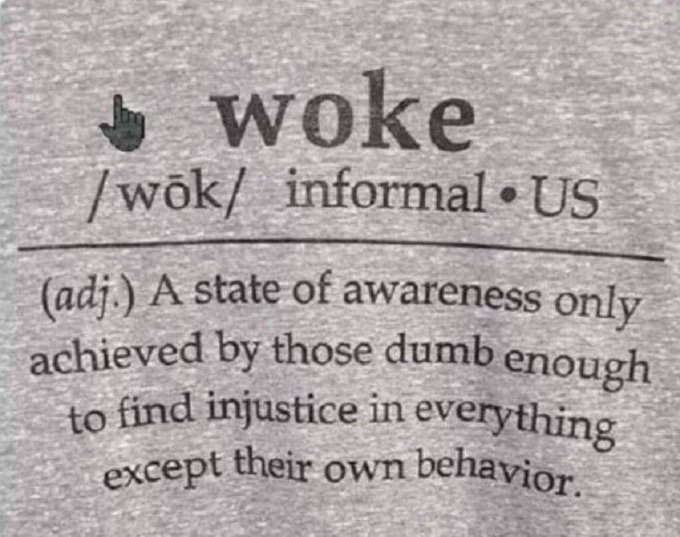
So, since we can’t have everyone come out as a winner, the only thing the woke reviewer has left is to hallucinate something color-coded and negative.  Thus they see a movie that tells us to reach across lines of age, culture, and race as just another “white savior” trope.  It is bizarre, such a narrow and distorted perspective, to entirely miss everything and then to insert what is not actually there.  Yes, Walt saves, but in the context of others saving him, and that’s not even the point.  The point of is that color (or age) doesn’t matter, finding our common ground and community does.

Gran Torino isn’t a perfect movie.  It may go a bit overboard with ethnic slurs at times.  But, then again, the comedic relief of the barber and Walt exchanging these insults as terms of endearment is also great commentary.  Why do we let words be “violence” when the same utterances can be laughed at in another context? It is because these words have the power we give them.  What this is suggesting is that we can go further when we reframe the conversation. 

The left wants to believe that our behavior is determined by what others have done to us—Eastwood says we can be free to live above their rules.

Politics may be all about power, in-group and out-group, but love overcomes all. 
Bullying, Discrimination, and the Alternative

Standard

The book of Ezra is difficult to read.  It ends with God’s prophet breaking up marriages between Israelite men and foreign women, leaving these wives abandoned, with their children, without once considering their welfare.  Not only is it cold and callused, but all this talk of the impurity of these people is also disturbingly like that of the ethnonationalist rhetoric leading to genocide in modern times.

My own mixed family has encountered some difficulties with those who put their own tribe first recently at work and school.  

My son, a very friendly and outgoing kid, has had some issues with a few bullies.  One of these adversaries slapped him hard on the side of his head at the bus stop.  Eventually, my son and this attacker had an all-out brawl on the sidewalk and my son says he got the upper hand before an adult intervened.  But now my son is afraid of being the victim of another surprise attack and feels very much alone against the group.  Which is the worst part, the one who is instigating the violence, telling other kids that my son insulted them or otherwise provoked, is himself a newly arrived racial minority—albeit from a much less friendly urban culture.

My wife recently started a new job at a local meat packing facility, staffed primarily by those from Spanish-speaking countries, and faces a similar uphill battle.  They preferred their own for promotions and sabotaged the work of another Filipino who took one of these better-paid positions.  The upper management is seemingly unaware of this dynamic, perhaps seeing all ethnic minorities as the same, but it is very real to those who directly encounter it and see the discrimination first-hand.  It really is not ‘people of color’ versus white as is the binary often presented.  No, there are local majorities, and also many rivalries that are within racial minorities.

Something my wife observed early on is that you need to know someone to get a job.  As it turns out, that is true, she had applied at her current employer and never heard from them in weeks.  Finally, she found out that a fellow Filipino worked there, reached out, got a recommendation, and a few days after this she was interviewed.  Her ethnic contingent, within the company, has increased to three as they also have convinced another to join them against Hispanics.

My ideal solution to my son’s situation would be for him to have an older sibling or cousin to help him.  It is just automatic that family will look out for family and yet this dynamic does not contradict the sad reality of the rest of this post.  There is a fine line between this preference for our own blood and racial discrimination and bullying behavior.  In fact, it is basically the same thing.  We prefer our genetic division and general ethnic category to others.  And this may be why the older Asian girl on the bus takes a little more interest in my son?  Instincts may cause her to treat him like she may a little brother.  At the very least his polite and respectful behavior is common across most Asian cultures.

Discrimination is a survival mechanism.  An individual who truly treated everyone exactly the same would soon find themselves to be depleted of resources.  Without a tribe or a gang, nobody is strong enough to stand up to the bullies in the real world.  You’re either in the dominant (physically superior and better organized) group or you’ll be harassed into serving it.  Even the legendary heroes of ancient times tended to have an army to back them up.  And outward appearance is simply the easiest way to align ourselves given that this was always a natural division of people across time.

This all starts at a very young age.  At only three months old babies will start to prefer faces of their own race to others.  This idea that children need to be taught to be racists has no basis in science.   Yes, conditioning and socialization will come into play, but this is only a sharping of inborn tendencies.  We will trust those who look like us over those who are foreigners.  This can metastasize into racist ideologies and the hatred of those ‘impure’ others. But it is not unnatural.

Inhuman Nature and the Alternative

Defenders of Biblical ethno-nationalism will say that the problem was more about these people being idol worshippers.  And yet the people of Israel certainly weren’t free of this and they themselves would frequently follow after these false gods.  Why weren’t these impurities abandoned?  Ezra gave them an opportunity to repent and remain part of the group despite this disobedience.  They, as the seed of Abraham, were given preferential treatment simply for their bloodline and not only as a result of their different behavior.

Being truly human is about going beyond the primal and transcending even ourselves.  No, we may never convince all to find a common bond beyond the lowest hanging fruit that is skin color or facial features.  Still, those I’ve been able to identify with the most, at least other than siblings or biological cousins, do not belong to my own race.

My wife and I started as geographically far apart as two people could possibly be on this planet.  Her people, Igorots, were very tribal and primitive up until a half-century ago, my own Swiss-German heritage may seem the opposite.  But her rural agrarian roots make her more similar to me than one may assume.  Her people are stoic, with a strong work ethic, and are very much like my own grandparents.  Our son, to whom I am a step-father, is completely different than me in terms of his athleticism compared to my own clumsiness. Still, we do share many interests and are peas in a pod.

Unnatural love is that which is extended to those who do not look like us.  It is to try to be fair to all people, of all races, rather than show favoritism.  It starts with simply not mistreating those who are different from us and trying to find the humanity in others.  It is to put our common values and aims at a higher level of importance than appearance, which is to say seeing the heart rather than outward appearance.

This is not ‘diversity is our strength’ or some kind of woke BS either. 

The left is as divisive as the right or worse.  They hold everyone to a different standard, based on their outward appearance, and call this inclusion.  But all they really do is replace a meritocracy with a victim hierarchy and then use past injustice as an excuse to do the same thing to others today.  Actual virtue or contribution does not matter in this ideological dogma, it is always about outward appearance.  The bully is of another color and the discrimination goes in a new direction, but it is just more division by the lowest common denominator.

Common values are our strength.  Working towards the same cultural and civilizational goals, rather than only what is good for our own ethnic identity group, is where diversity of abilities is useful.  Bullies cost us resources, discrimination for reasons other than good or behavior is unjust, and being totally colorblind may be impossible.  However, we can work to correct our own prejudice and towards a common goal.  It will take some faith and leading by example, it will a change of heart from the current paradigm:

“There is neither Jew nor Gentile, neither slave nor free, nor is there male and female, for you are all one in Christ Jesus.” (Galatians 3:28 NIV)

It is that, unity in Christ, or we revert back to the ethnic wars, cleansings, disregard, and other abuses of the Old Testament. We can live in a world where it is tribe against tribe, man against woman, and soon every man for themselves, or we can find ways to overcome our differences and see our better potential realized. We’ll never be completely fair, favoritism is natural, but we can aim for it. We don’t need to slaughter each other over our shades of difference.

An Affirmative Reaction

Standard

The Supreme Court has finally ruled against the practice of blatant racial discrimination in university admissions.  This, after Harvard and other schools, in pursuit of filling quotas, would find means to select against qualified Asians to meet an ideal for diversity based on skin color.

The Affirmation Fairy… 

African Americans, at least as a collective whole, have suffered disproportionately and this is a historical injustice that is not easily solved.  Much of our success later in life has to do with the homes and communities that we were born into.  The values we receive via our culture make a huge difference so far as outcomes.

I remember a viral video, a few years back, that lines up a bunch of young people on a grassy field.  The announcer asked various questions, such as “Take two steps forward if both of your parents are still married,” and those who could answer yes advanced.  The results of this survey were framed as ‘white privilege’ and yet none of the statements had anything to do with race.

Social inequality is certainly not a black-and-white issue, many children of European and Asian ancestry lacked a father in the home, worried about fitting in, did not feel safe at night in their neighborhood, worried about having enough to eat, and lacked access to private education or tutors.  I once begged my mother to take me out of public school after a rough patch.  I changed my hairstyle as a response to classmates who made note of my ‘Mennonite’ side part.  I decided to quit college rather than go deep into debt.  

Am I underprivileged?

Exactly how much am I disadvantaged as a learning-disabled child of two high school dropouts, with a father who had to be away all week to support our family?

There problem with all “affirmative action” is that it is a vast oversimplification of a very complex and multi-layered problem that may be more about culture than color.  We simply cannot account for every factor or rate every single subcategory of ethnicity and culture for statistical disadvantage.  For example, do we know the college graduation rates of Americans of German ancestry or Irish and Italian?  Are a proportional amount of these ethnic groups represented?

Furthermore, our own disadvantages can be advantages, in that they can provide u much-needed motivation.  Sure, having money may mean a trip to Harvard and a certain level of success.  However, the same is true of those who are tall and athletic.  Jeff Bezos, at 5′-7″ tall, may have benefitted from having some ‘short man syndrome’ or that extreme desire some have to compensate for the discrimination they faced for physical characteristics that were beyond their control.

Affirmative action is wrong in that there is no way to rank hardships.  It is wrong because it isn’t addressing the root causes of social inequalities, even as defined by the privilege police, in that we’re not talking about things like fatherless homes or inner-city violence and cultural forces that discourage the behaviors that aid in academic achievement.  You can’t wait until a person is eighteen, then wave a wand of university education and credentials as a solution to these underlying issues.

Asterisk Graduates…

The true underlying message of affirmative action was that minorities, specifically those of African descent, couldn’t be successful without the help of the government.  As liberal arts universities continue to seek to fulfill a narrow color-obsessed definition of diversity, using quotas rather than qualifications, they unintentionally degrade all of their minority graduates—even those equal in merit to the non-minority graduates.

The idea of a “diversity hire” or a person not equally qualified to others who applied and yet are given preference only because of their special category of race or gender, is a direct consequence of discriminatory affirmative action programs.  People know how to read between the lines (albeit often unfairly) and will diminish accomplishments that weren’t actually earned or can be perceived as being unearned.  It is why we do not see the work of those ‘born into wealth’ as being equal to that of those who are self-made.

A classic example of the patronizing white saviorism that is lurking behind divisive equity campaigns.

Just as a university degree would lose value if everyone were simply given a diploma for breathing, admitting some primarily on the basis of skin color devalues the effort even in the eyes of those who benefit.  It only serves to feed an idea of black inferiority, that they need a ‘white savior‘ to swoop in and rescue them from their plight, and is grossly unfair to all who were truly qualified on the basis of merit—but will still deal with the asterisk due to systemic compensatory color preferences or racially discriminatory quotas.

You cannot defeat unfair discrimination with a new kind of unfair discrimination.  It is not right that overqualified Asian students were being overlooked because of their race or on some kind of subjective basis that the worth of their own “lived experience” is less than a person of African origin.  Many Asians have overcome extreme hardship, faced intense pressure at home and hate crimes (often underreported for going against the typical racial narrative), yet won’t ever express this due to cultural reserve—why should they be punished for the success of their peers?

Two-tiered or lower standards for some will never achieve the goal of equal outcomes.

Favouritism Forbidden…

We’re living in a time of moral inversion, a time when those who lived a life of crime and abuse are treated as victims simply on the basis of their outward appearance.  It is as wrong as the favoritism of preferring the wealthy over the poor for the potential benefits:

Do not pervert justice; do not show partiality to the poor or favoritism to the great, but judge your neighbor fairly.

Leviticus 19:15 NIV

The problem was favoritism, preferring one party based on who they are (what they can provide for us) rather than the actual merit of the case.  Fairness of judgment, not equality of outcome, is the goal.

Christians were told not to judge by a person’s outward appearance:

My brothers and sisters, believers in our glorious Lord Jesus Christ must not show favoritism. Suppose a man comes into your meeting wearing a gold ring and fine clothes, and a poor man in filthy old clothes also comes in. If you show special attention to the man wearing fine clothes and say, “Here’s a good seat for you,” but say to the poor man, “You stand there” or “Sit on the floor by my feet,” have you not discriminated among yourselves and become judges with evil thoughts?

James 2:2-4 NIV

Many, trying to make a show of their own righteousness, take a Scripture like that above and turn it into a call for social justice or a special preference for the poor or otherwise disenfranchised.  However, this kind of reverse favoritism totally misses the point.  Trading one kind of perverse judgment for another is not a virtue.  No, it is a virtue signal and something people do for the social benefit of merely appearing to be an advocate for those recognized as being disadvantaged.  Even if sincere, this is a misguided approach that goes against the instruction not to show favoritism.

Affirmative action, in the end, is just a new form of white supremacy that is expressed as patronization.  It frames differences in outcomes solely in terms of identity groups while neglecting to correct the factors causing the inequal results or truly helping people to cross over these unhelpful, artificial, and arbitrary divisions.  Jesus taught more of a gracious meritocracy, where our behavior did matter and we would ultimately be judged on how we treat other people irrespective of their deserving or appearance.  In this regard, our equality comes only in repentance and our obedience to the law of Christ—not by force of courts or legislation.

We do not save the world by trying to force others into compliance or control outcomes. Rather we change ourselves and become an example of impartiality and love to all people. Honest and fair equal opportunity is having the same requirements for all and not preferences tailored to some at the expense of others. You cannot rob Peter to pay Paul. We shouldn’t love bomb some, even to make them feel better about themselves, by removing opportunities for those who truly have earned their place.