I have lost all of my heroes. The expression, “Never meet your heroes, because they’re sure to disappoint you,” describes the painful realization that those great people you imagined are not as special as you believed they were. It could be the letdown a friend had when he heard Matt Walsh speak. It could be a family that learned their eldest brother was cheating on his wife for many years and was not some image of virtue. For me it was a process and a very long grinding away of faith in these figures.
I was never one for human idols. I never put posters of celebrity faces on my bedroom wall and would never be as impressed with figures like Ravi Zacharias as some of my friends. It wasn’t a religious thing nor something just to be ornery. I simply didn’t have a feeling of awe about these personalities that were mid. The people I most admired tended to be local—my blue collar dad, my missionary cousin, or that perfect girl I would marry some day. But time has removed all from the pedestals.
Those women of my youth would end up as the cheating wife or more interested in status than my sincerity. My dad no longer looks like that man I remember who could carry me on his shoulders (with me hanging on for death life) up a silo ladder, and that zealousness of the ‘compassionate’ types tends to morph into a noxious ideological alignment that is really anything but they profess. They say that they want the Kingdom, but have replaced faith in God with fraudulent human institutions.
And I’m not just talking about the apologists for CAM in the wake of the Jeriah Mast and years of coverup aftermath. “Oh, but this is an organization that does such good!” What I’m talking about is something fully revealed since the DOGE ax has fallen on USAID. I grew up believing in the strict separation of church and state—that a colonial expansion of Christianity was tainted and this at completely odds with the teachings of Jesus about His kingdom not being of this world.
My views have certainly evolved—having left my religious cloister—but I’m still appalled by the thoughtlessness of people who I had once thought were smart and uncompromised.
Banality of Evil: When Ends Justify the Means
The Anabaptists, after the disaster of Münster, had committed to a quiet life of separation. It is why those in Old Order groups have refused participation in Social Security and other kinds of government benefits. Mutual aid should be voluntary and Christian charity is not obtained through coercion. Sure, the power of the state is alluring, that temptation (driven by our ego) to rule over others because we know what is best or they are undeserving of the resources they have—I have had many of those “if I were king” moments—but there is no stopping point when you fail to resist the siren song.
Left-wing politics always clothe themselves in a kind of compassion. Surely you will not oppose helping these children, right? And I am pragmatic to the extent I’m glad starving children are fed by any means. But opening the Pandora’s box of leftist means is always a slippery-slope to more use of state power and, inevitably, to leftist utopian cost-benefit analysis where everyone who opposes us is a literal Nazi and, therefore, we’re justified to stop them with violence. When coercion is allowed as a means of obtaining the ends we desire there is no stopping point.
The worst form of evil has good intentions. It is that of those who imagine themselves as the hero of their own narrative and thus allowed to bend the rules. This explains the extreme narcissism of Luigi Mangione who saw himself as a worthy judge of a father of two and a husband to a practicing physical therapist. There was no need for this leftist murderer to look inward, he had completely externalized evil and turned other men into caricature representatives of truly complex multi-faceted problems. When the ends can justify the means we’ll justify any means.
Pastor Jim Jones preaches his counterfeit Gospel before being abandoned by the US government and having to free his cult from bondage with some poison laced Kool-aid.
Seeing someone I thought was a Christian missionary lament how the United States had “abandoned” them was a reminder of how the great have fallen. There was not a shred of gratitude expressed towards the American taxpayers who financed them nor acknowledgement of the misappropriation of funds that has wearied voters to foreign aid. But more stunning to me was unholy alliance between this person of faith and agencies of US imperialism. Since when has the love of Jesus become an extension of the US regime abroad? Are they of the kingdom, as they proclaim, or agents of empire?
USAID, despite the name, is certainly not a charitable organization and was formed in 1961, at the height of the Cold War, with an aim of promoting the interests of the US political regime. That’s fine. But it has long ago gone off the rails even as far as what it was originally imagined. The Soviet Union had fallen and the Federal agency created to oppose it morphed from something most would support into a beacon of wokeness—pushing transgenderism and abortion.
Break the Yoke of Fraudulence
The reason why USAID is being dismantled is because we can’t sort the legitimate from illegitimate function of the agency. Sure, it may help people in need, but funding it also is enabling of evil and maintained through a system of coercion we call taxes. Anything good that it did can be done through other means. This functional fixedness of those who depend of government, especially on the part of those professing Christ, makes me wonder where their faith lies and what their actual mission is.
The merger of a Christian charitable cause with government doesn’t purify government—it taints the witness:
Do not be yoked together with unbelievers. For what do righteousness and wickedness have in common? Or what fellowship can light have with darkness? What harmony is there between Christ and Belial? Or what does a believer have in common with an unbeliever? What agreement is there between the temple of God and idols? For we are the temple of the living God. As God has said: “I will live with them and walk among them, and I will be their God, and they will be my people.” Therefore, “Come out from them and be separate, says the Lord. Touch no unclean thing, and I will receive you.” (2 Corinthians 6:14-17 NIV)
The accusations of “Christian nationalism” against those who want a government that performs basic functions were always just a smear by those in alliance with imperialism and Godless globalism. While I’m not a fan of God and country, at least the flag waving religious patriot knows there is a difference between their Christian mission and secular state. The left, by contrast, confuses these categories and would have social program replace true charity and community aid. In one case you have those who may tend to overreverence nation, but in the other there are those who truly represent empire and yet tell us they their only citizenship is the kingdom of heaven.
The truth is that the ‘Christian’ left is simply the left merely wearing the words of Christ as a disguise for ideological agenda. Those decrying the reduction of empire and return to responsible governance never said thank you to those funding their do-gooderism. It was, for them, all about holding those “chief seats in the synagogue” and their own glory as humanitarians. They may speak against Trump, but then have never uttered a word against the waste, fraud and abuse that has made these broad sweeping cuts popular with common people.
The true Christian spirit is that of a Federal employee who told me about the enormous amount of inefficiency and waste in his own agency and—while making no profession of faith—supports the effort of DOGE knowing it may impact his employment. That, to me, is someone who understands self-sacrifial love more than someone feeding the poor on another person’s dime and then going to social media to complain when their funds are cut. They’re grandstanding. While my Federal employee friend is a truly humble public servant who is grateful and not biting the hand that feeds him.
None of this to say this “abandoned” former hero of mine is a bad person. They clearly are using their abilities to help other people in desperate need. I applaud that. And yet their public statement betrays. There is an attitude or spirit there that is different from Christ. I would much rather they just be a secular humanist—subscribed to partisan leftist politics—and own it. They should just admit that they’ve abandoned faith in Jesus and are looking for a worldly system. Judas Iscariot is the patron saint of faithless social justice, guilt trips and envy—when you betray your calling just own it.
One of those fun things to do after church, as a child, when the adults had left the auditorium, was to go up and play preacher. We could mimic the motions of our elders in a convincing enough way to be funny and yet really had no idea what we were doing. And this reality would be quite obvious the moment we were asked a serious question.
Part of becoming an adult is the realization that many don’t really know what they are doing. Sure, some might enthusiastically perform their roles, and they have the necessary qualifications, but they either lack practical experience or simple aptitude. Not every doctor or engineer is equal, for example, some are more competent, and others—not so much. But none of these ‘professionals’ have an authority that should be unchallenged.
Reflecting on the priorities, and performative religion, I can’t help but come to the conclusion that some are really only concerned about looking the part and lack any real spiritual substance. It is disheartening when getting customs right is of greater importance than welcoming children. When leaders can answer on matters of trivia but are unable to offer any real wisdom or direction when it comes to the practical application of the clichés they preach, they’re phonies.
I’ve concluded that many participate in church as a sort of social club. And it goes all the way to the top. They have clout in the organization. They can wear the costumes and get the recognition that they so desperately need. But, in the end, they are empty vessels, a noisy gong or a clanging cymbal. It would be better to be a child going through the motions, in play, than to take yourself seriously and offend the little ones in the faith. Jesus wasn’t talking about pedophiles in Matthew 18:6.
Sitting in “The Well,” a coffee shop within the campus of Christ’s Wesleyan, a local mini mega-church. Why a coffee shop? It is pretty much the same reason a Target store has a Starbucks. It is a trendy and cool place to chill out as the service plays out on the big screen. The ‘church’ here is as American as a big box store. It is quite the production, with many programs tailored to children and all needs in the congregation. The wonderful thing is that you are free to participate to the level that you want. I’m not alone as I sip my caramel frappe while the administrative pastor goes over bulletin announcements and the highlights of Miami versus Kansas City play on the small screen.
The thing is, I was once threatened by this, the professional musicians mimicking rock stars on the stage. How could this really be called a church? And, as they currently ruin “How Great Thou Art” with some ridiculous contemporary rendition, I would definitely be tempted to pile on. There’s certainly a kind of consumerist hokeyness to the whole enterprise. I mean who looks at Walmart and an Alanis Morissette wannabe, then says, “Wow, this is the perfect model for the church!”? It’s all as cheap and throw away as the American culture in general. Nevertheless, this is the place most people are today and also as close to an actual community as many get in this age of suburban sprawl.
Yes, I’m a worship snob. To me, nothing can rival true Orthodox worship. Old hymns, like those in a traditional Protestant church, and the Psalms and Scripture of the liturgy feel much more meaningful. But is this really a substantive difference? Is the worship here more or less about our personal preference than it is there? Even Orthodoxy, with its simple images and chanted theology, was trying to make the message accessible to the people at the time. Would Jesus have filled a stadium had he had the opportunity to do so? Maybe so. Certainly, the church has always taken some of its form from the local culture. But then shouldn’t the church create the culture rather than the other way around?
The thing is the biggest problem that I have with all of this is that it exposes religion for what it is. The reason some of us need to stay traditional is because if worship is allowed to change then we start to question. Could it all be fake? We find our security keeping it all the same. If it has a timeless feel then we don’t need to struggle with the foundation of our faith. My cynicism takes over because this chintzy architecture exposes the framework that some of us would rather keep hidden under the ornate historical facade. It works like satire to undermine my confidence. Oh well, as the couple prepares in front of the lights and cameras in the lobby, like television reporters, I suppose it is time to wrap this blog up.
Postscript: I attended with my wife, out of convenience due to our busy afternoon, who prefers this style of service as it is similar to her church in the back in the Philippines. I was reflecting on the similarities of this to Orthodoxy, in that you have “coffee hour” after the Orthodox church. The biggest difference really is the size and organization. One models itself after the Byzantines and the other off a shopping mall or shopping plaza. And yet both require donations from viewers like you. What really is the big difference between dropping money in the offering plate and tapping your credit card to pay for the brew? The church calendar and the many programs to help make the Gospel accessible? Being in awe of the temple and being impressed by the light show? It all basically serves the same purpose.
There is a nation in the world that identifies as Israel. And, as we all know, if a person or group of people identify as something then this is what they are. If I say that I’m a ham sandwich you better believe it! Israel is what calls itself Israel.
That out the way, is that Israel the same as the Biblical Israel established by God?
If you were raised under Zionist teachings this isn’t even a question. Of course, it is! What else could it be? Biblical criteria or qualifications, what are those? I mean, how exciting would those end times novels be without our favorite backdrop??? And next, you’ll be telling us reality television is fake and that Caitlyn Jenner is a man and not a stunning and brave woman!?!
Isn’t everyone who identifies as something that thing?
However, for those slightly more literate, and not born yesterday, the question of what the Biblical Israel is and if the state by the same name is the same thing is important. For a Christian, up until the time of the reformation and a little after, this answer was quite clear and that is that Israel today is the remnant of the Jews who remained faithful—as well as those Gentiles converted.
From the perspective of New Testament writers Israel is the Church or the body of those who believe—a religious affiliation and not a particular race.
About Religion, Not Race…
While still a member of a Mennonite church, I was not happy to have my religious identity be classified as an ethnic group. In my own opinion I wasn’t born a Mennonite, it was my religion and something that I had to choose to participate in. And yet there was truth to the claim. There is was an ethnic component to being part of the group. We shared a culture, and have our own common surnames, and many converts don’t fit in well.
However, the most damning evidence, other than having unique genetic disorders, is the broad range of beliefs and practices under the Mennonite banner. Those calling their church Mennonite span from those who are progressive and ordaining lesbian pastors to those very traditional still using horses and buggies for transportation. So, when the only true common bond between all of these Mennonite groups is a sprinkling of Yoders, Gingrichs, Millers, or Barkmans, can it really be a religious belief system?
Rev Michelle Yoder, a charismatic lesbian pastor of the Mennonite faith, sitting comfortably with partner in her electric Mennonite buggy as she makes her way through Africa
Okay, like a Facebook relationship status, it’s complicated. People can and do convert to become Mennonite. And, surprisingly enough, since a few decades ago, an African version of the Mennonite denomination has been growing rapidly to the point there are now more Mennonites in Congo than in Canada. I mean, who knows if their doctrines or religious practices are anything that a North American conservative would recognize, nevertheless they do carry the name of Menno Simons in a direction he probably never imagined.
That’s one thing that the Orthodox generally put up front. If you are Orthodox in Greece or a Greek community, then you’re a Greek Orthodox. The liturgy and general practice are the same, established by canons, but there is also room for ethnic expression and use of the language common to the people. In the Arabic world, for example, they use “Allah” where we use the Roman pagan word ‘God’ and have been using it before Islam even existed as a religion. Anyhow, in Orthodoxy, unlike Mennonites, the identity is built from the substance of something established and a faith that is ancient.
Absurdly, when it comes to Judaism, we no longer care if they’re practicing or apostate, we slap that big ethnic label on them all and claim all of them have a claim to the land by their DNA. To us, they’re all the same. But that’s certainly not the case when it comes to Biblical Israel, not every part of the assembly was blessed, some were literally swallowed up by the earth, while others were put to death for disobedience, and the whole would end up in exile:
But if you or your descendants turn away from me and do not observe the commands and decrees I have given you and go off to serve other gods and worship them, then I will cut off Israel from the land I have given them and will reject this temple I have consecrated for my Name. Israel will then become a byword and an object of ridicule among all peoples. This temple will become a heap of rubble. All who pass by will be appalled and will scoff and say, ‘Why has the Lord done such a thing to this land and to this temple?’ People will answer, ‘Because they have forsaken the Lord their God, who brought their ancestors out of Egypt, and have embraced other gods, worshiping and serving them—that is why the Lord brought all this disaster on them.’
The children of Israel were not picked for their superior genetics. That’s not to say there aren’t very intelligent and extremely talented people of Jewish religious heritage. Abraham was picked for being a righteous man:
And the LORD said, Shall I hide from Abraham that thing which I do; seeing that Abraham shall surely become a great and mighty nation, and all the nations of the earth shall be blessed in him? For I know him, that he will command his children and his household after him, and they shall keep the way of the LORD, to do justice and judgment; that the LORD may bring upon Abraham that which he hath spoken of him.
Genesis 18:17-19 KJV
It was Abraham’s righteousness and how he would guide his children to “keep the way of the Lord,” that God picked him. God went on to set Israel aside through religion, not race, and those who did not keep the law would soon find themselves entirely cut off from the assembly of Israel. There was never a blessing for simply being a blood relative of Abraham. It was always conditioned on a faith that produced the work of obedience and this remains the case.
Those born to keep the law of Moses must recognize their Lord and Savior or they’re no more blessed than the Benjamites put to the sword for their evil:
The tribes of Israel sent messengers throughout the tribe of Benjamin, saying, “What about this awful crime that was committed among you? Now turn those wicked men of Gibeah over to us so that we may put them to death and purge the evil from Israel.” But the Benjamites would not listen to their fellow Israelites. […] The Lord defeated Benjamin before Israel, and on that day the Israelites struck down 25,100 Benjamites, all armed with swords. […] The men of Israel went back to Benjamin and put all the towns to the sword, including the animals and everything else they found. All the towns they came across they set on fire.
Judges 20:12-13, 35, 48 NIV
If this were a Covenant merely about blood or genetics, then the Benjaminites really got shafted. I mean, I’m not sure how anyone could construe being slaughtered wholesale as being a blessing or some special thing to be chosen for, “Congratulations, you’ve been selected to be purged!” So this idea that anyone will ever be saved simply for their chosen race is wrong and there is only one true religion which is founded in Abraham’s seed, through the law of Moses, and is fulfilled in Christ.
My favorite Jewish writer explains:
Those who want to impress people by means of the flesh are trying to compel you to be circumcised. The only reason they do this is to avoid being persecuted for the cross of Christ. Not even those who are circumcised keep the law, yet they want you to be circumcised that they may boast about your circumcision in the flesh. May I never boast except in the cross of our Lord Jesus Christ, through which the world has been crucified to me, and I to the world. Neither circumcision nor uncircumcision means anything; what counts is the new creation. Peace and mercy to all who follow this rule—to the Israel of God.
Galatians 6:12-16 NIV
After Christ, even the law of circumcision becomes secondary to what St Paul describes as being “the new creation.”
So it was the righteousness of Abraham, which was followed up with their being set aside by careful obedience to the law—which was the test of the Old Covenant—and finally, reconciliation through Christ that is salvation for all.
It was NEVER only about ethnicity or race. Modern descendants of the Jews must do the same as anyone else, repent and accept their King or perish. Repentance is the first step to salvation and that is what distinguishes true Israel from the counterfeit. The first followers of Jesus were Jewish. Christianity is the part of the assembly that remained faithful to their Lord while the others who rejected their rightful king are called anti-Christ:
Dear children, this is the last hour; and as you have heard that the antichrist is coming, even now many antichrists have come. This is how we know it is the last hour. They went out from us, but they did not really belong to us. For if they had belonged to us, they would have remained with us; but their going showed that none of them belonged to us. […] Who is the liar? It is whoever denies that Jesus is the Christ. Such a person is the antichrist—denying the Father and the Son. No one who denies the Son has the Father; whoever acknowledges the Son has the Father also.”
1 John 2:18-19 NIV
There are a great many who call themselves Christian today who have Scripture and yet no discernment whatsoever. You don’t even need to believe in Jesus to understand what is being said in the passage. Who is identified as the liar and anti-Christ? 1 John 2 very plainly tells us who: “It is whomever denies that Jesus is the Christ.” That is to say those unfaithful to the covenant made with Abraham through their rejection of the Son—God in the flesh.
To say that some can deny the Son and still have a Covenant with the Father? It is to basically throw out the entire Gospel of Jesus Christ. It is completely moronic and a sign that someone was never truly part of the assembly of God. If they truly belonged they would see their Lord as the fulfillment and not be so easily led astray. When Jesus says “Salvation is from the Jews” he is not talking about an ethnic group, he is talking about himself and how he is the Messiah that was promised through the faithful seed of Abraham.
Chosen by Christ
It is really a form of idolatry to hold a race or ethnicity up as chosen by God for no reason other than their genetics. That is not what the “Israel of God” ever was. The assembly (or ‘ekklesia’) was always about those who were faithful, a remnant of Abraham’s seed that included Gentile converts, and turning it into an ethno-nationalist state is a perversion of what the original covenant between God and Abraham actually entailed. A covenant is a two-edged sword, while it comes with blessings for those who obey there is also a list of curses for those who do not hold up their own end.
Jesus spoke to them again in parables, saying: “The kingdom of heaven is like a king who prepared a wedding banquet for his son. He sent his servants to those who had been invited to the banquet to tell them to come, but they refused to come. […] “But they paid no attention and went off—one to his field, another to his business. The rest seized his servants, mistreated them and killed them. The king was enraged. He sent his army and destroyed those murderers and burned their city. “Then he said to his servants, ‘The wedding banquet is ready, but those I invited did not deserve to come. So go to the street corners and invite to the banquet anyone you find.’ […] “For many are invited, but few are chosen.”
Matthew 22:1-3,5-9,14 NIV
Any guess which of those on the guest list killed the servants sent by the King?
The Biblical Israel, for those who believe in the Gospel of Jesus Christ, is that remnant of Jews who obey and follow after the Word of God incarnate. This is always how Israel worked. Some were pruned off the tree and others grafted in. There were never special exceptions made for anyone merely on the basis of ethnicity or race. The Church is the nation of those faith to the work of God that started with a Covenant with Abraham and needs no worldly state or rebuilt temple of stones. Christians are the chosen people.
This essay doesn’t mean that there should be no modern state of Israel or that the mistreatment of any group of people in the world who have rejected Jesus is ever acceptable. We just need to know there’s a big difference between “identifies as’ and what is actually being referred to in the Bible.
The title of this blog is a repeated line from a popular song, “Personal Jesus,” covered by Johnny Cash. According to the writer, this song is “about being a Jesus for someone else” and more specifically the mentoring role Elvis Presley had played in the life of his wife Priscilla. The power of these words is how they change meaning depending on the artist who sings them. When it was covered by Marilyn Manson they came off as being mocking and derisive.
My own thoughts, hearing the song, always brings me to the popular Evangelical phrase “accept Jesus as your personal Lord and Savior” and the theological implications. Unintentionally, it is a commentary on how the Christian religion has been reinvented in this consumerist and individualistic age. It is all about you. Jesus is now personal, like a boyfriend, and pretty much whatever you want him to be. There is no obligation to others, no real need for self-sacrificial love, or becoming part of the body of believers, only to hold a kind of positive sentiment in your heart.
And this is what I encountered in the church of my youth. Except for those few symbolic expressions of community and caring, carry-overs from those radical Anabaptist roots, it was pretty much everyone for themselves—which is how most of us preferred it to be. I mean, sure, we would tell the other guy we would be praying for him after ritual foot washing, some would still call you brother as if simply saying it made it true, but that was generally the extent of it. We all had our own families if there was ever a real need, the church projects were generally for the elderly and those few favorites.
Saved Together
Orthodoxy has a more robust view of Holy Communion and could, in theory, answer the overly independent view of salvation. At the very least, with our partaking of the body and blood together central to worship, this puts to rest this idea that the internet preacher is enough. Life in Christ is about His body and His physical presence, not only something we hold in our minds as true. It is not only our knowledge of Christ and mental assent but is also about making His example the basis of our actions—being an incarnation.
Faith is not about what we claim to believe, it is about how we act:
Carry each other’s burdens, and in this way you will fulfill the law of Christ. […] Do not be deceived: God cannot be mocked. A man reaps what he sows. Whoever sows to please their flesh, from the flesh will reap destruction; whoever sows to please the Spirit, from the Spirit will reap eternal life. Let us not become weary in doing good, for at the proper time we will reap a harvest if we do not give up. Therefore, as we have opportunity, let us do good to all people, especially to those who belong to the family of believers.
(Galatians 6:2, 7-10 NIV)
Carrying of burdens is about more than mere “thoughts and prayers” or those mostly empty expressions. No, it is all about providing real relief to others, being that ‘neighbor’ like the good Samaritan or the true advocate like St. Paul was for Onesimus. It is not enough to only say “Go in peace; keep warm and well fed,” without ever helping others with their actual needs as we read in James 2:16. It is our job to be our brother’s keeper, that is to look after their needs like we would our own or that of a family member. This is what a community of faith is supposed to be about and also key to our salvation.
“If anyone falls, he falls alone. But nobody is saved alone.”
—Alexei Khomiakov
For some, their salvation comes from the hand we offer. For others, their salvation comes from offering that hand. The early church had this saying, “unus Christianus, nullus Christianus.” That is to say that one Christian is no Christian. This is what it means to follow Christ, this is what being in Communion is really about. Sure the ritual and religious practice matters. But the true substance in the blood and the flesh we are to consume is in how we become the hands and feet of Jesus. To do otherwise, to only partake without acting in genuine love is to drink unworthily and bring damnation upon ourselves:
In the first place, I hear that when you come together as a church, there are divisions among you, and to some extent I believe it. No doubt there have to be differences among you to show which of you have God’s approval. So then, when you come together, it is not the Lord’s Supper you eat, for when you are eating, some of you go ahead with your own private suppers. As a result, one person remains hungry and another gets drunk. […] So then, whoever eats the bread or drinks the cup of the Lord in an unworthy manner will be guilty of sinning against the body and blood of the Lord.
(1 Corinthians 11:18-21, 27 NIV)
Stay In Your Lane
Sadly, within Orthodoxy, for some, it is about lighting a candle, making a sign of the cross, paying their membership dues (tithes), and regular church attendance. In other words, all about going through the motions. They don’t want to be bothered by real relationships or overcoming differences—let alone be concerned with the salvation of their fellow parishioners.
Sheesh, let the priest do his job! Mind your own business! Don’t you have enough sins of your own to attend to?
I’ve even heard clergy give advice like “stay in your lane” as if there’s no difference between confrontation of lingering issues and petty fault-finding…
I’ll back up a second and agree fully that we should be “work[ing] out [our] salvation with fear and trembling” (Phil 2:13), which does imply some introspection and that we start first with the beam in our own eye. But, that said, even this admonition is addressed to “my dear friends” or the church body and not as a personal note. So even this could be used to further the view of salvation that is about collective effort and not some sort of personal experience we have while sitting in the pew deliberately not noticing elephants in the room as our penance.
There are some who do not seem to realize that their mother’s scold, “If you don’t have anything nice to say don’t say anything at all,” isn’t written in Scripture, but this is:
“‘Do not do anything that endangers your neighbor’s life. I am the Lord.“ ‘Do not hate a fellow Israelite in your heart. Rebuke your neighbor frankly so you will not share in their guilt. “ ‘Do not seek revenge or bear a grudge against anyone among your people, but love your neighbor as yourself. I am the Lord.
(Leviticus 19:16b-18 NIV)
Speaking the truth is not always pleasant to the ears of those hearing it and yet it is part of what love does. It is not that we should never confront, rather it is the SPIRIT of how we approach these sins or shortcomings of others. So, sure, staying in our lane is good, but that doesn’t mean we should never alert someone driving with their headlights off at night since we have also done the same in the past. It may feel like ‘keeping the peace’ to sweep everything under the rug or let the ‘problem’ go away by ignoring it—but it’s also an unloving attitude.
“Church is not a social club…”
I’ve now encountered it in two very different religious traditions. When that cry is made for real brotherhood, deeper connections or genuine relationships are met with the strong suggestion that you’re not spiritual enough and a reminder that church is for worshipping God and superficial interactions. If you expect a little more then you’re turning it into a social club. This is an inversion. It is a psychological projection and a garbage excuse. It’s telling a person seeking medical care that hospitals are about the awe of the building and reverence for the institution, that they should go to the dance club if they so desperately want to be touched by someone.
These phony physicians only add insult to injury, they are exactly the type of religious authorities that Jesus rebuked:
“The teachers of the law and the Pharisees sit in Moses’ seat. So you must be careful to do everything they tell you. But do not do what they do, for they do not practice what they preach. They tie up heavy, cumbersome loads and put them on other people’s shoulders, but they themselves are not willing to lift a finger to move them.
(Matthew 23:2-4 NIV)
For them, it is all about the right image, the dress standards, and keeping their perfect attendance record. Basically, they check all of the right boxes. Performative religion. And who knows? Maybe their Bible study and prayers, ten hours a day, really does it for them? Who am I to say that their mission to Uganda was entirely a self-indulgent display of privilege and a waste of resources? But I’ll also say that those who travel the world while doing the bare minimum for those whom God put right at their own doorstep are condemned as hypocrites by Jesus.
The church is established by the same God who told us that it is not good for man to be alone. Good for you if you need nobody in your life. Jesus is your homeboy? But most of us need those meaningful and sometimes messy interactions with other humans. That is what family is. That’s what hospitals are built to facilitate. And that is what a church is literally supposed to be. If you don’t need a doctor maybe you are the doctor and your salvation requires you to show up to attend to those sick and suffering? Why call would we call each other brothers and sisters in Christ if this weren’t the case? If the church isn’t at all about social interactions—why do we waste the gas?
Those who say that church isn’t a social club are right. It is also not an art museum where pretentious people go to engage politely and then share a light snack. It should be much more than that. It should be a refuge we can flee, the juniper tree where God sends angels to comfort and attend to the physical needs of Elijah, a garden of Gethsemane where the disciples are not sleeping in hours of need, it should be intimate and practical, a hospital or home. A place to be ministered to and minister to each other. It’s both where we share our moments of happiness and also mourn with those who mourn.
Church is a family or it is just fake.
Post Script: Those who personalize Jesus tend to depersonalize their religion. Protestant or Orthodox, it doesn’t matter, they want to claim their great devotion with their embrace of abstraction and their own prescribed practices, but seem to forget that pure religion is about the human touch (James 1:27) and what they do materially for others is how to show their love for Jesus. Our salvation does not come apart from the body of Christ. Communion isn’t only what we partake of on a Sunday morning, it is what we participate in as far as loving others and, in particular, the community of believers. You cannot stay in your lane, avoiding people in a pretense of righteousness, and also love God.
There is an intermediate step between our own lonely individualism and some sort of wonky religious or hippie flower child 1960s-style communalism. There is plenty of room in between the extremes.
My thoughts about this ideal were sparked again by my interactions with a young woman, on the anxious left-wing activist side of things, thinking to declare as a philosophy major, who wanted me to check out some websites about cooperatives.
While I do not embrace the full package of left-wing ideology, I do see the huge deficit of viable communities and the economic forces that are behind this erosion. We have traded the mom-and-pop stores downtown for the corporately owned big box.
This is as unhealthy an arrangement as the mass-produced junk food many Americans choose. And yet, if you question this regime of suburban sprawl and consumerism, you’ll get a response similar to the dialogue, in the movie Idiocracy, when Joe suggests using water rather than Brawndo, an energy drink, for irrigating the crops:
“Community, like a cult or Jonestown?”
If you bring up the word commune there will probably be a strong visceral reaction on the part of conservatives. There is this delusion of independence, a crucial component of the American cultural mythos, which is what drives many to trade community (and potential for their greater success) for a payment plan.
Whereas a generation or two ago, there was the church and social clubs to provide some level of mutual support, now we have a class of some who make it and others who are an unforeseen circumstance and paycheck away from dependence on welfare programs. We have traded flesh and blood relationship for faceless state or corporate bureaucracy and a truckload of paperwork.
The current system is so woefully inefficient that we’re probably working twice as hard for half the rewards. Governments, banks, and big corporations are profiting massively by keeping us divided up and dependent on their systems. Many believe that they are free because they can watch smut or own a deadly weapon, but they’re really slaves to debt and tossed about by entities that have no actual concern for their well-being or wellness.
But, despite their slavery to this system, the moment you suggest that they consider an alternative, working together with those of like-mind towards a common goal, there is strong resistance. I mean, how dare you suggest that they give up their own property (that the bank owns anyway) or learn how to share anything?
Reducing the friction of commerce…
The reality is, unless you live alone on your Alaskan homestead, you are dependent on other people. And my thought here is that we should be more intentional about this and choose what makes the most sense.
The idea of a cooperative is basically to remove the dead weight of a business and distribute profits more evenly amongst the employed. It means that all involved in the enterprise share in both the risks and the rewards. Instead of paying interest to banks or making dozens of taxed transactions, all of this cost can be eliminated. What it all means, in the end, is working less for more in return.
For example, instead of everyone buying their own lawn mower or hiring someone, why not have one person do this for the community and earn credits?
My own vision is a mix of both cooperation and autonomy, which is negotiated between the members and the group. There would not be everyone living in some kind of compound or anything like that, everyone could have their own residence. There would simply be more shared space for all, fewer redundancies, and potentially more access to costly tools or equipment.
The economics of this kind of cooperative arrangement is so superior that once it was started it would vastly outpace those trying to do it on their own through the currently conventional means. Ever wonder why so many motels and gas stations are owned by immigrants? It is because they are financed through their ethnic communities and have eliminated the friction of interest.
Americans, by contrast, always seem to see everything as a competition. They’ll buy the biggest most ridiculous SUV, they truly can’t afford, to keep up with the Joneses and the only real winner is the financer of this silly display of excess. We would rather sacrifice our time so that the boss can get his hunting land or an executive makes their bonus than give up this faux image of self-reliance and work together.
Finding our commonality…
A successful cooperative arrangement does require some sort of connection or common purpose to unite the individuals. In the early Church, their having “all things in common” was a byproduct of faith and a commitment to Christ. The ideological left, on the other hand, begins with a different moral premise and that is the abolition of private property or Capital. In both cases, there is a shared identity that is the glue.
That is the biggest roadblock in the rapidly atomizing West, where Protestantism has led to a proliferation of denominations with competing claims and now the dissolution of a shared or universal purpose. Everything is about us now, about our own opinions and wants, to the point that many marriages end in a protest called divorce. We can’t sacrifice anything in the present, even if our greater integration as a whole would be better for us in the end.
But there is a huge potential upside. If we could find a way to look past ourselves for a moment and understand how cooperation is a means to reduce friction or cost. However, the real need is for more people to let go of this delusion that they are better off on their own and that security comes only through money in their bank account. The absurd part is that we already do lend our time to many people, for a wage, their services, or whatever, and would do better to choose better partners.
If there was a way to make cooperative arrangements more palatable I would. The real problem is that anytime we gain the slightest advantage over our neighbors we would rather keep it all for ourselves. Many cannot see past this pointless competition and appreciate the great gain of voluntarily distributing costs or sharing responsibilities. Perhaps this is why we can’t have nice things? I know it is why so many are lonely and discontent. They are looking in the wrong direction for fulfillment.
There are always tradeoffs for every arrangement. And yet there are also things that we are biologically wired for and denying them is to our detriment. We are social creatures. We have a neurological reward system built around having positive meaningful interactions with other people. The economic benefits of greater cooperation, at a local level, would be enormous and the social benefits even greater.
The US Constitution is a prime example of how the same words can be interpreted in many different ways. Sometimes this is just a way to get around the clear meaning and other times it is simply a problem with language. There are many cases, with this founding document of a nation, that it would be nice if we could have some further explanation. Sure, you can read some of what the writers and signers said elsewhere in order to try to fill in the blanks. But, in the end, without them here, we don’t truly know how they would respond to the demands of our modern economy, technology, and needs.
This only gets murkier when dealing with Scriptures written two millennia ago. Yes, every Bible-thumper and their brother thinks they have a clear understanding while everyone else is just making things more difficult than they really should be. I mean, “The Bible Says It, I Believe It, That Settles It,” right? And yet, if I were to answer that with, “do you bury your poo outside of your property, in a hole you dug with a trowel, as instructed in Deuteronomy?” I’m guessing that suddenly what the Bible says would become a bit less settled as those using this phrase made some sort of theological exemption and that’s okay, there are things in Scripture that aren’t perfectly clear without some further explanation.
But what is more intriguing to me is what is completely left out that would be so obvious to early Christians that it wouldn’t even be worth mentioning in the letters. As the saying goes, more is caught than taught, and sometimes the most important things never do get written out. In other words, if we were writing instructions on how to drive a car, we would probably assume that the person knows how to get into the vehicle or sit facing forward. However, from the Bible, do we know how the early church structured their services or generally lived? Would they even recognize us as Christians? The reality is that there are gaps that many today just fill in with assumptions and it is usually these different extra-Biblical assumptions that lead to many divisions.
In the Protestant world “extra-Biblical” is practically a curse word. How dare you ever have a rule, custom, or tradition that goes beyond the written text! That’s false religion or something! This is why Orthodoxy is often dismissed by those seeking to strip down Christianity to the Biblical bare bones. It is a special kind of ignorance.
A good illustration? In World War II there was a study of returning aircraft and the damage that they had to determine how to better prevent future losses. The Center for Naval Analyses concluded from this that the aircraft needed more protection in these most heavily damaged areas. However, Abraham Wald, a Hungarian mathematician, begged to differ. He reasoned that the aircraft returning had survived and those that had been hit in more critical areas did not. In other words, what needed to be done was the very opposite of what the others had concluded. They needed to better armor those areas that weren’t damaged in the returning aircraft. This tendency to misinterpret evidence, based on what we have rather than what is missing, is called “survivorship bias” and can lead to woefully incorrect ideas.
This is what the Bible says about what is written versus what is not:
So then, brothers and sisters, stand firm and hold fast to the teachings we passed on to you, whether by word of mouth or by letter.
(2 Thessalonians 2 NIV)
The “letter” is what we have received in Scripture. These are the books of the Bible, canonized by the Church and believed to be truly inspired writing for this reason. But the “word of mouth” is where things are more interesting. What of the Apostle’s teaching (or tradition according to the KJV) is not written in their letters and how do we know what is missing?
The Orthodox, of course, say that this is the tradition of the Church and tie their legitimacy to the fact that there is a line of secession going all the way back to the Apostles, by the laying of hands and ordinations, and this only makes sense. The Church (note, not an individual or even the institutions) is what keeps the spoken teachings of the Apostles preserved like it did the Bible, and also serves to provide the correct understanding of Scripture. Because we should know, as Peter warned, that the Bible does not provide its own interpretation: “[Paul’s] letters contain some things that are hard to understand, which ignorant and unstable people distort, as they do the other Scriptures, to their own destruction.” (2 Peter 3:16 NIV)
However, it isn’t just the non-Orthodox that fall victim to their own bias. There are parts of the Church tradition, whether spoken or written, that slip through the cracks. We all have blind spots. We all have our distortions of concepts and errant assumptions. The difference is, that the Orthodox, if they are truly seeking to be Orthodox, are at least making some effort to incorporate the sayings of the Fathers and have a grasp of those “word of mouth” traditions not necessarily ever expressed in Scripture. In doing this, in understanding how Christianity was practiced by the faithful throughout the centuries, it becomes that much harder to distort the words of the Bible.
In the end, Christianity is about Communion, not easy textbook answers, not following an instruction manual, not standing alone, but real relationships. The more important being that between ourselves and God. However, a relationship with God implies love for our brothers and sisters. It means we are rubbing elbows with other Christians and the Saints. As Fr. Anthony put it, in his fatherly council to me, “there are no Lone Rangers” in Christianity, we can’t put the words of Jesus to practice in solitude or isolation. It’s not in removing ourselves that we are purified, it is in our getting messy and involved in the life of the Church of imperfect people (like us) that we are changed. That is taking up our cross. That is the hard part of Christianity we would rather run from.
Learning never stops in relationships. Christ Jesus did not come so we could house church with the few other perfect people who have the proper understanding of a book according to us. Instead, the very act of Incarnation was God choosing to be around those undeserving and impure, to identify with them and their suffering, which should be the impulse of those filled with the Holy Spirit. It is the Spirit, St Paul tells us, that will bring “unity” and a “bond of peace” which should span centuries or the current divisions because: “There is one body and one Spirit, just as you were called to one hope when you were called; one Lord, one faith, one baptism; one God and Father of all, who is over all and through all and in all.” (Ephesians 4:4-6 NIV)
There was this elegant old structure, in the countryside, a tall pointy steeple beckoning the passers-by to gaze upward at the blue skies. It had been around at least a century, the doors still open to all.
One day a tradesman moved into this rural community and admired this building. He loved the sturdy timbers holding beneath the slightly weathered clapboard siding, and then that ever-reliable stone foundation keeping it all square.
But one concern, as he did his inspection, was the missing roof shingles. The wind and storms having taken their toll. It would be a shame, he thought, to have the contents all get ruined and eventually see the church itself destroyed by this neglect.
So he thought to get involved. He showed up one Sunday morning and met the pastor and congregation. Good people.
The building inside was as beautiful as it was outwardly. Fine craftsmanship at a level rare to non-existent anymore. The stained glass in the sanctuary gave an ethereal feel and the beauty of the whole experience was breathtaking at times. And yet, he could see the signs of a leaking roof, the water spots in the ceiling, and his concerns grew.
It was a few months later, after becoming a regular and joining the church, that there was a members’ meeting. Taking the chance to raise the issue of the roof, he stood up, described the problem, and offered to help coordinate the repairs.
There was a hush that came over the room. An elder thanked him kindly for the suggestion and yet seemed slightly bothered.
A week or two later the minister, a stately yet friendly man, took the tradesman aside, putting an arm on his shoulder, “Hey, brother, we’re glad you come here. We love that you participate in all we do.” He paused, trying to search for the right words. “There has been some concern, umm or rather, I appreciate your perspective, as a man who works with his hands and I don’t want to discourage that.” Stopping again. “However, the church is a spiritual place and, no offense, I know you meant well, but you need to have more faith. If you see a problem, rather than be consumed by doubt or despair, looking for man-made solutions, pray about it, okay?”
Now a bit stunned, but still respectful, the tradesman did not argue. He instead agreed to pray and did.
More time passed, things continued as usual, the roof continuing its deterioration, until one day the congregation was having a service and a chunk of the ceiling fell and squarely on the tradesman’s head. Adding insult to the injury, as he began to brush the debris from his suit jacket, a stream of water from the rain shower outside completely drenched him.
He was now upset. Enough is enough! We really need to do something about the roof, he decided, and approach the pastor again, after some small talk he announced, “You saw what happened today, right?” And then continued, “I know a Christian must remain committed to prayer and that God is always in control, but we have the means to fix that roof and should!”
Disappointment swept over the pastor’s face as he considered this statement. But, rather than lash out, he tried to be diplomatic, “I can hear your frustration. And nobody likes to be humiliated.” Smiling warmly to lighten the mood before getting serious, “Have you ever considered that the roof isn’t the real issue here? I noticed you only wear a suit coat, it is okay and yet a bit underdressed for services. Have you considered wearing a tie?”
The tradesman wore a tie from then on. And, after a few more awkward encounters, where he was eventually forbidden from trying to throw a tarp over the growing holes and told to tithe more instead, he would do his best to keep his exasperation from showing. It was none of his business, he was told, that we come to church to worship God together and prayer would provide all of our needs.
Eventually, the congregation of country folk would be left standing on top of the rubble. They would spend the winters shivering in the cold and wind-driven snow, summers in the blazing heat, wondering why God had taken their wonderful building, yet serenely sure this was just a test of their faith and devotion to Providence.
Want to say “does not respond well to authority” without saying it? Just post a meme proclaiming yourself as a lion and decrying others as sheeple. Of course, the popular origin of this lion meme was a Trump retweet of the quote, “It is better to live a day as a lion than 100 years as a sheep.” The irony being that these ‘lions’ who have used the phrase since are still following someone’s lead.
The reality is, even in this current age of individualism, we are social creatures and are more often responding to the pressure of the crowd than thinking for ourselves. The ideas that motivate us, the narratives and interpretive overlays that we embrace, these aren’t things that we created in our own minds. But rather we have inherited many base assumptions from our homes or communities and will continue to be influenced our entire life.
And, speaking of influence, there was a review of Downfall, a movie about the last days of Adolf Hitler, that got me thinking about leadership. For obvious reasons, this is viewed from a negative light in regard to the Nazi dictator. The faith of the German people in their government is what enabled the atrocities of the regime. Viewing a flawed human being (or any collection of human authorities) as God is something very dangerous.
I’ve written frequently warning against the mob spirit and peer pressure. We should learn how to think for ourselves, make our own decisions, or we may be swept up in the latest propaganda campaign and used for immoral ends.
However, I also had to think that this unique ability of humans to organize around one charismatic personality is also the strength of our species and has given us a great competitive advantage over the strongest individuals. Our hunter-gather ancestors were only able to take down larger animals for food or to protect the themselves from deadly predators by working together. This took leadership, it required someone to be the point man of the group or coordinator of the collective effort.
So, sure, as the video says, “those full of doubts are desperate to follow those who are sure of themselves,” and “view them as shortcuts to prosperity,” yet this urge to fall in behind the Alpha is not always such a bad thing and is actually key to our success in building civilizations. A great leader can empower and get more from the group than the sum of the individual parts. I see this in John, the co-owner and true boss man at my company, without his infectious ambition and decisive confidence I can’t see us being near where we are.
The truth is that there are extraordinary men, there are those who do better embody the collective hopes of their people and thus are granted a right to rule. One only needs to consider the story of David, a lowly shepherd boy, who faced down the giant Goliath and through his courage inspired the armies of Israel to defeat the Philistines. Of course, this is not only a role for men either, the confidence of Deborah (Judges 4) or faithful example of Joan of Arc is what led to the decisive victories of their people over occupiers and oppressors.
People Need Leadership, Not Lords
We can talk about the ideal and imagine a world where everyone is completely able to take initiative, where order is always 100% voluntary and there is no need of authority or a leadership position. That is the design of the Israelite tribes before they demanded a king to rule over them. But even then, in that sort of anarchist system, there were judges that were appointed by Moses to arbitrate disputes and Moses, for his Divine call and standing up to Pharaoh, was the defacto leader of his people.
Every human is flawed. Moses fled into the wilderness after killing an Egyptian and, despite hearing from God, needed Aaron to speak for him. King David, the great warrior leader he was, had a loyal companion, Uriah sent to die in battle in order to cover for his adultery with Bathsheba. The temptation of every person given power over other people is to use it to their own personal advantage rather than for the good of the group. That is why the children of Israel were given this stern warning before appointing a ruler:
Samuel told all the words of the Lord to the people who were asking him for a king. He said, “This is what the king who will reign over you will claim as his rights: He will take your sons and make them serve with his chariots and horses, and they will run in front of his chariots. Some he will assign to be commanders of thousands and commanders of fifties, and others to plow his ground and reap his harvest, and still others to make weapons of war and equipment for his chariots. He will take your daughters to be perfumers and cooks and bakers. He will take the best of your fields and vineyards and olive groves and give them to his attendants. He will take a tenth of your grain and of your vintage and give it to his officials and attendants. Your male and female servants and the best of your cattle and donkeys he will take for his own use. He will take a tenth of your flocks, and you yourselves will become his slaves. When that day comes, you will cry out for relief from the king you have chosen, but the Lord will not answer you in that day.” But the people refused to listen to Samuel. “No!” they said. “We want a king over us. Then we will be like all the other nations, with a king to lead us and to go out before us and fight our battles.”
(1 Samuel 8:10-20 NIV)
Sounds familiar, doesn’t it?
We don’t have kings today, but we do have an all-powerful political class, that is mostly exempted from the laws they apply to us, who never met a new tax they do not like, and always willing to send our children to die to defend their own bloated ego or for the financial gain of the ruling class. Sure, call it ‘democracy’ as you vote for Tweedledee or Tweedledumb, but neither team red nor team blue actually represent you. We’re ruled not even by these visibly elected, but by special interests and those behind the scenes who pull the purse strings.
And therein lies the difference between the good leaders and the bad. The shepherd leader fills the role for the good of the flock, even willing to sacrifice themselves for the life of their sheep. The corrupt leader uses their power and authority as a means to dominate those who are under them. A good leader serves as an example, they encourage and try to get the best out of those looking to them for guidance. The evil politician, on the other hand, delights in creating dependency and keeping others subject to their whims.
In the end, no man is actually worthy to lead of their own authority and it is only through understanding our own place before God, that we ourselves are not God, that we can ever fill the role. Self-belief and narcissism, with a little psychopathy, is often what will get a person to the top spot. But humility and faith, valuing all individuals enough to go find the one lost sheep, that is the mark of a Godly leader. The only person fit to lead is one who is willing to submit to those who have authority over them.
The delusion of the Protestant independent spirit is that every man (or woman) and their Bible becomes their own king. This “you’re not the boss of me” attitude, in response to flawed leadership or simply as rebellion, is precisely why the church is becoming increasingly impotent. The Church, at least the one that Christ founded, had those given the authority to bind and loose, a council to decide important matters and those who acted as fathers. This hierarchy was never comprised of those faultless. No, what made them worthy, and the only thing that makes any of us worthy, is being clothed in the righteousness of the one Great Shepherd.
We need sheep who know they are sheep and shepherds, appointed to feed the flocks, like Peter:
When they had finished eating, Jesus said to Simon Peter, “Simon son of John, do you love me more than these?” “Yes, Lord,” he said, “you know that I love you.” Jesus said, “Feed my lambs.” Again Jesus said, “Simon son of John, do you love me?” He answered, “Yes, Lord, you know that I love you.” Jesus said, “Take care of my sheep.” The third time he said to him, “Simon son of John, do you love me?” Peter was hurt because Jesus asked him the third time, “Do you love me?” He said, “Lord, you know all things; you know that I love you.” Jesus said, “Feed my sheep.
(John 21:15-17 NIV)
In my own spiritual journey, after my own Bible-based authority failed me, God provided me with a man who would end his emails with the phrase “your unworthy priest” and is truly that. Fr Anthony is a very well-educated man, a college professor, and one who could easily flaunt his credentials as a means to humiliate some like me. But what has given him true authority, in my eyes, is how he humbly serves as a true example of Christian leadership.
He is a shepherd and the Church really needs more who are like him.
Conflict is everywhere, anywhere there are two are more gathered there is potential for conflict. We currently watch the lingering hostilities between the West and Russia unfold into open war in Ukraine, between people of a common Kyivan Rus’ religious and cultural heritage. The reasons are complex (watch this video for a deeper dive) and beyond the scope here.
Nevertheless, the same things that cause wars between nations also lead to schism and splits in the church, and despite the exhortation of St. Paul to make every effort to maintain unity:
Be completely humble and gentle; be patient, bearing with one another in love. Make every effort to keep the unity of the Spirit through the bond of peace. There is one body and one Spirit, just as you were called to one hope when you were called; one Lord, one faith, one baptism; one God and Father of all, who is over all and through all and in all.
(Ephesians 4:2-4 NIV)
If we would ask most who profess Christ, they would probably agree that the Church should be united, there should not be rifts or denominations, yet that’s probably where the agreement would end. The body of believers has split hundreds of different ways, over matters of theology, history, structure, worship style, politics, or personalities.
But, before we get to the broader conflicts and division within Christianity, I’ll confess that I’m currently in my own conflict. This is why I am both the right and the wrong person to write about this topic. I am the wrong person because the impasse has not been resolved yet despite a small gesture on the part of the other person. My anger has exasperated the issue. And yet I’m also still wanting to find peace with this other person and honest resolution.
Conflict is Nothing New or Unexpected
If an enemy were insulting me, I could endure it; if a foe were rising against me, I could hide. But it is you, a man like myself, my companion, my close friend, with whom I once enjoyed sweet fellowship at the house of God, as we walked about among the worshipers.
(Psalms 55:12-14 NIV)
I believe we can all identify with the text above. We expect an enemy to do us harm and will find ways to maintain distance. However, when someone that we trust acts in a deliberately hurtful way, exploiting our vulnerabilities, the betrayal of a friend is the worst kind of pain. It is hard to come back to the table when someone professing Christ, who worshipped with us, seemingly close in spirit, totally destroys our trust.
That said, restoration of what is broken is part and parcel of Christianity. Indeed, we’re told that if we can’t forgive a person who owes us, then we will not be forgiven by God. (Matthew 6:4,5) This is something that Jesus expounded on in the parable of the unforgiving servant, a man who begs for mercy for a vast sum of money he owed, is forgiven, and then turns around to demand from a fellow servant.
And yet, no teaching of Jesus should be taken out of context either. Jesus was not, I repeat, was not telling us to sweep sin under a rug or not hold people accountable for their abuses. This certainly was not unilateral and unconditional forgiveness without repentance:
“If your brother or sister sins, go and point out their fault, just between the two of you. If they listen to you, you have won them over. But if they will not listen, take one or two others along, so that ‘every matter may be established by the testimony of two or three witnesses.’ If they still refuse to listen, tell it to the church; and if they refuse to listen even to the church, treat them as you would a pagan or a tax collector. (Matthew 18:15-17 NIV)
So many conflicts within the Church could be solved if we would go directly to the other person who had caused our offense. This process above is prescriptive and may keep a mere misunderstanding from blowing up into something that leads to separation or divides a congregation. First, before consulting anyone else, we should try to settle the issue amongst ourselves. Then, if that doesn’t work, it is time to seek the counsel of others and confront together. And, if that fails, if they refuse collective council, we should part ways.
It is similar to this explicit command from St. Paul:
I wrote to you in my letter not to associate with sexually immoral people—not at all meaning the people of this world who are immoral, or the greedy and swindlers, or idolaters. In that case you would have to leave this world. But now I am writing to you that you must not associate with anyone who claims to be a brother or sister but is sexually immoral or greedy, an idolater or slanderer, a drunkard or swindler. Do not even eat with such people. What business is it of mine to judge those outside the church? Are you not to judge those inside? God will judge those outside. “Expel the wicked person from among you.”
(1 Corinthians 5:9-13 NIV)
Forgiveness is not the same thing as tolerance for unrepentant sin. The church cannot be a hospital if we let the infection of sin to spread, like a superbug, untreated and ignored. The antiseptic is to confront the issue, to give opportunity for confession and repentance to begin the healing process. But, if the limb refuses treatment, then (as an absolute last resort) it must be amputated to save the body, as St. Paul had asked rhetorically in the lead up to the verses above: “Don’t you know that a little yeast leavens the whole batch of dough?”
In cases of actual unrepentant sin, conflict is entirely appropriate. The church cannot be allowed to become an incubator for sin. The toxicity can quickly spread and destroy the fellowship and health of a congregation. It takes proactive pastoral involvement, like that of St. Paul, to keep things from spiraling out of control. Yes, we should pray about all things. Sure, we should not judge without mercy and willingness to forgive the repentant. Still, we must confront sin, endure the discomfort of effective conflict resolution, and not simply resign to fate.
Not All Separation is Sin
Too many seem to skip over the book of Acts and miss the opportunity to see how Christianity played out in the early church:
Some time later Paul said to Barnabas, “Let us go back and visit the believers in all the towns where we preached the word of the Lord and see how they are doing.” Barnabas wanted to take John, also called Mark, with them, but Paul did not think it wise to take him, because he had deserted them in Pamphylia and had not continued with them in the work. They had such a sharp disagreement that they parted company. Barnabas took Mark and sailed for Cyprus, but Paul chose Silas and left, commended by the believers to the grace of the Lord.
(Acts 15:36-40 NIV)
This seemed like an amicable separation between Paul and Barnabas. Nevertheless, it was an unresolved conflict and they parted ways over it. There is no indication that either of the men was harboring an unforgiving spirit or in the wrong for this and, in the end, it probably helped the Gospel to reach more people than if they had stuck together. That is why with my own current conflict I may simply move on rather than make an effort to settle things. It is sometimes not worth the energy to continue with someone that does not see things the way we do.
Going separate ways, rather than trying to push through a conflict, may serve a greater purpose. At the very least, as with Abraham and Lot who parted ways over the turf wars between their respective herdsmen, we’ll gain a little peace. The key is that we don’t harbor ill-will or bring any hostilities with us Note that Paul and Barnabas did not go out and start competing church groups. They stayed within the same body of faith, carried on the same tradition, and simply moved in a different direction.
Is Ecumenicalism the Answer?
A church unified in teaching and mission should be the desire of all Christians. Some achieve this by declaring themselves the remnant and carrying on the great tradition of Diotrephes who turned away even the Apostles:
I wrote to the church, but Diotrephes, who loves to be first, will not welcome us. So when I come, I will call attention to what he is doing, spreading malicious nonsense about us. Not satisfied with that, he even refuses to welcome other believers. He also stops those who want to do so and puts them out of the church.
(3 John 1:9-10 NIV)
Declaring yourself to be the true church and everyone else imposters is certainly convenient and yet not really employing be completely humble. I mean, sure, when I was Mennonite I wanted a church unity built around the doctrines that I was taught. It is easy to assume that the ground that we stand on is sacred simply because we’re standing on it. However, that is not an attitude or spirit that will ever overcome our existing conflicts.
Many are tempted to see ecumenicalism as the better alternative. Let’s all just give up on the particulars, find our common ground in Jesus, sing kumbaya while holding hands together, and move on, right?
But this is a race to the lowest common denominator, we would need to throw out almost everything to reach some kind of consensus. We would end up with a vague picture of the real Jesus and only end up creating one more faction. That’s the grand irony of universalist, non-denominational or ecumenical efforts, they never do actually solve the divisions and only end up creating another group of those willing to compromise for sake of creating a kind of unity that doesn’t really amount to much.
Pope Francis greets Ecumenical Patriarch Bartholomew of Constantinople outside the Basilica of St. Nicholas in Bari, Italy, July 7. The pope met leaders of Christian churches in the Middle East for an ecumenical day of prayer for peace in the region. (CNS photo/Vatican Media) See POPE-ECUMENICAL-ENCOUNTER-BARI July 9, 2018.
Eccumenticalism tends to be a denial of the reasons why the conflicts exist. It glosses over serious differences in theology and practice. It appeals to a “can’t we all just get along” sentiment, it is modeled off of the democratic process that many in our time embrace rather than the Gospel, and is not the way of the early church.
How Did the Early Church Settle Disputes?
The early church was not conflict-free. And had a fair amount of heretical teachings and false prophets that needed to be addressed. But one of the big disputes was between the Judiazers, those of Jewish background who wished to impose Jewish law on all new converts, and those who did not see this as necessary:
Certain people came down from Judea to Antioch and were teaching the believers: “Unless you are circumcised, according to the custom taught by Moses, you cannot be saved.” This brought Paul and Barnabas into sharp dispute and debate with them. So Paul and Barnabas were appointed, along with some other believers, to go up to Jerusalem to see the apostles and elders about this question. The church sent them on their way, and as they traveled through Phoenicia and Samaria, they told how the Gentiles had been converted. This news made all the believers very glad. When they came to Jerusalem, they were welcomed by the church and the apostles and elders, to whom they reported everything God had done through them. Then some of the believers who belonged to the party of the Pharisees stood up and said, “The Gentiles must be circumcised and required to keep the law of Moses.” The apostles and elders met to consider this question. After much discussion, Peter got up and addressed them: “Brothers, you know that some time ago God made a choice among you that the Gentiles might hear from my lips the message of the gospel and believe. God, who knows the heart, showed that he accepted them by giving the Holy Spirit to them, just as he did to us. He did not discriminate between us and them, for he purified their hearts by faith. Now then, why do you try to test God by putting on the necks of Gentiles a yoke that neither we nor our ancestors have been able to bear? No! We believe it is through the grace of our Lord Jesus that we are saved, just as they are.” The whole assembly became silent as they listened to Barnabas and Paul telling about the signs and wonders God had done among the Gentiles through them. When they finished, James spoke up. “Brothers,” he said, “listen to me. Simon has described to us how God first intervened to choose a people for his name from the Gentiles. The words of the prophets are in agreement with this, as it is written: “ ‘After this I will return and rebuild David’s fallen tent. Its ruins I will rebuild, and I will restore it, that the rest of mankind may seek the Lord, even all the Gentiles who bear my name, says the Lord, who does these things’— things known from long ago. “It is my judgment, therefore, that we should not make it difficult for the Gentiles who are turning to God.
(Acts 15:1-19 NIV)
This conflict was not solved by democracy or popular vote. No, it was decided by a council of elders and Apostles, who then told the rest of the Church what the right approach would be. It also went against a strict interpretation and application of Scripture. It was both hierarchical and required submission. We might not like that this dispute was decided from the top down. We can question the authority of this council or those that followed after, nevertheless, this was how conflicts over theology and practice were settled.
The Embrace of the Apostles Peter and Paul, Cretan school, Angelos Akotantos, 1st half 15th century
This is the strength of Orthodoxy; Orthodoxy centers on the Orthodoxy rather than hierarchy and that does mean the tradition of the Apostles, passed on “by word of mouth or by letter,” (2 Thess. 2:15) a canon of teachings (including Scripture) that have been established as authentic through councils of the Church, and has been held fast by the faithful throughout the centuries.
So Orthodoxy is the Answer to Conflict?
Many Orthodox Christians will tout their unbroken lineage all that way back to the Apostles. Our way of worship goes back over a millennium, the liturgy of St. John Chrysostom celebrated from the 5th Century on and is unrivaled in terms of the beauty of the content and structure. We are the ancient Church tradition and, indeed, Holy Communion is a mystical experience when in the presence of all those through the centuries who have participated. Such unity!
We’ll talk about the Great Schism and do some of that necessary handwringing about the literally thousands of divisions within Protestantism. I mean, judge for yourself, is there any civilization more divided against itself than the West? Even Roman Catholicism, with its progressive Pope and sex abuse scandals, is quite at odds with itself despite having a defined hierarchical structure.
Had I entered Orthodoxy with blind idealism, expecting the perfect church, I would probably have left even before getting started. The Orthodox may have the richest of Christian traditions, it is certainly a treasure trove for those who appreciate history and want to participate in a Christianity recognizable to those in the early Church. There is also a defined hierarchy to settle disputes. I mean, what could possibly go wrong? And yet the same conflicts of personalities and politics happen here as much as anywhere else.
Pretty much simultaneous to my entering the fold, the Ukrainian Schism took place. The gist of the dispute was that the Archbishop of Constantinople and Ecumenical Patriarch Bartholomew decided unilaterally to grant autocephaly (or independence) to the Ukrainian church. The problem was that this overstepped canonical law and violated the jurisdiction of the Moscow Patriarchate. For sake of context, Bartholomew is pretty much the patriarch of a city that no longer exists, is supported by American churches, and is acting outside of his authority in a way reminiscent of the very Papal abuse that led to the Great Schism between East and West in 1054.
And then there were those families that left my own parish, led by a homeschooling mom from a Protestant background, who made some vicious (and completely unfounded, I was on the council and reviewed the books) accusations against the new priest. This woman, one of those pious and outwardly perfect types, the kind that can fool all of the frivolous old ladies, sends up all of the red flags of a classic manipulator. Things didn’t go her way and, therefore, that was proof of abuse and fraud. I tried to be her friend. I don’t completely connect with our new priest myself, and yet she’s way out of line.
Of course, I come from a Mennonite background, where no dispute is too petty to divide over. We would part ways over hairstyles.
The most disappointing fissure, however, other than my own personal conflict with someone that I thought was a real friend, is that between Abbott Tryphon and Ancient Faith Ministries. Tryphon, a convert to Orthodoxy, is a great writer and a favorite of my parish priest. I follow him on social media. He had a falling out with Ancient Faith over his more overtly political content. Of course, the accusations fly between sides, some say that one side has been compromised, has connections to this industry, or that, while the other would say it was over someone getting too entangled in worldly politics.
In other words, both sides are making essentially the same claim about the other and it probably does stem from both sides holding slightly different partisan perspectives. I can understand the perspectives that both sides have. I do not see worldly politics as being a good mix with the Gospel of Jesus Christ and yet I also see that a prophetic voice must speak to the issues relevant to the time. Still, Tryphon, though very eloquent, seems the more butt-hurt of the two parties and even alienated some of his own audience with his lashing out.
I would actually side against Tryphon, based on his visible conduct, if it weren’t for one thing and that thing being that I’m just like him when hurt. He’s a passionate man, someone who speaks with conviction, a bit black and white, and completely like me.
Division Makes Us All Weak
There is no religious system or culture that can prevent conflicts. We can go through all of the correct motions, speak all of the right words, have a perfect understanding of Christianity at a theoretical level, and yet totally fail to resolve conflicts.
Returning to the passage from Ephesians, from the start of the blog, the “make every effort to keep the unity of the Spirit through the bond of peace” is preceded by “Be completely humble and gentle; be patient, bearing with one another in love.” That’s the hard part. When hurt or offended we don’t want to wait, we want to speak out rashly and let them feel a little of our own anguish.
And yet St Paul does not tell us to bury our grievances in the name of keeping unity and peace either:
Then we will no longer be infants, tossed back and forth by the waves, and blown here and there by every wind of teaching and by the cunning and craftiness of people in their deceitful scheming. Instead, speaking the truth in love, we will grow to become in every respect the mature body of him who is the head, that is, Christ. From him the whole body, joined and held together by every supporting ligament, grows and builds itself up in love, as each part does its work.
(Ephesians 4-14-16 NIV)
We should not lose our sensitivity:
So I tell you this, and insist on it in the Lord, that you must no longer live as the Gentiles do, in the futility of their thinking. They are darkened in their understanding and separated from the life of God because of the ignorance that is in them due to the hardening of their hearts. Having lost all sensitivity, they have given themselves over to sensuality so as to indulge in every kind of impurity, and they are full of greed. That, however, is not the way of life you learned when you heard about Christ and were taught in him in accordance with the truth that is in Jesus. You were taught, with regard to your former way of life, to put off your old self, which is being corrupted by its deceitful desires; to be made new in the attitude of your minds; and to put on the new self, created to be like God in true righteousness and holiness. Therefore each of you must put off falsehood and speak truthfully to your neighbor, for we are all members of one body.
(Ephesians 4:17-25 NIV)
Instead, we need to find a way to navigate through conflicts, to speak truthfully and reject falsehood, while still being completely gentle, humble, and patient at the same time. It is both prayerful and proactive. The potential growth of the church is stunted both by those aggressively confrontational and overly passive in their approach. Again, what good is a hospital that only ever talks about infection without ever treating it? Likewise, who would go to a hospital where they a browbeaten and belittled constantly?
Having the right spirit is the start to resolving (or even completely avoiding) conflicts. There is a need for open and direct communication. We should also not let things stretch out too long, where we let things stew, as Ephesians 4:26-27 says: “In your anger do not sin”: Do not let the sun go down while you are still angry, and do not give the devil a foothold.” The more that I think about something the more upset I can become. I tend to soften up very quickly when face-to-face with someone, it is harder to hold on to the grievance.
Oh No, Here We Go Again!
When I entered Orthodoxy, trying to put the deep disappointments behind me, and already having the romance question answered by Charlotte, I was determined to remain friendly, and yet aloof and impersonal enough not to get hurt. The people were nice at the small parish, a good mix of ages, coffee hour conversations could go deep and I very quickly warmed up to most of the regular attenders.
In the intervening years, there has been some change and conflict. The long-serving Fr. Dan, who helped to build the parish, retired (his last service my Chrismation) and the search was on for a new rector. Unfortunately, not everyone was happy with the choice and almost immediately set to undermine the new priest. I tried to steer clear of those politics, choosing to remain faithful to the parish community despite my own personality conflicts with the burly bearded Harley riding Baptist convert. He’s a gruff man with a golden heart.
It was in the midst of the pandemic, after that initial quarantine phase in the spring of 2020, that a new person started to attend. She looked like someone who could be cradle Orthodox, with dark curly hair, and her veil with a long dress reminded me of the traditional Mennonite style that I loved. So I pretty much had to introduce myself and make them feel welcomed. I can’t really remember how that went, she was reserved and a little standoffish, and yet Orthodoxy provided a bond that allowed us to develop what seemed to be an authentic brotherly and sisterly relationship.
We spent a fair amount of time talking about our long-distance love interests, we became a sort of two-person support group for those waiting on their significant other to arrive, comforting and encouraging each other, and I found the greatest joy when her tall handsome man arrived one evening for vespers. I was so excited, in fact, that I offered to play the part of the photographer to make sure that this moment was captured.
I didn’t realize then that this would be the high point of the relationship. Uriah’s death meant I needed some space to process and mourn. I pulled back. And pulled back even more after a sarcastic remark was directed at me. It wasn’t meanspirited or meant to hurt, but I simply didn’t have the emotional armor for it and decided to let her be with her new nihilistic Ortho-bro Millennial buddies. A church isn’t supposed to be a social club or clique of cool kids snickering at everyone else, I could find more neutral company until I got my feet under me again, and that’s what I did.
It was mutual avoidance at this point. I wanted space, she never really loved me anyway (later revealing that our friendship was fake when I did try to reconcile) and this was fine.
However, eventually, this arrangement started to wear thin for me. It seemed dishonest or out of sorts with the loving claims we made with our mouths during worship together. It was too reminiscent of those cold shoulders Mennonite girls give when they want the pudgy less than hygienic misfit to get the hint and not Christian. So I did what I thought I do well, wrote an email, shelved that one, and wrote another less emotionally charged version that I sent.
Unfortunately, the signals that I got back were not conciliatory and some of the comments seemed to be very intentionally aimed at my known vulnerabilities, I was falsely accused of being romantically interested (100% not the case) and pretty much had everything thrown back in my face. It was at this point some of my past started to bubble back up, seeing her would trigger severe discomfort and a flight reflex. She did gesture to try to make it right and try I have not seen much evidence of a change of heart either.
Rather than reconcile with me directly and be honest, she seems determined to maintain the distance by getting intermediaries involved. And my initial anxiety attacks have morphed into intense feelings of anger from what feels like a betrayal and lies. I don’t trust her anymore and I don’t trust anyone to mediate. I can’t see platitudes or empty motions as being a way forward and would rather stick to the avoidance strategy. So the one triumph for true brotherhood in Christ ends in a messy quagmire.
It’s Not You, It’s Me
“We have met the enemy and he is us.”
The truth is that my interpersonal conflict, like all in the Church, is a problem with me as much (or more) than it is them. I have trust issues and an impossible ideal, the initial estrangement was my fault, she has her own baggage to deal with and is now moving to protect herself from me. In her mind, and in the mind of her allies, I am the unstable and manipulative party in this conflict. She is, no doubt, being encouraged to write me off and move on. I’ve given her reason (like telling her “stay away from me”) to never talk to me again.
So, what is my reason for spilling my guts in a blog once again?
Maybe so that someone reading can offer a solution or that those who are prayer warriors can help by begging God to remove those blinders from our eyes and free us from the bindings of fear. I had initially loved this person because they appeared to be sincere and that (during a sermon about martyrs and contemplating my own weakness of faith) I decided it would be worth dying beside her rather than leaving her to face death alone. It is tragic that we should end up dying now in opposition to each other due to our past. Please pray for me, a sinner, that I can learn humility and live a life of repentance.
This brings me to the final point and another reason why I’m sharing this openly: We cannot solve those broader schisms and divisions within the Church if we can’t even love those who are right in front of us enough to lower our defensive posture or give a second chance to those undeserving. Healing, within the body of Christ, can only be accomplished by working locally to resolve our own conflicts with humility, gentleness, and patience. We cannot conquer the world for the Kingdom when we’re at war with ourselves.
Furthermore, it takes being at peace with who we are as individuals, petty, unworthy, afraid and broken, to solve our own inner conflicts, before we’re going to do much good in our communities. My own insecurities, no doubt, are what cloud my judgment and lead to the wrong kind of response. The Gordian knot that I project onto this situation is less an external reality and more a reflection of my internal state. I am frustrated with my lack of progress. I did find great comfort in this friend who is complex and conflicted like me.
Now my true character has been revealed. I’m not this wonderful even-keeled guy. My emotions do get the best of me. I’m not at peace with myself all of the time and sometimes do look outward for a resolution to this inner battle. Unfortunately, looking to others for security and stability, will leave us further hurt. They have their baggage too, they respond wrong, misunderstand, misrepresent, manipulate, lie and will otherwise disappoint. That’s why spiritual healing has to start with me—with getting my own conflicted heart right.

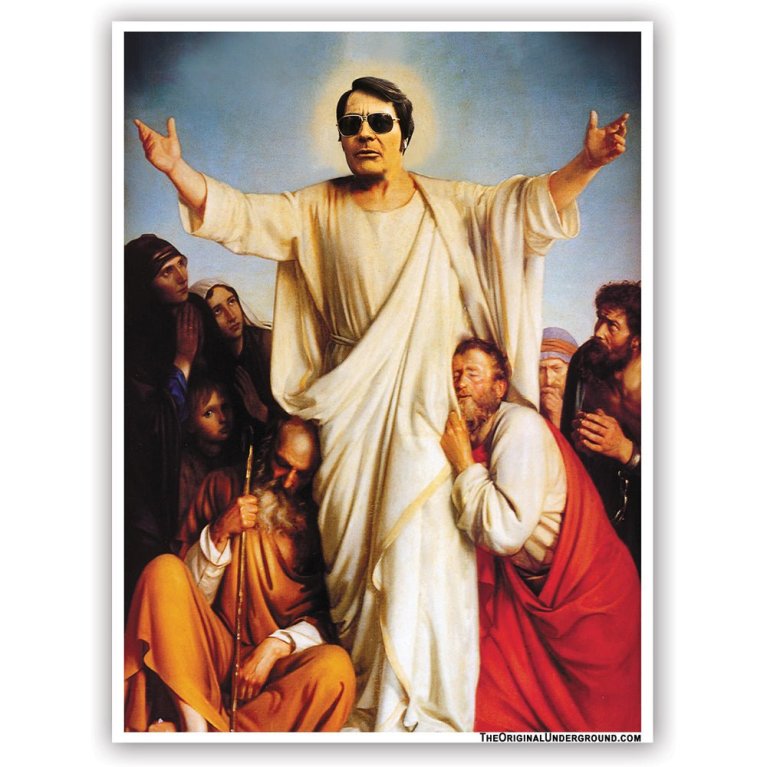




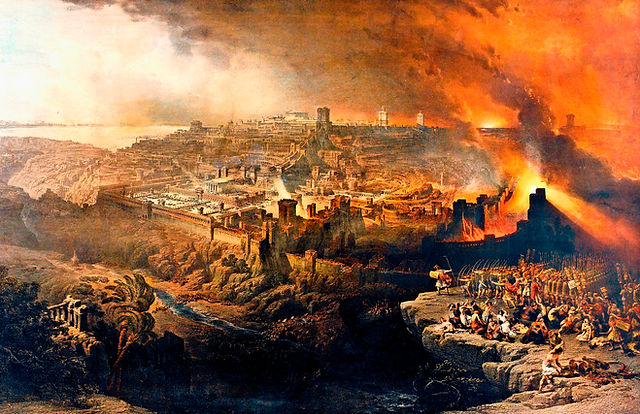







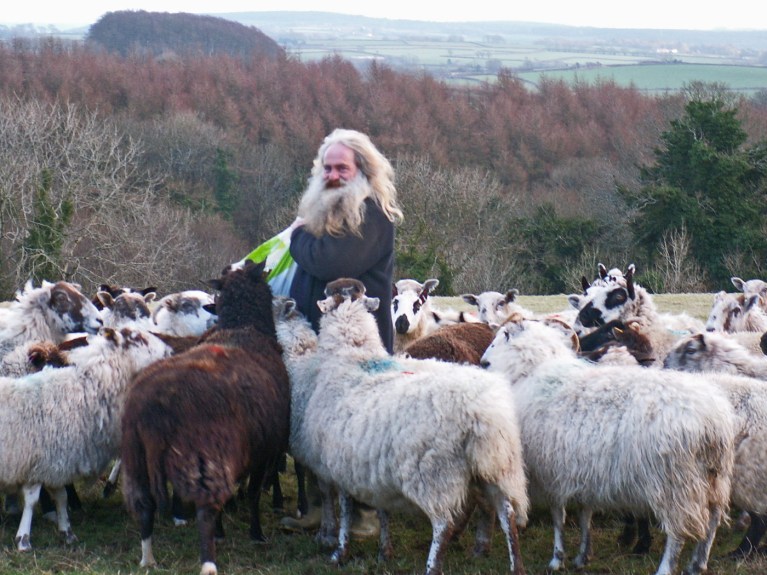



 Irregular Ideation