

Perspectives, Not Truth: Why Our Moral Codes Are Always Incomplete

Standard

Everything we hear is an opinion, not a fact. Everything we see is a perspective, not the truth.

Marcus Aurelius

I will attempt to bring multiple threads together in this blog and the quote above is a good starting point. If there is objective reality it’s not going to be something possessed by one human. We do not know all circumstances nor can we vet and independently verify every fact we receive.  Or at least not without becoming totally hamstrung by the details. We put our trust in parties, traditions, systems, credentials and the logic which makes sense to us.

The deeper we dive into our physical reality the murkier it all gets. The world ‘above’ that we encounter feels concrete. But there is not a whole lot of substance to be found as we get beneath the surface. The rules that we discovered—of time and space—end up dissolving into a sea of probabilities and paradoxes at a quantum level that we don’t have an answer to. And this is the ‘concrete’ observable reality. We all see our own unique perspective, a slice, and build our model of the world from it.

But it is even murkier when we get to topics of social science. Morality and ethics, built often from what we believe is fact or truth, is more simply opinion and perspective than it can be hammered out in words everyone is able to agree on. Even for those who are of the same foundational religious assumptions—despite even having the same source texts—do not agree on matters of interpretation or application. So who is right? And who is wrong? How do we decide?

1) Patrick: We Don’t Need God To Be Moral

My cousin, Patrick, a taller, better looking and more educated version of myself, an independent thinker, and has departed from his missionary upbringing—gives this great little presentation: “Where Do You Get Your Morality?

His foundation for a moral value system is concepts of truth, freedom and love which he describes in the video. I find it to be compelling and compatible with my own basic views. Our cooperation is as natural as competition, it is what makes us human, and a conscience gives potential for better returns.

However, while I agree with his ideal, there is also reason why deception, tyranny and indifference are as common in the world—they are natural—and this is because it can give one person or tribe an advantage. Lies, scams, and political propaganda all exploit trust and can be a shortcut for gaining higher status or more access.

No, cheating doesn’t serve everyone. But the lion has no reason to regret taking down a slow gazelle. By removing the weak, sick, or injured, it inadvertently culls the less-fit genes from the herd, strengthening the prey population over time and even preventing overgrazing of the savannah. It’s just a raw service to ecosystem balance, much like a short seller who exposes those overvalued stocks, forcing the market corrections and greater efficiency—acts of pure self-interest yielding a broader good.


Herd cooperation or predator opportunism are different strategies, both 100% natural and amoral in their own context. I’m neither psychopath nor a cannibal, but I do suspect those who are those things would as readily rationalize their own drives and proclivities. Nature doesn’t come with a rulebook—only consequences.

I’m certainly not a fan of the “might makes right” way of thinking and that is because my morality and ethics originate from the perspective being disadvantaged. But I also understand why those who never struggled and who have the power to impose their own will without fear of facing any consequences often develop a different moral framework.

We need to be invested in the same moral and civilizational project. Or else logic, that works for only some who have the strength or propaganda tools, will rule by default. I don’t disagree with Patrick, but his core message caters to a high IQ and high empathy crowd—which does leave me wondering how we can bring everyone else on board?

2) Kirk: A Way To Focus Our Moral Efforts

Charlie Kirk wasn’t a significant figure to me before his death. It may be a generational thing or just a general lack of interest in the whole conservative influencer crowd. I feel dumber any time I listen to Steven Crowder and assumed Kirk was just another one of the partisan bomb throwers. But, from my exposure to his content since, I have gained some appreciation.

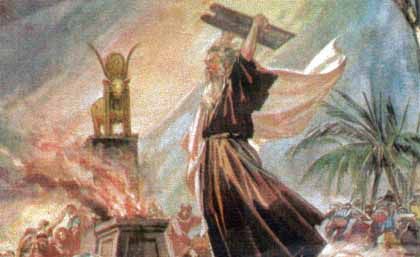
Arguing for the Ten Commandments has never been a priority for me. It’s a list with a context and not standalone. Nevertheless it is a starting point for a moral discussion and also one that it seems Charlie Kirk would go to frequently in his campus debates.  The two most difficult of these laws to explain to a religious skeptic are certainly the first two: “I am the Lord your God; Have no other gods before me and do not make idols.”

We generally agree on prohibition of murder and theft, or even adultery, but will disagree on one lawgiver and judge.

Why?

Well, it is simply because divine entity is abstract compared to things we have experienced—like the murder of a loved one or something being stolen from us. You just know this is wrong based on how it makes you feel. The belief in celestial being beyond human sight or comprehension just does not hit the same way as events we have observed. And it’s also the baggage the concept of a God carries in the current age. I mean, whose God?

It seems to be much easier just to agree the lowest common denominator: Don’t do bad things to other people.

But then we don’t. We justify killing others if it suits our political agenda, labeling people as bad for doing what we would do if facing a similar threat to our rights. If I’ve learned one thing it is that people always find creative ways to justify themselves while condemning the other side for even fighting back against an act of aggression.

Self-proclaimed good people do very bad things to good people. Like most people see themselves as above average drivers (not mathematically possible), we tend to distort things in favor of ourselves. Fundamental attribution error means we excuse our own compromises as a result of circumstances while we assume an immutable character flaw when others violate us. We might be half decent at applying morality to others—but exempt ourselves and our own.

So morality needs a focal point beyond us as individuals. There must be a universal or common good. Which might be the value of a theoretical ‘other’ who observes from a detached and perfectly unprejudiced point, the ideal judge. Not as a placeholder, but as the ultimate aim of humanity. One God. One truth. One justice. This as the answer to double standards, selective outrage and partisan bias. If we’re all seeking the same thing there is greater potential of harmony and social cohesion where all benefit.

At very least it would be good to promote an idea of an ultimate consequence giver that can’t be bought or bribed.

3) The Good, the Bad and the Aim for What Is Practically Impossible

The devil is always in the details. And the whole point of government is to mediate in this regard. Unfortunately, government, like all institutions, is merely a tool and tools are only as good as the hands that are making a use of them. A hammer is usually used to build things, but can also be used to bash in a skull. Likewise, we can come up with that moral system and yet even the best formed legal code or enforcement mechanism can be twisted—definitions beaten into what the current ruling regime needs.

The United States of America started with a declaration including the words “all men are created equal” and a Constitution with that starts: “We the people…” This is reflection of the Christian rejection of favoritism and St. Paul telling the faithful “there is no Jew or Greek” or erasing the supremacy claims of some. An elite declaring themselves to be exempted or specially chosen by God is not compatible with this vision. We never ask a chicken for consent what we take the eggs. We do not extend rights to those who we consider to be inferior to us or less than human. Human rights hinge on respect for the other that transcends politics.

That’s where the labels come in. If we call someone a Nazi, illegal, MAGAt, leftist or a Goyim we are saying that they are less than human and don’t deserve rights. This is the tribal and identity politics baseline. Those in the out-group are excluded for decency, their deaths celebrated as justice (even if there’s no due process) and we’ll excuse or privilege our own. All sides of the partisan divide do this—we create a reason to deny rights to others often using things like truth, freedom and love (Patrick’s foundation) as our justification: “Those terrorists hate our freedom and democracy, we must fight for those we love and our truth!”

Bringing this to a practical level: Looking at Minneapolis, the ICE and anti-ICE activities, we have competing moral narratives and a different vision for application of American values. On one side of the debate you have those who say that “one is one too many” if an illegal immigrant kills a US citizen—then suddenly do not care when Federal agents shoot a fellow American. The defiant “don’t tread on me” opposition to mandates and masks during Covid somehow shifting to “comply or die!” On the other side you have those outraged about Kyle Rittenhouse and who have been traditionally opposed to the 2nd Amendment defending Alex Pretti while the Trump administration condemns a man for carrying a permitted firearm.


Judgment is for the other, it seems, rights for those who look like us or agree. It’s this inconsistent eye, the call for understanding of our own and grace for ourselves with the harsh penalties applied to those within the forever shifting lines of our out-group, that shows how our political perspectives cloud our moral judgment. The ‘sin’ is not the act itself, but whether or not the violation suits our broader agenda. This is why ‘Christian’ fundamentalists, who will preach the love of Jesus on Sunday, can be totally indifferent to the suffering of children with darker skin tones—their God is about national schemes not a universal good or a commonly applied moral standard.

The aim needs to be justice that is blind to who and only considers what was done. If pedophilia is excused for powerful people who run our government and economy, then it should be for those at the bottom as well. If the misdemeanor of crossing an invisible line is bad, a justification for suspension of due process for all Americans, then why is it okay to violate the sovereignty of Venezuela or Iran over claims of human rights abuse?

The US fought a war of independence, took the country for the British and yet has been acting as a dictator, installing kings, when it suits our neo-colonial elites.

That’s immoral.

We’re all immoral.

The moral code of Patrick, Charlie or myself is incomplete—because every moral code is incomplete when filtered through human eyes. We start from our different premises: Patrick’s secular triad of truth, freedom, and love; Kirk’s religious appeal to the Ten Commandments and a divine lawgiver as the only reliable check on self-deception; my own reluctant recognition that empathy and cooperation are real, yet fragile, against the raw arithmetic of power and advantage. Yet all of our approaches circle the same problem: without some external, impartial standard that transcends our biases, tribes, and self-justifications, our morality devolves into competing opinions dressed as facts—exactly as Aurelius observed.

We cannot fully escape the murk. Objective reality, if it exists, slips through our fingers like quantum probabilities—and moral truth fractures along lines of culture, experience, and interest. Even when we agree on broad principles (don’t murder, don’t steal), the application often splinters: whose life counts as being worthy of protection? Whose borders, laws, or children deserve a defense? And whose “justice” is merely revenge in better lighting?The temptation is cynicism—just declare all values relative, retreat to my own personal pragmatism, and then let might (or votes, or algorithms) sort the rest. But that is a path leads to the very outcomes we decry—dehumanization, selective outrage, and the erosion of the entire civilizational project that allows agnostic high-empathy and high-IQ arguments like Patrick’s to even exist. Yes, nature may be amoral, but us humans build societies by pretending otherwise, by our aiming higher than baser ‘animal’ instincts—reaching for God.

So perhaps the most honest conclusion is not to claim possession of the full truth, but to commit to pursuing it together—knowing we’ll never quite arrive. We definitely need focal points that force some accountability beyond ourselves: whether that’s a concept of one ultimate observer who sees without favoritism, or by a shared commitment to universal human dignity rooted in principle beyond biology or tribe, or simply just the hard-won habit of applying the same rules to our side as to the other. Blind justice isn’t natural or self-evident—it’s cultivated. Morality is an aim which requires vigilance against our own double standards, humility before the limits of our perspective, and courage to defend principles we claim even when they inconvenience us.

In the end, we don’t need perfect agreement on the source of morality to agree that inconsistency in application is poisonous.  What goes around will certainly come around and if we live by the sword we’ll die by it.  If we can at least hold each other (and ourselves) to a standard higher than “what works for my group right now,” preserve the space for mutually beneficial cooperation over cruel predation—a shared conscience over mere convenience. Anything less, and the gazelle never outruns the lion for long—and neither does the society which forgets why it tried.

Love Is Patriarchal

Standard

As I ponder my responsibilities, bringing a daughter into this world, my patriarchal protection is a given.

The West has been so successful at privileging women that many women do not comprehend the risks of true equal treatment. Feminism is only possible as a part of the patriarchal duty that men feel to protect women. What it amounts to is using male power to enforce standards that are friendly to women, that allow them to walk freely in the street in all manner of dress (or undress), and ignore the reality of what has existed outside the walls of patriarchalism.

Even the idea that sexual assault is a bad thing is an extension of patriarchalism where natural desire must be restrained by structures created by men. A buck in the rut doesn’t ask permission. Hormones direct it’s behavior and only the bigger male can ward off the advances it will make on a doe. It is a hierarchy that is built only on strength. Moral conscience is built off the idea that there’s a big man up there who cares about property rights; who says that a body belongs to someone and is therefore not ours for the taking simply because we desire it.

Yes, eventually this evolved into an idea of everyone owning themselves that we now assume is simply the universal truth. However, nothing in the animal kingdom suggests this is the case. The real world is often a brutal and unforgiving place. When a new group of male lions takes over a pride they will kill the cubs of the previous males. And human morality developed in a very similar manner. This was the default, whether the Psalmist’s fantasy about bashing the heads of an enemy’s infants against rocks or the book of Deuteronomy giving some rules for the treatment of war brides:

When you go to war against your enemies and the Lord your God hands them over to you and you take some of them prisoner, and if you see a beautiful woman among the captives, desire her, and want to take her as your wife, you are to bring her into your house. She is to shave her head, trim her nails, remove the clothes she was wearing when she was taken prisoner, live in your house, and mourn for her father and mother a full month. After that, you may have sexual relations with her and be her husband, and she will be your wife. Then if you are not satisfied with her, you are to let her go where she wants, but you must not sell her or treat her as merchandise, because you have humiliated her.

Deuteronomy 21:10-14

To our modern ears, this is horrendous. There is no asking for permission. And, other than saying to wait a month, the men were free to rape their captive females. But the reality is that this was a radical step in the direction of protecting women from physical violation. One hopes that this delay would’ve ensured a more compassionate and gentle approach rather than some blood-soaked orgy during the heat of battle and immediately after her male relatives were slaughtered. As grotesque as this seems, it was better for her to belong to one man (with some rights after he rejects her) than to be passed around as a mere sex object in the manner of a Japanese comfort woman:

CLAVERIA: (Through interpreter) A Japanese soldier got his bayonet and started peeling my father’s skin while saying, tell us the truth – your child is part of the guerrillas with the owners of that empty house.

MCCARTHY: As Claveria pleaded to let her father go, a soldier wrenched her arm. Birdlike, petite, Claveria strokes a badly set bone as she picks up the story of how she followed her mother’s screams up the stairs.

CLAVERIA: (Through interpreter) I saw my mother lying down with her skirt up, and there was a Japanese soldier on top of her. I ran. My two youngest siblings took little sticks and started hitting the soldiers. The Japanese soldiers then snatched away the sticks and bayoneted both of them.

MCCARTHY: They died. Claveria believes her parents were killed when the village was torched. Japanese soldiers hauled away two older sisters to a garrison and took Claveria to an infirmary for her injured arm. She does not recall how long she was there recovering, but she remembers a soldier named Terasaki. One day, he told Claveria she smelled, but she refused to take a bath, saying she had no change of clothes. Ordering her to wash, she says he gave her a uniform to put on.

CLAVERIA: (Through interpreter) I was to be taken to the garrison where my two sisters were. Before we reached the garrison, he raped me. I thought that I was going to die because I was in so much pain.

MCCARTHY: Terasaki would be the first of many Japanese soldiers to sexually assault Claveria, who was not even a teenager at the time. She was 12. She said her sister Meteria had been driven half mad by the trauma she’d experienced at the garrison. Claveria was shocked when she caught sight of her there.

CLAVERIA: (Through interpreter) She was burned with cigarette butts and boiled sweet potatoes. When one soldier after the next raped her, she put up a fight, but my sister was not brave. She refused because she was in so much agony from all the abuse.

MCCARTHY: Claveria believes her other kidnapped sister was moved to a different garrison. She was never seen again. Historians have estimated that at least 200,000 women were forced into sexual servitude during World War II, mostly in areas occupied by Japan, prominently Korea. The women were euphemistically called comfort women, and the organized system of comfort stations to supply soldiers sexual gratification ran from Seoul to Singapore. Writer Evelina Galang has documented women captured in the Philippines.

EVELINA GALANG: And these are women as young as 16 years old – really, some of them 8, 10 years old. In the Philippines, historians estimate that there were probably about a thousand women and girls taken and put into military sex slave camps.

Men can be monsters. Worse than animals. And, in many parts of the world, immodest dress is taken to be a sign she wants it. Morality does not hold back the aggression of the rapist. No, rather it is the role of other men to restrain evil. Women are protected by their fathers, by their husbands, and by institutions that represent these men. Political structures were created by men and are defended by men. Yes, even if women were granted the right to participate. E.g. even if Kamala Harris takes the patriarchal role—she is still acting in a patriarchal manner and will need the strength of men to impose her will.

There will not be a feminist left in Europe if Islamists take over. That is not to bash Islam or say they would kill off all women who did not submit. No, it is to say that feminism cannot exist outside of the Christian West. The notion of individual rights, that people can independently make their own decisions, cannot exist only on paper or it is impotent. It requires men willing to sacrifice themselves to preserve this egalitarian ideal for their wives and children. Self-sacrificial love is not natural nor a priority in every religious patriarchal structure. Feminists cannot exist in Islam because only the respect of patriarchal institutions gives them power.

The alternative to the current patriarchy is not the absence of patriarchy, men (or those who act like men) will always rule, but the real choice is what manner of rule we wish to live under. It really is survival of the fittest outside of the walls of civilization. Chants of “down with the patriarchy” are about as meaningless as shaking your fist at the wind. It misunderstands the world. It assumes that nature will simply obey our voice because we’re angry and believe rights can exist outside of the structures that guaranteed them for us. It is only in the absence of rule by men who care about more than their own sexual gratification that the value of this benevolent form of patriarchy is known.

Freedom In Christ, Consistency, and Conscience

Standard

It is often disheartening to see differences of application within the Church. I’m not only talking about the tens of thousands of Protestant denominations either, no, even those within the Orthodox tradition see things vastly different at times.

A few weeks ago, and adding to my consternation over the past weeks, which included an estrangement from a close friend, another trusted friend caught in his double life, as well as my continuing wait for Charlotte, still indefinite due to Covid restrictions, impending neck surgery, and other painful physical ailments, I had reached out to Fr. Anthony for council.

Now, I have suspected (but do not know and do not need to know) based on hints, that Fr. Anthony’s politics are a little different from mine. So when I shared about my own struggles with relationships within the parish family he shared a bit of his own. It turns out that his diocese is pushing vaccines (oops) and, evidently, he is in full support. My own bishop, by contrast, and fortunately for me, has issued a don’t ask don’t tell policy and basically forbade it from being an issue.

The thing is, I would never argue with Fr. Anthony over something like this, he is a wise and humble man, I have nothing but respect for him. Still, that doesn’t change my own opinion, my own hesitancy is not without good reason and I’m certainly not comfortable with this kind of medical decision being imposed on anyone. So there is a bit of cognitive dissonance while contemplating this difference in perspective. Can I have it both ways?

This was on the back burner until the other day, when a good friend, asked me to parse this:

I’m assuming you’re aware of the sentiment running around right now that Christians are supposed to be compassionate and care for their community.  Therefore they should gladly submit to the vaccinations.  Assume the vax is as effective as they think it is.  What is the CORE philosophical/theological/moral flaw in that thinking?

I never actually answered the question. I honestly don’t know how to answer. But I suppose caring can cut many different ways and including being compassionate with those concerned about the risks of vaccines. My mind immediately went to that email exchange with Fr. Anthony where I had wanted to reconcile the opposite positions on vaccines, within Orthodoxy, and didn’t have the mental energy at the time.

My own rough position was that the whole debate, to vaccinate or not to vaccinate, was a secondary issue and there were others of primary importance.

Early on, last year, aware of the disease, still uncertain about the deadliness, I had stayed home a couple of Sundays because of my feeling sick and wondered about the wisdom of partaking from the Chalice. I’m not ignorant of virology and everyone being served from the same cup seemed to be a potential super spreader event in the making. Despite some saying otherwise, that we can’t get sick, I’m not completely convinced that disease can’t be communicated in this manner.

However, at some point, I decided that life or death, partaking of the body of Christ is more important than my own understanding of the spread of contagious disease. Besides that, my own risk of dying was relatively low, so why give up the practice of my faith on the basis of this risk? To live is Christ, to die is gain, right?

Why worry?

So, here’s the thing, if my parish did require me to vaccinate in order to partake, again, why worry? If faith means not being afraid of disease, then doesn’t it also mean not being fearful of vaccine side effects? New virus or new vaccine, we should not fear death.

But still, how do we reconcile one group using conscience as a reason why we should not even ask others about the vaccine status, while another uses it as a reason why all should vaccinate?

Why can’t Christians agree on this simple matter of application?

Christian Conscience and Meat Offered to Idols

Sometimes it is best to take a step back to gain some perspective. It is very easy to prioritize our own reasoning (and self-righteous indignation) above relationships and should remember what the Christian life is truly about. Is it about winning debates? Having our own way? Can we be technically right, as far as our own position, and wrong in spirit?

Looking back to St Paul, as far as how to handle the vaccine debate or other hot-button issues, I do believe that the answer is clear. In his first letter to the Corinthians he speaks to one of these issues of disagreement, pay attention to how he starts, what he priorities:

Now about food sacrificed to idols: We know that “We all possess knowledge.” But knowledge puffs up while love builds up. Those who think they know something do not yet know as they ought to know. But whoever loves God is known by God.

So then, about eating food sacrificed to idols: We know that “An idol is nothing at all in the world” and that “There is no God but one.” For even if there are so-called gods, whether in heaven or on earth (as indeed there are many “gods” and many “Lords”), yet for us there is but one God, the Father, from whom all things came and for whom we live; and there is but one Lord, Jesus Christ, through whom all things came and through whom we live.

But not everyone possesses this knowledge. Some people are still so accustomed to idols that when they eat sacrificial food they think of it as having been sacrificed to a god, and since their conscience is weak, it is defiled. But food does not bring us near to God; we are no worse if we do not eat, and no better if we do.

Be careful, however, that the exercise of your rights does not become a stumbling block to the weak. For if someone with a weak conscience sees you, with all your knowledge, eating in an idol’s temple, won’t that person be emboldened to eat what is sacrificed to idols? So this weak brother or sister, for whom Christ died, is destroyed by your knowledge. When you sin against them in this way and wound their weak conscience, you sin against Christ. Therefore, if what I eat causes my brother or sister to fall into sin, I will never eat meat again, so that I will not cause them to fall.

(1 Corinthians 8:1‭-‬13 NIV)

We have many knowledgeable (and proud) in the church today, they studied theology, they have all the answers and will use “freedom in Christ” to exempt themselves from anything they don’t like. They have their “rights” and don’t you dare tell them otherwise. But they seem to have completely missed on the love part.

St Paul picks up on the meat theme again and drives home the point:

“I have the right to do anything,” you say—but not everything is beneficial. “I have the right to do anything”—but not everything is constructive. No one should seek their own good, but the good of others. Eat anything sold in the meat market without raising questions of conscience, for, “The earth is the Lord’s, and everything in it.”

If an unbeliever invites you to a meal and you want to go, eat whatever is put before you without raising questions of conscience. But if someone says to you, “This has been offered in sacrifice,” then do not eat it, both for the sake of the one who told you and for the sake of conscience. I am referring to the other person’s conscience, not yours. For why is my freedom being judged by another’s conscience? If I take part in the meal with thankfulness, why am I denounced because of something I thank God for?

So whether you eat or drink or whatever you do, do it all for the glory of God. Do not cause anyone to stumble, whether Jews, Greeks or the church of God—even as I try to please everyone in every way. For I am not seeking my own good but the good of many, so that they may be saved.

(1 Corinthians 10:23-10 NIV)

Those who went to the discount rack, who bought the meat offered to idols, had logic and reason on their side. Meat is meat, right? Why not save a little? So it was offered to some false god and the proceeds go to pagans, what difference does it make? He even gives Psalm 24 as a proof text of this position.

However, he doesn’t stop there. He goes on to say that we should respect the conscience of those who do have a problem with the cheap meat and therefore abstain when the origin of the meat is known. In other words, our own personal freedom is secondary to the good of others, and even when our own position is more rational, or even Scripturally correct, than those of a more sensitive conscience.

He never says to argue our side or condemn their lack of knowledge. It’s not even something considered. His focus is on being respectful to others where we agree with them or not. Live or die, we yield in love, as St Paul writes in Romans:

Accept the one whose faith is weak, without quarreling over disputable matters. One person’s faith allows them to eat anything, but another, whose faith is weak, eats only vegetables. The one who eats everything must not treat with contempt the one who does not, and the one who does not eat everything must not judge the one who does, for God has accepted them. Who are you to judge someone else’s servant? To their own master, servants stand or fall. And they will stand, for the Lord is able to make them stand.

One person considers one day more sacred than another; another considers every day alike. Each of them should be fully convinced in their own mind. Whoever regards one day as special does so to the Lord. Whoever eats meat does so to the Lord, for they give thanks to God; and whoever abstains does so to the Lord and gives thanks to God. For none of us lives for ourselves alone, and none of us dies for ourselves alone. If we live, we live for the Lord; and if we die, we die for the Lord. So, whether we live or die, we belong to the Lord. For this very reason, Christ died and returned to life so that he might be the Lord of both the dead and the living.

You, then, why do you judge your brother or sister? Or why do you treat them with contempt?

For we will all stand before God’s judgment seat. It is written:

“ ‘As surely as I live,’ says the Lord, ‘every knee will bow before me; every tongue will acknowledge God.’ ”

So then, each of us will give an account of ourselves to God.

Therefore let us stop passing judgment on one another. Instead, make up your mind not to put any stumbling block or obstacle in the way of a brother or sister. I am convinced, being fully persuaded in the Lord Jesus, that nothing is unclean in itself. But if anyone regards something as unclean, then for that person it is unclean. If your brother or sister is distressed because of what you eat, you are no longer acting in love. Do not by your eating destroy someone for whom Christ died. Therefore do not let what you know is good be spoken of as evil. For the kingdom of God is not a matter of eating and drinking, but of righteousness, peace and joy in the Holy Spirit, because anyone who serves Christ in this way is pleasing to God and receives human approval.

Let us therefore make every effort to do what leads to peace and to mutual edification. Do not destroy the work of God for the sake of food. All food is clean, but it is wrong for a person to eat anything that causes someone else to stumble. It is better not to eat meat or drink wine or to do anything else that will cause your brother or sister to fall. So whatever you believe about these things keep between yourself and God. Blessed is the one who does not condemn himself by what he approves. But whoever has doubts is condemned if they eat, because their eating is not from faith; and everything that does not come from faith is sin.

(Romans 14:1‭-‬23 NIV)

The ‘meat’ of St Paul’s point is that the other person’s conscience must be honored over our own, so that we do not create a “stumbling block” through our exercise of freedom. Even though he believes that there’s nothing unclean, in Christ, he strongly argues that we respect the conscience of others. In fact, he says it is sin for those who have a conscience against eating, and therefore we would be causing others to sin through our inconsiderate exercise of freedom.

To Vaccinate or Not to Vaccinate?

We no longer have controversies over meat offered to idols. But we have had some intense debate over vaccines and there are reasonable points made on both sides of the argument.

Generally speaking, vaccines have saved lives. We have, for the most part, eradicated some debilitating and deadly diseases through traditional vaccines and, therefore, we could offer protection to those most vulnerable by being first in line. It could be an act of Christian service to get vaccinated.

However, for some, the idea of using a vaccine derived from aborted fetal cells is completely reprehensible, a terrible evil. Would it be Christian to force these people to comply with our own understanding of science and violate their own conscience?

Is it ever right to tell another person to take on the risk of a medical intervention against their will?

My own position on the new Covid vaccines is that the risks outweigh the rewards and especially for those who already have antibodies through infection. According to some estimates, at least a third of Americans have natural immunity to the virus, and therefore the new vaccines (with the serious side-effects some suffer) are an unnecessary risk for these people. Why would we ever require these people to put their own health at risk for sake of our own conscience? Let people choose for themselves.

At the same time, are the moral objections we have to the vaccines actually as important as we make them. I mean, so some of the vaccines (not all) were tested on a cell line called PER.C6, would we ask as many questions about donated organs or if we should inject blood from another person? Do we raise the same ruckus when shopping for an iPhone, refusing to buy so much as a T-shirt if it may have been manufactured by sweatshop labor? Do we apply the same level of scrutiny to other products that enter our bodies?

Is it actually conscience or is it selective outrage, finding any excuse to be defiant, to stand on the ‘principle’ of our position because we need to win the debate, that keeps us from cooperating on vaccines?

This can cut both ways. One could say that we should never let a bad substance enter us, the temple of the Holy Spirit, and yet Jesus, in Matthew 15, says very clearly that what enters our bodies cannot defile us. Furthermore, in Mark 16 we read an assurance of what is possible with faith, “when they drink deadly poison, it will not hurt them at all.” So should we really be so fixated on accounting for every molecule that enters our body? Are we not going to die eventually regardless? If you weren’t afraid of Covid, why be so terrified of a relatively safe vaccine?

Why do you oppose St. Paul when he says to put the other person’s conscience above your own?

The “You’re Not the Boss of Me” Attitude

If you’re an independent American, who wants to always do things your own way, then you probably won’t like my answer.

Nobody wants to be told what to do and especially not by those whom we do not believe are up to the task of leadership. It is not unusual, amongst siblings, for a child being ordered around by another, for the phrase “you’re not the boss of me” to rise in protest. And, it is true, in most circumstances it is not the role of one child to tell another what to do.

That attitude carries into adulthood, We don’t want to be told what to do. How many times have we heard “this is a free country” and people declaring their rights, as Americans, especially over the past few years?

Early in the pandemic, a security guard was murdered for his enforcement of a state mask policy in Detroit by a man who would not have his girlfriend suffer the “disrespect” by being told what to do. It was one of two shootings that I know, another in Denver, where a simple request, in a private business, was treated as if it was an unpardonable offense and a reason to murder.

Now, to be clear, I do not believe that government officials have authority over the law. It seems that many have a misconception about the structure of our government and seem to believe that Presidents or state governors are the equivalents of kings. They are not, this country is supposed to be one where rule of law trumps any official in government. There is nothing ungodly or rebellious about challenging illegal use of power in the courts. St. Paul himself took Roman jailers to task for their abuse of his rights as a citizen.

However, the Church is not a democracy, like it or not, and is ruled by a benevolent dictator with His ordained ministers. It is simply astounding to me that so many people take their understanding of American civics and apply this to the Church. The Church is (and always has been) patriarchal with Christ as the head. And just as a parent may give an elder child the authority to act on their behalf, as a stand-in, the same is true in the Church as well. No, this doesn’t mean that these ministers can rule in a manner different from their Lord. Indeed, they will give a greater account. Still, we are to obey those who are given charge over us:

Have confidence in your leaders and submit to their authority, because they keep watch over you as those who must give an account. Do this so that their work will be a joy, not a burden, for that would be of no benefit to you.

(Hebrews 13:17 NIV)

When Peter spoke, and the Jerusalem council decided, that was what the Church did. They overruled those who were trying to apply Jewish law to converts and, unless you want to throw out this part of New Testament canon, the book of Acts, then this was within their authority to do. This is what Jesus was talking about, in the Gospel of Matthew, as far as giving the Apostles “the keys to the kingdom” and authority to bind and loose. It is the role of the Church, the collective body, led by those ordained by Christ, to help guide us. Many individualize the work of the Holy Spirit and I do believe that it does lead individuals, yet Jesus said where two or three are gathered I am in their midst.

Submit to one another out of reverence for Christ.

(Ephesians 5:21 NIV)

It is not submission if we only go along with what already agrees with us or goes along with our own conscience.

Church shopping to find one that suits you is not obedience.

Ultimately, I’m okay with contrary positions on vaccines from diocese to diocese. For those concerned only about the kingdom, this should amount to little more than a toilet seat up or down type of preference. It should be spiritual death that is our concern, prioritizing those things on a higher plane and not being so caught up in having our own way that we can never submit to those of a different conscience.

Christian love solves the paradox. It doesn’t actually matter vaccinate or unvaccinated. What matters is that we respect each other, that we submit to the conscience of others even when we do not agree. For some this means we love by not imposing a newly developed pharmaceutical product against their objections, for others it means obeying those who are given the responsibility to decide such things.

Many say that they would do anything God asks of them and yet aren’t willing to give an inch in love for their brothers and sisters, maybe they don’t hate and yet they certainly don’t love:

Whoever claims to love God yet hates a brother or sister is a liar. For whoever does not love their brother and sister, whom they have seen, cannot love God, whom they have not seen. And he has given us this command: Anyone who loves God must also love their brother and sister.

(1 John 4:20‭-‬21 NIV)

Confessions of the Prodigal’s Older Brother—the Rough Road To Be Free Of Resentment

Standard

I do not call for the judgment of anyone, but it seems only right that good behavior is rewarded. And yet it is often unruly people who get the loving attention when they do bad and then the accolades when they begin to do what the well-behaved have been doing quietly for years.

The conscientious person feels bound to their duty to righteousness. They are driven by loyalties to people, motivated by moral obligation and take responsibility for the welfare of others. It was not out of a desire to be recognized, it is a burden they’ve been carrying since birth, it is never a choice for them, but rather is something inescapable, a prison and hell.

I’ve been that tortured soul. I’ve always wanted to do everything right and for the right reasons. While definitely wanting to be my own person and entitled to my own thoughts, I had no desire to be a troublemaker or disruption. I tried to be cooperative and compliant, to make the lives of my teachers and authorities easier, because I knew the greater social good was dependent upon this and would not be served by my selfish outbursts.

I could never live this ideal out perfectly. I had a standard for myself, a part of the religious inheritance I received as a Mennonite, that was impossible to live out. My frustration with this reality of my own failure would sometimes come bubbling up. Something would set me off and, in the privacy of my parent’s home, I would rage against this awful predicament and the unfairness of it all.

The carefree (and careless) younger brother…

A week or two ago some resentment returned. This change in mood was likely triggered by two things (or rather two conversations) and one of them being an encounter with David Bercot on the topic of divorce and remarriage. The other thing? I had a run-in with my own Prodigal side.

We claim there are consequences for sin. This is how we convince ourselves that our righteous inclinations are correct and there is really no other way to justify depriving oneself of hedonistic pleasure. If it doesn’t matter what we do, no real score kept for right or wrong in the end, then we might as well just have some fun, right?

I’m friends with one of those “bad boys” who (despite his heart of gold) doesn’t care what other people think and has done things at his age that were unimaginable for me. He is a ladies’ man, he’s that guy the young women (yes, even the ‘good’ ones) feel comfortable playing around with, and is basically my antithesis.

I can’t help but love him. He was my true friend a few years ago, heard me spout venom at those who had hurt me with their self-righteous indifference, and never said a word of condemnation. That said, his recklessness and lack of my seriousness, while I was fighting for all I was worth to stay glued together after a devastating announcement, had also sparked my most violent and evil imaginations.

I can’t hold him accountable, though. I look at his freedom with a bit of envy in that at any moment he could decide to settle down, marry the perfect girl (drawn by his charm) and carry no stigma. Me, however, I was always outside looking in, I wasn’t allowed (by character or circumstance) to partake of that “wild” youth nor given the legitimacy that is his for the taking once he decides to settle down.

I’m not jealous of or bitter toward him. Why should I be? But what I do struggle with is anger towards the religious culture that made me, that fed me a steady stream of false promises and left me feeling completely betrayed in the end. Specifically, I’m still upset with the fathers who dismissed me with their cynical calculations and their daughters who continually rejected my sincerest efforts—while meanwhile crawling all over the reckless and indifferent guys.

It is bad enough to go unrecognized. But we seem to live in a world where no good deed goes unpunished, where caring (when others do not) is mischaracterized as creepiness and doing right for the right reasons is often stigmatized. It seems my obeying conscience doesn’t allow me the freedom of rebellion nor does it gain me the approval of those who told me that my conscientious is a good thing when I do what is right in spite of their opinions.

The daddy issues of the Prodigal’s older brother…

The problem with the older brother, in the parable Jesus told about the Prodigal son who returns home, was deeper than his resentment over the celebration for his wayward brother. His indignation was towards his father:

“The older brother became angry and refused to go in. So his father went out and pleaded with him. But he answered his father, ‘Look! All these years I’ve been slaving for you and never disobeyed your orders. Yet you never gave me even a young goat so I could celebrate with my friends. But when this son of yours who has squandered your property with prostitutes comes home, you kill the fattened calf for him!’ (Luke 15:28‭-‬30 NIV)

This anger is likely due to a misconception the older brother had about his father. He obeyed. However, he obeyed for fear of consequences rather than purely as a matter of conscience. His motivation, while in some respects a devotion to his father, was also a desperate effort to secure his place in the family and a mistrust of father’s love. He, like the servant who buried his talent for fear of punishment, couldn’t comprehend being loved for anything other than his performance and had lived in fear rather than faith.

Can you imagine having spent years trying to hold up your own end of the bargain, working hard to produce because that’s how your father’s love is earned, only to have the bubble burst?

In my own case, it was not entirely my own fault that I saw God, my heavenly Father, as this sort of vengeful tyrant. As one raised in a fundamentalist setting there is plenty of reason why I would assume that God’s love is based on my own performance rather than something freely shared to all who accept it and that’s because my earthly fathers often did keep me in limbo. Revivalistic preaching undermined any assurance of salvation, my life could never measure up to their purity standards, and their love for me was limited by what I was able to provide for them.

For years my hopes for love outpaced my resentments. I would tell myself that next time will be different, that my fears of always being on the margins of their paradise were unfounded, and eventually Christian love would triumph over my inadequacies. However that paradigm came crashing down in spectacular fashion when a young woman, someone to whom my hope against hopes (in respect for her professed devotion) were fully invested, said “I can’t love you like that,” which was to say that she really could not love me at all, and destroyed that last hope of a way to her or rather her father’s world.

Trying to please the lawyer’s God…

Over the past weeks, I’ve felt whipsawed. That is to say, I’ve felt pulled between two seemingly opposed views that together undermine my peace with God and the ability to live a victorious life. The first being how the Prodigal gets the embrace while I’ve often been ignored or, worse, had those whose love I had desired recoil as if I was some sort of monster. The second being the inescapable legalistic mindset that is at complete odds with true Christian love.

I have nothing against men like David Bercot personally. In fact, I see them as men very much like myself a few years ago, they diligently search Scripture trying to find their salvation, and yet they are far more capable than I’ll ever be. Their dedication and discipline would seem to be commendable and even something enviable. However, their standard is something I’ve found to be out of my own reach and their religious prescriptions often come at the expense of love.

Bercot, like so many others including myself, is law rather than love oriented. By this I mean we prioritize precise legal interpretation and application of law above the loving purpose behind it. In other words, we are like those religious experts Jesus encountered, who do things like tithe spices, are more concerned with the day someone is healed than the fact that they have been healed, remained as dogmatic even when entering the church and had to be put in their place:

It is for freedom that Christ has set us free. Stand firm, then, and do not let yourselves be burdened again by a yoke of slavery. Mark my words! I, Paul, tell you that if you let yourselves be circumcised, Christ will be of no value to you at all. Again I declare to every man who lets himself be circumcised that he is obligated to obey the whole law. You who are trying to be justified by the law have been alienated from Christ; you have fallen away from grace. For through the Spirit we eagerly await by faith the righteousness for which we hope. For in Christ Jesus neither circumcision nor uncircumcision has any value. The only thing that counts is faith expressing itself through love. You were running a good race. Who cut in on you to keep you from obeying the truth? That kind of persuasion does not come from the one who calls you. “A little yeast works through the whole batch of dough.” I am confident in the Lord that you will take no other view. The one who is throwing you into confusion, whoever that may be, will have to pay the penalty. Brothers and sisters, if I am still preaching circumcision, why am I still being persecuted? In that case the offense of the cross has been abolished. As for those agitators, I wish they would go the whole way and emasculate themselves! (Galatians 5:1‭-‬12 NIV)

Paul’s pun at the end does not take away from the serious warning in his words. Those trying to please God through their careful obedience to the law “have fallen away from grace” and are thus obligating themselves to an impossible standard. They will either end up deluded (like the Pharisee praying loudly about his own superiority to others) or desperately trying to cross all the T’s and dot all of the I’s and ending up in despair when his/her effort falls woefully short of God’s perfection.

Where I’ve found God’s love…

My goal is not to be the rebellious Prodigal son or the one whose careful dedication ended in bitter disappointment. Both of them have fallen short in love for their father or in understanding their father’s love for them and have suffered consequences as a result. The story isn’t intended so that we go out to sow our wild oats, enjoying the pleasures we are afforded us as a result of our inheritance, and then come back to our father’s house again. It isn’t just a warning against a superficial closeness either.

The true meaning of the story is for us to be more like our heavenly Father, who is perfect in mercy and loves even when His love is not reciprocated. Yes, there is a law, not the kind of law that pleases a sanctimonious religious lawyer, but a law summed up by Jesus:

“‘Love the Lord your God with all your heart and with all your soul and with all your mind.’ This is the first and greatest commandment. And the second is like it: ‘Love your neighbor as yourself.’ All the Law and the Prophets hang on these two commandments.” (Matthew 22:37‭-‬40 NIV)

When we love God we do not worry about being stigmatized like Jesus and his disciples were for breaking with the harsh and unloving application of the law. We stop trying to please those impossible to please, stop believing God is some tyrant finger over the “smite” key waiting for us to slip up, and start doing what is possible to do out of love for our neighbors. It is in remembering that Jesus came to save and not to condemn the world—that through his love even the vilest of sinners can find eternal life.

I still struggle with my hurts despite God’s grace towards me. I still find myself trying to please people who have made pretty much zero real investment in my well-being spiritual or otherwise—who absolutely refused to reciprocate my love for them. I could easily become unsettled again, reject the greater blessing I’ve received by pursuing the promises of those who attempt to live by a standard impossible to please.

But I choose to love those whom God has entrusted to me instead and even if it costs me what little remains of my Mennonite reputation. I would rather lose it all for sake of the kingdom than to return to the bondage of fundamentalist expectations. Jesus loved despite the disapproval of his religious peers and that’s the love that will overcome my feelings of resentment as one who followed the rules and got burnt. It is a rough road some days, but we are called to suffer rejection and carry our cross.