The Myth of an Indestructible Building

Standard

It was November 29, 1900, and fans filled the stadium in San Francisco for the annual Thanksgiving Day game between California Golden Bears and Stanford Cardinal. Some, not wanting to pay the entry fee (one dollar then, $40 in today’s money), climbed on a nearby glass factory roof to get their view of the action on the field.

The newly built factory roof collapsed about twenty minutes into the game. One hundred people fell as it gave way and plunged four stories down—many landing on the 500° F oven below. It was a horrific scene. Young people being cooked alive. What happened? The building roof wasn’t designed to hold a mass of spectators. It failed. Those who had climbed up were oblivious or did not have enough concern for the stress they were adding to the structure.
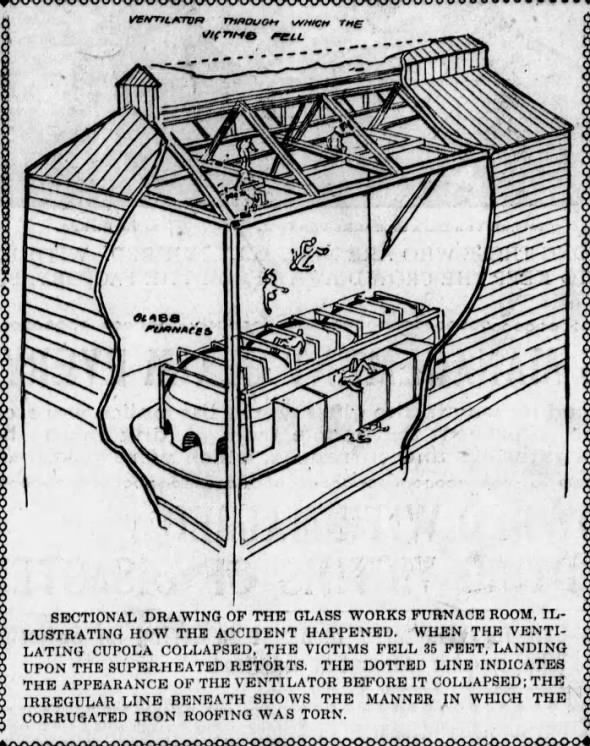
This tragedy wasn’t just a failure of design; it revealed a deeper misconception that buildings should be invincible, a myth that shapes our reactions to collapses even today. It goes further than engineering or physical buildings as well. Our models of reality are oversimplified at best and flat-out wrong in too many cases.

There is a common misconception and an unrealistic expectation about structures—many people seem to assume they are like blocks of granite. From those who believe that every building collapse is a conspiracy to those who think every failure demands stricter government regulations, the myth of an indestructible building continues due to a lack of understanding of engineering and the limitations.

Design Limits Are Not Defects

One key misunderstanding is design limits. Engineering is not about making a building too strong to ever fail. Unless we’re talking about the Great Pyramids, it’s all about trying to meet certain established parameters. An engineered building is designed to meet the expected conditions as defined by regional building codes. If the wind, snow, or loads exceed the designated standards, then there will likely be a collapse.

Earlier this year, after a heavy snowfall in upstate New York, many buildings had their roofs cave in (including this fire hall) because the weight of the snow was that much greater than the design weight. Sure, most engineers build an extra safety margin into their components, but eventually these limits are too far exceeded and you’ll end up with a tangled mess. This is why there are sideline roof shoveling businesses in these places where large snow accumulations are a regular occurrence.

Sure, code could force people to build to a much higher standard, making a collapse due to snow load virtually impossible. But this would increase the costs so much that it would price many people out of building a new house or barn. Engineering is all about compromise, more precisely about making the right compromises given the expected conditions. Yes, there is a case for making adjustments based on observation or after studies, but ultimately we build for what will work most of the time.

More Is Not Always Better

In the aftermath of the earthquake that had struck Myanmar and neighboring Thailand, there was a comment made to me in a chat hoping for more layers of regulation. This is a sentiment, in the specific context of rapid development of Bangkok, that seems more reflexive than reflective. It is a progressive impulse to believe that more interventions and rules are the answer.

The collapse of an unfinished tower in Bangkok, during the earthquake, sparks questions about building codes.  Was it missing sheer walls?  Did the contractor rush to ‘top it off’ quickly?  I want to know what the investigation finds.

But, for me, as someone who works in the construction industry and has occasionally needed to sift through these layers, I could not disagree more. Sure, better regulations may be needed. However, legalism doesn’t work in building standards any better than it does in churches. Sure, you need a code of some kind. And yet onerous regulation will add to the cost of construction, not necessarily improving the end results, and only making new housing less accessible.

It is, at best, the same trade-off discussion we can have about self-driving cars and the need for LIDAR. Sure, this expensive laser ranging system may marginally improve the results, but at what cost? Self-driving cars with cameras alone are already safer than human drivers. Keeping these systems at a price that is affordable will save more lives than pricing them out of reach for average people. It is, therefore, optimal to rollout the less expensive and safer tech even if it could be slightly improved.

At worst there is only more expense and no benefit to more layers of red tape. The real problem with rules is that they are written in language that needs interpretation. Unlike a classroom theoretical setting, in the real world you can’t just memorize the correct answers and pass the test. The ability to make a judgment call is far more important than adding to the pile of regulations. More rules can mean the more confusion and the truly critical matters get lost in the mess.

I see it over and over again, when different customers send the same job for a quote and all of them interpreting the engineering specifications their own way. It is the tire swing cartoon, a funny illustration of when the customer wants something simple and yet the whole process distorts the basic concept until it is unrecognizable. That is where my mind goes when we talk about adding layers. Is it increasing our safety or merely adding more points of failure?

This one stuck with me and should be standard equipment in every design department.  I first saw it as a child while visiting the engineering department of the construction company my dad worked for.

Some of it is just that some people are plain better at their jobs than others with the very same credentials. I am impressed by some engineers, architects, contractors, and code officers—not so much by others. I’m willing to bet the intuition of some Amish builders is probably more trustworthy than a team of engineering students’ textbook knowledge, full of theory, with no real or practical world experience. In the end any system is only ever as good as the users.

Theory Is Not Reality

My work relies on truss design software. I enter information and it does those boring calculations. When I started, I assumed that it was more sophisticated than it really is. I thought every load was accounted for and nothing assumed. But very soon the limits of this tool started to reveal themselves. It is only as accurate or true to reality as the engineers and developers behind it—and on the abilities of the user (me) understanding the gaps in the program.

When it comes to mental models—the kind of physics involved in engineering—only a few people seem able to conceptualize the force vectors. Things like triangulation, or compression and tension loads, are simply something I get. Maybe from my years of being around construction or that curiosity I had, as a child, that made me want to learn what holds a stone arch up or why there are those cables running through that concrete bridge deck. My model was built off of this childhood of building Lincoln Log towers (arranging them vertically) and occasionally making mini earthquakes.

I’m exasperated by this expectation that people have for skyscrapers to be indestructible or to topple over in the same manner of a tree—as if they’re a solid object. It also seems that the big difference between static and dynamic loads is lost on most people. They don’t understand why a building could start to pancake, one floor smashing the next, or how twisting due to extreme heat could undermine the structural integrity of a building without ever melting the steel. Of course this has to do with their beliefs or mistrusts that are not related to engineering—nevertheless it shows their completely deficient understanding of how the science works.

The concept in their head is off, their brain modeling is inaccurate, and their resolution may be so low they simply can’t grasp what the reality is. You try to explain basic things and their eyes glaze over—sort of like when Pvt. John Bowers tried to explain why the plants need water, and not the electrolytes in Brawndo, in the movie Idiocracy. Ignorant people will scoff before they accept a view different from their model of the world. The theory they believe rules over all evidence or better explanation.

On the other side are those who trust every established system without understanding it. They “believe science” and see more as an answer to every question. More rules, a larger enforcement apparatus, faith in their experts, without any feel for the problems encountered by the professionals or those in the field. If they had, they would question much more than they do. Human judgment is still at the base of it all. Or at least that is what the lead engineer told me while we discussed the limits of software and the need to be smarter than the tool.

Not even AI can give us the right balance of efficiency in design versus safety factor or what should be written in the code. It may be a better reflection of our own collective intelligence than any individual, but our own limits to see the world how it actually is are not erased by the machines we create. We are amplified, never eliminated, by the tools we create. So we’ll be stuck wrestling with our myths and theories until we take a final breath—only our flaws are indestructible.

Models of a Messy World

If truss software taught me anything, it’s that no model nails reality perfectly—not beams, not buildings, not life. We lean on these frameworks anyway, because the world’s too wild to face without a map. But just like those fans on that San Francisco roof in 1900, we often climb onto flimsy assumptions, mistaking them for solid ground. The myth of an indestructible building is just one piece of a bigger distortion: we think our mental models—of faith, of power, of people—are unshakable truths, when they’re really sketches, some sharper than others, of a reality we’ll never fully pin down.

Take religion. For some, it’s a cathedral of certainty, every verse a load-bearing beam explaining why the world spins. Others see it as a rickety scaffold, patched together to dodge hard questions. Both are models—ways to grapple with life’s big “why.” Politics is messier still. It’s like designing a city where everyone’s got their own codebook. One side swears by tight regulations, convinced they’ll keep the streets safe. Another group demands open plans, betting that freedom builds stronger foundations. Both sides act like their own ideological model is bulletproof, shouting past each other while the ground shifts—economies wobble, climates change, and people clash.

Then there’s prejudice, the shoddiest model of all. It’s like sizing up a beam by its color instead of its strength. Prejudice, always a shortcut to save us from the effort of real thought, fails because it’s static, blind to the dynamic load of human individuals. Good perception, like good engineering, adjusts to what’s real, not what’s assumed.

All these—religion, politics, prejudice—come down to how we see. Perception’s the lens we grind to make sense of the blur. Some folks polish it daily, questioning what they’re fed. Others let it cloud over, stuck on a picture that feels safe but warps the view. I think of those fans in 1900, not asking if the roof could hold them. They didn’t mean harm—they just saw what they wanted: a free seat, a clear view. We do the same, building lives on models we don’t test, whether it’s a god we trust, a vote we cast, or a snap judgment we make. The distortion isn’t just in thinking buildings won’t fall—it’s in believing our way of seeing the world is indestructible.

What makes a model reliable? Not that it’s right—none are. It’s that it bends without breaking, learns from cracks, holds up when life piles on the weight. In construction, we double-check measurements because we know plans lie. In life, we’d do well to double-check our certainties—about the divine, the ballot, the stranger next door. The San Francisco collapse wasn’t just about a roof giving way; it was about people trusting a picture that didn’t match the world. We’re still climbing those roofs, chasing clear views on shaky frames. Maybe the only thing we can build to last is a habit of asking: what’s holding this up? And what happens when it falls?

When My Own Neck Was on the Line

Standard

On December 4, 2024, a shadowy figure, in a dark hoodie, waited for his opportunity, ran across the street, and then fired three shots.  A married father of two stumbled to the ground as his killer fled the scene.  Brian Thompson, the CEO of UnitedHealthcare was murdered and his killer allegedly a 26-year-old, disgruntled by botched a neck surgery that had left him in pain and disabled.

As father of two, husband of one, who had severe neck issues, and surgery, I had a lot of empathy for both men.  Very clearly this was an act of misdirected rage.  The killer, like most of us, wanted someone to blame for their life falling apart and a very wealthy insurance company chief executive made a convenient target, made a scapegoat, for a system that is broken at multiple levels.

When I was initially injured, in my twenties, I went to Dr. Rajjoub, he was known as one of the leading neurosurgeons in the area from what my mom found and we sat waiting in his office for a long time.  When we finally got to the exam room, the doctor was very brisk, “physical therapy.” 

My parents and I sat with our jaws open.  And my mom, a bit faster on her feet, stammered a protest.

Rajjoub broke his stride.  And he explained, very briefly, that better surgery options, like disk replacements, were on their way and I should wait.  And amazingly enough, a little physical therapy would get me back on my feet again.  He was right.

Fast-forward to a couple of years ago and a decade or so after this conversation and my neck pain was back with a vengeance.  And this time physical therapy, after an ill-advised trip to a chiropractor, would not produce sufficient results.  I knew with the numbness and loss of strength, the window of opportunity was beginning to close, there would need to be surgery soon or I may never be restored to full use of my right arm.

So I got an appointment with a specialist, at our local hospital, explained the history and my current symptoms.  This neurosurgeon agreed that it was time to go under the knife and we began to discuss the particulars of the procedure he would do.  What he would describe is a neck fusion.  They bond a few vertebrae together, around the injury area, to bring some stability and restore the gap for the pinched nerve to travel through.

I was underwhelmed.  I didn’t wait this long to get an inferior surgery.  So, once again, I enlisted the help of my mom.  And the goal was to find an alternative option who would do a replacement rather than a fusion.  We ended up contacting Virginia Spine Institute and I was soon talking to a young energetic Bucknell graduate.  We exchanged stories about my home town, and common experience at the local watering hole, before we got down to the business at hand.

One of the items to consider, going in, was that this medical group was out-of-network, my insurance would likely reimburse for a little and yet not nearly the whole cost.  But, given I only have one neck to spare, and that VSI seemed state of the art—I went with my gut and bit the bullet.

The results were phenomenal.

My veteran physical therapist was totally amazed at the speed of my progress.

As if to confirm my decision, already on my way back to work, I went through the drive thru at Dunkin a few days after the surgery, still wearing the neck collar as precaution, and had a brief exchange with the cashier who gave an account of her own experience with neck surgery.  She had the fusion, was still dealing with chronic pain, and validated every concern that I had with the outdated practice.

An activity not doctor recommended.

So why did she, and the killer of Thompson, have a surgery that should be discarded to the annals of medical history?

There are multiple contributing factors, as always, insurance companies slow in their acceptance of change, surgeons who don’t want to get trained in a whole different way of doing things when they have mortgage to pay plenty of work, but truly at the heart of it all is the FDA moving at a turtle’s pace.  The agency has lagged well behind counterparts in Europe and who knows why.  There is no Big Fusion industry lobby to blame as far as I can tell.  So what’s the hold up?

This approval process really underlines the misplaced faith many have in government agencies.  While Europeans were getting a far better option, literally for decades, those of us under the protective care of a Federal regulatory bureau, suffered the ‘cure’ barely an improvement on the disease.  And really need to ask the question why.  Why can the FDA work fast to approve a pharmaceutical and yet not to ban dangerous red dyes?

The answer is likely a combination of lack of political will and bureaucracy.  The real problem is this notion these institutions are all science and not political or biased.  

It is tempting to just call it incompetence (or cook up some cockamamie theory) but it is more than that.  We do fusion surgery rather than risk replacements and that is because what is established seems less risky than a newer procedure.  There is probably a big assumption that because an opinion exists there is no need to move quickly.  And then an agency is made of people.  It is not some monolith constructed of pure unadulterated science.  No, it is rather like where you work, an institution that is really only ever as good as the management.

Many smart people work at the FDA.  But it is not their job to make sure that the latest technology gets to the consumer.  They do their assigned tasks.  And thus some items may fall through the cracks.

The most tragic part of Thompson’s murder is that it targeted someone who was doing their job and working within conditions set by the industry and the government.  This idea that removing a profit motive will just magically fix everything is wrong.  What is truly needed is a major disruption of status quo for regulatory agencies.  There is really nothing sacrosanct or unquestionable that the FDA does.  Science needs scrutinized, the experts miss things and have their own private motives.

Furthermore, the rising cost of healthcare doesn’t have one singular cause.  The left wants to explain everything bad as being a result of evil capitalism, whereas the right always wants a secret plot to destroy the health of America, but the reality is much more complex and not nearly as exciting as these two ideologically driven fantasies.  It is simply the limits of system and cost of the technology in many cases, coupled with a crippling burden of compliance.

There is a big reason why the small medical practices are disappearing, swallowed up by giant politically connected and bureaucratic nightmares.  There is also a reason why, in the age of the ACA requirements, insurance companies must push back against waste of invested resources.  We’re all caught in a tangled ball of competing interests and may need our Alexander to take a sword to this gigantic seemingly unsolvable knot.  

Isn’t Socialism wonderful?

This is why I’m willing to give new Health Secretary Robert Kennedy Jr. a chance.  We need reform and we needed it yesterday, it is decades overdue like the eventual approval of the disk replacement surgery that has allowed my return to an active and fulfilled life.  And, if you don’t like it, then maybe you should try Canada where healthcare is free, if you can get through the line.  Amazing how nobody blames public health officials—until you get one who goes against the status quo they claim to hate.

Technology Versus Humanity

Standard

We love technology because it makes our life easier. Machines do the back-breaking labor that once took an army of men, we all get more as a result, travel between places is a matter of gassing up the car and going rather than a perilous ordeal. In general social media platforms and online retailers reduce friction. That is to say, they facilitate an interaction at a much lower cost of time and effort. Why go shopping or hang out at the mall when you can sit on the couch?

That was a key revelation this week: Snapchat and TikTok have taken the place of roaming the corridors of what was once a retail Mecca. Entertainment is as simple as picking up your smartphone and finding out what Mr Beast is doing. He’s so much cooler than even the cool kids at school, so why even bother to see what they’re doing? It is too hard to make plans with friends, to get dolled up, to drive ten miles and walk on your feet when you feel as if you can get the same reward wearing your underwear at home in your bedroom.

More are living in a fantasy of life, following a path of least resistance, and not realizing the full cost. Social media is to the community what pornography is to sex. Sure, you have escaped the grip of boredom. That desire for interaction has been gratified. It is even more sterile and safe. That pretty girl won’t reject you here in virtual reality, she doesn’t compare to what is available at your fingertips anyways, so why be treated as second rate by what is second rate? We escape our limitations with our imagination.

However, it all comes at a cost, much of this cost is hidden or deferred. The cost is that we don’t accomplish what we could—in the real world—by our reliance on a meaningless space where nothing of value is accomplished.

Our convenience-seeking way is a form of depravity, that is to say, it is trading current pleasure for future pain. If we don’t get any physical exercise, for example, because the machines do all the work for us, we will lose our muscle mass and gain weight. Cuts in calories and gym time can counter this, but there must be proper sacrifices, or diabetes and quality of life decline will follow. Why not walk rather than ride in a vehicle? The exercise would do us good.

Oh, you don’t live in town?

Everywhere you need to go requires a drive?

The suburban sprawl and development built around the automobile have led to an increasingly dependent lifestyle. And that is not a typo. Our convenient mode of travel has made it easier to close a distance; we don’t need to live next to our sources of food, employment, or social interaction. Yet, as a result, everything is now more distant, and this is how we end up commuting forty minutes to work rather than spending the day in our own neighborhood. We can be everywhere all at once and are scattered to the wind because of this.

This is true regarding schools. Even after the one-room schoolhouse had gone away the schools were within talking distance in my hometown. But now nearly every child is either bussed or dropped off since all of the schools are part of the sprawl. It just amazes me, that in an age where we’re worried about sustainability and subsidizing EVs for a marginal reduction in carbon emissions, we are still—as a public policy—developing our communities in the direction of more dependency rather than less.

A smartphone feels so secure in our hands, so intimate, and yet will divulge our secrets (without our knowledge) to anyone with resources. For all we know it is a bomb waiting to explode given we are only the end user of the device and have no idea of its inner workings—let alone who had hands on it before it came to us. And simultaneously, while vulnerable to every nefarious actor that exists, we’re more isolated when it all goes down. Suddenly, in North Carolina, after the flooding, they can’t do business without cold hard cash.

One cost of convenience is dependency on long supply chains. Even those face-to-face transactions often involve third parties who skim a bit for themselves. We empower the global corporate conglomerates and are always at the expense of local control. Could your community survive without trucked-in food and consumer goods? How far would you need to walk for basic needs if the electric power went out or tankers stopped bringing in fuel? A century or two ago most people could find enough to eat simply stepping into their own backyard.

Sure, having a big garden and animals is inconvenient day to day, but it is much more sustainable. Our cars and phones make it easier to travel, but they also have put us in a bubble. As in, not being 100% present even to our own family beside us, where we drive past each other in a metal shell at 70 mph and never meet the people who supply our needs. We feel sophisticated because of the gadgets in our hands, when in reality an Amish man living a century ago had life figured out better than we do.

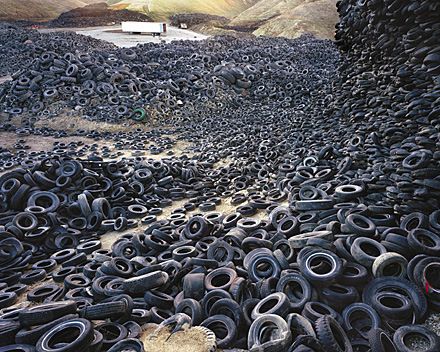
Given what we’re discovering about microplastics, the Amish were right even in their rejection of rubber tires. Why? Well, it isn’t because they had special knowledge. No, in simply rejecting most new technology they also avoid the unintended consequences as well. This disposition to be wary of what is generally accepted as improvement, asking what it will take away from the community and our humanity, is good. It is moral to take a little time to consider the long-term costs of our technology decisions.

As soon as we embraced technology that we could not manufacture or sustain by ourselves we became vulnerable. Humanity suffers as we look to technology. Sure, the benefits of innovation also can’t be ignored or downplayed. But we must always be as aware of the downside and, therefore, have an intentional approach when adopting the next new device. There is always a price to be paid for convenience. We need to do the hard work, to help rebuild those strong local communities and foster robust humanity.

What Is the True Cost of EV?

Standard

The battery electric vehicle (EV) versus the internal combustion engine (ICE) powered debate is one of the most irrational of our time. On both sides of the discussion, you have those frothing-at-the-mouth types who attack the moment you disagree. And this is exactly the response that I got after I had casually mentioned that ICE is 1/3 the cost under a click-bait post…

Model Y starts at $43,990 FYI.

One just called me ignorant, but others tried to make an argument, including this response:

I’m trying to figure out what car cost 1/3 of the price of a Tesla🤔🤔? The long range Model 3 (the one you want for a roadtrip) is $42,500 – $7500 tax credit is $35,000. This is not factoring in gas savings. Please tell me what new car is availability for under $12,000 (that’s the 1/3 cost of a Tesla you mentioned)?

Fair enough question.

Note, I never said new, but assuming that I did…

Believe it or not, and even in this inflationary age, there are still reliable sedans that come in under $20,000. Starting with a Mitsubishi Mirage G4 ($18,500), the Kia Rio ($17,875), and the Nissan Versa ($17,075), the lowest-priced option is half of even the subsidized price of the Tesla base model.

But you can’t exclude the subsidy from the cost of the EV, the government doesn’t have a magic wand to create value and we all end up paying for their expenditures in our taxes or by inflation due to money printing. And it only begins with that “tax credit” (so-called) given directly to privileged people who can afford a new luxury car.

What is the true cost of subsidies?

According to a study by the Texas Public Policy Foundation, the cost to us is nearly $50,000 for every EV produced:

Federal and state subsidies and regulatory credits for EVs totaled nearly $22 billion in 2021, or nearly $50,000 per EV, socializing the true cost of these vehicles to taxpayers, utility ratepayers, and owners of gasoline vehicles

Tens of billions of dollars have been spent trying to make EVs viable, and yet still the average cost of these vehicles is $65,000, compared to $48,000 for ICE. Why haven’t these subsidies leveled the playing field? It is simply the fact that batteries require tons of extra material and a much more complex process to produce.

So we can at least double that visible “tax credit” subsidy and already the true cost of an EV is close to three times a comparable ICE sedan.

We could stop there—the 1/3 number reached—but let’s continue…

What is the true cost of production?

The cost of a vehicle isn’t just the window sticker price or the money that it takes to manufacture. The bigger question—given the reason many say we should switch to EVs is about emissions—is what the increased environmental impact is of producing the batteries that go into these cars. Is this a trade-off we are willing to make?

Lithium batteries are costly, they require an enormous amount of water and also leave a toxic legacy that will grow exponentially as EV is adopted. Is it worth this cost to only marginally reduce carbon emissions?  That is to say, around 17-30% less emissions according to European Energy Agency? 

Sure, it could get better with a heavy investment in electrical generation and transmission—yet that is another huge cost financially and environmentally…

What is the cost of infrastructure demand?

This is where the conversation is the most interesting. We have the refining capacity and distribution network already built for ICE vehicles. Gasoline and diesel fuel have the advantage of being energy-dense and can be moved around using the existing highways. But what about EVs?

There is an illusion that comes with plugging something in. The load we put on the system is invisible. But there is no magic to it. Electricity is something that must be produced somewhere and then transmitted to the charging stations. If everyone adopted EV technology the grid would collapse.

We’re currently nowhere even near what it would take in capacity to convert everyone to EV. The easiest route to more electrical generation is to go anuclear. So how many new nuclear power plants would it take? Well, if we use miles driven and the number of cars on the road today, then we would need to build 250 additional nuclear power plants as big as the largest plant in the US, and the supporting infrastructure to keep up with this demand.

So are you willing to have a Palo Verde in your own backyard?

It cost 5.9 billion dollars to build one in 1988 (the equivalent of 13.9 billion in 2023) and we needed to start building 250 of them yesterday.  The solar and wind equivalent would be even more costly to build and maintain.

The costs would be astronomical and that’s just considering only passenger vehicles. Switching Class 8 trucks would take even more of these massive power plants and spending—the cost of switching would be insane.  Not to mention you would need more trucks to do the same work as you did with diesel.  And remember, every dime that we spend on this mass EV conversion could go to health care or education instead.

Can you now see how extremely costly EVs will become as they are adopted?

But it does not end there…

Why is the cost of wear items greater?

Batteries are heavy and weight is the enemy of “wear items” like brakes or tires—which is not to mention the additional damage to the highway infrastructure.

EV tires wear 20% faster than comparable ICE vehicles.  That is a cost out of your own pocket and also a concern for the environment. And do not forget, to be safe you’ll need those heavy-duty EV-specific tires. Sure, maybe this is not a very big problem for those who can already afford the premium cost of a new EV?  However, for that waitress struggling to make ends meet she will have to make the choice between safety and home utilities.

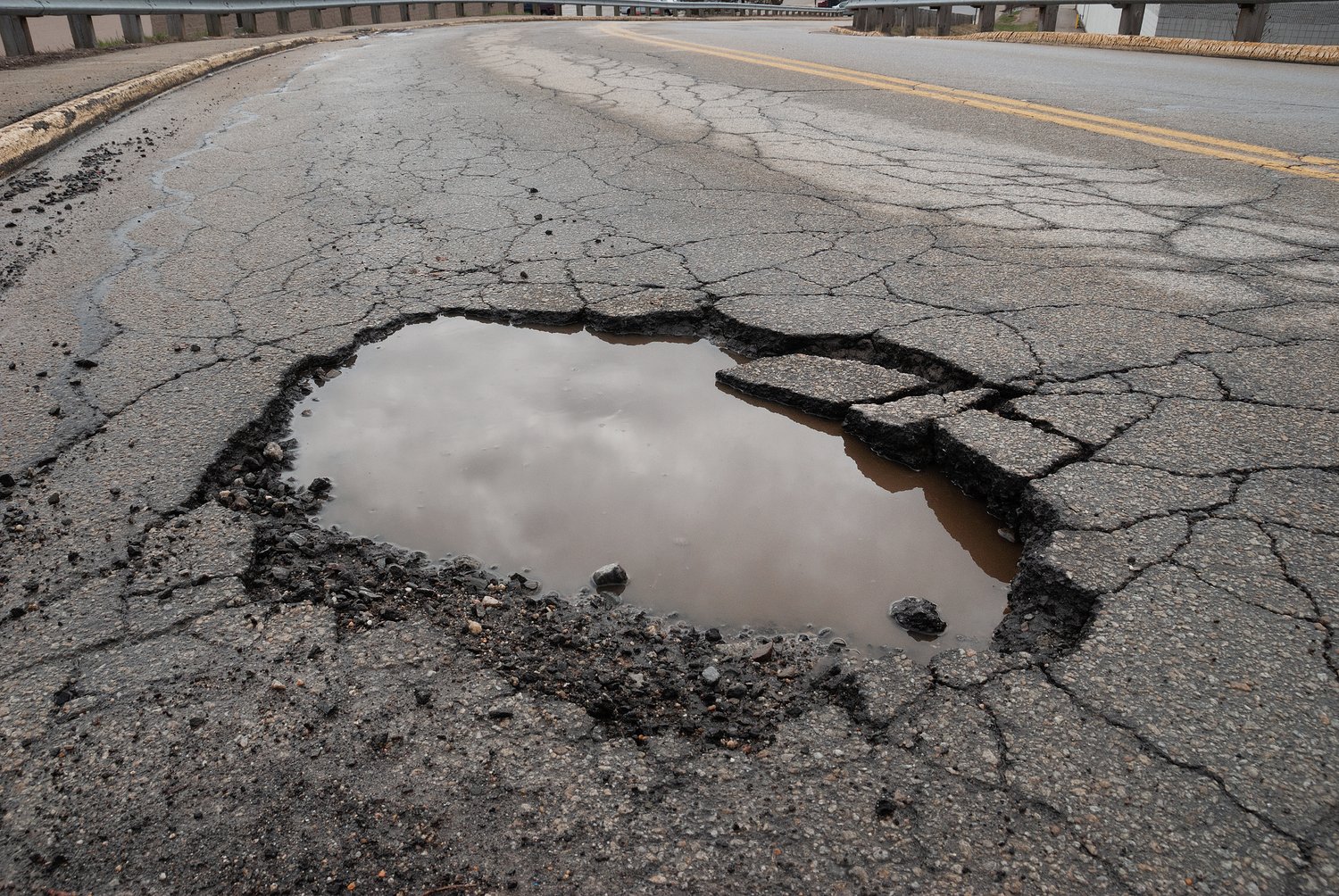
Next up is excess road wear.  Big trucks are obviously the leading cause of damage to roads. However, EV proliferation will start to cause problems for existing infrastructure:

A 6,000-pound vehicle causes more than five times as much road damage as a 4,000-pound sedan. A GMC Hummer EV, which weighs 9,063 pounds, will cause 116 times as much road damage as a Honda Civic, weighing 2,762 pounds.

The article cited above isn’t about EVs yet does apply given it is about the vehicle weight. Even the Model 3 is a whopping 3,862 to 4,054 lbs. Sure, one vehicle is not going to do a whole lot by itself, but the volume over time will significantly impact bridges and parking garages that were designed for lighter ICE vehicles. This EV vehicle weight bloat caused by batteries will require very costly upgrades to prevent catastrophic failures—like the Ann Street Building Collapse:

Speaking of disasters. With EV there is potential for a thermal runaway or reaction that can’t be stopped—like an ICE fire—by simply denying the source of oxygen. This hazard will result in more damage to road surfaces, more time spent in traffic jams after incidents, and additional toxic emissions. This is a cost to be seriously considered with all of the others.

Cost of time, capability, and resale value…

Many of the costs and drawbacks of EVs are hidden under a pile of subsidies or are moved upstream like the emissions—out of sight out of mind.

But what cannot be ignored is performance in terms of range. Time is by far our most valuable resource and nobody wants to spend hours in a place they don’t want to be because their vehicle battery is drained.

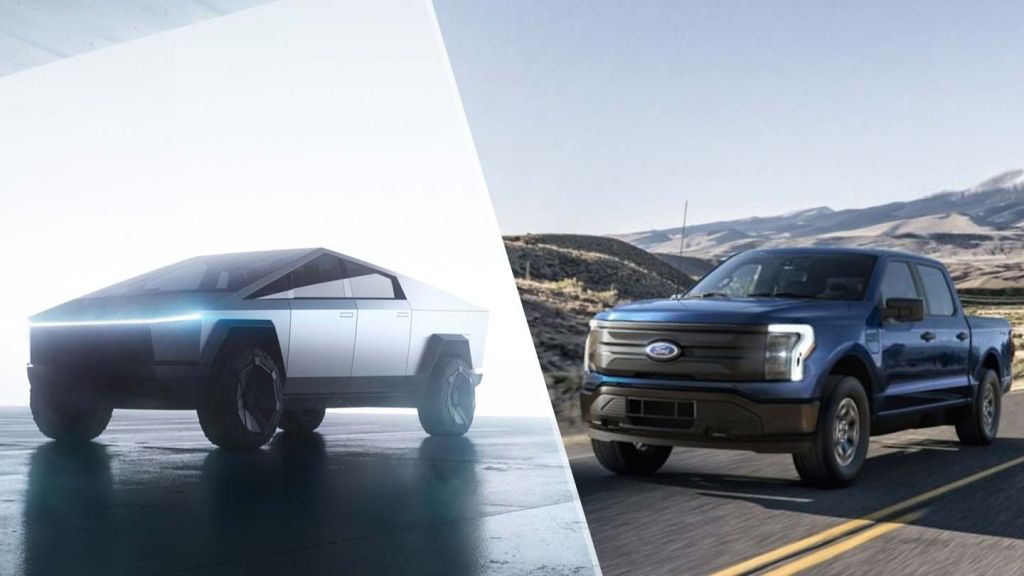
As far as capabilities, even EV trucks are useless for towing, both the Tesla Cybertruck and the Ford Lightning—both costing around $100,000 in the higher trim levels—aren’t so good at doing typical truck things. Sure, they produce a ton of low-end torque and are very fast. But the F-150 EV only went 90 miles pulling a camper and the Tesla only fared a little better.

7000lb luxury land yachts

And finally, we need to talk about plunging resale values. For a while EV was a novelty, the “way of the future” every suburban geek needed to virtue signal. But it appears that this is now starting to fade and reality is starting to take over again—46% of EV owners in the US plan to ditch EV to return back to ICE—and many will not recoup their cost because the floor is dropping out for used EVs:

A recent study from iSeeCars.com showed the average price of a 1- to 5-year-old used EV in the U.S. fell 31.8% over the past 12 months, equating to a value loss of $14,418. In comparison, the average price for a comparably aged internal combustion engine vehicle fell just 3.6%.

That’s bad news for the EV industry.  That is probably why Ford, after losing billions on their EV investments, has made plans to pivot back to hybrid.  Toyota, ever conservative, never made the mistake of getting sucked into the EV mania.  My wife’s C-Max (hybrid) has no range anxiety, saves fuel, and has a plug-in version that can go on battery for a length of a commute.  This is the right compromise.

ICE costs less to build, but the hybrid will likely emerge as the winner for being the best of both worlds. It has range like ICE, and torque like an EV, while also keeping its value and not requiring vast new expenditures to upgrade the electrical infrastructure. If costs are reflected in the market hybrid will come out victorious in the end.  Some can afford EVs today, but only because others are absorbing more than half of the real costs.

As a footnote, I’m not opposed to EVs nor do I think they are destined to go extinct. If resale values continue to drop I would even consider owning one. The whole point of this article is simply to give a bit of pushback against the Pollyannaish sentiments that would lead to an ill-advised mandate. There would be an enormous cost, and opportunity cost, that would come with this. Just the fact that EVs need massive subsidies to be sold should tell us enough. If it isn’t viable in the market it isn’t viable.

The Dangerous Lie of Shut Down or Die

Standard

False dichotomies pop up everywhere in the political discourse. You are either pro-life or you are a raging homicidal baby-killing feminist monster and, alternatively, you are either pro-choice or you are “at war with women” and would turn the world into “The Handmaid’s Tale” if ever given the chance. Of course, both sides of that dichotomy are grossly misrepresenting those on the other side. Some of the most vocal proponents of pro-life that I know are of the female gender, would rather not have their lives ruled by men or be treated like baby-making slaves. Likewise, many on the pro-choice side are intelligent and compassionate people who follow a different dogma as far as what does or does not constitute a separate human life.

Where you stand on the recent Covid-19 forced closures probably has much more to do with your politics than it does with your personal level of scientific sophistication. Sure, there are many, blinded by their own confirmation bias, who see everything they believe as being scientifically based and rational, but that is to be in denial of the role that their own emotions play in their judgment. The decision to shut down the economy due to the virus had has much to do with fear as fact. How do I know? Well, there weren’t a whole lot of reliable facts to go on when the decisions were being made. We had models, yes, but models are only as reliable as the data entered and the accuracy of the assumptions that they contain. Their predictions are not facts. What likely had a big influence is the scary stories coming from Italy and the lack of good information from China.

The Changing Understanding of Covid-19

I had been in favor of the shutdowns, initially, to give time to make a more accurate assessment of the actual threat and also to give time for our medical professionals to gear up amidst global shortages of personal protective equipment. Sure, many Americans are of the pigheaded mentality that they will drive eighty miles per hour into a blinding fog bank and then have massive pileups as a testament to their inability to slow down for anything. But it is only prudent to enter into a potentially deadly new situation, with many unknowns, with an abundance of caution. The arrival of Covid-19 onto the world scene was such a circumstance. The idea of social distancing to “flatten the curve” made sense at the time.

However, as a couple of weeks morphed into a month or more and the language of state politicians mysteriously shifted from slowing the spread (as we were told was the reason for the shutdowns) to trying to stop it entirely, while at the same time the there was growing evidence that the virus was not as deadly as first thought, was likely here earlier than had been previously known and may have actually reached the peak (unflattened before the shutdown measures had been implemented) in some places, I kept waiting for decision-makers to shift their policies according to the actual evidence. But they did not. Frozen by fear or too stubborn to revisit their previous decisions (or maybe even wanting to punish those opposed to their lockdowns and show who is boss, who knows?) there was no change. They were determined to plow ahead with their prior decision based on bad data, economic consequences be damned, so wear your masks, go to Walmart like good little citizens and shut up.

We all have an idealogical team we are pulling for, whether we realize it or not, and it can cloud our perspective of an issue. Sure, you might believe that your ignorance of virology is “common sense” (which, unfortunately, is probably common and yet good sense is not always common) and refuse to take reasonable precautions. Or you might think your own opinion (and that of the experts whom you agree with) is some kind of “scientific consensus” and an irrefutable fact. But the reality is that you might just be too arrogant (in your little knowledge or, rather, knowing just enough to be dangerous) to understand that there could be perspectives greater than your own. The frustrating part for me was always being caught between the false choices put out by those on either side of the political debate. Those calling the virus a hoax, dismissing the effectiveness of masks, and being generally ignorant only armed those pushing for control with a false moral imperative to double-down on their shutdown or die mantra.

Covid-19, while certainly deadly for many and even if those terrifying early estimates of a 2-4% death rate had held true, is nowhere near the Spanish flu. The real number, given growing evidence gathered by antibodies testing and from various ships where everyone was tested, shows a true death rate closer to 0.5% which isn’t too different from the seasonal flu over the course of an average year. Yes, it did certainly stretch our medical resources thin, and likely would’ve with or without the shutdowns, yet there is little evidence to show that our economic self-sabotage actually saved lives. No, if anything, we may have simply destroyed opportunity for those most vulnerable here and around the world for no real gain. It is quite possible, even probable, that more will die as a result of the forced shutdowns than were saved. In the end, the decision to shut down the economy was never a question of shut down or die. For many, it may very well be shut down and die.

False dichotomies are dangerous. They are lies. This polarization of our many choices can come with tragic results.

Economic Shutdowns Also Kill People

In my many discussions about Covid-19 I’ve run into many reoccurring and economically illiterate sentiments, like this one: “I’m sorry but I can’t believe I’m reading this. No compassion for human life and suffering?” That in response to a well-written article weighing the benefits against the costs of the economic shutdown. Apparently, in this person’s emotion soaked and one-dimensional brain, the only way you can show compassion for human life and suffering is to keep people caged in their homes and unable to feed themselves?

As a starting point, there was never a scenario where there could be zero deaths from Covid-19. That ship had sailed long ago, in China, when the authorities there continued to let people from the epicenter travel around the world (although not domestically) and sailed when many Western leaders were more concerned with things like “xenophobia” than the virus. Maybe had Europe joined the Trump administration in banning travel from the source of the outbreak there may have been a chance of containing it. But it was already too late by the time concern about the virus and death tolls had finally exceeded worries about political correctness and virtue signaling about race. Places like New York City and Los Angeles were going to see tens of thousands dead regardless of what was done at that juncture.

When the shutdowns began, in earnest, the virus was already deeply entrenched. The first verified case in France, for example, has been recently discovered to have been back in December already and much earlier than initially thought. It had likely spreading while some politicians here were still encouraging people to crowd the streets of Chinatown and was definitely being passed around while Italian leaders were telling people to hug Chinese people (from Wuhan, no less) in a misguided effort to prove they weren’t racist. The die had been cast and we were in for a wild ride.

But what we did have a choice over is how we responded to the threat. Certainly, the virus had not reached us all, and we could not know (without significant testing) if the peak of infections was a couple of weeks out or still months ahead. If the virus had reached relatively few of us and the death rates were already skyrocketing then the most desperate measures were completely justified even if it cost some lives. On the other hand, if the virus had already been in circulation for months and the hospitals weren’t already jampacked, there was very little to be gained and plenty to be lost from sweeping anti-economic measures. Those with strong social networks and a fat wallet, like the Hollywood celebrities urging us plebes to stay at home while they sip martinis in their hot tub, might not get it, but there are serious consequences to economic shutdowns even if you do not personally experience them.

For those who still think that there’s no harm done by shutting down (simply because they are amongst the privileged less affected and able to put food on their own tables), keep reading.

This idea that the economy is about Wall Street and stock portfolios is complete and utter nonsense. The concern many have about the shutdown has nothing to do with the fiction you hold of Scrooge McDuck swimming in his vault full of gold coins and perpetually worried about losing his wealth. Not at all. First, no billionaire (other than the Hollywood fantasy villain version) actually has moldy money, billionaires are billionaires because they make good investments and their investments are often in life-sustaining industries, like healthcare. Second, most of the economy is Y-O-U. The economy is, simply put, our transactions together, the labor we use to produce things of value to trade with others for our wants and basic necessities.

That out of the way…

Domestic Abuse, Drug Overdoses, and Suicide Rates

Shutdowns have consequences and the consequences are often much more devastating for those most vulnerable. I think often of my waitress and waiter friends, people in the restaurant industry, who have suddenly without warning had their entire income stream dry up by the executive fiat of someone who gets their paycheck via the state treasury or through an accumulation of assets. Sure, Trump and Congress have taken action to offset some of these losses by direct payments, unemployment compensation has been extended to many who might not otherwise qualify and yet that will do nothing for those permanently unemployed.

For many in the world, in the same way that Covid-19 is deadly to those with comorbidities, an economic shutdown is (or will be) that proverbial straw that broke the camel’s back. Sure, you can say that the guy devastated by the bills piling up and his bank account drying up, his business being shuttered, should see the bigger perspective. But that is no different from saying that we should not care about Covid-19 deaths because those most impacted were dying anyway and that their comorbidities actually killed them. The fact that not everyone is as financially healthy as you are or as emotionally able to weather the storm caused by the shutdown doesn’t undo the damage done to those who are more vulnerable.

The socio-economic cost of the shutdowns should be factored into the decision as much as the potential gain. Sure, there is a possibility (although it is not proven) that the shutdowns may spare a few that would otherwise have perished from the virus and accompanying complications. But there is definitely an uptick in things such as domestic violence and child abuse that comes with forcing weak and emotionally vulnerable people to stay confined together, away from their sources of stress relief and friends, for months. Believe it or not, not everyone shares your advantages in mental health, not everyone can keep doing their work via Zoom, we aren’t equal in this together as some will proclaim, some are isolated alone, and with only their suicidal ideations to keep them company for the duration.

And, for those of you looking down your noses in condemnation of the shutdown protestors at state capitals, thinking that your own rationality and compassion is what is guiding you, think again. True compassion would have some sympathy for those who are suffering from the economic consequences of the hasty and arbitrarily enforced shutdowns. Unlike you, they might not be able to afford to shelter in place for months at a time. The truth might be that you, in your fearful overreaction to Covid-19, simply do not care enough about their livelihoods being ripped out from under them and are too ignorant of the economic consequences, the increase in domestic abuse, drug overdoses, and suicides that accompany economically dire circumstances.

It is certainly no more dangerous to do a couple of laps around a state capital, than it is to go to Home Depot, Walmart, or the grocery store. I suspect the real issue some have has to do with political affiliations. It is a moral superiority contest between them and those who decided that the risk of government overreach and economic ruin is greater than the virus. Some would rather live in denial of the serious economic consequences they’ve imposed on others, ignore the evidence of the suffering caused by their selfish demands for safety at all costs (to their neighbors), and maintain their dangerous tunnel vision?

Of course, who knows, in the current political climate, maybe some would rather the protestors killed themselves than peacefully vent their pent up frustrations?

But this is far bigger than domestic politics…

Economic Downturns, Food Shortages, and Starvation

The most troubling and continuing consequences of the imposed shutdowns is the impact it is having on the agricultural industry and food supply chain. It was very early on when the stories started to cross my newsfeed about small farmers, in the Philippines, being forced to dump their produce. If one understood the labor that it took (most Americans can’t even imagine), that these farmers would give up their meager profits, it is hard to understand. But that is what happens when the market is closed down, there is no refrigerated warehouse to store their vegetables until things reopen again. And, sure, some of it is distributed to their neighbors, and yet the real demand comes from the cities. So the cities are cut off from their suppliers and the poor farmers from their buyers and only source of income.

Vegetables dumped in Benguet

I’ve realized recently that many people can’t understand logistics even at the most basic level and see the actions of agricultural producers here as being greedy or suspicious. When I mentioned how producers were culling herds due to processing plants being closed over Covid-19 concerns and the possibility of people starving, I had a guy respond with the following, “If we don’t want people to starve let’s start by distributing this food that is being wantonly destroyed by the factory farms.” His ‘solution’ may seem reasonable at first glance. I mean, why not? But then you have to considfer that these big producers would not just throw away their profits. They aren’t that stupid. And if they can’t process this protein then you can be 100% sure that government or anyone else is going to replace their production capacity. They are the specialists.

Sure, like in rural parts of the Philippines, the neighbors to these massive barns will get all the pork or poultry they will ever need. However, that’s nibbling around the edges of the problem. The real reason we have these “factory farms” is not to supply Union County and the surrounding communities. No, not at all! The real market for this meat is the big cities. So, while it is great that some rural neighbors get to fill their freezers at a below-market price, that is going to do very little for the needs of those downstream and cut off from their food source. A couple of “community gardens” in Brooklyn can’t offset the literal tons of beef, pork, and vegetables that are imported into that city every day. Don’t get me wrong, I love a ‘feel good’ story as much as the next guy, but this isn’t an issue that will be solved by a couple of generous farmers.

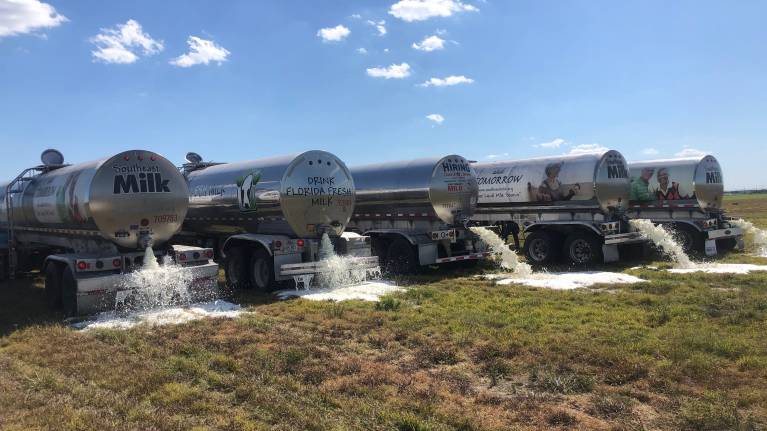
The abrupt shutdowns and closures are causing incredible bottlenecks that cannot be easily resolved overnight. Closing down schools and restaurants, for example, meant that all of the food in that pipeline, packaged for that kind of usage, was now jammed up. There are some grocery stores now selling meats that were originally intended for restaurants. But the retooling cannot happen like the flip of a switch. That is why some dairy processors, what specialized in supplying schools, had to dump their milk at the same time grocery shelves had run dry of the staple. That is why potatoes are piled up to rot in Idaho. When networks within the supply chain break down, when the market is majorly disrupted without warning, there are shortages in some places and over-supplies in other places.

Those big animal operations need to keep moving things along, the whole process can’t be held up for long before there are major problems, finished pigs need to be moved along or there is no room for the feeder pigs to go. Sure, they can change the feed to try to keep the finished pigs at a particular weight for a period of time. But eventually, something as to give. That is why there are piles of dead pigs a hundred feet long, going to waste, and soon enough the shelves will run empty as well. It will seem strange. Many won’t understand how it is possible, but it is happening and it is happening like a slow-motion train wreck.

That all said, I’m not afraid for myself or most Americans. We might miss out on a steak or pork chop. We will likely pay a little more for our food in the coming months. However, my real concern is for those in the many places around the world where people work hand to mouth. The rickshaw driver in Mumbai can’t afford to pay more for his family’s food and especially not after being locked in his own house for months. The person in a Manila slum, already living on “pagpag” (a Taglog term meaning “garbage chicken” or literally food pulled from the trash) will not do well when others are fighting over the disappearing scraps as food becomes scarce. Many in the world live on a very small ration, meat is a luxury to them, and now have been deprived of their income in a desperate fight against a virus that may not even be stopped by their sacrifice.

Making the Right Trade-offs…

There is no question about the seriousness of Covid-19. I have a close friend in NYC who lost two friends. They were both my age and died in their own homes. It is not a virus that should be laughed off or treated as no big deal. Tens of thousands have died and tens of thousands more will likely die and in a relatively short period of time. Sure, many of these people may have had comorbidities and yet they would very likely have been with us for many more years had they not had their encounter with this deadly virus.

It is possible that some could be saved from Covid-19 through the shutdowns. There is no solid evidence that this is the case. Nevertheless it is possible. That said, it is also possible that our efforts only prolonged or even worsen the pandemic by preventing “herd immunity” from ever happening, which means we could suffer more deaths from Covid-19 and also the experience the hardships of the economic shutdown.

Whatever the case, the “shut down or die” mythology needs to be confronted. Those looking for a perfect solution here are living in fantasy land. The hope that a vaccine will be developed quickly and then become widely available is (sorry, anti-vaxxer conspiracy theorists) basically a Hollywood fiction. We still don’t have a vaccine for SARS or MERS and may never have a vaccine for Covid-19. So, this idea that we can just hunker down and wait this out is not realistic. Sure, I would be glad to be proven wrong, it is possible, but there are also huge trade-offs to our waiting that need to be discussed.

Speaking of trade-offs: According to ASIRT, 1.35 million people die in car accidents every year (over 38,000 in the US) and an additional 20-50 million are injured (4.4 million US), some with permanent disabilities as a result. This, unlike Covid-19, is a ‘pandemic’ that disproportionally impacts the young and with no pre-existing health conditions. We could, quite easily, in the name of safety, ban all automobiles and save far more lives in a couple of years than the shutdowns ever would. Of course, we would never do that, we have valued the freedom of movement and economic advantages over the risk of serious injury or death. I suppose people feel more in control behind the wheel, but if we were really in control of the outcome of our trip then nobody would leave home knowing that they would get into a fatal car crash, would they?

Based on what we now know about the virus and death rates we should not have shut down the to the extent that we did. We may have saved a little on the front end, compared to Sweden who remained open, and yet will very likely end up in the same place as far as Covid-19 and far worse off in terms of the economic consequences. My fear is that many more will perish as a result of the shutdowns than from the virus. Millions of the world’s young and most vulnerable are suffering right now, as I write this, and could die of starvation. A good analysis must weigh all factors. We cannot be zoned in so much on one problem and only one solution that we cannot see any others. The virus from China is bad, but the panicky response of governments around the world may have made it many times worse.

Finding the True Legacy of American Slavery

Standard

As a child, because of my father’s work in construction, my family would travel. My mother, someone as inquisitive and interested in learning as I am, would take us children to the various historic sites and museums near the areas we visited. A significant part of our time in the South was spent surveying Civil War battlefields, exploring plantation homes built in the Antebellum era, and pondering it all from the perspective of a proud Yankee.

At the time the devastation and destruction of the war were justified by the righteousness of the victors. Slavery was an affront to the notion that “all men are created equal” and thus this institution of human ownership remains an indelible stain on that founding ideal of this nation. This perspective made Abraham Lincoln a heroic figure, it made the Union soldiers honorable men, the North was morally superior to the South and that was that.

However, that was actually simplistic.

First, many of the casualties of war are innocent, the wrongs of our enemies not justify our own, and the reasons for a conflict are far more complex than the victor’s narrative, Second, slavery had been an institution since the beginning of human history and a subject of debate for the founders who ultimately decided that the constitutional federation of independent states against the British colonial power required some compromise. Third, the aggression of the North may have resulted in emancipation for slaves in the South, yet it did not improve the conditions of those treated like rented mules in Northern industries and mines nor did come without a cost. Furthermore, both sides in the Civil War relied on conscripts (poor men forced to risk life and limb to further the agenda of the powerful) and in the North disenfranchised whites (mostly Irish immigrants) rioted in New York City against the draft and taking their anger out on black city residents.

The human and economic costs of the Civil War were staggering. It is estimated that 620,000 men died in combat or from disease related to the horrid conditions and that’s not to mention the many more ‘casualties’ who returned physically or psychologically maimed. The direct impact was full 1.5 times the GDP of the time, for comparison, the 2017 GDP distributed per capita (19,485,400/325.7×1.5) is $89,739.33, and the indirect costs were far far greater. The total economic price tag of the conflict is conservatively estimated to be 10,360 million in 1860 dollars or an incomprehensible 315 billion dollars in today’s money and at a time when the US population (and GDP) was a fraction of today’s. Every man, woman, and child in the South lost the equivalent of $11,456 during the war and continued to lose long after the war due to the destruction—the vast majority of them never owned a slave.

Poor whites in America, especially in the South, had the double whammy (or maybe triple whammy?) of being forced to fight on behalf of the rich, of working for very little compensation themselves and then still being called privileged by their actually privileged counterparts. It wasn’t the moralizing Northern abolitionists who freed the slaves nor the Southern slave owners who felt the greatest pain of the brutal conflict. The people who paid the real price were the working class, they were the ones who lost the most in the war, a war over an institution no fault of their own, and are now held as responsible as the slave owners themselves. It is a path to resentment. People who feel powerless often take their feelings out on those with less power than they do. Sadly black Americans have historically been the recipients of this frustration while the true beneficiaries of their exploitation are never held accountable.

Slavery, at its peak, only accounted for a fraction of the nation’s GDP:

In the 1850s, the zenith of the cotton economy, it came to between 1 and 1.5 percent of the nation’s GDP, not a trivial sum. By this period, however, the United States was already the second-largest economy in the world and was investing every year between 13 and 15 percent of GDP in new capital. Even if the entire “slave surplus” were saved (which it wasn’t, because there were mansions to build and ball gowns to buy), it would have made a respectable contribution to growth, but it just wasn’t large enough to be the basis of an empire. (“Was America Built By Slaves?“)

As the quote above suggests, most of that gain likely went to the slave owners themselves, spent on their lavish lifestyles then, on those plantation mansions that still exist in the South, and was not invested back into the economy in general. A significant portion of that wealth evaporated as a result of the war and emancipation. The value of a slave went from being $12,500 to $205,000 (in 2016 dollars) to effectively zero. So, in other words, if the 1860 census were correct that there were 3,953,761 slaves and the average price was around $800 in their dollars (or around $140,000 in our own) then slave owners lost around 554 billion dollars. Slaves, on the other hand, gained something priceless, that being their own freedom, and yet the cost of slavery to black Americans is truly incalculable.

The Incalculable Cost of Slavery…

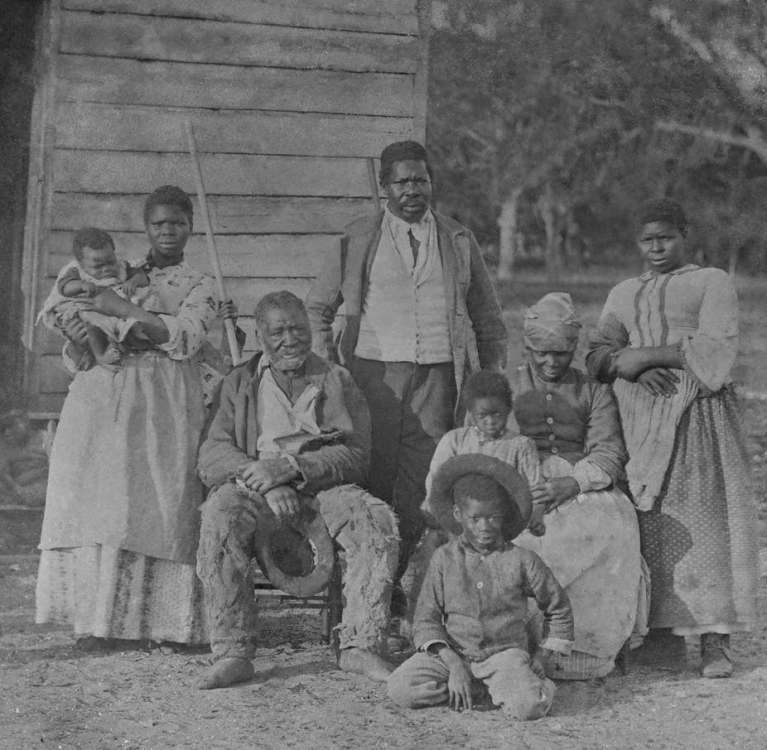
The cost of slavery to black Americans is incalculable and not in terms of economic impact. It is incalculable because of the lasting social consequences that can’t be assigned a number value. The suffering of black Americans did not end with the Civil War, they faced the lingering resentment of their white neighbors, all forms of discrimination, intimidation tactics and terrorism. Even with Constitutional amendments prohibiting slavery, recognizing their citizenship and granting voting rights, conditions did not improve dramatically for black Americans in the “Jim Crow” South. It took a further effort in the 1960s, the civil rights movement, to finally see some of these Constitutional rights fully realized and not before Dr. Martin Luther King Jr was murdered by an assassin’s bullet.

But, perhaps worse than the lynchings and segregation, one time events that can be adjudicated or something that can be addressed through legislation, is the immeasurable impact on the dignity of those who know that their ancestors were once treated as property and sub-human. I can’t really imagine how it would feel to have my own race being counted as 3/5ths of a person in my own country’s founding documents. There is no way to compensate for that psychologically and especially not when the widespread mistreatment was still in full force a mere generation ago. In such a context, it would be hard not to see any misfortune or measurable difference in outcome as somehow related to prior generations being robbed of their dignity and right to self-determination.

However, making matters astronomically worse is the fact that even many of those claiming to want to help often treat black people as their lessor and do more harm than good in their efforts to restore. A prime example of this is the so-called “War on Poverty” and how since then black marriage rates have plummeted and out-of-wedlock births skyrocketed. First, intact families are a greater predictor of future success than race. Second, making a person dependent on government handouts does nothing to restore their human dignity and, in fact, keeps them trapped. The welfare state has more or less enslaved the black community (and many others) to politicians who stoke fear of losing ‘benefits’ as a means to gain votes and maintain their own power.

Affirmative action programs do nothing to help confidence. No, if anything, they only further reinforce feelings of inferiority and, worse, feeds a notion that black accomplishments may deserve an asterisk. I can recall very well the conversation I had with a young man in the Midwest whom I confronted over his racism. He made no apologies, he embraced the description and then blamed his own lack of success in college on his not being given the same opportunities as minorities. Whether true in his case or not, it takes an extra dose of grace for a poor white person to not feel slighted and very easy to take out the frustration on the beneficiaries. I’ve had to fight this myself as someone who never finished college for mostly for financial reasons.

A few years ago I had hope, with the election of Barack Obama, that this would heal some of the wounds, bolster feelings of self-worth, and help us turn the page as a nation. Sadly, it has seemed to do the opposite. My opposition to increased government spending, as a lifelong conservative who doesn’t see more government control as the solution to every problem, was characterized in terms of race as was any opposition to his policies. Rather than be seized upon a moment of reconciliation, Obama’s race was used as political leverage, as a means to ostracized political opponents and advance a leftist policy agenda. The specter of racism is used to control, both to frighten some voters and also to smear others.

A decade ago I had believed that we were on our way to colorblind society, one like that Dr. King had envisioned where people would be judged by the content of their character rather than the color of their skin. Today I’m not even sure that is possible, the current political establishment benefits too much from identity politics and tribalism to allow that kind of society to form. It is hard not to feel cynical in a time when white vs black narratives dominate the headlines. And, while I believe this too shall pass, that the current racial tensions are an aftershock rather than a repeat of the past, there is also the reality that slavery is an unpayable debt.

The Unpayable Debt…

Some have suggested an idea of paying reparations to the descendants of slaves to right this historic wrong and would finally, once and for all, reconcile the injustice. There are those who have gone as far as to suggest a number, between $5.9 and 14 trillion dollars, as being suitable compensation or at least as a “meaningful” symbolic gesture and something that could improve race relations.

Those selling the idea of reparations say is that this is similar to payments made by Germany to those who suffered through the Holocaust at the hands of the Nazis.

However, those promoting the idea fail to mention the significant differences. The first difference being there are actual Holocaust survivors still alive today to receive the compensation for their loss, but there is not one former slave or slave owner still alive. A second big difference is that the abuses against the Jews in Germany were perpetrated directly by the government itself, whereas slavery was a private institution that existed long before the United States was a nation and was eventually ended by the government and at a very great cost. Hitler’s Germany didn’t stop themselves, the government stole directly from people and sent millions to slave labor camps or gas chambers to be killed—it was literal genocide.

But the bigger problem with reparations is who pays, who gets paid and how much?

It is not justice to make one generation pay for the sins of another. There are many in the United States who did not benefit from slave ownership. My own ancestors, for instance, did not own any slaves and the own possible way they might have benefitted is in slightly cheaper cotton. However, I didn’t receive any inheritance of money nor of cotton clothes from my grandparents. In other words, my savings is my own, from my own work, do I owe anyone (besides my cousin who just helped install flooring in my rental and the bank) nor do I feel any guilt for anything I’ve done. So why should the innocent be forced to pay any more than another person should be forced to work? Do two wrongs make a right? It would only be right to target those who actually did benefit directly from slavery and the complexities of that would be enormous. Would we go after the descendants of European and African slave traders as well?

And then there is the matter of determining who gets paid what. The reparations advocates come up with their dollar figure based on a calculation of hours worked, wages at the time, and interest that would be accrued. But that’s not how things really work. Again, the wages of my grandfathers and great-grandfathers were spent in their generation, dispersed into the economy, and there is nothing left for me. The reality is that the modern ancestors of slaves benefit from the economy in the same way that we all do, thus paying them with interest would not make any sense and especially when that money would be taken from their innocent fellow citizens. Then there’s the reality that not all American black people are ancestors of slaves, some of them are recent immigrants from Africa, some have mixed ancestry and others may actually be the ancestors of black slave owners. Yes, there were slave-owning black people in the American South—should their ancestors pay or be paid?

So, what do we do, start compensating based in DNA tests, as in, “You’re 1/5th black and thus entitled to X…”?

Do we prorate based on how much someone benefited from affirmative action?

Will multi-millionaires, those who obviously have done well, be paid?

Do we deduct welfare payments, etc?

Grading everyone based on their ancestors reinforces all the wrong ideas. It is measuring a person’s worth based on their ancestors rather than their own individual merits and exactly the thing we should be getting away from. Besides that, it is severely undervaluing the worth of a US citizenship, there are people fighting for the opportunity to be here, and our economy is much better here than it is in Africa. Yes, certainly a black person born into an urban environment may face unique difficulties. But then there are many immigrants who come here with nothing, who settle in the same neighborhoods and do advance. And where does it end, do we owe the followers of Joseph Smith for the systematic oppression of them and their religion? Do we owe the Republican party for the attacks against them by the KKK and lynchings of party members? It is just not a good direction to go, it is divisive, it will hurt the wrong people, and we are already deep in debt as a nation. Why should our grandchildren (black, white and other) pay interest to the Federal Reserve and other wealthy people for what is only a symbolic gesture and, if we are honest, won’t remove the stain of the past anyway?

The truth is that money won’t change anything as far as the past. Sure, I’m guessing many who would receive reparations like the idea, who wouldn’t take a windfall? But the reality is that all the compensation in the world cannot erase the legacy of slavery and all the wrong people would end up paying the price. A professional sports contract doesn’t make anyone forget injustice, many lottery winners often end up as poor as they were before, and money can’t be used to solve the problems created by money, to begin with. There are times when a financial settlement is the answer, when both parties directly involved (the aggrieved and the accused) are properly adjudicated. But billing the current generation for the sins of the past, especially without due process, is theft no better than slavery at worse and mere revenge at best.

The true legacy of slavery is that some are owed a debt that cannot be paid.

Wake Up, the Matrix isn’t Real!

A matrix, according to Merriam Webster, is “something within or from which something else originates, develops, or takes form.” And we do live in a matrix where our ideas about race, history, advantage and disadvantage matter more than the actual facts. In other words, the matrix is the way we individually or collectively interpret the facts and use them to form our ideas. Our thought matrix, our assumptions based on our own interpretation of facts, plays a significant role in our outcomes. Overcoming the mental processes that keep us bound is key to success in life.

The other week I was driving to a job site and notice some nice new houses with their well-manicured lawns, spiffy two-car garages, and paved drives. I was overcome momentarily with a tinge of envy, a little regret, and mostly befuddlement at how some people could afford such things. The question immediately came to mind, “What did I do wrong?” I thought of my life, my disadvantages, the opportunities missed, and all those things that held me back from reaching my full potential. However, before I went too far along in that thought process, another question countered the first, “What did I do right?” My mind went first to all the thing I did right, but then to all my advantages compared to most people in the world and the things I did not choose.

Did I do anything right, say compared to that Haitian man I saw in Port Au Prince hauling a car body on his back or a woman born in Afghanistan, Saudi Arabia, etc?

Our mental construct, our prejudices, and preconceived ideas, a product of our culture and choices, can make a real difference in our outcomes. Sure, positive thinking cannot change the circumstances of where we are born, a good attitude does not mean that there will be fewer obstacles to our success in life, yet why not make the best of the opportunity we are given and live in gratitude for what we do have rather than envy of others or frustration because of what we lack?

Part of the problem is that there is a system of control, it helps to create our expectations, it feeds our insecurities and can keep us bound. The real systemic oppression is the idea that politics (or more money in our hands and power over others) is the answer to our problems. Money can’t fix what it created, money itself binds us to the system and the things that money buys rarely deliver the happiness that we think they will. Again, look into lottery winners, many people end up as unhappy as they were before their winnings and some worse off. So why do we measure success in terms of things that will not and cannot make us happy?

What we really need to do is reorient ourselves. We must reject the unhelpful categories and classifications that keep us bound and change the way we think. Grievance culture, tribal score keeping and trying to rank people by their outward appearance is a backward-facing, small-minded and, frankly, racist orientation. There is no group guilt for slavery any more than there is for inner-city crime, we need to stop seeing people as white, black, orange or whatever, building our own identities around those superficial things, and aim for something greater—aim for the future that we want, yet hasn’t fully arrived, where all people are judged by the content of their character rather than the color of their skin.

It Is Time to Think and Act Differently…

If I had my own life to do over I may have dithered less (convinced that higher education was the key to success in life because of what my teachers told me) and started driving truck earlier. It was my own pride (and anxieties) that kept me from taking the better options available to me and I suspect there are many who, like me, prevent their own success because of their aim. And I’m not at all saying that we should sell ourselves short or settle for less than our abilities can afford us. However, many do set themselves up for failure because they keep waiting for the big break, the breakthrough when everything they dream of finally comes to them and refuse to take full advantage of the actual opportunities they have.

Another thing I would do differently is stop worrying that other people had it in for me and believing that I was helpless when the reality was that I was unwilling to make the right sacrifices. Part of my difficulty in life was due to my refusal to act differently or accept that my own behavior was part of the problem. Sure, there is something to be said for authenticity and being true to ourselves, but sometimes overcoming requires us to act differently and accept what is truly reality over our own individual construct. To find success in the religious context where I was born I would need to accept their rules and my fighting with that reality, my “kicking against the pricks” or resisting the flow rather than harnessing it, had some undesirable consequences.

Cutting to the chase, we have agency and we do not. There are well-worn paths to success with risks worth taking, call them cultural conventions, and then there are the low-probability high-risk paths that lead many to ruin. For example, finding a profession like teaching, law enforcement, construction or accounting (as opposed to seeking to be a career actor, model, musician or professional athlete) is more likely to produce desirable results for most people. Feeding our insecurities, dwelling on slights (real or perceived), demanding others conform to our wishes or that they respect us for who we are, expecting too much, is a path to long-term disappointment.

Overcoming the matrix means we need to stop seeing things in black and white terms. Sure, things like “black culture” or “white privilege” do exist in some form, at very least as a construct in our minds, but they really are only terms that obscure a far more complex picture and keep us trapped in the problem rather than working towards the solution. The reality is not as simple as the narratives pushed by academics and advocacy groups. There is no one group with all the advantages nor another with all the disadvantages. There is a reason why the suicide rates for middle-aged white people have skyrocketed while black rates have declined and are considerably lower—something (like connections and community) that might be missed in the commonly touted measures of success?

Recently I read the story of a naval aviator, an officer name Thomas J Hudner Jr, who was awarded a Medal of Honor for his actions in the Korean War. His act? He intentionally crash-landed his Corsair to protect and attempt to rescue a comrade, Ensign Jesse L. Brown, whose airplane had been hit by ground fire and was behind enemy lines. Brown, who happened to be the first black naval aviator, did not survive despite the efforts of Hudner, however, what does survive is an example of brotherly love that transcends artificial racial divides and presents a reality worth building upon. That is the legacy that, if built upon, will free us all from the sins of the past.

Loving dangerously, that is my idea of real success in life.

It is also neat, in these hyper-partisan times, to see George Bush Jr and Michelle Obama share some moments of common humanity together and continue this friendly exchange even at his father’s funeral. That is the symbolism that matters, that is the positive interaction we should aim for and the kind that can make a real difference in the world. If we love all people rather than prefer only those who look or act like us and orient ourselves to the hope of a better future rather than cling to our past and present suffering, we may well have a chance to build a better identity for ourselves as a nation. We may not be able to choose our inheritance, but we can work to create a better legacy for the next generation.

We, like Bush and Obama, have far too much in common to be at odds with each other.

Those who have faced hardship past or present should be heard and forgiven of their current insecurities. Those who have been indifferent to the suffering of others, out of ignorance or hardness of heart, should also be forgiven. And those two groups are all of us and have nothing to do with race. We are all victims, enslaved to a past that we didn’t create for ourselves, and all guilty of perpetuating the legacy to some degree. We can’t know what a person has been through by how they look on the outside and therefore we should love all people as we wish to be loved rather than by what we think they deserve. It is time to be courageously human, committed to true Christian love, rather than tribal, fearful and small.

Commitment Issues: Why Do We Baptize Younger, but Marry Older?

Standard

There was a Baptism service at my church this past weekend and not the usual indoctrinated from birth teenager either.  This was a married couple in their thirties come in from outside the Mennonite religious tradition.

We had Communion that night and the devotional was about how Jesus asked “take this cup from me” when considering the suffering he would soon endure.  The cup we drink at Communion is a voluntary commitment to “take up the cross” and suffer with Jesus.

Baptism is a serious commitment.  Jesus urged to “count the cost” before making a commitment to follow after him and his converts were adults.  This seems in stark contrast to the evangelical emotional appeals for a decision and child conversion of the current conservative Mennonite culture.

Mennonites, or rather our Anabaptist ancestors, suffered persecution because they (among other things) rejected infant Baptism in defiance of the established religious order of their day and tied the ritual back to profession of faith.  This is called “Believer’s Baptism” and a commitment made with keen awareness that it could come at a tremendous cost.

Baptism Age: Then Compared To Now…

We, as Mennonites, especially conservative Mennonites, take pride in our Anabaptist identity, we like to use it as something that makes us unique, special or separated and, put plainly, better than other Christian denominations.

But are we?

Are we much like early Anabaptists and Mennonites who came before us?

In my own church experience, as noted, the ‘conversion’ to Christianity often comes at a very young age and most are Baptized as teenagers.  This is probably a reflection of a departure from our Anabaptist roots and embrace of more recent Evangelical innovations.  We, unlike our predecessors, have pulpits to pound on, Sunday school hours aimed at children and Revival meetings with strong emotional appeals.

So, what about our Anabaptist heritage, how does *their* normal for conversion compare to our own?

When did *they* get Baptized?

According to a GAMEO article on age of Baptism this is the answer:

“The estimated average age of baptism for 10 representative Anabaptist men and women, 1525-1536, was 36.4, with none under the age of 20, two between the ages of 20 and 29, four between 30 and 39, and four between 40 and 49.”

Early Anabaptist converts were often adults who could likely more fully understand the commitment that they made and knew it could be a death sentence.  Mennonite converts today, by contrast, are often children, products of a careful indoctrination from a young age, taught to please parents and through ‘conversion’ gain access to the perks of cultural acceptance rather than lose it.

Which leaves a question of whether or not our child converts actually able to count the cost of being a disciple of Jesus or are they simply doing what is culturally expedient and trying to keep up with their religious peers?

Sure, we could say that our children (because of our great teaching and example) are more ready for a serious commitment than say, for example, a 16th century German peasant facing death, a safe assumption, right?

However, then we get to the topic of marriage commitment…

Marriage Age: Then Compared To Now…

As far as I can tell our Amish and Old Order cousins are doing just fine in regards to courtship and marriage—It seems to be business as usual for them.  However, in the conservative Mennonite subset I am a part of there also seems to have been a shift away from marriage commitment.

When compared to prior generations we are waiting longer and longer to tie the knot.  My great grandma, not uncommon in her day, married as a teenager, and my grandparents married just into their twenties like my parents did.  But in my own church today there’s nearly two pews of those twenty-five or older who never married and hardly even dated.

The subset of Mennonite I belong to came under the influence of fundamentalist voices, men like Bill Gothard (who remains single) and others, that taught a courtship model.  They have embraced an idea that basically turns a first date into an engagement.  Friendship, let alone development of a romance, has become nearly impossible and it is because there’s this fear instilled in both genders to prevent even healthy interaction.

These fundamentalist Mennonites have also come under the influence of worldly entertainment.  Despite our traditional dress and slightly more cloistered communities, we are exposed (through internet and other media) to secular millennial generation values.  Mennonite fundamentalists, like their worldly counterparts, are postponing a marriage commitment longer and more never do tie the knot.

Could it be possible that we value freedom from responsibility over commitment and our temporal pleasures (like freedom to travel or other self-satisfactory personal projects both religiously or otherwise justified) over the risk of a long-term relationship?

But, more importantly, what does this reluctance to show romantic love say about our faith?  Can we claim to be committed to God when we can’t even make a serious commitment to loving each other?

Why Do We Baptize Younger, but Marry Older?

I believe our practices betray our inconsistency of thought and departure from the identity we claim as our own.  It is cognitive dissonance, hypocrisy, etc.  We urge our children to commitment before they are able to count the cost as an adult, but then continue to mistrust that decision after they do so as if we do secretly know better. 

First we often urge them to wait to be Baptized.  We save that public confirmation for teenagers who went through a young believers class, which is nothing like the Baptism immediately upon profession of faith as was the case in the early church. 

But then, even after that, we continue to mistrust the commitment when it comes to courtship practice.  Mennonite suitors are not treated as an actual brother in Christ when it comes time to ask.  No, instead they are treated as if a hostile invader who must prove himself worthy by running a gauntlet and can be instantly disqualified if he dare be too honest about his own imperfection.

We might ridicule Catholics and Lutherans for doing the opposite of us (for Baptizing their infants and then confirming them as believers later on) but should probably be careful not to throw stones from our glass houses.  We should instead consider the beam in our own eye and ask why we are urging commitments that we don’t fully recognize or completely respect later on.

We tell tales of Constantine marching his troops through a river and calling them Baptized.  Yet could it be that we are really only manufacturing pre-programmed religious robots?  Sure, we produce children who recite back memory verses, spout out our dogmas on cue, and give all the right sounding answers with a smile on their face, but are as evil as the world at heart?

Adult Commitment Rather Than Premature Birth and Underdeveloped Faith

In Christian commitment (as in marriage) we should probably be encouraging our adults to commitment and telling our children to wait until ready.  If a person is too young to commit to marriage then they are also likely too young to comprehend the true cost of discipleship and make a commitment to God.

As one who was physically born early (my mother’s labor induced rather than natural) there is clear danger in going ahead of schedule like this.  I spent weeks in the hospital, in plastic box seperated from my mom because of a collapsed lung, and seemed to have developmental issues since as a result.

Likewise, encouraging premature spiritual birth could be to our detriment and leading our converts to struggles down the road.  Perhaps we have become like Abraham who tried to create a fulfilment of God’s plan through his own efforts?  Ultimately our children are not saved by our good parenting, frequent altar calls or courtship standards.

We need to return to a radical faith that emphasizes the cost of discipleship and encourages adult decision rather than urge premature commitments.  Perhaps the our young adults would be less fearful of lessor commitments and more ready to sacrifice all for love than cling forever to their childish fears?

Whatever the case, there is something very special about an adult Baptism and a decision made by one more fully aware of the cost of commitment.  May God bless Dan and Dina for their testimony of faith and their public commitment yesterday.