The People Want a King, Part II: The Idolatry of the State and the Call to Self-Rule

Standard

A decade ago, in “The People Want a King, Part I,” I wrestled with the ancient cry of Israel—“Give us a king!”—from 1 Samuel 8, seeing in it a mirror to our own craving for centralized power. I cast Trump, then a looming figure on the horizon, as a Saul-like pretender—brash, self-absorbed, a king unfit for the throne. The heart of man, I argued, is frail and fearful, ever eager to trade liberty for the illusion of security. Now, ten years on, we revisit that cry, turning the lens inward and upward: what happens when the king we demand becomes a god we worship? And what might it mean to cast down that idol and govern ourselves under a higher law—one that admits no rival?

Let us begin with a heresy: government is not sacred. It is not a divine institution bestowed from on high, nor are its stewards a priestly caste anointed with heavenly oil. Scripture offers no such mandate. The state is a human construct—a tool, a mechanism, a servant of necessity. It is not the ekklesia, the called-out assembly of God’s people, nor the Kingdom of Heaven breaking through the veil. It is, at its core, a business: a transactional entity exchanging services for tribute. When it ceases to serve—when it grows fat and lazy, a Blockbuster Video in a Netflix world—it deserves no reverence, only replacement. To treat it otherwise is to fashion a golden calf from the scraps of bureaucracy.

Yet the cry persists: “The nation is too complex for such simplicity!” I encountered this objection recently, a rebuttal to my call for radical restructuring. The argument, draped in the garb of sophistication, insists that governance transcends mere commerce—that its intricacies demand a permanence beyond critique. This is a shade thrown at those, like the DOGE reformers, who dare to wield the axe of efficiency against the overgrowth of empire. It is a plea for the status quo, cloaked as concern for “public trust.” But trust in whom? The regime that has ruled longer than memory, entwined with corporate titans and special interests, bleeding the commons dry? The trust was shattered long before any billionaire CEO took the helm; it crumbled under tax rates that plunder and wars that pulverize the defiant.

Here lies the theological crux: complexity is not a virtue—it is a veil. In 1 Samuel 8, Samuel warned Israel that their king would take and take—sons, daughters, fields, flocks—until they were slaves in all but name. The modern state has fulfilled this prophecy with chilling fidelity, its mission creep a slow idolatry. What begins as a servant becomes a lord; what promises order delivers oppression. The labyrinthine bills, the thousand-page tomes of legislation—these are not signs of wisdom but of deceit, a Sanhedrin of scribes hiding corruption behind the law’s letter. To call this sacred is to confuse the Temple with the moneychangers’ tables.

Government as business is no mere metaphor—it is a functional truth. It trades protection and infrastructure for our coin and consent, a covenant not unlike the marketplace. Yet unlike the agora, where competition hones the blade of excellence, the state resists renewal. Private enterprise, for all its flaws, bends to the will of the consumer: Sears falls, Amazon rises. Governance, enthroned as monopoly, calcifies. Its priests—elected or appointed—crown themselves with divine right, decrying reform as sacrilege, a “threat to democracy.” But democracy is not their god; power is. And power, unchecked, builds altars to itself.

This is the sin of the political establishment: they have conflated the nation with their institution, the people with their rule. The nation is not the state, nor the state the nation—just as Israel was not its kings, nor its kings Israel. Government should reflect the imago Dei in its people, a stewardship of justice and flourishing. Instead, it mirrors Baal, demanding sacrifice from the many for the feast of the few. How is this sustained? Through a catechism of control—children reciting pledges, citizens taught to venerate the machine as eternal. To question it is to court excommunication.

Yet Scripture beckons us elsewhere. The restoration of governance requires a return to first principles: simplicity as clarity, transparency as righteousness, accessibility as the leveling of pride. The state’s convolution is no accident—it is a shroud for sin, a “you wouldn’t understand” that echoes the serpent’s whisper. To dismantle it is not anarchy but exorcism, a stripping back to the studs to expose what festers. The old guard, like Saul clinging to his throne, shriek at the loss of their sacred monopoly. But their divinity is a lie, and their temple must fall.

The Stagnation of the External, the Promise of the Internal

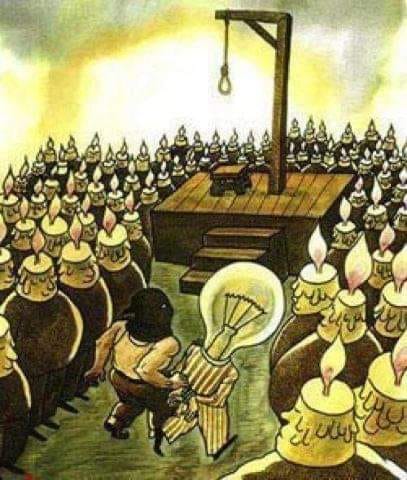
Consider the contrast: a business that squanders its capital dies; a government that squanders ours endures. This is the curse of external governance—its inertia defies the natural law of adaptation. Were it subject to the crucible of choice, only the fittest form would stand. Instead, it grows sclerotic, a Leviathan too holy to slay. And the people, seduced by its permanence, make it their idol. They crave a king to think for them, a mediator to absolve their agency. Politicians—prostitutes of the soul—oblige, peddling promises they half-believe, deluded into messiahs of their own making. Zelensky’s advisors call him mad with grandeur; Washington’s geriatrics are no different, mistaking their tenure for providence.

This is not governance but bondage, a learned helplessness masquerading as piety. The privately employed know their limits—life persists beyond their shift. But the state’s acolytes preach indispensability, as if only they can wield the scepter. Contrast this with self-governance: a people ruled not by fleshly lords but by principle, by the law written on their hearts. Jeremiah 31:33 whispers of such a day; Hebrews 8 seals it in Christ’s blood. At the civic level, this need not mean chaos but discernment—shuffling roles, pruning branches, trusting that micromanagement by fools yields only thorns.

Why, then, the sanctity of the status quo? It is the coward’s theology: easier to bow to mystery than to wrestle truth. As Israel preferred a king to the uncertainty of judges, so we prefer bureaucracy to responsibility. Samuel’s warning rings anew: the king takes, and we cry too late. External governance is not our salvation—it is our stagnation, a false god promising safety while forging fetters.

The Myth and Monuments of the Federal Cult

To cement this idolatry, the Federal government has woven a mythology and erected monuments rivaling the temples of old. Consider the Capitol, that domed sanctum of marble and myth, its steps ascending like an altar to a civic deity. The Lincoln Memorial, a brooding Parthenon, gazes over a reflecting pool as if to baptize the nation in its own reverence. These are not mere buildings—they are shrines, designed to awe, to whisper: “This is eternal, this is beyond you.” Like the ziggurats of Babylon or the temples of Rome, they fuse power with divinity, demanding obeisance from the pilgrim and the peasant alike. The Founding Fathers, recast as demigods, stare down from friezes and statues, their words carved into stone as if they were Moses descending Sinai. Big Brother is not God—yet here he looms, a surveillance state cloaked as savior, its all-seeing eye promising protection while its fist tightens the leash.

This cultic architecture is no accident—it sells the lie that the state is sacrosanct, its form immutable. The pledge of allegiance, recited by schoolchildren, is a liturgy; the flag, a totem; the Constitution, a holy writ too sacred to amend save by the high priests of amendment. Yet this is a sleight of hand. The Constitution, for all its brilliance, is a human document, not a divine oracle—its framers knew it, urging vigilance against its abuse. The Federal cult inverts this, turning a tool into a god, a means into an end. As the temples of Baal housed idols to blind the masses, so these monuments obscure the state’s frailty, its susceptibility to rot.

Enter January 6th, 2021—a day branded as a desecration, a violation of the “sacred ground” of democracy. The narrative drips with priestly indignation: rioters stormed the Capitol, profaned its halls, threatened the holy order. Politicians clutched their vestments, decrying the “insurrection” as an assault on the nation’s soul. But let us parse this claim with a smirk—how many have died at the hands of this government, overseas and at home, in the name of “protecting democracy”? Millions, if you tally the wars and drones, yet the single death of that day gets the sackcloth and ashes. If the Capitol is sacred, what makes it so? Not its service to the people—its corridors have long echoed with the clink of corporate coin and the murmur of self-interest. Not its fidelity to justice—its laws have sanctioned plunder at home and terror abroad, not least against Argentina, whose people still bear the scars of U.S.-backed meddling and economic strangulation. The sanctity, then, is a projection, a mythos guarding the idol. January 6th was chaos, yes—ugly, reckless, and lawless—but to call it a sacrilege assumes the temple was holy to begin with. It wasn’t. It was a house of power, not of God.

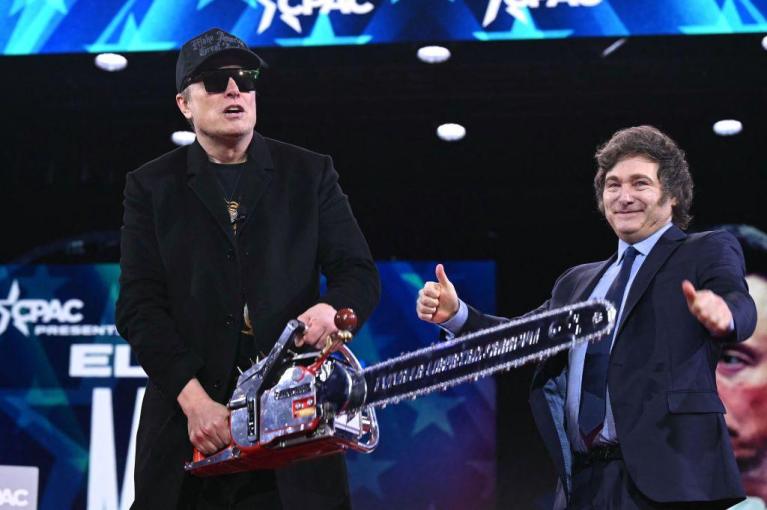
The true violation predates that day: the slow consecration of a bureaucracy into a deity, the elevation of marble over morality. Ancient temples hid their emptiness behind splendor; the Federal cult does the same, crying “blasphemy” when the curtain is pulled. January 6th didn’t defile a sacred space—it exposed a hollow one, a monument to a king the people demanded but never needed. And here’s where Argentina’s President Javier Milei enters, grinning like a Cheshire cat as he handed Elon Musk a chainsaw in 2025, etched with “Viva la libertad, carajo” (“Long live liberty, damn it”). Milei, who’s taken his own chainsaw to Argentina’s bloated state, wasn’t just gifting Musk a tool for bureaucracy—he was practically dancing with glee to see Musk turn it on the U.S. regime that’s bullied his nation for decades, from IMF debt traps to covert coups. It’s less a symbol of shared efficiency and more a middle finger to the empire, wrapped in a libertarian bow.

Trump’s Mandate and the Singular King

So where does Donald Trump fit in this unholy pantheon? In Part I, I cast him as a flawed Saul—brash, impulsive, a king more enamored with his own mirror than his people’s good. I stand corrected, or at least refined. Trump is no savior, nor should he be—Christians have but one King, enthroned above all earthly powers (Colossians 1:16-17). Yet he wields a mandate, both legal and theological, to tear down these idols, and therein lies his purpose—not as messiah, but as iconoclast.

Legally, Trump’s authority stems from the Constitution itself—a document that vests executive power in a president elected by the people (Article II, Section 1). His 2024 victory, a roar against the entrenched cult, grants him the democratic right to wield that power against inefficiency and corruption. The Federal government, swollen beyond its constitutional bounds, has no divine charter to resist pruning. The framers envisioned a lean state, not a Leviathan; Trump’s DOGE-inspired axe—however blunt—aligns with that original intent. He can shutter departments, slash budgets, and fire the high priests of waste, all within the law’s letter. The shrieks of “threat to democracy” from the old guard are the death rattles of a dethroned idol, not a defense of principle.

Theologically, his warrant runs deeper. Scripture abhors idolatry—Exodus 20:4-5 commands no graven images, no bowing to crafted gods. The Federal cult, with its temples and myths, is precisely that: a false deity usurping allegiance owed to Christ alone. When Jesus declared, “Render to Caesar what is Caesar’s, and to God what is God’s” (Matthew 22:21), He drew a line—Caesar gets coins, not worship. Trump, for all his bombast, serves as a wrecking ball to this blasphemy. He need not be pious to smash Baal’s altars; Gideon was a coward before he toppled the poles (Judges 6:27). If Trump’s tenure exposes the state’s hollow sanctimony—January 6th as symptom, not sin—then he fulfills a divine irony: a flawed vessel breaking a greater folly.

Yet here’s the correction to my 2015 take: Trump is not the point. I overstated his flaws as disqualifying, missing the forest for the trees. He’s no king to crown—Christians must reject all earthly thrones save one. “My kingdom is not of this world,” Christ said (John 18:36), and Paul echoed, “Our citizenship is in heaven” (Philippians 3:20). Trump’s role is transient—permitted, not ordained—to dismantle a false god, not to replace it. The Christian’s allegiance lies with the King of Kings, whose rule brooks no rival, be it Trump, Biden, or the marble gods of DC. Self-governance, then, is not just civic—it’s spiritual, a refusal to outsource our souls to any throne but His.

The Eschatological Hope

The people want a king, but the King we need refuses a throne of stone. To cling to the state as sacred is to repeat Israel’s folly, to trade the Spirit’s freedom for Saul’s spear. Self-governance is not utopia—it is obedience to a higher call, a shedding of idols for the stewardship God demands. Complexity is a liar’s refuge; trust is a martyr of our making. Let Trump tear down the temples—legally, he can; theologically, he should—but let us not crown him in their place. Overturn the tables, tear the veil, and build anew—not a kingdom of men, but a commonwealth of the free, under no crown but His.

Words and Wars — Why Musk Terrifies the Establishment

Standard

Some of us are old enough to remember the playground taunt, “Sticks and stones may break my bones, but words can never hurt me.”  That denial of the power of words, of course, was merely to disempower a bully and quite a bit more effective than crying for mommy in most circumstances.

In this age of online censorship and newly invented categories of offense, it is difficult to even claim that words have absolutely no impact on us.  Being called a “racist” or “domestic terrorist” does matter, it can come with serious social consequences and be used as a pretext for punishment of political opponents.  No laughing matter.

We are governed by words.  If we see a red sign emblazoned with the letters S-T-O-P, we tend to comply (at least partially) without much thought.  And, whether you want to comply or not, because of written laws, you’ll end up giving the IRS a significant portion of your income.  Words can and do hurt your wallet, they limit opportunity and shape outcomes.

We are steered, employed by others to their own ends, by use of description, framing and narratives.  For example, whether a deadly conflict is described as being a “military intervention” (Yemen) or as an “invasion” and “aggression” (Ukraine) has little to do with substantive difference and everything to do with how propagandists wish us to perceive the event. 

Context provided, what is or is not reported, changes the moral equation.  

Those who control social media platforms understand the power of words.  They know that awareness is induced through language and that narrative matters.  This is why they have taken such interest in curtailing speech and the dissemination of information.  Even if corrupted by partisanship, many of them likely see this as their responsibility or a moral obligation.

Unfortunately, regardless of intent, these self-appointed gatekeepers failed.  The same people who routinely “fact-check” hyperbole and satire, even banned people for suspecting the lab origin of the pandemic, have yet to identify the Russian collision narrative as false.  The most egregious act was Twitter using bogus reasons to suspend the account of the New York Post for their sharing the Biden laptop bombshell on the eve of the 2020 Presidential vote. Talk about election interference!

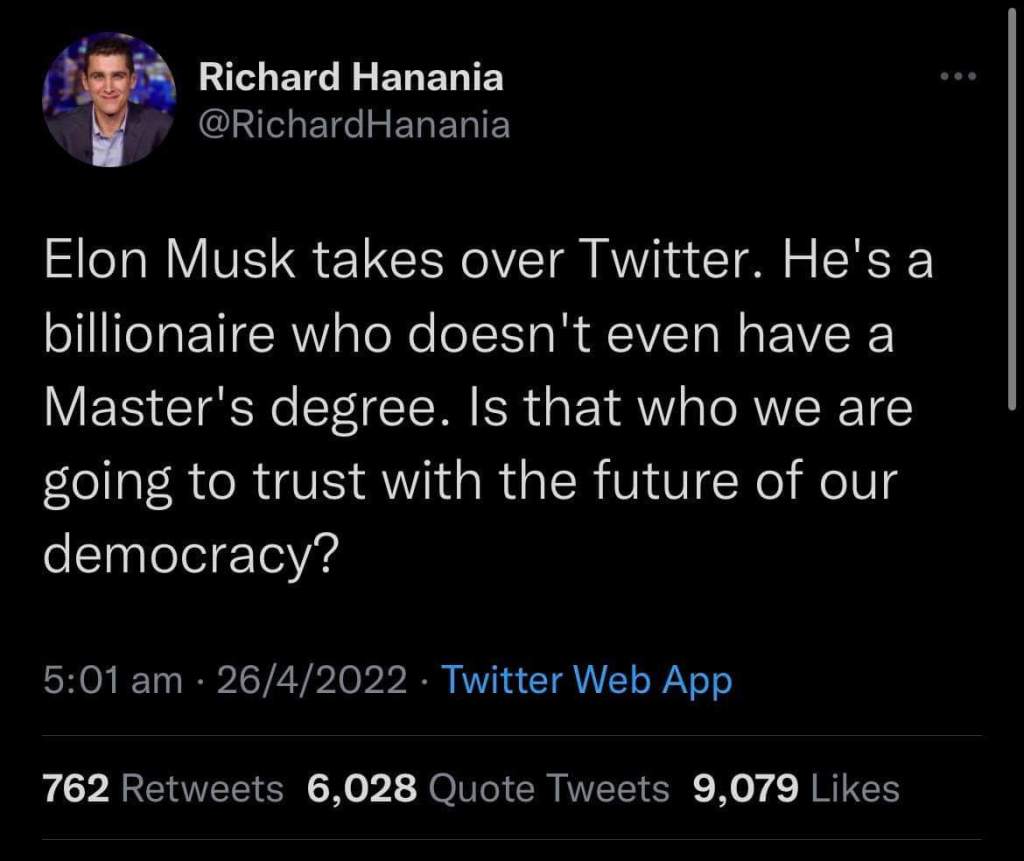
Elon Musk’s announcement of his ownership of a significant stake in Twitter and then subsequent buyout of the far-left’s favorite social media has shook up the political establishment.  Elizabeth Warren, a powerful US Senator, who leveraged a fiction about her Native American heritage to attain her own privileged position, somehow worth $67 million herself, had this to say:

Strange how now she speaks up about potential “dangerous to democracy,” but not when Big Tech was using the pretense of their “community standards” to ban content creators, including a former President, for challenging their ideological agenda and narratives.  Sure, they always could conjure their excuses or hide behind “Twitter is a private business, if you don’t like it start your own internet,” disingenuously while suing individuals who defied their demands, but now the truth comes out, suddenly it is all about democracy:

Credentialism much? I guess we should trust the privileged elites who trust the corporate system instead?

To those of us who have faced algorithmic demotion and punitive measures for our wrong-think, doing things like posting the actual flag of Ukraine’s Azov battalion or a quote of Hitler praising censorship intended as ironic, there is appreciation for Musk as a free speech advocate.  To those who use the word “democracy” as an excuse to trample rights, this represents an enormous threat to the ability to control narrative.

For those of us who have been paying close attention and involved, we know why Yahoo News, along with other far-leftist run online publishers, have shutdown their comment sections.  Sure, they may say this was to prevent misinformation, but the reality is that there would often be factual rebuttals or additional context that would undermine the narrative of the article.  It was always about control, not protection.

The war of words is as important as that which involves tanks, bombs and guns.  It was propaganda and censorship, as much as physical means, that enabled Nazis to put Jews in camps.  This is why Russo-phobia, the demonization and cancelation of a whole ethinic group, over things the the US-led imperial left, is so troubling.  President Obama was not accused of war crimes for a brutal AC-130 attack on an Afghan hospital, despite the dozens of verified casualties, why is that?

It is, of course, how the story is presented that makes all of the difference.  If a writer wants a leader to appear incompetent they might use the words like “bungled” as the description.  If they wish to spin it as positive they’ll say “setbacks” and dwell on framing the cause as righteous instead.  Those who want the public to support one side of the Ukrainian conflict will downplay or even completely ignore important context, like NATO expansion, the violent overthrow of Ukraine’s democratically elected government in 2014, and merciless shelling of the Donbass region.

And this is why Musk promising to restore freedom of speech on Twitter is such a big deal and especially to the current power brokers.  The military-industrial complex, which owns the corporate media and many of our politicians, stands to lose billions in revenue if they can’t convince the gullible masses that Vladimir Putin is literally Hitler for leading a US-style “regime change” effort in his own neighborhood.

I mean, how will US political families, like the quid pro quo Biden’s, continue to make their millions in kickbacks (Burisma/Hunter scandal) if Ukrainian’s energy is back under Russian control again?

This is why they’ll fight tooth and nail to keep the presentation of the story as one-sided as possible.  They do not want us to hear the facts that may cause questions.  They only want us to have their prepacked stawman “don’t say gay” version of their enemies, presented by the late-night funnyman for ridicule, rather than allow a truly informed debate. 

Unlike many, the ignorant who accept narratives at face value, the elites with government and corporate power understand that the world is run by ideas.  It is how wars are won.

First They Came for the Conspiracy-Theorists…

Standard

The mass exodus off of Big Tech social media platforms has begun. Alternatives, like Parler, MeWe, and Gab, overnight, have gone from being the virtual Leper colonies of “wrong think” to viable communities for those fed up with the increasingly Orwellian mainline platforms.

After the 2016 election, and the influence of meme warfare and anti-establishment messaging on social media, the establishment (predictably) began to put pressure on for a clampdown. These self-appointed gatekeepers of information, the enraged Democrats and their corporate billionaire benefactors, were bitterly determined to have control of the narrative back in their own hands.

By hook or by crook, by any means necessary to get the job done, they would not allow a repeat of their crushing defeat in 2020, they would get Donald Trump out of the White House and be restored to the positions of power they believed were rightfully their own. Trump was a clown, they were smooth and sophisticated, how dare he takes away their glorious coronation—how dare he troll and mock them?

Democrat voter screams in rage after Trump victory in 2016.

Facebook and Twitter, encouraged by the corporate legacy media eager to eliminate competition, facing the demands of angry ‘progressive’ activists, slowly began to strangulate dissident perspectives on their platforms. It started with the extremists like Alex Jones, along with white supremacists and others on the fringes, then slowly worked in from there, throttling content, shadow banning, adding ‘fact-checks’ to posts, and completely removing viral videos that they deemed to be misinformation.

Learning From the History of Establishment Narratives

Three episodes from history, recently made into movies, involve those who questioned the established narrative, who endured terrible slander campaigns by the corporate media and government, and some were only vindicated years later.

Power is corrupting. Even good men, in bitter competition, can manipulate and mislead.

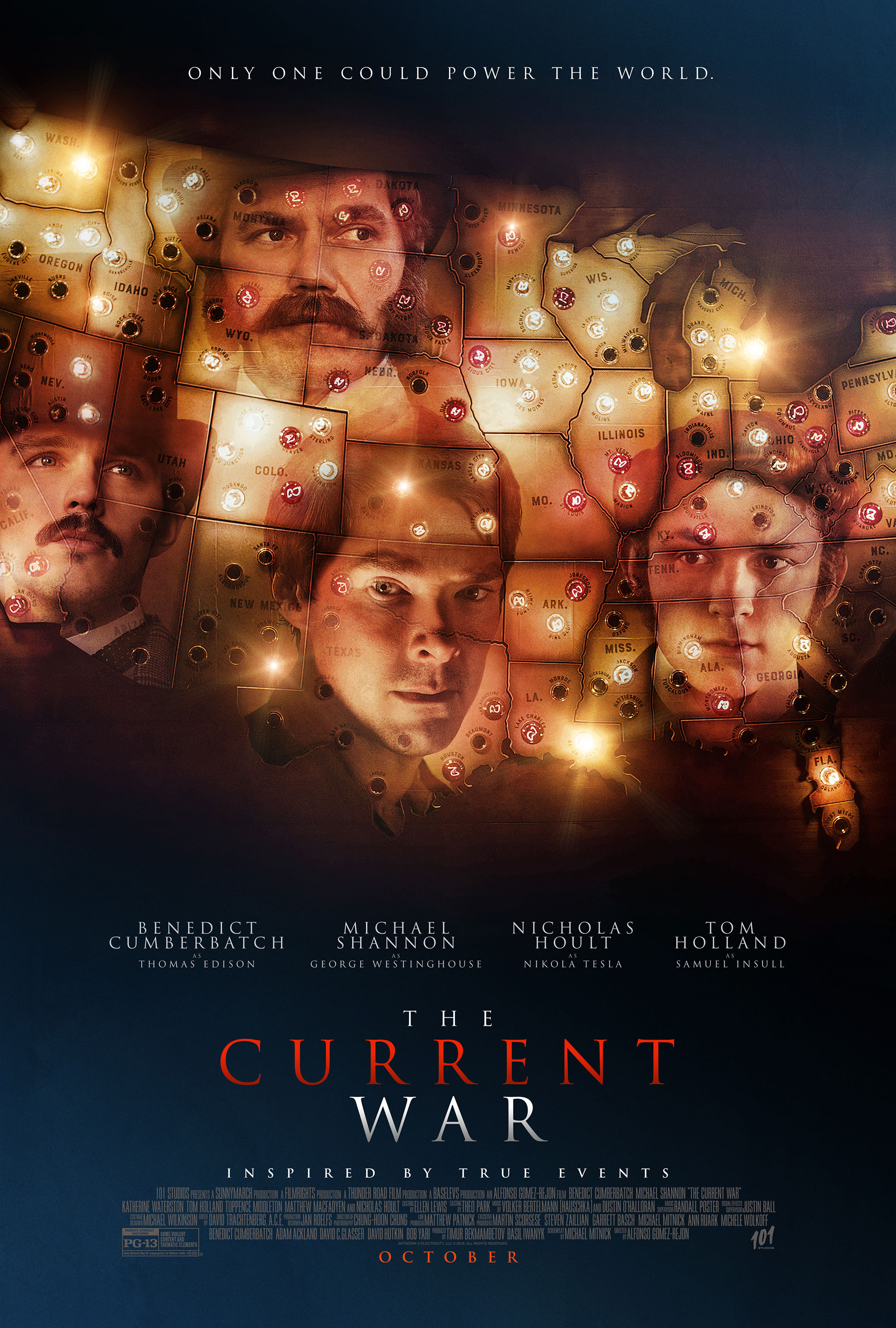
The first, “The Current War,” tells the story of Thomas Edison and his electrical competition against George Westinghouse, Nikola Tesla, and their alternating current. Edison, clearly for personal gain, tried to paint the alternative, as being extremely deadly and dangerous. He went as far as to do demonstrations, killing animals (including an unfortunate elephant), and even helped to invent the electric chair, to prove the superiority of his own direct current. He had the press in his back pocket then much like Big Tech has influence over the corporate media. They ran his stories critical of Westinghouse without truly understanding the topic material themselves.

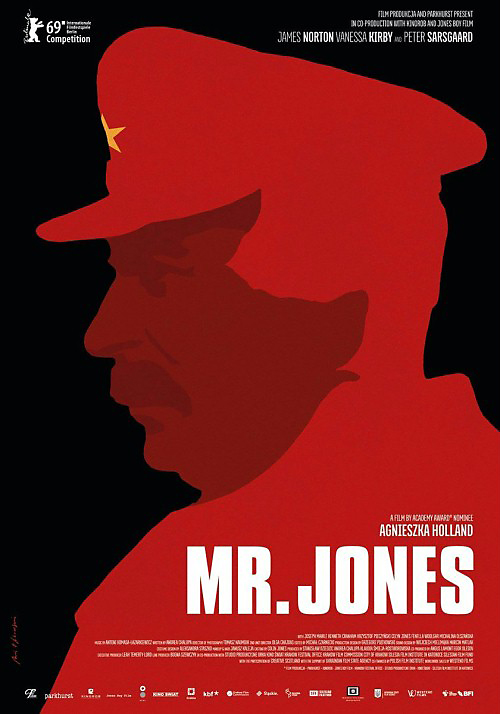
Stalin was praised by our media while millions died. One man spoke out and paid the ultimate price.

The second movie, “Mr. Jones,” tells the story of a true journalist who uncovers the horrible truth, at great personal risk, about the millions starved to death in Ukraine due to Stalin’s economic policies. But rather than being embraced as a hero, his account is denied by a Pulitzer winning New York Times reporter and dismissed by the powers that be. Had he lived today, his stories would likely be ‘debunked’ by the fact-checkers, he would be ridiculed as a conspiracy theorist, accused of trying to create a false narrative, and canceled. Sadly, it took years before the truth of what was actually happening under Communist rule finally leaked out from around the self-appointed gatekeepers who were the true propagandists.

Do not trust the establishment. Always question the narrative.

The third story, “Richard Jewell,” shows how nasty investigators and sleazy journalists can be when they think they have you pegged. An innocent man nearly got railroaded into confessing to a terrorist bombing despite being one of the first responders. He was profiled and painted as the villain. If not for a helpful attorney friend, who brought him to his senses about what he was truly up against, he may have spent his life behind bars for a crime he did not commit. And the media establishment still does the same today, rushing to judgment based on political agenda or popular narrative, indifferent to the real damage they cause to individuals in their neglect of due diligence. The story of Jewell should be a wake-up call to those who trust the establishment narrative.

The allegations of Alt-tech being home to conspiracy theories and racism reminds me of Edison’s smear campaigns against Westinghouse and alternating current. Do you think Big Tech will not try to influence you against their competition? Of course, absolutely, they will!

Edison advised on how to use alternating current to kill a horse, this elephant “Topsy” and a death row inmate. All part of his campaign against rival Westinghouse.

The attempts to silence those who are questioning the election results remind me of the tremendous pressure put on Gareth Jones to deny what his own eyes had seen in Ukraine. Do you really think that the own current crop of corporate ‘journalists’ today and establishment politicians are incapable of being corrupted like those of the past who denied Stalin’s terrible abuses? No, are you kidding me? They certainly are not cut from better cloth today, the New York Times is the same leftist propaganda rag now as it was then, and we should always question the narrative!

The Time To Speak Out Is NOW!

As one who understands that censorship is sold as protection and is actually always about control, this was troubling and brought to mind the poignant words of Martin Niemöller, German Lutheran pastor:

First they came for the Communists, and I did not speak out—because I was not a Communist. Then they came for the trade unionists, and I did not speak out—Because I was not a trade unionist. Then they came for the Jews, and I did not speak out—Because I was not a Jew. Then they came for me—and there was no one left to speak for me.

Niemöller penned those words after the war to confess his regrets as one of those who did not speak out against the censorious Nazi regime. He, like many other Germans, had initially supported Adolf Hitler. Hitler had promised to unite and heal the country, under National Socialism, after years of turmoil.

The thing many do not understand today is that murderous tyrants do not advertise themselves as villains. Hitler was promising things like health care, economic security, and safety, what could possibly go wrong?

His harsh rhetoric against the privileged few would have sounded quite progressive.

Not the typical picture we see of Hitler today.

It wasn’t until after the war, until seeing people relocated or being sent to a concentration camp for standing up to the regime, that the full extent would be known. Niemöller ended up imprisoned at Sachsenhausen and Dachau, was nearly executed, which is why he wrote the poem that he did, as a warning to us. Unfortunately, many of us are still waiting for Nazis, who are targeting Socialists, trade unionists, and Jews, not realizing that the next Hitler won’t be pushing nationalism.

In our current context the poem could as easily be written:

First they came for the conspiracy theorists, but I did not speak out—because I was not a conspiracy theorist. Then they came for the far-right, but I did not speak out—because I was not far-right. Then they came for Evangelicals, but I did not speak out—because I was not Evangelical. Then they came for me—and there was no one left to speak for me.

The point being, the categories, and labels can be changed. The equivalent of Nazis today, the people smashing windows and cracking skulls in the name of social justice, call themselves anti-fascist. That’s how they fly under the radar, they claim that anyone who stands up to their violence is a Nazi and deserving of death. And, rather than stand up to the madness, many take these Marxist thugs at their word and our political establishment simply goes along with it. Why? Well, because they are afraid, ignorant, misguided, sympathetic, or complicit in the abuse.

Mostly peaceful protest.

Many well-intentioned liberal folks, for example, support BLM not realizing it is a political organization with an extremely narrow ideological perspective and far-left agenda. They’re duped. They think they are protesting against systemic oppression and racism, they join those who feel disenfranchised, and others who are genuinely compassionate people like them, never aware that they are being used by those who care less about black lives and are cynically encouraging racial grievance as a means to gain political power. By the time that good folks realize their mistake, there will be nobody left to speak for them.

Many others cower in silence because they are afraid of being called “racist” or a “Nazi” or “far-right” or “conspiracy theorists” for daring to challenge the establishment narrative. They think that if they say nothing that it will all go away. They, like Richard Jewell who believed the system would protect him from mistreatment, will be shocked when eventually end up being cast as the villain by the establishment-enabled mob. They do not understand that those ‘canceled’ before them were not always in the wrong and those who did the deed were not as righteous as they claim to be. Don’t wait until it is your turn to be smeared to speak up!

Those speaking the truth die first.

We must see past the propaganda, we must see past the labels slapped on those who dissent against the establishment narrative, we must speak for those who are silenced or we will suffer the same fate as them and there will be nobody left to speak for us. Things are not always as they seem. The next Hitler will not look or act like Hitler. No, it will be bright and colorful, come holding a sign “celebrate diversity” or chant slogans like “black lives matter” and things that most of us would agree with at face value. Evil is insidious, treacherous, it does not announce what it is, but you have been warned and it is now time for you to question the narrative and not be silenced.

Slander, Censorship, and the Current War

Oh, wow, you made it this far?

Let me continue…

It is maddening that so many seem incapable of seeing what is right before their eyes and should be obvious. There is an unbelievable double standard, based on race and social status, but not the double standard that is constantly obsessed upon by those at the top. There dangerous rhetoric, disinformation, and outright lies, but it will not get you de-platformed or banned.

And I’m not only talking about mobs, looting, arson, and murder being described as “mostly peaceful protests” nor teenage Kyle Rittenhouse being called a “mass shooter” for his defending himself from a potentially deadly assault by adult men, with felonies to their name, one being illegally armed, and then being portrayed as hapless victims. I’m not talking about Nicholas Sandmann who was the victim of a vicious smear campaign, targeted by our media and cultural elites, for a confrontation they totally misrepresented.

One of the scariest things I’ve ever heard from a Presidential candidate’s mouth was during the first debate when Antifa, a violent political hate-group, was described as being just “an idea,” refusing to denounce the billions in damages, countless assaults, and a growing number of murders. It is as chilling as saying racism and white supremacy are “just ideas,” that the lynch mob arose spontaneously rather than being an organized event, therefore it can’t be condemned. He didn’t excuse, he didn’t deflect, he simply acted as if the most violent far-leftist movement in this country didn’t exist and was allowed to move on without any further questioning about it.

Just an idea. Nothing to see here.

This kind of gaslighting is becoming increasingly common, coupled with censorship of all narratives that challenge the establishments narrative, fact-checking that is truly misinformation and more misleading than the content it claims to debunk, and removal of grassroots efforts.

My own exploration of social media alternatives began after observing a couple of pro-Trump “silent majority” groups rapidly grow in size, friendly people putting out a warm welcome to all and especially those who had voted for the Democrat last time now converted. These groups would reach the size of a few hundred thousand members and then suddenly go dark, removed. And then it got close to me. A friend, a stand-up guy, who moderated a pro-2nd Amendment group, without warning or explanation, was de-platformed from Facebook along with the other moderators. His own personal account deleted without cause.

And it wasn’t just him…

This was election interference. It has happened to other people, their accounts, and groups. Meanwhile, Antifa, BLM and other violent far-left groups are allowed to organize, with impunity, without fear, on these same platforms. The Russian collusion narrative, a political disinformation campaign has never got anyone flagged or banned. Nor was anyone ever punished with account removal for spreading falsehoods about an innocent high school only guilty of smiling nervously while a deranged man pounded a drum in his face. But to so much as suggest that there is fraud in this election and your protest group will be taken down and hashtags silenced.

Big Tech censorship is brazenly partisan, clearly suppression of dissent, and yet there are still those concerned about the alternatives being havens for conspiracy theorists and racists?

Balderdash!

The same kind of lies we hear now about Alt-tech were told by Edison and parroted by media a century ago. If you believe the ‘fact-checkers’ today about election fraud, you would’ve believed Stalin’s hirelings, establishment ‘journalists’ with Pulitzers, who were truly propagandists and covered up the atrocities of the Soviets in Ukraine. The real control freaks and fascists, those willing to do whatever it takes to hold on to their monopoly of power, will not hesitate to lie, sow seeds of chaos and promote confusion. We, like Niemöller, will not get a chance redo for our mistakes. Unlike him, we may not have anybody to fight off the tyrants and rescue us when they come.