Watching Gran Torino With My Asian Son

Standard

After reading a review of Gran Torino, a Clint Eastwood movie from 2008, that dismissed it as shallow in its exploration of racism, I’ve decided to explore some of the depth of the movie that was missed.  It was a great story about finding common ground, that takes a bit of twist at the end from the typical Clint Eastwood film.  My family (mixed race and culture) could appreciate the themes more than the average viewer—yet is a beautiful redemption story that all people can enjoy as well.

“Get off my lawn!'”

The story is about an angry old man who is not dealing well with change.  Walter ‘Walt’ Kowalski, a Polish-American retired auto worker, Korean War veteran, and recent widower—his beloved wife passing right before the start of the narrative.

In the opening frame, he fits a stereotype of an elderly homeowner defending their patch of turf from an encroaching world.  It seems every small town has one.  That guy who trims his front lawn with scissors and does not deal well with the trespasses of the younger generation, the snarling “get off my lawn” line from the movie became an instant meme.  

Why?  

It is just too familiar. 

The expression captures the essence of a fading dream.  The American middle class values property ownership.  A lawn, once a complete luxury and exclusively for wealthy estates, had become the mark of post-WW2 affluence.  Walt was the beneficiary of this period of economic growth.  He had lived a quintessential suburban life.  

But now it had become a nightmare.  It is not the same neighborhood anymore. The once tidy little homes, owned by people like him, had fallen into disrepair as a new group of immigrants took over.  The woman who he built a home with was gone.  His sons bought foreign brand vehicles and betrayed the legacy their father had built working at Ford.  The world Walt had known was falling apart and he was bitter.

That patch of land, other than the ghosts of his past, was all Walt really had left.  To set foot on it was to violate his sacred space.  It was a shrine.  And his 1972 Gran Torino in the garage likely represented the pinnacle of his productive career.  Since the Korean War ended in 1953, this would put this car purchase around two decades into civilian life with a young family and point when the future looked bright.  So he was clinging to what was left of his identity and willing to defend it with deadly force.

Demons of the Past

Early on we see Walt, the tough guy, who is playing a part.  His racist language is a part of the facade—a barrier he puts up—because the alternative is to be vulnerable—or a victim.  He is still haunted by his war experience, in the beginning using it as a threat, saying he could kill without remorse:

“Yeah? I blow a hole in your face and then I go in the house… and I sleep like a baby. You can count on that. We used to stack fucks like you five feet high in Korea… use ya for sandbags.”

However, later, when it comes to stopping the neighbor boy from taking revenge, we see the reality under the surface:

You wanna know what it’s like to kill a man? Well, it’s goddamn awful, that’s what it is. The only thing worse is getting a medal… for killing some poor kid that wanted to just give up, that’s all. Yeah, some scared little gook just like you. I shot him in the face with that rifle you were holding in there a while ago. Not a day goes by that I don’t think about it, and you don’t want that on your soul.

Just like today, where Russians are called “Orcs” and portrayed as subhuman by propagandists, racial and ethnic slurs were used against various Asian enemies of US policy in the region.  But for Walt, he knew better, he knew that it was not a demon at the receiving end of his rifle.  He had murdered a human child and he felt immense regret.  Note how he says “poor kid” rather than all of the racist terms he used freely throughout his conversations.  It is almost as if, up to this point, he had to reinforce the dehumanizing descriptions to keep ahead of his shame. The truth is Walt didn’t sleep like a baby. No, he was running his sins his entire life and exhausted.

Walt’s racism was part of his pretty much equal-opportunity disdain for other people, including the young parish priest, and his own family.  He was a broken and hurting man, who had driven away his children and was hiding his own terminal illness.  What he needed was some compassion, a safe place where he could finally let his guard down, and it was the persistent effort of a young Hmong neighbor that finally broke through his wall of insults.

Finding Common Ground

The review, that sparked my response, tried to overlay a “white savior” trope on the story and completely missed that it was Walt who was being saved!

*spoiler alert*

Yes, ultimately, Walt sacrificed himself for the sake of the Asian family next door.  But this only after Sue, played by an actual Hmong actress (some critics panned the amateurism, others praised), went above and beyond to disrupt his dismal world.  

She was his savior.

It was by her effort that he would face the demons of his past and could be at peace with his Creator.  It was a redemption story, a story of an old man who had lost his wife, lost his children, lost his religion and even lost his neighborhood, but finds life again by learning to love his enemies.

I can feel this character.  My own life didn’t go as planned.  I had to leave the religious culture where my hopes had been built.  I had a beautiful Asian woman who was patient with me while I was still lost in delusion and did not give up when times were difficult.  Now we have a blended-culture home.  Yes, my Filipino wife and son are different from me in many regards.  However, after seven years of knowing each other and now over a year of being married, our love has only continued to grow.  Some of my happiest moments were with her family in the Philippines and recently while visiting her relatives in Canada.

I am Walt.

My ‘Sue’ did save me.

The real story of Gran Torino is an old man who finds more common ground with those he had thought were strange than he does with his own children.  Once Walt had got past the superficial differences he realized he had more connection to these Hmong people than many who looked like him.  Unlike the war, he was now defending real people and not political ideologies.  He was fighting for the local community, against those within who are destroying it, and not gunning down random boys thrown into a conflict not truly their own.  The storyline is a comparison between perspectives and shows us what really matters in the end.

It is about relationships, not race.

It is about building bridges.

The ongoing dialogue between Walt and his priest demonstrates this.  The priest, who is of European descent based on appearance, is at first scoffed at by the grizzled military veteran for his youthfulness.  The baby-faced “Padre” is bluntly rejected by him: 

I think you’re an overeducated 27-year-old virgin who likes to hold the hands of superstitious old ladies and promise them everlasting life.

But, despite this insult, Father Janovich will not go away.  And eventually, with his persistence, he does earn the respect of Walt.  The bond, built over a few beers, culminates with Confession and Walt is finally able to have the guilt that had plagued him since Korea absolved.  Now he is free and at peace, ready for a last act that goes contrary to expectations and confirms the redemptive arc.  

It was faith that saved Walt, both that of the young woman who withheld judgment and didn’t allow his wall of nastiness to stop her and finally of the persistent outreach of the Church.  And it is only because of this concerted effort that we get to see the protagonist do what is right. By the end of the film, Walt has overcome those demons driving his anti-social behavior and also has gained a son worthy of his prized Gran Torino.

Now To Review the Reviewer…

Why did the critic miss the obvious?

The reviewer who inspired me to write my own was projecting their own worldview onto the script. Eastwood is a rare conservative Hollywood producer.  In fact, so conservative he spoke at a Republican National Convention and gave a mock interview with an empty chair, used to represent Obama, and he calls Biden “a grin with a body behind it.”  Perhaps it is this that the review is responding to?  But I think it goes a bit deeper than that.

The Marxist left sees the world as being a zero-sum game, or that for some people to gain others must lose, and thus everything is a competition for power.  But, not only this, but everything is divided up into strictly bounded categories based on their skin color, financial status, or sexual classification.  If someone cooperates across these lines then they are an “Uncle Tom” or traitor.  So the themes of Gran Torino just do not compute.  Asians are collaborators. Walt is an irredeemable privileged white man, he needs to be canceled—not humanized.

So, since we can’t have everyone come out as a winner, the only thing the woke reviewer has left is to hallucinate something color-coded and negative.  Thus they see a movie that tells us to reach across lines of age, culture, and race as just another “white savior” trope.  It is bizarre, such a narrow and distorted perspective, to entirely miss everything and then to insert what is not actually there.  Yes, Walt saves, but in the context of others saving him, and that’s not even the point.  The point of is that color (or age) doesn’t matter, finding our common ground and community does.

Gran Torino isn’t a perfect movie.  It may go a bit overboard with ethnic slurs at times.  But, then again, the comedic relief of the barber and Walt exchanging these insults as terms of endearment is also great commentary.  Why do we let words be “violence” when the same utterances can be laughed at in another context? It is because these words have the power we give them.  What this is suggesting is that we can go further when we reframe the conversation. 

The left wants to believe that our behavior is determined by what others have done to us—Eastwood says we can be free to live above their rules.

Politics may be all about power, in-group and out-group, but love overcomes all. 
Bullying, Discrimination, and the Alternative

Standard

The book of Ezra is difficult to read.  It ends with God’s prophet breaking up marriages between Israelite men and foreign women, leaving these wives abandoned, with their children, without once considering their welfare.  Not only is it cold and callused, but all this talk of the impurity of these people is also disturbingly like that of the ethnonationalist rhetoric leading to genocide in modern times.

My own mixed family has encountered some difficulties with those who put their own tribe first recently at work and school.  

My son, a very friendly and outgoing kid, has had some issues with a few bullies.  One of these adversaries slapped him hard on the side of his head at the bus stop.  Eventually, my son and this attacker had an all-out brawl on the sidewalk and my son says he got the upper hand before an adult intervened.  But now my son is afraid of being the victim of another surprise attack and feels very much alone against the group.  Which is the worst part, the one who is instigating the violence, telling other kids that my son insulted them or otherwise provoked, is himself a newly arrived racial minority—albeit from a much less friendly urban culture.

My wife recently started a new job at a local meat packing facility, staffed primarily by those from Spanish-speaking countries, and faces a similar uphill battle.  They preferred their own for promotions and sabotaged the work of another Filipino who took one of these better-paid positions.  The upper management is seemingly unaware of this dynamic, perhaps seeing all ethnic minorities as the same, but it is very real to those who directly encounter it and see the discrimination first-hand.  It really is not ‘people of color’ versus white as is the binary often presented.  No, there are local majorities, and also many rivalries that are within racial minorities.

Something my wife observed early on is that you need to know someone to get a job.  As it turns out, that is true, she had applied at her current employer and never heard from them in weeks.  Finally, she found out that a fellow Filipino worked there, reached out, got a recommendation, and a few days after this she was interviewed.  Her ethnic contingent, within the company, has increased to three as they also have convinced another to join them against Hispanics.

My ideal solution to my son’s situation would be for him to have an older sibling or cousin to help him.  It is just automatic that family will look out for family and yet this dynamic does not contradict the sad reality of the rest of this post.  There is a fine line between this preference for our own blood and racial discrimination and bullying behavior.  In fact, it is basically the same thing.  We prefer our genetic division and general ethnic category to others.  And this may be why the older Asian girl on the bus takes a little more interest in my son?  Instincts may cause her to treat him like she may a little brother.  At the very least his polite and respectful behavior is common across most Asian cultures.

Discrimination is a survival mechanism.  An individual who truly treated everyone exactly the same would soon find themselves to be depleted of resources.  Without a tribe or a gang, nobody is strong enough to stand up to the bullies in the real world.  You’re either in the dominant (physically superior and better organized) group or you’ll be harassed into serving it.  Even the legendary heroes of ancient times tended to have an army to back them up.  And outward appearance is simply the easiest way to align ourselves given that this was always a natural division of people across time.

This all starts at a very young age.  At only three months old babies will start to prefer faces of their own race to others.  This idea that children need to be taught to be racists has no basis in science.   Yes, conditioning and socialization will come into play, but this is only a sharping of inborn tendencies.  We will trust those who look like us over those who are foreigners.  This can metastasize into racist ideologies and the hatred of those ‘impure’ others. But it is not unnatural.

Inhuman Nature and the Alternative

Defenders of Biblical ethno-nationalism will say that the problem was more about these people being idol worshippers.  And yet the people of Israel certainly weren’t free of this and they themselves would frequently follow after these false gods.  Why weren’t these impurities abandoned?  Ezra gave them an opportunity to repent and remain part of the group despite this disobedience.  They, as the seed of Abraham, were given preferential treatment simply for their bloodline and not only as a result of their different behavior.

Being truly human is about going beyond the primal and transcending even ourselves.  No, we may never convince all to find a common bond beyond the lowest hanging fruit that is skin color or facial features.  Still, those I’ve been able to identify with the most, at least other than siblings or biological cousins, do not belong to my own race.

My wife and I started as geographically far apart as two people could possibly be on this planet.  Her people, Igorots, were very tribal and primitive up until a half-century ago, my own Swiss-German heritage may seem the opposite.  But her rural agrarian roots make her more similar to me than one may assume.  Her people are stoic, with a strong work ethic, and are very much like my own grandparents.  Our son, to whom I am a step-father, is completely different than me in terms of his athleticism compared to my own clumsiness. Still, we do share many interests and are peas in a pod.

Unnatural love is that which is extended to those who do not look like us.  It is to try to be fair to all people, of all races, rather than show favoritism.  It starts with simply not mistreating those who are different from us and trying to find the humanity in others.  It is to put our common values and aims at a higher level of importance than appearance, which is to say seeing the heart rather than outward appearance.

This is not ‘diversity is our strength’ or some kind of woke BS either. 

The left is as divisive as the right or worse.  They hold everyone to a different standard, based on their outward appearance, and call this inclusion.  But all they really do is replace a meritocracy with a victim hierarchy and then use past injustice as an excuse to do the same thing to others today.  Actual virtue or contribution does not matter in this ideological dogma, it is always about outward appearance.  The bully is of another color and the discrimination goes in a new direction, but it is just more division by the lowest common denominator.

Common values are our strength.  Working towards the same cultural and civilizational goals, rather than only what is good for our own ethnic identity group, is where diversity of abilities is useful.  Bullies cost us resources, discrimination for reasons other than good or behavior is unjust, and being totally colorblind may be impossible.  However, we can work to correct our own prejudice and towards a common goal.  It will take some faith and leading by example, it will a change of heart from the current paradigm:

“There is neither Jew nor Gentile, neither slave nor free, nor is there male and female, for you are all one in Christ Jesus.” (Galatians 3:28 NIV)

It is that, unity in Christ, or we revert back to the ethnic wars, cleansings, disregard, and other abuses of the Old Testament. We can live in a world where it is tribe against tribe, man against woman, and soon every man for themselves, or we can find ways to overcome our differences and see our better potential realized. We’ll never be completely fair, favoritism is natural, but we can aim for it. We don’t need to slaughter each other over our shades of difference.

The Russo-Ukraine War—A Timeline

Standard

As with most reporting of current events, the presentation of the ongoing conflict between Russia and Ukraine is distorted.  Both sides are engaged in their own propaganda.  It is said that truth is the first casualty of war and, in the case of this one, the falsehoods span many decades.  The first thing to do, to get beyond this, is explore the history leading to to the present…

862 —1242 

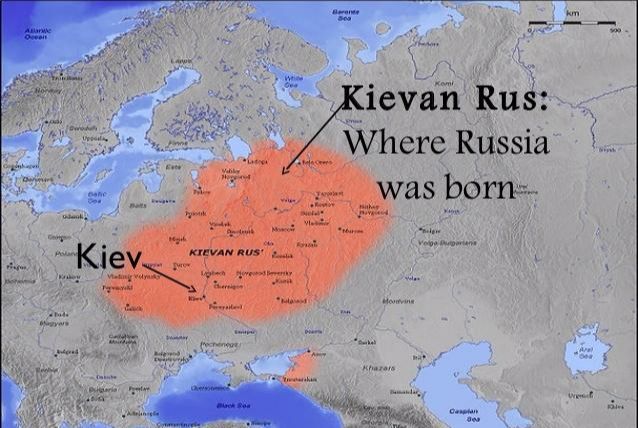
East Slavic tribes, in the area of modern-day Ukraine, Belarus, and Russia unite to become the Kievan Rus’ people.

980 — 1015

Vladimir the Great brought Christianity to the Kievan Rus’ people.  Often referred to, in the West, as the Eastern Orthodox, this tradition (practiced from Egypt all the way to Greece) broke from the Roman Catholics in 1054.

1237 — 1480

The Mongols invaded and, laying siege to Kiev in 1240, came out victorious.  This begins a period of Mongol rule.

1547 — 1721.

Mongol rule fades.  The Muscovy dynasty rises.  This Tsarist Russia, with periods of chaos and conflict, including what is referred to as a Time of Troubles from 1598 to 1613, ends with the rise of Peter the Great and brings us to the modern age.

1721 to 1917

The Russian Empire expanded from historical Kievan Rus’ territory and, stretching around 8,800,000 square miles, became the third largest empire in history behind the British and Mongol empires.

An empire spans West to East

March 22, 1917

Tsar Nicholas II and his family are murdered by Bolshevik revolutionaries.  Their dynastic rule over the people of Ukraine, Moscow, and the entire Russian Empire, which had been weakened by their involvement in WW1, was replaced by a Communist state.  The USSR (Union of Soviet Socialist Republics, aka the Soviet Union) was very antagonistic towards Christians.

Orthodox Cathedral demolished by Soviets

1922–1952

Joseph Stalin, an ethnic Georgian, becomes the General Secretary and begins his rule over the Soviet Union.  His reign is marked by the Great Purge, from 1936 to 1938, when from 700,000 to 1.2 million people are killed, the number including many Orthodox priests, and political dissidents are rounded to be sent to Gulags.

1929

The Organization of Ukrainian Nationalists (OUN) is formed in Vienna.  This group was known for the assassinations of Poles, Russians, and Jews.  It was later supported by the CIA as part of an effort to undermine the Soviet Union and led to a bloody insurrection.

1932-33

Of Stalin’s atrocities, the Ukrainian famine or Holodonor, when 3.9 million were starved to death, stands out.  This suffering is directly the result of a collectivist plot against successful private farmers.  This murderous Soviet campaign was covered up with the help of the New York Times and Walter Duranty, a Pulitzer Prize-winning journalist, who wrote glowing reports about Stalinism.

June 23, 1941

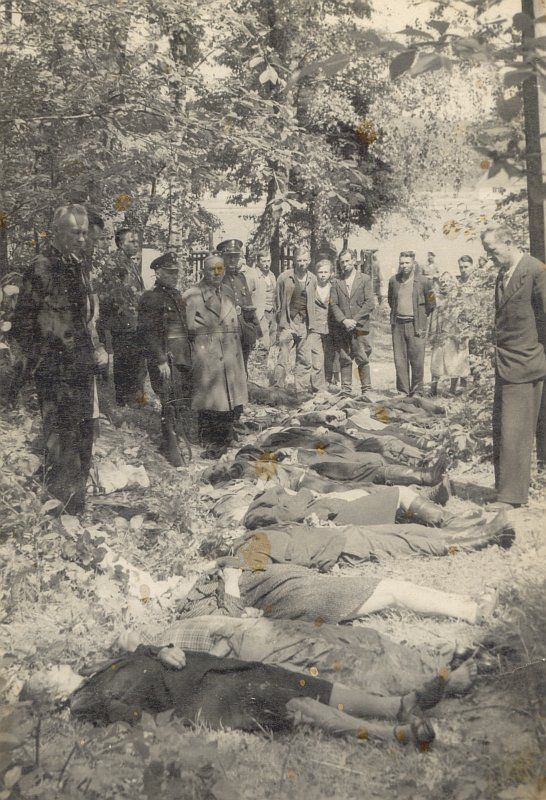
Stepan Bandera, the leader of the far-right Ukrainian nationalism, reaches out to Nazi invaders offering his support in exchange for an independent Ukrainian state.  Bandera is responsible for the brutal massacre of ethnic Poles, from 1943 to 1945, and is celebrated today as the father of Ukraine.  Ukrainian paratroopers (and nationalist priests) today chant “Our father is Bandera, Ukraine is our mother!”

Poles murdered by Ukrainian nationalists

1941—1944

Vladimir Spiridonovich Putin and Maria Ivanovna Shelomova struggle to survive the brutal German siege of Leningrad (now the city of St Petersburg) and are nearly killed.  Vladimir, who lost a couple brothers in the battles, was wounded by a grenade in the fighting and crippled for life.  The pair met after the war, got married, and had a son named Vladimir Putin in 1952.

April 4, 1949

The North Atlantic Treaty Organization (or NATO) is formed in Washington DC as an alliance to oppose the Soviet Union.  The Warsaw Pact was created in May of 1955 as a response.

February 19, 1954

Crimea, which was part of Russia since being annexed from the Ottomans back in 1783, was gifted to Ukraine by the Soviets as a gesture of friendship.  This ethnically Tatar and Russian-speaking region is the site of a key warm-water Russian naval base.

Oct 16, 1962—Oct 29, 1962

The Soviet Union responded to the United States putting nuclear missiles in Italy and Turkey by sending their own missiles to Cuba.  The Kennedy administration, after the failed Bay of Pigs invasion, authorized a CIA campaign of terrorism and sabotage within Cuba, answered with a naval blockade.  The Cuban Missile Crisis ended when Moscow backed down after a secret deal where the offending US missiles were removed from Europe.

Nikita Khrushchev, Fidel Castro, and JFK

1979—1989

A pro-Soviet government took power in Kabul in 1978 and tried to counter Islamic traditionalism with steps towards modernization.  They invited Soviet military advisors and this led to troops being deployed to help the Afghans suppress the insurgency.  The CIA supplied the Afghan rebels and foreign fighters (including a Saudi named Osama Bin Laden) the Mujahideen, with weapons.  The Soviets withdrew after a humiliating costly affair.

December 26, 1991

The Soviet Union collapsed, the Warsaw Pact dissolved, and Soviet republics (including Ukraine) given their independence.  NATO begins an eastward expansion, absorbing former Soviet republics.  Russia falls into disarray as oligarchs partner with the West to exploit the vast resources of that country—Ukraine also becomes known for extreme corruption.

March 24, 1999—June 10, 1999

NATO intervened on behalf of Kosovo rebels, who had been resisting Serbian authorities, and then demanded that the country be partitioned along ethnic lines.

December 31, 1999

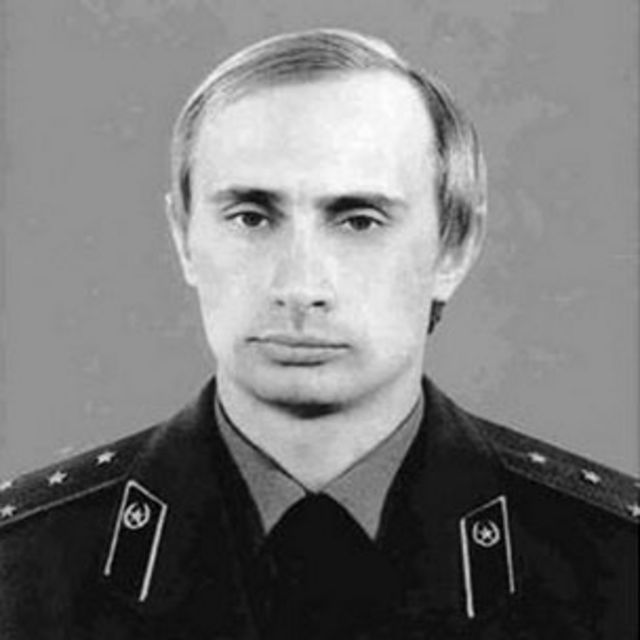
Vladimir Putin became the acting President of the Russian Federation when Boris Yeltsin unexpectedly resigned.  From 2000 to 2004, after winning a special election, he begins to reform the country and reign in the oligarchs forcing them to answer to his government to keep their power.  Putin opposes the expansion of NATO to his border, regarding it as a threat to Russian sovereignty, and makes this red line clear.

Vladimir Putin, a former KGB officer.

Nov 21, 2013—Feb 22, 2014

The democratically elected President of Ukraine, Viktor Yanukovych, decided to keep closer ties with Moscow over the European Union.  This leads to protests in Maidan Nezalezhnosti (Independence Square) in Kiev.  The protestors occupied the square, they had their own food production, medical, and broadcasting facilities, along with that, stages for speeches and performances, as well as their own security forces.  This boiled over when snipers, still unidentified, fired on the crowd.  Both police and protesters were killed in this attack.  Before this escalation high-ranking US officials, then Secretary of State Victoria Nuland and the Ambassador to Geoffrey Pyatt, picked the replacement of Yanukovych who was later overthrown in the Maidan coup.

May 12, 2014

Hunter Biden, son of the then US Vice-President, Joe Biden, is given a seat on the board of Burisma Holdings, as a “legal advisor” and is paid over a million for this service.  He gave Burisma executives access to his politically powerful father and later the elder Biden would brag, live on television, about a quid pro quo that got a Ukrainian prosecutor fired—who had been investigating Burisma corruption.

Like father, like son

Feb 20, 2014 – Mar 21, 2014

The Russians, believing their naval base in Crimea would be threatened by the new pro-West government, moved quickly to secure it from the Kievian nationalists.  They already had a significant military presence there, it is a Russian-speaking area, and the Crimean status referendum, held on March 16, 2014, had an 87% turnout and was 97% in favor of reunification with Russia.  

April 6, 2014–February 24, 2022

The Russian-speaking Donbas region also wanted more autonomy, they opposed Kiev’s efforts at “Ukrainianization,” which sought to erase their Russian heritage, and eventually declared their independence.  These breakaways were invaded by the Kievan regime, starting a war that killed over 14,000 and lasted nearly eight years before the current Russian intervention.

Donbass, when nobody outside Ukraine cared about the war.

May 2, 2014

Protests around the country became violent again when the right-wing nationalists, who favored the new post-coup government that had been installed in Kiev, forced opposition demonstrators into a building that was set ablaze.  This incident, the Odessa Massacre, burned alive 48 people, some of those who did manage to escape were beaten by the mob.  Like the shootings used to justify the Maiden insurrection, nobody was arrested or charged for this mass murder.

April 21, 2019

Volodymyr Zelenskyy, a comedian, groomed by an oligarch, wins the second round of voting in a landslide victory and becomes the President of Ukraine.  He promised to bring peace and end corruption.  There was not much success on either front.  Human rights abuses have only increased during his presidency and especially after the start of the Russo-Ukraine War.

Zelenskyy, the other Vlad.

February 24, 2022

After massing their troops on the Ukrainian border, Russia demands that the shelling of Donbas cease.  When the attacks continue, the “special military operation” begins, which is condemned in the West as an “unprovoked invasion,” and is now effectively a proxy war between NATO and Russia.  The bloodshed continues to the time of this writing.

Vladimir versus Volodymyr

While many commentators, on both sides, want to present this as a battle of good and evil, it is really a fight between spiritual (even actual) cousins.  Those who say that Russia is the aggressor neglect that the war began years ago with the Ukrainian nationalists and their campaign against separatists, that this came about as a result of a coup apparently orchestrated by or at least with the direct aid of the US State Department.  If Ukraine can be independent of Russia, or Kosovo from Serbia, why not Donbass?  And who says that the Soviets handing over Crimea, in the 1950s, is more valid than the referendum that brought it back?

The US “rules-based international order” only makes sense for those who share the bias of those spoon-fed by US media.  The legacy of CIA support for terrorism abroad and the violent overthrow of democratic leaders makes anything done by Russia seem like child’s play.  The US acts with impunity around the world—provoking sanctioning, and invading with destructive campaigns of “shock and awe” anyone who dares to oppose its imperial aims.  The US really had no business playing kingmaker in the backyard of Russia.  The US enforces the Monroe Doctrine in the Western Hemisphere, why would Russia (or China) be happy with our military expansion in their own areas of national interest?

Us-rules based order

Sure, Russia isn’t faultless, by any means, and Putin is no St. Vladimir either.  But, that said, neither is Zelenskyy or the Kievan (Kyivan) nationalist regime he represents. 

Truthfully, the most significant difference between the two sides of the war may actually be their Slavic language dialects.  Which is to say it isn’t much.  Both sides commit war crimes, both lie about the other side, and both also share the same religious and ethnic heritage.  They are natural allies, given their shared Kievan Rus’ history, which is probably why Western powers want to instigate and encourage the division.  It is a family feud, a fratricidal war, and benefits only the US military-industrial complex.

The Token Converts

Standard

Years ago I had a nemesis. My counterpart positioned himself as a white knight type of character and was basically there to harass anyone too fond of the religious tribe I was born into. He knew the group, he had been a convert and was now an ex-member, who classified us as “an ethnic church” dismissing what we said about our conversion experience.

Now that I’ve left the group there is no reason to continue to guard the ideas left behind and that includes the notion that my own participation had been completely a choice. There are doctrinal reasons for this denial of the obvious. I mean, if you believe that conversion is a personal choice, a rational and unbiased conclusion, then it really gets under your skin when someone says that you’re more or less a product of a religious culture.

We were, in our own eyes, a sort of remnant church. And then also had to deal with the awkward reality that many, like us, were so inbred that they had distinct genetic disorders. And, unlike our radical forbearers, we had no cultural relevance besides being the quaint old fashioned people who dressed like it was the 1800s and called this non-conformity to the world. So, obviously, the fact that everyone who shared our views happened to be genetically related was the source of cognitive dissonance.

It is for this reason that converts, the more exotic the better, were clung to and even given special treatment. We would say it was out of Christian love and yet some of this had to do with our own insecurities. They were our validation. They were the proof that we were more than just an ethnic cloister, more than a bunch of cousins of a particular European heritage claiming that our own brand of religion represented something universal and relevant to the times.

Those who come into this group, visibly from the outside, are often treated both with mistrust and also with a special adoration as well. They can never be fully accepted, they’re always both more and less than equal, coddled or spared normal rebuke from some to keep them from leaving, and yet also can sense that they’re just the tokens being used to prove a point rather than being treated as people. Sure, they may form real friendships with some, but they themselves are often misfits from whence they came and still remain stuck in no man’s land.

Now that I’m in a church that both spans continents and is mostly converts locally, I don’t have as strong an urge to collect tokens or evidence that I’m not just a product of my ethnocultural roots. I mean, sure, I still want to be right. But the pressure to bring the Gospel to all people is off my shoulders. The Church didn’t take long to spread into Asia or Africa, early Christians didn’t dress like Europeans from a generation ago either, there may be some times to chase down Ethiopian eunuchs in their chariots, and yet there’s also a time to acknowledge that the fullness of the faith has never left Africa.

Evangelicals, of all stripes, have this desperation for relevance. They think that they will win more converts by being more cosmopolitan, and by painting a picture of superficial diversity and inclusion, but Jesus said that his message would make the world hate us and even divide families. If we have the truth, if we know the truth, we are no longer bound to ethnic quotas and, instead, simply love people, especially of the household of faith, as we are commanded. Jesus preached to his own tribe first, his converts were mostly other Jews, like him, and that was perfectly fine.

How Orthodox Christianity Triumphs Against the Odds

Standard

Christianity was systematically opposed and oppressed in the Soviet Union. The Russian Orthodox church, said to have been founded by the Apostle Andrew, was heavily persecuted under Marxist rule. Atheism was promoted in government schools, speaking against it outlawed, and it seemed that Orthodox Christianity did not stand a chance against this irreligious secular state.

During that dark period, thousands of church leaders were killed. Many more were imprisoned, tortured, sent to mental hospitals or the “gulags” to do forced labor. From 1917 to 1935, 130,000 Russian Orthodox priests were arrested and 95,000 of them were executed by firing squad. Later, from 1937 to 1938, in another anti-religious purge campaign, 168,000 Orthodox clergymen were arrested and, of them, 100,000 shot. Religion was ridiculed in the public sphere, believers were harassed and deprived of parental rights, church properties were seized by the state and buildings, including the beautiful Cathedral of Christ the Savior in Moscow, were destroyed:

Cathedral_of_Christ_the_Saviour_(destruction,_1931)

The Russian Orthodox church, that extended into the Americas (where they didn’t kill the Native populations like their Western counterparts) and had an estimated 54,000 parishes in Russia before WW1, was reduced to only 500 parishes in the 1940’s under the Communist dictatorship. The Bolshevik Revolution of 1917 left Russian Orthodox churches in Japan, United States, Manchuria, and elsewhere effectively orphaned and without support. Patriarch Tikhon, in 1920, issued a decree for these churches to operate independently until normalcy could be restored and, as a result, many of these churches (because of financial hardship and/or need of pastoral care and governance) were turned over to the Orthodox churches of their national homelands—which is why there is the current disorganized mix of Greek, Antiochian, ROCOR and OCA parishes in America.

However, Orthodoxy has since triumphed over Marxism in Russia. An average of three churches a day are being opened by the Orthodox faithful in Russia, there are currently 40,000 churches and, at the current pace, that number may double in the next decades. In addition, there are now 900 active monasteries (down from 1000 pre-revolution) and this is an expansion based on demand. This resilience against the odds, against the world’s only other superpower besides the United States, is a testament to the strength of Orthodox religious tradition. Orthodoxy in Russia could not be driven into extinction by one of the most powerful and brutal regimes in human history and is as strong today as ever.

The divided (and dying) church of America

America has traditionally divided up according to ethnicity or race. Churches (Protestant, Roman Catholic or otherwise) are not exceptional in this regard. Many churches, including Mennonites and Amish, came as a result of immigrants taking their religion with them rather than as a missionary endeavor. It is not a surprise that traditionally German churches, like the Lutherans, are mostly populated by white people nor is it unexpected that people go to churches that are reflective of their own cultures or where their own language is spoken. People tend to gravitate to other people who look like them.

But this “homogeneity principle” also extends beyond skin color as well. A church that is racially or ethnically diverse is probably homogeneous in other ways (things like level of education, political affiliations, etc) and thus not truly diverse. For example, American Mennonites, from the most progressive or liberal to the most ultra-conservative and traditional Old Order end of the denomination. are (with the exception of a few adoptions and inner-city outreaches) ethnically homogenous. But, as centuries of divisions have proven, that shared genetic ancestry and skin color certainly does not make us the same. And so it is with Protestantism in general. A multi-ethnic church probably has very little diversity in terms of educational level, ideological bent, or income and this is because we prefer to be with people who share something in common with us.

The end result is that everyone claims that they are loyal to Christ and his love. Yet, in reality, there are hidden loyalties that are actually taking precedence. We are divided by our loyalties to our race, our religious/cultural heritage, national/political identities, denominational affiliations, personal preferences, and feelings or any combination of the preceding items. In other words, our pet issues and petty differences are what truly matters to us despite what we profess. And this doesn’t get better for those who are non-denominational or believe they are independently guided by the Spirit and are truly only loyal to themselves. Saint Paul, the Apostle, said that the Spirit brings unity to the body (Ephesians 4:1-6) and spoke out against disunity brought about by their misplaced loyalties:

I appeal to you, brothers and sisters, a in the name of our Lord Jesus Christ, that all of you agree with one another in what you say and that there be no divisions among you, but that you be perfectly united in mind and thought. My brothers and sisters, some from Chloe’s household have informed me that there are quarrels among you. What I mean is this: One of you says, “I follow Paul”; another, “I follow Apollos”; another, “I follow Cephas”; still another, “I follow Christ.” Is Christ divided? Was Paul crucified for you? Were you baptized in the name of Paul? I thank God that I did not baptize any of you except Crispus and Gaius, so no one can say that you were baptized in my name. (1 Corinthians 1:10-15)

Note, Paul calls out even those who claim “I follow Christ” in his rebuke and that is not because Christ is not the head of the church either. No, it is because loyalty to Christ means loyalty to his church, to true believers past and present (and future) who together represent his body, and who we are to seek Communion with rather than chase after our own personal ideals. True Christianity is about forbearance, forgiveness, and humility, realizing our own fallibility and showing mercy to others as we have been shown mercy by God. It is little wonder that many are confused about Christianity in America and increasing numbers are checking-out of their denominational and ever-dividing churches. It is because many professing Christians say one thing and do another. They say they love as Christ loves, even call someone a “brother,” but are completely unwilling to sacrifice anything of true consequence to themselves in love for the body of Christ.

Is Orthodoxy any different from this?

Yes and no.

At the time I am writing this there is a break in Communion between the Moscow Patriarchate and Patriarchate of Constantinople over a Ukrainian schism. In 1992, following the breakup of the Soviet Union, some Ukrainian Orthodox wanted their independence from Moscow (understandably so given regional politics) and, unfortunately, went ahead without having appropriate permission. Making matters worse than they already were, Archbishop Bartholomew, the Ecumenical Patriarch of Constantinople, decided to recognize the schismatics and over the protests of Moscow. This, of course, is not acceptable, important church decisions have been always made by a council or through the correct channels, rather than independently, and this is reminiscent of the unilateral decision-making that divided the Roman Catholics from Orthodox in the Great Schism.

The explanation above probably comes off as Greek to those outside of Orthodoxy and took some time me to wrap my own head around. However, it is also a good way to illustrate a key difference between Orthodox, Protestant and Catholic perspectives of authority in the church. In Roman Catholicism, the Pope, as “Vicar of Christ” and supreme by his own decree, rules the roost. Protestants, by contrast, essentially believe that every man (and his Bible) is their own Pope and need not be accountable to anyone besides themselves. Orthodox Christians, on the other hand, do not see even their highest-ranked individual as being infallible or outside need to be accountable and rather (like the early church) build upon consensus and through councils—which means even Peter, the first amongst equals, can be set right as need be.

(On an aside, Anabaptists, in that they believed in individual submission to the group, were traditionally sort of a half-step between Orthodoxy and Protestantism in this regard. The difference being that Anabaptists are only accountable to the local church (and what they cherry-pick from Scripture or early church writings) rather than the universal church and an ordination faithfully passed down, generation to generation, from the time of the Apostles. This unique Anabaptist perspective, while still preserved by the Amish and other Old Order groups, has been largely supplanted by Biblical fundamentalism in “conservative” Mennonite churches and secular/progressive group-think in the “liberal” side—both sides with zero real accountability to the historic church including even their own Anabaptist forebears.)

The Ukrainian schism, while a black mark on the testimony of the those who caused it if left unresolved, is actually proof the triumph of Orthodoxy over the spirit of division or unity formed around the wrong loyalties. The consensus across the Patriarchates seeming to be that the Ecumenical Patriarch went outside the bounds by recognizing the Ukrainian schismatics. The unity of the church is not mere unity for the sake of unity, but a unity of Spirit that doesn’t neglect sound doctrine or the traditions (“whether by word of mouth or by letter,” 2 Thessalonians 2:15) passed down by the church. In other words, the established Orthodoxy has more authority than any one person or group within the church. Orthodoxy is something that transcends all individuals in the church and protects against both abusive patriarchs and also the divisions over personal opinions. The Spirit of truth, the foundation of Orthodox tradition, is what preserved correct doctrines against heresy and false teachers.

Orthodoxy is what delivered the Biblical canon. The same Biblical canon that many Protestant fundamentalists and other separatists idolize as an infallible object equal to God while simultaneously not recognizing the authority of the church that wrote, authenticated, and compiled it for them. It is strange that a council was only good for that one thing, creating a collection of books that can’t be changed, and not anything else before or after, isn’t it?

But, I do digress…

Yes, Orthodoxy is messy because, as with the church of Acts, there is still a difference of opinion, politics, legalism, favoritism, and imperfection. We can’t get away from conflict, not even in the church founded by Christ himself and that is disheartening to us idealistic types. But that was also the case from the earliest days of Christianity and that is why there was a need of the Jerusalem Council recorded in the book of Acts. The church had councils to establish who was right or wrong and how to correctly interpret Scripture.

Orthodoxy (that is to say “right opinion”) is something worthwhile and should be the goal of every Christian. It is that sincere desire to find and hold to what is true that is leading many from the ranks of the most divided and disillusioned branches of Christendom and to the “ancient faith” of the Orthodox Christians.

The triumph of Orthodoxy…

Like King Josiah hearing the Scripture read for the first time, many are discovering the elegant theology and awe-inspiring, aesthetic appeal, and ancient beauty of Orthodox worship. Divine liturgy carries depth, history and meaning unrivaled in an age of flashing lights, cheap gimmicks, and consumerism. This is why people from all denominational backgrounds are finding a home in Orthodoxy today. The majority of those in my parish is not “cradle Orthodox” in that they were born in the Orthodox church and this seems to be the trend. In fact, nearly half of the million Orthodox Christians in the United States are converts and I am just one of the many who did.

It is very exciting to see the interest of those who have read this blog and want to know more. Several are either now attending services, have visited or are planning to visit when they have a chance. There is one, in particular, a single lady born into a conservative Mennonite church, never baptized and made a member, who left the church disillusioned by the pettiness, abusive leadership and message of condemnation, describes the Antiochian parish she is currently attending as “St Philips is beauty for the mind and spirit. A haven, a calm, a refuge,” adding that it is the “truest example of Jesus words put into my own, ‘Come just as you are.'” I have also had the pleasure of conversing with several who are converts from Anabaptist background, including a man who is my cousin through marriage, and have had the same hard-to-put-into-words experience I have had.

To be clear, the Orthodox church, like other churches, did come over with ethnic communities from Greece, Russia, Syria, Africa, Egypt and other parts of the world. Many Orthodox churches in America did often start as a part of an ethnic community and a decade ago may have been compromised mostly of people from one ethnic background. However, as that immigrant population declines it is being replaced by those who come from all sorts of Christian backgrounds. In my own parish, there is everything from non-denominational to Baptist, Episcopalian, Methodist, and Roman Catholic. Many of these converts were, like me, at the end of their ropes with religion as it had been presented to them, some agnostics, who were drawn to Orthodoxy through various means and have been forever changed by the experience. The most recent converts at my parish: Two women, one of them a Mennonite pastor, who were Chrismated and welcomed home a few weeks ago.

There is a great documentary on religious “nones” called “Becoming Truly Human,” that describes the journey of various people who have left the version of Christianity they were raised in and have simply stopped attending any religious services. There is clearly a need for an answer, people long for a connection to the historic church, worship that transcends current fads and trends, something real and authentic, and Orthodox Christianity provides this. Orthodoxy, made “perfect through suffering” (Hebrews 2:10), has withstood the persecution of the past century like it did in the first century and is a bastion for the faithful. Orthodoxy, the church that Jesus promised the “gates of hell would not prevail against” (Matthew 16:18), has and will continue to triumph against the odds.

217361.p

Going From Point A To Point B — Ten Big Steps In the Right Direction

Standard

When I prayed, a few years ago, for the impossible to be made possible, I could not have imagined where that simple statement of faith would take me.

My problem in life has never been lack of ideals or absence of ambition; I have long had a vision for life, a heart for people around the world and desire to serve God’s kingdom. However, knowing how to get from point A (my ideals) to point B (actualization) was always the problem.

The Servant Who Buried His Talent

Some can accomplish their goals, they are able to be very directional and focused. That was my older sister. She was top of her class, all-state in violin, followed through on her vision to be a doctor, is published for her research and has her own clinic. She married while in medical school and has four wonderful children

Me, on the other hand, I quit violin lessons in frustration after a month, struggled immensely trying to concentrate in school, and felt like an underachiever. I wanted to be an engineer. However, I lacked my own ideas where to go. So, I decided to apply to the same college my sister picked from her list.

But, after being accepted, ended up deferring rather than start classes in the fall. And, other than attend my sister’s graduation, I never did go to Elizabethtown College. I continued to work. My jobs (before truck driving) really did not really pay enough for me to get ahead. My dreams had been meput on hold. I felt like the servant who buried his talents and hated it—there seemed to be no answer as to how to rectify my situation.

Spiritual Awakening and New Hope Discovered

Finally, I had an epiphany, I discovered the Holy Spirit. Scripture, the writings of the apostle Paul in particular, became alive. This new understanding made me bolder. My guilt for underachieving dissipated. I now rested in God’s grace. I had worked through the death of Saniyah and found a new hope. I also paid off my house and was now financially secure. There was momentum in my life and it felt good.

Still, with my chronic dithering and endless indecision, I also felt as if I had lost a decade of my life. I was in my thirties and somehow missed my calling in the church, didn’t have a career that felt long-term and was unmarried. To fail at one out of those things was bad enough. But all three? It was unthinkable. Sure, I had life experience, I didn’t feel bound to my past failures either, and yet I still felt held back by an invisible wall.

It was in this midst of my trying that I cried out to be “made right” and began my journey of these past several years. I knew my limitations. My desire was to be taken beyond what held me back and be fully what I was supposed to be. I told God I would crawl across a wilderness of broken glass if need be. I asked for the impossible to be made possible.

These are the things that have transpired since then…

1) I rehabbed a torn ACL. One of the problems with truck driving is that it sedentary and I had gained some weight. I was trying to start an exercise program. But it is really difficult to establish a new habit when you are out on the road and your weekly schedule is always in flux.

Well, the same day I prayed for the impossible, I tore my ACL and was off work for six months so I could do physical therapy.

An answer to prayer?

Tearing my ACL, while terribly painful and a setback, was an opportunity for a change of lifestyle. I came out of physical therapy stronger than ever and made it a priority to continue the exercise routine. I can jump higher than I could at twenty and even after reinjuring that knee.

It seemed that God had answered. That gave confidence to further pursue impossibility and go further to find my missing piece…

2) I asked an ethnic Mennonite girl, in person. Part of the reason I’ve remained single so long is because of my crippling social anxieties. It is difficult to get a date if you are unable to approach the women whom you are most interested in getting to know better and attractive unmarried Mennonite women terrified me.

But I was determined not to make the mistake of not asking in person this time. And, after a conversation with her father (in which he gave me permission to ask, but told me flat out that a relationship with her was an “impossibility” in a follow-up message) I waited for that right time. It came one day when she told me she was going to be cleaning at the church.

I was shaking like a leaf when I got to the church door. I prayed she wouldn’t be startled. She was vacuuming in the sanctuary, she turned, spotted me outside, and smiled. It was a great relief that the conversation went as well as it did. I had expressed myself clumsily and still clearly enough. She was smiling and stepping in. Amazingly enough, she did not run, she said we could talk when things settled down for her and things had gone as well as one could expect.

Ultimately her Mennonite ideals made it impossible for her to love me enough to even have some ice cream and talk with me. But I had triumphed over my fears, I had pursued the impossibility and, in faith, rejecting human understanding and calculations. I was willing to be foolish in faith in a way that those who best embodied my Mennonite ideals could not (or were unwilling to) reciprocate.

3) I wrote a book. In the throes of her rejection a few weeks later, which included the words “You’re thirty years old in Milton,” I began writing. I began writing and eventually ended up with a letter fourteen pages long which explained my thoughts on faith, the development of romantic thoughts, and how, with faith to bind us in unity, our differences would actually make us stronger together.

After weeks and weeks of effort, of writing, rewriting and fine tuning, that letter was never sent. As hostile as she was acting towards me since our talk it seemed an act of futility and the letter still sits on my desk unsent. It wasn’t the right time, I decided, and would only drive her further away. No argument I could make, no matter how sincere or reasonable, would win her heart.

However, the writing of that letter convinced me of something and that is my ability to write. Armed with a new found confidence (and a new found ability to focus thanks to the miracle of an Adderall prescription) I began to write a book. The final product was over 17,000 words long, a book about faith, “Paradox of Faith” and remains unpublished in need of a final edit that has not been completed.

4) I started a blog. The book project led to the blog. It seemed like a good idea to refine my writing and articulation of thoughts. Interestingly enough, my first blogs seemed to attract more atheist and thinkers than my Mennonite religious peers. However, as I began to open up and be more honest about my own struggles, my Mennonite audience grew. The blogs hardest to share, because of the vulnerability they required, had the most significant response.

The most amazing part is that my message went viral amongst Mennonites *after* I left the denomination. It seems quite absurd, the whole time I had held my tongue about my deeper struggles (for fear of being rejected) and my moment of greatest acceptance came with my brutal honesty and with my letting go of my fears.

5) I bought my dream car. When I had asked the ethnic Mennonite, the impossibility, I was driving a mid-90’s Ford Contour that I had pieced together. It’s a long story why, I could certainly have afforded a better vehicle, cars had always been a passion of mine, but my mode of daily transportation really didn’t matter to me at this point and I had bigger things on my mind.

But, after her rejection, and on the advice of my mom, I decided to find a newer car. I started to search the used car lots and ended up with a brand new, 2014, Ford Focus. There truly is something special about being the first owner. This car was a quantum leap over the 90’s model trade-in. Practically speaking, this might have been my best purchase ever because it gets 40mpg and I got it for the same price as two year old used cars of the same model.

That wasn’t my dream car.

Years before this the current deacon of my former church, a youth advisor then, had given me a hard time about my modified (and R-title) 1992 Mercury Cougar. A conservative Mennonite can own farms and businesses worth well over a million dollars, a fleet of trucks, an airplane, a boat, without anyone raising an eyebrow. Yet, buy anything resembling a sports car and there will be disapproval.

My entire life I had curtailed my passions to please my Mennonite peers and live by their culturally conditioned ideals. I had believed that by playing by their rules they would have my back, they would lovingly help me to bear my burdens, and would truly treat me as a brother. As the betrayal became clear, upon realizing that my fears of their disapproval didn’t matter anymore, I was free and ordered a brand new 2016 Shelby GT350.

Still, I had some second thoughts after committing to the purchase. Like Judas, the money corrupted betrayer of Jesus, I questioned the excess, “Wouldn’t that be better spent on the poor?” But decided to follow through and to dedicate this ridiculous car to God, to hold it openly as we should all our possessions, to give rides to those who ask, and sell it as soon as that is required.

You would be amazed at the friendships and opportunities that opened up as a result of my buying that car and not caring so much what a small number of religious hypocrites thought. And, truth be told, not many Mennonites actually cared one way or another anyways, I was merely a prisoner of my own people-pleasing tendencies, and my conscience is clear before God.

6) I finally got the ‘right’ job. One of those things I begged of my Mennonite peers was a chance to be off the road. Some are cut out for solitude, those long hours alone in a truck cab, far away from home, but for me it was like solitary confinement, detrimental to my mental health, and started to lead to some bizarre thoughts. You really cannot know how much you need other people, even as background noise, until they are absent.

Perhaps my nagging paid off, perhaps as a consolation prize for pursuing the impossibility, or just chalk it up to God’s provision; but it was the father of the impossibility who mentioned my name to Titus (Titus, at the time, a Facebook friend, probably the result of my blogging, and not some I had met in person) who was seeking a replacement for himself as a truss designer.

Titus contacted me and the rest is history. So I owe my current job, in part, to the man who refused to recommend me to his daughter and must always give him credit for that. And, a bit over a year in, it truly is a great fit for my natural abilities. My work environment is wonderful and I couldn’t be happier. Finally my passion for engineering has found a place where it is useful.

7) I bought a rental. I really only wanted to live a small and safe life. That was my ideal as a Mennonite. And figured that once I paid my house off I would just build some savings as cushion and kick back a bit. However, a strange thing happened when I finally reached that point where I could just relax.

I owned my home outright. I owed not a dime on that unattainable dream car purchased a year before. I had given up on the Mennonite ideals (and delusions) that had kept me captivated. I could have done nothing besides maintain a lifestyle that had seemed ideal for most of my life. But somehow I ended up buying a cute little house and decided to be a landlord.

I’m not sure where that will lead. But, for the benefit of others, I hope some day to own some land and establish a business somewhere else.

Where, you might ask?

Well, that’s next…

8) I lived entirely for someone else’s good. Ecclesiastes does contain some timeless wisdom. One of them being that everything under the sun is, of itself, vanity and meaningless. I had everything I’ve ever wanted in life. I even had some ridiculous things besides. But lacked that one thing that mattered and that being the love that would last forever.

My vision of a composite of too different individuals in faith and love seemed to have failed. The Mennonite impossibility was engaged (actually, had just started dating, but that is essentially the same as engaged in the conservative Mennonite realm) and deep despair engulfed what had remained of my hopes in the denomination of my youth. I thought to end my miserable life.

Yet, while my faith internally had been extinguished, the purest part of it had survived externally in that seed of hope I planted in someone on the complete opposite side of the world. As I sank under the waves of doubt, she grabbed hold of my hand and refused to let me slip away into oblivion. I had no reason left in myself to live. However, I could not bear to see my precious bhest—the one who had been a little lost sheep when I found her—suffer on account of me.

She asked me to be strong for her and I decided then and there that I would live if only for her good. My intentions had not been romantic when we first started talking a year before and my Mennonite ideals would have prevented a relationship with her before then. But the true impossibility was being made possible in my heart. God had provided as promised.

9) I went around the world. I don’t have the millennial urge for experience. Yes, I wanted to help those in need around the world and was extremely attracted to the missionary zeal of the Mennonite ideal. But I lacked the impetus to do it on my own and hoped that this impossibility would be made possible through a Mennonite who, like my eldest sister, did have the ability to set her objectives and reach them.

Bhest, my precious bhest, gave me that clear direction of where I needed to go. I purchased my ticket in the spring of last year, brushed off my dusty passport, and planned this trip that would take me a full twelve timezones from home. And it was an amazing trip. It was absolutely wonderful to be embedded with her family during their holiday celebration a few months ago.

There is much that needs to be worked through. It is not easy to connect two lives on the literal opposite ends of the globe. My relationship with her means a permanent divorce with my Mennonite ideals. But, with God and faith, all things are possible and that was the promise that had set me on my way a few years ago.

I had my own ideas of what impossibility was and my version required other people to change. But God’s impossibility required me to change, it required me to sacrifice my own Mennonite ideals and seek what is greater faith and love. I had to choose between my Mennonite identity and what is truly Christian ideals.

10) I’ve gone beyond Mennonite. It wasn’t my own choice. I very much understand why many remain Mennonite. Who would leave their own version of Hobbiton in the Shire and second breakfasts for a true journey of faith and self-sacrificial love, right? But circumstances beyond my control have forced me to go beyond what I know, beyond my ethnic group, and find the Jesus beyond the Mennonite tomb.

Mennonite Ideals Had Entombed My Faith

Last Sunday, the Sunday of myrrh bearing women, was about the women who went the tomb to find Jesus. These women, unlike the male disciples that had fled, had remained faithful to Jesus even in his death and had gone to his grave to find him:

On the first day of the week, very early in the morning, the women took the spices they had prepared and went to the tomb. They found the stone rolled away from the tomb, but when they entered, they did not find the body of the Lord Jesus. While they were wondering about this, suddenly two men in clothes that gleamed like lightning stood beside them. In their fright the women bowed down with their faces to the ground, but the men said to them, “Why do you look for the living among the dead?” (Luke 24:1‭-‬5 NIV)

Wow.

How profound.

My Mennonite ideals were built around my own understanding. Like those faithful women, I had entombed Jesus within my own assumptions about what is and is not possible. Even in my seeking after the impossibility I had been imprisoned by my own concepts of possibility and became extremely confused when my own limited understanding of faith died.

Many Mennonites are, likewise, prisoners to their own cultural ideals and confirmation bias. They, like Mary Magdelene, who initially didn’t recognize the resurrected Jesus, are so focused in on their own forms of devotion and so bound to their own cultural expectations, that they miss the obvious. They toil away, so faithful to their ideals, and are in denial of the greater things God has established for them by His grace.

I have traveled from point A to point B. It may not have been a straight path. I’ve spent too many years wandering the wilderness due to the limits of my own understanding and my anxieties. But the impossible becomes possible as soon we are willing to step out in faith and the promised land awaits those who do.

When is the last time you have aimed for the impossible, the truly impossible, and found God faithful in way you could not expected?

My Departure From the Ethnic Church

Standard

Like many other things not appreciated until they are gone, there was a time when the unique character of the church of my youth was something I had mostly taken for granted.

You see, that church, unlike some other Mennonite churches, had many surnames not typically found within the denomination.  We had Cordermans, Gelnetts, Fiedlers, Schrocks, Schooleys and Rovenolts—all of them “community” people who decided to become Mennonites.

Over the years that near even split of Mennonite-borns and “community” people has slowly faded.  The non-Mennonite names displaced and replaced as more transplants arrived following cheaper land prices and a better place than Lancaster County to raise their families.

The original church, started a few decades before my birth, had been the result of a Summer Bible School program.  A group from Lancaster County drove several hours north and set up camp on the grounds of a small one room public school.

Eventually several young couples involved decided to move into the area where they held the summer program.  They purchased the little old school house and started the “East District Mennonite Church” with Lester Miller ordained as pastor.

That church, the one with Lester at the helm, is the one that had a greater focus on the local community and was basically a family of misfits.  As far as Mennonite churches go it was a very welcoming place and I believe still retain that reputation today.

However, over the years (since the time Lester moved back to Lancaster and with the influx of “cradle Mennonites” who didn’t necessarily share that original vision of outreach) there has been a subtle shift—a reverting back to a mostly ethnic church full of those who cater only to their own families.

What is an ethnic church and when is it a problem?

It used to irk me, coming from the mixed background congregation that I did, when people would describe Mennonites as being an “ethnic church” and unwelcoming to outsiders.  My response would be that Mennonites aren’t the only church with a distinct ethnic flavor and that my own church was diverse.

Truth be told, ethnic diversity isn’t a necessary ingredient for a vibrant local church either.  I would expect that a church in China would have mostly those of ethnic Chinese background and a church in central Pennsylvania to have mostly German or other Caucasian origin.  Most historical churches were made of those who shared an ethnic identity and there’s nothing wrong with a bit of local flavor.

Unfortunately these ethnic lines, when they come at the expense of a universal and united church, become antithetical to the Christian tradition left to us by the Apostles.  We are supposed to all be one in Christ Jesus (Galatians 3:28) rather than divided up by differences of gender, social status and ethnic background.

Ethnic division, very often linked together with sectarian or denominational distinctions, is a great weakness of the North American church.  Instead of local community is being unite into one church, as was the case in the early church, we hold onto our own racial and cultural identities.  We put ourselves first, our own ethnic families, over unity in the Spirit.

American churches are “intellectual ghettos” as well.  We separate over political ideologies, theological perspectives, traditional versus contemporary preferences and, in the case of Mennonites at least, over the most trivial bits of application.  This multitude of churches all claim to Jesus as Lord and yet each prioritize preservation of their own cultural “echo chamber” and focus on insulating themselves from any real challenge of their ideas.

What would Jesus say about ethnic churches in diverse communities?

“If anyone comes to me and does not hate father and mother, wife and children, brothers and sisters–yes, even their own life–such a person cannot be my disciple.” (Luke 14:26)

That might be hyperbole.  It was addressing an audience that place great value on ethnic and family identity.  It seemed to contradict prior teaching that put emphasis on tribe and caring for one’s own first.  Nevertheless it is something Jesus said and something we ought to contemplate as it applies to our own times.

Did Jesus come to establish a church divided in so many ways?  Would he approve when people living in the same geographic area drive past multiple churches to find one that suits their own personal preferences?  At very least, is it appropriate to “plant” a new church in a town where there are already multiple options?

At some point there needs to be some introspection.  If the church you are in does not reflect the demographics of the local community you should ask why that is.  Was the true Gospel of Jesus Christ was about people congregating with people ethnically and otherwise similar to themselves?  Were newly converted Greeks required to live by traditional Jewish religious standards?

I’ll let this be the answer to that last question…

Mark my words! I, Paul, tell you that if you let yourselves be circumcised, Christ will be of no value to you at all. Again I declare to every man who lets himself be circumcised that he is obligated to obey the whole law. You who are trying to be justified by the law have been alienated from Christ; you have fallen away from grace. For through the Spirit we eagerly await by faith the righteousness for which we hope. For in Christ Jesus neither circumcision nor uncircumcision has any value. The only thing that counts is faith expressing itself through love.  You were running a good race. Who cut in on you to keep you from obeying the truth? […] Brothers and sisters, if I am still preaching circumcision, why am I still being persecuted? In that case the offense of the cross has been abolished. As for those agitators, I wish they would go the whole way and emasculate themselves! (Galatians 5:2‭-‬7‭, ‬11‭-‬12 NIV)

Strong words.

When we put our own ethnic and religious tribe above loving as Christ taught then we are like those whom Paul wished would cut themselves off completely.

Finding the universal church…

“There is one body and one Spirit, just as you were called to one hope when you were called; one Lord, one faith, one baptism; one God and Father of all, who is over all and through all and in all. “ (Ephesians 4:4‭-‬6 NIV )

The divided western church does not represent the ideals expressed by Jesus or the Apostles.  What it does represent is our cultural value of independence over unity in Christ.  It is because we value our own ethnic groups and our own idiosyncrasies of practice over the love for the whole family of God.  It is because we are unwilling to “hate” our own families in order to find greater unity together in the Spirit.

There would no doubt be a blessing for those who gave up their own religious cultural and personal hang ups in obedience to their Lord who said to put love for his church first.  My own will to do that was crippled for many years by my want to feel loved, accepted and desired in my ethnic church.  In had placed being Mennonite above being Christian and truly loving my neighbors despite our differences.

I’ve recently started to go to a church that has members from many denominational backgrounds.  Yes, there are some of the “cradle” types who bring their own ethnic and cultural flavor to the group.  And, yes, I do need to drive past a couple other churches to get there.  But the mix is more representative of the surrounding community and the welcome I’ve received there reminds me of a little church that I once knew.

Mennonite Values and Love That Transcends Difference

Standard

The other day it occurred to me that many of my most faithful Mennonite friends married across divisions of ethnicity and race.  In fact, three out of the three friends I was with yesterday are married to women who were born in foreign countries and later became US citizens.

Interracial marriage is not unusual in modern America anymore.  A full 17% of newlyweds in the United States married across racial or ethnic lines according to Pew Research Center.  This has been a steady trend for many decades and with this increase in interracial marriages the stigma has decreased—only a small percentage of Americans remain opposed to marriages across racial lines.

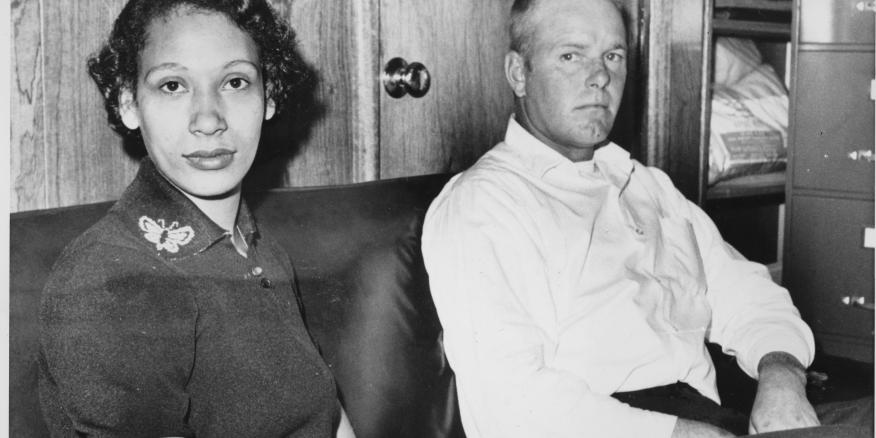
Mildred and Richard Loving who, in 1967, refused to be separated even when facing prison time.

Mennonites have tended to lag behind the general population in many regards and this is one of those areas.  It was only a few years ago that my Mennonite pastor (educated at Bob Jones University where interracial relationships were banned until the 1990’s) cautioned me against this kind of relationship citing cultural differences.  It is probably safe to assume that his views are not unusual in the conservative end of the Mennonite denomination.

Have Mennonites have began to catch up with the mainstream?

I know that interracial dating was unusual and even discouraged in the Mennonite church of my youth.  That is why my realization about so many of my friends being married interracially was astonishing to me.  I’m not sure if it is only a local anomaly or a general across-the-board trend.  However, I do know that there were very few others in the conservative Mennonite church when I was in a romantic relationship with a black woman just over a decade ago.

Some of it could be explained by inner-city outreach projects.  Typically Mennonites have been raised in rural parts of the country and sheltered from non-Mennonites.  My own experience was slightly different due to my public school education, which likely made me more open to relationships outside of my own ethnic group (my first real crush was not a Mennonite or white girl) and yet many of my religious peers caught up with a bit of exposure to the world outside their ethnic enclaves.  Followers of Jesus Mennonite Church (in Brooklyn, New York) accounts for many of the relationships across racial lines that I know about in the more traditional end of the denomination.

But, before anyone gets too excited, this does not mean attitudes have changed much with most conservative Mennonites.  I have heard many young men (who likely have not met too many girls besides their sisters or cousins) state that they would not be interested in dating a girl of a different race.  It is probably even less acceptable for a Mennonite female to marry outside her ethnic fold, and many of the couples in interracial relationships do not remain Mennonite.

Generally one cannot deviate too far from the Mennonite cultural norm and expect to be embraced.  It was hard enough for me, a Mennonite guy with some unorthodox views, to find a girl born in a Mennonite home that would give me the time of day.  I could not imagine being a convert from outside trying to get a date with someone of a popular family with an established Mennonite pedigree.

Mennonites barely have the faith to ask or date anyone—let alone someone who doesn’t meet a long list of qualifications, race and ethnicity likely included.

Why do some Mennonites marry across racial or ethnic lines?

One thing my friends have in common is that they married older.  I do not see them as purposefully trying to find girls from a different ethnic group or race either.  Most of them are down to earth and practical guys who found a girl who gave them a chance and connected with them.  It seems that girls from non-Mennonite background are more willing to be friends first, are less driven by impossible purity culture ideals, and much more appreciative of a guy who treats them with respect—even if he is not tall, smug or otherwise full of himself…

By all appearances, those Mennonites marrying across racial lines are not trying to make a political statement.  Ironically, the virtue-signaling types (the most outspoken cradle Mennonites about racial issues) seem to marry the whitest and then preach to everyone else about about being more accepting of immigrants, etc.  Those actually marrying across racial lines, on the other hand, are doing it for pragmatic reasons and real love for the person they married rather than to be superior to anyone else or prove anything about themselves.  And that’s not to say my friends will not defend their wives and children from racists—they might not be vocal or making a show of it, but are solid men and their loved ones not to be trifled with.

Those who married across racial lines seemed motivated truly by love.  They would have likely also married someone of their own ethnicity or race had the right circumstances come along.  But, that said, they are extraordinary, they married out of a love that could transcend superficial differences and therefore their relationships have a potential others do not.  They were willing to go outside of the conventional ideals of their parent’s generation, even of their religious peers, and may have even faced some extra resistance along the way.  That may be why they are some of the most loyal, caring and mature people that I know—they are simply willing to go in love where others have not.

My recommendation to those on the fence…

Those advising against interracial dating often don’t have a clue what they are talking about.  Yes, there are differences to overcome, but that is also true of any committed relationship and it certainly is not reason to quit before you started.  Go on some dates, find out if your personalities compliment or collide and then decide your next step—is that really too difficult or complicated?

It does not seem that my friends who married interracially regret their choice.  I do know there are a number of those who married ethnic Mennonites who have had second thoughts.  Indeed, sometimes those seemingly perfect candidates (according to Mennonite cultural ideals) are not what they appear to be at first glance and pleasing their near-impossible standards can be a real headache.  So, if it is a choice between being taken for granted by some entitled brat or more fully appreciated by someone who has seen real struggle in their lives, isn’t the right choice obvious enough?

Take my advice guys.  Stop pining for that girl that snubbed your first inquiry.  If she didn’t see your interest in her as reason enough to go on a date or two, then she isn’t worth any more of your time.  Quit being a pathetic lapdog.  That will only feed her sense that you have nothing to offer her (that she can’t already have) and further convince her that she is out of your league.  Be a man, go where you are needed in the world, be a real leader, move on.

For those girls who have never been asked, same deal.  Broaden your horizons, stop trying to please people who don’t lift a finger on your behalf, and you might soon find there are many faithful Christians who don’t have a familiar Mennonite surname.

Godly character, not skin color or religious pedigree, is what makes a marriage work.