The Art of Denial

Standard

Back in my school days, I got caught trying to make a weapon in shop class.  Being a boy, I was fascinated by those Nightsticks used by police and thought I could get away with this flagrant violation of rules.  But very early into this project the teacher, who had been around the block, confronted me and gave the cease and desist order.  However, rather than owning up to it, I went the route of plausible deniability and claimed that I was actually building a stool.

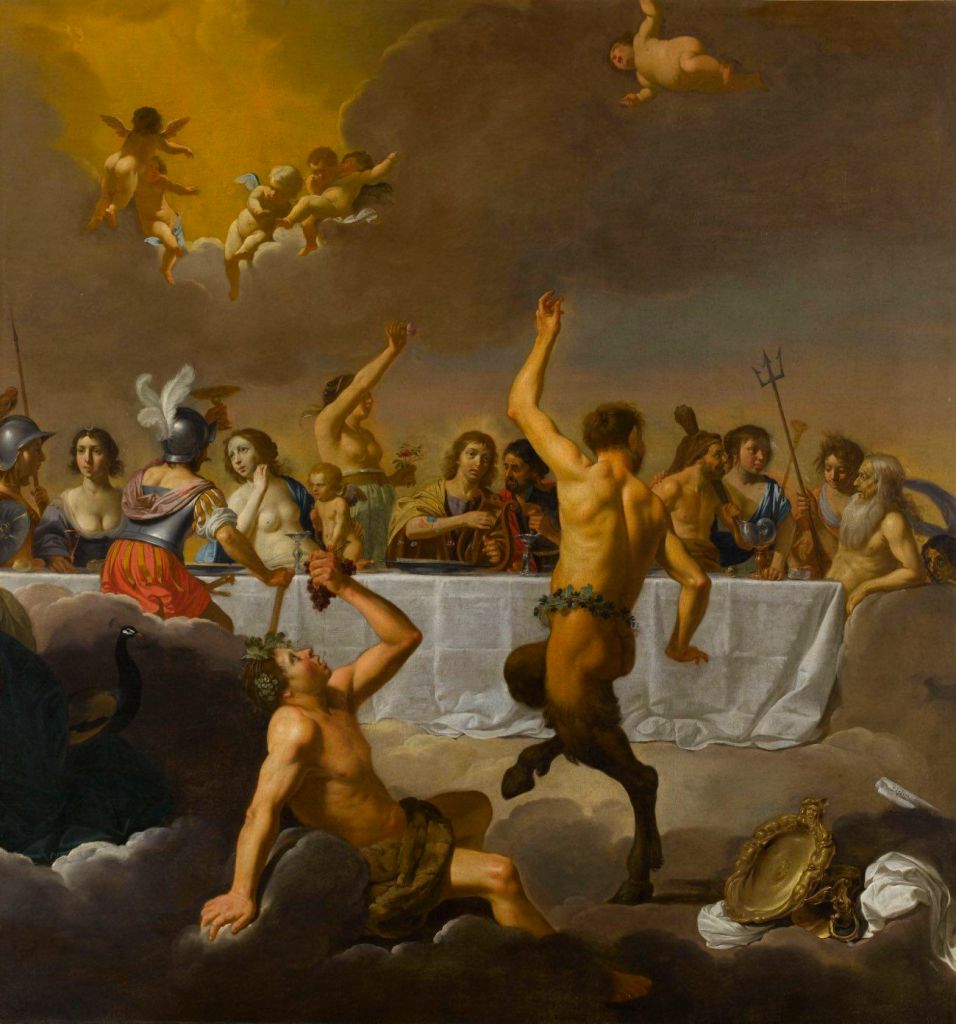
Likewise, some people when seeing many not happy with sacred Christian tradition being mocked tried to play off the display as a depiction of a Greek Bacchal Banquet. Whether you believe that explanation or not is up to you.  However, in either case, this was an obscene celebration of debauchery that had absolutely nothing to do with the Olympics.  And, no, that’s not coming from a prudish angle, rather Bacchus (not on Mt Olympus) was never a part of the Ancient Olympics.  So this clever response by apologists, like “Rev Cassie Rapko” (dutifully quoted in the Daily Mail), falls flat.

This new official explanation repeated over and over again in headlines, that “nothing to see here” denial of the Christian imagery in this depiction, also contradicts what these performers themselves had said before the damage control effort, as reported in their own words, “took inspiration from Leonardo da Vinci’s famous painting to create the setting.”  One of them even doubled down on the insult in a post that was later deleted after the narrative shifted.  The back peddling and gaslighting is incredible and it just goes to how unreliable our sources of information really have become.  This is an example of revisionist history in real-time:

But you’re crazy to think this has anything to do with Christianity!

The irony of the bizarre “It’s not the Last Supper, but The Feast of the Gods,” cover story is first that the explanation before the fury (above) is still online, and second that this painting by Dutch artist Jan van Bijlert was itself inspired by da Vinci’s The Last Supper:

And it is not so much about this one act as it is the meanspirited pattern of ridicule (and very deliberate misrepresentation) of Christianity by the left in part of a campaign of debasement and demoralization.  It is cultural vandalism, not art, and should be identified as such.  The left regularly betrays the love and tolerance it claims to stand for—only to greet with a Judas kiss acting as if they’ve done nothing wrong to deserve rebuke.  

“It’s just art!”

Try that excuse for spinning out on one of those rainbow flags painted on a roadway, see how it turns out.

Relax, don’t get so butthurt!  This is just art!

At the end of it all, the hypocrisy on the part of the fake tolerant “kindness is everything” left is expected. They are the civilizational equivalent of a plague of locusts, destroying all in their path and lacking any actual moral direction.  Sure, they’ll appropriate Christian morality, most especially when it is useful for bludgeoning others, but principles are for those trying to build.  The left lacks any creative power, which is why they parody and mock what is beautiful, what is meaningful, and truly life-giving in the world.  This isn’t even speaking from a Christian perspective, what truly awe-inspiring comes from these clowns other than their stupidity?

Until it comes to respecting your sacred traditions and symbols.

The need to recognize a bunch of talentless slobs, in the name of their false diversity, equity, and inclusion, only shows a lack of culture on the part of the French organizers.  This isn’t edgy or original, and it certainly isn’t going to help those who claim to be marginalized gain acceptance, it is simply sacrilege and a lame attempt to denigrate the faith of those who make up a 1/3 of the world population in an event that is supposed to welcome all people.  The only art on display was that of deception when they got called out.

Derision isn’t love. 

Ridicule isn’t tolerance. 

They lie to our faces and expect us to deny reality like they do, but you’re certainly not crazy for believing your own eyes.  I guess I should have told my shop teacher to squint harder and see the stool rather than the weapon.  But I was not that practiced in the art of deception.

Fairytales and Football Gossip

Standard

We all know a story about a little girl going to her grandma’s house and is confronted by a talking wolf who convinces her to go astray.  But this written account is predated by tales with similar characters, and yet not exactly the same.  In the end, no matter the version, we read it as being a fairytale and understand that it should not be taken as being a historically accurate record of an event.  Why?  Well, animals don’t talk and we were told it is an old fable.

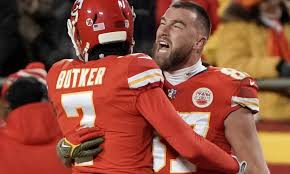
I had to think of this while seeing so many fundamentalist friends share a false claim that Travis Kelce threatened to quit the Kansas City Chiefs if they did not cut the currently embattled franchise kicker.  This part of the hysteria (both in response and in reaction to the response) over the conservative kicker’s commencement address that promotes traditional Catholicism.  Normally it would be customary for these Protestant friends to bash those who believe in Jesus in the same manner as Harrison Butker.  But, in politics, I guess the enemy of my enemy is my friend—suddenly those who give special honor to Mary are now acceptable?

The problem with this Kelce claim is that it is as fictional as Little Red Riding Hood and being spread as fact.  I mean, I would think that credibility is important to Evangelicals, being that their mission in life is to convince others a man literally walked on water and then rose from the dead because they read about it in a book.  But nope, they share the most urban legends of any demographic on my friends list.  For those who say that they know the Truth, personally, this should be a huge embarrassment—except it never is.

Those who have no ability to detect fakes or frauds, who spread blatant lies, really aren’t in a place to preach their values.

As much as I support Butker’s freedom of speech and think the cancel culture outrage over his comments is ridiculous, I really do not find a home amongst those who accept any claim that confirms their ‘Biblical’ views on social media.  All it takes is a satire site say that there has been evidence of the Red Sea crossing has been found or that a solar eclipse is passing over seven towns in the US named Nineveh and they will spread these blatant falsehoods to the ends of the Earth because they can’t be bothered to verify the claim before posting it.

If the religious adherents truly occupied the high ground of truth why would they dare to risk their credibility?

Whether it is fake news or just exaggerated tales, that believers are gullible or in people in denial in the manner of a sports fan who can only see what promotes their team as good, the cost is credibility.  A consensus of idiots is meaningless.  I have no reason to think that prior generations were any better at sorting out the facts from the fictional BS.  It is just disheartening, for someone who had hope of a marked difference between the faithful and the frauds.

The truth is that Travis Kelce (and his brother Jason) have come out in support of Butker.  So maybe it is time for some professing ‘Christians’ caught spreading this malicious gossip to do what their religion requires, humble themselves, and repent?

Wolves will likely talk before these reactionaries reconsider anything…

Shedding Identity

Standard

There was a time when I could simply say “I’m Mennonite.”  That is what I was.  It was my religion, culture and ethnicity wrapped up into one tidy package.  It was as real to me as my gender and first name.  But now, having left the denomination of my youth behind, it is really difficult to buy-in to a new identity or at least not to the extent of feeling a significant attachment to the distinguishing title.

We live in a great identity crisis.  We might celebrate more identities than ever, and yet somehow along the way, we have lost the very meaning of the words that we use to define these identity categories.  

What is an identity?

An identity is a word used to distinguish one from another.  Or a statement of what we are in comparison to the whole group.  Are you Catholic or Protestant?  Black or white?  A Republican, Democrat or Independent?  And whether it is identity or not has much to do with the emotional weight that we place on these categories and terms.  In other words, blue-eyed is certainly a category that some of us belong to, but is not currently an true identity marker.

There are also various kinds of identity, there are those inborn or assumed—Charlotte, due to her inherited genetics, is Kankanaey, and would be no matter what she believed about herself or if she prefers that another term be used.  Then there are those types of identities that are less about our immutable being and more about what we are doing.  By contrast, trucker or truck driver is an identity, and even comes with a license to prove it, but it is not something that is actually written in a CDL holder’s DNA.

Identity is never something we can select for ourselves.  I can claim to be a Dill Pickle and even legally require the moniker be used in reference to me. But this is never going to change what other people will perceive me to be.  Identity is something that others construct, with us, and not only a thing that we independently choose for ourselves.  Put another way, a rose by any other name is still a rose and even if we paint it blue.  And blue does not become yellow because we switch the color identity labels either.

Our “I am” identity…

I’m sexually attracted to the female form and this has dictated my priorities and activities throughout the years.  But, as important as it is to me, I don’t tout my ‘straight’ preference as being my identity.  I am many things, but my sexuality is not something to hang my sense of who I am on.  There are no hetero pride parades for this reason and no need to fly a special banner in front of my house to announce my preferences either.  Sexuality is not who we really are.

So, when someone says “I am gay,” my mind always must go to the question, “you are a sexuality?”  The reality is that this identity is about far more than what they do in bed.  It is about the community or lifestyle and an identity built around being their status as an exception.  Being “gay” is just as much about the social aspect as the orientation.  It is not just something you only do in private.  No, it requires a public display and solidarity with others like you.  If it were simply about sex there would be no parades or neverending need to be legitimized by others.  Identity is bigger than the individual.

And trans is simply the next level.  Those calling themselves “trans” may (in direct contradiction with their biological gender assignment) self-identify as a man or a woman.  But those who are truly male or female simply are and there is no need for hormones, reconstruction of genitals or to exaggerate gender stereotypes with weird provocative displays.  On the other hand, no matter how much  surgery is performed on the body of a ‘trans’ person they will always be trans.  The more trans people try to force others to recognize them (despite our own eyes) the more they will stand out as being different.  Which is truly the point.

Identity is about our distinguishing ourselves from the larger group.  It is also about what is the most important thing to us.  If a person were ask who I am I would probably start with my given name.  That is where I am oriented in society, as a product of my parents, and also gives others a shorthand to address my person.  Then I might mention my role as a husband and father as those things are currently the most meaningful parts of my life.  Of course, also in the mix is my religious affiliation and occupation.  Sexuality, while very important, wouldn’t even make the top of the list.

Furthermore, there is no need for anyone to defy their own eyes or be forced to recognize anything about me against their will.  Identity is not only about what I declare.  A large part of real identity is what others recognize with no coercion.  If I had to demand that my son call me daddy or that my wife appreciate my bad cooking the same as she did the work of a master chef, would their bending to my will really make me any more legitimately those things?  No, it would certainly not!  It would make me a bully and look very insecure.

The Identity Gambit…

Special identity is a way to gain advantage over others. In the past it was about having the right privileging title or family pedigree. Now it has become a no holds barred fight between various victim categories. But in both cases it was about unearned respect, about people who did not do anything noteworthy enough in their lives to be recognized and thus invent illegitimate reasons why others must genuflect to them. These frauds are enabled by those who have twisted morality and a corrupted political system.

Stop. I look like a police officer!

People can lie about their identity for many reasons.  Impersonation of a police officer, for example, gives a person false authority and ability to manipulate the unsuspecting.  Or stolen valor, in the case of those who, for attention, dress like and pretend to be a military veteran.  Sure, the act is usually off, since these posers don’t have the requisite qualifications, but it fools enough people that they get the payoff of the true identity—or at least until caught.  Then again, prancing around and pathologically pretending to be a girl is now extremely lucrative for some men.

Pretending to be a doctor or airline pilot is something children do innocently and yet it would be silly to legally recognize this as not to make them feel bad.  True identity is not an act or a costume we put on. 

Shedding identity…

Identity is powerful.  For example, a person calling themselves a “gangsta” or “thug” is declaring a whole package of behaviors and dress styles.  It is a choice as well as a habit, they could change and yet their momentum is in a particular direction.  They have been conditioned, for years and years, by culture and peers, to assume this posture towards the world.  

There is some truth to the statement, “you can take the boy out of the country, but you can’t take the country out of the boy.”  We have many things instilled in us, accents to tastes, but this is not written into our DNA and doesn’t mean it is an “I am what I am” excuse.  We will send children to speech therapy if they have an impediment rather than let them be their true selves.  We can and should modify things that an identity is built from.  This notion of a genuine self that can’t be changed is ridiculous.

Right now there is a Ukrainian vs. Russian war.  The narrative we’re being sold is that there is a vast difference between the two sides—that this is a fight between freedom and democracy or authoritarian rule.  We are told the Russians are barbaric and cruel, the Ukrainian’s heroic and capable.  But both are from the same Kievan Rus origins, speak a dialect of the same language, and truly have much more in common with each other than they do with us.  Furthermore, the regime in Kiev is hopelessly corrupt, and had been shelling those trying to escape this rule for years prior to the Russian invasion—it isn’t a distinction worth dying over.

Ukraine vs. Russia is more like the US Civil War than WW2.

The reality is we are not bound to identity, especially not to those that are more about what we are currently doing rather than our actual being.  We choose our divisions as much as we are born with them.  Sure, we can’t help what side of a border we are born on nor if our personality traits are judged as being masculine or feminine.  But we can decide what is most important to us.  And, more importantly, we can pick identities that are greater than sexuality or gender.  We must reject this idea that we can’t change or improve while also accepting what we are and were born to be.

Many people get off from being contrarian and offending others, they especially enjoy being able to force others to go along with their language games.  But, in the end, their ‘preferred pronoun’ is a distinction without a difference.  We will remain what we are no matter how we dress it up or how much we compel others to go along with the delusion and falsehoods we peddle.  It is only in our spiritual transformation, in finding a bigger purpose, that we can be free from needing the approval and attention of others.

More and more I have no identity to cling to outside of being who I am.  I am what I am and don’t need to hide behind a special label or find my place in the world.  While many in my religious past hold conference in search of their identity and as many converts in the tradition in which I currently participate tout the Orthodox adjective in the manner some do they/them pronouns, I have little interest in joining them in this inane competition.  St Paul, in Galatians 2:38, would have us shed our divisive identities for a joint identity in Christ.

Worse Than An Unbeliever

Standard

But if any provide not for his own, and specially for those of his own house, he hath denied the faith, and is worse than an infidel.

(1 Timothy 5 KJV)

I had to think about that verse when reading an article about terrible dating advice given out by an Evangelical superstar shared by a friend. The article itself may be a bit unfair, in that we can rip quotes from a book and make almost any point we want. But I do believe that it raises an important point. A man who does not provide for their own family (and wife) is worse than an unbeliever.

There are so many highly motivated religious men that should never be married. As cited in the article, St Paul gave this advice:

I would like you to be free from concern. An unmarried man is concerned about the Lord’s affairs—how he can please the Lord. But a married man is concerned about the affairs of this world—how he can please his wife—and his interests are divided.

(1 Corinthians 7:32-34 NIV)

In Orthodoxy, a priest must be married prior to ordination or remain single. Bishops are unmarried. This, I believe, is to help prevent conflicts of interest and so they remain ministry focused. Of course, if someone is so completely ‘sold out for Christ’ then they should not marry at all. And yet there are some who seem to want both the pleasure of marriage and also credit for their ‘missionary’ devotion. In other words, they neglect their responsibilities at home because they must be seeking their own personal vision. They want to have their cake and eat it too. Someone is getting shortchanged:

He must manage his own family well and see that his children obey him, and he must do so in a manner worthy of full respect. (If anyone does not know how to manage his own family, how can he take care of God’s church?)

(1 Timothy 3:4-5 NIV)

Red flags should go up when a church leader’s children do not respect their authority or leadership. It reminds me of the pastor that I knew, all of his children seem to be sexual addicts at a young age, they were totally wild, and most not in the church anymore. But, when this man was approached about stepping down or even taking a sabbatical, he would always find justification for not doing what Scripture clearly instructs. He reasoned that his leaving the pulpit would mean Satan win, and yet I’ll have you know that Satan won because he refused to repent or be humbled.

No, that is not to say a parent is completely responsible for the choices of their children either. However, there is influence there. And, if his example wasn’t working at home, why would he be so sure that it was beneficial to the church? He should have obeyed the word of God, that he would preach of so vigorously, and focused on the salvation of himself and his own children.

Being Truly Devoted To God

For those married being truly devoted to God means caring for those entrusted to us. The King James translation of 1 Timothy 5 may be use “he” and yet other translations do not. When men and women are too focused on career or climbing the social hierarchy, even if it appears righteous, they are betraying Christ. Even to neglect care of our elderly parents is in opposition to the word of God:

Then some Pharisees and teachers of the law came to Jesus from Jerusalem and asked, “Why do your disciples break the tradition of the elders? They don’t wash their hands before they eat!” Jesus replied, “And why do you break the command of God for the sake of your tradition? For God said, ‘Honor your father and mother’ a and ‘Anyone who curses their father or mother is to be put to death.’ But you say that if anyone declares that what might have been used to help their father or mother is ‘devoted to God,’ they are not to ‘honor their father or mother’ with it. Thus you nullify the word of God for the sake of your tradition.

(Matthew 15:1-5 NIV)

This rebuke reminds me of a man that was always so devoted to beautifying the parish. An Orthodox of Orthodox, by appearances, and yet had emotionally and otherwise neglected his home. In fact, he had once bought a Christmas tree for the church and, meanwhile, left his wife fending for herself to decorate their home. I know this may seem insignificant. Still, it reflected some seriously screwed up priorities and, while his hidden infidelity was a disappointment, it was also not a big surprise. A righteous man should, first and foremost, be the priest of his own home.

So, in conclusion, devotion to the cause of Christ that results in a man who does not devote himself first to the needs of his own family is false devotion. It is the same spirit of the Pharisees (passage above) who would set aside care for their elderly parents and use it for a visible religious purpose. They would claim these resources were ‘devoted to God’ and yet God had told them to honor their parents first and foremost. In the end they were only virtue signaling and deceiving themselves, but Jesus was not fooled.

Assaults, Allegations and Justice For All

Standard

It was an open and shut case. A young woman reported that she had been drug into a stairwell at school and raped. The young man, seventeen, enters a guilty plea and is sentenced as an adult. He will serve five years behind bars, then five years of strict probation, and will need to register as a sex offender for the remainder of his life.

Justice served, right?

That’s the story of Brian Banks, a high school football star, accused of rape by his classmate, Wanetta Gibson, and threatened with forty years to life on the basis of her allegation. His legal counsel, despite Brian maintaining that he was innocent, feared a conviction and advised he go the route of a plea bargain—so that’s what the young man did.

He served his time. He had asked the California Innocence Project to take up his case, but they declined because there was a lack of evidence to prove his innocence. It seemed Brian would spend his entire life, denied opportunities, treated like a sexual predator, and unable to clear his name—all on the basis of her words. I mean who, besides his close friends and family, would believe him, that he had been falsely accused? Doesn’t every rapist claim to be innocent?

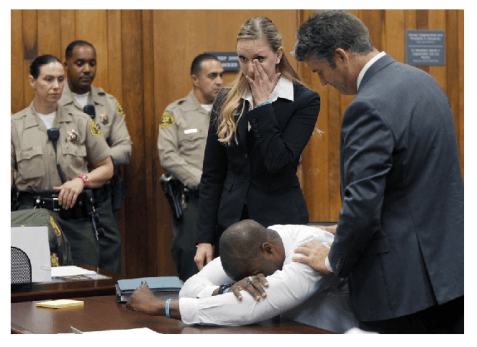
But then something extraordinary happened. His accuser, Wanetta, recanted her story (privately) and confessed that she had fabricated everything. Finally, Brian’s name was cleared. His accuser, who had won a 1.5 million dollar settlement against the school, was sued to recoup the money paided to her and has since failed to show for her court dates. Brian had a brief NFL career after this and is now an activist for those wrongly convinced.

The “only” who are falsely accused…

“The ruthless will vanish, the mockers will disappear, and all who have an eye for evil will be cut down— those who with a word make someone out to be guilty, who ensnare the defender in court and with false testimony deprive the innocent of justice.” (Isaiah 29:20‭-‬21 NIV)

There is an oft-repeated claim about the frequency of false accusations being “only” 2-10%. It is a number often used by those trying to downplay the possibility that a man is innocent.

But what is the basis for this number?

The number itself is an estimate. It is based on various studies, studies like one published in the Journal of Forensic Psychology from 2017, that compare numbers of claims deemed false or baseless after an investigation. They found that between the years 2006–2010, out of 87,000–90,000 accusations of rape a year, that around 4,400–5,100 of the reports were deemed false or baseless—that works out to roughly 5.55% of allegations being determined to be false.

However, what a study like that does not take into account is that some accusations of rape are entirely baseless despite an investigation that leads to a conviction. Brian’s case is a prime example, he was found guilty despite his innocence and only exonerated because the woman who accused him later recanted her tale. There could be many more men, convicted on the basis of a false accusation, who are never exonerated because their accuser never recants.

Brian’s story is extraordinary in that his accuser was caught in her lie. However, that’s not always the case. (Not to mention, he had already served five years.) There is really no way of knowing how many, convicted on the word of an accuser, may actually be innocent despite their entering a guilty plea and being convicted. So we really do not know how many accusations are false accusations based on convictions

But, more glaring than the possibility that the number of false accusations could be far higher, is the very reality that thousands of accusations per year are false.

That is, put another way, 4,400–5,100 lives (and potentially more) with their lives turned completely upside down by a false accusation. This could be your own father, brother, nephew or son. Thousands are accused, even imprisoned, and are actually completely innocent—that is an “only” that should slow us from rushing to judgment in the case of an allegation.

That said, not near all rapes and sexual assaults are reported.

“Speak up for those who cannot speak for themselves, for the rights of all who are destitute. Speak up and judge fairly; defend the rights of the poor and needy.” (Proverbs 31:8‭-‬9 NIV)

It is important, at this point, to note that there are many who are victims of crimes that were never reported. I personally know multiple cases of men and women who were sexually molested and/or raped and never reported the assault to authorities. They were abused by family members, grabbed in the groin by a coworker, raped by their boyfriend and there was no police report of the incidents. That too is a sad reality, a traumatic experience that many live with, that should not be ignored.

According to the Department of Justice, in a 2014 report, an estimated 34.8% incidents of sexual assaults are reported to authorities. That is to say that only 3 or 4 out of ten sexual assaults are ever properly investigated and adjudicated.

Now, that this is NOT to say that there is an equal number of rapists to those unreported incidents.

According to a report about repeat rape among “undetected” offenders, repeat rapists “average 5.8 rapes each” and thus the number of undetected rapists is only a fraction of the number of victims. In other words, only a small number of men account for the majority of the incidents and this is precisely why people should report criminal incidents—reporting in a timely manner will protect other people from repeat offenders.

It should come as no surprise, then, that someone who was raped would not report it at the time it happened. Likewise, it should not be a surprise that many rapists continue their life free of consequence for their actions. This is an unfortunate reality of the world we live in, it is the reason why we should always take allegations seriously even if they come out years and years after the assault is said to have happened. There are many unreported assaults, people come forward at different times for different reasons, and this is something to always be aware of in our analysis of reports.

We can (and should) take a clear stand against all forms of abuse.

There is a false choice out there. There are some who deny allegations on the basis of false reports. There are others who dismiss claims of innocence and downplay false allegations as insignificant on the basis of under-reporting statistics.

But we should not choose one or the other. It does the real victims of sexual assault no good to presume the guilt of a man simply on the basis of accusations. It also is wrong to side against an accuser because there are false accusations or they haven’t reported the event immediately after it happened.

We should never disregard an allegation off hand. We should never decide someone’s guilt or innocence by a mere claim or statistics. We can both take sexual abuse allegations seriously and also be reasonably skeptical of the accusations. When pressured to take the side of an accuser or the accused we should take neither side and take the side of justice instead. Every case is different. Every court is different. We must be wise.

Know your own bias and adjust your judgment accordingly!

Still, we all tend to see things from a biased perspective. In the case of Brian Banks, the prosecutor and other authorities believed he was guilty on the basis of the testimony of the young woman. These were well-educated people, people aware of bias, and yet they failed him. In many other cases, there is undo skepticism of those coming forward with allegations and denial of justice to victims of abuse. Both of these things must be guarded against. A person making an allegation should be heard and their story believed. An accused person should be presumed innocent until proven guilty and not be denied due process.

Ultimately, if an allegation falls within the statute of limitations, it is the responsibility of the police to investigate and the job of the courts to decide based on the evidence that they have. I prefer that we side with the evidence, that a charge must be proven beyond a reasonable doubt, and that defendants not be tried in the court of public opinion, perp-walked or treated as if guilty unless there is evidence that proves beyond a reasonable doubt:

“It is better that ten guilty persons escape than that one innocent suffer” (Sir William Blackstone)

Two wrongs never make a right. As much as we want justice for the victims of sexual abuse we should not neglect justice for those accused. It does the true victims no good to create another victim by locking up those falsely accused and truly innocent. We should not punish anyone for a crime that they did not commit and especially not as a result of our prejudice against their race, gender, religion or other a defining characteristic.

We need to be a voice for justice.

False accusations, from the Salem Witch Trials to Emmett Till and everything before or after, come because there is power in making them. An accusation can bring a confirmation hearing to a grinding halt, it can cause questions about a political rival’s character that didn’t exist before and mere words can destroy lives—therefore we must always stand for the rights of the accused.

That said, we must never deny the oppressed, we should have compassion for those abused and especially for abused who have remained silent for fear of not being believed or other reasons—therefore we must always be a voice for the abused.

May God give us wisdom!

Biblical Faith vs. Bible-based Religion

Standard

Two different religious traditions use the same Scripture.  One tradition says the text points to a man named Jesus who preached in Roman occupied Judea a little over two millennia ago and was God’s only begotten son came to save people from themselves.  The other tradition rejected these claims and still waits on Elijah to return as a prelude to the arrival of the Messiah.

“See, I will send the prophet Elijah to you before that great and dreadful day of the Lord comes.  He will turn the hearts of the parents to their children, and the hearts of the children to their parents; or else I will come and strike the land with total destruction.” (Malachi 4:5-6)

Note the choices in the passage above.  There’s option a) repentance and changed hearts, or option b) face total destruction.  And, depending on perspective, there might be an option c) both. 

We know that Judaism was split in two because of Jesus (some believing him, others rejecting him) and also that Jerusalem was destroyed in the year 70CE.  The glorious temple, the very center of Jewish worship, was completely dismantled as Jesus had foretold and has never been rebuilt.

Temple #1: Symbolic, representation of truth, built out of stone and sweat of men, located in Jerusalem:

“As Jesus was leaving the temple, one of his disciples said to him, ‘Look, Teacher!  What massive stones! What magnificent buildings!’  ‘Do you see all these great buildings?’ replied Jesus. ‘Not one stone here will be left on another; every one will be thrown down.'” (Mark 13:1-2)

Clearly Jesus is referring to the destruction of buildings that the disciples were admiring and that destruction literally happened.

But, there’s more…

Temple #2: Figurative, fleshed out truth, the life work and example of Jesus, located in history:

“The Jews then responded to him, ‘What sign can you show us to prove your authority to do all this?’ Jesus answered them, ‘Destroy this temple, and I will raise it again in three days.’  They replied, ‘It has taken forty-six years to build this temple, and you are going to raise it in three days?’  But the temple he had spoken of was his body. After he was raised from the dead, his disciples recalled what he had said. Then they believed the scripture and the words that Jesus had spoken.” (John 2:18-22)

Jesus also used the temple as a metaphor for himself, predicts his own death and promises to resurrect his body.

Then at the trial of Jesus…

“Many testified falsely against him, but their statements did not agree.  Then some stood up and gave this false testimony against him: ‘We heard him say, ‘I will destroy this temple made with human hands and in three days will build another, not made with hands.'” (Mark 14:56-58)

Note, in the third passage, we are told that the witnesses at the trial of Jesus spoke falsely.  However, we see in the prior two Gospel accounts quoted above that the words they spoke were half-true—It is indeed true that Jesus spoke about the destruction of the temple and probably said something about a new temple not built with hands—The false part is where they claim he would do it by his own hand.

Jesus foretold his own death using a metaphor of himself or his body being the temple.  But he was also prophesying about the literal building of stone in Jerusalem.  His words a double entendre, one meaning of the word “temple” was figurative about his own death and resurrection and a second concrete meaning about the literal destruction of the temple built of stone.  However, there is a third use of temple and not the temple of the body of Jesus or the temple in Jerusalem built of stone.

Temple #3: Spiritual, a truth experienced, lived practically and today, located in the heart of believers:

“Don’t you know that you yourselves are God’s temple and that God’s Spirit dwells in your midst? If anyone destroys God’s temple, God will destroy that person; for God’s temple is sacred, and you together are that temple.” (1 Corinthians 3:16)

“Jesus replied, ‘Anyone who loves me will obey my teaching. My Father will love them, and we will come to them and make our home with them.'” (John 14:23)

“Now you are the body of Christ, and each one of you is a part of it.” (1 Corinthians 12:27)

That is a radical message.  It takes us from a man-made building of stone and religion.  It takes us to the man named Jesus “the stone the builders rejected” (Psalm 118:22, Matthew 21:42, Acts 4:11) and then finishes with us being the place where God dwells and being Jesus.  It is the message that got Stephen killed:

“After receiving the tabernacle, our ancestors under Joshua brought it with them when they took the land from the nations God drove out before them. It remained in the land until the time of David, who enjoyed God’s favor and asked that he might provide a dwelling place for the God of Jacob.  But it was Solomon who built a house for him.  However, the Most High does not live in houses made by human hands.  As the prophet says: ‘Heaven is my throne, and the earth is my footstool. What kind of house will you build for me? says the Lord. Or where will my resting place be?  Has not my hand made all these things?‘  You stiff-necked people! Your hearts and ears are still uncircumcised. You are just like your ancestors: You always resist the Holy Spirit!” (Acts 7:45-51)

I can imagine why that was insulting.  Stephen basically just invalidated the entire religion of his audience using their own Scripture. 

The destruction of the temple in Jerusalem marked the end of a religious system.  The life, death and resurrection of Jesus was the beginning of something very different: A chance to be a dwelling place for God, and an opportunity to be a true child (adopted, not begotten) of God.

Jesus, talking to a woman who asked about the proper place to worship, said:

“Yet a time is coming and has now come when the true worshipers will worship the Father in the Spirit and in truth, for they are the kind of worshipers the Father seeks.  God is spirit, and his worshipers must worship in the Spirit and in truth.” (John 4:23-24)

Oddly enough, many professing Christians today are waiting on a literal temple of stone and a literal bodily second coming of Jesus.  They seem to me like those who wait on a literal Elijah, who did not recognize John the Baptist as the spiritual Elijah, and rejected the Gospel of Jesus Christ.  They have a Bible-based religion, they diligently study Scripture, yet they seem to be missing something as far as understanding and faith.

Bible-centered religion and regulation is false security.  Jesus never told anyone that Scripture would replace him as teacher.  Jesus did, however, promise that the Spirit would “teach you all things” (John 14:26) and will come to all who believe.  I believe many have been deceived and believe their ‘Biblical fundamentalism’ will save them.  What they actually have is fundamental misunderstanding, they are relying on their own human religious traditions.  They have a Biblical religion only and not the true faith described therein.

“The person without the Spirit does not accept the things that come from the Spirit of God but considers them foolishness, and cannot understand them because they are discerned only through the Spirit. The person with the Spirit makes judgments about all things, but such a person is not subject to merely human judgments, for, ‘Who has known the mind of the Lord so as to instruct him?’  But we have the mind of Christ.” (1 Corinthians 2:14-16)

It is the Spirit that makes the Bible discernable.  Those who place their security in the Bible itself (or their fundamentalist book-based religion) are not fully submitted to the Spirit and cannot fully understand the things of faith that are described in Scripture.  They bind themselves up in “false humility,” create “regulations” that have “appearance of wisdom,” (Colossians 2) yet they are false and—like those who “study the Scripture diligently” (John 5:36-40) that Jesus rebuked—they do not have the word of God to discern truth from it.

“Even to this day when Moses is read, a veil covers their hearts. But whenever anyone turns to the Lord, the veil is taken away. Now the Lord is the Spirit, and where the Spirit of the Lord is, there is freedom. And we all, who with unveiled faces contemplate the Lord’s glory, are being transformed into his image with ever-increasing glory, which comes from the Lord, who is the Spirit.” (2 Corinthians 3:15-18)

The truth that brings freedom is of the Spirit.  Religions give adherents false security, but true faith that originates from the indwelling Spirit gives freedom and ability to experience God first hand.  Bible-based religion leads men to talk about Jesus.  Spirit-led faith allows men to *be* Jesus and bring salvation to a lost and hurting world. 

Religion relies on rituals, one size fits all prescriptions and manipulation through fear.  Faith is dynamic, applies grace as liberally as necessary and motivates by being an example of a love that transcends.  Religion hides behind a veil of human inadequacy and attempts to legislate morality into existence without ever changing hearts.  Faith overcomes fear and produces fruit out of passion that comes from true unity with God.

The Bible is a book that can only be understood properly by those with the “mind of Christ” and Spirit.  Knowing when the language of Scripture is figurative, metaphorical, spiritual, concrete, literal (or some ‘all of the above’ combination) requires the indwelling of the word.  Discernment through any other means but a mind renewed in Christ (be it be an old tradition or a new commentary) is incomplete.

“…without faith it is impossible to please God, because anyone who comes to him must believe that he exists and that he rewards those who earnestly seek him.” (Hebrews 11:6)

No amount of religion finagling or diligent study can replace the indwelling word.  Jesus made it possible to remove the veil of religion and experience the full presence of God.  Seek after Spirit-led faith, not Bible-based religion.

Have you experienced the promise and freedom of faith?

Or, are you still waiting on Elijah to return?