What Is the True Cost of EV?

Standard

The battery electric vehicle (EV) versus the internal combustion engine (ICE) powered debate is one of the most irrational of our time. On both sides of the discussion, you have those frothing-at-the-mouth types who attack the moment you disagree. And this is exactly the response that I got after I had casually mentioned that ICE is 1/3 the cost under a click-bait post…

Model Y starts at $43,990 FYI.

One just called me ignorant, but others tried to make an argument, including this response:

I’m trying to figure out what car cost 1/3 of the price of a Tesla🤔🤔? The long range Model 3 (the one you want for a roadtrip) is $42,500 – $7500 tax credit is $35,000. This is not factoring in gas savings. Please tell me what new car is availability for under $12,000 (that’s the 1/3 cost of a Tesla you mentioned)?

Fair enough question.

Note, I never said new, but assuming that I did…

Believe it or not, and even in this inflationary age, there are still reliable sedans that come in under $20,000. Starting with a Mitsubishi Mirage G4 ($18,500), the Kia Rio ($17,875), and the Nissan Versa ($17,075), the lowest-priced option is half of even the subsidized price of the Tesla base model.

But you can’t exclude the subsidy from the cost of the EV, the government doesn’t have a magic wand to create value and we all end up paying for their expenditures in our taxes or by inflation due to money printing. And it only begins with that “tax credit” (so-called) given directly to privileged people who can afford a new luxury car.

What is the true cost of subsidies?

According to a study by the Texas Public Policy Foundation, the cost to us is nearly $50,000 for every EV produced:

Federal and state subsidies and regulatory credits for EVs totaled nearly $22 billion in 2021, or nearly $50,000 per EV, socializing the true cost of these vehicles to taxpayers, utility ratepayers, and owners of gasoline vehicles

Tens of billions of dollars have been spent trying to make EVs viable, and yet still the average cost of these vehicles is $65,000, compared to $48,000 for ICE. Why haven’t these subsidies leveled the playing field? It is simply the fact that batteries require tons of extra material and a much more complex process to produce.

So we can at least double that visible “tax credit” subsidy and already the true cost of an EV is close to three times a comparable ICE sedan.

We could stop there—the 1/3 number reached—but let’s continue…

What is the true cost of production?

The cost of a vehicle isn’t just the window sticker price or the money that it takes to manufacture. The bigger question—given the reason many say we should switch to EVs is about emissions—is what the increased environmental impact is of producing the batteries that go into these cars. Is this a trade-off we are willing to make?
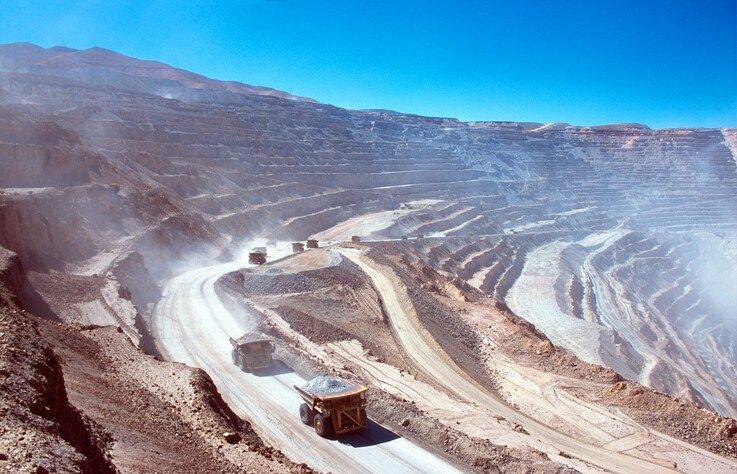
Lithium batteries are costly, they require an enormous amount of water and also leave a toxic legacy that will grow exponentially as EV is adopted. Is it worth this cost to only marginally reduce carbon emissions?  That is to say, around 17-30% less emissions according to European Energy Agency? 

Sure, it could get better with a heavy investment in electrical generation and transmission—yet that is another huge cost financially and environmentally…

What is the cost of infrastructure demand?

This is where the conversation is the most interesting. We have the refining capacity and distribution network already built for ICE vehicles. Gasoline and diesel fuel have the advantage of being energy-dense and can be moved around using the existing highways. But what about EVs?

There is an illusion that comes with plugging something in. The load we put on the system is invisible. But there is no magic to it. Electricity is something that must be produced somewhere and then transmitted to the charging stations. If everyone adopted EV technology the grid would collapse.

We’re currently nowhere even near what it would take in capacity to convert everyone to EV. The easiest route to more electrical generation is to go anuclear. So how many new nuclear power plants would it take? Well, if we use miles driven and the number of cars on the road today, then we would need to build 250 additional nuclear power plants as big as the largest plant in the US, and the supporting infrastructure to keep up with this demand.

So are you willing to have a Palo Verde in your own backyard?

It cost 5.9 billion dollars to build one in 1988 (the equivalent of 13.9 billion in 2023) and we needed to start building 250 of them yesterday.  The solar and wind equivalent would be even more costly to build and maintain.

The costs would be astronomical and that’s just considering only passenger vehicles. Switching Class 8 trucks would take even more of these massive power plants and spending—the cost of switching would be insane.  Not to mention you would need more trucks to do the same work as you did with diesel.  And remember, every dime that we spend on this mass EV conversion could go to health care or education instead.

Can you now see how extremely costly EVs will become as they are adopted?

But it does not end there…

Why is the cost of wear items greater?

Batteries are heavy and weight is the enemy of “wear items” like brakes or tires—which is not to mention the additional damage to the highway infrastructure.
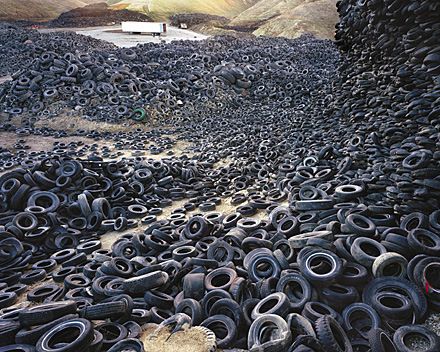
EV tires wear 20% faster than comparable ICE vehicles.  That is a cost out of your own pocket and also a concern for the environment. And do not forget, to be safe you’ll need those heavy-duty EV-specific tires. Sure, maybe this is not a very big problem for those who can already afford the premium cost of a new EV?  However, for that waitress struggling to make ends meet she will have to make the choice between safety and home utilities.

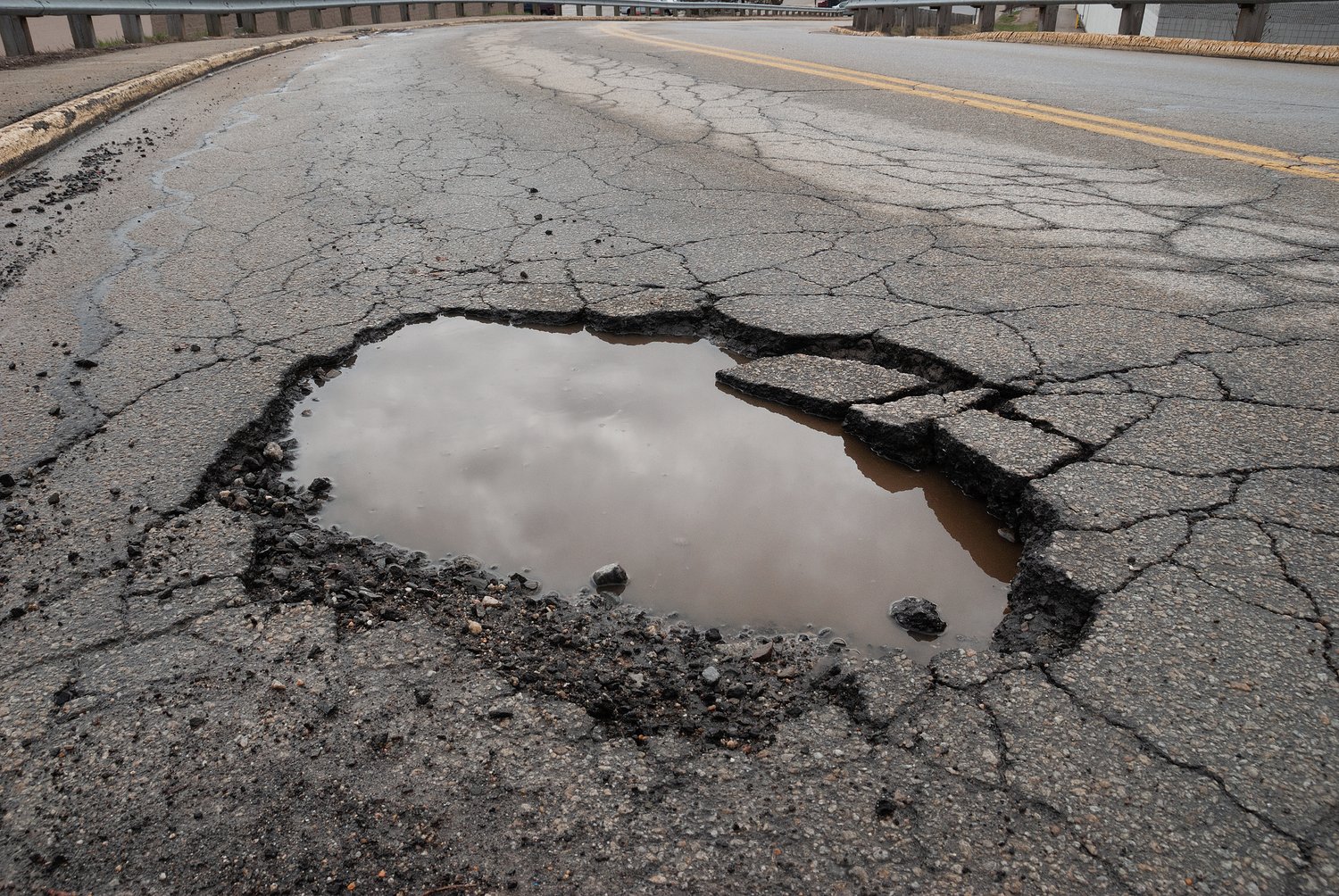
Next up is excess road wear.  Big trucks are obviously the leading cause of damage to roads. However, EV proliferation will start to cause problems for existing infrastructure:

A 6,000-pound vehicle causes more than five times as much road damage as a 4,000-pound sedan. A GMC Hummer EV, which weighs 9,063 pounds, will cause 116 times as much road damage as a Honda Civic, weighing 2,762 pounds.

The article cited above isn’t about EVs yet does apply given it is about the vehicle weight. Even the Model 3 is a whopping 3,862 to 4,054 lbs. Sure, one vehicle is not going to do a whole lot by itself, but the volume over time will significantly impact bridges and parking garages that were designed for lighter ICE vehicles. This EV vehicle weight bloat caused by batteries will require very costly upgrades to prevent catastrophic failures—like the Ann Street Building Collapse:

Speaking of disasters. With EV there is potential for a thermal runaway or reaction that can’t be stopped—like an ICE fire—by simply denying the source of oxygen. This hazard will result in more damage to road surfaces, more time spent in traffic jams after incidents, and additional toxic emissions. This is a cost to be seriously considered with all of the others.

Cost of time, capability, and resale value…

Many of the costs and drawbacks of EVs are hidden under a pile of subsidies or are moved upstream like the emissions—out of sight out of mind.

But what cannot be ignored is performance in terms of range. Time is by far our most valuable resource and nobody wants to spend hours in a place they don’t want to be because their vehicle battery is drained.

As far as capabilities, even EV trucks are useless for towing, both the Tesla Cybertruck and the Ford Lightning—both costing around $100,000 in the higher trim levels—aren’t so good at doing typical truck things. Sure, they produce a ton of low-end torque and are very fast. But the F-150 EV only went 90 miles pulling a camper and the Tesla only fared a little better.
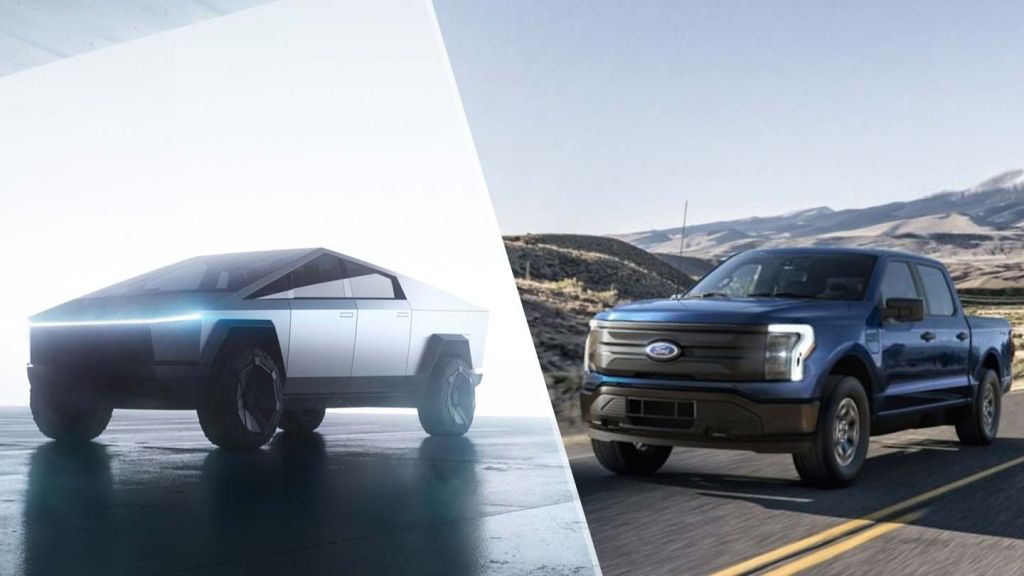
7000lb luxury land yachts

And finally, we need to talk about plunging resale values. For a while EV was a novelty, the “way of the future” every suburban geek needed to virtue signal. But it appears that this is now starting to fade and reality is starting to take over again—46% of EV owners in the US plan to ditch EV to return back to ICE—and many will not recoup their cost because the floor is dropping out for used EVs:

A recent study from iSeeCars.com showed the average price of a 1- to 5-year-old used EV in the U.S. fell 31.8% over the past 12 months, equating to a value loss of $14,418. In comparison, the average price for a comparably aged internal combustion engine vehicle fell just 3.6%.

That’s bad news for the EV industry.  That is probably why Ford, after losing billions on their EV investments, has made plans to pivot back to hybrid.  Toyota, ever conservative, never made the mistake of getting sucked into the EV mania.  My wife’s C-Max (hybrid) has no range anxiety, saves fuel, and has a plug-in version that can go on battery for a length of a commute.  This is the right compromise.

ICE costs less to build, but the hybrid will likely emerge as the winner for being the best of both worlds. It has range like ICE, and torque like an EV, while also keeping its value and not requiring vast new expenditures to upgrade the electrical infrastructure. If costs are reflected in the market hybrid will come out victorious in the end.  Some can afford EVs today, but only because others are absorbing more than half of the real costs.

As a footnote, I’m not opposed to EVs nor do I think they are destined to go extinct. If resale values continue to drop I would even consider owning one. The whole point of this article is simply to give a bit of pushback against the Pollyannaish sentiments that would lead to an ill-advised mandate. There would be an enormous cost, and opportunity cost, that would come with this. Just the fact that EVs need massive subsidies to be sold should tell us enough. If it isn’t viable in the market it isn’t viable.

Anticipating November’s Delivery

Standard

In November, as the world tunes in to know who will be elected president, my wife and I will anticipate something else. 

We expect a baby girl, our first child together and second that Charlotte has brought into the world.  It has been my joy to raise our son, but having this miracle of life unfold before my eyes is still a powerful experience.  How a moment of intimacy can create such potential is just completely amazing.

There is no greater role in the world than a woman who takes her pregnancy to term, motherhood is simply the most important job there is.  In a century nobody will care about who won the popular vote or their policies.  Truly, short of a civilization ending nuclear war, they’ll remember Trump like we remember Taft or Harris as we recall all the many noteworthy accomplishments of the Harding administration.  But old folks then will remember their mothers.

The most powerful position in the world is not one with four year terms.  A President can reallocate resources, make things more or less difficult, wage war and destroy, but only mothers produce new life.

Early in our relationship, when marriage had become a possibility, Charlotte was excited about the prospect of a mixed baby.  That is a combination of my German genetics “long nose” with her own.  But as months waiting turned into years that initial enthusiasm had wore off and, by the time she arrived, it was all about financial goals.  We couldn’t afford a baby—we could barely keep up with rising costs due to inflation!  

Besides that, we are both getting old.  The world seems less stable now than ever, my own skepticism has grown and I’ve become untethered from assumptions that brought me easy answers in the past.  Our son was already here, we weren’t bringing a new life into the mess.  So maybe it was better that we didn’t bring a child into this to suffer the hardships and pain that we have?

I’ll also admit that my wife, despite having given birth once, had a flat belly and that is completely desirable.  We all want to hang onto our youthful appearance.  Men tend to prefer women that are in shape or pleasing for aesthetic reasons.  Why ruin that?

However, a bottle of wine and nature have won against rational concerns.  No, those anxieties about how to raise a child in this environment did not go away and, for the first time ever, abortion entered my mind as an escape of this enormous responsibility.  This could all just go away with a ‘medical procedure’ and nobody would need to know, right?  Of course, that momentary reflection was swallowed up by excitement.

No, we don’t know how all of the details will work out.  Our hopes of moving Charlotte’s mom here didn’t pan (only the parents of US citizens can be petitioned) and we’ll have to adapt as we go.  We have no regrets, the kicks we feel now soon to give way to cries in the night, diaper changes and all of those steps of development.  But in the end this is the only legacy we will leave to the world—the only future we have.

Preparations are underway for the inaugural moment when this winner against the odds will emerge.  We want our daughter to have the very best introduction to the world we can provide—a safe and stimulating environment.  We’re stocking up on diapers and bottles, have a crib and car seat that can double as a stroller, friends and family will celebrate—the anticipation builds!

The A B C’s of Financial Success

Standard

Recently, while applying for a loan, I received a compliment for my great credit score. It felt good, it was a reward for years of financial discipline, and will afford me some opportunities that would not be available otherwise.

However, I’m aware that many others struggle in this regard and, worse, when good advice is shared many would rather shoot the messenger (and score cheap political points) than promote what would actually help many people if applied.

So, at risk of my neck, I’ve decided to give some free advice.

Attitude Adjustment: Take Responsibility for Your Financial Future

One of the biggest mistakes I made early on in life was to waste time hoping for some big break, I would look at those who had more than me with envy and then blow paychecks on useless things.

Had I been more able to reign in my attitude then I may be more like a millionaire friend I have. Instead of complaining about his lot in life, he saved everything he could, bought a double and started earning rental income, as a teenager.

There is no easy road to success, but if you start taking responsibility for your own financial future today your life will become easier tomorrow and it all starts with attitude. If you have a poor attitude you will justify bad financial choices and sabotage the only real chance of success you have.

Future success almost always requires sacrifice in the present. It could mean getting your CDL or going to college and working two jobs. It may mean saying “no” to your friends when they ask you to go to Europe with them. One must temper their current hedonistic impulses and shift the balance towards the future.

Better Balance: Save Every Penny That You Can Today and Invest in Your Future

Saving is a necessary discipline for financial success. If you work for minimum wage at McDonald’s and insist on having the latest iPhone then you will likely remain very poor until you start making wiser investments. Those who spend everything they earn on things not absolutely necessary to survive are sacrificing their future success for trinkets.

To gain wealth one must invest in things that will bring a return. That Grande Salted Caramel Mocha might make you feel good for a couple moments and seem completely worth the money spent—until you consider the opportunity cost.

Over the long-term, a daily $4.00 coffee habit can become very expensive. In ten years that is $14,560 spent on a path to early onset diabetes. Had you taken that same money and invested it, at a 10% rate of return, you would have around $25,000 in cash and a down payment for a modest home and all because you quit Starbucks—can you imagine what would be possible if you quit steak dinners, beer, lottery tickets, and movies?

Of course, there is always a case to be made for enjoying the present moment, but one can often accomplish that end at a far lower cost and may even learn to enjoy saving in the same way someone can eventually take pleasure in going to the gym. At very least, moving the balance even a little in the direction of saving and investing is far better than the pain of dependency and debt.

Credit Control: Never EVER Buy Anything An Credit That Depreciates in Value

Having a balance carry over on a credit card is a terrible financial sin. If you can’t afford to pay the full balance of your Visa at the end of each month, then cut it up and use your debit card or plain old cash instead. It is completely insane how so many Americans sell themselves so willingly into debt slavery for things they really don’t need.

This is the one thing that I did well (for the most part with a few exceptions) and is probably why my credit score is as good as it is. I was always absolutely terrified of debt and for good reason. I may have blown too much money on frivolous things like performance car parts, but at least I’m not still paying interest on it today, own far more than I owe and am well above the median net worth for people my age despite my salary being average.

The only time a person should ever consider taking on debt is for something necessary that will appreciate in value. For example, real estate is something that stands a chance of gaining value over time. And, even then, one should take on debt with the upmost caution and realizing that their current circumstances could change. Any investment always comes with risk and that risk must always be fully accounted for before signing the loan contract.

But, at very very least, never ever borrow money for something like clothing, furniture or even a car, at least not money you cannot pay back in a month or two because that momentary happiness of something new will soon become a massive ball and chain of financial obligation. There is so much more pleasure in paying cash for something you’ve wanted than there is in paying a monthly bill for something you did not need and is now worth next to nothing for resale value.

Do Not Be Discouraged!

Finally, setbacks and struggle are part of the road to success, expect it!

For a young person, without a silver spoon in their mouth, the climb up the learning curve is often very steep. This is why there are so many who, comparing themselves to people years older, give up, cry “it’s not fair!” and become pawns to political opportunists who exploit poverty for votes.

But, take it from me, someone who did not win the lottery of life, who couldn’t afford college, had a few setbacks and still made it.

No, I’m not wealthy, at least not by American standards, but I am very comfortable.

I own a small house, a rental, two late model cars (both paid off) and no problem eating out on a regular basis. I have made slow and steady progress over the years, and will likely work until I am unable to get out of bed anymore, nonetheless, it is progress and puts me far ahead of those less disciplined.

My only real regret, financially speaking, is that I did not put these A, B, C’s to more use at an earlier age—because I might very well be a multi-millionaire today had I done so!

Tesla’s Uphill Battle in the Trucking Industry…

Standard

There is no question that Elon Musk has changed the conversation as far as electric vehicles.  Musk, unlike his predecessors, focused on building an image of luxury and performance.

Electric powered vehicles, until the Tesla Model S arrived as an option, were boring, slow and impractical.  Now, while Musk’s cars still remain impractical for most people (both in terms of range and price) and while it remains to be seen whether or not his company could survive without corporate welfare, Tesla has at least undone some of the negative image of electric vehicles.

Tesla seems to be taking one more step in the direction of practicality with the introduction of commercial vehicle.  Semi, this latest opportunity for Musk to attract media attention, reminds me of something I would’ve drawn up in a middle school daydream: It has a sleek exterior, it is loaded up with LCD screens, it promises to perform at a level one would expect from a sports car, it is priced similar to other Class 8 trucks, and yet also makes me question if any experienced truck drivers were consulted in the design process…

Sure, middle school me would be salivating over this technological wonder.  However now, as one having had years of experience behind the wheel of a big rig, the center seating position, glare of screens, wheel fenders and charging times make it totally unappealing to me.

The ergonomic and design issues, obvious from a driver’s perspective, are covered in another former trucker’s article (click here if you want to know more about them) but there are more serious matters and practical concerns yet to be addressed.  Acceleration numbers and having the fastest truck on the road might increase coolness factor, but it might also leave all of your cargo on the road (or like the unmitigated disaster recalled unfondly from my days unloading trucks at the paint store) and distracts from questions of actual viability in the real world.

To many the promised 300-500 mile range and 30 minute recharging may seem wonderful. But, from a trucking industry standard, it is truly abysmal and completely impractical.  The range of an over-the-road diesel truck, with 250 gallons of fuel, is anywhere from 1000 to 2000 miles and it only takes fifteen minutes every other day to refill the tanks—multiple extra stops per day is intolerable given the current hours of service requirements.  

And, that’s assuming good conditions, what happens in cold weather when battery capacity is reduced by 40-50% like owners of other Telsa products have experienced?

It is no big secret that fossil fuels carry a greater amount of energy per pound than the alternatives currently available. This energy density is especially important in commercial trucking where every ounce of extra weight takes away from payload.  Batteries with the range Telsa has promised will certainly be very heavy and that will be a huge competive disadvantage.  It means you might need an additional Tesla truck to do what one diesel truck does—which wipes out any illusion of energy savings and cost effectiveness.

Then there is the question of longevity and servicing the truck.  It could very well be that the Tesla Semi will be completely reliable and go a million miles like a diesel truck.  But, even assuming that is the case, what sort of maintenance program and roadside assistance will they offer when things do inevitably go wrong?  Service infrastructure is a more significant in commercial trucking than it is in general.  Diesels are relatively easy to work on and the network is already established—those are questions that must be answered.

My own back-of-the-napkin analysis, based in what has already been said and can be reasonably assumed, is that this new Tesla offering will have the same liabilities of other battery electric vehicles except on a far larger scale.  The question of Tesla being the future of trucking (or is simply a niché vehicle for those who can afford the unavoidable range and weight disadvantages, as well as potential maintenance issues) is not answered.

Trucking companies, unlike wealthy luxury car buyers aided by government subsidies, need to be profitable and competive to survive.

What do my trucker friends think?

Will the Real Anabaptists Please Stand Up…

Audio

We are all familiar with that guy—the high water mark of his life being his senior year of high school—who is always looking back on that one moment when he was actually relevant and longing for those glory days to return, right?

It is the tendency of some to romanticize the past and something very easy to do when things aren’t going as well as we’d like in the present.  Occasionally this sentimentalism about the past is useful reflection, but oftentimes it is no more than our fear of a future that seems uncertain and keeps us from the greater fulfillment of our potential as an individual or together as a group.

We read about those who rejected what would have brought them into the promised land who “in their hearts turned back to Egypt” and “worship the symbols of their former greatness rather than understand” (Acts 7:39) in Scripture.  Because of this idolatrous preference for things past-tense a generation of Israelites escaped the bondage of Egypt only to wander aimlessly in the wilderness because they did not trust God to overcome the giants of their time.

It is fashionable nowadays in some conservative Mennonite or somehow otherwise related circles to use the word “Anabaptist” as a means to distinguish themselves.  This resurrection of Anabaptist identity seems to both be a response to a perceived lukewarmness in the established tradition and also a rejection of what is often labeled Evangelicalism.  But what it often amounts to is no more than a change of window dressing and nothing more.

In many cases it seems these new Anabaptists are simply another hybrid/remix version of conservative Mennonite standards with Biblical fundamentalism, Revivalism, Pietism, along with many other more recent innovations and influences.  These self-proclaimed Anabaptists may actually be more at odds with their ancestors than their Old Order cousins whom they consider to be their spiritual inferiors.  There is no new life, only rewarmed leftovers of yesterday’s meals and a new distraction.

Early Anabaptists did not spend their days in obsessive omphaloskepsis or in preserving a religious cultural identity.  They were men emboldened by the Spirit to question the authority of their own human teachers and break from tradition passed to them.  They were rebels, branded as troublemakers and thought to be dangerous heretics. 

If your primary goal in life is raising your quiverful and maintaining a respectable image in church or society in general, then you, my friend, are no George Blaurock.

Are modern day Anabaptist wannabes doomed to wander a spiritual wilderness?

The short answer is, no.  

We all have choices to make in the present that will shape our future and the choice is still in front of us all. 

Here’s your choice: Will you be like those who stubbornly clung to the past for security and missed out on the promised land because of their lack of faith?  Or, will you this day choose to stop burying your talents in fear, invest fully in trust of God’s grace and rest completely in the Spirit’s ability to lead you as it did Jesus? 

Jesus, when his authority was questioned, pointed to John’s Baptism (Mathew 21:23-27, Mark 11:27-33, Luke 20:1-8) and a moment of special spiritual anointing recorded in all of the Gospels. 

We are told the sky was “torn open” (Mark 1:9-11) then the Spirit of God descended upon him “in bodily form like a dove” (Luke 3:21-23) “and alighted on him” (Matthew 3:13-17) and immediately after this: “Jesus, full of the Holy Spirit, left the Jordan and was led by the Spirit into the wilderness…” (Luke 4:1)  I believe those writers wanted us to know what gave Jesus authority and direction—what say you?

This is what I read: Jesus appealed to an authority greater than the experts on Scripture and theology back then could duplicate.  He points to something spiritually significant that accompanied his physical water Baptism.  An anointing by God that immediately leads him to the wilderness where he is tempted and then emerges to read from Isaiah “the Spirit of God is upon me” claiming it to be fulfilled that day in him to a stunned and incredulous audience.

But, besides that, there is another Biblical accounting of the Baptism of Jesus with an added detail of great importance, the testimony of John:

“I saw the Spirit come down from heaven as a dove and remain on him. And I myself did not know him, but the one who sent me to baptize with water told me, ‘The man on whom you see the Spirit come down and remain is the one who will baptize with the Holy Spirit.’ I have seen and I testify that this is Godʼs Chosen One.” (John 1:32-34)

Jesus did not only live as an example and die as a sacrifice for our sins.  No, according to the passage above, he came to deliver on a promise.  That promise was a spiritual anointing like his available to all who believe. 

That promise being “the Spirit of truth” that the world (including many who falsely claim to believe Jesus) cannot accept as real (John 14-17) and is only known to those who have been anointed or “clothed with power from on high” (Luke 24:49) and is what was experienced on the day of Pentecost in an event Peter claims was foretold by the prophet Joel before preaching a message of repentance:

“Repent and be baptized, every one of you, in the name of Jesus Christ for the forgiveness of your sins. And you will receive the gift of the Holy Spirit. The promise is for you and your children and for all who are far off—for all whom the Lord our God will call.” (Acts 2:38-39)

What is the first step out of the wilderness?

#1) “Repent, for the kingdom of heaven has come near.” (Matthew 3:2, 4:17, Mark 1:15) Which means turning away from our sinful attitudes and behaviors—be Baptized, then live in obedience to the teachings of Jesus as we know them.  The Baptism of repentance is something we do as both a symbolic gesture and also as part of sincere effort to put to practice the self-sacrificial love of Jesus.

This is the most difficult step for those raised in a Christian religious tradition.  We know how to follow the rules or behave ourselves and act right.  However, this is often a commitment without sacrifice and an occasion to stumble over our own pride.  We become like the prodigal son who never left home yet was far from repentance.

Keep repenting as need be.

#2) “Ye must be born again.” (John 3:1-21) This was something perplexing to Nicodemus and still mysterious to us.  Jesus says “no one can enter the kingdom of God unless they are born of water and the Spirit” then adds that only the Spirit gives birth to the spirit.  As surely as you didn’t give birth to yourself the first time you will not give birth to yourself spiritually.  For man this is impossible, but with God all things are possible.

There are many spiritual infants in the church today or those who rely on their own human reasoning and not the power of God.  There was recently a man, ordained in the Mennonite church, who confessed to his not being spiritually born when he started as a preacher.  We send missionaries out full of themselves or a religious indoctrination and youthful ambition rather than tell them to wait on the fullness of Spirit to come to them as Jesus urged his disciples.

#3) “But you have an anointing from the Holy One, and all of you know the truth.” (1 John 2:20)  Do you have that confidence?  Or are you like those Paul encountered who were Baptized in water of repentance and yet…

“While Apollos was at Corinth, Paul took the road through the interior and arrived at Ephesus. There he found some disciples and asked them, ‘Did you receive the Holy Spirit when you believed?’ They answered, ‘No, we have not even heard that there is a Holy Spirit.’ So Paul asked, ‘Then what baptism did you receive?’ ‘Johnʼs baptism,’ they replied.  Paul said, ‘Johnʼs baptism was a baptism of repentance. He told the people to believe in the one coming after him, that is, in Jesus.’ On hearing this, they were baptized in the name of the Lord Jesus. When Paul placed his hands on them, the Holy Spirit came on them, and they spoke in tongues and prophesied.” (Acts 19:1-6)

There are many who have been Baptized with water of repentance who are still not quickened in Spirit.  There are two Baptisms, one physical and the other spiritual, one is to show our repentance and another is of God clothing us.  I pray God sends the willing of this generation to lay hands on those who are Baptized yet still spiritual powerless and that through prayer they are anointed in the name of the Lord Jesus.

#4) “Where there is no revelation, people cast off restraint…” (Proverbs 29:18)  The word revelation (also translated as vision) is about spiritual foresight and leadership.  When there is no spiritual vision people cast off restraint, run wild, perish, etc.

Vision is not about looking backwards for answers.  This is not medieval Switzerland, you are not George Blaurock, I am not Conrad Grebel, and we can’t recreate the 1500’s today nor should we want to.  Tent meetings, Sunday schools, VBS (or any of the other innovations of a prior era) do not need to be preserved ad infinitum either.  We have work to do, work God has given us to do in this present moment using the advantages we are given.

Yes, the witness of faithfulness past-tense should not be forgotten and is a great encouragement.  Take these translated words of “Gott, dich will ich loben” (God, You I Will Praise) a hymn written by Blaurock before his martyrs death have great value:

“Lord God, how do I praise Thee
From hence and evermore,
That Thou real faith didst give me
By which I Thee may know.
Forget me not, O Father,
Be near me evermore;
Thy Spirit shield and teach me,
That in afflictions great
Thy comfort I may ever prove,
And valiantly may obtain
The victory in this fight.”

But putting those words to actual practice does not mean we should be consummate historians, full of knowledge of the past and light on vision for the future.  We should not be like those obsessed with their former glory, trying to be great again by looking backwards, rather we should be full of the Spirit and a vision for today.

The real Anabaptist is the one who does as they did and recklessly pursues the truth regardless of personal cost.  We need a radical faith, one that uses the technological means and media of today, that reaches the world with authentic self-sacrificial love.   We have tools at our disposal that give of us capabilities that our ancestors could hardly even imagine.

Ultimately, however, for any of our tools, technology and historical knowledge to be useful, we need a spiritual awakening.  Real Christian vision is not a product of human ability or effort, it comes from the Spirit of God—For any of our advantages to matter we must be born again.

Those who walk in the Spirit look forward with a positive vision and a great hope for the future.

Promises of better things to come…

Standard

It has been an interesting year and a year of many firsts.  I suffered my first torn anterior cruciate ligament (and hopefully my last) in May and spent most of the year rehabbing it.

I am the proud owner of my first brand new car.  It is a handsome black 2014 Ford Fusion sedan with a five speed manual transmission and represents a vast improvement over my prior every day vehicles.

I have started my first real blog (unless a Xanga foray counts) and you are reading it.

Besides that, I have a first chapter to a book in rough draft form which is also a first for me.  I hope that effort will eventually lead to a first of writing a book if I can find the time to research for the second chapter.

It has been a year of intense feeling, both trials and triumphs, both of deep doubt and deeper faith, with many prayers answered with one that still waits.  Because the work is not finished, my theme from this past year will continue into the next year: With God (or faith) all things are possible.

I have faith God will continue to answer my prayers in amazing ways.  Apparently fortune favors the bold, so I will be bold in faith and boldly predict next year to be my best ever.  I do not expect all sunshine and roses, because bad days happen even in the best of circumstances, but I hope big regardless.

For next year I plan to continue doing what I am doing and improve at it.  I want to continue writing with a goal of improving my ability to communicate ideas.  I want to offer solutions where I can, to help encourage other people and strengthen the good side of things.

I want to continue to exercise regularly and remain physically fit despite a demanding schedule.  I realize good health can’t be taken for granted.  I know fitness, like all good things, isn’t something that happens accidentally, it is a result of initiative, work and God’s grace.

Speaking of work, I plan to continue driving, but will continue exploring options and hope to find something else by next year.  I am still unclear where, what or when I will find the next opportunity.  I have ruled nothing out.  I pray for God’s guidance.

I also want to be more meditative and prayerful.  I hope to read more, stay involved in spiritual development and active in the lives of others.  I pray to be a voice for faith, hope and love.  I want to grow stronger in all areas of life, be confident and live without excuses.

It is our bigger fights of faith that we have the most opportunity to grow and that is what I take into next year.  And, you can be a part of that, I do invite your input and about this blog in particular.  I would love feedback about the content and clarity of my writing.

Are there any topics you prefer of those I have posted on or suggestions of things I should discuss less or more?

Anyways, my work is nearly done for this year, a new year (even if just an arbitrary boundary) is a few hours away, and it is definitely an opportunity to reflect.  So, as I sit here with my tuna fritters and miracle whip ready to eat, anticipating a night full of activity, let me first thank you all for being a part of my life in 2014 and wish a happy new year…

God bless!