Never Meet Your Heros

Standard

I have lost all of my heroes. The expression, “Never meet your heroes, because they’re sure to disappoint you,” describes the painful realization that those great people you imagined are not as special as you believed they were.  It could be the letdown a friend had when he heard Matt Walsh speak.  It could be a family that learned their eldest brother was cheating on his wife for many years and was not some image of virtue.  For me it was a process and a very long grinding away of faith in these figures.

I was never one for human idols.  I never put posters of celebrity faces on my bedroom wall and would never be as impressed with figures like Ravi Zacharias as some of my friends.  It wasn’t a religious thing nor something just to be ornery.  I simply didn’t have a feeling of awe about these personalities that were mid.  The people I most admired tended to be local—my blue collar dad, my missionary cousin, or that perfect girl I would marry some day.  But time has removed all from the pedestals.

Those women of my youth would end up as the cheating wife or more interested in status than my sincerity.  My dad no longer looks like that man I remember who could carry me on his shoulders (with me hanging on for death life) up a silo ladder, and that zealousness of the ‘compassionate’ types tends to morph into a noxious ideological alignment that is really anything but they profess.  They say that they want the Kingdom, but have replaced faith in God with fraudulent human institutions.

And I’m not just talking about the apologists for CAM in the wake of the Jeriah Mast and years of coverup aftermath.  “Oh, but this is an organization that does such good!”  What I’m talking about is something fully revealed since the DOGE ax has fallen on USAID.  I grew up believing in the strict separation of church and state—that a colonial expansion of Christianity was tainted and this at completely odds with the teachings of Jesus about His kingdom not being of this world.  

My views have certainly evolved—having left my religious cloister—but I’m still appalled by the thoughtlessness of people who I had once thought were smart and uncompromised.

Banality of Evil: When Ends Justify the Means 

The Anabaptists, after the disaster of Münster, had committed to a quiet life of separation.  It is why those in Old Order groups have refused participation in Social Security and other kinds of government benefits.  Mutual aid should be voluntary and Christian charity is not obtained through coercion.  Sure, the power of the state is alluring, that temptation (driven by our ego) to rule over others because we know what is best or they are undeserving of the resources they have—I have had many of those “if I were king” moments—but there is no stopping point when you fail to resist the siren song.

Left-wing politics always clothe themselves in a kind of compassion.  Surely you will not oppose helping these children, right?  And I am pragmatic to the extent I’m glad starving children are fed by any means.  But opening the Pandora’s box of leftist means is always a slippery-slope to more use of state power and, inevitably, to leftist utopian cost-benefit analysis where everyone who opposes us is a literal Nazi and, therefore, we’re justified to stop them with violence.  When coercion is allowed as a means of obtaining the ends we desire there is no stopping point.

The worst form of evil has good intentions.  It is that of those who imagine themselves as the hero of their own narrative and thus allowed to bend the rules.  This explains the extreme narcissism of Luigi Mangione who saw himself as a worthy judge of a father of two and a husband to a practicing physical therapist.  There was no need for this leftist murderer to look inward, he had completely externalized evil and turned other men into caricature representatives of truly complex multi-faceted problems.  When the ends can justify the means we’ll justify any means.

Pastor Jim Jones preaches his counterfeit Gospel before being abandoned by the US government and having to free his cult from bondage with some poison laced Kool-aid.

Seeing someone I thought was a Christian missionary lament how the United States had “abandoned” them was a reminder of how the great have fallen.  There was not a shred of gratitude expressed towards the American taxpayers who financed them nor acknowledgement of the misappropriation of funds that has wearied voters to foreign aid.  But more stunning to me was unholy alliance between this person of faith and agencies of US imperialism.  Since when has the love of Jesus become an extension of the US regime abroad?  Are they of the kingdom, as they proclaim, or agents of empire?

USAID, despite the name, is certainly not a charitable organization and was formed in 1961, at the height of the Cold War, with an aim of promoting the interests of the US political regime.  That’s fine.  But it has long ago gone off the rails even as far as what it was originally imagined.  The Soviet Union had fallen and the Federal agency created to oppose it morphed from something most would support into a beacon of wokeness—pushing transgenderism and abortion.

Break the Yoke of Fraudulence 

The reason why USAID is being dismantled is because we can’t sort the legitimate from illegitimate function of the agency.  Sure, it may help people in need, but funding it also is enabling of evil and maintained through a system of coercion we call taxes.  Anything good that it did can be done through other means.  This functional fixedness of those who depend of government, especially on the part of those professing Christ, makes me wonder where their faith lies and what their actual mission is.

The merger of a Christian charitable cause with government doesn’t purify government—it taints the witness:

Do not be yoked together with unbelievers. For what do righteousness and wickedness have in common? Or what fellowship can light have with darkness?  What harmony is there between Christ and Belial?  Or what does a believer have in common with an unbeliever?  What agreement is there between the temple of God and idols? For we are the temple of the living God. As God has said: “I will live with them and walk among them, and I will be their God, and they will be my people.” Therefore, “Come out from them and be separate, says the Lord. Touch no unclean thing, and I will receive you.” (2 Corinthians 6:14-17 NIV)

The accusations of “Christian nationalism” against those who want a government that performs basic functions were always just a smear by those in alliance with imperialism and Godless globalism.  While I’m not a fan of God and country, at least the flag waving religious patriot knows there is a difference between their Christian mission and secular state.  The left, by contrast, confuses these categories and would have social program replace true charity and community aid.  In one case you have those who may tend to overreverence nation, but in the other there are those who truly represent empire and yet tell us they their only  citizenship is the kingdom of heaven.

The truth is that the ‘Christian’ left is simply the left merely wearing the words of Christ as a disguise for ideological agenda.  Those decrying the reduction of empire and return to responsible governance never said thank you to those funding their do-gooderism.  It was, for them, all about holding those “chief seats in the synagogue” and their own glory as humanitarians.  They may speak against Trump, but then have never uttered a word against the waste, fraud and abuse that has made these broad sweeping cuts popular with common people.

The true Christian spirit is that of a Federal employee who told me about the enormous amount of inefficiency and waste in his own agency and—while making no profession of faith—supports the effort of DOGE knowing it may impact his employment.  That, to me, is someone who understands self-sacrifial love more than someone feeding the poor on another person’s dime and then going to social media to complain when their funds are cut.  They’re grandstanding.  While my Federal employee friend is a truly humble public servant who is grateful and not biting the hand that feeds him.

None of this to say this “abandoned” former hero of mine is a bad person.  They clearly are using their abilities to help other people in desperate need.  I applaud that.  And yet their public statement betrays.  There is an attitude or spirit there that is different from Christ.  I would much rather they just be a secular humanist—subscribed to partisan leftist politics—and own it.  They should just admit that they’ve abandoned faith in Jesus and are looking for a worldly system.  Judas Iscariot is the patron saint of faithless social justice, guilt trips and envy—when you betray your calling just own it.

Conspiracy Central

Standard

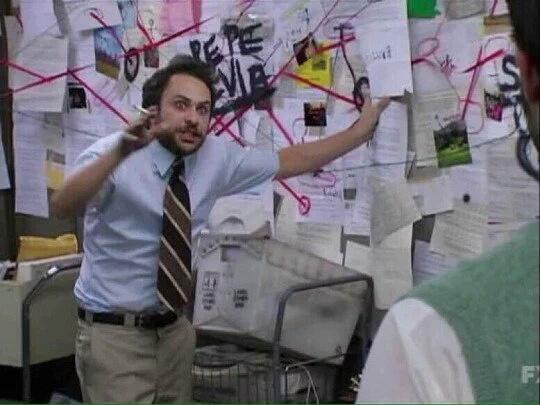
Conspiracies happen all of the time. It is not a surprise that people plot evil schemes and would be more strange if they did not.  But it doesn’t mean that everything that happens is a conspiracy.  Being old enough to recall the black helicopter theories and warnings of imminent UN takeover.  Who can forget the FEMA camp claims and those pictures of ‘coffins’ Barack Obama’s administration would soon be loading us into?  Strangely many dates come and go, but none of those who push these wild global plots come forward later and say, “You know, I may have been wrong about JFK being the Antichrist… “

Wild conspiracy theories are about political ideology more than evidence.  It is oftentimes a product of those who feel disempowered and seek uncomplicated explanations.  The left, for example, hallucinates nebulous things like systemic racism or white privilege.  Not entirely claims without any merit and yet if it is used to explain every outcome—if you see it lurking behind everything people do—then stop, get some help!  The fringe right likewise, turns to fantasy when reality is too hard for their simple minds to understand.  Inflation can’t just be about the Fed printing trillions of dollars devaluing currency, no it must be fires at food processing facilities

There is always a motivated misunderstanding of evidence that is involved beneath this kind of claim—a misuse of statistics and facts to form grandiose theories.

The common thread of conspiracy theories is that they can’t be disproven.  They are all established on faith, firm belief evidence connecting all the dots can be found and can shape-shift as needed.  If one part can be disproven they can simply move the goalposts or deny the evidence is legitimate.  If someone does not want to believe that the moon landing happened you could show a Saturn V rocket, introduce them to one of the astronauts, thoroughly explain all of the alleged irregularities they see and they’ll still believe that it was faked. 

It is a matter of political orientation, not facts or plausibility, and stems from assumptions and a general mistrust of the system.

To the conspiracy-minded folks, everything becomes a conspiracy, there can never be an accident, or a lone wolf attack, no such thing as coincidence in their world. Sandy Hook couldn’t be a deranged (drugged out) Adam Lanza.   No, to Alex Jones it must’ve been a false flag with the casualties being crisis actors rather than real people.  And some of those hunch I understand, this is what happens when every tragedy is treated cynically as an opportunity by control-freak politicians. 

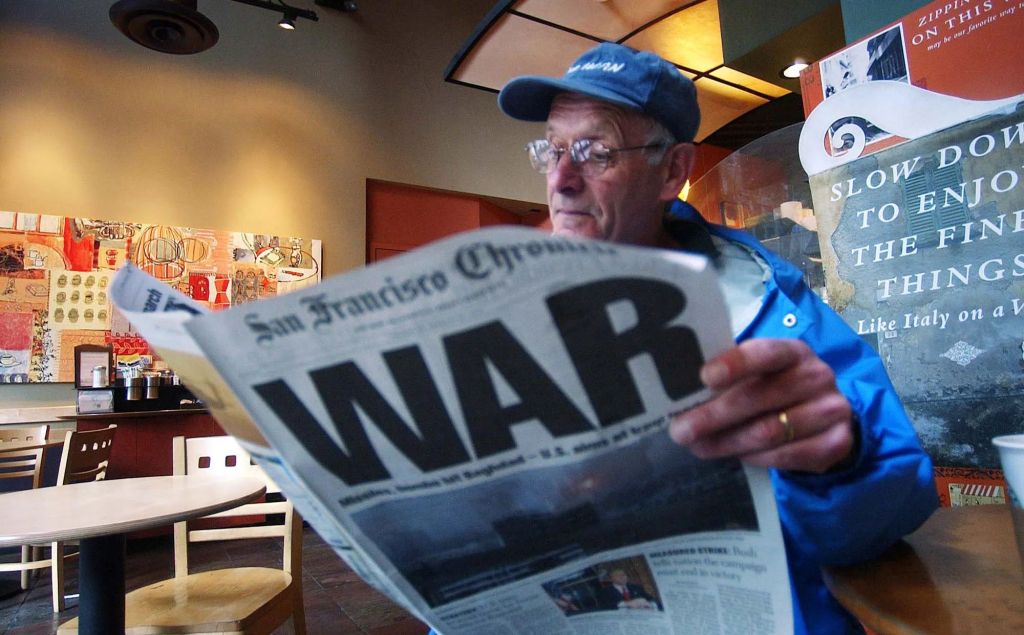
Why did we go to war with Iraq after 9/11? 

Is it so hard to believe that the CIA may have played some role in the JFK assassination when they do regime change all around the world?

The real issue I have with Q-Anon, where all is a hidden criminal plot (and everything is going according to the plan) is how it sucks the oxygen out of the room for discussion of real observable corruption.  The far-flung theories, worse, are used to discredit those reasonable concerns about the expansion of government power and proliferation of unaccountable agencies.  We should be far more concerned with what those with power are ‘legally’ doing in plain sight—and not giving them cover of cockamamie theories they happily use to dismiss us all as crackpots.

That’s the irony here, the conspiracy theorist is aiding the conspiracy.  For example, fact-checks of “Covid is a bioweapon” were used to strawman the reasonable questions about a possible Wuhan lab-leak.  This is why we couldn’t have a serious conversation.  

So why do the kooks need to speculate so far beyond the evidence?  Why can’t they stick to what is known or factual, the most plausible explanation, rather than always having to gallop to the craziest possible conclusion?  In some cases it might just be stupidity, that they simply aren’t very good at tracking normal human motivation.  But in many cases, it is just a form of resentment, they are unserious people—with a massive inferiority complex—who both need to distinguish themselves and also discredit those who did attain more.

It is basically the working-class equivalent of pulling the race-card.  

And yet this is not entirely without cause.

They’ve endured globalism, they have seen their jobs outsourced, prices rise and wages stagnate.  This was not the America that was promised to them.  A place where their own dreams would be the limit.  They see things going the wrong way, opportunities drying up for people like them, as a flood of new faces replace the familiar.  There has been a sort of conspiracy against them, but not in the way they imagine.  Yes, in many ways, they have been screwed over by their betters—so perhaps that is where the deep suspicion originates?

Dangerous Complexity — Supply-Chain Breakdown Edition

Standard

In 2019, before the pandemic insanity, I wrote a blog, “Dangerous Complexity: What To Do About the Complex Problem of Complexity,” which explored various systems where human operators were unable to correctly diagnose a problem leading to disaster. 

In each case a small glitch led to a spiral out of control.  The problem being our capacity, as finite creatures, to sift through all of the alarm bells going off and come to the right answer before the clock runs out.

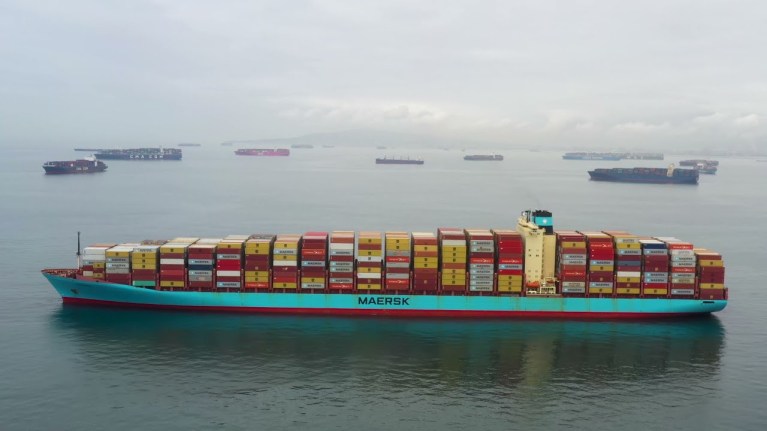
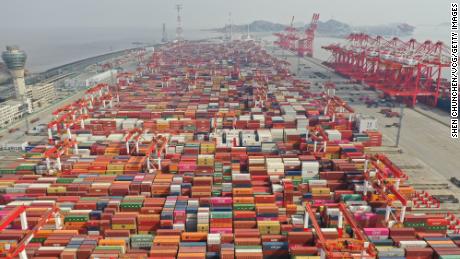
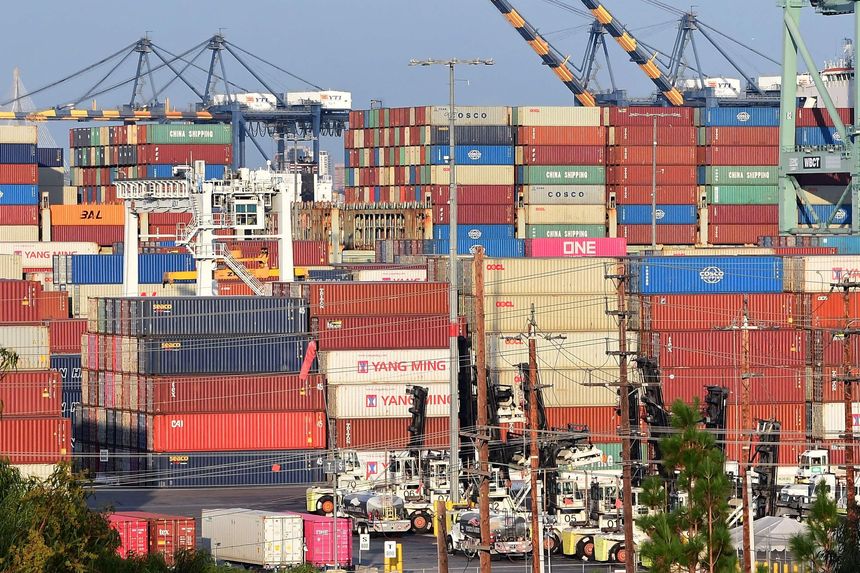
As I write, countless container ships loiter offshore and waiting to be unloaded.  It is a logistics nightmare directly the result of lockdown mandates.  It is something I had warned about way back when governors were arbitrarily declaring livelihoods to be “essential” or “nonessential” and playing out currently as the slow motion trainwreck of predictable consequences.  

To those seeing conspiracy in this, I would suggest Hanlon’s razor: “Never attribute to malice that which is adequately explained by stupidity.”

This is what you get when you elect lawyers, with the most political experience, rather than those who understand the basics of business, trade, and supply-chains.  Many who hold office, like their constituents, are economic illiterates and can only see what is right in front of their face.  

As a TWIC card holder with a long time interest in economics and logistics, I do feel qualified to explain.  We have been heading this way for a for decades.  The economy has become extremely complex and also increasingly in fragile.

How did we get here?

From Locally Produced To Corporate Globalism

There was a time when most things were produced for local consumption.  For most of human history transportation had been very slow and costly.  Sure, there was the silk road and the spice trade between the continents.  But it was simply impractical, and unnecessary, to ship things long distances. Food was grown close enough to market that it could be brought by horse and cart.  Towns had their own millers, tailors and blacksmiths.

Comparatively to modern times, this was very inefficient.  In the 1800s one farmer could only feed three to five people and 90% of population lived on a farm.  Today one farmer can feed 128 people and only around 1% live on a farm.  This is due, in large part, to the internal combustion engine, as well as advancements in agricultural science, and also the ability (with refrigeration) to move vast amounts of fresh produce to far away markets.  Meat can be trucked from Texas slaughterhouses to New York City grocery shelves in a matter of hours.

But the bigger revolution has been the imperishable items, the gadgets that require labor intensive manufacturing processes, and generally are produced by the lowest bidder.  This is mostly for our benefit.  If an iPhone might cost $2000 if it was produced in the United States and thus outsourcing production means that more people can afford to buy this technological wonder.  Of course Apple and big corporations are the biggest beneficiaries of this global trade paradigm, still the consumer does get a lower prices.

Slowly, but surely, due to the advantages of economies of scale, small local mom and pop businesses are bought out by ever more expansive corporate conglomerates.  Like that old abandoned dairy farm I used to see, from the interstate highway, on the outskirts of Richmond or in upstate NY. Once thriving farms, within miles of the market, are simply unable to compete with those bigger (and oftentimes further away) producers.

Our Very Fragile “Just-In-Time” Supply-chain

Manufacturing our complex technology takes a large variety of materials and components, these are sourced through a tangled web of suppliers.  If parts don’t come in from Taiwan, then automobile factories in Michigan sit idle.  And you don’t just go out and build a semiconductor industry overnight.  Even if it were possible, the raw materials would need to come from somewhere.   All it takes is couple links in the chain to be broken, even just one, and whole swaths of the economy will grind to a halt.  

In the past there were droughts and famines, countless people died of starvation due to changes in climate.  But then the problem was often local, like the potato blight that hit Ireland hard from 1845 to 1852, and contained.  The overall system was robust because it was decentralized and full of redundancies.  There were places to flee to, like the United States, where there was a chance.

But that’s not the case anymore.  Not only are supply lines stretched very thin and delicate, with many moving parts, we also have the ‘just-in-time” manufacturing concept where inventories are kept low as a cost saving measure.  Inventory is a big business expense and “lean manufacturing” has been the rage for this reason. The end result being there is no extra capacity in the system.  

Ports lack the additional capacity and should never have been shutdown.  A minor disruption of an already overtaxed system will very quickly lead to major backlogs and a cascade of failures down the line.  It’s not only unloading the ships, but finding space for containers, having the rail cars and chassis to put them on.  There was already a shortage of CDL drivers before this started and there is no fast or easy way to fix the situation.

We Need Local Production and Built-in Resilience

We are seeing the weakness of the current economic paradigm in full display and it will likely get worse before it gets better.  I would expect slim pickings when it comes to the Christmas season.  No, it is not likely that we’ll run out of food or fuel here in the United States.  We do produce those things locally and therefore have some security in that regard.  However, that doesn’t mean there will be no pain.  Prices are likely to continue to rise.

It is a good time to reflect on where we’re headed.  Do we really want to continue to outsource our blue collar jobs to countries that do not follow our environmental standards or labor laws?  If climate change is an issue, why not use tariffs to bias the market in favor of domestic and local production?  Sure, it makes sense for big corporations and their bottom lines to chase cheap labor overseas, but does it serve national security or the betterment of Americans who aren’t privileged with college degrees?

Efficiency is a good thing.  It is of some benefit for us to have access to the lower priced labor in the developing world.  But then this is not coming at a cost.  It may relatively inexpensive to ship things around the globe in some regards, it certainly has made big corporations very powerful (with a lobbying and propaganda arm to match), yet it does come at an environmental cost and has also left the whole economic system vulnerable to collapse.

It is totally wrongheaded to increase taxes on domestic manufacturing and then remove tariffs on imported goods.  Sure, this might slow economic growth and possibly even lead to a small recession.  But real leadership is about seeing a little further down the road, and being prepared, rather than always doing what is politically expedient.  We need a new crop of elected leaders who are locally, and not globally, oriented.  

Rudolf Diesel: Thoughts about Idealism, Despair, Progress, Politics and Hope

Standard

Diesel powers the world economy.  I never considered the extent to which that is true until watching a documentary (click here to view it) about this type of internal combustion engine.  It is named after the inventor, a French-German mechanical engineer, Rudolf Diesel, and is the reason why global trade is possible to the extent it is.

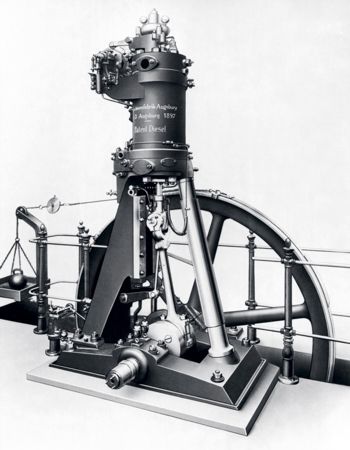
Early Diesel design, circa 1897

In considering the story of Diesel, his brilliant invention and the results, I could not help but see the pattern all too common with innovators.  Diesel’s life turned tragic, he was found floating in the North Sea, dead of an apparent suicide, and likely a result of his despair over the unintended consequences of his own design.

According to biographical accounts, Diesel was a utopian idealist who had hopes that his invention would be a catalyst for social change, free the common man and break corporate monopolies.  Unfortunately, while a revolution for transportation, Diesel power did not achieve the lofty social vision. 

Worse, the Diesel engine found use as a part in an efficient killing machine, the German U-boat, and this no doubt grieved the pacifist inventor.

Here are some observations…

#1) What is intended for good can often be used for evil.

Diesel had never intended his invention be used as a means of terrorizing North Atlantic shipping lanes.  And, likewise, many scientists and inventors had regrets related to their greatest contribution to the world.

German U-boat, the original stealth weapon 

There are lists from K-cups to A-bombs online and many others.  For example, Henry Ford seemed to dislike the vast social changes and consumerist mindset made possible by his manufacturing revolution that helped automobiles become a fixture of American life.  Even this media, the internet, once thought to be the beginnings of an information age, has become a cesspool of pornography and ill-founded claims.

I worry about this as a blogger.  Once my thoughts are out there they cannot be contained again.  Will someone pick up my words and run with them in a direction I never intended?  It is a potential outcome that could scare a sensitive soul into silence and is at least a reason for me to be prayerful in what I post here.

I believe there are many people who do not thoroughly think through the potential unintended consequences of the ideas they promote.  There are many government programs and social movements intended for good that might actually be creating more problems than the one that they were intended to solve.

Which takes me to a second point…

#2) Yesterday’s revolution is today’s loathed source of inequality and evil.

It is ironic that the invention that did actually outcompete coal for market supremacy is now enemy #1 for many.  The internal combustion engine won in the marketplace because it was by far the cheapest most efficient means to power transportation and still remains. 

Given there are no steam powered cars, tractors, trains and ships anymore, it is clear that internal combustion is the best bang for the buck and remains to be rivaled.  Diesel powered locomotives and ocean going container ships are extremely powerful while being very economical.    

109,000-horsepower Wärtsilä-Sulzer RTA96-C

Diesel power still outperforms hybrid technology—A loaded Diesel powered class 8 truck is more efficient pound for pound than a Prius.

Think about it: It takes one gallon of fuel to move an 80,000lb truck five to seven miles.  A 2016 Prius, by comparison, carries a weight of around 4000lbs can go anywhere from 50 to 58 miles on a gallon of fuel.  It may seem the Toyota is greener until you consider that it is moving twenty times less weight.  Twenty Prius cars combined together, after dividing their individual consumption by twenty, would consume 2.5 to 2.9 gallons of fuel.  Now, obviously, combining Diesel and hybrid technology on the scale of class 8 truck would undoubtedly yield even greater results if fuel economy were the only concern, but the point remains that Diesel power is extremely efficient and effective—and only more so the larger the application.

So what’s the problem?

Well, the current popular perception is that the petroleum industry “big oil” is the enemy and conspires to hold back technology that would dramatically increase efficiency.  Worse than that, we are told that petroleum power is a source of global climate change and a threat to the global ecology.  Poor Diesel would be driven even further into despair if half this is true.  We fight over oil.

 #3) Progressive aims of our time are at odds with each other or self-contradictory.

Globalism, higher standard of living for more people and environmentalist ‘green’ movements are at odds with each other.  Pushing one direction will almost invariably come at the cost of the others. 

Progressive politicians may tout an idea of a ‘green economy’ as a jobs creator, but the reality has been that wind and solar energy can only remain competitive through heavy use of government subsidies.  Beyond that, even with the help, domestic ‘green’ manufacturing is unsustainable against foreign competition.  At best we will merely replace jobs lost by the heavy regulations placed on fossil fuels and raise costs of living across the board.

Furthermore, it was the progressive policies of the past century that have created the current conditions.  Government policies like the Rural Electrification Act, the Interstate highway system and trade agreements have actually moved us away from a more sustainable less polluting lifestyle.  Our cheap and easy movement from place to place has harmed community and local markets.

Rural Electrification Act propaganda poster.

It is hard to know how the current landscape would look had the progressives of yesterday had not literally paved the way for suburban sprawl, the trucking industry (that currently employs me) and driven us to embrace a coal powered grid.  But I do suspect more of our food would be locally grown, more of our products locally produced and solar energy far more the norm in places utilities would be to costly to maintain unless mandated by law.

In final analysis things might not be as dismal as they seem.

It is easy to focus on the negative without considering the good.  The means of today are likely as unsustainable as the means of yesterday and therefore the progress of the past century might not be the end of us after all.  The only consistent reality in the past two centuries has been that markets constantly change.

Canal boats an all the infrastructure to support them were soon replaced by steam power and railroads.  In Pennsylvania the lumber industry rose in prominence before a rapid decline after the states wooded mountains were reduced to stubble.  The coal industry once put food on the table for boat loads of immigrants before cheap efficient oil and a multitude other factors conspired against it.

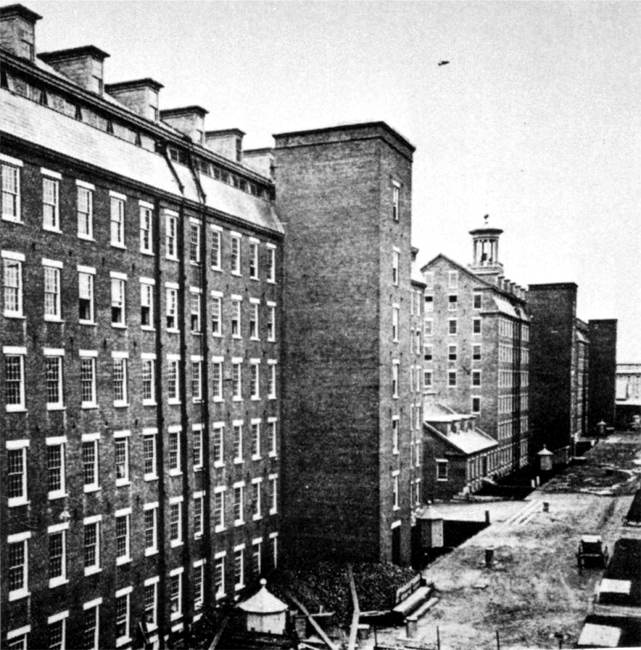
Bay State Mills, Lawrence, built 1845.

Manufacturing, from the once mighty water powered textile mills of the New England states to the formerly unstoppable domestic steel industry, has also migrated following cheaper labor and energy.  Each time promoting deep consternation and fear.  But so far the Luddites have yet to have the last laugh and a new balance is eventually found that usually benefits everyone.

Certainly the overconfidence and optimism about today’s new solution may become the big disappointment of tomorrow.  Yet, do we really wish to go back to a time when a transatlantic voyage was only something a religious zealot or crazy Viking explorer would do?  Would we really rather spend most of our time scrounging for just enough to eat as to avoid the possibility of mechanized warfare?

Nobody knows for certain why Diesel died... 

However, what is certain is that his invention changed the world and provided a means for interstate commerce and global trade that never existed before.  The pacifying effect of global trade, economic benefits of an expanded market place and inexpensive power are largely unappreciated.  But we probably do have Diesel to thank for helping create the long peace and prosperity of our time.

Maersk, Triple-E design, Diesel powered, container ship

In an age of information overload, where we know about beheadings in the Middle East before the people the next town over would have heard a century ago, it is difficult for our finite minds to contextualize and easy to become overwhelmed.  This, with an accompanying loss of faith, could be why middle-aged American white males are committing suicide (supposedly the most privileged in the world) and at an alarmingly increasing rate. 

Diesel’s pessimism about the future in retrospect seems to have been premature and his nightmarish perception of reality overstated.  In like manner many of our modern fears and despair inducing thoughts about the future could be negativity bias and nothing more.  Every generation seems to believe that the world is falling apart and still here we are.

Whatever the case, ignore the fear-mongering propaganda of the punditry and politicians.  Embrace temperance, a spiritual quality developed through faith, over mindless reaction and fearful impulse.  Trust God to secure the future, we can only live one day at a time and never ever lose hope!  If you are depressed about events in the world today, I invite you to see the higher perspective:

“Therefore we do not lose heart. Though outwardly we are wasting away, yet inwardly we are being renewed day by day. For our light and momentary troubles are achieving for us an eternal glory that far outweighs them all. So we fix our eyes not on what is seen, but on what is unseen, since what is seen is temporary, but what is unseen is eternal.” (2 Corinthians 4:16-18)

Perhaps the greater of two evils will be elected come November and drive the nation to complete ruin.  

Who knows besides God?

We may all die tomorrow, we will all die eventually, our work blown away in the wind of time and forgotten.  Everything comes to pass, nothing will remain as we know it today, but there is hope beyond all hope found in an eternal perspective.  So look up, because the sun is still shining and the future remains bright!

Do you see the light and feel the warmth of hope eternal?

If not, my prayer is for the blind to see…