
What Do We Do with the Freaks?

Standard

I ran across two stories the other day, one of them about a mixed race man who looks like a female and another about a child with ‘werewolf syndrome’ who looks like the missing link—in both cases I thought about the negative attention this brings.  In the later case, given the current awareness push, a young man who looks very feminine faces presumptuous comments about his ‘transitioning’ and I wondered at what age this happy kid would realize that he was a genetic freak?  School children don’t need to be taught cruelty.

While I’m certainly not on board with the current “I identify as” phase, I also am not for alienating or adding to pain others have from being odd.  What I’m talking about is the exceptions who are the exceptions by no fault of their own.  Starting with those who are visibly different, dwarfs, albinos, Down Syndrome, conjoined twins, chimeras, Klinefelter syndrome (boys and men with extra X chromosomes), intersex people (born with ambiguous genitalia) or Turner syndrome.  There are many chromosomal abnormalities and many issues that do put some in a “none of the above” category that is apart from what is most common.

We accept that physical abnormalities exist, it is pretty much impossible to deny, but the controversy begins when someone who has all of the physical characteristics of a man demands that other people use a female pronoun to describe them or competes as a woman.  Genitals don’t tell me what goes on in someone’s head.  My wife says that I’m “like a woman” in how I am expressive and emotional.  My little sister was a “tomboy” growing up.  I suppose today that would be proof that we deserve special protection or rights?  How far can we tolerate people who do not meet expectations for their gender?

You don’t need a biologist to tell you that men tend to have a very distinct advantage over women in strength and size.  It is not fair or safe for women to be in competition with those born with an XY chromosome no matter how they identify.  I mean, isn’t that why women’s sports were created in the first place?

And, contrary to what the “Muh rights!  You can’t make me wear a stupid mask in your private establishment.” people think, it is perfectly okay for groups to exclude those who have willfully refused to conform to the established standards.  Try to walk into any church naked.  They probably won’t even let you get to your explanation about material making you itchy or how Biblical prophets ran around butt naked.  We set rules.  We define categories.  We decide if those with Swyer Syndrome are men or women.  Click the link and give me your own answer in the comments.

Include or exclude?

It is our cultural bent to be more inclusive of the exceptions.  We are taught that we must show empathy and understanding for those who are “born eunuchs” as part of Christian love.  Then again, the Gospels are a sort of square peg being fit in the round hole of Scripture and it is easy to comprehend why the ‘chosen people’ rejected Jesus given how he mingled with the impure.

Biblical Exclusion 

One reason why to be sympathetic towards those Jews who rejected the message of a teacher who ate with sinners is the Biblical tradition itself and the system it established to exclude those deemed defective:

The Lord said to Moses, “Say to Aaron: ‘For the generations to come none of your descendants who has a defect may come near to offer the food of his God.  No man who has any defect may come near: no man who is blind or lame, disfigured or deformed; no man with a crippled foot or hand, or who is a hunchback or a dwarf, or who has any eye defect, or who has festering or running sores or damaged testicles. No descendant of Aaron the priest who has any defect is to come near to present the food offerings to the Lord. He has a defect; he must not come near to offer the food of his God. He may eat the most holy food of his God, as well as the holy food; yet because of his defect, he must not go near the curtain or approach the altar, and so desecrate my sanctuary. I am the Lord, who makes them holy.’ ”

 (‭Leviticus 21:16-23 NIV‬)

And repeated:

No one who has been emasculated by crushing or cutting may enter the assembly of the Lord. No one born of a forbidden marriage nor any of their descendants may enter the assembly of the Lord, not even in the tenth generation. No Ammonite or Moabite or any of their descendants may enter the assembly of the Lord, not even in the tenth generation. 

(Deuteronomy ‭ 23:1-3 NIV)

Discrimination against the abnormal wasn’t only suggested or caught in a round about way be misinterpretation, but a command from God.  Talk about a kick in the nuts (or lack thereof) for those already suffering an undesirable condition.  Be born the ‘wrong’ ethnicity or suffer an unfortunate accident and you’re out.  Not much of this is actually explained, giving opportunity for apologists to explain around it, but Christian religion (along with modern science) has certainly taken things in a very different direction.

If a woman is ‘barren’ nowadays we try to treat the condition rather than assume it is a curse from God.  I mean, yes, the woman in the Philippines who had the hair covered son with ‘werewolf syndrome’ may believe that it had something to do with eating a cat during pregnancy, the popular notion of “you are what you eat” manifesting, but we’re not as likely to see it as punishment from God—we do not tend to attribute things blindness or misfortune to sin.  It is harder to exclude those who are imperfect when you realize it could’ve been you.

Any more than I need to know why Islam is different from Christianity, where someone was clearly copying some else’s notes, I’m not going to attempt to theologically explain the transition from Old to New Covenant.  It is clear enough that those who had lawfully been excluded, the leprose, lame and blind, Jesus healed.  The result of his ministry two millennia ago was a wave of tolerance that started with his Jewish converts.  Peter had his pigs in a blanket vision (while hungry out on the road) and now we eat bacon despite Biblical command:

About noon the following day as they were on their journey and approaching the city, Peter went up on the roof to pray. He became hungry and wanted something to eat, and while the meal was being prepared, he fell into a trance. He saw heaven opened and something like a large sheet being let down to earth by its four corners.  It contained all kinds of four-footed animals, as well as reptiles and birds. Then a voice told him, “Get up, Peter. Kill and eat.”  “Surely not, Lord!” Peter replied. “I have never eaten anything impure or unclean.” The voice spoke to him a second time, “Do not call anything impure that God has made clean.” This happened three times, and immediately the sheet was taken back to heaven. 

(‭Acts 10:9-16 NIV)

This, along with the Jerusalem Council, is a huge departure from Jewish Biblical religion and, again, it is no big surprise this new cult was rejected by the faithful.  Even today some observant Jews continue the tradition, like that Orthodox chaplain who declared loudly as he took a seat (next to me) on a crowded airliner with mixed races, “I’m a racist and don’t care what you think!”  My own cringe at this statement is born of an indoctrinated sensitivity, years of Christian influence, and not values arising naturally from thin air.  Or, rather at least not without a sheet to carry it down from heaven.

Bacon To Bisexuals

The other day I saw a post, from a Muslim friend, and it listed the problems with eating pork meat, their unique parasites, what pigs eat, etc.  Of course the winning comment was “but fried bacon is so delicious” and it basically for this reason why no Baptist will ever depart from pork consumption.  If it is pleasurable to us, we do it.  However, don’t dare use that reasoning with these same Biblical fundamentalists when it comes to things they’ve not be acculturated to.  And not at all to say that bisexuality is now in that big blanket of tolerance coming down.

No, it is just interesting to me how Biblical law is largely ignored except where it makes sense to us.  Don’t like tattoos?  Well then it is okay to misapply those laws that pertain to specific ancient pagan practices.  But if you like shellfish, then “freedom in Christ” exempts you from having to obey these outdated and irrelevant laws.  The energy in the room is completely different when it comes to the violations of Scripture we’re unaccustomed to or don’t apply to our own circumstances.  Sexual deviation is a whole can of worms that I’ll avoid until or at least until a good explanation of Swyer Syndrome is given to me.

One eyebrow raising moment, during a Bible study, while being brought into Orthodoxy, was when the topic of veiling (1 Corinthians 11) came up for discussion and how the old ethnic Russian priest dismissed it as being custom or cultural.  I never had the chance to ask him about the explicit quotes of Saint John Chrysostom on the topic.  But, like all things, what is important is a matter of our perspective.  The cradle Orthodox follow after the mainstream of Protestantism as much as anyone else, whereas the converts from Protestantism are more strict about preserving Orthodox tradition.  It’s amazing how culture influences our applications of Scripture.

All this to say that I don’t know where the precise dividing line is between pure and impure, acceptable or unacceptable.  But believe there is much more value in being merciful as our Father is merciful.  That is to apply the Golden Rule to those who struggle in ways that we can’t fathom or begin to understand.  Where it was once okay to stigmatize and treat left-handed people as second-class or evil we now accept them and think it is strange it was a problem for past generations.  There are many things that aren’t an identity we choose or a matter of “feel this way” (like a man who claims to be transracial) that require that us to show some grace.

“Ew, Brother Ew”

You’ve probably seen the meme.  A Muslim preacher lamenting those who abandon the Islamic practices of eating on the floor and growing a beard.  His comical expression of their disgust gets to the heart of what most of these religious do and don’t rules come from.  There is a continuum when it comes to gender and normalcy, taboos change, as do ideas of what real men do.  It’s funny to see how these standards have evolved over time.  From the time pulpits had spittoons to the current time of rainbow flags, we are not the same as our ancestors.

There are natural aversions.  We’re naturally disgusted by bodily fluids and it is for good reason.  Disease travels in blood, saliva and waste.  We are also attracted to beauty, the healthy form or good hygiene, this is about instinct and survival.  Sexual promiscuity is also risk as well.  So being grossed out can be beneficial if it protects us from negative outcomes.  However, this can malfunction, sort of like an autoimmune disorder, where we can overreact and exclude on the basis of things that aren’t a danger to us.  Bigotry and prejudice, like middle school fears of cooties, are often as sign of immaturity or lack of self-awareness.  Attributing every unfortunate condition to a moral failure is not sound judgment.

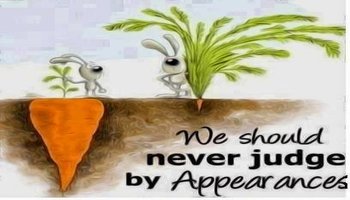
Just because something is strange or ugly to us is not a reason to recoil.  If a person is not trying to draw attention to themselves it is important to acknowledge their humanity rather than their odd appearance.  We didn’t choose to be ‘normal’ anymore than it was a decision they made to be different.  We do not need to pretend everyone is beautiful or affirm every exception as glorious.  There is healthy, there is deformity and disorder, we can love the person who overcomes or does not give up for their character.  It is possible for inner beauty to shine when we truly get to know the person rather than only see the outward appearance.

“Whether by word of mouth or by letter…”

Standard

The US Constitution is a prime example of how the same words can be interpreted in many different ways. Sometimes this is just a way to get around the clear meaning and other times it is simply a problem with language. There are many cases, with this founding document of a nation, that it would be nice if we could have some further explanation. Sure, you can read some of what the writers and signers said elsewhere in order to try to fill in the blanks. But, in the end, without them here, we don’t truly know how they would respond to the demands of our modern economy, technology, and needs.

This only gets murkier when dealing with Scriptures written two millennia ago. Yes, every Bible-thumper and their brother thinks they have a clear understanding while everyone else is just making things more difficult than they really should be. I mean, “The Bible Says It, I Believe It, That Settles It,” right? And yet, if I were to answer that with, “do you bury your poo outside of your property, in a hole you dug with a trowel, as instructed in Deuteronomy?” I’m guessing that suddenly what the Bible says would become a bit less settled as those using this phrase made some sort of theological exemption and that’s okay, there are things in Scripture that aren’t perfectly clear without some further explanation.

But what is more intriguing to me is what is completely left out that would be so obvious to early Christians that it wouldn’t even be worth mentioning in the letters. As the saying goes, more is caught than taught, and sometimes the most important things never do get written out. In other words, if we were writing instructions on how to drive a car, we would probably assume that the person knows how to get into the vehicle or sit facing forward. However, from the Bible, do we know how the early church structured their services or generally lived? Would they even recognize us as Christians? The reality is that there are gaps that many today just fill in with assumptions and it is usually these different extra-Biblical assumptions that lead to many divisions.

In the Protestant world “extra-Biblical” is practically a curse word. How dare you ever have a rule, custom, or tradition that goes beyond the written text! That’s false religion or something! This is why Orthodoxy is often dismissed by those seeking to strip down Christianity to the Biblical bare bones. It is a special kind of ignorance.

A good illustration? In World War II there was a study of returning aircraft and the damage that they had to determine how to better prevent future losses. The Center for Naval Analyses concluded from this that the aircraft needed more protection in these most heavily damaged areas. However, Abraham Wald, a Hungarian mathematician, begged to differ. He reasoned that the aircraft returning had survived and those that had been hit in more critical areas did not. In other words, what needed to be done was the very opposite of what the others had concluded. They needed to better armor those areas that weren’t damaged in the returning aircraft. This tendency to misinterpret evidence, based on what we have rather than what is missing, is called “survivorship bias” and can lead to woefully incorrect ideas.

This is what the Bible says about what is written versus what is not:

So then, brothers and sisters, stand firm and hold fast to the teachings we passed on to you, whether by word of mouth or by letter.

(2 Thessalonians 2 NIV)

The “letter” is what we have received in Scripture. These are the books of the Bible, canonized by the Church and believed to be truly inspired writing for this reason. But the “word of mouth” is where things are more interesting. What of the Apostle’s teaching (or tradition according to the KJV) is not written in their letters and how do we know what is missing?

The Orthodox, of course, say that this is the tradition of the Church and tie their legitimacy to the fact that there is a line of secession going all the way back to the Apostles, by the laying of hands and ordinations, and this only makes sense. The Church (note, not an individual or even the institutions) is what keeps the spoken teachings of the Apostles preserved like it did the Bible, and also serves to provide the correct understanding of Scripture. Because we should know, as Peter warned, that the Bible does not provide its own interpretation: “[Paul’s] letters contain some things that are hard to understand, which ignorant and unstable people distort, as they do the other Scriptures, to their own destruction.” (2 Peter 3:16 NIV)

However, it isn’t just the non-Orthodox that fall victim to their own bias. There are parts of the Church tradition, whether spoken or written, that slip through the cracks. We all have blind spots. We all have our distortions of concepts and errant assumptions. The difference is, that the Orthodox, if they are truly seeking to be Orthodox, are at least making some effort to incorporate the sayings of the Fathers and have a grasp of those “word of mouth” traditions not necessarily ever expressed in Scripture. In doing this, in understanding how Christianity was practiced by the faithful throughout the centuries, it becomes that much harder to distort the words of the Bible.

In the end, Christianity is about Communion, not easy textbook answers, not following an instruction manual, not standing alone, but real relationships. The more important being that between ourselves and God. However, a relationship with God implies love for our brothers and sisters. It means we are rubbing elbows with other Christians and the Saints. As Fr. Anthony put it, in his fatherly council to me, “there are no Lone Rangers” in Christianity, we can’t put the words of Jesus to practice in solitude or isolation. It’s not in removing ourselves that we are purified, it is in our getting messy and involved in the life of the Church of imperfect people (like us) that we are changed. That is taking up our cross. That is the hard part of Christianity we would rather run from.

Learning never stops in relationships. Christ Jesus did not come so we could house church with the few other perfect people who have the proper understanding of a book according to us. Instead, the very act of Incarnation was God choosing to be around those undeserving and impure, to identify with them and their suffering, which should be the impulse of those filled with the Holy Spirit. It is the Spirit, St Paul tells us, that will bring “unity” and a “bond of peace” which should span centuries or the current divisions because: “There is one body and one Spirit, just as you were called to one hope when you were called; one Lord, one faith, one baptism; one God and Father of all, who is over all and through all and in all.” (Ephesians 4:4-6 NIV)

Purity Culture Is Always Bad

Standard

Two people responded to my last blog. One said that I had not said enough about the exploitative nature of the porn industry and the abuses common in purity cultures. Another claimed that I had overstated and generalized about purity cultures and tried to point out the good.

First, there is not enough that can be said about the ugliness of pornography and how it is harmful on both ends. My previous blog had primarily focused on the consumer end because it was about how pornography and purity cultures hurt those under their influence. However, many blogs could be written about how pornography is produced and we should not forget those many who are used (or abused) in this industry—they also need to experience the pure love of Jesus.

Second, the other person responding to my prior blog seems to have assumed that my comments, specific to purity culture, applied to my Christian experience in general. That is incorrect. I have actually had great experiences with those who were able to transcend the cancerous influence of purity culture. I have met many who are more committed to Christian love (and faith) than they are to maintaining an appearance of purity (for sake of religious peers) that comes at the expense of those aforementioned things.

What purity culture is is a misuse of a set of teachings in the same way that pornography represents a misuse of sex. It sees a corrupted version of purity as an end to itself rather than a part of something more comprehensive and complete. It leads to the same kind of dissatisfaction as pornography and that is because it has, in a similar fashion, taken a good thing in the right context and twisted it into something that it was not intended to be. Purity culture, under the pleasant facade, is always about fear, control and shifting blame rather than true Christian love.

Purity culture is, by definition, a misapplication or overemphasis on some teachings at the expense of others. In other words, purity culture is a perversion and, like pornography, not enough can be said in condemnation of this wrongful and abusive use of Biblical teachings. There is a vast difference between purity culture appearances and actual righteousness. There is nothing good about purity cultures, the bad cannot be overstated and that is a generalization we should make.

Jesus Rebuked Purity Culture

The difference between being pure in heart (as is taught in Scripture) and purity culture is as different as Jesus was from his self-righteous critics:

On a Sabbath, Jesus was teaching in one of the synagogues, and a woman was there who had been crippled by a spirit for eighteen years. She was bent over and could not straighten up at all. When Jesus saw her, he called her forward and said to her, “Woman, you are set free from your infirmity.” Then he put his hands on her, and immediately she straightened up and praised God. Indignant because Jesus had healed on the Sabbath, the synagogue leader said to the people, “There are six days for work. So come and be healed on those days, not on the Sabbath.” The Lord answered him, “You hypocrites! Doesn’t each of you on the Sabbath untie your ox or donkey from the stall and lead it out to give it water? Then should not this woman, a daughter of Abraham, whom Satan has kept bound for eighteen long years, be set free on the Sabbath day from what bound her?” When he said this, all his opponents were humiliated, but the people were delighted with all the wonderful things he was doing. (Luke 13:10‭-‬17 NIV)

Had you run into this “synagogue leader” he would have appeared to be a very pious man. He was likely there every time the synagogue doors were open, probably spent hours of time devoted to reading Scripture and may have even tithed everything even down to his spices. But under this man’s righteous outward display was a corrupt and unloving heart that placed strict adherence to Sabbath laws above the actual reason for the laws.

Jesus, who had a pattern of healing on the Sabbath as if intentionally trying to antagonize these religious elites and expose their hard hearts, rebukes this leader’s misplaced priorities. Because, while this religious leader was technically correct that this woman could’ve been healed any other day of the week, his thinking was not centered correctly, he should have been rejoicing that this woman was healed and not obsessing on when or how it happened.

A “tell” refers to those unconscious actions that betray a person in a card game. A person can bluff or deceive others with a display of confidence and yet there are often small signs that give them away to an astute observer. Purity culture also has tells. One of the biggest tells of purity cultures is it does like this religious leader Jesus rebukes and puts emphasis on the letter of law or appearances over what is healing and helpful to other people.

Here are some other tells of purity culture…

Purity Cultures Blameshift

Purity cultures always release men from being completely responsible for their own sin. Instead, they use male failure as an excuse to manipulate and control others.

For example, in a purity culture, when a man was caught by his wife viewing pornography, and the matter went before church leaders, he was treated as the victim and his wife (along with every other woman) was made responsible. In this case, they urged his wife to dress plainer and they encouraged her to become pregnant, I kid you not, meanwhile this man goes around condemning those who do not ‘dress right’ or otherwise live to a standard that would keep him from sin.

Women are often blamed for male lusts in purity cultures and this goes completely contrary to anything Jesus taught on the subject. Hyperbole or not, we are told by Jesus to pluck our own eye out if it causes us to sin. But never are we told that it is a woman’s responsibility to keep a man’s thoughts pure. Men who shift blame for their own sinful thoughts and actions have no business calling themselves Christian leaders. A real Christian leader takes full responsibility for their own sin, falls on their knees and repents.

But in purity cultures, a man is more concerned with maintaining an image. And, for that reason, he cannot repent or take complete responsibility for fear of being exposed and losing social status. So, rather than admit it was his own weakness that led to failure, he must find some reason outside of himself for the failure.

In other words, a purity culture response is like that of King Saul who pointed a finger at the people when he willfully disobeyed God and not like King David who took full responsibility for his own sin when confronted. Had David been like Saul, and not “a man after [God’s] own heart,” he would have likely blamed Bathsheba rather than actually repent and made a royal decree banning roof bathing in the kingdom of Israel.

Purity Culture Is About Outward Appearances

True purity comes from the inside out and never the other way around. Purity cultures, on the other hand, are centered on maintaining an outward appearance of purity and never leads to an inner change. The Pharisees are a pristine example of purity culture and how those in one respond when corrected:

When Jesus had finished speaking, a Pharisee invited him to eat with him; so he went in and reclined at the table. But the Pharisee was surprised when he noticed that Jesus did not first wash before the meal. Then the Lord said to him, “Now then, you Pharisees clean the outside of the cup and dish, but inside you are full of greed and wickedness. You foolish people! Did not the one who made the outside make the inside also? But now as for what is inside you—be generous to the poor, and everything will be clean for you. “Woe to you Pharisees, because you give God a tenth of your mint, rue and all other kinds of garden herbs, but you neglect justice and the love of God. You should have practiced the latter without leaving the former undone. “Woe to you Pharisees, because you love the most important seats in the synagogues and respectful greetings in the marketplaces. “Woe to you, because you are like unmarked graves, which people walk over without knowing it.” One of the experts in the law answered him, “Teacher, when you say these things, you insult us also.” (Luke 11:37‭-‬45 NIV)

Catch that?

These guys were so oblivious to their own spiritual deadness that they couldn’t even believe that Jesus was talking about them. But Jesus didn’t slow down when one of the experts said he had insulted them, he stepped on the gas and continued on with his critique. In the verses that follow those above, Jesus decries the burdens these religious elites heap on others (without lifting a finger to help them carry) and compares them to those who killed the prophets. We are told that after this they peppered him with questions and tried, desperately, to catch him saying something wrong.

What should have happened is that they should’ve recognized themselves in his words, then made no more excuses for themselves and repented. Unfortunately, pride is the most difficult sin to confess for a person who is concerned with maintaining appearances, because admitting pride is admitting that their righteousness facade is just that, a show, and means lowering themselves to the level of the more visible sinners—whom the self-righteous hypocrites think that they compare favorably to.

Purity Culture Is Itself Impure

The dirty little secret of purity culture is that it, like the pornography and sexual immorality it decries, is not what it appears to be. Yes, they, like the Apostle Paul before his conversion, may be able to follow the letter of the law and even win the praise of their religious peers. They may present themselves as completely humble and meek if that is the religious cultural expectation. However, beneath this well-manicured appearance of holiness, they are totally faithless and spiritually dead.

Purity culture depends on human effort, conformity of visible behavior, and never a true transformation of heart. It is a culture concerned with outward appearance or physical cleanliness, like the Pharisees with their ritual washing, that neglects what is actually important and totally misses the point. Many in purity cultures have bamboozled themselves with their own act, they become defensive when confronted and refuse to humble themselves when exposed as fakers.

The outward appearance of a purity culture and true holiness is so similar and that is why it is so difficult to address. Those in a purity culture, in most cases, think of themselves as the good people, and while blaming everything but themselves for their own failures, are actually making a sincere effort. But true holiness does not start with human effort, it starts with recognizing that our own effort is nothing compared to the Holiness God and is depending fully on Him.

Humble yourselves, therefore, under God’s mighty hand, that he may lift you up in due time. (1 Peter 5:6 NIV)