
I Don’t Care What You Call It

Standard

I feel the need to preface this once again with a trigger warning for those who won’t read through and will miss my point. No, I’m not saying what Hamas did was justified. Nor am I saying that Israel should not respond. But I am trying to confront a bias, motivated by a misuse of Scripture, that is leading our side to look the other way at what amounts to dumping white phosphorous on innocent children and then pretending this is a just response to the death of Israelis. I am addressing what clouds the moral judgment here and not saying that one side or the other should just take the abuse.

I’m addressing the false dichotomy exposed in this letter from Albert Einstein (Jewish) in his opposition to the terrorism that was taking place. He wrote this right after a massacre carried out by Zionist extremists and warning of what would eventually become the horrendous reality of the Nakba and why Palestinians today are reluctant to leave their homes today. They know the history even if you’re ignorant. Read what Einstein wrote and then study what happened next…
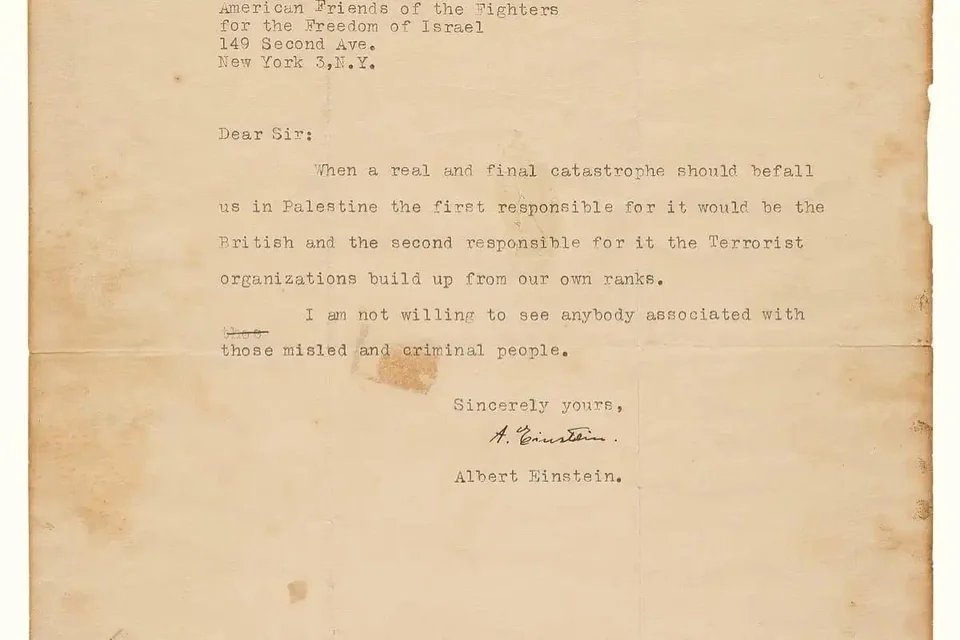
To be clear, Einstein was not against a Jewish homeland. He was simply against the violent means being employed that have led to the current hatred. Had more followed his advice then we wouldn’t be facing yet another bloody war today. When will we learn?

Framing Issues

Had the British managed to put down the bloodthirsty terrorists who fought to “water the tree of liberty” by violently taking over their American colonies, does that mean they never existed? No, they (along with their weird pagan offshoot religion that required regular human sacrifice to keep their tree nourished) did exist and they existed as a distinct entity the moment that they declared themselves to be independent. And to say otherwise would be dumb.

One of the stupidest arguments ever made is “tHeRe Is nO PaLeStINe” as if the millions of people pushed into Gaza and West Bank simply do not exist. By that sort of semantic and legal argument, there was never a state of Israel prior to May 14, 1948. Sure, there were a people called the children of Israel and a kingdom of David, but never a STATE by that name, and certainly not one that was a Western-style democracy, prior to a bunch of Europeans moving to British-controlled Mandatory Palestine (which is what it was called) and most certainly a nation with the world’s strongest standing army is not the same one as found in the Scriptures. No, that doesn’t mean they should be run into the sea or not recognized as a legitimate nation (although many do not) and yet we must deal with the reality that the land was occupied before European settlers arrived to claim it. Historical claims may make a nice romantic script, for those with no skin in the game, but telling people that their grievance of being displaced doesn’t exist because you don’t like the name is asinine. It is reasoning that may get you likes in your echo chamber but suggests you are silly and should not be taken seriously by those with a modicum of intelligence. It’s not like the Palestinians are going to stop their fight against those who took their deeded land because you claim they don’t exist.  

Furthermore, legal recognition does not change what something is. By now we all should know this. The governments of the world can call black white or white black and it doesn’t change the nature of color. Calling a man a woman or your affinity for your pet a marriage doesn’t make it true. We have the absolute right to question legal precedent or to hold to whatever existed in our minds prior to their changes. Maybe your modern definitions are simply ignorant of the original meaning and the other side is right. You might eventually be blotted off from the face of the Earth and forgotten. But it doesn’t mean you or the perspectives you held don’t exist. A person’s perspective still exists even if opposed by the powerful who have better propaganda and denying it exists is plain dumb.

Palestinians exist even if they are erased from the land or never officially recognized by many in the United States. That’s not a statement that will suit many from my fundamentalist religious background. But they’re simply not dealing with reality, it is denial, and ridiculous. Einstein called it Palestine. It was Palestine. The modern-day Israeli state came after.

Who were the Samaritans?

They were people deemed illegitimate by the pure-blooded religious elites.  They made a counterclaim to what the other descendants of Abraham Jesus mingled with saw as their own exclusive property.  The Samaritans had their own priests (apparently descendants of Aaron directly) and, contrary to the belief of their Jewish rivals, also continuously occupied the land like their Semitic cousins.

This is what makes how Jesus recognized these people so significant.  We learn, in his conversation with a Samaritan woman, that true worship wasn’t about location, including Jerusalem, but about Spirit and truth.  If this wasn’t clear enough, the parable of the good Samaritan was a slap in the face of those whom Jesus addressed.  A Samaritan more righteous than their own best?  Jesus was intentionally antagonizing. He intended to offend and insult them.

The point, however, remains that salvation is not a birthright.  It is not about your claim to be or ethnic inheritance.  The Christian truth is about what we do, and how we love, and never a matter of our worship ritual or genetics.  The measure of Christian pedigree is faith, pure and simple, like that of Abraham—which is what makes a person a son or daughter of Abraham.

Jesus didn’t mince words when addressing those who believed they would be saved by their ethnicity or Abrahamic bloodline:

Abraham is our father,” they answered. “If you were Abraham’s children,” said Jesus, “then you would do what Abraham did. As it is, you are looking for a way to kill me, a man who has told you the truth that I heard from God. Abraham did not do such things. You are doing the works of your own father.” “We are not illegitimate children,” they protested. “The only Father we have is God himself.” Jesus said to them, “If God were your Father, you would love me, for I have come here from God. I have not come on my own; God sent me. Why is my language not clear to you? Because you are unable to hear what I say. You belong to your father, the devil, and you want to carry out your father’s desires. He was a murderer from the beginning, not holding to the truth, for there is no truth in him. When he lies, he speaks his native language, for he is a liar and the father of lies.

(John 8:39‭-‬44 NIV)

There are not multiple paths, according to Jesus, but only one way, truth, and life for all to come to the Father.  Galatians makes it clear that Abraham’s seed is fulfilled fully in Christ and all who believe in Him:

The promises were spoken to Abraham and to his seed. Scripture does not say “and to seeds,” meaning many people, but “and to your seed,” meaning one person, who is Christ. […] So in Christ Jesus you are all children of God through faith, for all of you who were baptized into Christ have clothed yourselves with Christ. There is neither Jew nor Gentile, neither slave nor free, nor is there male and female, for you are all one in Christ Jesus.

(Galatians 3:16‭, ‬26‭-‬28 NIV)

Romans affirms what St Paul said above in Galatians:

So too, at the present time there is a remnant chosen by grace. […] What then? What the people of Israel sought so earnestly they did not obtain. The elect among them did, but the others were hardened

(Romans 11:5‭, ‬7 NIV)

The “remnant” is those who believed in Jesus.  While the “hardened” are those who rejected Him and, in their unbelief and ignorance, crucified the one who was called their King.  And, for those who contort and turn the Gospels inside out trying to revert to a Covenant that passed away, Hebrews 8:13, I despise your bastardization of truth.  Those who would replace His Kingdom “not of this world” with a modern secular state are not legitimate scholars or Christians.

I reject your ignorant religion.

I reject your indifferent religion.

I reject your false religion.

The true Christ isn’t an ethno-nationalist or waiting on yet another stone temple to be built.  And I don’t really care what your Scofield reference or some random guy on YouTube says.  Christian Zionism is a contradiction of terms.  I’m perfectly fine with European Jews finding a homeland and defending it.  But it should never be confused with the fulfillment of anything more than that.  We should instead be looking for the new Jerusalem.  So stone me like Stephen for repeating what he said: “The Most High does not live in houses made by human hands.”

Count me with the Samaritans.

A blessing or a curse?

Since the 1950s, no other nation has shown more perfect loyalty or full allegiance to the state of Israel than the United States.  The Biden administration is no exception and doubling down on what Trump started.  For this have accumulated a mountain of debt, a decay of our institutions, and sharp moral decline as more and more Americans fall away from faith.  Sure, we are materially wealthy, for now, but churches are empty and those that remain are temples to consumerism rather than self-sacrificial love.  If support for this country is a blessing then I guess we’ll need to redefine that word like we have been with everything else lately.  Or maybe consider we’ve gotten things wrong?

The direction of the US doesn’t look good right now and maybe that is because we’re like the Jeruselum condemned by Ezekiel:

“‘Now this was the sin of your sister Sodom: She and her daughters were arrogant, overfed and unconcerned; they did not help the poor and needy. They were haughty and did detestable things before me. Therefore I did away with them as you have seen. Samaria did not commit half the sins you did. You have done more detestable things than they, and have made your sisters seem righteous by all these things you have done. Bear your disgrace, for you have furnished some justification for your sisters. Because your sins were more vile than theirs, they appear more righteous than you. So then, be ashamed and bear your disgrace, for you have made your sisters appear righteous.

(Ezekiel 16:49-52 NIV)

Maybe it is time to stop focusing on the sins of Samaria and consider our own. Sure, maybe IsRaEl hAs ThE rIgHt To DeFeND iTsElF, but then so do the other Semitic people in that region. Consider that we are Haman, from the book of Esther, unwittingly building our own gallows as we justify our unjust vengeance against undeserving people. We’re not a righteous judge. The children of Gaza did not attack Israel. It is not anti-Semitic to stand with Einstein or recognize the unjust suffering of the Semitic people in Gaza. It is not our allegiance to the state of Israel that will bring us blessings, only allegiance to the king of the true Israel can do that and we must all repent of our delusions otherwise.
Purity Culture Is Always Bad

Standard

Two people responded to my last blog. One said that I had not said enough about the exploitative nature of the porn industry and the abuses common in purity cultures. Another claimed that I had overstated and generalized about purity cultures and tried to point out the good.

First, there is not enough that can be said about the ugliness of pornography and how it is harmful on both ends. My previous blog had primarily focused on the consumer end because it was about how pornography and purity cultures hurt those under their influence. However, many blogs could be written about how pornography is produced and we should not forget those many who are used (or abused) in this industry—they also need to experience the pure love of Jesus.

Second, the other person responding to my prior blog seems to have assumed that my comments, specific to purity culture, applied to my Christian experience in general. That is incorrect. I have actually had great experiences with those who were able to transcend the cancerous influence of purity culture. I have met many who are more committed to Christian love (and faith) than they are to maintaining an appearance of purity (for sake of religious peers) that comes at the expense of those aforementioned things.

What purity culture is is a misuse of a set of teachings in the same way that pornography represents a misuse of sex. It sees a corrupted version of purity as an end to itself rather than a part of something more comprehensive and complete. It leads to the same kind of dissatisfaction as pornography and that is because it has, in a similar fashion, taken a good thing in the right context and twisted it into something that it was not intended to be. Purity culture, under the pleasant facade, is always about fear, control and shifting blame rather than true Christian love.

Purity culture is, by definition, a misapplication or overemphasis on some teachings at the expense of others. In other words, purity culture is a perversion and, like pornography, not enough can be said in condemnation of this wrongful and abusive use of Biblical teachings. There is a vast difference between purity culture appearances and actual righteousness. There is nothing good about purity cultures, the bad cannot be overstated and that is a generalization we should make.

Jesus Rebuked Purity Culture

The difference between being pure in heart (as is taught in Scripture) and purity culture is as different as Jesus was from his self-righteous critics:

On a Sabbath, Jesus was teaching in one of the synagogues, and a woman was there who had been crippled by a spirit for eighteen years. She was bent over and could not straighten up at all. When Jesus saw her, he called her forward and said to her, “Woman, you are set free from your infirmity.” Then he put his hands on her, and immediately she straightened up and praised God. Indignant because Jesus had healed on the Sabbath, the synagogue leader said to the people, “There are six days for work. So come and be healed on those days, not on the Sabbath.” The Lord answered him, “You hypocrites! Doesn’t each of you on the Sabbath untie your ox or donkey from the stall and lead it out to give it water? Then should not this woman, a daughter of Abraham, whom Satan has kept bound for eighteen long years, be set free on the Sabbath day from what bound her?” When he said this, all his opponents were humiliated, but the people were delighted with all the wonderful things he was doing. (Luke 13:10‭-‬17 NIV)

Had you run into this “synagogue leader” he would have appeared to be a very pious man. He was likely there every time the synagogue doors were open, probably spent hours of time devoted to reading Scripture and may have even tithed everything even down to his spices. But under this man’s righteous outward display was a corrupt and unloving heart that placed strict adherence to Sabbath laws above the actual reason for the laws.

Jesus, who had a pattern of healing on the Sabbath as if intentionally trying to antagonize these religious elites and expose their hard hearts, rebukes this leader’s misplaced priorities. Because, while this religious leader was technically correct that this woman could’ve been healed any other day of the week, his thinking was not centered correctly, he should have been rejoicing that this woman was healed and not obsessing on when or how it happened.

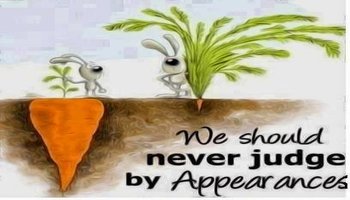
A “tell” refers to those unconscious actions that betray a person in a card game. A person can bluff or deceive others with a display of confidence and yet there are often small signs that give them away to an astute observer. Purity culture also has tells. One of the biggest tells of purity cultures is it does like this religious leader Jesus rebukes and puts emphasis on the letter of law or appearances over what is healing and helpful to other people.

Here are some other tells of purity culture…

Purity Cultures Blameshift

Purity cultures always release men from being completely responsible for their own sin. Instead, they use male failure as an excuse to manipulate and control others.

For example, in a purity culture, when a man was caught by his wife viewing pornography, and the matter went before church leaders, he was treated as the victim and his wife (along with every other woman) was made responsible. In this case, they urged his wife to dress plainer and they encouraged her to become pregnant, I kid you not, meanwhile this man goes around condemning those who do not ‘dress right’ or otherwise live to a standard that would keep him from sin.

Women are often blamed for male lusts in purity cultures and this goes completely contrary to anything Jesus taught on the subject. Hyperbole or not, we are told by Jesus to pluck our own eye out if it causes us to sin. But never are we told that it is a woman’s responsibility to keep a man’s thoughts pure. Men who shift blame for their own sinful thoughts and actions have no business calling themselves Christian leaders. A real Christian leader takes full responsibility for their own sin, falls on their knees and repents.

But in purity cultures, a man is more concerned with maintaining an image. And, for that reason, he cannot repent or take complete responsibility for fear of being exposed and losing social status. So, rather than admit it was his own weakness that led to failure, he must find some reason outside of himself for the failure.

In other words, a purity culture response is like that of King Saul who pointed a finger at the people when he willfully disobeyed God and not like King David who took full responsibility for his own sin when confronted. Had David been like Saul, and not “a man after [God’s] own heart,” he would have likely blamed Bathsheba rather than actually repent and made a royal decree banning roof bathing in the kingdom of Israel.

Purity Culture Is About Outward Appearances

True purity comes from the inside out and never the other way around. Purity cultures, on the other hand, are centered on maintaining an outward appearance of purity and never leads to an inner change. The Pharisees are a pristine example of purity culture and how those in one respond when corrected:

When Jesus had finished speaking, a Pharisee invited him to eat with him; so he went in and reclined at the table. But the Pharisee was surprised when he noticed that Jesus did not first wash before the meal. Then the Lord said to him, “Now then, you Pharisees clean the outside of the cup and dish, but inside you are full of greed and wickedness. You foolish people! Did not the one who made the outside make the inside also? But now as for what is inside you—be generous to the poor, and everything will be clean for you. “Woe to you Pharisees, because you give God a tenth of your mint, rue and all other kinds of garden herbs, but you neglect justice and the love of God. You should have practiced the latter without leaving the former undone. “Woe to you Pharisees, because you love the most important seats in the synagogues and respectful greetings in the marketplaces. “Woe to you, because you are like unmarked graves, which people walk over without knowing it.” One of the experts in the law answered him, “Teacher, when you say these things, you insult us also.” (Luke 11:37‭-‬45 NIV)

Catch that?

These guys were so oblivious to their own spiritual deadness that they couldn’t even believe that Jesus was talking about them. But Jesus didn’t slow down when one of the experts said he had insulted them, he stepped on the gas and continued on with his critique. In the verses that follow those above, Jesus decries the burdens these religious elites heap on others (without lifting a finger to help them carry) and compares them to those who killed the prophets. We are told that after this they peppered him with questions and tried, desperately, to catch him saying something wrong.

What should have happened is that they should’ve recognized themselves in his words, then made no more excuses for themselves and repented. Unfortunately, pride is the most difficult sin to confess for a person who is concerned with maintaining appearances, because admitting pride is admitting that their righteousness facade is just that, a show, and means lowering themselves to the level of the more visible sinners—whom the self-righteous hypocrites think that they compare favorably to.

Purity Culture Is Itself Impure

The dirty little secret of purity culture is that it, like the pornography and sexual immorality it decries, is not what it appears to be. Yes, they, like the Apostle Paul before his conversion, may be able to follow the letter of the law and even win the praise of their religious peers. They may present themselves as completely humble and meek if that is the religious cultural expectation. However, beneath this well-manicured appearance of holiness, they are totally faithless and spiritually dead.

Purity culture depends on human effort, conformity of visible behavior, and never a true transformation of heart. It is a culture concerned with outward appearance or physical cleanliness, like the Pharisees with their ritual washing, that neglects what is actually important and totally misses the point. Many in purity cultures have bamboozled themselves with their own act, they become defensive when confronted and refuse to humble themselves when exposed as fakers.

The outward appearance of a purity culture and true holiness is so similar and that is why it is so difficult to address. Those in a purity culture, in most cases, think of themselves as the good people, and while blaming everything but themselves for their own failures, are actually making a sincere effort. But true holiness does not start with human effort, it starts with recognizing that our own effort is nothing compared to the Holiness God and is depending fully on Him.

Humble yourselves, therefore, under God’s mighty hand, that he may lift you up in due time. (1 Peter 5:6 NIV)

I am [not] Charlie

Gallery

I believe in freedom of speech.  Truth can offend and for a right cause we should be bold in speech regardless of consequences. But I do not believe that deliberately causing offense is anything great or special. Insulting another man’s mother is legal and perhaps even a brave thing to do.  However, legal and brave doesn’t make something righteous, honorable, peaceable, justified or moral.

“Do not repay anyone evil for evil. Be careful to do what is right in the eyes of everyone. If it is possible, as far as it depends on you, live at peace with everyone.”  (Romans 12:17-18)

Our society may celebrate the insults of cartoonists or comedians and our freedom of speech. Yet our respective cultures shelter many popular ideas from critical thought.  Sure, one can poke fun at religion in the west and be quite popular, but that doesn’t mean we don’t have our own untouchables.

The biggest threat to freedom of speech is likely not radical religious men with Kalashnikov rifles. What happened in Paris does not frighten me personally and doesn’t negatively influence what I say or do. I don’t fear being literally murdered for what I say here.  Still, there are many truthful things I hesitate to say for fear of risking my popularity or public standing. Unchallenged popular opinion is probably more dangerous to intellectual discourse than anything else.

Free expression of thought is challenged in many ways besides threats of physical violence. There are far subtler ways to kill dissent like popular taboos. Then there are those who effectively bully others into silence with their loud protests and demands for political correctness. Killing the messenger can be accomplished without guns and bullets. Ridicule can be used very effectively to bully those with unpopular opinions into silence.

People collectively wield far more power to enforce intolerance and ignorance by shaming divergent thinking than a small number of radicals. Threats of character assassination and popular criticism or public ridicule are just as effective a means for curtailing free speech as death threats. The pen and protest can be used to suppress ideas just like a terrorist’s gun.

“The pen is mightier than the sword”

What we create with our pen does give us power and it is a power for both good and evil. Speech is a weapon. Speech can be used aggressively and destructively to hurt people. We can use our communication as a tool to build bridges between people and to defend the weak or we can use it to carelessly destroy the things other people care about.  Our freedoms should be used responsibly.

I write to provoke thought, but not to be a provocateur.  I question if the staff of Charlie Hebdo should be treated as martyrs for free speech for their intentionally offending and disrespectful artwork. The true protectors of freedom were two men who died outside defending the right of the cartoonists. I would rather say “je suis Ahmed” or “je suis Franck” rather than honor insult artists.

There are many hypersensitivity and unreasonable people around the world and I know I cannot please them all. My goal is to not unnecessarily offend, to leave vengeance for insults to God and be Jesus. Je suis Jésus.