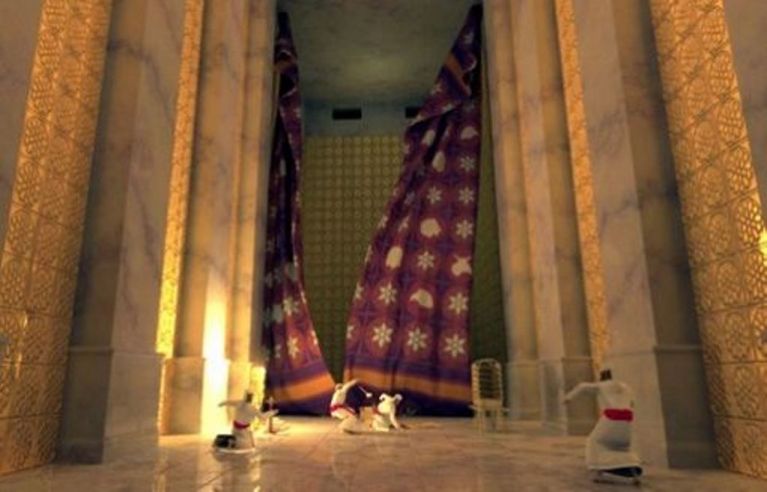
Seeing Behind The Veil

Standard

In storytelling, there is a plot device called a MacGuffin.  This is an object, character, or event used to push the narrative forward and yet isn’t all that important in and of itself.  In other words, a thing that creates motivation and yet never even needs to be revealed to the audience.  We are supposed to believe this is something significant or valuable and that’s all we need to be told.

The contents of the briefcase are left a mystery despite being pivotal in motivating the characters.

While reading through the Old Testament and pondering how temple worship worked, it is hard not to see the Ark of the Covenant as a sort of MacGuffin.  Sure, their God was not a thing.  And yet this sacred object, we’re told, contained something of God’s presence and would even strike dead those who innocently mishandled it.  Of course, most people may never have seen it, it was kept behind a veil in the temple where few had access, but all would be told of the sacredness.

“Then spake Solomon, The LORD said that he would dwell in the thick darkness. I have surely built thee an house to dwell in, a settled place for thee to abide in for ever.”

(1 Kings 8:12‭-‬13 KJV)

In fact, it was made sacred as much by this treatment as much as what actually dwelled within it.  The mythology surrounding it, as in the cultural or religious significance that was given to it, was extremely powerful.  Starting a special priestly class, Tabernacle and ritual practice, later the impressive structure of the Temple, there was a huge investment in this sacred object.  And yet, for all the attention it got, the Ark itself was usually kept hidden in darkness, guarded, within the Holy of Holies and behind a veil.

Holy Of Holies 

There are other things hidden behind a veil with significant motivational power.  One of them being the marriage MacGuffin.  For me this was a pursuit of something sacred, the church does consider the marriage bed to be sacred, and there is a whole mythology that is constructed around marriage.

This is what made it so jarring when, during my pursuit of the impossibly, a psychiatrist would classify it as “sexual attraction.”  They had just heard me describe a pure and faith-driven quest only to reframe it in such crass terms.  How dare they!  I was after love, not sex!  It really did offend me at the time.  With their clinical roughness, they had penetrated the veil of my marriage delusion.  It was an act of sacrilege.  

My childhood innocence is beyond recovery at this point.  For whatever reason, those of us born into a fundamentalist purity culture believe that we must be in denial of our own sexual urges that lead to marriage.  This is strange given how blunt St. Paul is on the topic, in 1 Corinthians 7:9, advising those who “burn with passion” to get married and basically get a room.  Why the veil of secrecy, these many euphemistic expressions to cover and mystify the bumping of uglies?

Speaking of erotic euphemism:

“Awake, O north wind; And come, thou south; Blow upon my garden, That the spices thereof may flow out. Let my beloved come into his garden, And eat his pleasant fruits.”

(Song of Solomon 4:16 KJV)

Why blush, be embarrassed or ashamed by this?

Could it be that without dressing this whole affair up with great ceremony, white bridal veils, teary-eyed parents, and such, we would have to face the reality of being creatures as hormone-driven as two ducks on a pond?  I mean, why aren’t we as honest as Solomon was in his poetry: “Roses are red, violets are blue, you have large breasts, that’s why I love you!”  Without white lies or half-truths, would our version of romance even survive?

So what is underneath the veil?

All of those things that I’ve discovered in the intervening years, that’s what…

To the extent I was in deep denial of my own sexuality, I was doubly in denial of the sexual nature of my female counterparts within the conservative Anabaptist culture.  The young lady who first propositioned, then made it all awkward and worried about somehow being ‘defiled’ if she got coffee with me has long since dropped the veil.  She has joined the others whom I had held in such high regard, revealed now as not being nearly as prudish or pure as I had once imagined.  That’s not a criticism or judgment either.  It is just the reality of the situation.

So, when the impossibly told me “I cannot not love that you the way that you wanted to be loved” what she was really saying the same thing as those Tinder girls with “must be 6′ or over to ride” in their profiles.  She wanted a guy who got her juices flowing, certainly someone a bit more rugged and traditionally masculine than me.  And, I mean, why not?  Why hide it?  Marriage is not only (or even primarily) about the high ideal that is advertised.  It is also about our scratching the itch.  Which is to say getting down and dirty with someone who meets the correct physical qualifications.

Also, perhaps it is that the fantasy is more satisfying than the act itself?  We read how Amnon, King David’s eldest son, had such an infatuation with his half-sister Tamar.  It tells us after having his way with her he despised her.  Or consider the disgust of Victorian-era art critic John Ruskin when, in marriage, he discovered that women aren’t like porcelain dolls.  You’ll have to forgive him, they put skirts over piano legs back then to keep the eyes of men safe from the unveiled feminine form.  Maybe there are some things that are better chased than caught?  If we find what we went looking for we might be shocked at what we found.

Sacred Fertility & Symbolism 

The final stop on this exploration of sacred and taboo has to do with something that I can’t unsee now that I’ve seen it.  I’m bound to lose half of my final two readers for going here. 

Nevertheless, I’m not here to please the pearl-clutching crowd. 

For me, this is not about toppling sacred cows or making people uncomfortable, it is about being honest enough to see reality for what it is and correcting our own perspectives of the cultural baggage we’ve inherited.

First, what drives much of the Old Testament Biblical narrative?  We know Abraham’s story, how he wanted an heir, and yet how Sarai, his wife, was unable to produce.  In this Genesis account we see various cases where wombs are opened or closed.  And the punishment of Michal, for rebuking her dancing husband, was that she had no child until the day of her death.  Being fruitful and multiplying was a high priority, as well as having sons to carry on the family line.

As an aside, we live in a very sterile world in comparison to our ancestors, we’ve become sheltered and sensitive to the point many do not eat meat or want their children exposed to death.  This wasn’t an option at the time when Scripture was written.  There is a kind of earthiness to their world and perspective, something more primal or real, a brutality of life difficult to stomach.  It is with this reality in mind, that we also have different sexual taboos and could be more prudish than they were about such things.

Second, I was sitting in church and taking a look at the colorful streams of light pouring through a stained glass image of Jesus pulling Adam and Eve from the grave.  My moment of appreciation for this beauty was interrupted by my noticing part of the symbolism.  Jesus is shown to be emerging from an oval shape, at the bottom of which are the covers of their opened tombs.  Requiring very little, if any, imagination, it bears striking resemblance to one Christian symbol even an iconoclastic Protestant would likely recognize, and that being a vertically arranged “Jesus fish” or Ichthys.

Light and life shining down…

However, concurrent to this, and a cause of some momentary shame, was the thought “That’s a vulva!”  I mean, how inappropriate to think that any part of the female anatomy, let alone those private nether regions, be put on prominent display or be associated with Christ!  

But is it really?

A mother, Mary, is necessary for the birth of Jesus.  Without her, and her womb that is miraculously made made more spacious than the heavens, there is no salvation for mankind.  It didn’t matter if God could have used any other way, all we know is that he used this young woman and all of the faithful since have followed the lead of Elizabeth, who full of the Holy Spirit loudly proclaimed:

“Blessed are you among women, and blessed is the child you will bear! But why am I so favored, that the mother of my Lord should come to me?”

(Luke 1:42‭-‬43 NIV)

As far as the symbolism, I would find that indeed my observation had basis in reality as the Ichthys is a version of Vesica Piscis (literally “fishes bladder” in Latin) or, in sacred geometry, the oval that two intersecting circles create an oval and said to be the place where spiritual and physical worlds interface. According to Syriac Press, in ancient Mesopotamia, it was used as a symbol of the combination of masculine and feminine energies that create a Divine Child.  Any pagan coincidence, like those with baptism, only serves to reinforce the power of the symbolism.

In a time when many settle for ‘fur babies’ over producing human offspring and the unique female contribution to the world is dismissed by feminists seeking male roles— when real women are mocked by men who pretend to menstruate—we need to start doubling down on our celebration of this reproductive role of women.  Phrases like “saved through childbearing” did not come into the Bible by accident.  The world was saved by the one who came out of Mary’s fertile womb and we ought not to downplay or be embarrassed by this.

Empty Vessel—Dying Corpse

Solomon’s Temple was destroyed in 586 BC, by the Babylonians, and the fate of the Ark within it is unknown.  This loss of sacred relics did not stop the Jewish faithful from rebuilding the temple, in 515 BC, but does make one wonder how much the contents mattered.  So long as the people were kept in awe that’s all that really seemed to be the point whether the edifice truly contained anything of real value or not.  With nothing behind the veil, the people still did the ritual and sacrifice. 

Why?

It seems sort of analogous to the US Dollar, a currency once backed by actual gold and now only by faith people continue to hold in the economic system it represents.  The harsh reality is that it has become merely a means to exploit. It is a way for a few elites to rob the value of the savings of other people by printing more money for themselves.  Those money changers Jesus chased out of the Temple were the amateurs. The real professionals never get caught.  The carefully maintained veil of secrecy around the Federal Reserve ensures that this particular scam continues for a long long time.

But, I digress.  

G. K. Chesterton once wrote, “a corpse crawling with worms has an increased vitality,” and that “a dead man may look like a sleeping man a moment after he is dead,” trying to describe the subtle yet significant difference between truly sacred tradition and a cheap gimmick version of this religion that was intended to replace it.  Perhaps this is what has me disillusioned?  With so many things, once the veil is lifted (which few ever dare to do) so much of the enticing mystery and popular mythology which propelled us forward falls apart.  And in this way some of the life I had felt early on feels more like decomposition.
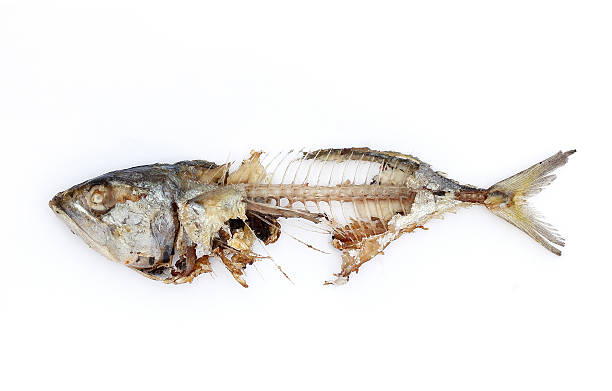
Perhaps this is what is left when you’re the dog who has finally caught the car?  Nothing left to do but pee on the tire and continue on your way again.  The anticipation leading up to the day of revelation may be more exciting than the moment the veil is lifted and when all is seen.  Ruskin may have spent the rest of his life waxing eloquently about his female love interest.  Or maybe—just maybe—that MacGuffin which led us to the point we’re at today was merely a plot device to move the story forward and the only truly sacred part of the encounter is the fruit produced?

Sexual pleasure is fleeting.  We’re lured there by our imaginations, by our desire for what is beyond the veil of marriage, but it can all be a bit anti-climactic and even repulsive once you consider it after it is finally unwrapped from the flowery speech and those flawless air-brushed mental pictures.  But fatherhood, by contrast, seeing the great potential of my son, tending to his needs, pruning as needed, is something extremely fulfilling.  It is what has emerged from the womb that brings us renewed life and hope.  Pity the barren, the dying corpse who has lifted the veil and only saw the emptiness of their pursuits.

My Tumultuous Transitional Decade

Standard

It is hard to believe that another decade has already come and gone. This past decade has been one of many transitions for me, from the launch of this blog in 2014 to a big change in career a few years later and, on top of all that, a departure from the only religious identity I had ever known for another.

It was a decade marked by an extreme of faith, the high-water mark of my spiritual life, leading to the most profound of disappointments and suicidal despair, all followed by a rise again from the ashes. If there is such a thing as living a second life, a life after death, then I am living proof of that concept despite the scars.

Delusion, Disappointment and Divine Humor

This blog was started, mid-decade, to be a record of my journey and also a story of the triumph of faith within a Mennonite context. However, things did not go as anticipated, my enthusiasm was not shared by those who had the power to make a difference, and my misplaced faith ended up being fully exposed by the end of it all. That was the lowest of lows for me.

However, even in my lowest moments, in the midst of that, there was a moment of levity where my sharing my disgruntlement with the impossible Mennonite marriageability expectations went viral. That remains my most viewed and shared Irregular Ideation blog to date (and recently vastly eclipsed by a blog on another blog I curate) and my proof that God does indeed have a sense of humor.

Somehow, surprisingly, my influence within the Mennonite denomination would peak with my candid expressions of frustration with the religious culture that came with my departure. A couple of my serious blogs, decrying fundamentalist influence and another discussing the role of ritual and tradition, even found their way into Mennonite World Review and an Old Order email group.

It would be hard to give that up. And I knew the newfound popularity of my blog would likely suffer once I formally announced my departure from Anabaptism—which does seem to be the case as traffic has diminished since then—but that is also the kind of sacrifice that a Christian commitment requires:

“If anyone comes to me and does not hate father and mother, wife and children, brothers and sisters—yes, even their own life—such a person cannot be my disciple.” (Luke 14:26‭ NIV)

For the first time in my life, I had left the comfort of the Anabaptist fishbowl for something bigger. Who knows what that will bring?

Dramatic Changes and Delicious Ironies

The move to Orthodoxy has been part of a huge paradigm shift and was pretty much the only option that I had left. It was a refuge to preserve the little faith that survived the collision with a terrible reality of my misplaced hopes. I certainly didn’t go to replace what had been devastated in me. And there are all of the problems found in every group of Christians from those recorded in the book of Acts onward—all of the silly squabbles and turf wars included.

Nevertheless, the beauty of Orthodox worship, the focus on Scripture and glorifying God in our song (rather than human emotion, etc) along with a simple (and timeless) Gospel message, helped me to move forward. Orthodox worship centers on our Communion together with God and (unlike the traditions I was most familiar with as a Protestant) they do not attempt to explain the explainable. At some point, we need to let go of our own understanding and embrace the mysteries beyond our comprehension.

Moving on from religion to real estate and other miscellaneous items, I started the decade paying down my debt for my first home and driving cars that probably belonged in a scrapyard. But then, in 2014, spurred by my other and disappointments, I bought my first new car, paid cash for a handsome black Ford Focus—my best purchase to date. In fact, I was so pleased with that purchase that I sold my prized (but high mileage) Jaguar XJR and bought a brand new Shelby GT-350 two years later when they first came out—an extravagant purchase which also led to some very meaningful friendships.

Anyhow, having reached the pinnacle of automotive excellence (at least for a working man’s salary) it was time to rest comfortably, save my money and relax a bit. Or, rather, that had been the plan…

But somehow (possibly working in an office with a bunch of restless Amish investors rubbing off on me?) I ended up buying a second property with the thought (at the time of purchase) that I would move in to and sell my old place in Milton. But suddenly that plan didn’t make sense anymore, why not rent the new house and build some equity instead? Needless to say, my ideas for a comfortable existence went out the window and, only two years later, now I’m working on house number three. Not exactly a business empire, yet more than calculated risk than I’ve ever taken on before.

In the time since my blinding hopes ran into a young Mennonite woman’s all-consuming ambitions, my feet have landed in three different countries (read more here and here) and all on the opposite side of the world. As it turns out, despite my self-doubts, all that I really needed was a good enough reason to go. I had started the decade thinking that I was incapable of finding my own direction in life, that I needed to hitch myself to someone else’s ambitions to get anywhere, and yet here I am moving on. Yes, very soon, echoing the central complaint of the young woman who rejected my offer of the impossible love, I will no longer be thirty years old living in Milton.

Where False Devotion Fails, True Love Prevails

I was wrong to hope to find the kind of love that is only possible with faith within the Mennonite context.*

That said, I was right about one thing: It is only that kind of love could ever motivate me to do anything worthwhile with my life.

Truly I did nothing, over the past few years, on the strength of my own effort. No, I’ve needed physical therapists, family, spiritual fathers, sisters, and brothers. Not to mention those friends on the road who made my loneliness bearable, also those who know my name at the various establishments that I frequent, my generous current employer and the many others who have positively impacted my life over the past decade. To all those people I owe a debt of gratitude.

However, there is one who has been there for me unlike any other, the one who didn’t lose hope in me despite my delusions and attachments to Mennonite dogma; the one who told to be strong for her, to get out of bed and go to church again. Everything I’ve done over the past few years would not have been possible apart from the investment of faith that she has made in me. She, as a person who has experienced her own personal misfortune, showed more love for me than those who claim to travel the world as a display of their Christian love.

In this coming decade, I plan to spend far less time trying to please the falsely pious and proud, who can’t be pleased and are obsessed with their own image, and more time with the downtrodden and truly humble.

That is the vision behind FACT, an organization of one, so far, that has already given me some hope that my seemingly divergent strengths and interests can finally be combined into something useful and good. I hope the vision of FACT will soon grow into concrete steps towards truly meaningful actions and compassionate solutions for OFWs and their families. But that, of course, will take more than my own personal efforts and I hope there will be others willing to put aside their doubts and help those who are already doing all they can do to better themselves.

*Mennonites, like people of all established religious traditions, are really good at carrying out their own particular programs and denominational prescriptions. Similar to their Anabaptist cousins more known for their barn-raisings, Mennonites love to help in disaster relief projects. They will also dutifully staff and fund their own private schools (or homeschool if they are more trendy) and now even travel the world as missionaries. All good things, I suppose. But all those things do not require any real faith on the part of Mennonite individuals, they are a cultural inheritance, a good way to find a romantic partner, an acceptable path to rise through the ranks, and are not truly sacrificial acts of faith or love.

Entering Into A Strange New World

In the past decade, my plans got turned upside down. I gave up on old dreams and, from the wreckage of my hopes, found some new vision. Had anyone said, ten years ago, that I would have three properties, traveled to the opposite side of the world, and converted to Orthodoxy, I would have probably laughed at them. But here I am, having started a journey to the impossibility and ended up here, perplexed.

We started the decade with a president who would seem more comfortable in a lecture hall and ended it with a persona built for professional wrestling, reality television, and trolling on Twitter. Yet, contrary to popular opinion or at least in contrast to the fears of half the population, the earth has not fallen from orbit nor has the moon disappeared from the night sky, life has gone on. Albeit, my assumptions, the idea that our political decisions are rationally based, had to change overnight. Scott Adams has persuaded me.

My identity, my religious and political paradigm, has changed very significantly in the past decade. I’ve witnessed the passing of my last remaining grandmother in 2017, one of my dad’s brothers also died in a logging accident mid-decade and then, uncle Roland, a man who had helped to facilitate my stay in the Philippines, was murdered.

Over the same time, I’ve been processing the battle with cancer of a younger cousin and good friend, who just finished college and plans to marry soon, who already sacrificed a leg (in the past year) and now has new growths in his lungs.

So the fight will continue for him as it does for all of us.

One day at a time.

None of us knows what trials we will face in the next decade and yet need to continue to live in faith. I hope to be done with my inventory taking, soon break free of the transitional time I am presently still in, and finally have some of those long-awaited triumphs that have eluded me in certain areas of my life. But, at the end of it all, I can’t really tell you what this next decade will hold, whether Trump will win in 2020 or if there will even be a year 2030.

There is no point in getting stressed out about what we can’t know. Our life is a vapor, it appears for a little and then it is gone. So make the best of the time you have and don’t worry about tomorrow!

Cautionary Tales About Pigeons, Sparrows and Ideological Extremes

Standard

For those who still remember Paul Harvey and miss his “and now you know the rest of the story” delivery style, Lance Geiger will scratch the itch. His episodes, on “The History Guy” YouTube channel, have been my entertainment in the morning before work and enjoy the storytelling adventure before his “forgotten history that deserves to be remembered” wrap-up at the end.

His show is not political. But two of the episodes sparked my thinking about the danger of ideological extremes and the need for checks and balances. One story an example of the central planning gone seriously awry, the other about the unfortunate consequences of technological development combined with market forces, and both stories involve the extinction or near extinction of a species of birds.

Socialized Sparrows and Starvation

The first video, “When China went to war with sparrows” is about the “Four Pests Campaign” that was part of the “Great Leap Forward” from 1958 to 1962. The idea was to eliminate certain types of critters as a way to increase hygiene and reduce disease. The targets, mosquitoes, rodents, flies, and sparrows, were picked by the Socialist regime of Mao Zedong. Claiming that “birds are the public animals of capitalism,” armed with a population bound to statist fervor, they dramatically reduced the numbers of sparrows.

The end result of this sparrow control campaign was an ecological disaster. As it turns out, holding to Marxist ideals does not make a person an expert on economic development or biological science, and this deliberate elimination of sparrows came with some very serious consequences. This misguided policy is believed to be a leading cause of the Great Chinese Famine, a catastrophe that cost between 15 to 45 million human deaths and was abandoned when Chinese authorities, on the advice of an actual ornithologist, finally realized their terrible mistake.

Che Guevara T-shirt wearing, professional far-leftist ‘rabble-rousers’ may celebrate “people power” when it aligns with their personal prejudices. They often sit smugly and sanctimonious, on their intellectual ivory towers, confusing their book acquired knowledge and ideological indoctrination for wisdom. But given real power these people are dangerous. Mao Zedong, the well-educated son of a wealthy farmer, was not an idiot or especially ignorant. But the masses he controlled (with his anti-Capitalist rhetoric) amplified his mistakes, caused great suffering and claimed many innocent lives.

Sparrows, as it turns out, help to control locust populations. These bugs, now unrestrained by the sparrows, quickly proliferated and went on a crop-destroying rampage. This, along with the reckless use of pesticides and poisons by the Chinese government, was all well-intentioned. Likewise, there are many Socialist policies, championed in the past century in this country, that have failed us as miserably and yet continue to be touted as solutions. Unlike Mao, however, our crop of ‘progressives’ more often doubles down on their mistake, hiding behind their ever more convoluted logic, rather than ever reconsider.

Capitalized Pigeons and Profitable Purges

The second video, “How the extinction of a species affected whiskey production,” deals with the plight of the passenger pigeon. This North American species was once so numerous that the flocks would blot out the sun was hunted to extinction, the last of the birds dying September 1, 1915.

Native Americans had hunted passenger pigeons as they were plentiful and a good source of protein. But, because of the limits of their technology and smaller population size, never put a dent in the numbers of pigeons. But this would all change with the newly arrived settlers from Europe. Trains, telegraphs, and gunpowder enabled more people to join the hunt at pigeon nesting grounds. One well-aimed blast from a two barrelled shotgun could kill as many as 61 birds and tens of thousands were slaughtered with great ease.

The real compounding factor was not the hunters, not the tools that they used, but was rather the money and markets that gave them motivation. Unlike in times past where it only made sense to hunt for only enough to sustain your own family or village, the railroads made it possible to ship vast quantities of the fowl meat to city markets back East. The apparent plentifulness of the birds masked the severe drop in their numbers and the cheap source of protein (or profit) they provided ensured the hunts would continue.

That is not to say that nobody was aware of the decline of the species. There were indeed attempts to reign in the slaughter in the mid-1800s. But these conservationist efforts never gained enough traction to make a difference, the legislation introduced too little too late, and extinction followed.

It would be easy to say this plunder of natural resources was a product of greed. But, insomuch as greed is a selfish excess, that is not an accurate diagnosis of the problem. If it were greedy or selfish for one to merely act in their own self-interest then we would all be equally guilty for breathing. The real problem is that no individual accounted for more than their own harvest. There was not nearly enough consideration for the big picture and market forces took care of the rest.

In a Capitalistic system, productive behavior rewarded. That reward is distributed to those who have the ability and motivation to work. But, without anything to hold this motivation in check, a mass of humanity can quickly become like a swarm of locust devouring everything in its path. The beauty of the Capitalistic system is that it allows people to do more to advance their own self-interests and that is also the downfall of Capitalism as well.

What Is the Moral to the Story?

“Are not two sparrows sold for a penny? Yet not one of them will fall to the ground outside your Father’s care.” (Matthew 10:29 NIV)

Perhaps if God cares about the sparrows we should as well?

In the two stories economic systems that could not be more different and produced nearly the same results. Both cases demonstrate the power of a mass of people and remind me of the demotivational poster in my bedroom (gifted from my awesome little sister) featuring a circle of skydivers and the text: “Idiocy: Never underestimate the power of stupid people in large groups.”

The poster, a satirical take on motivational posters, is meant as tongue in cheek humor and not to be taken too serious.

Nevertheless, as there is truth to every joke, the useful message is that it is prudent to stand apart from the crowd, to resist conformity and ask questions. Had enough people questioned the party propaganda or the collective actions of their profit-seeking neighbors the death of millions of Chinese and the extinction of passenger pigeons could have been avoided.

These accounts of pigeons and sparrows are also cautionary tales about two opposite ideological extremes. In Socialism the stupid decisions of a small group of people can be vastly magnified by the subjugated masses. In Capitalism the masses, motivated by profit and market forces, can become a source of terrible devastation. The central planning of collectivists and the lack thereof in individualistic and free-market systems both come with their own unique manifestations of the same risk.

It is worthwhile to note that the unchecked power of the central state, in the path century, is responsible for more deaths (due to wars, genocides, famines, etc) than any one person or group of people motivated by profit. Government policies, often favoring big corporations or particular individuals, at very least contribute as much to the problem as individual desire to profit and are, in fact, responsible for some of the worst man-made ecological disasters in modern times.

However, the properly restrained state can provide a good counterbalance to market forces, to keep the masses from acting like a runaway train unaware of the destruction at the end of the tracks and offers some necessary protection for endangered species. It is for our own long-term good that there are limits to our freedoms.

In the end, I’m not for unrestrained Capitalism anymore than I am for unrestrained government power. As much as possible I prefer to let people make their own choices and therefore, for that reason, shade towards free markets—which, when not interfered with by governments through subsidies or social programs, are the most democratic institution known to men. It is better to allow mistakes to be corrected at a lower level through bankruptcy and individual loss. That said, the extinction of the passenger pigeon speaks to the need for a collective consciousness to hold back our self-interested impulses.

Much destruction can be caused by taking a good thing too far or not keeping it properly restrained by other equally valid principles and concerns. Do not repeat the mistakes of these competing ideological extremes and their equal potential for economically or ecologically disastrous results. Remember the sparrows. Remember the pigeons.

Finding your motivation…

Standard

I’ve been listening to a motivational video since a friend posted a link to it.  It is advice of Arnold Schwarzenegger, a man who rose to prominence through body building, with an unlikely accent began a career as an actor and then later was elected governor of California.

What he said resonates with me.  I know enough of his story to appreciate the ethic of hard work, confidence, need to overcome fear of failure, to break rules, to ignore naysayers and pursue visions.  We limit ourselves.  The truth is that I limit myself and it is because I doubt my chances for success.

Had Schwarzenegger thought like I do sometimes could he have accomplished what he has? 

No, probably not…

I am a driven and determined guy.  I dream of the impossible.  I hope for the impossible and I believe the impossible is possible by the grace of God.  For some faith is an excuse for them to sit on their hands and do nothing.  But for me faith means full investment in the visions that God has put on my heart.  There can be no compromise with those who tempt you to quit.

I have encountered the naysayers, they are many, and they will try to turn you from what is best.  For your good, they claim, you should settle for less and seek the compromise.  They will recount their own failure as reason, cite facts and present logics, but do not let their faithless words take away your courage.  Fight for what is right and good because you trust that God is right and good and is on the side of those who pursue righteousness and goodness.  Do not listen to the naysayers.

I have my own anxieties.  I too often have made excuses for myself and can too easily withhold my best effort with a fatalistic attitude.  Yet, when we do not put forward our best efforts because of fear, can we blame anyone other than ourselves for our own failure?  It is a lie to blame God or fate for our own failure unless we have truly invested our all.  Those who have done their part and still come up short have still won.

Another thing I have done too often is view failure as defeat.  Failure should instead be viewed as a learning experience.  As the saying goes: “If at first you don’t succeed, try, try again.”  If you give up at the first sign of trouble or after facing some tough opposition, then the goal must not be all that important to you.  To stay focused on the prize, despite the pain, the scars and torments of past failure, that is victory.

I am not afraid to think outside the box.  Sometimes success requires being alone and setting the trend yourself rather than wait on others.  Yes, I would rather the comforts and company of the group, but when the group is limiting God’s purpose for them or encouraging complacency, then one must lead.  A true leader does not wait to be sure others are following, they do not pay attention to rules that come between them and doing what God has for them.

Now, there are components I believe are missing from Schwarzenegger’s perspective, namely God’s providence and grace, nevertheless there is much true in his advice.  Those who have faith can overcome pain, failure, naysayers, fear, worldly rules and be willing to work their butts off for what they believe.

So find your motivation, do not be content to live mediocre and safe, go out and change the world with the fullness of your God given abilities.  To do less than your best, less than you are able to do, that is failure and faithlessness.

Height Privilege is Overrated

Standard

There’s no denying the advantages of being tall. 

Tall people are able to reach higher to get something off the top shelf and can see over a crowd.  It is a competitive advantage in many sports where factors like wing span or vertical leap can potentially earn millions and worldwide popularity.

It is a distinct social advantage to be tall.  Height seems to increase a candidates chances for winning elections, statistics show that taller men fare better in wage earning and in attracting female attention.  It is historical too, tall men seem to have been admired since at least the time of king Saul:

“Kish had a son named Saul, as handsome a young man as could be found anywhere in Israel, and he was a head taller than anyone else.” (1 Samuel 9:2)

Height is a factor in how people judge qualifications and character.  Short men who gain power are besmirched with the ‘Napoleon complex’ label to describe them.  I can’t imagine a tall man being called a weasel or rodent.  Furthermore, why is person lacking character called a “low life” or an insult to “belittle” a person?

This is obviously systemic discrimination and an insidious prejudice that seeps into the very way we construct language, right?

According to a Slate article, “Short Changed,” the proof is in the numbers:

“Economists have known for a long time that it pays to be tall. Multiple studies have found that an extra inch of height can be worth an extra $1,000 a year or so in wages, after controlling for education and experience. If you’re 6 feet tall, you probably earn about $6,000 more than the equally qualified 5-foot-6-inch shrimp down the hall.”

Armed with this knowledge, one could peg many things lacking in their life to their not being tall, they could claim their leadership skills have been overlooked because they were shorter than another candidate or claim their ambitions would be cast in a more favorable light if they had been accompanied by a 6′-2″ commanding presence.  A single guy of shorter stature could accuse women of being superficial and small-minded for rejecting him and could possibly be right.

But this also gives a lame excuse for lack of effort and honesty…

Maybe a guy is short and a jerk?

Or he’s not actually qualified despite his oversized ego?

Statistics tell us a story and they probably do indication some slight injustice towards short men.  But some damage could be self-inflicted as well.  When a person assumes they are handicapped or victims of discrimination they can react in a way that damages their own reputation and the conditions they create for themselves cause their own disadvantage.  If taller men have a psychological edge, then shorter men may be more prone to inferiority complex and a lack of confidence that becomes a self-fulfilling prophecy.

Life isn’t fair and there is no simple solutions to correcting these types of subtle injustices.  Measures taken to fix privileges of height based in overall statistics would likely create only another level of injustice if other disadvantages were not also considered.  How can we decide the benefits of beauty so that ugly people are properly compensated or determine what was a product of simple lack of trying?  Should we punish those naturally confident to make life fairer for those of timid disposition?  It is impossible to right every wrong.  It is hard to find who owes who when all things are taken into account.

image

Nick Vujicic and Kanae Miyahara

My advise is to use disadvantages (real or perceived) as motivation rather than as an excuse to fail.  Nick Vujicic, pictured above with his wife, was not only born short, but he also has no legs and arms, but that didn’t doom him to a life of despair. 

Some of us have likely been discriminated against more than others on the basis of our height, age, gender, weight, ethnicity, race or beauty, but it should never be our excuse to hide behind.  We all have unique challenges, but these challenges we face can prove our strength of character and overcoming these giants will be to our credit.

It is interesting that the man who was picked to lead after king Saul (who had turned out to be an irresponsible and jealous man) was not picked for his unusual height or beauty:

“But the Lord said to Samuel, “Do not consider his appearance or his height, for I have rejected him. The Lord does not look at the things people look at. People look at the outward appearance, but the Lord looks at the heart.”  (1 Samuel 16:7)

David, the king who followed Saul’s reign, despite flaws, had courage and made no excuses.  David’s claim to fame was slaying the giant Goliath who had taunted Saul and his army to a contest that nobody including the tall king was willing to take on.  What David lacked compared to Saul in stature or notable appearance he made up for with faith and a good heart.

Short or tall it is better to be a David (or married to one) than a Saul.  Heart trumps height even if nobody but God notices.  So make no excuses and take on the challenges before you without fear or doubt.