
The People Want a King, Part II: The Idolatry of the State and the Call to Self-Rule

Standard

A decade ago, in “The People Want a King, Part I,” I wrestled with the ancient cry of Israel—“Give us a king!”—from 1 Samuel 8, seeing in it a mirror to our own craving for centralized power. I cast Trump, then a looming figure on the horizon, as a Saul-like pretender—brash, self-absorbed, a king unfit for the throne. The heart of man, I argued, is frail and fearful, ever eager to trade liberty for the illusion of security. Now, ten years on, we revisit that cry, turning the lens inward and upward: what happens when the king we demand becomes a god we worship? And what might it mean to cast down that idol and govern ourselves under a higher law—one that admits no rival?

Let us begin with a heresy: government is not sacred. It is not a divine institution bestowed from on high, nor are its stewards a priestly caste anointed with heavenly oil. Scripture offers no such mandate. The state is a human construct—a tool, a mechanism, a servant of necessity. It is not the ekklesia, the called-out assembly of God’s people, nor the Kingdom of Heaven breaking through the veil. It is, at its core, a business: a transactional entity exchanging services for tribute. When it ceases to serve—when it grows fat and lazy, a Blockbuster Video in a Netflix world—it deserves no reverence, only replacement. To treat it otherwise is to fashion a golden calf from the scraps of bureaucracy.

Yet the cry persists: “The nation is too complex for such simplicity!” I encountered this objection recently, a rebuttal to my call for radical restructuring. The argument, draped in the garb of sophistication, insists that governance transcends mere commerce—that its intricacies demand a permanence beyond critique. This is a shade thrown at those, like the DOGE reformers, who dare to wield the axe of efficiency against the overgrowth of empire. It is a plea for the status quo, cloaked as concern for “public trust.” But trust in whom? The regime that has ruled longer than memory, entwined with corporate titans and special interests, bleeding the commons dry? The trust was shattered long before any billionaire CEO took the helm; it crumbled under tax rates that plunder and wars that pulverize the defiant.

Here lies the theological crux: complexity is not a virtue—it is a veil. In 1 Samuel 8, Samuel warned Israel that their king would take and take—sons, daughters, fields, flocks—until they were slaves in all but name. The modern state has fulfilled this prophecy with chilling fidelity, its mission creep a slow idolatry. What begins as a servant becomes a lord; what promises order delivers oppression. The labyrinthine bills, the thousand-page tomes of legislation—these are not signs of wisdom but of deceit, a Sanhedrin of scribes hiding corruption behind the law’s letter. To call this sacred is to confuse the Temple with the moneychangers’ tables.

Government as business is no mere metaphor—it is a functional truth. It trades protection and infrastructure for our coin and consent, a covenant not unlike the marketplace. Yet unlike the agora, where competition hones the blade of excellence, the state resists renewal. Private enterprise, for all its flaws, bends to the will of the consumer: Sears falls, Amazon rises. Governance, enthroned as monopoly, calcifies. Its priests—elected or appointed—crown themselves with divine right, decrying reform as sacrilege, a “threat to democracy.” But democracy is not their god; power is. And power, unchecked, builds altars to itself.

This is the sin of the political establishment: they have conflated the nation with their institution, the people with their rule. The nation is not the state, nor the state the nation—just as Israel was not its kings, nor its kings Israel. Government should reflect the imago Dei in its people, a stewardship of justice and flourishing. Instead, it mirrors Baal, demanding sacrifice from the many for the feast of the few. How is this sustained? Through a catechism of control—children reciting pledges, citizens taught to venerate the machine as eternal. To question it is to court excommunication.

Yet Scripture beckons us elsewhere. The restoration of governance requires a return to first principles: simplicity as clarity, transparency as righteousness, accessibility as the leveling of pride. The state’s convolution is no accident—it is a shroud for sin, a “you wouldn’t understand” that echoes the serpent’s whisper. To dismantle it is not anarchy but exorcism, a stripping back to the studs to expose what festers. The old guard, like Saul clinging to his throne, shriek at the loss of their sacred monopoly. But their divinity is a lie, and their temple must fall.

The Stagnation of the External, the Promise of the Internal

Consider the contrast: a business that squanders its capital dies; a government that squanders ours endures. This is the curse of external governance—its inertia defies the natural law of adaptation. Were it subject to the crucible of choice, only the fittest form would stand. Instead, it grows sclerotic, a Leviathan too holy to slay. And the people, seduced by its permanence, make it their idol. They crave a king to think for them, a mediator to absolve their agency. Politicians—prostitutes of the soul—oblige, peddling promises they half-believe, deluded into messiahs of their own making. Zelensky’s advisors call him mad with grandeur; Washington’s geriatrics are no different, mistaking their tenure for providence.

This is not governance but bondage, a learned helplessness masquerading as piety. The privately employed know their limits—life persists beyond their shift. But the state’s acolytes preach indispensability, as if only they can wield the scepter. Contrast this with self-governance: a people ruled not by fleshly lords but by principle, by the law written on their hearts. Jeremiah 31:33 whispers of such a day; Hebrews 8 seals it in Christ’s blood. At the civic level, this need not mean chaos but discernment—shuffling roles, pruning branches, trusting that micromanagement by fools yields only thorns.

Why, then, the sanctity of the status quo? It is the coward’s theology: easier to bow to mystery than to wrestle truth. As Israel preferred a king to the uncertainty of judges, so we prefer bureaucracy to responsibility. Samuel’s warning rings anew: the king takes, and we cry too late. External governance is not our salvation—it is our stagnation, a false god promising safety while forging fetters.

The Myth and Monuments of the Federal Cult

To cement this idolatry, the Federal government has woven a mythology and erected monuments rivaling the temples of old. Consider the Capitol, that domed sanctum of marble and myth, its steps ascending like an altar to a civic deity. The Lincoln Memorial, a brooding Parthenon, gazes over a reflecting pool as if to baptize the nation in its own reverence. These are not mere buildings—they are shrines, designed to awe, to whisper: “This is eternal, this is beyond you.” Like the ziggurats of Babylon or the temples of Rome, they fuse power with divinity, demanding obeisance from the pilgrim and the peasant alike. The Founding Fathers, recast as demigods, stare down from friezes and statues, their words carved into stone as if they were Moses descending Sinai. Big Brother is not God—yet here he looms, a surveillance state cloaked as savior, its all-seeing eye promising protection while its fist tightens the leash.

This cultic architecture is no accident—it sells the lie that the state is sacrosanct, its form immutable. The pledge of allegiance, recited by schoolchildren, is a liturgy; the flag, a totem; the Constitution, a holy writ too sacred to amend save by the high priests of amendment. Yet this is a sleight of hand. The Constitution, for all its brilliance, is a human document, not a divine oracle—its framers knew it, urging vigilance against its abuse. The Federal cult inverts this, turning a tool into a god, a means into an end. As the temples of Baal housed idols to blind the masses, so these monuments obscure the state’s frailty, its susceptibility to rot.

Enter January 6th, 2021—a day branded as a desecration, a violation of the “sacred ground” of democracy. The narrative drips with priestly indignation: rioters stormed the Capitol, profaned its halls, threatened the holy order. Politicians clutched their vestments, decrying the “insurrection” as an assault on the nation’s soul. But let us parse this claim with a smirk—how many have died at the hands of this government, overseas and at home, in the name of “protecting democracy”? Millions, if you tally the wars and drones, yet the single death of that day gets the sackcloth and ashes. If the Capitol is sacred, what makes it so? Not its service to the people—its corridors have long echoed with the clink of corporate coin and the murmur of self-interest. Not its fidelity to justice—its laws have sanctioned plunder at home and terror abroad, not least against Argentina, whose people still bear the scars of U.S.-backed meddling and economic strangulation. The sanctity, then, is a projection, a mythos guarding the idol. January 6th was chaos, yes—ugly, reckless, and lawless—but to call it a sacrilege assumes the temple was holy to begin with. It wasn’t. It was a house of power, not of God.

The true violation predates that day: the slow consecration of a bureaucracy into a deity, the elevation of marble over morality. Ancient temples hid their emptiness behind splendor; the Federal cult does the same, crying “blasphemy” when the curtain is pulled. January 6th didn’t defile a sacred space—it exposed a hollow one, a monument to a king the people demanded but never needed. And here’s where Argentina’s President Javier Milei enters, grinning like a Cheshire cat as he handed Elon Musk a chainsaw in 2025, etched with “Viva la libertad, carajo” (“Long live liberty, damn it”). Milei, who’s taken his own chainsaw to Argentina’s bloated state, wasn’t just gifting Musk a tool for bureaucracy—he was practically dancing with glee to see Musk turn it on the U.S. regime that’s bullied his nation for decades, from IMF debt traps to covert coups. It’s less a symbol of shared efficiency and more a middle finger to the empire, wrapped in a libertarian bow.

Trump’s Mandate and the Singular King

So where does Donald Trump fit in this unholy pantheon? In Part I, I cast him as a flawed Saul—brash, impulsive, a king more enamored with his own mirror than his people’s good. I stand corrected, or at least refined. Trump is no savior, nor should he be—Christians have but one King, enthroned above all earthly powers (Colossians 1:16-17). Yet he wields a mandate, both legal and theological, to tear down these idols, and therein lies his purpose—not as messiah, but as iconoclast.

Legally, Trump’s authority stems from the Constitution itself—a document that vests executive power in a president elected by the people (Article II, Section 1). His 2024 victory, a roar against the entrenched cult, grants him the democratic right to wield that power against inefficiency and corruption. The Federal government, swollen beyond its constitutional bounds, has no divine charter to resist pruning. The framers envisioned a lean state, not a Leviathan; Trump’s DOGE-inspired axe—however blunt—aligns with that original intent. He can shutter departments, slash budgets, and fire the high priests of waste, all within the law’s letter. The shrieks of “threat to democracy” from the old guard are the death rattles of a dethroned idol, not a defense of principle.

Theologically, his warrant runs deeper. Scripture abhors idolatry—Exodus 20:4-5 commands no graven images, no bowing to crafted gods. The Federal cult, with its temples and myths, is precisely that: a false deity usurping allegiance owed to Christ alone. When Jesus declared, “Render to Caesar what is Caesar’s, and to God what is God’s” (Matthew 22:21), He drew a line—Caesar gets coins, not worship. Trump, for all his bombast, serves as a wrecking ball to this blasphemy. He need not be pious to smash Baal’s altars; Gideon was a coward before he toppled the poles (Judges 6:27). If Trump’s tenure exposes the state’s hollow sanctimony—January 6th as symptom, not sin—then he fulfills a divine irony: a flawed vessel breaking a greater folly.

Yet here’s the correction to my 2015 take: Trump is not the point. I overstated his flaws as disqualifying, missing the forest for the trees. He’s no king to crown—Christians must reject all earthly thrones save one. “My kingdom is not of this world,” Christ said (John 18:36), and Paul echoed, “Our citizenship is in heaven” (Philippians 3:20). Trump’s role is transient—permitted, not ordained—to dismantle a false god, not to replace it. The Christian’s allegiance lies with the King of Kings, whose rule brooks no rival, be it Trump, Biden, or the marble gods of DC. Self-governance, then, is not just civic—it’s spiritual, a refusal to outsource our souls to any throne but His.

The Eschatological Hope

The people want a king, but the King we need refuses a throne of stone. To cling to the state as sacred is to repeat Israel’s folly, to trade the Spirit’s freedom for Saul’s spear. Self-governance is not utopia—it is obedience to a higher call, a shedding of idols for the stewardship God demands. Complexity is a liar’s refuge; trust is a martyr of our making. Let Trump tear down the temples—legally, he can; theologically, he should—but let us not crown him in their place. Overturn the tables, tear the veil, and build anew—not a kingdom of men, but a commonwealth of the free, under no crown but His.

And Jesus Had Compassion…

Standard

I’ve frequently been appalled and dismayed by the things I see coming from my former religious peers.  It is very well-meaning, but so horribly misguided.  And recently I saw a post like that, and imagined an incredulous Jesus: “You are Israel’s teacher, and do you not understand these things?”

*sigh*

What I’m talking about is the intellectuals of the conservative Mennonite cloister, those who teach the Gospel of Niceness and side with Judas and Social Justice who confuse Jesus with a political figure who is seeking to install a Marxist regime.  They ride on the leftist bandwagon, believing it makes them countercultural—when they’re simply going along with the powerful elites of our time.  Hypocritical elites who have mandates for us and exceptions for themselves.

The offending post was one of such glaring false equivalency that I can hardly fathom a thinking person would come up with it.  The misleading commentary is that Elon Musk resharing a meme in support of his efforts to remove waste, fraud, and abuse from the government is the same as Hillary Clinton applying a nasty label to those who dared to vote against her.  This is the statement:

Clinton called millions of ordinary Americans a “basket of deplorables.” 

Musk called millions of ordinary Americans “the Parasite Class.” 

When Jesus saw the crowds, he had compassion for them, because they were harassed and helpless, like sheep without a shepherd. (Matthew 9:36)

First of all, the first part is true, Clinton did indeed call ordinary Americans a “basket of deplorables” saying that half of those who were voting against her were “racist, sexist, homophobic, xenophobic, Islamophobic.”  It is to say that over thirty-one million people who got tired of the glib “We came, we saw, he died” imperial-lib establishment that she represents are just horrible people.  

Not only is she punching down, attacking a bunch of ordinary people for voting against her, but the reason she is demonizing then is to terrify vulnerable people.  It is a cynical divide and conquer strategy, purely for sake of securing political power for herself, and part of a campaign to turn Trump’s simple effective “Make America Great Again” into something divisive and scary rather than an inclusive unifying message.

Elon Musk, by contrast, merely reshared a post.  He did not say half of the Democrat party support is parasites.  What he did say is “90% of America loves @DOGE.”  In other words, he is speaking for the crowd rather than against it.  Furthermore, the meme is not about legitimate social programs and those who benefit.  Nobody in the Trump administration is calling for slashing the rightful entitlements of Social Security or Medicare and Medicaid.

Name calling!  Accusing elites of exploitation!  Jesus would never do that, right?

What DOGE has taken aim at is the totally ridiculous and absurd, obviously fraudulent use of public funds, which 90% of America (if properly informed) supports.  The ‘crowd’ would be fully on Musk’s side if they weren’t being lied to or blinded by partisan bias.  It is compassion for those truly “harassed and helpless” that is drives the effort to increase government efficiency—and the social elites who willfully take advantage of taxpayers should be called out.

To those doing apologetics for waste, fraud and abuse, who are pushing this dishonesty take and misrepresentation: I would find it so much more tolerable if it was a forthright endorsement of sending money for far-left causes.  Just come out with it and say that you want money funnelled through USAID to pay for global promotion of transgenderism and pro-imperialist propaganda—you want this, be honest.

Compassion for the Brood of Vipers?

“You snakes! You brood of vipers! How will you escape being condemned to hell?” (Matthew 23:33 NIV)

Jesus had compassion for the crowds, but he spoke very condemningly of social elites who used their positions of influence to put heavy burdens on the shoulders of others—while not offering a finger to help.  

Jesus pretty much describes the telescopic philanthropy, the virtue-signaling and pearl-clutching of modern social justice.  

Jesus did not show compassion for these moralizing frauds.

Nice Jesus is upset about mean Tweets calling out social elites.  Real Jesus was killed because he wouldn’t stop insulting the people who thought they were above the ‘deplorable’ unwashed crowds.  Nice Jesus only would affirm and accepts everyone without ever requiring a change.  Real Jesus once compelled a tax collector (and cheat) to give back his ill-gotten gains—he greeted the promise of restoration by pronouncing salvation had come to this house.

If Jesus walked the streets of Manhattan today he would be accused of being very meanspirited, labeled as hateful, and likely cancelled by the woke elites.  They would whip up the crowd by taking things he said out of context, by calling him a homophobe, sexist or racist.  After all, he used the word “dog” to describe a foreign woman.  That is what the critics of Jesus did, he called them out and they false accused him.  He would most certainly be diagnosed as being a cult leader and narcissist for his claims.

Not saying a pair of trolling billionaires are the same as Jesus.  But they certainly do take after the character of that man who was overturning the tables of the money changers and chasing out of the temple.  Lest we forget, the money changers were those who took advantage of the poor who were obligated to pay the tax.  This money was supposed to go to the upkeep of the temple and yet teams of grifters, offering a service, were being parasites:

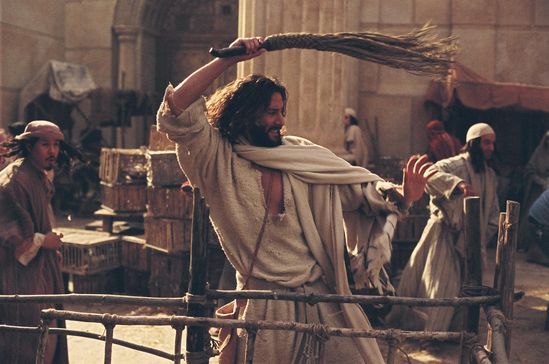
Jesus entered the temple courts and drove out all who were buying and selling there. He overturned the tables of the money changers and the benches of those selling doves. “It is written,” he said to them, “ ‘My house will be called a house of prayer,’ but you are making it ‘a den of robbers.’” (Matthew 21:12-13 NIV)

The Gospels contain differing accounts of this event, some scholars believe it may be about two separate times when Jesus went charging in on a little ‘insurrection’ rampage, but interestingly his explanation of authority to do this cleansing was later misconstrued and used at his trial.  

Sounds familiar, doesn’t it?

The corporate media has taken fabricated tales and normal diplomacy with a foreign power—and they spun it into an incredible “Russian collusion” narrative.  Trump talked about the “very fine people” on both sides of the Charlottesville statue controversy, and he took great pains to qualify his statement—by very specifically condemning the white nationalists and Nazis in the crowd.  But it didn’t stop the media from running the story “Trump Calls Nazis ‘Fine People'” and Joe Biden, along with many other Democrat partisans, have continued to repeat this lie.

Where Trump, and MAGA, clearly delineate between legal and illegal immigration, their detractors muddy the waters.  The left takes Trump’s desire to keep America safe from the flow of Fentanyl and of unvetted foreign nationals and twists it into xenophobia and a threat to legal immigration.  It is deliberate deception.  The far-left wants to keep brown and black people terrified that’s how they’ve always won—by fear-mongering the crowd, they deceive the sheep and, when that does not work, they will imprison or assassinate their opponents.

Remember ‘kindness is everything’ my leftist friends, right?

Evil doesn’t like to have a light shown on it and when you see all of the screeching in response to DOGE taking a look behind the walls of bureaucracy you do really start to wonder why.  Why are they treating Musk as if he’s just some Nigerian scammer trying to get our information?  Is it because he’s from Africa?  It is totally ridiculous.  Lawmakers circle the wagons and tell us we have no right to know how our money is spent!  It’s time to drive out those who have used us to enrich themselves.

There is always a spy versus spy aspect to this where accusation is met with a recrimination.  Both Jesus and those elites questioning his authority claimed that their counterpart was demon possessed or of the Devil.  It would require some wisdom and discernment to know which of the two sides to believe.  But the religious frauds of our day still side with the elites against the crowd.  They defend the status quo and the corrupted established system.  It is always the beneficiaries of fraud that fight against the reform.

Tesla’s Cybertruck Is Already A Huge Success, Here’s Why…

Standard

Did you hear the news?

Tesla is making a pickup truck!

Of course, I doubt anyone who pays a slight bit of attention on social media missed the debut of Cybertruck. I mean, who could miss such a disaster of epic proportions, right?

At first glance, Elon Musk blew it. The truck looks absolutely hideous to your typical truck buyer, like something off a Blade Runner movie set, a future that never will be and never meant to ever reflect what consumers actually want in a vehicle.

But the reality is that Tesla just scored a huge marketing win. Those of you who hate the design, you are not in the actual target audience. A traditional truck buyer isn’t really interested in anything Tesla is offering and taking sledgehammers to windows won’t change that. However, if you have joined those talking about this awful truck then you are doing exactly what Musk’s rollout was intended to do and that is you are providing free-advertising for Tesla.

You might say, “But, wait a minute, everyone is ridiculing this design, laughing about the broken glass, how is that a good thing?”

It doesn’t make sense that what appears to be a failure is anything but a failure, right?

However, there is one thing I’ve discovered in the past few years and that is that almost all publicity is good publicity for those who know how to leverage it. From Miley Cyrus selling albums by twerking awkwardly like an ex-Mennonite ‘woke’ feminist-wannabe still angry at her parents—to Trump winning the White House by offending “libtards” (a term I’m borrowing from a smart liberal friend) with his strategically insensitive Tweets—bad press can most certainly be turned into bankable success.

Sure, you might never, in a million years, buy a Cybertruck. But, who cares? I can about guarantee some version of this truck will be hitting the road in the next few years and now everyone that could possibly want one knows about it.

Musk gets it.

Musk, love him or hate him, understands that people aren’t only buying transportation.

No, ever since Chevy coupes could be bought in more than one color (and much to the chargin’ of Henry Ford and his venerable Model T that was available in any color you want—so long as that color is black), consumers are buying an image as much as anything else. Image trumps practicality at every turn in this age of consumerism.

Musk, for his part, is in the business of creating image and, on this front, has delivered before…

Tesla Successfully Changed What it Means To Be Green

When electric vehicles were first introduced by established carmakers (or rather reintroduced after a century-long hiatus) they were always sold as being ‘green’ and a compromise. The EV1, for example, that billion dollar General Motors boondoggle, while winning a cult of leftist conspiracy theorists, failed to inspire the car buying masses.

And, sure, you can find enough virtue-signaling professor types or too practical appliance-car buyers to purchase a Toyota Prius. But, for the simple reason that it is boring as Al Gore’s personality, you’ll never convince the general public that this should be their next vehicle . Nobody wants to settle, every big-ticket item we buy is an extension of us, shows our personality, and an electric Toyota has all the excitement of a tweed sweater.

Musk changed the game. He changed the focus from economy and compromise (for sake of some hypothetical greater good abstraction) to real luxury and serious power. There was really nothing that new or innovative about his designs. In a sense, all Telsa cars (at least up until the Cybertruck) had styling cues that belonged next to a 1990s Ford Taurus or Chevy Caprice of the bubble car era. But the marketing strategy worked.

Telsa made electric cars something relevant and cool.

To the target demographic Model S and subsequent offerings have looked sleek and sophisticated. They also offer real-world performance, exclusivity, and appearances of eco-friendliness on top of that. They pretty much bested the existing offerings of BMW, Lexus, Audi and Mercedes Benz in every metric that mattered to that demographic.

So what happened???

How did we go from that to Cybertruck?!?

But, first…

Why Does Anyone Buy a Pick-up Truck?

Truck buyers might claim to be practical. And that may be the case if you have an old Ford Ranger in your driveway, farm or hang drywall for a living. But most people do not need a pick-up truck any more than I need a Shelby GT-350.

With a pick-up truck you are buying an image.

Sure, pick-up trucks are often sold for their utility, for their ability to tow a trailer full of excavating equipment up a rocky cliff, and some do get used for this purpose, but let’s be real: The reality is that many of these two-ton behemoths (if not most) are used primarily as grocery getters, are not very practical for that task and that’s the point.

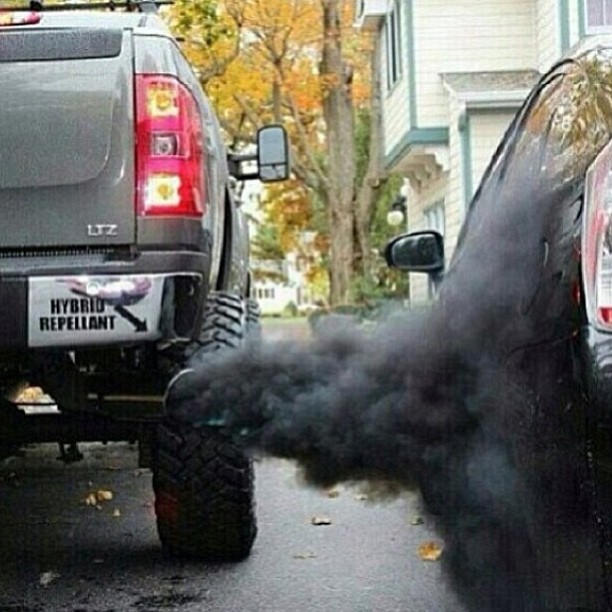
Come on, do you really think that guy (waking you up at an ungodly hour) put those obnoxious straight pipes on his Dodge Ram to uncork a little more power?

Is that six-foot lift kit on a late-model Duramax really about ground clearance and rock-climbing ability?

Don’t kid yourself, the jacked-up smoke-spewing monstrosity is all about trying to get you to notice and that goon behind the wheel will enjoy your disgust as much as your approval.

What we purchase is never only about the real-world utility of the thing. It is also to make a statement of some kind and trucks to make a statement. Owning a truck is often about getting noticed, it is a status symbol, it is a projection of strength, security and good ol’ American independence.

It is about possessing capabilities (real or imagined) that others do not have with their wimpy cars. And that’s generally why people prefer trucks over the alternatives.

Tesla’s Cybertruck Is Already A Huge Success

Believe it or not, Musk’s marketing plan was executed perfectly broken glass and all.

How do I know this to be the case?

Well, everyone is talking about it, even people who aren’t normally truck buyers or very interested in automotive news period are talking about Tesla’s hideous new Cybertruck creation, laughing about the busted window, making videos about the tug-of-war, etc.

Meanwhile, amid this free publicity is a subliminal message: If you want to be truly different, if you want to really stick it to the status quo, then buying the most loathed vehicle on the planet will give you that notoriety and the attention you want.

Call the Cybertruck ugly, but since when is a pick-up truck supposed to be pretty, dainty and delicate?

Laugh about a broken window, but since when have you seen someone dare to throw a steel ball at their shiny new F-150 or Silverado?

Say that the tug-of-war test is meaningless (and it is as far as something of practical value) and yet who hasn’t seen the videos online of similar contests between trucks?

Musk understands the average truck buyer better than they understand themselves. He also already knows that he’s not going to attract the traditional truck buyer.

Bubba ain’t giving up his “square body” Chevy even if you gave him ten Teslas and Billy Bob will be tweaking his “first-gen” Cummins until the thing dissolves entirely into a heap of rust and accumulated soot.

Likewise, pappy will continue to buy his overpriced four-wheel drive luxury barge, from a traditional brand, because new cars aren’t ‘safe’ like his 1960’s Oldsmobile.

The traditional truck buyer is not the target audience of Telsa’s campaign.

No, Tesla has, in effect, created the parody of a pick-up truck, the one that takes the increasingly squared shoulder look of pick-up trucks and goes straight-up box on wheels.

Cybertruck is extreme, it defies convention, which has been what the “big three” (if you can still call them that) have been doing for years. I mean, have you seen the new Silverados? The things are extremely exaggerated compared to the designs they replaced, almost cartoonish, and that has been the design direction for all full-size trucks, bigger, more aggressive, etc.

In reality, the Cybertruck is brilliant because it is the only way you can go to be more rugged, more independent and different.

It is a design that says, “I don’t care about you being offended.”

The only thing different is that the target demographic is not some redneck “rolling coal” in Arkansas who doesn’t want an electric truck, period, and never will.

Rather Musk’s target is someone like Arnold Swartzeneggar in Hollywood who in times past would’ve bought a Hummer to make a display of his unbridled masculinity, is desperate to be unique and yet now, to win female attention in his social strata, has to also signal his eco-consciousness.

There will be many out there who will emulate the boldness of their celebrity idols. Many who would enjoy irritating everyone else on the road with their annoying tastes and will especially enjoy the ire of the traditional truck buyers.

A successful product doesn’t need to be liked by everyone. In fact, when it comes to vehicles, it is better to have a specific group in mind and not to worry about what those outside that particular target group think.

Bad publicity isn’t bad if it gets your message to those who would potentially buy your product. The negative buzz can turn into a positive.

But will it work?

The Problem with Shock and Awe

Trump might win by a wider margin in 2020.

Tesla may have as much success with the Cybertruck as they have with their other vehicles.

However, people are fickle and the fresh direction that worked before might become old news and the next Edsel on the second go around.

Tesla (unlike Trump) also has some serious competition. Not only is Ford translating their proven F-150 platform into electric, but there is also the up and coming Rivian R1T that looks a little more thought out and has some traditional cues despite being differentiated.

It could be that most of Tesla’s target demographic consumers would settle for something a bit less radical and a bit more refined in appearance. The Cybertruck may simply be too silly to be taken seriously in the very competitive truck market—it may need to be tweaked towards a more traditional design.

There is a point when being controversial ceases to be appealing to anyone, goes full-on Aztec, and alienates everyone. (It didn’t work for Trump’s opponents who tried to adopt his brash style either, it completely backfired, it made them look even more lacking in authenticity than they did before.) And time will tell if Musk’s successful marketing of Cybertruck will turn into an actual sales success. But he did get our attention, that’s for sure, and that is half the game!

Musk, like Trump, has mobilized his haters and used them as a hugely successful marketing campaign.